← The 47 Morning Update with Ben Ferguson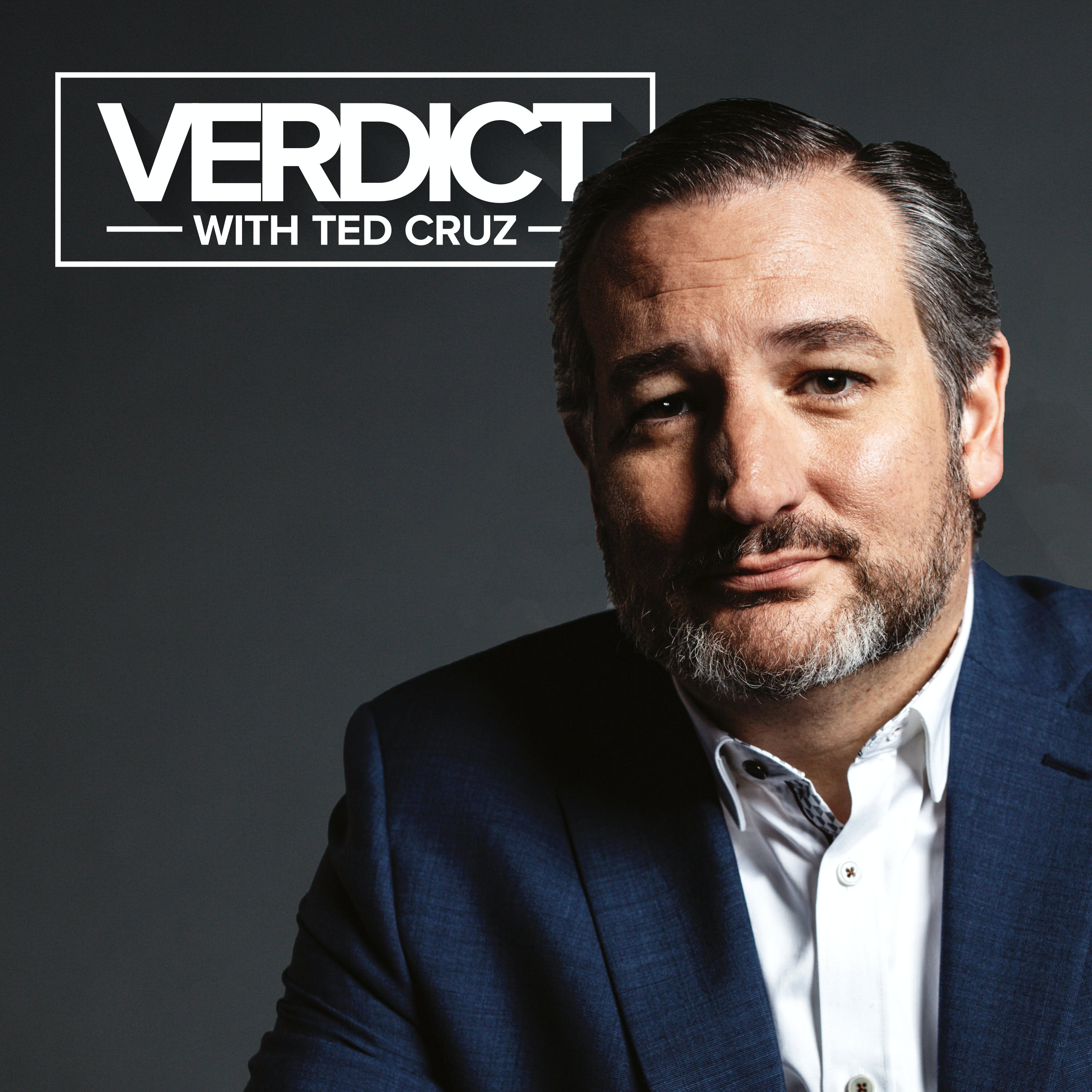
Loading summary
Transcript50 lines
- [00:00]
Ted Cruz
All the people out of jobs the Democrats are using to push. What are they pushing for? Changing the emission standards on airplanes. Mr. President, what the hell do the emissions standards on airplanes have to do with thousands of people dying and millions of people out of work in the coronavirus epidemic?
- [00:27]
Michael Knowles
Welcome back to Verdict with Ted Cruz. I am Michael Knowles. We have a lot to get to. We have to answer that question. What the hell do emission standards have to do with coronavirus? The Senate has just voted on the coronavirus stimulus package, a $2 trillion package, the largest stimulus in American history. It is after midnight on the east coast, and I am joined, as ever, in the middle of the night by one of the senators who voted on that. Senator Cruz. Senator Cruz, what did we just see?
- [00:58]
Ted Cruz
Well, Michael, good morning. It is 12:27 in the morning, and once again, you know, it feels like deja vu all over again. It's. You know, when we got started on the Verdict podcast, it was during impeachment. And it seemed every night we would be there till midnight, 1, 2 in the morning and then head straight to the studio. So I just came from voting on the Senate floor. As you noted, the vote was unanimous. It was 96 to nothing. Every single Republican voted yes. Every single Democrat voted yes. And we just passed out a $2 trillion emergency relief package, which hopefully will have significant effects relieving the economic devastation being caused by this Corona crisis.
- [01:44]
Michael Knowles
Well, I wanna get into exactly what is in this package, because obviously there's a lot and some of it is controversial. But before we get to what is in it, I. I want to get to why we are sitting here in the middle of the night. You know, this bill was supposed to be voted on, I think, over the weekend. Then it was supposed to maybe be voted on yesterday, then earlier today. And here we are, it's after midnight. So I want to know why this was so delayed. And I guess more specifically, I want to know who delayed the vote.
- [02:13]
Ted Cruz
Well, that's an easy answer. It's two people. It's Nancy Pelosi and it's Chuck Schumer. Everybody thought we were gonna vote on this Sunday night. The bill had been negotiated with about a dozen Democrats were part of the negotiating teams. They had all been active and engaged. And we thought we were gonna take it up Sunday night and get it passed. Nancy Pelosi came in at the last minute and she threw a hand grenade in. She began making all of these completely unrelated partisan demands. And we showed up Sunday night, and every single Democrat voted to block are getting on the Bill are even starting to consider it. And so they blocked it on Sunday night, they blocked it Monday, all day Tuesday, all day today, until just about 11 o'clock last night when we finally got it passed.
- [02:59]
Michael Knowles
So as you noted in that clip we played at the beginning, which, by the way, I thought was terrific, I was a big fan of you really calling it like it is here and saying, what do emissions standards? What does the Green New Deal have to do with coronavirus? So it looks as though the Democrats totally backed down. I mean, I don't know, though. You were there all day. Did the Democrats achieve anything by stalling the vote? What's the good stuff in the bill? What's the bad stuff in the bill?
- [03:27]
Ted Cruz
Well, look, it's complicated. Most of the extraneous partisan issues that Pelosi was fighting for, almost all of them have dropped out of the bill. So that's good. What she held everything hostage for Sunday and Monday and Tuesday is mostly gone. So what's passed? Look, $2 trillion is a crazy ton of money. I mean, that's 10% of our national debt, not our deficit. 10% of our national debt in over two centuries. We just spent 10% of it tonight. Wow. And it's worth pausing to think that was unanimous. That means Bernie Sanders voted for it, I voted for it, and everybody in between voted for it. And what I would say is the reason is these are not normal times. This crisis is extraordinary. The health crisis is extraordinary. People are scared. We've got a global pandemic. But not only the health crisis, but the response to the health crisis has created an economic disaster that is unfolding. There are millions of people losing their jobs. And in response to that devastation, everyone feels an urgency to provide relief. Now, you mentioned at the outset this is something a lot of people are saying. They're referring it to it as stimulus. I don't call this a stimulus bill. This is a relief bill. It's quite different. It is designed to provide relief to people who are hurting badly and are hurting through no fault of their own. They didn't do anything to cause this. So what are the different pieces? What's in this monstrous bill? Yeah. So one big piece of it is individual relief. And for every American in the country who makes under $100,000 a year, you're getting a check. You're getting a check in the next couple of weeks. Individual adults are getting 1200 each. A couple's getting 2,400 each. And if you have kids, you get 500 each for those kids and those Checks are expected to go out. According to the Treasury Department, they're going to get them out in two to three weeks. So sometimes, probably early to mid April is when those checks are gonna arrive.
- [05:37]
Michael Knowles
And correct me if I'm wrong, this is unprecedented. Right? I mean, we've never seen the federal government mailing checks to this large a number of Americans for direct relief.
- [05:48]
Ted Cruz
The only thing comparable to this was during the 2008 crisis. There was a smaller set of rebate checks that were sent out under the Bush administration. But. But it wasn't nearly as significant as this. This is much more broad based and these are bigger checks. Look, if you're, you look at restaurants that have been shut down all across the country, you look at bars, you look at hardware stores or nail salons, there are a lot of people who are hourly workers who suddenly finding themselves at home and are scared. How am I gonna make the rent check next month? You know, how am I gonna pay the basic expenses? How are we gonna pay for food? And so these checks are providing relief on a broad based manner. It's not picking winners and losers, it's providing it across the board. Most economists agree that's not gonna be a major stimulus effect, but it is gonna help people who are worried and being hurt by this right now.
- [06:42]
Michael Knowles
Right. I mean, people, you know, they can't afford to not work for a month or however long this is gonna go on. So the idea is that's gonna fill the gap and hopefully you can take 1200 bucks and put it toward your rent or whatever bill is due. What else is in the bill? You know, especially in terms of. I know it was controversial that there's a loan program for businesses to stay afloat. The Democrats were very against that. What does that program look like?
- [07:06]
Ted Cruz
Well, let me get to the. Another major part of the bill that I think is really important is there's $377 billion for small businesses. And this is an emergency loan program that is gonna go to small businesses, essentially businesses with 500 employees or less. So the hardware stores and barbershops and restaurants that we talked about, all these folks that are shuttered right now and are on the verge of bankruptcy, you can now go. If you're a small business owner, you can go and apply for a loan and you can get it. It's a Small Business Administration loan, but you can get it from your local bank. It's from all of the local banks in the community that you can go and apply for it. And it's up to $10 million so it's small loans, relatively speaking, but they're designed in particular to meet costs like payroll, to meet costs like rent, the basic costs that you have that you don't want to lose your business. And the way it's designed, if you spend the money on payroll, if you say to your employees, we're going to keep paying you, we're going to keep your paycheck coming, then those loans are forgivable. So for the small business owner, you can take the loan, and if you actually pay it out to your employees, the loan obligation goes away. And so that's a direct lifeline to these small businesses that are profoundly hurting. And a lot of them are making the decision right now, do I stay open or do I shutter the door?
- [08:33]
Michael Knowles
Right. Well, I'm sorry to interrupt. I mean, this is a very important point here because. Because as we see the unemployment rate ticking up, you had claims last week for unemployment that were comparable, if not higher, than you saw at the peak of the 2009 crisis. I mean, you could have massive unemployment. You could have businesses falling apart. So this would allow the businesses to continue to employ their workers.
- [08:58]
Ted Cruz
Right. And that means people keep a connection to their job. It means they keep their health insurance, which is a big challenge for everyone. If you lose your job, you may be losing your health insurance. So we'd rather as many people as possible to stay employed, to stay in a position that when we get past this crisis, hope, hopefully sooner rather than later, that everyone go, go back to work, that we want to get the economy moving again. And so these small business loans, again, are unprecedented. I mean, to give you a sense, the Small Business Administration's budget, I think last year was $23 billion. This is $377 billion. So this is more. More than 10 times the. The size of the Small Business Administration's entire budget. But all of that money is designed to flow out through the community banks to small businesses and to be used for payroll predominantly and other essential costs like rent and utilities, just to keep the businesses open.
- [09:51]
Michael Knowles
Well, I know that this brings up another question on employment that was really central to the debate today, and you played a central role in this, which is some Republican senators, I think Lindsey Graham mentioned it, and you spoke out very forcefully against it, identified in the bill a provision that would actually incentivize people not to go back to work. What was that provision? And where does that stand right now?
- [10:17]
Ted Cruz
So part of this bill, and one of the things in particular the Democrats demanded as a price of supporting this bill was Increasing unemployment insurance compensation. So when you file for unemployment in your states, the federal government is plussing up those weekly compensation. And plussing it up dramatically is basically adding $600 a week to what you can earn from unemployment. So what does that mean? And listen, most Republicans, I think that is a good thing. We are gonna see this week when the job numbers comes out, we are gonna see millions of Americans who have lost their jobs in the last two weeks. I mean, it has been. I've spoken to at least a dozen CEOs in the last week who've laid off thousands or tens of thousands of employees. I mean, it's just one after the other after the other. And if you're suddenly laid off, having unemployment and enough to support your family is important. So I think plussing it up made sense. Here's the problem. The way it is designed, the $600 is irrespective of what you were making before, which means, like I'll give you an example in Texas. So right now in Texas, the maximum someone can make on unemployment is $521 a week. That's what the state unemployment will. And that's based on your income. We're now adding 600 bucks a week to that. So instead of $521 a week in Texas, it's now $1,121 a week.
- [11:49]
Michael Knowles
It's a nice raise.
- [11:51]
Ted Cruz
That is a very nice raise. But here's the problem. There's no constraint on whether it is more than you were making in your job. And so I and a number of other senators, we introduced an amendment today, just a common sense amendment that said, look, you should not make more on unemployment than you were making working.
- [12:09]
Michael Knowles
It's common sense.
- [12:10]
Ted Cruz
Right? And we had, so we debated it on the Senate floor. It was interesting, actually. An astonishing thing broke out on the Senate floor. Real debate. Dick Durbin, you know, Democrat from Illinois, was arguing back and forth, and our amendment just was a simple proposition that you shouldn't be paid more in unemployment than you were making in your job. And the reason is you don't want to disincentivize work. I'll use the Texas example. $1121 a week. That's a little bit over $58,000 a year. Now it's four months worth. But, but annualized, that's 58 grand a year. That works out to over $28 an hour. The problem is, if we're paying people that much not to work, it incentivizes people not to work. And it was Very.
- [12:56]
Michael Knowles
Why would you ever go back to your job?
- [12:57]
Ted Cruz
Well, and the back and forth. So Durbin did what a lot of Democrats did, which is he demagogued. He said, oh, these Republicans are saying, anyone unemployed is lazy and rotten. And I said, hold on a second. We're saying exactly the opposite, which is this policy will hurt workers and it'll hurt small businesses. Why? Let's say you're a waitress and you've been laid off from your job, you're getting unemployment, but. But Suddenly you're making 25, 26, $28 an hour at home, not working, and you face the decision, do I go back to work for 10, 12, $15 an hour? We're creating incentives where it would be perfectly rational to say, I'm not gonna go back to work because I make a lot more money on unemployment. That hurts the workers. It also hurts small businesses. Let's say you're trying to reopen your restaurant. The shutdown has stopped in your city. You want people to come back, you call up your old employees and they say, look, I'd love to come back to work, but I can't afford the pay cut.
- [13:58]
Michael Knowles
Yeah, you gotta match my unemployment salary.
- [14:02]
Ted Cruz
So that, I think, was an unfortunate mistake. And we ended up. The amendment lost. It was basically a party line vote. I think every Democrat voted against it except Joe Manchin. He was the one. Yes, but I think that was unfortunate. But nonetheless, there will be significant benefits from the additional unemployment insurance in this time of crisis.
- [14:23]
Michael Knowles
Right. Okay, that makes sense. It's too bad, unfortunately, that that seems to have been left in the bill. But I guess, obviously there's a lot of debate here and you did come to a unanimous vote. However, I have to pick up on what you said. You said the vote was 96 to 0. There's more than 96 senators. Some people were missing.
- [14:45]
Ted Cruz
Yeah. Now we've got several senators who are out on quarantine. And where that started from was a few days ago, Rand Paul tested positive for the coronavirus. And he had been in D.C. the whole week. And actually the way we found out about it, so we were meeting every day for lunch, the Republican senators. And it was interesting. We shifted. We normally meet in a room in the Capitol called the Mansfield Room. And it's. And actually, by the way, the minority meets in the LBJ room, which is a smaller room, but the Mansfield Room is bigger. So it's one of the things. It was nice in 2014 when we became the majority. We switched our lunchrooms and got to a bigger Room.
- [15:28]
Michael Knowles
That's a nice, nice perk.
- [15:30]
Ted Cruz
But when coronavirus hits, we all wanted to social distance. And so the Mansfield room we decided was too small. So we were meeting instead in a conference room. And we moved actually to a couple of different conference rooms that were sort of almost like big auditoriums in one of the Senate office buildings. And so we were in one of those big, big auditoriums where the acoustics were terrible. It's hard for everyone to hear. Cause they're not, they're just, it's not good acoustics. But, but Mitch, every, every day we were meeting for lunch and we'd have often a two, three hour lunch because it would be a progress report on the negotiations of the bill. And there were different committees that were working on different portions of the bill. So the people would stand up and say, all right, here's what's going on with this. And we'd ask questions, we debate back and forth. And so a few days ago we're there and Mitch is talking and he just kind of matter of fact says, and so Rand Paul just tested positive for coronavirus. And we're all sitting there going, what the what?
- [16:29]
Michael Knowles
It's big news.
- [16:31]
Ted Cruz
And Mitch just very matter of fact mentions it and keeps going on. And a whole bunch of seconds. Hold on a second. Can you rewind that tape and play it again? And so it was. Well, and Rand had been at the Senate. He had been that morning at the Senate gym. He'd been swimming in the pool.
- [16:52]
Michael Knowles
Oh, wow.
- [16:53]
Ted Cruz
I gotta say, I don't think I've ever seen my colleagues as pissed off as they were. Like he had just gotten the positive test results. And then they were pretty angry that he hadn't self quarantined. Now Rand said he wasn't sick, he had no symptoms, he hadn't come in direct contact with the. He was at a gathering with people who were sick, but he didn't come in direct contact with him. I understand his reasoning. I can tell you people were freaked out. And so I remember we're sitting there going, okay, well what do we do? I mean There are 53 Republicans. The immediate question, all right, are we all quarantined? Like, as you know, I spent 11 days in self quarantine in Houston, right? And I'm like, well, all of us have been here with Ran, what does this mean now? And what ended up happening is within an hour or two, two people self quarantined as a result, Mike Lee and Mitt Romney. And the reason is at lunch they had sat on either side of Rand. They had been at lunch with him, they sat next to him. They'd been there for a couple hours and so they decided neither of them are feeling sick. I talked to both, both Mike and, and, and Mitt this week after they quarantined. They both said they were feeling great but they self quarantined because they'd sat next to Rand and spent a couple of hours. You know, I thought about it but as it so happened this past week, I just didn't run into Rand. In fact I didn't even, I didn't know he was around. I'll often sit next to him at lunch. I just didn't happen to this week. So it was a good, good week.
- [18:24]
Michael Knowles
Not to sit next to Rand Paul. But it puts you in a tough position because as you're all sitting there and Leader McConnell tells you, oh by the way, one of your colleagues has coronavirus. You know, it's a pretty small club there in the U.S. senate. You're all voting on this very important legislation. If all of the Republicans self quarantined, what happens to the bill?
- [18:45]
Ted Cruz
That was a real issue and I think that's one of the reasons why all of us said let's move forward and get this done quickly and get the hell out of here. Everyone's flying home tomorrow morning and the Senate is not expected to be in session for several weeks. But look, if you look at the Senate, there are a lot of people in their 70s and 80s. I mean you want to talk about a potentially vulnerable population, we're trying to stay away from each other. We're trying to social distance. People are pouring hand sanitizer like crazy. But you know, Rand, and Rand and I traded texts. He said he's feeling good and feeling healthy. But you remember Rand, what was it a year or two ago? His neighbor tackled him, broke six ribs, the ribs punctured his lungs. He got pneumonia and they did surgery and removed part of his lung. And so what's scary about this is Rand with part of his lung removed is, is in a vulnerable position where he's more vulnerable if he gets COVID 19, if he gets sick, he's potentially more vulnerable. And so that's, he's obviously taking it seriously. But all of us are worried and praying for Rand.
- [19:55]
Michael Knowles
Of course. Yeah, that really does bring it home because some people have even kind of been joking about how the median age of the U.S. senate is about 150. And so that's an at risk population. But, but of course Senator Paul in particular is Especially at risk here. So I suppose everybody should pray for his speedy recovery. One other actual coincidence, I suppose, with Rand Paul being out for this vote, is he's been so outspokenly, say, libertarian during his political career, and conservatives now are struggling with what to think about this bill because it's so much money. It's the biggest package like this ever in American history. But this is a totally novel circumstance. How should conservatives be looking at this?
- [20:45]
Ted Cruz
Look, I've struggled with it. Every conservative has struggled with it. $2 trillion is a ton of money. I think the magnitude of the challenge we're facing justifies it. And I also think it's very different. I mean, some people are trying to draw the analogy to TARP, to what happened with the 2008 financial crisis. I think they're dramatically different. And the biggest reason they're different is the financial meltdown was caused in very significant part by misconduct by the financial services firms who were taking undue risks, who got all the upside if they made money. They got rich and got to enjoy the blessings. But then when it all cratered, the government had to step in and help them. And so it felt very much like a rigged game. This is a very different circumstance because the people that are getting relief here, they didn't do anything to cause the coronavirus. It wasn't their conduct. You know, the individual waiter who's been laid off, it's not his fault that this started in Wuhan and spread across the world. It's not the fault of the guy who owns the local movie theater. And so I think that's different. I think it's also important that if you look at how this is structured, you've got the individual grants, which are very important relief. You've got the small business piece, which is very important if you look at other elements of it. So there is $100 billion in this directed to hospitals and healthcare providers. Now, look, in the coronavirus circumstance, hospitals are panicking. They need to expand their capacity. A hundred billion dollars for hospitals, God forbid you have circumstances where we need to ramp up quickly. That is almost the very definition of emergency relief for this crisis. You've got 16, $16 billion for protective gear, for ventilators and medical supplies. That again, is, is, is crisis appropriation. You got $150 billion for state and local governments to meet the coronavirus, and it's limited so that it goes to coronavirus spending on the state and local level.
- [22:52]
Michael Knowles
So you're saying that the states and the cities, they can't just spend it on Whatever pet project they want, there actually will be some checks on how they can use the federal money.
- [23:01]
Ted Cruz
I hope so, or maybe not. But look, let me throw in a caveat. This bill is massive. It was drafted really quickly. We're gonna find all sorts of ugly things there as it rolls forward. So when it comes to the constraints on the states, at least as it was relayed to us, as we understood it, it was intended to be just coronavirus spending, can I promise that there won't be states frittering the money away? No, but they are facing a massive and unprecedented health crisis. So the intention was give them the funds. And that was one of the big Democratic holdouts and demands also is they wanted money for the state and local governments. And that's one of the big things that was added, that was expanded in the last couple of weeks. The part that is deemed the most controversial is there's $500 billion for what's called the stabilization fund. Now, that's what the Democrats have been characterizing as the big corporation bailout.
- [24:01]
Michael Knowles
Right.
- [24:02]
Ted Cruz
Listen, of all the parts of the bill, that's the part I have the most concerns about. But I do think there are differences even in that part from. From. From a bailout. Almost all of that is structured as loans. So. So. So what are the components of it? The components of it, you've got $450 billion that basically goes to the Fed to make loans across the economy. And. And it's designed for the Fed to leverage it up so that $450 billion is expected to result in about $4 trillion in additional capital.
- [24:43]
Michael Knowles
So, I'm sorry, pardon my economic ignorance. How does that work?
- [24:48]
Ted Cruz
So the Fed will make loans. Will make loans that will go out to businesses, to companies all through the country. And, you know, look, in thinking about how to respond to this crisis, I tried to talk to a lot of experts, to conservatives, who I know and respect and trust. So one person I called is Art Laffer. Art Laffer's a good friend, was Reagan's chief economist, helped design the Reagan tax cut, the Laffer Curve. You may recall, he drew on a napkin that laid out the principle that if you raise taxes, too high tax revenue will go down. And in that circumstance, if you lower the tax rate, you can actually. The federal government collects more taxes because of incentives. Art is a strong conservative, a great friend. I called Art and said, all right, what should we be doing? This is an economic catastrophe. What. What should a conservative be doing? And Art focused on two things. He said, number one, we should Do a payroll tax holiday. From now to the end of the year. Payroll tax is about 7.5% paid by the employee, about 7 and a half percent paid by the employer. We should just say nobody has to pay it from now to the end of the year. That would create enormous incentives for work. Look, it harkens back to the fight we had over the unemployment compensation, the disincentive for work. I'm very focused on incentives for work.
- [26:03]
Michael Knowles
Right, that makes sense.
- [26:04]
Ted Cruz
By the way, half of that proposal is in this bill. One of the things that is included in this bill is from now to the end of the year, employers don't have to pay their half of the payroll taxes, they have to repay it in 2021 and 2022. But it defers those tax payments, which means for a, an employer, it lowers the cost of employment, it makes jobs less expensive. That, that is a good supply side step in terms of tax relief. But the other thing Art said, and this was important, he said, listen, the most dangerous thing in a liquidity crisis is you don't want it to become a solvency crisis. Now what does that mean? That means your customers have dried up because the government is making people stay home and suddenly your revenue is plummeting and you can't meet your basic bills, you can't meet your payroll, you can't meet your mortgage, you can't meet your rent. And so when you face a solvency crisis, you've gotta suddenly sell stuff on the cheap. We don't wanna see the airlines suddenly have to auction off all their planes for 10 cents on the dollar. That would take a temporary crisis and turn it into catastrophe. And so what Art said is you wanna have liquidity in the system, you wanna have people being able to get a line of credit, companies able to get a line of credit so they survive the catastrophe. And so that was his principal recommendation, which has been echoed by a lot of conservative economists I've Talked to. That 450 billion is designed to do exactly that, to make, you don't want.
- [27:37]
Michael Knowles
To take this acute problem and have it lead to very long term economic catastrophe because we were too cheap to do what we had to do in the moment.
- [27:48]
Ted Cruz
That's exactly right. Now all of that are loans, those are not grants. So nobody's getting a special payment that they get to keep. No one's getting bailed out in that sense. All it means is they're able to go and get a loan and they're able to get a loan. Think about it. Let's say you run a hotel? Yeah. I talked to several hotel owners who described like one said their occupancy rate was now 6%. Look, 6%, you couldn't go get a loan. I mean, a hotel is not a going concern with 6% occupancy rate. Now it won't always be, it didn't used to be. And when the crisis is over, presumably it won't. But who would want to see every hotel auctioned off at a foreclosure sale? And all that would mean is whoever happened to have capital would suddenly have a windfall, be able to acquire, you know, let's go buy the waldorf Astoria for 10 cents on the dollar. That actually doesn't help the economy or anything to force every business owner to sell their assets. And so the liquidity is basically giving someone the capacity to get out of it. Now look, there may be some failures, there's some taxpayer exposures. The liquidity is not cost free, but it is not. It's designed to be broad based enough that hopefully it won't be the government picking winners and losers now.
- [29:12]
Michael Knowles
Well, it does sound very different in that way from the 2009 federal spending that we saw.
- [29:19]
Ted Cruz
Yes. Now there are two exceptions to that, one of which is more problematic than the other. So there's 17 billion that is carved out, they say, for nationally security. Important companies that basically everyone knows means Boeing and maybe ge and they were pretty candid about. We're just writing it to help. And listen, Boeing has all sorts of problems that had nothing to do with the coronavirus. And I fought hard against that. The Boeing and GE money, I argued against it, I stood up in conference and I mean blasted my colleagues. And you know what, we couldn't get it out of the bill. And the sad thing is the Republicans wanted it in and so did the Democrats. The second industry specific component is airlines. And airlines. It's interesting, you know, the Democrats talking point which all of them are saying is this is all corporate welfare for Republicans. They want the big corporations. Here's the irony, Mike. The corporate welfare increased because of the Democrats demands. So the Democrats are entirely posturing. So let's take for example the airline portion of it. So there was 58 billion. And the Republican bill that we had, actually the bipartisan bill that we had that we're gonna vote on on Sunday, there was 58 billion for airlines, but it was all in loans. It was 100% loans that they would have to pay back. The Democrats in the last three days of their negotiations, they insisted that 50% of it be grants, that it be direct grants rather than loans. So the next time you see, if you listen to any of the Democrats rattling on about they're the ones that fought for the grants instead of the.
- [31:03]
Michael Knowles
Loans, you know, you don't see that reported in much of the mainstream press. Actually, you don't see much of any of this that we're talking about right now reported in the mainstream press. Senator, we're already over time. But just before we go, do you have a sort of 30 second takeaway beyond everything we've talked about for the American people while they're looking at this crisis and while they're looking at this relief package?
- [31:27]
Ted Cruz
Listen, this crisis is extraordinary. But we're gonna make it through this. We're gonna make it through the public health side. And people are scared. I get it. People are frustrated about being at home. We will make it through this. But we'll also make it through the economic challenges. I mean, people are worried. Now, you and I have never lived through a great Depression. We've never seen 20%, 30% unemployment. I don't know if we will see that or not. I certainly don't want to. I hope that this emergency relief package helps. But the way we stop the economic devastation is we solve the pandemic, is that we contain it, is that we develop effective vaccines and treatments. We need to do that. And my focus and priority is stopping this pandemic, but also ensuring that we have an economy that can keep going, going forward. We don't want to see every small business in America destroyed in the process of keeping us safe. So we gotta do both and that they're gonna be challenging days ahead, but it's worth remembering. Listen, America is a great country and we're great because of the character of the people. We have overcome challenges before. We've overcome world wars, we've overcome nine, 11, and we will overcome this and that. I'm inspired every day by the heroism of the American people and that's what's gonna take us beyond this challenge as well.
- [32:47]
Michael Knowles
I agree. And part of the way that we will recover is by staying healthy. And Senator, part of the way you stay healthy is by getting enough sleep. So we've gotta let you get out of here and go back home and get at least a few hours of sleep. There's so much more to cover. I guess we'll just have to get to it next time. I'm Michael Knowles. This is Verdict with Ted Cruz.