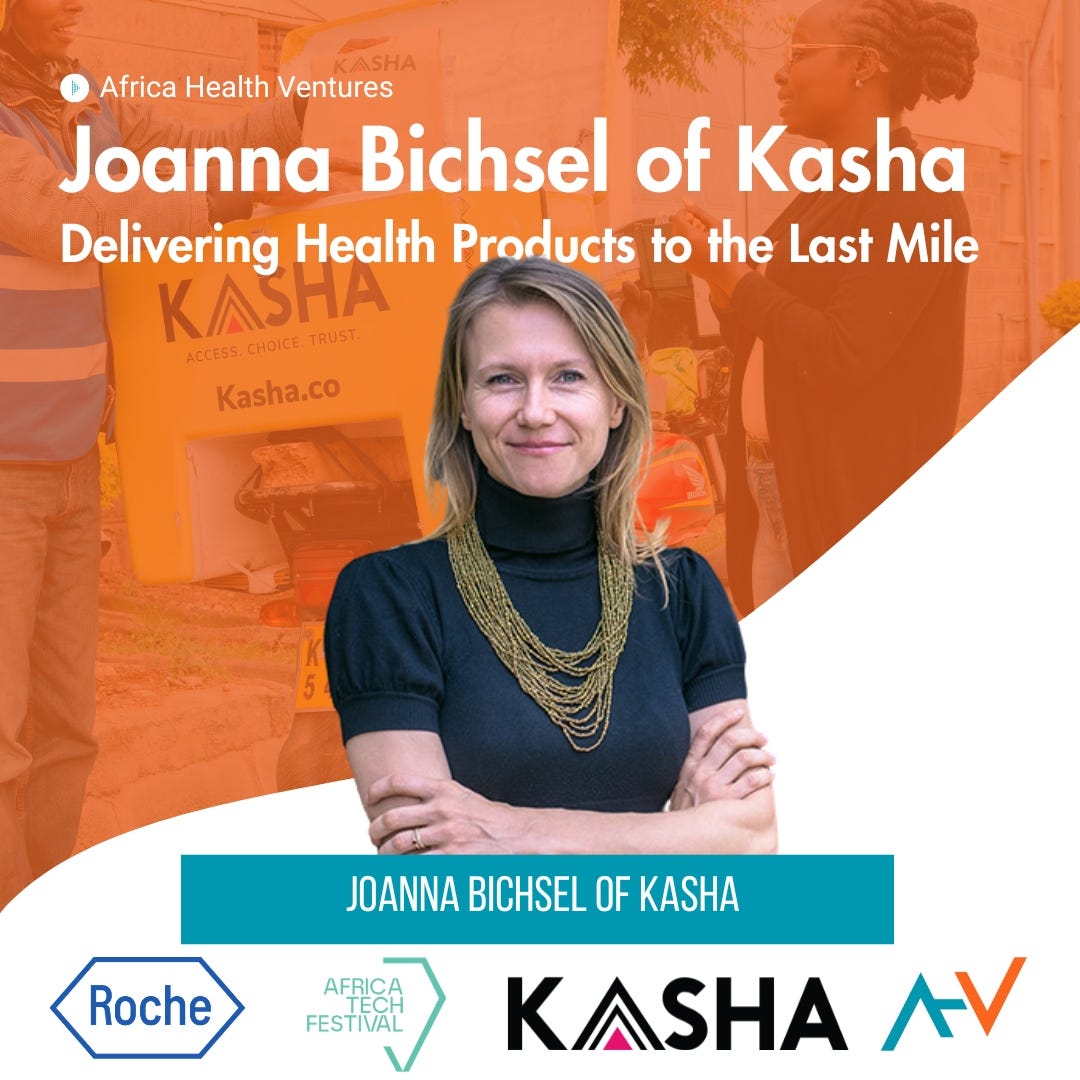
Loading summary
Transcript53 lines
- [00:01]
A
Imagine a woman in Kenya who's just been diagnosed with breast cancer. She's been told there is treatment, but it's expensive, it's complicated, and it's not always clear where to go next. The medicine might exist, but access feels out of reach elsewhere on the continent. There's a teenage girl in Rwanda. She's facing the challenges and the mysteries of becoming a woman. Turns out she needs access to basic reproductive health care. She needs it quickly, she needs it privately, and she needs it on her own terms. These are two very different moments in a woman's life, but they're connected by a common thread. Who gets access to women's health and who doesn't? Welcome to the Africa Health Ventures podcast. I'm Rowena. This is a show about entrepreneurs, technologists, clinicians and health leaders who are tackling that question head on by rethinking how healthcare actually reaches people. Today's episode is about women's health and about what it really takes to turn access from an idea into a reality. Our main guest is Joanna Bixel, the founder and CEO of Kasha. Kasia started out in Rwanda and has grown into one of Africa's leading last mile distributors for healthcare products. They deliver everything from prescription medicines to household goods to women and families in urban and rural areas across the continent. To do this, Kasha has needed to address the financial barriers that make medicines unaffordable. They've had to work with governments and other stakeholders to improve regulation so that critical drugs can actually reach the people they're meant to reach. And they've needed to build trust, educating patients and consumers, protecting privacy and delivering discreetly. But Kasia's story also makes one thing very clear. No company does it alone. Scaling Women's Health Solution requires partnerships between startups and government, between global pharmaceutical companies and local health systems, between technology on the one hand and policy on the other, all aligned around a common goal. Later in this episode, you'll also hear from Joerg Rupp, head of Roche pharmaceuticals in over 100 countries from Australia to Peru, and Dr. Carol Ben, one of South Africa's leading breast cancer advocates. Why collaboration across government, private sector and communities is essential if we're serious about improving health outcomes in Africa. Whether you're a founder, an investor, a healthcare professor, or just someone who's curious about how to scale innovations in the most dynamic markets in the world, this one's for you. Before we begin, a quick note. This episode is made possible with the support of Roche. Roche is an industry leader and global pioneer in pharmaceuticals and diagnostics focused on advancing science to improve people's lives. All of these conversations were recorded live as part of Africa Tech Festival in cape town, South Africa, where for the first time in November of 2025, we celebrated healthcare innovation with a dedicated healthcare track. If you'd like to learn more about healthcare startups and investments in Africa, you can subscribe to our newsletter@africahealthventures.com Newsletter and if you'd like to nominate a promising early stage healthcare venture for investments, please do so@africahealthventures.com apply one last disclaimer the perspectives shared here belong to each of our individual guests. They do not represent the official views of Roche. The content here is for informational purposes only. It should not be taken as legal, business, tax or investment advice or be used to evaluate any investment or security now let's get into it. To kick us off, I asked Joanna to explain what does Kasha actually do and how a company that began in Rwanda grew into a platform reaching millions of people across the continent?
- [04:30]
B
Here's Joanna Keshe is a digital commerce platform for the last mile delivery of health products. We're like a market access platform for health products and household goods. So the business has grown with reach across east, west, south, central, North Africa. We're across nine countries and we continue to grow. We sell products, pharmaceuticals, medical consumables, fast moving consumer goods wholesale and retail, so pharmacies, hospitals, clinics, kiosk shops and direct to consumers. We've delivered over 110 million products around Africa reaching over 100,000 unique customers. The other part of our business which rides on that commerce and last mile delivery platform is we provide services to pharmaceutical manufacturers, governments and global health organizations. Some of the successes we've had we were the first company in East Africa to get the online pharmacy license. We started so early that these things didn't exist at the time and so also now it's gotten to the point where we are delivering the public health products. We're the only on the ground third party logistics provider for the Rwanda government, delivering public health products around the country, showing them dashboards about where their products are going, which SKUs are in demand in different parts of the country. We work with many pharma manufacturers. At the beginning pharma manufacturers were not looking at health tech and tech startups and that's really changing. So we have Sanofi as an equity investor, Boehringer Ingelheim is an investor. We partner with Rush as well and various other pharma manufacturers that are recognizing that the traditional way of getting products into Africa through distributors is not working. We need access platforms reaching the mass market and that's, that's really exciting. From some of the third party research data we've seen, we've grown into being the leading market access platform across Africa, both in terms of just annual revenue and also various reach we have in different countries. We're post Series B. We've raised a total of 30 million in equity, probably 10 million in debt over the years, which is nothing compared to Silicon Valley. But it's, you know, in Africa it's a good amount.
- [06:36]
A
Kasia has made incredible strides in the past few years. But the question I always ask myself is how did we get here? How did Joanna Bicksell, a woman born in Poland and educated in Canada, end up founding a last mile distribution business in Rwanda? I asked Joanna to tell us a little bit about herself and her founding story.
- [07:01]
B
I founded Kasha back in 2016 when I was living in Rwanda. And how Kasha started is that my background's in technology. I have a computer science degree. I started my career in corporate working at Microsoft, but eventually I moved my career into technology across emerging markets, Africa, Asia. And this journey is really important to the founding of Kasha because it all led to that. KASHA was years in the making before it was founded.
- [07:30]
C
If you look at your background working at Microsoft and the Gates foundation, large corporations on the other side of the world, and then you're in Rwanda and you started to take a leap onto your own. That sounds terrifying.
- [07:41]
B
Yeah. I had no idea what I was getting into. And it was actually, it's a good thing I didn't know because oh my gosh, the challenges, the constraints, I had no idea what I was getting into and starting a company and raising funds and all that. But once you're committed, you're committed and you just keep going. But yeah, exactly. So I ended up moving it. I got really into. I was interested in development and technology and development. So eventually I moved my career there. I went to Gates foundation and I worked half the time on health supply chain and technology. How to use technology to get products to very rural areas across Africa and Asia. I worked on financial services for low income communities, health services delivery, various things. And I was absolutely shocked with how development operates. And because I had been in private sector tech, I knew how private sector tech, operating those exact same markets, serving those exact same individuals. But then you go to development and development is like, oh no, technology is not possible. People cannot afford anything, which is just simply wrong.
- [08:48]
C
Right.
- [08:49]
B
So technology already operates at scale, serving billions of people. And again, this was in 2016. So, you know, this was previously. And, and I think you're pointing to
- [08:59]
C
a really interesting observation there, which is that in philanthropy there's an inclination to focus on disability, on poverty, on inability. Whereas in tech and in innovation, we're looking at opportunity, we're looking at the possibility. And maybe, you know, maybe there's risk associated in this picture, but it's about what's possible here. What can these people do that they haven't done before? And you saw that opportunity.
- [09:22]
B
Absolutely, absolutely. And it is also about creating sustainable models in private sector and understand that people want services and they do have, even if it's low purchasing power, they will spend money to get things that are valuable. Whereas in development, everything should be free, free, free. And the whole continent is poor. And all these misconceptions which actually really hurts the economy and it hurts the market and it is stops development. And the lack of data in the health space is shocking, you know, and I mean, really, it's no surprise when you look at the donor space and we see it now in, you know, this year with a huge slash in global funding. I mean, how can the world. I saw this working at a donor. Billions of dollars are spent on health products and we have no idea where they're going. There is no accountability. We know some of a lot of that is lost at theft. They never reach to where they have to go. That is not okay. And a private sector company would not operate like that. So there was all these frustrations such as what is really success? Success is not training. Success is getting products in the hands of people. The fact that we need to use technology to really be effective, cost effective and really reaching people, proving that we've reached people. There is also a lot of talk about women in when I was at Gates Foundation. Talk, talk, talk. But honestly, when you look at the technology solutions that were implemented, there were very few that had an emphasis on women at the time. So again, things have changed a lot. But I mean, just if you're in health, you need to recognize more than half the population is women. They have the most health needs. They unlock the rest of the population. If you are not serving women, then you do not know health.
- [11:07]
D
Right?
- [11:08]
B
So it's not, it's just a understanding your customer situation and it's not an impact situation. Of course it has impact, but it is truly just understanding your customer base and how to unlock the mass market. So that's kind of the angle I Came at it and I got very frustrated and eventually my daughter was born and I was able to take some time off and think. And that's when the business model came together. Was always very important for me to run a business and not a nonprofit because I never wanted to be dependent on donors. And so that came together. I couldn't think of a name. I called the company Cash after my daughter.
- [11:45]
C
That's wonderful.
- [11:46]
B
And yeah, that's took the leap.
- [11:49]
C
That's incredible. In a little bit I'm going to tell you about, ask you about all the great things that Kasha has achieved. But in that moment in time when you're, you're building Kasha, you're, you're on the ground, you have this vision for a better way that commodities can be delivered in Africa. What are some of the challenges that you face? What are some of the moments where you thought you might give up because it was so hard?
- [12:12]
B
Yeah, that first six months was incredibly hard. I mean I would say the whole nine and a half years Acasha has been operating has been hard. But those six months at the beginning where I think the shock, the jumping in the cold water, I'm a first time founder, I had never raised capital. I had to Google what is a series A like. I didn't know. Right. And we had also started the operations in Rwanda realizing that the investor ecosystem does not like there was no investor ecosystem. People were not investors were not comfortable investing directly in Rwanda. So we also had to figure out, okay, how do companies in Africa raise money? Well, you know, really they usually register in Delaware because that's where the investors feel comfortable. So there were all these learnings and I thought, you know, I just came from Gates Foundation, I've got this great network. Gates foundation had no idea what to do with this small, little tiny startup with no track record yet. And it was extremely hard to raise money. And we were just, I was honestly pulling from personal bank accounts. And when, you know, it's not like we are, you know, high wealth, have sold a company previously. But the thing is, is you just need to get started. Right. And in our type of business, I mean we are delivering. We started as a direct to consumer model, now we've expanded that. But you do need to hire people. You need to hire a call center that's going to speak Kinyarwanda and Rwanda. Right. So. So speaking the local language or delivering products, it does require some capital. It's not just a B2B business. So the fundraising was honestly the hardest part of growing the company.
- [13:48]
C
I think that's an amazing point and I just want to give a shout out there to any angel investors or early investors who are backing first time founders, first time female founders in Africa, because it is very competitive. It's very hard. There's, there's second, third time founders out there. But if it didn't happen, then organizations like Kasha would never exist. So just to a shout out to those angel investors that are listening 100%,
- [14:13]
B
we would not be here without angel investors. I bet if our cap table has the most women investors than any company in Africa, I would put my money on it. I haven't seen, of course, other cap tables, but angels have been amazing. Women have completely put their money in support of us. And the thing is, you just need a little. We were week to week, month to month at the beginning, but it allowed us to get some data and that data allowed us to unlock other capital and it just builds on each other. But angels are truly, I can't say more. And that's my goal. I want to also get a financial return from this company so that I can be an angel investor in Africa in the ecosystem, because I know how powerful it is.
- [14:58]
C
I love that. And every little check, sometimes it's small. It's enough to get you to the next step, to get further along and further along. And now Kasia has obviously raised a lot of money, but it wouldn't have been possible without those early steps.
- [15:09]
B
Absolutely.
- [15:10]
C
For someone listening to this podcast who's in the same shoes, who's in those early years is trying to get that first investment in. Do you have any experience to share from your journey? What got you through all those pitches where all the investors said no?
- [15:25]
B
Yes, I remember those. I actually have a folder in my inbox where I filter everybody who said no so that I can look at them and remember. And to me, my personality, it fuels me, it makes me angry. I can't wait to prove them wrong. So that's my. But I think the important thing is just stay in the game. If you believe in what you're doing and you know it's going to work, just stay in the game. Because that is success in business in Africa is staying alive and continuing to go on. And all the complex, I mean, the difficulties in the ecosystem, they do resolve and you just have to be there and continue to get stronger and stronger.
- [16:06]
C
Yeah, too many women give up. Not just women. Founders across the board give up on themselves too early. And if you don't believe in yourself, no one else will. So it's about having that conviction, that follow through, even if you've had a thousand nos to keep on going until you have. Yes.
- [16:23]
B
And don't be afraid to raise external capital. It has helped our business every time we went through a fundraising round. It's basically like free consulting services where you get these amazing analysts looking at your business and asking, why not this? Why not this? And our business has always become stronger after a fundraise, not because only the capital, but especially because we've been thinking, you're right, why don't we do it this way? You know, maybe we can be more efficient in this. Or what about this business opportunity? So it actually makes you stronger to raise external capital to bring in partners. But just be careful also who you bring in. It's another lesson.
- [17:01]
C
Yeah, yeah, certainly that's a big one. You've already mentioned many different partners and partnerships that you've needed to forge. Working with the public sector, working with pharma companies. Would love to unpack a little bit more some of the successful ways in which you built those partnerships as well as how you view your role vis a vis the role of your partners in these relationships. Perhaps we could start with policy and policymakers. Partnerships with governments for technology companies like yourselves or supply chain companies like yourselves that are working with governments. What are some of the secrets to the successful partnerships that you might point to?
- [17:39]
B
I love doing business in Africa because it is, there's so much about partnerships and relationships. It's very, very relationship focused. And what I love about business is the ability to grow together. And I think in the policy side that's very important. You know, in other markets, you know, companies scale by being extractive and aggressive across. And whereas in Africa I think it's very important to really partner and partner, especially with the governments, especially in an area where, you know, some of those policies are not yet set and they're being built out. I have found, you know, we start in Rwanda and I found amazing openness with the Rwandan government to learn and grow and engage in the startup ecosystem. One example is, you know, emergency contraceptives are not, were not a subsidized health product in Rwanda. They just were not subsidized. So it's an extremely expensive product to get in Rwanda, whereas daily pills were subsidized and various other contraceptives. And so we've, we've always worked very closely with the government, but we actually showed them our data saying, look at the demand for emergency contraceptive. It's such an expensive product. People have Very low purchasing power. But this, this is how many people are buying it across the country if there's a. And because we are a very purpose driven organization, we're not just trying to maximize profits alone. We all, we want to drive access. And so we said is there willingness to subsidize this or you know, so that we can make it more affordable, we can be a channel for this. But here's the, here's the data. And I mean that, that actually changed. So it took many years. But you know, there's a few things that we were able to change. One is making progress towards making emergency contraceptive, a product that is available through the public housing so sector. We also drove the change in policy to decrease the age of getting contraceptives because as long as you were under 18 you could only access contraceptives with a parent. And there was a lot of data to show high teenage pregnancy rates. And so you know, that got reduced to 16. Progress has been made. And I think this is where private and public sector can work together. Showing data, showing insights, being a partner, being a channel. When Rwanda first introduced the rapid HIV self test, we were the only private sector partner to distribute that. And we kept stocking out. I mean there was such a demand and so this is a great kind of collaboration. We were not allowed to sell it, but for anyone who placed an order through Kasha, we said, do you want a free HIV self test on top? And so that's how we got demand and we could see where it was going and we were able to share those insights back. And I think this is where technology is very powerful. It's so hard to get that data in a manual operation through the traditional nonprofit. But you know, in a tech enabled company it's very easy. You can get live dashboards and so I think with, with policy, incredible opportunity around health and to unlock health access and really patient focused solutions working in public private partnerships.
- [20:47]
C
First off, thank you for doing what you did for the people of Rwanda. Just speaking from my own personal experience, if I did not have access to emergency contraception, my life might look very different.
- [20:59]
B
Same as me.
- [21:00]
C
That is a life changing drug to have access to and it's incredible that Kasia played a role in making that available to the average Rwandan. Thank you. The other thing I want to call out about what you're talking through is you're bringing it back to the data. I think some startups or technology companies, they struggle because they work with government and it's about, here's my product. You Know, it's, it'll make you more efficient, you know, bye, bye, bye. Whereas you, you understand the government's job is to serve the people. And one of the challenges in serving a large population is understanding what do they need, what do they want, where are the gaps? So you're not just coming to hawk a piece of software, you're coming to say, hey, people in Rwanda want access to emergency contraception. That is a need that the government can fill. And the government can take steps to stop blocking access to essential services like this. And I think that's an incredible approach that many startups could learn from. Let's switch over and talk about your pharma partnerships, perhaps even your relationship with Roche. What does that look like? What's made it successful? What are some of the takeaways from that experience for others that might be interested in partnering with large corporates?
- [22:07]
B
Yeah, it's been fantastic partnering with Rush. I'm just really impressed with how Rush looks at their business. And they are a very unique pharma manufacturer as well. What we found is they really care about getting their products accessible and to get it as, as affordable as possible to the point where, you know, they're doing a lot of the operations as well. And what I, you know, what I have seen Rush experience within the countries where we operate is when they work through traditional distributors, you know, the ones that import and then they warehouse, there's so many sub distributors that get those products up country into rural areas that the products are seven times the price. And Rush recognized this. They actually did checked, they went up country and they said, wow, our products are so expensive, nobody can afford these and that's not okay. And so I find Rush a very innovative company that's really patient focused and looking for solutions and technology. And so this is where we started working with them. And technology and especially digital commerce, if it's really focused on mass market, enables you to have the same price everywhere. You're leapfrogging all those sub distributors. You're able to go direct, you know, to the rural areas, the low income communities and sell at those affordable prices. And Rush manufactures, you know, oncology and neurology medication. And it's oncology is very expensive across Africa. And so one of the ways we work together is Kasia runs a patient support program for them in Ghana where we, whenever there's a patient for some of these medications, we go through a KYC process where we, and then we're able to provide them with credit and spread their payments of the medication over Time. This enables more people to afford that medication rather than the one, you know, upfront payment. A lot of oncology cancer medication is not covered by insurance. People have to pay out of pocket. It's thousands of dollars a vial. And so being able to spread that makes it more affordable. And so Castra can deliver. But then we can also run this patient support program to unlock more affordability within that. And Rush has been a great partner because they also understand some of the challenges in for example, working capital with startups and they're able. So we've come. They come with terms that are helpful for us and help enable us to do business and to deliver these products. And yeah, it's been an excellent partnership and I think this is something also that can be scaled across multiple countries as well.
- [24:41]
C
You can see in that dynamic the balance of Roche coming to the table with their products that are designed for a global market. And the importance of organizations like Kasha that understand the local needs, the local market realities can bring a financing solution which appeals to the local market on the right terms. And how that is a natural synergy, how that makes, that makes so much
- [25:02]
B
sense and the shared risk, that's really important. A lot of understanding that, you know, it's also very hard for the small startups to take all the risk. And so how can we do this together so that it's a win win situation and it's not too heavy burden on any one partner?
- [25:19]
C
Absolutely, absolutely. Any other high level thoughts you want to offer on partnerships and building effective partnerships for scale?
- [25:26]
B
I'm really excited about seeing all these pharma manufacturers very into health tech. So we're seeing much more investment from the pharma manufacturers. Equity investment, debt investment. We really want to do business together. I think that's a really, really important thing is we don't just need capital and it depends on the stage of company. Right. I'm sure there's a lot of early stage startup companies that, you know, are desperate for any capital just to show some proof points. But the most impactful thing you can do is do business with these companies, grow revenue together, serve customers together, create sustainable business models and relationships. That is my experience is the way to raise money is to show business results and that can be. So that's the most impactful way to contribute to the ecosystem.
- [26:16]
C
That makes a ton of sense. And that message applies beyond just large pharma.
- [26:21]
B
Absolutely. Including government. I think this is very important. I know there's always been a talk about system strengthening, especially in global development. I don't think it's necessarily the role of the government to operate everything themselves. Why do we keep having, you know, expecting governments to be running last mile supply chains and data analytics and hiring data scientists. I mean this is where private sector is very, very good. We run very efficient data driven supply chain operations. You know, we have top talent in data science and machine learning and AI. We need to see think about how can government do business with these tech companies, with these startups and health tech companies. And that's absolutely critical because that will also create a much more sustainable health system. So rather than, you know, most having that donor funding, it's really around how do we create sustainable business models. For example, Rwanda used to have, you know, 30 warehouses around the country running their own supply chain and they had to make it more cost efficient. Kasha has warehouses around the country because we're delivering, selling a lot of products around the country. And so we want a tender with the Rwanda government and they pay less now to deliver their products because they're going paying for a service that's pay for performance. They don't have to set up all that infrastructure. They're leveraging infrastructure we have and paying us for a service of delivering these products. This is a win win scenario. We're so proud to do that for Rwanda government and Rwanda government is saving money and that's taxpayer dollars they can put into really important infrastructure and other needs of their citizens. And so let's just do business together. It's the critical piece that makes so
- [28:06]
C
much sense to me. The way that I think about it is the private sector has always been the birthplace of innovation. It's the faceted adopters of technology. And what the government does is the most important work of holding a civilization up. How can we block our governments from being able to tap into innovation, AI, better ways of thinking about their data, better ways of analyzing and using their data. We shouldn't be blocking that, we should be enabling that. We should be fostering those collaborations and those dialogues so that we can supercharge the work of the government. If anything, that's more important than many other markets that we could go after.
- [28:40]
B
And it creates jobs, it literally creates jobs for people. And though and when people work at startups, they eventually many of them start their own startups and you see this homegrown innovation just flourishing. So it's very powerful, catalytic.
- [28:53]
C
That's an excellent point. One other topic I wanted to touch on with you, Joanna. Just before we clicked record on this podcast, we were talking a bit about false markets and real markets, you know, there's some, there's some sense of the role of donors, the role of investors. One topic I'd love to dive in a little bit deeper on you is impact investors. What's your take on impact investors?
- [29:18]
B
I have a love hate relationship with impact investors. I'm very brutal.
- [29:23]
C
I'm an impact investor. Tear me apart. I would love it.
- [29:27]
B
I'm very grateful for impact investors, but I also, we need to talk about also how they hurt the market. And it depends. I mean there's a wide spectrum of impact investors. On one side you have pure commercial investors who if you work in Africa serving, this is checkbox. You know, there's the other side where these are donors. Nonprofits have really no experience in running a business and they're getting into impact investing. And so for Kasia, we have impact investors on our cap table as investors and we like to be in the middle. We definitely are purpose driven company, that's what drives us. But we want to grow a financially strong business that is high revenue, profitable, sustainable market leader. So we're in the middle. Both the financial and the impact are important. Just because I've been around for the last nine or 10 years as a founder, I've seen how impact investors hurt companies. Often the focus on impact metrics is so intense that they don't realize that they are creating unsustainable companies. For example, I won't name it, but there is a company that got tons of money from impact investors around growing agents and you know, completely more than is needed in the market for the business to operate. And it became unsustainable and the company eventually went out of business. And so we really need to focus on creating a sustainable business when as long as Kasha continues to grow and scale or even just maintain and operate, we are driving high impact. We are delivering health products to low income people. You know, it's, you know, majority of them are women. We're employing agents as well. So but the focus has to be on, you know, cash has now profitable. But that's, that's the important thing that we, that investors need to focus on is how do we create profitable companies that can also grow and scale.
- [31:31]
C
I think you're making a really important point there. What I'm hearing is there are real markets, there are paying markets, you know, even low income, lower middle income markets. And for a business to survive so that it can be around for five years, for 25 years, we need to ensure that it's serving a real market, not an imaginary one. Not one that someone dreamed up in Washington D.C. or London, but one where the market is responsive to it. And because the problems we're tackling are so massive and so long term, that's why we invest in resilient organizations that can solve healthcare supply chains rather than three year programs and five year programs. We need Kasha to live for decades and decades and decades. And if an investor comes along believing that they can manufacture or create a market, there is value in that work. But don't kill the core business. Don't, don't crush the core lifeblood of a business as you're investing and as you're directing the strategy also.
- [32:30]
B
I mean, these are real markets, right? This isn't. And exactly what you were saying. I mean, for example, we sell a wide variety of products. Some impact investors don't like some of the products we're selling. And these are like general consumer products, cooking oil, diapers, maize, flour. And they don't see that as being health products, which is fine, they're not. But they're very, very important that create products that move fast and create a high volume supply chain. And they're an absolutely essential part of getting health products to rural areas. And I would argue it doesn't look good in Europe, but economically it enables everything to happen.
- [33:06]
C
Right. And I would argue from the perspective of one of your clients, it's nice being able to get your cooking oil at the same place where you're getting your medicines. You know, it's one shop, it's one platform. You know it, you trust that they can deliver reliably. I think it's a better experience for a consumer that has, that can meet many of their needs in one platform.
- [33:23]
B
And we're able to deliver confidentially these health products and have patient adherence services because a patient may order once a month or once every three months or medication, but they will order weekly these other products. And so we have many more touch points. And it's not. You can't just create simple business models. Often for low income households, we're talking about low income households with small, really low purchasing power. You have to. These are often complex, more complex business models than your, you know, straight kind. What works in a different market.
- [33:56]
A
What Joanna is really getting at here is that impact doesn't come from ignoring the market, it comes from understanding it. Low income households don't need fragile one dimensional solutions. They need businesses that reflect the complexity of their own lives, their spending patterns and their trust and that can operate sustainably over time. And that's the thread Running through everything Kasha has built, Joana has painted a compelling picture, not just of how a startup is born, but of how it actually scales. Not by sacrificing the core business in the name of impact, but by strengthening it by working in partnership, through policy, through investment, and above all, by doing business. That was the end of our conversation with Joanna. But before we wrap up, I just have to acknowledge that Joanna could not have gotten to the scale they are at today by working alone. Kasha has a wide array of partners working in Africa and globally, across both public and private sectors. So we're going to hear just a few words from two of Kasha's partners. First, Roche, the global pharmaceutical company who found a way to work with Kasia to make cancer medicines more affordable on the continent. Here's Georg Rupp, who oversees Roche's work across over 100 countries from Venezuela to Australia.
- [35:28]
E
All the parties have to come together. It's a complex challenge to solve. As we know, we do have treatments today that have absolutely a life changing impact on patients. And we want to make sure this innovation is reaching patients, is being used as patients. So in my view, the different parties involved, starting from the communities, the patients from the public health care system, from private, from startups, I think we have to come together and we have to collaborate like we have never done before because I clearly see the opportunity. But it's too complex to solve for one party staying within their own. If you want silo, only if we put the patient in the center of the solution, step a little back from our own ego and our own interest and come together, we'll be able to solve and will have impact and outcomes for patients.
- [36:22]
A
When you're dealing with women's health, you're navigating policy, economics, clinical realities, public trust and limited resources all at the same time. And that's where the importance of a true multi stakeholder approach really comes into focus. It's not as simple as throwing a bunch of people into a room. Sometimes even the largest organizations in the world don't know how to move an issue forward. But in this space of uncertainty, there is one important step we can all take and that's just come to the table. Next we'll hear from Dr. Carol Benny, one of South Africa's leading breast cancer advocates and the founder of the Breast Care center of Excellence. I asked her to speak directly to the real world challenges of building multi sector partnerships to tackle breast cancer and what she's done in practice to keep the agenda moving forward.
- [37:18]
D
Here's Dr. Ben so often when we're writing letters and we speak to policymakers, there's this fundamentally embarrassment about what are governments doing? And they're not doing enough. So it's very hard for any government to have to do a lot of everything. It's a bit like screening. You know, screening is health, economic. So when it comes to policymakers and governments, they're health economic issues. So my message to them would be, come, let us work together. So I'm very into public private partnerships and it's not an embarrassment to ask for help. It is a sign for me of maturity and it's a sign for me of wanting to make a change. And you can't do everything. So if you utilize, there's such a hub of sheer genius in terms of different aspects from health and tech. So if we sit with the policy makers, not to point fingers about this is your number of advanced cancers and why haven't you done this? And why can't people access, let's use it, utilize the people and the tech we have to help make a difference. And that only makes your government and your country look better.
- [38:26]
A
What Dr. Ben is reminding us of is something both simple and profound. Partnerships don't start with having all the answers or even the budget. It starts with a willingness to sit down together and understand the problem. Because the path to better healthcare isn't always obvious and it isn't owned by any one group. Startups bring innovation, new technologies, data, ways of working. Governments bring scale and an enabling environment. They bring stewardship and the ability to reach entire populations. And corporates bring the medicines, diagnostics and infrastructure which are foundational to health systems in the first place. To close, we return to Jorg Rupping, head of Roche Pharma International.
- [39:15]
E
Only if we put the patient in the center of the solution, step a little back from our own ego and our own interest, and come together, we'll be able to solve and we'll have impact and outcomes for patients. I'm absolutely excited to see what I hear. It's the can do spirit that I feel if we could all step back, collaborate together, having the patient in mind, having the impact for patient and communities in mind, I think together we can make it happen.
- [39:45]
A
What this conversation makes clear is that access to health isn't just about whether medicine exists. It's about whether systems are built to deliver it financially, logistically, with discretion and with dignity. And if they're not, it's about the innovations, the change makers, and the partnerships necessary to shift those systems. Changemakers like Joanna Bigsel, who founded Kasha in Rwanda to deliver women's health products across nine countries in Africa. She created a business that can provide the data, the analytics and the efficiency that public health systems quite frankly need. But in order to scale, they needed partnerships. Partnerships like the one Joanna struck the Rwandan government to give young women access to emergency contraceptives, or how she's working with Roche to make cancer treatment more affordable. While it's tempting to believe that one startup or one government or one corporate has all the answers, that's just not the case. As Jorg Rup of Roche and Dr. Carol Benn both remind us, we need to check our egos at the door, put the patient at the center and work together if we want to achieve lasting impact. Before we sign off, I want to give a big thank you again to our sponsors, Roche, for supporting the series and for making this dialogues possible. If you'd like to learn more about healthcare ventures in Africa, you can subscribe to our newsletter@africahealthventures.com Newsletter and if you have any thoughts, reactions or questions about this episode, please share them with us on our LinkedIn page at Africa Health Ventures. I'm Rowena. Thank you for listening. See you next time.