Loading summary
Transcript23 lines
- [00:00]
A
Foreign.
- [00:18]
B
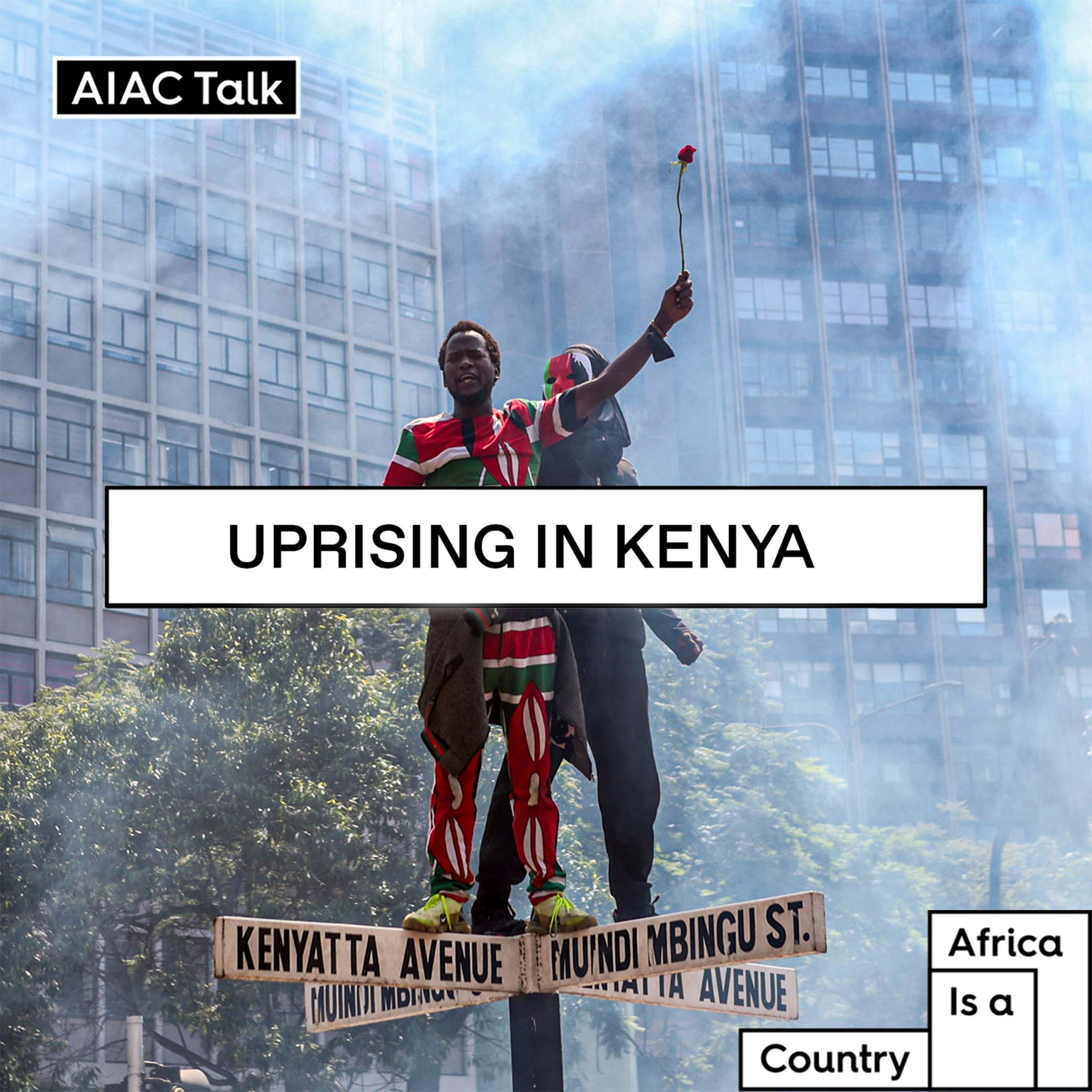
Hello everyone. Welcome back to the AIAC podcast. My name is William Shawke and you're listening to this, which is Africa is a country's weekly destination, which for analysis on news and current affairs happening on the continent and elsewhere from a left perspective. This week we are talking about what is happening in Kenya. Over the last two weeks, Kenya has been rocked by widespread protests against a controversial law that aims to raise taxes. The 2024 finance bill sought to amass at least $2.7 billion in funds, primarily for the purpose of repaying creditors and stabilizing the country's ballooning budget deficit, with public debt standing at 68% of GDP, which is higher than the 55% that the IMF and World bank have recommended. Hmm, this story sounds familiar, I'm sure. Dear listeners, Initially, the bill proposed controversial tax hikes on basic commodities such as bread and cooking oil, which were dropped on June 19 after the first wave of protests the day before. Nonetheless, Kenya's parliament passed the bill, and the bill at that time still included provisions such as a 16% tax on goods and services used to equip specialized hospitals with over 50 beds, which some worried would increase the cost of health care. After protests continued, President William Ruto announced on June 26, which is yesterday at the time of recording, that he would not sign the bill, conceding that the people have spoken. The day before, however, he called some actions of the protesters, particularly the storming of parliament after police shot at demonstrators with live ammunition, an unprecedented attack on democracy. Why are these protests significant? Writing this week in Africa as a Country, Kari Mugo observed that this historic week marks a new era. After many years of discontent and political apathy, a renewed desire for political engagement has ignited in Kenya. The protests have wide demographic appeal, but have primarily been led by Gen Z, who in Kenya are a group that largely did not participate in its 2022 general elections. And although the bill has been put on hold, protesters are still taking to the streets demanding Ruto's outright resignation. Ruto, who came to power in 2022 after narrowly defeating Raila Wadinga, is widely.
- [02:42]
A
Viewed as out of touch.
- [02:44]
B
Despite styling himself as an everyman hustler, his time in office has been marked by deepening austerity that is worsening and escalating costs of living crisis. And it is in this context that Ruto has regularly told Kenyans to tighten their belts. But in one of many examples of do as I say, not as I do. Last month, Ruto angered many when he chartered a private jet instead of using the presidential carrier to visit Joe Biden in Washington, the first visit by an African leader in 16 years. So to talk about these protests and what lies ahead for Kenya, I'm joined by Wangui Kemari, who's our East Africa Regional Editor. Wangui is also an anthropologist based at the American University in Nairobi and is a participatory action research coordinator for the Matare Social Justice Center, a community based organization also in Nairobi. So here is my conversation with Wangui. Enjoy.
- [03:43]
A
Thank you very much for coming onto.
- [03:45]
C
The podcast, Santa Sana. Thank you.
- [03:48]
A
Will Karibu. So I want to start by asking what the mood in Kenya is right now at the time of recording this conversation. It's Thursday the 27th of June in the morning as of Wednesday the 26th of June. The latest is that Ruto has declined to sign the controversial finance bill into law. Despite that, a lot of Kenyans have vowed to continue taking to the streets. So I'm interested to know how are people feeling, how are they responding to Ruto's decision, what might come next?
- [04:35]
C
Thanks, Will. So just to give a background to kind of contextualize people's feelings at the moment, since last week, Tuesday when the finance bill was being read for the first time, it was having its first reading. So there's two readings, then a vote and then the president assents. So since last week, we've been having protests on the street because people don't want a finance bill that would put 16% VAT on bread, would tax mobile phone transactions that would tax diapers and sanitary pads. And so people are annoyed, especially when the president and his, the larger government talk about how Kenyans need to live within their means while they have ostentatious purchases, confidential purchases that really make sense. So for the first time in a long time, across class, cross ethnic, inter religious, intergeneration group of people took to the streets. Obviously though at the at the forefront were Gen Z who were mobilizing through X and different fora and they took to the streets and on Tuesday they're on the streets. On Thursday they were on the streets and this past Tuesday. So two days ago they there was the largest now group of people on the streets. The media didn't give up a formal number, neither local or international media, but people were saying there were up to a million people just in Nairobi and hundreds of thousands more in 63 different towns across 30 counties. So following the manifestation on Tuesday, and I know there were live images of parts of parliament burning and the police shooting on the streets, but following this Mobilization. And it's important to add that I've received so many emergency messages from people around the world saying, are you okay? Certainly things are scary, but above all, we also need to highlight the unity, the joy, the, this watershed moment where people have come on the streets. So following that protest on Tuesday where people actually accessed Parliament, burned down a lot of MPs, the MPS who voted yes. They burnt down their, their supermarkets, their offices, their cars. They're following that. The president had a big tantrum on TV and called everyone treasonous. Shut down the Internet for the first time at night. It was very slow. And then I'm just then committed. The police committed really what is a massacre in a neighborhood called Ghidorah, which was, until now, we don't know how many deaths have happened. The official number from the Police Reforms working group is 53, but it's said to be much higher, especially by doctors who are treating all of these different injured and, and trying to account for all of these dead young people. But following this, and I don't say this to gloss over the fact that so many young people have been killed, but following this, yesterday, I think he got a phone call from all of his imf, NATO people who are like, dude, you need to, you need to deal with your Africans who are mad. President Ruto said that he would concede defeat and not sign the finance bill. So this happened. So on Tuesday night, after these large, large protests and actually media houses captured the police shooting live bullets to protesters on, as they were accessing Parliament. Following this power, but also all of this really sinister actions by the Police, the president, 9pm on Tuesday, called us all criminals and treasonous, then seemed to, less than 12 hours later, less than 24 hours later, change his mind and say he's not signing the bill. But now people say it's beyond the bill right now. There's all of these people saying we need to go to State House to take it over. There's others saying we need to go to Parliament because it's also. They're just tired of this brazen arrogance, this disregard for what Kenyans are saying. The cost of living crisis is just untenable. And so the mood, short, very long story. To get to your question about the mood, the mood is both one of like collective rage, grief, but also recognition of the power that we have. And I hope we can hold on to that. I really hope we can hold on to that.
- [09:50]
A
So I want to talk about Ruto as a political figure because I think for a lot of people watching from afar. It might come as a surprise that this darling of the west who tries to position Kenya as this exceptional democracy on the continent, has unleashed such wanton repression on his own population. But I think it's worth going through a little biography of who Ruto is and how he got to the position he that he's in now. So to remind our listeners, Ruto rose from poverty to political office in the 1990s. He was under the tutelage, mentored by Kenya's autocratic then president Daniel Arab Moy, who was in power from 1978 to 2002 for 24 years. And he has this rags to riches story about how he went from a chicken seller to the highest office in the land. And he and former president Uhuru Kenyatta stood trial at the ICC in 2010 after being accused of instigating ethnic violence during and prior to the 2007 general elections. Both men emerged unscathed and tensions grew between them after the contested 2017 election. And that came to a head when Kenyatta backed his old rival Railo Odinga over router for president in 2002. However, Ruta won. And when he came to power, he presented and styled himself as this everyman, right? He was a hustler and he wanted to turn Kenya into this hustler nation. And the slogan of Ruto's United Democratic alliance and their symbol is this day laborers wheelbarrow was kazi Nikazi, which in Swahili means every hustle matters. So how is it the case that this person who presents himself as a person who's sympathetic to the struggles of ordinary people, he celebrated street hawkers, vendors, small business owners and entrepreneurs. And now he's implementing policies that favor elites, international finance, capital, creditors, so on and so forth. So how do we make sense of his conduct when it contradicts everything he espoused during his election campaign in 2022?
- [12:31]
C
You know, and I really, I need to say that for many people, Ruto really had a campaign that was very, very compelling. I certainly didn't vote for him. I just want to make that clear. I actually didn't vote and I think everyone is still chastising me for that. But there was just no, the options were dire. But he really had packaged himself as someone who was going to fight the dynasties. So this is Uhuru Kenyatta, who was this, who was the son of the first president, and Raila, who was the son of the first vice president. So he really did. Despite his history in the icc, his history land grabbing, despite this history, he really did manage to package himself as someone who was now being ostracized from power because of this rift with the. With Uhuru because he had this history of poverty. He was a hustler. And so he packaged himself as a hustler. A narrative that was very compelling for many Kenyans that we needed to move away from dynasties. So he really, I mean they had a manifesto where that was very detailed. They talked about their whole plan for you know, rescuing the economy, providing services, even providing they even had a like sections for women in particular provision of free sanitary pads, universal health care, etc. But really when he came into power he just went to bed with the same forces he took up IMF bailouts that are seen as a hidden hand in the finance bill. And some people even say that this finance bill was probably written by the IMF because the austerity measures are so they're kind of mirror the provisions of the structural adjustment programs in the 90s by telling us to we need to raise money to reduce the deficit but also just cut services and tax people just in ways Bread, Come on who. How are you taxing bread? How are you taxing diapers? How are you taxing? They also wanted to have this. They were going to tax vegetable oil. Vegetable oil for cooking as well. So this cross section of taxes that would have just made the situation even worse for everyone. So how did he shift from this icon of the hustler to where we are now? We're really not sure. But I think he's just hidden. He's just revealed his. His true face. And his government is so arrogant. It's full of people who wear seventy thousand dollar watches who give two hundred thousand in community fundraisers but they can explain where that money came from. They have all these TikTok videos dancing in front of their luxury cars. And I need to highlight and I'm not being like a petty woman being petty to another woman but this. There's a nominated senator who even knows how she got there called Karen Yamu who said when her response to the proposals to tax sanitary paz was at People should just use tampons. You know what I mean? This is the kind of arrogance that people are getting that we are getting from this government. And so after decades of decades of violations I think people just had enough and this bill mobilized really even across section if you went to the protest you'll see like South Asian descendant people on the road. White people on the road. Of course the majority are this demographic that is 70% of the population under 25 under 30s on the streets, who can't get jobs, who know there's no meritocracy, whose access to education has been limited. It was already limited because Only less than 5% of Kenyans can access post secondary education. And now that they've tripled school fees, probably as a result also of these IMF bailouts and also reduced loans to for university, their futures are not guaranteed. We've stolen all of their futures. And this generation, my generation as millennials and the ones before us have not done enough to prevent this trajectory where our youth just don't have futures.
- [17:07]
A
There's a way in which a lot of commentary about these mobilizations have presented it as something that has seemingly come out of nowhere. Do you think that's accurate? Because I think there have been glimmers of discontent and certain sectors taken to the streets. One thing we've covered in Africa as a country, for example, was the doctor strike of Kenyan doctors taking to the streets to protest the government reneging on a collective bargaining agreement. So where do you think the protests came from? Has discontent been building and this was the straw that broke the camel's back, or did they really generally appear from. From nowhere?
- [17:59]
C
I don't think they appeared from nowhere. And I think those are people who, who only see politics or articulations of politics in one way, whether it's. Who say that, whether it's political parties or voting. If you think politics is just voting or political parties, then you're not going to see the different expressions of discontent that young people have, whether it's in like on the Internet or whether it's just not voting. I think, and the statistic is that I think of the. This government was voted in by less than half of the percentage of people who could vote. So that already shows you a lot. And of the. I think at least 70% of young people who could have voted or were registered to vote didn't vote. So that is also an expression of discontent that they didn't feel that they were represented by the two people on the ballot box. But certainly I think there's been discontent exhibited. But what I can concede is that I don't think people foresaw young people putting their bodies on the line in the way that they are doing now. That I can for sure concede because I think we grew up in the era where your via osmosis. You, you take the fear of your parents who had 10 years of a Kenyatta regime and 30 years of a Moi regime. So you've taken up that fear you know, if you go on the streets, likely you'll be bashed on the head or, you know, so I think a lot of us had that fear. But this generation that didn't grow up with moi, that also have the Internet on the palm of their hands, they can learn information, they don't have those same fears. And so I don't think they came out of nowhere. We were just not looking for how young people enact politics. But what is for sure unprecedented is how this generation has come and put their actual bodies on the line and compelled their parents, ashamed all of us, into also joining them on the streets.
- [20:14]
A
Why do you think this is the issue that rallied young people? I mean, of course, the answer appears obvious because when you scrutinize the finance bill, and you articulated very thoroughly just how comprehensive it is, just how it almost makes impossible the ability to reproduce daily life, because as you asked, who taxes bread? Who taxes vegetable oil? Who taxes these basic everyday commodities that people require to survive and are doing so already in a climate that is punishing with a rising cost of living crisis, rising inflation and so on? But to this idea of the fearlessness of young people, the fact that they haven't inherited the baggage of the parents, the fact that they're enacting politics on social media, why do you think there. There was this desire to take to the streets? Because Generation Z is often dismissed as a keyboard generation, that the extent of their frustration and discontent will only ever be expressed digitally and that they don't really see the value in street politics. How did it come together that there was a mobilization where people, in a very, I don't want to say uncoordinated fashion because it was coordinated, but certainly sort of horizontal, leaderless fashion, decided that this was the next step to, quote, unquote, hashtag, Reject Finance for 2024.
- [22:03]
C
You know, I think there are many factors, and some of which maybe we need will become more clear after further reflection, but in some ways, they were dared by the arrogance of. Of these MPs who are like, take over the government. Then if you're not happy with these are some of the narratives that were coming or being espoused by these government officials who are like, okay, you don't like the finance bill, that's your problem. Take over the government. So in some ways they were dared by the arrogance of these mps who didn't think anything could happen. But equally, I think they'd done enough pleas because prior to the marches, they were all of. There were these opportunities to have for people to Give their own, propose amendments to the bill or show how it would impact different communities, whether it's people with disabilities, people with different ailments, different industries. So there had been that opportunity to highlight their causes for concern. And people had been saying please, had been talking, had been seeing the MPs to no avail. So this was the. This made sense, this step to go on the streets made sense, especially for young people. If you have your first job and you earn 50,000 shillings or maybe 500 shillings, and now you'll have a tax, two health care taxes, a housing tax for a house, you'll never see additional taxes on foods. What you take home is less than half of that 500 shillings. So it's your first job and this is what you're faced with. You can't plan yourself. The cost of living crisis is so high. So I would think all of these different factors came together and people. To get to this point, there was lots of discussion online in. Even today morning there was at least an ex. I don't know what those. I'm dating myself, but what those meetings, the X space, those spaces. Yes, sorry y', all, I'm old but four hours long. On the weekend there was one the whole day where people are democratically letting each other talk to showcase ideas, exchange ideas. Also following the Tuesday protest, so many activists were abducted. So I think this also propelled people to get to the street and they just. And then following the abductions of these activists, one MP who on yesterday had his whole office burnt said, you are all just KFC eating, Uber driving. No Uber driving, Uber, taking kids on the street. You don't know anything about this finance bill, so take your privilege as urbanites away. So these are the kind of narratives and actually government actions that saw more people go to the streets. I think that provoked more people to go to the streets. Just the sheer arrogance, the fact that they were not being listened to at all, the fact that there's no structural process to allow them to be listened to or to be represented. And the realities of their material conditions, really their take home at the end of the day, if they have a job is really. Is nothing. You can barely live with it in this country. I mean if it was. Yeah. If this finance bill was actually put into place.
- [25:28]
A
So you've spoken about how the protest has evolved to go beyond the finance bill. It's an expression of rage and anger at how out of touch Kenya's political class is with ordinary people. What might the trajectory of that be? Because looking at these protests, I think Onlookers see shades of ansars of these must fall of the uprisings in North Africa and the Middle east, sort of the kind of model of 21st century protests, at least over the last 15 years, that rally around common big demand that is targeted towards certain policies or targeted towards a specific system and that appeals to a cross section of society. But as things unfold, I'm wondering what might the lifespan of this mobilization be? Might the energy be sustained towards some kind of thoroughgoing political or social transformation? Or do you think that, and this is the other dynamic, in sort of moments of uprising like this one, there's always some kind of counter revolutionary dynamic as well, whether it's direct repression as you're describing, or placation as Ruto's tactic now seems to be, or co optation. So I'm curious as to what you think the different afterlives of this moment might be.
- [27:16]
C
Thanks, Will. And before I say that, I just wanted to highlight how everyone played their part. There were Ubers yesterday. Sorry. On two on Tuesday, fairing people with disabilities for free so that they could be in the protest. People are distributing bananas. People were playing football together, distributing water and mandazis and chapatis to each other. And now, following the death initially of two protesters, Rex Masai and Ivan K. Rightu, on Thursday, people raised close to $30,000 in seven hours for their funerals. And now, even if we still don't know how many are dead, and if we are working with this number of 53, they've raised just from people sending small amounts of money, close to $150,000 just to take care of their families. So there's a real recognition that we're all in this together and we are trying to do our part. And for the most part, the protests over the three days were peaceful until the cops shot people on live TV outside Parliament. That's when Parliament started burning. That's when there was looting, which also included the police. So I just wanted to highlight how this is a really, it's a really powerful moment. And my friend, my friend yesterday told me when he was at the protest, he felt like his heart was breaking, that we all needed to be on the streets to demand justice for each other. But at the same time, his heart was mending because of how everyone was treating each other and the camaraderie on the streets. What happens now? You know, it's moved from the Reject Finance Bill 2024 to Ruto must go. That's the rallying cry now. Kenyans don't do things in, in small measure, but I, that in itself is a bigger task. And so today people are on the streets proposing to occupy State House, occupy Parliament, although there's still not, I think determination of what will happen. But that's a rallying cry and the government can't ignore it. And so even if Joe Biden gave Ruto the first state visit of a African president in 16 years, even if now Kenya is a, is a non ally, none something I think I wrote it down. It's like we are a big NATO ally. Even if we are not in NATO, no one cares. People just want better for Kenyans and they don't care that he has gone to prostrate and make himself this ostensive Pan African leader who cares about the environment, but just really wants to sell carbon credits that has pandered now to the IMF and his yaman and to Joe Biden so that he can send Africans to go kill Africans in Haiti. People are just tired of this guy. His waveringness on, on Palestine, the fact that it's actually possible that we will be. There's an agreement, it's suggested and I need to find further evidence for this. But that part of the outcomes of his Washington trip was to allow Kenya to be a base from where we attack Houthis. Can you imagine Houthis who are sinking ships. So on so many fronts we're just tired of Ruto. And so collectively, obviously the main grievances are local. The lack of money for doctors, the lack of they were trying to cut a school feeding program. Can you imagine in this cost of living crisis. So these grievances, whereas they're local, they're also inflected by just our, just our annoyance at how he's positioning himself in ways that lead to like death in Palestine, in Haiti and elsewhere. So yes, the rallying cries Ruto must go. How we are going to mobilize for that we are not sure. We. But the hope is that whatever fires we can sustain from this period, that we just sustain them for everyone. That's all. I really, I wish I had a blueprint and I would tell you that tomorrow Kenya is going to become the first socialist state in East Africa. I can't tell you that. But what I could tell you is that we just need to keep these fires burning. And I, from what I'm seeing, people are committed to keeping these fires burning. And if, if the love and connection on the street over the last few two weeks is anything to go by, I think we can do it.
- [32:20]
A
I think the images you're describing are powerful for the one reason that they're images of solidarity, of people being selfless and prioritizing the needs of others before the needs of themselves. And I think juxtaposed against Ruto's hustler mentality, which is. Which portrays a kind of politics of every man for himself, every person looking out for their own interests until they're at the top, which is what he embodies, I think is. Is powerful. And I think, especially in a country like Kenya, which you joke about how one hopes that Kenya would become the first socialist state, fully socialist state in East Africa, but at least the kind of legacy of the ruling class that is in power now, and the ruling class before it has been being a kind of intermediary or broker for Western interests. It's kind of the gendarme of the west in East Africa that during the Cold War period was trying to ward off the growth of the Eastern bloc in places like Tanzania and Ethiopia. And that has continued to play this role of trying to suppress radical ferment amongst the population. So the question, I guess, and you acknowledge that you might not have the answer is what to do with those energies and how to give that sustained political expression. Because suppose Ruto does go, suppose the crisis simply reaches a crescendo where the only way for him to save face is to accede to the popular demands of the people. The one question is, what happens, sort of practically, what does the constitution say happens in that scenario? Does the vice president take over? Does. Does another election have to happen? What is the law? And then the second question is, who fills in that vacuum? Because as you said earlier, a big plank of Ruto's campaign was this challenge to the political dynasties of Kenya, where you just have this revolving door of big men, whether Kenyatta or Odinga, who claim to be different to the other, but who are exactly the same. And it turns out that Ruto himself is a character in this revolving door, and he's no different to the others. But given that, what might. What might be the political force that. That fills the vacuum, and I don't think there has to be necessarily. I mean, I'm interested to. To know what might happen in kind of the immediate term, you know, who might. Who are the people who stand to, in a narrow sense, benefit from this moment? Is Odenga someone who now has some traction behind him simply because he's not Ruto? Is it another political figure close to power, or is it genuinely something that might be a vacuum. And it's hard to predict what might unfold.
- [35:49]
C
You know, structurally right now, ever since we had the elections in 2022, we have an independent Electoral and Boundaries Commission that doesn't function because, and that's the, that's the ultimately the government institution that oversees elections or operationalizes any elections. So why I'm highlighting this is because really, even if we were to say Ruto must go and then the DP would take over for 90 days, we don't have an organization that can have elections. Currently, many people are trying to recall their members of parliament because they're like, how can you, you know, this constituency, you know, 20% of Kenyans are living way below the poverty line, but you voted yes to this bill. So people are trying to recall the MPs, but it's hard to recall an MP when you need at least 30% of the registered voters to sign. And then once you've got that petition filled out, you take it to the ibc. But the IBC is not working because if there were five commissioners, three of them were seen to be allied of Uhuru Kenyatta. And so they were fired or resigned. Another one resigned. So it really has no commissioners at all. So we, we also have this, this structural problem. And, but the fear is if we don't do something, we're really back to MO 2.0, the Shia abduction. I think there's been at least 20 activists who are just abducted from a bar or abducted from your home at three in the morning so that the spokesman, the Kenya, the spokesperson for the government can come and say we're trying to find what international forces are behind this. Maybe it's Russia because when Ruto went to G7 he was saying something in favor of Ukraine. So maybe it's Russia or maybe it's this civil society, evil people like Mazari Social Justice Center. Imagine they even brought this small little grassroots organization throwing shade at it, saying that it's us who are, are financing these protests because of evil society. So but basically we could go back to MUI 2.0 because they're just not ready to face the lack of confidence that people have in them. And so there'll be a lot of counterinsurgent actions besides abductions. We can see from the massacre of really a neighborhood called Githurai that what's ahead of us if we don't do something and who can fit into this vacuum? Currently there's, I think in the opposition front, it's definitely not Odinga. I don't think Gen Z would Vote for Odinga. Honestly, I think Odinga is almost four times the age. He's just younger than Joe Biden who's very old. But I mean, not to say that old people can't do stuff, but come on, you need to, you need to just. Sometimes you just need to sit down and let other generations take over. But I don't think they would vote for Dinga. But I see maybe there's some love for Nairobi senator called Edwin Sifuna. And then this other MP who's who used to be a student leader is trying to angle, I think to fit into this alternative position. And it's very scary if people vote for him because he was caught live on camera shooting a DJ for nothing, for just asking him a question and because our justice system is so panders to elites. He never went to jail, he never saw jail time. We have actually three murderers in parliament who are just sitting there, but hopefully not. So this guy is called Babu. We know this young guy who's kind of angling and talking about all of this support for, for the protest, but he, his track record is very, very, very scary. So maybe this Nairobi senator called Edwin Suifuna. But let's see, maybe it's still early and other people will emerge. But I, I don't know if Ruto can come back from this. Maybe if he doesn't go now, I don't know if he can get in 2027 if he can get the votes to have a second term in parliament or second government.
- [40:22]
A
So perhaps as a closing question, you pointed out that on the one hand the likelihood that Ruto can survive this is slim. But the way he does survive this is to tap into the playbook of his mentor Daniel Arap Moy and to just close ranks, heighten the repression and hope that that demoralizes people sufficiently that they become pliant and keep their heads down. And you said that that might happen unless we do something. What does what is doing something look like? Is it keeping up the energy on the streets? Is it concretizing some kind of political alternative? What might it be?
- [41:08]
C
You know, I think we need to fight on different fronts. One thing Gen Z did, which I need to also flag is because you Ruto's big constituency was the churches. Just because his wife is. Anyway, I could talk lots about her fake faith diplomacy, but I wouldn't talk about her fake faith diplomacy. But the churches were, were silent. And Gen Z came on Sunday, this last Sunday and said we need to occupy these churches because they don't say anything when we're being shot in the streets. They don't say anything about the reject finance bill and they went to churches to occupy them and demand that churches say something. And so why I bring up churches is because this constituency of churches, whether it's Catholic bishops or the Inter Religious Council of Kenya, have now said they reject the finance bill and actually went after being quiet all the time and now went to see Rutoya today. And so if this constituency is slowly turning, the, the ground is shifting. So on that front, people need to keep pressuring churches, they need to keep organizing as young people. We need to recall our MPs so that there's his party no longer has a majority. We need to keep talking democratically on all of these different spaces and doing the hard work of, the very hard work of trying to build actual alternatives. That, as you know, is full of many contradictions, many hurdles. Because the system itself, once you enter it, you just become, it's rat. Right? You're not there. If we leave it standing, you're just, it's rat. But we really need to do that. And I don't think Gen Z can be placated. Like middle class people who once they heard Ruto's speech yesterday were like, okay, fine. But Gen Z were like, no, it's not fine. You need to go. It's not about the finance bill anymore. And so I think the ground is shifting on different fronts, even in areas that were I think the bedrock of Ruto's support and hence the concession, because I don't think he's a conceding kind of person. But he really had to concede yesterday. So I think just these, this incremental work on different fronts. But we're not going back, Will. I don't think we're going back.
- [43:35]
A
Let's hope that the only way through is forward. A reminder of who I've been talking to. I've been speaking to Wangui Kimari who is an anthropologist based at the American University Nairobi Center. She's also the participatory action research coordinator for the Matare Social justice center in Nairobi and she is the East Africa Regional Editor for Africa is a Country. Wangui Asantesana Asante.
- [44:05]
C
Will, thank you.
- [44:08]
A
A reminder that you have been listening to the Africa as a Country podcast. Do subscribe to us wherever you listen to your podcasts. Don't forget to check out Africa is a country.com for new creative writing on big ideas from an African and left person perspective. Follow us on Instagram, Facebook and Twitter and soon. Tik Tok. We feel too old for Tik Tok, but we're listening to Gen Z and we. We want to go where they're at as well. So to you, our listeners, thank you very much and we'll catch up with you next time. Kohe.