← The American West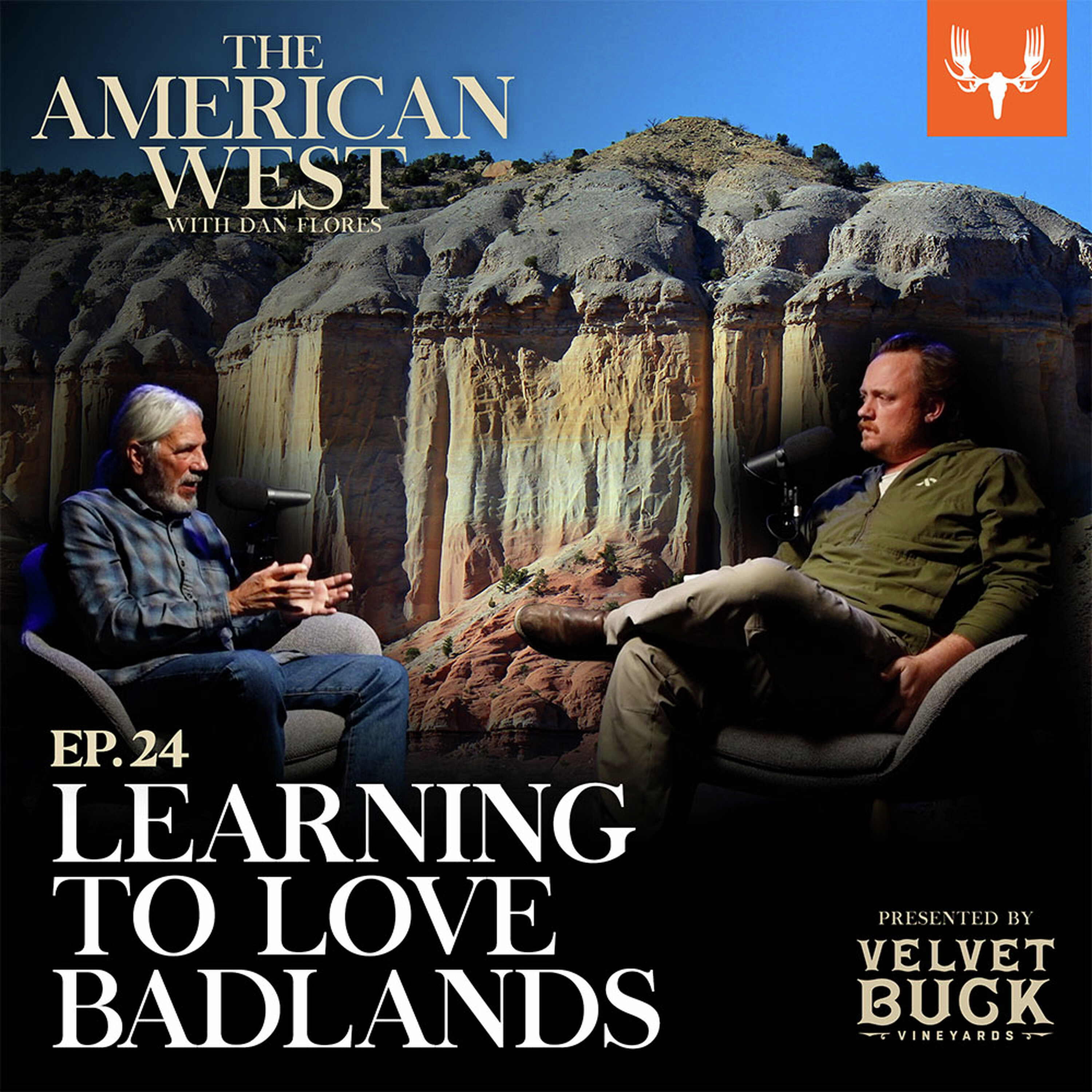
Loading summary
Transcript35 lines
- [00:00]
Commercial Announcer
Okay, so you know t mobile 5G home Internet is easy on the wallet, but here's some big news. It's now the fastest 5G home Internet according to the experts at OOKLA Speed Test. And yeah, it's a great value because you get a 5 year price guarantee. T Mobile 5G Home Internet it's the fastest 5G home Internet at a great price with savings that stick. Check availability@t mobile.com home Internet price guarantee. Exclusions like tax and fees apply. It's the fastest based on OOKLA Speed Test intelligence data from the second half of 2025. All rights reserved. Man, I'm telling you what, when I need auto parts, I go to O'Reilly Auto Parts here in my hometown of Bozen, Montana. Love those guys. Always nice, always helpful. They are in the business of keeping your car on the road. O'Reilly Auto Parts offers friendly, helpful service and the parts knowledge you need for all your maintenance and repairs. They've got thousands of parts and accessories in stock, in store or online so you never have to worry if you're in a jam. Need your battery tested, windshield wipers replaced, a brake light fix or a quick service? They'll help you find the right part or point you to the nearest local repair shop for help. Last time I was in there it was for wiper blades and a brake light bulb. Whether you're a car aficionado or an auto novice, you'll find the employees at O'Reilly Auto Parts are knowledgeable, helpful and best of all, friendly. The professional parts people at O'Reilly Auto Parts are your one stop shop for all things auto. Do it yourself and you can find what you need in store or online. Stop by O'Reilly Auto Parts today or visit O'ReillyAuto.com me eater that's O'ReillyAuto.com me Eater hello, it is Ryan and I
- [01:53]
Dan Flores
was on a flight the other day playing one of my favorite social spin slot games on jumbacasino.com I looked over
- [01:58]
Commercial Announcer
the person sitting next to me and
- [01:59]
Dan Flores
you know what they were doing? They were also playing Chumba Casino. Everybody's loving having fun with it. Chumba Casino's home to hundreds of casino style games that you can play for free anytime, anywhere. So sign up now@chumbacasino.com to claim your free welcome bonus. That's chumbacasino.com and live the Chumba Life Sponsored by Chumba Casino. No purchase necessary VGW Group Void where prohibited by law 21 terms and conditions apply. Eroded barren formations called Badlands, avoided during Western settlement at the hands of scientists and artists, and have evolved into classic Western landforms and sought out destinations in our time. I'm Dan Flores and this is the American west, brought to you by Velvet Buck Wine, where the hunt meets the harvest. A portion of each bottle goes to support backcountry hunters and anglers. Limited supply available@veletbuckvineards.com Enjoy responsibly. Getting over the color green and learning to love Badlands. Out on the southern high plains, low down in the formations of a famous panhandle canyon called Palo Duro that gives rise to the Red river, there's a landform some long ago imaginative appreciator named the Spanish Skirts. One of America's internationally famous artists, Georgia o', Keeffe, first saw this canyon when she was a young art teacher in West Texas during World War I and always thought the common name her young guide used for the Spanish Skirts Badlands is what he called them was a peculiar miss of appreciation. O' Keeffe didn't know it then, but in another two decades she was going to be in a position to help other Westerners, Americans who loved interesting landscapes and much of the world develop a proper appreciation for a landform once dismissed as useless ground taking up good space on the planet. What O' Keeffe foundation first saw in West Texas in 1916 were 240 million year old Permian age clays and mudstones eroded by wind and water into horizontally banded mounds. The Spanish Skirts aren't a large landform standing at most 25ft high, but if your eyes are moved by color and sculptural form, as o' Keeffes obviously were in the right light, the Spanish Skirts can take your breath away. An initial impression is of scooped Neapolitan ice cream plopped down blobs of earth consisting of layered stripes of different colors, at least seven different hues altogether. The bottom base of a Spanish Skirts mound is in the pale tangerine of Palo Duro's canyon floor. Above that is a second layer, sometimes demarcated by thin horizontal stripes of white gypsum of a dark burnt hook, em horns orange above that are again slender ivory bands finely drawn as if with white ink. Then come the Latina fireworks in succession there is a broad swipe of deep lavender purple, then another of a saffron yellow, then those two finished off by an unexpected and quite wonderful band of coffee bean chocolate. Where the Spanish Skirts emerge from the canyon slopes as freestanding mounds, the final flourish is often a cap of creamy white atop the chocolate, like frothed milk floating on the surface of a latte. I've walked among the Spanish Skirts in slanting reddish morning light and in the glow of yellowed sunset air, and I understand why. Georgia o' Keeffe was fixated by their earth art. On several hikes in the 1910s, while the rest of the world was distracted by stories of trench warfare and poison gas in Europe, o' Keeffe was becoming seriously dazzled by Palo Duro canyon earth art. Everyone else hated the western high plains, she said. Everything was horizontal and yellow rather than green like the East. But as she told her friend Anita Pollitzer, she couldn't get over the colors and shapes of this canyon incised into the plains. It's absurd the way I love this country, she wrote. Lucky for those who appreciate the art of landscape, and especially lucky for those of us who are drawn by the uniqueness of Western scenery in a United States that has had a hard time getting over the color green. O' Keefe never recovered from her fascination with barren, eroded badlands. When she returned to the west in 1929, she at once sought out New Mexico cliffs and badlands that reminded her of Palo Duro and the Spanish Skirts, finally buying a seven acre ranchette at the foot of the Ghost Ranch cliffs northwest of Santa Fe. For the next half century, she endlessly painted the badlands, ignoring the inclination of homesteaders to regard badlands as sterile, bad places to farm, or of religious types who like to name Western geologies after Hades and Satan. O' Keeffe called her favorite badlands the Red Hills, the White Place, the Black Place. For decades she offered the art of a graceful, sensual, color saturated Western landform to America and the world. It was an art that helped change the perception of badlands forever. Thomas Jefferson may not have known this, although Lewis and Clark's descriptions helped, but we all understand today that the American west is a region of many diverse landforms and ecologies. The west is made up of extensive prairies and plains and a horizontal yellow terrain of overlapping arcs of grasslands extending westward nearly 500 miles to the foot of the Rockies. There are mountain uplifts, many of them individual ranges like the Wasatch or the Bitterroots, within a larger framing of the Rocky Mountains, the Sierra Nevada, the Cascades, all those uplifts, with one exception, the Uintas in Utah. Running north and south through the continent, there is a vast canyonlands etched into the Colorado Plateau, a coastal rainforest. In the Northwest, there are true deserts of shrubs and Cactus. Some hot zone deserts, others cold deserts of extensive sagebrush steppes. But if one of the grand characteristic traits of the west, making it an exception to green America is aridity, lovers of the region ought to be especially intrigued by its Nepalu ultra arid landscape. This is the West's presentation of exposed geology, where chlorophyll green often does not appear at all in favor of an earth colored something like Mars. These are the places Old Worlders named badlands. The West's badlands are actually an array of distinctive landforms. They don't occupy a single region the way the Rockies or the Sonoran Desert do, but tend to erupt from the edges of these larger divisions in eroded lowlands of the plains, or at the feet of the soaring cliffs of the Colorado Plateau, or in the foothills of mountains in the deserts. Particularly in contrast to the West's mountain ranges with their forest and snow caps, the as their name implies, badlands long suffered from a spin problem. On initial encounter, they obviously lacked appeal for primates who require water, wood and shade to be comfortable. Even more problematic during western settlement, badlands offered little or no promise of economic possibilities. Lacking exploitable minerals, trees, even grass, people from the green countrysides of northern Europe or the eastern half of America reacted to badlands as a kind of worst version, desert antithesis of everything normal and desirable. As for actually conferring the descriptor bad on badlands, it seems to have been the French who first cast those aspersions when their explorers encountered them on the northern plains. They called the sterile multicolored mounds they found there Mauvais Terre badlands because they presented so few inducements, essentially none for a European looking to settle the country. Badlands take on a great many forms and colors, but like the Spanish skirts, the classic version is an undulating set of variably striped clay or shale mounds. They're often found in conjunction with other geology harder sandstones with narrow slot canyons, spires and hoodoos, upright pedestals capped with a stone that's preserved the clay column beneath. Smooth and curving with swirling connected hemispheric mounds. Classic badlands throw up while shadowing when hit with low angle sun. Their particular drama of shadows and light must have made little impression on people looking for a home. But there was an aesthetic drama there, and ignoring it wouldn't prevail forever. The creation of the west badlands goes back to sediments, ultimately existing as shales, clays and mudstones that precipitated to the bottoms of river, lake and ocean shorelines 10,000 to 240 million years ago. So stretches of badlands are often a geological gift of exposed Cretaceous, Jurassic, Triassic and Permian soils and rocks. In some badlands, the striped 35 foot mound in front of you may preserve deposits that took 45 million years and several geologic periods to deposit, which is why there can be such a variety of different colored soils. Because they were created from the shorelines of bodies of water that existed millions of years ago, and because water and wind erosion have laid them bare as landforms, badlands, everywhere in the world tend to be treasure chests of ancient life history. In fact, it was as scientific laboratories that badlands first emerged as an exciting and important landform destination in the West. Everywhere in the world, they're found, in fact. The Middle East, Spain, Tuscany, Peru, Argentina, New Zealand, Taiwan, in the Danzia formations of China. Badlands, we now realize, tend to be treasure chests of ancient life history for travelers moving across North America from east to west, as was the case for Americans in the 1800s. And Badlands first cropped up in places like West Texas, Nebraska and the Dakotas, then emerged in scattered locations from New Mexico to California. They draped the whole bottom half of Utah and appear as far north on the plains as Montana and Alberta. In the 19th century, almost everywhere, the edges of mountain ranges, canyon defiles or sweeping plains erupted into exposed badlands. Paleontologists found them to be crucial to for the fossil discoveries that took Darwinian evolution from theory to fact, which made them a peculiar scientific destination in the United States. The work that turned western badlands into a mecca for Paleontology began in 1849 when Dr. John Evans explored the Dakota badlands and published a scientific article on their possibilities. From that point, a wide range of luminaries like Yellowstone park advocate Ferdinand Vandiver Hayden intensively sought out the West's badlands to dig fossils in the post Darwin era. Yale paleontologist Othniel Marsh was stimulated by a stirring Thomas Huxley lecture in New York in 1876 to assemble a chronology of horse evolution that became the principal evidence to support Darwin's theory of evolution by natural selection. These days, Jack Horner and other modern dinosaur scholars still ply the badlands for major discoveries from the continent's remote past. We've gotten a version of this in the opening scenes of at least half the Jurassic park movies. Badlands are still the primary target of the modern dinosaur hunt in the United States, Canada and China today. Post Civil War American explorer John Wesley Powell, who saw and wrote more about the west than anyone else of his time, said prophetically of the badlands he'd explored, that they were, as he put it, a desert to the agriculturalist, a mine to the paleontologist, and a paradise to the artist. As usual, Powell got it exactly right. While scientific investigation came first and is still underway, for the past hundred years, it's been artists, photographers, hikers and simple lovers of landscape who have turned these once maligned landforms into scenery. Appreciated for its sensuousness and aesthetics. Badlands are like the western deserts in that respect, but you have to admit it took someone like a Georgia o' Keeffe or an Edward Abbey to make the rest of us begin to pay attention. Badlands reputations may have begun to change for some Americans even before o' Keeffe began to paint, though about a century before our time. With homesteading of much of the west almost over and the automobile starting to make formerly dreaded and even dangerous places suddenly less formidable, badlands began a slow process of shedding their former treatment as worthless wastes. In 1899, explorer Robert Hill descended the Rio Grande river in West Texas through future Big Bend national park, the story of which he published in century magazine in 1901. It took Hill nearly a month of constant familiarity with sites like Vermilion, Foothills of Red Clay. As he wrote before, the adjectives weird, repulsive, spiteful, bizarre and sterile finally dropped from his verbal palate, replaced with some grudging admiration of form and color. But eventually, with a lot of practice, Hill did began to appreciate this new western landform as a visual feature he could admire. Robert Hill's journey and article were a kind of watershed take on badlands, an early breakthrough from the dismissive place they had occupied in landscape aesthetics in the 19th century and earlier. It's interesting and worth some reflection, I think, that with a landform that offered no economic possibilities, whose lure for some was scientific but for most aesthetic, a disproportionately high number of women emerged as admirers of badlands scenery. Hill was initially followed by the literary naturalist John C. Van Dyke, who wrote marvelous descriptions of the grand badlands of Death Valley in his early 20th century volume the Deserts. But it was Mary Austin who emerged as a California rival to Van Dyke, as an early promoter of a badlands aesthetic, providing an American desert appreciation that even prefigures Ed Abbey's with her book the Land of Little Rain. Then there was the unlikely British expatriate photographer Evelyn Cameron, delighting through her viewfinder at the northern Plains badlands near her Terry Montana ranch, Cameron also became a devoted lover of Badlands scenery. Cameron and her husband were naturalists who studied and sometimes tamed wolves, coyotes, foxes, and birds of prey from the marvelous Badlands she she hiked and photographed, and who then watched in horror as homesteaders from the east and Europe tried valiantly, but with signal lack of success, to settle eastern Montana in the 1910s and 1920s. Cameron was followed on the northern plains by the North Dakota artist Zoe Byler, whose paintings of the almost science fiction landscapes along the Little Missouri river were attracting attention to both the place and the artist. By the 1920s, a decade before O' Keeffe's Badlands oils would take the New York art scene by storm.
- [19:38]
Commercial Announcer
You've heard About T mobile 5G home Internet, mostly for how easy it is to set up and then the value that you get. Well, there's some more big news you should know about. They now have the fastest 5G home Internet speeds. That's right, T Mobile now has the fastest 5G home Internet, according to the experts at Ookla Speed Test. That makes backing up photos from your latest hunt, streaming a new documentary, or pulling up a wild game recipe super quick. And yeah, it's a great value backed by a solid five year price guarantee. And setting it up is still as easy as it gets. You just plug it in and go. So if you want the fastest 5G home Internet with a simple setup at a great price with savings that stick around, Get T Mobile 5G Home Internet. Head over to t-mobile.com home Internet to check availability, price guarantee exclusions like taxes and fees apply. Fastest based on Ookla Speed Test Intelligence Data over the second half of 2025. All rights reserved. Man, I'm telling you what, when I need auto parts, I go to oreilly Auto Parts here in my hometown of Bozen, Montana. Love those guys. Always nice, always helpful. They are in the business of keeping your car on the road. O'Reilly Auto Parts offers friendly, helpful service and the parts knowledge you need for all your maintenance and repairs. They've got thousands of parts and accessories in stock, in store or online, so you never have to worry if you're in a jam, need your battery tested, windshield wipers replaced, a brake light fix, or a quick service. They'll help you find the right part or point you to the nearest local repair shop for help. Last time I was in there it was for wiper blades and a brake light bulb. Whether you're a car aficionado or an auto novice, you'll find the employees at O'Reilly Auto Parts are knowledgeable, helpful and best of all, friendly. The professional parts people at O'Reilly Auto Parts are your one stop shop for all things auto. Do it yourself and you can find what you need in store or online. Stop by O'Reilly Auto Parts today or visit O'ReillyAuto.com me eater that's O'ReillyAuto.com meater
- [21:56]
Dan Flores
Step into the world of power, loyalty and luck. I'm gonna make him an offer he can't refuse with family. Cannolis and spins mean everything. Now you want to get mixed up in the family business? Introducing the Godfather@Champacasino.com Test your locker the shadowy world of the Godfather slot Someday I will call upon you to do a service for me. Play the Godfather now@chumbacasino.com Welcome to the family. No purchase necessary. VGW Group void where prohibited by law 21 terms and conditions apply when Georgia O' Keefe's portrayals of the undulating, naked badlands mounds of New Mexico first went up in galleries in Manhattan, the initial reaction was shock and revulsion. Some Eastern critics concluded the artist must possess some psychological scar that frightened her of water. Of course, that wasn't it. In the 1930s, two decades after seeing Palo Duro in the Spanish Skirts, after years of life as Alfred Stieglitz's model and artist wife in New York, o' Keeffe bought a small ranchette at the foot of the Ghost Ranch cliffs and turned her work from from flowers toward the hot colored badlands and cliffs around her home. She found the curvilinear red mounds out her door, charged with all the suppleness and grace of the human form. Why do you love these barren landscapes so? An interviewer from Boston asked her years later, clearly puzzled at her passion for places so far removed from the conventions of beauty. I like color, o' Keefe replied. In the east, everything is green, green, green. I looked around me and wondered what one might paint. Plus, badlands are an especially fine place to climb around in, she exclaimed. It was the shapes that fascinated me, the shapes of the hills. One of o' Keeffe's Eastern biographers visited to try to understand the appeal of such country and concluded that the landforms that excited o' Keeffe as her landscape muse were in fact bizarre, garishly colored, and in fact ought to be extravagantly tasteless, vulgar and unbelievable. But for a painter, this was a landscape that offered up the earth itself as abstract modern art. All one had to do was paint what was there. The results were classics of a great career. Paternal and the Red Hills from 1936, Red Hills and Bones from 1941, the Gray Hills, 1942 and the Black Place 3, 1944. As O' Keeffe told her friends Rebecca Strand and Arthur Dove after finding and buying her ghost ranch home, then moving to New Mexico full time following Stieglitz's passing, I am west again and it is as fine as I remembered it, maybe finer. There's nothing to say about it except the fact that for me it is the only place. I'm about 100 miles from the railroad, 68 from Santa Fe, 18 miles from a post office, and it is good. I wish you could see what I see out the window. The earth pink and yellow cliffs to the north, the full pale moon about to go down in an early morning lavender sky behind a very long beautiful tree covered mesa to the west, pink and purple hills in front and the scrubby fine dull green cedars and a feeling of much space. It is a very beautiful world. I wish you could see it with John Wesley Powell and o', Keeffe, with Robert Hill and John C. Van Dyke and Mary Austin and Evelyn Cameron and many years later, Edward Abbey to show the rest of us how to love arid and Badlands country. Badlands have slowly progressed from denigrated or just ignored Western landforms to settings many of us are drawn to and avidly seek out. Almost shockingly, in our time, Badlands have become the sites of national parks. South Dakota's Badlands National Park, Theodore Roosevelt Historical park in North Dakota, Dinosaur National Monument in Utah, Colorado Grand Staircase Escalante National Monument in Utah, Death Valley national park in California, Big Bend national park in Texas and and Petrified Forest national park in Arizona. There are also numerous Badlands state parks Mika Chica in eastern Montana for one, Toadstool Geologic park in Nebraska for another Dinosaur Provincial park in Alberta, and even a sizable number of official federal wildernesses like the Ojito Badlands and the Bisti Badlands wildernesses and Munitions Mexico. Once passed over and scorned by homesteaders, then ignored in the push to create national forests and mountains and national parks in western canyons, the West's badlands have somehow acquired an audience of admirers in the last hundred years. So it's probably clear enough that I'm Badlands smitten myself. I'm powerfully drawn to Badlands, so sculptural shapes and to a coloring that can easily rival a box of crayons. I'm amazed at the sterile granularity of their mounded surfaces, and at the runoff rills, rainwater forms on and between them. Like dunes. Badlands are also friable enough that they're always changing their look. Because badlands aren't confined to one particular region of the west, they but show up scattered across its geography. I'm always on the lookout for badlands I've not seen before and always excited to discover new stretches with new color combinations. So I've traveled all over the west to hike around in badlands country that's new to me. I once drove solo all the way from West Texas to South Dakota for no other reason than to be able to wake up amidst the pastel yellow humps to the horizon landscape of Badlands National Park. I've gone far out of my way to go for hikes, sometimes alone, sometimes with friends in the Bisti Ardena Zen Badlands wilderness of northwestern New Mexico. I've had badlands adventures in Teddy Roosevelt National Historic park in North Dakota, where Teddy himself fell in love with the strange look of a topography that struck him as colorful and weirdly compelling. More than once I drove all the way across the horizontal length of Montana from Missoula to Makoshika State park to experience the Terry Badlands, where Evelyn Cameron photographed Montana and its wildlife a century ago. I've hiked the badlands of Death Valley in both winter and summer, and on the island of Kauai in the Hawaiian chain, I've blissed out more than once to a miniature river complete with waterfalls, bouncing musically along through terracotta badlands and Waimea Canyon, an unexpected slice of the arid west in the middle of the blue Pacific. There's a strange passion to all this. It's not that I fail to appreciate high alpine meadows or towering redwoods in a Pacific Northwest rainforest, but for some reason I find wandering around a place like Arizona's Petrified Forest national park or the Painted Desert of the Navajo Res, easily as thrilling as climbing up to a glacial cirque in the Colorado Rockies. The feel of champagne air on your skin as you stroll alone or with a companion under a flawless cobalt autumn sky through 35 foot high mounds with the crunch of the granulated dry clay in your ears with every step, a sense of flow as your body moves through receding and approaching elemental earth forms, barren of obscuring vegetation with bands of color, a wild visual riot at every hand. That's a sensuous immersion in place and moment that works for me. New York expatriate writer Mabel Dodge Luhan in her book Edge of Taos Desert, called the Badlands country on the high road between Santa Fe and Taos. A journey through a pink and yellow dream. Maybe that's it. Places of this kind are things we more usually encounter in dreams, just to experience the whole of the place. With the census dialed up to full gain, I once walked through yet another Badlands, locally known as the Painted Desert, this one on the northwestern edge of Big Bend National Park. It was a cloudless morning in June. Big Ben is as far south in North America as you can get and still be in the United States. And at that latitude, June means searing heat that's felt in the nostrils with every inhalation. It's heat that is also a smell. It can even leave a coppery taste in the mouth. This particular Morning began at 78 degrees, but my thermometer read 92 by 9am 98 by 11, and 108 shortly after noon. By that point, my body felt like a bag of mostly water, the blast furnace Big Ben's Painted Desert desperately wanted to reduce to raisin form. Wandering half lost in that astonishing Badlands, it struck me while in the midst of it, like being on a page planet made up of herds of recumbent gray and lavender elephants whose bodies had partly melted into the ground. I had to remind myself at 1:30pm that five hours in a sauna is more than enough. The heat bug screeching of cicadas in the tamarisk thicket where I'd parked my jeep guided me back to shade and safety. But Even on a 112 degree day I linked lingered longer in that world of elephantine forms than I should have. Reluctant to give up those visions and such a sense of being fully alive. My ultimate Badlands experience so far went down a decade ago, almost by accident. At least it seemed accidental to have Anthony Bourdain's producer call and inquire if I was interested in helping out with a parts unknown episode they wanted to film in and around Santa Fe. And who then asked whether I could appear in a few scenes with Tony without looking like a deer in headlights? The answer was a foregone conclusion. Although I wasn't entirely sure about the headlights part, the accident, I discovered eventually that Steven Rinella, who at that time used the same production company Bourdain did, was behind the scenes of that phone call. The parts unknown shooting schedule was crazy. They had five days to film seven scenes. And since Bourdain arrived with a vague Old west caricature of New Mexico, some of those scenes got Brainstormed on the fly. I joined them on the second day of shooting, a day when we were miked up for eight hours. And that ended with a campfire cookout under a full moon and soaring canyon spires, with Bourdain preparing a meal for himself and me and three generations of a local Spanish family. There was another scene where Bourdain and I ate level 2 hatch chilies and fell speechless. The high point, though even exceeding eating an Anthony Bourdain meal under Western stars, was the horseback ride a trio of us did along the foot of the Ghost Ranch cliffs, right through the red badlands around Georgia o' Keeffe's house, the very red hills she had rendered into world famous art. Ever the New Yorker, Bourdain waved off the Stetson he was offered for this warm, sunny day ride. But the guy could sit a horse. As for me, I was in one of those dream states Mabel Dodge Luhan had written about. At the time, I must have been paying attention. But later, all I could recall was nudging a really fine horse through the red Hills that 80 years before had become the type specimen of an iconic new kind of Western landscape. The cameras were on, the mic was live and a genuine American hero was on a horse beside me. And all I could entertain in my head was the rolling of up and down brick red dirt of our passage. That Badlands experience back to a Western creation myth of sorts is going to be hard to top. I still dream, though. I even dream of Mars, our solar system's ultimate desert, with red canyons 25,000ft deep and badlands such bad lands on a scale beyond earthly. The gods. But what would an o' Keefe do with badlands like those?
- [35:41]
Randall
So, Dan, in this episode, you're talking about badlands, and you brought up an aspect of this sort of regional feature that I hadn't really considered in depth, and that is that the badlands are sort of a landscape that we think of as unique to the American west. And it's this regional distinctiveness. And then you point out it's a global phenomenon. And there's a whole lot of aspects of the west that, you know, have parallels around the globe on different continents. But in this, you touch on badlands as a global geological phenomenon.
- [36:22]
Dan Flores
Yeah, it's true. They're, they're found all over the world in conditions that sort of mimic those of the American west, where essentially you have arid country, arid climates, and mountain ranges are canyonlands or plateaus that often produce badlands at the bases of the larger formations. And so that's a, you know, not an unusual feature of landscapes around the planet. And when I was working on this particular script, I mean, I had seen sort of marvelous photographs. There's, in fact, there's, you know, a movie out from two or three years ago that is filmed in the Danzia Badlands of China. And it's really a pretty remarkably similar kind of looking landscape to some of those in the American West. So, yeah, this is something around the world. And it's. And because of the fact that these kinds of land formations tend to be associated with really old geology, with Triassic and Permian and Jurassic sort of exposure everywhere around the world, these are places that scientists have been digging dinosaurs for at least the last 75 or 80 years. I mean, this has become kind of the target sort of landscape for the dinosaur hunt around the world. And that's. That's primarily why, is because the Badlands are mostly composed of these really old mudstones and siltstones that have been exposed more recently, but that date back to the times before 65 million years ago.
- [38:11]
Randall
And if you'd asked me where they find dinosaurs, I would have told you Montana, Hell Creek Formation.
- [38:18]
Dan Flores
Yeah.
- [38:19]
Randall
And then I would have said Mongolia.
- [38:20]
Dan Flores
Yeah.
- [38:21]
Randall
And I could have described to you the landscape that they're found in Mongolia, but I wouldn't have labeled that image in my mind as Badlands. But that's exactly what it is.
- [38:31]
Dan Flores
Yeah, that's exactly what it is. And so it's a. It's a universal planetary kind of phenomenon, and we were lucky to have lots of expressions of it in the American West. And so I was trying with this particular episode to convey to listeners and. And watchers the sense that badlands, in the 18th and 19th centuries, they were called that because this was not the sort of landscape you were looking for if you were hoping to settle somewhere in the West. It didn't have grass, it didn't have trees, it didn't have shade, it didn't have mineral deposits. It didn't. Hence, these early descriptions referred to those kinds of places as bad lands. But not only science, but also art, obviously, this kind of aesthetic appreciation of the remarkable colors and sculptural forms of that sort of terrain, I think has in our time, especially probably in the last 50 or 60 years, sort of elevated this kind of landscape to being one of the iconic ones of the West.
- [39:42]
Randall
Yeah. And you mentioned art. And in this piece, you highlight how women artists have really been leading figures in depicting these landscapes. And is there a connection there between Them being overlooked and underappreciated and then leaving space for someone like Georgia o' Keeffe to bring them to a new audience.
- [40:10]
Dan Flores
Yeah, it's an interesting phenomenon, and I haven't thought really hard about why, for example, men might have been drawn to certain kinds of terrain and women to this particular one. But when I began putting together the historical stories about badlands, appreciation about painters and photographers who had become sort of famous for doing work in the badlands, I began to realize, wow, it's an extraordinarily large number of women, as opposed to, say, I mean, there are certainly some great women painters of the Rocky Mountains, but many of the appreciators and painters of the Rockies tended to be men. So there's something about this landscape, and I think the fact that it lacks utility but has a kind of an arresting beauty may have been one of the things that drew women. And so Georgia o' Keefe clearly is the preeminent person that one can give credit to for having popularized badlands in our time. But, I mean, as I mentioned in this piece, there are a bunch of other women who play a major role. Mary Austin, with her book Land of Little Rain, back at the turn of the 20th century. And one of my favorites is Evelyn Cameron, that British expatriate who lived with her naturalist husband outside Terry, Montana, and who, in the years from about the 1880s through about 1915 or so, photographed, endlessly, photographed all that country around Terry. And as I mentioned in the script, one of the sort of fascinating things about her and her husband is that they not only were intrigued by the wildlife of eastern Montana, but they had this thing where they would capture young coyotes, in one instance, two young wolf pups and raise them up as pets. And so there are all these remarkable photographs of Evelyn and her husband with these various animals, all kinds of raptors, predatory raptors, and coyotes and wolves in particular.
- [42:36]
Randall
And I think in this piece, you highlight the sort of very unique aesthetic qualities of western badlands. There's layers of color, there's strata of geology, and then there's these shapes that don't quite seem to make sense. You know, I think of being out in eastern Montana, and you see these washes that sort of go down in waves. And can you sort of speak to how. I mean, I know that you're a big fan of this being in this country, but it does elicit a very different sort of emotional and intellectual response than, you know, a big granite peak.
- [43:22]
Dan Flores
Yeah, it does. It's as Georgia o' Keefe said about the. The Red Hills, the badlands around her place outside Santa Fe, New Mexico. It's a marvelous place to climb around in, and it's that kind of country. It's very human scale. Badlands mounds are most often not more than 35 to 50ft high, so they're fairly easily scalable and climbable. And it's a. It's a kind of a. A landscape with rhythm and symmetry to it, along with color and. And sculpture that I've found, for most of the time I've been in the west, really arresting. I mean, I've. As I mentioned in that script, I've made long pilgrimages in order to see particular badlands country that I hadn't spent time in. And. And I've done it repeatedly just because I'm moved by that kind of terrain. It's kind of. It's got a granular kind of surface, tactile feel to it, but it's mostly a really visually compelling kind of landscape. And. And I think that is probably why it drew so many photographers and artists, as Georgia o' Keeffe said. I mean, she said, I don't have to invent these paintings. I just paint what's there. Right. And here it is with all this arrest and grace and rhythm to it.
- [44:55]
Randall
And there's a. There's sort of a timelessness that we associate with. With, like a mountain peak.
- [45:01]
Dan Flores
Yeah.
- [45:02]
Randall
Obviously there is a history there, but when you're in badlands country, you can see time and history right in front of your face. And it's almost like you could go back there and visit the next year and see what's exposed now in terms of just, you know, artifacts and bones and fossils and things like that.
- [45:20]
Dan Flores
Yeah, Well, I mean, one of the great national parks built around badlands in the west is petrified forests in Arizona. I mean, it's a badlands, but it is endlessly exposing fossils and petrified wood. And so, yeah, that's another. To me, part of the appeal of a place like that is that every time you go, things have changed. I mean, the. These clay mounds are pretty friable, and so they can be altered by weather. Even the weather of two or three years, if you get a lot of rainstorms, it will change the way they look. So unlike, say, a granite peak that pretty much remains the same throughout your lifetime, this is country that is changing at a pretty interestingly rapid rate.
- [46:09]
Randall
Yeah. And I think at least in Montana, there's this. It connects us to a story that's millions of years old. When you think about the great inland sea.
- [46:24]
Dan Flores
Oh, yeah.
- [46:25]
Randall
I mean, there's, you look at the landscape and you think to yourself, this hasn't always been this way. Right. Like you're on a seabed and it sort of brings into relief that long history of environmental change.
- [46:45]
Dan Flores
Yeah. And a lot of the badlands in Montana are from the old, the ancient inland sea that extended all the way from the Gulf across the continent and, and right through Montana. So, yeah, that's one of the things that, that I think you get to do when you're walking around or hiking, backpacking in country like this is you do get to imagine these kind of vast sweeps of time. And you know that that's part of the appeal of the West.
- [47:14]
Randall
Yep, for sure. Well, Dan, thank you.
- [47:16]
Dan Flores
Oh, you bet, Randall. Thanks,
- [47:36]
Commercial Announcer
Man. I'm telling you what, when I need auto parts, I go to O'Reilly Auto Parts here in my hometown of Bozen, Montana. Love those guys. Always nice, always helpful. They are in the business of keeping your car on the road. O'Reilly Auto Parts offers friendly, helpful service and the parts knowledge you need for all your maintenance and repairs. They've got thousands of parts and accessories in stock, in store or online, so you never have to worry if you're in a jam, need your battery tested, windshield wipers replaced, a brake light fix or a quick service. They'll help you find the right part or point you to the nearest local repair shop for help. Last time I was in there, it was for wiper blades and a brake light bulb. Whether you're a car aficionado or an auto novice, you'll find the employees at O'Reilly Auto Parts are knowledgeable, helpful and best of all, friendly. The professional parts people at O'Reilly Auto Parts are your one stop shop for all things auto. Do it yourself and you can find what you need in store or online. Stop by O'Reilly Auto Parts today or visit O'ReillyAuto.com me eatery. That's O'ReillyAuto.com me Eater.
- [48:46]
Dan Flores
Tyler Reddick here from 2311 Racing Victory Lane. Yeah, it's even better with Chumba by my side. Race to chumbacasino.com let's Chumba. No purchase necessary VTW Group void where prohibited by law. CTNCs21+ sponsored by Chumba Casino.
- [49:01]
Commercial Announcer
You ever get that feeling? The walls closing in the concrete jungle suffocating you? You crave some wide open spaces, the chance to connect with nature. Maybe in a spot all your own. Well, head over to land.
- [49:14]
Dan Flores
Com.
- [49:15]
Commercial Announcer
They've got ranches, forests, mountains, streams, you name it. Search by acreage. You can search by location. You can search by the kind of hunting and fishing you're dreaming of. Land.
- [49:25]
Dan Flores
Com.
- [49:26]
Commercial Announcer
It is where the adventure begins.