Loading summary
Transcript89 lines
- [00:00]
Commercial Announcer
Does it ever feel like you're a marketing professional just speaking into the void? But with LinkedIn ads, you can know you're reaching the right decision makers. A network of 130 million of them. In fact, you can even target buyers by job title, industry, company seniority, skills and. Did I say job title? See how you can avoid the void and reach the right buyers with LinkedIn ads. Spend $250 on your first campaign and get a free $250 credit for the next one. Get started at LinkedIn.com campaign terms and conditions apply.
- [00:30]
Carvana Customer
Buying a car in Carvana was so easy. I was able to finance it through them. I just.
- [00:34]
Tom Williams
Whoa.
- [00:34]
Carvana Customer
Wait, you mean finance? Yeah, finance. Got pre qualified for a Carvana auto loan, entered my terms and shot from thousands of great car options, all within my budget. That's cool. But financing through Carvana was so easy. Financed, done. And I get to pick up my car from their Carvana vending machine tomorrow. Financed, right?
- [00:50]
Seb Stafford-Bloor
That's what they said.
- [00:51]
Carvana Customer
You can spend time trying to pronounce financing or you can actually finance and buy your car. Today on Carvana financing, subject to credit approval. Additional terms and conditions may apply.
- [01:04]
Podcast Host Ayo Akimolere
The FIFA World Cup 26 is coming to North America next summer. It'll be the ultimate celebration of sports and culture. So get closer to the beautiful game with a hospitality package. Closer to the action in the best seats and suites. Closer to matchday elevated with world class food and entertainment. Closer to the experience of a lifetime. Book a hospitality package@fifaworldcup.com Hospitality. That's FIFAWorldCup.com Hospitality.
- [01:35]
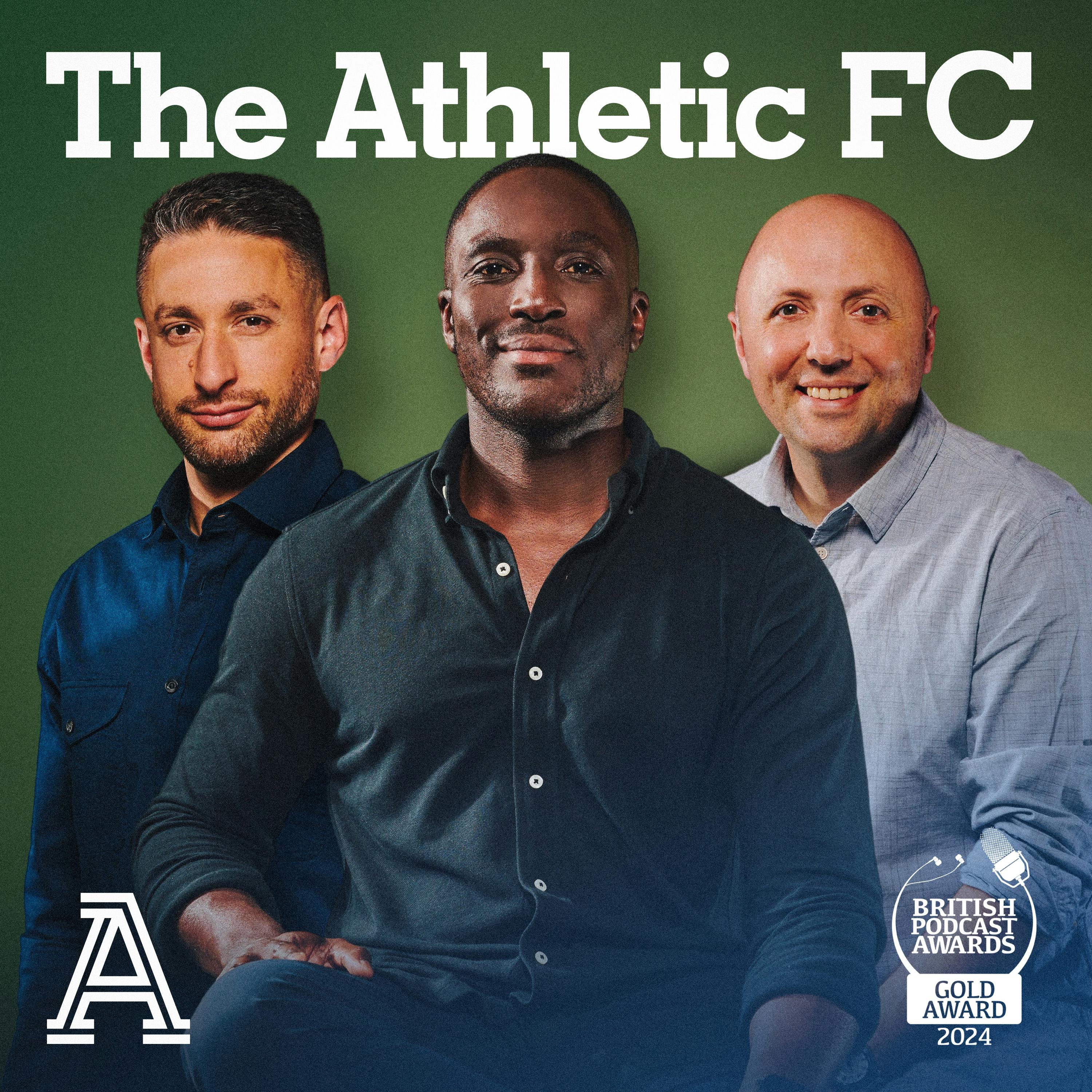
The Athletic FC welcome to the Athletic FC podcast with me, Ayo Akimwaleere. Ousmane Dembele scooped the Ballon d' or on Monday night. His 35 goals helped PSG clinch their first Champions League ever. So how did he evolve from promising winger to ruthless goalscorer? In with us today we have have Tom Williams. We've also got Seb Stafford Blur as well. Tom, let's start with you on this one. Look. Such a wonderful moment. The tears were there. I saw his mother in the crowd and his agent was a really nice moment. And in fairness, Dembele's transformation over the last year has been absolutely superb with psg. But let's go back a little bit. Let's talk about his evolution. Let's talk about his time at Rennes, where he got his footballing education. Just how much excitement was there for this young player at the age of 17 when he broke into the first team?
- [02:27]
Tom Williams
Huge excitement. And straight away I Mean, when you think about what you're looking for in a teenage wonderkid. He ticked every box super fast, insanely skillful, impossibly two footed and just seemed to emerge fully formed from the Rennes academy. He didn't make his debut until I think it was it the October or the November of 2015, 2016, but very quickly becomes a first team regulator, is scoring goals, making goals. He gets a hat trick against Nantes in the derby in the March, I think, and is voted Ligue ones player of the month. And it was after that game that he gave his notorious interview where he didn't seem to know whether he preferred his right foot or his left foot. So already he's making waves off the pitch. He's voted Ligue 1's outstanding young player at the end of that season. Didier Deschamps is being asked about him in France press conferences. So yeah, when he burst onto the scene, people sat up and took notice pretty much straight away.
- [03:35]
Podcast Host Ayo Akimolere
Yeah. And then comes Borussia Dortmund 2016. Seb, their scouts saw this young French wonder kid, brought him into the ranks, but really he was only there, wasn't there that long. Which also led to one of the most expensive ever moves to Barcelona by a player. Tell us about his time at Dortmund. Playing beautiful football at Rennes, but at Dortmund, did it click? Well, did it work?
- [04:00]
Seb Stafford-Bloor
Yeah, well, as you may know from Tom's description, I don't think you had to be a Borussia Dortmund scout to recognise the talent. But suddenly when he arrived, everyone was incredibly excited. This is a year after Jurgen Klopp has left, just over a year after he's left. Thomas Tuchel is the Borussia Dortmund head coach and it's interesting because Dembele spends a year in Germany, but it seemed like a lot longer because of what he managed to achieve. So the Bundesliga has a slightly n named Rookie of the Year award, which he won. He was in the team of the season and not, you know, not coincidentally, because he was in a system that was perfect for the kind of player he was. A lot of pace, a lot of transitions, a lot of emphasis on kind of players who could take on defenders one on one, which obviously suited Dembele down to the ground. Made the team of the season also 12 assists in his first Bundesliga season. One and only Bundesliga season. More than Frank Ribery, more than Arion Robben, tied with Thomas Miller. I think the only player who exceeded that total was Emil Forsberg. Please, Internet, don't shout at me if I've got that wrong, but that was Forsberg's great season at EBB Leipzig. Then it got a bit tricky because. And this is really, unfortunately, this is really Dembele's legacy in Germany. The end of the first season, he became aware of Barcelona's interest in him. And what's the right way to describe this? Kind of checked out to the point where when he came back, he refused to report for training at the beginning of his second season, right at the beginning of August. And Dortmund kind of played hardball with Barcelona. Akivaca was determined to get an enormous fee for him. They said, look, we're aware of Barcelona's interest. If they want him, this is the fee. If you're not willing to pay that, he stays. And ultimately, everyone remembers that sort of. Obviously, Barcelona went up to €130 million, I think, was the kind of the full cost of that. But if you speak to people from Borussia Dortmund now, even now, what, nine years later, eight years later, sorry, that's still the legacy, unfortunately, didn't behave brilliantly at the end of his time. He was very much a young kid who had the kind of the footbling world at his feet. And I think if any of us were in that position, I think we could. Understandably, you could be forgiven for getting a little bit overexcited and not behaving as a fully formed adult would. But, yeah, there's still some. There's some. Some raw nerves at Borussia Dortmund in response to how that. How that ended, unfortunately. Which is such a shame, because the season itself, I watched it back last night, actually, the highlights of it, some of his moments are absolutely fantastic. It stands the test of time.
- [06:32]
Podcast Host Ayo Akimolere
Yeah. I got to say, though, and we'll talk about his move to Barcelona in just a second, but could you spend another season at least, just getting those football smarts before he goes to the big juggernaut that is Barcelona, for instance?
- [06:45]
Seb Stafford-Bloor
Well, it's really interesting and it's a very good point, because actually, you could apply that thinking to quite a few players who've come out of Bressid Dortmund, couldn't you, really? I would say the same thing about Jadon Sancho. I think he made a terrible mistake in leaving when he did, because the player was still forming. I think the person, in retrospect, still had a few, still had a little bit of maturing to do at the time when he was a bit younger. And yes, I would say, given what we know about what happened at Barcelona and whether he was truly ready for an environment and a stage that Was that bright? I think probably because the value of Dortmund as a development club is, on the one hand, powerful side in Germany, you know, most match days you are superior on a technical basis to whoever you're playing, unless you're playing Bayern Munich at the same time. Playing football in Dortmund as a town is not like playing in London or Barcelona or Paris. It doesn't come with the same scrutiny. And so you have almost a kind of a soft landing in the elite tier, which is definitely to the betterment of players who stay for a little bit longer.
- [07:44]
Podcast Host Ayo Akimolere
Well, let's hear more about Dembele's time at Barcelona. Here is our Barcelona correspondent, Paul Belous.
- [07:51]
Paul Belous
I think Ousmane Dembele landed in Barcelona at the wrong time. He was a very young player. He was 20 when he joined, coming for huge money and having the pressure to become Neymar's successor. The fact that he was young and inexperienced in a club such as Barcelona possibly didn't help him into having the right and most professional attitude. He got several warnings at the club for turning a blade at training sessionals and medical appointments, and also suffered multiple injuries with Barca blaming his diet habits. Then there was the fit in a tough dressing room with a lot of big personalities. It ended up being a difficult period for him. Dembele was seen as a bit of an introvert to an extent, illustrated by the anecdote that he got married without several of his teammates not even knowing that he was engaged. Dembele got better with time and a reminder that he had at Barca saw him as an incredible talent. Xavi put a lot of faith in him, branded Dembele as the best winger in the world. But his situation at the club, with a turbulent relationship with the board because of his contract situation, ended up making him believe that taking PSG offer would be good for his future.
- [08:52]
Podcast Host Ayo Akimolere
Yeah, that was Paul Balous in his best BBC News reader kind of mode, talking about Dembele at Barcelona. I love it when Paul does his voice notes. But Tom, let. Let's talk about it. Look, here comes to PSG and we hear about, I guess, the ill discipline. Maybe that's probably the best word to use at Barcelona. We heard about that, the back end of his Dortmund career as well. What was the reaction when PSG came for Dembele? Because, you know, he's a local lad as well. He's a Parisian. He's not Parisian, but he's a. He's a French lad.
- [09:21]
Tom Williams
Yeah, they were really pleased. I mean, Dembele's various travails at Barcelona were followed very closely in France, as you would expect. You know, he was a France international by the time he made the move to Barcelona. And there had been issues with Dembele at times prior to making his breakthrough at Rennes. He, you know, threatened to leave. Obviously, as Seb said before, the manner that he left Dortmund left a bitter taste. But there had never been any suggestion that he was anything other than very professional and very dedicated. And all that you heard at Barcelona over the first kind of two, three seasons was this guy just can't be relied upon. He's always late, you know, he doesn't turn up for things when he should do. You know, his, his lifestyle is not suited to the top level. This was all completely new to, to French ears. And then you had the injuries. He'd never been injured prior to leaving Dortmund. You know, he was never injured at Rennes and he was never injured at Dortmund. And within weeks of arriving at Barcelona, he gets this really serious hamstring tear that just sets, you know, the tone for what was to follow over his first three years in Barcelo. It was only over a period of years that he realized that he needed to change his approach. And when you speak to people who know him, who work with him, what they say is that the issue that Dembele had at Barcelona was that he needed high intensity training. He has the physique of a sprinter, he's an exceptionally quick footballer. And Barcelona at the time, and just more traditionally speaking, have always been focused on possession football. And as a consequence, their training sessions weren't particularly high intensity. And so it took a complete rethink of Dembele's approach to, you know, his own kind of physical training and injury prevention and his diet and everything else. And he put all that in place. So by the time Dembele left Barcelona, he was the fully professional, properly surrounded, elite athlete that, you know, in fairness, he hadn't been when he arrived. So when he signed for psg, I think there was just a lot of excitement because they, you know, they weren't signing, you know, the injury prone, undisciplined, you know, problematic youngster of his early Barcelona years. They were signing the guy who, you know, in his last couple of seasons at Barcelona was a regular starter, wasn't getting injured all the time, seemed to be respected within a changing room, you know, had, had won major trophies and they got him for a knock down price as well, you know, kind of €50 million, I think. And at the same time, he arrives right at the moment when PSG are revising their entire approach. No more Messi, no more Neymar. He spends one season with Mbappe and then Mbappe leaves. And so Dembele was the kind of perfect figurehead because he was a superstar who wasn't a superstar. He was a superstar in terms of his footballing ability and the fact he'd come from a club like Barcelona, but he wasn't a superstar footballer in terms of his ego. And plus, you know, a homegrown guy who grew up just up the road in Evora in Normandy, who used to go to the Parc des Princes as a kid, who was already friends with lots of players in the France squad. He'd already won the World cup with France in 2018. So it felt like the right move at the right time. Know, we wondered whether the Barcelona move perhaps came out a little bit too soon when he arrived at psg, you know, he corresponded with all the kinds of, of changes they were trying to, you know, they were trying to bring in at the club. And he was the kind of perfect figurehead in a way. I mean, obviously that first season he has to share the limelight with Mbappe, who isn't always particularly inclined to share the limelight with other players, let's face it. But, you know, he represented this new kind of hard working, slightly more humble idea of psg. And, you know, we saw that kind of phase of PSG's evolution come to fruition last season. Of course.
- [13:39]
Podcast Host Ayo Akimolere
This is the Athletic FC podcast with IO Accumulere. The FIFA World Cup 26 is coming to North America next summer. It'll be the ultimate celebration of sports and culture. So get closer to the beautiful game with a hospitality package. Closer to the action in the best seats and suites. Closer to match day elevated with world class food and entertainment. Closer to the experience of a lifetime. Book a hospitality package@fifaworldcup.com hospitality. That's fifaworldcup.com hospitality.
- [14:15]
Commercial Announcer
This episode is brought to you by Progressive Insurance. Do you ever think about switching insurance companies to see if you could save some cash? Progressive makes it easy to see if you could save when you bundle your home and auto policies. Try it@progressive.com Progressive Casualty Insurance Company and affiliates. Potential savings will vary. Not available in all states.
- [14:35]
Carvana Customer
If you're a custodial supervisor at a local high school, you know that cleanliness is key and that the best place to get cleaning supplies is from Grainger. Grainger helps you stay fully stocked on the products you trust, from paper towels and disinfectants to Floor scrubbers. Plus you can rely on Grainger for easy reordering, so you never run out of what you need. Call 1-800-GRAINGER click granger.com or just stop by Grainger for the ones who get it done.
- [15:11]
Podcast Host Ayo Akimolere
Under Enrique Seb, he looks to really blossom, hence the Ballon d' or win. But I wonder if it is that Joaquin de Position style, the positional style that Enrique plays, which allows, I guess, a bit more freedom and mobility for players to flourish. That's really worked for a player like that, giving him strict guidelines as to how he wants him, because obviously we've known him as a winger. Here he is, it says, lethal center forward, where the pace can be used, the discipline can be used, but also he can drift a little bit as well.
- [15:41]
Seb Stafford-Bloor
Yeah, the tactical aspect of that I'm not smart enough to answer, but I did read Tom's article, which I'm going to cheat off to answer this question, and I wonder whether Tom. Earmuffs, please. I think within it you write about how much better his One touch finishing is, how he's able to kind of purge some of the flourishes and frills from his game. There's a line there where Tom talks about how, in sort of subtle ways, Dembele had always suggested that kind of dribbling and style is a little bit more important to him than end product. And so the tactical question, sure, whatever. That's probably one for John McKenzie or Michael Cox. What I would say, though, is I wonder how much of this is hierarchical. So you get this guy who in a way, for all the reasons we've been discussing, is almost like a cautionary tale about how you deal with talent and how you use your own talent to progress through your career. And you put him in a dressing room which has just been rebooted to include so many young guys who are right at the beginning of their careers who don't have a profile, and then saying what has become. It's a strange thing to say about Dombele, but he's kind of a senior citizen of European Football now at 28, he's in the dressing room. And there are so many times during that Champions League campaign, with the exception of Bayern Munich away, where he was, the red card was bizarre, a really, really strange moment. I remember being there that night and kind of castigating him in what I wrote post game. But so much of the way he was played, with the discipline and the structure and the willingness to be part of a team that feels really, really significant and being Given that role by a coach, that's something which tends to engender in the right player a real improvement, a real uptick in performance and output.
- [17:20]
Podcast Host Ayo Akimolere
Yeah, you're the real expert on this one, Tom. Enrique's influence on him, his style of play, and also given him, I guess, what feels like a leadership ish sort of position. Do you think that's what's really helped him flourish?
- [17:31]
Tom Williams
Yeah, I think that's part of it. I mean, prior to the start of last season, he had a meeting with some of the PSG hierarchy and they said, look, you're going to be the main man now. You know, Kylian Mbappe has gone. We're not signing a replacement center forward. We think you can be the attacking player who, you know, makes a difference in this team. He then found out that Luis Enrique had actually picked Vitinha to take penalties rather than him, which I think he was a little bit unhappy about. That undoubtedly helped, but I mean, you know, I think an awful lot of this is to do with his positioning because he went from being a winger to basically being a centre forward. He was just spending more time closer to goal. The way he interprets that role is really interesting because he was a false nine and not a number nine. You look at the goals he scored against Liverpool and Arsenal in the Champions League, almost identical in terms of their conception. Dropping deep, dropping so deep that no centre back is ever going to follow him. Helping his team break out of the press, turning, spreading the ball wide, getting into the box, finishing. But a lot of it was just the fact that he was the guy who the chances were being made for. And one of the criticisms about Dembele over the course of his career, and this would leap out at you when you watched him, was that he just seemed determined to break the net with every shot. You know, he picks the ball up wide, he beats a couple of players and go, this is going to be a heck of a goal. And it's. Why is he hitting it so hard all the time? The number of shots just used to fly over the cross, but it was like, why can he not just shoot with a bit, bit more calmness? And he, you know, he worked on his shooting. He's got a personal video analyst, you know, so they broke down chances he'd had, you know, that were going astray and he realized that he needed to be a little bit calmer in front of goal, you know, but he said himself, when I was playing on the wing, I get the ball wide and to get into a shooting Position, I'd have to beat two or three players and by the time I'm taking aim at goal, you know, I was tired, I wasn't as lucid as I would have liked to be, and sometimes I was just hitting the ball, going for power because I didn't have enough kind of lucidity. Whereas in this new configuration, he's the guy just getting end on, getting on the end of the chances. He's the guy who the tap ins fall to, he's the guy who the rebounds fall to. So, you know, he wasn't kind of, he wasn't scoring worldies, he was scoring center forward goals. That's what was responsible for this sudden remarkable uptick in his goal scoring. But I think what, what really kind of took him to a different level, in addition to that, was the fact that, you know, he was decisive throughout that Champions League campaign, you know, in pretty much every knockout game, either scoring or assisting two assists in the final. Plus the back heel in the build up to the third goal that Desira duo scored. And the pressing. I mean, that image of him from the final, you know, loitering on the edge of the Inter penalty area, eyes fixed on Jan Sommer, waiting for the ball to move and that I think more than, more than almost anything last season, more than any of the victories, more than any of the goals, that image kind of summed up the kind of hunger in that PSG team. So I think you put all those things together and that, you know, that kind of explains why he had the season that he had.
- [20:58]
Podcast Host Ayo Akimolere
Yeah, very quickly, Tom. I just wonder what this means for French football. Usman Dembele's the first player to win a Ballon d' or while representing a club from his own country at the same time of the ceremony since Michael Owen did it at Liverpool in 2001. What does this mean about. What does this mean for French football? Also, what does it mean for PSG in general?
- [21:19]
Tom Williams
Yeah, it's huge. I mean, not only is he the first player since Michael Owens, who have won the Ballon d' or while playing for a club in his home country, is the first French player to have done that since Jean Pierre Papin with Marseille in 1991. And you know, more than other major European leagues, if we can still describe Ligue as such, French football fans have got used to seeing their superstar players leave. You know, sure, they emerge through world leading French academies, but no sooner have they shown how good they are, as was the case with Dembele, they leave often in their teenage years. Sometimes without having even played a single game in the French league system. So to have a French guy playing for a French club winning the Ballon d', or, particularly at a time of, once again, acute financial crisis in French football, is a hugely positive thing. And I think for psg, it's another step on the ladder towards respectability. You know, like all the state owned clubs, they've been in this unending quest for legitimacy. You know, they want to be considered a major player and they've ticked off so many different boxes, but prior to last season, they hadn't ticked off the most important one, which was Champions League winners. Nasser Al Khalifi is the president of the European Club Association. They're very well represented at UEFA. I mean, you know, they're very well represented within, you know, French football's organizations and authorities. So they've, you know, they are very gradually kind of sweeping up all the kinds of things that you would expect a European super club to sweep up. And I guess the one thing that was missing after last season was a Ballon d' or winner and now they have it. So, yeah, it's kind of just a further indication of the extent to which PSG have succeeded in, you know, taking a seat at the top table, I suppose.
- [23:25]
Podcast Host Ayo Akimolere
Yeah, I do wonder how many more players in this team are Ballon d' or worthy. But that's another podcast for another day, gentlemen. All right, let's move on because we'll discuss next. And it's quite a contentious one. If Dembele deserved to be crowned best player in the world.
- [23:47]
Seb Stafford-Bloor
From connecting the real world to the digital world to making them one your way to a sustainable digital enterprise.
- [23:57]
Podcast Host Ayo Akimolere
Transform the everyday with Siemens.
- [24:01]
Carvana Customer
If you're a custodial supervisor at a local high school, you know that cleanliness is key and that the the best place to get cleaning supplies is from Grainger. Grainger helps you stay fully stocked on the products you trust, from paper towels and disinfectants to floor scrubbers. Plus, you can rely on Grainger for easy reordering, so you never run out of what you need. Call 1-800-GRAINGER Click grainger.com or just stop by Grainger for the ones who get it done. Did you know adults 60 plus lose more than $60 billion each year to financial exploitation? Greenlight's new family shield empowers you to monitor your accounts for suspicious activity, protect yourself with up to $1 million identity theft coverage, and reassure loved ones that you're safe with location sharing and place alerts. Get peace of mind today@greenlight.com protect. That's greenlight.com protect.
- [25:02]
Podcast Host Ayo Akimolere
You're listening to the Athletic FC podcast with Ayo Akimolere.
- [25:06]
It so in the top five in the Ballon d' or rankings was Dembele Lemon, Yamal Vitina, Mohamed Salah and also Haf as well. Let's hear again from Paul Balus and our Liverpool correspondent James Pierce on why Jamal and Salah should have maybe won the award.
- [25:23]
Seb Stafford-Bloor
Lovely ball.
- [25:24]
Commercial Announcer
Here goes Salah for Liverpool.
- [25:26]
Tom Williams
There goes Muhammad Salah for Liverpool. There is the second goal.
- [25:30]
James Pearce
Well, I think it's crazy when you think that over what Mohamed Salah has achieved in his career that this year's fourth spot in the Ballon d' or is actually the highest he's ever finished. I think he's been harshly overlooked previously. We think back to 2019 and 2022 when he had to settle for fifth spot and I think he's been harshly overlooked again. This time around for me he would have been a worthy winner.
- [25:52]
Tom Williams
He's got a toe but not enough to stop Mohamed Salah. And he scored on the opening day again.
- [25:57]
James Pearce
I mean the numbers speak for themselves. Yes, Dembele had a fantastic year with psg, but you can't get away from the fact that the French league is considerably weaker than the Premier League. And Salah rewrote the record books. He won the Premier League golden boot. He won the Playmaker award as well. 29 league goals, 18 assists. He shattered the record for most goal involvements in a 38 game Premier League season. Even he called the record of 47 goal involvement set by Shira and Cole over a 42 match campaign as well.
- [26:30]
Tom Williams
Look at the white shirts coming here.
- [26:34]
James Pearce
Salah will keep going, there's no doubt about that. He, if anything this will just give give kind of more fuel to the fire as he as he tries to break more records this time around.
- [26:52]
Paul Belous
I think Lamin d' Amal is among the very small group of players that can be considered not the second but the best player in the world. I don't think that Dembele's win can be branded as an unfair one and represents a recognition to what was the best team in the world last season. But Laminal for me has an even more complete and rounded package than Dembele as a footballer.
- [27:11]
Seb Stafford-Bloor
The shot is a good one and.
- [27:12]
Paul Belous
It'S in Lamin through a the capacity to influence massive games at such a young age and especially the faultless decision making Yamal has when the ball is at his feet. Make Him a talent like no other. But if there's something that we learn from the latest Ballon d' or is that nowadays no player can be considered the best in business if he's not accompanied by some sort of collective success. Yamal had it, of course, after an outstanding season at Barcelona. But PSG's campaign gave Dembele an even bigger case to defend. And in my opinion this will be a tendency that will be replicated in following years. The good thing for Yamal and Barcelona is that the quality is very much there. Yamal's level is to be the world's number one football player. Now he has to place himself at the service of the team and name to all major trophies to make sure his candidacy next season cannot be beaten. The Champions League and the World cup are waiting for Lamina comes out to lamina.
- [28:12]
Seb Stafford-Bloor
It's 2 nil lamina.
- [28:18]
Podcast Host Ayo Akimolere
That was James and also Paul talking about why either Laminal or Mo Salah weren't top for the Ballon d'.
- [28:26]
Tom Williams
Or.
- [28:26]
Podcast Host Ayo Akimolere
And this got me thinking, really. I mean, particularly for Salah, a bit of a head scratcher because he has had some outstanding seasons at Liverpool. Also a Champions League winner with Liverpool as well, gentlemen. But Even last season, 47 goal involvements as Liverpool won the Premier League and no one was expecting Liverpool to win the Premier League. But then is the bigger conversation, gents, about the Champions League, is that the crowning glory, if you have and your team has that wonderful season for most of the winners anyway, that the Champions League is really the one that clinches a potential for a Ballon d' or winner.
- [28:58]
Seb Stafford-Bloor
Yeah, well, that's the convention. The Ballon d' Ors become like a bonus prize for winning the Champions League. And I accept many of the points made by Pol and by James. I also think with Salah there should be some recognition for him having done that at that particular stage of his career during what was actually a transitional season for Liverpool. I think most of us expected that there would be a lull following young Klopp's departure. And this would be kind of Arne Slott finding his feet. And without Salah performing as he has done, they don't win the Premier League. But I also think. I think there are some other worrying trends here. I think that it's fine to sort of look at the Champions League as the pinnacle of European football, but I think it's disingenuous. I think winning the Premier League is a more significant achievement. I also think unfortunately, because of how Europe centric football has become. We've devalued tournaments like afcon, Copa Libertadores. Like, we don't look at those as equal achievements. And over the years, and there's definitely arguments about this that can be made in a sporting basis. But look at the list of players that have been denied or potentially will be denied. Ballon d'.
- [30:09]
Paul Belous
Ors.
- [30:09]
Seb Stafford-Bloor
Salah looks like he will never win one. Sadio Mane never did. Yaya Toure never did. I'm not sure Didier Drogba ever quite got to a level where he should have done. I mean, it feels very punitive, right, that you have to have won the Champions League. And particularly now, where it kind of implicitly says to everybody, if you want to satisfy that ambition, you have to play in one of maybe four clubs who have the opportunity to go and win the Champions League. And I know we're getting a little bit abstract here, but that feels very, very unhealthy. And I'd rather. I'm not sure how possible this would ever be, but, like, you would rather have more of a cerebral. Who is the very best player in the world? Not who is the very best player and the best story on the team that has already won everything. That's kind of. I think that's. That's. That's in keeping with trends in fandom. I think increasingly, younger people are drawn to individual players rather than to teams. That's another podcast. Of course it is. But it's something which I suppose is the TLDR version of this is absolutely fine, given the way the award has been awarded in previous years. It absolutely should have been Usman Dembele, but there's an asterisk about what the award is as a whole.
- [31:22]
Podcast Host Ayo Akimolere
Yeah. And we're going to go into that in just a second. But, Tom, not to devalue what Dembele did, because he was a worthy winner. Fantastic season. But is there a conversation as to how this comes about and who gets voted to be the number one?
- [31:35]
Tom Williams
I mean, as Seb says, this is how it's always worked. You know, the Ballon d' or invariably has gone to the standout player in the standout team. You know, the guy who's won the most or the guy who's won the most significant trophies. You know, Was Michael Owen the best player in the whole world in 2001? No. Even he would admit that. Was Fabio Cannavaro the best player in the entire world in 2006? I mean, again, arguably not. Zinedine Zidane won the Ballon d' or in 1998, on the back of scoring two goals in the World cup final. You can rewatch every single France game in that tournament. He didn't really do a huge amount beyond that. He was suspended. I didn't help that he was suspended for a chunk of matches. You know, you can go back in Ballon d' or history and you can pick all of them apart. I think we've been spoiled in recent years because the Ballon d' or served as the kind of, you know, latest chapter in the Messi Ronaldo rivalry. And we knew that those two players were head and shoulders, the best two players in the world. And so who won the Ballon d' or seemed to be the only way of kind of reaching any sort of consensus on which of them was kind of slightly above the other ones, you know, over the course of the previous 12 months. And so I think because of that, we've got used to this idea that the Ballon d' or exists to decide who is the best player in the world. And that's how we've tended to think about it historically. But if you look back over the years, it has always been a trophy that has gone to the outstanding player on the outstanding team. So I don't see anything massively controversial about Dembele winning it. You know, is he a better footballer than Lamina Matl? I think, you know, probably not. You know, I think Lamina Mal is a generational talent. I'm not sure you could quite put Dembele at that same level. You know, Mo Salah had a remarkable season. Harry Kane had an incredible season at Bayern Munich. But the Ballon d' or history tells us that unless you've won the biggest trophy, be that the Champions League, be that the World cup, be that the European Championship, and I'd echo what Seb said about, you know, tournaments like the AFCON and the Copa America, you know, being overlooked. But if you win one of those tournaments and you are the go to guy in that team, then you generally win the Ballon d'.
- [34:03]
Seb Stafford-Bloor
Or. I think what's really interesting is also, like, if you add in the attacking bias here as well, because I was before the Ballon d' or was announced, I was thinking about who the potential rivals to Dembele would have been. And one of them, to me, is Ashraf Hakimi. He's already come up just because he's so integral to the way PSG played last season. Because what's interesting about him is that if you were to kind of create a ranking of Players by position across the world. You could have your arguments about where Dembele places and Lamin with Hakimi. Hakimi is the best right back in the world. I'm not even sure who number two is. Right. I'm not sure who you would place even anywhere near him. And yet he doesn't really have a serious candidacy because that's the ellipsis. Right? That's the kind of. Well, why not? Because if we're talking about. He satisfies the criteria, he is integral part of Ligue 1 Champions League winning side, he is inarguably the best player in his position in world football. And yet it's kind of a. Yeah, that's kind of a quirky, contrarian pick, which seems absurd, but is still the convention that we've. That we've arrived at.
- [35:09]
Podcast Host Ayo Akimolere
What about Harry Kane then, Seb, if I throw that in fear. He's been prolific, as said, as Tom said. Do you think he should always be. He should have been in a height with a higher shell to win the Ballon d'?
- [35:20]
Tom Williams
Or? No.
- [35:20]
Seb Stafford-Bloor
No, I don't think so. I think. I think Kane place where he should have done based on what he achieved last season. He scored a lot of goals. I don't think he played his very, very best football. I think he's playing his very best football now. But we're outside the period which we were voting upon. I think if we're going to talk about Bayern Munich, the player that got shortchanged was Michael Lisa. I don't want to become one of these people who quibbles with rankings in the Ballon d' or because that feels like a trick, right? It feels like. It feels like I'm being rage baited. But come on, 30th for Mike Lisa is just disrespectful. That's like. That's a kind of. I said on Twitter, I don't want to be they. You've never watched him clearly guy, but you've never watched him. If you think he's 30th on that list. Nonsense. Absolute nonsense. Honestly, it is a kind of. You put him in one of those. One of those dynastic Bayern Munich teams and he's right at the top of that list somewhere. Not necessarily at the very top, but he's in the. He's in the top 10 at the very least.
- [36:14]
Podcast Host Ayo Akimolere
Super quickly. Just picking up on your point on defenders. Only three defenders ever won the Ballon d'.
- [36:19]
Tom Williams
Or.
- [36:19]
Podcast Host Ayo Akimolere
That's Franz Beckenbauer, Mateus Sama and Fabio Cannavaro in the history of the award. So that attack in skew, there's a real point there, Seb.
- [36:27]
Tom Williams
And only one goalkeeper. I think, I think I'm right in saying that Lev Yashin is the only. I think Leviashin is the only goalkeeper to have won it.
- [36:34]
Seb Stafford-Bloor
I was thinking this morning before we started recording about the journey of that of Jurgen Klopp's Liverpool to winning the Champions League with Salah Mano, Firmino, etc, etc, etc, now they don't get to the top of that mountain without signing Virgil van Dijk and Alisson. Those are the two most important. Like those are the difference makers between losing to Real Madrid one year and then beating Tottenham the second year and surviving all that came through. You do not win the competition without outstanding players in those positions. And that's. That's true of psg. Like without Gigi Donnarumma's performance. I don't necessarily think he's the very best goalkeeper in the world, but there was through the last few rounds of the Champions League alongside Jan Sommer, who played equally as well in the form of his career. And like, if you think about some of the games he played against Bayern Munich for Bressimmune Gladbach, that's. That's really saying something.
- [37:23]
Tom Williams
But.
- [37:25]
Seb Stafford-Bloor
So we just don't consider that in the same way. Which to me, it troubles me. Cause it feels wrong and it feels like a kind of an intentional misunderstanding of what constitutes a great football team. And on the one hand, we're rewarding players for group achievements and yet we're kind of. We're filtering out the important aspects of that achievement to make way for an attacking player which I. I'm going to die on this hill. I can see you looking at me. I'm fine with it.
- [37:53]
Tom Williams
I'm fine.
- [37:54]
Seb Stafford-Bloor
I'm old, I'm grumpy, and I'm gonna moan about this and it's going to get worse as I get older.
- [37:58]
Podcast Host Ayo Akimolere
Let me tell you, there is an argument on whether or not the award needs to go to an individual. Because genuinely, and we see it after every match and players are drilled to say this. How did you score that goal? Well, it's a team effort, isn't it? You know, and actually, let's be Honest, there are 11 players on that team that contribute to some of the greatest successes, especially when it comes to the Champions League. So good point. As we're talking Ballon d', or, gents, time for a little quiz. Okay, this is it. French players have now won the Ballon d'. Or, the joint highest number of times, eight times. Joint with Argentina. Can you name the other three countries in the top five?
- [38:38]
Seb Stafford-Bloor
Are you asking, are we working as a team here?
- [38:40]
Podcast Host Ayo Akimolere
Both of you? Yeah.
- [38:41]
Seb Stafford-Bloor
Portugal.
- [38:42]
Tom Williams
Okay.
- [38:42]
Seb Stafford-Bloor
Yeah, Portugal, obviously.
- [38:44]
Podcast Host Ayo Akimolere
That's what.
- [38:45]
Tom Williams
Italy. Germany.
- [38:46]
Seb Stafford-Bloor
Germany.
- [38:47]
Tom Williams
Germany.
- [38:48]
Seb Stafford-Bloor
Yeah, yeah.
- [38:50]
Tom Williams
The Netherlands. Oh, Tom. The Netherlands.
- [38:56]
Seb Stafford-Bloor
Nice.
- [38:58]
Tom Williams
Come on. Yes, yes, yes.
- [39:00]
Seb Stafford-Bloor
So proud of that. Good for you.
- [39:02]
Podcast Host Ayo Akimolere
Honestly, that is top draw. Also joint with Italy is also Brazil and England as well. So, you know, there's a few beautiful names there. All right, gents, let's end it there. Seb, Tom, appreciate your time and also thank you guys for listening. We'll be back tomorrow.
- [39:18]
You've been listening to the Athletic FC Podcast. The producers are Guy Clark, Mike Stabre and Jay Beale. Executive producers are Abby Patterson and Aiddy Moorhead. To listen to other great athletic podcasts for free, including our dedicated club shows, search for the Athletic on Apple, Spotify and all the usual places. You'll also find us on YouTube at the Athletic FC Podcast, so make sure you subscribe. The Athletic FC Podcast is an athletic media company production.
- [39:54]
Tom Williams
Imagine the impact when everyone gets the.
- [39:57]
Seb Stafford-Bloor
Right tool for the job.
- [39:58]
Tom Williams
That's Odoo. Every app is designed to be easy to use, so employees spend less time learning the software and more time doing their jobs. Experience true speed Reduce data entry with.
- [40:07]
Commercial Announcer
Smart AI and a fast UI.
- [40:09]
Tom Williams
Check out odoo@odoo.com that's o-o.com if you're.
- [40:15]
Carvana Customer
A custodial supervisor at a local high school, you know that cleanliness is key and that the best place to get cleaning supplies is from Grainger. Grainger helps you stay fully stocked on the products you trust, from paper towels and disinfectants to floor scrubbers. Plus, you can rely on Grainger for easy reordering so you never run out of what you need. Call 1-800-GRAINGER Click grainger.com or just stop by Grainger for the ones who get it done.
- [40:45]
Commercial Announcer
This episode is brought to you by Progressive Insurance. Do you ever think about switching insurance companies to see if you could save some cash? Progressive makes it easy to see if you could save when you bundle your home and auto policies. Try it@progressive.com Progressive Casualty Insurance Company and affiliate's potential savings will vary. Not available in all states.