Loading summary
Transcript146 lines
- [00:00]
Ad Voice
Dog owners we love to spoil our pups and more than anything, we want them to live long, healthy, comfortable lives. But here's the thing a lot of us don't realize when our dogs are trying to tell us something's wrong. Constant paw licking, rubbing on the couch, or obsessively eating grass can all be signs of allergies. Because 90% of a dog's immune system lives in the gut, supporting digestion is key. That's where Better Wild Allergy Relief Soft chews come in. The these veterinarian approved chews use an ancestral blend of wolf probiotics called Ancestral Advantage to strengthen your dog's natural defenses. Better Wild even offers chews for joint support, dental health and a digestive meal topper all science backed solutions to help your dog feel their best. Right now, Better Wild is offering our listeners up to 40% off of your order@betterwild.com podcast that's betterwild.com podcast for up to 40% off your order, which is betterwild.com podcast this holiday, Verizon is giving you incredible gifts and savings you'll enjoy all year. When you Switch, you'll get four new iPhone 17 Pros.
- [01:08]
Jesse Marsch
No trade in needed.
- [01:09]
Interviewer (Adam Crafton or David Ornstein)
That's right, get four lines for just.
- [01:11]
Jesse Marsch
25 a line and the amazing iPhone.
- [01:13]
Interviewer (Adam Crafton or David Ornstein)
17 Pro for everyone.
- [01:15]
Jesse Marsch
Save big this holiday.
- [01:16]
Interviewer (Adam Crafton or David Ornstein)
Visit Verizon today.
- [01:18]
Jesse Marsch
20 monthly promo credit supplied to account.
- [01:20]
Interviewer (Adam Crafton or David Ornstein)
Over 35 months with a new line on unlimited welcome in times of congestion.
- [01:22]
Jesse Marsch
Unlimited 5G and 4G LTE may be.
- [01:24]
Interviewer (Adam Crafton or David Ornstein)
Temporarily slower than other traffic domestic data roaming at 2G speeds. Additional terms of high for phone offer, see Verizon knock.
- [01:30]
Ad Voice
As a small business owner, you don't really get to clock out early. Your business is on your mind 24 7. So when it's time to hire, you need a partner that works just as hard as you do. That partner is LinkedIn Jobs. When you clock out, LinkedIn clocks in. It's super easy to post your job for free, share it with your network, and manage qualified candidates all in one place. LinkedIn can even help you write your job description and get it in front of the right people. And promoted jobs get three times more qualified applicants. 72% of small businesses say LinkedIn helps them find higher quality candidates, and you can double your reach just by adding the hashtag hiringframe to your profile photo. Find out why more than 2.5 million small businesses use LinkedIn for hiring. Post your job for free at LinkedIn.com jobsearch that's LinkedIn.com J-O B S E A, R C H Terms and conditions apply.
- [02:33]
Jesse Marsch
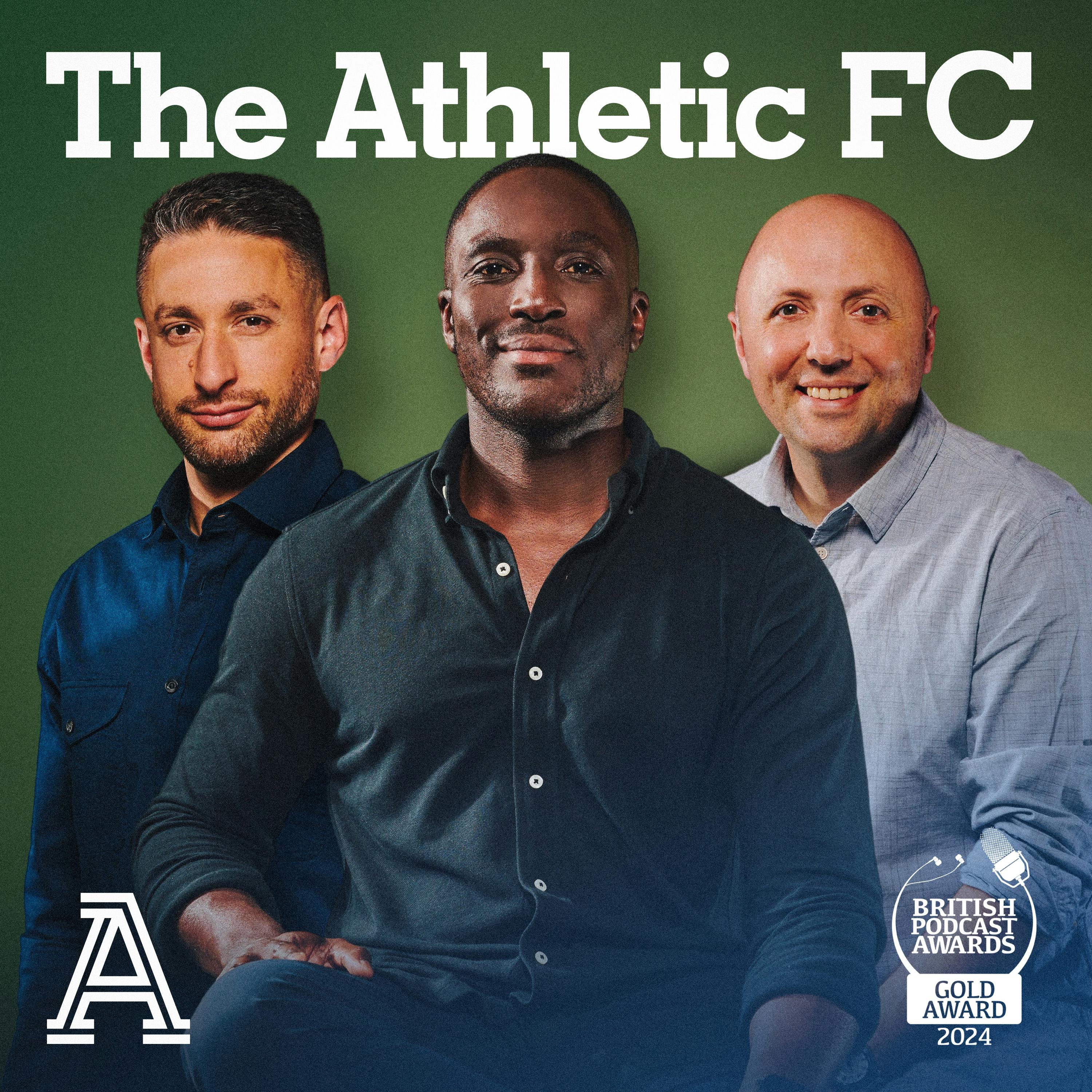
The Athletic FC welcome to the Athletic FC podcast with me, Ayo Akimolare. Coming up, the special interview with Jesse Marsh, the American who will be leading Canada as head coach in the 2026 World Cup. We'll hear Marsh talk about all sorts, his ambitions next summer, his thoughts on modern football, and Erling Haaland, who he managed at Red Bull Salzburg. So here's March, speaking to a group of writers from the Athletic, including Adam Crafton and David Ornstein, in New York earlier this month. I think you've been asked this, but, like, I want to know about both sides. What does success at the World cup look like to you on the field, but also off the field in terms of legacy for Canada? Well, I think I've said you. I hate the word legacy because that's why I used.
- [03:30]
Interviewer (David Ornstein or Adam Crafton)
Yes.
- [03:30]
Jesse Marsch
No, because I. I'm like. I don't use it for myself because I think it reflects too much on me and not enough on the overall picture of what's being created.
- [03:38]
Interviewer (David Ornstein or Adam Crafton)
Yeah.
- [03:38]
Jesse Marsch
Because in the end, this is a part of the story. Right. Regardless of what happens, I. I don't even want to be sort of remembered as the coach, even though that's your role is. I want this to be remembered about the players and their identity and the country and the development of. Of the sport and the opportunity to showcase what the sport's becoming in the country, what success is. Bare minimum, we have to get out of the group. And I've often said this, that the structure of the tournament makes it even clearer for us. The only way we stay in Canada for the knockout round is win the group. So for me, it's not just getting out of the group. We want to win it to give ourselves the best chance to really have an incredible tournament. Are your players aware of that? Yeah.
- [04:20]
Interviewer (Adam Crafton or David Ornstein)
Yeah.
- [04:20]
Jesse Marsch
They all know that. Just given what happened at the last World cup and given that, like, frankly, John said the same thing. We want to be the first Canadian team to win a game. First Canadian team to get out of the group. Yeah. And it felt at the time like that was. That weighed heavily on them.
- [04:37]
Interviewer (Adam Crafton or David Ornstein)
Yeah.
- [04:37]
Jesse Marsch
Do you. When you talk about that, when you talk about those expectations from when you took over a year ago, have you noticed any change? No. I mean, I think the. The main thing with the group is not necessarily the pressure, but, like, understanding how expectation affects performance.
- [04:55]
Interviewer (Adam Crafton or David Ornstein)
Yeah.
- [04:56]
Jesse Marsch
And we've created a lot of internal expectation from the day I arrived. And the key for me is that, of course, like, if you just talk about getting out of the group, that's lip service. Right. But it's, I think what I've really tried to focus on specifically over the last three months, but over the last year and a half has been preparing this team for the biggest pressures and then the awareness and ability to handle it and to be at ease with how to play in those environments and in those situations. Now I can talk a lot about it, we can build a lot of things, but the best thing is, is the last tournament there weren't as many players playing at clubs in Europe, playing at big clubs in Europe. And so these guys now are used to now the feeling of Champions League, the feeling of the big leagues, the pressures of, of arriving at Champions League in the season or trying to win a title or winning a title or whatever it is. So it's not just like the Alphonso Davies, Jonathan David show anymore. There's a lot more, I think, high level players that are playing at big clubs. Did you even consider anything that happened in 22 in terms of like debrief and like what happened? Yeah, look, I mean, I've had, there's guys on my staff that were in that staff there. I met with the psychologist, her name's Susan Cockle. And I went through what they did and what they learned and what, what they experienced. And like I said, I've tried specifically over the last three months to say, all right, now we have a year to build this to be looking forward to hearing. Because what I said at the beginning of September to the team was now we understand the football we want to play. Yeah, right. And the identity of like how we execute tactically and technically and everything the kind of team we want to be. But now we need to build in more personality, leadership, communication and savviness that will ultimately lead us to be able to understand how to handle the biggest moments. Right. And including the fact that a lot of those guys have played in the World cup already. You know, there's. The first time around was like almost an anomaly, like a huge accomplishment and it was almost like job done. But obviously you go to the World cup and you want to do well. They draw maybe the group of death, they have incredible opponents and then, you know, it's tough to achieve every goal that they wanted. But I think that they're. The ease at which they are looking at the World cup, even a home World cup is different.
- [07:17]
Interviewer (Adam Crafton or David Ornstein)
Now we talk about the idea of legacy or lasting impact of this World cup for both the US And Canada. The discussion is that this could be a transformational moment, a home World cup, what it could mean for the growth of the game, the growth of the sport. When I look at the history of both of these countries and of Major League Soccer specifically, there's really only one truly world class homegrown player that's been produced at the league, in my opinion of late, and that's Alfonso. What do you think Canada needs to do and the Canadian MLS teams, Canadian Domestic League to produce more Alphonsos? How do you take the next step of going from producing very good professional players to producing more world class players?
- [07:58]
Jesse Marsch
Well, let me go back a little bit and I, I use myself as an example for the 94 World cup because in 1993 I was a college student, I was playing university soccer. I was thinking after soccer I was going to retire and get a job and then move on with my life. 94 World cup comes, the league starts, I wind up graduating in 96, I'm in the first college draft. I go to D.C. united and I'm around good players, good coaches. And then I have a 14 year playing career. I wind up then getting into coaching. I do the assistant at the World cup, but two jobs in mls. I go to Europe, I coach Champions League first, American in the Bundesliga or maybe second and then first or second in the Premier League or something like this. None of this exists without the 94 World Cup. Right. And so I actually think that Canada and and us are on different paths is what the World cup means. Right? Like this being the second World cup for the US the game is a lot more established in every level in the country than it was 30 years ago and a lot more established than what it is in Canada. And so for me, we're a little bit ahead of where the US was in 94 because we have some leagues and we have some teams and we have some pathways. But I think our job as a nation is to now streamline and unify those pathways. Because most of our players, like you can't use Alphonso Davies. He's an anomaly, right? So I appreciate you saying that, but like there's not really a ton of lessons to be learned from Alfonso Davis. He comes over from Ghana, he's an incredible talent. He at 15, he's playing professionally and then he's 18 at Bayern Munich. And like that's total anomaly. You know, there's other stories in there that are, I think a little bit more telling and most them involve going up, going down, going back left, right? This youth club, that youth Club, you know, maybe a little academy, university, junior college, go to here, come back mls. Crazy stories about how these guys became professional footballers, right? Moy Bombido story is, is absolutely insane. And yet we still have a really talented player pool. Really talented. And so there's a lot of work that's been done, but most of these players have had to fight through barriers and challenges. And so can we use the World cup to create a foundation as, from my perspective, as to what the CSA needs to be moving forward, which is more touch points, more experiences, more youth national teams, more new youth national team players and, and tournaments and games and more qualifying for the biggest stages in, in the youth tournaments, right? And through that, we can educate more coaches, we can educate more administrators, more physical coaches, sports, science, give a real future for the game in the country and then see what the real potential of the kinds of players that we can produce can be. And this is what I say all the time. Like I, I say a few things. I use the phrase, our youth national team setup is worse than most African nations, right? It's because financially there's been no money behind the, the CSA for years. There's not enough coaching opportunities. I mean, this is. In the end, most countries are dictated by the kind of coaching that gets created in their country and how that affects permeates throughout the country to create an identity. This is what we need to do in Canada, right? And actually, I think the spheres of influence and the population, the geography is the biggest challenge. But what you have is a lot of people that are interested and willing and excited about the idea of working together. And I think it's our job as a national team to create a DNA, to create a robust youth national team program. And there we can actually, and this is, by the way, for the men and the women, the boys and the girls. And there is where we can say this is what we're doing and this is how we're doing it. And we hope that that permeates throughout the culture because they'll see the benefits of why we would be doing this. Why my football or my idea football is like, look, we're, we, you can see we have some really big talents, but raw, athletic, you know, we have some refined players, but we have a lot of like, powerful, fast, strong kind of athletes. And I think it fits well with the way that I think about football. And still there's room for it to evolve into something that can continue to grow as, as the overall football culture grows in the country. But this idea of how this all Fits together is why the World Cup's important. My day job, I know it's. If the team sucks, nobody will want to hear anything I say. Like, I know the team has to be good. I'm very confident the team will be good. And along with that, there's the opportunity to create something for the future that is a real foundation and something that can benefit a lot of people a little bit. Like the story I told you about me from the beginning. So that's a five minute answer to that question, which is pretty short.
- [12:42]
Interviewer (Adam Crafton or David Ornstein)
Sounds like you're describing legacy. Yeah.
- [12:47]
Interviewer (David Ornstein or Adam Crafton)
I found that really compelling because you sound very invested in the country and in the sport and in the team and the system. But your contract expires at the end of this World cup. So are you looking to stay beyond and to be part of that, or are you already thinking I might want to go back into club football, et cetera?
- [13:04]
Jesse Marsch
Kevin and I had discussions about an extension months ago, like beginning of the year, you know, and I just said, look, I'm really enjoying this job. Like, really, like, you know, it's been, I think, a perfect fit for me. And then the things that I value, I think fit really well with the country, with the player pool and with Kevin. But I was hesitant at the time to sign or, you know, start that process because I know that the wave of popularity of a national team coach can go in a lot of different ways at any moment. And I wanted to make sure that the program, which was, I think, the most important thing and not my presence in the program, the program continues to move forward in a way that honors what the sport is in the country and what this team can achieve. I can say now that over the last, what, however many months since that first discussion, like, yeah, we've had our ups and downs a little bit, but I think overwhelmingly we've created a positive development path. And I think that there's positivity around the job I've done and the job we've done in the team. So I'm much more open to the idea of now, the discussions moving forward, to be here longer. In the end, I do want to be here longer because I enjoy the job and I enjoy the players and I enjoy the people in the country. And I think the association, the task of what needs to be done done is longer than just two years. And I think in order to do it effectively, I. I need to commit to it longer.
- [14:26]
Interviewer (David Ornstein or Adam Crafton)
Also. I was very conscious that you sort of, at the beginning, took yourself out and said, it's not about me. It's a. It's about the team and the country and especially as a host nation. It's humble of you, but it will, for a lot of people be about you because you're a big name coach in charge of a team that's prominent in this competition. Do you feel that you'll have, or you do have a point to prove? And when I say that, what springs to mind is you went through the US process and you've spoken publicly about your dissatisfaction on it. You had the Leeds experience, you had the RB Leipzig experience. You're a big name in the coaching world and many people, especially where we come from and then into Europe, will recognize Canada because you are in charge of them. And so this is a big World cup for you personally, maybe, but I.
- [15:16]
Jesse Marsch
Think you'd have to know me a little bit more and that I don't live my life by other people's definitions and expectations. And frankly, I could walk away from football right now and not think twice about ever going back. I'm different that way than a lot of football coaches. I think a lot of football coaches are attached to work and their job and their role and maybe the fame and the money and all these. I don't give a. About any of that. Like, I've already achieved way more than I ever thought I would. I'm old enough now where I just want to do the things in my life that I think are meaningful to me. I love coaching teams that I love. I hate coaching when everybody has an opinion on everything and nobody wants to be part of a team. Because the worst part about professional football is as soon as things get tough, the chairman, the sport director, everybody above you only looks at the coach and the players try to protect themselves from being attached to the coach. I mean, it was perfect at Leeds. At one point, I said to the players at Leeds, you guys have seen nine coaches fired. @ what point do you take responsibility for making sure the coach didn't get fired? I told them I played 14 years professionally, I never had one coach fired. In 14 years, I had four coaches of the year. I won titles. I made sure that. And I was by far not the least talented player on the team, but I cared about the club and I cared about winning, right? But the world that gets created now in football is as soon as something goes wrong, the manager's an idiot. Get rid of them. And I'm sorry, I don't. I don't want to be judged by wins and losses. I want to be judged by creating something and so this is what I've been able to do with the national team, if you ask me. I want the team to be good. Right. I want the team to show I love these boys. I want them to show how good they are. I want them to prove to themselves. Because there's something about the Canadian Persona that's a little bit.
- [17:04]
Interviewer (Adam Crafton or David Ornstein)
Apologetic.
- [17:06]
Jesse Marsch
Right. And who better to help change that than an arrogant American, right? Yes. And so I'm trying to help them on a path, to let them know that they're good, that it's okay to say you're good, that you deserve to be good and you deserve to win and you deserve big moments and to help them build that into the way we talk, into the way we play, into the way we train, into everything we do. And so, honestly, that's what matters to me more than.
- [17:34]
Interviewer (David Ornstein or Adam Crafton)
Anything. I just want to quickly pick up on something you said before we move it on with the World Cup. It's very topical when you talk about coaches and shelf life and priorities. I mainly report on the Premier League. And you've got the Premier League title winning manager who externally is facing pressure, neck on the block. Before that it was the coach of Man United. Before even being in the job for a year. Never a moment passes, a weekend, a midweek without somebody being under huge scrutiny. It feels like it's getting out of control. And jars with what you said about, you know, in your career, 14 years, I think you said without a.
- [18:14]
Jesse Marsch
Sacking. I think that teams or fans are more concerned about the transfer window and sacking of coaches than they are about their club's identity, the way their team plays, the energy of being part of that club, the identity of what that means. Like these are the things that as a coach, you're trying to. And you do it through your tactics and your leadership and everything you do with players, the types of players you bring, the types of players you teach, the types of football you teach. But none of that matters. It's partly leads and it's partly the Premier League, right? But it was the only job I've ever had where I had to almost weekly, daily speak with the team about social media, about fan behavior, about how they dealt with it, about the strength internally to deal with it and the support that we had for each other to deal with it. I had players at Leeds tell me that it was the first time that the coach was taking the ire of the fans because it was always directed at them as players. So they kind of said, it's nice having you here. Because we can relax a little more. And it's at all levels. If you're fighting Liverpool and you're fighting for the championship and you win it and then the next year, you know, it's more of a battle or Man U or Tottenham or whatever, but then you can go down to the teams that are fighting for Europa League, then you can go down to the teams that are fighting out of relegation. Like the expectation and how fans manage it and how clubs manage it is.
- [19:37]
Interviewer (Adam Crafton or David Ornstein)
Emotion. It's interesting to me though, just a couple weeks ago, the last, in the last window, Mauricio Pochettino talked very similarly about what it's like to be a manager now in soccer. He talked about the, the conversation around teams and managers, how media questions, managers and press conferences, as if they don't give any sort of respect or credit to the idea that there might be a process behind what's happening. That, you know, one international window, one result or two results doesn't inform the, what's supposed to be a four year cycle and a four year process. And I think that, and he, he's talked about it being that way at Chelsea, at PSG as well. How do you think that culture changes and do you think that the, that people like you, the fact that managers are now addressing this head on, that this is becoming a point where it has to change, where managers are pushing back and saying if things don't.
- [20:27]
Jesse Marsch
Change when it comes to the media relationships, like, I don't have a problem if the media is critical when we don't perform well or when we lose matches and, and they're able to pinpoint what's actually happening. And this is part of the job. And I, and I respect that, that the media and journalists have a job to do and so do we. Right. So I've always had the type of relationships with journalists where I'm pretty open and I, and I'm pretty, I explain what I'm thinking and how I, how I do things. Have I been burned by that? Yes, I have been. But in the end, like I always say, you're never going to get trust unless you give it. And so there's always room for that to fluctuate based on, on what people have to say or think about anything, of course, how managers are blamed or, or criticized or fired so quickly. I think the one year that I was in the Premier League was 15, right. And that's the highest ever. How's a manager ever going to build anything if he, if he has, you know, a six month, eight month Lifespan, like, that's why, frankly, I. I wasn't sure about Southampton. That's one of the reasons why I didn't go to Southampton. Lester was different in different ways, but obviously when I was out of football for a while, that's all I was doing was evaluating, actually, where could I work, you know, not where could I win, where could I work? And that's what landed me here, you know, which I'm very thankful for. Every manager has to decide what he values. I tell you, you make a lot of money being a manager, right? So it's good to have jobs and sometimes good businesses getting fired because you collect salaries over multiple years and then you get a new job and. But that's not. I don't care about that. You know, again, like from. I can just tell you that the way I look at the job is I want to work at places that I find. I'm rewarded personally and professionally, and I can do the things that I believe are right. And the things that I believe are right usually involve being part of a team, being working with good people, being an employee, but also then being a manager. I don't need to be the boss. I don't need to tell everybody what to do. I actually like to be part of a team as much as I like to lead a team. So those things matter to me. And so I've landed on that in Canada. I'm thankful for.
- [22:42]
Interviewer (David Ornstein or Adam Crafton)
It. Short termism and that instant gratification, does that worry you about society? There was a piece the other day saying that since the iPhone came out, football, managerial, tennis have evaporated because it's knee jerk. Owners are reacting to the public. There's no patience. So that. That all sounds quite light hearted, but it's ending tenures and affecting careers and things.
- [23:08]
Jesse Marsch
Maybe. I mean, look, I try to separate. We all do. Right. I think. But I try to separate myself from my phone. It's not easy. We all fall into, like, you know, communication pathways. Yes, exactly. And being a parent and. But I mean, I was on the train from Newark to Penn Station yesterday and I looked around and there was maybe 50 people on my car and I was the only one not buried in my phone. Right. Like, this is just the way that life exists now. And I mean, look, we could go into a whole nother discourse of how sad that is. But, you know, I know when I coach players, I know that challenging them to have good attention spans, being engaging in video sessions, making sure that they're not too long, that they're very clear, like I understand what it's like to coach this generation of people and how it's different than maybe what it was 10, 15 years ago, and how important certain elements are to to being clean and concise with communication because you can lose attention spans. But how it affects football managers and the preciseness of our society and everything. I mean that's, that's a whole nother this is the Athletic FC podcast with IO.
- [24:15]
Ad Voice
Accumulere. This holiday, Verizon is giving you.
- [24:21]
Jesse Marsch
Incredible gifts and savings you'll enjoy all.
- [24:23]
Ad Voice
Year. When you Switch, you'll get four new iPhone 17.
- [24:26]
Jesse Marsch
Pros. No trade in.
- [24:28]
Interviewer (Adam Crafton or David Ornstein)
Needed. That's right, get four lines for.
- [24:30]
Jesse Marsch
Just 25 a line and the amazing.
- [24:32]
Interviewer (Adam Crafton or David Ornstein)
Iphone 17 Pro for.
- [24:33]
Jesse Marsch
Everyone. Save big this.
- [24:35]
Interviewer (Adam Crafton or David Ornstein)
Holiday. Visit Verizon.
- [24:37]
Jesse Marsch
Today. 20 monthly promo credits applied to account over 35 months with a new line on unlimited.
- [24:41]
Interviewer (Adam Crafton or David Ornstein)
Welcome. In times of congestion, unlimited 5G.
- [24:42]
Jesse Marsch
And 4.4G LTE may be temporarily slower than other traffic domestic data roaming at 2G.
- [24:46]
Interviewer (Adam Crafton or David Ornstein)
Speeds. Additional terms apply for phone offer. See verizon.com for.
- [24:48]
Ad Voice
Details. Dog Owners we love to spoil our pups and more than anything, we want them to live long, healthy, comfortable lives. But here's the thing a lot of us don't realize when our dogs are trying to tell us something's wrong. Constant paw licking, rubbing on the couch or obsessively eating grass can all be signs of allergies. Because 90% of a dog's immune system lives in the gut, supporting digestion is key. That's where Better Wild Allergy Relief Soft Chews come in. These veterinarian approved chews use an ancestral blend of wolf probiotics called Ancestral Advantage to strengthen your dog's natural defenses. Better Wild even offers chews for joint support, dental health and a digestive meal topper all science backed solutions to help your dog feel their best. Right now, Better Wild is offering our listeners up to 40% off of your order@betterwild.com podcast that's betterwild.com podcast for up to 40% off your order. Betterwild.com podcast let's be real when.
- [25:50]
It comes to your health, authenticity matters. For nearly 30 years, Iherb has quietly built one of the world's leading online wellness destinations trusted by millions of customers in 180 countries. At iHerb, every product comes from verified top rated brands stored, handled and shipped directly from our own climate controlled, state of the art facilities. No third party sellers, no shortcuts, just the highest standards of quality and transparency. From cart to doorstep. That's why? More and more people are turning to iHerb, where wellness and integrity meet. Visit iHerb.com trusted wellness delivered.
- [26:32]
Interviewer (Adam Crafton or David Ornstein)
Worldwide. Can I ask, how have you.
- [26:41]
Jesse Marsch
Found the change from club to international.
- [26:44]
Interviewer (Adam Crafton or David Ornstein)
Management? You.
- [26:45]
Jesse Marsch
Very. The way you talked about coaching and you just don't get that time with players. Yeah. How do you. Have you found it and how do you keep in touch with them? So I heard two things when I became an international manager. You can't have a style of play and you can't develop players. And we've done the exact opposite. And I met with a lot of national team coaches before I thought I was going to be the U.S. coach. I met with Gareth, I met with Ralph Franknick, and I met with Hansi Flick. And, you know, they all had their own versions of things that were important. Ralph was the one who said, I coached the national team almost exactly the same as I coached club team. Now he has a lot of players that grew up in Red Bull systems, so it's a little, maybe a little bit easier. I haven't coached exactly the same, but I learned mostly from when I went to Leeds. It was the first time I went to a team mid season as opposed to having a full start of a preseason. And I learned about the precision of communication and the precision of transforming a team into a tactical vision and the preciseness of that there. And I learned from my successes and failures there as well, and then adapted that to be what I thought was necessary for. For the Canadian national team. So what I would say in general is that the precision of how you coach becomes incredibly important. But, I mean, I kind of like. I kind of like it. I kind of like the challenge of not having a lot of time, but the ability to impact them immediately with everything we do. And then I. I'm in pretty close contact with these guys. You know, like, I would say that I've tried to become a friend, mentor, sometimes like a father figure for some of them that turns out to be like, sometimes a grandpa. But I'm pretty close with them, so. And whether it's about career choices or whether about the football they're playing or the moments that they're in in their lives and in their careers, I don't always give unsolicited advice. I try not to. I tried to just be there. But there's plenty of times where it's pretty clear that, you know, they need a little support. Do you think the player pool needed that? And I asked that Jesse, because, like, for generations, Canadian football was naive in a lot of ways. And I'm like, did you know that was going to be part of the job? Well, look, the underdeveloped footballing nations are naive. Yeah, right. I mean, I would still point to the US Team is like, we're still as Americans, like, naive with how the overall football world.
- [29:11]
Interviewer (David Ornstein or Adam Crafton)
Works.
- [29:12]
Jesse Marsch
Yeah. What do you mean by that? Just how to manage difficulty, how to manage fame, how to manage pressure, how to manage media, how to manage management, how to manage money, how to manage family, pressure. Like all this. Like in the NBA, they're built more like these kids from the streets, like the NBA, that they have mentors and teammates who are like, hey, you got to look out for this, you got to look out for that. You got to be careful here. You got to be, you know, I mean, in most NBA now, they have financial advisors in the agencies and they have personal managers and physical managers. And, you know, I mean, in our sport, it's still like, there's a. We're ahead of the. The in. In professional sports in terms of like, physical performance and monitoring and, you know, how to. The nutrition and all these. The science of the sport a lot of ways. But like, the psychology of the sport, like, even the psychology of coaches. Most coaches in Europe don't give the lineup until 30, 60 minutes before the game. And usually it's because they don't want to have a conversation with the player about why he's not playing. They don't want to bother. They don't want to, like, mentorship. And part of. And part.
- [30:15]
Interviewer (Adam Crafton or David Ornstein)
Of. When do you give.
- [30:16]
Jesse Marsch
It? Yeah, I usually give it the day before. And then I usually have the conversations with the players about why they're not starting, because that's what I believe in, is showing them respect. And occasionally we'll have a quick turnaround or a couple injuries, but even then I'll be like, okay, here's the situation. Alfie Jones was in camp. I was like, guys, I'm not sure if he's going to get it. If he gets it, he's starting. If not, then we're doing this. And like, they're mature. If you're honest with them, they're not children. They're mature enough to be able to understand. Okay, I understand that. And you know, okay, I'm not playing a few, but I have to be ready. And I don't know, it's just, I think in life a different way. Can we start forward a bit to the World.
- [30:53]
Interviewer (Adam Crafton or David Ornstein)
Cup? There was something this week people were talking about var for corners. What do you think about Taking.
- [31:00]
Interviewer (David Ornstein or Adam Crafton)
VAR to that next level, even to review corners.
- [31:04]
Jesse Marsch
Right? That's probably too much. I do like the flag. I just personally, I want to throw a flag, like in the NFL, like, for var, I want to be able to, like, throw it and be like, var. Would you like to challenge? That's what I mean. Yeah, yeah, that's what I want. And by the way, we've had some experiences with Canada where I'm like, how are they not? And they're like, oh, we're reviewing it in the booth. Like, get the head referee over there and look at what happened, right? Like in the Nations League when we get a clear penalty against Mexico and against the US and they. They say, oh, we reviewed it. You know, it's like, no, they got too.
- [31:41]
Interviewer (David Ornstein or Adam Crafton)
Far. The va. So Adam's point on, I think that's too.
- [31:45]
Jesse Marsch
Far. But I think for moments that are directly impactful, penalties, red cards, goals, things like this, they're talking about fully supportive of.
- [31:53]
Interviewer (David Ornstein or Adam Crafton)
That. I mean, Sean Dyche says he's lost two goals in the last three weeks to the wrong call on a. On a corner kick. They're also potentially looking at second yellow cards if they were correctly.
- [32:05]
Jesse Marsch
Given. That's.
- [32:06]
Interviewer (David Ornstein or Adam Crafton)
Fair. And a couple of other factors to ensure that at the World cup on this massive stage in the U. S. Canada of Mexico, that there is no error. There's.
- [32:15]
Jesse Marsch
Mistakes. I would love people. I would love to say that with var, there's no error, but sometimes you learn that bad decision makers are categorically bad decision.
- [32:23]
Interviewer (Adam Crafton or David Ornstein)
Makers.
- [32:24]
Jesse Marsch
Okay. And.
- [32:25]
Interviewer (Adam Crafton or David Ornstein)
So. And usually they're refs, so.
- [32:27]
Jesse Marsch
That. I'm just saying, usually they're in conc. So, look, I mean, I still like the flow of the game. I don't want corners. I don't think it needs to. To go further than, again, penalties, maybe second yellows, red, anything that leads to red or penalty for a.
- [32:43]
Interviewer (Adam Crafton or David Ornstein)
Goal. I mean, you were there in 94, I believe, with a little help from Charlie Salano. But still, there were tickets to give to Princeton soccer players for a World cup semifinal. I went to Mexico, Italy, at rfk, my dad cut lawns and parked cars. I don't know how many people who cut lawns and park cars are going to be able to go afford to go to this World Cup. And yet these are countries that need this growth. They need their young people going to these games to be exposed to the highest levels of the game. Who is this World cup for? Like, what is. What is this World cup turning into at.
- [33:12]
Jesse Marsch
This. Look, obviously all of us want it to be the people's game. It. And it is. It's. It is the game that I think more any other sport that people love the most and from all different socioeconomic classes and for sure. And look, most of the players on the pitch will be from the kind of backgrounds where probably they couldn't afford tickets to go to matches. I understand why it borders on the edge of ethically not fitting into what the game is, but this is the world now. Look, I live up on a mountain in Italy, and there's a reason why I do that. Right. Every time I come back to the States, I go to buy a coffee. This morning, I can't believe how expensive it is. I was just telling Josh, I stay in the tiniest hotel room in New York City and it's almost a thousand bucks a night. This stuff doesn't make sense to me. Like, who's paying for this? How can they afford it? Where is the money coming from? I don't know. But do I like it? Personally, no, I don't. But I also understand that this is the nature of life now. Is the entire universe. The entire earth is becoming first and third class. The middle class is disappearing. It's one of the best parts, personally, of living in Canada is that I can walk down the street, go to a Colombian restaurant, go to a Japanese restaurant. Side by side, whatever. There's a reality that Canadian fans could be.
- [34:34]
Interviewer (David Ornstein or Adam Crafton)
Outnumbered.
- [34:35]
Jesse Marsch
Yeah. And they have been. They went through qualifying. How do you prepare your team for that? And, and like, what does that challenge look like? Well, look, I would say the way to. To prepare that is your performance. Right. And we've played in way more away sites than. Than home, like the Columbia game.
- [34:54]
Interviewer (David Ornstein or Adam Crafton)
Was.
- [34:55]
Jesse Marsch
Yeah. But the Colombians hardly even cheered because we controlled the match. Right, Right. We didn't give much away.
- [35:00]
Interviewer (Adam Crafton or David Ornstein)
We.
- [35:01]
Jesse Marsch
We. First half, they didn't have. They had zero shots in the first half against.
- [35:05]
Interviewer (David Ornstein or Adam Crafton)
Columbia.
- [35:05]
Jesse Marsch
Yeah. So the way we play, which is more front footed, less time for the opponent to be in our half, less chance for the opponent to gain a rhythm, less chances conceded, more aggression to play in their end. That's one of the ways that you can bring a crowd into the match and where you can quiet a crowd that's against.
- [35:21]
Interviewer (Adam Crafton or David Ornstein)
You.
- [35:22]
Jesse Marsch
Right. And I, I would even go even the match we played in the first match or the semifinal, like, of course, Argentina beat us both games, 2 nil. But the crowd never really had the opportunity to get in the game because of our performance. We played quite well. Right. So that's the key that that's something I've noticed and I've always wanted to ask you about this. Like your best games this year or even your best game since you've taken over. Argentina, Colombia, Ukraine, Romania, great teams. Whereas you guys struggled. Us. Right. Yeah. I might not put them in a great. Yeah, no, but they're still. Yeah. Where you guys have struggled is against like, Guatemala.
- [36:01]
Ad Voice
Right.
- [36:01]
Jesse Marsch
In. In these. And.
- [36:02]
Interviewer (David Ornstein or Adam Crafton)
Mexico.
- [36:03]
Jesse Marsch
Right. Look, I mean, Mexico, I thought. I actually thought when we lost, we were much better than. Much better. Guatemala was a weird game. Australia is maybe a better example of like. But another game where we're in full control of. And I think if we play that game again, we win. And I get this question a lot and people like, they put this on me because. And it is partly true, like, how do I break down to low block the way I want to play and all this kind of.
- [36:25]
Interviewer (Adam Crafton or David Ornstein)
Stuff.
- [36:25]
Jesse Marsch
Yeah. We don't emphasize as much with our football, like possessing the ball in a low block, but there's plenty of things we do in our possession that. That want. We want to be in that situation. And then a lot of it is just executing on the day and finding a way to get goals right. I've been preparing this team the whole time thinking about the World cup, not thinking about the Gold Cup. Right. I've been preparing this team thinking about how are we going to play against the world's best opponents and how are we going to be at our best when we're in those types of games? Because those are more what the World cup games will be like. In this last window, I think we gave up seven shots on goal against six really good opponents. We gave up one goal. We beat the U.S. twice on U.S. soil. We've only lost two games. If you take out penalties over the last 16 months, there's been a lot of positivity and performance and of course, I'm more critical of anything when I look at it and go, okay, we need to be better here, we need to be better there. We need to handle these moments better. And that's what we've tried to do. We've hired a set piece coach. Right. We've worked more on trying to understand what our possession football is and how to break down opponents, but all of that without losing the identity of the intensity and the difficulty of what it means to play against the Canadian.
- [37:38]
Interviewer (Adam Crafton or David Ornstein)
Team. Just on the set pieces in the Premier League this season, it feels like we're talking about set pieces more than ever before. You just said you hired a set piece coach. Do you Expect the World cup to be as defined by set pieces as what we're seeing.
- [37:52]
Jesse Marsch
In two World Cups ago it was last World Cup. Not my opinion on that was two World Cups, you had more time. Last World cup you didn't. And so coaches didn't. They're like, all right, set pieces are after everything else, which, fair enough. I don't think of football that way. I, I care a lot about set pieces, but I can understand why someone may strategize that way. You saw more man marking in the last World cup because it's easier to teach man marking than it is sometimes other kinds of schemes of how.
- [38:19]
Interviewer (Adam Crafton or David Ornstein)
Many days last World cup of unanimous.
- [38:20]
Interviewer (David Ornstein or Adam Crafton)
Watched. It feels like you've been studying.
- [38:22]
Jesse Marsch
These. I mean, I watch, you know, I mean, studying them. I mean, I study more of the data than I do the actual games. I've watched the games because that's, you know, during the World cup you watch games, but I studied the data. One of the biggest statistics is that most of the goals in the last and from the run of play in the last two World Cups have come from transition. And I've said this to the team, this is what we're built on. This is who we are. These are the kinds of players we have. This is our true benefit. So if we can be good at set pieces and be good in transition and eliminate the opponent from transition, we can start to build a recipe for success of what that means and what that looks like. That combined with the fact that we've become an incredibly stable team defensively. I mean, we've played 27 games, 14 clean sheets, which has not necessarily always been my way of playing. I like to win more like 5, 3. But this team is built with a lot of discipline and some really good defensive talent. And the international game's a little bit different than club like. The games are tactically not as nuanced in the international game as they are in club.
- [39:26]
Interviewer (Adam Crafton or David Ornstein)
Games. Hi, this is Robert Mase from the Athletic and today I want to talk to you about Boost Mobile. You know how the holidays can get with all the shopping, spending and stress between games, traffic, travel and everything else. It's a busy season for all of us. Boost Mobile is making it easy to treat yourself and your wallet. When you bring your own device and switch to the $25 Unlimited plan, you get unlimited talk, text and data for just 25amonth with no trade ins, no contracts and no hassle. So while you're checking everything else off your list, don't forget to put your own name on it too, because simplifying things is always a good game plan. Visit boostmobile.com to start simple After 30 gigabytes, customers may experience slower speeds. Customers will pay $25 per month as long as they remain active on the Boost Unlimited.
- [40:13]
Ad Voice
Plan. If you're the purchasing manager at a manufacturing plant, you know having a trusted partner makes all the difference. That's why, hands down, you count on Grainger for auto reordering. With on time restocks, your team will have the cut resistant gloves they need at the start of their shift, and you can end your day knowing they've got safety well in hand. Call 1-800-GRAINGER Click grainger.com or just stop by Grainger for the ones who get it.
- [40:43]
Interviewer (Adam Crafton or David Ornstein)
Done. Hey, it's Adam Grant from ted's Work Life with Adam Grant and this message is brought to you by AT and T. You know, we spend a lot of time here separating fact from claim. And when it comes to mobile networks, that distinction matters. When AT and T makes a claim, it's one you can count on. AT&T is America's fastest and most reliable wireless network. And that's not opinion, it's Data based on RootMetrics United States Root Score Report 1H2025 tested with best commercially available smartphones on three national mobile networks across all available network types. Your experiences may vary. Rootmetrics rankings are not an endorsement of AT and T Dog.
- [41:25]
Ad Voice
Owners. We love to spoil our pups, and more than anything, we want them to live long, healthy, comfortable lives. But here's the thing a lot of us don't realize when our dogs are trying to tell us something's wrong. Constant paw licking, rubbing on the couch, or obsessively eating grass can all be signs of allergies. Because 90% of a dog's immune system lives in the gut, supporting digestion is key. That's where Better Wild Allergy Relief soft chews come in. These veterinarian approved chews use an ancestral blend of wolf probiotics called Ancestral Advantage to strengthen your dog's natural defenses. Better Wild even offers chews for joint support, dental health and a digestive meal Topper all science backed solutions to help your dog feel their best. Right now, Better Wild is offering our listeners up to 40% off of your order@betterwild.com podcast that's betterwild.com podcast for up to 40% off your order betterwild.com.
- [42:23]
Jesse Marsch
Podcast. You're listening to the Athletic FC podcast with Ayo Akimolere, something you mentioned.
- [42:35]
Interviewer (Adam Crafton or David Ornstein)
Right at the start about. You said you spoke to the psychologist from 2022 and you wanted to reach out to them to get learnings without kind of going too individual on.
- [42:44]
Interviewer (David Ornstein or Adam Crafton)
Players. What did you take away from.
- [42:46]
Interviewer (Adam Crafton or David Ornstein)
That and why was.
- [42:47]
Jesse Marsch
That? Well, one of the main things that I feel and that we feel is that, you know, there was a lot of sort of internal fanfare around being at the World Cup. Like all these packages in the rooms, like, you know, like decorated doors and all these different rooms for the team to meet in about this and that and meetings here and there and everything was like grandiose. Like, now we're at the World cup, which I think in some ways created a new feeling in the team and this new pressure that, oh, we're at the World cup now we're going to be at a home World Cup. Everybody's going to know. I don't need to put something on their door for them to know that they're at a home World Cup. Right. And I'm not criticizing. I'm just saying, like, what I've talked to the team about is like, look, we're going to stay calm. We're going to just treat this like every other camp and experience we've had. We're going to continue to emphasize and work on the things that we think are important. We're going to. When they show up, I want them to enjoy being part of the national team. I want them to be happy to see each other. I want them to have fun in camp. But when it's time to work, when it's time to do video, then the intensity and the relentlessness at which we do things has to be here. And so that's kind of, with me, that's also my personality. I'm like, intensity at the highest level and then I'm chill, you know, and that's what we've kind of. I think that the players respond, have responded to that, and that's what we're going to continue to be.
- [44:05]
Interviewer (David Ornstein or Adam Crafton)
Doing. You know, you mentioned the pressure that they'll face. And you're vastly experienced and well connected, as you've explained today. And you've seen and experienced a lot more than your players. I was just wondering, beyond the technical and tactical, whether you're going to tap into your network of people or inspirational figures.
- [44:24]
Jesse Marsch
To. Could you give us a bit of Mother Teresa? Is this Mother.
- [44:26]
Interviewer (Adam Crafton or David Ornstein)
Teresa?
- [44:27]
Interviewer (David Ornstein or Adam Crafton)
Maybe? I mean.
- [44:28]
Jesse Marsch
In. Yeah. I mean, look, we've already done. We've already done a lot of it. I mean, look, I could go into a lot of the different things we're going to do. I don't want to, because I think that we've. Whether it's sports science or whether it's some of the physical training we do or some of the mental training that we do, I think we have our finger on the pulse, a little bit of what works for these guys. And it's not like they're big secrets, but I don't want to just divulge things. But for me, the intangibles of really uncovering the identity of what the team is and how to make sure that we access that. Like, I use the US as an example. Like, Bob Bradley, for me, did a really good job of making sure that the team understood that. Being gritty, having total belief out competing, confidence at the biggest moments, like, those are American qualities. Right. And so for us, I think ours are humility and the desire to work as a team and the togetherness of the group, but also the edge, the competitive will and the now intelligence of understanding things. Those are things we've had to, like, push and internally develop. And that's been a lot of what the emphasis has.
- [45:36]
Interviewer (David Ornstein or Adam Crafton)
Been. You mentioned Gareth Southgate earlier. You know, you hear it international level, bringing in the Navy seals and the New Zealand All Blacks and think, are you that type of.
- [45:45]
Jesse Marsch
Person? Yeah. I mean, look, we've. Like I said, we've already done a bunch. Like, we've gone out in the community and done things. We've. I've made it clear to them as to what it means to be Canadian. They've taught me a lot because, again, I'm a foreign coach, so they're teaching me what it means to be Canadian. And then I'm kind of trying to regurgitate it in a way that challenges them to think about how to commit to that at the biggest level without adding pressure. I'm very intentional with the things that I do. Right. I'm very intentional with, like, all right, here's where we are. And this is kind of one of the nice things about international football is in club football, everything's coming at you so fast that you almost don't have time to digest what just happened and then think about what the next steps are. We're in international, where we have these windows you can digest. Think about how the games went, think about how the players were, and then really look at, okay, this is who we are, this is where we are, and this is where we need to go and how to create a pathway to get there. The fun of coaching a national team, I find, is like understanding the players, understanding the nation, the opportunity to actually develop and build something and then executing and being very intentional with how you do it to help them understand how to be their best. How much of an advantage is it going to be for Canada playing.
- [46:54]
Interviewer (Adam Crafton or David Ornstein)
In Canada away from the real heat.
- [46:56]
Jesse Marsch
And how much is that going to be across the tournament? I'll be honest, we are not great in the heat. Like we have learned that whether it was Gold Cup, Copa America, some friendly matches, like if we play midday in the heat, like we suffer. And my experience in the past has been like, even when I've coached club teams, like if we, if I know we're playing an MLS in a hot game or in European qualifiers in the summer or whatever to try to play African players and players that are from Southern Europe or from South America because, or Central America because they knew they grew up in it. We have a lot of kids who have backgrounds in Jamaica or backgrounds in Africa or things like this, but because they didn't really grow up in it, they're, they're, as much as I know that their DNA, they're built certain ways they haven't adapted to what that means. So we're, but our training camp, we're specifically doing in North Carolina and we're doing all our fitness in the heat because we need to try to get them as, as acclimated to that as.
- [47:50]
Interviewer (Adam Crafton or David Ornstein)
Possible. Do you think your style will be okay in that level of heat? I just.
- [47:53]
Jesse Marsch
Think. Well, I mean the benefit is when we're in Canada. So first the World cup will be played in a lot of temperature controlled environments. So it's not that even the same as Copa America or the Gold cup where they're in a lot more open.
- [48:04]
Interviewer (David Ornstein or Adam Crafton)
Stadiums.
- [48:04]
Jesse Marsch
Right. We will be in Canada, which can get hot and humid, but not at the levels of Florida and Kansas City and Texas. Right. Even training in those environments, you don't always get what you want. So I think we're at an advantage for that. And then look, I, I hope that also our style of play of, of being on the front foot helps bring the crowd into the game and helps the energy of the stadium and the energy of what the team is. I hope that all of these strategies and these ideas of how we play will be beneficial with what we're going to experience in the World.
- [48:34]
Interviewer (Adam Crafton or David Ornstein)
Cup. I was thinking about the story I did of like the US's potential draw and how much worse it felt like every scenario was if you land in.
- [48:42]
Jesse Marsch
Norway.
- [48:42]
Interviewer (Adam Crafton or David Ornstein)
Yes. And Erling.
- [48:43]
Jesse Marsch
Holland. Yeah.
- [48:44]
Interviewer (Adam Crafton or David Ornstein)
Yeah. Versus anyone else coached him the reason, I think that not just because of what he's already done, but I was listening to Stu Holden the other day talk about 2010 and being in the room with Bob and that feeling of making it to a World cup and how it kind of levels up your mentality when, when you're in that tournament, that it makes you better, makes you want to be better as a player. I've heard players after 2022, Serginio Des told me all I think about now is getting back to a World Cup. Could he be better, Erling, because he's experiencing a World.
- [49:13]
Jesse Marsch
Cup? Yeah, I mean, look, I've coached early, I've coached Alex Serlot. Okay. So both are, are very good. I mean, to me, Erling still, to me is probably the best in the world. You know, I mean, you could have this debate all over strike for a player striker, but also player. I mean, look, you could go Mbappe, you can go a lot of different guys, but. And I'm obviously biased, but look, the World cup is typically for the best players in the world. We have a few that are in the category of what you're talking, Alfonso and Johnny and I mean, look, I think Moyes future is really big. What I'm hopeful for is that our team concept, and that's what it was in the US Too is we knew that our X factor was our self belief, our togetherness and our relentless work ethic. And I hope that that combined with the style of play that we're developing in Canada can be our X factor, can be our star player, you know, so we will find that.
- [50:08]
Interviewer (David Ornstein or Adam Crafton)
Out. He has just become the fastest player in Premier League history to score 100 goals and you've worked with him. Everyone talks about the Messi World cup, the Ronaldo World Cup. Do you think when you talk there about it's the best players it could be the Haaland World cup in his first tournaments of this, I wouldn't bet against.
- [50:25]
Jesse Marsch
Them. I'll just say that like it's obviously different when you're. I mean, Portugal's a much better team than Norway in general. I mean, Norway had a fantastic qualifier, right? And I'm not surprised because that like, you know, Odegaard didn't even play for most of the qualifiers. But you know, that team is more well rounded than it was, you know, even five years ago. But it still sets up to be teams like Spain, France, Argentina, these types of teams that it seems like it will be their World cup as much as it can be about players. But I, I would again, I would not bet against Erling Holland in.
- [51:00]
Interviewer (David Ornstein or Adam Crafton)
Norway. What about England? Given.
- [51:02]
Jesse Marsch
It'S. Yeah, England. England should be in.
- [51:03]
Interviewer (David Ornstein or Adam Crafton)
There. It's a managerial appointment with a stated aim of winning the World.
- [51:07]
Jesse Marsch
Cup. Yeah, well, look, Gareth would all. I always found it. Gareth is such a humble person. He's such an incredible man. He would always like sort of talk about England not being, you know, not quite being in the upper tier of the Spain and the France and the. And like I appreciated like why he would think that way but I was always like, yeah, but you guys are really good. And the expectation obviously and I think part of that with Gareth was, was also creating real humility to the national team program, a real work ethic, trying to remove all the media madness and just focus on the internal team and the development of the team, which I think was a great strategy and helped them be very success successful. But yeah, I mean England should as a team should have the hopes of winning the World Cup. I think that's it for this episode of the Athletic FC.
- [51:58]
Interviewer (Adam Crafton or David Ornstein)
Podcast. Thanks for.
- [51:59]
Jesse Marsch
Listening. We'll be back soon. You've been listening to the Athletic FC Podcast. The producers are Guy Clark, Mike Stabre and Jay Beal. Executive producers are Abby Patterson and.
- [52:11]
Ad Voice
A.Y.
- [52:11]
Jesse Marsch
Moorhead. To listen to other great athletic podcasts for free including our dedicated club.
- [52:16]
Interviewer (David Ornstein or Adam Crafton)
Shows. Search for the Athletic and all the usual.
- [52:18]
Jesse Marsch
Places. You'll also find us on YouTube heathletic FC podcast so make sure you subscribe. The Athletic FC podcast is an athletic media company.
- [52:26]
Ad Voice
Production. Starting a podcast or business can feel overwhelming. Schedules, logos and endless decisions. But the right tool can change everything for millions. That tool is Shopify. Shopify powers 10% of all US E commerce from Mattel to new brands just launching. With templates for beautiful stores, AI tools for content and built in marketing. Shopify helps you sell smarter. If you're ready to sell, you're ready for Shopify. Turn your big business idea into. With Shopify on your side. Sign up for your $1 per month trial and start selling today at shopify.com TheAthletic Go to shopify.com TheAthLetic shopify.com.
- [53:22]
TheAthLETic Boost Mobile is now sending experts.
- [53:26]
Jesse Marsch
Nationwide to deliver and set up customers new phones. Wait, we're going on.
- [53:29]
Ad Voice
Tour? We're delivering and setting up customers.
- [53:31]
Jesse Marsch
Phones. It's not a.
- [53:32]
Interviewer (Adam Crafton or David Ornstein)
Tour. Not with that.
- [53:33]
Ad Voice
Attitude. Introducing store to door switch and get a new device with expert setup and.
- [53:37]
Interviewer (Adam Crafton or David Ornstein)
Delivery. Delivery available for select devices purchased@boostmobile.com.
- [53:40]
Ad Voice
This holiday season Connection with the kids we Love is the best gift of all. Right now, kids on average are spending between five to nine hours a day on screens, and studies link heavy use to rising anxiety and depression, with social media being at the center of it all. That's why Gab makes kids safe. Phones and watches. No Internet, no social media, just the right features for their age. With Gab's Tech in Steps approach, kids get the right tech at the right time. So if a phone is on your child's wish list, make it a Gab. The Gift of Safe Connection for an exclusive holiday offer, visit gab.com getgab and use code getgab that's G-A B B.com getgab Gab Tech insteps independence for them, peace of mind for you. Is the job market demanding more speed and flexibility than ever? Disruption is happening faster than you can prepare. Get the skills that protect your career agility, adaptation and problem solving. Scrum alliance is the global leader in agile training and certification. Our new focused courses give you high demand skills to become a strategic operator fast. Build your career on your schedule, take control of your future and get started now@scrumalliance.org enroll today and enjoy 20% savings on micro credentials with code.