Loading summary
Transcript74 lines
- [00:00]
Adam Leventhal
When you're a forward thinker, you don't just bring your A game, you bring your AI game. Workday is the AI platform that transforms the way you manage your people, money and agents so you can transform tomorrow Workday, moving business forever forward.
- [00:15]
Kristen Bell
If you're navigating anxiety, depression, relationship challenges, postpartum struggles, or something else, you deserve care that meets you where you are. GrowTherapy is designed to help you find a therapist who fits your needs and supports the way you want to feel. They can connect you with thousands of independent licensed therapists across the US offering both virtual and in person sessions. You can search by insurance provider, specialty treatment methods and more to find a therapist who works for you. Whatever challenges you're facing, Growth Therapy is here to help. Sessions average about $21 with insurance and some pay as little as $0 depending on their plan. Visit growththerapy.com acast today to get started. That's growththerapy.com acast growtherapy.com acast availability and coverage vary by state and insurance plan.
- [01:16]
Podcast Announcer
The FIFA World Cup 26 is coming to North America next summer. It'll be the ultimate celebration of sports and culture. So get closer to the beautiful game with a hospitality package closer to the action in the best seats and suites, closer to match day elevated with world class food and entertainment closer to the experience of a lifetime. Book a hospitality package@fifaworldcup.com Hospitality that's fifaworldcup.com Hospitality.
- [01:46]
Podcast Host
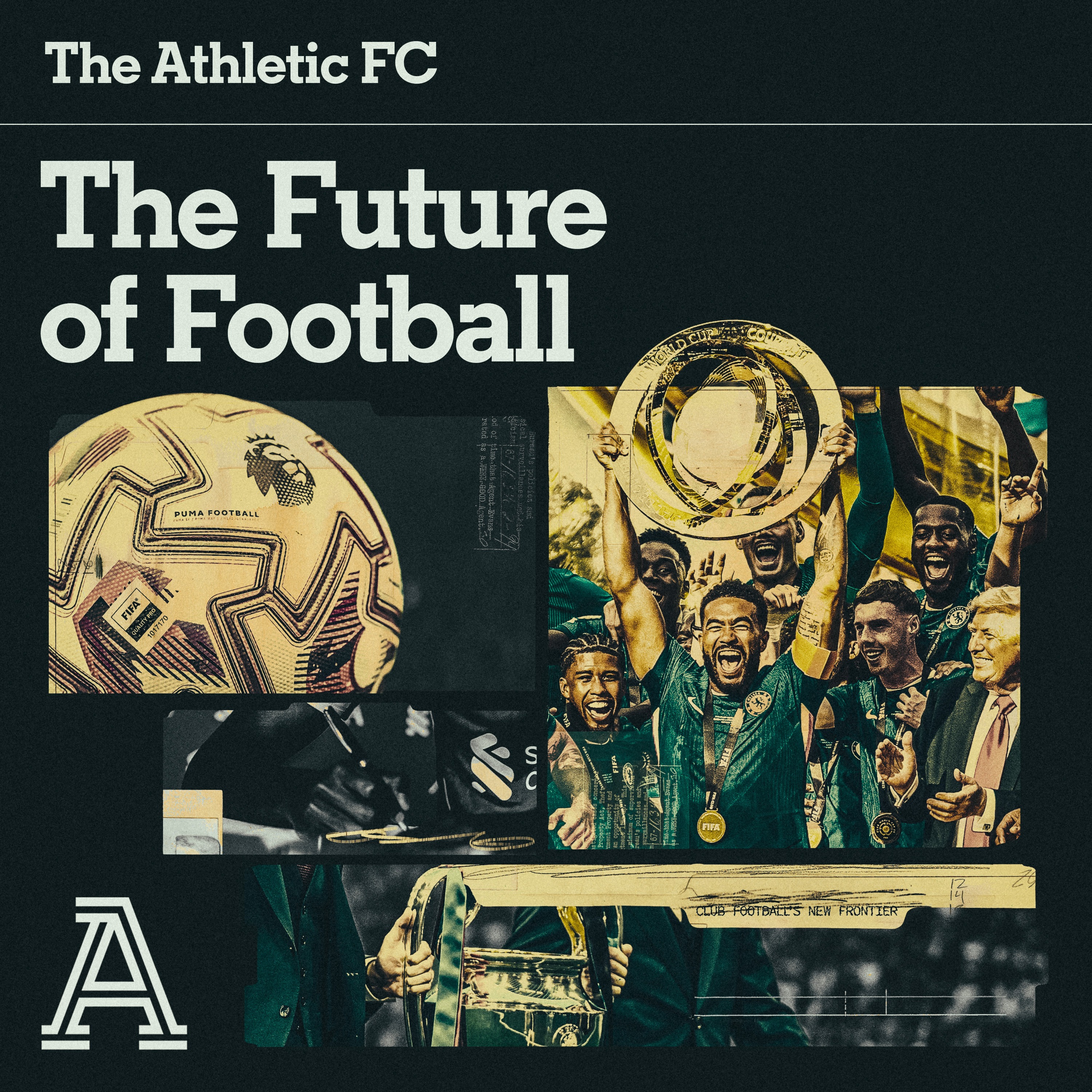
The Athletic FC welcome to the Athletic FC Podcast. I'm Adam Leventhal. This week we have a special three part series, the Future of Football and we're asking the biggest questions shaping the game. From the impact of the Club World cup to whether anyone can keep up with the Premier League as the fight to protect the English football pyramid continues. And with the 2026 World cup on the horizon, which direction is the power, the politics and the money around the game heading? This is the future of football. So Matt set this up for me then how would you assess the state of the European club game at the moment? And we're focusing on Europe because traditionally that is where the most powerful clubs are.
- [02:37]
Matt
I still think that's the case. Of course we've had a Club World cup this summer where we've had a chance to to sort of put that to the test a little bit, certainly in terms of on field power. The Brazilian teams did well, made the knockout stages some good results. Flamengo, Flaminese, Botafogo took some scalps, but you know, two European teams contested the final and Chelsea Won. If you look at kind of money rankings, Europe streets ahead. Deloitte Money League is a good one, came out in January. The richest non European club is Flamengo at 30 with annual revenues of about 200 million euros. So mid tier Premier League, that would be behind Everton, Villa, West Ham. So I think that's the reality now in terms of where the European club game is. Well, we are into now our second year of this revamped, expanded European club competitions, which is this sort of endless dance between UEFA and the big clubs always wanting to play each other more regularly, more often. The big clubs have kind of got their way there. There's always a bit of a compromise, compromise that has to be done in terms of the calendar compromise in terms of domestic leagues. So they wanted more games, they wanted 10 games, they've settled on eight, up from six. So you got that the money's coming in, it's looking pretty good. Premier League still doing really well with its TV deals, domestic deals, steady global deals, fantastic. And that's giving them real relative strength, dominating the transfer market. The other big clubs in Europe still fine. I think there's weakness once you get below those big Champions League clubs. There are issues with their domestic deals. There's some regulatory pressure out there at the moment. European Super League, of course, is the big one. Been some big cases that have gone to the European Court of Justice which have I think clipped the wings of the big old fashioned governing bodies, UEFA, FIFA. So there's some cases around how you regulate agents, transfer deals. The Lassana Diarra case, the European Super League case has sort of rumbled on. It does look like UEFA is going to have to be more careful about how it responds to new ideas into the market. So there's a lot going on. I think if you're asking me for an overall assessment, European club game is still by far the biggest, most powerful, strongest in the global game. And football's still a pretty popular sport, so that's not a bad place to be.
- [05:11]
Podcast Host
And Adam, you know, from what Matt has outlined there, the myriad of issues that are faced by the European club game, the impact then on the club game around the world, it's a reflection on how difficult it is to balance all these competing forces at the moment. When we consider what might be happening in the future, do you see this as a moment of sort of existential crisis in the club game?
- [05:38]
Adam Leventhal
I don't see it really as crisis at all. I mean, if you look at what we've seen in the summer in terms of a new competition, we're seeing a huge amount of spending, billions of spending. Of course, that's very concentrated, but that's just where it is at the moment. I don't think that means something is. Is broken or at the point of destruction. Clearly, there is pressure for reforms in certain ways and rebalancing in certain ways. Even if you just take isolated English football, the five, six, seven tiers of it, you're getting thousands of People in the 5th tier of English football going to games. So I think the idea of something being at the point of existential crisis would suggest people aren't interested in it or people are turning away from it. And I don't really think there's any evidence that that's the case. Live sport is still, you know, why do you think all the streaming platforms that we see are acquiring live sport is. Because it's the one thing they know people will definitely tune into. So I think on that level at least, sport, and football in particular is in a really healthy place. But what it needs is just the refining to get it to a better place.
- [06:48]
Podcast Host
Okay? Now, with FIFA taking up more of the domestic football calendar, the Premier League and Europe's other domestic leagues and players unions as well, lodged the formal complaint against the global governing body at the European Commission, and that was in October of last year, saying that they're too dominant, not taking workload into account, not consulting and threatening the fabric of domestic leagues. Matt, does this have the potential to make a difference?
- [07:15]
Matt
Look, maybe, right? You know, it's got a greater than zero chance of doing something. How much greater than zero? I'm not sure. I think it's more that this is about governance. Okay. We've sort of decided over the last 30, 40, 50 years that sport is the sort of most globalized thing we do. We care more about it than ever before. It has, you know, kind of greater reach and potential and revenue, and it's become incredibly important. It's always been massive, of course, but there's money attached to it. Money, interest, power, which is why governments are interested, which is why sovereign wealth funds are involved. You know, just the stakes have just risen exponentially. However, the governance of the game, all games, I'm not just picking on football, but it's the one we're talking about now is still tied to the way basically us Brits set it all up back in the 19th century. Loads of public schoolboys in pubs, codifying the rules, setting up some leagues, and away we go. And that is our greatest export, frankly. But as a game, as a sort of Industry, the governance hasn't really kept up with all the advances that we've experienced over the last century, particularly the last 20, 30 years. So that is where the tensions are at times. The European Commission, EU law, if you like, has made an impact. Bosman's an obvious one. And as I said in my first answer, there have been a series of defeats, small defeats for FIFA and UEFA, where their rule book has been found to be in breach of EU law. Now they start to add up, I think, in time, where what we are hearing from lawyers, from politicians is that the old way of doing sport doesn't really work. You've got these governing bodies who are also market participants. So that's been the problem, I think, with UEFA and FIFA when they got into trouble, trying to wear two hats. You're either putting on a competition and selling rights and selling advertising deals and doing that, or you're being the governing body, you're regulating. It's really hard to do both. So the FIFA Club World cup has become this touch point because, yes, FIFA have control of the international match calendar, but they are clearly being a market participant, they are clearly expanding their tournaments and all the other competition organizers are saying, well, the cake's only so big. You take a bigger slice, it's less for us. We've had this space for 130 odd years. Your space is growing and yet you're the regulator. That's not fair. You can't do both. So that is why there is potential for this complaint. When you add up all the other complaints to do something, I just think, I wouldn't hold your breath on this one. It might solve some of the problems and if we combine it to all the other legal defeats, we might get to somewhere where FIFA and UEFA and frankly the FAA and all the other kind of football governing bodies behave more like regulators as opposed to market participants.
- [10:32]
Podcast Host
Adam, from your perspective, is the problem that the game is moving at such a pace now and being sort of adapted, almost ad hoc and on the hoof sometimes that it's being reshaped without it actually being able to take a pause, redesign itself positively, and we will never be able to catch up and make it better.
- [10:54]
Adam Leventhal
There was a chance, wasn't there, where actually everything did pause, which was a couple of years ago during COVID actually, that that was a moment. But everyone at that point, understandably, was sort of so convinced the sport was going into financial meltdown at that time. I mean, how many times did we hear, like Premier League clubs make out? We'd never See a multi million pound transfer. Again, I'm exaggerating a little bit but you know, at that point it was as though sport might never come back. And you could understand it at the time. I think it must be disorientating. Like, you know, if you take obviously a lot of talk last week about Tottenham, Daniel Levy, but when he came in and Enoch came in sort of with their majority stake in 2000, you know, the valuation of Tottenham was 60 million. 60 million for one of the biggest Premier League clubs. I mean what would that buy you now? Which club could you buy now for 60 million, Matt?
- [11:49]
Matt
A Championship club and a good one. 2. You could possibly buy two if you wanted.
- [11:53]
Podcast Host
Buy one, get one free.
- [11:56]
Adam Leventhal
Whereas if you wanted to buy. Whereas if you wanted to buy Tottenham now, it would be 2, 3 billion. And that sort of shows the change that we're seeing. And it must be disorientating to be on the inside of that where there is this race all the time and you have different forms of money coming in, whether it's private equity, whether it's sovereign wealth fund and everyone is chasing success. And that's why, although valuations have. Teams have gone up a lot over the past 20, 25 years, what we've also seen, the huge pressure is costs. The costs of running professional sports teams have gone insane. And that's the other area I think, which is really like one of the defining battles of the past 10, 15 years. How do you control costs? And that's what all the Manchester City stuff's about. It's what Newcastle stuff's about. It's what you now see kind of mid ranking Premier League clubs and their fans getting frustrated about because there's these rules that are impacting them, whether it's Aston Villa or potentially Everton as they try and get bigger over the next few years. So I think it really does feed into that.
- [13:05]
Podcast Host
Okay, we're going to pause for a moment and next we're going to focus on one of the big changes in club football around the world and that was the Club World cup and the fallout from it.
- [13:16]
Podcast Announcer
This is the Athletic FC podcast with Adam Leventar. This is a paid advert by BetterHelp, the sponsor for this episode of the Athletic FC. We've all done it. Turning to our barista, our hairdresser or a random stranger in the bathroom for life advice. As fun as these people are to talk with about everyday topics, when you're looking for help about relationships, anxiety, depression or other clinical issues, they may not have all the right answers. Instead get guidance from a licensed therapist online with BetterHelp. BetterHelp has been helping people find their match for over 10 years and have a 4.9 rating out of 1.1.7 million client session reviews. BetterHelp is convenient too, and fits into your busy life. You can join a session by phone or video with a therapist at the click of a button, and you can pause your subscription whenever you need to and switch therapists at any time at no extra cost. As the largest online therapy provider in the world, BetterHelp can provide access to mental health professionals with a diverse variety of Expertise. Find the one with BetterHelp because you listen to this podcast, you can get 10% off your first month at betterhelp.com fcpodcast that's B-E- Double T-E-R-H-E-L-P.com fcpodcast One last time betterhelp.com fcpodcast Life is busy. If you're anything like me, between work, working out and making sure the kids aren't going feral, then everything in between. Sometimes all you've got is a couple of minutes and that's where Factor comes in. Factor helps you eat smarter with tasty chef prepared meals that are all dietitian, applied, approved and delivered right to your door. There's no prep and no mess. All Factor meals arrive in an insulated recyclable box ready to heat and eat in two minutes. And now, with more than 65 weekly meals made for how you live and what you like to eat, you've got even more ways to fit in a real meal wherever the day takes you. Factor provides amazing variety with global flavors and delicious ingredients all prepared fresh and never frozen. Plus there are keto, calorie, smart, high protein, vegan and veggie options to support your wellness goals. I've just tried the Santa Fe style Green Chili Beef Skillet with jalapeno, creamed corn and green chili rice and it was absolutely banging. So eat smart@factormeals.com fcpodcast50off use the code fcpodcast50off to get 50% off plus free shipping on your first box. That's the code fcpodcast50off@factormeals.com for 50% off plus free shipping. Get delicious ready to eat meals delivered with Factor.
- [15:44]
Kristen Bell
Buying a car in Carvana was so easy I was able to finance it through them.
- [15:47]
Matt
I just.
- [15:48]
Kristen Bell
Whoa, wait, you mean finance? Yeah, Finance. Got pre qualified for a Carvana auto loan, entered my terms and shot from thousands of great car options all within My budget, that's cool. But financing through Carvana was so easy. Finance done, and I get to pick up my car from their Carvana vending machine tomorrow. Financed, right? That's what I said. You can spend time trying to pronounce financing, or you can actually finance and buy your car. Today on Carvana financing, subject to credit approval, additional terms and conditions may apply.
- [16:20]
Podcast Host
So back in July, we asked the question, was the Club World cup worth it? Adam, let me come to you. We're nearly two months on from the tournament. What's the legacy that we've seen in the short term?
- [16:34]
Adam Leventhal
I was about to say I've not heard anyone discuss the Club World cup since the Club World cup in the United States, but that's wrong because someone did mention the Doja Cat halftime show to me the other day. So that's about the extent of it. But to be honest, I think it's been worth it to the clubs that were in it, which is it's been worth a lot of money to them. And I don't just mean the Chelsea and PSG and Real Madrid that reached semi final and final. I think pretty much every club you speak to that was in it say, this was pretty good because if you get a ton of money and it's about two, three weeks work, maybe less, if you go out like Man City did in the sort of first knockout round, then, you know, they almost hit this sweet spot of, you know, probably taking home 50 million while only having their players impacted for two weeks in terms of the workload aspect. However, although I'm saying that, you know, we've not really been talking about it, and by the way, it's really interesting, over the weekend, PSG Due and Dembele picked up two pretty significant injuries. Interested to see how that develops. If that starts to mirror other clubs. It could be completely independent freak injuries. But I think that's certainly worth watching, you know, the impacts of the workload on the players. But although there hasn't been this huge buzz about, I mean, if you compare it to like the end of the tournament, because FIFA did this thing that they do where you go to a place or you go to a tournament and you go with all this skepticism, and then by the end of it, they've kind of attempted to basically brainwash everyone into thinking this was the best idea ever, right? Whether it's the Club World cup, whether it was Qatar, you get into this kind of like FIFA pilled zone of people who just have convinced themselves that this thing is infallible and when you think about compare like some of the early attendances to the final attendance where it was a full MetLife Stadium, you've got Trump celebrating with Rhys James. I think that gave FIFA a real buzz that they could take back to the clubs. And now, you know, now everyone's talking about every two years and I think if they really do go for every two years, they are taking on a massive, massive battle. It definitely won't be in 2027, but I think it's not impossible. We see it for 2031 or 2035. You know, it's something Arsene Wenger is been talking about privately for a long time. I know we've heard from him before on biennial World Cups, but this is for club World cup every two years. I think if they do that, it becomes a real problem for the Champions League because then sponsorship of Champions League and broadcast deals risk being cannibalized. I think a little bit, because it's no longer the premium competition, it is just another leading competition. So that I think will be, you know, where the big risk is. But in terms of the legacy it's had in the United States, unclear at best.
- [19:25]
Podcast Host
Okay, so Matt, let's kick it onto, you know, a point that Adam has mentioned there about it being played every two years. Firstly, do you think that that is almost definitely going to happen? It's just a matter of when they action that plan. Or do you think that there would be enough power from UEFA, yes, their restructured Champions League to push back on it? Because at the same time you've had all the big clubs that were under UEFA's auspices having jumped ship and almost sort of spouting about how good the club World cup was at the moment. So UEFA will have a great concern, won't they?
- [20:05]
Matt
On the one side you've got FIFA absolutely wants this to happen, has long eyed UEFAs large revenues, larger than FIFA's, with real envy. And no one knows that better than Gianni Infantino, who's ex UEFA and knows exactly how UEFA coins it in. And then of course, as Adam rightly points out, pretty much every club that went there were like, great. We do summer tours anyway. This is an amazing summer tour, way more lucrative.
- [20:36]
Adam Leventhal
And by the way, the clubs who weren't there, particularly the clubs who consider themselves rich, famous eyeball drivers, also looked at and thought, hang on, this is 50 to 100 million that we need or that we deserve. Because they sort of have this view of they have this God given right to this. If you're Manchester United, well why Manchester City getting this? I mean it's a sporting merit argument which I think probably explains that over the past few years, but that for sure. And that's why we're going to see whether it's every two years or four years. This will definitely be an expanded competition. I think next time around I would, I would say I completely agree.
- [21:14]
Matt
So not only do those, those clubs that missed out want it, I think FIFA wants it as well because they, they ran this tournament without Barcelona, without Napoli, without Liverpool, the champions of, you know, three of the biggest leagues in the world and those teams would all I think have contributed, added to the spectacle. So I think there's real pressure that it goes to two years. I think there's equal pressure that it goes to 48 teams and or they tweak the qualification criteria just to get more European teams there could both happen. Yeah, we now then get into the obstacles that FIFA are going to have to get over. There is as far as I'm concerned and I've spent a lot of time talking to people about this, there is no way you can just fit a 32 team or 48 team Club World cup in every other year. You just can't, you can't make them biennial and then leave everything else.
- [22:08]
Adam Leventhal
Right.
- [22:08]
Matt
And they just pretend we can just make this work. There will be massive impacts and Adam's already talks about one. The financial impact on, on the Champions League I think is absolutely right. But I think just from a time point of view it's an endless season. So then I think you're going to have huge pressure on the leagues, the domestic leagues. And this is where I think the real pushback will come, particularly those ones that are still at 20 teams. So Premier League, La Liga, Serie A and we have two club competitions, two cup competitions. Sorry. Now you could say, oh yeah, but let's get rid of the carabao. Fine, get rid of the carabbel. But then the Premier League has to do something about how it supports the rest of the pyramid. So there are knock on effects that FIFA just aren't considering. And there is one other thing I'll add, and I think we might talk about them a bit more is at the moment the Club World cup only really made financial sense because Saudi Arabia underwrote it. Saudi Arabia threw its money into Dazn and through its sponsors paid for the prize money to get everybody there. So as long as Saudi Arabia is interested, this makes sense. If Saudi Arabia stops being interested, good.
- [23:16]
Podcast Host
Luck on that point. And it's a relatively Easy question for you to answer. Will that 2029 tournament, Adam, from your point of view, be in Saudi Arabia or somewhere else?
- [23:29]
Adam Leventhal
I'd be very surprised if it was in Qatar or Saudi Arabia just because of the calendar issues because it wouldn't be able to be played in June, July. So I think FIFA would be taking on almost a dual issue there. One, they would have the players unions, I think very, very concerned and very agate them when they really need them on board. And the other issue is it would be very disruptive of the league season. If you remember the Qatar World cup year where we all had to stop the domestic league seasons, what it did produce, I think there is a consensus within the game is it actually produced a higher quality competition because the players were fresher than they tend to be at the back end of a very long season. That at least is anecdotally what I've heard quite a lot of former coaches and players say about their experiences, that they felt kind of good and fresh around that time. But 20 to 29, I really wouldn't expect to be there. I think FIFA are fielding interest from lots of different places. Brazil made very clear during the club World cup that they would like to do it. I don't think England's an impossible destination actually. I know that's one that's being pushed by some of the stakeholders. I think some people within FIFA see it as a. Almost as a way to shut up the British media to a certain extent. Right. Because you can't keep moaning about this thing if it's on your doorstep bringing money to you and whatever. Spain would quite like it. I think the States would be able to do it if they wanted to bring it back here. I think there may be a challenge there with CONCACAF and mls. You know, MLS is going to be disrupted a lot. You know, if you think this summer, that's just gone next summer. If you look at what the impact on the Gold cup this summer as well, that's potential thing to bear in mind. So I think there is an element of at some point FIFA just have to back off the States and let the American game breathe a little bit. Others within the states just view rising tide lifts, all boats, etc. What I would say is that I don't think there's any doubt 29 will happen. I think it's interesting I was saying the same as Matt during the tournament, which is if Saudi aren't interested anymore or Qatar aren't interested anymore, then this thing's got no chance. And. But really now, these states, Abu Dhabi as well, have been very, reliably, consistently supportive of football for the past 15, almost 20 years. There isn't really a sign of them reducing their interest, commitment, spending, maybe Qatar a little bit. I mean, they had to reduce it relative to what it was for a World cup, but they have all the stadium now. They kind of have to use this stuff that they've built. So although it may not go well with everyone, I don't see kind of evidence that that spending will necessarily slow down. And I guess the other thing is Saudi in particular, at least until 2034, when they have the World cup, are not going to be reducing their commitments to FIFA.
- [26:26]
Podcast Host
Well, let's deal now with the players side of things, because after the Club World Cup, FIFPro, which represents players globally, released a very damning statement of FIFA saying concerns of players are being systematically ignored. FIFA's focused on politics, profits, not players. And it ended with this line. Football needs responsible leadership, not emperors. It needs fewer autocratic monologues and more genuine, inclusive and transparent dialogue. And, Matt, we'll get your take on it afterwards, but you've been speaking to Meta Malango, who is the CEO of the Professional Footballers association, which is the trade union for footballers in England, and he backed that statement.
- [27:08]
Maheta Malango
Of course, I think that the major problem that the industry has is a problem of governance. And a lot of time we want to compare ourselves with what happens in the us, but the difference is precisely the fact that we have overlapping entities, all kind of using the same assets, which are the players, and I'm using the word assets on purpose. And up until you don't fix the issue of the governance of football, then you won't have a solution. And again, for us, I think we've reached a stage where it's no longer just a question of the player being burned out physically or mentally, which I can understand, maybe some of the audience would have maybe little sympathy for, given the fact that they are fortunate enough to have turned their passion into their profession. I think it has now become a question of the quality of the show and the fact that what we're seeing is ultimately games which are no longer of the quality that we would expect, just because the people are supposed to deliver the show, are just not able to perform at the level they should be performing because the demand that is put on them is just excessive. To be clear, you know, we don't have an issue with the Club World cup in itself. It's not a debate around us being against a specific competition or specific organization. That's just not the case. I think what we saw at times were a situation where maybe we've not prioritized the show on the pitch, starting with the heat conditions, starting sometime with the condition of the pitches, which were not ideal for a good show. So I think from our perspective, what we need to get back to is prioritizing the quality of the product, because ultimately, that's what will drive the interest of the fans, and that's what will ultimately drive the income that some people are really after.
- [28:41]
Matt
Mata, what would you say, though, to people who would say, well, the season's just started, right? Some of us have gone back to work, some of us have gone back to school. We've just seen a transfer window where billions is spent on players. We're all talking about the game. Again, what's the problem here? You know, you're not exactly coal miners. You're doing pretty well. What would you say to those who are just sort of scratching their head and going, I don't get it. What's the problem? Play some more football. Big deal.
- [29:07]
Maheta Malango
I completely understand and respect the fact that a lot of the players, or maybe not a lot, but quite a few of the players that we present are people who, as I said, through hard work and dedication, let's not forget about that, have been able to turn their passion into their work. And they're fortunate people, and they will acknowledge that themselves. And even sometimes, I would. I would say they're almost kind of embarrassed to complain precisely because they know the perception people may have about what their lifestyle or their not lifestyle, what the opportunity they have professionally is. But unfortunately, more money does not mean that you get an extra leg or an extra lung. And ultimately, it comes to a stage where it's not a question of just turning up at the game, it's a question of performing at the highest level. And this requires for you to be mentally and physically fit. That's just the reality of how this works. And those guys are not robots. And again, they love to play. Sometimes I almost feel that we need to protect them against themselves. But the facts show us this leads to us not seeing Rodri for a few months, us seeing people who have been performing so, so well over the years to make us all kind of dream about them no longer being available or dropping their performances. And therefore, we need to intervene before it's too late.
- [30:13]
Matt
The club World cup has clearly sort of dominated a lot of the debate about the calendar for the last year or so, but we seem to be straight into a New deb around overseas games, you know, domestic leagues taking their games abroad. I wonder how you the PFA feel about that and is that another concern, just in terms of, I don't know, the travel implications knock on effects, you know, where's the PFA on taking games abroad?
- [30:44]
Maheta Malango
As you said, for us, it's about looking at the bigger picture and the implication this may have on. On the workload that players have. But again, going back to the initial point I was making, it's a question of governance. If games are to be played abroad, I think it'd be interesting to ask the people who are supposed to go and play those games how they feel about that and what the implications are.
- [31:05]
Matt
Have you been asked?
- [31:05]
Maheta Malango
Not for the time being, no.
- [31:07]
Matt
I mean, I think that says it all. Is there even a mechanism to ask you, under the current system, how would FIFA ask you for a view or UEFA ask you for a view on Premier League EFL games being played in the usa?
- [31:24]
Maheta Malango
I would say that in terms of the relationship that we have with UEFA, we now have through FIFPro an MOU in place, which means that. And there's a commitment by UEFA to say that they would not be adding any further game or would not kind of introduce changes to the calendar without consulting with us, which I think is we still need to do more, but I think it's a step in the right direction. What we don't have is a meaningful forum to do that at global level, which I think is something that we need to be able to work on, but not on the basis of being part of a wider committee where ultimately you just have one more voice. That kind of gets lost in the debate, but rather on the basis of acknowledging what the core decisions are saying, which is football is special, but football remains a business subject to the same rules as any other business and in any other walks of life. What would happen is that the employers and the employees would sit down and agree on the conditions that affect the workplace. This applies to a plumbing industry, to the lawyer industry, to any industry. And I don't see why football should be kind of ruled by different kind of principles.
- [32:31]
Podcast Host
So it's a really interesting chat, Matt, and what Meheta is saying there is that he wants to meaningful dialogue. And I wonder whether the only way that the players are actually going to get what they want is whether they start striking and actually start digging their heels in. But that's unlikely to happen, isn't it?
- [32:54]
Matt
Well, history would say so, wouldn't it? Because that is the ultimate power that the little guy has us employees have, you know, withdrawal of labor. If we just look at English football, the closest we ever got was 1960, 1961, where Jimmy Hill, some of our listeners will remember maybe from. Actually, he was. He was the PFA boss at the time and he got a strike vote. You know, he had a mandate for a strike to abolish the maximum wage, which I think was £20 a week at the time, and also to make the transfer system slightly more flexible. But the main thing was the abolition of the maximum wage. It looked like they were going to do it. And the football authorities folded in January 1961 and the maximum wage was abolished. Since then, through the 80s and 90s, Jimmy Hill's one of his successors, Gordon Taylor, PFA chief, frequently talked about strikes. Never really got close and it was always a row around. Whenever there was a new TV deal, the PFA would sort of demand 5% ish, to kind of fund its activities. And as the TV money got bigger and bigger and bigger, that number got bigger and bigger and football were like, well, hold On a minute, 5% of the small numbers? Yeah, neither here nor there. But now that TV is the big thing and the number's massive. No, you're not having 5%. So we had a few rows through the 90s about that. Never happened. So in the history of English club professional football, it got close once in the 60s and it worked. The threat worked, but never again. If you look around global football, I think MLS had a strike very briefly, or maybe a threat of a strike. I think in about 2010, the Italians had a strike briefly. Really not many. There'd been some small rounds about, like referees or sort of working conditions, but we've never had what North America has every few years, either a strike, so the players withdrawing their labour or the owners, the bosses locking them out.
- [35:01]
Adam Leventhal
And by the way, this isn't necessarily going to be the most popular view with kind of the PFA and the players unions, but the one thing they never really talk about when it comes to the calendar is largely the reason that all these clubs need more money is because the demands of their players and what their players are now paid at the top level here, I'm talking about is so high relative to revenues for most clubs. A lot of clubs are now having to spend over 60, 70, 80% of their turnover to salaries and to squad costs and wages, and that is unsustainable at a certain point, you know, if an ownership changes or if there was some sort of tremor like we saw with COVID that puts the future at clubs at risk. Now, the players unions would always push back against any kind of salary cap. But there does have to be a recognition at some point that wages are growing at a rate, that revenues are finding it really, really hard to keep up with. And that's one of the reasons why clubs are so keen to push tournaments like the Club World cup, because it allows them to remain competitive with those clubs at the very top who either have the revenues to continue to do that or have found ways perhaps around the rules at certain points, allegedly in order to be able to do that. And I do think at a certain point that the players unions have to recognize this because I think it is really in the interest of their own members as well. You know, when it comes to workload, when it comes to Canada, is it actually just a case of we all just need to earn a little bit less money? No one will ever say that, but that is one way around it, right? If players earn a bit less at that top level, then that may allow it. And we're not talking here always about like owners being able to just make more money to keep themselves. We're talking in many cases about clubs being able to be in any way profitable. I think football seems to be the only business where we don't want the business to be profitable, where it's seen as in some ways uncouth or unwelcome for the business to make money. At the end of the year, it's as though all of it should be every year be put into the pockets of players and agents. And I don't think that's right. And I think that's an argument that a lot of clubs say behind closed doors but for some reason are very reluctant to say publicly. Is that unfair? I don't know.
- [37:23]
Podcast Host
It's an interesting point and it's another. It also, I guess, feeds into the broader point that Maheta was saying about too much football damaging the show and the product and getting people engaged in the, in the sport is going to be damaged by players who have had a full season in the, in the Premier League or City Hour or wherever, going to the Club World cup and basically treating it like a preseason tournament. But I wanted to get your take on it, Matt. Do you think that really matters? Do you think that a young fan that you want to engage in the game, if he gets to just go and see physically somewhere Trent, Alexander, Arnold or Vinicius junior in a stadium or the Paris Saint Germain, all conquering Paris Saint Germain team Or Lionel Messi in a stadium. Do you think that when you're trying to grow the game, it really matters in terms of the quality of the show? I'm not saying whether I agree with that or not. I'm just asking the question.
- [38:21]
Matt
I think it's a really interesting debate. And again, I don't know. What I can tell you is I've got sort of a kind of focus group here, is that they're my kids and what they really love is the live experience. They like going to games and they don't really care about the standard. They haven't got much choice because I take them to Southend United or they go to Macclesfield down the road occasionally. If they're good, I take them to Man United or Manchester City. Insert your own joke now. That's the fare they are offered and they love it. They also like going to music concerts and things like that. I don't think the live experience has gone out of fashion, however, Merheta's point is, and Adams talks about it, you know, the kind of, the growth, the money, everyone's done well. And I think that is predicated on it being elite, on it being amazing, which is why FIFA keep banging on about it. They keep telling you that it's amazing. The Premier League have done an amazing job of telling you that it's amazing. And I think the minute that you start to think, well, hold on a minute, where's the star? He's taking this one off. It's a debate that NBA's having. Maybe they need to shorten the season. They're talking about workload management. We get it with cricket, we get it with club rugby. The minute football gets into this space where you don't know if the stars are playing well, maybe you start to know which games matter. And I think this is where the Premier League, this is where the domestic leagues are really nervous about things like the Club World Cup. If it's not elite and if we start to think it's not elite, the illusion is shattered.
- [39:55]
Adam Leventhal
I think that's a really interesting point. If I just look at this from a kind of U.S. north American perspective, when I speak to new or curious or casual fans of soccer trying to get into it in the United States, which is clearly a market that all of these leagues and organizers want to be able to hit, I think there is confusion. I think there is real confusion now about what are the games I'm meant to watch, what are the games that matter? Am I meant to watch just Inter Miami because Messi's playing, does that mean every game's important? Should I be watching MLS games? Should I be watching Premier League games? Do I need a team in Spain? But they've all just come over to the US for the Club World Cup. But there's a World cup next year. But this is the Club World Cup. And some of this sounds so simple to the European soccer mind, but I think it becomes really complicated for people to know what's the thing I meant to watch? What's the thing that really matters? What's the thing these people want me to spend my money on? And the flip side of where, you know, Matt's saying there is this risk of too much. I think where sport does have to be careful about dropping off is with everything else being so 24 hour, you know, whether it's streaming platforms, whether it's gaming. Because it's not just other sports or other forms of football. It is whatever it is that could occupy a person's time. And all of that access is so kind of omnipresent. I mean, what's the biggest occupier of people's time? It's a phone. So the fear is that you vacate space in the calendar, something else fills that time and you don't get people back. How you kind of harmonize that balance is the most difficult bit.
- [41:33]
Podcast Host
Well, we'll see. A football will be able to hold its nerve and not continue to flood every waking moment with more and more games. But it's not looking that way at the moment. So we've got the players point of view. Let's deal with the supporters next.
- [41:53]
Adam Leventhal
When you're a forward thinker, you don't just bring your A game, you bring your AI game. Workday is the AI platform that transforms the way you manage your people, money and agents so you can transform tomorrow Workday, moving business forever forward.
- [42:09]
Kristen Bell
Hi, I'm Kristen Bell, and if you know my husband Dax, then you also know he loves shopping for a car. Selling a car, not so much.
- [42:15]
Matt
We're really doing this, huh?
- [42:17]
Kristen Bell
Thankfully, Carvana makes it easy. Answer a few questions, put in your van or license, and done. We sold ours in minutes this morning and they'll come pick it up and pay us this afternoon.
- [42:28]
Matt
Goodbye, Truckee.
- [42:29]
Kristen Bell
Of course, we kept the favorite.
- [42:33]
Matt
Hello, other Truckee.
- [42:34]
Kristen Bell
Sell your car with Carvana today. Terms and conditions apply.
- [42:39]
Marc Maron
Hey, it's Mark Maron from WTF here to let you know that this podcast is brought to you by Progressive Insurance. And I'm sure the reason you're listening to this Podcast right now is because you chose it well. Choose Progressives name your price tool and you could find insurance options that fit your budget. So you can pick the best one for your situation. Who doesn't like choice? Try it@progressive.com and now some legal info. Progressive Casualty Insurance Company and affiliates Price and coverage match Limited by state law not available in all states.
- [43:18]
Podcast Announcer
This is the Athletic FC podcast with Adam Levantar.
- [43:22]
Podcast Host
So, Matt, you have been busy. You've also spoken with Ronan Yvain, who is the executive director of Football Supporters Europe, and they are currently tied up with an ongoing battle. There's so many battles, isn't there, against domestic fixtures being played abroad? And you both discussed this with IO. It was a dedicated podcast about this. In particular about December's La Liga game between Villarreal and Barcelona being played in Miami. Syria have also greenlit Como against Milan to be played in Perth, Australia in February. Let's hear Ronan's thoughts first.
- [43:56]
Ronan Yvain
It's like the Super League. There's no in between. And this is an existential threat to football as we know it. There are two issues, really. There's the one game we have to express solidarity with the fan base affected because no one would like to see their club exported to the other side of the globe. And then there is a broader governance issue. And our understanding is that once the floodgates have opened, there's no way back. This is the deterioration of football. This is the end of this vital connection between a club and a territory, or between a national team and a territory, and then we're all exposed. Essentially, any football fan in Europe is at risk.
- [44:33]
Matt
You said that kind of all fans are against this. How about the fans of Milan in Australia, the fans of Barcelona in the States? You know, a lot of those people are our readers, my readers, they quite like this idea.
- [44:46]
Ronan Yvain
That's fair enough. When it comes to local fans, what we're hearing from fans of domestic football in the US and Australia is that they're concerned that the competition will come at their door and that this will eventually have a negative effect on the development of the game locally. Yes, there's a fan base for some of those clubs globally. But supporters of clubs outside of their city, their region, their country of origin, they also support a football club for this whole environment, for this whole culture. If someone I don't know in Singapore decides one day or feel like they have a connection with the Club of Liverpool, it's also because of everything that is happening around the Club of Liverpool, not just for the colours of what's happening on the pitch. So I think it is important for everyone to understand that this will have in the end, a long term negative impact on the game that they love. And the identity of the fan culture is a huge part of why this game is popular.
- [45:42]
Matt
How about to the argument that I think I hear more openly from the Spanish that they're doing this for commercial reasons. They're doing this for good commercial reasons. They can see the Premier League galloping off into the distance and they have to do something. They need to move.
- [45:57]
Ronan Yvain
First of all, I'm not sure there's some solid financial planning behind it. This looks, this feels largely improvised. It's hard to imagine that one game in Miami will have a significant financial impact for the two clubs or for La Liga or for the development of football in Spain. For this to make sense, financially speaking, they will have to relocate a lot more games to the U.S. now, La Liga is still one of the richest in Europe. Yes, if they compare themselves to the Premier League, they are clearly behind, but nevertheless, it's highly profitable. People all over Europe and all over the world, the globe are watching it on tv. The stadiums are full and they are still winning European club competitions. So what's wrong with that? The other element to this is antagonizing the traditional fan base, the local fan base, the one that provides the most steady stream of revenues to La Liga. It's hard to imagine how this could be a smart business decision. This is all based on the fact that regardless what you do, your local fans will always be stupid enough to follow that we are, that they are a captive audience and that you will always keep them on the hook while doing whatever you want on the other side of the globe to attract new audiences.
- [47:05]
Matt
Okay, well, look, I'll tell you something that often comes up in my comments when I write about this, and it's get over yourselves. Legacy fans I'm nearly always writing about English football are the most annoying in the world. You know, it's a global game. Half your teams, it's actually more like two thirds of our teams, are owned by foreigners. You know, your sponsors, your global. You know, you're earning more money now from your global TV deals than you are from your domestic deals. The NBA, the NFL, Major League Baseball, they've all had this debate a while ago. What is so wrong with sending a few games abroad?
- [47:41]
Ronan Yvain
Well, first of all, I don't know what is a legacy fan, because this would mean that the European fan base is extremely static and aging and conservative. And that's not the case football in most, at least of western and northern Europe, remains extremely attractive, including to new audience, including to young people that are equally attached to the fundamental nature of football and then the rest of us a little bit older. So I don't know this legacy fans terminology means there's a conservative element to it. That yes, certainly exists, but doesn't mean that we are all stuck in the past. I think football, European football, is clearly in a position of dominance. This is the most popular leagues in the world, the most profitable leagues in the world. So it is in a position to set their own rules. The logic behind this is not one of profiting the sport in general and the global growth. That could be, I think the strategy of the NFL, at least how I understand it, it's the opposite. It's an arms race for a handful of clubs or a handful of leagues to get the hands off the last slots available in the calendar or to try to become the most popular in the world. So the logic behind it is far from one of American sport when they take games to Europe.
- [48:55]
Matt
Okay, one last one then. What is the mechanism that football has to hear from fans? And I suppose a better question is, what should it be? What would you like it to be.
- [49:05]
Ronan Yvain
For a lot of fans? The essence of the football club is that you know that your club every second week is playing home every second week away. This is the essence of the relationship with the club. So that's why it's seen as also as such a threat and in many ways more of a threat to the fabric of football as we know it as the Super League. And there is this idea that you need a big club and a small club to play like the sparring partner. So if you're a fan of Como, obviously that's not Como that is attracting the Australian public authorities to organize the game. And it's the same logic with Villareal. La Liga really goes to Miami with Barcelona, because that's the fans of Barcelona locally that they want to attract. When it comes to the mechanisms to protest this, well, there's nothing in place on FIFA. There's no fan representation at the working group that works on the change of the statute. At UEFA, it's different. There's a structured dialogue, there's a stakeholder engagement policy, and UEFA is well aware of our position. Now the question is, what stakeholder is the most influential in this, in this discussion? What feels fundamentally wrong is that the calendar is being set by two leagues, or rather two individuals that don't necessarily have the entire backing of the football in their home country. So that's Mr. Tebas, Mr. Simonelli, and that the rest of football have this calendar imposed on them. And that's not right. If at least there was a proper discussion, if there was a proper assessment of the impact on our competition, on the long term development of the game and so on, and if that decision was made based on facts, that would be potentially a different story. But here it's not the case. Now we use the weapons that we have. We can. And we are making sure that politicians in Brussels and the European Commission are aware of our position and we feel that we're being heard in Brussels, at the European Commission, at the European Parliament. So the pressure will only build up in a direction of not allowing this to happen. But then we are also mindful that we are facing powerful forces, whether it is the companies that are trying to attract the games to the US or the financial interest of a couple of leagues. So I don't know where this is going, to be honest, but I have good hopes that we can still stop that from happening.
- [51:14]
Podcast Host
So Matt, Ronan ending there saying that he's still hopeful of these games being stopped. Do you think that that's the case? I mean, December's not that far away, is it?
- [51:25]
Matt
I love Ronan and I really like the work that he and FSC and all the other supporters groups do, hundreds of them. He's managed to get behind this campaign. I'm not as optimistic as him, no. I think powerful forces, I. E. The money, the big clubs want this to happen. Where Ronan and his people that agree with him have a chance, I think is, can we limit this? Can this really just be one offs? And I'd like to hear Adam's view because it's basically going to be on his patch again. I'm not so sure of that. I think he might have more allies there because I think the big domestic leagues, again, for all the other worries I've already talked about, won't want this to become a free for all. UEFA and the big confederations won't want it to become a free for all. We've heard Alexander Sephrin, the boss of UEFA, sort of say, I don't like the idea, but maybe one offs are okay. We don't think legally we can stop it, but, you know, we're clearly not that comfortable. We know the European Commission are looking at it. So this week, the week of these podcasts, there's an exco meeting, UEFA exco meeting in Albania. They're discussing it at the same time, the European Parliament is debating this big paper they're doing. I don't want to get too complicated, but it's about this European sports model, which is basically the model of sport we have in Europe. Pyramids, promotion, relegation. They're going to try and entrench it in European Union law properly to protect it. So there are opportunities, again, I think, to get some political support for Ronan's position. It's just not going to happen very quickly and I don't think it's going to solve again all of his concerns. So, yes, there's a chance more that you limit it and it becomes one offs.
- [53:13]
Adam Leventhal
To me, it looks like what UEFA are doing. It's kind of trying to say publicly, we don't really like this, but are we really going to be able to stop it? No. So they kind of want a bit of the good publicity that comes with it without really having either the means or the will to get in the way of it, because they know that, you know, the clubs that they also need on side really want to do it in terms of kind of what happens next. I mean, it's kind of what's been happening for the past year and a half or so, which is FIFA have this working group which has all different representation on it, but it has representation from this organization called the World Leagues Forum. And I said on the previous podcast, it has a really interesting composition because the people on this FIFA working group include both Daliga boss Javier Tebas, who is kind of the biggest pusher of this idea, but also Mark Abbott, who used to be at the mls, who traditionally have been very, very opposed to this. Now, I think there is a possibility that this FIFA working group comes back with recommendations which mean that FIFA can say, we've listened to all the different stakeholders, all the different viewpoints, because there's representation from all the different confederations. This is what they've recommended, and therefore this is what our policies are going to be. So it's going to be based on actually quite potentially quite sincere consultation, I think that will then protect FIFA from legal challenges from leagues, because the leagues can't, you know, caviar tepes can't turn around and say, we weren't in the room. We didn't, you know, agree to these recommendations. And same with mls. And I think you eventually get to a point here, as Matt says, where you have a certain number of games per territory per season. So that might be, I don't know, six games from overseas are allowed to take place. I'm plucking a number out of the air there in the United States per season, which might mean one game from Spain, one game from Italy, one from Mexico, one from Brazil, one from Japan, something like that. And you probably have to do it at a point in the calendar where MLS isn't playing so that you don't eat into their season. Or maybe if MLS is going on into a market that doesn't have a game that weekend, what they don't want is this free for all situation where the countries with huge diasporas in the United States, whether that's, you know, Mexico or some of the Central American countries or Ecuador even start just bringing games to the States every other weekend. Because that's when you then it's not so much that you lose your live audience, but you start to lose your flow of money. You know, you start to lose your sponsorship where companies are spending their money. And it also just makes your domestic league look a bit rubbish, to be honest. You know, if, if you've got others coming in every other week kind of offering a product that maybe looks more exciting in some. So I think that's probably the point that we get to. I don't think that would be a point that's acceptable for people like Ronan, but I think it is a point that the professional game and its stakeholders, apart from those fan groups, are prepared to accept.
- [56:22]
Podcast Host
Okay, Adam, well, we're going to leave it there, but we know full well that this is going to remain to be a contentious issue and we'll follow it all the way on the Athletic. Thank you very much to Adam, thanks to Matt, to Maheta and Ronan for their contributions as well. In tomorrow's episode, Matt is going to be back again with me and we're going to be joined by the Athletics James Horncastle to discuss whether the Premier League's 3 billion pound summer transfer spending is a sign of it destroying Europe's other leagues. We'll catch you there.
- [56:55]
Podcast Announcer
You've been listening to the Athletic FC podcast. The producers are Guy Clark, Clark, Mike Stabre and Jay Beal. Executive producers are Abby Patterson and Avi Moorhead. To listen to other great athletic podcasts for free, including our dedicated club shows, search for the Athletic on Apple, Spotify and all the usual places. You'll also find us on YouTube at the Athletic FC Podcast, so make sure you subscribe. The Athletic FC Podcast is an athletic media company production.
- [57:31]
Kristen Bell
Did you know Tide has been upgraded to provide an even better clean in cold water? Tide is specifically designed to fight any stain you throw at it, even in cold butter. Yep, chocolate ice cream. Sure thing. Barbecue sauce. Tide's got you covered. You don't need to use warm water. Additionally, Tide pods let you confidently fight tough stains with new coldzyme technology. Just remember, if it's gotta be clean, it's gotta be Tide.
- [58:00]
Adam Leventhal
Parle tu francais, Hablas espanol? Parle italiano. If you've used Babbel, you would Babbel's conversation based technique teaches you useful words and phrases to get you speaking quickly about the things you actually talk about in the real world. With lessons handcrafted to by over 200 language experts and voiced by real native speakers, Babbel is like having a private tutor in your pocket. Start speaking with Babbel today. Get up to 55% off your Babbel subscription right now at babbel.com acast spelled B A B B E L.com acast rules and restrictions may apply hey, it's.
- [58:39]
Marc Maron
Marc Maron from WTF here to let you know that this podcast is brought to you by Progressive Insurance. And I'm sure the reason you're listening to this podcast right now is because you chose it well. Choose Progressives Name your price tool and you could find insurance options that fit your budget. So you can pick the best one for your situation. Who doesn't like choice? Try it@progressive.com and now some legal info. Progressive Casualty Insurance Company and affiliates price and coverage match limited by state law not available in all states.