← The David Frum Show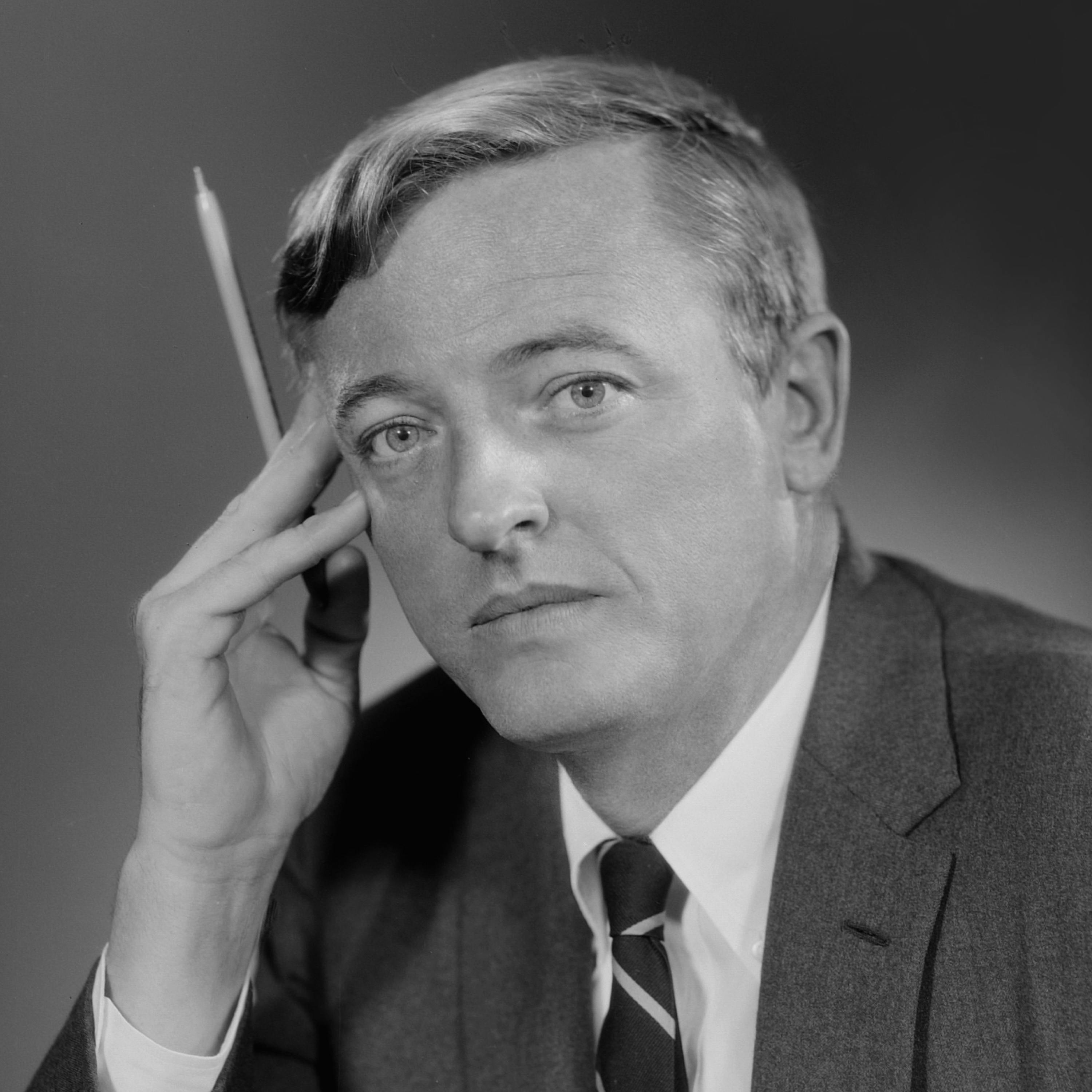
The David Frum Show
My Friend, Bill Buckley
00:58:35
Sam Tanenhaus on William F. Buckley Jr., his legacy, and his impact on the modern American conservative movement. Plus: David on the end of DOGE and the novel Alice Adams by Booth Tarkington.
Loading summary
Transcript37 lines
- [00:11]
A
Hello and welcome to the David Frum Show. I'm David Frum, a staff writer at the Atlantic. My guest this week will be Sam Tanenhaus, author of the important biography of William F. Buckley, the founder of modern conservatism. This week, the last week of November 2025, marks the 100th birthday of William Buckley. And Sam and I on this occasion will be discussing Sam's book, William Buckley's life and his impact on the two of us because we both knew him and admired him very much. My novel this week, my book this week will be the novel Alice Adams by Booth Tarkington, published also almost exactly 100 years ago. Before the dialogue or the book, I want to open with a few preliminary thoughts about the expiry of the so called Department of Government Efficiency, or Doge. Doge was never really a department of Government. It had a kind of extralegal existence. It was a creature of the president. But in the opening months of the Trump presidency, it dominated the agenda. It created havoc across the US Government and across the lives of many, many government employees and many people who depend on the US Government for services. I think as it expires now almost at the end of the year 2025, I think it's fair to render the verdict that Doge was an almost total fiasco. It failed to achieve its own stated goals of making any impact in government spending. The fiscal situation at the end of President Trump's first year is much, much worse than it was under President Biden. Total debt, not that these numbers mean anything anymore, they're so big. The total debt of the United States is now approaching $40 trillion and will continue to climb 3 through the Trump presidency and beyond. The root of the problem was that President Trump maintains very high levels of spending, is raising spending on defense, has made permanent the tax cuts that were supposed to be temporary when they were passed in 2025, sorry, 2017. They were now renewed in 2025 and they will last indefinitely. And Trump's big plan to offset the impact of his spending and his tax cuts is his tariff regiment, which first, doesn't raise all that much money. Second, he's already spent the money multiple times over. He's promised to give the money to the farmers, he's promised to rebate the money to the American consumer. He's promised to rebate much more than the taxes the tariffs are collecting to the American consumer. And anyway, the tariffs are probably illegal and may well shrink or disappear very soon. So the Doge failed entirely in its object. But I Think it is worth thinking about why it failed and what legacy it leaves behind. Doge failed for three main reasons. The first was it was run by arrogant people who did not take the trouble to understand what they were doing. Elon Musk approached the problem of reducing government spending as a kind of coding error. An engineer, a problem of computer engineering. You didn't need any subject matter expertise. You didn't need to understand how health care programs worked or how the Department of Defense worked. Just as a website is a website is a website. So he figured that solving the problems of overspending was solving the problems of overspending. You didn't need to know anything in particular. You just fired people and saw what happened later. So in their arrogance and in their high handedness, they didn't bother to learn anything. They began cutting wires, metaphorically, and discovered that they were connecting those wires, ran important machines. But second, because they didn't understand how government worked or understand their subject matter, what they were doing, they completely misdiagnosed the problem. Government does have fraud, of course, and it has inefficiency. Of course, a lot of the inefficiency is there to prevent fraud. That's why there's so much paperwork, is to make it difficult for people to steal. But even with the certain undeniable amounts of fraud and inefficiency that there are in government, they're just not big drivers of the way the US Government spends. Most money flows out in direct payments to people, Social Security, or it flows out in direct payment to hospitals, Medicare and Medicaid, or it flows out to pay for the national defense. You have to wrestle with those problems. And the idea that you're going to find cases of obvious duplicative spending or inefficient or spending that achieves nothing, especially when you don't know how anything works. That's just because they were arrogant. They didn't study the problem. Because they didn't study the problem, they addressed the wrong problem. And because they addressed the wrong problem looking for inefficiency and fraud instead of actually having to reduce services to people and products, they failed. But the last thing that they did, and this is, this is maybe the most important, was they broke the law. Under the law of the United States, once the House approves an appropriation, once the Senate confirms the appropriation, once Congress agrees on a budget or any kind of spending mechanism, and once the President signs it, the President's people cannot rescind that spending. What Trump was doing was claiming through Doge, a power to revoke government spending that Congress had passed and the President had signed. And that's just illegal. Now, there are some states that give the governor a line item veto where when a budget is presented to him, he can strike this item or that item. And maybe that's a good idea, and maybe that's not a good idea. But the President doesn't have that power, and he certainly does not have the power to rescind the spending after he or his predecessor have signed the spending. So Doge collapsed in the end because again, they were too conceited to find out what they were doing. Therefore, they did the wrong thing. But Doge does leave a legacy, and that is something we need to address. When you think about what did Doge do that the Doge people, on the nicest reading of what happened, were careless, or maybe something more sinister than careless. So that's one legacy. The second is that Doge did enduring harm to scientific and biomedical and climate research. The cuts made to the National Institutes of Health, the agencies that study the oceans in the air, those are difficult to undo. The people who worked in those jobs are very valuable people. Now, they've chosen public service, either because that's what they wanted or because they like the benefits or because it suited their family life. But once you dispense from them, from public service, they will find other work to do. And you can't simply blow a whistle and say, okay, everybody come back. They have not been idling and collecting unemployment insurance. They've gone on to often more lucrative jobs in the private sector. And it's going to be difficult to call them back, or they will be redirected from researching the kinds of things that National Institutes of Health do to the kinds of things that universities and other people do. And they're different. So there has been a deep and enduring damage to the scientific research capabilities of the United States government. A third enduring change has been damage to the voice and standing of the United States. Rebuilding the Voice of America and Radio Free Europe and other stations, rebuilding the public diplomacy aspects of the State Department, those again, that's going to be a big job. Many of the important people who had very specific language skills have been lost. The integrity of the service has been compromised. The relationship with listeners in unfree countries who turn to the Voice of America or Radio Free Europe or other stations for information that has been strained. And most important of all, of all the public information and public appearance things that the United States does has been the attack on foreign aid. The United States doesn't spend money abroad out of random charity or being a sucker or a dupe, it does so to advance the interests of the United States. And even when it acts in the most purely humanitarian way, when food arrives in a famine zone or flood relief after a disaster, it's building relationships with people whose governments may defame the United States, but who will. Remember, when I was in trouble, it was an agency of the United States government that helped me, and that may have some political impact. Tremendous damage has been done to that. Some have tried to estimate lives lost because the interruption of the flow of aid. That may be trying to quantify something that can't be quantified. But there's no doubt that people have been hurt, people have been harmed. The reputation of the United States has been, has been lowered, and this will be enduring. The last thing, though, and one of the hardest to fix and one of, one of the most immediately felt, has been what DOGE did do, was dismantle a lot of the financial enforcement apparatus of the United States. The Internal Revenue Service that collects revenue for the government, the securities and Exchange Commission, those agencies were really ravaged. And, and maybe it wasn't a total coincidence that the head of DOGE had contentions and disagreements with the IRS and the sec, and they're now much less likely able to enforce. Doge's damage to those agencies has been ratified by the recent government shutdown. In the deal to end it, President Biden put about $40 billion over a decade into modernizing the IRS, both so that you could get they would be more responsive to consumers, but also to improve the efficiency of their tax collections. A lot of the fraud in the United States is concentrated where the money is on the high end. It's been estimated that a dollar put into IRS collections brings back maybe 10 times, maybe more in revenue to the government, and all of that has been dismantled. It is much easier to cheat on your taxes. It's much easier to defraud your investors if you're a publicly traded company post Doge than it was before. And again, reclaiming that expertise, getting the IRS people back, getting the SEC people back, rebuilding those agencies from the ground, that's going to be the work of many, many years and a lot will flow by in the interim. So DOGE did permanent damage in making it easier for the very wealthy to escape paying their taxes and therefore putting more of the onus of funding the government on the middle and people at the middle and the bottom. You, you can think of Doge, it seems to me, as a kind of decapitation strike. Against the executive functions of the United States government that a lot of the government that runs on autopilot as the Social Security system does, it continues to function in the way that after decapitation strike, the different branches of a military may continue, the cafeteria service may continue to work, but the brains and nerve that operate the system, those were really damaged in a profound way and in a way that is felt immediately and will last a long time. It's an example of how the Trump administration, in its claim to make America great is actually making America weak and little and pitiful. The reputation of the country is less. Its ability to collect revenue is less. Its ability to enforce its financial laws is less. Its ability to do research, to understand the universe, to protect Americans from diseases, all of that is less, less, less, less. But the deficit, the debt, the spending, more, more, more, more. What a fiasco. After all the self congratulation of the early months of this administration, it ends in, as so much of this administration does, in failure and disgrace. And now my dialogue with Sam Tannenhouse. But first, a quick break. Journalist, editor, academic. The world best knows Sam Tanenhaus by two acclaimed biographies. He published his big book on Whitaker Chambers in 1997 to accolades and acclaim almost universally. He has this year followed his book on Whitaker Chambers with a massive biography of William F. Buckley, Jr. Buckley chose Tanenhaus as his biographer in Buckley's lifetime and opened to Tanenhaus a massive trove of letters and papers. I have known Sam as an incisive analyst of American life since, I think, the middle 1990s. I've always admired and learned from him. I should mention that Sam wrote a short piece about me for GQ in 2017, and here we are together again. Sam, welcome to the program.
- [11:59]
B
Great to be with you, David.
- [12:01]
A
Sam, I'm going to do a bad interview thing. I'm just going to do it, which is this book has been so everywhere. You have been so acclaimed. There's so many interviews with you. You have so patiently led so many people through the basics of Bill Buckley's life. I'm going to presume that anyone who is going to watch this interview after that point has watched at least one of those other programs before and knows who Bill Buckley is and why he's important. So I want to delve into some deeper matters that perhaps I cannot possibly have heard all of your podcasts, but that I didn't hear in the podcast. You did if you agree.
- [12:37]
B
Well, it's you, David, So I'm psyched to do this.
- [12:40]
A
Okay. I Want to start at the end of the story with Bill buckley's death in 2008 and his funeral in St. Patrick's Cathedral. I was there. I believe you were there as well.
- [12:51]
B
Yeah.
- [12:52]
A
The mourners included Henry Kissinger, included Bill Buckley's son, Christopher Buckley. But there was kind of an incident where Rush Limbaugh had lobbied very hard to be the chief eulogist and had been turned down. And I don't know, I found something symbolic because Limbaugh was Buckley's heir as the most influential conservative voice in media, not his era in many other ways. I want to talk about that transition from one era to another and how you understand it and what, you know, that Bill Buckley thought about it.
- [13:22]
B
Well, it's interesting you mentioned that, David. I would guess that it was Christopher Buckley who was very careful about that, about who the. The eulogist would be. It was just Henry Kissinger and Christopher himself. That's what his father wanted. Bill Buckley's relationship with Rush Limbaugh, you're right, to get to that, because it captures where the movement became something different from what it had been, because Bill Buckthew is very much a sponsor of Rush Limbaugh. As you know, Ronald Reagan liked him, too. They thought, well, here's a guy who understands how media works. He's good at going after the other side. I remember asking Bill Buckley, and you and I both knew him, and we'll explain to listeners and viewers this is not a presumptuous thing to call him Bill. People who worked in the mail room at National Review called him Bill. And so at one point I asked him what he thought of the PBS debaters who in those years, going back a long time, were Mark Shields and David Gergen. And I was very impressed by Gergen. And Bill Buckley said, I don't like him so much. I said, why is that? He gives too much to the other side. And that surprised me a little bit because I thought that was part of the Buckley genius was to give something to the other side. But part of him was drawn. This is a theme in the book, as you know, to the rougher, harsher, coarser characters in our political culture, in our lives.
- [14:52]
A
So I'm going to pull some ranking because I'm a character in the book. You have a reference to me. You know what, maybe we should just discuss that before I go on to make this point. I figure in the book, so. So tell the story and I'll give you my. My reaction to it, if I may.
- [15:06]
B
I'm really glad you brought it up because I have found among readers under let's say 45, that's the most single most important passage in a very long book. If you look at some reviews in the New York Review of Books and elsewhere and, and you look at some of the unhappy responses to my book, David, it's all about those three or four sentences. I'm going to tell you what they were. In 1995, after a brilliant magazine called the Weekly Standard, which you were a prominent writer as was David Brooks, began to cut into National Reviews turf. It was Washington based. It was much. You and I talked about it at the time. It was more closely centered on, on politics and, and the Beltway. And National Review was starting to feel. Feel stale. Bill Buckley had an editor at the time, John O. Sullivan, who came from England, was kind of a Thatcherite. And Buckley knew he needed to do something to juice up his magazine. And I found it wasn't even in Buckley's letters, David. It was in his friend Van Galbraith's documents. He gave me a box of material. Van Galbraith said, Bill told me you're writing this book and have at it. There was a email Bill Buckley sent to George, sent to his board in 1997 about a conversation he had with George Will. Bill had gone to Washington and with your former boss's permission, Bill Crystal's permission had been scouting the brilliant staff of the Weekly Standard to see who might make a next good editor for National Review. And two names emerged. One was David Brooks, I think we know him. Another was David From. I think we know him. And Bill Buckley wrote to Van Galbraith and the other members of the board. This is very close to verbatim. George Will agreed with me that the next editor of the magazine should be a believing Christian and also he shouldn't come from Canada. Well, why?
- [17:11]
A
Both David Brooks and I do.
- [17:13]
B
Both of you do, right. And many forget that David Brooks was actually born in Toronto. Nobody's forgotten that you are from Toronto. Well, what was interesting to me about that, the response to that, see, it was very cleverly phrased in that Buckley man or he says believing Christian so that that eliminates other Christians who, who might not be believing. But what really cinched this for me, and I will tell you, some very prominent young journalists in Washington told me they thought this clinched the argument against Bill Buckley's having rid the movement of. Of the. The toxin of anti Semitism was the guy he chose instead. It wasn't just that he didn't offer it to you or the other David. But he gave it instead to Rich Lowry, a believing Christian who's taken the movement where he did. Now, this is a question I've been wanting so much to ask you and saving it for this podcast. Would you have accepted the job if it had been offered?
- [18:17]
A
Okay, so first, I knew this. I was there. So I knew. It just didn't come as any kind of revelation to me. I'd known Bill Buckley since 1982. I'd known Christopher Buckley even longer than that. I'd begun as a friend of Christopher's, and he's always been a good angel in my life and a source of so many kindnesses to me. And he introduced me to his father. And I met Bill Buckley in the June or May or June of 1982. Richard Brookheiser @ the same time. And we developed a long relationship then, very cordial, friendly relationship, I and so many other people. And I knew I was in the mix in 1995. And I never believed it. I never believed it at the time. I was not in any way disappointed, because if Bill Buckley had asked me, I would have said, bill, the editor of National Review needs to be a believing Christian, because Christianity was, you know, you had. One of the things you say in the book is, was Bill Buckley a great man? Was he a good man? So Christianity was more integral to Bill Buckley, Catholic Christianity, than his politics. One of the things I remember so vividly is an interview, a brilliant interview he gave to playboy magazine in 1970, which is gathered in one of his books. And I read it there as an early age, made a huge, huge impression on me. This interview made more of an impression on me than anything else he ever wrote or said. But he's being. There's a brilliant interviewer and gets Buckley to admit that every political truth is contingent. It all depends on circumstances. It all depends on conditions. A lot of things that seem true in one era are not true in the other. And the interviewer said, well, isn't that the nature of all truths? And Bill Buckley said, no, not all truths. And the interviewer, and this is the end of the interview, says, tell me one truth that isn't contingent. And Buckley answered, I know that my redeemer liveth. So that was the core of who he was. And National Review was a Catholic magazine. And when People asked me this was, I said, has Commentary ever had a Catholic editor? No, Commentary is a Jewish magazine. The Commentary is going to be Jewish.
- [20:21]
B
Yeah.
- [20:22]
A
National Review was a Catholic magazine. So, I mean, I. I never believed it was real because I knew how important Catholic Christianity, Christianity in general, Catholic Christianity in particular, were to Bill. I thought it was a bona fide job qualification.
- [20:34]
B
Yeah, I agree. Though I will add that when Bill had fell into the great controversy or provoked a great controversy with Pope John the 23rd over the famous encyclical published in 1961, I have just a brief discussion of that in the book Moder at Magistra. I have a. A longer piece that I actually did in Commonweal magazine. So I now say I'm a. I'm the first ever commonweal Jew, as far as I know. But at that time, when Buckley came under attack for being disrespectful to the Pope, came under attack from Catholic magazines America and Commonweal, but particularly America, the Jesuit magazine, Buckley said, no, National Review is a Christian magazine. It's not a Catholic magazine. We're a lay publication. There were only two or three believing Catholics who were on our masthead. Two of them were converts, one Will Moore Kendall and Brent Bozell. There were others who later converted. And as Gary Wills, who's really the best on. On this topic, as you know, said, Bill was just more comfortable with Catholics around him. David Brooks told me, by the way, I'm sure you know this. He said, when he worked briefly at national review in the 80s, he said it was just filled with priests that were coming in and out all the time. And so you're right, it culturally and spiritually and ethically, it was Catholic. And Bill Buckley, in a powerful statement at the time of the conflict with the Vatican, said to a reader, if there's ever a conflict between my Catholicism and my conservatism, Catholicism comes first. Exactly what you've said.
- [22:23]
A
So I want to go back to this moment of transition, as you say that Buckley nurtured Rush Limbaugh, but I think one of the things I learned from him was a Latin phrase he loved to use, as he loved to use many lavender phrases. And this, again, I've incorporated into my thought, and it was suaviter in modo forditer, in re. And suaviter is where we get our English word suave from. But in Latin, it means more. More. I guess suave means this, too, but it means kind of smoothly, delicately, delicately in the method, strongly in the thing itself. So I'm not surprised about his reaction to David Gerthen. You can be gentle, yielding, accommodating, charming in your manner without relenting in your core beliefs. Although Bill Buckley's beliefs did change over his lifetime on race, on anti semitism National Review in, in its early days had a lot, I mean when I got to know Bill Buckley, my parents were quite horrified because they remember National Review was if you had an article saying the Israelis were wrong to abduct Eichmann and they should be good sp and let him go. National Review was the place you publish that argument. No one else in America 1962 would, would publish it. But National Review wouldn't did.
- [23:31]
B
It was the most pro Eichmann or anti Eichmann trial publication in America, as Peter Novik pointed out in his book the Holocaust and American Life. And National Review not only objected to the trial, they did so quite coarsely and crudely with caricatures of upper, you know, parodies of, of Upper west side liberals. You know, Goldie and AB worried about Eichmann. I mean it really feels like the old style anti Semitism.
- [24:03]
A
But let's not forget, you know who else condemned the Eichmann trial? The United nations, because they thought it was a terrible violation of Argentine sovereignty for Israel to kidnap him. And one of the things I say to a lot of sort of concerned Jews who are very unhappy about the world today is one of the consolations I'm now in my mid-60s of getting old is when people say there was some other time when people were less, were more broad minded. I don't know, I've been there for quite a lot of the existence of the state and the world has been pretty consistent that anything Israel does to defend itself or the interests of Jews from their murderers is wrong. It's always wrong. And why can't you Jews be better Christians and turn the other cheek when people to try, try to kill you? That, that has been a, a recurrent theme.
- [24:45]
B
Yeah. Well, you may remember David, it was the legendary Golda Meir who made that case, made the case for the trial in the United Nations. And then Buckley became one of her great admirers, went to Israel to interview her and of course what turned Buckley around on Jews was the 1967 war. And when he saw that they could be allies war against communism. And as Novik points out in that book, even most Jews didn't want to talk about the Holocaust at the time Eichmann was tried. It was too recent a memory. There were questions about loyalties and, and isn't the real war now against the Soviets? So those were complicated issues as they remain today.
- [25:30]
A
No, I, I remember it was trauma, trauma people did not want to talk about. I mean I came from a family that were not survivor but were escapees that were so of my father's extended family, like 95% were murdered in Poland between 1939 and 1945. If he, his parents had made slightly different decisions, he would have been murdered around the time of his 11th or 12th birthday. My grandfather, to whom I was very close, my father's father, lost most of his siblings, both of his parents, to murder. He never talked about it, and not because he was ashamed. He couldn't open that box. But I want to go back to the. Again, I'm starting at the end. One of the things, I think you and I talked about this when you were working on the book. One of my suggestions to you, One of the things that I've always thought about book is we need to see him much more as a creature of the 1960s literary world, like Truman Capote, like Gay To Lease, like these other when novelists still mattered in American life. And he was a literary figure, he's an intellectual figure. And he was from, he was there in the days when TV thought we don't just put on some goon, we want to put on somebody who was on Broadway or was a professor somewhere. And that one of the things that changed not just in the conservative world, well, why not just put on some goon? People like the goons. You don't have to have, you don't have to have started your career on Broadway. You don't have to be a professor somewhere. We'll just put you on the air.
- [26:56]
B
Yeah. And what was interesting too, when, when Buckley did it, he started firing line in 1966, of course, after that brilliant performance in the Merrill debates. So here's what something want to add about that, David, which is that you're absolutely right that Buckley came into his own as a literary figure in the days when Mailer, Capote, Baldwin, Vidal, he knew them all, were on the COVID of Time magazine, right, the thing that, that, that Trump still lusts for. And Buckley was on the COVID of Time magazine. And so when he ran for mayor, he didn't want his literary friends to think he would. He was taking it too seriously. So he played the kind of aristocrat and it was just sensational and that that's how he got the television contract after that, he was a good debater, too. He didn't always win, as we know, but he was deft, he was clever, good listener. He had a lot, lot of charm. Never talked down to his audience.
- [27:54]
A
I, I think one of the things that I take away from the experience of your book is, you know, I, I Don't think it's in any way true that the America of the 1950s and more 6 and 60s was more literate than the American of today. Obviously that can't be true. Many more people have concluded many more years of formal education. Much of our life is much more sophisticated and ironic. But it, there are two things. That world was very much still a text based world that people today make ironic references to songs and movies, but they don't really make them to books and certainly not to major books. And second, it was a world of emulationism where people wanted to be thought of as more literate than they were. Whereas we live in a world, to coin a word, that Bill Buckley would not approve of, maybe de emulationism where people who are quite literate pretend to be less because they don't want. They, they, they pour the bucket of over their own head before somebody pours the bucket of upon their head for them. And so you, you get this kind of false demotic culture. Whereas in Bill Buckley's time that America had, you know, Time magazine would put the Vidal and, and the others on the COVID not because they thought you were going to read their books, but because they, you thought, because they thought you should. And the purchaser would say yeah, I probably should, I'm not going to, but I feel like I should. And now nobody, no, no, I'm not going to do any of those assignments. Tldr too long didn't read.
- [29:11]
B
The first major assignment, Whitaker Chambers out of Time magazine when he was hired in 1939 was to write an analysis of Joyce's Finnegan's Wake. And they said, my God, he actually has the languages to do it. You know, he knew the six or seven languages. Yes, it was the term that was used a lot, David, when I worked at the Times beginning in the late 90s was aspirational. You know that this, this was the idea people look to. Even Trump has a little of that with Buckley. Bob Costa, the great journalist Robert Costa told me people don't realize or they forget that Bob was originally a reporter at National Review here for a couple of years.
- [29:56]
A
That's, that's where I first met him.
- [29:58]
B
Okay. And he said Trump came by once and he said, he talked about Buckley the celebrity, Buckley the famous guy in New York. And Trump used to speak that way about Mailer and other literary figures. Had he read them? No, but, but they, they occupied a place in the culture that doesn't exist now.
- [30:18]
A
Well, that, that makes. Because one of, one of the ways that the world has changed is. I mean, people are always the same, but different aspects of our common humanity move to the fore and move to the back at different periods in history. And one way is there are periods that are very moralistic and there are periods where people are embarrassed of moralism. And so the 60s and 70s were a period when people were really sick and tired of moralism. And we are now in a very moralistic period. So anyone who read, I suspect most of the reception you're getting, people who read those early chapters will have one question. Was Bill Buckley a racist or not? Whether the Buckley family racist or not? And by today's definitions, yeah, for sure. I mean, they were, you know, often could be quite individually kindly, and they were. Certainly had good manners, but yeah, for sure. And I think a lot of our contemporary adages, well, I don't need to know any more than that.
- [31:06]
B
That's it. End of story.
- [31:08]
A
Yeah, end of story. And you think, you know, there was a period when people would say, we remember the moralists of the 1840s and the 1870s, and now it's the 1960s, and we're embarrassed by them. And we think we. We need to know more. And you know what? It turns out that history is full of important and interesting people who did bad things. So I think we're a little out the other end of saying, I can't look at Picasso anymore because he was abusive to women. You know, if you. If you were on the. Can't look at Renoir, who's on the wrong side of the Dreyfus affair. You know, can't. Can't listen to this musician, can't read this writer because they turn out to be terrible human. Me. And, you know, most artists turn out to be pretty defective personalities. That's probably what makes them artists in the first place. Yeah. We may be moving into, again, I think, of American cultures alternating between Puritan phases and post Puritan phases. We were in a pretty accelerating Puritan phase from about 1990 to the early 2000s. And it does look like we're now heading into. I don't know how far we will go in the 1960s. It went pretty far. I don't know how far we'll go in our post Puritan phase, but I think we were heading in that direction. I want to talk about a very haunting question you ask at the end of the book about was Bill Buckley a great man or not? Did you ever arrive at a settled conclusion in your mind about that?
- [32:22]
B
I didn't. The surprise for me, David, was How complicated he turned out to be. I'd always thought the idea was Whitaker Chambers is a complicated, tormented guy and he's the hedgehog and Bill Buckley is kind of debonair fox and he's doing, he's got his nose in a million different things and he's having fun all the time. And then I began to think something a little different, that there was something tormented in him. I had material on that that I now sometimes regret not including. So I'm going to share a little bit of it with you. One was an interview I did with the first widow of the great literary journalist John Leonard, who had been a protege of Buckley. You know, had this amazing talent. Yes, he had help from Christopher who discovered you and some others. But earlier it was Buckley and his colleagues, Frank Meyer, who who were finding these very gifted young writers. Some of them are still in college. One of them is John Leonard. Bill Buckley read something he'd written in a short lived magazine called called Ivy about Greenwich Village is 1959 and invites Leonard in to talk with him. And they have a wonderful exchange. Which is, which is I describe someone in the book, but when I interviewed his widow is the first of his two wives, Tiana Leonard. After John died and I'd interviewed John for the book too, she described what it was like going out to Stanford, Connecticut, the house you knew and I knew where Bill and Pat and Christopher Buckley lived those many years, where Christopher still lives on the Long Island Sound, beautiful home, gated community. And so Tiana Leonard, who's very young, 20, 21, she's a Radcliffe graduate, John Leonard been kicked out of Harvard for not going to class. And she said being in the home was kind of magical. So I said, well, what about Pat Buckley? What was she like? She said, you know, I never met her, she was never there. She was leading another life somewhere. She said. But at one point young Christopher Buckley came in and David, you and I both know and esteem Christopher Buckley. We've had many conversations about all these things. And Tiana Leonard said he was brought in by a nanny, by Nurse Mae. He clearly adored his father, but she said there was something inexpressibly sad in his eyes. She said, he reminded me of Christopher Robin. Little boy retreats to his room, creates a univers. Christopher Buckley became the, the great Washington satirist of his time. You know, a Henry Adams is a novelist of his time. We get, there's a, there's a reward, there's a recommend. But she said there was something very similar sad about it and Then John Leonard, when I had an interview that one of my predecessors, John Judas, who wrote a very good book about Bill Buckley back in the 80s, John, he didn't include this in his book, but John generously gave me his tapes and transcripts. And John Leonard said, you know, all those years I thought I went on Bill Buckley's yacht. He said, but then I realized I never did. There was something instinctively that kept me away from it. He said, I don't think Bill realized the impact he had on the slightly younger people around him. What a force of nature he was. And he said, for Bill, and this is part of the Catholicism, he said, the abyss isn't there. He just doesn't seem to see it. And I don't know if that's true or not. I think maybe it was true for his friend and rival, as I discovered, Ronald Reagan. You know, that relationship turned out to be much more fraught than I, I think, anyone else had known. But with. Is it really possible that Bill Buckley didn't look inside? One other guy said, this, too. This will interest you, David. Bill Rusher, the longtime publisher of National Review, said about. About Bill Buckley, he said, he is the least introspective person I've ever known. And I said, did he keep a diary? I wonder what's in those diaries. Well, the answer is he wrote public diaries which were published. His best book is Cruising Speed, I think, and. And that's a public diary. The. The Private Interior Life. Was it sealed off from himself? Was he not able to. To Bridget that's what I think maybe happened.
- [37:04]
A
I believe so. No one is intelligent and profound and spiritual as Bill Buckley would not have an inner life. But people often decide to. Some people have basements that are usable, and some people have basements that are sealed off. And I think that was true. I think he looked out and I think the motion. But you say so many things, things there that I want to build on. I just want to say something with Pat Buckley because one of my favorite quotations comes from her. We're both Canadians. She comes from Vancouver. I knew her. Her Canadian side family, knew her brother Austin, who is always a man of incredible kindness to me and to my family. But my favorite Pat Buckley quote was, she was for a long time the presiding genius. I don't know if she had a formal title of the Metropolitan Ball. And sometime in the 19, which was a part of New York societies that used to be, I. E. Not run by oligarchs and billionaires and Hollywood people, but like, you know, society with a capital S, but not this. You know, people can afford to mount their own interplanetary expedition, but in the 1990s or thereabouts, she handed over control to a new generation of women who were younger and much, much richer. And the thing became the Met Ball, became the flamboyant thing we know today. And a reporter from one of the newspapers in New York called Pat Buckley for a quote about this transition, hoping to get something envious or spiteful, which the natural reporter instinct. And there are a lot of reasons for that. So there are three or four rounds of fencing where the reporter is asking for the quote and Pat Buckley is withholding it. And finally, Pat Buckley says impatiently, I know what you're looking for, Ducky, and I'm not going to give it to you. And then this is entered into our family lore is this way, whenever you have an unwanted media inquiry, I know what you're looking for, Ducky, and I'm not going to give it to you. Love that. She was a funny and brilliant woman, too. And let's not. Let's. But I want to ask, try, take a stab at your question about great greatness. Bill Buckley succeeded beyond all expectation. If you would ask Bill Buckley, the young Bill Buckley of 1955, what would success look like in the year 2005? And he would describe, you know, transformation of the Republican Party into a conservative party. You know, consistent political success of people who identify themselves as conservative competition to be the most conservative national review, of course, surviving half a century. And okay. And. And the wishing genie. Genie would say, granted, you. You got it all. Everything you imagined in 1955, you wanted. Only when you get there, it turns out that's not exactly what he had in mind. I think that's one of the things he was wrestling with when he died in 2008, is he'd won. But it. It wasn't. He had imagined something that was more. More intellectual, more rarefied, where people like Rush Limbaugh would have their place, but the leadership would look more like people like Bill Buckley. And that's not what happened. And so it's this kind of complicated tangle of getting what you want only to discover when you get it. It wasn't quite what you thought you had in mind. And the other thing that is complicating your question of greatness is great men in the capital G, capital M, usually not very nice men, because usually, actually, the qualities of drive and determination and ruthlessness that it takes to achieve the things that are conventionally called great are not in accord with those gentle qualities of personality. And I think one of the things left struggling with is he was a good man. He was a really good man. And when I think about the impact on his life, on my life that he had, it is not really an intellectual influence at all. The influence. Because I'm a much less generous person than he is. So I'll periodically get these appeals from various people earlier in their careers. Can I help them? Can I do something for them? And I always. I react to that always with a certain inward. I'm going to confess this inward feeling of tiredness, like, oh, one more thing I have to do. Do I have to do it? And then I would think, Bill did it. Bill did it a thousand times more often than I did, and a thousand times more generously and kindly and enthusiastically than I, if he could do it. And he did it for me. So I sort of owe it to him to be, in that way, more like him. He was a giving person. He was a kindly person. He was someone who always thought well of others. And so that's. Those are not the fact that, you know, you don't climb Mount Everest with those qualities, but when you get to the top of Mount Everest, you know, it's covered with garbage.
- [41:23]
B
Yeah, no, that's so well put. You know, Henry Kissinger said once, he may even have said it to me when I interviewed him. So the only president he'd known who was really kind of a good man, who wasn't crazy, I think, is what he said was Gerald Ford, the guy who never wanted the job, because that's the kind of person you have to be. You know, for a while, I would bristle a little bit at some of Ross Douthat's columns when he would say, well, the real problem with our cult of personality goes back to Barack Obama, but it's not, you know, doesn't begin with Obama, but he's not entirely wrong to see that. That something was going on there that was not beneficial. And in fact, as we know, the number of Democratic office holders in. In Obama's years, you know, really shrank. The party was actually kind of hollowed out in some way by him. And. But Bill was a movement builder, and that's where you see the connection between the personal life and the public life. The favors he did for me, and I mentioned some of them in the book, really defied belief. And the one that stays with me the longest is when I could not get my intellectual idol at the time. And he still is in. In many respects, Gary Wills to answer a letter I'd written him, asking about his one meeting with Whitaker Chambers for the first biography, because Wills mentions it, that one for a little book, Confessions of a Conservative, how he'd had a lunch with Chambers, hilarious lunch with Chambers. And I wanted this for the book. And I also was hoping for an opportunity to talk to Wills. Well, in those days, as you know all too well, David, the early 1990s, when you sent somebody a letter, you typed it and put it in an envelope and stuck it in the post and hoped you heard, and nothing came back. And I happened to mention this casually to Bill Buckley because he would phone me periodically to see how the book was coming along. He would initiate the phone call, which is remarkable, because in the early 1990s, there was no more famous intellectual in America than Bill Buckley. And so I told him what had happened with Wills. And then not long after, I got a phone of Bill calls and says, I hadn't spoken to gary Wells in 20 years, but now he's waiting for your phone call. And I've been turning that incident over in my mind ever since. Why did he do it? And then I realized he didn't want to be on bad terms with Gary Wills. I gave him an excuse. And also the book, my book in at that moment, mattered more to Bill Buckley than whether he and Gary Wills continued their. Their spat. Well, I found time and time again, Wills and others would. Would say to me, in effect, there were better writers in Bill Buckley. There were better thinkers, they wrote more lasting books. But Bill Buckley was, in the older term, a bigger man than they were. He's a bigger person than Joan Didian. He's a bigger person than John Leonard. The last time I saw Bill Buckley, three weeks before he died, he said to me, is there anybody in your life that you're always chasing down because you never hear from them? And I said, well, I don't know. There aren't really all that many people in. In my life and not many ever chasing me now. And he said, well, I find this with John Leonard. He said, I always have to call him. And then all he does is talk about himself. And I let Bill Buckley, at the end of his life, is still hurt that this young apostate wasn't kinder to him, because Bill Buckley would never be that way. And I think one reason is he grew up as, say in the book, the middlest of middle children, you know, the sixth born 10 children. And so he was surrounded by children who were more loved than he was or more taken care of than he was. And he felt lonely. He needed company. He liked to have people around him.
- [45:20]
A
I saw. The last time I saw him would have been about 2005 or 6, shortly before his death, Danielle and I went up to Connecticut for dinner. It was a small dinner party with Pat Buckley and a friend of hers from New York who was in her world of fashion and the arts and Bill. And Bill was in great discomfort. You could just see that. That just physically his body hurt and he was as gracious as ever. But you can see. You can. You can see the. The. The toll and the toil that went into being so gracious. And I. I remember having this, as he says, this, this tremendous insight I knew I wouldn't see. I might see him again one more time. This may not be literally the last time I saw him, but certainly the last thing I. Significant time. And I. Some good angel whispered in my ear and I had this. And I. This is something that gives me great satisfaction when I think, well, this maybe this is a good place to end the conversation. I thought of all the things he'd done for me since we first met in 1982, and all the kindnesses and all the interest he'd taken and how he all, as you say, with John Leonard, he always. And partly because I didn't dare, how could I presume on his time, he always initiated. He always reached out to me and I said, you know what? He's always giving. He never can get as much as he wants. I mean, we're all needy people. And so I spent a few minutes just talking about his life and what his life had meant to me. My admiration for him, his impact on me. And as Danielle said, you can see his eyes light up like little candles, like they had never. They. You were giving him oxygen that he didn't get in sufficient supply. And I look back on that evening, so I'm really glad I did that. And we did not talk about me that evening. We talked about him and what he'd meant. I sometimes think with Christopher Hitchens, a friend of yours, a friend of Bill's. We're so lucky to have YouTube because people who knew Hitchens only through his writings would not know why he was so important. It was only if you watch him in action that you understand why he was so important. With Buckley, the writings and even the TV which exists, you have to talk to people who know him to know why he was important, because his influence, his importance was profoundly personal. He was a model of how to live, of the kind of person to be. And whatever you think of his politics and whatever you think of his writings and the novels, some of them are okay, some of them are not so okay. The TV appearances. What is more ephemeral than tv? But this impact of this generous, large person. I mean, there are going to be people in this coming, people for whom I did favors, who will do favors to others. And at the end of the chain no one will know is because I overcame my reluctant nature because of the memory of this big and good man.
- [48:00]
B
And he was, as you've said, a man of feeling, really more than intellect. The intellect was there and the enormous, almost comical vocabulary and rococo syntax and all the rest. But he was very much a man of feeling. He felt at least as comfortable with my wife Kathy, whom as he did with me. And when he saw me come to his house alone, he'd say, well, where's Kathy? You know, he grow up. His two closest siblings were a sister born before and a sister born after. And. And I know one of my detractors has written about the feminization of American culture. Well, it wasn't really the worst thing that happened. Bill Buckley had a great deal of a kind of tender, what she would think of as feminine solicitude towards the people around him.
- [48:48]
A
Well, as I said, I warned people at the beginning this was not going to be a biographical. If you want to know the facts of this book, there listen to the great Andrew Sullivan podcast. Read the book itself. Although it's long, it is, it's a two or three day read. It is just, it is so lively and engaging and there's so much about so many things and so many people from that, from this long period of Bill Buckley's life. I thoroughly enjoyed the book. I heartily recommend it. Sam, what an achievement you have done. Thank you for taking the time. As I say, it wasn't exactly. It was the graduate seminar, highly specialized and highly personal rather than the undergraduate. All the facts and figures, but those are available. I recommend the book if you want to know every last detail.
- [49:27]
B
Such a pleasure, David. I really enjoyed it.
- [49:30]
A
Thank you so much. Bye bye. Thanks so much to Sam Tanenhaus for joining me today on the David Fromm program. Now, it's not impossible that you have never heard of Booth Tarkington, but in his day, in the first 30 years of the 20th century, he was the most famous, the most admired, the most recognized in prizes. He won the Pulitzer Prize twice and one of the most lavishly paid artists of any kind and especially writers in the United States. I got interested in Booth Tarkington a long time ago because of my interest in the vagaries of literary reputation. How does somebody go from winning the Pulitzer Prize twice to being completely forgotten by almost all readers and insulted by literary critics? I looked up Bob Gottlieb, the former editor and critic had an appreciation of or an article about Booth Tarkington in the New Yorker in 2019 in which he wrote. The harsh reality, though, is that the candidate for the great American novelist had dwindled into America's most distinguished hack. Now, you may have seen some of the movies based on Booth Harkington's novels. In 1942, Orson Welles released a film based on Tarkington's novel, the Magnificent ambersons, published in 1918, and Alice Adams, the book I will talk about today, was made into a movie in 1935 starring Katharine Hepburn. So you may have run into those, but the novels themselves, they did fade. Now, Tarkington wrote a lot, and not everything is worthy of remembrance, but these two novels really are. But let's talk first about why they faded. Tarkington got himself on the wrong side of almost every culture war that was being fought in the 1930s. He was from Indiana, and although he went to school in Princeton, he stayed in the Midwest almost all of his life. At a time when the cultural life of the country was being more centered than ever in New York, he was a Midwesterner. He was also at a time when the art was tending towards social criticism, he was not a social critic. He mostly, he observed what he saw around him and he mostly accepted what he saw around him. He was not a modernist. That is, although his novels are recognizably modern, when you read them, you will not, they will not feel old fashioned to you the way a 19th century novel would. There are no breakthroughs, there are no innovations. There's no Hemingway here. There's none of, there's, there's no one has. He doesn't make the novel different from what it was before it came into his hands and his art. Not only were his artistic views, but his personal views were generally conservative and even reactionary. Now, he was not an out there like TS Eliot or Ezra Pound. He was not a fascist. He was not sympathetic to authoritarianism. He supported the US war effort in both World War I and World War II. He was a believer in the League of Nations, in the United nations, but he was an opponent of Franklin Delano Roosevelt. He was a critic of the New Deal. He was very anti Socialist and anti communist. And while he was not, by the standards of his day, a segregationist or Ku Kluxer, he accepts the racial attitudes of his time. And one of the things that makes Alice Adams the book I'm going to talk about today, a little uncomfortable to read, or more than a little, is there's a comic scene in the middle, a dinner party that goes wrong. And a lot of the comic, or so called comic or intended comic energy comes about through racial stereotyping of the. Of the family's hired cook for the day. And it doesn't make very nice reading a century later. So that's all there. But here's what is also there and why. Alice Adams is a book that, when I found it on a shelf a long time ago, it made an impression on me. And when I return to it intervals as I do, it continues to make an impression on me. Alice Adams is a book written by a man about the ambitions and aspirations of a young woman. And this young woman, her family's. They're sort of from the middle class of their Indiana town, but they're downwardly mobile at a time when the town is growing and booming because of the industrialization, the First World War. And everybody around them is getting richer, they're getting poorer, and they're being pushed out of the social class in which they had spent most of their lives. And the family struggles to stay in that class with a lot of pretensions. That leads to the disastrous dinner party with the racist comedy scene. What they mostly look to is their daughter's marriage. Alice Adams is attractive and charming, and they hope if she makes an advantageous marriage that can secure the family's position. And a lot of the energy of the book is about the effort to secure an advantageous marriage. But the thing that makes the book new and keeps it going is in the end, the marriage project fails. Alice is very young. She's presumably going to marry somebody else. But this particular marriage project fails and Alice decides that she has to make her own way in the world. Now, I haven't read enough books to say this is the first time in American literature that literally the first time that the problem of female ambition or the fascination of female ambition apart from marriage, apart from sexuality, is studied by a novelist, and especially a male novelist. Maybe someone else did it before, but this is one of the very first times. And it's really striking, the question of how women are to make their way in the world. How they are to combine their romantic and sexual lives with their other kinds of Aspirations. That's something that mostly gets quite harsh and critical scrutiny. Tarkington, in Alice Adams, gives it sympathetic scrutiny. Alice has to make up her own mind that she is responsible for her own life. It's going to be what she makes of it before she gets married. And marriage will not be the answer to her problems. Work will be. And I have always been very moved by how the novel ends. So Alice, one plan after another has fallen through one set of illusions after another has fallen through attempts to hold on to gentility through bluff and bluster and marriage. Those have all fallen through the terrible dinner party scene that has fallen through. Alice, as she walks around her town, regularly passes a secretarial school, and she looks up at it and she always just shudders at it. She doesn't want to do it. And at the end of the novel, she passes by the secretarial school, and this time she makes a different decision. I like to read this to you because it moves me. As she sees the sign for the school, her pity for herself vanished more reluctantly. But she shook it off and tried to smile at it and at her romantic recollections. At all of them, she had something important to think of. She passed the tobacconists, and before her was that dark entrance to the wooden stairway leading up to Frinka's business college, the very doorway she had always looked upon as the end of youth and the end of hope. How often had she gone by there, hating the dreary obscurity of that stairway. How often had she thought of this obscurity as something lying in wait to obliterate the footsteps of any girl who should ascend into the smoky, smoky darkness above? Never had she passed without those ominous imaginings of hers. Pretty girls turning into old maids taking dictation. Old maids of a dozen different types, yet all looking a little like herself. Well, she was here at last. She looked up and down the street quickly, and then with a little heave of the shoulders, she went bravely in under the sign and began to climb the wooden steps. Halfway up, the shadows were heaviest, but after that, the place began to seem brighter. There was an open window overhead somewhere, she found. There was an open window overhead somewhere, she found, and the steps at the top were gay with sunshine. It's a beautiful description of hopes and ambitions realized. And it's impressive that somebody would do that 100 years ago about a young woman and not a young man. I think of that when I read about young women in the news who are being criticized for not managing their ambitions in ways that meet other people's understanding. It's a difficult destiny to be young, a difficult destiny to be young and female. And it's difficult to make your way in the world on your own by yourself. Booth Tarkington thought about it a long time ago, and as with all his flaws as a novelist, I don't know that anybody's thought about it better since so Alice Adams by Booth Tarkington thanks so much for joining me on the David Frum show today. Thanks so much for viewing or listening. Whichever platform you use, I hope you will like and subscribe share the program on the platforms you use. Remember always, the best way to support the work of this podcast, if you're minded to do it, is to subscribe to the Atlantic. You can follow my work on the Atlantic by signing up for a David Fromm Alert on the Atlantic website. And to those of our listeners and viewers in the United States, I hope you will have a very happy Thanksgiving. I look forward to seeing you next week back here on the David Fromm Show. This episode of the David Frum show was produced by Nathaniel Fromm and edited by Andrea Valdes. It was engineered by Dave Grime. Our theme is by Andrew M. Edwards. Claudine Abayad is the executive producer of Atlantic Audio, and Andrea Valdez is our Managing Editor. I'm David Frum. Thank you for listening.