← The David Frum Show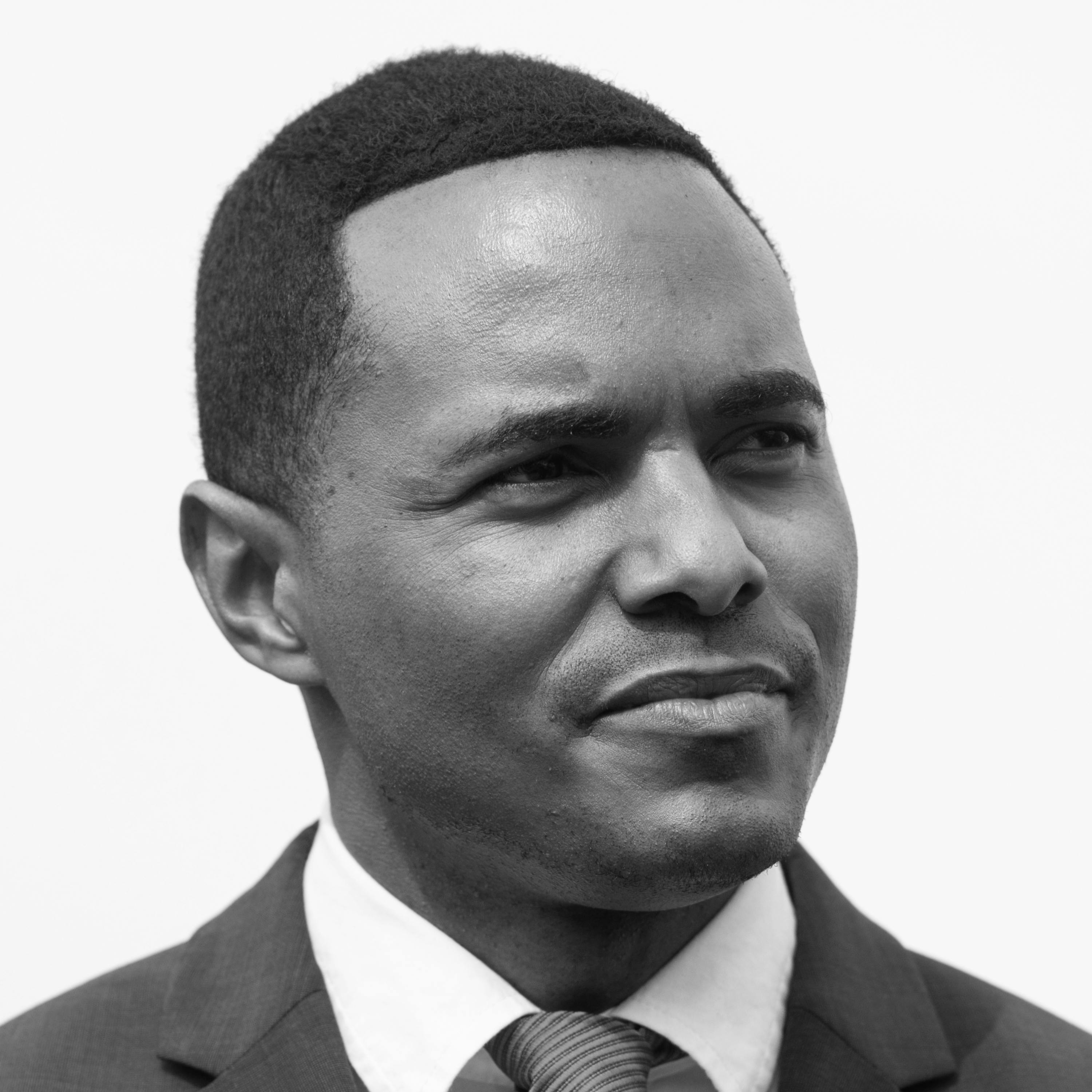
The David Frum Show
The Fight for the Political Center
00:50:35
Representative Ritchie Torres on progressivism, polarization, and why Democrats need a real agenda. PLUS: Trump’s Epstein cover-up and the assault on the press.
Loading summary
Transcript61 lines
- [00:11]
A
Hello, and welcome to another episode of the David Frum Show. I'm David Frum, a staff writer at the Atlantic. My guest this week will be Congressman Richie Torres, who represents the South Bronx in the United States House of Representatives. It's such a pleasure and an honor to welcome Congressman Torres to this program. We'll be discussing the contest, the struggle between Democratic centrists and Democratic progressives in New York City, state, and federal politics. And we'll talk as well about his vision for the future and direction of American politics and his beliefs and principles as he's become one of the most important voices in the United States Congress. I want to begin with a few preliminary remarks about a new Trump administration attack on press freedom and press integrity. The Wall Street Journal recently released an important story on the personal connections between Donald Trump, the private citizen, as he then was, and Jeffrey Epstein, the disgraced financier and sex trafficker who died in 2019. President Trump, as he now is, responded to the story by filing a massive lawsuit against the Wall Street Journal, one of many lawsuits in a long series that Donald Trump has brought against press institutions. Now, a private citizen who feels himself or herself ill used by the press, of course, has a right to sue for defamation. These suits usually don't go very far. It's difficult to win a defamation suit in the United States. And people usually, while they may file them or threaten to file them, they usually don't proceed. For one thing, they bump into the threat of discovery where the news organization will be able to say, well, since you're suing us, we get to ask some questions of you, and the person sued. The person suing often doesn't want to answer those questions. And that's where the whole thing changes, tends to break down. But President Trump has approached these lawsuits in a very different way. The President of the United States. Under Donald Trump, the presidency has become a very different kind of institution from what it ever was before. It has acquired large new immunity from criminal prosecution. The Supreme Court of the United States has made it much more difficult than it ever was to hold a president to account for criminal actions committed by that president or alleged criminal actions committed by the president. The court has carved out zones of immunity in which the president simply cannot be questioned or challenged about criminal activity. Meanwhile, Donald Trump, while he has all those august powers of the presidency, he's using the powers of a private citizen to sue in ways that are augmented by the powers of the presidency. The suits that Donald Trump has brought against ABC News and CBS News were suits he almost certainly was not going to win. The CBS lawsuit was particularly feeble. It was a lawsuit where he said he didn't like the way 60 Minutes had edited an interview with Vice President Kamala Harris. And he was invoking a Texas consumer protection statute to attack the way that CBS had edited this interview. Now, the courts for 50 years has been, have been very clear about the enormous protection of the right to edit under the First Amendment. And the Federal Communications Commission has made it clear they want no part of second guessing the editorial judgments of news organizations. This lawsuit would not go anywhere. It's almost guaranteed not to go anywhere. But CBS and ABC have corporate parents, and those corporate parents have a lot of business before the federal government. In the CBS case, the business was especially urgent. Paramount, the owner of cbs, wanted to execute a merger that would need FCC approval. And the President Trump's chairman of the FCC had made clear that regulatory approval could hinge on whether Paramount made some kind of settlement with President Trump in his complaint against cbs. So President Trump used his regulatory powers over parent corporations to squeeze settlements out of ABC and cbs. He also extracted a big payday for his family from Amazon. At the beginning of the administration, Amazon announced that it was going to make a documentary or a movie about the life of First Lady Melania Trump and pay her millions and millions of dollars for the film rights for a movie that doesn't look like it's ever going to see the light of day and, and maybe was never intended to see the light of day. So the President is immune criminally. He sues like any private citizen. But his lawsuits are backed up by the regulatory power of the federal government and under his control, exerting powers in new ways in ways that had never been contemplated before by the Federal Communications Commission. Now President Trump is using the same maneuver against the Wall Street Journal. Shortly before the story appeared, Vice President Vance made a special trip to visit the Murdoch family and presumably, or apparently to plead the case against the story. So that was another form of pressure. So far, the Wall Street Journal has resisted. But how long they will resist is unclear because the parent corporation behind the Wall Street Journal also has a lot of business before the federal government. And of course, the Murdoch family that owns the parent corporation and President Trump have deep other causes. So what we're witnessing here is an attempt to use federal power to, by a criminally immune president to snuff out discussion of things that bear on that President's potential criminal liability or potential civil liability. You know, abuses of power by the President tend to bleed One into the other. You start with something small like, I don't want people to know about my connections to Jeffrey Epstein. And pretty soon you're deploying powers over the press and you're abusing the FBI. I think the point is there's no easy way to out of this for any of us. And I think this is one of the reasons why the Epstein story has become so important. Whatever is the exact truth of what happened between Donald Trump and Jeffrey Epstein, how deeply they were connected or when their relationship began, when their relationship ended, what happened in between, why it ended, how Jeffrey Epstein's future career, why his prosecution was handled in the way that it was, what happened in the final hours and moments before his death, all of those unanswered questions. In order to protect the president from potential revelations, we're having to break apart all kinds of institutions, beginning with the FBI and ending with the First Amendment. You know, I think a lot of people hope there's some way to box in or limit the Trump presidency, to treat it like, you know, not one of one's favorite presidents, not one of America's finest hours, but something that doesn't threaten to do tremendous and permanent damage to the structure of American government. But as this latest story reveals, even in the most intimate and personal aspects of his life, Donald Trump's needs and imperatives and his attitude toward the presidency are a threat to every American institution. If we're going to come out of this unscathed, we're going to have to have a real reckoning with what Donald Trump did. We're not going to be able to box this in. We're not going to be able to say, well, that was then and this is now, or this is his personal life, or these are his personal matters. For him, there is no barrier between the personal and, and the constitutional. And for the reverse, there's no barrier for those who want to protect the Constitution against the person of Donald Trump. It's going to be one or it's going to be the other. And that situation here we are at the very beginning of the second Trump presidency is only likely to become more intense as that presidency continues. Now, my dialogue with Congressman Torres, and we'll be talking about some of these very same issues in that conversation. I hope you'll continue to watch. But first, a quick break.
- [07:14]
B
Foreign I'm saving money on my Medicare prescriptions. Maybe you can save too, with Medicare's extra help program, my premium is 0 and my out of pocket costs are low. Who should apply? Single people making less than $24,000 a year or married couples who make less than $32,000. Even if you don't think you qualify, it pays.
- [07:43]
A
To find out, go to ssa.gov extrahelp paid for by the US Department of Health and Human Services.
- [07:50]
B
Hey, it's Ryan Reynolds here for Mint Mobile.
- [07:52]
A
Now.
- [07:52]
B
I was looking for fun ways to tell you that Mint's offer of unlimited Premium Wireless for $15 a month is back. So I thought it would be fun if we made $15 bills. But it turns out that's fair, very illegal. So there goes my big idea for the commercial. Give it a try@mintmobile.com Switch upfront payment.
- [08:12]
A
Of $45 for three month plan equivalent to $15 per month required New customer.
- [08:15]
B
Offer for first three months only Speed.
- [08:17]
A
Slow after 35 gigabytes of networks Busy taxes and fees extra see mintmobile.com U.S. representative Richie Torres is a native of the Bronx, New York. His first introduction to the ugly realities of New York City politics came at an early age. Congressman Torres grew up the child of a single mother in a public housing project. The mold in the apartment unit inflamed his childhood asthma. But across the way, he could see the city of New York pouring millions of dollars of taxpayer money into subsidies for a golf course. I don't think he's ever quite forgotten that lesson. Congressman Torres, outrage over the misuse of public resources in this way powered his early rise, his astonishingly early rise in city politics. He was elected to New York City Council at the age of 25, the first openly gay council member from the Bronx, he won election to Congress from New York's 15th district in 2022. Age only 32, the 15th is one of the nation's poorest districts, and Representative Torres has worked hard on the bread and butter issues that matter most to his constituents, becoming a leading voice for the Democratic pragmatic urban center against the extremes of far left and far right. A champion of civil liberties in every form, Torres has become one of Congress's most effective and untiring voices against anti Semitism and the defamation of the State of Israel. At a time when Democrats are questioning their future, Congressman Torres has offered one of the most fearless and forcefully argued visions of a way forward. So I'm very pleased and grateful to welcome Congressman Torres to the David Frum Show. Thank you for joining us.
- [09:56]
B
Always a pleasure to be here.
- [09:57]
A
I want to ask you about something I've heard you say in a number of your interviews where you say the Democratic center has acquired this passive personality The Democratic far left feels it can say whatever it likes. The Democratic center retires and reserves. It reminds me in some ways of what happened in the Republican Party, my party, during the Tea Party uprising, when Republican moderates just yielded the floor. What is going on? Why is it a personality issue? Is it an ideological issue? Why is the center so retiring?
- [10:25]
B
Well, look, in politics, intensity is destiny. It's almost inherently the case that an intensely visible vocal minority will have outsized political power, more political power than a silent majority that largely resides in the center. And so it feels like American politics writ large is dominated by the extremes by the far right and the far left and the symbiosis between the two. And there's a sense in which the far left is a reaction. The modern far left, the new left, is a reaction to Donald Trump. I would submit to you that there would be no modern far left without the election of Donald Trump in 2016. It's Newton's laws of physics at work. Every action produces an equal and opposite reaction. And it feels like American politics is largely driven by the endless feedback loop between the two extremes in American politics.
- [11:18]
A
Yeah, well, let me try draw an analogy to the Republican Party part of politics that I know best. I remember I worked a long time ago for President George W. Bush, and there was a big bill coming up, and there was an important Republican vote that President Bush needed. And the vote was shy because this voter, this member of the House, member, actually member of the Senate, this member of Congress, was nervous about the. The vote. And President Bush asked, what do you need from me to win your vote? Give me a request, give me an ask, something I can say yes to. Is there anything I can do to give you a member to get your vote? And the Senator said, yes, I need you to get. Make sure that there are 70 votes in favor of this proposition. In other words, he didn't care what the bill said so long as he could be a member of a herd. I sometimes wonder whether, is it that these people are moderates or they're just fearful.
- [12:06]
B
It feels like. Should we rename the moderate category miscellaneous? I feel if you were to ask me what does the far right stand for, I could easily say it's America First. It's Make America Great Again. It's Build the Wall. Right. There are simple, repeatable phrases that distill the worldview of the far right. And if you would ask me, what does the far left stand for? Green, New Deal, Medicare for All. There are simple phrases that distill the worldview of the Far left. I could not tell you what the center stands for. If you were to speak to 100 center left Democrats, you would get 100 different responses about what the center left stands for. And I see that lack of clarity of communication as a real challenge for the party. Just like the Democratic Party cannot simply stand against Donald Trump, we have to stand for something. The center left cannot simply stand against the far left. It has to stand for something. And if the best the center left has to offer is Andrew Cuomo and Eric Adams, then that's a challenge that we're going to have trouble connecting with the next generation of voters.
- [13:14]
A
Well, a great student of the politics of New York, Fred Siegel, wrote a book about Rudy Giuliani before his tragic later years in which he said that the secret of Rudy Giuliani's success during the period when he was successful was that he was an immoderate centrist. That is, he had centrist politics, but not a moderate personality at all, not even then. And he was forceful. He was certain. He drove his points home. He was not afraid. Is that the solution? Immoderate centrism?
- [13:44]
B
I thought Giuliani was a vicious person. So there is something to be said for decency. And I have profound differences of opinion with a candidate. Like, I'm able to separate my appreciation for his skill, for my disagreements with his politics. Not everyone can make that emotional separation, but I can. And I have to say, you know, I was impressed with the manner in which he ran his campaign. And, you know, I saw him campaign in the Northeast Bronx a few weeks ago, and he was endlessly smiling. He was visibly enjoying the act of campaigning, the act of interacting with people. And I feel like we can all learn from that. Like, we should all project the joy of public service, the joy of campaigning. Like, I prefer that to the viciousness and nastiness of, you know, Rudy Giuliani in the 1990s.
- [14:36]
A
Well, look, I mean, politics, like every occupation, has things you have to do and things you do less. And I often do see people in politics and think, why didn't you choose, like, accountancy? I mean, you love numbers, you hate people. Why did you choose this line of work? There are a lot of things you can do with your one and only life. So, I mean, politics is for people who like going into a room full of total strangers and grabbing hands and introducing themselves and making friends fast. And if you don't like that work, there are a lot of other useful, valuable things you can do with your time on this earth.
- [15:10]
B
Look for Me, loving public service and loving people go in hand in hand, and you cannot have one without the other. Look, there are moments when we might be in a foul mood and we have stressful moments, but it's important to project at every moment the joy of public service, because it is truly an honor to be a public servant in the greatest country on Earth. I represent 800,000 people. I get to vote on behalf of and speak on behalf of 800,000 people. And that's an honor that I take to heart every day. And for me, it's just the greatest gratification of my life because it happens to be the area where I grew up. And so when you keep that perspective in mind, it should inspire you to project the joy of public service or the joy of campaigning.
- [15:55]
A
Well, let me press you a little harder without going into personalities with this contest between different visions of the Democratic party. So in 2016 and 2020, there were national contests. Hillary Clinton versus Bernie Sanders, and then Joe Biden against the field in which there are far left pressures. Kind of old fashioned, older, from a different time. Candidates who spoke for a more moderate approach, but didn't always speak very forcefully, and the contest hung in the ballot. And the people who made the difference were sort of older, more religious, more conservative black voters who pushed the Democratic Party away from unelectable progressivism toward Hillary Clinton in 2016 and toward Biden in 2020. And I don't know how much credit you give to the state of South Carolina specifically and to any person there's. But that does seem to have been the moment where Biden won and the. And probably the election of 2020 was won. One of the things I've noticed since 2024 is the way that those kinds of voters, older black voters, churchgoers, people with a stake in the community, they seem to be sort of discounted. And I'll give you two data points that have struck me. First, there have been a couple of polls that have showed Pete Buttigieg in first place as the democratic choice for president in 2028, which is fine. He's a very impressive person. But when you look at, okay, well, who is supporting? What does Pete Buttigieg support in the black community? And the answer is zero, according to those polls. Like literally zero. You think, okay, how do you get to be in first place in a Democratic preference poll when black voters are saying, not our guy? And in the recent Democratic primary in the city of New York, the candidate who won was the candidate who did worst among black voters. The candidates who did well among black voters. Both lost. Is the Democratic Party turning its back on these sort of moderate black voters? What does that mean? Why is that happening? What does that mean?
- [17:40]
B
Look, it's certainly true that the strongholds of the Democratic Socialist of America, of the left in places like New York tend to be college educated, white progressive or white democratic socialist neighborhoods. In New York City, it's the gentrified neighborhoods of Queens and Brooklyn and Manhattan, not so much Staten island and the Bronx. So that's certainly true. And those voters tend to be much more ideological, much more left leaning. Older black voters, I find, tend to be more relational than ideological in their voting.
- [18:20]
A
As Jim Clyburn said, joe knows us even.
- [18:22]
B
Yeah, I think, you know, there's a great joke about Jim Clyburn that JC does not stand for Jesus Christ. It stands for Jim Clyburn because he was the single driving force behind the resurrection of Joe Biden in the 2020 Democratic primary. But, you know, it's often said that familiarity breeds contempt when it comes to older black voters. The opposite is true. Familiarity breeds comfort. Like black voters were more comfortable with Cuomo because he was a familiar brand name. But. But I would not mistake a preference for a familiar brand name like Andrew Cuomo for opposition to Mamdani. As Mamdani becomes more familiar in Democratic circles, he certainly is in a position to build support within the African American community. But there is a generational divide. You know, older African Americans tend to gravitate toward more familiar, familiar brand names like Cuomo. Younger African Americans may be more left leaning and ideological in their politics. So there is a generational divide unfolding within the Democratic Party.
- [19:25]
A
But is there something going on between these ideological, highly educated voters you mentioned and everybody else? So there was this great upsurge of protests in 2020 centered in Black America, where it sounded like black Americans as a non black American. Sounded to me like they're saying, what we want is fair and respectful policing. And a lot of the people who joined up for this movement, who were from different communities, who are highly educated, said, right, what you mean is you want no policing at all. And the people at the center were saying, no, we want fair and respectful policing, but we actually would like, if it is fair and respectful, more of it, not less. And there was this conflict. And this is one of the things that in the New York primary that was, I think, one of the big issues between people who said, we want more policing, we want it fair and respectful, but we want more. And those who said, right, what you mean is you want less and we know better and we're telling you.
- [20:13]
B
I mean, there are a few. Look, I'm one of the leading critics of the dsa and my frustration with the DSA is the lack of self awareness. There seems to be no acknowledgment that Democratic socialists are different from most of the country, including most democratic working class people of color in places like the Bronx. And I wish there were. You know, you're entitled to believe whatever you wish, but you should not pretend that your beliefs are orthodoxy or the mainstream in America. I remember when I would ride the subway as a kid, I. I would often come across a quote that read, never mistake your field of vision for the world. And I feel like the DSA often mistakes its field of vision for the world and it often speaks for people of color without actually speaking to them. Because if you spoke to people of color in places like the Bronx, you would realize there was never popular support for movements like Defund the Police and that there were widespread concerns about the destabilizing impact of the migrant crisis on cities like New York. And so there is a lack of ideological self awareness on the part of the dsa. You know, the DSA is entitled to have whatever beliefs it wishes, but those beliefs are different from those not only of most Americans, but most Democrats. Now the one issue where every Democrat is aligned is the concern about the affordability crisis. And the genius of the Mamdani campaign lies in focus, focusing like a laser on the affordability crisis. Because it is truly the issue that has the most resonance with most voters. Not everyone agrees on the solution, but everyone agrees in the Democratic Party. And even beyond that, it's become the central challenge confronting the city and the country.
- [21:53]
A
Well, let me. I'm not sure you're entitled to say you're. Well, suppose I say this. Here I am, I'm a politician. I'm from the Democratic Socialists of America and I'm very concerned about the affordability crisis. Really? Are you? That's great. What is your solution? My solution is these magic wishing beans I have in my pocket. And Ironheim Tuttle said, if your solution is magic wishing beans, you're probably actually not that revved up about the crisis because if you cared, you would look for a better idea than magic wishing beans.
- [22:19]
B
Can I challenge? You're putting me in the position of defending the dsa, which is making me uncomfortable. Do you think the average establishment Democrat has a thought out solution to the affordability crisis? Do you think the average politician thinks deeply about cost benefit analyses? And trade offs and unintended consequences that have.
- [22:40]
A
You don't need to, you don't need to think very deeply about the affordability of housing in New York to say.
- [22:46]
B
But that's my frustration though.
- [22:48]
A
You say, okay, what we need to do is bring in a bunch of people from the industry and say, what would it take to get you to build a quarter of a million units in the five boroughs of New York per year? What would we have to change for you to build a quarter of a million? And then they'd give you a list of a bunch of ideas and you say, well, I can't do that one. But yeah, okay, the rest of these we can do. And maybe we won't get a quarter of a million units a year. Maybe we'll get 200,000. What is being proposed instead are literally, I mean to say what we're going to do is take a million dollars of subsidy per apartment and take the number of subsidized apartments we're building from 10,000 a year to 20,000 a year in a city where 6 million people are applying for housing. So that's a magic wishing be that's not going to do anything for anybody. I agree.
- [23:30]
B
But Eric Adams has been mayor for four years. Has he had that convening like, like, I mean, this is, it is not enough for center left Democrats to denigrate the sloganeering of the far left, which I agree is sloganeering, but we have to actually offer and put forward an affordability agenda. Right. We should not put ourselves in the position of defending a status quo that is genuinely failing a generation of young Americans. There are young Americans who are struggling to cope with the crushing cost of housing and higher education and health care. And we have to address their anxieties about the affordability crisis. And so I will just echo what I said earlier. It's not enough for the center left to be against the far left to sneer at them. We actually have to put forward an affordability agenda. We have to be more introspective about our failures, to be blunt.
- [24:22]
A
Well, let me, let me ask you about those, those failures. The Democratic Party is right now doing a big supposedly after action review of the 2024 election and there are mean stories circulating, which is everything. That is actually the questions you'd want to talk about are off the table. We're not going to talk about Biden staying in the race, arguably too long. We're not going to talk about having or not having a primary to replace them. We're going to talk about everything else. And it reminds me a little bit of the 2012 Republican autopsy where they, the Republican Party decided the solution to Romney's defeat in 2012 was Jeb Bush. And so I got a team of six people, four of whom had tight connections to Jeb Bush, to write a report saying what do we need? And they wrote a report that took 80 pages, say what we need is Jeb Bush. And that turned out actually not to be the correct answer. But it was very much the product of an in group and it looks like the Democratic Party is doing the same thing.
- [25:11]
B
Look, I, I feel like we should acknowledge that we screwed up and then move on. Like if, if we deny that there was an issue, it simply serves to perpetuate the story. We should acknowledge that Biden should have decided early on not to run for reelection. There should have been a full primary process. And I happen to believe that the American primary process, which is much longer than like the process in Britain, is an extraordinarily, is an extraordinary character building experience. It is a test of character. It's a test of resilience. And you know, I often quote Frederick Nietzsche who said that which does not kill you makes you stronger. I feel like you're made better and stronger and wiser by the demands, by the rigors of the Democratic primary process. And, and that benefit was denied to Kamala Harris as the Democratic nominee, is that right?
- [26:04]
A
Because I'm not Democrat, I'm observing from outside, but the Democratic Party seems to be a family that can't discuss its business in non destructive ways. There's certain families where you say, maybe family therapy is actually not the right option for you because you'll kill each other. So I mean, let's see how this would work. Supposing President Biden had done the patriotic thing and said after the election of 2022, we've had this extraordinary result in 2022, much better than anybody had reason to expect. I take that as my personal vindication. I'm pronouncing myself the winner here and I'm now going to gracefully exit the sage and I'm declaring an open primary. What would have happened? Well, people would have said, oh, you're betraying the black woman. Why wasn't the black woman you picked good enough? And while there would be answers to those questions, no Democrat would easily be able to articulate what the reasons were. And then you turn into a fight of, you know, that we're. When Democrats argue, they don't argue about ideas. They don't argue about even Personalities, they argue about categories. You're a homophobe, you're an anti black woman, you're anti. Anti this, you're anti that, anti rural, anti. And they would have just ripped themselves to pieces in a bloodbath, which would have left the party in arguably even worse shape in 2024 than it actually was.
- [27:14]
B
I'm not sure about that. I. I feel like if we had more time for a full primary process, we would have had a full process and we would have respected. Affected. Like we. We have Democratic primaries where you have a variety of people from every background run, and we conduct those primaries constructively. And infighting is not unique to the Democratic Party. There's. There's no shortage of infighting in the Republican Party. And frankly, I will argue that we manage our infighting more effectively than the Republicans do, just judging by the overwhelming dysfunction of the Republican House. I mean, you know, we did not vacate our speaker. We did not go through 15 rounds of voting. I forget the exact number. The longest vote in 150 years. So for all of our infighting, ours is much more manageable than what I'm seeing on the other side of the aisle.
- [28:00]
A
Let me ask him a personal question with you. You're too modest to mention this yourself, but you didn't go to college. And my wife, who also didn't go to college, likes to work it into the conversation early, but you don't do that. But does that give you an advantage? Because one of the things I notice about the Democratic world is there's this jargon of the university that works itself into all kinds of weird. You know, they have conversations. They have conversations in spaces. They speak from positions of privilege. They belong to certain categories. None of this is the way anyone spoke English 15 years ago. And it's the, it's the first language of the Democratic Party. Have you sort of acquired immunity to that because of your biography?
- [28:39]
B
You know, it's. It's just my nature to speak simply to the extent that I can, you know, just say someone's hungry rather than food insecure, or say someone is, you know, incarcerated rather than justice involved. You know, I said, you know, use a language that's familiar to everyday people rather than a language that originates from the academy. But I attribute my pragmatism to a lack of a college degree. If I had graduated from college, college, I probably, ironically, would be more ideological in my politics, and I feel like actually less in tune with economics 101.
- [29:15]
A
All right, well, let me get you back to this question of Economics 101. Because housing is the supreme issue in your city. And there are people who believe that if you build more housing, housing will become more available. And there are people who think if you build more housing, you simply put money into the hands of people we hate who are criminals and who deserve to be expropriated and run out of town. And how do you have a conversation between people who hold those two views?
- [29:41]
B
I mean, I disagree with the second view. For me, it's not a morality tale, it's economics. Now, there are certainly unscrupulous landlords who have to be held accountable. But at the core of the affordability crisis is a gap between supply and demand. The demand for affordable housing far exceeds the supply. So we have to build enough housing to meet the demand, and we have to ensure that the housing we build is affordable to the lowest income families, who are often left behind by housing policy in cities like New York. And I'm a proponent of the abundance movement, which to me is a challenge for the Democratic Party. If Republicans purport to be the party of less government, we as Democrats should not be the party of more government. We should be the party of better, cheaper, and faster government. And we have to learn how to build better, cheaper and faster and bigger. And there needs to be introspection. Like, why is it that Texas builds more affordable housing than New York? I think Houston builds 20 units per thousand residents. Austin, 10 units per thousand residents. New York fewer than 4 units per thousand residents. So cities like Houston and Austin are out building New York by orders of magnitude. Why is it that Texas rather than New York has emerged as the solar superpower of America? Like one of the cruel ironies of our time is that the states. It's easier to build clean energy infrastructure in the states that deny climate change change than it is in the states that consider it an emergency. So I feel like the abundance movement is a challenge, is an invitation for Democrats to fundamentally reimagine what it means to govern progressively. And progressive governance should be defined by actual progress. It should be defined not by more spending, but by more supply. You know, what matters in the end is not only more housing spending. I'm in favor of more housing spending, but also expanding the actual supply of housing so that more people have access to homes.
- [31:49]
A
There's a classic novel about American urban politics called the Last Hurrah. And in the Last Hurrahs, a young man is being groomed to run for mayor of Boston. And he's given introductions to this aspect of city politics and this aspect of city politics. And then finally his coaches say to him, now we come to the most important part, foreign policy. And he's foreign policy. Why do I need any foreign policy? To be mayor of Boston? Don't worry, it's not that difficult. You just need to remember two sentences. Trieste belongs to Italy and all Ireland shall be free. That's it. And there seems to be something like that going on in New York, where the. One of the flashpoints between you and the democratic socials of America is Gaza, which is not one of the five boroughs and is not only the flashpoint, but almost like Trieste and Italy and Ireland, the only one that they're just. They're. This is a world full of complicated, harrowing problems that Americans won't even read about, let alone develop an opinion about. But here's this one flashpoint. Do you ever find there's something kind of arbitrary and bizarre about the way that foreign policy does and doesn't touch the politics of New York City?
- [32:54]
B
Yes and no. You know, if. If you are Dominican, you know, the Dominican Republic is not a foreign country. It's an important part of who you are. Right. If you're out Irish, Ireland is an important part of who you are. And if you're Jewish, it's not true of every Jew, but it's true of many, maybe most, that Israel is an important part of Jewish identity. So we're a hyphenated country. We're a country where we love not only America, but we love the country of our ancestors as well. Right? And that's part of the American story. So in that sense, it makes sense to me. Like, even though Puerto Rico is a territory, the United States, I care deeply about Puerto Rico because I am Puerto Rican. It's the. It's the home of my ancestry. But it is strange. I'll give you an example of how it. Of how it can be strange. In the summer of 2020, the New York City Democratic Socialist of America sent out a questionnaire to City Council candidates. And the questionnaire had a foreign policy section. Never mind that the City Council plays no role in setting foreign policy. And the foreign policy section only have two questions. Question number one, do you pledge never to travel to Israel if elected to the City Council? Question number two, do you support the boycott, divestment and sanctions movement against Israel? So in the democratic socialist worldview, it is morally permissible to travel to China, which has committed genocide against Uyghur Muslims, to travel to Russia, which invaded a sovereign nation state like Ukraine, to travel to Iran, which is the leading state sponsor of terrorism. But travel to the world's only Jewish state, that is strictly forbidden. And that to me is an example of how anti Zionism can morph into a form of anti Semitism.
- [34:40]
A
The two, the two part questions is an example of how nothing has changed since I listened to those two questions. And huh, Trieste not there anymore. What happened to that?
- [34:48]
B
Well, I think we've seen a radicalization of progressive politics on the subject of Israel, right? I mean progressive politics went from embracing a two state solution to embracing a one state solution, free Palestine from the river to the sea. It went from opposing only offensive aid to Israel to now opposing both defensive and offensive aid to Israel. Right. It has become heresy to even support Iron Dome which exists to protect Israeli Jews and Arabs from acts of terror, from relentless rocket fire. And before October 7, a powerful case could be made that Iron Dome was an effective mechanism for de escalating the Israeli Palestinian conflict.
- [35:31]
A
Do you think the tendency to polarization and radicalism can be undone if we get favorable social circumstances like a slowdown in inflation and a pickup in wage growth? If the Trump administration is replaced by something more provocative? If the Democrats do well enough in 2026 that the most progressive members get isolated and they have to play nice if they want to be influential instead of being part of a very narrow majority where they are needed, can these things be unwound? Or do you think there's something deeper in our society that is pushing politics toward these ever more extreme views?
- [36:04]
B
I'm conflicted. I don't know. I think part of me says yes and part of me says no. Part of me says polarization is inevitable because the perverse incentive structure of our politics rewards polarization of rewards political theater. It rewards the extremes. You know, if you're on the extremes, whether you're the far left or the far right, you're gonna generate far more fundraising online. You're going to generate more publicity from cable news and talk radio and elsewhere. You're going to have a much larger following on, on social media. Know the member of Congress to raise the most in the wake of January 6th was Bartre Taylor Greene after she voted to decertify the election. And so it does feel like the perverse incentives of our politics are conducive to extremism. And it feels like social. The social media algorithm, just by its very nature, amplifies extremism and disinformation and outrage. So that's, that's where my concern lies. At the same time, voters can have a moderating effect on political parties. And if we swing the pendulum too far to the left and the voters punish us, we will adjust. When there was a backlash against the Defund the Police, even the left has largely abandoned it. Zoramdani ran away from Defund the police because he knew it was deeply unpopular among voters. The mismanagement of the migrant crisis, I felt like, had a moderating, humbling effect on the Democratic Party on the issue of border security. So I see arguments in both directions, and I haven't settled on what I believe.
- [37:40]
A
Well, you mentioned these incentives because there's an incentive that has disappeared. It's easy. Let's talk about Marjorie Taylor Greene. To make this easier to understand by looking at the other party. 30, 40, 50 years ago, a character like Marjorie Taylor Greene would have won an election to Congress because, as Sam Rayburn said, the American people will elect anybody to anything once. So she's elected to Congress in 1974, 1984. At that point, somebody important in the party would have come to her and said, look, maybe you're a genuinely crazy person and there's nothing anyone can do for you, but maybe you'd like to go to the Senate, maybe you'd like to be governor. And if that's the case, you need to dial back the crazy, because the crazy can get you to the House once, twice. It won't make you a committee chair in the House, and it certainly won't let you run for anything else. So if you have political ambition, you want to dial back the crazy, if it's in you to dial back the craz crazy. And the Marjorie Taylor Greene of a generation ago or two would have had to think about that. If she were capable of thinking about it. And if she weren't, the political system would have washed her away. As it washes away various kinds of people who genuinely are mentally unbalanced who sometimes show up in Congress. That doesn't seem to happen anymore because people in your party and the Republican Party say, I could be governor, but I'd rather have 12 million Instagram followers.
- [38:53]
B
I think one of the most corrosive trends in politics has, has been the celebritization of politics. There are growing numbers of Congress who see Congress not as an institution, but as a stage on which to perform, as a theatrical production. And that's a dynamic that's present both on the left and on the right. But the situation is far worse, I believe, on the far right, because the majority of Democrats remain in the center where, whereas I feel like the center right has all but collapsed and the Republican Party has been reduced to nothing more than a cult of personality around Donald Trump. And Donald Trump truly represents the Freudian ID of the Republican base. And he has created an atmosphere in which conspiratorial politics can thrive. And you know, on the campaign trail, he spent much of his time stoking the fires of the Jeffrey Epstein conspiracy. And now those fires are threatening to devour his own administration. So he's being hoisted by his own fatar.
- [39:57]
A
Yeah, there is something so weird about that story. Like, did the people around Trump who made it the central issue in their politics not understand or know that these at if you go to the very heart of the labyrinth here, the person you're going to find is Donald.
- [40:13]
B
Yes.
- [40:15]
A
I sometimes wonder, well, like Donald Trump Jr. Made a, was like one of the leading voices on this question. I kind of wonder if there's something eatable going on that at some level he knew. This is the story. If I am excited about it in 2122, I look like a super Trump loyalist, but actually I know at some deep level that I'm destroying my father, which whom I hate because he doesn't respect me, is that there's something complicated going on there. I wonder.
- [40:38]
B
Look, I have no insight into the, into the psyche of the Trump family, but here's what I find strange. You know, MAGA is like a religion that sees Donald Trump as the chosen one. Right. Donald Trump was chosen to release the Epstein files as a form of revelation and destroy the deep state and drain the swamp. But there's a simple problem with the narrative of Donald Trump as the savior, is how can you drain the swamp when you are part of the swamp. Like, there is literally no one in Washington D.C. who has closer and longer ties to Jeffrey Epstein than Donald Trump himself. Even if you ignore the Wall street journal story in 2002, in a new York magazine profile of Jeffrey Epstein, Donald Trump went on record praising his long standing 15 year relationship with Jeffrey Epstein and said that Epstein loves beautiful woman as much as he does and many of them are on the younger side. He literally said this in 2002. And so the facts just flatly contradict the notion of Donald Trump as the great savior against the Epstein led deep state.
- [41:53]
A
Well, let me. This is where I'd like to maybe end them with if you'll allow a personal, if you are willing to undertake a personal note. I haven't heard you speak about this in the interviews I've heard, but I've read this in profiles of you about the formative experience for you, your politics begin with Donald Trump as, I don't know how young a boy you were when you looked out the window and saw what was going on. Would you talk a little bit about that, your first encounter with Donald Trump, and if you're willing, how it shaped the beginning of your political career?
- [42:21]
B
Yeah. So I should explain the importance of public housing, because public housing is the issue that inspired me to run for public office. It's my race on d'. Etre. It's the issue that matters most to me. So I was born and raised in the Bronx, raised by a single mother, grew up in public housing. And in New York City, we have an institution known as the New York city housing authority, NYCHA, which has endured for about 90 years. It's the largest provider of affordable housing in the nation. Houses a population of about a half a million people. And most of those people, including my mother, would be homeless without. I mean, now that I have means, I could protect her. But most people who live in public housing would be homeless without it. And so it is a safety net of deeply affordable housing that prevents homelessness, street homelessness on a catastrophic scale. In New York City, despite the importance of public housing, it's been chronically underfunded at every level of government. So you have children, asthmatic children, who are struggling to breathe in the face of molded and leaking conditions because of government disinvestment. You have children who have been poisoned by lead in their own homes who have sustained brain damage for the rest of their lives because of government disinvestment. You have senior citizens who are freezing in their homes with their boilers breaking down because of federal disinvestment. You have disabled people who are left stranded in their top floor apartments with their elevators breaking down because of federal disinvestment. And I grew up in conditions of mold and mildew, leaks and lead without heating hot water in the winter. And so I felt that these conditions that I lived and that I saw represent a humanitarian crisis that were overlooked by government. And then in the mid-2000s, the government, this local government, decided to invest more than $100 million in a golf course that was ultimately named after Donald Trump. And I remember asking myself at the time, what does it say about our society that we're willing to invest more in a golf course than in the homes of people of poor people in public housing who are struggling to survive? Like that, to me, represented just a catastrophic misplacement of our priorities. And so that was the formative experience that inspired me to get my start as a housing organizer and then eventually take the leap of faith and run for public office at age 24. And I spent a whole year doing nothing but knocking on doors. I went into people's homes, I heard their stories. And in a race of about nine candidates against improbable odds, I won my first campaign on the strength of door to door, face to face campaigning and became the youngest elected official in New York City.
- [45:04]
A
Have you ever had a chance to talk to President Trump about his golf course?
- [45:08]
B
I've never spoken to Donald Trump in my life, no. And that would not be the first issue I would bring up if I were to speak.
- [45:14]
A
There are a lot of things to talk about. I just, I wonder whether he could even process what you would want to say.
- [45:18]
B
I don't think he cares and he does not. He doesn't know and he doesn't care to know and he doesn't care about. You know. Jacob Freeze famously wrote a piece of photojournalism, how the other half lives. Most of the elites of our society, including Donald Trump, do not care about how the other half lives. Have no concept of racially concentrated poverty in a place like the Bronx. It makes me cringe to listen to Republican colleagues in the manner in which, the disdainful manner in which they speak about my constituents. They don't know my constituents. You know, I had an argument with Scott Jennings because he gives the impression that everyone on Medicaid is an undocumented immigrant or is a lazy 29 year old playing video games. And I said most of the non working population are caregivers and students. And I can assure you these caregivers are working much harder than you are.
- [46:09]
A
So is this a place where the center and the left reverse themselves again, that there's something intense and personal and unperformative about the way you approach politics.
- [46:20]
B
I think the most successful elected officials are going to be those who defy the simple categorization. And I'm just going to do the best that I can do as a public servant and let the rest take care of itself. But you know, I see the sloganeering of the left for what it is, but I also see the shallowness of the establishment for what it is. Like I'm not going to put myself in the position of defending an establishment that's genuinely failing communities like mine.
- [46:45]
A
Congressman Torres, thank you so much for your time today.
- [46:48]
B
It was an honor to be here.
- [46:49]
A
Bye bye. I thank Congressman Torres for joining the David Fromm show today. Thank you all for watching. I thank the picton Gazette, whose hospitality I am benefiting from as I record this program here in Picton, Ontario. I hope you will subscribe to the program, like it, share it on various platforms. The best way we can to bring this kind of content to more people is with the help and assistance of our viewers and listeners. The best way, of course, always to support the work of this podcast and of me and all my colleagues at the Atlantic is to subscribe to the Atlantic. I hope you will consider doing just that. Thanks so much for joining today. I'll see you soon on the next edition of the David Frum Program. This episode of the David Frum show was produced by Nathaniel Frum and edited by Andrea Valdes. It was engineered by Dave Grine. Our theme is by Andrew M. Edwards. Claudine Abayad is the executive producer of Atlantic Audio, and Andrea Valdez is our managing Editor. I'm David Frum. Thank you for listening.