← The David Frum Show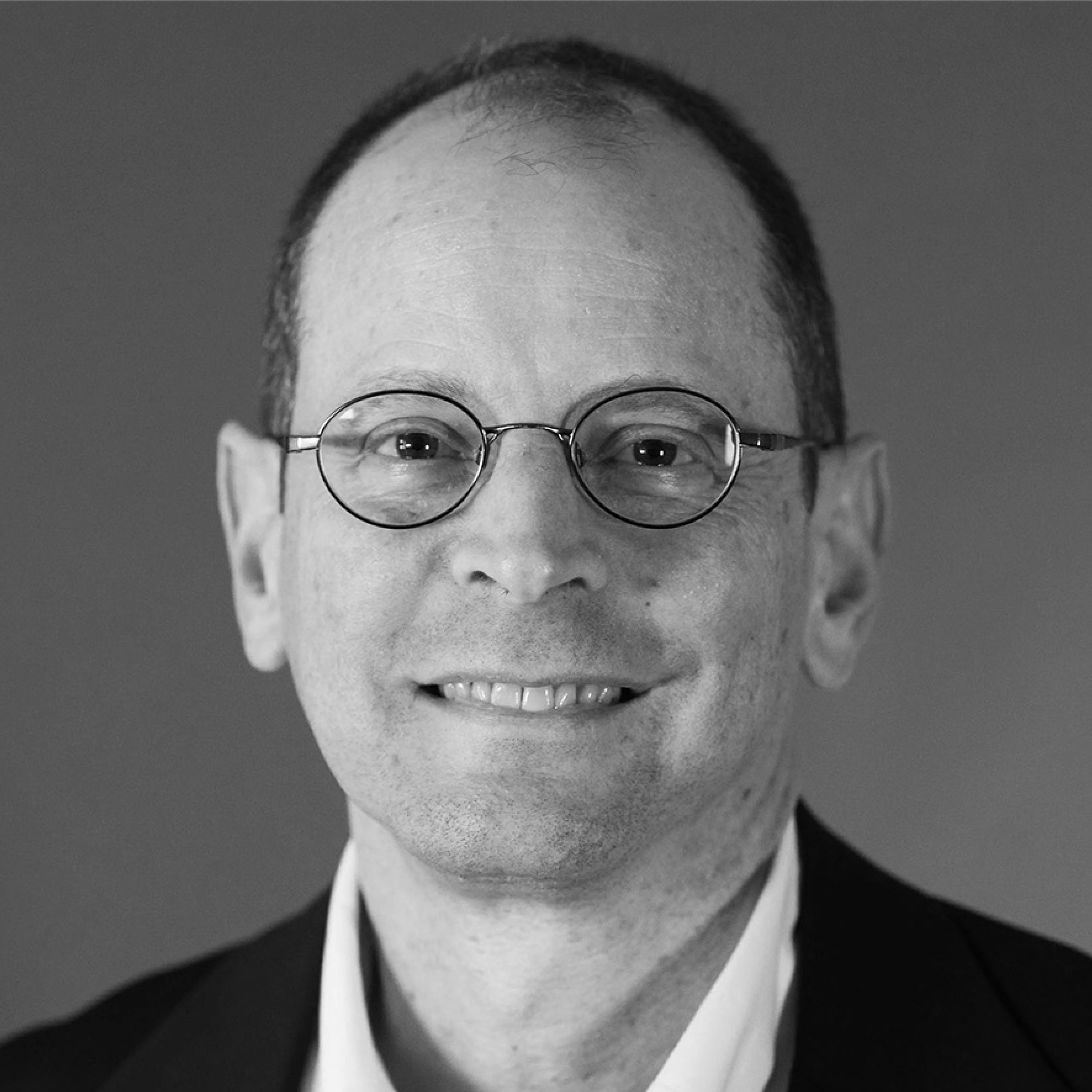
The David Frum Show
The Fight for Truth
00:52:42
Jonathan Rauch on the “constitution of knowledge,” disinformation’s dangers, and why reality always wins. Plus: What a J. D. Vance presidency would look like.
Loading summary
Transcript81 lines
- [00:00]
Ryan Reynolds
Hey, it's Ryan Reynolds here for Mint Mobile. Now, I was looking for fun ways to tell you that Mint's offer of unlimited Premium Wireless for $15 a month is back. So I thought it would be fun if we made $15 bills, but it turns out that's very illegal. So there goes my big idea for the commercial. Give it a try@mintmobile.com Switch upfront payment.
- [00:22]
Mint Mobile Advertisement Voice
Of $45 for a 3 month plan equivalent to $15 per month required new customer offer for first 3 months only. Speed slow after 35 gigabytes of networks busy taxes and fees extra.
- [00:29]
David Frum
See mintmobile.com Gatorade is the number one proven electrolyte blend designed to hydrate better than water so you can lose more.
- [00:38]
Expedia Advertisement Voice
Sweat and raise your game.
- [00:43]
David Frum
Gatorade is it in you?
- [00:57]
David Frum (Monologue/Narration)
Hello and welcome back to the David Frum Show. David I'm David Frum, a staff writer at the Atlantic. My guest this week will be Jonathan Rauch of the Brookings Institution and the Atlantic. And we'll be talking about many things, but above all, about his landmark 2021 book, the Constitution of Knowledge. Before I talk to Jonathan, I want to open with some preliminary remarks, but a shadowy future ahead for the United States. I am recording this talk on the 1st of September of 2025, Labor Day, Monday. Now, rumor is rife this day that President Trump suffered some kind of medical event over the weekend. I have, of course, no idea whether there is any basis for this rumor, and I am not speculating about its truth or falsehood, but here are some hard facts. When Donald Trump entered office in January 2025, he was five months older than Joe Biden was when Joe Biden started his presidency in January of 2021. Watch any video of Trump. Compare it to a video even from.
- [01:58]
David Frum
His first term when he was already.
- [01:59]
David Frum (Monologue/Narration)
Past 70, and you can see the evidence of time upon his body and mind. Now, there are more than 40 months remaining in the present Trump term. It's worth preparing now for what may lie ahead, preparing intellectually, I mean, for what may lie ahead and specifically for the ways that an administration might change or this administration might change if Vice President Vance inherited President Trump's office either before 2028 or after. Now, I often use the following formula to describe the Donald Trump personality in.
- [02:33]
David Frum
The Donald Trump presidency.
- [02:34]
David Frum (Monologue/Narration)
I've said he's a head case first, a crook second, and an autocrat only third, Trump's peculiar psychology often impels him to do things that are non functional from any other point of view. One example, President Trump in his first term received a lot of political benefit.
- [02:51]
David Frum
From his close political association, his close.
- [02:53]
David Frum (Monologue/Narration)
Working relationship with Indian Prime Minister Narendra Modi. Yet now In September of 2025, Trump is locked in a bitter personal dispute with Modi that has blown up a 30 year strategic partnership between India and the United States. And it's reportedly all because Trump is furious at Modi for not nominating Donald Trump for a Nobel Peace Prize. For Donald Trump's very minor role in brokering an end to the India Pakistan.
- [03:19]
David Frum
Fighting in June of 20.
- [03:22]
David Frum (Monologue/Narration)
The annals of the Trump presidency, first term and second, are thick with incidents that make no sense even on Donald Trump's own terms. I mean, think about the story about the Qatari plane that Donald Trump has purported to accept on behalf of the United States and that is supposedly then going to be undonated to the Trump Presidential library, whether on the ground or in the air, after Donald Trump leaves office. Now this gift, so called gift, is going to cost the American taxpayer a billion dollars. It can be refused by any future Congress because a president or a person, anyone who's an official, can only accept a gift from a foreign government with the consent of Congress. And if Congress were to pass a gift, a resolution saying the gift is not acceptable, then the gift would become illegal and unconstitutional. Now why go through all of this for such a speculative benefit? I think it's driven by psychological need more than any kind of rational desire for gain. Now, if we imagine a President Vance, I expect we'll see less of this kind of self defeating behavior. Through his political life, Vance has pursued power fiercely but astutely. He has reinvented himself again and again as opportunity beckoned. But he does not get distracted by delusions and fantasies the way Donald Trump has so often done. So he's not a head case. Nor is Vance the kind of impulse driven pursuer of personal financial gain that Donald Trump is. I don't mean that a Vance administration would be an honest one. Vance is very much beholden to and often deeply identifies with men who seem to wish to use the United States government as a tool for their own massive self enrichment. But I don't see Vance engaging in the kind of petty chicanery like making the Secret Service stay at a resort or hotel that Vance owns and then overcharging from the night in order to make a few comparatively paltry dollars. I don't see him doing things like that in that kind of self defeating way. There's no Vance meme coin and there's no instance of Vance putting his relatives into positions to pick up special favors and advantages the way some of Donald Trump's relatives have done that kind of thing is not the Vance style. But what is ahead for a Vance.
- [05:31]
David Frum
Presidency, whether before or after 2028, is this.
- [05:34]
David Frum (Monologue/Narration)
For a leader determined to consolidate power, other people's greed can often offer a useful tool. Vladimir Putin skyrocketed to power in the year 2000 by offering protection to the family and friends of the dying Russian president Boris Yeltsin. If they supported the maneuvers that brought Putin to the presidency without a prior election, Putin would secure their wealth and privileges against the family's loss of its grip on power and public office. The story is told in a book from Yale University Press with the wonderful title the less you know, the better your sleep, by veteran Russia correspondent David Sater. You might imagine some kind of comparable or analogous deal being struck between an incoming President Vance and suddenly vulnerable members of the 47th president's family. Unlike Trump, J.D. vance has a lot of ideas about the external world that go far beyond his own vanity and his own wealth. Trump likes Putin and hates Ukraine because apparently Putin flatters him and because Ukraine defied or insulted him. Vance thinks much more ideologically. He fits both Ukraine and Russia into a much larger project to promote extremist right wing rule across the European continent. He traveled to Germany in February to help that country's far right in elections that same month. Then he spent his summer holidays in England to boost authoritarian nationalists who over moderate conservatives. Trump likes tariffs because he wrongly thinks foreigners are taking advantage of Americans and because maybe he enjoys the emotional surge of wielding arbitrary power. Did I say 25% tariffs? I'm doubling them and now I'm doubling them again. Oh, you said something nice to me. Okay, back to 25%. He loves that Vance advocates tariffs, however, for much more grounded reasons. He has a vision of transforming the.
- [07:23]
David Frum
United States economy in such a way.
- [07:25]
David Frum (Monologue/Narration)
As to upvalue the comparative the relative value of male labor, devalue the relative value of female labor, and thereby make marginal men more attractive as marriage, as partners in a big social engineering project that is not ultimately economic, but that is not just whimsical.
- [07:42]
David Frum
It is part of a larger vision.
- [07:44]
David Frum (Monologue/Narration)
Of how things should be, how the world should be. It's an ideology, not a fixation and not a twitch, something carefully considered. Where Vance is continuous with Trump is in his preference for his attraction or his willingness to use authoritarian methods of governance. Vance has made himself the face of Trump's military deployments in Democratic governed cities, Los Angeles and Washington for now, Chicago apparently next, maybe others in the future. Vance mimics and even outdoes Trump's derisive and sarcastic rhetorical style that denies dignity and respect to opponents and critics. Trump has taken every side of the.
- [08:24]
David Frum
Immigration debate over his career.
- [08:26]
David Frum (Monologue/Narration)
He can flip flop even on admitting hundreds of thousands of Chinese foreign students in the United States. One day, no, the next day, yes, the day after that, who knows? For Vance, it's a matter of supreme principle to purge the country of unwanted foreigners by any means necessary, including the suppression of previously existing due process, which he has defended in writing. For example, in this quote from a tweet of April 15 this year, here's Vance Here's a useful test. Ask the people weeping over the lack of due process what precisely they propose for dealing with Biden's millions and millions of illegals and with reasonable resource and administrative judge constraints, does their solution allow us to deport at least a few million people per year? So since the goal is to deport a few million people per year, we have to do away with due process, because there's no way to achieve that goal while respecting due process. And even therefore, even though due process is in the Constitution, out it goes. And that's not a whim, that's not a twitch. That's a matter of settled and sincere belief, for which Vance is willing to pay a political price. It's important to understand, as we consider what may lie ahead between now and 2028 and after 2028, that not all authoritarians are the same. Some are flamboyant and bombastic. Others are methodical and purposeful. Some talk a lot, others talk less. Some are motivated by personal ego, others by ideological fanaticism. Some are driven by past vendettas, others by plans to grab power and never let it go. Some are the past, and others are the future. Had Donald Trump vanished from politics after the attempted coup of January 2021, Americans might congratulate themselves on surviving a bad episode in their country's history, as they survived the repressive panic after the First World War and McCarthyism after the Second World War. But Trump did not vanish. He returned to power, this time backed by a party and a movement united in support of his authoritarian goals and authoritarian methods. The American crisis of democracy is shaping up to be bigger than any one person, even a person as outsized as Donald Trump. The crisis will not end when Trump's career does. The crisis may in fact be getting bigger, more dangerous, more institutional, more permanent. A crisis of the House Divided as grave or graver than any since the civil war. And now my dialogue with Jonathan Rauch.
- [10:54]
David Frum
But first, a quick break. If you know your party's Extension, press or say 1. To leave a message in our company mailbox, press or say 2. Spoiler alert.
- [11:10]
Jonathan Rauch
It will be full representative.
- [11:13]
David Frum
Would you speak to your mother in that tone?
- [11:16]
Jonathan Rauch
Speak to a real human being.
- [11:18]
JCPenney Advertisement Voice
You shouldn't need to shout into the void to get your health insurance questions answered. Pacific Source Health Plans. This is a real person. How can I help you? Human service, not automated phone trees.
- [11:30]
Jonathan Rauch
Pacific Source Health Plans.
- [11:31]
Expedia Advertisement Voice
Olivia loves a challenge. It's why she lifts heavy weights and likes complicated recipes. But for booking her trip to Paris, Olivia chose the easy way. With Expedia, she bundled her flight with a hotel to save more. Of course, she still climbed all the way 674 steps to the top of the Eiffel Tower. You were made to take the easy route. We were made to easily package your trip. Expedia made to travel flight inclusive packages are atoll protected.
- [12:13]
David Frum
Jonathan Rauch is a senior fellow at the Brookings Institute and a contributing editor to the Atlantic. Those titles, however, don't convey the weight of the reputation Jonathan has earned in 45 years in journalism. He has won esteem and admiration through the English speaking world with books and articles on subjects from gay marriage to nuclear power to modern Japanese life. Looming over all those accomplishments, however, is his most recent book, the Constitution of Knowledge. The Constitution of Knowledge is a work of philosophy about the subject of how we know and, and how we're entitled to say that we know. And in my opinion, it belongs on the shelf with Descartes Locke and all the other great thinkers on these important questions of the way the human mind works. I've known Jonathan Rush personally as a close friend since 1978. And although I've seen him acclaimed over those years for many achievements, the Constitution of Knowledge is his greatest and the topic of our conversation today. Jonathan, welcome. And I'm about to lower the tone dramatically.
- [13:11]
Jonathan Rauch
Well, go ahead. But I just have to thank you for that outrageously over generous introduction. None of those accomplishments really matches up to the value of my friendship with you, David. You've been my spirit animal for almost 50 years.
- [13:26]
David Frum
Well, thank you. But now I'm going to lower the tone, so you may want to retract that remark. So I discovered before we talked that you had not heard of the story I'm about to say, so I'm going to tell it in a little bit more detail. But you don't need to know the details, to see how I'm going to queue it up. Because what I want to know is how to does an adherent of the Constitution of Knowledge deal with the following problem? There is a well known podcaster named Candace Owens, huge, huge following, says a lot of weird things, a lot of crazy things, a lot of borderline or even over the borderline anti semitic things. But she's in serious legal trouble right now because a lawsuit has been filed over her repeated multi part accusations. Claims that the wife of the President of France, a mother of three children, has in fact been a man all along and was born a man in Candace Owens words and will die a man. Now I'm not asking you to enter into the Owens Macron controversy or a controversy.
- [14:19]
Jonathan Rauch
Oh come on. Can't I really.
- [14:22]
David Frum
I want to know. How do you, Jonathan Rauch, leading exponent of the Constitution of Knowledge, how do you deal with a problem like this?
- [14:32]
Jonathan Rauch
Well, first of all, I laugh. Second of all, I remind us that in a libel lawsuit, truth is an absolute defense. The third thing to say is so what we're looking at here could be just hilarious and amusing or it could be quite sinister depending on the context. It's hilarious and amusing if it's a tabloid story in which crazy people out for click say crazy things and that's their business model and get sued for. Is more sinister if it's part of an entire information ecosystem that is in the business of spreading lies, exaggerations, half truths and conspiracy theories for political gain. And sometimes those things will be funny and outrageous. Sometimes they'll seem funny and outrageous, like Hillary Clinton is running a sex juvenile sex trafficking ring from the basement of a pizzeria. But they'll turn out not to be funny when some guy shows up with the rifle and starts shooting. And sometimes they'll be deeply sinister, as when they're integrated into a campaign being run by the President of the United States and his federal government. So you tell me, is Candace Owen part of a larger industrial complex devoted to lying in politics or is this a hilarious one off?
- [15:47]
David Frum
You tell me.
- [15:50]
Jonathan Rauch
Well, okay, let's set aside Candace Owens. Let's go a little bit closer to the bone. In Donald Trump's first term, he engaged in something that's known in disinformation circles. We can talk about what that is and what it isn't in the constitutional knowledge. We'll get there in a minute, I guess. But he engaged in what's known as a fire hose of falsehood, Russian style mass disinformation. Campaign. And that's where you put out so many lives, lies, exaggerations, half truths and conspiracy theories that people just throw up their hands. The media can't keep up. No one knows what's right or wrong. The fact checkers can't keep up. 20 a day is how the Washington Post clocked his lies. You don't do that by accident. You do that on purpose. The second term looks a little bit different. Again, you tell me if it's more sinister or less. I suspect it's more sinister. In the first term, we were seeing mountains of lies emanating from the mouth of Donald Trump, but we were not seeing mountains of lies emanating from the entire administration below him. We were seeing a lot of bureaucracies, places like know, the national oceanic and Atmospheric Administration, doing their best to hang on to truth telling. In the second term, we're seeing cabinet officials, people like the Attorney General and people like the Secretary of Health and Human Services. We're seeing official agencies all engaging in this same practice. So now we're seeing a machinery of lies. It's coming from the government itself, not just Trump. That's a change and it's a bad change. So does that answer the question?
- [17:38]
David Frum
Well, let me give you a concrete example, another concrete example. This one is clearly not funny, not even a little bit. You're the parent of a newborn child and you want to do the best for your child, and the doctor recommends to you that you go through a suite of vaccinations for the child. But you've heard one of your neighbors say that this is not a good idea, that the vaccinations will actually harm your child, whom you love more than anything. And so you go online to find out what the truth is. And maybe you go to government agencies which are the most reputable, and you discover that the government agencies who used to be sure that you should do the suite of vaccinations are suddenly endorsing the view that it's complicated. You can't be sure. There are a lot of risks here. You need to balance them for yourself using information from somebody other than the government itself. Where are we on that?
- [18:22]
Jonathan Rauch
Well, we're in a dangerous place, or what? If you're concerned about foreign policy and you're trying to understand what America's stakes are in, for example, the fight over Ukraine and the president tells you that this was a fight that the Ukrainians started, the complete inversion of reality. You're apt to be confused. Right? And that's the point.
- [18:45]
David Frum
So what is this Constitution that we are supposed to follow as our guide to solving this problem.
- [18:51]
Jonathan Rauch
This might take a second because it's an entire book in a nutshell, but I'll try not to filibuster. Every society, from a small tribe to a large country, has a problem with reality, which is people perceive reality differently and they get in fights over it. What's true, what's not true in a small tribe, on something that's, you know, got pretty much instantaneous feedback like where is the next water hole? Or is that the next tribe? Where's the, where's the, you know, enemy tribe located? Are they over the next hill? Or is that a tiger in the bush? You're going to get quick feedback and you're going to be fairly reality based. But on the bigger, more abstract questions, which a lot can depend on, like which God do we worship to make it rain, you're going to disagree. Down through the ages, societies have mostly settled that question through violence or war, oppression. They rely on an authoritarian leader, a priest, an oracle, terrible, terrible ways to stay grounded to reality. Starting in the time of John Locke and Galileo, and then in the 300 some years since then, we in the liberal west developed an alternative. I call it the Constitution of knowledge. But it is a set of rules and norms and institutions that dictate how we go about settling our disagreements about reality. And that show us a way to do that, that keeps us grounded in reality and that allows us to settle our disagreements peaceably through structured persuasion. And what it does is we call this science, but it's broader than science. It also includes journalism and law and government agencies and museums and libraries. But it creates an international system in which people follow rules to float hypotheses and refute those hypotheses and get trained up in how to do that. They're not allowed to use coercion, they're not allowed to end arguments, they are forced to defend themselves. There's a lot of structure that goes into that. If you just throw people in a room and say disagree, come up with an idea of truth, you get 8chan 4chan X. You need tons of structure to make it happen. And that's the constitution of knowledge. It's all of these institutions and norms, everything from the academic journals to the legal standards, which you learned at Harvard Law School. How to write a footnote, how to structure an argument, publication standards, all of this stuff. And it defines what I call the reality based community of which the four long poles are the world of academics, research and science, number one, journalism, number Two, law number three and government number four. Government has to be tethered to reality or it can just throw you in jail for a made up crime. Which by the way, seems to be happening at least to some people. So that's the constitution of knowledge in a nutshell. It's the system we rely on to keep our society tethered to reality in a way that is peaceful and knowledgeable, preserves our freedom, and that's what's under attack and by the way, has been since Galileo's time.
- [21:56]
David Frum
So some parts of this constitution of knowledge look more robust than others. So when President France and his wife come to court and present their case against Candace Owens and demonstrate the DNA hearings and show the biological relationship of Brigitte Macron to her three children, they will prove that they are right, that Candace Owens was repeatedly and deliberately and intentionally mistaken. And she will probably owe some money if she doesn't settle first. So that part of the constitutional community will work. But to go by example about the vaccinations, if you're a young parent trying to find out whether to vaccinate your child, the governmental part of that community is suddenly a lot less helpful than it was a year and a half ago.
- [22:35]
Jonathan Rauch
Well, that's right. People don't think about this, David, but over a period of decades, a lot of systems were put in place to try to keep the US government reality based. And that's very important for a bunch of reasons. One is you'll make bad choices as a government. If your choices are not based on reality, you'll vaccinate the wrong people. You won't vaccinate anyone. You'll fail to approve the drugs that should be approved. You'll get into wars and conflicts. You shouldn't. On and on and on. The second thing reason that we did that is basic fairness and justice. Right? If government can make up facts about you, then it can do anything it wants to. This is what we learned from Orwell and Arendt. The core of totalitarianism is the government's ability to make stuff up. So we adopted things like the Administrative Procedure act in the 40s. And that sets up pretty elaborate systems that keep government tethered to facts. We put inspectors general throughout the government, dozens of them in multiple agencies with independence to say, okay, is the decision making here lawful and is it factual? We delegated courts so that if the government bases its regulatory decision on false facts, you can go to court, you can sue, you can say this is false and a court will fine for you. And on and on and on this is one of the great achievements of the modern liberal state. Fact Basing it, we now see an attack on that on multiple fronts. Think about Doge. A bunch of amateurs are put in charge of reforming everything. They sweep in there and then they start putting up a website trumpeting their claims, and many of which turn out to be simply made up. They exaggerate their savings by what, an order of magnitude. What you do with this is you quickly put in position two things. First, people don't know what they can rely on on something fundamental like vaccines or something like foreign policy. But second, after a while, you get to the real goal of this kind of campaign of untruth and disinformation. People throw up their hands. They say, I don't know who to believe anymore. The New York Times is saying one thing, but the Secretary of Health and Human Services is saying another. Is it safe to take this vaccine? Isn't it safe? They throw up their hands and they stop believing in any facts at all. Once you've done that, you've demoralized your target population, you've made them feel it's futile to fight back, to ever decide on truth. And that's the ultimate goal.
- [25:09]
David Frum
Tell me about the other polls. I think there's a lot of feeling in American society now that universities are not doing their job of being objective, fact driven institutions of learning, but are adopting ideological missions of one kind. And now there's this big counter reaction to push them to be ideological in a different way. Can the system work with one pole missing, or do we need all four to be working together at the same time for the system to function well.
- [25:34]
Jonathan Rauch
Of course, ideally you want them all to be in good shape. Until January 20, 2025, I was most worried about universities. Despite Trump's attempt in the first term to warp the government scientific agencies, he mostly failed at doing that. Media has its problems, but it, I think, acquitted itself with flying colors in Trump's first term, and indeed with some flaws in Biden's term in telling us what's going on in the government could be better. Of course, courts did best of all, academia was, I think, the most problematic area for all the reasons that you've just mentioned. One is there are fields now, the humanities and social sciences, where you see politicization and where even where you don't see deliberate politicization, you see such an overwhelming ratio of progressives to all other points of view that there's no longer enough robust disagreement for views to really be tested. Things that just aren't True. Begin to get promulgated. I've been worried enough about that to join the board of Heterodox Academy, which is an academic reform organization, and to join the advisory board of University of Austin, which is trying to set out a new direction and to really work on reforming this problem. Trust in universities has dropped by what, 20 percentage points over the last five years. Something pretty catastrophic. And that's got to be fixed, because universities, if there's going to be a cure for cancer, it's probably going to come out of our universities, out of our research establishment. When it gets corrupted, a lot of bad things happen. That's true until January 19th of 2025. Now I think we have a bigger problem, which is that the US Government itself is under siege.
- [27:28]
David Frum
All right, so as, as a citizen of the society governed by the Constitution of Knowledge, what are your rights and what are your responsibilities?
- [27:36]
Jonathan Rauch
So let me see if I can answer this in a slightly larger context. Rights and responsibilities is the correct frame. We talk endlessly about freedom of speech, for example, in academia and academic freedom. Freedom is easy to talk about, but there are three things that you need for the Constitution of knowledge to work, and you've got to have all three of them, and all three of them are difficult. The first is freedom of speech, freedom of thought, freedom of inquiry. That means on university campuses, when you've got two thirds of students saying that they feel chilled, reluctant to express their true opinions for fear of social consequences, that's a big problem. When professors are saying they're afraid to speak out, that's a big problem. So you've got to have freedom of speech. But we're used to talking about that. But you need two other things. The second is commitment to fact, the rule of fact. The rule of fact in the Constitution of Knowledge is like the rule of law in the US Constitution. Even when you don't like how it comes out, even when you think it's wrong, in the end, you accept the consensus on facts. You can challenge it, you can change it over time, but you don't make up your own facts. You don't invent footnotes. You don't say any old thing. You abide by the rule of fact. And that is really hard to do. It's way easier and more fun to make stuff up or a conspiracy theory or whatnot. But without that adherence to the rule of facts, we're nowhere. So you need discipline, not just freedom. That's the responsibility that goes with the right. And then the third thing you need is diversity of viewpoint. This is a direct analogy to Madison's Enlarge the sphere. The need for pluralism to make constitutional democracy work. How do you deal with the problem of one faction becoming powerful and taking control? You have a lot of factions and you pit them against each other. Same thing with the constitution of knowledge. You have to have a lot of different viewpoints and a lot of different people defending those viewpoints because we can't see our own biases. But I can see some of yours and you can see some of mine. So we pit these viewpoints against each other, and that's the magic of the whole system. That's how we find our errors. If you don't have viewpoint diversity, if, for instance, everybody in the sociology department believes, well, we won't get into specifics. I can think of a few things, but believes the same thing on race or sex or gender. Those assumptions won't be questioned and mistakes will be made. So you've got to have all three of those things and they're, they're all in jeopardy.
- [30:10]
David Frum (Monologue/Narration)
What about taboos?
- [30:11]
David Frum
Where do they fit into the constitutional trials? Let me give you a very concrete example from the history of religion. There has been a long, long debate about whether Jesus was an historical person.
- [30:22]
David Frum (Monologue/Narration)
Whether he existed, and whether the gospel.
- [30:24]
David Frum
Version of his life is true. Many different points of view have been aired on that. And we have long ago stopped murdering people if they say something that one faction or another doesn't agree. In the history of Judaism, is our stories, like the exodus from Egypt true? Is the story of the conquest of the Holy Land by Joshua true? Again, a lot of research, a lot of archeology on those questions. Islam makes a series of historical claims about itself and you can't study those. And the few academic institutions that have ever studied them do so in a.
- [30:55]
David Frum (Monologue/Narration)
Code so deliberately impenetrable as to make.
- [30:59]
David Frum
Its books unreadable by outsiders. And the reason they do is because everyone understands that, like Christianity before, I don't know, 1789, unlike the history of Judaism, the Jews never had this power. You give the wrong answer to the question and you could be faced with deadly violence or deadly violence, and probably the authorities will look the other way.
- [31:20]
Jonathan Rauch
Well, it depends what you mean by taboo. Right? If you mean a social taboo, things that we think it's just better not to talk about generally, like what's the evidence on race and iq? Sometimes I'm okay with that. We don't start from scratch in the reality based community. We don't get up every morning and try to say, is the law of gravity still true today? Is evolution still true? Do we decide today to restudy the Holocaust? The answer is, we don't need to. Ideally, you wouldn't have things become cemented in taboos where you can't question them at all. But very often we consign people who question established truth and facts and sometimes taboos to the margins, and usually they belong there because usually they're nut cases, but not always. Okay. But terrorism, violence, outright threats and intimidation have no place in this system. Of course, one of the first examples of using terrorism internationally to suppress an entire conversation was the stimulus for my first and maybe still most important book, the Kindly the New Attacks on Free Thought. And that was In February of 1989, when Ayatollah Ruola Khomeini decreed the death of Salman Rushdie for writing a novel. Now, it wasn't just about the novel. It was really about the ideas in the novel. And it was about the idea that anyone anywhere in the world could question the truth that the Ayatollah maintained. And that proved to be an effective campaign. A bunch of people were killed and a lot of other people were chilled. And that campaign is still going on. I was just two weeks ago giving a talk on the exact same stage where Salman Rushdie, a few years ago, was almost murdered by a knifist. I actually met the guy who was the first to rush the stage and get that guy. Of course, this kind of violence, this kind of threat, has no place in the Constitution of Knowledge. And the whole point of the Constitution of Knowledge is it forces us, whether we want to or not, to settle our disagreements through persuasion. The very first thing it does, like the US Constitution, is take violence out of the hands of ordinary people and say, that's not how we settle disputes.
- [33:32]
David Frum
What happens when the authorities become selective in the extent to which they will deal with violence and not deal with violence? I mean, since October 7th of 2023, we have seen that in the United States, to a lesser degree in Canada, to a greater degree in Europe and the United Kingdom, even more. There are certain forms of violence and intimidation that the authorities will look away from, perhaps because they're frightened, perhaps because important elements of the authorities have some sympathy with the threats and intimidation. How do citizens of the Republic governed by the Constitution of Knowledge deal with this problem?
- [34:03]
Jonathan Rauch
I'm tempted to ask if that's a trick question, because the answer is that shouldn't happen, right? Biggest example of that I can think of is what 1500 people or so were convicted for attempting to overthrow the US government. Many of them committed violence. Many committed violence against policemen. The first thing Donald Trump did was pardon them all and say that's okay. And this is a shocking corruption of the social contract that we make with each other to protect a free society where disputes can be settled and we can be anchored to reality. It just shouldn't happen now. Of course it's going to, but you don't want to institutionalize it. And that's what I'm afraid is happening right now in the US Maybe elsewhere.
- [34:46]
David Frum
One of the most misunderstood essays of all time is Francis Fukuyama's essay, 1989.
- [34:52]
David Frum (Monologue/Narration)
Essay on the End of History, where.
- [34:55]
David Frum
He is remembered as having said, once you get to a liberal capitalist society, that's it, history stops. That's not what he said. What he said was, once you get to liberal capitalist society, ideological development stops.
- [35:07]
David Frum (Monologue/Narration)
You can go backwards to barbarism and.
- [35:09]
David Frum
Cruelty and savagery and oppression, but you can't go forwards to a new dispensation. So my question to you is, as a believer in this constitutional knowledge, was that right? We hear a lot today about post liberalism, about the desire to move to.
- [35:20]
David Frum (Monologue/Narration)
Something beyond these rules that you describe.
- [35:24]
David Frum
This is offered not as a regression toward a barbarous past, but as an advance toward an even more promising future. Can the Constitution of Knowledge be time limited? And is there something on the other side of it?
- [35:35]
Jonathan Rauch
I think Frank was right actually, in the point that he was actually making, which you correctly summarized. He wasn't saying conflict will never occur or recur, but he was saying that there's no remaining alternative to liberalism, small L liberalism, free markets and liberal democratic government and science, broadly defined, and that the alternatives are not as good and they've all been tried and they've all failed. And I think since he wrote that article, what, 36 years ago, a lot of alternatives have been tried. Really? They're old alternatives. Putin's trying one and Xi is trying one and Iran's trying one, and they're all going to fail. I'm not so sure about China yet. We'll see. But I'm pretty confident that that's not a system that will endure in the long term. So I think the same is true of the Constitution of Knowledge. There is. So what's unique about the reality based community, the rules of the Constitution of Knowledge is that they're open ended and impersonal in the same way that markets are and in the same way that elections are. So everyone has to follow the same rules no matter who they are. Which means that in principle, you can perform an experiment in Picton, Ontario, Canada, and someone speaking a different language in India can rerun the experiment and find out if you were right. Or you can make an argument in a magazine and someone speaking Swahili in Africa can trace your logic and your sites and see if you're right. The only system that can set up a global network of hundreds of thousands of institutions and hundreds of millions of individuals trained to communicate with each other, to constantly exchange information in search of each other's errors, is the constitution of knowledge. Because it's the only system that says what matters is your hypothesis, not who you are. And every hypothesis needs to be checked and rechecked before it's admitted as fact. No other system does that. No other system can turn all of humanity into a kind of global super brain that literally transforms the capacity of our species to know and literally creates more new knowledge every day before breakfast than was created by Homo sapiens in its first 200,000 years. No system that relies on priests or politburoes or monarchs or sacred texts or oracles can ever come anywhere near that.
- [38:09]
David Frum
What if we successfully break the global links? Though we are living now through a time where one of the big projects of the people in control of both the United States and China, two major powers, is to sever these kinds of connections. Connections of information, sever connections of trade, sever connections of human contact. People visit China tell me that it.
- [38:29]
David Frum (Monologue/Narration)
Is striking when you go there how.
- [38:30]
David Frum
Few Americans you now see, whereas once you would have seen 20 years ago, you would have seen many, many visitors and tourists and travelers and students. Now it's a very rare thing to see an American there. Trade connections are being severed across the Atlantic and across the country. Pacific social media is creating these kinds of warring fiefdoms, with China locked in its way and tech oligarchs trying to control the American system and the government of the United States looking for ways to commandeer those systems, to impose. They call them ombudsman, but really sort of truth commissars at major American media companies, companies paying fines to the President if they say something he doesn't like, especially if it's true, in order to get permission for their corporate activities to continue. We've seen periods of global integration collapse. The Roman Empire collapsed and left behind lots of little principalities. The Victorian world system that came to its apogee in 1913 collapsed and left us with half a century of nationalism and violence could happen again on the intellectual domain, not just the trade and material domain.
- [39:30]
Jonathan Rauch
So it's harder to make that happen in the intellectual domain than in the domain of, say, trade, where you can impose a tariff and something comes off a ship and you slap it with what amounts to a tax. Or the realm of immigration, where you're dealing with physical bodies, or for that matter, the realm of political nationalism, where you can bust up alliances, for example. It's harder to do that in the realm of knowledge, just because knowledge can be transmitted electronically over wires. So one of the remarkable things that's happened over the last, well, century plus, but accelerating the last 20 years or so has been international collaboration in science and journalism. Because what used to be quite difficult, which would be for, I don't know, David Frum, to collaborate with a scientist or journalist in China, is now trivially easy. If you can surmount the language barrier, you're on zoom, you're co authoring a paper. And so we've seen rapid rise, startling rise in international scientific collaboration. And that in turn has resulted in bringing on board lots of new minds, new thinking, new energy, new resources from places like India and Africa, which were kind of sidelined in the scientific community. So that process is hard to stop, right, because it's going to be electronic and collaborational, where you pay a cost, and I think are already paying a cost, is you do need some exchange of bodies. It is to the world's benefit, the benefit of humanity and science. If students from around the world can study here, learn how to do science from the best people here, take that back home with them and teach it to the people at home, and then bring them into this global system of knowledge seeking, or stay here and become leading scientists with the massive resources that are available. The Trump administration seems to be doing its best to cut those ties. It is cutting the funding for scientific research, including global. It is making it difficult for foreign students to come. A lot of people are not coming at this point because they're worried about getting nailed by immigration or losing a visa or losing funding. Francis Collins, former NIH director, and others say we're experiencing, for the first time in memory, reverse brain drain. Whereas most talented minds are leaving America looking for work in Canada and places that are in Europe that are eager to recruit them. And that's going to hurt us as a nation. And it's also going to hurt the search for knowledge, because you want the best minds put to work where they can work most efficiently and productively. And in many cases, that's still the United States.
- [42:11]
David Frum
What if the human mind is constituted in A way that it chafes at the constitution of knowledge and actually doesn't want it. And we see lots of examples of how this could be. So people are drawn to conspiracy theories because conspiracy theories promise them that the universe is, even if malign, is organized by somebody. It's not just a blank, impersonal thing that is utterly indifferent to our fates. There's someone in charge. And that's a reassuring thing. One of the reasons that the anti vax deception finds winners is people want to believe that nature is benign and that if we could just live more in harmony with it, we would be healthier and stronger. What if we just. And of course we have seen that human beings, many of us anyway, prefer to live in an orthodoxy enforced by some kind of supernatural guarantee than to live in all the uncertainties of. That's what the crisis of modernity is all about, right? That you have to live with uncertainty and you have to accept your neighbor's certainty because you're uncertain no matter your uncertainty. What if we're not? What if it's just trying to make us live in ways that human beings don't want to live and that rebellion against this and maybe the system's overthrow is in our genesis?
- [43:17]
Jonathan Rauch
Well, you can take off the what if part of that statement because it's just unquestionably true. The constitution of knowledge in particular, and all three of these liberal systems, free exchange and liberal democracy, are profoundly counterintuitive. Chapter two of my book, the Constitution of Knowledge, is about the massive numbers of cognitive and social distortions that make it difficult for us to challenge our own assumptions, to even know that our assumptions need challenging. As Madison says. I'll mangle the quote, but maybe you can get it. If all men were angels, we would not need a government. If people were naturally predisposed to question their mistakes, especially the things that they're most certain of, to put their ideas up for critical review, to change their mind, or at least put up with it. When society changes its mind, we wouldn't need a constitution of knowledge, just as if we were all inclined to get along in a giant democracy without rules, we wouldn't need a U.S. constitution. It is precisely because being based in reality as a society is so difficult and so counterintuitive that we need these rules. It's the reason it took 300 years to develop them to reach the point where they are today. I often say I've been a free speech nut since we were students together back in College. That's almost 50 years. And what I've learned in that period is that the single most crazy counterintuitive social idea ever invented is the idea that the government should not only tolerate speech that is wrongheaded, bigoted, offensive, but actually protect the speech that is the craziest, most counterintuitive idea ever, redeemed only by the fact that it is also the single most successful social idea ever. But the result of that is that you and I will have to get up every morning and defend these principles from scratch. And we just have to be cheerful about that. And there will be attack after attack on the Constitution of Knowledge. It started with Galileo, who was thrown into house arrest because he believed in the Copernican system. And if the people now who are trying to second the government into wholesale distortion of reality are defeated, there will be something else coming along behind them. And that's just reality.
- [45:38]
David Frum
And that leaves you thinking that the future looks like what based on the past.
- [45:43]
Jonathan Rauch
The future looks good. It's not automatic. We have to understand that the people who are fighting the constitutional knowledge, especially Donald Trump, but also the cancel culture, people who've been very successful in the realm of academia, to some extent, journalism and corporate life, they're very sophisticated people and they're using very sophisticated time honored propaganda and cognitive warfare tactics. But we have a couple things going for us. One is that people hate to live in an epistemically polluted system where they don't know what's true and they don't know what they can trust and they don't know whether they can take the vaccine and they don't know if anyone's ever telling them the truth. This is an experiment that was tried in the Soviet Union and many other places. It fails because people hate it. Over time, they will gravitate towards sources that prove reliable. It's not easy and it's not always obvious. But you know, there's this also second thing that the Constitution of knowledge has going for it, which is reality. Here's the thing, if you stop vaccinating people for measles, guess what happens. You get measles, then kids start to die. Then people look around and say, wtf? You can only suspend reality for so long before it hits you in the face. And that's been the undoing of all the regimes throughout history which have tried to manipulate reality. They get high on their own supply, they believe their own propaganda, they lose track of truth, they become arrogant about their manipulations and they succumb to reality. The best thing that we have going for us for the Constitution of knowledge is there is no other system that can come close in terms of finding, discovering truth and keeping society more to reality. That doesn't mean we win automatically, and it sure doesn't mean we win in the short run. Viktor Orban and Vladimir Putin, and for that matter, Donald Trump can do what they're doing for a significant amount of time and get away with a lot. But we are not where we are because just because of hard work.
- [47:41]
David Frum
Do you think the loss of print as the preferred medium of communication compromises or even dooms your project?
- [47:50]
Jonathan Rauch
Well, as a longtime print journalist, I'm inclined to say duh, but I guess that would be self serving. It doesn't doom it, nothing dooms it, but it's a problem. That's because print journalism has historically been the best at focusing resources to perform investigations, organizing editorial hierarchies that are careful about checking, creating newsrooms that are good at training the next generation in these methods, and having a business model that sustain that. The business model is now dead or dying. It's getting very hard to support those enterprises. Television has historically done good work, but it's been less good at it. Social media is much less good at it still, because the incentives are wrong. And don't get me started on TikTok. It's a challenging environment.
- [48:44]
David Frum
Jonathan, thank you. It's always a pleasure. I always learn from you. I've been learning from you for a long time and as you have said so, I feel that our relationship has been one of the primordial bonds of my life. And I'm grateful that we can, thanks to the miracle of modern medicine and your constitution of knowledge, that we can hope to limp along a little longer.
- [49:03]
Jonathan Rauch
It's an honor to be with you and a special privilege to be joined with you in the what is a long term project to promote and protect the liberal principles that I learned so much about from you.
- [49:22]
David Frum
Thank you. Bye bye.
- [49:33]
JCPenney Advertisement Voice
This episode is brought to you by JCPenney. Yes, JCPenney. And if you've been there recently, you know it's the place to go for jaw dropper shopping looks at brag worthy prices. They've got something special for every style and budget. Not to mention rewards and deals that make finding those hidden gems even sweeter. If you already shop JCPenney, you're already in on the secret. But if not, it's time to ask. Wait, am I sleeping on JCPenney? Shop jcpenney.com yes jcpenney attention all small.
- [50:03]
Mint Mobile Advertisement Voice
Biz owners at the UPS store. You can Count on us to handle your packages with care with our certified packing experts. Your packages are properly packed and protected and with our Pack and Ship guarantee. When we pack it and ship it, we guarantee it because your items arrive safe or you'll be reimbursed. Visit the upsstore.com guarantee for full details. Most locations are independently owned. Products, services, pricing and hours of operation may vary. See center for details. The UPS Store Be Unstoppable. Come into your local store today.
- [50:33]
David Frum (Monologue/Narration)
Thanks so much to Jonathan Rauch for joining me today on the David Frum Show. I hope that if you liked this dialogue, if you benefited from it, you will share it with others who might also enjoy it. And I hope you will consider subscribing to the Atlantic, which is the best way to support our work and subscribe, of course, to this podcast on any platform you use, video or audio. I also want to take a moment for a correction for a mistake I made in last week's monologue. I made a citation mistake last week. I quoted the journalist Walter and author Walter Lippmann. The quote was accurate, but I sourced it to Lippmann's 1922 book, Public Opinion. In fact, the quote came from another book first published in 1920, Liberty and the News. I apologize for my error. It has been noted in the transcript of the monologue on the Atlantic website. Thank you so much for joining us here on the David Frum show. Again. Please like and subscribe and share. I look forward to seeing you next week back here on the David Frum Show. This episode of the David Frum show.
- [51:54]
David Frum
Was produced by Nathaniel Frum and edited by Andrea Valdez. It was engineered by Dave Grine. Our theme is by Andrew M. Edwards. Claudine Abayad is the executive producer of Atlantic Audio and Andrea Valdez is our Managing Editor. I'm David Frum. Thank you for listening.