← The David Frum Show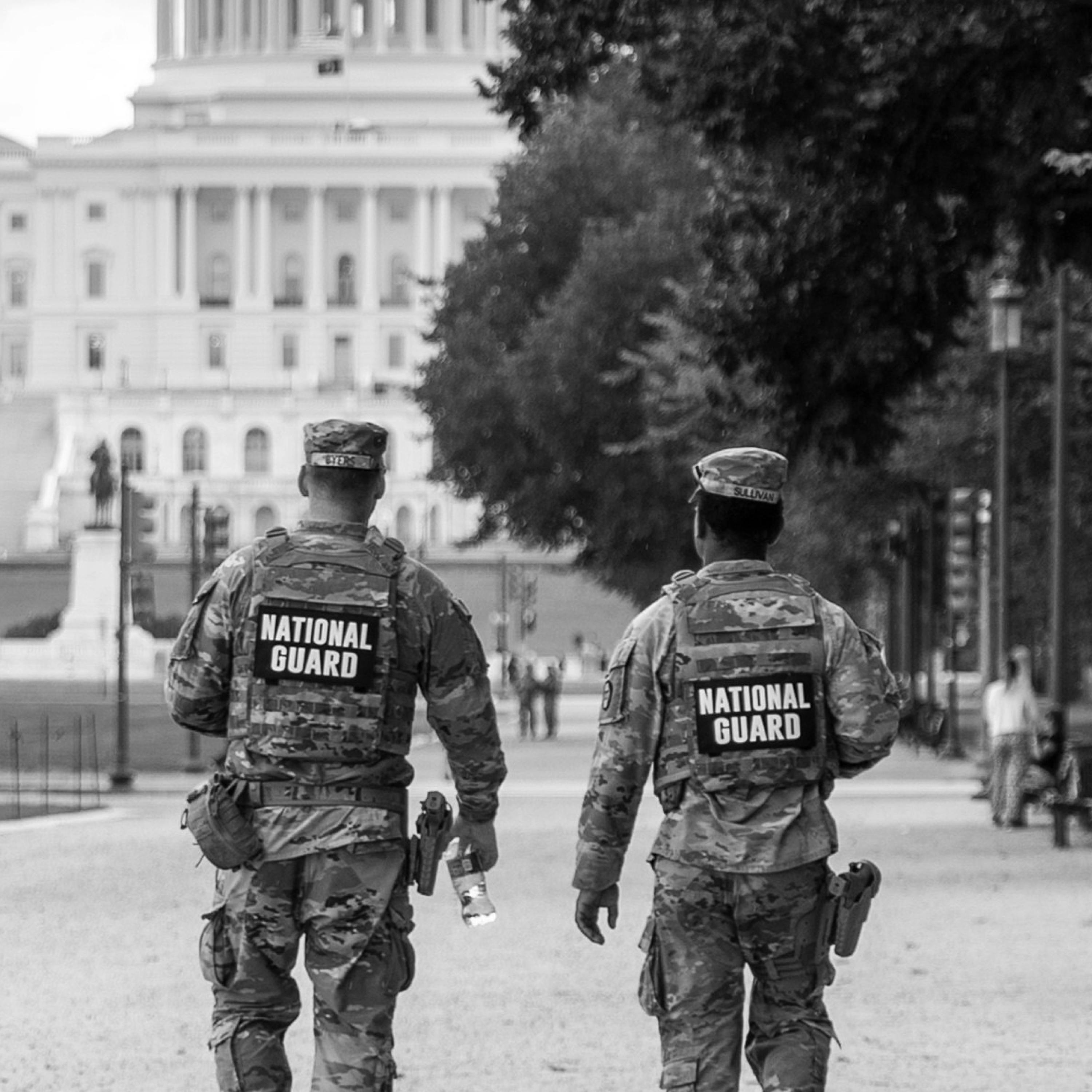
The David Frum Show
Trump Invades Blue America
01:00:48
Rosa Brooks on Trump’s National Guard deployment and using troops to police American streets. Plus: how Trump’s foreign policy is weakening America’s alliances and reputation.
Loading summary
Transcript76 lines
- [00:01]
A
If you know your party's extension, press or say 1. To leave a message in our company mailbox, press or say 2. Spoiler alert.
- [00:08]
B
It will be full representative.
- [00:12]
A
Would you speak to your mother in that tone?
- [00:15]
B
Speak to a real human being. You shouldn't need to shout into the void to get your health insurance questions answered. Pacific Source Health Plans. This is a real person. How can I help you? Human service, not automated phone Pacific Source Health Plans.
- [00:31]
C
This episode is brought to you by Progressive Insurance. Fiscally responsible financial geniuses, monetary magicians. These are things people say about drivers who switch their car insurance to Progressive and save hundreds. Visit progressive.com to see if you could save Progressive Casualty Insurance Company and affiliates. Potential savings will vary. Not available in all states or situations.
- [01:10]
A
Hello and welcome back to the David Frum Show. I'm David Frum, a staff writer at the Atlantic. My guest this week will be Rosa Brooks, a professor of public policy and law at Georgetown University and and an expert on American policing. We'll be talking together about the startling deployment by President Trump of National Guard and other armed personnel in Washington, D.C. and other American cities. Apparently with more such deployments to come, I can't think of a more qualified person to talk about this startling development than Professor Rosa Brooks. At the end of the program, I will be introducing a new segment where I'll talk about a book of the week. This is going to be an experiment. I'll see whether you enjoy it. I hope you do, and I hope you will stick through to to the end to see that final segment. Before we get there, though, I want to offer some thoughts about some very startling, very recent developments that raise serious questions about the future of American leadership in the world under President Trump. Federal agents raided one of the largest foreign investments, maybe the single largest foreign investment in the state of Georgia, a car factory and an electric battery factory about 30 miles west of the city of Savannah. Georgia agents detained some 475 people, of whom about 300 proved to be South Korean citizens in the United States to help ready the factory to open later this year or perhaps next. These 300 people were shackled, arrested, imprisoned, and then repatriated to South Korea. This incident, as you can imagine, has ignited outrage in South Korea. 300 of their fellow citizens who thought they were complying with President Trump's demand for more South Korean investment in the United States, who are finishing a factory that would soon employ many, many American workers. They are shackled, treated like the worst kind of criminals, the worst of the worst, as President Trump so often says humiliated. Exposed to view their arrests videoed and included in propaganda for the Trump immigration enforcement effort, the outrage has been shock, horror, terrorists, dismay in a country that is already one of the most fiercely nationalistic countries in the world. Now, exactly what happened here remains a little mysterious. Was this overzealous immigration enforcement? Was this some kind of backhanded political move? Remember the factory? The South Korean investment was a crowning achievement of Georgia Governor Brian Kemp. Brian Kemp, of course, was the Georgia Republican governor who refused to steal his state for Donald Trump in 2020. Perhaps some kind of payback has happened here, or perhaps not. We will know more soon, I'm sure. But South Koreans already know all that they need to know. And that's just one of many incidents of these kinds of attacks on allies. Here's another in the last week of August, the Danish national broadcaster produced a report that three American nationals were active in Greenland carrying out what the broadcaster called covert influence operations. These three Americans were apparently stoking separatist sentiments with an idea of ginning up some kind of movement to detach Greenland from Denmark, which is the sovereign over Greenland, and reattach Greenland to the United States. This story in the Danish national broadcaster reached of course, the ears of the Danish government and the Danish Foreign Ministry summoned the American Deputy Chief of Mission to the Foreign Ministry for a scolding. There is currently no American ambassador to Denmark. Now the American DCM in Denmark is a very impressive person. His name is Mark Stroh and he has served the United States in Iraq, in Pakistan, and he was embedded with US Forces in Syria. I have to imagine that a kind of patriotic long term public servant like this was as shamed as any American of proper feeling would and should be by the revelation of what was being carried out in Greenland, an act of skulduggery against a NATO ally that has hosted American forces on its soil since before the Second World War. The American presence in Greenland dates back to before Pearl harbor and has always been welcomed by both Danes and Greenlanders. Yet that seems to be not enough. Not content with having full use of Danish and Greenland territory for the defense of the United States and NATO, the United States now seems to be fomenting some kind of scheme or plot in order to steal territory from our Danish ally. That's second story. Now a third. In May, India retaliated against Pakistan for an act of terrorism against Indians committed by a terror group that has enjoyed the protection of the Pakistani government. 26 Indians were killed, India retaliated and there was a four day fight. At the end of the four days, a ceasefire was proclaimed. The United States apparently lent some good offices to the ceasefire, but the Indians are very insistent and you will hear if you're curious for more details, you can view my dialogue or listen to my dialogue with Indian politician Shashi Tharoor, who can explain the background that we did that that in the David Frum show a few weeks ago. Shashi Tharoor is an opponent of the present Indian government, but he agrees with the Indian government that India achieved this peace on its own terms, for its own reason, on its own timetable. And while they certainly appreciate that some Americans made some phone calls, it wasn't America that did it. Yet Donald Trump is demanding that India recognize him as the author of the ceasefire and in fact, that India nominate him for a Nobel Peace Prize for the work he didn't do, that his subordinates did do. But that wasn't all that important, at least according to the Indians. And soon afterwards, Donald Trump imposed a 50% tariff on Indian goods. India and the United States have a close economic and strategic relationship. Now, the Trump administration's explanation for the 50% tariff was that they were punishing India for purchasing and refining Russian oil. This explanation, frankly, does not pass the laugh test. Donald Trump is not taking any action against Russia, its aggression in Ukraine. They needed to say, okay, we're leaving the Russians alone. And in fact, the sanctions aren't coming. And in fact, the United States is bending every effort to compel Ukraine to make peace with Russia on Russia's terms. But even though we are not punishing Russia, we are so mad about the Russian war in Ukraine that we are slapping India. And it has nothing to do trust us with the fact that the president's mad at India for not nominating him for a Nobel Prize. It's obviously not true, and it's again created a tremendous uproar in Indian politics. And while there has been some nice talk back and forth between Modi and President Trump, the structure of punitive sanctions on India remains in place. American presidents since Bill Clinton have worked to build a US India relationship. The work has not been easy. There are many points of difficulty and difference between India and the United States. Yet India has achieved closer and closer military cooperation with the United States and its other major allies in the Pacific. And this is indispensable to American plans to counter China. And Donald Trump seems to have blown it up out of petty ego and vanity. One of the biggest lies that MAGA supporters, MAGA media tell their consumers is that Donald Trump is respected by the rest of the world. Well, there's some surveys that show that he's highly thought of in Nigeria. There are other surveys that show he's highly thought of in the Philippines. And he seems to be popular in Israel and El Salvador as well. But that's about it. Elsewhere in the world, Donald Trump is feared as capricious and destructive, but he's not respected because who respects a man driven by vanity, ego and petty personal concerns, and who seems to have no consistent reason for doing anything for any person other than himself. In this second Trump term, the lethal combination of fear and disrespect that has surrounded Donald Trump in the outside world from the beginning is now attaching itself to the United States as a nation. The world might forgive the United States for electing Donald Trump once. They're unlikely to do so for electing Trump twice. Trump has been elected twice, and the second time more clearly and with more popular backing than the first. At this point, the rest of the world isn't going to listen very hard when Americans say things like or when future Americans say things like, this is not who we are. Donald Trump and the movement behind him, that's an important part of who we are. And other people cannot afford to disregard it and pretend it's not there. They have to manage their own affairs, understanding that the United States is capable of doing this, and you know, it's capable of doing it because it's done it before, and things that have been done before might be done again. The United States advertises itself as Ronald Reagan's city on a hill. But the more recent advertisement is Donald Trump imposing tariffs on people who refuse to flatter him and nominate him for prizes for his own squalid motives of vanity. One way to interpret what has happened in the United States since the election of 2024 is that Donald Trump is leading a retreat of Americans from the world. The world's responsibilities asked a lot of Americans, and some Americans seem to resent that. Ask and don't want to pay it anymore. And here's a way that I think about what may be going on. The United States had a long history of racial discrimination and racial segregation. During the period after World War II, the federal government led a firm, slow, protracted, uncertain at first, but increasingly firm response to forced desegregation on the American states and localities that were unwilling to have it. An important motive for the federal government's activism in the 1950s and 60s on the civil rights file was that the United States was concerned that racism at home was undermining America's message to the world. In a speech to The Nation in June 1963, then President Kennedy made the link explicit. I'm going to quote from the speech he gave on Television in June 1963. President Kennedy said, this nation was founded by men of many nations and backgrounds. It was founded on the principle that all men are created equal and that the rights of every man are diminished when the rights of one man are threatened. Today, we are committed to a worldwide struggle to promote and protect the rights of all who wish to be free. And when Americans are sent to Vietnam or West Berlin, we do not ask for whites only. Kennedy's message. If you want to lead the rest of the world, you have to set a good example yourself. President Trump's message to the rest of the world is, well, we're not really interested in setting a good example anymore. We want to. Instead, we want to shackle South Korean engineers and executives who made the mistake of relying on American promises that they could work 90 days in the United States on a visa waiver program. We want to behave badly. And if that means we have to forfeit our world leadership, that's a price that Trump and those around him seem eminently willing to pay. Because what they are realizing is that they have a lot more scope for misconduct at home if they have less regard for the opinions of the rest of the planet. And that's why I keep insisting that far from an ideology of American greatness, far from a program of American greatness, MAGA is the ideology of American weakness and retreat. I think that's why Trump's one big foreign policy idea is to fixate so much on Panama and Greenland when America sought to be connected to the rest of the world. Panama and Greenland represented highways in the Arctic Ocean and at the Panama Canal, through which the world's traffic flowed alongside and to the United States. And while it was very important to Americans that both Greenland and Panama be in friendly hands, it was equally important to the United States to uphold international rules of sovereignty and justice. The United States reached diplomatic agreements with the Danish government on behalf of Greenland and with Panama to ensure that Americans and others had free access to the waterways that were policed by those two territories, and that the people who in those territories received the appropriate compensation and regard from the United States for the use of their landmass to safeguard the interests of the United States and those of others. But an America in retreat under Donald Trump wants Panama and Greenland not as connectors, but as barriers. Trump wants to seize them by any means necessary, no matter how clandestine, or even thuggish, without regard to the opinions of others. He imagines America can withdraw from the world into its own walled off neighborhood, its economy protected by walled off tariffs, and still remain powerful enough to intimidate even if it no longer leads or inspires. That's not a very appealing bet. It's also not a very smart bet. America is too big and the world is too small. There is in fact nowhere to hide. America will either be strong because reinforced by friends, or vulnerable because alone and distrusted by ex friends. When America abandons the world to the mercy of dictators, it will find itself at the mercy of dictators too. And not only the dictators abroad, but would be dictators here at home. And now, my dialogue with Rosa Brooks. But first, a quick break.
- [13:43]
C
This episode is brought to you by Lifelock. When you visit the doctor, you probably hand over your insurance, your ID and contact details. It's just one of the many places that has your personal info and if any of them accidentally expose it, you could be at risk for identity theft. LifeLock monitors millions of data points a second. If you become a victim, they'll fix it, guaranteed or your money back. Save up to 40% your first year at lifelock.com podcast terms apply.
- [14:12]
A
Your sausage McMuffin with egg didn't change your receipt did the sausage McMuffin with egg extra value meal includes a hash brown and a small coffee for just $5 only at McDonald's for a limited time.
- [14:26]
C
Prices and participation may vary.
- [14:38]
A
Our topic today is the Trump administration's deployment of military personnel to Police, Washington, D.C. our guest has truly unique insight into this startling convergence of military and police power. Rosa Brooks is a professor of law and public policy at Georgetown University Law School here in Washington, dc. She served as a policy advisor to the Department of Defense during the Obama administration. Between 2016 and 2020. She developed a second career as a Washington, D.C. reserve Police Officer, and she wrote about her policing career in an amazing book that I highly Recommend Published in 2021 called Tangled up in Policing the American City. Rosa, thank you so much for joining the program today.
- [15:20]
B
David, it's good to be here.
- [15:22]
A
Let me start by just for those of you who have lost track of the story, just a few facts to get us on the right track. At about 3 in the morning on August 3rd of this year, a man named Edward Korestein and an unnamed female companion walked back to Corestein's parked car. The couple had been out for an evening, apparently, and had left the car on Swan Street Northwest near the bars and clubs of Washington's U Street corridor. The couple was approached by a group of teenagers and according to the account given by Corostein to police, the teenagers demanded the key to Korestein's car. Corestein helped his companion into the car, then turned to face the teenagers. In the ensuing encounter, Corestein was injured and his phone was stolen. A 15 year old boy and a 15 year old girl were subsequently arrested, both not from Washington D.C. but from Hyattsville, Maryland, a plurality African American suburb to the northeast of the District of Columbia. Police are offering a $10,000 reward for help in locating a third person of interest in the case. Corestein is a man with powerful patrons, better known by his nickname, Big Balls. Corestine was one of the Elon Musk programming team. Outraged by the assault on Big Balls, President Trump imposed a form of martial government on the city of Washington. He deployed 2,200 National Guard to patrol the city, most of them from out of the jurisdiction and from as far away as Louisiana, Mississippi and Tennessee. This follows on a similar deployment in Los Angeles and anticipates future deployments that Trump has talked about, perhaps in Chicago, perhaps in New York City. One more set of facts and then we'll go into our discussion. According to the X account of Attorney General Pam Bondi, the Guard and other federal and local authorities in D.C. have, as of September 5, seized 198 illegal firearms. About four dozen homeless encampments have been broken up, including the large and conspicuous one near Washington's Union Station. Since the deployment, Washington has recorded a decline in some crime, especially carjacking. The deployment costs an estimated million dollars a day and is now expected to last until the end of November. Rosa, you work in more of the center of the city than I do. Have you encountered the National Guard?
- [17:29]
B
I have, yes. I've encountered a number of very nice young men and women from the Ohio National Guard.
- [17:35]
A
And what has that been like? Have they asked you for identification? Have they asked you what you're on your way to do, or do they.
- [17:40]
B
Just let you pass there? I've mostly encountered them around the wharf, which as you know, is a very prosperous touristy area. They're usually in groups of, you know, two to five, and they're sort of strolling around looking a little uncomfortable, like they're not quite sure what they're doing there, and occasionally getting ice cream and things like that and really not doing anything. I asked them how they were doing and where they were from and I commented that they had been sent to obviously, a crime hotspot. And they looked a little. They chuckled a little nervously.
- [18:15]
A
Yeah. When you were a police officer, how much time did you spend in places like the Wharf?
- [18:20]
B
I spent very little time in places like the Wharf because I was assigned to the 7th district of the Metropolitan Police Department, which is the southern part of Anacostia. So occasionally I would help out in other districts, such as the Wharf is in the First District. But mostly I was in a very different part of the city. City.
- [18:40]
A
And this is maybe something. I think a lot of people know this. But just in case Washington is like the shape of a diamond with a bite out of it in the lower left hand corner, which was land across the Potomac given back to Virginia before the Civil War. And Washington is bisected by a big park that runs almost exactly through the center of it, Rock Creek Park. And on the west of the park, the areas are mostly very low crime. To the right of the park you get more crime. And in the farthest southeast corner is where you get the most crime, is that right?
- [19:09]
B
That's basically right. Although different kinds of crime are more common in different areas. I mean, unsurprisingly, the more common kinds of crime in Northwest D.C. which is the most prosperous part of the city, tends to be property crime. It tends to be people's cars getting broken into or occasionally their houses getting broken into. Whereas in parts of northeast and southeast in particular, that's where you tend to see the highest levels of violent crime, and particularly gun crimes, homicides, violence, so forth.
- [19:39]
A
What does good police work look like, in your opinion?
- [19:42]
B
You know, this is actually one of our national problems that we don't really know what good police work is. I mean, I think we certainly know what bad police work looks like and what unconstitutional police work looks like. And we're seeing some of it right now, frankly. You know, people being stopped with no basis, which I think courts are going to find is a violation of the Fourth Amendment prohibition on unreasonable search and seizure, that's bad policing. You know, obviously, police beating people up, police engaging in profiling, that tends to be bad policing. No, no question. But I think one of our problems is that we. We really don't have a good handle on. This is surprising. Right. But we don't really have a very good handle on what makes the difference in reducing crime in an enduring way. We have some theories. None of the theories have really been borne out about why we've seen crime go up, crime go down, not just in D.C. but nationally, you tend to see these, these large scale national trends in crime going up, going down. People put forward all kinds of theories, everything from little kids eating lead paint, which has an impact on mental health and so forth, and cognitive performance, to demographic changes. You know, more, more we do, we do know that most violent crimes are committed by young men from their teen years through their mid-20s and demographic changes, but nobody really knows, which in turn means if we don't really quite know what reduces crime, we don't know a whole lot of what the best kind of policing is.
- [21:10]
A
Well, President Trump, or at least the people who are running this deployment, seem to have a theory. And tell me if you think I'm overstating this. So their idea is that the way you police should police Washington, D.C. is you deploy a lot of heavily armed, mostly men, some women, in the most public areas of the city, the tourist areas, the monuments, the wharf, which is this fancy condo and restaurant area near the Potomac River. You have a heavy presence and that frightens away criminals. And then when you see somebody who looks like he might be suspicious, you chase him and you grab him and you handcuff him, and then you find out who he is. And if he is here in the country illegally, you detain him, or if there's an arrest warrant for him, you detain him. But you don't actually deploy that many people to the areas where the poor citizens live. And you don't. You wait sort of for the criminals to come to you. That seems to be the main idea of the Trump deployment.
- [22:00]
B
Yeah, so. So there are two pieces to that. One is, one is, does flooding the zone with armed people reduce crime? And the other is, are they flooding the right zones, even if that does work? But on the first part of that, yes, if you put a whole lot of armed people with arrest powers into an area, you will see crime go down. Absolutely. We know that. We know that with police, it doesn't have to be National Guard, it'll be police. That often happens, you know that there will be a couple of homicides in a particular place, the police will flood the zone for a few weeks, crime will miraculously drop. Because of course, criminals are not completely stupid, right? They say, okay, maybe I shouldn't go commit a crime where all those cops are standing around. The problem with that, there are a couple of problems with that approach. One is, it's not enduring. The minute you take those cops away, whatever underlying stuff was creating that high level crime in the first place are going to come right back. And so unless you're prepared to permanently have vast numbers of armed people standing all over the place. It doesn't address any of the root causes of crime, which of course, as I said, we don't have a great theory, but they're probably pretty boring and long term and they probably are not susceptible to that kind of quick fix. So it's a temporary fix. And indeed, unless you can have armed people in the whole city, what you typically get is the kind of whack, a mole problem of, okay, you're not going to have crime in that neighborhood. The crime is going to pop up in a different neighborhood. And you know, what Trump is trying to do is just have so many armed people that there's no place for it to pop up. The irony of this, by the way, I should mention that dc, even before this National Guard deployment or deployment of additional, you know, FBI agents doing street level policing, ice, et cetera, was already, in terms of the ratio of police to people, one of the most heavily policed cities in the world because we already had so many different federal police agencies. The second piece of this. Yeah, I mean, one of the. I don't think it is a great mystery, but it does not appear that they are deploying any of these guard troops, et cetera. FBI agents do street policing in Southeast D.C. which has the highest rates of violent crime and homicide. Those areas are very poor. They're almost entirely black. They don't seem all that interested in solving actual crime.
- [24:23]
A
One of the things that is the particular crime that seems to have befallen Big balls. And again, there's a lot of merc about what exactly happened, but something does seem to have happened to him that seems to be a highly opportunistic kind of crime that it's in an area, it's the area where it took place is a pretty affluent area, but trafficked with a lot of like pleasure seekers. They're, you know, Swan street, where they park the car is a fancy street.
- [24:43]
B
Two in the morning.
- [24:45]
A
Yeah, three in the morning. And, and you're near the bars and, and clubs of U Street, which are again very popular, but at three in the morning, probably get a little rougher than they would be.
- [24:53]
B
You got a lot of drunk people wandering around, a lot of people on various substances wandering around.
- [24:57]
A
And then you have this group of teenagers who are, who are under 18 who don't seem to have been allowed, who probably would not legally have been allowed into the clubs or bars, but are looking for some kind of fun. And it's three in the morning. And the ones who are making good decisions have probably gone home, and the ones who are making bad decisions are still there. But unless you had a National Guard person on that corner at that moment, it's pretty hard to know how policing prevents that kind of crime.
- [25:22]
B
No, that's right. I think one of the challenges for all police officers everywhere is that whatever the root causes of crime, policing doesn't necessarily have a whole lot to do with them. You know, police are not very good at preventing crime unless they happen to be standing there at that exact moment. They're reasonably good at solving crimes, they're reasonably good at finding the people who committed the crime and arresting them, but they're not so great at preventing crime. I mean, needless to say, the other problem with the let's just flood the zone with armed people. You do that enough, there was very little crime in Stalin's Moscow. If you want to have armed people on every street corner stock stopping everybody and searching them without cause, you absolutely can keep crime low for a really long time. But you're going to sacrifice a whole lot of other things.
- [26:13]
A
One of the big left, right divides in our society, and this is a place where I think Donald Trump, in a lot of places, he's aberrant from where traditional conservative thought has been. But here's a place where he does seem to be lined up with traditional conservative views. What do you do about people who are not actually committing a crime at that moment, but who are breaking down public order? And the classic example is the homeless encampment. There are laws against camping on public places, but they're not criminal statutes. You're not a criminal if you pitch your tent in a public park or near a train station. But if you were I to do it, we get a ticket. Not we wouldn't be charged. But if, if 100 people, many of the mentally ill, many of them on drugs, do it, they really degrade the attractiveness of the neighborhood for every lawful user. And right wing people like me say that's bad and should be stopped. And left wing people tend to say, I don't want to exaggerate. Well, it's not good, but it's not their fault and they shouldn't be punished. And there has to be another answer beyond telling them to move along. And Donald Trump, and this is a case where I think he's onto something, say, well, move along is the first step on the way to a solution. How do you think about that? How should we think about the problem of these encampments in front of places like Union Station.
- [27:22]
B
No, I mean, I have very mixed feelings. You know, I don't think homelessness is the fault of most homeless people. Right. That the, when you talk to homeless people and you find out their stories, they're often terrible tragedies. Right. They're often the sort of series of mishaps that would knock anybody down, you know, just the one thing after another. And yes, sometimes they're also bad choices. Sometimes there's mental illness, sometimes there's substance, substance abuse, but not always. You know, you also have homeless families living on the streets because of, you know, a succession of bad things happen to them and, and things that end up trying to solve that problem by putting people in prison. That's, that's just compounds the tragedy. That being said. Yeah, it's, it's both. It's not just unsightly, it's dangerous. Both from a public health perspective in terms of disease and hygiene, but also from a crime perspective. When you have a lot of desperate people and you're walking through desperate people, people feel scared. People feel like this is not a good place to be. I am not an expert on housing and homelessness. I don't have a solution to this, a long term solution to this. I think clearing out the encampments sometimes can have a good effect if you have a place for those people to go. But if you don't have a place for those people to go except prison, that doesn't seem like the right solution either. You know, so, so I, I, I worry that what we're seeing right now is this sort of, again, this kind of cosmetic. Okay, well, we can put a lot of troops on the street. We can make these homeless people go somewhere else. And look magic, presto. We've got you this beautiful city. We've, we've solved crime, we've solved homelessness. But in fact, you haven't solved anything. You've just put the problem somewhere else. And you may have done it, you know, in, you may in the process have done that, been violating people's rights all kinds of ways.
- [29:14]
A
Yeah. Well, let me put this even more bluntly. Homelessness is a chronic problem of urban society. In the 1890s, there were hobos. There was a terrible depression in the 1890s, and you had these men who would show up in cities riding the ra. This has now all been romanticized and sometimes treated as a kind of period peace, humor. But it was a serious problem then, is now you would have men who were shaken, mostly men shaken loose from the existing structure of Society, they're detached from home, they're detached from family, they're detached from work, and they needed somewhere to go. And the old answer that American society would be, okay, well, we'll have zones which are undesirable zones. Yeah, Skid row, which is a, which was, I think the first was a place in Seattle and the name spread. You can, you can go to a skid row and we'll leave you alone, but you can't go to the train station, you can't go to the good neighborhoods, you can't be in front of the library. And sometimes somewhere along the way, that previous rule broke down and cities, especially in the more liberal states, said, you know what, the train station, the airport, the bus station, the libraries, that's exactly where you should be. And that in fact, services will, not only can you be there, but services will be provided there. And so what used to happen in skid row now happens at Washington's Union Station.
- [30:24]
B
I spent a lot of time in desperately poor countries where there are enormous shanty towns around big cities, you know, just, just chin roofed shacks and shacks made out of cardboard. And in the United States, by and large, we don't have that. And it has often seemed to me we also, as you know, have an incarceration rate that is wildly higher than almost every other country in the world. The reason we don't have shanty towns is, is even pre trump is because we lock so many people up, you know, that so many crimes that are linked to poverty. Well, our solution has been, well, we put people in prison. And again, that gets them out of the way. Yes, it does. It makes, it makes the city nicer for the rest of us who haven't been arrested. I'm completely with you. I don't think just saying, oh, well, I guess the entire center of the city and the train station and all the public spaces, I guess it's cool for them to be full of people who, because they're so desperately poor and because many of them do have mental health issues, you know, they're peeing there, you know, all sorts of bad drugs are going on, drug use is going on. I don't think that's good. I do think cities should have the ability to keep public spaces clean and safe, even if that means saying to people, no, you can't be here. You've got to be somewhere else. But I also think that cities, not just cities, but states and the federal government have an obligation to try, difficult as it is, to find safe places for those People to go other than prison.
- [31:45]
A
Let me ask, put us on a slightly different track and ask what this deployment is doing to the National Guard. You and I have been part of group discussions about the fate of the Guard in the second Trump administration. One of the big facts about the National Guard is, unlike the regular military, it's really easy to quit if you don't like the work you're being asked to do and if major economic sacrifices are being imposed on the Guard's people. And the Guard has crucial, indispensable roles to play in protecting their neighbors against natural disasters. There are disproportionate numbers of police and firefighters and EMT people who serve their neighborhood and make some extra money by giving one weekend a month to the National Guard with the understanding I'm on call, if there is some disaster, I can help. But they've signed up for particular. They often have other jobs, they often have other family. They often have families, and they've signed up for something on one set of expectations which are now being challenged. Do you worry or do you have thoughts on what Trump is doing to the Guard by these kinds of deployments?
- [32:42]
B
No, I think it puts a huge strain on the Guard. I mean, and it puts a strain on their home communities, as you say, partly because these are people, these are people who are parents. These people who are, you know, taking care of older, older parents themselves, they're taking care of spouses, et cetera. You know, they've, in addition to having jobs, you know, and when you take them out of their community for extended periods of time for any reason, you are not only denying that community access to the services that they provide in their work. And as you say, yes, a disproportionate percentage of people in the Guard are first responders in their own communities, not just available for emergencies, but they work full time as police, as firefighters, as EMTs, as nurses in similar jobs. And so you're taking them out of their home community, but you're also taking them out of families. And that's a real challenge for their home communities. I think it potentially is. And we're seeing this already, can be really demoralizing. If they're sent to do something that they either feel is pointless or they feel is unconstitutional, you know, you're really putting them in a bind. And, you know, one thing I do worry about going back to your, your friendly criticism of liberals, David, I do really worry about there's a, this isn't liberals. This is, you know, more radical groups that are very hard to Control and individual people who are also very hard to control, you know, responding to their displeasure with Trump, which is totally appropriate, by, you know, shouting at guard troops they see in D.C. or spitting at them, things like that. You know, they did not, These, these folks did not ask to be here. They're doing their job, you know, and, and I actually would like them to go home and say to their neighbors or call home and say to their friends and family, boy, I don't think I'm needed here. This may be the President who said there was a crime emergency in the streets of, you know, the Wharf and the National Mall. Maybe not everything the President says is true. And by the way, these people here are really nice, right? So I'm kind of appalled that people taking it out on the, on the guard.
- [34:42]
A
Well, we, we often in Washington have guard deployments. I mean, every four years is a presidential inauguration and the, the guard is here. And I think they by and large, have a pretty good time. They get to see some American history. They have a good view.
- [34:56]
B
David, I actually, as you, as, I think, you know, I was a police officer on duty at President Trump's first inauguration. And we also get, I forgot, from all over the country coming and, and yes, they have a very, very good time. They come in for four or five days, they get deputized as deputy federal marshals, they go to bars, they get very, very drunk, they see a few sites, and then they go home again.
- [35:19]
A
And when they have been here for real emergency, I remember very vividly the massive guard deployment here after 9, 11. And again, people, they are made to feel welcome, that people thank them. The merchants send out coffee and soda. They are received as they are in hurricane and flood sites, as your protectors and people who are doing a good deed at a time of need. So thank you. I really do hope everyone is polite to them and nice, but they didn't sign up to pick up trash. And many of them are making an economic sacrifice to do this. And they're going to be here till it looks like now, November. So if you're a police officer back in your hometown, or a nurse or a retired police officer now having a second career doing something else, and you're making more money, you've had to say goodbye to your employer, say goodbye to your income stream to make whatever they pay the guard to clean up the trash in Washington, D.C. that's got to seem crazy to people. And it invites resignations.
- [36:11]
B
It does. And the other time that we saw, you know, real recruiting crisis, of course, was the height of the Iraq War, when we also started sending Guard troops and reservists to Iraq and Afghanistan and for extended deployments and sometimes repeat deployments. And there, again, these were folks who, you know, maybe signed up for the Guard because they wanted money for their educations or because, you know, they. Health insurance or it's just a little bit of extra income. And they wanted to be serving, but they were not expecting to be shipped off to Iraq for a year and then another year and so forth. And often they were put in positions there, too, for which they didn't have the appropriate training. I mean, some of the National Guard troops deployed to D.C. are MPs in the Guard, military police, so they at least have some policing law enforcement experience and hopefully some training and knowledge in constitutional protections from a criminal procedure perspective. But many of them are not. And one thing I do worry about in D.C. is you get a whole lot of armed people and they don't necessarily coordinate very effectively with each other. Right. Guard troops, DEA agents, D.C. metropolitan Police departments, you know, they have different training, different sets of assumptions, different rules of engagement. And then there's something scary happens and, you know, you got a whole lot of armed people who don't communicate well and haven't trained together. Really bad things can happen. So that's something I worry about as well.
- [37:40]
A
There's a famous set of rules for policing that are. I don't know if they were actually written by Robert Peel, but they're attributed to Robert Peel, who was a British politician of the early 19th century, who. Who created the first professional police force in the Western world in London. That's why London police are called bobbies. After. After Robert Peel, and he had his. He or whoever wrote them, had a series of principles in which, number one is we police by consent. And that's the. That's the reason why you don't confuse military and police is because the military, at least if you're winning, they are not there by consent. They're advancing into the other guy's terrain and the people don't want them there. That's how you know you're winning. Whereas the police are all. Are there or should be there in a democratic society because people want them. And it was very striking during the George Floyd protests when Washington was suddenly policed by all these strange officers from the Bureau of Prisons. And they weren't wearing proper uniforms. They had strange. One of the things that you could tell was they all had their own shoes. If you looked at them at foot level, you see everyone had different. So you knew they weren't proper police. In a proper police uniform, which comes with a standardized shoe.
- [38:38]
B
Well, you got to go buy your own boots. Oh, but they. As long as they're black. But you don't have to pick a specific brand.
- [38:46]
A
Now, these. They were wearing dad shoes. They were wearing dad shoes. And many of them didn't seem to be in great physical condition. And they were then masked like this phalanx. And the idea was that they were trying to. They didn't look very intimidating one by one, but as a group, they looked hostile.
- [38:58]
B
Yeah.
- [38:59]
A
And they challenged the notion of, you know, who are you here? Are you here to protect me, or are you here to protect somebody else from me?
- [39:05]
B
Right. I really strongly disapprove of the effort to, quote, unquote, unmask federal police officers by identifying personally. Them personally and putting, you know, using AI and facial recognition and putting their names on the Internet for the same reason that, you know, I. I would like people to be nice to the Guard troops who are here. You know, I think that individualizing this and personalizing it and making it about, you know, Joe Schmo, you know, we're going to harass you because you. You are here. We saw you on the streets of D.C. wearing a mask. And in many cases, again, these people don't necessarily even want to be here. You know, many of these people strongly disapprove of what they've been sent to do. And I. And I think that's the wrong focus of anger. That being said, I think it is totally appalling and counter to every principle of democratic accountability to have masked, unidentifiable people with the power to scoop you up off the street from any reason or no reason. And we don't know who they are, and we don't know why they're doing it, and we don't know where they're taking you. I mean, that. That epitomizes police state. And if they're not going to have people's faces visible. And I, you know, I understand the concern about people being harassed individually. You know, you can have badge numbers. You need to have agency names on their. On their uniforms. And we're seeing that right now. We're seeing the National Guard troops are identifiable. We know who they are. They're wearing uniforms. Their faces are clear. Their names are clear. Clear. But we do have an enormous number of federal agents who seem to be involved in most of the actual arrests, and we have no idea who these people are.
- [40:32]
A
Do they, in fact, have the Power to arrest you?
- [40:35]
B
Well, it depends on who they are. But, yeah, it depends who they are. But essentially, unfortunately, in some ways, the federal government, number one, in Washington, D.C. it's a city with a unique status, as you know. So there are going to be different issues that arise if President Trump tries to replicate what he's doing in D.C. in Chicago or wherever. Right. Because D.C. has a greater degree of just direct federal control. But number two, just as I remember, I was talking about Trump's first inauguration where I was a police officer on duty. The way that works when you've got all of these, every National Guard troops, you've got law enforcement agencies from around the country coming in. Normally they would have no jurisdiction in Washington, D.C. if, you know, you're a cop in Mississippi, Mississippi, you can't come to D.C. and arrest somebody. But they were all deputized en masse as federal marshals. Literally a ceremony, you know, at the armory in D.C. with thousands of visiting law enforcement officers, et cetera, in which en masse people held up their hands and were temporarily deputized as marshals with, you know, limited jurisdiction associated with their task. But, yes, you absolutely can lawfully empower them to make arrests, engage in law enforcement. National Guard's a little bit more complicated. Even here in D.C. technically, they should be restricted to providing support for law enforcement. All kinds of legal questions about, well, what exactly does that mean? Even though they're only, in theory, restricted providing support for law enforcement, they're also allowed to temporarily detain when necessary for their own safety until law enforcement enforcement arrives. And frankly, temporarily detaining somebody to the person being temporarily detained is the equivalent of an arrest. And, you know, a lot of this is going to find its way through the courts, who I think are likely to view this as arrest for constitutional purposes and therefore subject to the same constitutional requirements, such as having a reasonable basis for the stop and the search and the detention. But the bad news, and the short answer to your question is legally, for the most part, can they do this? Yeah, if they've got a reason and a good reason, a constitutionally acceptable reason. But the courts have allowed many, many, many reasons, some of which you and I might not think are good reasons, as the basis for stops and seizures.
- [42:54]
A
Well, there have been some dramatic videos circulating, and I don't know how many cases these describe, whether it's few or many or one or of law enforcement personnel seizing food delivery people. People who are delivering food look like they're from typically look like they're from somewhere else. And not to overgeneralize, but I think it's. They, they do tend to look like they're from somewhere else than, than the United States.
- [43:16]
B
Well, I don't even think it's an issue whether they look like they're from someone else that, that we know. That is a job that does tend to attract a lot of immigrants because it's an easy job to get. You don't have to have a lot of education. Your English skills don't need to be great. So disproportionately the food delivery service drivers, Uber drivers, etc. Are disproportionately immigrants.
- [43:35]
A
So, so when it does look like, and we could, again, in any particular case, this could be wrong, but like, the police don't have any particular individualized reason to stop this person that they're making either because of the way they look or the job they have. They're making a decision to grab them. And in some cases, the grabs look really, really violent. Violent against people who, at least as you see it in the video. And again, there may be more here out of the frame, but don't look dangerous, right?
- [44:01]
B
No, I mean, and again, one of our big challenges, and this is why I think it's a fundamental sort of problem of democracy and accountability, is that we don't know what's happening. We're not being given information that says, oh, yeah, you might have thought it looked like we were just engaging in racial profiling and, you know, scooping up everybody who sounded like they had a foreign accent or looked wrong to me, but that's not what's happening. We actually did have specific information that this person who appeared to be, you know, innocent, non dangerous Uber driver or pizza delivery guy or whatever it might be, you know, was a serial killer, heavily armed. And that's why we did what we did. I mean, okay, maybe, right, sometimes it's not impossible, but we're not being told. And we don't know where these people are ending up. We don't know whether the targets of those violent takedowns are ending up in the criminal courts where they will have judges who will scrutinize that question of was there adequate reason for that stop and was it carried out in a constitutional manner or they're going straight into some kind of immigration detention where the Trump administration is granting them essentially no legal rights, you know, and often no access to a lawyer, and they're being put on a plane to God knows where five minutes later. We don't even have the ability to determine if the Trump Administration's agents were right or wrong. And we know they're making mistakes. We don't, we, we, we clearly, we do know that they are at a minimum making mistakes. We don't know how many mistakes they're making, et cetera. And, and that's a real problem when the population just has no idea, you know, who are these people? Why are they picking people up? Where are they taking them? What happens to them?
- [45:36]
A
I want to ask you one last thing, an arithmetic question. I don't know if this is in your area of expertise, arithmetic. One thing that people may not know. No, the question that people may not appreciate about Washington D.C. is how small it is.
- [45:47]
B
Right.
- [45:48]
A
I think they're what, 700,000? A little bit more now in the District of Columbia. The Trump administration's talked about repeating this project that they've did a little bit in Los Angeles, have done heavily in D.C. in Chicago and New York, really big cities.
- [46:00]
B
Right.
- [46:01]
A
How many troops would it take to. A whole lot to try to repeat this experiment in Chicago and New York?
- [46:07]
B
Just to give you a sense of scale, these numbers are about 10 years old, so they may not be completely up to date. Listeners can look this up for themselves. But the NYPD, for instance, has more than 30,000 sworn officers. That's larger than the entire militaries of some small countries. That's a lot of police officers, and that's just nypd. That's not counting the various other types of security agents.
- [46:31]
A
In New York City, there's a separate transit police force in New York.
- [46:34]
B
There are separate. Yeah, exactly. I mean, there are all kinds of smaller, separate police forces. Not as many agencies as in D.C. where we, as I said, we've got, here in D.C. we've got the zoo police, we've got the Government Printing Office police, you name it. But that's just the police department itself. In a city with 8 or 9 million people, if you want to have any meaningful, even again, just short term impact on crime in terms of flooding the zone. Boy, you are talking about massive deployments. And the irony here. Here's our Defense Secretary, Pete Hegseth, focusing on lethality, lethality, lethality, as he put it, and wanting to change the name of the Defense Department to the Department of War because he thinks that our troops have gone all soft and too woke. This means that we're taking men and women who have been trained to be war fighters and we're putting them into positions where, I mean, here in D.C. they seem to be picking up leaf blowing and picking up litter. It's bonkers. We actually do have real national security threats in the world today, but instead, we're essentially rerouting our military to scooping up, you know, doordash delivery guys for no particular reason.
- [47:50]
A
Well, if you think that the project here is to fight crime, then yes, it is bonkers. If what you think it is is to show a kind of form of occupation of blue cities by red hinterlands, to sort of do a kind of show of force to demonstrate who's the master and who takes orders, then it's very. I mean, and that's. When you listen to it. The places that they're talking about doing this are not the highest crime jurisdictions. New York is one of the lowest crime jurisdictions in America. It is about a show of force by one part of the country against another. And I think it's teaching us the thing I worry about most, and maybe this is the place, is it's teaching everybody in America. Red state, blue state, red hinterland, blue cities. This game is going to be played a little bit more harshly than it was before. And one of the things I think about is during the Biden administration, how far out of their way the Biden people went to avoid tangling with the law breaking by the previous administration. Sometimes they just couldn't help it. But, um, but they. They were really hesitant. And I don't think Biden's Justice Department was at all displeased by how slowly the courts moved against Trump and the. And the senior people. I think they liked that. Just let this cup pass away from us. I don't think that's the way the game is going to be played in the next Democratic administration. And maybe that's not how the game will be played in the next Republican. I mean, we are in a. You know, the. The rules are. There are just. Rules are being broken, broken every day, and people are being taught, oh, the game that I thought politics was, that's not the game. We have your soldiers in our cities. Wait till it's our turn. See what we do to you then.
- [49:24]
B
Which is a terrible cycle to get into. That, of course, is assuming that it is a cycle which is making a set of assumptions about what will happen in the next elections and what kind of elections the next elections will be.
- [49:37]
A
I think that even deeper that you're very right.
- [49:40]
B
Right.
- [49:40]
A
The people who are doing this are thinking this is the last cycle.
- [49:43]
B
Right. Because, I mean, bad enough if we have a swing between, okay, now it's my turn to take revenge on you and toss you in jail and put soldiers on your streets and oops, now it's your turn. Now it's my turn again. That's bad. But even worse is I put soldiers on the streets and you don't get to have an election. You don't get to have a turn anymore. And that is what I fear most.
- [50:06]
A
But that would imply that the places that the Trump administration would really want to occupy are not New York and Chicago, but are Atlanta, Charlotte, Phoenix, blue cities in swing states. And maybe that's what we're really warming up for in 2026 is just, I.
- [50:24]
B
Think that's a possibility that this sort of, to use an overused word, it normalizes the idea that you, you're going to have soldiers on every street corner. It normalizes the idea that you're going to have masked agents of the federal government who can detain you at any time and you won't know who they are and your relatives won't know who they are or where you are or why this is happening. You know, that idea gets normalized. We've still got whatever it is, 14 months, 15, 14 months until the 2026 midterm elections that you start getting people used to the idea that soldiers just show up, masked agents with guns show up, and there's nothing you can do about it. I don't think it is at all beyond question that you could have a manufactured emergency right around the time of the next elections that requires massed agents stationed at every polling booth or an emergency that is purportedly enough to postpone the elections in some way. So, yeah, I'm really worried about, about that.
- [51:23]
A
And, and if the message is, and we'll be grabbing people who are recently naturalized, and we'll give. And they have then three weeks to prove that, oh, maybe you were entitled to be in that line, that's three weeks in a prison in some other state.
- [51:34]
B
Why do you prove your identity? You were. If you were, I mean, if you were an immigrant, even if you were here completely legally, even if you had a green card in those circumstances where people are being scooped up, apparently, based on how they look. Would you go vote if you knew that you were going to be running a gauntlet of masked unidentified federal. Federal agents?
- [51:52]
A
Well, I'm a naturalized citizen myself, and I don't think actually they're going to scoop up me.
- [51:55]
B
Probably not, because you're some obvious reasons.
- [51:58]
A
But yeah. And, and I wear one of these. It's like the Don Draper. You can't go out there. I can, but, but, you know, theoretically, there's no theoretical reason why they couldn't. And say, now let us challenge your challenge to prove you have three weeks in a prison in Texas to prove that you were. That you had a right to be in that voting booth line.
- [52:15]
B
Right? Right.
- [52:15]
A
Rosa, thank you so much for joining. This is so interesting. We learned so much. Thank you.
- [52:19]
B
Thanks for having me, David. Bye, bye. Bye, bye.
- [52:32]
A
Thanks so much to Rosa Brooks for joining me today for that important discussion. Now, at the beginning of the program this week, I mentioned that I was testing a new feature in this final segment. Let me talk to you a little bit about why I'm doing it and what it is. This past summer, I reread the novel Frankenstein for the first time since I read it 40 years ago. Frankenstein, of course, was written by Mary Shelley as a very young woman in 1817 and then revised and republished in 1831. When the book was assigned to my daughter at college, I was chagrined to realize I didn't remember any of the details I'd read so long ago. Go. So I returned to Frankenstein. Now, I'm not here to deliver a book report about Frankenstein, but to make a point about an important change in our society. The novel Frankenstein, as I'd forgotten, is structured as a series of stories inside stories. The book begins as a letter by a young English explorer to his sister back home in England in frozen Arctic seas. The explorer raised rescues a near dead man, and that near dead man turns out to be the scientist Victor Frankenstein, for whom the book is named. Frankenstein then relates to the explorer his own tale of reanimation and horror. In other words, everything in the book is refracted at least twice, once by the explorer narrator, then by the Frankenstein narrator. In the middle of the book, Frankenstein and his creation encounter each other. The creation explains himself and his actions to his creator. Now the point of view is refracted three times. We are hearing the explorer's account of Frankenstein's account of his creature's version of events. This double and triple refraction of the action of a novel invites the can these narratives be trusted? The explorer describes Frankenstein as brilliant, and indeed, Frankenstein has raised the dead to life, which is no small achievement. Yet Frankenstein the scientist, not the monster. Frankenstein the character again and again commits acts of amazing stupidity that get people killed. For just one example of his gullibility and silliness. In his most dramatic confrontation with this creature, that Frankenstein's not dramatic confrontation with this creature, the creature warns that they will meet again on Frankenstein's wedding night. Now, by this point, the creature has killed Frankenstein's younger brother to revenge himself on Frankenstein. He will soon kill Frankenstein's best friend again to hurt Frankenstein. Yet it never occurs to Frankenstein that the wedding night threat might be aimed not at him, but at his wife to be not, even though the creature is refusing, as they speak, a perfectly good opportunity to murder Frankenstein right then and there. The explorer describes Frankenstein's character as noble, yet under pressure. Frankenstein repeatedly panics and either runs away or collapses into protracted bouts of faintness and helplessness. Frankenstein gives little speeches about the evils of selfishness, yet never once does he show any regard for any other person, including his wife, whom he makes no effort to protect on the dangerous wedding night. Again, this is not a book report, but it's a study of the way we encounter literature when we meet it on the page. One more example. The Creature, the famous monster. The creature offers a heartrending account of his wretchedness that drove him to repeated murder. But then, does not every murderer have a heartrending story? Frankenstein's creature not only killed Frankenstein's brother, Frankenstein's best friend and Frankenstein's wife, the creature takes extra trouble, and for no obvious reason, to frame a servant girl for the first murder, who was hanged for it. The creature's preferred method of killing is especially quite cruel and intimate. He enjoys choking his victims to death with his bare hands, face to face at the very end of the book, the explorer, not Frankenstein. Now, this time, the explorer and the creature meet over Frankenstein's dead body. Frankenstein has died of natural causes. The creature professes himself full of regret and remorse for all the atrocities he committed, and we are asked to take these words as sincere, but we have only the creature's own word for it. You vow, the creature vows to atone for his many crimes by suicide. We never learn whether the creature honors that vow. Now, the point, again, to tell these stories is to say that these are doubts that you're invited to think about as you encounter a book on the page. And it's a description, an example of how the practice of reading will push readers to question the material they encounter. And if they don't question spontaneously, then the whole point of studying literature in English 101 is to introduce us to the idea that we should be questioning what we read. So here's my bottom line on this. As the habit of reading fades from our society, these critical habits of mind are put at risk. Only about 1 in 8Americans reads for pleasure on any given day. Almost twice as many did so as recently as 2004. The rise of literacy changed culture in all kinds of important, important ways. The decline of literacy is changing us again. On its way out now, one man cannot do much against such a mighty cultural tide. But I can do one thing, and that is every week add a segment to the show on a book, old or new, that mattered to me. It seems apt to start with Frankenstein, a book about how one man and his family were destroyed by a creation he could not control. That seems a powerfully symbolic metaphor for for so much in our society. I'll see you at the end of next week's David Frum show with another selection. I appreciate so much everyone who joined me this week on the David Frum Show. Thanks so much for watching or listening on whatever platform you use. I hope you return next week to view or listen to the David Frum Show. Remember, please Like Share Subscribe. It helps so much to bring our content to other people. And if you want to support the work we do here at the David Frum show, remember, the best way to do that is by subscribing to the work of me and all my colleagues at the Atlantic magazine. Thank you. See you next week. This episode of the David Frum show was produced by Nathaniel Frum and edited by Andrea Valdes. It was engineered by Dave Grine. Our theme is by Andrew M. Edwards. Claudine Abayad is the executive producer of Atlantic Audio, and Andrea Valdez is our managing editor. I'm David Frum. Thank you for listening.