← The David Frum Show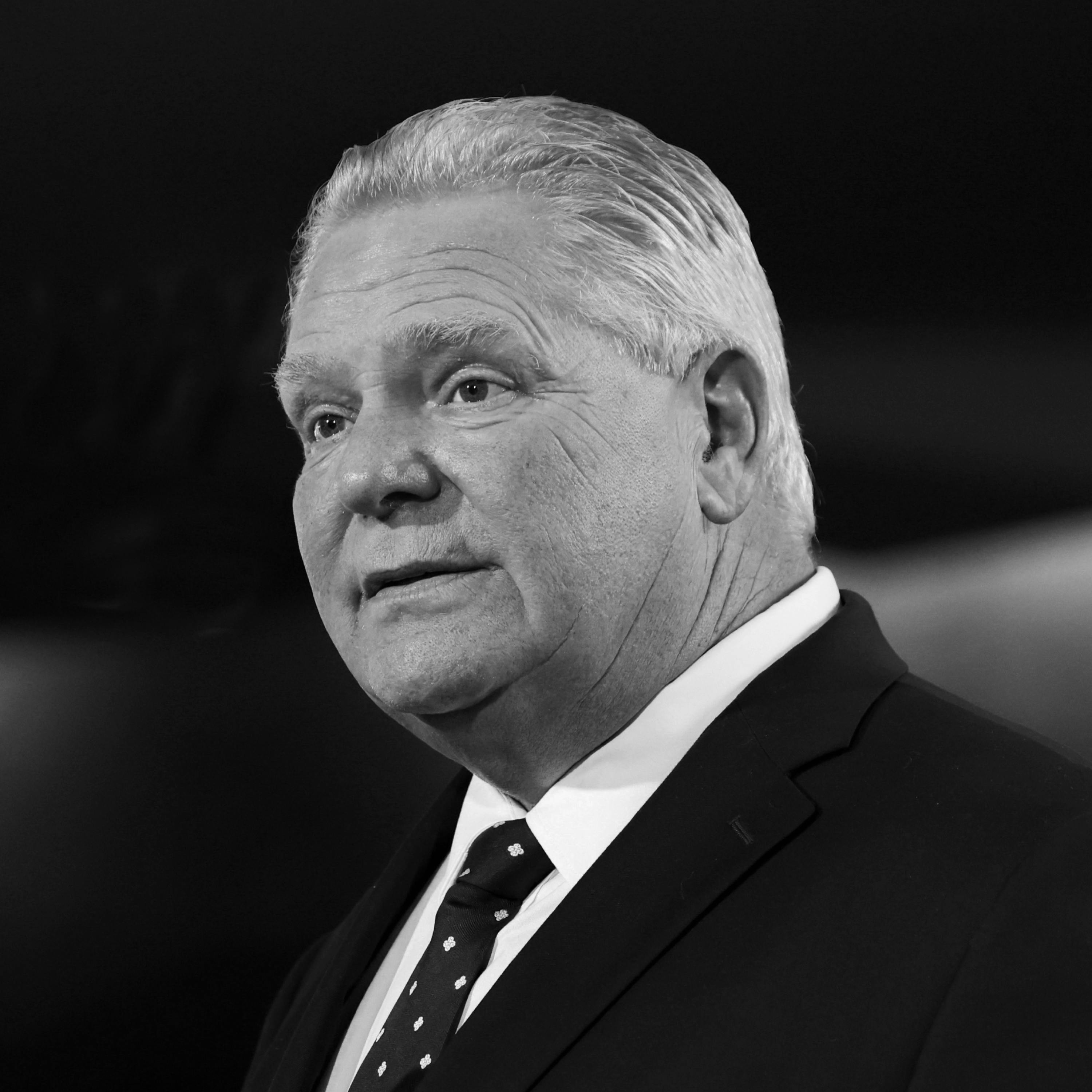
Loading summary
Transcript38 lines
- [00:00]
David Frum
An official message from Medicare.
- [00:02]
Medicare Advertisement Speaker
I'm saving money on my Medicare prescriptions. Maybe you can save too. See if you qualify for Medicare's extra help. It pays.
- [00:09]
David Frum
To find out, go to ssa.gov extraheld paid for by the US Department of Health and Human Services.
- [00:15]
Mint Mobile Advertisement Speaker
Mint is still $15 a month for premium wireless. And if you haven't made the switch yet, here are 15 reasons why you should. One, it's $15 a month. Two, seriously, it's $15 a month. Three, no big contracts. Four, I use it. Five, my mom uses it. Are you playing me off? That's what's happening, right? Okay, give it a try@mintmobile.com Switch upfront.
- [00:38]
David Frum
Payment of $45 for three month plan. $15 per month equivalent required. New customer offer first three months only, then full price plan options available, taxes and fees extra. See mint mobile.com hello and welcome back to the David Frum Show. David, I'm David Frum, a staff writer at the Atlantic, and I'm grateful that you would join us again this second week of the program. This week my guest will be Ontario Premier Doug Ford. Now, I should make clear, if anyone doesn't know it, I too am a Canadian and an Ontarian, both by birth, and I still spend a lot of time there. I'm going to be speaking to the premier about the sense of shock and dismay that Canadians have felt about Donald Trump's threats, not only to the trade arrangement between Canada and the United States, but his demands that Canada be annexed to the United States. You know, the Trump people, when they're trying to justify the economic policy that has sent world financial markets into such chaos over the past weeks, try to present this as some kind of confrontation with China alone because they don't like to admit to Americans that they are waging a trade war against the entire planet. This is not an anti China campaign. This is an anti everybody campaign. And it's a campaign in which America has almost literally no allies, except maybe El Salvador. And the trade war began with attacks on Canada, supposedly and historically America's closest neighbor and ally. You would think if you were trying to build an anti China coalition, you would start by consolidating the North American heartland, especially the U.S. canada relationship. But that's exactly the opposite of what has happened. I'll be talking to the premier about that, how Canadians feel about it. Not so much the facts and figures of the relationship, enormous as it is, but what it has been like for Canadians to be on the receiving end of threats of annexation, threats of violence and this unrelenting campaign of tariffs and harassment, which has not been paused, of all the tariffs against China, paused and unpause. But those against Canada have remained consistently in place from the very beginning of the Trump administration. It's bizarre, it's shocking, it's upsetting, and that's we're going to talk about this week on the David Frum Show. After the interview, I will be discussing and answering some reader questions. But first, some opening thoughts on the events of the past week. When Donald Trump and those around them want to demean or dismiss some opponent, some critic, they sometimes use the phrase he doesn't have the cards. They said that about Vladimir Zelensky and the Ukrainian people's resistance to Russian aggression. They've said it about Canada and other trading partners. The implication is that the other person is too weak, too insignificant to be worthy of respect. But there's another implication, too, which is that the United States and the Trump administration does have the cards, is so mighty and fearsome that others must give way. Now, the United States is obviously a very powerful nation with a lot of sources of command and control, but it is important to understand that, in fact, Donald Trump doesn't have the cards that he thinks he does. And that's one of the reasons that this campaign of economic aggression he's launched, not against China, but against the whole planet. Every country, just about almost every trading nation, is coming amiss and will likely end in failure and even disaster. Supposing. Let's just take Donald Trump seriously for a moment. He doesn't deserve it, but let's just for our own sakes, do it. Supposing a president of the United States came to office and said, you know what? My top priority is going to be reshoring manufacturing in the United States. I personally don't agree that this should be anybody's top priority. But let's supposing it were a president's top priority. Reshoring, manufacturing. That's what Donald Trump says he wants to do. How would you go about it? Well, first you would admit to yourself, if to no one else, that you are proposing a very ambitious and expensive task, one that will involve a lot of dislocation. So you'd face up to that and you would try to build some kind of political consensus in favor of the bumpy, difficult path you were proposing for the nation. You would maximize your friends at home. You would reach out to other parties. You would not behave in an arrogant way that had a lot of people hoping for your failure, and you would not Start committing all kinds of other offenses and even crimes that put you in all kinds of precarious positions where anything went wrong. And your whole program would be, would come a cropper. You would understand you were doing something that was not easy, was not going to be fast, was going to be costly, was going to impose significant hardship on many people. You'd work with allies, you'd build a large coalition, because you are going to need, even if, as you're shrinking your supply chains to move things away from China, you're still going to need various kinds of inputs from other countries, raw materials, if nothing else. And you'd want to make sure that as many countries as possible were sympathetic to what you were doing, rather than wishing that you would fail and fearing what your. Your aggression. You certainly wouldn't open campaigns of territorial aggression against neighbors and allies. You wouldn't say, we're going to annex Greenland from Denmark and we're going to try to conquer Canada and make it a 51st state. You wouldn't do any of those things. You would also understand the relationship between your financial program and your economic program. This is a little technical, but it's really important to grasp. The reason the United States has such a big trade deficit is exactly and precisely because the United States imports so much capital from other countries. The current account and the capital account to give them their technical names have to move together. So one reason the United States has had such an expansion of its trade deficit in recent years is first that the United States is importing so much capital in the form of private investment. People are buying into American companies, which is a good thing. But it's also because the United States has run huge budget deficits. So foreigners buy a lot of American debt because there's a lot of American debt to buy. A first step, and an indispensable step towards shrinking your trade deficit is to shrink your budget deficit. So you would have a fiscal plan that worked in parallel to your trade plan, your economic plan. Whereas instead of as Donald Trump has done exactly the opposite, his plan is to make the deficit bigger on a fantasy that with enough tariffs, he can make the trade deficit smaller. And that's not going to work. You would level with people. You would not promise people quick and easy success. The hardships that have come and are to come are going to arrive and are arriving as a total surprise to Americans. They were promised that this was going to be quick and easy. People in the Trump administration are still promising that the stock market will go up any day soon. Not understanding you Know what? Reshoring all this manufacturing, it's going to dislocate a lot of arrangements. A lot of businesses are going to close, a lot of people are going to lose their jobs. Maybe they'll find new ones. Conceivably, I don't believe it, but conceivably the new ones will be better paid. Probably not. But if you think it's sort of more manly for Americans to work with their hands in factories than to work in offices or in service jobs, if you think that that is going to fortify the character of the country and the economic sacrifice is worth it, don't go promising people that they're going to be better off because it's not true. And they will notice and they will be mad and they will notice soon. Don't also say that your goal here is the strengthening of the American family. One of the things we know about families is they tend to come apart in times of economic distress, especially the non college educated. During a recession, rates of divorce go up, rates of childbirth go down. If those are your top priorities, understand that they conflict with the other top priority of reorganizing the entire American economy. Don't also make a lot of appeals to freedom, because a top down reorganization of the American economy is many things, but a free market project it is not. It is an act of state control of state assertion of central planning. Someone has grimly joked of central planning without a plan. But there's a notion, there's a concept that the people at the top, the people with authority, think that a certain way of organizing the economy would be better than other ways. And they're going to use the power of the state to enforce their vision. So you have to drop all this talk about economic freedom, because that's not what we're doing. Economic freedom belongs to those who are free traders. With the reorientation of the economy toward manufacturing, you're committing to the tariff regime, which is highly intrusive. You're committing to probably with various kinds of retraining programs. You're committing to state subsidies at a minimum to buy off the farmers, but state subsidies in other industries too. And ultimately, if you're not going to have a shrunken budget deficit and you're going to do the tariffs and you're going to try to reshore manufacturing, sooner or later you're going to discover yourself needing some kind of capital or exchange control to control the flow of money in and out of your country. So this is a big old fashioned wartime economy project. Not at all. A free Market one. And you'd better acknowledge that to yourself. Now, instead, what has happened is that Trump has presented this in a way that is so false, so deceptive, that the story is going to unravel faster than he can deliver any conceivable benefit, never mind net benefit, but any benefit at all. And so what he's going to discover is he's doing this all with bluff. He doesn't have the cards. His promise of easy, cheap success, well, it comes naturally to him because he's kind of a flim flam artist and all his life he has bilked people who have trusted him. In this case, he is trying to build a whole nation. But I really, I don't worry about this because as I say, I don't wish any of this project well. I think the whole project is ill conceived, even if it were an honest project, and it's not honest. But I think he has begun this project by lying even to himself about how easy it's going to be, how fast it's going to be, how remunerative it's going to be. And I think what we all smell coming from this administration in the light of the unraveling of self deception is the smell of panic. And this is the whole thing. This is the thing. I think that the whole world, and especially the Chinese, who are supposedly the targets of the Trump program, are smelling, they're smelling panic, they're smelling fear, they're smelling imminent defeat. You know, the United States was sold this project as a way of reaffirming American power and greatness. In fact, we are, what, witnessing not just a crisis of the American economy, but a crisis of American power that all kinds of other resources of the American state, the good name, the credibility, the alliance system, all these things are also in danger right now. And we are going to find ourselves at the end of this Trump program, which may be coming faster than anyone believes. This whole thing may collapse quite quickly, but when it does collapse, it's going to be hard to put together a second plan. It's going to be hard to persuade countries that have been targeted by the tariffs, the countries that have been threatened with aggression, the countries that have been abandoned, that the United States has repented and will do better. And I'm not thinking here just about close American friends, but about a country like Vietnam, which is a historic enemy of China, which welcomed the opening of an economic tie to the United States as a way to afford it, both to enrich themselves and also to give them some leverage against their powerful neighbor. They are now thinking, as nasty as the Chinese are, they may be more reliable. And we are seeing a revival of high level visits between Vietnam and China in a way that is going to be very hard to undo. Authoritarian states like Vietnam have a lot of policy continuity. Once they settle on something, it comes out of a big bureaucratic process of decision. But once they settle on it, that becomes the new plan. And if they've become convinced that the United States under Donald Trump, but the United States generally is not a reliable partner, that's not something they're going to change their mind about. When the United States say, oops, sorry, it didn't work out, we didn't hit the Dow 50,000 target the people Peter Navarro promised, we're rethinking this. We're going to try something else. We've got to pause. We've got an unpause, then we're pausing again, then unpausing again. Through all of this, the United States is going to find itself in worse and worse shape. And now my interview with Ontario Premier Doug Ford. After that, I'll be answering questions from viewers and listeners. Please remember to like and subscribe to the David Frum Show. But first, a quick break.
- [12:43]
LifeLock Advertisement Speaker
This episode is brought to you by Lifelock. When you visit the doctor, you probably hand over your insurance, your ID and contact details. It's just one of the many places that has your personal info. And if any of them accidentally expose it, you could be at risk for identity theft. LifeLock monitors millions of data points a second. If you become a victim, they'll fix it, guaranteed, or your money back. Save up to 40% your first year@lifelock.com podcasts terms apply.
- [13:24]
David Frum
Premier Ford, welcome.
- [13:25]
Doug Ford
Well, thanks for having me on, David.
- [13:27]
David Frum
I should mention I was born in Ontario. I have a house in Ontario. I pay property taxes in Ontario, but I don't vote in Ontario. So you get the best of all possible worlds from me.
- [13:38]
Doug Ford
Well, that's great. I can't stand taxes. So we try to never raise the tax, ever.
- [13:44]
David Frum
This is where I want to start. So you've been working very hard on American television talking about the relationship between Canada, the United States, between Ontario and the neighboring states. The facts, the figures, the enormous size of this relationship. I want to move away from that meat and potatoes, facts and figures approach to ask a sort of a question I think Americans may not understand and would appreciate your insight into. A lot of Americans, even the people who are not sympathetic to what President Trump is doing, treat his comments about Canada as kind of a joke. Annexing 51st state. It's a troll. It's a joke. I don't think they understand the impact this is, having this kind of talk has on Canadians. So could you just as someone who comes from a right of center background, not a tax raiser, not a big government guy, someone who comes from the same part of the world basically as the Trump voters come from, how all of this lands when Canadians and Ontarians hear it?
- [14:40]
Doug Ford
Well, what it is, David, we've always thought ourselves part of the family and it's been that way for generations. And I think people were shocked, they were disappointed, if I could say the word hurt, because Canadians love Americans. They absolutely love them. They spend a lot of time in the US And Americans love Canadians. I've talked to so many hardcore Trump supporters are saying, yeah, I would do anything for Trump, but I don't like the way he's treating our one guy, said his little brother. And that's the way we look upon it, too. I spent 20 years of my life in the U.S. and I love the U.S. i love the American people. I traveled pretty well to almost every state numerous times. And I just believe we're stronger together. I believe in the am can fortress, American, Canadian fortress, put a ring around it. No one can touch us. We have all the natural resources, the energy, everything that the U.S. needs. And we need the U.S. we're the number one customer, as I call it, and we're their number one customer, so Vice versa. We just need to work together. The threat is not Canada, it's China. You have to keep an eye on China. I've been saying it for years now, and it's coming to fruition.
- [15:59]
David Frum
I think one of the things that baffles a lot of people in the Canadian business community especially is it's a complex relationship. They're always chafing points. Everybody understands that. Lumber, dairy, there have been issues that go back a long time. But what I hear from people in the business world is the Trump people aren't saying anything you can even say yes to. The grievances seem so imaginary. Everyone knows the drugs don't flow from Canada to the United States. They flow from the United States to Canada. The guns flow from the United States to Canada. Flows of manufacturers go from the United States to Canada. Canada sends energy and there's a trade back and forth in services. So they don't hear it. Like even if they wanted to say yes, they can't because the grievances don't seem real.
- [16:41]
Doug Ford
Well, that's because they aren't real. It's very, very simple. And, and you know, it's the uncertainty that President Trump has put not just on Canada, the entire world. You know, I always say you have to take a page out of Ronald Reagan's book back in 1988 on the free trade deal. And you know, protectionism does not work. It doesn't work anywhere in the world. It won't work between Canada and the U.S. the supply chain is so integrated. Everyone's heard about the auto parts going back and forth six, seven, eight times before they get assembled in a plant in Ontario or a plant in the US Be it Michigan or any other auto plant. I always say, you know, the auto pack's been around since 1965 and you can't unscramble an egg. You have to make the omelette larger and that's the auto sector. But there's so many other sectors that the supply chain is so integrated. You just can't flip on a switch and turn it off.
- [17:44]
David Frum
Well, you mentioned the auto pact. I think a lot of Americans don't understand when they hear President Trump say, and his surrogate say, we want Canada to sign some great new trade deal. I don't think they understand that Canadian U.S. trade has been wrapped in deals that go back to the 1950s for defense to the 1960s for autos, the first Canada US Free Trade Agreement to the 80s, NAFTA update in the 90s, the Trump version of NAFTA in the 2000 and tens. And what Trump has been doing is saying, all those signatures don't mean anything. We want another set of signatures. And one of the questions I think you must have and Canadians must have is, well, if the last set of signatures don't mean anything, why do you want new signatures?
- [18:25]
Doug Ford
And that's what people have been saying, David, you know, President Trump made the last deal. I was part of that deal with Secretary Lighthizer, and President Trump said it was the greatest deal ever. I guess it's not the greatest deal ever anymore. So I'm not too sure what he wants to do or where he wants to go, but we're just stronger together. With all the threats around the world, we need to stick together. When China's cutting the US off of critical minerals, we, for their military use, we have all the critical minerals. Ontario has more critical minerals than anywhere in the world. We want to ship them down to our closest friend and ally to support them. For instance, nickel. 50% of the high grade nickel the US uses comes from Sudbury. And I emphasize High grade nickel. There's a difference. They use it in their military, use it in their aerospace and their manufacturing. Not to mention the aluminum and the steel and other critical minerals that I could list. And who better to give it to than our closest friends?
- [19:37]
David Frum
I understand you often talk to Secretary of Commerce Lutnick. What are those conversations like without asking you to say anything you shouldn't say? Does he place the call? Do you place the call? How do you greet each other? Is it cordial? What happens on those calls?
- [19:50]
Doug Ford
Well, it's always cordial. He's a very, very bright individual. He understands the markets. And that's why I just is mind boggling to so many people. Elected officials, private sector folks. He's a smart guy. And the market's speaking. And when you see the market tumbling, it's not about Wall street losing money, it's about Main street losing money. The mom and pops that are out there that have money in pension funds and we have a lot of pension funds in Toronto, probably one of the largest group of pension funds. They invest everywhere in the world and they invest heavily into the U.S. so when they're, you know, when their pension fund drops $2 billion or $3 billion over a three day period, that's concerning. It's concerning to people that want to invest around the world. They put that on hold. We're going to see inflation. When you're targeting tariffs, which I, by the way, I support all the tariffs against China, but there's a way of handling it.
- [20:53]
David Frum
Do you ever tell Secretary Lutnick that he could like make everybody billions and billions of dollars if he could just keep his Yap shut for 48 hours?
- [21:00]
Doug Ford
Well, I never get personal with the President, never get personal with the Secretary. But I'm not too sure if they realize the impact on the entire world. When one man speaks, it can shift everything. So they have to be cognitive of every word that comes out of their mouth. It's just so important for the US for the citizens to make sure that we continue thriving and prospering. And that's what would happen if we made the same canned fortress.
- [21:31]
David Frum
Can you talk a little bit about the 51st state troll? Why it. I mean, because Canada, the United States have a relationship that is so integrated, migratory from everything from migratory birds. And the Great Lakes and trucks break down on the bridges. And if they break down on this part of the bridge, it's an American traffic problem. If they break down on this part of the bridge, it's a Canadian traffic problem. Police coordination, you know, the Relationship, your relationship with counterparts in Lansing and Albany. You probably work with them every single day. And yet they are two countries with different cultures and histories. Talk a little bit about how it feels to Canadians when Americans say your country doesn't matter, even though we have this great cooperative relationship.
- [22:11]
Doug Ford
Well, what I did say, and I'll say it publicly, what I did say to Secretary Lutnick, the difference between Americans right now, and I have a tremendous amount of friends and contacts in the U.S. they're just kind of going on their, on their way. They've woken up a little bit over the last few weeks. But Canadians, 40 million Canadians are at a fever pitch right now. They're willing to sacrifice their patriotic, like, patriotism. I've never seen we always say how Canadians are so polite. Well, they're at a fever, fever pitch right now. And willing to do anything and sacrifice anything to protect their sovereignty. And they're passionate, very, very. Like, I've, again, I've never seen the patriotism like I've seen over the last few months.
- [23:02]
David Frum
Well, you, you just won an election on these issues, and there's now another election at the federal level being fought where the Trump issue is central. Do you think that the Trump people understand that they're remaking Canadian politics in ways that may surprise them, in ways potentially they may not like because of their blundering interventions into Canadian life?
- [23:20]
Doug Ford
I think they're playing a huge impact on Canadian politics. They played a huge impact on my election as running for a third mandate. And I talked about the tariffs. That was the most important issue on all our polling. Tariffs were number one because that affects their lives. You know, I always say the foundation of our healthcare system, education, our infrastructure, our business, the foundation is their economy. That's what keeps everything going. And when there's an attack on your economy, that affects every other sector here in Canada, but it also affects every sector in the US as well.
- [24:03]
David Frum
Let me end by asking you about the way forward, the way back to normality. Prime Minister Carney, who may or may not be prime minister next month, he faces an election at the end of April. Prime Minister Carney is sort of an interim prime minister. He said nothing will ever be the same. And right now, it is very hard to see a way back to normal. Do you see a way back? What would that look like, starting from where we are with the intense feeling in Canada against what has been said about Canada?
- [24:29]
Doug Ford
Well, I always look at the glass being half full. I think there's an opportunity that drop these tariffs, build on our Strengths. We can be the two strongest, wealthiest, most prosperous countries in the world. If we get the pipeline, the XL pipeline, start heading south. We need to build pipelines east, west and north as well. We need to make sure that we get the critical minerals out of the ground and sell them to our friends south of the border. And if they're at capacity, then we ship them around the world to our allies, not our foes. We want to send them to our friends and make Canada stronger and make the US stronger and more secure. That's what we need to do. And just we're consumer gluttons in Canada. We hit way above our weight for 40 million people.
- [25:21]
David Frum
Let me focus that question about the way back a little bit more. In our earlier lives, I think we can both remember a time when Canada was a much more state dominated economy, much more protectionist. There was a government owned oil company, government owned other services that at places the government had no business being. There's a lot of mistrust of American investment. There was Foreign Investment Review Acts. We'll remember the Trudeau government's, the first Trudeau government's National Energy Policy where they tried to create a kind of isolated Canadian energy market. You know, from the 60s to the 80s, Canada was an inward looking, isolationist, protectionist, state dominated economy in a way that changed in the 1980s with free trade Agreement, the Mulready government and governments like yours, Ralph Klein in Alberta. Prime Minister Carney sometimes sounds like he's talking about returning to that old way where there'd be a made in Canada car and that the price of Trump to Canada is not just what he's doing to Canada, but the way he's changing Canada to make Canada more inward. Do you worry about that? Do you think that that's a resistible trend? Do you think that's a fight that can be won in the face of the kind of pressure on Canada today?
- [26:29]
Doug Ford
Well, David, I totally disagree with that. Anything to do with protectionism? Do I believe in onshoring? I'll give you a couple examples. Aluminum cans. 65% of the aluminum the US needs comes from Quebec. So we ship down the aluminum, the two big breweries and the two big beverage companies. We ship down the aluminum, they print it, convert it and ship it back up. They get hit 25% on the way down, 25% on the way back. It drives up the cost to the consumer. And I have to ask, there's a billion dollar industry. Why are we not making cans here in Ontario? That's one, one Area I found out the other day we have three big steel plants, Stelco, Defasco and Algoma. And we don't make steel beams here. And we have more cranes in the sky in Toronto than New York, Chicago, Dallas, Houston, Louisiana. They even threw in Honolulu combined. So we need, we need to build steel beams. The last one, I'll give you an example. We ship wheat down to the US and they make cereal. I find out that we don't even have a cereal manufacturer. Here we go. We used to, we used to have Kellogg. But these are simple areas that I believe in on shoring to make sure that we, we have a supply of cans at a low.
- [27:58]
David Frum
American spaghetti is all made from Canadian wheat or almost all.
- [28:01]
Doug Ford
Yeah, that's right, yeah. And then some of the packaging and spaghetti comes up to Canada, which, which I have no problem with. It was like the pandemic when President Trump cut us off from the N95 masks. Well, we stood up an industry in two months and we'll never rely on anyone in that area again. We're making our own N95 masks, our gowns, everything else here. We can manufacture anything in Canada. Absolutely anything.
- [28:31]
David Frum
You have your hand on the on off electricity switch flowing south to the United States?
- [28:35]
Doug Ford
Yeah, I want to ship them more electricity. You know, we are sharing the technology of the small modular reactors. Were leaders in the G7 on the SMRS. And I just had Governor Cox here from Utah. Republican governor. What a gentleman. The first thing we did, we brought them up to Darlington where we're making the small modular reactors. We're working with US companies. General Electric, Tennessee Valley Authority, Hitachi's in there as well. But we're saying here we're going to share this technology. They need energy, the US we have the energy, we have the technology and we're sharing it with them. We have orders for over $100 billion from Europe for the small modular reactors. And anyone who doesn't understand smr, it's a product, it can be any size, but let's just use it's approximately size of a Walmart. It can power a town of 400,000 people and it's convenient. It's clean, green, reliable, affordable energy. That's the way of the future.
- [29:37]
David Frum
Thank you so much for making time for us today.
- [29:39]
Doug Ford
Thanks David. And I just want to tell the Americans we love you. I love the Americans. May God bless the US and may God bless Canada and let's get through this and get this deal done.
- [29:49]
David Frum
Thank you so much. Bye bye.
- [30:00]
Medicare Advertisement Speaker
Hi, this is Joe from Vanta in today's digital world, compliance regulations are changing constantly and earning customer trust has never mattered more. Vanta helps companies get compliant fast and stay secure with the most advanced AI, automation and continuous monitoring out there. So whether you're a startup going for your first SoC2 or ISO 27001 or a growing enterprise managing vendor risk, Vanta makes it quick, easy and scalable. And I'm not just saying that because I work here. Get started@vanta.com I'm Ashley Graham and as.
- [30:31]
Ollie Advertisement Speaker
A parent I know the back to school transition can be a lot when it comes to wellness. Ollie supports me and my family through it all. Kids multi is big in my house. It supports your immune system and they love to take it. A win win for everyone. Shop these products@ollie.com or retailers nationwide. These statements have not been evaluated by the Food and Drug Administration. This product is not intended to diagnose, treat, cure or prevent any disease.
- [31:00]
David Frum
Thank you to Premier Doug Ford for that candid, powerful interview. As mentioned, I also live in Ontario. I have a house there and I've witnessed myself what the Premier has described this surge of hurt and dismay and above all, surprise among Canadians at the reaction to Canada in the Trump administration. What did Canada do to bring all of this hatred and desire for annexation on? It's very puzzling and very upsetting and Premier Ford has been someone who's given powerful voice to those feelings. As mentioned, we're going to try to experiment with viewer and listener interaction on this program. It's something that has been lost on the Internet. The collapse of comment sections from in the early Internet, the demise of Twitter as any kind of useful medium, platform of exchange. I'm going to try to restore some interactivity here. We'll see how it goes. I thanks to everyone who sent a question. We've selected three. I hope listeners and viewers will send more questions to producer at the David Frum show. And here are the three for this week. The first comes from Paul in the Bay Area and he asks, do you think Trump supporters are having buyer's remorse now? The Trump base is famously solid, powerful, even kind of threatening. Many in Congress on the Republican side hesitate to vote their consciences on things like free trade because they're so terrified of what Trump supporters inside the party might do. But elections aren't lost from the base. Elections are lost at the fringe. Remember 1932, Great Depression? Americans are going hungry transient camps on the edge of every American city. Herbert hoover still won 38% of the vote in 1932, you don't lose your base. That's why it's called the base. What you lose is the fringe and the edge. And there are a lot of signs that President Trump is in deep trouble. During his first term. His personal approval was never that great. Americans saw him for what he was, a bully, or maybe not wholly for what he was, but they saw a lot of what he was, a bully, loudmouth, kind of a thug. They didn't like it, but they did enjoy the economy of 2017, 2018 and 2019. And they didn't care whether he'd done it himself or whether he had inherited it from Barack Obama. Those were good times, and people appreciated it until the COVID crash, for which they largely didn't blame Trump. They saw that as some external event that maybe he didn't manage as well as he could have, but it wasn't his fault. Now, there's a lot of data that shows Trump's economic numbers are heading south, and that's before significant layoffs have begun. Thus far, the crisis that Trump started entirely on his own has been a financial market event. And it's like the gathering of a storm. Not the storm itself. The storm is coming. And if it expresses itself in layoffs, in home foreclosures, I think you'll see a big reaction to that. You already hear nervousness from Republican members of Congress about the 2026 elections. If those elections are allowed to proceed in a free and fair way, which is unfortunately not the certainty that it ought to be, I think there's going to be a price to pay for the mistakes of the past months and the further mistakes that seem to be coming. So I don't know that you'll ever get, Paul, the kind of reaction of, from the pro Trump talkers on many platforms to say, we lied to you. We knew we were lying. The whole thing was a disaster. We're so sorry. You know, we want to make some kind of repentance. I don't think there will be those folks are ever going to apologize in the way that perhaps you'd wish. But will there be enough cracks in the Trump coalition to weaken the position of the Trump presidency leading to the midterms? And will there be some kind of correction in the midterms if they're allowed to happen? I think the answer to that is pretty strongly yes. A question from Hans. In last week's program, I made a reference to the way in which the far right of today has become a very adept user of new social media. And Hans asked, I'VE been thinking for years that there is a comparison to be made between fascist authoritarian use of radio and film in the 1920s and 30s and the rights use of social media today. And he wanted me to develop this thought some more. It's a big mistake to assume that just because people have reactionary social views that they will necessarily be backward in their use of technology. In fact, quite the contrary. Often because they're so alienated from the society of the present, they are hunting in all kinds of unlooked for places in ways that people who are more satisfied with society don't. I mean, for example, cable TV has obviously audience problems and that's a Microsoft much discussed fact. One of the things that the new media have discovered is there is a huge untapped audience for conspiratorial antisemitism and people who speak to this can build huge online followings. Many of the most successful podcasters of today have discovered conspiratorial anti Semitism as a great resource and they're building audiences larger than cnn, msnbc, even Fox Cable News is a little more old fashioned that way, thank goodness, and is saying, you know, even even though there's a big profit to be made, we're not going there. But Noumnia has said we are looking for every kind of new opportunity and if conspiratorial anti Semitism is the wave of the future, that's for us. And so you see this flourishing of the worst kind of ideas in the most advanced places on the newest platforms. And I think if we're going to hold society onto a better path, if we're going to hold media and public discussion onto a better path, we're going to have to follow the worst people in society onto the newest platforms and communicate in the newest ways. And that's one of the things I'm trying to do here on this platform to say, you know what, we can use the new media and still say conspiratorial antisemitism is for crackpots, cranks and vicious people of all other kinds. A question from Michael in your book Trumpocracy, you highlighted some of the hidden gifts of the Trump presidency. Eight years later. Are we any close to unwrapping and enjoying the fruits of those gifts, or are we at risk of squandering them forever? This is a reference to an observation I made in a long ago book about there being potential benefits. One of the things that is a gift of Trump, and maybe not a gift any of us want, is Trump second term brings to Americans the gift of humility. I think a lot of Americans have an assumption that things that happen in other places, at other periods in history could never happen here. Famous book about American fascism bears the title It Can't Happen Here. I think Donald Trump is showing that Americans belong to the same human race as the Germans, the Italians and the Japanese. We are not special creatures of God. We are not immune to the vices of humanity. America's had, on the whole, a more fortunate history than other countries. Not in every way a perfect history, but a more fortunate history. And so political extremism has tended not to get the purchase in the United States that it has in less fortunate countries. But there is no innate American immunity to extremism. And there is no guarantee that America must stay a democracy forever. It is really up to all of us. And Donald Trump has taught us that lesson, is teaching us that lesson. If we want to keep what has been great and good about America, we're going to have to work over the next years the way Americans have seldom worked before in their political history. Thank you so much for listening to the program. We'll be back next week with more. I hope you will like and subscribe. I'm not a very good salesman. I never remember to say that. But it turns out it's really important that you like and subscribe because we need to, we need to work together to bring this kind of message to as many people as need to hear it. We had great success with the first show. I'm looking forward to forward to more success with you in the future. So please keep watching. Please like and subscribe. And thank you for joining the David Crump Show. This episode of the David Frum show was produced by Nathaniel Frum and edited by Andrea Valdes. It was engineered by Dave Grine. Our theme is by Andrew M. Edwards. Claudine Abayad is the executive producer of Atlantic Audio and Andrea Valdez is our managing editor. I'm David Frum. Thank you for listening.