← The David Frum Show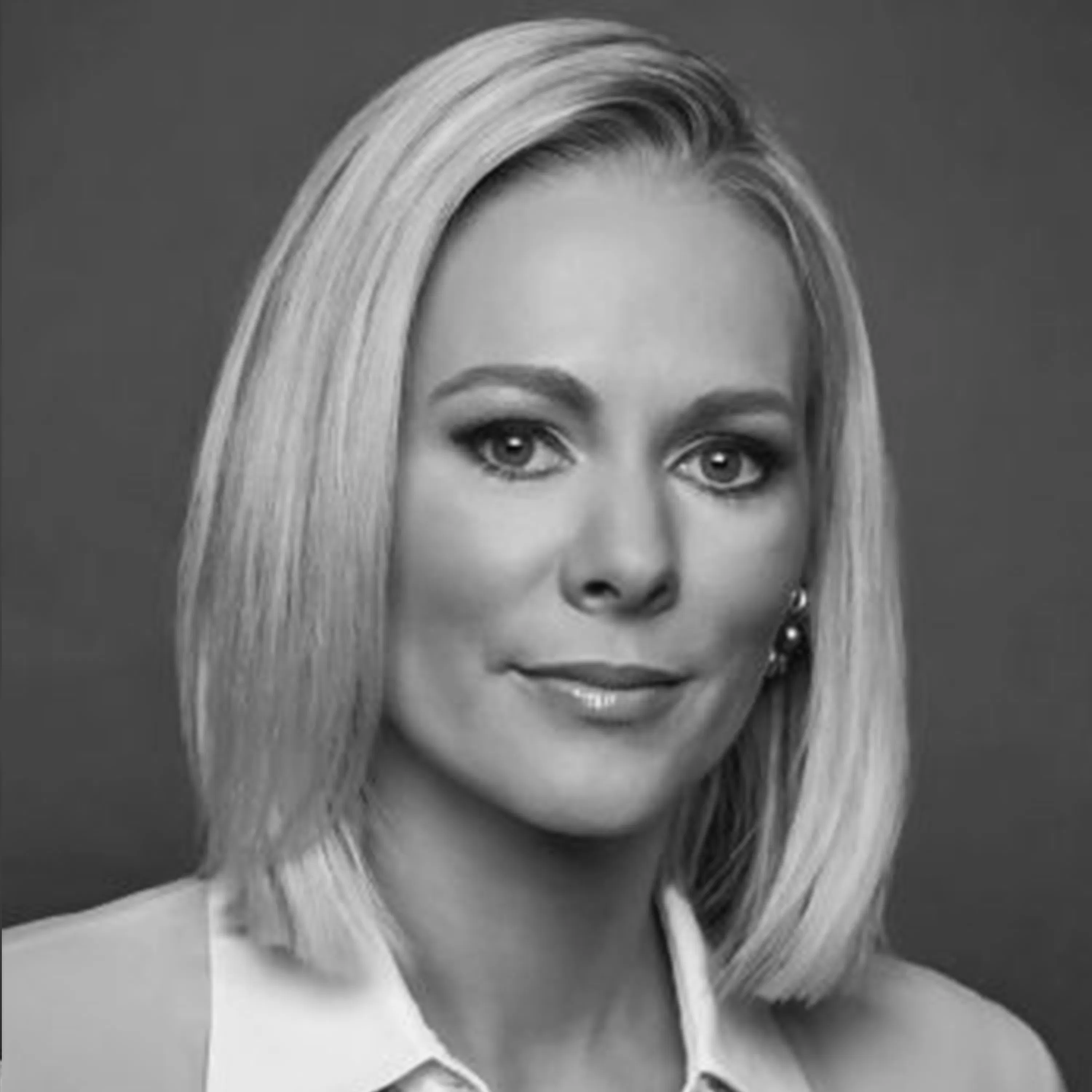
The David Frum Show
Was Herbert Hoover America’s Most Misunderstood President?
01:03:27
Margaret Hoover on Herbert Hoover’s life, presidency, legacy, and the renovation of his presidential library. Plus: Trump’s dropped Reflecting Pool indictment and The Spy Who Came in From the Cold by John le Carré
Loading summary
Transcript115 lines
- [00:02]
David Frum
A few months ago, I invited Atlantic staff writer Charlie Warzel onto the David Frum Show. As podcast hosts. We talked about the pressures and temptations of the medium. Outrage often gets rewarded. Nuance does not. Charlie doesn't take that bait. On his show Galaxy Brain, he covers the ways technology is changing how we think and how we live. Not just the obvious stuff, but the subtle ways it shapes what we believe, how we talk to each other, how we see ourselves and our neighbors. If you've ever wondered how smart people end up believing implausible things online, Galaxy Brain is worth your time. It's thoughtful, surprising, and a little unsettling in the very best way. Find it wherever you listen or watch.
- [00:50]
Julie Beck
Logging off Rebuilding our attention spans Trading
- [00:53]
Natalie Brennan
in smartphones for dumb phones why are
- [00:56]
Julie Beck
people trying to get off their screens, and what are they really after?
- [00:59]
Natalie Brennan
I'm Natalie Brennan, a producer at the Atlantic.
- [01:02]
Julie Beck
And I'm Julie Beck, a staff writer at the at.
- [01:04]
Natalie Brennan
This season we're exploring the often fraught, always changing relationship people have with technology
- [01:10]
Julie Beck
and examining the ways our devices affect our connection with one another.
- [01:14]
Natalie Brennan
New episodes of how to Touch Grass come out every Monday.
- [01:18]
Julie Beck
Subscribe wherever you get your podcasts.
- [01:33]
David Frum
Hello and welcome to the David Frum Show. I'm David Frum, a staff writer at the Atlantic. My guest this week will be Margaret Hoover, host of the TV program Firing Line and, very relevantly for today's discussion, great granddaughter of President Herbert Hoover. This week's book will be the Spy who Came in from the Cold, a classic from 1963 of espionage literature by John Lecarre. But before either the dialogue with Margaret Hoover or the book discussion, I want to open with some thoughts that build from the news that the Department of Justice has at last dropped its indictment of David Hearn, the US Olympian who was absurdly and falsely charged with vandalizing the Reflecting Pool at the Lincoln Memorial. The United States Constitution has a guarantee
- [02:19]
of a fair trial.
- [02:20]
The United States Supreme Court has long interpreted this guarantee to mean that when the Department of Justice discovers exculpatory evidence against an accused, that is evidence that proves that the accused is falsely accused, it must immediately drop the case or at least bring the information to the notice of the defendant. The Department of Justice in this case is claiming that while they indicted David Hearn on July 2, it took them until July 31 to find out that no, the damage at the reflecting pool was due to shoddy work by the no bid contractor selected by President Trump and not by the three time Olympian canoeist. Now you knew from the first instant
- [02:55]
that the charge is false.
- [02:57]
And I knew the first, the first instance of the charge is false. But the Department of Justice wants us to believe that it took them a month to figure it out, that they didn't have the basis to bring these charges, and they therefore were not acting outside their duty, but were behaving perfectly conscientiously and letting somebody hang for a month under threat of a 10 year prison sentence. The question for all of us is, what are we to do with this information now that we have now? You might say David Hearn is not one of the worst injustices of the presidency of Donald Trump. I mean, he's walking away from this and he may be able to recover his legal fees and other costs by some kind of civil action against the US Department of Justice. So it's not the worst, but in some way it's the most startling because it was so obviously true that there was nothing here to meet the eye, no basis for this prosecution. And we're all left to wonder, what do we do with this, with the lawyers who brought the case with the U.S. attorney's office? What do we do? And I want to suggest a way to think about this. Perhaps you've heard of the political science problem, the prisoner's dilemma. Imagine two people are arrested for a crime and held in separate rooms, unable to communicate. Each is given the same offer. If you betray your partner by testifying against your partner and the partner stays silent, you will go free and your partner gets a heavy sentence, say, 10 years. If you both stay silent, the evidence against you is thin and you each get a light sentence, say one year. If you each betray the other, you both get a moderate sentence, say five years each. Each prisoner has to decide without knowing what the other will do. Okay, and now the problem with this game is while both are hoping to get off scot free, they end up each of them getting a five year sentence because they didn't cooperate. Now, this is a profound problem in political science, and political science have been wrestling with it. A political scientist named Robert Axelrod proposed to solve the problem once and for all by inviting academics from all over the world to write suggestions that he would model on a computer game. The winner was a Toronto political scientist named Anatole Rappenport. And he designed a solution called Tit for Tat. And we are getting back to the Trump administration. But this simple story has a lot of richness for what is ahead. The TIT for Tat program designed by Anatol Rappenport, had an almost absurdly simple structure. Cooperate on the first move and after that do whatever your opponent did on their previous move. Cooperate if they cooperate, retaliate if they retaliated. Tit for tat one, not by beating any individual opponent head to head, but by creating incentives for the other opponent that if you behave wrongly, you there will be retaliation. But if you resume cooperation, we're happy to rejoin you with a cooperation of our own. In a game with two players play round after round of around against each other, this threat of retaliation from bad conduct and cooperation for good conduct proved extremely powerful. Now this, I think is very relevant to American politics. We have right now a game with multi rounds between two parties, one of which has, over the decade of the Trump experience, but especially since January of 2025, broken every rule of the game, including the rule you don't prosecute people who are innocent because the President told you to do it. Now, there is going to be a lot of impetus as power balance in Washington, maybe changes in November of 2026, maybe changes in a bigger way in November 2028, to let bygones be bygones and to let the party that broke the rules get away with it in the name of turning the page and going on to the future. The suggestion of the tit for tat program is this is not going to lead to better outcomes. The only way to get back to a stable political situation in the future is for those who broke the rules when it was their turn to pay a price for breaking the rules so that everyone understands tit for tat. You do this, we do that, you break the rules, you will suffer, there will be consequences. Maybe not perfect consequences, maybe not even exactly justice. Justice is a very hard thing to achieve. But some understanding that the rule breaking that has been in place since January 2025 comes at a future cost. If that cost is not in some way imposed by those in a position to impose it, the whole system will break down into ever worse spirals of defection, betrayal, violation of norms. That's the challenge ahead. I think there are a lot of people, especially on the Democratic left, who think the answer to the Trump problem is to create a better and fairer society so that Donald Trump will never reappear. You know, building a better or fairer society is a big agenda and it may not work. And who knows what a better and a fairer society is anyway by saying for those people who broke rules, clear rules, like don't prosecute the innocent, there will be consequences. Keep that in mind. It won't be forgotten. It will be retaliated against. I think that may be the first step on the path to wisdom. Oh, one last thing. The David Fromm show will be taking a two week break on August 12th and August 19th. No shows on those two, those two days resuming thereafter for the later part of August and early September. And now, my dialogue with Margaret Hoover. But first, a quick break.
- [08:05]
A few months ago, I invited Atlantic staff writer Charlie Warzel onto the David Frum show as podcast hosts. We talked about the pressures and temptations of the medium. Outrage often gets rewarded. Nuance does not. Charlie doesn't take that bait. On his show Galaxy Brain, he covers the ways technology is changing how we think and how we live. Not just the obvious stuff, but the subtle ways it shapes what we believe, how we talk to each other, how we see ourselves and our neighbors. If you've ever wondered how smart people end up believing implausible things online, Galaxy Brain is worth your time. It's thoughtful, surprising, and a little unsettling in the very best way. Find it wherever you listen, wherever or watch.
- [08:53]
Julie Beck
Logging off, Rebuilding our attention spans Trading
- [08:56]
Natalie Brennan
in smartphones for dumb phones why are
- [08:59]
Julie Beck
people trying to get off their screens and what are they really after?
- [09:02]
Natalie Brennan
I'm Natalie Brennan, a producer at the Atlantic.
- [09:05]
Julie Beck
And I'm Julie Beck, a staff writer at the Atlantic.
- [09:07]
Natalie Brennan
This season we're exploring the often fraught, always changing relationship people have with technology
- [09:13]
Julie Beck
and examining the ways our devices affect our connection with one another.
- [09:17]
Natalie Brennan
New episodes of how to Touch Grass come out every Monday.
- [09:21]
Julie Beck
Subscribe wherever you get your podcasts.
- [09:36]
David Frum
Margaret Hoover hosts Firing Line with Margaret Hoover, which she launched on PBS in 2018. I had the honor of appearing on season four of that show alongside my friend Ann Applebaum, as I had appeared on its predecessor program with William Buckley back in the 1990s, Margaret Hoover published her book American How a New Generation of Conservatives Can Save the Republican Party in 2011. In that book, she argued that Republicans should modernize on social and personal issues. Wise advice that was not taken. She worked for the George W. Bush administration as associate director of Intergovernmental affairs on Bush's 2004 re election campaign and is deputy finance director for Rudy Giuliani's Presidential Bed. She's also the great granddaughter of President Herbert Hoover and one of the driving forces behind the 20 month renovation and restoration of the Herbert Hoover Presidential Library, which will reopen its public galleries Aug. 6, the day after this program posts online. And Margaret, welcome. I want to talk a little bit about that library restoration and your important role in driving it. Now, this may seem to some viewers and listeners a kind of off the beaten path issue, but one of the emerging scandals of the Trump administration is Donald Trump's break from the presidential library system. Fighting a legal battle to reassert for the first time in half a century, personal presidential ownership of his presidential papers. So he can not the National Archives, but he personally can offer access to them or refuse access according to whether people meet his favor or don't meet his favorite, maybe even according to whether they pay a fee. I'll say one more thing about this before talking about Herbert Hoover's innovations in the system. The modern presidential library system started with a scandal almost exactly a century ago. President Warren Harding died unexpectedly in the summer of 1923. At the time, he was very popular, but his widow Florence, the real brains of the operation, the Harding household, knew that tremendous scandals, both financial and sexual, were about to break upon the legacy of Warren Harding. And so she tried to destroy many of his papers. She was not successful. She was thwarted by some of President Harding's staffers, but she did a lot of damage and important things were lost to history. And she was able to do that because these records were at that time considered presidential private property. The system became public, in trenches. And Herbert Hoover is the beginning of the modern presidential library system. And Margaret, let's talk about now about what you have done to bring that library back into the, into the modern age and to reassert the example that presidential papers belong to the people of the United States, not to the President himself.
- [12:10]
Margaret Hoover
Well, I mean that's the entire premise. You've summarized it so clearly. And look, there are 16 official presidential libraries in the National Archives and Record Administration. And the reason Herbert Hoover, along with Harry Truman in conjunction, sort of began to sort of accepted funds for a library from the federal government was particularly because Hoover had felt and always felt that the gifts that were given to him when he was President of the United States and the papers that consisted of the operations of the presidency were the, the possession of the American people. Prior to the Presidential Records Act, Hoover had actually collected all of his and had them on display at the Hoover Institution at Stanford University, a public policy think tank that he had invented in 1919 at the end of World War I, because nobody collecting the documents from the Treaty of Versailles and he thought they would be rather important for the future. But, but that said, there is this premise that Hoover believed deeply and that every president until now, with perhaps the exception of Nixon, believed that these papers, they belong to The American people because the institution of the presidency is only bestowed on individuals because of the faith of the American people and thus they belong to the American people.
- [13:30]
David Frum
Let's retrace some of this, this history so we can understand what you have accomplished. The trad tradition through the 18th and 19th century and into the 20th was that presidential papers were the private property of the President. And this theory made a kind of intuitive sense in the age of quill pens. I mean many of the presidential papers were in the President's own handwriting or if not his handwriting, the handwriting of secretaries whom he paid for out of his own personal presidential allowance. So the President would say this work is mine. There aren't that many papers because they are written by hand and I'm taking them back with me and I will do with them what I will. Now many donated their papers to the
- [14:03]
Margaret Hoover
Library of Congress and many also donated them to universities that they were in associated with. Thomas Jefferson's were at the University of Virginia. George Washington donated his. The. There's a, there's a long tradition of universities holding these papers and I do think there was a sense in the amongst the founding that the papers were part of establishing a precedent for government for a self governing republic. And so they, they ought to be on display. And I mean private matters are private matters, but any matter that the President assumes in the context of his responsibility to the people of the United States and in the context of leading the country, there was a really strong sense of responsibility towards the American people so they could establish precedents. And that has been the case I think until the 20th century.
- [14:42]
David Frum
As you just said, Herbert Hoover was a great collector of papers not only from the Versailles Conference but from his famine relief work in Belgium and his work in the Russian Revolution. I don't think people are always aware of the pre presidential career of Herbert Hoover and its extraordinary impact. And one could argue that if Hoover had never become president, he might be an even more famous person. There's no question he'd be there with George Marshall among the greatest Americans of the 20th century.
- [15:10]
So tell us a little bit about
- [15:11]
Herbert Hoover's pre presidential career.
- [15:14]
Margaret Hoover
I would suggest he still is one of the greatest Americans of the 20th century. And I think the full story hasn't, I think the dust hasn't settled in terms of history really reckoning with Hoover's, the scope of Hoover's full legacy.
- [15:27]
David Frum
Take the career up to 1928.
- [15:29]
Margaret Hoover
Well, Herbert Hoover, first of all his father died when he was six years old. He was a blacksmith in a Small frontier town in 1873 in West Branch. 74 in West Branch, Iowa. His mother was a Quaker minister, which is a bit of a oxymoron because ministers didn't really exist in the Quaker tradition except for that she was so powerful of a speaker and an evangelist of the Word of God that she was on a speaking circuit in sort of the. The central part of Iowa.
- [15:57]
David Frum
And his father, she was a Canadian by origin. It needs to be.
- [16:01]
Margaret Hoover
She was a Canadian. Only David from would point that out. And also Herbert Hoover's wife, Lou Henry Hoover also is descendant from Canadian Quakers. So there is a good representation of Canadians in the Hoover family. I'm so glad you pointed that out. I would expect nothing less her. The mother died when he was nine, leaving him orphaned after his father had died when he was 6. He was sent to live with actually Native American Osage tribes in Oklahoma for a period of time and then ultimately adopted by an estranged uncle in Oregon who raised him with an incredibly strong Quaker work ethic and not much tlc. And Hoover stumbled upon an opportunity to enroll in a new university that was started by Leland Stanford in California. He was in fact the first student to matriculate into Stanford University because he had to get there early for classes that would then qualify him to be a student there. His formal education stopped when he was 14 and was essentially an autodidact until he got to Stanford. He graduated with a degree in geology. He met his wife, Lou Henry Hoover there, who was the first woman to graduate with a degree in the hard sciences from Stanford. But started in the middle of an economic downturn. And so he shoveled ore in a mine for. For $2 a week in the graveyard shift in the Sierra Nevadas until he had an opportunity to work for an English mining firm to explore properties in Western Australia. And so in the Outback. Outback, Outback outside of Perth, he happened upon what ultimately became the most productive gold mine for the next 50 to 75 years in Western Australia. It is currently still functioning. It is a open pit mine that can be seen from the moon. Anyway, this really his innovations in terms of new technologies in mining and efficiencies that he created brought him under the sort of esteem of his bosses in London, which was the capital of mining finance. And he cabled a new marriage proposal to his wife. Lou Henry Hoover goes to California, marries her and they take off to China where they are then overseeing additional properties by their English investors in China, where they are caught in the beginning of the Boxer Rebellion. Ultimately they're Part of a group of 137 foreigners who are kicked out of China. They're the last of the foreign encampments. They're rescued in a German mailboat and ultimately spend the next decade or so of their lives circumnavigating the globe on steamship, exploring and investing in mining properties all over Southeast Asia, Africa, Russia, literally all over the world. He ultimately leaves the firm, sets up his own consulting establishment and publishes his first book called the Principles of Mining, which is still in print. And becomes this sort of technologist in this new age of sort of mining and materials and metallurgy, which really is the. The new tech of its day. The one other thing I would say about this is that he spends so much time on steamships going to these different countries, interacting with the highest level of people in the countries, the leadership, the governance, the monarchies and also the laborers and the people and everyone in between. He observes, really this is the turn of the century. And he observes the tide of revolution sweeping the globe and begins to develop philosophies about what kinds of governments are workable, don't work. He has this practical experiment or observation of political science practically applied. And he notices the wave of isms that are sweeping the globe, the Bolshevism, Marxism, Leninism, Fascism. And begins to develop a theory about why his life has been possible as an orphan of no means from the. This frontier town in the west has put him in a place to become a person of enormous influence and self made wealth at the turn of a century. And so he is really sort of this extraordinary figure at 40 years old. Stanford. He's Stanford University's most famous alum. He's invited onto the board of overseers. And in 1914, when war breaks out in Europe, he's heading home to Stanford, to California to ultimately buy a newspaper or do something that is a bit more public facing. And decides instead to stay in Europe and organize famine relief for the country of Belgium, which had been invaded and occupied by the Germans, blockaded by the English and faced imminent starvation.
- [20:50]
David Frum
Now this is the summer of 1914. He's 40 years old, he's a rich man. He's one of the best traveled Americans ever to date at that point. He's trapped in London by the First World War. And he has an idea and it needs to be stressed because this idea is now so familiar. No one's had this idea before that
- [21:07]
in a war it should be possible
- [21:09]
to deliver some kind of humanitarian relief to hungry civilians. Now this is a new idea. There have Always been displacements and refugees as long as there has been wars. The idea that you would organize mass feeding of displaced people, no one had
- [21:23]
ever thought that that was possible.
- [21:24]
And that's his first innovation in the realm of public policy. What if we fed people in a war zone, could that be done? And that's what he organizes beginning in the summer of 1914.
- [21:34]
Margaret Hoover
And when you think about it, because he had been moving materials around the world in the form of ore and coal and gold and minerals, he actually had a network of ships with which to send food around the world. And so he was actually uniquely positioned as a private citizen. Of course, US wasn't in the war yet, so he's an American living in London. But both sides decide that he can fairly administer food relief in the name of feeding the Belgians. Because remember, the Belgians were occupied by the Germans and the Germans took no responsibility for feeding the population they occupied. They were happy to let them starve to death. And it would have taken six to eight weeks. Belgium didn't have enough food inside it. It was a post industrial country. 80% of their food is imported because no food could get in. They really were going to starve. This is 8 million Belgians and then there were like 2 million French on the other side of the lines and they would have faced imminent starvation. And Hoover is able to get wheat, corn, flour from all over the world, from Argentina, from the United States, and he creates essentially this independent republic of relief. It's called the Commission for the Relief of Belgium. They have their own ships, they have their own flags, they have their own powers of immunity, they have their own powers to negotiate treaties, and they have their own set of volunteers and it's all run by volunteers. And essentially they bring all the food into Belgium, unloaded into ports, and then volunteers within Belgium distribute it under the watchful eye of the Germans and the watchful eye of the English, who don't want the Germans to be, they don't want to be feeding or allowing for the feeding of their enemy army. So it was a, this, this process, it took about 10 weeks to get underway and then it lasted until the end of the war. Hoover is the only individual, they say, at the Treaty of Versailles, I think John Maynard Keynes said he was the only individual to emerge from the ordeal in Paris with his reputation enhanced. I mean, it was just this extraordinary sort of endeavor that, that actually ultimately creates the model for international humanitarian food relief.
- [23:31]
David Frum
And he then repeats the experiment inside the area of what had been the Russian Empire during the Russian Revolution feeding millions of people in Russia and Ukraine.
- [23:39]
Margaret Hoover
He becomes so popular that Wilson realizes he has to be in his wartime captain and nobody knew if he was a Republican or a Democrat. But he actually, in this post of Wilson's government, persuades the U.S. congress to feed Bolshevik Russia because Russians are also about to starve. And so there were US outlays in the budget to feed communist Russia. Maxim Gorky said that he's the most impactful person in the 20th century at that time. Of course, he's been completely forgotten gotten in Russia since then. But it was this notion that America could feed her enemies and still sort of win a war, that food wouldn't be a weapon of war. And it was also the first time that Hoover or that the United States had really deployed humanitarian relief in a way that became like legitimate American soft power, even though, you know, it was voluntarily orchestrated at first. And then it became part of US policy. Like this. This is a charitable American volunteerism turned outward to the world and in what becomes this extraordinary display of soft power and then becomes one of sort of the arsenals of our diplomacy in the 20th century.
- [24:52]
David Frum
Let me add a point here, because one of the things we're having a little resurgence of communism in contemporary America, and one of the things communists are very bad at is telling the truth about history. One of the myths that communists and their apologize and their apologists promote is that the United States and the other countries tried to strangle the Bolshevik Revolution in its cradle, which would have been a good thing to do if it had been. If it had been done. It was not done because Russia under Lenin became a kind of de facto ally of the Germans who are still fighting. The Bolshevik Revolution is in the fall of 1917. They become in 1918, an important source of food and assistance to Germany still battling the Western Allies. And so the United States and others were suspicious. There were American troops and other troops as well inside on the territory of the Russian Empire. But through all of this, the Americans are feeding Russian people more and more of them. And this feeding will continue until past the war into about 1920, correct?
- [25:44]
Margaret Hoover
That's right. They did two rounds because there were basically two seasons in which Lenin requisitioned the grain. And so it had. There were two. Two full sort of harvest seasons that where they were entirely depleted of foodstuffs. And so Hoover fed them both times. You know, Hoover writes at this time, eventually this pamphlet, it's called American Individualism, from which I rift my own title, but which is, and the title is often misunderstood But. But he writes about the feeding of the Bolsheviks in that period, that as deadly and bloody as the. The revolution was, it was important for humanity to see for itself with its own eyes that the idea of Bolshevism and of communism, which is, you know, theoretically a beautiful idea, had proved itself in rivers of blood. And that Hoover believed this was as horrible as it was this necessary experiment for humanity to then learn from, because this idea, practically applied, simply doesn't work. It had proved itself in rivers of blood. And this is, you know, Hoover developing his own political philosophy about what made the US of his time so extraordinary. And the ideas of these other sort of new nations, nations that had swept off monarchies, czars, old forms of power, flirt with new sort of isms that had ultimately and were ultimately failing before all of our eyes. They forget that part. The modern Communists, I think, and the modern socialists.
- [27:18]
David Frum
So Hoover then returns to the United States after the Russian Revolution.
- [27:21]
Margaret Hoover
So he comes back and he's so popular. Harding puts him in the cabinet. Harding wins. Harding puts him in his cabinet. He has this, like, backwater agency called the Commerce Department, which didn't really do anything except for it was the beginning of the Roaring Twenties. And he thought, huh, well, there's these new frequencies, perhaps radio. We can grab radio and television. He's the first person to appear on television. His image is the first image of a face to be transmitted through television to television waves. Yes, you can see that. You can see the television itself at the Hoover Library. So don't. When they tell you that it's FDR who's the first president on television. Actually, Hoover was the first president on television, but he wasn't president at the time. Sorry. There's always little quibbles with FDR's legacy, little family pride. Yeah, but. Yeah, so he really. I mean, he standardizes industry, essentially, which allows for a housing base. Boom. Which allows. When I say standardizes industry, I mean we all take for granted that two by fours all come in the same dimensions. And we take for granted that bricks are all in the same dimensions and screws and nails and nuts and bolts and tires and bed sheets are kings and queens and twins and eggs come in half, dozens and dozens, and milk comes in liters and courts. All of that happened as Hoover was overseeing the Commerce Department. Not because he decided, here's how we're going to do it. But he believed, and this is part of his philosophy of government, that government had an important role in terms of convening industry and convening stakeholders and so there are parodies of all of the conferences that he hosted in the Commerce Department because he would invite the farmers and the dairy people and the distributors, all the different players to the table, and exhaustively, they would talk and then ultimately decide that, sure, we'll do half, dozens and dozens of eggs or whatever it was. And ultimately this created an efficiency because of the convening of the government and then the agreement of the stakeholders that allowed for massive booms in every era of industry throughout the 1920s.
- [29:17]
David Frum
My impression is the most enduring or the most significant thing he did as Secretary of Commerce was the United States, Louisiana, Texas, were hit by a devastating hurricane in the second Coolidge administration.
- [29:28]
Margaret Hoover
It was a flood.
- [29:30]
David Frum
A flood.
- [29:30]
Okay, my mistake.
- [29:31]
Margaret Hoover
It was 1927 Mississippi river flood.
- [29:34]
David Frum
Thank you. And just as no one had ever before had the idea that you could feed people in a war zone, no one had ever thought that it might be the responsibility of the federal government to organize aid to victims of a natural disaster. But that was another Hoover innovation.
- [29:46]
Margaret Hoover
Well, you know, Silent Cal, who is, of course, the sort of begrudging president. Begrudging of Hoover a bit. He was. Hoover had earned such a huge reputation, he was called the undersecretary, the secretary of Commerce and the undersecretary of everything else. And it was just sort of bothered the President, but the president really didn't believe there was, to your point, a role in emergency relief. But Hoover, who had really cut his teeth in emergency relief in Europe, thought, certainly there are things that can be done, because it was 50 million acres that was flooded, David. So it was, you know, it was the entire Mississippi River Valley all the way down through Missouri, Alabama, Louisiana, the entire portion of the South. I mean, like a third of the agricultural land in the South. And by the way, there's a lot of black Americans who are farming and growing cotton on those lands essentially are wiped out. But the thing about a flood is that, you know, it's coming. And so what he did is worked with local authorities to move people out of the rising part of the flood days before it would hit. So he would go to the local mayors, he would go to the governors and say, look, we're building a tent city over here. You have to take all your things and get out. And sometimes they would agree and sometimes they wouldn't. But as soon as word got out that this was happening up the river, people started listening. And essentially he organized these massive tent cities that had vaccines, food, water that were temporary, that people could then live in until they were able to go back and rebuild. And this was the largest, to your point, sort of weather event up until Katrina. And, you know, Hoover basically took charge, but then also deployed this sort of spirit of volunteerism. He got the American Red Cross involved in a way. The American Red Cross had never been involved at this large of a scale. And through massive telethons and fundraising drives, they didn't take a sen. Like, there was no congressional money deployed to help in the 1927, 27 Mississippi river flood. It was all voluntary donations distributed through the American Red Cross that helped helped the country rebuild in that time. And so Hoover had this very strong philosophy that if you asked Main street for what you needed, Main street would deliver tenfold. Because there was something about his experience with the American people, as opposed to peoples in sort of all over the world, and literally he had been in every other continent except Antarctica that really felt committed to communities they were part of. And he observed this in the American people. He observed a sort of deep embedded degree of philanthropy on a local level that he felt could be harnessed in a way unlike anywhere else.
- [32:25]
David Frum
And again, the papers on all of this must be a massive collection.
- [32:28]
Margaret Hoover
It is the largest private collection in the United States, one of the largest in the world. And by the way, it now doesn't just contain, you know, the czar's abdication papers and all of the materials from Russia that, by the way, the Bolsheviks would have destroyed, but it also contains enormously important materials from all over the world that deal with war, revolution and peace. So we have all of the secret papers from Saddam Hussein's Ba' Athist secret police, many of the papers from Adolf Hitler's top tier, sort of inner circle cabinet as they litigated the war. We have papers from the Republic of China, from the. The fleeing parties, the Guomindang, before they came to Taiwan to establish their own country, papers that for sure would have been destroyed by Mao's revolutionaries. So the idea, and Hoover really became his organizing principle in his later years, was anti communism, because he had taken the lessons to heart but realized that the world hadn't. And so these materials are, you know, incredibly diverse, long span, and really concentrate on the political history of the 20th
- [33:38]
David Frum
century, because Hoover lived to an enormous age.
- [33:41]
Margaret Hoover
He was 90 years old. So up until the point that Reagan died, he had been the oldest president. And up until the point where Jimmy Carter died, he had had the longest post presidency. And it's, you know, it's often commented that, you know, Jimmy Carter, who had this long and enormous post presidency Also very much modeled his post presidency on Hoover. There had never been a longer post presidency up until Hoover. And you know, so there's, there's this pre presidency part of Hoover's life, but then there's this post presidency part of Hoover's life that I'll just say, you know, we probably don't have time to get into. But Jared Cohen wrote a very good book called Life After Power that follows different post presidencies and his research, academic research on Hoover's humanitarian work in his post presidency, of course he's laying the foundation for, for the Marshall Plan. He's brought back into public life by Truman two days after Roosevelt dies. He's just is this elder statesman in his post presidency reorganizes the federal government.
- [34:35]
David Frum
He outlives John F. Kennedy.
- [34:37]
Margaret Hoover
He does outlive John F. Kennedy, sadly. And this is another piece of the narrative that's wrong. But Hoover and the Kennedys were quite close. There's wonderful. You can listen to these youtubes of John F. Kennedy calling Mr. President to let him know about the Cuban, the Bay of Pigs invasion, the Cuban Missile crisis. So it's. Joe Kennedy was a dear friend of Herbert Hoover's. There's actually a still living research assistant who worked with Herbert Hoover in the Waldorf Astoria when she was in her early 20s. She's 92 now, 93. And she tells the story of Joe Kennedy calling and thinking, oh God, what are you going to want to do talking to him? And instead he puts him through, he comes to visit. There's a very close, I think bond between the Kennedys and the Hoovers, mostly because both of them were exiled by FDR from the Democratic Party for some time. So they bonded in their, I think, distaste of, of fdr, among other things.
- [35:28]
David Frum
And Truman had the same distaste for fdr. And so did he did.
- [35:31]
Margaret Hoover
He did.
- [35:31]
David Frum
I'm going to double back to the presidency, but I want to. So the library is founded in what year?
- [35:36]
Margaret Hoover
1962. Hoover Harry Truman dedicates it in 1962. But Hoover actually according to acquired his birth cottage of 200 square foot cottage, two bedroom. Two. Two bedrooms. Sorry, two rooms in which he is born, his brother is born, his sister is born, which is right across from the blacksmith shop that his father works in and the Quaker meeting house that his mother ministers in. And this sighting is incredibly important to Hoover because it, it suggests a degree of possibility and opportunity that he believes exists. He believes he, his, his story could happen in nowhere else besides the United States. So this sighting is all there in West Branch, Iowa, which was again, then a town of 600 and now a town of 3,000. It's on the outskirts of Iowa City, Iowa, where the University of Iowa is. If you happen to be anywhere in the Midwest, it's a very easy day visit. And it tells the story of Hoover's life, of somebody who feeds the world, who. Who serves the world, but is ultimately from just a small, humble beginning. And look, here's the thing. There are a lot of presidential libraries now. There are 16 that are part of the National Archives and Record Administration system. They have evolved over time. I mean, it is really Eisenhower, fdr, Truman, and Hoovers who begin the. The process recognizing that. And Hoover had this innovation. He created a foundation, because ultimately he thought private philanthropy would have to sustain the library. Now, as we have moved forward, it has become abundantly clear that the federal government is not going to continue to sustain these temples to presidencies. I mean, if you go to the LBJ library in Austin, Texas, it is literally a temple to LBJ's presidency. And Hoover's is quite small. It is very humble. It represents his Quaker roots and the humility that he very much felt and embodied. Every president gets to tell their story the way they want to tell it. And ultimately, there has been this evolving question about to what degree should the taxpayers be on the hook for that? And so Reagan was really the first to create a massive foundation for his. I mean, he had, like, a $400 million endowment by the time he died. Nancy continued raising to endow that presidential library, and the Bushes and then the Clintons, and then the Bushes again. And each president has sort of evolved the way they both present their story and the way they fund the continuing operations of their presidential library. But it is the first four presidential libraries, Eisenhower, fdr, Hoover, and Truman, that really created a template for how these other ones should improve upon it. And for those four presidents who. Who, if they're lucky, have completely obsessed descendants who want to continue to tell their story, but most don't. And it's a really hard thing to go about and raise money for a presidential library for dead presidents. I mean, the Obamas have billions of dollars in a huge endowment, and they will have the benefit of young daughters to continue to raise money and support the operations for many, many years, as do the Bushes and as did the Clintons. But when you get down to, you know, a great granddaughter who's, you know, four generations down, who never met the president that she's obsessed with, not obsessed with, but like who, who quite inspires me. Like his presence is quite palpable and was quite palpable in my upbringing because it was such a sort of foundational pillar in, in terms of growing up in the family I grew up in. But, but I also am unburdened by a sense of, I don't, my identity being tied to it. I've really chosen it because I'm quite passionate about Hoover's legacy. I really want a fair accounting of not just his presidency, but his life in the fullness of his contributions, which we have not yet seen, but we continue to near get closer to every year. And so it's a passion project for me and frankly we can get to the presidency. But I think the 800 pound gorilla in the Hoover story is the Depression and it continues to cast a long shadow. And, and I continue to believe that as people take more into account what was known about modern macroeconomics in the 1920s and the 1930s and the 1940s, nobody really knew what to do. And Hoover did the best he could and probably better than anyone else.
- [39:58]
David Frum
Well, now let's focus on the part of the story that people think they know and that makes the negative sense. So when President Trump explained why he was making disadvantageous peace he made in the Persian Gulf, he said, I don't want to be Herbert, Herbert Hoover, because he remembers Herbert Hoover as being associated
- [40:12]
Margaret Hoover
with economic hard times.
- [40:15]
David Frum
With economic hard times. And America had had a very severe depression in the 1890s, but there weren't very good records and numbers in the 80s, so we don't exactly know whether the 1930s are worse than the 1890s. By the 1930s we're beginning to have statistics. We know what the unemployment rate is and of course it's on the edge of living memory. So tell us your understanding of the presidency and how to blame Hoover was or wasn't for the events of the Great Depression. And we may have slightly different views
- [40:40]
Margaret Hoover
on this question, but by the way, and I would love to engage with your views on them, David, because you're one of the smartest people I know. But also I've spent a lot of time thinking about it and you and I have spoken about this before and I've amended my thinking in some ways and in other ways I haven't. Hoover, of course, is nine months in. By the way, the book 1929 that Andrew Ross Sorkin just wrote about 1929 about the great Depression is really important contribution to the understanding of the Hoover narrative. Hoover is, comes to the comes to the presidency in March of 1929, and the stock market crashes in October of 1929. So he's there for roughly six months. You know, he was basically swept into the presidency almost unopposed. I mean, five states went against him. It wasn't that he was unopposed, but like, he wasn't unopposed essentially on the Republican side and on the Democratic side, it was. Was. It was a complete landslide. And he had. Hoover had been made into this kind of superman because he had fixed the Mississippi river flood. He had fixed. He had done the Belgian relief, he had done European food relief. He had done all these marvelous things. People just thought like, of course he should be the president. He had never been in elective office before. He's the first president literally to ascend to the presidency without ever being elected to public office. And he said, you know, my first.
- [41:54]
David Frum
Or serving in the military.
- [41:54]
Or serving in the military.
- [41:56]
Margaret Hoover
Or serving in the military. Exactly. My friends have made the American people think of me some sort of superman. They expect the impossible of me. And should there arise in a land of conditions in which the political machinery is unable to cope, I will be the one to suffer. Like, he knew his reputation was too outsized and too big to meet a moment that a political circumstance couldn't meet. And the Great Depression, to be very clear, was that moment. It is the largest economic calamity in the history of the world, the second largest calamity in the history of the country after the Civil War. And if a quarter of Americans are out of work, that's like way more than a quarter, because only men are working. I mean, there's no downsizing what happened or minimizing how difficult a period that was. What is true is that, and this is like the main point, and you and I can disagree on this perhaps, but when we had the global financial crisis in 2008, Ben Bernanke was at the Fed and is largely credited with having used monetary policy to help stave off what ultimately became what became what could have become a Great Depression, another global Great Depression. And it is Ben Bernanke's PhD thesis from Princeton that centered entirely on what happened in 1929, 2030, 31, 32. To begin to understand and develop alternative theories about what happened, that the collapse of the economy and the banks had as much to do with monetary policy, though it was little understood as it did with fiscal policy. And nobody understood really anything about monetary policy. Very few people did. Keynes wasn't publishing until the 1990s, 1940s, about stimuluses and how to get us out of the war. Ultimately, I think historians and economists now believe that it was World War II that got us out of the war, not the new deal. FDR's own sort of kitchen cabinet. Ray Mosley in particular admits to the programs of the New Deal being essentially like throwing things against the wall to seeing what sticks. And so there's this narrative that maybe Hoover didn't cause it or maybe he did, but he sure didn't do anything about it. And the truth is nobody really knew what was happening. What we understand about modern macroeconomics we understand now because of exhaustive study of that period. And to be clear, the economy bottoms out again in 1937 worse than in 1932. And as you reveal, you simply can't look at the details and say, well, the New Deal got us out. If what happened in 1937 rivals 1932, what you have to say is everybody was trying their best. People were making mistakes. Hoover certainly made mistakes. I mean, there's conservatives begrudge him for raising taxes when they shouldn't have, for forcing wages to be lower. He tried to get industry to keep wages even and so sort of tampered with the free markets. Certainly there are mistakes that were made on, on Hoover's side. And yet, you know, it's hard to use a modern and contemporary context and knowledge to judge him from that at that time or even fdr, really.
- [45:11]
David Frum
Here's what I think is one of the most important lessons for living politicians from her Hoover's legacy. Supposing somebody got into a time machine right now with Ben Bernanke's thesis and everything that is known about exactly what is the right thing to do and traveled back to the fall of 1929 and said, President Hoover, here's the book from the 21st century of exactly everything you need to do to get everything right, which includes, yeah, a much more stimulative monetary policy. It means getting rid of the tariffs that we're. Never mind not signing Smoot Hawley, but getting rid of the tariffs that your Republican predecessors passed in the 1920s, which sustains the completely false and inflated reputation on the right of Harding and Coolidge, who had as much to do with the Depression by their tariff policies as anybody else. Oh, and you have to go off gold when the British do in 1931, here's the book. And Hoover said, right, I accept the book, I'll read the book. I'll do everything you say. If he had done everything right, American economic recovery would have begun probably sometime in 1930. One, and that would've been great because you would have missed the terrible year 1932. German democracy might have been saved. No Hitler, no World War II, but Hitler would still have presided over the worst recession in living memory from 1929-31. That's in the cake already. And he would still have lost the election of 1932 even if he had done everything right. Well, one of which he did not do. And one of the things that. That is hard for a modern politician, sometimes you can do everything right and you don't get a political reward for it because the timing of doing the thing right comes too late to save your particular career.
- [46:42]
Margaret Hoover
That's certainly true. I mean, I think the economy actually was getting better in 1931. There was at least there were some signs that it was getting better in 1931. There were also. Andrew Ross Sorkin actually documents very clearly in his book that, you know, the biggest story in the New York Times in at the end of 1929 was not the stock market crash, it was Admiral Bode's discovery of the North Pole. You know, nobody realized sort of that there was going to be this cataclysmic effect. But what also did happen, and I think this is where Hoover really failed in his presidency and departed from his previous habits and patterns. Something happened with Hoover, and I've heard this both from his biographers and from my father and from this from my grandmother when she was alive. Hoover had been masterful at managing his image in the press really throughout his entire career. I mean, from the time he was in Western Australia, he was getting coverage of the successful mining operations in Australia to all through the good press he got through World War I. You know, the only man to emerge from the Odile in Paris with his reputation enhanced all through the Commerce Department years, he had very strong relationships with the media, the press, with reporters, journalists, and many people who helped tell his story or tell the story of what he was doing. And something happened in the presidency where he. And this is what my father has told me, but it is complimented by a biographer's accounts, is that he believed suddenly that the American presidency was such a revered position that his ambition should no longer drive the efforts to shape how it was seen. And so he stopped engaging in a robust communications effort. He just stopped. He didn't talk to the. I mean, he would do press conference or whatever, but he just didn't do all the sort of reputational management stuff that he had previously done. And so nobody was telling his side of the story. And Perhaps he might have done better in 1932 had he bothered to care for his reputation, in my view, for
- [48:44]
David Frum
whatever is worth the key moment, because this is where you have to deal with people on about this. The Wall Street Journal version of history. So the Wall Street Journal version of history is that what Hoover got wrong was raising taxes in 1931. And he said, okay, why did he
- [48:58]
do that, do that?
- [48:59]
Why did he raise taxes in 1931? And the answer is because the budget deficit was growing. And had the budget deficit continued to grow, the United States would have been put in a position, as Britain was, where it could not stay on the gold standard. And Hoover chose the go preserving the dollars linked to gold. Now, the Wall Street Journal won't talk with this because they believe in putting the United States back on the gold standard. And the idea that the gold standard and the tariffs are the vill. Are the villains of the Depression is a story they can sort of accept but sort of can't. So he's confronted in 1931, if you continue to run deficits, you will be forced off gold like Britain, and that will be a calamity.
- [49:35]
It won't.
- [49:35]
It's the solution.
- [49:36]
But you had to be a very
- [49:38]
unusual person or a very desperate person in 1931 to understand that being forced off gold was the solution, not the problem. And so he said, especially as a mining engineer, yeah, we can't be forced off gold, therefore we have to raise taxes in the middle of a depression to keep the link to the gold standard.
- [49:53]
You know what?
- [49:53]
Understood that.
- [49:54]
Margaret Hoover
I think you're right. I mean, I think the Wall Street Journal's version of history has changed a little bit over time. It used to blame it entirely on Smoot Hawley. Smoot Hawley, of course, was the Tariff Acts that, you know, everybody implored Hoover not to sign that. He really didn't want to sign, but he signed because he was trying to work with the Congress. But, you know, everybody says that was definitive. You know, global trade was what, like. Like less than 3% of GDP at the time?
- [50:15]
David Frum
No. Also, mood Holly come comes too late. People don't know. And this is very relevant to where we are today. The United States at the end of World War I, went back to high tariffs, choked off European exports, forced Europe into debt, made the monetary situation unstable, made the gold standard untenable in any kind of shock. And Coolidge and Harding are villains in the story, but in the Wall Street Journal version of history, they're heroes. And so we have to blame the Hoover tear off, not the Harding and Coolidge tariffs, and above all, never, never, never the gold standard, which for some crazy reason they keep on promoting into the 21st century.
- [50:49]
Margaret Hoover
Hoover had a quote later on. He said, once upon a time, my political opponents honored me as possessing the fabulous intellect and economic power by which I created a worldwide oppression all by myself.
- [51:00]
David Frum
Yes, I want to say one, one last thing as we head toward the end here about one of his great contributions and his contribution that is really under immense threat now, and this is, I think, quite an urgent problem. So as you said, because of the New Deal and the United. And the war, the United States creates this jumble of regulatory agencies in the 1930s and 40s with very clear, weak and mysterious constitutional basis, very murky limits on their powers that operate outside the constitutional system. And Hoover was one of the people who was really alarmed by this. And President Truman then gave him the mission. And when I say the Administrative Procedure act of 1946, I can feel eyes glaze over. But this is like, along with the Bill of Rights, this is maybe the most important law that you. It's certainly the most important law you've never heard of, and it's the one that is under direct attack now by the Trump administration. Talk a little bit about his contribution to bringing these agencies back under constitutional review after World War II.
- [51:58]
Margaret Hoover
Well, so, I mean, one of the things that another piece of the history is as soon as FDR is inaugurated, Hoover is alarmed by the New Deal, and he writes a book called the Challenge to Liberty. The Challenge to Liberty might be among Hoover's least read books. But again, like in the 1946 Administrative Procedures act, eyes glaze over roll. This is like Hoover's description of how the exploding of these federal agencies is going to impede and impose upon individual liberty. And so he calls it. He actually has his own word for it. He calls it regimentation. You know what he ultimately does when Truman brings him back in to feed the world after World War II and help establish a foundation, the Marshall Plan. He also, both through Truman and then through Eisenhower, is asked to assemble a review of how the executive branch and the federal government work. And he has essentially this huge committee, like what's a congressionally mandated committee, that reviews the executive agencies, reviews their authority, and then makes recommendations to Congress of which 80 to 90% of them are passed into law that sort of are intended to bring efficiencies and accountability to the federal government that had exploded previously. And then Eisenhower brings them back in. So this is called the Hoover Commission. I mean, it had its own. It had its own title, but like, it is sort of known as the Hoover Commission, the first Hoover Commission and then the second Hoover Commission. And one of the things Hoover was known for was his ability to operate highly massively scaled operations in a highly efficient way. And so it was this idea of bringing his abilities at efficiencies to, to the federal government.
- [53:41]
David Frum
And this is maybe the point of alarm to end on. So Trump administration is arguing, doing that every administrative agency is a pure expression
- [53:48]
of the will of the President.
- [53:49]
The president can give an order to the Food and Drug Administration, to the Federal Trade Commission, to any agency, even the Federal Reserve, and they have to carry it out just as much as if they are just as a member of the military, that his order is absolute and plenary over the entire administrative aspect of the government. And this was a vision that Americans had that the 1930s and 40s, from which they retreated in fear and terror and corrected very much under Hoover's leadership with laws that said the administrative apparatus of the federal government must be bound by law. It is not a pure expression of the President's will. And this is every day we're having battles with the Trump administration of is it presidential will that governs the country or is it the law? And you can feel the ghost of Herbert Hoover reminding us of his achievements after his presidency.
- [54:38]
Margaret Hoover
I think that's right, because the point is that one can have professionals in the federal government that are intended to execute the operations of the executive branch and the federal government despite the person who is in the office. And if you don't, then what you're doing is reverting to a 19th century system of spoils, where political appointees are rewarded for their loyalty and placed in positions of power where they can take advantage of the trust placed in the president by the American people to their own ends. This is not the sort of fair administration of the government that is to serve all of us as equally as possible. And it is true. It's an affront, actually, on the notion that the government is there to operate very specific tasks on behalf of all of us who need it rather equally, rather than through privilege or patronage or association with power.
- [55:43]
David Frum
Margaret, thank you. So, I know, speaking of family, you have taken time away from your family on holiday to join me today, and
- [55:48]
I'm very grateful for that.
- [55:49]
I hope anyone who hears your voice and is anywhere in the vicinity of the great state of Iowa will make a special trip to see what you have accomplished with the renewal of the Herbert Hoover Library. Thank you so much for joining me today.
- [55:59]
Margaret Hoover
You're so kind to have me. David, it is a great privilege and honor to be on with you.
- [56:04]
David Frum
Bye. Bye.
- [56:05]
Margaret Hoover
Bye.
- [56:13]
David Frum
A few months ago, I invited Atlantic staff writer Charlie Warzel onto the David Frum Show. As podcast hosts, we talked about the pressures and temptations of the medium. Outrage often gets rewarded. Nuance does not. Charlie doesn't take that bait. On his show, Galaxy Brain, he covers the ways technology is changing how we think and how we live. Not just the obvious stuff, but the subtle ways it shapes what we believe, how we talk to each other, how we see ourselves and our neighbors. If you've ever wondered how smart people end up believing in implausible things online, Galaxy Brain is worth your time. It's thoughtful, surprising, and a little unsettling in the very best way. Find it wherever you listen or watch.
- [57:01]
Julie Beck
Logging off, Rebuilding our attention spans.
- [57:04]
Natalie Brennan
Trading in smartphones for dumb phones.
- [57:06]
Julie Beck
Why are people trying to get off their screens? And what are they really after?
- [57:10]
Natalie Brennan
I'm Natalie Brennan, a producer producer at the Atlantic.
- [57:13]
Julie Beck
And I'm Julie Beck, a staff writer at the Atlantic.
- [57:15]
Natalie Brennan
This season we're exploring the often fraught, always changing relationship people have with technology
- [57:21]
Julie Beck
and examining the ways our devices affect our connection with one another.
- [57:25]
Natalie Brennan
New episodes of how to Touch Grass come out every Monday.
- [57:28]
Julie Beck
Subscribe wherever you get your podcasts.
- [57:32]
David Frum
Thanks so much to Margaret Hoover for joining me today on the David Frum Show. As mentioned at the top of the program, my book this week is a classic of espionage literature, the Spy who Came in from the cold, published in 1963 by John LeCrae, John Lecrae being a pseudonym for an English writer named David Cornwell who had served as an officer in the English intelligence system in the 1950s. The novel the Spy Came in from the Cold is a kind of reply to the success of the James Bond novels. James Bond, written by Ian Fleming, offered a very glamorized view of the life of a spy. Full of excitement, danger, lavish expense accounts, and beautiful women. The Spy Came from the Cold is a much grimmer reality of betrayal and mutual betrayal. I won't summarize the plot. It's very complicated and very exciting. And if you haven't read it before, I urge you to read it now, and I will not dim your enjoyment except of this very morally complicated novel. I want to talk instead about the evolution of the spy novel as a form, how it came about, that this form was developed in the 20th century, and why we associate it so much with British writers, especially There are American spy thrillers, but they tend to emphasize either technology or, like Robert Ludlum's novels, a hero who is so powerful, so tough, so indestructible that he himself is more like Batman or Spider man or Superman than he is like a human secret agent. The British tradition on this Len Dyton, John Buckham, Eric Ambler, Ian Fleming and John Lecrae emphasizes very human people. Even James Bond, at least in the novels, does not have superpowers. If you shoot him, he will die. Why this particular attraction of British writers to the creation of this particular form? What is it about the spy novel that made it such an important form in the 20th century? I've been thinking about this as I wrestle with the Spy Came from the Cold. I see two great themes in these books and others like them. The first is that spy novels are novels ultimately about bureaucracy. They are a person in a government office doing a government job, dealing with expense accounts which figure large in the world work of John Le Carre, dealing with all the drabness and meanness of government offices, especially in the pinched years after World War II, and trying to do achieve things for their fellow countrymen against the background of this bureaucracy. And it's difficult and it raises very complicated moral choices. At one point, the British protagonist of the Spy who Came in from the Pole is confronted by an East German counterpart who asks him, why do you do it? What do you believe in? And he's a little taken aback by the question. The real answer is a kind of personal. Personal commitment and personal vendetta. But he, under the circumstances of the question, he can't answer. And the East German spy goes on to explain. He's a Marxist. He thinks it's perfectly valid to sacrifice one human life for the benefit of humanity or other human lives for the benefit of the collective. But Britain is nominally a Christian society where each life is sacred in itself. How do they justify sacrificing one life to save others? And that is the kind of moral dilemma of a bureaucratic system of the one versus the mass. I think haunted the generation that came through the Second World War and the early part of the Cold War, where they saw good people being sacrificed as individuals for some idea of the benefit of many others, and not quite able to answer what that benefit was and not being quite so sure that benefit was really there. The second theme that struck me as I pondered this is spy fiction is fiction about people who are secretly powerful. Not the American version. Again, it's about machines or superheroes. But the British novels are about people who look humdrum, ordinary, but in fact have these giant bureaucracies at their back. And this fantasy of secret power is something that seems especially appealing to a society like Great Britain that had been so powerful and was watching its power ebb through the 20th century and being displaced by a power with which they had some friendly relationship, the United States, but also some relationship of envy. I don't think it's entirely a coincidence that those American writers who in my opinion do excel at the spy fiction form, not again in the superhero Robert Ludlum way are Alan First Daniel Silva are both Jewish and are therefore in their own way marginal people in the way, just as the British are marginal to American power, the first and Silva have experiences that are at the margin of their own society. Spy fiction at its best can be morally challenging in a way that few others, few other forms really are. The particular moral dilemma in the Spy who Came in from the Cold and again, no plot spoilers here. If you haven't read it, I recommend it is a really heart rending one because the moral calculus that you see that is revealed by the end of the novel is makes a kind of sense, brutal sense, but a kind of sense. But the human costs of this calculus are extreme and painful and we are made to feel them and not allowed to escape them. That's something that it's easy to dismiss as you simply read the news and read about espionage as a product of something that reveals information and not see that behind all of these stories there are real human beings whose lives are compromised in one way or another. Thank you so much for watching the David Frum show this week. As I mentioned we are taking two weeks holiday. August 12th and August 19th are a two week break. We will be working but we will not necessarily be producing video content in that period. We will resume in the later part of August and early September. Thank you for watching the David Frum Show. Please as always, if you can share and subscribe the show so others find out about it. And as ever, the best way to support the work of this program is is by subscribing to the Atlantic that supports me and all of my colleagues. Again, thank you. See you soon on the David Fromm Show. Bye bye.
- [63:53]
This episode of the David Frum show
- [63:56]
was produced by Nathaniel Frum and edited by Andrea Valdez. It was engineered by Dave Grine.
- [64:04]
Our theme is by Andrew Edwards.
- [64:06]
Claudine Abayad is the Executive Producer of Atlantic Audio and Andrea Valdez is our Managing Editor.
- [64:15]
A few months ago I invited Atlantic staff writer Charlie Warzel onto the David Frum Show. As podcast hosts, we talked about the pressures and temptations of the medium. Outrage often gets rewarded. Nuance does not. Charlie doesn't take that bait. On his show Galaxy Brain, he covers the ways technology is changing how we think and how we live. Not just obvious stuff, but the subtle ways it shapes what we believe, how we talk to each other, how we see ourselves and our neighbors. If you've ever wondered how smart people end up believing implausible things online, Galaxy Brain is worth your time. It's thoughtful, surprising, and a little unsettling in the very best way. Find it wherever you listen or.