Loading summary
Transcript1 lines
- [00:01]
A
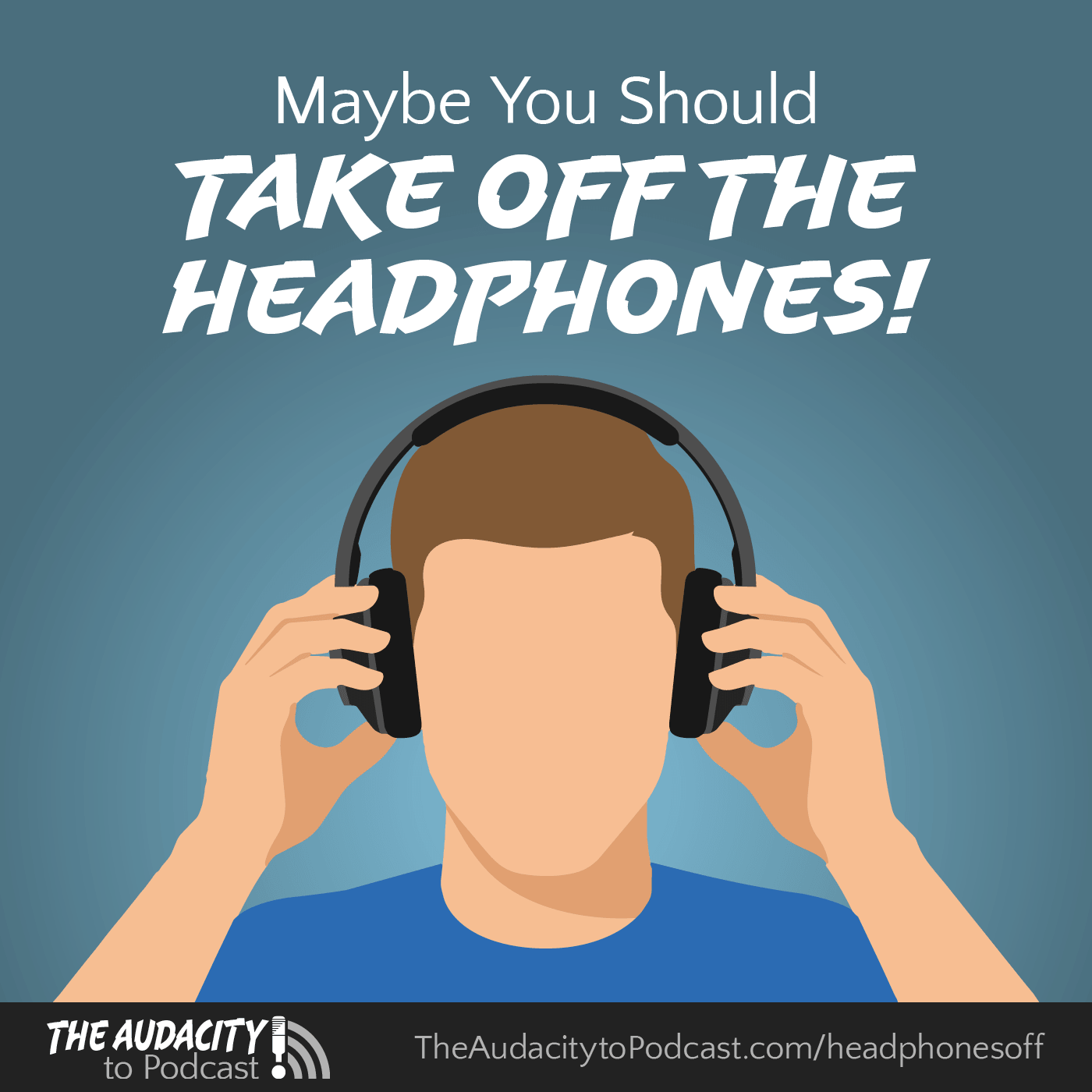
Listen to me very carefully. Put the headphones down and nobody gets hurt. Thank you for joining me for the Audacity to podcast. I'm Daniel J. Loris. Ah, headphones. The things that so many podcasters are obsessed with. Some people who should be wearing headphones are not. And the thing that some people. I talked about this in episode 400. Go back and listen to that. If you haven't heard it yet, what's a podcast anymore? But some people will think that what defines a podcast is if you see people wearing headphones while talking into a microphone. That is a podcast in their minds. But those extreme examples aside, headphones. This might seem like heresy for me to say this, but headphones are not as necessary as you may think. Others might be wanting to tar and feather me right now, but hear me out. I've got four points to share with you on why I think you should take off the headphones. You can follow along a simple tap or swipe away to view the notes for this episode or look at the chapters inside your podcast app. And those chapters are of course added with podchapters. Com. And by the way, if you are a fan of UTM parameters, and there are probably two or three of you out there who are like UTM parameters, tell me more. Well, now in POD Chapters, it can automatically add UTM parameters to your chapter links so that you can track how people are using your links when they visit your site, and whether they're coming from your chapters or which chapter they're coming from. And it can also really help with other kinds of attribution when you link to something from your chapters. That's over at podchapters. Com, I'd love for you to try it. And if you are a big fan of UTM parameters, you will love this update. That's at podchapters. Com. Try it free on your next episode. I made this for you. I made it for myself too. And this UTM parameters thing, it's something that I'd been adding manually myself. And I just realized, why don't I just build this in to POD Chapters? I built this. I could build this feature in that I want. That will save me even more time with adding my chapters. And so I did. Check it out Podchapters. Com Try it free on your next episode. I'd love for you to use POD Chapters. With that aside, you could follow the notes for this episode and see the outline in the chapters for this episode. So, number one, remove headphones from your artwork. You've probably heard me say this before, and maybe some others, but your podcast artwork does not need to have headphones, a microphone, an RSS icon, or an audio waveform or these other things that represent a podcast or the distribution method of podcasting unless you are talking about those things. My podcast is a podcast about podcasting, so it's okay to have a microphone and an RSS icon like I do built into my logo because I talk about those things. Dave Jackson also has that in his cover art and logo for School of Podcasting because he talks about those things. Your artwork should represent what your podcast is about, not how you are producing and distributing it. It's just like you don't see book covers with pictures of books on the book covers unless the book is a book about books, books or writing books. And how many times can I say books in the same paragraph? But you get the idea. Same thing with movies and TV shows. You don't see video cameras and film reels and things like that in the branding for the show. Unless the show or movie is about that kind of thing. Like it's about someone making a movie, the movie is about someone making a movie. That's very meta. And what else for a podcast about podcasting for podcasters who want to get better at podcasting? There are other exceptions to this though. For example, if your podcast is about old time radio, then maybe showing an old time radio microphone or headphones could be good because you are talking about that experience of listening to something. A similar thing for if your podcast is about music, then it would make sense for headphones to be in your artwork. They don't have to be, but it might make sense for them to be in your artwork and in your branding because your podcast is about that experience of listening to something. But for most podcasters, they're not talking about headphones or microphones or RSS feeds or mixers or audio waveforms, audio editing or that kind of stuff. So those cliche icons and imagery do not need to be in your artwork or especially in the branding for your podcast. So I would really challenge you if you have one of these cliche kinds of icons in your branding for your podcast, remove it. Remove those headphones from your artwork, from your logo, from your branding for your podcast, because they're really not necessary unless they communicate what your podcast is about. But otherwise you don't need to demonstrate your production and distribution methods visually in the branding of your content. Number two, Avoid headphones in your videos. I see this a lot and it confuses me why people think this actually looks good. In their videos, I see people with these video studios that look beautiful. Amazing backgrounds, amazing lighting, amazing high definition, or not even high definition, 4K video now, maybe even 60 frames per second. They're going all out on their video production to make everything look just perfect. Their microphone isn't even in the frame because they've got their expensive shotgun microphones or something else that's hiding the microphone so that it's not visible in the frame. And then they're wearing headphones. Why, why, why, why, why, why? You don't need to wear headphones when you're doing a solo podcast. Yes, when you're first starting out your podcast, it can be a really good idea to wear headphones so you can hear how you sound to the microphone. You can learn what kinds of sounds make their way into the microphone. You'll be more aware of certain things, like if you bump the microphone, you will hear that through your headphones. So you will know then that your audience will hear that too. But here's a little secret. I, for the Audacity to podcast, have not been wearing headphones for the last 60 or so episodes, maybe even more than that, because I realized they're completely unnecessary. I'm not listening to anything. I'm not playing any sound clips that I need to hear what sound clips I do play every now and then, like I had one in the last episode. I know what the sound clip is. I might listen to it separately. I don't need to play it into the podcast. It's edited in. I don't need to hear it. I don't need to hear my own voice right now. I'm familiar with how my microphone and how my setup works, that I know what kinds of sounds make their way into the microphone. I am pretty good at keeping a close proximity to my microphone and keeping my range close to the microphone and avoiding plosives most of the time. And I am aware of these things. So I don't need to be constantly monitoring them through headphones, let alone the big studio monitor headphones that you often see people wearing while they're recording their podcast or whatever kind of video that they're doing sometimes on YouTube. And that's just unnecessary. It's a distraction. And I think it even gets in the way of that personal connection that you can have with your audience. Because we don't have conversations wearing headphones except in podcasts. And like I mentioned earlier, some people think that what makes something a podcast is if you're wearing headphones while talking into a microphone. That's a podcast. Yeah, that's what makes it a podcast. If you're doing that. No, no, that is not what makes something a podcast. But that misunderstanding aside, the headphones can become a distraction. Especially they can be a distraction from your pretty or a handsome face. They cover up your ears and it's just not a way that people would normally see you. I think it's very unnecessary. So I think you should avoid headphones as much as possible when you're recording your videos because people don't need to see them. And most of the time you probably don't need to be wearing the headphones while you're recording your videos, especially your solo videos. Unless it's something like you want people to see you hearing something else or you're monitoring the sound in some way that your audience needs to know too. But that kind of goes back to the idea of what is your podcast actually about? Ray Ortega does a lot of stuff on his YouTube channel where he has talked about audio processing. And you'll see him wearing headphones while he's talking about certain things. And that makes total sense because he needs to hear it in studio quality through headphones, as he's describing it to you. That makes perfect sense to wear headphones for that. Or some people do reaction videos or reaction audio where they're talking about something or they need to be able to hear the sound clips that they're playing and talk about it during the sound clip, being able to pause it or something like that. And there are cases also where you have a co host or a guest that you should be wearing headphones so that the sound doesn't come through the speakers and make its way into your microphone, creating a kind of feedback or audio loop or some echo there. Headphones are good in those cases, but I do have a suggestion on those things coming to point four later on. But I really do think you should avoid headphones, especially in your videos. Many times headphones might not be necessary when you learn how your equipment works, when you learn good technique, you can take off the headphones as if they're training wheels and maybe you'll even start a site someday. Onlyears.com, which, by the way, I checked it before I mentioned this, at least right now, and I, I, oh, I hope so much in the future. This is not some dirty site in the future, but right now it's just a landing page where someone is trying to sell the domain. But maybe you can buy that domain and you can make it a place where then you have screenshots of podcasters without headphones and people can rate them on their ears. I don't know. They're weird people on the Internet. A weird site like that might be a huge success. I do not enjoy this idea. Maybe even forget I said it. But that aside, it's okay to not wear headphones while you're podcasting. I give you that permission if you need that. Permission number three, remove headphones from conversations. This one almost sounds more philosophical and less literal and physical, but it is still physical. Think of it like this. When you're sitting down to have a conversation with someone, a friend, a family member, a loved one, do you put on headphones? No. Unless there's some kind of hearing situation where you absolutely must put on headphones for some kind of reason. But those things aside, you don't put on headphones when you talk to your friends and loved ones. You just have a conversation, looking at each other, talking to each other, and no headphones. In fact, if you were wearing headphones when the conversation started, the conversation probably goes better if you take off the headphones. I think of a lot of movies and TV shows from the 90s where the teenager is in his room with his Walkman. For the kids, a Walkman was a device that held a cassette tape. Sorry. For the kids, a cassette tape was a thing that used to hold music and other kind of audio programs on it. And it was this reel of tape in this plastic casing. And you would buy these things and stick them in this thing that was made by Sony, and it was called a Walkman. That was the brand name of it. But everyone started calling OVL their portable cassette tape players, Walkmans, because that was the Google of the day, essentially, in the branding there. And they would listen to music through headphones. So back to the TV shows and such. You would see a teenager on, often in their room, listening to their music really loud from their Walkman through their headphones. And then their dad, their family members, a friend comes into the room and they take the headphones off. So what? So they can hear the person talking to them and they can have the conversation. There'd often be those little conflicts, too. They'd be like, take off the headphones and listen to me. That's baked into us because we were designed to hear people with our ears use, not through headphones. So if you are in person with the person that you're talking to, they are physically in front of you. I would say there's absolutely no reason for you to wear headphones, talking with them. There might be the few cases where you both need to be able to hear something else, like some other guest or co host that's remote, or an audio clip that you're playing, or a video that you're playing, that kind of thing. But for hearing each other, I think the conversation could actually go better if you take off the headphones. A couple of years ago, I believe it was Stephen Bartlett who talked about how he would monitor the levels of things in the air during conversations. And that would be a way of gauging how engaging the conversation was and how much energy there still was in the conversation. It was very interesting. I wonder how much of that is also caused by the stress of wearing headphones. Because, let's be honest, headphones are not comfortable. They might initially be comfortable, but for different people in different situations, they can be less comfortable. Consider, for example, a woman who's worked really hard to make her hair look great. I mean, some guys, too. Okay, someone who has made their hair look really great. What are the headphones going to do to that beautiful head of hair? They're going to mess it up. Or if the conversation goes kind of long, what starts to happen on people's heads as they're wearing headphones? Their heads start to sweat because of the headphones. There's also the ear fatigue, which can sometimes be caused simply by listening to yourself through headphones. I get that a lot, which is why you never see me in a recording wearing the normal studio monitor headphones. Because if I listen to myself while I'm talking wearing those studio headphones, it gives me literal headaches to hear myself speak. You might be thinking, oh, Daniel, your voice has been giving me headaches for years. That aside, maybe you should try listening to my voice without headphones. Maybe that'd help. But the headphones do give me headaches while I'm talking. So I do not like the big can headphones. I do have a suggestion for that. If you're similar to me in that sense, that'll be 0.4. But in conversations, that stress is adding stress to the conversation. The discomfort, the sweat, the weight of the headphones on someone, that fatigue on their ears, and all of that contributes to the nature of the conversation. And I think we're just not designed to have conversations like that. Yeah, some people can press through it, but wouldn't it be so much nicer to have a conversation without that distraction of the discomfort and without your guests or co host or maybe even you being distracted by thinking about how the headphones are messing with your hair, or how they're getting uncomfortable, or how you'd really like to adjust them. Here's something else. If you or your guest wear glasses, that creates a couple of other scenarios where the headphones can be uncomfortable because the headphones can be pressing on the frames of the glasses, pressing them in, causing even more discomfort that way. And depending on the material that the headphones are made out of, the padding around the headphones, they might even be squeaking with the micro movements of someone just breathing might cause all of these little squeaks and rubbing sounds in their ears, which can be really distracting and annoying. And that kind of tension can come out in the conversation. So if you're in the same physical space as your guest or co host, try removing the headphones from those conversations. I don't think they're necessary. Try to design your space that you can hear each other without wearing the headphones and see how the conversation feels different, how you feel different. And I think especially for people who aren't very familiar with podcasting, this might make it easier for them too, because yes, there's this idea of having the microphone in front of your face, which it doesn't have to be right in front of your face and blocking their vision. But if you can position a microphone in someone's peripheral vision where it's not as obvious to them, then they will eventually forget that it's there. Headphones. However, the longer you wear headphones, the more aware you will become that you are wearing headphones because they become less comfortable, you start sweating, maybe they start making weird noises, you start wanting to take off the headphones, but you were told you need to wear the headphones, just remove that. Remove that tension from your conversations. Remove headphones from your conversations. And number four, if you are in a situation where you really do truly need to wear headphones in some way, whether that's to hear a sound clip that you're playing, or to hear a guest or a co host, or even online meetings and such. And you need to be able to hear without the sound coming through speakers. Then try earbuds or in ear monitors instead. You will also see in ear monitors, abbreviated to iem in ear monitors. These are earbuds that instead of being big things that sit on the outside of your ears, surrounding your ears, or pressing in on your ears and sitting flat against your ears instead, these are sitting inside your ear canals, which, yes, does present different kinds of comfort considerations. But there are some ways to work around that. In general, the looser something is in the ears, the more comfortable it will be. You do have to be concerned about hygiene if you have guests coming and going. And wearing earbuds might not be a good idea there because of the ear bacteria. But that aside, for yourself or for your regular guests and co hosts, consider earbuds or in ear monitors instead of the big Can Studio headphones, you can still hear each other. And in fact, in some ways you might hear yourself and each other better because you have both what's coming through the earbuds as well as what your ears hear from around and outside of the earbuds. So for me, if I need to record with someone else, then I do need to wear headphones, but I don't wear headphones. I do have a pair of Sony MDR7506 headphones, but the only time I wear them is sometimes when I'm doing some editing. But if I'm recording a podcast with someone else, what I'm doing instead is wearing earbuds because then I hear my voice through the air around my ears instead of just through the rattling of my skull and whatever's in my earbuds. And. And I've noticed that sometimes if I'm wearing headphones or earbuds that completely isolate my ears from the surrounding sounds and I hear only what's coming through the earbuds, or mostly what's coming through the earbuds, I have to turn up my own volume a lot more to hear myself and override that feeling of hearing my voice through the bone conduction and the rattling of my skull. And then that makes my co host or my guest sound a lot louder than than they should, which can then bleed into the microphone or give me headaches. Or I might make mixing decisions based on how things sound to me in that moment and resulting in a bad sound in the audio. That's me and my ears and my skull. That might not be the case for you, but I found that earbuds can be a lot more comfortable when they have a more open design. My favorite for this is a little hack that I do. I've tried some different ear monitors. I haven't found any yet that I've liked. If you have some really good in ear monitors that do not have noise isolation to them that you would like to recommend, please reach out to me on x at the DanielJ. Lewis or send the feedback to podcastfeedback.com audacity you can send a voice message or write a message through that site. By the way, podcastfeedback.com audacity that's powered by Podgagement by the way. But I'd love to hear if you have some in ear monitors that you think would fit this particular need. But what I do, this little hack is I use Apple's EarPods, not AirPods, those are the wireless earbuds. I use their ear pods which are the wired ones and you can still find them in USB C or the TRRS 3.5 millimeter and plug them into other equipment. But I don't wear them just in the normal way. I flip them upside down and reverse them. So instead of the cord from the earbuds coming in front of me, the cord comes behind my head, connects at my neck level and it goes over the top of my ears and the earbuds are upside down. And having switched the left earbud to my right ear and the right earbud to my left ear, they fit pretty comfortably in my ears and they're loose enough that I can hear my voice from the air around my ears. I can hear other people that way too, but I can also hear what's coming through the earbuds. I don't have to jack up the volume really high so I don't get bad noise leak back into the microphone. And it's comfortable. I could do that for hours. And a whole lot better than wearing big studio headphones. It's more comfortable for me and I think it looks a lot better in video. It's a lot less noticeable now I'm bald, so I have no hair to cover it up. But if you have some hair that covers up your ears, then this could make the earbuds completely invisible without your even having to worry about getting flesh colored earbuds or something that's transparent or mostly transparent to try and make it invisible looking. You could just wear Apple EarPods upside down. Left earbud in the right ear, right earbud in left ear and see how that works for you. And then the cord goes behind your head instead of in front of your head so there's nothing dangling in front of you, nothing getting caught on the microphone, nothing that catches in your hands, it's behind you, it's more comfortable, you can hear. I think it works out really well. That's my little hack. And I have just not found in ear monitors that work as well for me as the Apple earpods do. And their sound quality is pretty good too because Apple worked really hard on making the sound quality good. And for the price I think they're so much better than $100 in ear monitors that I've tried. Plus they're a whole lot more comfortable too, and they're less visible. So think about removing the headphones from your artwork. Think about avoiding headphones in your videos. Think about removing headphones from conversations. And if you really need some headphones, try earbuds or in ear monitors. And if you have some IEMs that you really like and recommend that I try, if they're not too expensive, then please reach out to me on X at the Daniel J. Lewis or send your feedback through podcastfeedback.com audacity Before I go, thanks to Lyceum and Brian Insmener for streaming satoshis and sending some booster grams. I'll thank them more specifically in the next episode, but I wanted to give them a shout out right away. If you value the Audacity to podcast and the information I provide to you that helps you podcast better, then the best ways to support the podcast are through the audacitytopodcast.com giveback. Or if you want even more benefit for your own podcast, please try my own products and services. Podchapters.com helps you transcribe and chapter your podcast for higher engagement inseconds and Podgagement.com helps you track your goal Global ratings, reviews, related podcasts, networking opportunities Rankings now with search engine rankings for your podcast from Apple Podcasts. It's really cool how it works. Really thorough too. That's over@podgagement.com and podchapters.com and now that I've given you some of the guts and taught you some of the tools, it's time for you to maybe go take off the headphones and start and grow your own podcast for passion and profit. I'm Daniel J. Lewis from the audacitytopodcast.com thanks for listening.