← The Audio Long Read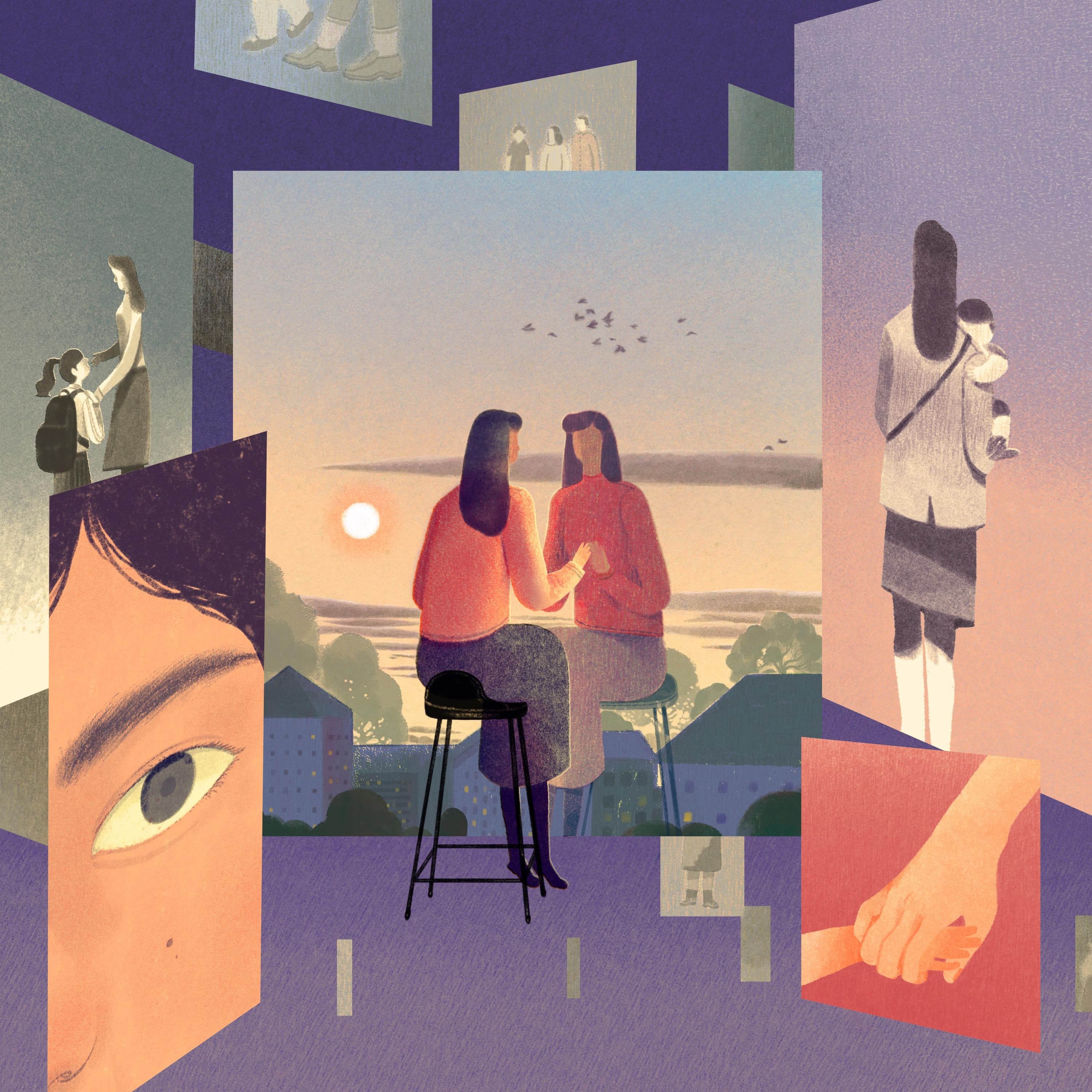
The Audio Long Read
Asian mothers, bad feelings: notes on an all-conquering stereotype
00:33:18
A certain image of the tiger mom – strict, cold and demanding – is ubiquitous in popular culture. Why? By Rebecca Liu. Read by Ginnia Cheng
Loading summary
Transcript11 lines
- [00:00]
A
This is the Guardian.
- [00:09]
B
A History of the United States in 100 Objects is a brand new podcast from 99% Invisible and BBC Studios. Each week we're looking at a different object from across American history with a unique story to tell about who we've been, what we've built, and what we've allowed ourselves to forget. Some of these objects are well known, many are not, but all of them carry the story of how we got to this moment. Find A History of the United States and 100 objects on the 99% invisible feed. Wherever you get your podcasts,
- [00:44]
A
This article contains some swearing.
- [00:47]
B
Welcome to the Guardian Long Read showcasing the best long form journalism covering culture,
- [00:52]
A
politics and new thinking.
- [00:54]
B
For the text version of this and
- [00:55]
A
all our long reads, go to theguardian.com longread. Asian mother's bad feelings notes on an all conquering stereotype by rebecca liu read by jinnia cheng some names have been changed. In January 2011, the English speaking world was introduced to a new kind of villain. She arrived in the form of a viral Wall Street Journal article with the headline why Chinese Mothers Are Superior. The author, a relatively unknown Yale law professor named Amy Chua, outlined her strict rules for her two daughters no sleepovers, play dates or school plays, and no complaining about not being in the school play either. They were expected to be the top students in all subjects at school except gym and drama. When her seven year old refused to play a song on the piano, Chua threatened her with no lunch, no dinner and no birthday parties for four years until she complied. Another time, after the same daughter misbehaved, Chua branded her garbage. The backlash was swift and vicious. Chua was called an abuser, a stereotype peddler, a shock jock. The article was an extract from her memoir, Battle Hymn of the Tiger Mother, and Chua did her best to explain that in the book she reckons with the limits of her parenting. But it was too late. The controversy had taken on a life of its own. Many Asian American writers responded by sharing their ambivalence or anger about having been raised in this way. I grew up with a tiger parent and all I got was this lousy psychological trauma, declared one such blog post. Suddenly, a ubiquitous but private dynamic was being held up for public debate. There were endless letters, op eds, blogs, tweets, Facebook posts. My grandparents in China, who are as removed from the American commentariat as one could possibly be, asked me about the American lady boasting about getting her kids into Harvard and giving Chinese people a bad name. Reading Chua's memoir recently, I was struck by its unapologetic and breezy tone, which feels like an artifact of its time. Writers today, keenly attuned to the risks of viral attention, are more cautious. Yet despite its singular infamy, Chua's book is part of a rich tradition of books and films from the east and Southeast Asian diaspora that examine complicated mother and daughter relationships. Two of the seminal Chinese American novels, Maxine Hong Kingston's the Woman Warrior and Amy Tan's the Joy Luck Club, are structured around conversations, real and imagined, between mother and daughter pairings. A seminal work of Chinese British nonfiction, Zheng Chang's Wild Swans tells the convulsive history of modern China through the lives of Chiang's mother and grandmother, and was followed by the memoir Fly Wild Swans, an intimate and pained love letter to the author's own mother. In these works, the mother has a way of emerging as the primordial wound, one to be constantly picked at, never healed, it continues in Cinema. The 2018 box office hit Crazy Rich Asians has at its heart not a tension between the main couple, but rather that between its Chinese American protagonist and her boyfriend's aloof Singaporean mother, played by Michelle Yeoh. Yeo is once again a difficult mother in the 2022 Oscar winning film Everything Everywhere all at Once, this time as a frazzled first generation immigrant to the US who literally runs to the ends of the earth to reconcile with her queer daughter. The same year Pixar released Turning Red, which follows a Chinese Canadian teenager running away from her overbearing mum. These mothers do not have the vaudeville villainy of Chua's tiger mother, and yet they too are often strict and difficult to please, cold and prone to bouts of explosive anger, inscrutable and marked by grief. For most of my childhood and adolescence, my mother was my antagonist, recalls the narrator in Ling Ma's widely lauded novel Severance. The British Chinese poet Sarah Howe's collection Four Tokens, inspired by her mother's life in Communist China, includes the Very funny A History of My Relationship with my mother in 23 arguments about the Laundry, I sought to illustrate to her that putting more than one towel in at once would not result in disaster, flood, famine. Not long ago I picked up Gish Zhen's new memoir novel Bad Bad Girl, which is inspired by her mother's childhood in war torn Shanghai. The title takes its name from the admonishment Zhen imagines her mother issuing to her from beyond the grave for writing so publicly about Private Grievances, a satirical cartoon about Asian American cinema describes the genre's themes in Six there's this mom, and She's Bad. Given her ubiquity, leaving out the mother figure can be a statement in its own right. In Cathy Park Hong's book Minor Feelings, Hong recalls a fellow poet once telling, have an Asian mother. She has to be interesting. Hong refuses to engage. I must defer. At least for now. I'd rather write about my friendship with Asian women. First, my mother would take over, breaching the walls of these essays until it is only her. Perhaps she has a point. In these stories, the mother has a way of growing impossibly large. She becomes the device through which questions of immigration, identity, and history are explored. It is in the conflict between the mother and daughter that we come to see the cultural clashes between east and West. These stories thrum with the pain of mutual unintelligibility between the first generation immigrant who has known hunger and suffering and the second generation child who craves love. The standoff seems intractable in sentimental Hollywood fare, these figures end up enjoying a cathartic reconciliation. In more highbrow works, the child reaches for some kind of resolution through their art, protected by the fact that the mother cannot understand English or has died. Over drinks in London one evening last summer, I mentioned to some old school friends that I was thinking of writing about the persistent trope of the Asian mother. Polite small talk was swiftly done away with, followed by two hours of impassioned discussion. Afterwards, I wanted to find a way into this subject that I was now beginning to see everywhere. The subject was too vast to be treated definitively, so I started closer to home. Taking a highly unscientific and piecemeal approach, I asked my friends if they could speak to me at greater length about their relationship with their mothers. It is true that no matter which continent they are from, mothers are the inexhaustible subject, the inevitable endpoint of a therapy session, the proverbial container of infinite grievances, the shortcut to understanding a person's idiosyncrasies and insecurities. But there is something about the Asian mother in popular culture that feels both overexposed and underdeveloped. What is behind this constant return to the mother figure in literature and cinematic and in our own lives? When we write about her flaws and failures and our disappointments and broken inheritances, what exactly are we looking at and what are we hoping to find? A necessary disclaimer not every Asian mother fits the stereotype, and not every Asian mother daughter relationship is complicated and fraught. Ours is An Age of Hedging My friend Min claims to have identified three types of mother child relationships. The first, which I don't understand, is people who are friends with their moms and tell their moms everything. The second group are children who have conflict with their parents, but they're normal conflicts. And then she says there's this third group where you have conflict, but it reaches far beyond the conflict and it's very hard to explain to somebody who's never experienced it. Min's mother, she told me, is able to make me feel worthless, useless, terrible, ungrateful, that she's wasted her life on you and you are the worst person in the world and you'll never amount to anything. Min and I went to a competitive international school in Hong Kong, the kind that attracts status conscious middle and upper class parents with high hopes for their children. To illustrate, one of my friends moms would regularly call another school mom to gossip about the grades of everyone in our year. It was rumored that they had a source on the inside, a Mandarin language teacher. Our teenage years were spent anxiously tracking the rise and fall of our competition. Any failures on our part were born alone in secret shame. By my late teens, I began to feel that something wasn't right. I had got the impression from American films and TV that your teenage years should be a time of self discovery, of making mistakes, figuring out who you are and doing keg stands on California beaches. But in my world, life wasn't about that. As one classmate opined in the year 13 common room, life was about survival. Study hard, excel in school and get a high paying job you don't enjoy so you can support the family you will need to have. Make sure to have plenty of children. It was up to our mothers to enforce these principles. Most of us grew up in households in which men earned the money while women were tasked with the childcare and care was often understood to mean preparing us for battle. In a brutally competitive world, excellence was demanded, but support was not always forthcoming. She never helped me in anything academic, Min said of her mother, but she expected that I'd get a Princeton acceptance letter. These high expectations came at a cost. She thought she had to be strict to ensure that we had the best education because that would set us up better in later life, said another friend, Leah, of her mother. That came with a lack of recognition that that kind of strictness would really just damage my sense of self worth. The fraught intimacy that develops between mother and child has a way of curdling into hatred. My mom and I are quite similar Lia recalled. So we would clash a lot growing up because we would bring out the absolute worst in each other. We still do. In Severance, Ma portrays the home as the site of an unhappy battle of wills. The narrator recalls of her, she was the one to punish me, sending me to kneel in the bathtub of the darkened bathroom, carrying my father's Casio watch with an alarm setting to account for when the time was up, the narrator continues, it was I who would kneel for even longer, going further and further, taking more punishment just to spite her. The effects of this kind of parenting on children have been often discussed. The pain, the lingering feelings of inadequacy, the longing for what could have been. After all, it is usually the children who write the books and the films about this experience. But how is it seen by the mothers themselves? An early vision of this article sought to interview my friends mothers, but this unraveled after interviews with friends established the many secrets they were still keeping from their parents. When I asked my friends about the backgrounds of their mothers, there were a wide range of answers but plenty of shared experiences. Most grew up at a time of great instability and poverty, and they too did not receive much warmth from their parents. I'm not sure if my mum can recall a single instance of her mother doing something good to her as a child, said Lia. Min's mother grew up in a deeply misogynist upper class family in mainland China. As the eldest daughter in the family, she was called to care for her siblings, particularly her younger brother, who was the golden boy of the family. By her mid-20s, she was married to a stranger, approved by her father. An emotion that emerged in many of these accounts was anger. Anger at missed life opportunities, anger at being expected to be mothers to their brothers, anger at being denied a divorce because it would look bad to the rest of the family. This anger, usually unarticulated given Confucian family ideals and traditional gender expectations, often ricocheted onto the person immediately around to receive it. The child Min's mother has real resentment for her life. She told me she went from her parents house to my dad's house and that's it. I don't think she made any real choices in her life. She would yell and be abusive to her kids. I think she did it to make herself feel better. If she's making you feel bad, then you would understand. Several of my friend's parents are haunted by missed opportunities. Some were unable to go to university as they grew up during China's Cultural Revolution. Severance concludes with a narrator recalling a time her mother wistfully imagined a different life for herself, one in which she had a career. These feelings of loss and missed opportunities stand at odds with the larger story of 20th century East Asia, which is often spoken of in tones of triumph, about how nations such as China, Singapore and South Korea transformed from war torn rural backwaters to become homes to gleaming megacities. But it has more often been men who have been encouraged to walk boldly into this shiny new world. In reality, as in fiction, the mothers are left to navigate the space between the past and future. They are the carriers of rapidly dissolving traditions and histories. They bear witness to the fruits of a new world that has no obvious place for them except in their roles as mothers. And so they have become a symbol of what has been lost. Many diasporic films and novels feature a Westernized protagonist visiting their motherland in an effort to discover themselves, a story that is often twinned with the reconciliation narrative with a mother figure. In the Hollywood comedy Joyride, an American woman adopted from China travels back to find her birth mother. In the novel Little Gods by Meng Jin, an American teenager travels to her birth city of Beijing to uncover the secrets of her emotionally distant late mother. These stories often open up to consider national scars, the massacres and bombings and wars, the state violence that remains difficult to confront to this day. Against the triumphant narrative of a Nation's ascent to 21st century wealth and power, the story of the mother emerges as a rebellious counternarrative, illuminating all the psychic detritus that trails in its wake the historical violence suppressed, a testament that all this change comes at a cost. In Ocean, Vuong's On Earth were briefly gorgeous. The protagonist's Vietnamese mother, Rose, panics after hearing fireworks in the US as an adult because it reminds her of hearing mortar fire as a child during the war. In Zhen's Bad, Bad Girl, her mother receives letters from her family in Shanghai that share news of relatives sent to labor camps. In these stories, historical trauma freezes the mind of the parent and induces in them panic, denial, and sometimes violence. There is a break, a perversion, even in the traditional parent child dynamic. It is up to the child to make sense of their behavior, to calm them, and to find a way forward for them both. Another reason for the recurrence of the mother in such literature, the coming of age travails of the new generation can feel so small against the shadows of civil war, genocide and massacre. To write about the mother is to open a door to the past, and to look back is to reject the onwards and upwards directives embraced by first generation parents and nation states alike. Thanks for listening to the Guardian. Long read. We'll be back after this
- [19:56]
B
A History of the United States in 100 Objects is a brand new podcast from 99% Invisible and BBC Studios. Each week we're looking at a different object from across American history with a unique story to tell about who we've been, what we've built, and what we've allowed ourselves to forget. Some of these objects are well known, many are not, but all of them carry the story of how we got to this moment. Find A History of the United States and 100 objects on the 99% invisible feed. Wherever you get your podcasts.
- [20:31]
A
Welcome back to the Guardian. Long read. These mothers face a double bind. They hope to raise children unburdened by the past, comfortable in their new homeland, enjoying opportunities they never had themselves. If they succeed, as with many immigrant parents around the world, their prize is a child who is unintelligible to them. Hence all the conflicts, a familiar plot line in fiction and reality between children who want to be artists and their horrified parents, the battles over sexuality and life choices, the standoffs and estrangements, and waits for the elusive apology that will heal everything. These divides are typically discussed as a byproduct of migration from east to west, but countries within Asia have changed so quickly in recent decades that it's possible to feel the shock of displacement without moving continents. The parents of my friend Kai grew up in poverty in post war Singapore and moved to mainland China when he was 10. They saw themselves as having lived in the real world and suffered, he said. They saw Kai, at least in his telling, as sheltered and naive. One day Kai came back from his international school and told them that he had learned about the importance of self esteem. My parents were like, what Western bullshit concept is this? That's for the white kids. We don't need that. As adults, most of my friends have taken the path of least resistance by hiding what they can. In her memoir, Amy Chua compares the work of tiger motherhood to being a military leader in which targeted action is combined with constant secret scheming. She doesn't note that children soon learn this game too. New partners are introduced as roommates. Appearances are maintained. None of this is surprising given the stakes. Once, when a friend's sister got a new boyfriend, their mum hired a private investigator to look into him. The boyfriend wasn't dodgy. The mum simply didn't like him. In retaliation, my friend's sister moved out and refused to tell her mother her new address. I'm not immune to all this deception and evasion. Only recently did I, at age 31, tell my mum about my college boyfriends. If our mothers conform to certain cliches, the same is true of my own generation. My conversations with friends are peppered with references to therapy, revelations had boundaries enacted, trauma inherited, the allure of closure. We have been raised on films that end with cathartic tears and hugs and promises never to hurt each other again in real life. That's not where most of my friends are with their mothers. Here are some of the things they say. Moving abroad has definitely improved our relationship. I can take her in doses. That's pretty much it. Our relationship is all right. It's not quite satisfactory. It's all right. I have much more respect and reverence for all that she has endured, and I try to bear that in mind as much as possible. I would say I have a good relationship with her. From my mom's perspective. She thinks we're closer than ever. She thinks we're best friends. And that's because I share much less now. I went to therapy for the first time and gained a much more varied vocabulary and understanding of my emotional landscape, my boundaries. And my mum, to her credit, had the humility to not demand that she was always right. She was open to learning that from me. And when I would say, like, why do you say that? Why are you blowing up for no reason? On this, she was willing to learn. I manage something that I don't know how to deal with. Basically I feel sad for me, but also for her. I don't have anyone who could be a parent figure because I can't really rely on her to give career or relationship advice. It's really sad because at the end of the day, her kids are the most important thing to her. But I'm avoiding her. My sibling is at best being civil to her. Both of us think that she's been dealt a bad hand, but equally, we are not invested. Hollywood endings can feel so remote in real life. No wonder the mother daughter relationships have proved such fertile ground in art. Often they are a way to imagine the impossible. Is that why I am writing this? So I can remember my mother fondly? Jen wonders aloud in Bad, Bad Girl. Is that the same as forgiving her? Then there is the matter of love. Something that can be lost amid these narratives of grief, loss and domestic enmity is that our mothers are capable of great courage and warmth. If they are sometimes meddlesome and overbearing, they can also give us so much that it puts us to shame. This is the tough thing a friend said about her intense and often frustrating mother. She's like this because she cares. My mother emigrated from China to New Zealand when I was born in the hope of giving me a different life. In our home of two, we enjoyed an intimacy that could be intense and difficult. Other times it was joyful, the two of us gleefully conspiring together like sisters. She was and is tenacious and strong willed and a dreamer. Her dreaming often took the form of buoyant and unwavering confidence in me. Contrary to the stereotype of the ever critical matriarch, my mother believed I was destined to be among the greatest battles, ballerinas, mathematicians, etceteras that the world had ever seen. Imagine my indignation when I grew older and was confronted by the fact I was bad at many things. She impressed on me the importance of being conscientious and responsible, so I was delighted to discover as a young child, while flicking through one of her undergraduate law textbooks, she worked at a law firm in China but had to get a new degree to practice in New Zealand. A note she had scrawled in the margin boring. The memory comes to mind now because it was the first time that it had occurred to me that my mother was also a person in her own right, with her private world and gleeful rebellions. For the most part, she seemed invincible in the way parents can appear to young children. As I grew older, I occasionally saw her in moments of exhaustion, feeling sadness about being so far from what she knew. We moved to Hong Kong when I was 12 to be closer to family, and from then I began to get a sense that there was a whole other life in my mother that I had no access to. When I asked my mom if I could interview her about her life, she instantly agreed. I spoke to her over several video calls with me in London and her in New Zealand. She spoke freely, often with heartbreaking sincerity. Some of the stories she shared were familiar lines from anecdotes that I had heard many years ago but placed in greater context. And when I asked her about her own experience of motherhood itself, she told me things I'd never heard before. She grew up as the eldest daughter of four in a large family in a city near Wuhan. As the eldest daughter, she was constantly reminded that she had to be like a mother to her younger brother, the prized son. But the defining aspect of her childhood was the Cultural Revolution. Her mother was a schoolteacher and her father a writer, intellectual jobs that marked them as bad elements. When she was 3, she watched her father, my grandfather, being dragged out to be publicly denounced by the crowd during what were known as struggle sessions, each arm pinned down by Red Guards. The family was criticized on big posters around the neighborhood. Classmates threw rocks at her. Loudspeakers placed in front of her home blared criticisms of the family. I grew up in a very depressed environment, my mom said. Moving to New Zealand wasn't easy for her. She took on itinerant jobs, drew on fellow Chinese immigrants to help her with childcare, and often felt overwhelmed at being alone in a new country. And yet she stayed. I wanted you to have a happy childhood, she told me. I didn't want my bad feelings to extend to your life. Of course, bad feelings have a habit of finding their way into the next generation. When my mom shared her story with me, I had the surreal sense that I was putting together pieces of a puzzle that had been somewhere in my subconscious since I was very young, things caught in conversations that I probably wasn't supposed to overhear. But unlike when I was a child, when I could not fully believe that the past was real and my mother was once a child herself, hearing this now, I felt an immense sadness about what she had been through. We often talk about digesting or working through emotions as if they are things to be shuttled through the factory line of our bodies, to be broken down and packaged anew. My mother's childhood, however, seems so vast and unfathomable that it is hard to absorb. But for the same reasons, I cannot get rid of it. When we spoke, I told her that I struggle with the gulf between my life and the one she had, that I feel the weight of the sacrifices she made for me, and I spend much of my life striving to be worthy of them. That wasn't how she saw it. Whereas I found myself dwelling on the hardships she had faced as a young mother, she remembered it as an energizing experience. She finally learned to drive for one that pushed her to be the best she could be. To be clear, she said, I don't think I've made any sacrifice for you. I never thought I did something called sacrifice. I never thought it was a sacrifice. I think you deserve all the things I have done for you. I wish I could have done more. In my conversations with friends, one line invariably emerges. It goes something like if I have children, I want to do things differently. I'll break the cycle. Then. It's usually followed by but I worry that without that pressure, I'll raise ungrateful and lazy children, and concludes with some horrified observation about the liberties that some of their white friends take with their parents. My friends and I are now in our early 30s. Babies are everywhere, and with babies come good intentions that will go awry. For all the ways in which my friends have been disappointed by their mothers, it's striking how many of their mothers had tried to do things differently as well. And yet here we are, with all our bad feelings in the most intimate and intense form. Maybe the fate of the mother is just the fate of all humankind to have your best intentions unrecognized and your best efforts falter. We will love and disappoint our own children. A new generation will come after us, and new novels, films and poems will emerge in our wake. They will discover new narratives and themes and inevitably some of them will dissect our love and our failures. Thanks again for listening to the Guardian Long Read. That Was Asian Mother's Bad Feelings Notes on an All Conquering Stereotype by Rebecca Liu, read by Jenia Cheng and produced by Nicola Alexandru. The executive producer was Ellie Burey.
- [34:02]
B
For more Guardian Long reads in text and a selection in audio, go to theguardian.com longread.
- [34:21]
A
This is the Guardian.