← The Audio Long Read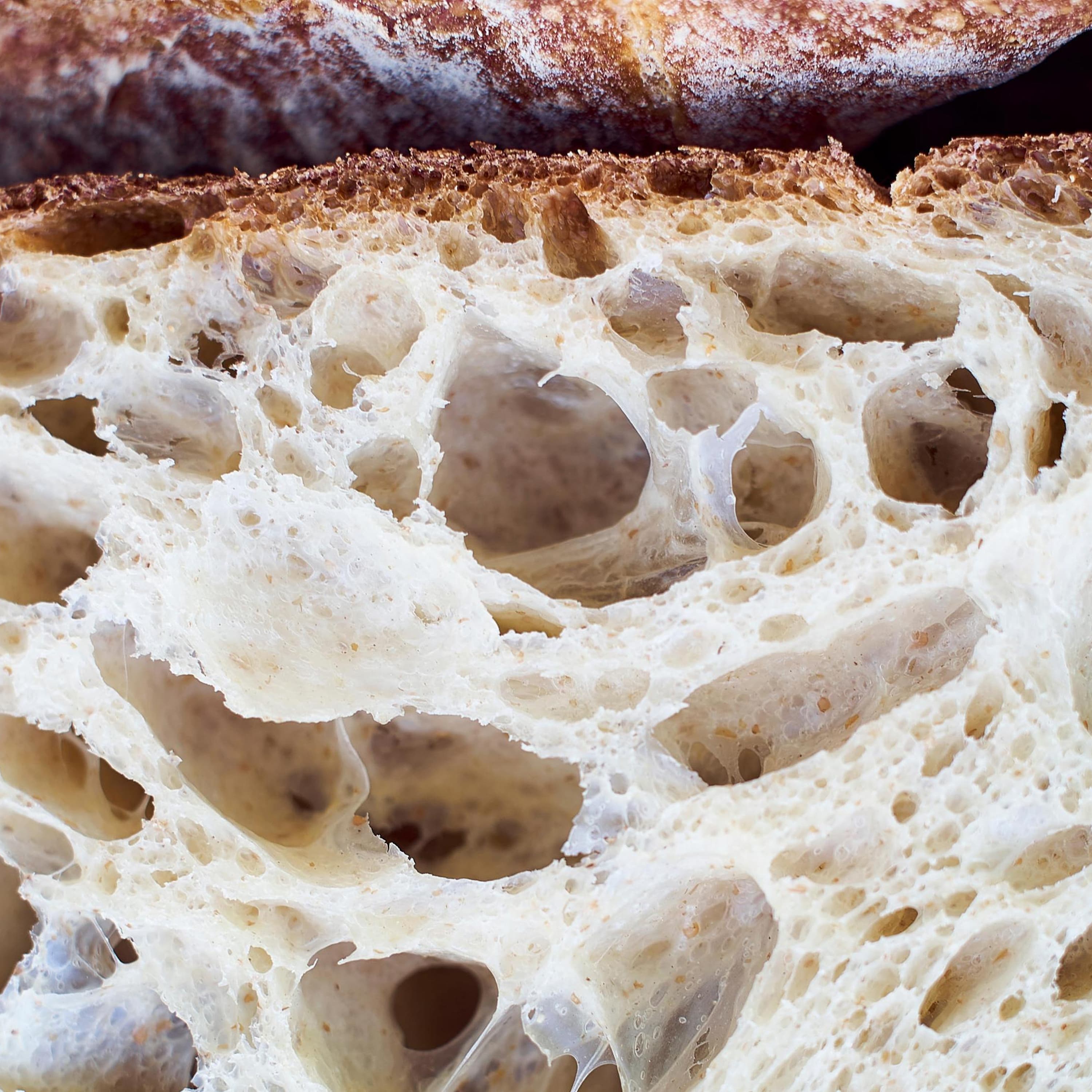
The Audio Long Read
From the archive: Flour power: meet the bread heads baking a better loaf
00:38:30
This week, from 2019: The days of the mass-produced pappy white British supermarket loaf may be numbered. Meet the bread heads revolutionising the way we eat By Wendell Steavenson. Read by Lucy Scott
Loading summary
Transcript18 lines
- [00:00]
Narrator/Host
This is the Guardian.
- [00:09]
Wayfair Advertiser
You want to get your backyard summer ready, but you don't want to break the bank. Wayfair gets it. Planning on dining al fresco or relaxing poolside, Wayfair has everything you need to prep your space. Shop now and save up to 70% off during Wayfair's 4th of July clearance. Score huge deals on outdoor furniture, area rugs, and more. We're talking thousands of products for every style and budget, plus surprise flash deals. July 6th. Don't wait. Shop Wayfair's 4th of July clearance now through July 6th at Wayfair.com Wayfair Every
- [00:38]
Jane Coston
style, every home Former politics reporter Jane Coston is now hosting Crooked Media's daily news podcast what a Day, five days a week. With stories constantly flooding your for you page, it's hard to separate what matters from all the noise. That's why every weekday Jane and the Whataday team scour the biggest headlines and bring you the stories that matter most to your life, all in just 20 minutes. Listen to what a Day wherever you get your podcast or subscribe to what a Day on YouTube for the video version.
- [01:20]
Narrator/Host
The guardian archive long reading foreign.
- [01:31]
Wendell Stevenson
Hello, I'm Wendell Stevenson, and this is about a piece I wrote in 2019, Flour power meet the Breadheads Baking a Better Loaf. So it's a story about bread, but it's really a story about the infrastructure behind bread and how that bread gets into your basket. So it's about the agronomists who develop the grain, the farmers who grow it, the millers who mill it, and the bakers who bake it, and how when you change that away from an industrialized system and you go back or you go forwards or sometimes even sideways into how to produce a better product that's more socially and environmentally responsible, you can really get something that's ultimately more nutritious, more delicious, and better for everybody. Bread is really fundamental, and I love writing about food and about how food describes and illustrates larger issues and themes in the world. So for me, food is not a recipe or a restaurant or a dish. It's really about how it connects to economics, to people, to society, to the way we live. And bread is just a brilliant and extraordinary, rich and complex prism into a lot of those different facets. So it's a story that touches on environmentalism, on industrialization, on the politics of bread more than anything, and how how we can change our orientation from a pilot, high, cheaper, supermarket, centralized food system to something that's more local, perhaps more sustainable, certainly more environmentally responsible. And I would argue very much more delicious. I think when I started doing this piece I knew that sourdough is, you know, more nutritious and more delicious and tastes better and is trendy. But I think I had not really understood just how insidiously awful white flour is and how ubiquitous it has become. White flour that's grown in great monocultures, that's milled industrially, is designed to be a sort of inert dust that you can bake very effectively with, but which has no nutrition, almost no nutritional value and taste of not very much either. And so it's very interesting for me that as a result of this I really cook and eat much less white flour, although I do have a croissant obviously quite often, and how much I appreciate now really good bread and grains. And I now own a home stone flour mill and so I even make my own flour. And I know, for example, that Kim Bell, who is the sort of indefatigable, rather extraordinary kind of activist baker at the center of the story in many ways in her bakery in Nottingham, has branched out into a Nottingham mill cooperative where she has crowdfunded money to have a local mill so that she can really begin to integrate parts of the economy of grain and bread and food and root it more locally.
- [04:47]
Narrator/Host
Welcome to the Guardian Long read showcasing the best long form journalism covering culture, politics and new thinking. For the text version of this and all our longreads go to theguardian.com longread flour power meet the Breadheads Baking a Better Loaf by Wendell Stevenson, read by Lucy Scott and produced by Esther Opoku. Jenny. The best thing since sliced bread turns out not to be sliced bread. Our supermarket loaf, which accounts for 80% of all the bread bought in the UK, is sweetish, soft and pappy. The ingredients listed on the plastic sleeve include added E numbers, enzyme improvers, extra gluten, protein, powders, fats, emulsifiers and preservatives. It is baked according to the Chorley Wood process, named after the location of the lab where it was invented. Developed in the 1960s for speed from grain that has been milled between steel rollers, removing the germ where the oils and nutrients reside and the bran husk where the fibre is leaving only the endosperm, a pure starch so nutritionally void that by UK law, vitamins must be added back into white flour. Mechanised food factories demand ingredients that are standard, stable and easy to transport and make products that are standard, stable and easy to transport. New wheats have been bred for high yields and high protein content that require inputs of chemical fertilisers and pesticides to increase efficiency. Hedgerows and copses have been eliminated and farmland agglomerated into increasingly larger tracts of monoculture. From soil to plastic Packaged loaf Industrialised breads are the end product of 100 years of innovation in agriculture, manufacturing and transportation, all of which prioritizes efficiency and cost over nutrition and taste. Bread is the most bought food item in the uk, but the supermarket loaf is just part of a basket of highly processed foods that we are now beginning to understand is making us fat, sick and allergic. While the big bakeries may market brown loaves under homely monikers such as farmhouse, whole grain and multi seed, these are often distinctions without much meaning. The basic ingredient of highly processed flour is the same even if bran or other sources of fibre are added back into the mix. More research is needed, but there is increasing evidence to suggest that gluten intolerance, not to be confused with celiac disease, which means people cannot process gluten at all, could be caused by the extra gluten that is often added to mass produced whole wheat products. And that the old fashioned longer proving time, the resting time that allows yeasts to ferment the dough and make it rise, is a key factor in rendering whole grains more digestible. Good bread needs no more than four flour, yeast, water and salt. Wheats were once regional and adapted to the land. Grain was milled locally and often baked as whole grain flour into dense loaves. In Britain and the us, most of us have not eaten this kind of bread in so many generations. There is no longer even a folk memory of what it tasted like. The desire for lighter and whiter bread is steeped in history. Finer, paler, sifted flour was more expensive and the province of the rich, and as such has been an enduring trend, even as flour became a bland and cheap commodity, often bleached to make it even whiter. But in the past couple of decades, new movements have begun to challenge the prevailing food culture. In the early 2000s, activist and journalist Michael Pollan wrote about how what we eat had lost its link with the land and the farmer leading the revolt against processed food. In 2010, Pollan came up with a line that became a don't eat anything your great grandmother wouldn't recognise as food. Dan Barber, a chef on a mission to bring back the links between sustainable farming and taste and nutrition, delivered a ted talk in 2008 in which he described modern industrial agriculture as an insult to the basic laws of nature. He and others have popularized the farm to table movement that is changing people's eating habits, encouraging farmers to grow varieties for deliciousness over yield, efficiency of transport and shelf life. In 2011, the geneticist Stephen Jones founded the Bread Lab in Washington, bringing farmers, millers, brewers and bakers together to develop new grains that emphasized taste. In 2014, Jones suggested the supermarket loaf should be called American or processed bread to distinguish its mass produced identity and nutritional characteristics. He told me he does not like to be in the same room as white flour. Meanwhile, a sourdough movement bubbled up in San Francisco, championing the resurgence of the traditional method of leavening bread using natural starters that harness a complex web of ambient bacteria and fungi rather than strong modern yeasts bred to inject air into almost anything. The great food writer Julia Child once said, British white bread tasted like Kleenex. Maybe that is why we load our white sliced toast with so much jam and chocolate spread and peanut butter. Whole grain sourdough bread is a very different beast. Crunchy, crusty, chewy, with a complex taste that is rich, nutty and tangy. Quite often I find a couple of thick slices spread with a generous swathe of butter a satisfying lunch. The revival of ancient varieties of wheat is inspiring a new movement of agronomists, farmers, millers and bakers in the uk. They are coming together to develop and grow new kinds of wheat that do not need dowsing with chemicals to mill the grain in such a way as to keep taste and nutrition intact and to bake loaves that are delicious and healthy. In the process, these artisans want to challenge the dominance of chemical agriculture and the supermarket loaf to establish a new kind of supply chain that links our diet to nature and creates healthy communities. Bread is a basic foodstuff. It is our land and our kitchen table, family tradition and religious celebration. Our daily bread is our daily life. It is economics, breadwinner, breadbaskets, bread lines. It is politics, upper crust bread and circuses grist for the mill. As this group of growers, millers and bakers are demonstrating, bread can be revolution too. In the 1960s, while we were falling for the abundance of post war produce and the convenience of the supermarket, one British plant pathologist was battling with mould. As a young researcher in East Anglia, Martin Wolf specialised in barley mildew. At the time, the prevailing view was that science could improve on nature's design. Agronomy focused on breeding grains that would produce the highest yields and developing fertilizers and pesticides to encourage and protect them. Wolf began to see that as soon as a new variety of Barley was introduced, pathogens adapted to find a way to attack it. As soon as a new fungicide was formulated, the pathogen reacted by developing resistance to it. He realized that nature was always going to win the race. He was single minded, driven, almost obsessive. His family complained that he was difficult to call away from his desk for dinner. He understood earlier than most that adding more chemicals was not a sustainable answer and looked for different ways to grow healthy crops. He experimented with breeding varieties carrying different resistance genes. When he planted out his new varieties and mixtures, he found that infection levels fell. In the 70s, Wolff worked with East German scientists who wanted to reduce their use of expensive foreign pesticides. By the end of the 80s, almost all their spring barley, an important crop because the east exported malted barley to the West German brewing industry for hard currency, was being grown according to Wolf's techniques. But when the Berlin Wall came down, they were encouraged, like other farmers in Western Europe, via subsidies and promises of high yields, to use chemical fertilisers. I've always felt like a bit of an outsider, wolf admitted in an interview. He was a scientist and at first sceptical of the organic movement that emerged in the 80s, which he felt was turning back the clock. His priority was breeding new crops to tackle the environmental challenges of the future. Over the decades, Wolf became convinced that diversity, the very thing that modern agriculture was eliminating with its herbicides and monoculture, was the key to resistance. When a pathogen attacked a genetically homogenous crop, it could wipe out a whole field. As he approached retirement, Woolf wanted to put some of the new ideas about mixed farming practices into use. Agroforestry had begun to gain ground in the 70s, when Phil Rutter, an American plant breeder, asked a big if nature's dominant agriculture was trees, perennials, why had man spent 10,000 years developing annual crops? Rutter was convinced that trees such as hazel and chestnut, could provide as much nutrition as cereals without having to be re sown every year. His motto was the future of the world is nuts. In 1994, Wolfe bought two Meadows and a low ceilinged longhouse in Suffolk called Wakelins, which had been a pig farm, then a dog breeding site. Wolfe drew up elaborate plans for avenues of hazel, willow and a mixture of fruit, nut and timber trees. In the lanes, in between the trees, he would grow annual crops, vegetables, cereals, legumes. Wakelins was always imagined as an experimental agroforestry farm, a rather expensive personal hobby, as his son David put it. Not a going concern. It soon became a centre for real Research. At first, the saplings, planted in mud with protective plastic rabbit proof sleeves, looked thin, vulnerable and unimpressive. Visiting farmers shook their heads, wondering why land was being wasted by planting trees on it. No experiment ever fails, Wolfe liked to say. As the trees grew and projects proceeded, visitors were drawn to Wakelands to see for themselves one of the best examples of agroforestry in Europe. Wolf walked them through his lanes of crops, his white hair glowing like a nimbus backlit by the sun, explaining how the trees with their long roots were able to draw nutrients from deep in the soil, which the annual crops also benefited from via fungal networks in the soil. There is an idea that crops suffer from competition with trees, he told one interviewer, but it is not true. They are sheltered and protected by trees. In 2000, Wolf created a very special crop. With the help of plant breeders and the scientists from the Organic Research centre, Wolf took 20 varieties of wheat that have been doing well under low input conditions in the uk, half chosen for their quality, their high protein and gluten contents, half for their high yield, and crossbred them every which way, resulting in 190 new crosses. Normally, a breeder would look at these plants and select for the traits they wanted. But this time, seeds from all 190 were thrown together in a field, grown, harvested and reseeded together for several years. Wolf called it YQ for yield and quality. Whereas selection ordinarily narrowed the genetic pool, as with inbreeding dogs, this method maintained it. The genetic diversity in this crop meant the wheat was not only resistant to pathogens, but but also tolerant of varying growing conditions. The yield of YQ was never going to match that of high yield wheat in a good year. But over time, Wolff showed its yields through wet or dry or pestilential years, when whole fields of homogenous wheat could be wiped out were compellingly consistent. Wolf milled his YQ grain into flour in a small stone mill in his barn. His wife Anne made cakes and pastry with it, and everyone loved its rich, nutty taste. But Wolf had not yet found a baker who would turn it into bread. Thank you for listening to the Guardian. Long read. We'll be back after this. 33 days, 33 episodes. No off Switch from the goals and the glories, the politics and the problems
- [18:36]
Wendell Stevenson
of the World Cup.
- [18:36]
Narrator/Host
If you want football analysis from a podcast that's been overanalyzing the game for more than 20 years, this is it. Join me, Max Rushton and our expert team of football journalists. Every day of the tournament can England end 60 years of hurt?
- [18:48]
Wayfair Advertiser
Probably not.
- [18:48]
Narrator/Host
Or will this be another year of falling just short?
- [18:51]
Wayfair Advertiser
Probably.
- [18:51]
Narrator/Host
World Cup Daily Listen Wherever you get your podcast or watch the full episodes
- [18:54]
Jane Coston
on YouTube,
- [19:00]
Wayfair Advertiser
You want to get your backyard summer ready, but you don't want to break the bank. Wayfair gets it. Planning on dining al fresco or relaxing poolside, Wayfair has everything you need to prep your space. Shop now and save up to 70% off during Wayfair's 4th of July clearance. Score huge deals on outdoor furniture, area rugs and more. We're talking thousands of products for every style and budget, plus surprise flash deals. July 6th. Don't wait. Shop Wayfair's 4th of July clearance now through July 6th at Wayfair.com Wayfair Every
- [19:29]
Jane Coston
style, every Home Former politics reporter Jane Coston is now hosting Crooked Media's daily news podcast what a Day. Five days a week with stories constantly flooding your for you page, it's hard to separate what matters from all the noise. That's why every weekday Jane and the Whataday team scour the biggest headlines and bring you the stories that matter most to your life, all in just 20 minutes. Listen to what a Day Wherever you get your podcast or subscribe to what a Day on YouTube for the video version.
- [20:09]
Narrator/Host
Welcome back to the Guardian Longread. Last February I drove north to meet one of the foremost of a new generation of British artisanal bakers, Kim Bell, who started the Small Food Bakery in Nottingham five years ago and in 2018 won a prestigious BBC Food and Farming award. I found Belle cleaning up at the end of the day, hale, with flowery hands and her hair tied up in a cloth bandana. She gave me a bottle of house made rhubarb kefir as she finished vacuuming the ovens. She is a proper baker, a mix of passion and exhaustion. When she finally sat down, I said, one day you'll have someone else to do the washing up. Belle shook her head. We don't have anyone who comes in to do menial work. We do it all ourselves. This, she explained, was deliberate, part of a policy to encourage autonomy and responsibility. She wanted each baker to be mindful of resources, energy, time and hot water. I ate one of her cinnamon buns, sticky, soft and crunchy all at once. Sweet from the chestnut, honey and sour from the tang of the naturally fermented dough. Every mouthful was differently delicious. Belle had gone to art school but didn't want to be an artist. For many years she worked with her father in a contracting business specialising in Installing coffee shops and mini markets in petrol stations. They were successful, but she found the world of mass market retail depressing and wasteful. Belle is the kind of person who always has a dozen projects on the go and a large cast of collaborators. She was often cooking on the side, filling in at a friend's publisher, catering a wedding or baking for the Women's Institute market. At one point she got involved with helping a friend open a cafe. She also started reading Michael Pollan and Dan Barber and discovered the US food movement linking sustainable agriculture and deliciousness. She went to listen to a talk by Andrew Whitley, the godfather of the British sourdough movement, who had opened the first organic bakery in the UK, the Village Bakery in Melmaby in Cumbria in 1976. Andrew was selling the idea of a bread revolution where we use wild yeasts and we know where our grain comes from. Belle is a very good baker. She is also a political baker, learning about soil depletion and disease and social justice. She was appalled and then galvanized. It all just came together for me. There is a problem in our food system and we need to fix it. Thoughts converged and events conspired. A small kitchen cafe came up for hire in an artists co op in Nottingham, and in 2014, Belle found herself with a space and an oven. Opening a bakery seemed an obvious way to challenge all that she felt was wrong with the industrial food system. A sourdough gauntlet to throw down in opposition to the supermarket loaf in its plastic sleeve. I flung my doors open one day with absolutely no fanfare, belle remembered. I didn't announce it. There was no sign. I had one customer the whole day and she was gluten intolerant. Belle had no formal baking training. She did what most new artisan bakers do. She tried to copy the Tartine Bakery in San Francisco, with its much lauded and Instagram famous crumb bread's interior texture full of big holes and its sharply crunchy crusts. You think flour is a stable ingredient, belle explained to me as she opened a few bags of different flours for me to feel and taste. But if it's done right, it's living and alive. I held some flour in my palm and saw how it clumped a little when I compressed it. The measure of its moisture, the flour I had unthinkingly always used is really only an inert powder of indefinable shelf life. Whereas this kind of whole grain, containing the oils of the germ lasts a few months before it can go rancid. Bell is one of the vanguard of bakers in the UK trying to make better flour and tastier, more satisfying loaves. Part of the taste comes from using different grains, the ancient progenitors of modern wheats like spelt, Einkorn and Emma, or cereals such as rye, buckwheat, barley and oats. And part from the lactic tang of the starter, the natural leavening ferment made from a flour and water paste and ambient yeasts. When Belle first started the bakery, she used organic flour from Shipton Mill, a British miller that provides high quality blends of flour. But she wanted to understand more about the products she was using, where they came from, how they were grown. She wanted, as part of the mission and identity of the bakery, to source ingredients locally. She soon found someone who was milling organic flour in a windmill only 40 miles away. After working for years in the corporate world, Paul Wyman and his wife Fari, bought the refurbished windmill at Tuxford 14 years ago, pretty much on a whim. The learning curve was steep. Wyman had to figure out the hard way, the difference between milling wheat and feed wheat fit for animals. It has a different protein content. A lot of bakers are used to working with higher protein contents because it creates a more open, structured crumb. And there were plenty of mechanical problems and sudden wind gusts. But, he admitted, slowly, I became a pretty good miller. His wife presides in the tea room, selling cakes and scones made with flour he has milled to showcase how different the taste can be. I bought two bags of his Tuxford gold and made everything from pasta to pastry with them. The difference in quality was clear. It was richer, more complicated, more interesting. There is something quite extraordinary about the sheer physicality of a working windmill. The big canvas sails turn as gracefully and powerfully as a tall masted ship Inside the shafts and chains and pulleys and wooden tooth gears clanked and thumped as the iron spindle revolved, running through the centre of the two heavy grinding stones. People have been grinding grain into flour in this way for thousands of years. The grain is poured into a hole in the center of the circular millstones. The top stone is smooth and the bottom one carved into grooved sections. The grooves funnel the wheat to the outside of the stones, slicing each grain 20 to 30,000 times before it falls over the edge as fine, fluffy flour. Milling in this way is a technical art. Milling at a cooler temperature allows the miller to grind a whole grain, 100% of the grain, germ and bran included, and then sift the flour shaking through sieves of different sizes to varying degrees. When there is still a fair bit of bran in the flour, it is called middlings, hence the origin of the term fair to middling, explained Wyman. A full extraction to the white flour might discard a third or more of the whole grain. Milling whole grain preserves the grain's essential nutrients. As Stephen Jones at the Bread Lab in Washington State explained to A kernel of grain has 8% of fiber, white flour has zero. A kernel of grain has 35 to 100 milligrams of iron per kilo white flour has close to zero. The bran is usually sold off cheap as animal feed or potting material. Jones convenes an annual symposium, the Grain Gathering, which brings together bakers, breeders and millers from all over the world. Jones is a global leader developing new wheats and other cereals tailored to the various needs of bakers, brewers, farmers and consumers. Recently, the Bread Lab launched a new sliced loaf developed to appeal to consumers brought up on soft and sweet American bread. Kim Bell met Jones several times at the Grain gathering. For the past two years she has organised a UK version, the Grain Lab, a two day event bringing together 150 farmers, millers and bakers from 14 countries to discuss issues of marketing, transport and cost. A supermarket loaf might cost about one pound. A loaf from an artisanal bakery three or four times that. Inevitably, the price of sourdough has given it an elite middle class foodie tag. Supermarket bread sells at wafer thin margins and big bakeries operate on giant economies of scale. Small bakeries have to contend with high rents and labor costs, expensive organic ingredients and a time intensive process. Bakers defend the value of their loaves, their high satiety. One thick slice fills you up quite happily and lower waste. Supermarket bread is so undervalued that almost half of it is thrown away. Increasingly, we are beginning to understand the real cost of an industrialised food supply, not borne by the agro food industry, but by the taxpayer. A study for the Sustainable food Trust in 2017 suggested that when you have factored in the health costs of obesity and diabetes, environmental clean up and subsidies, the real cost of our food is double what we pay for it in a shop. Bell and others are trying to put together local networks of supply to create a new kind of grain economy. Inevitably, their efforts come up against the problem of how we value benefits that we can feel rather than count. Belle told me that the connections she makes are often personal and unexpectedly moving. For example, when farmers taste bread baked with grain, they have Grown for the first time. For Belle, the quality of her relationships is as important as the quality of the ingredients. One day, more than three years ago, Josiah Meldrum, an organic farming activist, walked into Kim Bell's bakery with a bag of YQ flour. Meldrum, co founder of Hodma Dodds, a Norfolk company selling and championing British legumes, was a close friend of Martin Wolfe and keen to help him get bakers interested in yq. He told Belle the story of YQ and asked her if she would try baking with it, explaining apologetically that YQ had a relatively low protein content. Most bakers would have been put off, but Belle smelled its toasty nuttiness and was intrigued. Her first efforts produced tough, dense loaves, or the dough became a puddle of unshapeable slop. Belle tried varying the proportions of starter. Upped hydration levels, reduced the temperature, mixed it vigorously instead of gently. It was just trial and error, really. She wanted to bring out the flavour of the wheat. Finally, she was satisfied and had a domed loaf with a dark umber crust and a russet interior of soft, pillowy crumb that she could take to show Wolf at Wakelins. Belle was nervous. He's a bit famous, but they ended up spending all day talking. He was delighted because he had been working on this project for 20 years and scientists were fascinated by it. But he couldn't seem to get a baker to bake with it. Bell and Wolf recognized in each other the other half of an equation. For Bell, the YQ wheat represented everything we had been thinking about in the bakery. Diversification and decentralization resonated back down to the seed. Since the early 20th century, seeds that are sold commercially have had to be legally registered according to variety. In this way, buyers are protected and breeders can receive royalties on plants they have spent time and money developing. Accordingly, seeds and plant varieties must conform to certain criteria for uniformity and stability. But YQ is genetically thousands of different varieties of wheat, known as a population. As such, it could not be legally registered or traded in Europe. When Bell fell in love with YQ and its story, Wolf had been growing it for almost 15 years. In the US, they were continuing to develop populations, as were a few agronomists in France, Germany and Italy. But generally, these were a new, untested type of crop. Between 2007 and 2013, YQ went on a tour around Europe to see how it would grow in different climates. The results showed that even in varying weather conditions and soils, the overall yield of YQ was remarkably stable. In the Meantime, Wolff went back and forth between Brussels and Westminster to lobby for an exception to the EU regulations that would allow YQ to be sold. Finally, in 2014, he was successful. And in July 2017, YQ Seed, officially called the ORC Weightlands population, was the first population wheat to go on sale in Europe. Belle wanted to use YQ flour at the Small Food Bakery, but she needed to find a farmer to grow it. She asked Paul Wyman at Tuxford Mill if he had any ideas. Wyman sourced a lot of his organic wheat from John and Guy Turner, who had a family farm in Lincolnshire 40 minutes down the A1. He suggested giving them a call. The Turner brothers at grange farm are fourth generation farmers with 100 hectares, 250 acres. Over the decades, they had watched other small farmers around them struggle and sell up. So in 2001 they decided to go organic. Basically, we've been holding on by our fingertips for the last 30 years. John Turner told me. They had begun to send their wheat to Paul Wyman when they were looking for a way to sell a few tons of extra grain. When Belle asked if they would be interested in planting yq, the brothers said, ok, why not? Over the winter, we weren't too sure about it at all. Guy told me it was quite a spindly thin crop, but then in the spring when the weather warmed up, it just absolutely took off. You could almost sit at the edge of the field and watch it grow. You don't appreciate the diversity until you actually see it, said John. Some plants were 4 foot high, some 2 foot, some had horns, bristles, some were without. Some had spiky filaments hanging off. Some had square heads, chunky and robust. Some were more slender. The summer of 2018 was very dry and not a good year for cereals, and YQ outperformed a lot of the conventionally grown crops in the area. Bell continued to champion YQ to other bakers and gave baking demonstrations with it at her grain lab. Ben McKinnon at E5 bakery in London Fields, which mill its own flour at its premises under a railway arch, grew up on a farm near Wakelands, knew Wolf. He once spent a month digging up church a potatoes for him and said he would take 4 tons. Turner was delighted. The only problem was how to get the grain to London. Turner suggested he take a load on a trailer hooked up to his 4x4. He soon got lost in the narrow streets. I felt like a real hick from the sticks, he said, laughing. I said he was doing something that probably hadn't been done in 150 years. A farmer transporting his own grain into central London to be milled. When I visited E5 in April, they had almost run out of the Turner's YQ and had begun to source it from another farmer in Essex. Word had gone around. Artisanal bakers were excited by the YQ story and its flavour. Almost the whole 2018 crop had sold out. Martin Wolf died after a short illness in March. We had been in touch and he had invited me to come to see his farm. Two weeks after his death, his son David and Josiah Meldrum kindly met me at Wakelands. It was a brittle spring day, bright spots of sun in a cold wind. They showed me Martin's office. A mess of papers, slides and mildewed barley leaves. A nest of wires on the floor, chainsaw parts. In the sheds and barns there were tractors and combine harvesters and all sorts of Heath Robinson esque machinery he had modified for his experiments. There's not much you can't do with a Ribena bottle. David laughed, pointing to a plastic bottle taped to a stick. Everything tied up with baler twine, Meldrum added. Martin would never let a good idea be stymied by not having the right equipment. And here were the avenues of trees, and between them alleys of clover and blades of green yq. The trees were splotched with green and white and pink blossom, 40 kinds of apple, multiples of pear, plum. There were the prints of muntjac deer and hares in the mud and thrushes warbling in the hazel. We walked through a hedge and came out onto a lane as a blast of raw wind, unchecked by trees, blew into our faces. Before US was a 40 hectare expanse of wheat on the neighbouring farm, as evenly green as a billiard table. The contrast between the variegated beauty of Wakeland's agroforestry and this conventionally farmed field could not have been more stark. We are only beginning to understand the importance of diversity and the complex systems that plants and animals and us need to thrive. In an interview, Martin Wolf once argued that value should be accounted not just according to the cash received for a crop, but the effect of the plants on the soil and carbon sequestration and wider effects on mood, on beauty, on community. The story of YQ spins a narrative from soil health to grain resistance, to nutritious flour to tasty bread. And it also describes a group of people working together to create a local food network that nourishes a community. Martin was always full of crazy ideas. Said his son. We walked to the end of a grassy meadow. His wife Anne's grave was marked with a simple stone among stands of daffodils. In April, Martin was buried next to her. As a result of his lobbying, YQ Wheat will receive legal status to be traded from the EU in 2021. Before he died, Bell told me, I'm buoyed by Martin. Last year, he said to me, kim, it's happening. I'm seeing it for the first time in my life. It's going to come. Things are changing. For more Guardian long reads in text and a selection in audio, go to theguardian.com longread. This is the Guardian.
- [40:54]
Wayfair Advertiser
You want to get your backyard summer ready, but you don't want to break the bank. Wayfair gets it. Planning on dining al fresco or relaxing poolside? Wayfair has everything you need to prep your space. Shop now and save up to 70% off during Wayfair's 4th of July clearance. Score huge deals on outdoor furniture, area rugs and more. We're talking thousands of products for every style and budget, plus surprise flash deals. July 6th don't wait. Shop Wayfair's 4th of July clearance now through July 6th at wayfair.
- [41:21]
Narrator/Host
Com. Wayfair every style, every home.