← The Audio Long Read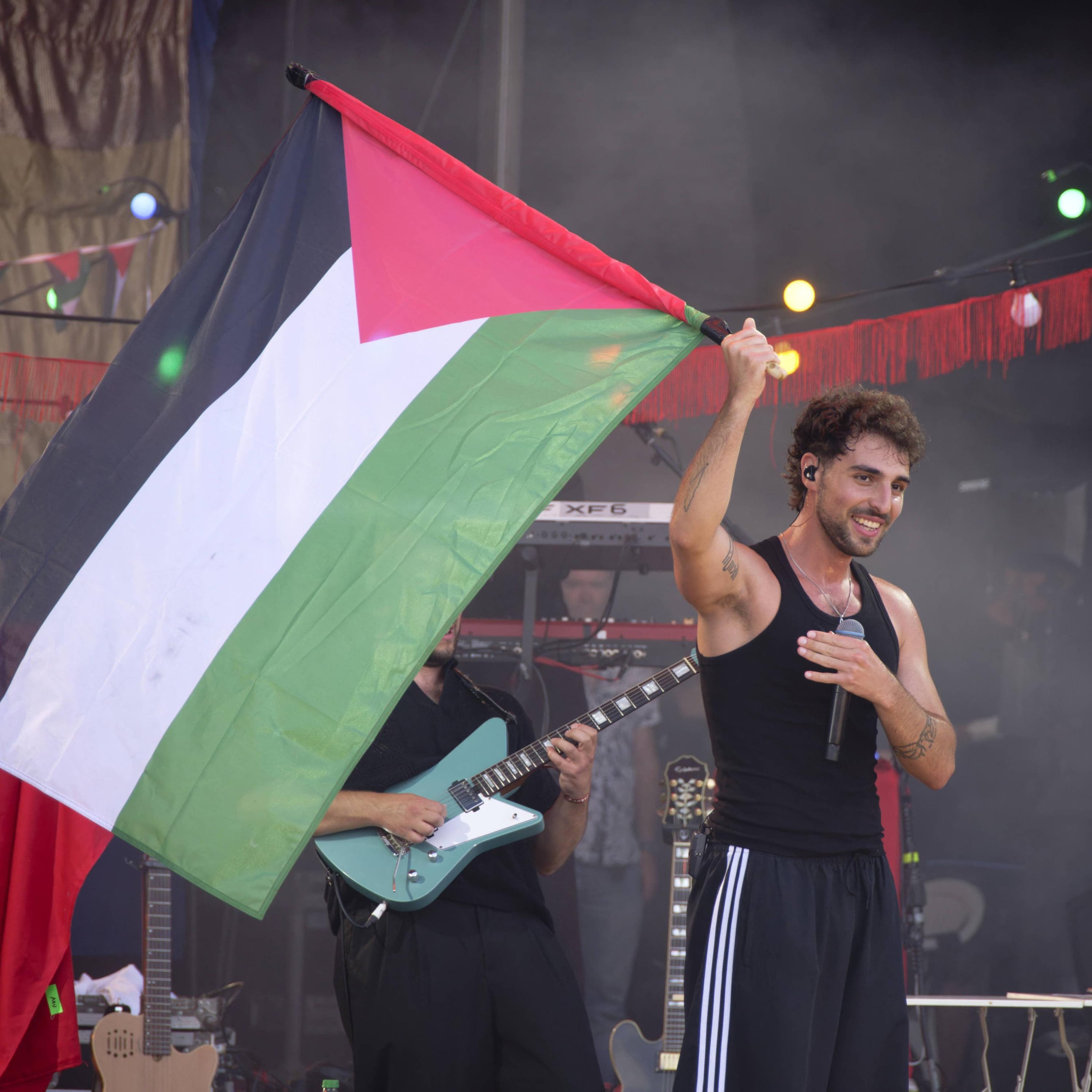
The Audio Long Read
Saint Levant: the pop star from Gaza caught between passionate fandom and bitter disapproval
00:41:13
His detractors say he shouldn’t be making pop music in times of war and destruction. His millions of fans say he has given them permission to celebrate their culture and their cause Written and read by Nesrine Malik
Loading summary
Transcript14 lines
- [00:00]
Nasreen Malik
This is the Guardian.
- [00:10]
Boost Mobile Advertiser
From globalization to innovation, sustainability to market
- [00:14]
Nasreen Malik
volatility, there's always more than one side to a story. Explore different perspectives on today's most important business and economic issues with the Flipside
- [00:23]
Boost Mobile Advertiser
podcast from Barclays Investment Bank.
- [00:25]
Nasreen Malik
Hear two research analysts in a lively debate and get insights from every angle. To further inform your view, listen to the flip on your favorite platform. Hi, this is Zoe Deutch and this is Nick Robinson. Check out our new movie Voicemails for Isabel, exclusively on Netflix. Sign up now to watch. This article contains some swearing.
- [00:54]
Claire Longrig
Welcome to the Guardian Long read showcasing the best long form journalism covering culture, politics and new thinking. For the text version of this and all our longreads, go to theguardian.com longread
- [01:10]
Nasreen Malik
Saint Lavant, the pop star from Gaza, caught between passionate fandom and bitter disapproval. Written and read by Nasreen Malik. The first time I heard a song by Saint Laval only three years ago was in a world that does not exist anymore. Gaza's buildings are intact, as are its schools and roads and markets and mosques. My home city of Khartoum in Sudan was standing as it had for centuries back then. I could scroll for fun, not in dread. I could stumble, say in late 2022, upon an arresting clip on TikTok of a song by an Arab artist with a pun for a name. Saint Lavant, a play on Saint Laurent, the icon of Western style, had been Arabized in homage to the Middle East's Levant region. I began to see the same song all over my social media. In the video, St. Lavant, then 22, is in a white vest and brown trousers. A gold pendant chain dangles on his chest. A tattoo encircles his left arm. He starts by rapping in English, telling the woman he is wooing that he's not toxic, he's broken, baby. And then the twist as he switches to Arabic, then French, then English again. Like a wholesome boy next door. He tells her to send his regards to her grandmother and her brother. Ben says that he wants to make her forget about her ex. He wants her overthinking all her texts. He wants the neighbors to hear her yell, lover boy. Levon is back in the building, he declared. What we had here was a certified fuckboy, someone in the chaste Arabic music scene talking publicly about sex and dating rather than the usual coy flirtation or yearning. Within weeks, the song, very few friends had racked up millions of listens, but still Saint Lavon remained an enigma. From the lyrics, it was hard to place where he came from I assumed he was Lebanese, the spiritual home of the Arabic francophone lover boy. Then I discovered that he is Palestinian. This made him even more of a curio in the mainstream Middle Eastern pop scene, one dominated by Egypt and Lebanon. In March 2023, an album arrived from Gaza with Love. It established Saint Lavon's roots, but remained in the trilingual chat up pop genre. It was largely unremarkable and I filed Saint Lavin away in my mind as a one hit wonder. Then in April 2023, war erupted in Sudan and death, fear and escape from bullets and bombs was visited on home and family. I forgot about Saint Lavon as I forgot about all music or art or entertainment. Six months after the start of the war in Sudan came October 7, and another war gathered an unstoppable momentum in my mind. Gaza and Sudan merged into one catastrophe. In the moments when I was not dealing with the practical fallout from war, family extractions, visa applications, panicked wiring of funds, I was scrolling, scrolling past my home city being destroyed, cars are being levelled, and corpses, corpses, corpses. At night, after I put my toddlers to bed, I tried to chase away the thought that in their slumber in the night, they looked like the dead children I had seen during the day. The commitment to be constantly looking, never turning away, felt like a sort of fidelity to the suffering. If I was not among the dead and besieged, the least I could do was to keep vigil. The Sudanese term for this sort of codified observance is Beth Bika, or House of Crying, the name for the home of the deceased where a wake is held for three days after burial. There are strict protocols in the House of Crying. No colorful clothing, no loud laughter, no jewelry or perfume, no music or tv. This was a shared grief for more than a year, in a virtual constellation of WhatsApp group chats, voice memos and email chains between my Arab friends and family. A closeness had been born out of seeing what was happening in Palestine, a place that was totemic for being an open wound at the heart of the Arab world. Gaza prompted a steady stream of check ins and concern and thinking about yous and hope you're okays. In these groups, there was no need to explain, to translate. We felt the same things. Loss, helplessness, rage. The last time something similar coalesced was during the Arab Spring, where every revolution, wherever it was, seemed like your own. And then, in December 2024, Bashar Al Assad fell. And for the first time in more than a year, the messages received were not commiserations, but expressions of hope and celebration. During that time, I stumbled on Saint Lavon again. In the few months since his debut as transgressive loverboy Levain, it seemed that he had evolved into a political voice, an artist now merging love songs with laments on the pain of exile from Palestine, standing among men with kaffirs drawn across their faces. At a time when Palestine had produced a tragically galvanizing moment for Arabs, Saint Lavon emerged as the region's first bona fide commercial Palestinian pop artist, and in the process, had become one of the biggest stars in the Middle East. The few Palestinian artists who had made it big before him had done so through rousing political anthems among other Arab artists. Palestine was the preserve of all the generations who had produced now canonical songs of yearning and lament for Palestine. A singer who was of Palestine but broke with the sobriety of expression about it was a shock to the system in a way that was invigorating and scandalizing. And so St. Lavon quickly became a flashpoint. To some, he seemed to have instrumentalized politics to help his career and broken the rules of vigil by embracing revelry. To others, he was an artist who inspired fierce loyalty for plotting the right way out of grief while proudly championing the Palestinian cause. He had become a test case of something bigger. For many Arabs, this was a moment of unifying crisis, but it triggered different and contradictory impulses. Some wanted to mourn and rage against what was being destroyed. Others wanted to celebrate and seek comfort in all that remained. In the middle of the two, between passionate fandom and bitter skepticism, was a young man from Gaza. It was a mercifully cool November afternoon in Doha when I first met him. Zain Levin was in town to perform his first Qatar concerts and was just about to give a talk to some students. I walked into a narrow corridor backstage, and there he was, smiling broadly. Within seconds of being introduced, he complimented me on my outfit. It's fire, he said. I would come to realize that he says fire a lot. Tall, dressed in black, still in his skin, there was something balletic about him, as if any moment he would spin into a pirouette. He was, I soon learned, charming. He received no compliment without acknowledgment, even something as simple as nice to meet you. He responded to with habibti, an Arabic term of endearment. At times, he came across less like a pop star and more like a politician offering, follow your dreams, answers to questions from young fans. As he was mugged by admirers, he looked or did an excellent job of looking like he was enjoying it as much as they were. There was no hint of self consciousness about the sensitivity of the political moment and where he stood in it. The next day I sat down with him. He was on his laptop, immersed in the work of finalising his upcoming album. When he realized I was Sudanese, he immediately pulled up some Sudanese music and started to dance. He then launched into an enthusiastic conversation about Sudanese music, the artists he loved, how there was something uniquely uplifting about its form. As we talked, he hummed, drummed the table like he was immersed in a soundtrack that I couldn't hear or impatient to return to, one that I was keeping him from. He did not seem to register all that was building around him, that angst and controversy about how to carry yourself as a public entertainer, a Palestinian entertainer in a time of crisis. He was just happy to be able to make music, he said. Sensing the discomfort, I said to him, it must be weird to receive so much adulation. I mean, people are calling me the voice of a generation, he said, looking visibly irritated by the phrase. How can I go around thinking of myself as the voice of a generation? No. He shook his head. Mabisir, it's not okay. He pointed to his head and brought it down to the table. I don't want my head to get big, he said. I suggested to him that at a moment when Palestinians, Muslims and Arabs are facing such persecution and humiliation, there was something new in the generation of Arab artists being political with such swag. He looked surprised. Really, he said. Then he laughed. We always had swag. Over the next three days, in the buildup to his concert, I observed him in public Q&As and mingling with fans as part of Qatar's annual fashion trust Arabia Festival, a gathering of global and Arab fashion, music and culture. To be within the San Lavant microclimate was to be immersed in what was appealing about him, that sense of light, confidence and openness to good things happening amid dark times. Sometimes, he said, in Doha, when writing music, he's just feeling flirty. At another point, he talked about recently attending a wedding in Amman with his school friends and one of his songs coming on and filling the dance floor, his friends celebrating their old body together. It was peak life, he said. While he can be vague or awkward in assessing his own position in the culture, Saint Lavon has been strident in his condemnation of Israeli occupation and genocide in Gaza and his insistence on Palestinian liberation. His focus, he said in a 2022 interview, was always on how we actually free Palestine. That was the question that guided my whole life trajectory. He's been thinking about this and doing work related to Palestine for a long time, said Mike Muhan, founder of afikr, a global Arab media platform. When Hanna first encountered Saint Lavon, he thought, here was a good looking, nerdy Palestinian kid who wasn't afraid of talking about this. Ability to mix Western expression and Arab politics as a member of the diaspora was a superpower, mohana said. I thought this will work on polite white girls in Kansas and even more so, it will work for the Palestinian LSE graduate who is going to work in Deloitte and give them a language and lane they can exist in as a Palestinian or Arab in broader Western white society in the Arab world. For a younger generation, this is the first time that Palestine has become a live painful and galvanizing issue. Yet there are few avenues to freely express that distress. On the one hand, governments deliver fiery rhetoric in support of the Palestinian cause. At the same time, censorship across the Arab world has all but erased Palestine from public discussion. Frustration at the failure to come to the aid of Palestinians is so strongly felt that rulers from Morocco to the Gulf fear that it could too easily catch fire and link to other grievances in undemocratic countries whose regimes are eternally wary of protest. Arrests for protesting and even posting on social media have taken place across the region in Saudi Arabia, Egypt and Jordan. In March 2024, about 500 people were arrested in Jordan during large protests outside the Israeli embassy. The result is a popular culture seen jarringly silent on Gaza even as the public seethes. The sort of regular, roiling popular protest and demonstration in anger at Gaza on the streets of Western cities has been entirely stamped out in Arab ones. Against this backdrop of repression, Zain Laval provides one avenue for channeling expression about Palestine without drawing the ire of authorities. Whatever his audience expresses can be quarantined within the theater of performance rather than managed by force on restive streets. He also has a license in freedom that comes from not being embedded in one Arab country and being able to inhabit a general diasporic identity. He's an excellent actor, mohan said. Not in a derogatory way. He totally understands aesthetic and storytelling. It's really hard to do. There's a whole wave of these inside, outside diaspora kids who are commercial artists. That is what we have lacked for a long time and that I am happy we have in being proudly diasporic. Saint Laval crosses borders beyond the Arab street and reflects the atomization of those in exile whose numbers continue to swell with every war. Half of the 15 million Palestinians in the world live outside Palestine. The majority of them reside in Arab countries, with just over 1 million in the rest of the world. The displacement occurred in rapid waves of ethnic cleansing and slower ones of population drainage. The 1948 Nakba, in which over 500 Palestinian towns and villages were destroyed and their populations evicted, resulted in the displacement of more than 700,000 Palestinians, approximately 2 thirds of the Palestinian Arab population at the time, to territories that became Israel, to the west bank, the Gaza Strip and to Jordan, Lebanon and Syria. During the 1967 Six Day War, when Israel seized all remaining Palestinian territories, about 300,000 more were displaced into Jordan since 1967. Thousands of others ended up outside Palestine, deported, pushed out of homes that were demolished by the Israeli government or by the expansion of settlements and policies of residency revocation. Others fled to escape war and harsh economic conditions. The first intifada of the 80s and 90s and the second intifada of the 2000s, as well as Israeli government policies, intensified the Exodus. On the 75th anniversary of the Nakba, Unruhe's commissioner general, Philippe Lazzarini, called the plight of Palestine's refugees the longest unresolved refugee crisis in the world. One of those refugees was Marwan Abdul Hamid, now known as Saint Lavon. Abdul Hamid was born in 2000 in Jerusalem to a Palestinian Serbian father and an Algerian French mother. His paternal grandfather was displaced as a child in 1948 from the town of Safa in the north of what was Mandatory Palestine, eventually making a life in Yugoslavia. After the Oslo accords, Abdul Hamid's parents decided to move to Palestine from Algeria, believing that Palestine was on a path to statehood, peace and prosperity. Abdul Hamid's father, Rashid, an architect, designed and built what became the legendary Al Dira hotel in Gaza. His ambition was to make Gaza the new Singapore, a horizon of skyscrapers, he said in an interview in 2012. For the first seven years of his life, Abdul Hamid lived in the Al Dira Hotel with his parents. Located on the shores of the Mediterranean, El Dira was the terracotta Boutique Hotel of 22 rooms with high domed ceilings, all facing a courtyard in an homage to Ottoman design. It became an expression of the wider hope of Palestinian statehood that Rashid and his wife nursed when they moved to Palestine. The expectation was that Gaza, with its beachfront expanse and history as a prosperous cosmopolitan port city, would be revived into a metropolis, and Aldira would be the hotel for the tourists and businessmen that the new thriving Gaza would attract. And then five Months after Al Dira opened, the second Intifada erupted. The hotel became not the location for the well heeled and upwardly mobile middle classes that would arise out of a Palestinian state, but a base for NGO staff, aid workers and war correspondents. Still, it was swish, stylish and tightly run, according to Lonely Planet, which anointed it, without question the best hotel in Town. In 2007, Eldira remained Gaza's diamond in the rough. According to time magazine, in 2009, the hotel became a sanctuary from war, but also neutral ground for its many interlocutors who came there to talk when the beach by the hotel itself became deadly. Four children were killed by IDF strikes while playing football on the sand in 2014, directly opposite the Eldira terrace. The hotel was the instinctive refuge. The injured ran towards the hotel and were hoisted over its walls by staff and guests. One waiter scooped up a child with shrapnel in his belly and rushed him to the hospital in a hotel car. But El Dira was also a social hotspot, the meeting point for what persisted of Gaza's high life. There were ladies who lunched, wedding parties on a Friday, wine served discreetly in ceramic teacups, and shisha and lemonade on the terrace as clientele looked out over the surfers on the waves and Gaza's beach life. In the middle of it all was little Marwan. To his parents, Al Dira was an investment in the future of a free Palestine. But to him, it was simply where he lived, a home. Now 25, St. Lavant frequently describes his time living in El Dira with his parents as the best years of his life, roaming in what he felt was a castle, running barefoot in the sand of the beach, trying to catch fish with his bare hands, eating his meals on the terrace restaurant, playing football and spending time with his extended family. He attended the American School in Gaza, a prestigious private school. And then his family left it all behind. In 2007, the Battle of Gaza, an intense civil war between Hamas and Fatah, which culminated with Hamas taking control, was the trigger for yet another displacement for the Abdel Hamids. Militants from rival factions began to threaten management with closure if rival parties were hosted, drawing the hotel into negotiations with gunmen. It was no place for a child. The Abdel Hamids fled to Jordan and Zen. Levin lived a split linguistic and cultural life. French at home, English in an American school in Amman, and Arabic in the UNRWA refugee camp Al Wahdat, where he hung out and played for the camp football team. It was a time where he did not fit in anywhere, not among the rich kids of the private school he attended. His mother's United nations job paid for that rather than family wealth. Nor in the refugee camps where he was mocked for his imperfect Arabic. In 2018, a little over 10 years after leaving Aldera, 17 year old San Laval moved to the US to study at the University of California. But he still nursed the dream of returning home to the terracotta building. Five years later and two months after October 7, the Eldira Hotel, built by his father and where Saint Laval spent the first years of his his life was destroyed by Israeli bombardment. Thanks for listening to the Guardian Long Read. The story continues right after this hello,
- [25:26]
Claire Longrig
I'm Claire Longrig, deputy editor of the Guardian Long Reading the summer issue of the Long Read magazine is out now, showcasing some of the Guardian's finest long form journalism. In this beautifully illustrated new edition of the magazine, you'll find stories about the UK's strangest pub chain, how AI is taking over the classroom, the Christian cult that hid in plain sight, and many more. Pick up a copy today from theguardian.com the long read summer or from selected WH Smith Travel stores.
- [26:07]
Boost Mobile Advertiser
He's dribbling the ball with everything on the line. He's driving down the pitch. He's facing price hikes and cuts past him Carrier contracts, tries to block him. Oh he leaves him in the dust. He's at the edge of the box he cuts past the non stop group chat trash talk. He clears on goal. He shoots unlimited data for $25 a month forever. Visit your local Boost Mobile store today to get unlimited data with a price that never changes. Boost mobile after 30gb, customers may experience lower speeds. Customers will pay $25 a month as long as they remain active on the boost. $25 unlimited plan.
- [26:38]
Jane Coston
Summer smells like salt in the air and warm sand. Restore your sense of place with Pura's new summer fragrance collection. Discover transportive clean scents@pura.com Former politics reporter Jane Coston is now hosting Crooked Media's daily news podcast what a Day. Five days a week with stories constantly flooding your for you page, it's hard to separate what matters from all the noise. That's why every weekday, Jane and the Whataday team scour the biggest headlines and bring you the stories that matter most to your life, all in just 20 minutes. Listen to what a Day wherever you get your podcast or subscribe to what a Day on YouTube for the video version.
- [27:30]
Nasreen Malik
Welcome back to the guardian long read. At university in the U.S. st. Lavant was expressly political. In 2020 and throughout the COVID 19 pandemic, he began posting TikTok explainers about Palestine, breaking down events, explaining how Palestinians are dehumanized, and tracing the history of Israeli occupation and ethnic cleansing. During this period, he also established a startup called Grow Home, which connected Palestinians in Palestine with entrepreneurs abroad to raise investment for private enterprise. All the while, he nursed a love for music without thinking there was a serious career in it. Between 2020 and 2022, he released several singles in classic American hip hop style, mostly in a blend of English and French. These were angry, fairly derivative attempts to channel the disaffection of Arab and Palestinian youth into a mishmash of US and francophone rap. And then came the gear change when Saint Lavon landed on his voice and identity, the Lover Boy and Very Few Friends, his 2022 breakout hit. From then on, his politics slipped into subtext. In subsequent releases, such as From Gaza with love in 2023, he nodded to his origins but remained essentially a flirt until his first album, post October 7th. Released in June 2024. The album was entitled Dira and its cover art a picture of Saint Lavon walking through the terrace and into the front doors of his childhood home. In the bilingual Arabic English title track, he is back in the political. But rather than straightforward anger, the song expressed a yearning to return to the Palestine, the Gaza and the Dira he grew up in. The video is immersed in the imagery of Palestine, featuring farmers, herders, kaffirs and Palestinian embroidery. The following year he released the album Love Letters and the song Clementina, meaning Clementine, that established him as a mainstream star in the Middle East. A love song with a dance along, sing along chorus, Clementina was Suddenly everywhere on TikTok, sung everywhere from Gaza to New York, a staple at Arab weddings. In just over a year since its release, it has 77 million streams on YouTube. Saint Lavant's output consolidated into Love Letters to Women and Palestine, the two somehow merging into one homage. He incorporated more traditional Palestinian music and foot stomping Arab debke beats unmistakably Levantine rather than Western pop. In one love song, the line with soul with blood, a chant of dedication of all that will be sacrificed for Palestine rises. At the end. His concert performances took on a wedding dance floor sensibility, where he invited a crew to jam and dance with him on stage. His father became a regular feature of his son's performances, a sort of lover boy senior. A rakish Rasheed would appear in his own white vest and dance with his son. The Palestinian flag and keffiyeh were raised and twirled above the audience's heads at his gigs. As his popularity increased, he began to divide opinion. Cringe is how I have sometimes heard him described, like he was performing a tacky pastiche of Palestinian identity while leaning into his pin up appeal. In these criticisms, there was a hint of tension about class and authenticity. Despite his origins in Gaza, Saint Lavon is sometimes seen as a privileged kid with the affect of the Bougie diaspora Arab distant from the hunger and killings visited on his people in Palestine. For his fans, there is plenty of evidence that Saint Laurent was always political, not someone who suddenly chose to ride a political moment. Once the assault on Gaza began after October 7, he continued to post clips detailing how language used to describe the conflict makes it easier to justify oppression to the average person. He aspired in this form to emulate his idol, the Palestinian intellectual Edward said. In November 2023, when accepting musician of the Year from GQ France in Paris, Saint Laurent said that he had been cautioned not to mention Palestine or Gaza in his acceptance speech. But you cannot censor me, he said, and I cannot stay silent while 8,000 Palestinian children are being murdered by the Israeli occupation that has been going on for 75 years. But walking the line between the world of GQ awards and political authenticity is tricky. Last year, when he collaborated with an Arab makeup artist to release a limited edition lip gloss, Zen Lavar received a wave of criticism, including from prominent Palestinian figures such as the Pulitzer Prize winning writer Musab Abu Tuha. Do you really care about Gaza? Wrote Abu Tuha on Instagram in reply to St. Lavant's post launching the collaboration, which featured images of clementines. You share this video when 102 people were killed today, including a cousin of mine, while seeking food. In this way, social media posts about Saint Lavant tend to become swirls of fandom and criticism, a cultural split that highlights attention around what is acceptable behavior during genocide and starvation. Saint Lavin is not unique in this respect. The broader cause of Palestine has become strained by the contradictions and tensions of going mainstream. The violations in Gaza and the west bank have been rendered in popular films such as the Voice of Hindrajab and the Oscar winning documentary no Other Land, resulting in jarringly glamorous red carpet appearances and glitzy ceremonies at film festivals where, as the Palestinian writer Muhammad Rmhawish put it, audiences give standing ovations for Palestinian pain. Fans filled the outdoor arena at St. Lavon's first public concert in Doha in mid November, snacking on sushi and taking selfies. There were hijabs and crop tops, couples and gaggles of young women, small groups of older aunties brimming with girlish excitement. The vibe was that of a high society diasporic political rally. There were Jordanians, Palestinians, Palestinian Jordanians, Lebanese, Egyptians, Sudanese and mixed heritage Arabs, and a lot of designer handbags. Every once in a while a flurry of excitement would ripple through the crowd as a famous person was spotted. One was a belly dancer from Cairo. Another was the self described Shawur Meking Nasr Al Rais, a Syrian American social media influencer and comedian. There was a rumor that Hindrajab's mother was in the VIP section. Keffiyehs were everywhere, tied around the waist like a belt, draped around the shoulders, folded and tied around heads like a durag. Along with it, the map of Palestine rendered in stickers on phone covers and dangling as a pendant on necklaces. On a large screen there glowed a trippy cartoon graphic that paid homage to Palestinian and Arab iconography. Watermelons, the hamsa go karting at the pyramids, a traditional jug pouring out coffee. Iraqi Canadian rapper Narsi acted as a compare, appearing between acts to hype up the crowd and restate what they all shared, Arabness. I am originally from the wonderful nation of Iraq, he said to cheers and won Allahu Akbar from the audience. As Arabs, he said, the beating heart of our culture is Palestine. He introduced the Saudi born UK based DJ Nouria, who played Arabic and Western hits spliced together. Show me your keffiyeh, she urged the crowd. By the time Saint Lavon came on stage just after 10pm excitement was peaking. When the curtains rose and the crowd screamed, I felt a surge of unease for him, something like maternal protectiveness over this child who had summoned all of these forces around him, negative and positive. This young man who had found himself in a moment of huge frustration and angst over Palestine and was standing in the breach. My name is Marwan Abdul Hamid, he said. Born in Jerusalem, raised in Gaza, left it at 7 and haven't been back since. This is the story of so many Palestinians. He sounded a little nervous, but it soon dissipated. On stage, he marshaled that same mischievous energy that runs through everything from his social media clips to his music videos. In between songs, he addressed the crowd, bringing it back to the fraught political moment to Gaza. Often he told them he would be told, shh. Don't talk about Palestine. Often, he admitted, he asked himself how he could be singing and dancing when his people were dying. But joy in our culture was our right, he said. What Zen Levant was offering was permission. He gave himself permission and in turn gave it to his listeners. This was not abdication, not distraction and decadence in the midst of war and genocide. It was a rejection of the dehumanisation of Arabs and the contempt for their culture and expression on the part of Israel and its Western supporters who had privileged Israel's narrative over that of its victims. A people who, not in spite of war, but because of it, assert their right to a full existence. His music was good enough, but his greatest appeal was that insistence on translating the moment into something that did not need to be worn so heavily. St. Lavant's father appeared for a DJ set in the middle of the concert, with his son beside him, two generations of displaced Palestinians and the descendants of a third. The father began his session with a few bars from a famous song released in 2000 in response to the second intifada by the legendary and controversial Egyptian street folk artist Shaban Abd al Rahim. The crowd instantly knew what it was. There was a brief moment of stunned incredulity that it was happening, and then an eruption of singing along I hate Israel and I'll say it if they ask me, even if they murder me or put me in jail, I hate Israel. At the end of the snippet, Zen Levant's father looked at the crowd and shrugged comedically, as if to say, yes, I went there. The father and son went on to dance together to several Arab and Palestinian songs, their brief, sharp political interlude merging with hits about girls in short skirts and high heels. Inviting the crowd to be part of a private party, I looked at those around me, now in peak concert revelry. There was no escaping the Palestine themed fancy dress element of it all. Had a colossal political crisis become reduced to a trend, a fashion? Was this party an insistence on not succumbing to doom or an excuse to embrace oblivion? I wasn't sure. I'm still not sure. But when Saint Lavant concluded his concert by saying, for Palestine, for Algeria, for Sudan, I thought, whatever the answers are to these questions, what undergirded the experience was a real person, a real life of loss and displacement, an existence whose protagonists for too long had not been given permission to narrate and do with their story what they wish. Let the culture expand into something capacious and diverse and alive, I felt, defying all the ways it had literally been burned to the ground. But standing outside in the quiet street alone. After the crowd seemed to disperse far too quickly, a wave of desolation crashed over me. The world was still what it was. The question still remained how to live alongside the dead. Thanks again for listening to the Guardian longread. That was Saint Lavant, the pop star from Gaza, caught between passionate fandom and bitter disapproval. Written and read by Nasreen Malik and produced by Nicola Alexandru. The executive producer was Elly Burie.
- [42:48]
Claire Longrig
For more Guardian longreads in text and a selection in audio, visit theguardian.com longread and to purchase a beautifully illustrated collection of our finest stories in print, visit guardianbookshop.com
- [43:05]
Nasreen Malik
foreign. This is the Guardian.
- [43:21]
Boost Mobile Advertiser
He's dribbling the ball with everything on the line. He's driving down the pitch. He's facing price hikes and cuts past him. Carrier contracts, tries to block him. Oh, he leaves him in the dust. He's at the edge of the box. He cuts past the non stop group chat trash talk. He clears on goal. He shoots unlimited data for $25 a month forever. Visit your local Boost Mobile store today to get unlimited data with a price that never changes. Boost mobile after 30gb, customers may experience lower speeds. Customers will pay $25 a month as long as they remain active on the Boost $25 Unlimited plan.