← The Audio Long Read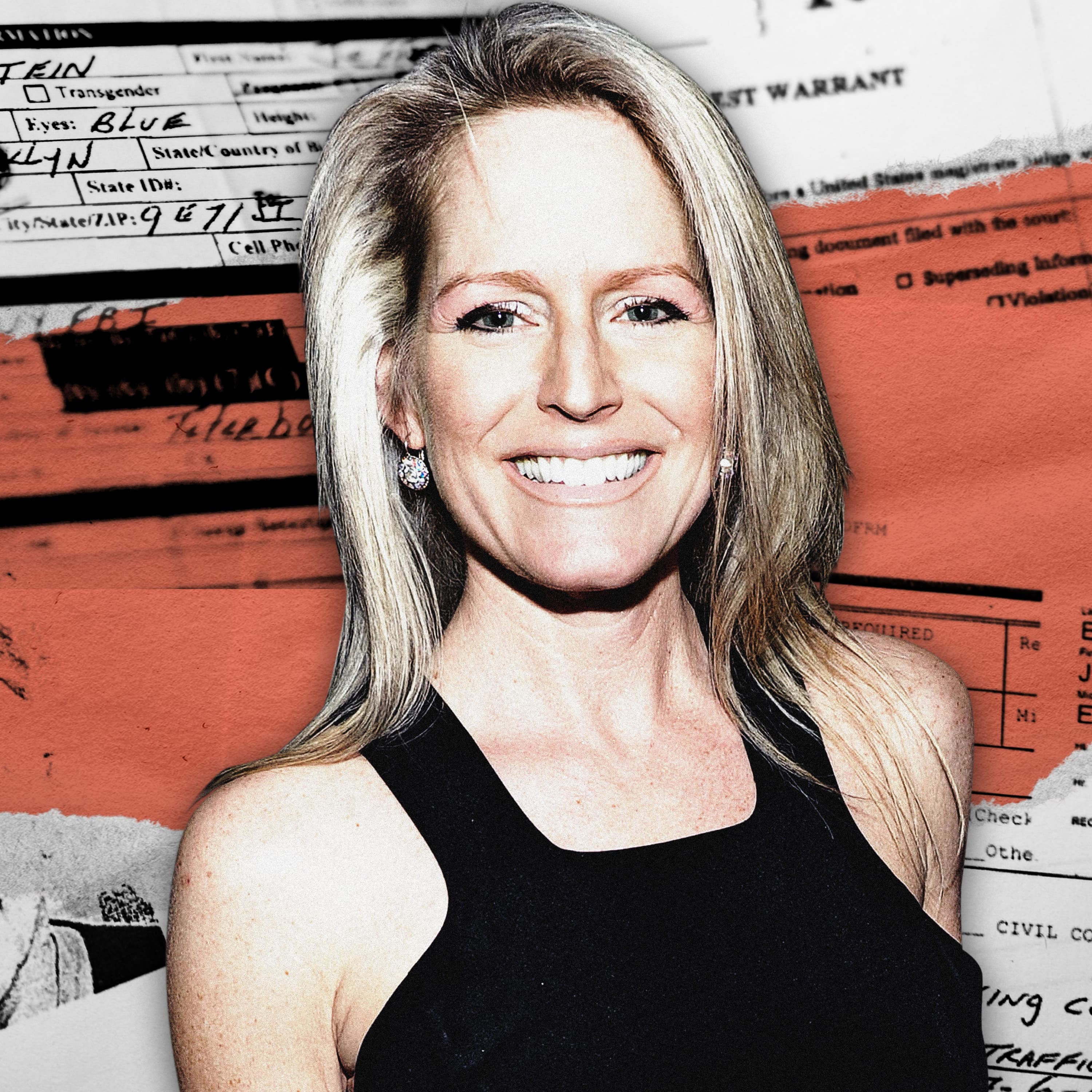
The Audio Long Read
‘Seriously the best boss ever’: inside the world of Jeffrey Epstein’s assistant
00:48:58
No one’s name appears in the Epstein files more than that of Lesley Groff, his assistant. Reading through the thousands of emails, a troubling question arises: what did she know? By Sophie Elmhirst. Read by Norma Butikofer
Loading summary
Transcript12 lines
- [00:00]
Guardian Announcer
This is the Guardian.
- [00:09]
99% Invisible Host
A History of the United States in 100 Objects is a brand new podcast from 99% Invisible and BBC Studios. Each week we're looking at a different object from across American history with a unique story to tell about who we've been, what we've built, and what we've allowed ourselves to forget. Some of these objects are well known, many are not, but all of them carry the story of how we got to this moment. Find A History of the United States and 100 objects on the 99% invisible feed. Wherever you get your podcasts.
- [00:44]
Guardian Long Read Narrator
Welcome to the Guardian Long read showcasing the best long form journalism covering culture, politics and new thinking. For the text version of this and all our long reads, go to theguardian.com longread.
- [01:00]
Narrator/Reporter Sophie Elmhurst
Seriously, the Best Boss Ever Inside the World of Jeffrey Epstein's Assistant by Sophie Elmhurst, read by Norma Buttekofer. No one's name appears in the Epstein files more than that of Leslie Groff, his assistant. Reading through the thousands of emails, a troubling question arises. What did she know? Jonathan Whitcomb, Attorney For Leslie Groff, 5 June 2020 she did not know Leslie Groff, longtime executive assistant to Jeffrey Epstein, has always claimed she knew nothing of his crimes. Complicity requires knowledge. To be legally complicit in a crime, you have to know you are helping to commit it. To be morally complicit, the bar is lower. You don't even have to play an active part. To have knowledge of the crime and do nothing is enough. But how do we know what someone knows? I think of all the times I've closed my eyes or shut down a thought or or turned away from something wrong, large or small, a planet level ecological harm or a subfiber theft in the supermarket right in front of me. Surely I say to myself, someone else will do something. It's not my fault or my responsibility. I am too inconsequential to make a difference here. Somewhere in the course of those thoughts, I decide not to let the knowledge of what I've seen or heard or inferred take up residence in my mind. In this way, over time, I've found that it is much easier to live with what I know if I do not admit what I know, even to myself. FBI Interview with Leslie Grof, 24 September 2021 Grof met with a headhunter and he told her that there was a job to organize one man's life. This man was Epstein, a Manhattan socialite. Groff had never heard of Epstein before this Leslie Groff never planned to be an assistant. After college at the University of Texas in Dallas, she moved to New Jersey with her first husband, worked for an office supplies company for nine years. Divorced, worked as a salesperson at the department store Nordstrom, met her second husband at a triathlon, and then decided she wanted to try to find work as an events planner on Wall Street. In 2001, a headhunter found her resume on Monster, a jobs listing site, and set up Groff, then in her mid-30s, with an interview to be an assistant to a wealthy financier. For the interview, Groff went to Epstein's offices on the fourth floor of 457 Madison Avenue, part of the Villard Houses, a set of elegant 19th century brownstone residences built around a courtyard, also home to a luxury hotel. She met with Ghislaine, Maxwell and Epstein, whose phone kept ringing during the interview. He would talk briefly, then hang up, and Groff came away with the impression of a vibrant, hectic workplace. Once she got the job, Groff was given her own office and worked alongside Epstein's team of assistants, lawyers and a trader who together managed his money and life. Some years later, she moved to work from his home, a seven story townhouse on East 71st street near Fifth Avenue, where a life size sculpture of a woman in a white wedding dress clutching a rope hung in the central hallway. Groff was in charge of Epstein's calendar, making his appointments and setting up his calls. When she started the job, Maxwell had told her that Epstein had a massage every day. Epstein would call Grof in the morning, order her to call X and see if she can do a massage at 4, and then continue to call her every 15 minutes until it was fixed. If Groff was unable to get X, he'd tell her to call Y. In response to questions about these appointments, her lawyer, Michael Bauchner, during her employment, Leslie never witnessed or was told of anything illegal related to these massages. Groff worked for Epstein for 18 years, from 2001 until his arrest in July 2019. No criminal charges have ever been brought against her or anyone else connected to Epstein, apart from Maxwell. Since Epstein's death in August 2019, Grof has remained almost invisible and spoken only through her lawyers. Recent photographs have shown her going to Pilates or walking her dog near her home in Connecticut. Off duty and low key. Compared to the royals, politicians, billionaires and professors who have featured in the Epstein files, Groff is low status, a non celebrity with no public reputation to lose. But when you search for her name in the files, you receive more than 160,000 results, more than anyone else. I have read perhaps 10,000 of these a fraction. No one was more regularly in contact with Epstein day to day. After the release of the Epstein files, the US Congress's Committee on Oversight and Government Reform decided to review the possible mismanagement of the federal government's investigation into Epstein and Maxwell's crimes. On 3 March 2026, they sent a letter to Grof asking her to attend an interview in Washington on 9 June. The committee believes you have information that will assist in its investigation. They believe, in other words, that Grof knows more than she has ever said she know. Interview with Leslie Grof in the New York Times, 5 February 2005 it comes down to the bond. I know what he is thinking and I know when I need to be fast. It's a nice role we are on to be a good executive assistant is an act of immersion. The job requires the management of minutia dates, times, appointments, travel, meals, gifts, emails, calls. But it also requires the anticipation of these things to know what is desired before it is desired. And to do this, the assistant must be familiar with the inside of their boss's mind. In a healthy arrangement, the relationship is close but boundaried. She almost always she can tell her boss what she thinks or say no. Victoria Rabin, the founder of the executive assistance organization, describes it as a kind of work marriage. No other professional relationship, she told me, requires the same degree of trust or intimacy. Her old boss used to tell her that she knew more about him than his wife and could ruin him in five minutes. While an assistant might have the power that comes from knowledge, it is not a marriage of equals. If you are committed, you sell your soul to that person, said Raven. In a less professional dynamic, the assistant is so crucial to her boss's daily existence and so completely in his power that she becomes a voiceless functionary. Rowena Chew, briefly, an assistant to Harvey Weinstein, compared her role to that of a butler in Downton Abbey, where the chief requirements were to do as you were told and remain invisible. Chu, who says she was sexually assaulted by Weinstein, was often told she could be replaced in an hour. She would hear Weinstein on the phone bawling out an A list director and think, if he can do that to them, what can he do to me? She was, she said, a gnat on an elephant. Over the years, Epstein had several assistants, but Groff was the most senior and longest serving. As I read her emails, I was initially struck by the extent to which she marshaled his time and movements or acted as his gatekeeper, but in reality she was more like a well trained avatar. In a 2005 New York Times article about executive assistants on Wall street in which both Groff and Epstein were interviewed, Epstein described his assistants as an extension of my brain and a social prosthesis, not as separate individuals but as part of his mind and body. Grof's task was to ensure that Epstein's life ran according to his precise preference. Jeffrey has requested that he please not be disturbed while in gym working out, even if a guest is here waiting, she emailed her colleagues in 2012. When Jeffrey is waiting for something and you know the urgency with a package, you should give it to him right away if at all possible. She wrote about a two hour delay in the delivery of some pastries in 2015 he called me asking where his cannolis are. On any given day, Groff would move from having a towel rail fixed. Can we please get someone on top of this? To working out how to respond to Epstein's allergic reaction. It is apparent that his face is not right to ensuring Steve Bannon had received Epstein's gift of an Apple watch. Can you confirm Steve has his watch? I need to get back to Jeffrey. Sorry for being such a pain. She was good at her job, quick, polite and relentlessly positive, even when her tasks tended towards the absurd, as when she had to deal with two monster vacuum packed steaks left behind on Epstein's plane, or when she was trying to figure out how to transport three tubs of Oreo ice cream, JE's favorite, from New York to another of his properties without it melting, she wrote emails bursting with exclamation marks, emoticons, particularly the smiling, wink and expressions of elation. Tremendous. Super. Terrific. When Jonathan Farkas, a New York businessman, told her that her efficiency was the envy of the German army, Grof sent the email to her husband, Ike. Think I should forward to je? Ike replied that she should save it in her files in case she ever needed another job. Epstein knew Groff was competent, but his emails rarely recognized her efforts beyond an occasional curt thanks. Instead, he showed his appreciation with money. In the New York Times interview, he revealed that when Groff announced she was pregnant in 2004, he offered to pay for a nanny and bought her a car to ease her commute from Connecticut. There is no way I could lose Leslie to motherhood, he said, according to a payroll document. He also doubled her salary from $60,000 in 2004 to $120,000 in 2005, there were perks. In 2014, Epstein emailed Grof, offering a Florida holiday my style, please. Five star hotel, the whole works. Groff's husband, Ike, forwarded the email to someone else. Seriously, the best boss ever. On Valentine's Day in 2018, Epstein bought her and some other assistants glam squad appointments where stylists would come to their home to do their hair and makeup. Too sweet, wrote Groff. Once in 2015, she got to tour his private plane, ride on his helicopter and take a boat to his private Caribbean Island, Little St. James, before staying at a luxury hotel. The heli was one of the best parts, she wrote in a group email to her family, who were duly impressed. I didn't know he had a helicopter too. Wow, said one. Not a boring job, wrote Groff's mother. By 2015, Groff was earning $140,000 a year and had been given several bonuses, the Florida trip and approval to buy a car worth up to $45,000. She was able to buy, rebuild and decorate a white clapboard house in the town of New Canaan, Connecticut, now estimated to be worth around $5 million, though her emails also reveal she and Ike had to take out a large construction loan from the bank to do the work. In 2016, she emailed Ike to tell him her salary had gone up to $150,000 plus a $7,500 bonus check. Not bad. Smiley face and mentioned a loan she was going to take out with Epstein. Makes me happy. Groff seemed to sense limits to Epstein's generosity. He was not a cash cow, or at least the money he gave was on his terms. Ahead of a family mini break in New York, Ike suggested she ask Epstein to get them tickets for a show. The cost would mean nothing to Epstein, but Groff felt she couldn't justify asking for $500 Hamilton seats and wondered if she could swing Dear Evan Hansen instead. When Groff got her raise to $140,000 in 2014, Ike, who worked for Tourmaline Partners, a trading firm, joked that he could retire. Ha. Please don't do that, grof replied. She was well paid but always aware that she lived in a different economic reality to her boss. In her FBI interview, Grof recalled seeing an invoice of a carpet for his airplane that amounted to more than she earned in a year. FBI interview, 24 September 2021 Grof felt it was pretty incredible to see all the people Epstein dealt with in politics, television, etc. Grof felt wow. Prior to working for Epstein. She never knew people who owned a plane, etc. Groff's emails were full of celebrities and their staff. There was Amanda, who assisted the then Duchess of York, Bill Gates as Lauren, Larry Summers as Julie, Woody Allen's Catherine and Jeannie. She had to check the timings of a meeting with Naomi Campbell, who signed off her emails love and light and it was Groff's job to figure out which car the Duke should be picked up in and what Woody and Soon Yi would like for dinner. Woody would like chicken dumpling with cilantro and piri piri chicken wings. I would love grilled asparagus, gomay eggplant, shishito miso honey and shrimp tempura and seasonal vegetables, confirmed Soon Yi, whose emails from her phone were accompanied by the red balloon emoji, giving each an air of minor celebration. Privy to so much detail, the terms of Grof's job were strict. She told the FBI that when she was hired by Epstein, she had to sign a non disclosure agreement. If she ever spoke about anything she learned from people he worked with, she would have to pay him $100,000. Early on, Maxwell had told her she was here to work, not to chat or fraternize with anyone she met through the job, including Epstein. If, for example, she had bought tickets for Epstein to see a movie, she knew not to ask him if he enjoyed the movie. The next day, Groff was expected to maintain the facade that she knew nothing and no one. In her first month in the job, she told the FBI she was invited to a party through work and went along with her husband, disobeying the no fraternizing rule. Epstein found out and torched her. The following Monday. He told her he was going to fire her but put her on probation. Grof never did anything like it again. Mistakes, she learned, were not tolerated. Not once, Grof told the FBI, did she have normal conversations with Epstein. Instead, he would issue one line decisions yes, no pay it burgers. And Groff would reply with a quick chirpy confirmation, will do. Epstein knew he could rely on her to do anything fast and well. When an employee offered a litany of excuses as to why they'd failed to ship a painting from Paris to New Mexico, Epstein replied with a single line, give the job to Leslie. Thanks. When Groff went on holiday, she reassured Epstein that she would have her BlackBerry with her. He replied by instructing her where she needed to be on the date of her return. 71st on 20th, meaning his house, of course. Can't wait over time I began to recognize the tone of Groff's emails to Epstein. They reminded me of the kinds of messages I sent in my first jobs at the lowest level of institutions, where I still naively thought that good behavior would be noticed and rewarded. It is the tone of service, of knowing your place and being eager to please, often used by junior women to senior men. It is also the tone of a perfectionist, of someone trying to create an impression of flawlessness where everything is possible and nothing too much. You will do all that is asked of you and more, running as consistently and indefatigably as a machine. And crucially, you will never say no. The colleague who failed to ship the painting confided in Groff about Epstein. It has been tough with him, I'll bet, replied groff sympathetically. In 2014, Grof exchanged emails with a colleague who had just been on the receiving end of an Epstein email, which was worse than ever, swearing and telling me I am a disgrace. He literally has never been this bad, which is saying a lot. Grof tried to offer some support, then suggested that the person take the bull by the horns and go. They were grateful for her encouragement. It really helps. Grof, for some reason never followed her own advice. 25 January 2012 DOJ Epstein Library from Leslie Groff Just confirming you and your friend will be coming to see Jeffrey tomorrow at his home at 7pm thanks Leslie. What is your friend's name too? Just so I have it. 25 May 2012 DOJ Epstein Library from Leslie Groff hello. Hope all is well. Jeffrey will be in NY next week and Peter Mandelson will be around as well. Jeffrey was asking if you and your friend could come by and meet Peter. Thanks Leslie. 5 May 2015 DOJ Epstein Library from Leslie Groff hello, Might you and or your new friend be available to come see Jeffrey Tomorrow at 2pm? Please let me know as soon as you can. Thanks. Leslie Groff's emails inviting girls to see Epstein all followed a particular pattern. Often the arrangement involved a negotiation around the timing of their job or classes in college. Tuesday I'm at School till 10pm we have orchestra rehearsal for the concert on Friday. Groff would also receive emails from intermediaries on behalf of other girls. She can skip some classes and leave school at 1pm If Jeffrey wants her at 3:30pm she can make it, grof replied. Okay, all good to know. We will let JE decide. Thanks. Sometimes Groff struggled to find someone Epstein had requested. Jeffrey thinks I should have her info But I can't find any. Whose friend is she? Do you know? Sometimes she would try to predict her boss's requirements. What redacted does Je want to see in Paris? Is that redacted? Do one of you know? Her colleague replied, I think possibly redacted. We always see her in Paris. Once she spent a day emailing back and forth with someone in Russia, trying to fix a time for her to see Epstein before realizing that he had meant a different person with the same name. So no worries. Talk to you next week. If the girls were coming from overseas, Grof organized their air travel visas and accommodation. She was arranging all of that, Juliet Bryant told me, a survivor who had met Epstein in South Africa and then spent two years in New York after Epstein had promised her a modeling career. Epstein would never contact Bryant directly, but Groff would ring often, say, hi, Juliet, it's Leslie, then put Epstein on the line. She seemed friendly, said Bryant, but they never spoke much more than the top and tail of a call. She only met Groff once. Surely, Bryant thought, Groff must have been aware that something wasn't right. If I'd been working in that office, I'd have found it odd, she said. With all the young girls coming and going, the rotating cast of girls generated another layer of administration. Groff returned their lost property. Please check for a green bikini, kind of a jungle print, in one of the drawers. The girl who was there last thinks she left it in the drawer. She arranged their payments in cash, usually between 500 and $1,000. Once, specifically for time spent on the island, she would arrange appointments for them at his preferred New York dentist, Thomas Magnani, and hair salon Frederick Fakaille, and sometimes for herself. In 2018, Grof had a haircut, highlights, manicure and eyebrow wax worth $825. Once, when one of Epstein's accountants questioned a payment to a cosmetic vein specialist and suggested a name of who the treatment could have been for, Grof responded, gosh, I really don't know. She seems too young for that. Groff was not the only assistant to arrange these appointments. Reena O, an Epstein survivor, told me that different secretaries communicated with certain girls, but they always followed the same script. Mr. Epstein would like to make an appointment to see you. He's going to be in New York on such and such dates. Are you available to see him at 2pm then? I would have to confirm. And then she would write it in the calendar. Grof's emails to girls on Epstein's behalf were typically formal and decorous, careful in their language and bright in tone, but the replies she received could be unpredictable. On 5 May 2014, an email arrived from a girl who told her that her friend would not be available to see Jeffrey on the 8th of May but I can bring another girl if Jeffrey want to let me know. Grof sent the email to Epstein below from Please advise. Sometimes the emails came with photographs attached. On 18 April 2012, someone emailed apologizing for a delay and sent pictures of two friends, both Russians. Wink no worries. Thanks replied Grof. On 1 May 2012, a person emailed to check if Grof had received the new photo. Grof hadn't so they sent it again with the subject line redacted from Ukraine Darling, here is the pictures of new girl. She is 21, very sweet and lovely. Let me know you received them please. I took them from her portfolio so maybe the quality is not so good, but I think you can still see everything. Wink. Groff sent the email to Epstein without commenting. Groff also fielded the girl's questions and concerns. After arranging an appointment with a girl and her friend to see Epstein on the evening of 21st October 2011, she received the following email from the girl at 3:45pm that hey Leslie, my friend just got back and I spoke to her now about tonight. She has never done anything of this sort before and is a little nervous about the whole thing. I don't know what Jeffrey has planned for tonight, but is it okay if they just meet this time? She would really feel more comfortable that way. If Jeffrey would rather not, it's okay, let me know, groff responded. He says of course you can just stop by. Smiley face. Thanks for listening to the Guardian Long read. We'll be back after this.
- [27:44]
Jane Coasten
Former politics reporter Jane Coasten is now hosting Crooked Media's daily news podcast what a Day. Five days a week. With stories constantly flooding your for you page, it's hard to separate what matters from all the noise. That's why every weekday Jane and the Whataday team scour the biggest headlines and bring you the stories that matter most to your life, all in just 20 minutes. Listen to what a Day wherever you get your podcast or subscribe to whataday on YouTube for the video version.
- [28:25]
Max Rushton
The World cup is back, and because we have no off switch, Football Weekly is going daily. If you want a podcast with more footballing heritage than a Brazil number 10, more talent than a French starting 11, and more predictable than an England penalty shootout, look no further. We'll have 33 daily episodes covering not just the goals and the glory, but the politics and the problems of this year's tournament. Can England end 60 years of hurt? Join me, Max Rushton, our expert panel and Barry every day of the tournament World Cup Daily Listen wherever you get your podcasts or watch the full episodes on YouTube.
- [28:54]
Narrator/Reporter Sophie Elmhurst
Welcome back to the Guardian Long Read. Non prosecution agreement 2007 if Epstein successfully fulfills all of the terms and conditions of this agreement, the United States also agrees that it will not institute any criminal charges against any potential co conspirators of Epstein, including but not limited to Sarah Kellen, Adriana Ross, Leslie Groff, or Nadia Marcinkova. The first time Groff's name appeared in a legal document connected to Epstein's crimes was in the secret plea deal he made with the State Attorney's office in South Florida. In return for federal immunity and immunity for various assistance, including Grof, Epstein agreed to plead guilty in 2008-2 low level state charges which included the charge of solicitation of minors to engage in prostitution. When I asked Groff's lawyer, Michael Bauchner about her knowledge of the 2008 conviction, he replied after Epstein's arrest in 2008, he continuously lied to Leslie and other members of the staff, insisting that he had been blackmailed and set up. He angrily said that the allegations against him were simply false and he had no idea that the prostitute he had contact with was a minor. In Leslie's mind, that was the reason he was treated so leniently by law enforcement before and after he was sentenced
- [30:34]
Guardian Long Read Narrator
to
- [30:36]
Narrator/Reporter Sophie Elmhurst
over the subsequent years, as Groff continued to work for Epstein, she was made aware of the controversy around the plea deal's terms. On 25 March 2011, her husband Ike emailed her a link to a story in the Daily Beast, Jeffrey Epstein how the hedge fund mogul pedophile got off easy, Groff replied. Yes, he told me yesterday this would be in the Daily beast. Then, in 2017, a case was brought by the author Sarah Ransom, who alleged that she had been abused by Epstein and this abuse had been facilitated by Maxwell Groff and two other staff members. Later that year, Ransom withdrew the case against Grof and the other staff and reached a settlement with Epstein and Maxwell the following year. Groff continued to work for Epstein until his arrest in July 2019. In his will, written two days before his death on 10 August 2019, he put his estate into a trust to be distributed among various friends and relations, with most $50 million going to his last partner, Corina Schuliak Smaller sums were assigned to Maxwell, $10 million, his brother, his pilot, and various other staff members. Groff was listed in a clause under the subheading after my death, I forgive any loans which I made to the following individuals or entities. E. Leslie Kathryn Groff After Epstein's death, Groff was named in several lawsuits, including those brought by anonymous victims in 2019 and 2021, that were later dismissed as a condition for receiving money from the Epstein Victims Compensation Program. Survivors were barred from pursuing any legal action against Epstein's estate or former employees. By the time it closed in 2021, the program had awarded $121 million to 135 survivors. Graf's name also appeared in FBI interviews conducted in 2019 and 2021. In the 2021 interview, the victim, who was under 18 at the time, described how Grof arranged her appointments with Epstein, which were massages that turned sexual right away. She thought it was pretty obvious Leslie knew what was going on, though she never said anything to Grof about the massages. She would tell Groff if a friend couldn't make it and suggest other girls. Groff, she said, also arranged a payment from Epstein to cover an abortion and payments to cover accommodation when she was staying in hotels. She said she told Grof that she couldn't get an apartment as she was not yet 18. The most prominent of the cases naming Grof was a civil suit brought by Jennifer Aroaz against Epstein's estate after his death. Aroaz said she had been abused and raped by Epstein at his home when she was 14 and 15 years old. In her complaint, Arowaz's attorney, Daniel Kaiser, claimed that Ms. Groff directly facilitated as well as conspired with Epstein and the other co conspirators to make possible and otherwise facilitate the sexual offenses committed against minor plaintiff Ms. Arawaz. In response, Grof's lawyers, John Whitcomb and Michael Bachner, argued that Arawaz had confused Groff with someone else. The alleged crimes had been committed at Epstein's house at a time when Groff wasn't based there. Groff's job, they said, did not include arranging sexual liaisons with underage girls. In fact, they argued, Groff was an innocent party who had been wrongfully maligned for years based upon sheer speculation, conjecture, and innuendo. That is, if she worked for Jeffrey Epstein, she ipso facto must have known he was abusing teenage girls and must have participated therein. They emphasized one key she did not know. On 1 December 2020, the case was dismissed. Arawaz had withdrawn because of the conditions set by the compensation program, declared her lawyer. We are not surprised that the civil case has been dropped since Leslie found out about these inexplicable crimes when the rest of the world did, said Bachner at the time. As a wife and a mother, Leslie remains heartbroken for Jennifer and all of the victims, added Whitcomb. When I asked Bauchner about the allegations in all the civil suits naming Grof, he said they were simply wrong, confused, and devoid of any facts establishing that she had any idea of Epstein's horrible and nefarious conduct. In fact, in some instances, the conclusory conduct alleged against her occurred years before Leslie was even employed by Mr. Epstein. We note that every civil case against Leslie was dismissed and she never paid a cent towards a settlement. Although all the civil cases were dropped, Grof was still under criminal investigation. But in December 2021, Whitcomb and Bochner stated that after a two year investigation, federal prosecutors had decided not to bring any charges against her. In her lawyer's depiction, Grof did nothing, saw nothing and knew nothing. Her ignorance was so total that it seemed to take on solid form, enclosing her like a reinforced steel chamber built to withstand attack. 4 June 2014 DOJ Epstein Library from Ike Groff to Leslie groff link to page6.com headline Accusers bid to reopen Epstein's sex abuse case, published 4 June 2014 from Leslie Grof to Ike Grof oh man, I knew something was going on, but I did not know what this could be. Bad complicity is elusive and slippery, not easily witnessed or proved. The accomplice is not the leading actor but a figure in the shadows. In his book Complicit, the Berkeley professor of law, Christopher Coutts describes how an individual can only be charged with a crime of complicity, co conspiracy, or aiding and abetting, say, if their actions independently meet criteria of criminality. Prosecutors have decided that Grof's actions were not crimes in themselves. If Grof's complicity is no longer a criminal matter, it remains an ethical one. Grof and the team of pilots, drivers, lawyers and accountants allowed the Epstein machine to run with frictionless continuity every individual involved in his life. However small, their tasks contributed to its operation and its effects. The concept of individual moral accountability is too limited, writes Coutts, when so many serious harms are brought about by multiple people working together. But that doesn't absolve the individual. Something being a collective responsibility does not entail that it is not an individual responsibility. Grof, then, was one of the many enablers of Epstein. Enabling abuse is not a crime. But Amos Giora, a law professor at the University of Utah, is now lobbying multiple countries to make it one. Gheora is the son of Holocaust survivors. His first book was about the concept of the bystander, the person who watches a crime take place in front of them and does nothing, such as those who taunted his father with water while he was on a death march in the former Yugoslavia. In his second book, Armies of Enablers, Gheora wrote about those who enabled the sexual abuse perpetrated by, among others, the United States national team, gymnastics coach Larry Nassar at Michigan State University, and Catholic priests in Boston. In every case, there were people who allowed the abuse to continue, either by protecting the abuser, the institution, or ignoring victims reports. They knew what was happening, even if they never witnessed it taking place and did nothing. For Giora, Grof is a classic case. If she was making appointments and booking flights, she was enabling. All this shit can't happen without her. In that sense, she was just like the leaders in the Catholic Church or the university administrators who put their loyalty to their institutions over their duty to a victim. The only difference was that in Grof's case, said Ghora, her institution was Jeffrey Epstein. When asked what Groff knew of Epstein's crimes, it is our strong position that Epstein purposefully kept Leslie isolated from his criminal conduct, since he had no reason to confide in her and every reason to lie. Epstein lived in two worlds, one legitimate and the other not, and made sure they did not collide. Leslie now realizes that Epstein made her a face of his legitimate world. It is no wonder she was included on so many emails. For some of Epstein's victims, Grof's behavior speaks for itself. She was the person who arranged their appointments, booked their flights and paid their money. They were all deeply involved. Rena oh told me they can't deny they were enabling. Juliet Bryant wondered if Groff and her colleagues convinced themselves that the girls were models visiting from overseas rather than entertain the idea that Epstein had constructed a system of international sex trafficking. More likely, she thought Groff knew something was going on, but chose not to think about it. A lot of people don't ask questions. FBI interview, 24 September 2021 Groff is in retirement along with her husband. Groff has a son. Groff enjoys exercising and listening to books on tape. Among Groff's emails are hundreds between her and Ike, which reveal a wholesome domestic life far removed from the incessant demands of her work. They plan dinners and discuss house renovations, the bank loan, and decisions about paint colors and window styles. They figure out play dates, football practice timings and summer camps for their son, and worry about how much time he's spending on social media. Groff comes across as a mother devoted to her child in the ordinary, consuming way. She worked from home when she could to have more time with him and made sure she was home the day he started in the third grade. In an email to a pregnant former colleague, Groff tells her to enjoy every minute as it was the best, best, best, best part of life. Time passed so quickly, and she found herself crying when she looked at photos of her son when he was little. Having a child was, she wrote, the most amazing thing you will ever experience. After a while, clicking on email after email, I felt I was reading things I shouldn't. I found myself in the private enclosure of Groff's mind, her family and home, the details of a life that she kept separate from her job, the train she was going to take home, the burgers she'd make, the voluntary work she wanted her son to take part in. And yet, reading these intimacies also revealed the extent to which someone can divide their life in two. It is possible to have everyday concerns, to care deeply for the people you love, and to willingly work for a terrible man who does terrible things. There was nothing exceptional or particular about Grof that made her able to do this. Anyone could have had their CV plucked from a pile and done exactly as she did. We like to think from the safety of not being in her position, that we would have done things differently. But the capacity to close our eyes to horror is surely near universal. And yet there is still the question of why she did it for so long. When I put this question to Bochner, he replied, although Leslie considered resigning, Epstein was manipulative in persuading her to remain. She was awestruck by the quality of the company that continued to surround Epstein after his conviction, including heads of state, philanthropists, scientists, philosophers past and present elected officials, and men and women of universal approbation. Regrettably, Leslie, like so many others, was misled by Epstein and those complicit with him. Later in the statement, Bauchner added, leslie wishes she had never met Epstein and that she had resigned. Instead, her life has been turned upside down, including being viciously threatened simply for doing her job as a secretary for a con man who intentionally misled her and kept her isolated from his criminal conduct. Whatever Groff knew. It seems she never seriously questioned what Epstein was doing or her part in it. Perhaps as Grof performed her role as his social prosthesis, she felt her actions no longer belonged to her, but were simply an execution of his will. It did not matter what she thought about what he did, because it was not her job to think, only to enact his desires. This is not to excuse what she did or didn't do, but an attempt to understand how someone can split themselves between two moral planes, to understand how someone who worries about the amount of time their child spends on their phone might spend years arranging girls to see a man convicted of abusing children and to understand why, in all that time, she didn't walk away. When Groff went to Washington on 9 June, she was not the first of Epstein's former employees to appear in front of the House Committee. His accountant, Richard Kahn, and lawyer Darren Indyke was were both interviewed in early March. Kahn said he made the wrong decision in continuing to work for Epstein after 2008, but there was a financial crisis and he had a family to support. Indyke said he had no knowledge whatsoever of Jeffrey Epstein's wrongdoings while he was working for him. Kahn also spoke of the toll it had taken on his family and said his reputation had been dragged through the mud, a situation that did not seem to elicit great sympathy. A Democratic representative, James Walkinshaw, accused Kahn of being willfully ignorant. The interviews offered no great revelation or catharsis, but they did paint a picture of the odd suspended existence of all those closely connected to Epstein who have evaded formal accountability. They might never be found guilty of a crime, but they cannot escape the shadow of association with the man. They live instead in the purgatory of undefined suspicion where the best that can be hoped for is the impossible. A life out of sight, their names forgotten, the past rewritten. During her last weeks of working for Epstein, Groff handled the usual range of tasks. Flights were booked for from San Francisco to Hong Kong. A propane delivery to Epstein's island needed chasing. There was a back and forth on who was keeping a copy of some boat logs. Grof wasn't sure of the necessity of this, but the fact Jeffrey asked about it means something. On 5 July 2019, Grof emailed Epstein and various colleagues about a man called Pokey who was supposed to have arrived on the island. He said he would be there. 7:00am Last we heard, she wrote. Can you confirm? Epstein meanwhile, emailed Grof and others complaining about some malfunctioning windows, which were meant to swivel past each other so the entire window is open. The next day, Epstein would fly on his private jet from Paris to Teterboro Airport, New Jersey, where he would be arrested on charges of the sex trafficking of minors. There was no sign in the emails as Groff worried about Poky's no show that her boss, entire criminal edifice, was on the verge of collapse. It was just another day with its mixture of administrative demands and the endless efforts to make one man's life unfold minute to minute, exactly as he wished. Another employee replied to say that Poky wasn't answering his phone. Groff, not one to back down from a pressing task in front of her boss, issued an keep trying. Thanks again for listening to the Guardian long read that was seriously the best boss Inside the World of Jeffrey Epstein's Assistant by Sophie Elmhurst, read by Norma Budecofer and produced by Nicola Alexandru. The Executive producer was Ellie Burie.
- [49:49]
Guardian Long Read Narrator
For more Guardian long reads in text and a selection in audio, go to theguardian.com longread.
- [50:07]
Guardian Announcer
This is the Guardian.
- [50:16]
99% Invisible Host
A History of the United States in 100 Objects is a brand new podcast from 99% Invisible in BBC Studios. Each week we're looking at a different object from across American history with a unique story to tell about who we've been, what we've built, and what we've allowed ourselves to forget. Some of these objects are well known, many are not, but all of them carry the story of how we go got to this moment. Find A History of the United States and 100 objects on the 99% invisible feed. Wherever you get your podcasts.