← The Audio Long Read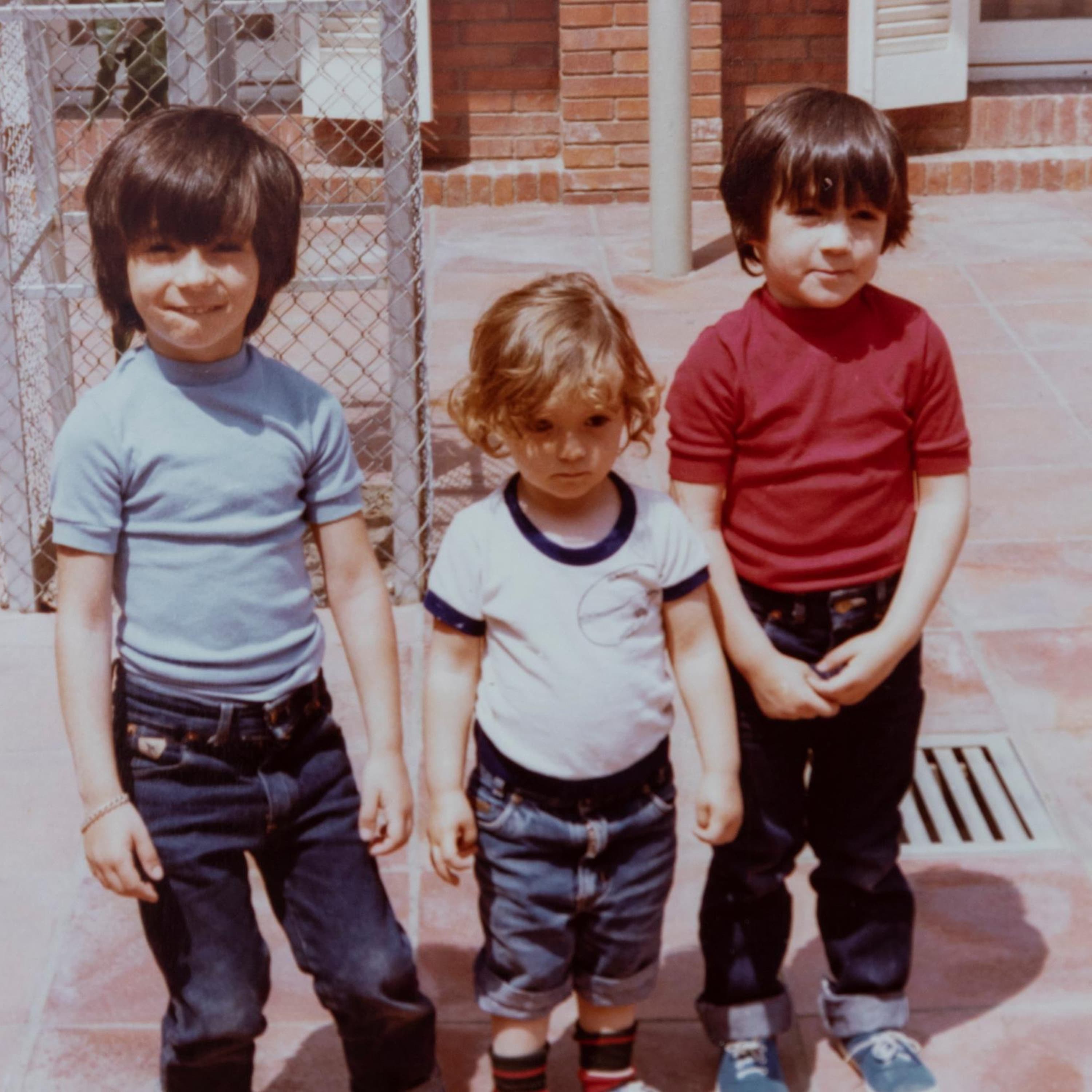
The Audio Long Read
From the archive: Three abandoned children, two missing parents and a 40-year mystery
00:47:37
This week, from 2023: Elvira and her brothers, Ricard and Ramón, were left at a train station in Barcelona aged two, four and five. As an adult, when Elvira decided to look for her parents, she discovered a family history wilder than anything she had imagined By Giles Tremlett. Read by Luis Soto
Loading summary
Transcript8 lines
- [00:00]
Narrator
This is the Guardian,
- [00:09]
Giles Tremlett
The Guardian Archive.
- [00:10]
Narrator
Long read.
- [00:21]
Giles Tremlett
Hi, my name is Giles Tremlett. I'm the author of Three Abandoned Children, Two Missing Parents and A 40 Year Mystery, published in March 2023. So to sum up, this story is about three children, three siblings, two boys and a girl aged 2, 4 and 5 who were abandoned at a railway station in Barcelona in 1984. And it's about their attempts many decades later to discover who their parents were and why on earth they were abandoned. So I was first drawn to this story because it's such a bizarre tale. Why didn't these children know who they were? They didn't even know their surnames, they didn't know where they lived, they'd never been to school. Why did no one come looking for them? Three siblings, but no parents, no family, no teachers, nobody came looking for them. And finally, because, well, effectively they're three orphans and we've always been interested in orphans, whether it's Harry Potter or Mowgli or whoever else. So in 2026, we're three years on, I'm still very much in contact with Elvira Moral, who is the girl in this story and the one who's leading the search. And they have found out more about their backstory. I'm not going to fill that in here because it's now the subject of a, of a Disney four part documentary series, but you know, there is more information out there and I hope that going forward and I work probably on a book together, there will be more. So the title of that series on the Disney platform in Spanish is Abandoned in English. I'm not sure what it's going to be presumably abandoned and the Disney series will be on the Disney plus platform, certainly here in Spain. I can't say for sure whether that extends to the rest of the world, but on I think it's the 26th of May.
- [02:45]
Guardian Announcer
Welcome to the Guardian long read showcasing the best long form journalism covering culture, politics and new thinking. For the text version of this and all our long reads, go to theguardian.com
- [02:56]
Narrator
longread three abandoned children, two missing parents and a 40 year old mystery by Giles Tremlett. On 22 April 1984, a sandy haired, ringleted 2 year old girl named Elvira was driven with her brothers Ricard and Ramon, aged four and five, to a grand railway terminus in Barcelona. The children, dressed in designer clothes, rode in a white Mercedes Benz driven by their father's French friend. He parked near the modernist Estacion de Francia and walked them into the hangar like hall, which had shiny patterned marbled floors and was topped by two glass domes. Once there, he told the children to wait while he bought sweets. The three siblings waited, but Denis did not return. Eventually, Elbira started crying. A railway worker asked what was wrong and Ramon, who spoke French and Spanish, explained. The police were called, but when they asked the children, their parents names, they did not know. Nor could the children give their own surnames or say where they lived, except that until recently it had been Paris. 5 year olds usually know such basic things. But the police were not overly concerned. Children are not generally abandoned without explanation, especially in groups of three. Authorities expected that very soon someone, a relative, friend or schoolteacher, would report them missing and the mystery would be solved. They made no attempt to alert the press or appeal to the public for help. That evening, police took them to an orphanage in Barcelona. Three days later they were moved to a care home for vulnerable children in the centre of the city. The mid-1980s was an age of faxes, telegrams and hand delivered mail, so international communication was slow. But police in France and across Europe were now informed of the three missing children. In Barcelona, days turned into weeks, but no one came came looking. Care home staff noticed that when the conversation turned to their parents or the past, the well behaved children either had nothing to say or walked away. According to one of their reports, staff decided not to push back against what they saw as a psychological block. A few weeks later, in May, an educational psychologist named Marisa Manera saw a photograph of Elvira and her brothers pinned to a board in a district office of Barcelona's social services. We are seeking information on these three children, read an accompanying note. A business card with the care home's number was pinned to it. Marisa and her husband, a teacher named Luis Moral, had fostered children before and they offered the three siblings a temporary home. The children moved in at the end of June. That summer, the five of them went on a camping trip, staying on the sandy delta of the River Ebro, 120 miles south of Barcelona. The children did not know their father's name, but they remembered his spectacular cars. A black Porsche, a grey green Jaguar and another white Mercedes Benz. When, during that holiday they saw a white Mercedes, two year old Elvira pointed and said, look, Papa's car. As if her parents had arrived. Months became years. In 1986, Marisa and Luis formally adopted Elvira and her brothers, giving them the surnames Moral Manera. Spaniards receive one from each parent. They got the three kid family they had always wanted. Elvira now a slender 41 year old woman with dark eyes, dyed silver hair and a chevron tattoo on one knuckle, told me this was shared good fortune since the children enjoyed a happy, loving childhood. We won the jackpot, as Elvira put it. The siblings became a tight gang, living a middle class existence in an apartment overlooking a greyhound track in Barcelona. Growing up, Elbira sometimes puzzled over why her biological parents abandoned them. But it did not weigh on her. The adoption was never a taboo subject. Occasionally, Elvira imagined her parents ringing the doorbell and greeting her with a breezy bonjour. Sometimes, at the end of nights out partying as teenagers or young adults, Elvida would ask her brothers to revisit memories of their previous life. The few they had were located in Paris and the French countryside, or on journeys to snowy Switzerland or Belgium. They involved road trips in their father's cars, a jumble of places and a grandmother figure dressed in black who forced them to drink milk when they stayed with her. But although Elvira liked to hear about their early childhood, she had no desire to search for her biological parents. As an adult, Elvira learned sign language and began teaching children with hearing difficulties. She was following in the footsteps of Luis, who had taught children with special educational needs. Luis died before Elvira's 18th birthday. She held firm to a conviction that when it comes to the way character is formed, nurture overwhelmingly trumps nature. In 2014, Elvira had a son with her partner Marco, an Italian eyeglasses designer based in Barcelona. During her pregnancy, as her body changed, Elvida started to feel unsettled by how little she knew about her biological family. What if her parents had some sort of hereditary disease? After her son was born, her curiosity increased and increased further with the birth of a second son in 2017. That same year, Elvira and Marco married and and bought a flat a few minutes from where Elvida had grown up. Looking down at a breastfeeding child, Elvida wondered whether her mother had breastfed her or what other rituals they had shared during the brief time they had together. Elvida's sons were so obviously heart wrenchingly precious to her that she imagined only a life shattering event could have driven her mother to abandon her children. As Elvira's sons grew older, she realized something else was seriously amiss. What 5 year old can't name their parents? She asked herself. In December 2020, she gave herself a MyHeritage DNA test as a Christmas present. She hoped the company's vast DNA database might turn up a Blood relative. To her surprise, it found only a small number of matches in France and many more in southern Spain. That was a shock. We were convinced we were French, she told me. But the results were vague at best. They showed just 1 or 2% of shared DNA with others on the database. And those Elvira contacted either ignored her or had no information to offer. That's it, well never find them, she thought. Even so, she wasn't ready to give up. Her quest had begun. Elvira told her brothers and Marisa that she had started to try to trace her birth family. Two days later, Marisa called Elvira and Ramon to her apartment for a family meeting. Richard was not in Barcelona. She had something to show them. A few faded newspaper cuttings that she had filed away in July 1984, shortly after the children moved in. The articles were about a Frenchman called Raymond Vacarizi. He was a mafia boss from Lyon who moved to the Spanish coastal village of Lescala, 85 miles north of Barcelona, in the early 1980s, as gang wars escalated and French police closed in on him. Vaccarizi ran a prostitution ring and protection rackets, and he was notoriously violent. Late in 1983, he was arrested for murder and sent to La Modelo, a 19th century stone and brick Barcelona jail squeezed into a densely populated residential district. From the upper gallery of one wing, inmates regularly held shouted conversations with friends and family down in the street. On 14 July 1984, Vacarizi arranged to talk from the gallery with his wife Antoinette, a French former sex worker. As he shouted down through the window grilles, a man with a rifle positioned on the roof of a six story apartment block across the street took aim. Two high velocity rounds struck Vacarizi's head. It was a spectacular and highly professional hit, widely covered in the local press. Rumours circulated that the sniper had dressed as a priest or used an elephant gun, or been trained by an elite French army unit. Nobody wept at Vaccaridzi's death. Nicknamed the Devil, he, he had personally meted out vicious beatings and murdered three rivals. After his death, his wife disappeared from Spain. Their teenage son, abandoned in Liscala, was taken in by a rival mafia family. Marissa explained to Elvira and Ramon why she had kept the newspaper cuttings all these years. Vacarizi was French and shared a first name with Ramon. Some stories the children told of fast cars and sudden trips suggested that their parents might have been involved in crime. Our theory was that you might be his children, she told them. That blew my mind. Elvira told me, remembering seeing the Vacarizee cuttings for the first time. But anything seemed possible when I visited Marisa, a small, neat 74 year old woman with short, coppery hair, at the apartment where she raised the children and where her three grandchildren were enjoying an afternoon hangout. She told me that they had even worried that gangsters might be secretly tracking the children. But Ramon, who is now 44 and lives near Elvida with his partner and infant daughter, dismissed the Bagarizi theory. He retained a clear image of their father as a man with the air of a winner and whitish hair as a child. Ramon had once startled the family by blurting out that a pale haired man on their television looked just like our father. The dark haired Baccharizi was very different. Although 38 years had passed, everyone accepted Ramon's judgment. His memories were Elvira's main source of clues. Apart from the cuttings and Ramon's memories, all Elvira had were the brief official papers registering her abandonment, in which doctors and carers describe her as a normal, healthy two year old whose only oddity was a desire to sleep lying crosswise in her bed. These documents created further confusion about whether their origins lay in France or Spain, with Ricard's name appearing first as Richard in French and in later documents as both Ricardo and Ricard Catalan. The official papers said the children and their father had lived with Denis, Denis's wife and their children before being abandoned. They had not seen their mother for a while and told care workers that their father had claimed she no longer loved them. Even though the siblings agreed that Vacarizy could not have been their father, Marisa's instincts that the children's biological parents may have been connected to the criminal underworld seemed plausible, fitting with some of the children's other memories. When I visited Ramon in a small penthouse apartment in Barcelona, he recalled once finding a pistol in a house where they were staying. He and Ricard started playing with it on an outdoor staircase. Ramon pointed the pistol at his brother, then turned away and pulled the trigger. The gun recoiled as he fired. A real bullet, he explained with photographic exactitude the shape of the staircase, the white outside wall, and a garden below. My father was furious, he told me. He remembers too, his father driving them to a beachside restaurant and leaving the engine running while he went inside. They waited a few minutes before he reappeared, bleeding from a badly beaten face. I recall the tension in the car as we drove off, ramon said. Rickard's memories are fewer but also vivid. His father parking the black Porsche Above a vertiginous cliff, a wood lined Paris apartment with a view of the Eiffel Tower. Visiting his father in a hospital room. They seemed like scenes from a French noir gangster movie. Her brother's memories pointing as they did towards her parents. Involvement in illicit activities started to make Elvira nervous. How do you peer into a world so far removed from your own stable, unremarkable, middle class existence? Despite her nervousness, she discussed with Ramon, using hypnosis to dig deeper into his memory. But when she consulted psychologists, they told her that hypnosis might produce false memories or kill off real ones. Elvira felt as if she had hit a dead end, a feeling that would return repeatedly over the coming months as she continued her search. In March 2021, a friend put Elvira in contact with Catalan radio station Rak? Un and she recorded an interview for an early evening talk show, Icelandia. Afterwards, she felt abashed and remorseful. Who would want to listen to her story? Did she really want strangers to know? She asked the show to drop the segment, but they reassured her and sent her a digital copy. I couldn't even listen to it, she told me. Nor did she turn on the radio when, at 7pm on 21 March 2021, the broadcast began. On air, Elvira told her story straight. She explained the darker theories about her father's criminal past and asked for help. Even though Ramon was now involved, she felt lost and alone. I don't know what to do, she said. Elvida insisted she was not angry with her birth parents. Rather, she felt sad for them and wanted to uncover the mysterious tragedy that she suspected had made them abandon their children. She did not realize that more than 150,000 people in Catalonia listened to Icelandia. While the interview was still playing, her phone started ping pinging crazily. People from her past, her work, and seemingly everywhere messaged her to express amazement or ask why she had never told them. Others offered help. She felt overwhelmed and exposed. Marisa told me she too was inundated by calls from friends who were listening. Her blood pressure shot up, requiring an urgent visit to the doctor. Many people in Barcelona know the Estacion de Francia, where Elvira and her brothers were abandoned. Listeners were touched by the image of the three young children left alone in its cavernous hall. And they wanted to help. In the weeks that followed the broadcast, Elvira's private quest became crowdsourced. Volunteers set up a Facebook page in Spanish and French, which attracted amateur sleuths and genealogists. Tips poured in. People approached Elbida with wild theories and false leads. A former French prison officer, for example, claimed to have stopped off at a bar with her father to drink champagne during his transfer between Parisian jails. Yet Elvira's story was already so dramatic that even the most bizarre theories seemed possible. Again and again her hopes were raised and then dashed. It was a frantic, difficult period for Elvira, since it was hard to judge who was trustworthy and who was not. She came to rely on a new friend, Monce Del Rio, a 51 year old forensic doctor who had heard her story on the radio. Del Rio had experience as a volunteer tracking down relatives of newly discovered victims of death squads from the Spanish Civil War. Elvira's story struck a chord with her and she became a tireless ally and advisor, travelling with Elvira to quiz relatives and reassuring her when she felt frustrated or let down. She always tells me this is a long journey, said Elvira. Another volunteer, a French speaking 54 year old amateur criminologist called Carmen Pastor, made the first breakthrough two months after the radio broadcast in May 2021. Elvira's was her first missing person's case. There have been more since and it consumed her for up to 14 hours a day. She asked Elvida for the DNA results, doggedly chasing down distant matches and their relatives. Eventually, a distant relative of a woman who showed a 1.4% match to Elbida and Cher's great great grandparents with her told Carmen that the story of the three missing children sounded familiar. The woman promised to find out more from some of her relatives and get back to her. On 15 May, Carmen called Elvira with news. It was early in the morning and Elvira was celebrating a friend's 40th birthday at a house in the country. I think we've found some of your family, Elvira recalls Carmen saying. Carmen was waiting for a final call that would confirm it, she said. Elvira remembers this day as one of the tensest of her life. Im in shock, she messaged Carmen. Can it really be them? Carmen herself spent the day nailing down details. It was a heart attack day for me, emotionally charged, full of nerves, she told me. By the evening, Carmen had the information she needed. I've just spoken to your second cousin. She explained that there were three missing children and that the eldest was called Ramon. Elvira remembers Carmen telling her on the phone, if the tip was correct, her father was also called Ramon and her mother Rosario. They were Spaniards from Seville and Madrid respectively. Elvira found it hard to trust this information fully. She had, after all, always thought her parents were French. That night, Elvira received a call from a potential second cousin called Lorena. If she and Alvida were truly related, Lorena said there were many more cousins, aunts and uncles who wanted to meet her. Could she do a video call with some of them? Elvira burst into tears. She called Ramon and told him to prepare for a video chat. She could not make contact with Ricard, who leads an alternative lifestyle in the Catalan countryside and shuns mobile phones. Night had fallen when Elvira stared into her phone screen at a potential first cousin called Marie, who was sitting with her mother, Felisa, a potential maternal aunt. They were 380 miles away, living in a working class Madrid suburb, and belonged to a once itinerant and marginalized tinker group called the Mercheros. The conversation was dizzying as Elvira struggled for something concrete to hold onto. Marie placed photographs in front of the camera. Soon Elvira was staring at herself as a baby and her brothers as small children. Then a photograph of an elderly woman was held up. That's the old lady with the milk. Exclaimed Ramon. It was their grandmother, Ines, who had died in 2013. Most striking were the man and woman who in other photos pushed them in prams, cuddled them, threw them in the air, fed them, and sat with them on balconies and beaches and in parks and cars, including the grey green Jaguar the boys had remembered. For the first time since she was a toddler. Elvida was looking at her parents. Their names were Ramon Martos Sanchez and Rosario Cuetos Cruz. Ramon was elegant, with a broad smile and a thick shock of greying hair swept backwards. Rosario was a striking dark haired woman with long hair parted down the center and and strong, evenly sculptured features. They had been 34 and 35 when the children were abandoned. On the call there were tears, warmth and joy. Elvira and Ramon agreed to come to Madrid with Ricard the following weekend to meet their new family. They had solved the first part of the mystery. They knew who their biological parents were. The next question was clear. Where were they now? Elvira had hoped her new relatives might know, but they, like her, had no clue. Nobody had heard from them since 1983. Thanks for listening to the Guardian. Long Read the the story continues right after this welcome back to the Guardian. Long read. The day after the video call with Madrid, Elvira spoke for the first time to relatives of her father in Seville. Her father had been one of seven siblings, only one of whom was still alive. Elvira's Aunt Luisa. She was old and very sick and she died before Elbira could meet her, just two days after discovering that her nephews and niece had been found. She was the matriarch. She could have told us so much, Elvira said. The next weekend, Elvira and her brothers went to meet her mother's family in Madrid. During the visit, Alex and in conversations with the Seville family, Elvira assembled some of the puzzle pieces of her past. Her father, like one of his brothers, had become a burglar. Elvira later found their mugshots in a newspaper after their arrest in 1973. In 1978, he fled to France with Rosario after a police shootout. At first, Ramon and Rosario stayed with some of his relatives in Paris. But after Rosario argued with them, the couple moved into their own place. Nobody could recall their address. Elvira's new relatives remembered her father Ramon as clever, charming, fun loving. His extrovert Seville family said he grew up in an atmosphere immortalized by a film genre called Thine Kinki, in which young 1970s chancers battle poverty, only to end up dead in jail or addicted to heroin. In France, Elvida's father climbed to a higher rank of criminality, apparently dealing in counterfeit money, jewels and other high end, high risk goods. The early 80s was a period of spectacular bank heists in Paris, and it didn't seem impossible that Elvira's father had been involved in some of them. Her brothers had memories of a box filled with glittering precious stones, a jar of coins, and their father boasting their home was like the Fabrica de la Moneda y Timbre, Spain's national mint. Elvira's biological parents first attempts at having children failed. A soothsayer told Rosario not to worry, that babies would come and they would come in a rush. In France, she duly gave birth three times in three and a half years. Relatives were adamant that Rosario had loved Ramon Ricard and Elvira intensely. She and her husband kept up constant contact with relatives in Spain through letters, postcards, photographs and phone calls. And the children were occasionally sent to Madrid to stay with grandmother ines. But in May 1983, almost a year before the children were abandoned, communication with both sides of the family stopped. Occasionally. A French woman called Madrid, shouting Rosario and Ramon down the line. But nobody spoke French and the calls dried up. The families considered reporting them missing, but they didn't trust the police. What if Ramon and Rosario and their children were running from the law? The Madrid family consulted another soothsayer who said the children were ok, but the Parents were in a dark place when I met Elvida's new aunt, Felisa for a coffee in Madrid recently. She was delighted to have found her niece and nephews, but bemused about what had happened to her sister Rosario. During their final phone conversation in May 1983, Rosario, who used to ring her sister from French payphones, had explained that Ramon Senior was very ill, which matches reports from other relatives who told Elvira he spent time in a tuberculosis clinic near Paris. For a long time, Felisa had worried that he might have died, sparking a wider tragedy that engulfed Rosario and their children. I thought maybe she lost her mind as a result, felisa said. For decades, Elvida had felt comfortable as an adopted child. Yet she told me there had always been a part of her that had questions. Was I older or younger than I thought? Even something as silly as what is my real zodiac sign? In the absence of birth certificates, the children's ages had been estimated and their births registered in Spain on the closest Saints Day, 25th of January 1982 for Saint Elvira. But with their parents names now known, volunteer genealogists in France found Elvira's birth certificate. She had been born in Paris on 29 December 1981. Elvira was delighted, not least because the siblings planned to visit a tattoo artist together and have the Eiffel Tower inked on their sides. If they had been born elsewhere, that would have been a terrible mistake. I told them, don't worry, we're from Paris. The Eiffel Tower was inked in triplicate. The other two birth certificates arrived soon after, confirming all three had been born in Paris, though with different home addresses. Richard had to add seven months to his age, and Ramon 12 weeks. Finding out the real date moved me to tears. Ramon told me Elivida knows she had a better life with Marisa and Luis than she could have expected with her birth parents. I would have grown up differently, developing a different personality and values if I'd been with them, she said. Rosario had a dark, hard side to her. Someone had said she rarely laughed. I think she had a tough life, made harder by being always on the lookout or on the run. Elvira said she didn't see Rosario as one of those stay at home mafia wives distanced from their husband's criminal enterprises. When Elvira imagines finding her parents, she pictures herself talking to her mother. I'd still like to ask her, what was my birth like for you? She said. Other people know these things. Her father seemed easy going and popular. But he too had a darker side. His own brother had disowned him because he beat Rosario. He was also a womanizer. Elvira's brother Ramon, recalls playing a game of dare with Ricard after being left outside a door where their father was ensconced with more than one woman. Which of the boys would be bold enough to knock? Elvira's biological parents were not always easy to admire, according to the codes by which she was raised. To me, my mother is the person who brought me up, she said. But there is also something else important, something genetic, a blood link like I have with my brothers. She still wanted to know why she and her brothers had been abandoned. The photographs depict a close, happy family. What had gone wrong? Elvira hoped that her parents had been protecting them from a greater danger. Before he disappeared, her father had told a cousin he was close to pulling off a major heist ordeal. Had he been out of his depth? Or perhaps he and Rosario had reconciled, seen the danger and fled far away. There were other, more distressing scenarios. Ramon might have killed Rosario. The couple may have been murdered by a rival gang or died in an accident during a job and been secretly buried. There were many ways her father's clever, imaginative mind, always looking for the next trick, could have landed him in trouble. Trouble. Paris was the last place Elvira knew her parents had lived. It seemed the logical place to continue her search. In March 2022, she and Marco spent a weekend there, and I joined them. We had first met in Barcelona a few days earlier, when Elvira told me that some elderly Spanish bar owners in Paris, having been shown photographs of her father by French volunteers, claimed to recognize him. When we met in Paris, she was giddy from talking to them, since they had confirmed that they recognised her father. But when I talked to both bar owners the following day, I left, convinced that their memories were false or unreliable. I might have seen the father on the street yesterday, shrugged 71 year old Arturo Sanchez as we sipped coffee in the wicker chairs of a cafe. Elvira's curse, I realized, is that people desperately want to help, even when they have nothing to offer. She carried around a photograph taken shortly after they were abandoned and the three innocent looking children staring up at a camera melted hearts. Her eagerness for answers and her anxiety about what those answers might reveal spurred people to offer hope. Elvira and Marco had to fly back to Barcelona before they could visit the address on her birth certificate in the north of the city. I went to look for it, taking with me a 1982 photograph of Rosario in in bell bottomed trousers and a turban like headscarf, standing in an alleyway with baby Elvira. Local people pointed me to a warren of alleys where bijou homes now sport security cameras. Ramon had recalled playing in front of a fountain that spurted water out of a wall round the corner from where they lived. A man sweeping his yard at the end of one alley pointed at a house opposite. They had a wall fountain in the garden, he said, but it has been rebuilt and the fountain has gone. The find seemed to confirm Ramon's laser like memory. It was exactly where he remembered. In the absence of other clues, Elvira and Ramon could not shake off the thought that the Catalan beach town of Lescala, with its past as a hideaway for French gangsters like Vacarizi, formed part of their story, even if Vacaritzi himself did not. Had their father worked with the gangs? Was this where Denis had lived when he took them to Barcelona and dumped them? They had no other clues about Denis, but Ramon recalls he was very close to his father and suspects that he is the man dripping in gold chains and bracelets pictured opposite Ramon Sr. In photographs from from a holiday in Belgium. Ramon also thought Liscala was the sort of sunny Mediterranean seaside place where the childhood pistol incident had happened. In mid September, I was guided around the town by Jordi Jacas, a local hotel owner. Among the frail white haired men and women drinking a late morning aperitif or coffee in the pavement terraces, he pointed out former smugglers, hitmen and call girls. I spoke with or passed messages on to four former gangsters who rang old colleagues now living in Lyon, where many French mobsters had moved. People either did not know, did not remember, or did not want to say if they had known Elvira's father or Denis. Some reactions were indignant, especially if they thought they were being accused of harming three small children. Three weeks later, I returned to La Scala with Elvira and Ramon to meet the daughter of a former French mafia boss. The siblings wanted to know if their story rang any bells. It didn't, but the woman felt huge sympathy for Elvida and her brothers. I know what it's like to grow up in that kind of family, she said. Her panicked father had once hurriedly sent her away from Liscala with her brother after hearing rumours that a rival gang planned to kidnap them. Before we left, Ramon insisted again that the place felt familiar. It's the houses, he said, pointing to the handsome two story villas. In late October, I drove Elvira From Seville, where she had been seeing her new family, to Tarifa, Spain's southernmost point. This is where Elvira's father's 90 year old aunt Manola lives, along with one of her adult granddaughters and a small yappy dog, in part of a converted farmhouse overlooking the Strait of Gibraltar with clear views of the coastline of Morocco just a dozen miles away. This was Elvira's first time meeting her great aunt and it was a moving encounter. Manola wept as she exclaimed how much Elvira looked like one of her father Ramon's deceased sisters. And she told tales of his spirited nature and how he once escaped from a police cell. Sometimes the conversation paused as great aunt and great niece held hands. Your mother hit me once, manola said suddenly. Elvira had heard about Rosario's fierce temper and high handed manner. I've heard her called a bad woman, she admitted, citing other relatives on her father's side. When I asked later if she worried that her biological parents were wicked, Elvira was protective. I've asked myself that. But then I look at photos of my father playing with us and think, a real son of a bitch doesn't do that, rolling around on the grass with the kids. Good people, she felt, end up doing bad things for many reasons. You can be a pickpocket and a wonderful person at the same time. Elvida's quest had changed. Her early insecurities have given way to a firm resolve to keep digging. One thing this has taught me is. Is to be patient, she told me. I'm not usually good at waiting. At the same time, she does wonder if she has sometimes been too caught up in her search. I've got a job, family, friends. You can't just ignore all that and devote yourself only to this. She said that one of her own sons, hearing the stories about his mother's childhood, had begun to fret about abandonment. I tell him this is something unique that happened to me and won't happen to him, she said. At dinner in Seville the night before her meeting with Manola, I was struck by how well she fitted into this branch of her newly extended family. Rosamari and Anna, two second cousins about the same age as Elvira with careers as a teacher and a social worker, were there with their children, as was Elvira's first cousin Manoli, a 55 year old flamenco dancer. Over the summer, Elvira had holidayed with this family in Seville, taking her children. She had become close with Rosamari, Anna and Manoli, and the four women now occasionally chat together on Video calls Elvida recently told me she was heartbroken to hear that Manoli planned to leave Spain to teach dance in Japan, where flamenco is popular. The sense of ease and connection Elvira experienced as she spent time with her family in Seville suggested to her that in the battle with nurture, nature was stronger than she had thought. Why had she always liked flamenco, something so alien to Catalan friends and family? Why was Ramon enamored of any kind of dance with percussive footwork, whether it was tap or the thunderous heel and toe of flamenco? Your father loved flamenco. He always had it on the car radio, Aunt Felisa had explained. The 600 mile gap separating southwestern Seville from north eastern Barcelona is more than geographical. According to the often exaggerated stereotype, Catalans are serious and business minded, while Andalusians are happy, go lucky. Festive and superstitious, Elvira felt at home in her biological father's outgoing, garrulous, affectionate family. And in Seville, even though she found the lisping Andalusian accent hard to understand. None of this changed her tight relationship with her family in Catalonia. But her new relatives and discovery of her biological roots filled an empty space she had not known existed. I feel more complete, she told me. Elvira still longs to know what happened to her birth parents. Ramon Senior and Rosario would now be in their mid-70s. If they were alive, surely they would scour the Internet for their children. Elvira knows that the fact that they have never made contact means that they are probably dead, perhaps killed by gangsters skilled at making people disappear. But it doesn't stop her fantasizing that they are out there, she told me. When Elvira was small and asked Marisa about her birth parents, she always received an answer along the lines of, you are fortunate. You have two mothers, two fathers and two families in Paris and Barcelona. If her biological parents ever appeared, Marisa said they would all get along. It was a good way to calm an anxious child. But it has also turned out to be close to the truth. Elvira really does get along with her biological family. Her horizons have broadened as she has travelled to spend time with them, and since her father had six siblings and her mother had eight, there are cousins Elvira is yet to meet, though money for trips is tight. I may have to do this little by little while the kids are growing up and launch myself fully at it afterwards, she told me. Some lines of investigation remain to be explored. Attempts to obtain police files about their abandonment and their father's criminal past have so far failed, though Monse del Rio thinks Elbira will gain access to them soon. And Elbira continues to be buoyed up by the success she has had from crowdsourcing her search and by the volunteers who have been eager to help. The kindness of strangers, especially of her adoptive parents, has always played a crucial role in her life. The last two years have validated her faith in such kindness, which she hopes may yet help her solve the final riddle of what happened to her parents. When I last saw Elvira at Marisa's apartment in early March, she and Ramon were preparing to visit La Scala again. They planned to speak to more people who lived through the town's gangster period. You never know when something is going to drop, said Elvira. It's happened before and it can happen again. Thanks again for listening to the Guardian long read. That was three abandoned children, two missing parents and a 40 year mystery by Giles Tremlett, read by Luis Soto and produced by Rachel Porter. The executive producer was Nicole Jackson.
- [47:11]
Guardian Announcer
For more Guardian long reads in text and a selection in audio, go to theguardian.com longread.
- [47:30]
Narrator
This is the Guardian.