← The Audiobook Club with John York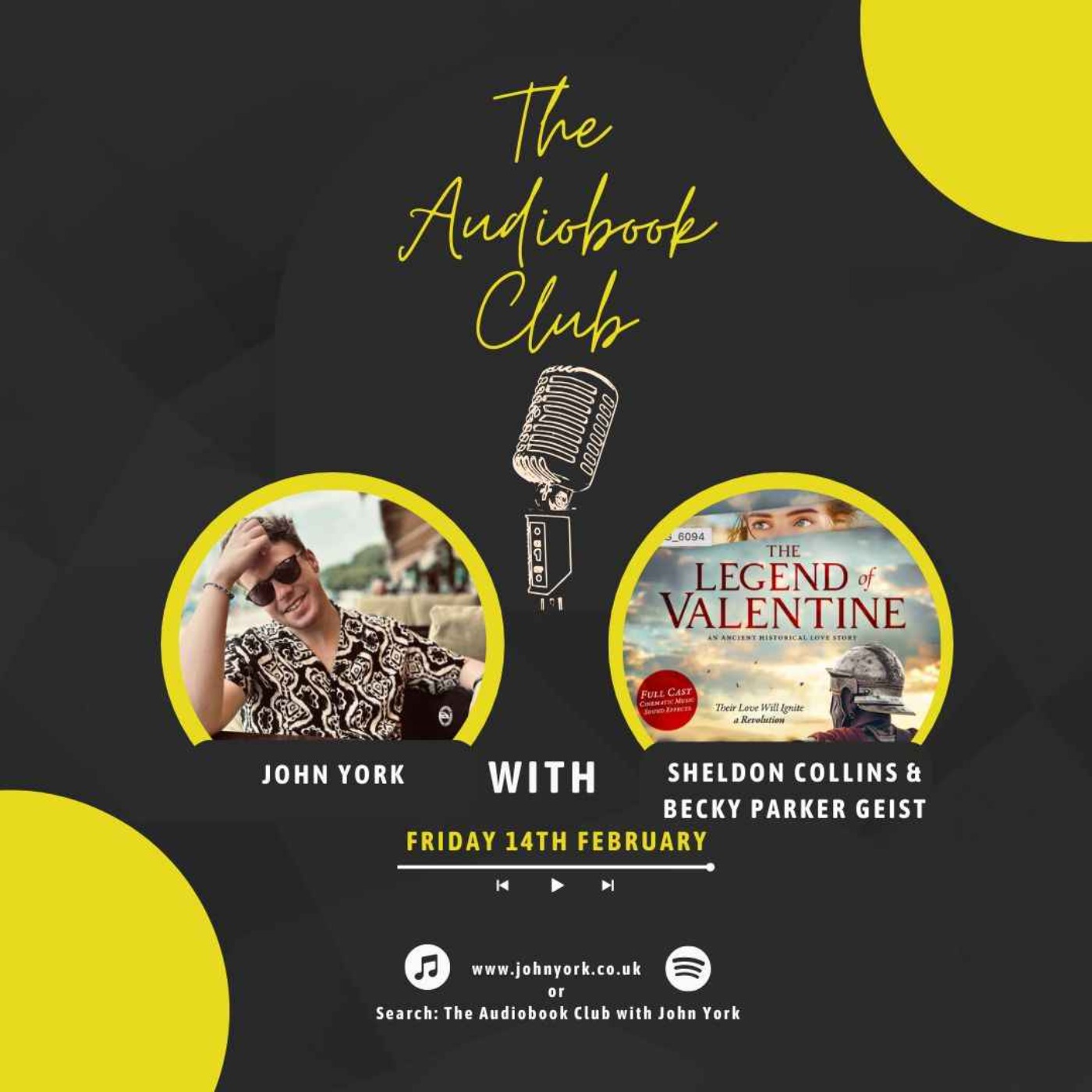
The Audiobook Club with John York
Special: The Legend Of Valentine w/ Sheldon Collins & Becky Parker Geist
00:46:57
Producing a Mighty Full Cast Audiobook!
Loading summary
Transcript51 lines
- [00:01]
Narrator
Rome, 268 AD. In an age of tyranny and turmoil, their love will ignite a revolution. Valentine, a once fearsome warrior reborn from the brink of death, sheds his violent past for a new destiny. Inspired by his blind lover, Agatha. Amidst the ruthless rule of a merciless emperor, Valentine undertakes a clandestine mission to unite lovers in secret ceremonies, defying imperial decrees that threaten to obliterate the Christian faith. As Valentine's covet acts of defiance grow bolder. He challenges the tyrannical order, planting the seeds for a celebration of love that will echo through the ages, becoming the foundation of what we now cherish as Valentine's Day. The Legend of Valentine is an epic tale of love, war, faith and rebellion against the backdrop of an empire in chaos. This gripping saga invites readers into a world where love defies all odds. Heroes rise from the shadows, and the undying spirit of hope shines through the darkest times. Discover the man behind the myth. Witness the birth of a legend, and experience a love story so profound, it promises to live forever. Are there any limits to what one man will endure for his true love?
- [01:38]
Host
Hello and welcome to the Audiobook Club. Today, we're so lucky to be joined by author and director Sheldon Collins and CEO of Amplify Audiobooks and Pro Audio voices, Becky Parker Geist. Hello, both. Thank you so much for joining me on the show. How are you both doing?
- [01:55]
Becky Parker Geist
Great.
- [01:56]
Sheldon Collins
We're doing great and happy to be here.
- [01:58]
Host
Becky, I am thrilled, of course, to welcome you back to the Audiobook Club, as I believe you were part of the very first season. But Sheldon, is your first time on the show, so would it be, you know, ever so cheeky of me to ask just a little bit about your background and, you know, how you found yourself putting finger to keyboard and crafting the story that we're going to learn a lot more about in today's show?
- [02:22]
Sheldon Collins
Sure, sure. So my background really started well, I started writing first. I first started writing a novel in the mid-90s, and thankfully that never got published. We're going to keep it back in the 90s. However, I went quickly into writing screenplays and directed my first feature film around 2020, or actually the 2000, rather, I wanted to say over 20 years ago. And then I did some TV and, you know, in between got my master's in directing and wrote a bunch more screenplays and did some commercials. And so just a bunch of really fun creative stuff that mostly was was independent, independent films, some TV for the networks and then some kind of corporate clients that kind of thing. So I started a while back in my mid-20s with just writing and that kind of went into directing. So that's, that's really where I started from.
- [03:19]
Host
Fantastic. So the Legend of Valentine. Again, we're going to be learning so much more about this. But just very briefly, can you let us know like where this kind of began with you? You know, when did that, when did this sort of become apparent to you that this is an area that you want to explore creatively as a storyteller?
- [03:38]
Sheldon Collins
Well, that's an interesting story in itself. So the Legend of Valentine. So I was, I was in the middle of directing a lot of different types of things, whether it was TV and film at that time, it was back in 2006. This goes way over 20 years ago. And I had a friend who is also kind of like a modern day healer and his name is Lee Holden. And he brought me this screenplay that he had written a draft of one of the iterations, one of the, you know, of what he thought that St. Valentine could be in terms of the story. And so another writing partner and I, and an investor at the time who was interested in investing me directing movies, we picked up that story. We worked with Lee just to kind of get a little bit of idea of, you know, he became kind of like a qigong consultant to us because there's a little bit of aspect of Eastern healing. He wasn't really a storyteller per se. He was more of a modern day acupuncturist, qigong master. So he related to Valentine's arc and story in the legend. And so he brought us a draft that we ended up doing a significant amount of development made, made it our own. And that process took several years. So it came to me, I think, like it does. A lot of, A lot of other people have heard about Valentine or Saint Valentine. It's a legend that's been out for almost a couple thousand years. So there, there are other versions of. There's commonly held points that have been passed on through history, similar to Robin Hood, where it's like we believe this happened, that happened, this happened. And then there's certain storytellers who kind of crafted their own narrative around it. We had crafted, you know, one version of it and then another writing partner and I started and really ran with a whole other idea that got very close to getting made into a major film in 2012. And so Paramount and Robert Evans Company and Bob Evans at that time was interested in doing as his swan song, another love story which is saved. Paramount Back in the day and, and there was a big time director who came in and so we nearly got it made until we didn't. We lost our director. And it was too big of a film at that time for me to consider making. It was like it would have been $100 billion plus film looking at doing much smaller budgets at that point. And so it got shelved, you know, like a lot of screenplays do. I mean that's the, that's the reality of the entertainment industry is there's so many screenwriters out there that write great things that just for whatever reason don't click with the studios marketing algorithms or whatever. And so as an author, years later, when I was looking at kind of going back to expressing myself in this medium, it was just always the story that really stuck with me that I was like, you know, it's just would be so exciting to dive into it again and kind of go through the process, the other direction, from screenplay to novel. And normally it's novel to script, right. Like the adaptations of books. So it seemed like the perfect place to really start writing, writing books again and make it my. I'm going to call it my debut novel because I'm going to forget the one that I tried to do a long time ago. And so that's how it all came about. It's been a long collaborative process and turning it into a novel just became a whole nother level of taking the story so much further and so much more research. So this is absolutely fantastic.
- [07:17]
Host
I cannot wait to dive into more of that journey. But just before we do, Becky, I know you have already been on the show, but we have had a fair few listeners join us after that episode dropped. So may I ask very cheekily if I could also just learn a little bit more about your background, as I know that you are a lifelong storyteller of all mediums. And just let us know a little bit about your background and of course to transitioning right now to amplify audiobooks, priority voices, audiobooks in general.
- [07:45]
Becky Parker Geist
Yeah, well, so I came into the. I always wanted to be an author myself, you know, and, and an actor and got to do. Have gotten to do all that, which is very fun. But I came into the audiobook realm from theater, so acting was my, that was my thing. And then pretty quickly I was into. I started with Talking Books for the blind back in 1981 when it was the big reel to reel, you know, tapes, analog, very different from what we're in today, but always kept theater going. And then in about 2011, but officially in 2013, I launched Pro Audio Voices, and then Pro Audio Voices, where we do audiobook and podcast production, distribution, and marketing. And then we developed Amplify Audiobooks out of that, and continue to develop Amplify Audiobooks as a way to address some of the. Some of the real challenges in the audiobook industry that we kept seeing for our clients and a way to really make a bigger difference in the world, both for authors and for listeners. And what's been really fun for me over the years is when I started doing audiobooks, it was me a single narrator as the actor, but I kept wanting to do more, to serve more, you know, and so that gradually, over several years now has changed from it just being me doing everything, to where we have a big team, we have narrators all over the world, we have just team members all over and serving a lot more people. And it's. It's so rewarding. I just love it. But it also gives me, as we move into projects like Legend of Valentine, where we're doing the full cast, full production experience. It lets me bring all of those skills that I've developed over the years as a theater producer, as an actor, being in film, directing film, all of those. And then, of course, all my experience with audiobooks, pulling that all together to move projects like this forward. Super exciting, and I love it.
- [10:25]
Host
Fantastic. So the Legend of Valentine is, of course, like a huge story, as we've mentioned, but in terms of, like, producing the audiobook, you know, as we've mentioned, a full cast, you know, sound effects, like, as about as immersive as one can get. So, like, Sheldon, what made you realize that you kind of had to go, like, all in on the audiobook? It needed to be this colossal, huge, immersive piece of stories that. How did that sort of come about with you? What was your sort of process in sort of making those decisions?
- [10:58]
Sheldon Collins
Well, I think as, first of all, as a writer, director, I mean, it's one of those things where if, you know, that's. That's the payoff. Right. It's like, you know, when you write a screenplay, you're writing it because you want to see it come alive, you want to see it performed. You want to. You want that extra to go out and experience that extra means of expression. Right. So I've been trained as a director. It's always been in my blood to write stuff that I want to see made or to work with other writers. So naturally, I. That's kind of the biggest payoff for me. Is to see, to see my words really jump off the table and the audience to appreciate that and the actors to enjoy the ability to play those out and add that extra layer of collaboration and expression and art form and so forth. So it's just so exciting for me to see words come alive. So going into it, I'm always thinking about, you know, making it with Valentine when it was a screenplay, you know, I wasn't, you know, the reality of me making such a big movie as a director, it just wasn't in the cards. I still had more to prove to get, to get there. But as an audiobook, you know, that's different. That's something where I felt very comfortable directing it with, with my background and it's something I really, really wanted to do. I mean, it was just a no brainer for me to say, you know, I want, I'm, I'm writing this novel because at the end of the day, I love my readers. I love people that are going to actually be able to read it and go directly to the consumer versus going direct to like a studio exec. So that's fantastic. But what really gets me excited is the fact that we brought this incredible cast together to perform it. Right. And so it's always been something that I've wanted to, to do and just the fact that it's an epic and it just, it merits, it was just made it even so much more meaningful to go that direction with it. And of course, we had so much fun, Becky and I, collaborating on this, all the way through it. And yourself as well.
- [13:05]
Host
Yeah, well, so Becky, when a project such as this comes across your desk, like, is there excitement? Is there, you know, a lengthy exhale, all of the pieces that have to come together, you know, of taking something on, like, can you talk us through, like, kind of how, you know, your thoughts, your thought process when you were first, you know, when you, when you first sat down and was made aware of this.
- [13:30]
Becky Parker Geist
Yeah. So it all began with, you know, conversations with Sheldon. And I could tell, I could tell early on that, you know, we were, it felt like we were a good fit for each other. You know, like the conversation was easy and I understood, you know, I get where he's coming from. And, and I have found that authors who have film directing experience, we tend to work well together, so that's pretty awesome. But then when I got to look at the manuscript and did like my typical, I'm going to read it aloud, you know, for a couple minutes, kind of get a feel for how the writing Is. I was like, oh, wow, this is great. This is great. So. So it was. It's just pure excitement. I just. I love. I love the moment of recognition that, oh, yeah, this is. This is a good one. You know, this is something we want to move forward on. But I just have to say this is the first time that we have produced a project where the author is also co directing and. But I had such a good feeling about it, and in fact, it has played out really great. It's such a great experience. Fascinating how many times we were in sessions and I'd be just opening my mouth to, you know, to give a note and then Sheldon would jump in or, you know, the opposite would happen. I'd go, yep, we are so in alignment. We just know we have the same ideas about it.
- [15:10]
Sheldon Collins
Yeah, yeah, yeah.
- [15:13]
Host
So finding. Finding the right voices is such a pivotal part for any audiobook. But I think, you know, for the Legend of Valentine, it was, you know, it needed to be right. And especially on this scale, there was so many, you know, we're talking about quite an array of voices to collect, you know, in a very specific characters and all the rest of it. So a question for both of you. What was the casting process like? Was it challenging? Was it daunting? Like, how did that look like for you with so many voices and. And all the rest of it?
- [15:45]
Becky Parker Geist
One of the things is, you know, you're all. We're always listening initially for. Does this. Does this actor. Is when we hear them delivering these lines in their audition, do they. Do we believe it? You know, are. Do we get that? Oh, yeah, that's the voice of that character. But there's this another aspect that I think is unique to audiobooks, and that is when we have multiple people in a scene, it's going to be better if we have those voices being distinct enough that we can make out who's talking. You know, once we get used to those voices a little bit, that we know what that character is. And the other thing that we're listening for is how well can at least some of the cast differentiate their voices themselves to play multiple different characters? Because it's, you know, it's. It's unwieldy and kind of generally financially not feasible to have every single character that may just have, like, oh, I got one line right, that has these really minor characters. To have them played by a whole other actor just doesn't really make sense. And so we're looking for that level of skill and talent in the cast to be able to fill in those other smaller roles. And you know, sometimes you get to a certain point and you've already cast it and then you realize, oh, wait a minute, we may have made a mistake with it. You know, we may need a different voice here. And so while most often we're able to like, find all those right voices at the beginning and go straight through, it does happen in full cast productions where you have to make a change after the fact or partway through recording. And that can happen because, you know, maybe an actor isn't great about actually showing up as they've committed to do. And so you guys like, well, that's not going to work, you know, or, or any other, any other, you know, there are other reasons as well that can come up. So it's an interesting process. And while you think it's all going to happen at the beginning, sometimes it continues on further into the project.
- [18:20]
Sheldon Collins
Yeah. And I would just add to that that, you know, even for the, from the jump, I mean, Becky and I really saw eye to eye in terms of, I mean, first of all, the whole thing is with a British accent. Okay. So not all, not all epics are go that direction. I think most of them do to give it a European flair. That was the first decision we had to make. There are some audiobooks that are set in the period in Europe that our American accent or even Australian accent. So that was important for me and I should say for us, secondly was just looking at the talent. We had a lot of voiceover actors audition for this audiobook and Becky hit on all the things that we were really looking for to just, you know, have those voices stand out and, and then, yeah, I mean, throughout, you know, once we got to the end, most of, most of the roles that we picked and stuff stayed. There were a few that we added or changes changed once we listened to everything together. Not necessarily the voice act, the, the actors fault in any way, but just certain things, modifications we made. But I mean, the voices, the actors that we picked, I mean, their voices really stood out to us. I mean, we both, you know, we might have 20, 30 actors that audition, and it always came down to that. There was one or two that just were like, wow. And then it. At the end of the day, we might have had a second callback. In some cases we had a third callback to really nail it down and pick the right actor for, for this audiobook. And I, I'm so excited with everybody that we worked with because they were just incredible and it just came out fantastic.
- [20:08]
Becky Parker Geist
Yeah. One of the places where. When I was talking about the casting kind of morphing later on, it is almost always. It was with. And probably always just. I have multiple projects in my head right now, but it's usually because somebody who's been cast as their primary role, then when we tried to fit them into a minor role, it just wasn't as good a fit. And so we kept them in their primary role and any other roles that worked, but found a different solution for some of those smaller ones.
- [20:49]
Host
I get that. Becky, in your experience with audiobook production as a whole, but especially with full cast audiobooks, what would you say is like. Is a challenge that you have come across that perhaps that some of our listeners may not expect when dealing with these huge, you know, audiobook projects.
- [21:07]
Becky Parker Geist
Scheduling is, you know, it's a bigger challenge than people may even think about because it's not like we have actors across multiple time zones. In this particular case, we went from India to Pacific time to India time to Pacific time. So, you know, and many time zones in between. So just trying to get everybody lined up into sessions is a huge, huge challenge.
- [21:44]
Sheldon Collins
Yeah, but I think the. But the performers were. I mean, on the positive side, everybody came up just so incredibly. You know, for me as a director coming from TV and film, I thought I would. I was concerned about not having enough time to work with the actors because I'm used to spending a lot of time with rehearsals when for on camera stuff. So that was a concern of mine because typically we'd have a few minutes to talk to everybody. Performing, narrating. And you know, I'm like, we only have a few minutes here of prep before we get right into this. And, you know, I mean, yes, they're narrating, but in this case, you know, they are performing. You know, as. As, you know, it's like we. We have the main narrator go off and do the whole book, and then we're just. We're reading only, you know, they're performing all the dialogue so that. That, you know, I wasn't sure how that was going to all play out, but it ended up. It came out great because the actors were really ready. They knew exactly where their character should be. And then we just tried to help them stay on point.
- [22:49]
Becky Parker Geist
Yeah, I was another challenge. And this is related to both those things, both schedule and what Sheldon was just talking about. And that is because of needing to do it in an efficient way. It always means that we're jumping around in the story. So we may go from the beginning of the story where, you know, the characters are one age and one mindset and are at this point in their character arc, and then we are hopping to way later where big things have changed, and now they're at a very different time in their character arc. And keeping track of that is a challenge for everyone. So it's for the actors themselves, for us as directors. And our, you know, project manager is helping us keep track of all that as well. So it's a real team effort.
- [23:50]
Host
Yeah, that's a really good point, you know, because. And, Sheldon, maybe I can throw this to you because of your background in TV and film, because I know that you're, you know, you're not necessarily shooting things in a linear fashion, but perhaps in TV and film, you have a long, you know, you have a day to do, like, a scene or two scenes or whatever. But as Becky's just said in this, you may be, you know, one scene for 15 minutes and then completely at the start of the book for the next 15, and then somewhere else for the next. I mean, that must have been challenging from your point of view, trying to get, you know, emotionally there in that scene, you know, to be there. And that's got to be a challenge.
- [24:23]
Sheldon Collins
Yeah, it's fast, actually. And you wouldn't think of an audio book being fast in terms of keeping up with what's going on. But, you know, in TV film, you're right. You have a lot of time to work with the actors. You have rehearsals, you know, when cameras go on. You can have multiple takes, all that kind of stuff. Audiobook is different. It's. We're cutting out. I want to say cutting out the fat, but it's probably a bad analogy to use. But cutting out the main description. We're getting right into the dialog, and we're mostly trying to nail it in just one or two takes. You know, there's. There's. There can be a little bit of, like, cut, let's go back and maybe do it two, three times, move forward, give some notes and stuff. So as directors, you have to really be focused the whole time on exactly where that character is. So if. If. Where they are in their emotional arc. Right. So. And especially when you're just quickly going from chapter 25 back to chapter 5 and then jumping forward to chapter 7. So I would. I would be looking at my notes constantly, you know, which I would make the night before in terms of when we do this scene the next day, where is every single character? And then when I was in the scene, I was very much Thinking about where all those characters were emotionally in order for the delivery to come off authentic. So it's challenging. It's, it's, it's. It actually moves pretty fast when you're the director. It's, it's moving quick to keep up with where everybody should be, which surprised me. I thought it would be like, oh, it's just going to be this slow process of reading a book. And that wasn't the case at all. Right. It's like, no, no, it was very. I mean, I remember the production manager saying, like, oh, by the way, we got it. We got to finish this scene within this chapter in 12 minutes. And then we jumped to this one. I was like, whoa, it's quick. Actually, it was very quick to know.
- [26:13]
Host
It's so funny that you say that. I can say on previous episodes of this show we've had a few sneaky tales from engineers and other audiobook directors who have like, you know, stories where they may have perhaps dozed off a little bit while, you know, listening to a narrative read or if there's a particularly sort of, you know, heavy non fiction book and like tales like that. Whereas if you, you know, take stories like that, parallel, parallel them to what Valentine's recording was like. I mean, Becky, because we were recording the dialogue as. It was like drama. It was like recording drama. The energy was there. Like the voice actors could feel it. I think everybody on that call could feel, you know, there was just this high energy. Was it something that you picked up on? Was it, you know, higher energy than perhaps one's used to most of the time?
- [27:05]
Becky Parker Geist
Well, you know, what's. We had actually shifted our process just a little bit for this project. And now this is what we're doing going forward with full cast. But I was actually really excited about this approach of bypassing the narration, you know, in the sessions. So we're just getting the, just the dialogue because it gives each of the actors. There's none of that, oh, hang on, while the narrator does their thing or there's, you know, you don't have that delay of reaction. So, you know, if you have one, say you have one person, one actor or character who, you know, says something outrageous and then it pisses off the other one. And we hear the narrator tell us about how they throw him up against the wall. But I mean, the actors know that that's what's happening. But they can go straight into the don't you ever. Or the how dare you. You know, whatever their line is. And so you, you don't have. There's a. How do I say it? There's no deflation that happens in between as we kind of wait for the narration to happen. It's just one person reacting to the other person, you know, and all that. So all that energy, you don't lose any of it. There's no. No dissipation of that.
- [28:38]
Host
No.
- [28:39]
Sheldon Collins
And I just. To add to that, I would call it not so much high energy, but intensity. You know, there was just this intensity the whole time where, you know, what might. What is happening in the scene might be, you know, high energy or low energy or whatever. But both as directors and as actors, you have to just be so in the moment. Right? It's just whatever the moment is calling for, you have to be on it. So, like what you were saying about, you know, I could see how another author would be listening to narrator read and, you know, kind of doze off being present or something like that. Maybe because they've heard their book a million times and this is just like it's kind of. They're going through it. But it wasn't like that, at least for me as a director listening to it. Because when somebody read whatever line it was, even if they're reading one word, I wanted to make sure that that word was being delivered completely authentic to the moment and, you know, something that our listeners would really appreciate. And you can mess up on just delivering one word, right. I mean, there's a million different ways you can say hello, for example, depending where the emotional position is of that character. So I think it was, you know, you really had to be on your game. I mean, some of our sessions were sometimes five or six hours long. Were, you know, in one day. And I would say that by the fourth or fifth hour, it is really challenging you to be present to the moment. For sure.
- [30:13]
Host
Yeah.
- [30:14]
Becky Parker Geist
Yeah. The other thing, just in terms of that narrative piece and though they weren't being read, I know as a director, I was paying attention as well to making sure that in my mind there was a little bit of that read of the lines that was in between to make sure that we were. That next piece of dialogue still fit in the right way. You know what I mean? And some of that is about just recognizing what that action was. Or sometimes it would be like a phrase about just whispered, you know, and then if the actor didn't pick up on that in the moment, you know, making sure that it comes across more as a whisper. So it's those kinds of things. So there's a little bit of a little bit of split attention for me as a director, making sure I'm watching that stuff.
- [31:09]
Sheldon Collins
And I think that's a big area that I appreciated co directing because as I've told Becky before, this is my first time co directing hers. And it really worked out great because there are actually a lot of things to listen for, as she mentioned earlier. And it's easy, especially as you get a few hours into the recording session with so many different characters that, you know, you can get a little bit relaxed and, and go, you know, she would say something and I'd be like, oh yeah, damn it, I missed that one. And so I was really grateful to have just another director there to make sure that, you know, we were both staying on point. It was awesome.
- [31:50]
Host
Yeah, 100%. So when in your previous, in your previous projects and jobs and roles and things in TV and film, when you're directing, of course, you're directing for the audience at home on a screen, you know, you were directing for the camera. So there's the visuals there as well as the audio elements, whereas in the audiobook, of course, we're simply audio. Is that more challenging? Because there's more focus on just the one aspect of this. Is there any sort of. Did you find yourself sort of thinking about it like that at all?
- [32:24]
Sheldon Collins
You know, it's different. I've done voiceover directing for talent coming in for doing animation type stuff too. In studio, it was more, I would say it would be more in line with that. When you're directing for on camera, obviously there's, there's so much more because you're, you're, you're dealing with the body now and the motion of the actors and where they're moving while they're delivering stuff and all their, their, their physical expression, which is so important, you know, if, if not more important sometimes than what they're actually saying and how, how they're, how they're delivering it physically. So it's, it's different. So, so I just, I think that there, there are a lot of similarities. I don't know if I. In terms of. They're both challenging in their own unique ways. You know, you have a lot more time in film and TV to kind of work out staging and so forth. And of course with audiobooks, it's the way we did it in particular, it, it moves quick when you get into it. So there, there are, there. But they, they had enough similarity. They have so many similarities that it's still, you know, it was still easy to move between you Know, between the two, I felt like, you know, Becky.
- [33:39]
Host
The audiobook is available for pre order as we speak on Amplify Audiobooks. Now, why should listeners of this podcast consider checking out and heading over to Amplify Audiobooks to get their audio fix?
- [33:54]
Becky Parker Geist
Yeah, well, a lot of good reasons. One is, first of all, that's the only place you can get it right now. And. But there's a good reason for that. And Amplify is really a place where authors and listeners kind of have a voice, if you will. It's the more equitable audiobook platform. And so for listeners, if you want your audiobook spending dollars to have an impact and to actually reach the creators who have put their time and their money and their resources into the creation of the audiobook, and we're talking mostly about Sheldon here and his investment in this audiobook, then you want to get it on Amplify because when, while you can get it on other, you will eventually be able to get it on other platforms, those other platforms will they really kind of strip the authors of their control of their audiobook and they also strip them of most of the royalties from each sale. So as a listener, you can make a big difference by just getting your books, your audiobooks on Amplify.
- [35:23]
Sheldon Collins
Yeah, and I would add to that too, that, you know, getting into kind of like more independent creativity and so forth. Amplify just allows a lot of different ways to really deliver the product at the quality that, you know, a person like myself, an author, director, wants to deliver it at because of that flexibility. You know, we're right in the middle right now of doing kind of what we would call the post post and working with, you know, the special effects on it and sound design on it rather, and music and everything to kind of bring it to a whole nother level that you wouldn't experience with just any other multicast production. So we've now gotten through the whole process of recording it and editing it, but now we're really taking it to another level to make it a really high produced recording and master at the end. So, yeah, this is one of the things where I don't mind making the extra investment to go that far because we have a platform like Amplify that allows us to see a good return if the audience enjoys it, and I know they will because it's going to be incredible. So we're really excited right now with the sound designer that we're working with and who's doing all the sound design music, and we're directing him What I would call post post, the final stages that just brings a whole nother layer of richness to the soundtrack. Because of working with a company like Amplify and Pro Audio Voices, I. I'm excited to go the extra mile in terms of investing in, in this type of quality of a soundtrack and that you don't get on most multicast productions. I mean, sometimes they just stop at editing just what's red. And this is going to really sound like a music, and I'm sorry, a movie in your ears because it's going to have not, you know, not overly produced, but I think what listeners will find just an incredible soundtrack that brings the sounds themselves, help to bring characters. And for example, you know, it could be something as simple as a horse coming into a scene that you wouldn't really think about that horse coming into the scene. When you hear it, you might visualize it. But now with the sound of the hoofs and the galloping and so forth, it just brings a whole nother layer that I think that audiobook enthusiasts will really enjoy that we're going the extra mile on here.
- [37:56]
Host
That's incredible. It's going to be incredible. Becky, I think a lot of listeners to this podcast may not quite appreciate the scale of pulling, you know, pulling off a project of an audiobook of this size. And I would love to invite you to tell us a little bit more about the team behind Priority of Voices and those team members, you know, who worked so hard alongside you both to make this happen. May I do so?
- [38:23]
Becky Parker Geist
Yeah. So I think right at the center of that is our project manager, Jerry Lee, who is actually one of my daughters and I'm so honored to work with. But she has done such a phenomenal job of keeping everything moving forward and on track and making sure that everybody's where they need to be and making, you know, just really managing all the huge number of details and scheduling that had to happen. And then we also have the casting director, Sam, who did a tremendous job of pulling together, you know, getting the casting call sent out. And she worked with her assistant, who's also another one of our project managers, Megan. So they were very much a part of it. We have people on our submissions team, Elias and Marcus, who, you know, have gotten the pre order up and very much part of that. And then the audio engineers who we're working with already have worked with one and are now taking this next phase of further development with another. And gosh, there's just so many people.
- [39:50]
Host
I put you on the spot. I do Apologize.
- [39:52]
Becky Parker Geist
Oh, that's all right. You know, there's just so much that goes on throughout the whole process. But I, you know, I will have to say that the project manager is really at the center of it all. Yeah, yeah, yeah.
- [40:09]
Host
And as we've already mentioned, no easy task when we're dealing with international, you know, team members and cast members and all that, you know, and all that sort of thing. So it's no easy feat for sure. Sheldon, can I ask you the hardest question in the, in the show? What would you hope that readers and listeners take away from. Take away from the Legend of Valentine?
- [40:42]
Sheldon Collins
Well, I hope they enjoy this story. I hope they're entertained. That's the most, the most. It doesn't matter. You know, I, I did a tremendous amount of work on this on the writing side from, you know, all the research, and I worked with a huge. My own team on the editorial side, not, you know, once I get on the writing. You got various editors, developmental editor. I had two different developmental editors. I had two different historical consultants, so forth, you know, and there's so much thinking. Even when you do a period piece like this, it's like, okay, you know, how much history do you put in? Where do you pull back? Where do you push forward? So all those decisions I had to make along the line, but I always thought as I was going through that I just really want, at the end of the day, it to be something that was, you know, entertaining. You don't want to put the book down. You want to be a page turner. And it was important to me have enough action in that. I mean, I, if I'm thinking about the movie world, I'm thinking about it that I wanted to have a little bit of the Gladiator one, not two, a little Gladiator one in it. I wanted to have a little bit of Braveheart in it. I wanted to have a little bit of a Robin Hood in it, you know, even a sprinkle of Titanic in it. So, you know, these were kind of like, you know, movies that, that I grew up with, that, that I loved and pieces of them that I hope had a little bit of enough romance and adventure that we hit both beats. It wasn't too heavy handed on one. And that, that's really to pull in a, you know, a large audience, to have it appeal to a, you know, big, big audience group. So. And in this case, it's going to be a readers and listeners and hopefully one day it'll be viewers as well.
- [42:16]
Host
Fantastic.
- [42:17]
Becky Parker Geist
And I'd like to add in, well, two things. As soon as Sheldon started talking, I was like, oh. And I didn't even talk about manuscript preparation, which was huge for this as well. But so there's that. But also in terms of what the listeners and readers take away from it, for me, I think it's so much about resiliency and community and spreading the love. And we certainly had our own, you know, within the production team, have had some significant challenges that have, you know, testing that resiliency.
- [42:58]
Sheldon Collins
So, yeah, that was a perfect example there where I forgot to mention that. And Becky covered my butt again. So that's great. That's why I got a great co director.
- [43:08]
Becky Parker Geist
So great.
- [43:09]
Sheldon Collins
The heart, you know, the heart, the. All about the heart. Pulling the. On the heartstrings here. And just wonderful messages of community and faith and overcoming adversity were, you know, core themes all the way through it. So, yeah, I hope that listeners walk away with all of that, and I hope at the end of the day that they had such a great experience with either listening it or reading it that they want to recommend it to a friend. You know, that's a big indicator right there. Yeah.
- [43:36]
Host
Yeah. Amazing. I have one final question. It is to both of you, and I'm going to be cheeky and ask Becky to answer it first. That's okay. Now, this question is the most hated question on the show. Show. I ask it to every guest who comes on, and I've been trying to get rid of it for two seasons, but people keep liking it. So the audience like it. The guests, not so much. Becky, I'll start. I'll start with yourself, if that's okay. What's the question that you wished you were asked more?
- [44:06]
Becky Parker Geist
I guess the first thing that comes to mind is, why amplify? Why amplify audiobooks? Because it's. I mean, it's a huge initiative of our company and considering, like, the size of our company, it's, like, really huge, but grew out of such a passion and commitment and dedication to our clients and the world, really, because of seeing that is what I consider kind of an abusive marketplace. And really trying to rectify that. Having a place, it's not going to fix the marketplace. But what we're attempting and what we're doing is we're creating a better space, a place where it is equitable and more just, you know, for authors that have audiobooks. And I want so much for the listening community to find it and to be a part of it, because I think that there is, you know, we each. I think I think community is so, so important, especially now in the world in the way that, you know that we're being pulled apart and encouraged to be divided. And what we really need is we really need to come together. And in my realm, the audiobook realm amplify is a way that I've that we're continuing to develop it to make it even better. More ways to facilitate that coming together, finding each other, being community together. So it's one of the ways I spread the love.
- [46:09]
Host
Yeah. That's amazing. Incredible answer. Thank you very much. Well, that just about does it for this episode of the Audiobook Club. As we know, the Legend of Valentine is available for pre order right now and you can find the links and the links to interesting things as well as that in the show notes front and center with on those links is the link to Amplify Audiobooks where you can truly show your support as a lover of good, great audiobooks and great stories. Sheldon, Becky, it's been an absolute pleasure. Thank you so much for joining me on the show.