← The Balance Theory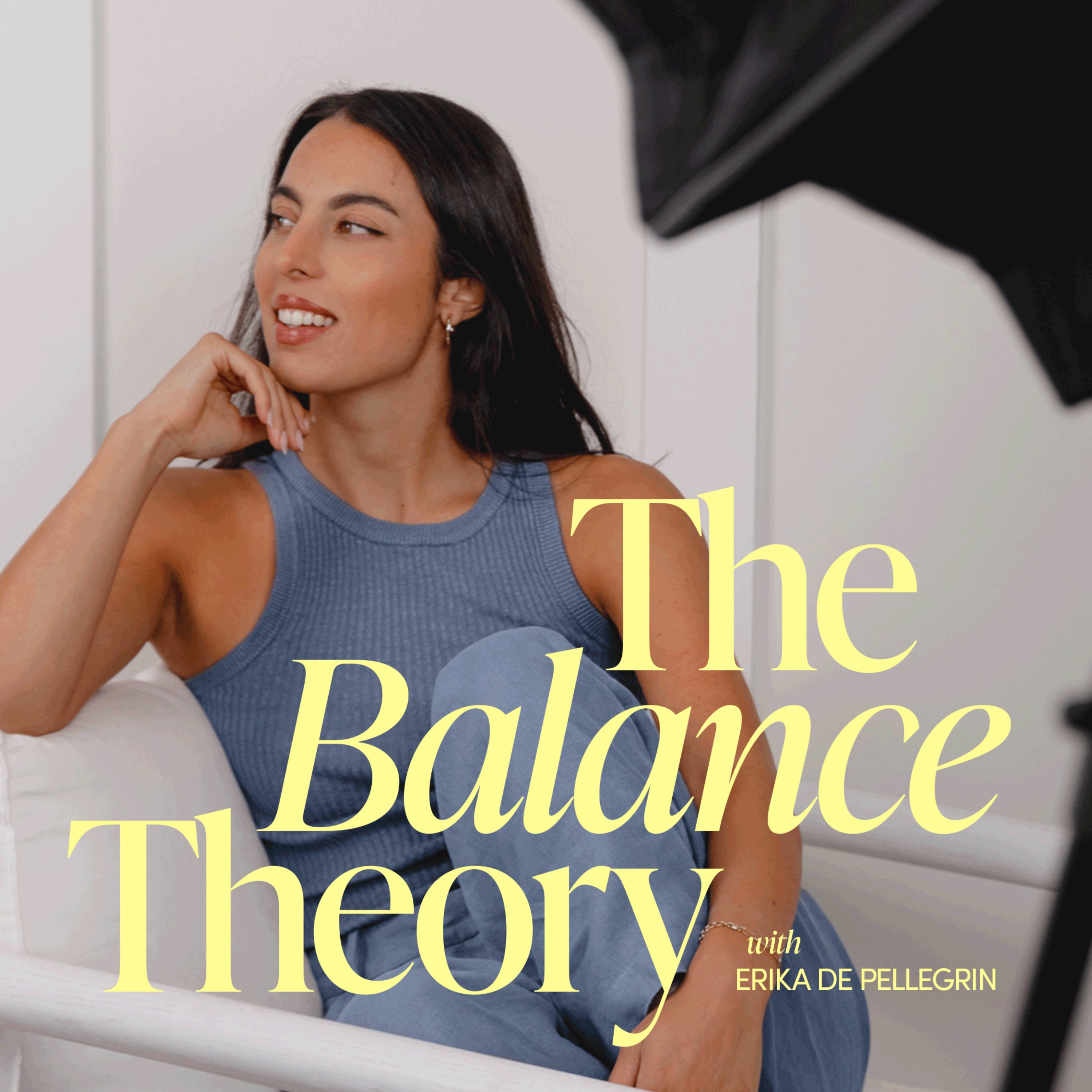
Loading summary
Transcript153 lines
- [00:00]
A
After I graduated, I got fired eight times from every job I tried. There was never a moment where I felt safe enough to just leap and just see what happens. If I had really overthought that, I would have delayed myself even longer. Today's guest gets vulnerable about her honest journey out of corporate and into business. She lets us in on the real bts of her life as an entrepreneur and influencer. Joining me on the podcast today is.
- [00:24]
B
Erin, founder of by Erin, you know, starting a business, you might know you want to be an entrepreneur, but then it's like, what do I start a business in? How do I even land on the idea? Like, talk me through that process.
- [00:34]
A
It is a sad story, but it has a good ending. I lost my mom at 8 years old. When she passed, I really wanted a way to kind of like hold onto that. Every weekend in the kitchen, we would sit there, we would combine all the different ingredients. We tried yogurt, honey mustard seed oil, Nigella seed oil. So many different random concoctions until we landed upon the formulation that's inspired by Erin.
- [00:59]
B
I'm not very good with just, like, filming everything. What advice do you have for people in that split mindset?
- [01:04]
A
When you have developed a really strong understanding of what sits in your life, what you want to show and what you don't want to show, you'll realize that.
- [01:15]
B
Hey, balancers, and welcome back to another episode of the Balance Theory podcast. Today I'm joined by a friend, someone I met earlier this year, and I'm really excited to get into the behind the scenes of your life. Both as a business owner, you have have social media as another business that you run as an influencer, really unpacking that term, what it looks like day to day, and just get to know you on a bit of a deeper level. So my guest today is Aaron Aram. Welcome to the show.
- [01:41]
A
Thank you for having me.
- [01:42]
B
No, it's a pleasure.
- [01:43]
A
It's nice to see you again.
- [01:44]
B
Likewise. Likewise. I feel I was excited to do this episode because we had a coffee a couple months ago. I was still pregnant. And when I sit down in this setting, it actually lets me go really deep with people I already know. And so I have a lot of questions, I think burning questions about the type of work you do and how you basically just like, run your day to day. That I think will give people some really good insight, especially if they're aspiring to do some of the things that. That you are involved in. So I guess the first place I want to start is take me back to Erim, after school, what did you want to do and how did you fall into having your own business?
- [02:23]
A
So I was raised by a single father, and he was only actually 29 when he got custody of myself and my brother. Wow. And we were 8 and 6.
- [02:33]
B
Wow. So very young.
- [02:34]
A
Very young. And he was very young as well. So I always feel like growing up, we three were raising each other and seeing my dad start his own business after school when I was 14 years old, plus I would take two buses down there in my black dress, my black heels. I was front of house and I would stand in this restaurant and I would just work. And it was my absolute most favorite thing to do. And then around that time. Are you similar age to me? Born in 95.
- [03:02]
B
Yes.
- [03:02]
A
Yes.
- [03:03]
B
95 babies. Yes.
- [03:04]
A
So around that time when we were 14, Facebook was becoming a thing.
- [03:08]
B
Yes.
- [03:08]
A
And we were all allowed it and we all had it at school. And companies and businesses weren't really using it to that full potential because we didn't know what the full potential was yet. Facebook was to connect with friends. It wasn't a commercial platform.
- [03:19]
B
Yeah. It was very much like a personal profile.
- [03:22]
A
Exactly. So I started our businesses Facebook page and being the person at the front of house every single day, I saw people coming in through our Facebook.
- [03:31]
B
Wow.
- [03:32]
A
And that is the moment that I realized the power in social media.
- [03:35]
B
That's awesome. So that's when you're 14 years old. So then going through school, sort of through to graduation 18, when we're all sitting there picking university degrees. Did you already know at that moment that that business and social media was sort of the space for you? Did you entertain anything else or did you kind of go full throttle into that?
- [03:53]
A
I left it pretty open. I think being in a family of entrepreneurs, it kind of does just naturally feel like the path that you take is not to have a boss, is not to have an alarm and a 9 to 5. And I kept it open. I did an international business degree. Business is kind of the degree that you do and you don't really know exactly what you want to do. So I did that. And throughout I was actually working at nightclubs. So there was a time when I thought, I want to continue working in nightclubs or I want to be involved in something in the nightlife industry. And then I kind of quickly realized, like, this is the type of thing that you do when you're young. It's a quick in and out. You make the cash, you profit from what you have, and then you move out and you graduate. And you do something different. So I guess at the time I was thinking of being in the entrepreneur space, but really no direction. I do remember frozen yogurt being a really viable idea for me though. In my little brain. I was like, yeah, of course I'm free.
- [04:48]
B
Well, yeah, after, when we were like 20, that was like the thing. I remember going on like heaps of dates to frozen yogurt. It was just like my favorite thing. Maybe in another life.
- [04:55]
A
Hey, maybe.
- [04:57]
B
Okay, so at that time did you kickstart your own personal social media? Because you just to paint the scene for everyone. Now you have a business, but you also, you have like a personal brand, right. That you, that you also kind of treat as a business. So at that time did that start or was it the business that came first?
- [05:15]
A
So I was very much like how you would have been posting back at uni. Like my breakfast nights out with my girlfriends with like those crazy filters on the screen. And only when I started to kind of like, as I did a four year degree, majority of my friends graduated after three years. So I came back from my third year abroad and majority of my friends were gone. So I really started to take my degree seriously, working a lot more seriously. And as I was working more, I was doing more shifts and therefore just getting dressed up all the time because I was head of bottle service at the club. So I was asking my roommate at the time to take photos of me. I must have had around 5k, which was a lot at that stage in that kind of like uni bubble. Yeah, but not a lot to these standards. And as we were going taking these photos more, I think I really started to fall in love with the idea and I mean this very genuinely. Like I really felt very comforted by this mission that I had, which was to talk to girls that had also grown up without a mum. So I think it really started to evolve from there. And then after I graduated, I got fired eight times from every job I tried. Wow, eight times.
- [06:23]
B
Why is that?
- [06:25]
A
I didn't get, I didn't get how offices worked. I didn't get the rules of the office. I didn't understand politics. I didn't understand who to be friends with. I didn't understand professionalism. Like I was just like very genuinely in love with what I was doing. I was working in social media for these companies. I was very good at what I was doing, but that was the only thing I was good at. And I think often when you do have an office job, it's a lot about playing that World and the corporate. The game 100. Yeah. And I wasn't good at that.
- [06:53]
B
It's actually really interesting because you obviously grew up with an entrepreneurial, I guess, foundation from the people you had influencing your life through the work you did. Like you kind of graduated but then tried to go into that corporate bubble. And I've sort of had the reverse experience because I was raised like my parents both had salary jobs and it was very much like get a good job, buy a house, kind of stay in the safe zone. But as I, I studied law, worked in a law firm and sort of come out the other end. Now I'm running my own business with legal consulting. I have this podcast. I'm now I like say a full time mom. My daughter is my full time boss. But when you come out of corporate, it really is a completely different mindset. And I realized all along I never fit into it properly as well. But instead of like the experience of getting fired because I didn't quite fit in, I just kept job hopping because I was like, oh, it's the wrong team, it's the wrong firm, it's just the wrong job. Right. But it was just never going to be a fit for me. Do you think people inherently have either mindset and neither's wrong, by the way? I think we actually need both to have a really successful society. But it's just interesting, like feeling that friction and then contemplating or like reflecting on was that inherently just I was more entrepreneurial than I was careerist. Do you think people are naturally one or the other or do you think you can kind of ebb and flow?
- [08:17]
A
I believe there's a statistic, isn't that like one in four people are a leader and then the other three are like team, kind of like builders. And I think that's such a refreshing way to look at it because I often believe that there's a lot of pressure on people to be like, be a boss, hustle hard. And I think in reality, no company ever works without the people in hr, the people in legal, the people in marketing, the people in socials. And it's that collective effort. And you know, I have a very close relationship with the girl that is marketing for Bay Area and almost to the point where we're raising each other because we're quite similar ages. But we've evolved in such a way that I'm a really, really strong delegator and I know the way to communicate to her how to break down the task. And she is the type of person that for love no Money, like she will do exactly what I say to her on the spec. And that is her passion. She wants the full direction. And having that co relationship, it just works so well. And that's why I believe it is such a power to know which one of these two people you are. Because I think at a time, you know, it's not back when you get fired that many times, you're starting to be like, you know, I respect you for saying that you thought it was the teams that you were in. I was not there with my self esteem. I was like, oh, maybe it's me. Maybe I didn't do good at my job, or maybe I'm not smart enough. Maybe I don't know how to do this. And it took a while for me to be like, actually it was me, but it was because I was meant to do something else. So I think there's definitely room for both.
- [09:40]
B
Yeah, definitely. So you've been fired eight times. You're sitting there, you know, you've got this entrepreneurial spirit. How do you then push forward? Like, how do you then leap into entrepreneurship full time and sort of, I guess, cut ties with what you had studied in that general career trajectory?
- [09:57]
A
So like I mentioned, coming from a single parent household, you're someone that's very much built to have a lot of need for stability. And you want to always make sure that you're provided for and the family is cared for in any way that you can. You know, getting an extra tip when you're 14, you know, that felt like a big deal to me. That mentality has always followed me. So there was never a moment where I felt safe enough to just leap and just see what happens. There's a lot of logic that went behind that to ensure that, okay, I was still consulting part time. I went from full time to part time. And then I went into my business while the whole time I was preparing. So the ideation of my business and the preparation of it took from January 2019 to the launch, December 2019. It was nearly a year that took me to bring Bayaram to fruition.
- [10:45]
B
Yeah, I like that you've shared that because oftentimes people will see others that have started a business and it's like, just go all in. Like completely remove yourself from responsibilities. If you're not doing it 100%, like, are you even trying? But there really is this natural ease in period. And that practically means for a lot of people, you have to think about finances, you have to think about the stability, you have to think about how you're going to nurture yourself through that transition. And it's no different to, you know, I've been doing this podcast for almost five and a half years now. I didn't start making money from it until the fourth year. And for me it was like, I can still start it while I'm doing everything else full time, but it's like, don't, don't stop yourself, but do it in a way that's like, pragmatic with all the responsibilities you have at that time.
- [11:27]
A
So for me, it took from Jan to December. So, lucky, how long did it take for you to. From moment of. I want a podcast to. Actually, I'm choosing my first episode.
- [11:36]
B
I had the idea on January 1st in 2020, and I recorded the first episode in May and I launched it in January. Sorry, in June. In June.
- [11:45]
A
Coffee. Yeah.
- [11:46]
B
So about six months. But that was more, you know, wasn't so much a launch of business and have product and social media. It was more like record the video and just put it out there. So I feel the difference. Six months. And yours being 12 months, like that kind of naturally makes sense.
- [12:01]
A
Yeah.
- [12:01]
B
What was your first business? So it's a business you have today?
- [12:05]
A
Yeah, yeah.
- [12:06]
B
So tell the audience a bit about it and where the inspiration came from. Because as well, you know, starting a business, you might know you want to be an entrepreneur, but then it's like, what do I start a business in? How do I even land on the idea? Like, talk. Talk to me through that process.
- [12:18]
A
So I feel something that your listeners will really resonate with is I was always going to have. If I was going to start a business, it was going to be the hair oil. I knew that for a fact. It was always going to be called by arum. There was no alternative names. It was always going to be black and gold branding.
- [12:33]
B
I feel like you manifested it already.
- [12:35]
A
I must have. And there was no friction in the ideation stage of my business when it came to the actual physically doing of the business. Because like you said, this is a service almost. This is not necessarily like a physical product that you're holding your hand. Being a podcast, it's. For me, I had a physical product that I had to liaise with people all across the supply chain, right down to the sticker, to the logo, to the bottle, to the oils, to the sourcing of that. That was tricky. I remember I always say this, but that sticker really stumped me and I'm now a sticker expert because it has UV embossing, it has foiling on that. And it has textured paper things you.
- [13:15]
B
Don'T even think about. Hey.
- [13:17]
A
And that's very similar to the way the wine bottle labels are. But then you go to a wine bottle label that have two big machines, like, it's such a thing. And I remember I. I think I tried for, like, three months, and then I asked for help from someone, and he literally found a supplier. I would say to you in about three minutes, and I was like, okay, big lesson learned. Ask for help. When you don't know, ask for help. And I will also say, like, don't be afraid to be scrappy, because not the. Ask me for advice, but I'll give it.
- [13:45]
B
I'll take the free advice.
- [13:46]
A
Take it. The instructions that I made for the sticker, I literally use Instagram story. I made a blank screen, and then I drew the arrows onto it. This, I want to be gold foiling. This, I want to be UV embossed. If I had really overthought that and really considered maybe I look a bit unprofessional giving this to a supplier when realistically, we're just trying to speak the same language of, what do you want? What's in your head, versus what? My machine capabilities, I would have delayed myself even longer.
- [14:13]
B
Yeah.
- [14:13]
A
And then I think I launched, you know, as is the thing with timing, I think I launched at the right time in December.
- [14:17]
B
Yeah. Amazing. And I remember you shared with me the inspiration behind why it was hair oil. You said you always knew it was going to be that. Can you share that story with the listeners?
- [14:27]
A
Yeah, of course. So it is a sad story, but it has a good ending. I lost my mom at 8 years old through breast cancer. And in that, she lost her hair. But one of the things that she really was known for was having just really gorgeous long black hair. So I was like, right, what your mom has is what you feel is beauty. And I was like, long hair is beautiful. And when she passed, I really wanted a way to kind of like, hold on to that, because I didn't have sisters, didn't have any aunties, didn't have cousins. Like, I was just deserted. Besides, my grandma, who is a grandma in the sense that wasn't born here, doesn't wear makeup. Like, there was many things that she could help me on, many things that she couldn't. So it was a lot of discovery with her. Every weekend in the kitchen, we would sit there, we would combine all the different ingredients. We tried yogurt, honey mustard seed oil, Nigella seed oil. So many different Random concoctions until we landed upon the formulation that's inside by air. So that took from eight years old to 14. So six years.
- [15:29]
B
Wow.
- [15:29]
A
Yeah.
- [15:29]
B
And you're like, testing these on yourself.
- [15:31]
A
On myself, yeah. Sorry. To my school friends when I would go in with a yoga on my hair. And now we have that bottle, and it's got eight pure oils. Coconut, castor, almond, argan, amla, lavender, rosemary, and bergamot. But we measure, and I have a lab that makes this. Now, it's not my grandma's kitchen, but we were measuring back then to the 0.1%.
- [15:51]
B
Wow.
- [15:51]
A
To make sure that this was the formula.
- [15:53]
B
Amazing.
- [15:54]
A
And this was so hailed in my family as the formula when I moved to America. I started because I had alopecia as a result of losing my mom. So alopecia areata comes and goes. Clumps of losing eyelashes, eyebrows, hairs. And I went through a stressful time. And my dad called up her sister living in Pennsylvania, a different state to me, read out the ingredient list. And then when I went home to Pennsylvania, she had it for me in a water bottle with about three kitchen rolls on top, tied with a rubber band. And she was like, here you go. Take it. That's how special it was. This is. It was gold dust. And then the rest is history, I guess.
- [16:30]
B
That's so beautiful to know. I always really love hearing the stories behind products because, you know, if someone's saying that on the shelf, they. They don't know where it comes from, the origin, but that beautiful piece to what you now have as your business today. So thank you so much for sharing that. And then I guess off the back of you having this business, and I will ask you some more technical questions about hair and hair oil, because it's something I, you know, did a deep dive on before my wedding. And I'm very interested in like that. But just to pause that for a sec, when did your personal brand. And I guess. I guess we could call you an influencer today. When did that sort of come about? Was that in parallel with the business? Was it after the fact? Can you talk to us a bit about that?
- [17:15]
A
So at that point, I've been a graduate for two years. I'd had a hundred thousand odd followers on Instagram when I launched.
- [17:25]
B
And that's just from like, you're out sharing your. Oh, the outfits were a bit younger, right?
- [17:28]
A
Yeah, I would say, like something that I like to do, which was revolutionary at the time. It's very commonplace now, but I like to very. Be very bts with things like, I didn't edit my photos. I showed people, like, the outtakes of my things. And I did speak very, very heavily on losing my mum and looking to connect with other girls like that. So that grew fast. And I would say I owe everything in my business to my followers, because that first 250 people that bought that first batch of 250 bottles, they bought it from thinner. No reviews, no before and afters, no testimonies, like, nothing. And it was because of them that I sold out the next time. I launched 500 units in half the time, two hours. Then I started to build confidence, and then I started thinking, all right, we can't just keep doing these random drops. We need to make this a proper, proper, like, fulfillment organization. And we need to make sure that the ball is rolling constantly. So it is down to those followers, and to this day, my business is owed. And down to those followers that I have now, I think over 400,000.
- [18:28]
B
And it's as well, in. In effect, it's actually thanks to you putting out content and connecting with people. And this is the power of a personal brand. And I'm going to be very transparent now and say that this is not something I have paid attention to. I've actually had the inverse experience where the podcast has had amazing reach. I've built a beautiful community there. I've also in the past actually had an ecom business with physical product that was sort of on the side. It was in the sports, like, fitness space where we had, like, resistance bands and things like that. Those have grown beautifully on their own. I've never paid attention to my personal brand, but I continue to meet people who have built a personal brand and then off of that, being able to create, you know, the followers kind of go on the journey with you. I know there are so many people as well in my shoes where they're like, I've never thought about doing a personal brand. I'm like, the 2017 shares my breakfast shares my holidays. Like, it's sort of like a highlight.
- [19:22]
A
Reel of my don't do it.
- [19:25]
B
Okay. I actually have, like, a very split attitude towards it, and I actually would love to hear your thoughts because there'd be many people sitting in my shoes where I'm like, I see the value in it. I know it'd be a value add to my podcast and other things I'm doing. I would like to do it because I think it just opens up so many doors, doors I don't even know exist. But on the flip side, I'M not very good with just like filming everything. Maybe that's a limiting belief I have that I have to film everything. When I go to sit down, I'm kind of like, I don't want to show all aspects of my life. I know how has to be intentional. And I guess I don't know which aspects I want to show because it's not that I want brand deals or I want to do all these specific things, but it needs to be curated so I know who I'm connecting with. What advice do you have for people in that split mindset?
- [20:10]
A
Such a good question. To be honest. You say it up in such a 5050 way. I would say, like, I stand on, I share 10 of my life and that 10 I thoroughly and rigorously show. But that 90% is absolutely deadly protected by me. If I love you, not even a baby finger is making it to the corner of my screen on Instagram. Stories like, truly, when you have developed a really strong understanding of what sits in your life, what you want to show and what you don't want to show, you'll realize that, let's say you don't want to show your baby, but you do want to show what it's like behind the scenes. Setting up a podcast that really does equate to probably 10% of your life. Then when you narrow it down and funnel those things out and then I would say being like brutally honest with that 10%. There is a limitation when we're looking at the landscape of social media in today, 2025. So the way I look at it is like those that got in early, like a decade ago are very lucky because they were able to be personality led figures. Whereas now I think really the only way that you go and grow a huge amount of following in a short amount of time is by going viral. And let's say, you know, Tube Girl, I love her, but she had to create tube videos again and again and again because that's what she was known for. Like, I don't know her first name and I love her videos, but I know her as Cheap Girl. How then can you pivot into lending your personality into something else? And maybe she has done that. I hope she has. She deserves it. But a lot of people have to then rely on the one thing that has led them to be viral.
- [21:43]
B
Yeah.
- [21:43]
A
Which is a bit limiting. So injecting your personality as honestly and briefly as you can into that small segment that you're happy to show a will limit the pressure that you feel to film. Because I Do feel that often. And then B, it will ensure that you have those boundaries where you're switched on and you're switched off.
- [22:00]
B
So it's like a 50, 50 of, like, you know, to do it or not to do it. It's interesting because I. I think the friction point, I feel is how do I do 100% content on 10% of my life? Like, it does feel like, isn't it going to be overkill? Like, how much, really, of the podcast can I show without diving into me as a mom and me as all these things, you know, I feel like a lot of different hats.
- [22:23]
A
Yeah.
- [22:25]
B
Is there any, like, reflective questions or just things you can share with the listeners that would maybe prompt them to think, like, okay, what do I want to show and who do I want to connect with?
- [22:34]
A
How would I feel if someone criticized XYZ? If your relationship is 10, 10, each other, married 10 hundred years, like, and you're okay with someone saying something nasty about them or randomly saying something about your partner, that's okay. You guys are 10, 10. That's fine. You can show that person. If you are in a place where you're not 100% with someone or you're not 100% able to take feedback about your kids or about. You know, some people treat their podcast or their business like their baby. They can't receive feedback. I wouldn't put it out there because no matter what you do, someone is going to sit here and tell you that I'm wearing green cowards right now, and that's just the way that their eyes are.
- [23:12]
B
Yeah.
- [23:13]
A
If I couldn't take it, I would have said to you, listen, let's just do audio. I don't want to receive any feedback on what I'm wearing today.
- [23:18]
B
Sure. That's actually a really good point because really, you should only be putting things out there based on how grounded you feel in it or how confident you feel behind it. Because it is a bit of, like, a mixed bag of what I share at the moment. But the truth is, no, I don't want to continue to showcase my daughter and future children. That's not something I want, you know, hundreds of thousands of eyes on. Let's say it's something that's very personal. And I. I am quite a private person, so I think that's why I feel this friction. But it is something I need to sit down and think about. You know, if, if, if inspiring other people to do podcasts is what I want to do, then I should niche down into that. Right.
- [23:52]
A
And I think as well like listening to your community. So the big thing that I see a lot of people do is focus so desperately on achieving new followers. When these are your existing followers and you're looking here, here, here, here, here, what you should be doing is looking at your existing followers. I have like, I feel like I have like a tunnel vision. If you wanted me to describe what my current follower is doing right now. What does she eat? I feel like I know her so well even on an individual basis, not just generalized basis. Sure, talk to her, talk to him. Understand what are his or her needs. What are they continuously engaging with on your page? Do people really love it when you share, I don't know, like your hairstyle today, maybe that's a content pillar that you can lean into. So again like how by Erin My business was a co creation. I believe that my followers are my stakeholders in my business. I feel like you can treat your personal brand in a similar way.
- [24:45]
B
Interesting.
- [24:46]
A
Yeah, I love that.
- [24:46]
B
It's a bit of food for thought there. Can you run me through a typical day in your life now I can appreciate probably no two days look the same, especially since you're not in nine to five let's say. But generally speaking, what would a day in your life look like?
- [25:02]
A
So me and you spoke about this a lot last time we were together. Balance living by your own cycle, understanding the difference in women and men's circadian rhythms. Like I'm very, very passionate about standing up for my right to lie in my body does not work. If I'm waking up at seven in the morning and I know that about myself, I'm disoriented, I'm a little bit dizzy, I'm not at best form. The world needs me to wake up at 9am onwards. That's it. So 9am onwards I'm awake. I love my morning routine. I love a quiet morning routine. So I will always just shower, you know, the usual coffee, sit down. I will make time to watch Desperate Housewives or Real Housewives, whatever reality show. I'm feeling like that morning and really ease into my day. I'll start by being on my phone, checking emails, Instagram, DMS and then of course WhatsApps. As you know here in Dubai a lot of business is done via WhatsApp.
- [25:56]
B
It's crazy, everything.
- [25:58]
A
I don't know how many numbers I have now and that to me is a really big thing whilst I'm here in Dubai, which I split my time between London so check that, allow that to set my tone for the Day I'm a very, very organized person so I have my set schedule so it's likely that I won't schedule anything until maybe 10 or 11am and it could be anything from like doing a podcast or I could be doing a meeting with like I predominantly work with fragrance companies so going into their office or there might be an influencer event or an expo or something and go there and then I always try and squeeze in some form of workout and I like to vary my workout. So weight training, yoga, PT and then evenings I like to cook. But I think predominantly in Dubai I go out for dinner with someone.
- [26:41]
B
Yeah, fair enough. That's cool. I think, I think it's actually a really good exercise to think about how your energy is, how you like to operate your time. Like think about how you naturally would do it on the weekend. Right. Especially for people who are working predominantly Monday to Friday. I many years ago I did an episode and I spoke a lot about why not everyone has to get up at 5am because I do genuinely think there are morning people and there are night people, there are people who have energy later in the day. And even if, because I used to do this when I was sitting in a law firm, I would actually just think about what my ideal day would be like if I did not have to be somewhere at a certain time, what would my day look like? And that's really helped me create or choose different bits and pieces that I really enjoy. For example, like the way I structure my day now, the way I open up my calendar for meetings is on particular days within particular time windows. It's actually like knowing that about yourself that then allows you to create a life you want. Because this makes like your day in the life might sound really far fetched to someone who is thinking about starting a social media company, who's thinking about starting a business, but actually thinking about that before you're there is a nice way to navigate and help you make decisions with kind of a filter on.
- [27:54]
A
So true. I mean I actually just thinking now I've ignored a lot of boring stuff in my day. Emails and like zooms and everything. So you do have to fit them in as well. I wanted to ask you, at what age did you feel like you really started to honor your own individual energy throughout the day and then schedule stuff around that?
- [28:13]
B
I think I became really aware of it through starting the podcast because this show is really all about self development, self improvement. So at the time I got the idea to do it I was very and I still am, but I was really getting into being introspective and reflective. So I knew all these things about myself. But admittedly, because of my working situation where I was in an office, I couldn't necessarily lean into 100, but it was definitely things I started to become aware of. And then over time, I've been able to layer it on as. As I've plugged and played different kind of working ways.
- [28:44]
A
Yeah.
- [28:44]
B
What about you?
- [28:45]
A
I mean, yeah, there's sometimes when you just got to do what you gotta do. I will say I read a book by Oprah Winfrey, and it was written with her or with a neurologist or neuroscientist friend. It's an amazing book. And the underlying principle is you need to be regulated. And that means you need to be washed, fed, bathroomed, you need to be warm. You need to have all basic needs met, like really human basic needs met, in order to operate at any level beyond. Okay. And this is a huge priority for me. So alongside kind of like managing my cycle and just being aware of it, I guess you can't really manage your cycle. It manages you, doesn't it? I always try and make sure that my base needs are met. And when I read that book, I started to realize, like, what am I doing getting in my car and all I've had is a coffee and I'm kind of like holding my steering wheel like this because I didn't have time to eat my breakfast or what am I doing when I'm scheduling a meeting at seven in the morning when I know I can barely see straight at 7 in the morning, you know, And I think that idea of ensuring that I'm like, for instance, I just walked in, right? First thing I did, even before I said hi, I was like, I'm just.
- [29:50]
B
Gonna craft this banana.
- [29:52]
A
Because I was like, I know it was a. It was a basic need. And I think you have to advocate yourself. I would love to have had a full meal before this. I didn't have time. The most I'm going to be able to do in this situation is grab a banana. And I made sure that I ensured that. I did that. Now, living in a place where I'm doing that for myself as often as I possibly can, where choice permits, I honestly can see the power of just giving yourself that one minute to just advocate for what you want. Yeah, I've kind of labored the point here, but you get what I'm saying.
- [30:21]
B
No, I love that. And the listeners who. Who've been following for a while will know, like, the balance theory in and of itself, itself, it's actually a concept that I talk about in terms of how to find balance in one's life. And the premise of it is it's not that it is different just between me and you, but for me, it actually changes as time goes on. So today, as a mum with a newborn baby, three month old, what balance looks like to me looks very different to the last time we met where I was still very much operating on my own schedule and prioritizing myself and not having to look after a child. And so for me, it comes down to this concept which you've described as your, I guess, core needs or your basic needs. But the way I talk about it are your non negotiables. And this is really the things that you identify are the most important thing for you to be able to function across the day. And on reflection, the things for me which are like sleep, hydration, cooking my own meals, they really do fall under those basic needs. And once those are met and once those are prioritized, that's how I actually manage my time, then I have the capacity to do everything else. Of course, this has shifted for me now, but very much in alignment with kind of how. How you just described it. I want to kind of pivot now for the end of our chat to talk about hair. Hair quality, optimizing hair health. Before I got married, I actually became really obsessed with it. I went deep into like hair talk and, you know, there are a lot of things that I did. And I actually noticed a significant change in the quality of my hair. Being pregnant was a great freebie to boost the quality of hair. And I'm yet to go through any after pregnancy loss, so touch wood for me there. But I actually want to just rattle off a few things that I at the time still kind of do do. And I'd love to get your opinion because you're a trichologist, right?
- [32:09]
A
Yeah. Training trichologist. Right now.
- [32:10]
B
What does that actually mean? Just for expert Hair and scalp expert. Love it. Okay. Awesome.
- [32:15]
A
Such a hard degree as well. And I tell people, I'm like, I try. Everyone's upset.
- [32:19]
B
I'm like, it should almost be like hair cologist. Yeah.
- [32:23]
A
Like scalpologist. Yeah, yeah.
- [32:25]
B
What does the trice.
- [32:27]
A
We'll rebrand. So trike is the Latin root of the word for hair.
- [32:30]
B
Okay.
- [32:31]
A
In the hair follicle. Yeah.
- [32:32]
B
You learn something new every day. Okay, so a couple things. Can you tell me myth or. Or fact that help with hair quality? Double shampooing.
- [32:41]
A
Help.
- [32:41]
B
Help limiting the amount of times you wash your hair every week. False, false.
- [32:46]
A
So if your hair is. If your scalp is caked with dirt, the hair follicle can't come through.
- [32:50]
B
Okay.
- [32:51]
A
That's why I launched the scalp scrub. So it clears and dissolves everything.
- [32:54]
B
Okay. Amazing. Hair oil, Obviously you believe in it, but is it like just on tips through the whole scalp? Like, what's the actual protocol for it?
- [33:03]
A
So the way that I describe it is if you wanted to have like lovely, lush green grass in your garden, you can't have like itty bitty dry soil. Your scalp is the soil you need to ensure that your scalp is nourished, has everything that it needs in order to not only grow healthy hair, but to grow strong and anchored hair. We want the hair to be anchored to the soil. Grass is being plucked from, like, dry soil is just going to come out easily, but when it's really nourished and hydrated and moisturized, it's going to be harder to pull out.
- [33:30]
B
That makes sense because I have in the past had like a fleeting thought of doesn't oil kind of block the scalp? But when you think of it as like hair in. In soil, like that kind of analogy, it's like fertile ground. Right. Like your nourishing it, so to speak.
- [33:45]
A
Yeah.
- [33:45]
B
Okay, so the hair oil for scalp. But do you actually. Are you meant to apply it like through your. Through to the ends of your hair and through it as well?
- [33:52]
A
Everyone is different. I do say this, and everyone's schedule is different. So me having super long hair, I will always put one pump of oil onto the ends of my hair every day. Just because this is not successfully reaching the oils from my scalp, like it needs a bit of help, it's going to be drier. I will do always, once a week, deep, overnight saturation. Sometimes I leave it in two, three days if my schedule permits, and I'm going gym or whatever it is. And this really enables the oil to really absorb into the hair. Now, the way that I describe it is each oil has a different molecular weight. So the smallest ones, like Amla rosemary, they can penetrate into the cortex of the hair. And then the really nice, thick, juicy ones, like castor almond, quite big as well, they sit on the outside and they shield the hair. So something I do say is if you are planning to go swimming or in the sea, you can almost use the oil as a cap to protect your hair against that element of water.
- [34:45]
B
Okay, so you would just do it like fully through the hair.
- [34:47]
A
Yeah.
- [34:48]
B
Really interesting. And then what about like when you're styling your hair, like using heating tools is like heat protect. Does that actually work? Heat protector? Because I don't think you would put oil on before styling, right?
- [34:59]
A
Correct. Yeah. I think like, a lot of. A lot of like haircut and skincare, I think is quite confusing. But when we look at it down to its core elements. So putting oil on wet hair, oil does not mix with water, if we can imagine. So it creates a barrier, which is why it works for a swimming cap. If you're putting oil on before you're heating your hair, that's cooking your hair in the way that we use oil to cook. So I think after looking at it in that way, kind of simplifies the process a little bit. Heat protector you do need to use. And I would say I see a lot of women that kind of just go do a general spritz, especially when I'm in the hairdresser and I'm like. Because if the heat protector isn't touching that strand of hair, it's not protecting it. Okay, so you do need it. But in trichology, we say that there are three evils. So you can chemically treat your hair, which is perms and like hair Botox.
- [35:45]
B
Like keratin stuff.
- [35:46]
A
Exactly. And then you can dye your hair predominantly using bleach. And then the other one is heat damage. Is super unrealistic to expect that any woman is going to be able to successfully avoid all three in her life. Like, we want to look to try new things, pick one evil and just stick with that. So mine is dying, mine is heat. I always use straighteners on my hair, but I have had a phase where I dyed my hair, but without bleach. So, yeah, try and stick to one of those.
- [36:13]
B
Okay, interesting. And recently I have started using like a Dyson air wrap, which, as I understand, it's not really like a styling tool in the way you would like, iron your hair with a straightener. It's more like a hair dryer, but it styles. Is that. Is something like that better than, you know, a straightener or curler? In a world where we have choices, heat is heat.
- [36:36]
A
And I would say that there's many different ways a brand like Dyson, with all the technology in the world is going to be able to mitigate that by maybe infusing it with the ions and everything that they do do. And I do think it's better. But if you can air dry your hair and you can grow to love your natural hair texture, which I think we all should do, you're going to be in a much better place. I wouldn't even say a month down the line. I would say like one to two years down the line.
- [36:58]
B
Yeah, because it takes a while for the hair cycle. How long does it take actually to regenerate? Like, because it's.
- [37:03]
A
Yeah, it is. It is different. So skin is 30 days, hair is a bit longer because that follicle that grows a bulb of hair is obviously a lot bigger than what grows, like skin cells. But everyone is different. So if you're experiencing, like a high amount of hair loss all in one go, you might have telogen effluvium, which is when you have an elongated phase of hair loss, which is a natural phase. In the cycles, there's three phases, antigen, catogen, and telogen. But when it's too long, you're in that for too long. It's a bad thing. But everyone's a different.
- [37:33]
B
Okay, and how about. I'm not sure if this is something you're currently studying or have like, kind of focused in on postpartum specifically. Is there any ways to mitigate what I guess is a natural part? Because I guess from my understanding, and please correct me if I'm wrong, because of the growth hormone you have during pregnancy, sort of everything is boosted. Hair, skin, nails. I definitely experience. Experience that. But then after, once it drops, a lot of women go through, I guess, a cycle of hair loss, and then you come out in like a year's time with like all those crazy baby hairs when it kick starts again. Anything to sort of support that time frame.
- [38:07]
A
I would really lean on supplements. But what happens basically in pregnancy is. So I'm the opposite. Where I have an autoimmune disorder of alopecia areata. Your hair is the least important thing on your head. So on your body. So the thing that gets ruined most, as you might have seen in periods of stress in your life, the thing that goes fast is the hair. And the body attacks the own hair follicles. It's autoimmune. In pregnancy, your body is total opposite. You're obviously not attacking yourself, so it keeps all those hairs. However, a lot of people get used to over nine months having that really thick, highly dense hair. What happens when you have the baby is their body is no longer in a state of protection, protection. So then it starts to get back to the regular cycle of hair and you just simply go back to where you are before, unless there's an issue, but you're just going to lose the hair until the point that you had the natural amount of hair on your head. That feeling though, when you've gotten used to having it, I think is really, really, I can imagine would be really jarring and really scary. So a focusing on your supplements to ensure that you're not losing more of the hair than you're meant to because of the stress of losing the hair, which is really hard cycle that you can find yourself in and be taking those supplements, everyone needs to do a check. Like I can't just advise any, you know, stuff like that. But yeah, do a check and see which ones your body needs.
- [39:22]
B
Yeah.
- [39:22]
A
And just support it by giving it.
- [39:24]
B
Yep. Amazing. Last question. Since you're currently studying what's been like the most interesting thing as someone who's been interested in hair, someone who has been like experimenting since you were like 8 years old, like, what's been the most interesting thing you've learned that you didn't know before that you think would be really useful for everyone to know?
- [39:42]
A
Split ends are fascinating to me because. Okay, we're going to have to put the camera on me now. Imagine this is one strand of hair. This is the end. If your hair is splitting, if you don't cut the split, it's going to continue up the strand of hair until you're just left with a half thickness hair, super, super frizzy. So actually cutting your hair may not make your hair grow faster, but it ensures that your hair is going to grow thicker, essentially because it's not a split hair along the way.
- [40:13]
B
Interesting.
- [40:13]
A
So you see a lot of girls like with long hair and it's very, very frayed at the bottom. It's not the same density as it is on the top. It's because those splits have been able to continue. The way to prevent split ends, we can't glue split ends back together. The way to prevent it is by using oil. So if you think about oil, this is like a lubricant, It's a moisturizer, it's a hydrator. It gives your hair elasticity. That is the golden thing that you want for your hair. Because you can imagine something that's not moisturized, is very brittle and dry and breaks. We don't want that. We want the hair to be nice, stretchy. It can bend, it can move. If you've got a hat on, if you're walking, if you've got a tight ponytail, you want it to have that stretch. So oil to me seems a bit counterintuitive when it comes to the ends of your hair. And it's a Split end. How's that going to help? But cutting and oiling, Cutting and oiling will give you that full density and.
- [40:59]
B
Like oiling the ends. Is that something you recommend every day?
- [41:02]
A
Yeah, I do one pump. Your hair is a bit shorter than mine and I think your probably getting a bit more of the natural oils. Especially when you're wrapping your hair as well. I'm sure that it's like rubbing, whereas mine is like I'm looping it so many times. Oil the ends of your hair once a day, but maybe do half a pump of the Bay area or just one full pump if you have like really thick hair.
- [41:20]
B
Okay. And then the scalp would be like prior to a wash, I assume?
- [41:23]
A
Yeah, I would do it the night before.
- [41:24]
B
Yep. Okay. The best actually tip I got was to put oil or like treatment in before you go to the gym. Like it makes so much sense because you can actually sit there and like normally just like putting it up. But I was like, why didn't I ever think of that? That's such a good time to do it.
- [41:38]
A
And it holds your hair as well, so you don't need the gel to get that slick back look. So it's like a, it's a two in one benefit.
- [41:43]
B
Is there any risk? I'm just thinking now of like hair wash days and what I do. Sometimes I have a sauna on a hair wash day. Is it fine to have oil in the sauna like on your scalp?
- [41:50]
A
Yeah. It's not hot enough for it to like cook your scalp.
- [41:53]
B
Yeah. Okay, perfect.
- [41:54]
A
Good question.
- [41:55]
B
Well, I'm going to put a link to your hair oil and I'm very excited to try it and I just want to thank you so much for sharing the story behind it because. Because it's not just a hair oil. This is like years of your passion, of your lineage, of connection to your mom. Like, I just think it's so beautiful. You've very, very kindly offered a code for the listeners. It's balance 10. So I'm going to put that in the show notes. It's on the screen now if you're watching on YouTube. Yeah, like little product. So thank you so much for sharing that with us. What's next for you and the brand? Where do you see things going sort of in your next five years?
- [42:31]
A
We are really passionate about entering retail, especially in the uk. That has always been a really big goal of mine. But I think we're now really well primed where we have quite a large list of products. We have around 12 products. We have Hair fragrance, shampoo, conditioner, hair mask, scalp scrub. We're now a full range so we really, really want to enter retail.
- [42:53]
B
Amazing. And if people want to support you in those big retailers, what are some that that you're stocked in?
- [42:58]
A
Yes. So in the Middle east, we're in Namshi. If you wanted to use Erica's discount code, you can use that on the Byerum website because we ship international and then if you're in the uk, we're in Debenhams. But then we also do same day delivery if you order directly from us and you're within our catchment zone per se of our warehouse.
- [43:15]
B
Okay, amazing. Well, listeners are based all over the world, so I'll put a link to your website directly. But I want to thank you so much for your time, for coming on the show, for carving me into your schedule. It's been really nice not only getting to know you before, but obviously here on the show and I look forward to staying connected and seeing everywhere you travel and the things that you achieve because you're a really beautiful soul and I'm really proud of you because what you've created for yourself I think is really beautiful. And you know, it's one thing to have an idea, but it's another to actually execute and follow through with it. So big. Thank you.
- [43:47]
A
Thank you.
- [43:48]
B
If you guys have loved this episode, I'm going to put a link on the screen now or it's in the show notes if you're watching on YouTube to another episode with another guest. I did that. I think. Think you guys would love justice equally as we dive into the BTs of their life. So make sure you check that one out next and don't forget to hit like and subscribe if you've enjoyed this content.
- [44:18]
C
Taking care of your eyes shouldn't be a hassle. That's why Warby Parker is a one stop shop for all your vision needs. Our prescription glasses and sunglasses are expertly crafted and unexpectedly affordable. Stop by a nearby store or use our app to virtually try on frames and get personalized recommendations. Did we mention we offer eye exams and take vision insurance too? For everything you need to see, head to your nearest Warby Parker store or visit warbyparker.com today. That's warbyparker.com.