← The Best One Yet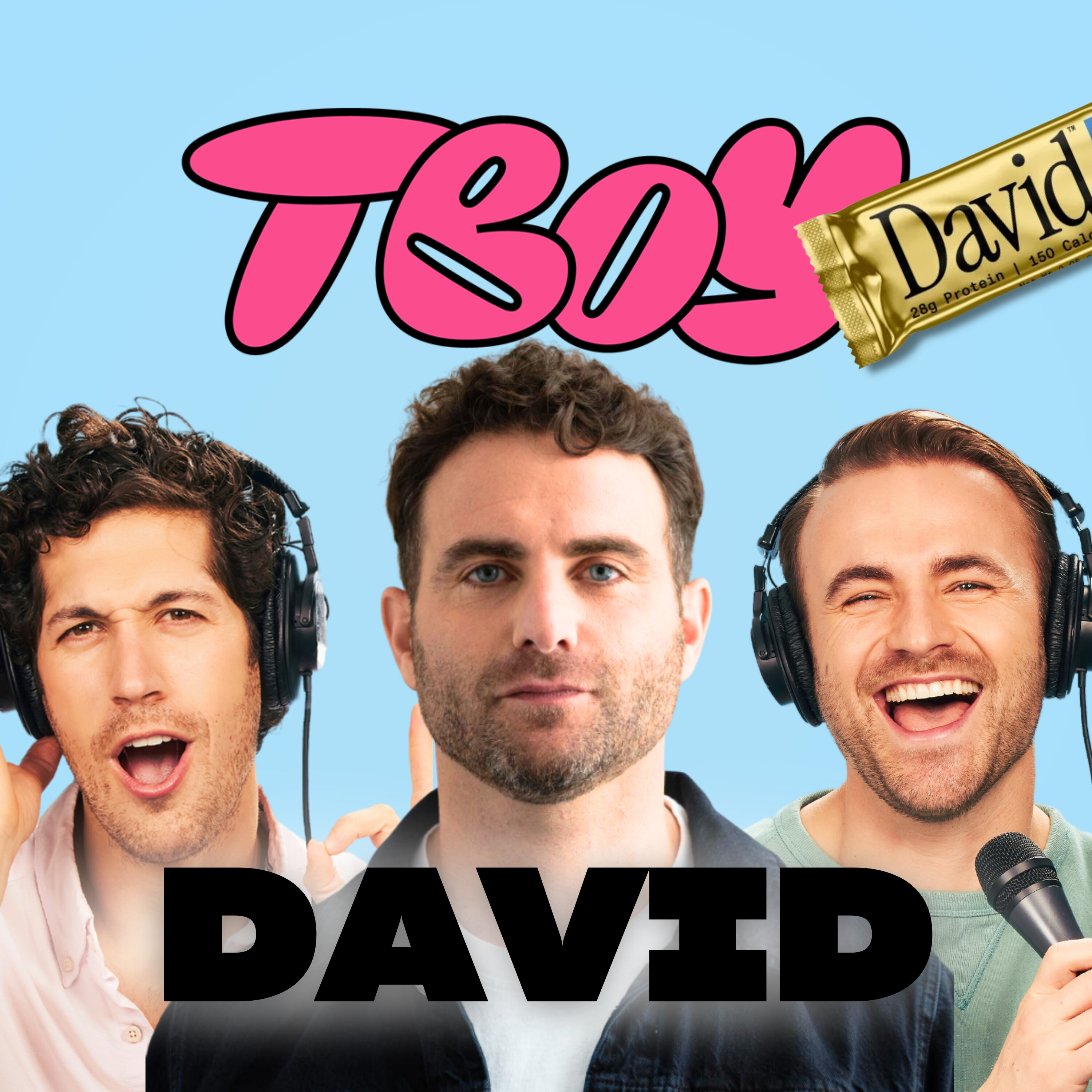
The Best One Yet
💪 “How David Bar Flexed Virality” — Our Interview with Peter Rahal of David Protein
00:50:23
Loading summary
Transcript355 lines
- [00:00]
Peter Rahal
I had this plan. It was around resurrecting power bar. And I just told enough people and I told so many people that I had to do it.
- [00:09]
Nick
Your reputation was on the line. They're like, aren't you doing another bar, man?
- [00:13]
Peter Rahal
And then so it was like, all right, October 6th was my non compete expiration. And like, as it got closer, I was like, all right, let's gotta figure this out.
- [00:23]
Nick
So then you launched David Barr. You're now back with the subject of today's show, the David Barr. Although gotta point out before we dive in t boy style to David Barr. You're operating in the same industry, competing with your first company, rxbar. Is that like awkward with Kellogg?
- [00:37]
Jack
Was Kellogg pissed?
- [00:39]
Nick
Yeah. Yetis, bust out your biceps, test out your triceps and crank up those calves.
- [00:45]
Jack
Because our guest today has created more protein than a herd of cows on leg day.
- [00:50]
Nick
Peter Ahal is the co founder of David Protein, the most viral food brand of the year.
- [00:56]
Jack
The name David, it is inspired by the renaissance sculpture and the subliminal message there.
- [01:01]
Nick
Eat David, get a 12 pack of abs. Just like the statue.
- [01:04]
Jack
Less than one year since launching, David has hit a $725 million valuation.
- [01:10]
Nick
Jack, get this guy a cup. This business is gonna have to take a steroid test.
- [01:14]
Jack
This company is so committed to protein, they launched a cod bar just to prove a point.
- [01:20]
Nick
It's true. Their latest protein bar, it's a filet o fish.
- [01:23]
Jack
And before launching all this, Peter founded a different protein bar, the Rx bar.
- [01:29]
Nick
That Kellogg was so thirsty for, they dropped 600 million bucks on it.
- [01:33]
Jack
Nick. Peter's taste for trends is so cutting edge. He's like a human knife, Jack.
- [01:38]
Nick
His instinct for branding is so far ahead, he's more artist than entrepreneur.
- [01:42]
Jack
Besties, please welcome to the pod, the prince of protein, the baron of bars.
- [01:47]
Nick
The lord of longevity.
- [01:49]
Jack
Peter Rahal is the co founder of David Protein and he's about to unwrap how he made the most viral product of the year.
- [01:57]
Nick
So yetis, sit back, relax and pause.
- [01:59]
Jack
That Pilates class because today's interview with Peter is the best one yet.
- [02:04]
Peter Rahal
Wow.
- [02:05]
Nick
There we go. Okay, nice.
- [02:07]
Peter Rahal
Best intro I've ever received.
- [02:09]
Nick
Fantastic.
- [02:10]
Jack
Any fact checks? Are you gonna.
- [02:12]
Peter Rahal
Prince of Protein. I'll take it.
- [02:15]
Nick
Is that gonna show up on your LinkedIn now? You can run with it, Peter.
- [02:18]
Peter Rahal
Look at my new title.
- [02:20]
Jack
So, Peter, you're actually the first founder we've interviewed whose first venture was illegal.
- [02:25]
Nick
Yeah.
- [02:25]
Jack
You sold drugs?
- [02:26]
Peter Rahal
I did, yeah, yeah, yeah.
- [02:28]
Nick
So if you could help us here if you could frame this As a cringy LinkedIn post, what did selling marijuana in high school teach you about entrepreneurship?
- [02:38]
Peter Rahal
Cultivating and selling marijuana taught me to always have a nose for demand and see if there's demand in the market. If there's demand and you create supply, we have a great business.
- [02:51]
Jack
I've noticed the cannabis industry always calls it cultivate. I always get corrected when I say grow or produce. It's cultivating.
- [02:58]
Nick
Well, that's what you would put on a LinkedIn profile, Jack. It reminds me of a line you once said. We noticed in our research, Peter, which was great. Entrepreneurs can't break the law, but you have to bend the rules a little.
- [03:09]
Peter Rahal
Bit, especially in anything innovation, it usually is that way.
- [03:13]
Nick
Now, a quick word from our sponsor.
- [03:18]
Jack
Airbnb Yetis.
- [03:20]
Nick
Our show actually started as a side hustle over 10 years ago. It began in secret outside of our bank jobs.
- [03:26]
Jack
We were worried we'd get fired, so we didn't tell our bosses and we even left our names off the website.
- [03:31]
Nick
Now that was our side hustle, a media startup. But there are other side hustles that are a lot less risky than that.
- [03:37]
Jack
And that have 0% chance of getting you fired. Like being a host on Airbnb.
- [03:42]
Nick
In this economy, it's a fun and rewarding way to make money off the thing. You're already paying for your house or your apartment. Apartment.
- [03:48]
Jack
I've hosted two previous apartments and my current chalet on Airbnb.
- [03:52]
Nick
And when no one's using it, why not welcome a family, a couple that just got engaged?
- [03:56]
Jack
You already have an Airbnb. You just didn't realize it yet.
- [03:59]
Nick
Your home might be worth more than you think. Find out how much@airbnb.com host Netsuite Yetis. What does the future hold for business? Can someone just invent a crystal ball?
- [04:13]
Jack
Until then, over 42,000 businesses have future proofed their business with NetSuite by Oracle, the number one Cloud ERP. Bringing accounting, financial management, inventory and HR into one platform.
- [04:25]
Nick
With real time insights and forecasting, you're able to peer into the future and seize new opportunities like a young Gandalf.
- [04:31]
Jack
Download the CFO's Guide to AI and Machine Learning for free at netsuite.com tboy that's netsuite.com tboy.
- [04:41]
Nick
You know, Peter, as we were studying your background, we noticed you grew up in Chicago, raised just outside the city. Your parents were in the food industry, Lebanese immigrants. But you grew up thinking that you were not successful, like something was not working for you. Right. It turned out you had dyslexia.
- [04:57]
Peter Rahal
Yeah, yeah, so. And the whole system is designed for procedural learning and reading. And so took me more time. And yeah, I just more or less punted it and failed.
- [05:11]
Jack
Peter, we've heard that dyslexic people are overrepresented when it comes to successful founders of businesses. So maybe this is a funny question for you, but what can a not dyslexic person learn from dyslexics?
- [05:26]
Peter Rahal
So I'll define dyslexia because it's pretty abstract for someone who doesn't experience it. So I'll start with defining. Yeah, and it's really hard to understand if you don't experience it. But here's how it works. So the dyslexic mind really struggles with anything in a sequence. So, so, like, reading is very sequential. It's a formula, there's a system, a letter, and then that sequence you have to follow. So like counting, sequencing of things like paying the bills, for example, like, that process is really hard. And what many dyslexic experience is that, like, the brain sort of melufunctions with that. And so the way dyslexics learn to read is typically memorization or just visualizing, like the whole word. Like, when I read, I don't do it sort of phonetically. I like, memorize that word, and then I see it as like a whole word end to end. And so a lot of times, like, the vowels in the middle don't mean anything to me.
- [06:25]
Jack
So instead of moving from left to right down the word and, you know, making out the sounds, you had to memorize every word?
- [06:33]
Peter Rahal
Basically, yeah. Wow. So it's sort of like going through school with a weighted vest. And so it's like you're going uphill. So you can often they'll just develop a great work ethic, and then they also will develop strategies to solve that problem. It's like making something harder. So it's like great training.
- [06:49]
Jack
Yeah.
- [06:50]
Peter Rahal
But then, like, neurologically speaking, dyslexic are very good at association or pattern recognition. So connecting dots, also known as like holistic thinking. So it's really. Turns out that's really good in entrepreneurship and being a CEO, where you need like interdisciplinary skill sets to connect dots. So it's sort of one, there's like an environmental component, and then second, there's a neurological component.
- [07:17]
Nick
So you, Richard Branson, Charles Schwab, all dyslexics who went on to pattern recognize your way into entrepreneurship.
- [07:25]
Peter Rahal
And it's just like Outside the box thinking. I think it's helpful.
- [07:28]
Jack
I'm trying to think, like, how can I connect the dots better?
- [07:34]
Nick
How can Jack become dyslexic?
- [07:36]
Jack
No, no, no. I mean, what is connecting the dots in business? It's just having, like, smart insights and then acting on those. Smart insights.
- [07:43]
Peter Rahal
Yeah. It's understanding the gist of why certain things work or why certain things don't work, and then being able to find those associations and then apply.
- [07:55]
Nick
Well, let's look at the first huge example of when you applied those instincts, which was your first legal business Rx bar. You invented a radically clean protein bar in 2013. Just four ingredients per bar. Egg whites, almonds, figs, and one other item, maybe maple syrup.
- [08:12]
Jack
And, you know, I love the Rx bar. Sometimes I pause at the egg white because you gotta cook that to make sure it's safe. Right. How is an RX bar actually made? And, like, what keeps the ingredients stuck together in a bar form?
- [08:25]
Peter Rahal
So the egg whites are. They're pasteurized and they're dried, so the water's removed. So they do go through a kill step.
- [08:31]
Jack
And pasteurizing is just like heating.
- [08:34]
Peter Rahal
Yeah, exactly. So that's a validated kill stuff. They're very stable. And then what binds them together would be dates.
- [08:43]
Nick
Wow.
- [08:44]
Jack
I assumed the egg white was the sticky part.
- [08:46]
Nick
Okay. Was it your Lebanese background related to the date inclusion there?
- [08:51]
Peter Rahal
Yeah. I mean, we grew up eating them, so that was a dot that I had. Right. Like, oh, this is a great thing. It's used in other bars like Larabar. But, yeah, I would give some credit to my ancestry there.
- [09:04]
Nick
So what we were really fascinated with, with our X bar was how you came to market. Cause Jack and I have a theory we call Snabos. Snobo stands for S N A B, O. Small niches are big opportunities.
- [09:17]
Jack
Yeah. I mean, Peter, you're a big CrossFit guy. Your small niche was CrossFit and, like, big rugby dudes who were just looking for pure protein to feed those muscles after a workout.
- [09:29]
Peter Rahal
Yes.
- [09:29]
Jack
Can you tell us more about how you delivered to that market early on?
- [09:33]
Peter Rahal
Yeah. So I went to a CrossFit gym, and that was basically my, like, petri dish to learn. So I would bring in samples, get feedback, process the feedback. And I remember we dropped off, you know, two boxes, 24 bars, and they sold out in two hours. So we had really strong signs of product market fit in this little CrossFit gym. And actually, the insight. Entrepreneurship's so fragile. If the wind blows the wrong way, you could Die or the idea can die. I remember at my gym, a Clif Bar rep, they got a sample of 12 peanut butter clif bars. The energy bar, the original one. And I remember seeing them like it was like radioactive. No one would touch them.
- [10:22]
Jack
Yeah.
- [10:22]
Peter Rahal
The reason why is because it was not Paleo. And so I was like, oh, like, that's an obvious dot to connect. Like, well, if I made one that was Paleo, like, I bet. I bet people would like them. You know, like, there's demand there. That was really the kind of the genesis of like, all right, there's maybe a market here. And the other thing was like, I remember looking at going to Whole Foods, right. Like, every sort of food entrepreneur's dream is Whole Foods. And I remember looking at the category and then people have this reaction today. It's like, there's so much competition. And I remember looking at it be like, no way I can compete there. Like, I don't even know how to get in there. And so. So I was like, well, I need a route to market. And CrossFit was booming, and it was like a perfect route to market.
- [11:04]
Jack
Yeah.
- [11:04]
Nick
Because you're basically saying, yeah, I could have gone the general way and just, like, tried to get into Whole Foods. But then I'm like, I'm filled with a mess of other bars and I'm trying to stand out in this sea of brands. And on the other hand, you just focus on CrossFit, where everyone's rejecting the other bars out there, the Clif bars, and suddenly you can kind of get this deeper connection.
- [11:24]
Peter Rahal
Yeah. So it was to your niche point. It was a perfectly. It was a totally uncompetitive market.
- [11:31]
Jack
Yeah.
- [11:32]
Peter Rahal
No one else was allowed in. You had the right of passengers to be Paleo, and we were the only ones that were Paleo.
- [11:38]
Jack
You know, Nick and I have always said the best markets to be in are the ones where there's no competition. Now it's hard to find a market with no competition. But protein bars. For CrossFitters, who tend to be Paleo, there was no competition. And you filled that void.
- [11:52]
Nick
I thought you were gonna share the three week experience you had with CrossFit, Jack. Now, Vitor, you do go through this insane inflection point which is leading up to all this. You are packaging the bars in your basement with your mom. She's like, miss stamping the labels over here. The design kind of looked like it was made on PowerPoint. And then the inflection point is that you changed the packaging. The packaging became the product.
- [12:17]
Jack
What did you do differently with your packaging that really helped you take off.
- [12:22]
Peter Rahal
So the strategy was to be the bar of CrossFit, get to some scale, and then figure out how to compete in the broader market. Now, we had tried the PowerPoint packaging in some local, smaller markets that were representative of the mature competitive market, and it didn't work. Like, just not just lost in the sea of sameness.
- [12:51]
Nick
Totally.
- [12:52]
Peter Rahal
And so we're like, all right, we have to do something cool. We can't follow the same design architecture that everyone does. Like, big brand name claims, flavor. Like, the only thing people cared about about our product is when we talked about. It was like an RXBar is like eating three egg whites, two dates, six almonds, four cashews. And actually, that calculus, or the equation was on the back of the packet.
- [13:18]
Nick
That was the ingredient list is how people described your brand. I feel like that's reversed.
- [13:23]
Peter Rahal
Yeah, yeah. And so we really dramatically needed to improve our communication of our value proposition to stand out, and we went for it. And it was a bit of a contrarian thing because it was like the brand was super small. It was like a stamp on the upper corner. There was no appetite appeal. There was no really bad flavor communication. It was sort of like not good. Classically trained design for cpg. It was, like, actually not good. But, you know, a lot of communications inherent in the. The format. Right. If you're in the bar set, you don't need to tell someone. It's, like, obvious it's a bar brand kind of doesn't really matter that much. So we just really chose, you know, strategies, choosing what not to do. We just picked the only thing that people cared about and just went all in on that.
- [14:15]
Nick
The ingredients. So the RX bar just says the ingredients on the front instead of just on the back, and that's what caught people's attention.
- [14:22]
Jack
And does that first package, does it look pretty much the same as what we see today on the shelves?
- [14:28]
Peter Rahal
Yeah.
- [14:29]
Nick
So then the exit four years later, that's it. You're like 30 years old. You sell the Kellogg for $600 million. Gotta be, like, the fastest, biggest food exit since sliced bread. Right, Jack?
- [14:39]
Jack
Yeah. What's the first thing you did after selling the company for $600 million?
- [14:45]
Peter Rahal
Honestly, I just went back to work. Yeah. I. I didn't really do anything. Didn't really celebrate. I know this sounds psychotic perhaps, but.
- [14:58]
Nick
No champagne, because you were keto at the time or something or.
- [15:01]
Peter Rahal
Well, I think the real reason is, like, myself as a shareholder. Sold. But I was the CEO And I didn't lose, like I still had my job. So I really decoupled. Like I don't founder doesn't mean anything. So like as a shareholder I sold, but I'm still the CEO and I didn't want to convolute or like, you know, those are two separate things. And I think entrepreneurs get in real trouble when they basically take advantage of those, like being an owner or something. So that's how I thought about it. And I wanted to show to my team that like, you know, nope, we're still going.
- [15:35]
Jack
Did you have a vested interest in their success at Kellogg?
- [15:38]
Peter Rahal
No, I had no economic incentive or anything. But I stayed around for just sort of ethically was the right thing to do. I stayed around for about a year and a half to transition it.
- [15:49]
Nick
Well also we got to point out this small legal detail here that actually has a big impact on your life. You had a five year non compete like for five years you could not get into the bar business again. The only bar you could work for.
- [16:01]
Jack
Was the RX bar at Kellogg. Right.
- [16:04]
Nick
So like what did you do with that time for five years? Are you bored? Are you testing ideas? Are you investing? Where are you going with this time?
- [16:12]
Peter Rahal
Yeah, so I was bored. Like there's like this crisis of identity a bit because like I was the RX bar guy and now it's not me anymore. So that was annoying because I decoupled emotionally pretty quickly. And so I always, you know, I love business, I love projects, I love making stuff, love being useful. So I kind of quickly started the journey of like, all right, what's next? And then you know, started wandering. And then part of that like discovery process of wandering I do think is like investing, learning about other companies, different markets, different sectors. And then I go towards an idea, sort of chicken out. And then like, you know, go towards an idea, chicken out because like when I commit it's like, you know, I get sort of like pretty deep into something. So I got like kind of fear of commitment issues. And then when my the horizon emerged of the termination of the Naka Pete, I was like, huh, I have to do. I guess I got to do this.
- [17:15]
Nick
I'm going back in.
- [17:16]
Peter Rahal
I'm the bar guy. And when I'm like tombstone, it's going to say the bar guy. I'm totally okay with that.
- [17:22]
Nick
Like so were you like telling people, like, all right, I might do another bar. I'm thinking of bar ideas.
- [17:27]
Peter Rahal
Basically what I did is I told enough. I had this like plan. It was around resurrecting power bar. And I just told enough people and I told so many people that I had to do it.
- [17:39]
Nick
You created pressure on yourself, kind of accidentally, indirectly.
- [17:43]
Jack
The momentum was unstoppable.
- [17:45]
Nick
I was like, your reputation was on the line. They're like, aren't you doing another bar, man?
- [17:49]
Peter Rahal
Yeah. And like, that really happened.
- [17:52]
Jack
So what did you tell people? I'm gonna do a better bar than the RX bar?
- [17:56]
Peter Rahal
I didn't say that. I don't compare it. I was just like, I got this plan. My non compete's coming up. There's this iconic brand that has a lot of equity that is six feet underground. This is my idea and we're going to do it. And then so I was like, all right, October 6th was my non compete expiration. And like, as it got closer, I was like, all right, let's figure this out.
- [18:21]
Nick
So then you launch David Barr, you're now back with the subject of today's show, the David Bar. Although got to point out before we dive in t boy style, to David Barr. You're operating in the same industry, competing with your first company, rxbar. Is that like awkward with Kellogg?
- [18:35]
Jack
Was Kellogg pissed?
- [18:37]
Peter Rahal
Yeah, you know Kellogg? I don't. They sold to Kellogg or they sold to Mars?
- [18:43]
Jack
Yeah.
- [18:44]
Peter Rahal
So I think, like, right before I started, David, they sold.
- [18:48]
Nick
And so they were kind of. You're not even like buddies with those guys anymore.
- [18:51]
Jack
You could have violated non compete. Nobody would have noticed.
- [18:54]
Peter Rahal
I don't know about that. No. If I would have launched before, they would enforce it.
- [19:00]
Nick
Okay, so David Barr, you launched something. And as Jack and I are looking at David Bar, the most viral bar of the year, here's how we're looking at it. It kind of almost appears like you're doing the opposite of the RX bar. Right? Like, instead of four ingredients, it's like 40 ingredients. Instead of this simple colored packaging, it's all gold packaging. Instead of a kind of confusing name that alludes to CrossFit, it's named after a Renaissance sculpture.
- [19:26]
Jack
And it is hyper focused on one thing. Delivering you protein as efficiently as possible. I'm looking at the label right now. 28 grams of protein, 150 calories, zero sugar.
- [19:38]
Nick
Okay, so what made you create something that's the opposite of the first thing you created that you sold for millions of dollars?
- [19:44]
Peter Rahal
So in studying the market and studying consumers, the question is like, what do people really want in a protein bar? And what people really want is a protein delivery system with as much protein and the least amount of calories. So that's what we set out to design and nutrition. I've been in nutrition since I was like 14. It's mostly emotional. It's not really intellectual. And so you see these passing trends of these restriction diets that don't have much logic. They're just, they're simple hacks to explain something, but they're fundamentally reducing calories or reducing. Restricting something like nutrition's come a long way and we're sort of. I was just became agnostic to nutrition trends and more focused on some, like, principles underlying nutrition. And so the three principles that I follow for nutrition around. First, the first tenet is really getting adequate amount of protein is really important. Um, you don't have to overdo it. But like, it's, it's, it's the most essential macronutrient. The other two are energy. And it turns out we have no problem getting energy in our society today. The second one would be calories do matter. Like, turns out, just don't overeat calories. It's so, so important. Even if you overeat 200 calories every day, like, after 10 years, it's a problem. So calories matter. And then three, don't over consume sugar. Like, you don't want that. And so those are the three principles that we use to design our nutrition phosphate and influence our product.
- [21:20]
Nick
Okay, so just to sum those up, also for the yetis listening, your three principles on fundamental food are getting adequate amounts of protein, calories do matter, and don't over consume sugar.
- [21:31]
Peter Rahal
Yes.
- [21:32]
Jack
So those are the three things set on the package.
- [21:33]
Peter Rahal
Yeah. And that's what matters in a protein bar.
- [21:36]
Nick
Oh, that's what you launched with David. And what are the latest numbers from David? Because it's been less than a year since you launched, but as of August.
- [21:42]
Jack
2025, what sales are you expecting for the first 12 months of the business?
- [21:46]
Peter Rahal
I think 100 million first 12 months. Our first full year will be around 150, 160 wise.
- [21:54]
Nick
Once again, this product launched less than a year ago, besties on pace for 150 million this year. Now, a quick word from our sponsor.
- [22:05]
Jack
ZipRecruiter.
- [22:06]
Nick
Yeti's nothing worse than menu paralysis. You go to a restaurant and then you can't decide salmon or chicken.
- [22:13]
Jack
Did you hear about the paella special? Wait a second. They have pizza too.
- [22:17]
Nick
It just stinks when you got too many options. Well, the same applies if you're a business owner who's hiring.
- [22:22]
Jack
We've posted jobs before and gotten so many applications, we don't even know where to start.
- [22:25]
Peter Rahal
True story.
- [22:26]
Jack
We don't have an HR team. It's just us.
- [22:27]
Nick
It can be overwhelming to have too many candidates to sort through, but you're in luck.
- [22:31]
Jack
ZipRecruiter now gives you the power to proactively find and connect with the best candidates quickly. How?
- [22:36]
Nick
Through their innovative resume database.
- [22:38]
Jack
And right now, you can try it all for free@ziprecruiter.com tboy With 320,000 new.
- [22:44]
Nick
Resumes uploaded monthly, ZipRecruiter is the number one rated hiring site.
- [22:48]
Jack
Skip the candida overload. Instead, streamline your hiring with ZipRecruiter.
- [22:52]
Nick
See why 4 out of 5 employers who post on ZipRecruiter get a quality candidate within the first day.
- [22:56]
Jack
And if you go to ZipRecruiter.com tboy right now, you can try it for free again.
- [23:00]
Nick
That's ZipRecruiter.com T boy ZipRecruiter the smartest.
- [23:04]
Jack
Way to hire we are supported by.
- [23:07]
Nick
Vital proteins Yeties Vital Proteins Collagen Peptides is a supplement that has four benefits all in one, helping support healthy hair, skin, nails, bones and joints.
- [23:15]
Jack
And I'm a proud power user. I put the mocha or chocolate flavored vital proteins collagen in every mug of coffee I've drank so far this year.
- [23:24]
Nick
I threw some into a pancake mix cause like, why the heck not?
- [23:27]
Jack
Jack? By taking collagen peptides daily, you can help support your hair, skin, nail, bone and joint health.
- [23:33]
Nick
So get 20% off by going to vitalproteins.com and entering promo code T Boy at checkout.
- [23:38]
Jack
That's vitalproteins.com, promo code T Boy for 20% off.
- [23:42]
Nick
These statements have not been evaluated by the Food and Drug Administration. This product is not intended to diagnose, treat, cure or prevent any disease.
- [23:50]
Jack
So the brand is called David. It's named after the statue that Michelangelo carved in Italy. It evokes perfection. I've never seen it in person. Nick has. And Nick has told me about it.
- [24:04]
Nick
I've gone back three times, Jack, because it left me breathless.
- [24:08]
Jack
Now the David statue. Statue is chiseled is the subliminal message you will be too if this is your protein bar.
- [24:14]
Peter Rahal
Wait, was that a question?
- [24:17]
Jack
It was.
- [24:18]
Nick
It was.
- [24:19]
Jack
Or is the answer obviously yes? Yeah, it's obvious.
- [24:21]
Peter Rahal
Yeah.
- [24:23]
Nick
What is your fundamental philosophy here for a great brand, considering you're doing something so different with David Barr than you did with RXBar?
- [24:29]
Peter Rahal
Brand's kind of abstract, so I try to like a great brand is it's just identity. It's very similar to a human. Right. What is its name? Who are his parents or her parents? What are their values? What language they speak? How do they speak? What clothes do they wear? Who do they not like? What are their values? So the clearer those are and the more consistent you are, the stronger the brand, typically.
- [24:59]
Nick
And how did that lead you to a purely gold bar? Is there any psychology behind the way you guys have done something so different? Jack and I always say, don't be better be different. You guys have created something different with a pure gold bar. Reminds us of Charlie and the chocolate Factory.
- [25:13]
Peter Rahal
So the big strategy, this is like a very tactical one, but I think it's important, and I think the audience will like it. So if you looked at the protein bar or nutrition bar market, and the category, if you just shop it, it's actually defined by flavor, not brand. So for example, our export, for example, you shop it, it's organized by flavor, and then there's a small mark for the brand. The brand is a secondary part of communication.
- [25:41]
Nick
Okay, I see this now. Yeah.
- [25:43]
Peter Rahal
So our strategy, very taxable, was we want brand to be the primary communication. And so if you see our. In the store, it's all gold. And so when you see it, it really works hard. It's called a brand block. And so that was like, no one else is doing that in the category. Leading with brand as the primary color and then communicating flavor as a secondary color. So that's a very intentional, tactical thing. And what it does, it just works hard on shelf.
- [26:08]
Nick
Yeah. Like the rest of bars, now that I think about it, they're all different colors to reflect the flavor. Red for raspberry, blue for blueberry.
- [26:15]
Peter Rahal
Yes.
- [26:15]
Nick
But you guys are just one color, and so you literally take up more eye space.
- [26:20]
Peter Rahal
Yeah, but the categories, like, it's very similar to, like, craft beer. If you go to, like, craft beer at Whole Foods, it looks like a kaleidoscope. Yeah, I'm just like, they all look good, I guess. And so that was very intentional, tactical thing. And then gold. So just like, look up the meaning of gold. It's premium, it's luxurious, it's beauty. It's actually feminine. And so that was another tension point around, like, David's super masculine proteins, arguably masculine, but then gold is quite feminine.
- [26:57]
Nick
Yeah.
- [26:57]
Peter Rahal
And that's a beautiful. Great brands have this beautiful tension. And so that's another component.
- [27:03]
Jack
Another tension point is that the David bar is best in market in terms of protein per calorie, the ratio. So that's efficiency. But the statue of David is not efficiency. It's beauty and perfection. That's just another interesting tension point.
- [27:18]
Peter Rahal
Yeah, we wanted to objectively measure. So make something objective. Nutrition, super subjective and emotional. How do we make it objective? The way you should be looking at snacks or processed food is how much of the food's calories are coming from protein. The higher, the better. It's more value. And then if you do that, the outcome is beauty. Pistachio.
- [27:42]
Jack
Well, what was the second place idea behind David?
- [27:46]
Peter Rahal
That's a really good question. So David was clearly the outlier. There was really no second. But I think the second was like pylon. Something like, I'm like, we're not gonna get any rewards, but it won't kill us, you know, or something like that.
- [28:06]
Nick
That's the goal. Don't kill us. Sounds like it didn't get past the ideation phase. Peter. David, bar is the most viral food of 2025. Not just because you recently hit a 725 million million dollar valuation, but because you launched fish, cod fish.
- [28:24]
Jack
We covered this on the pod a couple months ago. Our takeaway when we covered it is that you are selling a virtue signal.
- [28:31]
Nick
Yeah.
- [28:32]
Jack
You showed the world just how committed you were to protein by offering a borderline ridiculous product. Because it wasn't about the product. It was about what the product signals. The pursuit of protein in a package.
- [28:45]
Nick
You basically made all your competition looked like a snack bar and you guys a protein company. So we were curious, what's your takeaway? Why did you guys launch it?
- [28:54]
Peter Rahal
Couple. Couple things. One would be my second time and I just want to do bold things a bit.
- [29:05]
Nick
And then as bold.
- [29:06]
Peter Rahal
And then two, it was, we thought it was like a clever riddle to showcase the value of our core product. Like, turns out getting 20 grams of like getting a lot of protein in a bar format like ours is really difficult and usually expensive. And another thing, so. So one, it communicates the value of our product. Two, there are people who are expecting RXBar 2.0 who are like too many ingredients and it's like, okay, like you're not like, don't eat a protein bar then because it's a processed food. So we wanted to come out with a single ingredient innovation that is more reminiscent of Rxbar, a filet of fish. And it just shows like, yeah, it's expensive and inconvenient and like, I think a lot of people under appreciate like taste, convenience and price.
- [30:04]
Nick
Okay, so you're kind of like also showing attention here with your Actual product. You're basically saying, okay, we're launching a codfish because if you want a single ingredient product, this is it in one form.
- [30:16]
Peter Rahal
The best protein to calorie ratio product out there.
- [30:18]
Nick
You're kind of challenging them to do it. Right. It's like, okay, you don't want a processed bark. Okay, go have a codfish.
- [30:23]
Peter Rahal
Yeah. And you still have to process it once you get it because you got to boil it.
- [30:26]
Nick
Right.
- [30:27]
Jack
It's kind of like going on a double date and picking your ugliest friend to come with you to showcase how beautiful you are.
- [30:32]
Nick
You look better by comparison.
- [30:33]
Peter Rahal
Yeah, yeah, exactly.
- [30:35]
Nick
I'm thinking of all these times you invite me to dinner, Jack, with Alex. We also were curious though, Peter, as you were brainstorming this idea to launch Codfish as a protein bar company, were there some runners up? Were you guys considering bison? Were you going to ship steaks? What else was on the drawing board?
- [30:52]
Peter Rahal
No, it was just this because when we launched the company, we wanted a comparison table. We didn't want to be number one. You can't believe the comparison table. If you're number one, it just sort of throws it out the window. We want to be number two. And so this was really crowded. Goes to Peter Attia for this. He's like, we can't be number one. And so he started searching for, like, what is a better protein to calorie ratio product. And it was boiled cod. And like, it's just funny because it's like cod. It's like a funny word, actually. And then like, has to be boiled, which is like unappetizing thing. So it's just funny. And we left it there like, that was our launch thing. It started getting picked up and so then it was just like, all right, we should just start selling it. It's the best.
- [31:41]
Nick
So this sushi restaurant is on the year two agenda, is what you're saying, David. Sushi.
- [31:46]
Peter Rahal
Don't disclose our secrets.
- [31:48]
Nick
It's off the record.
- [31:48]
Jack
So, Peter, you recently raised $75 million at a $725 million valuation. Incredible achievement for such a young company.
- [31:57]
Nick
So we were curious because we're also on our second company. We're second time entrepreneurs in the same industry. How much of is simply because you're a second time founder and you know what the heck you're doing this time?
- [32:08]
Peter Rahal
Probably. You know, I think having experience in a pedigree gives investors a lot of confidence just demonstrating good judgment. So it certainly helps. And it also helps with the acquisition of Apogee because their team, you know, we merged with them as well, so like they had confidence in the leader that has the experience to do things. Yeah. So we probably had a lot to do with it.
- [32:35]
Jack
And let's talk about epigees.
- [32:36]
Nick
Yeah. Because we just talked about your viral moment. We should also talk about your most controversial moment.
- [32:40]
Peter Rahal
Let's do it.
- [32:41]
Jack
So you use that fundraise to acquire the critical protein supplier for your products. And interrupt me if I'm saying any of this wrong. Epogee makes, let's call it super protein. It effectively lets your protein bar have a higher protein to calorie ratio than any other ingredient. You acquire that supplier and your competitors actually sue you for it on anti competitive grounds, claiming you've created a monopoly.
- [33:08]
Nick
And then Jack and I noticed as we were researching the story, you actually said we're taking all the supply of.
- [33:14]
Jack
Protein, which was probably quoted verbatim in the lawsuit, as evidence of the anti competitive behavior.
- [33:21]
Nick
So because you got sued by your competitors, you bought the critical ingredient maker to so many protein companies and it turned into a bit of a PR catastrophe. How do you feel about it? Any regrets or was it the right move?
- [33:33]
Peter Rahal
It was the right move. David is Apogee's biggest customer. We are running the businesses like it's a subsidiary. So it's a standing alone and David's the biggest customer. And David has a contract to buy all the available supply. And we didn't expect this sort of demand or revenue. So, you know, building a ingredient supply chain takes a lot of time and in general for, for the company is a huge risk. It's not like you can go to other places to buy this ingredient. So securing the supply, buying them and scaling the manufacturing of EPG was like mission critical.
- [34:10]
Nick
It's almost like this is your, your rare earth metal. Is this protein bar company?
- [34:14]
Peter Rahal
Yeah.
- [34:14]
Nick
And if you're going to make computer chips, you know, you need access to this random silicon biphosphate. But you guys needed a protein company.
- [34:22]
Jack
So does Apigee have IP protection and they're the only one who can make this stuff?
- [34:27]
Peter Rahal
Yeah, they have process patents and application patents. So it's intellectual property.
- [34:32]
Jack
Is there any possibility that you'd scale up production and sell to other companies?
- [34:36]
Nick
Protein is a service, basically.
- [34:38]
Peter Rahal
Yeah. Once we get supply and capacity, we plan to run Apogee as its own business with its own goals. And yeah, I mean it's a huge public health thing. Like if we can remove a ton of calories from the American diet, like that's what you want to do.
- [34:57]
Jack
You're gonna go to court and be like, chill out, plaintiffs. We're gonna scale up production. We'll eventually get to you, but right now all our supplies go into the David bar.
- [35:04]
Nick
Eventually we'll become a pass company. Protein as a service. Well, let's talk about snobos again.
- [35:10]
Jack
Can you remind us of that abbreviation, Nick?
- [35:12]
Nick
Yes, I can, Jack. That would be. Small niches are big opportunities. And with RXBar, your snobo was CrossFit. CrossFit users. So with David Barr, do you have a snobo? Is your snobo considering these protein ratios.
- [35:28]
Peter Rahal
Ozempic users, it's certainly not comparable to RX. Like RX was a CrossFit. The CrossFit niche was about 2 million people. The early adopters of David are probably around like 40 million people. You know, it's like people who are health conscious, people who listen to Atiya and Huberman. You know, you could be Ozempic people or people trying to lose weight, people who are trying to get one gram of protein per pound of body weight. But it's not the same niche. I don't. It's pretty big market. So like, yeah, we didn't follow that strategy necessarily.
- [36:00]
Nick
Okay, so David Barr is going more mainstream than you did with RXBar, especially.
- [36:04]
Jack
Given that protein is.
- [36:06]
Nick
Jack, you want to attack some numbers here?
- [36:08]
Jack
Well, let's talk your cap table. It includes Peter Attia, who you've mentioned already, and Andrew Huberman, the big health podcaster. How important do you think it is for founders to get strategic partners who have a vested interest in your success?
- [36:20]
Nick
Yeah, these like minded, maybe highly influential investors like Huberman.
- [36:26]
Peter Rahal
So it depends. Of course it depends on the game or the market or the marketing problem you need to solve as it relates to nutrition. You know, I think it's really important from a credibility standpoint. And Dr. Attia is basically America's doctor, like, and he's going to have a voice for a long time. He's incredible, he's rigorous, he's really impressive. And then Huberman, I call him America's researcher. Like he synthesizes cool new things in health and wellness. He's going to have a voice for a long time. He's rigorous, he's incredible. So it certainly helps, particularly nutrition, where there's this massive confusion. Like our society is totally confused on nutrition. Everyone with a mic sort of just talks about it. And so having authoritarian figures who are rigorous I think is super, super important.
- [37:17]
Nick
Was it part of the strategy? Like Jack and I were curious, like when you were brainstorming I'm gonna launch David Barr, where you're like, I gotta get Huberman on vault. I gotta get this big health podcaster involved on the team, invested and incentivized. Or was that just a happy accident?
- [37:33]
Peter Rahal
No, it was very intentional. So the way we think about it is, like, there are muses. You know how, like, fashion houses have muses, they design more. There are two muses. We design for them.
- [37:45]
Jack
Peter Attia and Andrew Huberman. Did they influence your launch? Did they say, like, I'll get on board if you do this?
- [37:54]
Peter Rahal
I don't. The relationship we have is, like, we don't ask for stuff. You don't want to be an annoying partner and be like, can you do this? So we don't do that.
- [38:03]
Nick
But I love this vision. I mean, there's something very kind of like Italian, 15th century Renaissance of you guys between the muses and the sculptures. Like, there's an artistic way of thinking about the whole company. Beyond entrepreneurship.
- [38:16]
Peter Rahal
Yeah. Like, what I love about the business and the market we're in is it's this beautiful combination of art and science, and I love that.
- [38:27]
Nick
Well, when it comes to trends and working out, I should point out, Peter, Jack always used to bench press me in college. Jack always used to spot me on the bench press in college because he could bench so much more than me. I actually would need support if I were helping him out. But we've noticed these trends throughout our lives. You know, boomers were focused on diets as their primary form of health. Millennials focused on wellness. Gen Z seems to want to live forever. So are we experiencing a new shift today into longevity? And is David Barr a part of that?
- [38:58]
Peter Rahal
Yeah, I'd say so. And it's probably driven by boomers getting old and dying or, you know, like, so it's not. I don't think it's Gen Z. And there's a lot of influential people shaping that, you know, Brian Johnson, tia. So I don't see it going away either, but I do. You know, these things come, like, they peak and then slow down. I don't know what's next, though. I think that's the right question is, like, what is next? Where does this meander to? Because that's always fun to predict, but I don't know where it's going.
- [39:27]
Jack
We love your theory that you need three moats to have a sustainable, defendable business. Can you share with us your three moats theory?
- [39:35]
Nick
Yeah, like, you know, you've talked before about competitive advantages. You can't just rely on one anymore.
- [39:39]
Peter Rahal
Yeah, I would say it's really important in consumer goods. One of them is brand, which is abstract and takes a long time. And it's very hard to build a brand. You've got to be super consistent brand is one. Another one would be sort of call it distribution, like scale, trade secrets even. That's a fragile mode. I think you can cross it. And then the other one would be ip. Intellectual property could be a trade form of trade secrets. But those are the three moats.
- [40:12]
Jack
And that was on the pitch deck that got you that fundraiser, the $725 million valuation.
- [40:17]
Nick
Brand, trade secrets and IP.
- [40:20]
Jack
I'd love to hear that you have all three of those things.
- [40:22]
Peter Rahal
How'd you guys get the deck?
- [40:24]
Nick
Page 15. By the way, Peter, why do you think you need three moats now? Why has that changed in the last 20 years? Why do entrepreneurs need to be able to defend themselves so deeply with a huge moat?
- [40:35]
Peter Rahal
The reason why is especially in American culture, there's always this insatiable need for novelty. So the teed sets in food, fashion, people want new stuff. You constantly have to do novelty and then it's kind of easy to make stuff. So like someone's going to copy you. And what that does is just destroys your margin. You're competing on price.
- [40:57]
Nick
Yeah, it's violent, the dupes coming after David. But Peter, we're actually on the same wavelength here, right? Because you just mentioned two of the three Fs, right?
- [41:05]
Jack
Jack, one of our long held theses about the markets is that there are three industries most vulnerable to FADs. You named two of them already, but they all start with an F. Fashion, fitness and food.
- [41:19]
Nick
The three Fs of fads.
- [41:20]
Jack
Nick and I have been covering business news for 15 years and we have seen fads every couple years in all three of those. It's wild how consistent that the thing of the moment is not going to be the thing of the moment in a few years.
- [41:33]
Nick
We're still peloton shareholders, for example. We're hoping for a comeback there, but who knows?
- [41:37]
Jack
We even knew during the IPO for Peloton. Like we looked at NordicTrack and we even asked the peloton co founder, are you just the current NordicTrack? And he's like, of course we're not. Seems like he was. Someone owes us some money.
- [41:49]
Nick
But even in the food industry, you know, your core customer has moved through food fads from Paleo to keto to fasting to carnivore. So we were curious, why is protein not a fad? Why would protein be a long term trend or is it not?
- [42:02]
Peter Rahal
Two reasons. The first one, protein isn't just for bodybuilding. The evidence is like super clear. It's like the most valuable macronutrient, it's great for weight management or body composition, it's the most satiating one. So there's so much value in unlike fat and carbohydrates which just energy and again it's easy to get that. So there's like a clear understanding and there's a health component to it. And so regardless of where health goes, like it's pretty stable, it's pretty evidence based that protein is that important. And then the second one is you go to Google trends, plot out paleo keto, fasting carnivore, you'd see some sort of violent spike and decline. Protein would just be a slow ascent. And so the faster something grows, the more likely it is to die. The slower something grows, least likely it is to die.
- [43:07]
Nick
Interesting.
- [43:08]
Peter Rahal
So you might feel that protein's peaking right now and sure it is like it's accelerated compared to its past year over year. But this has been a long, slow journey of awareness and it's not. And it's also objective, it's measurable, it's objective, it's not like a emotional thing.
- [43:28]
Jack
Peter, Nick mentioned Ozempic earlier. We were curious if you were targeting Ozempic users, but we actually have another thesis that Ozempic is not just any old drug or any old fad. We think this is kind of a once in a generation thing and it's possible that the introduction of these GLP1 drugs makes protein not a fad. Let's call it a permafad because Ozempic is here for good and we know Ozempic users crave protein.
- [44:00]
Peter Rahal
Yeah. So we don't market to zempic and kind of here's the reason. If you take Ozempic, the first message you're going to get is make sure you eat protein and do resistance training that will mitigate the downsides of Ozempic. So that messaging is, is what everyone's every doctor is talking about. And so we don't, we don't really need to, we're just sort of surf surfing that wave, you know what I mean?
- [44:26]
Jack
Yeah, that's kind of downer messaging. A couple other questions for you, Peter. What's the most important failure you've had in your career?
- [44:34]
Nick
Because right now we've talked about all these incredible successes.
- [44:39]
Peter Rahal
I'm no stranger to failure. Okay, well the most important Failure was my first marriage. It just taught me a lot and taught me how to be a better person and sort of was like a painful mirror until my weaknesses.
- [44:59]
Jack
What did it teach you?
- [45:02]
Peter Rahal
Seek feedback, slow the fuck down, be more compassionate. You know, I focused so much my career on my career in my 20s. I didn't, wasn't able to really develop some personal stuff as much. And then it turns out like to be good in your career, you need like a good home. Like just shifting some of those, some of my focus towards making sure my home and my personal life is good was important. If you go home to chaos, you're not going to be good. You're like, you're just going to be distracted at work or you're just not going to have the energy.
- [45:33]
Jack
Nick and I were side hustle entrepreneurs. We had a full time day jobs in finance when we started this company and I was constantly just moving a million miles an hour. It was hard to ever relax and not be reactive and be proactive and yeah, I feel like I had, I had a breakup. Not, not a marriage breakup, but a breakup where it was like absolutely just a moment where I was like, jesus, I need to like stop, pause, reflect and like think to myself, should I keep doing the things I'm doing? Because I'm just so constantly in like cruise control, you know, trying to get to inbox zero, trying to tackle that task. I feel like I've had a moment of just like pause, reflect, decide, should I keep doing this?
- [46:21]
Peter Rahal
Yeah, sometimes going slower to go faster.
- [46:24]
Nick
You know, in this journey you've been on, cause man, you've been on such an entrepreneurial journey, like just, you know, beginning with your family in the food industry and then for you to get such a huge exit in the food industry and then to come back, take a second swing and hit another home run. Really a grand slam. Like you, you just mentioned this. Like you go so hard and so intense. You did crossfit, like are there things you just get obsessed with that you are, that you, you care about beyond a reason?
- [46:56]
Peter Rahal
Yeah, I'm like really focused, really obsessed and then I just like remove stuff like laser focus prioritization. And that's why like when I was looking for my next move, I had this commitment fear because like I knew if I go down that path, like it's like, it's like fucking.
- [47:13]
Nick
You're in it, you are in it.
- [47:16]
Peter Rahal
And so yeah, just like I'm just very intense. I think I was born that way or maybe I have a chip on my shoulder. Environmental and, you know, in nature. I don't know.
- [47:28]
Nick
I know what you mean, Peter, because like, one reason I didn't do drugs growing up is because I know I get so intense about stuff. It would have been a problem.
- [47:35]
Peter Rahal
Yeah, yeah.
- [47:37]
Nick
Now a quick word from our sponsor.
- [47:41]
Jack
AT&T Business.
- [47:43]
Nick
Yet he's starting your own business. It ain't easy. When we first got our daily newsletter off the ground that led to this podcast a decade ago, we definitely did not get everything right.
- [47:53]
Jack
Remember, we initially bummed WI fi off of hotel lobbies.
- [47:56]
Nick
Classic move.
- [47:57]
Jack
And then the concierge kicked us out. So coffee shop free WI fi became our godsend.
- [48:02]
Nick
Another latte.
- [48:03]
Jack
Shout out to all the small business business cafe owners. Your WI fi is the real hero.
- [48:07]
Nick
What's the code to the bathroom again? Honestly, if we could do it all over, we would probably invest in our own less bootleggy Internet.
- [48:14]
Jack
If you need to connect your small business, you need AT&T business. They make connecting easy. Actually, they make so many things easy.
- [48:21]
Nick
Which is the main thing you want in a provider. Less time stressing, more time for you to work on your business.
- [48:25]
Jack
And Yetis, there's never enough time.
- [48:28]
Nick
So start a business, live your dream, and wake up to the power of ATT business business.att.comAudible Yetis, you're looking for a summer getaway right now? How about a rich one? Literally.
- [48:41]
Jack
Rich Girl Summer is the new Audible original from author Lily Chu.
- [48:45]
Nick
It kicks off in Toronto's wealthy cottage country, AKA the Hamptons of Canada.
- [48:50]
Jack
I already am sold.
- [48:51]
Nick
Double sold. Rich Girl Summer. It follows the story of Valerie, a down on her luck event planner posing as a socialite.
- [48:56]
Jack
And she's piecing together secrets to a mystery while falling in love with an infant, infuriatingly handsome family assistant.
- [49:02]
Peter Rahal
Yeah.
- [49:02]
Nick
If you're looking for a break from business news, this would be it. Narrated by Philip Basu, the incredible voice of Angelica from Hamilton and her real life husband. It sounds as beautiful as the Hamptons of Canada looks.
- [49:12]
Jack
So listen to Rich Girl Summer now on audible. Go to audible.com richgirlsomer.
- [49:19]
Nick
You know, another thing Jack and I want to share with you as we were researching this story and we care about our subjects and go really deep on trying to understand them, but there's something we really admire about you and it's the way you. You act publicly, like on LinkedIn, which is how we first became familiar with you. You know, we noticed your comments are just real. They're snarky. There's nothing corporate like there's no PR person holding you back. Like, there's one post we saw, remember this, Jack, where someone commented that David Barr was gonna fail because the founder, Peter, the co founder Peter, has no patience. And you commented on that post making fun of you. And you said, yeah, I got zero patience. We were like, that's amazing. What other company would let someone do that? But you just run with it. Where does that come from? Is it a strategy or is it just personal fun?
- [50:09]
Peter Rahal
It's a little bit of personal fun, but honesty is a really important value of mine. I just have to be honest. I can't lie. And then I saw. I posted that LinkedIn's hilarious. And so I just, you know, I wasn't tagged in it either. And so I just saw it. I'm like, he's basically saying, like. He's basically saying, like, pod's a distraction is Peter Borg. And I'm like, it was just funny because, like, I'm actually, like, crazy focused, but I am totally impatient. Like, so I just thought it was funny.
- [50:47]
Jack
We'll drop a link to Peter's LinkedIn in the show notes. But. So, Peter, we do know that you're obsessed with protein efficiency in your products. What's something about David that you're obsessed with that might surprise people?
- [51:00]
Peter Rahal
I'm obsessed with, like, the nuances of the product that are, like, just getting the texture right. Like, texture and flavor right is what I'm obsessed with.
- [51:09]
Jack
How did you get chocolate chips in there without adding sugar?
- [51:13]
Peter Rahal
Yeah, they're protein chocolate chips.
- [51:16]
Jack
Is that one of your moats?
- [51:18]
Peter Rahal
Yeah, that's a trait signature moment.
- [51:19]
Nick
Oh, so can we not share that publicly on the pod?
- [51:22]
Jack
That's slide 16 of the deck.
- [51:24]
Peter Rahal
It's one of those things where it's like, you can try to make protein chocolate. It's really hard.
- [51:29]
Nick
Yeah, you're like, good luck, guys. Jack as listen to all this. It's funny you just said, Peter, that it's not simple. But one theme of yours, and you just mentioned this, with being honest and the honesty that you love and sharing that really powerful detail about your first marriage, is simplicity. Like with RXBar, the whole brand was about simplicity. David Barr. For all the ingredients. It comes down to a very simple concept. The way you interact with other people publicly unlike any other CEO, it's just. It's driven by one thing, honesty. It's simplicity. Is simplicity like your love language?
- [52:06]
Peter Rahal
I don't know who quoted this, but I use it all the time. If I had more time, I'd write a shorter essay.
- [52:13]
Nick
We Love it too.
- [52:14]
Peter Rahal
And I think, like, getting to the gist is a real skill. Just the way my brain is or I don't know why, but I love getting the essence of something. I think making things simple is an art and I think it's really important in business and communication. Yeah. So I would say simple. Like, I love simplicity.
- [52:36]
Jack
Peter, we'd love to bring you down with some rapid fire questions. This show is called the best one yet. So we want to ask, what are your best ones yet?
- [52:44]
Nick
What industry is begging for its David Barr viral codfish moment?
- [52:48]
Peter Rahal
Chocolate. It's boring.
- [52:51]
Jack
What is your dream, David? Collab.
- [52:53]
Peter Rahal
David. Emily Ratatowski.
- [52:56]
Nick
What snack do you always have stocked that isn't a David bar?
- [53:00]
Peter Rahal
Dried mangoes.
- [53:02]
Jack
That's high in sugar, man. Who's the best business leader you admire the most?
- [53:07]
Peter Rahal
I look it up to Jeff Bezos as a manager. I think organizationally what he did at Amazon is like as a model. I look at and then Elon, actually as a leader, I think his messaging, communication missions and his cultures are really hardcore, but like super focused.
- [53:26]
Nick
What's the best lesson you would share with other second time founders?
- [53:29]
Peter Rahal
It's all about people.
- [53:30]
Nick
The connections you made.
- [53:31]
Peter Rahal
No recruiting the best talent. And that's what it's about.
- [53:35]
Nick
I got one more, Jack. I got one more. Peter, what is the best cheat day you've ever had?
- [53:42]
Peter Rahal
I perform gluttony with pizza in Chicago. Deep dish. Just. That's the best cheat day.
- [53:49]
Nick
Tuesdays are for deep dish.
- [53:51]
Peter Rahal
Yes.
- [53:52]
Jack
Finally. We always let our guests tell us the takeaway on the show. So, Peter, can you tell us the takeaway on David Protein?
- [54:01]
Peter Rahal
The takeaway is we've designed a Scud missile of protein. That is. And we have a lot of great stuff coming and building a generational company.
- [54:16]
Nick
Blink twice if one of them is a sushi restaurant. Peter, for those listening may have been a blank.
- [54:24]
Jack
Mark McGwire would have hit 80 home runs if you had just taken David.
- [54:27]
Nick
Barr and they would have let him off the hook.
- [54:30]
Jack
All right, Peter, this has been a really fun conversation. We love how fresh and, you know, unpolished and let's say unfiltered your responses have been. Yeah, we think that that's what makes for a compelling person and a compelling leader these days.
- [54:44]
Nick
Thank you for getting so personal with us too, and for sharing all these things, you know, from. From what it's like growing up with dyslexia to your marriage to what you're. What you're obsessed with, which is everything you're building right now which is incredible.
- [54:55]
Peter Rahal
Thanks guys. I appreciate it.
- [54:57]
Jack
Really appreciate your time.
- [54:58]
Peter Rahal
Love your guys show.
- [54:59]
Nick
Thank you.
- [55:06]
Jack
If you like the best one yet, you can listen ad free right now by joining Wondery plus and the Wondery.
- [55:11]
Nick
App or on Apple Podcasts prime members can listen ad free on Amazon Music.
- [55:15]
Jack
And before you go, tell us a little bit about yourself by filling out a short survey@wondery.com survey.
- [55:21]
Nick
We want to get to know you. Yes Mr. Gekko, you're a huge inspiration to us all.
- [55:26]
Jack
But who was your muse?
- [55:28]
Geico Narrator
Oh my dear old Nan. She imparted many wise words to me. She would say never let the fame get to your head. Always remember who you are and let people get more than just savings. With Geico's fast and friendly claim support, I lived up to her advice and now anyone can follow acclaim anywhere and anytime. I miss her so much.
- [55:46]
Peter Rahal
Did she go somewhere?
- [55:47]
Geico Narrator
Extended quilting trip?
- [55:49]
Peter Rahal
Ah, get more than just savings. Get more with Geico.