← The Best People with Nicolle Wallace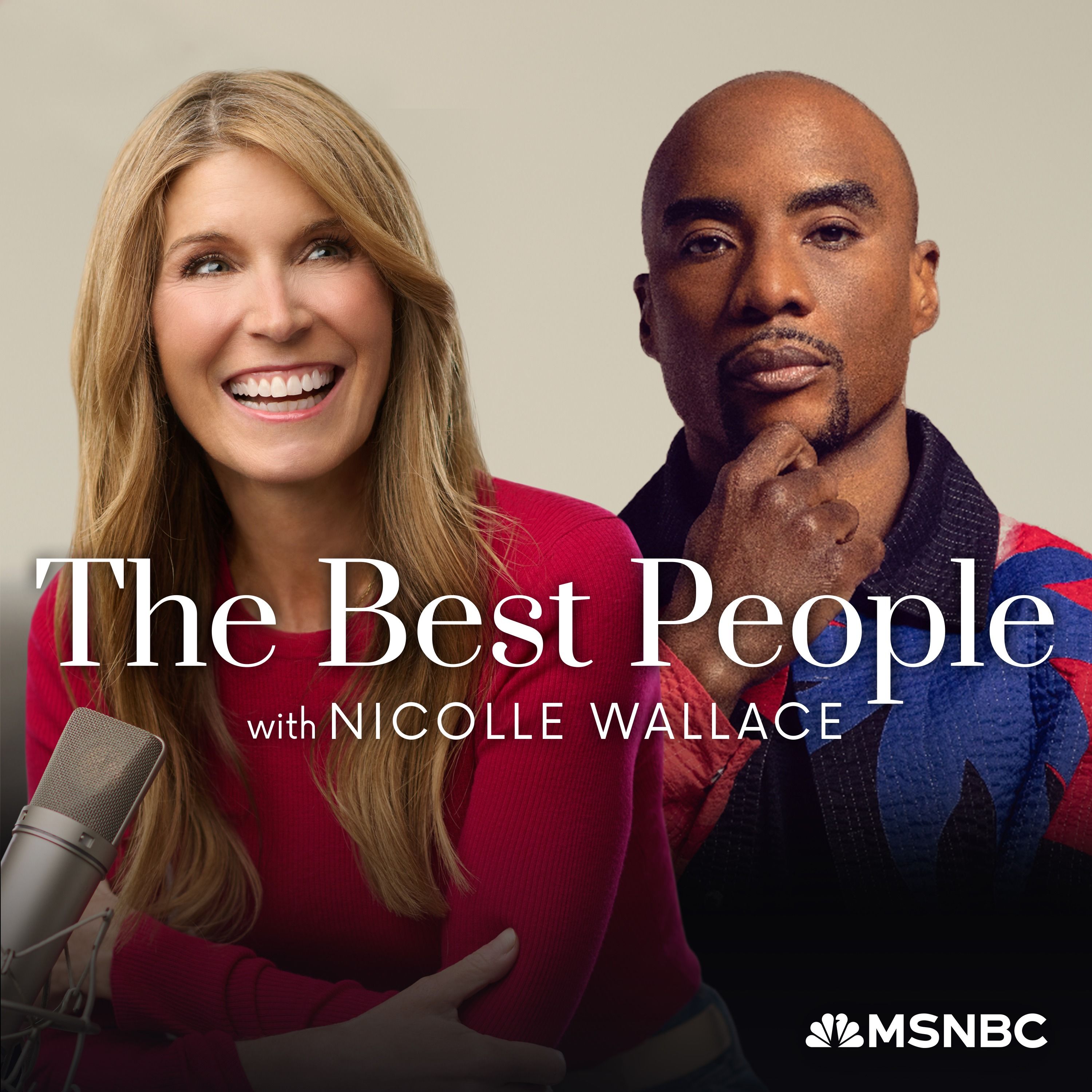
The Best People with Nicolle Wallace
Charlamagne Tha God: “We The People” Hasn’t Failed Us Yet
00:41:28
Charlamagne Tha God preaches speaking truth to power on both sides if we want to save our “fragile” Constitution.
Loading summary
Transcript115 lines
- [00:00]
Narrator/Announcer
This season on the Kardashians.
- [00:02]
Podcast Host Nicole
Let's do it.
- [00:03]
Nicole
I'm shooting a TV show with the most amazing cast. I have my podcast.
- [00:08]
Charlamagne Tha God
I think I might move back to New York.
- [00:10]
Blue Apron Advertiser
I heard footsteps walk into my room.
- [00:12]
Nicole
What's happening?
- [00:14]
Charlamagne Tha God
Don't you want to see all the craziness?
- [00:17]
Nicole
I'm freaking out.
- [00:18]
June's Journey Advertiser
Some familiar faces are back.
- [00:20]
Nicole
Is Bob here? Hello.
- [00:22]
Podcast Host Nicole
It's good TV.
- [00:23]
Narrator/Announcer
The Hulu original series the Kardashians premieres October 23rd on Hulu and Hulu on Disney. For bundle subscribers. Terms apply.
- [00:30]
Blue Apron Advertiser
You open the fridge, there's nothing there. So what's it gonna be? Greasy pizza? Sad Drive Thru burgers? Dish by Blue Apron is for nights like that. These are the pre made meals of your dreams. At least 20 grams of protein. No artificial flavors or colors. No chopping, no cleanup, no guilt. Keep the flavor, ditch the subscription. Get 20% off your first two orders with code APRON20. Terms and conditions apply. Visit blueapron.com terms for more.
- [01:07]
Charlamagne Tha God
I feel like there's one branch of government we have left that hasn't failed us thus far, and that branch of government is the people. You know what I mean? We the people.
- [01:23]
Podcast Host Nicole
Hi, everyone, and welcome to this week's.
- [01:26]
Nicole
Episode of the Best People podcast. This guest is someone we've been hoping to talk to and wanting to talk to since the very first week that.
- [01:33]
Podcast Host Nicole
The Best People podcast existed.
- [01:35]
Nicole
He's very busy. He's in a lot of demand.
- [01:38]
Podcast Host Nicole
He's the host of the smash hit.
- [01:40]
Nicole
Podcast the Breakfast Club. He's not afraid to go into places where some people in their silos might not go. We want to talk to him about that. But most importantly, he hates small talk and loves Judy Blume. So we knew we'd have. We knew we'd have some common ground today. Charlemagne Tha God. Thank you so much for being here.
- [02:01]
Charlamagne Tha God
Peace. Nicole, how are you?
- [02:03]
Nicole
I'm very good. I'm a fan. And I've watched you on your own podcast. I've watched you on Lara Trump show. I've covered you. I thought you did the best interview that was done in the 107 days that Kamala Harris was a candidate.
- [02:16]
Charlamagne Tha God
Wow.
- [02:16]
Nicole
You did, I thought. You know why? Because I was a press staffer for candidates, and I think that hard interviews are the interviews that make candidates look the best. And she did the best in what was one of the toughest interviews she had. And that was with you. And I think if she'd had more conversations where she was pushed, people would have seen more of her.
- [02:37]
Charlamagne Tha God
Well, yeah, that's why it's good to go outside your bubble. Even though, you know, I supported the VP and been supported her on her first campaign too, back in 2020. But, yeah, that's why you gotta go outside of your bubble. That's why to me, my favorite interview of hers was with Bret Baer on Fox.
- [02:53]
Nicole
Yeah.
- [02:53]
Charlamagne Tha God
You know, because I think that when she is pushed and she's challenged, you get a lot more of the real her.
- [03:00]
Nicole
Yeah. Yeah. And I mean, like. But this is the problem with the bubbles, right? Like, why inside a bubble can you not push? I mean, I don't even think it matters what bubble you're in. You should have a real conversation.
- [03:10]
Charlamagne Tha God
I completely agree. But, you know, we live in this era now where everybody has a jersey on, Right. And what's so crazy is we're more critical of our actual sports teams than we are of our politicians. I don't feel like you should put on a jersey when it comes to a politician. I think that when you are an American citizen, you should listen to what Democrats are saying, you should listen to what Republicans are saying, you should listen to what independents are saying. And whoever has the best ideas that align with either what you want done or what your ideologies are, then you vote for that party. But everybody has on these jerseys, man, we don't even got jerseys. We got pom poms. We ain't even playing. We just cheerleading. And we refuse to be critical of whatever team we're cheering for.
- [03:50]
Nicole
It is weird, but I think that. What I think Democrats would challenge you on is that the Republicans fell in line behind a felon and a guy who bragged about grabbing women wherever he wanted to because he was a celebrity. And the Democrats are trying to deal with the asymmetry of the political moment. How do you respond to that?
- [04:11]
Charlamagne Tha God
I agree with you. But here's the thing. Clearly, the American people didn't care about any of that because the American people were just focused on the ideas that he was spewing. And it wasn't even just ideas. It was, you know, stating the obvious and pointing out a lot of things that Democrats may have been ignoring, like the border, you know, like the economy. He said it himself, man. We want on one word, groceries. And, you know, you can't tout things like Biden nomics when people aren't feeling that in their pockets. You know, you can't just ignore people's criticisms of the border and chalk it up the MAGA messaging. I'll never forget when MSNBC did that to me. And MSNBC did that to me based off me listening to people. Me listening to people in New York City, listening to people in Chicago, activists in Chicago, and then them telling me what their issues with the border were, and their issues weren't based on any type of prejudice for who was coming across the border. It was literally economics. It was, hey, these people are coming across the border and getting more resources than we are. Like, we've been sitting here in these poor and disenfranchised neighborhoods for years, and we have problems with housing, but they're getting housing, and we barely can make ends meet, but they're getting stipends to be able to go out there and get food and things like that. How do you not listen to those people when they're having those conversations? And I remember me repeating exactly what I just said based off the conversations I was having with people actually in the street in these areas. And MSNBC said I was repeating MAGA messaging. I was like, damn, that means that y' all really are not paying attention to your constituents.
- [05:48]
Nicole
Well, and I think this is where Trump made inroads with a lot of Latinos who said, look, I came here whenever I came here, but it feels unfair. Right. There are a lot of criticisms for everything that Trump is doing. I am not a fan of the way he is summarily rounding people up and racially profiling people.
- [06:08]
Charlamagne Tha God
I agree.
- [06:09]
Nicole
I mean, I think it's un American, and it's not what he said he was going to do. But you do, you know, to your more nuanced point there, you do have to go listen to why people are excited about him.
- [06:19]
Charlamagne Tha God
Yes.
- [06:19]
Nicole
And I did a lot of that after he won the first time, and it actually wasn't complicated. People liked the way he talked.
- [06:27]
Charlamagne Tha God
People like the way he talked, and they liked what he was talking about. And I think that if you go back to his first term, he is the textbook example of people will forget what you said, they'll forget what you did, but they'll never forget how you made them feel. And at a time when everybody was going through economic pains, he came through with those stimulus checks, he came through with those PPP loans. They just injected a whole lot of money into the American system. And. And it went into American people's pockets. And people do not forget how they was balling during his first term. That's why it's even. I read a poll this morning that said a lot of Americans are starting to blame Democrats for the government shutdown, and it's just simply because Republicans are better at messaging than Democrats will ever be. I can't believe Democrats still haven't figured out how to message. But right now, at a time when American people are hurting and they can point directly to. To the Trump administration to say, earlier in the year it was doge cutting all the federal jobs, now they are in charge of every branch of government, and it's a government shutdown, and all of y' all are losing jobs. The fact that they can't message that it's the Republicans that are hurting their pockets right now, and people still think it's the Democrats, it's insane to me.
- [07:40]
Nicole
It's insane. What should they do?
- [07:43]
Charlamagne Tha God
Well, I have a whole different theory. I felt like, you know, they shouldn't have let the government shut down, and, you know, they should have let Republicans jack up the health care prices. And then they could have pointed directly to Republicans and said, hey, this is the reason your health care prices are sky high, Republicans. And that could have been their messaging, and it could have been one ban, one voice, everybody, everybody, everybody. Trump administration jacked up your health care prices. This is the reason your health care prices are high. But now that the government is shut down, the waters are too muddied because it takes a bipartisan effort to keep the government open for the most part. So it's just like, it seems like they've made it to where people really don't care too much about why they're not getting their checks. They just want their checks. But Republicans have beat it in people's head. That is Democrats fault. And Democrats are taking credit for it because they're saying, no, yeah, we are the reason the government is shut down, but we're doing it because we didn't want your healthcare prices to get jacked up. So they're taking a stand, but it's hurting a whole lot of other people while this stand is being took.
- [08:52]
Nicole
It's funny because on the big, beautiful bill, that's what's gonna happen, right? The 11 to 17 million people that are gonna lose Medicaid are gonna have the consequence. And the communications around that are a lot clearer because the Democrats can say we didn't vote for it. And that's why you've got some Republicans running away. But, I mean, this is controversial, right? Let people have consequence and then blame the Republicans. To be totally blunt, the Democrats don't always pull those messaging operations off either.
- [09:24]
Charlamagne Tha God
Well, you know, when you, when you. I guess it's. I guess it's like pick your poison in a way. But elections do have consequences. So that's another message you want to beat over people's heads, right? Because there was a lot of people that's like, oh, it's not going to be that bad. Oh, that's not going to happen. Oh, they would never cut Medicaid. Oh, they would never send, you know, the military in the American cities. They would never do these things. So it's like these things are happening so now it's not even hyperbole anymore. It's we told you so. I hate to say it, but you kind of got to reinforce I told you, right? Because like I said, the waters are so muddied right now because of the government shutdown. And you have so many people losing jobs and people don't know who to blame and they actually do not care. All they know is they are not getting a paycheck. So it makes it easy for one political party to say it's that political party's fault. But the reality of the situation is I don't think it's a political win for anyone. That's why I was so shocked even to see the polls where they're like, you know, people are starting to blame Democrats, bro. Number one, that's not true. And number two, it shouldn't even be about party. Like both of these parties should never want the government to shut down. That's why I said. I just, to me, I felt like it would be better political strategy to allow, you know, the government not to get shut down and let, let, let the Republicans jack up the healthcare prices. And then you just point the finger at Republicans and see, this is what they, this is what they always wanted to do. They said they were gonna do it, they did it. Now how do we fix this in 2026? How do we fix this in 2028? America?
- [11:01]
Nicole
I mean, I used to be in the Republican Party. And I will tell you, the Republican Party tries to win the next day. The Democrats try to, to play 3D chess. There are a lot of smart Democrats and so they, they probably think they have, you know, the expertise to do that. But politics is about the thing that's in front of you. And the thing that was in front of voters in November was expensive groceries, expensive everything feeling shitty about the economy. And I've watched your political analysis get, you know, really quite sophisticated and strategic. You know, you see around the corners of where these things are going and how the country is going to respond. Are you thinking in any part of you about running for office?
- [11:45]
Charlamagne Tha God
No. You know, it's funny, people ask me that all the time. And I say no, but then I say, I don't know. And the only reason I say I don't know is because you never know what God has planned for you, right? Like, you never know what your future is going to look like. I'm only saying that at 47 years old, I don't know what I'm going to feel like at 57. I don't know, you know, but I don't have any plans to do it. But I mean, the beauty of what I do is, is Breakfast Club and I and Professor Alice Randall from Vanderbilt University, she said the Breakfast Club radio show is like sitting on America's front porch. And I know about sitting on front porches because I'm from Moncks Corner, South Carolina. That's what I grew up doing. Sitting on my grandmother's porch, sitting on my mama's porch. My grandmother's been deceased since 2006. And when I'm home in South Carolina, I still go sit on her porch, right? And so it's like I have a front row seat to just working class people every day. I'm from South Carolina. I go home all the time and talk to people in those rural areas. I'm talking to people in cities like Newark, New Jersey. I do an event called the Mental Wealth Expo. I've been doing it for five years. I just did it in Newark, New Jersey. I'm talking to these people. So what I feel a lot of politicians do, Republicans and Democrats, they talk about people they never talk to. If you simply go have conversations with your constituents, you'll see what's coming around the corner, too. It's not hard. And that's a problem that I feel like a lot of really Democrats, in a real way, Democrats always want to tell their people where to go instead of following their people.
- [13:19]
Nicole
The other thing is you could go to your constituents and have an event planned for you, or you could just live in the real world. I sometimes wonder what their days are like. Like a normal person in their life isn't sitting around looking for their MAGA hat, putting it on and then having a convers conversation about Stephen Miller.
- [13:38]
Podcast Host Nicole
Right?
- [13:38]
Nicole
Like there's a political dialogue and then there's like. And in my real life, I actually have no idea what people's politics are because when things are really polarized, they don't talk about politics, but they talk about their fears and they talk about their worries and they talk about their anxieties and the things that Trump promised. He's betrayed the whole country, but he's especially betrayed his own voters on issues like the economy, on foreign policy, where he's now just blowing up boats in the middle of the ocean after running as a guy that wanted peace everywhere. And the immigration stuff, it's not good for the military, and it's not good for the country to have a policy that brings everyone out into the streets because it's so disturbing. People are protesting it.
- [14:23]
Charlamagne Tha God
I don't understand it, Nicole. I've said to myself a million times, what is the point of all of this chaos?
- [14:31]
Podcast Host Nicole
Yeah.
- [14:31]
Charlamagne Tha God
You know, like, you actually probably could get a lot more corruption done doing it in the dark, you know, like, like, like, like, like we've seen some real sinister things happen in this country.
- [14:44]
Nicole
Like, don't take the plane. Like, we can see the plane.
- [14:47]
Charlamagne Tha God
Yeah. Like, it's like the fact that it's so out in the open and so blatant, it almost makes you wonder, like, what are they really trying to distract us from with this R is just, you know, administration just this incompetent, you know, and just this blatantly corrupt. And, you know, you have a bunch of people who really aren't necessarily politicians. So they don't have that political sophistication, you know, to pull off what they're trying to pull off covertly. Maybe they only know how to do it caveman style.
- [15:15]
Nicole
It's the $64 million question. I mean, maybe it's crypto. Who knows? One of the things you said to Lara Trump really is something I've. I've wanted to say and I've wanted to think, but I haven't dared to. And it's that. It's that the Epstein issue could be like this break, because it's not about the pro democracy side or the Democrats. It's actually about the base of the MAGA movement and the MAGA leaders. Trump and the Republicans who are subservient to him, talk more about the split that either they don't see or they think they can just power through.
- [15:52]
Charlamagne Tha God
I mean, I still feel that.
- [15:53]
Podcast Host Nicole
Yeah, me too.
- [15:54]
Charlamagne Tha God
Yeah, it's something that his base will not let go. You know, they gave so much energy to, you know, the podcast Fear. Right. For how they amplified Trump. But it's the podcast fear that's keeping that, you know, Epstein conversation going. I don't know why mainstream media isn't keeping it going. Like, they kind of like, bring it up in passing. Like, you know, they should still be pressing the issue, you know, on the Epstein files, because it's the only thing that I've ever seen. Make that MAGA base be like, yo, he's lying. Out of the millions of lies we've heard him tell, that is the one that has made people be like, okay, something's not right over here. So I guess that's where they draw the line. So I don't know why mainstream media in particular wouldn't continue to press the issue and all of these other things come up. And don't get me wrong, government shutdowns and all of those are very, very, very pressing issues. And it's hard to say that things like that are just a distraction from the Epstein files, right? But in a way, they are. So it's kind of. I know that it's hard to discuss all these things at once, but when you're talking about the government shutdown, when you're talking about military being, you know, in American cities, you still should always punctuate it with, and what about the Epstein files? What is he hiding in the Epstein files? Like, let them get mad. Let them get mad at press conferences, let them get mad on, you know, truth social, but constantly keep, you know, that, that, that conversation going around the Epstein files.
- [17:29]
Podcast Host Nicole
We'll take a quick break right here. We'll have much more of my conversation with radio icon and entrepreneur Charlamagne Tha God on the other side. Stay with us.
- [17:46]
Dr. Sarah Rahal
I'm Dr. Sarah Rahal, the founder and CEO of Armra. I developed armor Colostrum because I know your body was designed to thrive. It's your natural state, your birthright, and you can reclaim it. Colostrum is the first nutrition we receive in life with every essential nutrient our bodies need. It's nature's original blueprint for health. After a devastating health crisis almost took my life, I made it my mission to harness this power. Using proprietary technology, AMRA captures over 400 bioactive nutrients in every scoop, delivering over 1000 benefits that transform your health at its foundation. Whether for gut health, metabolism, skin, hair immunity, mood, energy, fitness or recovery, I invite you to join this collective revival of health and discover radical transformation for yourself. Visit armour.com that's a r m r a dot com and enter code health30 for 30% off your first subscription order. This statement has not been evaluated by the Food and Drug Administration. This product is not intended to diagnose, treat, cure or prevent any disease.
- [18:45]
On Deck Advertiser
Cash flow Crunch on deck Small business line of credit gives your business immediate access to funds up to $200,000 right when you need it. Cover seasonal dips, manage payroll, restock inventory, or tackle unexpected expenses without missing A beat with flexible draws, transparent pricing, and control over repayment. Get funded quickly and confidently. Apply today@ondeck.com funds could be available as soon as tomorrow. Depending on certain loan attributes. Your business loan may issued by On Deck or Celtic Bank. On Deck does not lend in North Dakota. All loans and amount subject to lender approval.
- [19:16]
Clorox Advertiser
Clorox Toilet Wand. It's all in one. Clorox Toilet Wand. It's all in one.
- [19:23]
On Deck Advertiser
Hey, what does all in one mean?
- [19:26]
Clorox Advertiser
The Caddy, the bond, the preloaded pad. There's a cleaner in there inside the pad.
- [19:32]
On Deck Advertiser
So Clorox Toilet Wand is all I need to clean a toilet.
- [19:37]
Clorox Advertiser
You don't need a bottle of solution to get into this toilet.
- [19:42]
Nicole
Rev.
- [19:44]
Clorox Advertiser
Feels good.
- [19:45]
Charlamagne Tha God
Use as directed.
- [19:52]
Nicole
What do you think is in the Epstein files?
- [19:55]
Charlamagne Tha God
Mutually assured destruction for both parties. But guess what? I don't care, because I think that all of this old guard needs to be blown up. If it's one thing that we've seen over the last decade, the old guard of the Democrats and the old guard of the Republicans, they cannot serve any of us moving forward. They just simply can't. So, you know, I don't care who's in the Epstein files that all of them can go. Everybody. Republican, Democrats, you know, elected officials from other countries. I don't care who they're protecting. It all has to be blown up. And that's actually one of the reasons, you know, I really do want to see it, you know, released, because I think it'll. It'll allow a lot of people to put their pom poms down.
- [20:35]
Nicole
Well, and to, like, clear out the pipes. Right?
- [20:37]
Charlamagne Tha God
Clear out the pipes. Like, whoever. Especially in the Democratic Party, whoever's gonna lead the Democratic Party in the future has to be willing to throw that old regime under the bus. That's why, you know, I know the vice President is getting a lot of flack for 107 days. And, you know, Governor Josh Shapiro asked a valid question. He said, you know, when she's out here, she's gonna have to answer. Well, how come you knew all of this but didn't say anything? No, that's a. That is a valid criticism and a valid question. But I like the fact that. That she's at least scratching the surface of the truth. That gives me some hope just for the party in the future. I would hope that that book, and along with the Original Sin by Jake Tapper, just gives the Democrats courage to tell the truth. Right, because Republicans aren't even there yet. Republicans, they're still so brainwashed. On MAGA that they're not even remotely attempting to tell the truth. Well, strangely enough, I'm lying. They are like, you know, you got the Marjorie Taylor Greenes, which is even crazy to say.
- [21:35]
Nicole
And then you have Thomas Massie.
- [21:37]
Charlamagne Tha God
Yeah, yeah, Thomas Massey. But then even on the talking head side, you have the Tucker Carlsons. You do have some. Not enough conservative elected officials yet, but you have people who were conservative political pundits and a couple of the elected officials starting to tell the truth a little bit. So, yes, there's chinks in the armor.
- [21:53]
Nicole
I mean, how do you think we should be talking about what are clearly authoritarian steps? Not even steps. Leaps. I mean, Trump is taking authoritarian leaps in the way he's using the Department of Justice and the way he's running out all of the top investigators at the FBI. But that's like the rule of law doesn't come up on anyone's front porch. I mean, I'm a political nerd, and I don't ever sit at the sidelines of a baseball game talking about the rule of law. I mean, how should we be talking about that stuff?
- [22:23]
Charlamagne Tha God
I think it's two ways to talk about it. I think it's ways to talk about it. Just like how you just said authoritarian strategy. That's what I've been saying. A lot of authoritarian strategy. You can't. You can't say authoritarian rule yet. Right. We're still a democracy as of right now. But what I would say and what I do say to my listeners is it's just unconstitutional if you voted for Donald Trump because he was America first and he was gonna make America great again, and you're waving your red, white and blue flag and you're all about patriotism. What he's doing is unconstitutional. He's literally wiping his ass with the constit. This is things I was saying even during the campaign. Like, this is the same man who said we should terminate parts of the Constitution to overthrow the results of an election. I said this on Fox News a couple of times. I said it on Gutfeld show, and I said it on when I sat with Brian. Kill me, right? And they were acting like their fact checkers couldn't find that statement. Like, even though it was right there. Right. It's right there. So for me, it's like, yo, this just let the Patriots know that this is unconstitutional. The things he's doing violate the Constitution. So if you really claim to be America and America first, and you maga, you want to make America great again, do you really want A leader that doesn't care about the Constitution.
- [23:50]
Nicole
You know what's funny is I used to be a Republican, and I used to know those folks. I never knew Greg Gutfield, but I knew Brian Kilmeade, and he's written books about American history. And I know that he doesn't believe that the Constitution should be in the paper shredder that Trump is shoving it in. What happens to a man, to a human, to make them subvert all of.
- [24:11]
Charlamagne Tha God
Their beliefs before Trump, I really have no idea. Somebody asked me and Andrew Schultz, you know, we have a podcast called the Brilliant Idiots. Somebody asked us that question yesterday. They literally said, what about Trump makes other leaders so afraid? Now, they didn't specify whether it was world leaders or elected officials or leaders of corporations. Just. I really don't know the answer to that. It's almost like my response is, man, maybe he's really got things on people behind the scenes, or maybe he's making people's lives real miserable behind the scenes. Or maybe people are scared of the public, you know, verbal lashing that, that. That they might receive. Maybe they really are afraid of, you know, the mob that stormed the Capitol on January 6th. Maybe they are afraid of, you know, these, you know, radicals who might do violence to them in the street. I don't. I don't know. It seems like it's a lot of hypotheticals that they're. That they're afraid of, because I haven't seen anything that they can't push back on if they just chose to push back on it. Like, I was watching, you know, former President Barack Obama speak this week, and he was just like, yo, just stand up. He was just telling the elected officials and leaders of these corporations, just, just stand up. The leaders of these institutions, like, yo, just stand up and say no. I don't know what it is that's making them afraid just to say no.
- [25:39]
Nicole
Well, to your point, Trump doesn't do anything behind closed doors. Like, I covered President Obama's comments. He seemed to be speaking directly to the folks that have yet to capitulate, basically saying, don't do it. Let me ask you about the other side of the equation. For the few people who haven't fallen into silos, I think I was thinking on my way up to the studio here, it's like you, Ken Burns and Matthew McConaughey are the only people I can think of who can go on Lara Trump and Meghan McCain and MSNB. There are very few people who even exist in this moment. Across the membrane of partisanship but what explains your absence of fear for saying anything to anyone?
- [26:21]
Charlamagne Tha God
Maybe ignorance is bliss. Maybe I'm just too dumb to realize. I don't know. Maybe. Maybe. Maybe I'm just too dumb to realize that I. Maybe I shouldn't be doing that. I just never. You know what it reminds me of? It reminds me of when I first started radio and when I first started radio, I. I didn't go to college. I didn't work at a college radio station. You know, of course, we didn't have podcasting or YouTube or anything back then. So I was just intern who worked in the promotions department, who got an opportunity on the microphone. Nobody ever told me what not to do. It was always, what did they say? I would rather beg for forgiveness than permission. I think that's what they say. So it was almost like, well, I didn't know. But even in me not knowing, it never stopped me from being me. Cause nobody ever taught me how to be otherwise. So I'm not an elected official. I'm not a politician. I'm not a surrogate for anybod, just an American citizen. I'm a guy from Monks Corner, South Carolina, who grew up around a bunch of different people, right? I had a. My first white friend, name was Thomas Evans. He lived on the right of me, and all my black friends lived on the left. The Presidents and the Trotters and everybody else. And we all hung out and we all kicked it. And it was just a. It was more of a class thing. So I never was afraid to talk to different people. And my mother, man, my mother was an English teacher, and she gave me a great piece of advice. She said, read things that don't pertain to you. And so that put a level of curiosity in me that transcended even past books. It was just about people. And I always was very cognizant of my surroundings in my space. So if I found myself sitting next to somebody in a plane or sitting in a waiting room with somebody, I always end up striking up a conversation with this person and just. Just talking, right? And you meet people that are just different. I don't put myself in bubbles. I don't put myself in boxes. And so for me, that served me very well in my media career because I'm a curious person. I like sitting down, having conversations with a little bit of everybody. And when I see, like, I hate when people label things and they say, this is the right or this is the left or this is red or this is blue. It's all people at the End of the day. And I really do think it's cause of my South Carolina upbringing, man. Because when you're. There's certain people that can tell you about this. Picari Sellers can talk to you about this. People like Jim Clyburn can talk. People like Nancy Mace can talk to you about this. When you live in a place like South Carolina, you're just talking to people who are different. Like, they're white, they might be Republican, you might be black in a liberal, you might be black in nothing. You might meet somebody who's white in nothing. You're just all these people from this country town, and you gotta exist with each other. You know what I'm saying?
- [29:10]
Nicole
I mean, and I think to your magnetic poll for your listeners and your viewers now, it's that you don't change if your tie to this business is other humans. And I wonder, like, I read all the stories after the election of people that weren't gonna talk to Trump voters anymore. And I was like, but wait, what if you're married to one? Or what if it's your parents? Like, who are the people that don't. Anyone who voted for, I don't know who they are, because 99% of Americans, I would imagine, have someone deeply enmeshed in their life, either through their family or their work or their church or their community, who made this choice, that I disagree with it. I think Trump threatens everything that I love about the country, threatens our jobs as journalists and media figures. But I could never cut out the people who voted for, even if I wanted to. And I'm not saying I don't understand the instinct, because it's hard to be vulnerable around people that you think are for something that hurts. I think part of what you're talking about, about throwing out everything in our politics is throwing out people that don't sort of live normal lives anymore. Is that fair?
- [30:26]
Charlamagne Tha God
Yeah. I think to your point about what you said about people who didn't want to vote for, didn't want to talk to people who voted for Trump, that's not even logical. The reason it's not even logical is because you don't know who a Trump supporter is.
- [30:39]
Nicole
Right.
- [30:39]
Charlamagne Tha God
Like the person making your coffee at Starbucks in the morning might be a Trump supporter. You're not gonna let them make your coffee. Like the Uber you call, and the person driving might be a Democrat. If you're a Republican, you're not gonna get in the car and let them. Like, the logic don't even make no sense. But I just feel like there's this shared trust that exists amongst all humans and we don't talk about it enough or tap into it enough because of all of our so called differences. But think about it, Nicole. Today you woke up and you probably interacted with a lot of different people. If you leave your house, you're going to interact with a lot of different people. There's only one thing that keeps me and you returning home safely at night and that is the shared trust that we have amongst each other. Because all it takes is for one of us to be crazy. Like you might go to a Starbucks, order a coffee and it's a crazy person in the back who's like, oh, that person's a Democrat or oh, that person's a Trump supporter. They might put something and poisonous in our drink. Or you might be in a car with somebody and they oh, you're a Trump supporter. And they drive off the road. Like just think about how ridiculous that would be. So there's still a shared trust amongst us as people that keeps us civilized and keeps us from really hurting each other. And I think times like this, we need to lean into that more than we do worrying about what we don't have in common politically.
- [32:07]
Podcast Host Nicole
My conversation with Charlemagne th God continues after a quick break. Don't go anywhere.
- [32:20]
Dr. Sarah Rahal
I'm Dr. Sarah Rahal, the founder and CEO of Armra. I developed armor Colostrum because I know your body was designed to thrive. It's your natural state, your birthright, and you can reclaim it. Colostrum is the first nutrition we receive in life with every essential nutrient our bodies need. It's nature's original blueprint for health. After a devastating health crisis almost took my life, I made it my mission to harness this power. Using proprietary technology, AMRA captures over 400 bioactive nutrients in every scoop, delivering over 1000 benefits that transform your health at its foundation. Whether for gut health, metabolism, skin, hair immunity, mood, energy, fitness or recovery, I invite you to join this collective revival of health health and discover radical transformation for yourself. Visit armour.com that's a r m r a dot com and enter code culture30 for 30% off your first subscription order. The statement has not been evaluated by the Food and Drug Administration. This product is not intended to diagnose, treat care or prevent any disease.
- [33:20]
On Deck Advertiser
Ondeck is built to back small businesses like yours. Whether you're buying equipment, expanding your team or bridging cash flow, Gaps on Deck's loans up to $250,000 help make it happen fast. Rated A by the Better Business Bureau and earning thousand of five star trust Pilot reviews. Ondeck delivers funding you can count on. Apply in minutes@ondeck.com depending on certain loan attributes, your business loan may be issued by Ondeck or Celtic Bank. Ondeck does not lend in North Dakota. All loans and amount subject to lender approval.
- [33:48]
Narrator/Announcer
If low energy, weight gain or a drop in sex drive are holding you back, testosterone replacement therapy from Henry Meds may help you reclaim your edge. Their TRT treatments are backed by trusted providers who understand men's health Health. It's 100% online and discreet and includes free labs for a flat monthly fee. Start your journey towards strength and performance. Visit henrymeds.com trt to learn more and get $50 off today. Not all patients are eligible. Results may vary. Consult a healthcare provider to determine if treatment is right for you.
- [34:23]
Nicole
I guess the other side of that is it's so difficult when you see what they're doing. You know, trumped up charges against Letitia James, whose only, you know, sin was holding Donald Trump's fraudulent company accountable. Trump, you know, I mean, there is such an audacious bucket of things that Trump is doing that people that are still enthusiastic about it, I think, you know, should have to answer for, but it can't extend into or paralyze, I guess, our ability to function. And I wonder, where would you draw the line anyway?
- [34:53]
Charlamagne Tha God
Oh, yeah, I definitely. I draw. Let me be clear, I draw the line at all of that. But I still have to sit back and look at it. And just from a strategy perspective, I can't sit here and act like I'm not impressed. And I'm going to tell you why. Because he does things that Democrats should have done to him the last four years. He calls it straight. That person is corrupt. That person needs to be in jail. Who you think they should have been saying that about those four years they were in office instead of saying things like, I'm not gonna get involved. I'm not gonna get involved. And then when.
- [35:25]
Nicole
Thousand percent.
- [35:26]
Charlamagne Tha God
And then when Biden gets out the White House, he goes, I shouldn't have hired Merrick Garland. I should have hired somebody that was gonna prosecute the case. Duh. And you should have spoke out against it. Because what happens, The American people aren't really that invested. Some. Some of us are way more invested, you know, into what's going on than other people. Some of people are just looking at it from the surface. So. So if you tell me somebody is a criminal, you tell me somebody's corrupt, but you don't treat them that way. Then I gotta start questioning, are they really that corrupt and really that criminal? But then he gets in the White House and treats people like they're really that corrupt and that criminal. And they're not. So then most people will be like, well, I guess that person committed a crime, you know, I guess that person, you know, is in the wrong. He does what the Biden administration should have done to him. And man, I can't sit here and act like it's not still working because to your point, you don't have people washing their hands or drawing the line at a lot of the nut ass stuff that he's doing.
- [36:28]
Nicole
So what is the way out of this moment or what is the way through? A lot of people are really feeling like they can't take the news. Their mental health is suffering. I think you've got got three daughters.
- [36:41]
Podcast Host Nicole
Four daughters.
- [36:42]
Charlamagne Tha God
Four daughters, yeah.
- [36:42]
Nicole
You have four daughters? I got two kids. I can't just say like, I'm going to go to sleep and wake up in three and a half years. Like, you know, we have to thrive, not just survive these three and a half years. How do we do that?
- [36:52]
Charlamagne Tha God
That is the million dollar question. I think all of us need to get back to a real sense of community. I think that, you know, there are a lot of things that divide us, but I think that, you know, if we believe in what America promises us, you know, it's supposed to be freedom, liberty and justice for all. And we have to know that that is, that that don't even exist right now. I'm talking about in this current moment, right now. That does not exist. The rule of law does not exist in America. The Constitution is a very, very fragile document right now. And I can't sit here. This is where people confuse me, right? We use language like authoritarian and we use language like fascists. I don't even want to use that language. And the reason I don't want to use that language because how can I use that language but then still tell people to vote in 2026, still tell people to vote in 2028? There's no such thing as a free and fair election under an authoritarian regime. There's no such thing as a free and fair election under fascism. So, you know, there's a part of me that's still holding out hope, but I don't think you vote. You can't vote out fascism, Nicole. You can't vote out authoritarianism. So to answer your question, I don't know what it is that we do, but I know it's going to be, it's going to take some real resistance. And I think we might be past the point of politics in regards to that resistance. It might take a national boycott or something. I don't know. I feel like there's one branch of government we have left that hasn't failed us thus far. And that branch of government is the people, you know what I mean? 100% we the people. So we the people have to, you know, think of ways, you know, to create resistance. Because I really do feel like we're past the point of anything political getting us out of this situation.
- [38:48]
Nicole
Are your kids paying any attention to this moment? Like how do you talk about it with your kids?
- [38:52]
Charlamagne Tha God
Yeah, my oldest is 17. She talks about it sort of, kind of, but she's busy, busy living her life, training my youngest, are really into it. And I think that's kind of my fault because, you know, when I'm home, CNN's on, MSNBC's on, Fox News is on. Like I'm watching this on television and sometimes my daughter, my 6 year old will be sitting next to me and she'll literally be reading the ticker because, you know, they're young and they're just getting in, they're reading now and she's reading the ticker and stuff like that and they're asking questions. And it's interesting to me because like, like this stuff is, it's complex, it's nuanced. The things that are happening in this country are new even to me. And so being that it's new to me, I can point to a lot of things in history and say, well, this happened in this country. This happened in this country. A lot of that is starting to happen here now. But it feels like you're almost overstimulating them with information because there's things that happen here and I have to go look at history and other places to see, you know, how that turned out. Because this is pretty new for America.
- [39:58]
Nicole
Isn't that insane though? Just Google Orban during the election, you know, how long did they have a free press? That was one of my Google searches. And just the idea that we're even asking those questions feels, you know, to your point, like something people can reject.
- [40:15]
Charlamagne Tha God
This is it's not America. Like literally, it's not America. America, through all its faults, it's not perfect. Hasn't been a perfect system for black people. Hasn't been a perfect system for women, been a perfect system for gays. Definitely hasn't been a perfect system for the Poor of any color, sexuality, religion. But it's still America. There's still like, you know, we thought so. We thought there was still a rule of law, you know, that, that everybody was required to follow. And like all of our American norms, I can't even say that. You know what I am going to say they're still, they're being tested. I'm not going to say they are. I'm not going to say the House of Cards has been completely demolished, but they're being tested right now. So I don't know how we passed this test.
- [41:00]
Nicole
I want to give you a last word on something you alluded to. What can we do better? Because it feels like if you want America to stay America and you want the pro democracy side to be the bigger side, we all have to put our heads together. What can we do better? What can I do better?
- [41:15]
Charlamagne Tha God
I think what we're doing now, I think communication is key and we really cannot be afraid to speak truth to power at a time like this. But you got to be able to speak truth to power about it all. You can't just speak truth to power about Republicans. You got to speak truth to power about Democrats. I told people for the last few years, if you lie to folks about Democrats, they won't believe you when you tell them the truth about conservatives and what's going on with Donald Trump. And I don't even like to say the word conservative in Donald Trump, even though the party has become the party of maga. But, but I still believe in the traditional conservative. You know, I still believe that there are a lot of conservatives out there who can't wait to get their party back to what they knew it to be. I think that MAGA is an anomaly, a very effective anomaly. And I think it's up to we, the people, like everybody to determine how long this MAGA thing is going to last. So I just think that we gotta continue to have more communication. Speak a lot of truth to power. Cause I think one of the reasons we're in this situation is because folks didn't speak truth to power. And I'm a person who got a lot of flack for saying a lot of things that people were, that people like the VP were saying that elected officials in 107 days, the anonymous elected officials in 107 days were saying, I was saying these things. There was no reason for Joe Biden to announce that he was running for a second term. It was just ridiculous. He was extremely unpopular president and he should have stepped down two years ago to Give Democrats a fighting chance. He should have hired an attorney general that was actually going to prosecute the case against Donald Trump. They shouldn't have washed their hand and said, I'm going to leave it up to the DOJ and everything. No, if you feel like somebody is a real threat to democracy, think about the language we were using, Nicole. A threat to democracy, a fascist. You had people calling him the next Hitler on both sides. His vice president called him that. If he was really that kind of a threat, why didn't they act like, like it, you know, I mean, it's.
- [43:22]
Nicole
The question that people, that our kids will wrestle with when they read whatever is written about this time, when they read the history of this time, they'll wrestle with, you know, how did the people around Joe Biden send him out to that debate that day?
- [43:35]
Charlamagne Tha God
That's right.
- [43:36]
Nicole
How did that debate happen?
- [43:38]
Charlamagne Tha God
There is literally. I, I, I was on my, I was on Breakfast Club. I was on Brilliant, I was on Young Turks. I did an interview with Jonathan Carr tomorrow and I said, Joe Biden should not ever debate Donald Trump. Donald Trump will wash Joe Biden in the debate. He'll make Joe Biden look so old. This was months before the debate. I couldn't wait to repost that the night of the debate. When I tell you I couldn't wait, I'm like, I'm not no political strategist who thought that was a good idea. Anybody with a little bit of common sense was like, nah, don't do that. That. So, yeah, we just gotta be honest, man. Like, that's, that's why I wrote this book right here. You see this? Get honest or die lying.
- [44:19]
Nicole
Well, that's how I knew to stay away from any small talk with you.
- [44:22]
Charlamagne Tha God
Yes.
- [44:23]
Nicole
I guess the last thing I would say is, you know, the tragedy of what we're talking about is that we have Donald Trump who doesn't remember who was president on January 6th.
- [44:31]
Charlamagne Tha God
Yeah, but I think that's more of a, I really think that's more of an indictment of Democrats than anybody. And I know people get mad at me when I keep saying that over and over, but it was the Democrats election to lose. They were in power. It's not like they were there. And they did not treat him like the threat they told us he was. I don't know what they were waiting on. I don't know what they thought was going to happen. I don't know. But it, it didn't work.
- [45:00]
Nicole
I mean, you can't deny where we are and where we ended up. I'd love to do this again. Thank you.
- [45:05]
Charlamagne Tha God
Let's do it. Thank you very much, Nicole.
- [45:06]
Nicole
Thank you.
- [45:07]
Charlamagne Tha God
All right, peace.
- [45:13]
Podcast Host Nicole
Thanks for listening to the Best People. You can subscribe to MSNBC Premium on Apple Podcasts to get this and other MSNBC podcasts ad free. You'll also get early access and exclusive bonus content like my recent conversation with former Principal Deputy Director of National Intelligence Sue Gordon on the extent of the damage done to our new intelligence community by the Trump administration. All episodes of the podcast are also available on YouTube. Visit msnbc.com thebestpeople to watch. The Best People is produced by Vicki Vergelina and Senior Producer Lisa Ferry. Our Associate producer is Rana Shabazzi. Our audio engineer is Bob Mallory, and Katie Lau is our Senior Manager of Audio production. Pat Berkey is the Senior Executive Producer of Deadline White House. Brad Gold is the Executive Producer of Content Strategy. Aisha Turner is the Executive Producer of Audio. Madeline Herringer is Senior Vice President in Charge of Audio, Digital and Long Form. Search for the Best People wherever you get your podcasts and be sure to follow the series.
- [46:26]
June's Journey Advertiser
The Search for truth Never Ends Introducing June's Journey, a hidden object mobile game with a captivating story. Connect with friends, explore the Roaring twenties and enjoy thrilling activities and challenges while supporting environmental causes. The adventure continues with our Immersive Travels feature. Explore distant cultures and engage in exciting experiences. There's always something something new to discover. Are you ready? Download June's Journey now on Android or iOS.