← The Best People with Nicolle Wallace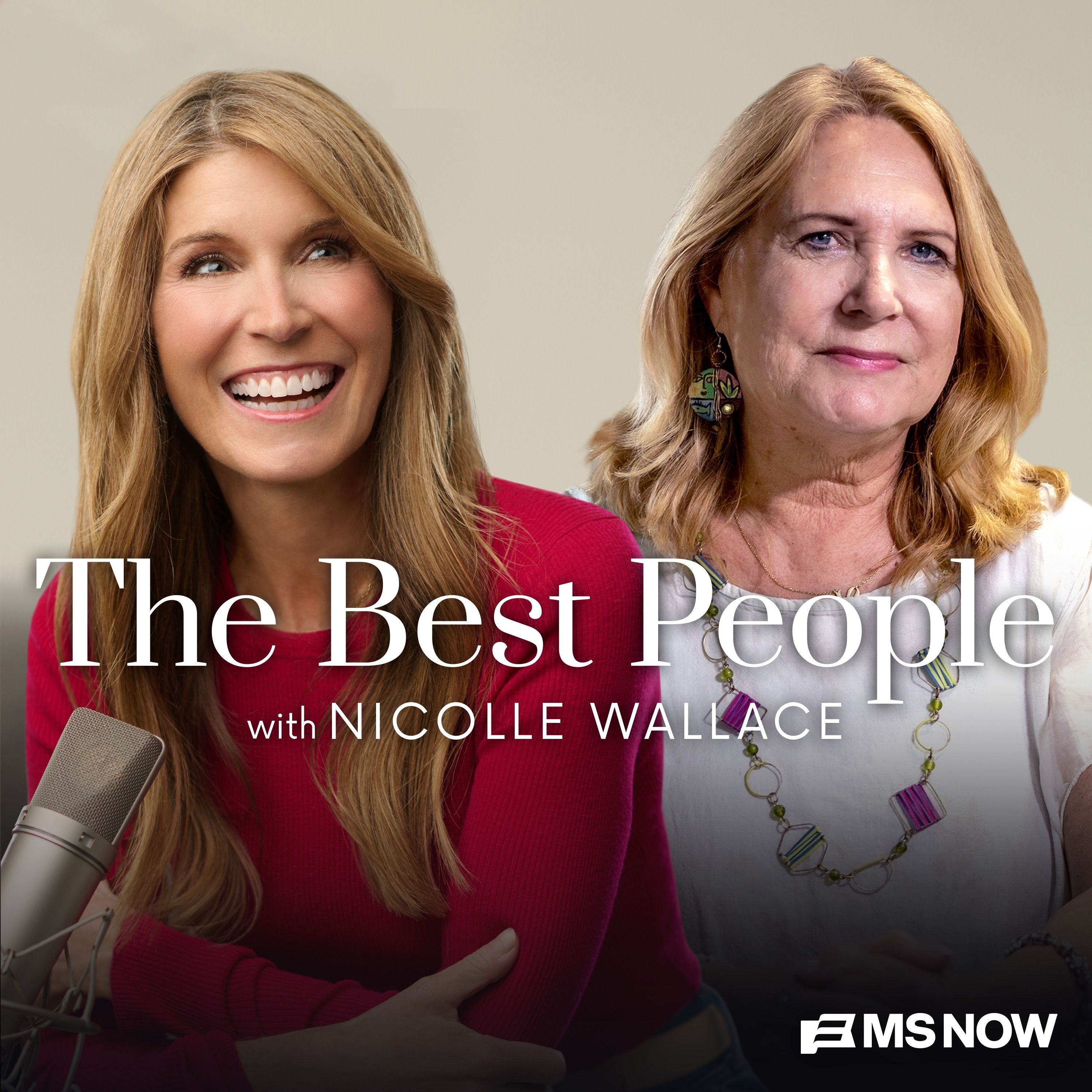
The Best People with Nicolle Wallace
Julie K. Brown Continues to Break Open the Epstein Story
00:51:01
Julie K. Brown broke the Epstein story wide open. And she’s still digging.
Loading summary
Transcript88 lines
- [00:00]
Julie K. Brown
My dad taught me a lot, including
- [00:02]
Advertisement Voice
how easy it is to forget to cancel things.
- [00:04]
Julie K. Brown
So I downloaded Experian, my bff. Big financial friend Experian could help me cancel my unused subscriptions and lower my bills, saving me hundreds a year. Get started with the Experian app today. Your big financial friends here to help you save smarter. Results will vary. Not all bills or subscriptions eligible.
- [00:20]
Advertisement Voice
Savings not guaranteed.
- [00:21]
Julie K. Brown
$631 a year average savings with one plus negotiations and OnePlus cancellations paid. Membership with connected payment account required.
- [00:27]
Advertisement Voice
See experian.com for details.
- [00:28]
Experian this episode is brought to you by Nordstrom. Spring calls for a wardrobe refresh, and Nordstrom has the best styles of the season, from dresses and denim to standout tops and accessories. Find the trends and essentials that feel right for you. Discover new arrivals from the brands you love, like Waif, Princess, Polly, Mango, Adidas, and free people. Plus free shipping and returns and free styling appointments. Make everything so easy. Shop in stores@nordstrom.com or download the Nordstrom app.
- [01:01]
Julie K. Brown
You know, this whole business of sex trafficking, pornography, the Internet, I mean, it's a multibillion dollar industry. And I don't know the answer to trying to reel this in. I do know that the answer is not to take the officers that police this, you know, from the FBI and Homeland Security and put them someplace else. The answer is to put more people on this problem.
- [01:31]
Podcast Host (Nicole)
Hi there, everybody. Welcome to this week's episode of the Best People podcast. This week's guest is to the Epstein investigation what Woodward and Bernstein are to the Watergate investigation. She has blown every door open. And they weren't doors that were left ajar. They were doors that were sealed shut, covered, over, papered over until her intrepid reporting blew them open for the victims and for the public. And now for the entire country. Without any further ado, this is the best people. And this is Julie K. Brown. Thank you for being here.
- [02:05]
Julie K. Brown
Thanks for having me.
- [02:15]
Podcast Host (Nicole)
I'm such a fan. And your incredible reporting in the Miami Herald on Epstein has changed the weather. I mean, it has changed everything that we think and feel about this story. And I wonder if you can just first speak personally about what that is like.
- [02:35]
Julie K. Brown
I try to stay grounded and focused. To be honest with you, if I think too much up in the clouds, then I'm not really doing my job. I want to stay focused on trying to continue to make people understand the importance of this story. I still think there's a segment of the public that do not understand how important this Story is in so many different ways. So I've been trying to cover different aspects of it so that people understand because it is a huge story and a very complicated one.
- [03:04]
Podcast Host (Nicole)
I want to go back to the beginning and sort of how you blew open the sweetheart deal. But I want to start with your most recent reporting, because I think some of our best visibility into how powerful people treated Jeffrey Epstein is from some of your most recent reporting about how people. Even though he was a child sex trafficker, which is the piece that I can't get my brain around. I can't even believe I said, even though ahead of it there were still powerful people in his circle, how does that happen?
- [03:37]
Julie K. Brown
He was really a master manipulator. He was very wealthy. So he dangled a lot of money out there, or connections. You know, sometimes connections are almost as important, if not more important than money. He was adept at finding someone's weak spot. You know, I. I always tell this story about these victims lawyers. There were many of them back in the day that represented these victims, and he wanted to meet with these lawyers personally. He wanted to size them up. And there was one particular lawyer who had a favorite cookie from New York. When he appeared for this meeting with Epstein, he had a whole tray of these cookies that Epstein found out that he loved from New York. And I think that that kind of says a lot about what Epstein did and how he manipulated people. He would find out everything he could about someone and then find their weak spot or their need or how he could use their various skills to help him. And he. It was just like a chess game in a lot of ways to him.
- [04:43]
Podcast Host (Nicole)
It seems to me that there's a class element that doesn't get enough attention, that these were smart girls. And women. He seemed to prey almost exclusively on women with massive potential, but women not from the same socioeconomic class as he and his peers were in. And I wonder how much that played a part in his ability to sort of carry on in full view. Like a lot of the victims will say, you know, anyone that walked in or out of the mansion would see all these young women around. Like, what did they think we were there for?
- [05:18]
Julie K. Brown
Right. Well, I can relate to this because, to be honest with you, I came from that class of people. I came from a working mother, a single working mother. I was very smart in school, straight A's. But when you're young and you're the product of a broken family, your mother is always struggling. My mother worked two or three jobs sometimes, so she wasn't at home a lot. And a lot of these young women and girls were in this category, and I think sometimes you feel lost. And he was able to convince these girls that he was going to help them in a way that their parents would probably never be able to. In other words, for me, it was always a question of whether I was ever going to be able to go to college. You know, my mom didn't have any money. And so here he comes in like this white knight, saying, you want to be a model? I have connections in Victoria's Secret. You want to travel to Thailand? I'll help you do that. I mean, he was serving them their dreams on a silver platter. And when you're young and impressionable like that, it's very easy to believe. He was very believable. He was very charismatic. He. Especially in the very beginning when he was trying to sort of trap them, he told them everything they wanted to hear.
- [06:36]
Podcast Host (Nicole)
What is your sense of how much remains unknown about his crimes and his victims?
- [06:44]
Julie K. Brown
I don't think we have a handle yet on exactly how big it is and how much it involved.
- [06:51]
Advertisement Voice
I.
- [06:51]
Julie K. Brown
You know, initially, I was a little skeptical about whether he was in intelligence, for example. Now I'm less skeptical the more that I dig into these files, which, by the way, I'm in them almost every day, hours and hours and hours. And as you're looking for things to do with that piece, you inevitably find another piece, and then you're off to the races on the next piece. So there's so many pieces in here, and unfortunately, nobody has really put them together, including the Justice Department and our own government agencies. It's clear that they never explored any of these angles and that they just. I don't know what they were doing, just throwing these documents in a file drawer somewhere, because it's just amazing to me that there's so many threads of inquiry that I don't see any evidence that they followed.
- [07:41]
Podcast Host (Nicole)
Is it as simple as they didn't believe the women, or was there something else going on?
- [07:47]
Julie K. Brown
I think that was part of it. I think especially early on in the case, they didn't find them credible, and they thought they were really, you know, prostituting themselves, which was ridiculous because they were 13, 14 years old. So it's absurd. But even I think, as the years went by, I think, you know, there's a lot of men in our government, and I do think there was absolutely a bias, not only on the part of failing to recognize how serious this crime was, but also the female prosecutors in this case were Also treated poorly, I think. And their male counterparts weren't really, I think, listening to them, quite frankly.
- [08:31]
Podcast Host (Nicole)
When you go through the files, are you seeing things that confirm leads you had in your original reporting or that answer? I mean, I picture you like Carrie Matheson from Homeland, right, with all of these different threads of the story in your head or somewhere physically. And as some of the files have been released that you're able to go through and pursue investigative threads that you may have started a decade ago. I mean, can you just tell me what it's like to go through what has been released?
- [09:01]
Julie K. Brown
It's sort of an epiphany sometimes because. And it'll come from different places. Sometimes it'll come because I stumbled upon it. But, you know, I get these tips from these people that just send me notes on signal. You know, Michael, if you're out there, hi. I mean, there are these people who they actually look for things. For me, they're just really into it. And I said, I think I saw this document. I don't know where I saw. The hardest part is really staying organized because you see things and then you might move on. And then you think, where did I see that? And so I do have some people that have been very helpful in helping me find some of these documents. But it's a whole range of ways. But, yes, a lot of it does trace back not only to my initial 2018 investigation, but I subsequently did a lot of work between then and now on the US Virgin Islands, for example. They let him get away with doing this there, too, and they knew what he was doing. I just recently found a document that actually not disputed what I reported, but changed. A couple of the documents have changed the way that I thought about it back then.
- [10:11]
Podcast Host (Nicole)
Can you tell us what those are?
- [10:13]
Julie K. Brown
Well, one of them is the original lead prosecutor, Maria Vilafagna. All the documents that we initially had from that case were from a lawsuit. And in that lawsuit, which was filed by two victims against our government, they were trying to prove that they broke the law by making this deal with Epstein. And one of the ways that they broke the law was that they didn't inform the victims that they were negotiating and had done this deal. In fact, they did the deal without ever telling them. So all the correspondence and the emails that they had connected to that document painted these prosecutors in the light that they were trying to hide this, you know, from the victims. And while I still believe that's what their goal was, it portrayed the lead prosecutor, Marie Villafagna, in a way that she was part of the whole conspiracy. And now that I can see some documents in here, more documents, I can see she really did fight for those girls. So. So there's certain things in there, and when you see the whole picture, it might look a little different. Another aspect of the story is Sarah Kellen, who is a. One of his assistants, who arranged his schedule and had a lot of these girls come in, and subsequently they were abused. Sarah Kellen is now considered by, at least later, the Justice Department came to realize that she herself was a victim. And if you look in there and see what she's gone through in her life, yes, she should have never continued to do what she did. But you look at these people in a different way. When you can see the full picture,
- [11:53]
Podcast Host (Nicole)
when you hear from the women who were girls at the time, as well as the women who weren't, but who were abused and trafficked, and you hear them describe Ghislaine Maxwell, in a lot of ways, the monstrosity of her crimes feel like an equal or greater betrayal to the victims and survivors that she participated in the rape and the sex acts, but that she also groomed them and spotted them and scouted them and brought them in. How is it possible that she's getting this favorable treatment in prison that Donald Trump's deputy attorney general goes and visits her? There are things happening around her that are as shocking as everything that's been alleged about him.
- [12:41]
Julie K. Brown
Well, let me tell you something. She knows everything. She knows everything. And she has emails and she has texts, and she, you know, she's a very, very street woman, very smart woman, and I'm sure early on she started saving all that material because, for one thing, Epstein was starting to hang her out to dry a little bit toward the end. And I'm sure she was smart enough to start getting some material together as protection for herself. Quite frankly, I'm surprised it took them this long to put her into a cushy prison. You know, I. I think she really does know everything and that there's a little bit of a big question mark there about what Trump is going to do. And I think depending on what he does, it will show whether he is implicated, to be honest, because I think there's a very good chance that he's going to pardon her.
- [13:34]
Podcast Host (Nicole)
What is your sense of what happened with the three missing documents that included the allegation against Donald Trump of sexual and physical abuse against a girl who was 13 to 15 years old at the time?
- [13:52]
Julie K. Brown
Well, I have to be careful because I have sources involved in this case, and they've told me a lot about what it is. But what I will say is I think that there is still a lot of people that want to discredit women. And what people have to realize about this is when I first started this case, the victims that I looked up, now, of course, this was years later. They were in their late 20s, early 30s, but the whole trajectory of their lives had changed after they met Epstein. I mean, they had been subjected to physical abuse. A couple of them were in prison. Courtney Wilde, very vocal victim who is part of my original story. She was in prison on a drug charge, and she spent longer in jail than Jeffrey Epstein did with his sweetheart deal. So if we discount every victim who then subsequently gets involved in drugs or gets involved in some kind of illegal activity, it doesn't discount the fact that two things can be right. They could still have been sexually abused, and yes, they could have a criminal record. That doesn't mean that they weren't sexually abused when they were, especially when they were younger, because most victims of sexual abuse when they are children, they don't go public with their abuse until they're well into adulthood. So I think it's really important for people to understand that this woman, I'm not saying what she said about Trump is true, but what I'm saying is we don't know for sure that it's not true. Just because she has some kind of a strange or iffy background or. By the way, I couldn't find any evidence that she does have a criminal record, even though the Justice Department said she, quote, unquote, has an extensive criminal record. I wrote the White House and I said, can you show us her extensive criminal record? Because I haven't seen it, and we've looked very hard and so have other journalists, and I have not received a response.
- [15:59]
Podcast Host (Nicole)
What is your sense of how much Trump has influenced what has been released and when it's been released?
- [16:07]
Julie K. Brown
I don't know. All I know is what I keep thinking about was what he told Marjorie Taylor Greene, which, you know, he was upset that she was going to vote for this bill that released the files. And he told her, you know, words to the effect that this is going to hurt some of my friends. And so that, to me, means he's protecting someone. I mean, I don't know of any other way you can construe that.
- [16:33]
Podcast Host (Nicole)
What is the experience you have when you see that Alex Acosta, who's the architect of the Epstein sweetheart deal, ends up in Donald Trump's Cabinet? I Mean, the Trump story requires you to either believe in extraordinary coincidences or start asking questions.
- [16:53]
Julie K. Brown
I, you know, I don't know. You know, a lot of things happened around that time. I was already working on that story before he nominated. Think about this. I decide that I'm going to look at this because essentially at the time, I had already been quite aware of the Epstein story, and I always found it pretty disturbing that he got away with his crimes, essentially. So I'm looking at it and I'm thinking, you know, this is. I don't even know if it's a story. And then he nominates Alex Acosta. And I'm thinking, okay, now when he goes before the Senate first confirmation, everybody's going to throw all these questions at him about this, and they really didn't. It was as if the story was buried and everybody had forgotten about it, which may be one of the. Then talk to the victims about what they thought about this man who was going to head an agency, by the way, that has oversight of human trafficking. And he's the very person that let their predator, you know, somewhat off the hook. So, yeah, I don't really believe in coincidences. I don't know if this was anything more than that. I haven't found any evidence of that. But you have to admit, this story is filled with an awful lot of coincidences.
- [18:09]
Podcast Host (Nicole)
You just, you have to. I mean, that's the fork in the road that the Trump story puts you at. You either have to believe in extraordinary coincidences or you have to ask the sort of difficult questions that you've been asking. We'll take a quick break right here. When we're back, much more with Miami Herald investigative journalist Julie K. Brown. Stay with us.
- [18:37]
Advertisement Voice
What if you could color your hair without worrying about the damage? With K18 Molecular Repair Mask, you can. K18 Hair has been breaking rules and records since day one, delivering soft, strong, bouncy hair, even if you bleach, color and use heat. The patented K18 peptide is the greatest discovery in hair history. It reverses damage in four minutes deep within hair's innermost layers. Before K18, real lasting biomimetic repair didn't exist, so they went ahead and invented it. For breakthrough results, the K18 mask gets molecular. My hair has never felt this healthy. You'll flip for hair like new, too. Shop at Sephora or get 10% off your first purchase with code podcast@k18hair.com. That's code podcast18hair.com.
- [19:28]
If you're a parent and want to help set up your child for success then. Then IXL is right for your family as an effective and affordable online learning program. IXL covers math, language arts, science and social studies using interactive practice problems for kids from Pre K to 12th grade. Listeners can get an exclusive 20% off IXL membership when they sign up today@ixl.com 20. Visit ixl.com 20 to get the most effective learning program out there at the best price.
- [19:59]
Avoiding your unfinished home projects because you're not sure where to start. Thumbtack knows homes so you don't have to don't know the difference between matte paint finish and satin or what that clunking sound from your dryer is. With Thumbtack, you don't have to be a home pro, you just have to hire one. You can hire top rated pros, see price estimates and read reviews all on the app Download Today.
- [20:25]
Podcast Host (Nicole)
Let me ask you to sort of go back in time and take us back to 2018 when this turns into a, you know, even in the time of Trump, a four alarm fire scandal politically. Just talk about what you reported and the reaction.
- [20:42]
Julie K. Brown
Well, I didn't predict, obviously. By the way, I should mention that I had a reporting partner, Emily Michaud, who worked on this. She was my videographer and photographer for this project. We took some wonderful, we called them mini docs, mini documentaries. I was young, I was scared. I knew these people were powerful. I didn't know what would happen if I said no. I didn't know what would happen if they reported, if I reported them. That 16 year old girl just let it happen. She did a wonderful job with putting together these documentaries that in just a few minutes kind of encapsulates the injustice and the trauma and just the outrage of this story. But Emily and I sort of felt like sometimes we were on an island with this story because, you know, we had a lot of support with the Miami Herald. But unless you're in the thick of a story like this, it's very hard to communicate with people exactly why it's important until you get it on paper and print it. Because I think even I wasn't sure about the story until I interviewed the very first victim. We went to Tennessee to interview her and after we did her, I mean, I get emotional now just thinking about it because it was an incredible interview. Once she spoke, it was like this is freaking unbelievable. It was the story that she told and how it had affected her life and how they felt betrayed not only by, you know, the criminal justice system, but to some degree by Their own lawyers, by their own families. There was just so much betrayal to these young women. So many people at every step of the way, in many cases, took advantage of them. And, you know, so it's understandable why many of them are so afraid to speak out.
- [22:44]
Podcast Host (Nicole)
How did you get them to trust you?
- [22:46]
Julie K. Brown
Well, first of all, I did some homework. I spoke with therapists, and a one man who was very helpful to me is. Was a former FBI. He. He. He. His job really is most. His whole career was to talk to child victims of sexual assault. And he just explained things, you know, and the therapists that I talked to, the psychologist, really explained to me the nature of trauma and what the triggers could be. And in the end, what I just decided to do was not to ask too many questions, which is against our nature, as you know. But I always tell young reporters that one of the things that is sometimes more important than asking the questions is just being quiet and letting the white noise settle so that they can think through what they want to say. Because this happened when they were so young, and it's just amazing. I think it gave them the freedom to breathe and to just tell me what you want to tell me. I didn't. I told them if they didn't want to talk about the actual abuse, they didn't need to, because this story was really about the corruption on the part of the government and how that impacted them. So I think, you know, I know after I interviewed Michelle, who was the first victim in Tennessee, my phone rang. And we were in the car, Emily and I, on the way to the airport, and I thought, okay, here goes. She's going to say she doesn't want us to use it because we sort of had said if. Even after they had done the interview, we weren't going to say if. They said, we don't. I don't want it in. I changed my mind. We weren't going to publish it. And she just said, I can't tell you what a relief this is. And I just burst out crying because, you know, just the way she said it, it was like, I've been wanting to share that for 15 years, you know, So I think they did want to talk. You know, they did want to say they wanted somebody to really listen, you know, and, you know, that's what I think Emily and I tried to do.
- [25:16]
Podcast Host (Nicole)
How many Michelles do you think there are?
- [25:19]
Julie K. Brown
Oh, gosh. At the time I did the series, I tracked down almost 100 names. And out of those, a hundred, which I wrote letters to all the Women that I could track down. And out of all them, Michelle was the only one that answered my letter. And then I had reached out to the lawyers for Virginia's lawyer, David boies, and Sigrid McCauley, and then Courtney Wilde. That was Brad Edwards. And at that point, I was a little disappointed that I only had four. The other one was Jenna Lisa Jones, who came to the interview I had with Virginia because she had contacted Brad. So we had four. And at the time, I was sort of thinking, ugh, gosh, I wish we had more, because I knew there were a lot more. And I kept trying to get more, but they didn't want to go public. And, you know, I even was in touch with the Farmer sisters, and they weren't able to do the interview and weren't ready to do it, you know, so I was a little disappointed. But after the whole thing was said and done, to be honest with you, I'm really, really happy I had only four, because they were each, in their own way, so special. And I just think if you have so many, it would have perhaps been a little diluted, you know, I think it was just perfect, actually.
- [26:40]
Podcast Host (Nicole)
Can you remind us of all their stories?
- [26:44]
Julie K. Brown
Well, Michelle just. She came from a big family. I don't remember how many brothers and sisters, but a lot of brothers and sisters. And she was a good student, but she felt lost. Her parents worked a couple jobs, and she wanted to buy them Christmas presents. And one of her friends or acquaintance came to her at high school and said, do you want to earn some extra money? She said, sure. And turns out that she said, all you have to do is massage this old man, and he's going to give you a couple of hundred dollars. She said, sure. So she gets there, and, of course, you don't know what you're facing. She didn't tell anybody she was there. And you just. They take you up to this creepy room, and they leave you alone with this guy, and you're thinking, I'm gonna die, you know? And so he molests her. And she left there feeling like she was never gonna find anyone to love her ever again because of what had happened. She felt stupid. She felt dirty. She felt all those things you do, you know, when you're sexually assaulted. And from that point, her life began spiraling out of control just from going there one time. Same with Jennalisa. Jennalisa was a similar story. She went there only one time, and it affected the rest of her life. And then, of course, Courtney was the one who was suing to her credit from prison, she was suing the US Government because they had done this deal in secret. And she was just a one woman fighting machine in that she wasn't letting up. She had a very great lawyer, Greta Edwards, on her behalf, fighting this lawsuit for a decade. At the time I took up this case, that lawsuit was almost a decade old, so it wasn't going anywhere fast. And then Virginia, and we all know Virginia's story, and she had been out in the public before. But I do think that the way that Emily in particular did her documentaries and gave her a voice on camera that way, I think really showed the power of Virginia's story in a way that hadn't been done before. Even though there had been stories written, especially in Europe, about her accusations against the prince. I think seeing her on camera like that was very powerful.
- [29:20]
Podcast Host (Nicole)
What do you think she would have experienced to see Andrew arrested?
- [29:28]
Julie K. Brown
She's smiling down and from heaven. I think even to this day, there are people out there that are trying to discredit her. It's incredible to me, you know, I am seeing things in the file. I have a whole file set aside of documents. I found that back up what she said. It happened. It happened. She was abused by these men. I do not understand why it's so hard for people to not know that this happens in America. This is what happens all over the world, actually, where young women are impressionable or underage and they're being trafficked to very, you know, wealthy and powerful men. It's real, people. It's real that this happened.
- [30:10]
Podcast Host (Nicole)
One of your stories, I think. Well, two of your stories changed how I saw this. I mean, the reporting about. Is it Kathy Rumler? Rumler, Obama's former chief White House counsel who ascends to the highest levels of New York City legal and financial circles at a law firm. And then at. I think it's Goldman Sachs. Her email exchanges with Jeffrey Epstein. She's texting with him. And then her email exchange after there was someone who was gonna go in and cooperate where she wasn't his lawyer. Like, there was no legal reason for her to be weighing in or helping him. And we don't know what she does, but she tells Jeffrey Epstein, I'll make a call. What makes her, like, why can she be corrupted with the Birkin bag?
- [30:53]
Julie K. Brown
It's hard to know without knowing what was going through her head and also what her personal demons are or were. I would imagine that there's some kind of a backstory there that we probably don't know about. But there certainly is no real good excuse for something like that, especially the enormous volume of emails and the content of the emails that went back and forth. Maybe she thought nobody would ever find out.
- [31:18]
Podcast Host (Nicole)
What is your sense of how successful he was? Because you, you have some reporting on this as well since some of the files were released. In getting law enforcement to look the other way, federal law enforcement, in bringing young women to the island for abuse.
- [31:37]
Julie K. Brown
I just, you know, I just don't, I don't understand it. I really don't. I haven't been able to make sense of it. I do know after my piece ran, I got quite a bit of pushback from other journalists, for example, sort of dismissing the work. And I sort of think that there is still a segment of people out there who just don't get it, who still think, well, they got money, you know, they knew what they were getting into, it was consensual. I just think that there is still a segment of America and the media, quite frankly, who still don't understand the gravity of this crime and what he did. And easiest way to explain it sometimes, especially to men, is, do you have a daughter? I mean, that's what I say. And I, nine times out of 10, the person that is saying this stuff to me doesn't have a daughter. So they don't get it right.
- [32:41]
Podcast Host (Nicole)
But if you do have a daughter and Your daughter at 18 or 19 years old is invited to some 50, 60 year old's mansion and she comes back broken, I don't know a father who wouldn't go there and avenge her pain. So I do not understand why this isn't universally toxic for all these fancy people to have associated with him. I want to ask you if you can unpack part of how the sweetheart deal is peddled by Epstein. You know, how does Epstein make friends after being convicted in 2008? Does he cover it up? Does he wear his ankle bracelet like a badge of honor? Does he just say, oh, I guess someone, I mean, like how does he reenter or stay in his circle?
- [33:31]
Julie K. Brown
Well, the genius of the sweetheart deal, and when I say the genius, I mean the genius on the part of his lawyers was that they manipulated that deal all the way to the finish line and beyond the finish line. And the way that they did it was they picked a charge, solicitation of a minor for prostitution, and they attached one victim to that. And it was not the 14 year old who was the first to report it, but the 16 year old. And that was very designed for a reason. Because in some states, 16 is the age where you don't have to be monitored, at least back then, you don't have to be monitored the same way you do as a sex convicted sex offender as you do in other states. So technically, on paper, he was convicted and pled guilty of that crime. And he was able to tell people, at least initially, look, it was just one girl, and she was 16. I didn't know she was 16. She looked like she was of age. And this is what his shtick was, you know, to get back initially to the party scene and to the elites, into the wealthy. And then he did, you know, what all the very powerful people do. He hires, you know, Peggy Siegel and other people to start repairing his reputation. He's donating millions of dollars to every cause. There's press release after press release. He's giving just millions and millions of dollars away to every kind of organization imaginable. So he had a plan to repairer's reputation. And then when these victims started coming forward to sue him, as the years went on, the media had forgotten about the case. So nobody was really scrutinizing, you know, they were reporting these, oh, another lawsuit was filed today by another victim who claimed she was molested. The victims had no voice. Their stories were told through lawyers and through lawsuits. And so the story kind of quieted down because it became just another lawsuit story. And nobody, really, very few people anyway, but nobody in mainstream, like the Washington Post or the New York Times or anybody in mainstream was really covering it rigorously. So, you know, at some point, though, it was clear because Virginia went public. And when Virginia went public, around 2011 or so, that's when, you know, it hit the fan. And she was naming the prince and she started mentioning people. And then at that point, it became more public again. But then again, it died again. You know, even after my story ran, it got quiet for a while again. So it's just been kind of a roller coaster for these poor victims.
- [36:34]
Podcast Host (Nicole)
My conversation with Jeff Julie K. Brown continues right after the break. We'll be back in one minute.
- [36:48]
Advertisement Voice
What if you could color your hair without worrying about the damage? With K18 Molecular Repair Mask, you can. K18 Hair has been breaking rules and records since day one, delivering soft, strong, bouncy hair, even if you bleach, color and use heat. The patented K18 peptide is the greatest discovery in hair history. It reverses damage in four minutes deep within hair's innermost layers. Before K18, real lasting biomimetic repair didn't exist. So they went ahead and invented it for breakthrough results. The K18 mask gets molecular My hair has never felt this healthy. You'll flip for hair like new too. Shop at Sephora or get 10% off your first purchase with code podcast@k18hair.com. That's code podcast18hair.com if you're a parent
- [37:40]
and want to help set up your child for success, then IXL is right for your family as an effective and affordable online learning program. IXL covers math, language arts, science and social studies using interactive practice problems for kids from Pre K to 12th grade. Listeners can get an exclusive 20% off IXL membership when they sign up today at ixl ixl.com 20 Visit ixl.com 20 to get the most effective learning program out there at the best price.
- [38:10]
Avoiding your unfinished home projects because you're not sure where to start. Thumbtack knows homes so you don't have to don't know the difference between matte, paint, finish and satin or what that clunking sound from your dryer is. With thumbtack, you don't have to be a home pro, you just have to hire one. You can hire top rated pros, see price estimates and read reviews all on the app. Download today.
- [38:35]
Podcast Host (Nicole)
What in your view, blows it into the open in the last 14 months? Like, I know when I started covering every day, it's when Elon Musk tweeted in all caps, donald Trump is in the Epstein files. And I was covering Doge every day. And I was like, what? Yeah, how does he know? And I was covering stories of all the access, unauthorized or legally questionable access Elon Musk had to all the government, everything. And Elon Musk tweets that, but is there something else that thrusts this into the center ring for you?
- [39:08]
Julie K. Brown
Well, that was a big moment because you know, when Donald Trump was running against Biden, I know that there was a lot of information on social media about, oh, now we're going to find out about Trump. And, and I was one of the reporters that kept saying wait a minute because there was a lot of propaganda out there and a lot of manipulation, AI manipulation, show, you know, that with Trump. And I said, look, honestly, there is no evidence that Trump was involved in anything that trafficking. And you know, so when Elon did that then it was like, wow, what does he know that we don't know, you know, what's been covered up. So I think that was definitely a watershed moment. But I also think there were two other watershed moments. The second one was these victims. I don't Think that anybody anticipated how much they would mobilize and become a force to be reckoned with, you know, politically. And that was a huge watershed moment, because as long as these women, and this is the way Epstein actually treated them when he was with them, he kept them all apart. They weren't allowed to talk to each other. They were to keep their mouth shut. They never really were allowed to become friends with each other. And so when they finally had the opportunity to actually mobilize and form alliances with each other and compare notes with each other, they became a force to be reckoned with.
- [40:38]
Podcast Host (Nicole)
That gives me chills. I mean, I have the sense that that's the case from interviewing the ones who are willing to not just be public, but be public and come on television shows. I've interviewed Jess Michaels and Danny Bensky, and, I mean, I've been so honored and so moved by every one of them. But they all describe themselves the way you just did, as sort of being. Being changed and fortified by this. I think sisterhood is what they call it. Can you talk a little bit more about how that is new?
- [41:07]
Julie K. Brown
Well, some of these women, even to this day, have never spoken out to anybody.
- [41:12]
Podcast Host (Nicole)
Right.
- [41:13]
Julie K. Brown
You know, they've never told anybody this happened. So it's been a long journey for some of these women. They weren't. Virginia was the exception, and look what happened to her. She was so persecuted and still is to some degree. So they've understandably been afraid because they know they opened themselves up. Their lives weren't perfect. So when you go public, you know how it is that you're gonna have people that are gonna scrutinize you and try to attack you and find any little thing that they can. And I think it's a real credit to them and their sisterhood that they have been supporting each other this way. And there's a lot of them that still are in that sisterhood but won't talk on tv. As you know, they'll talk to me on the phone, but it'll be completely off the record. It's different levels of comfort that they have with talking about it. But I think when they're all in the room together and remember to some degree, they also helped fill in the blanks for each other. Because when you get abused that long ago and you go through that trauma, there's pieces of it that you bury in your psyche. And I think that they're talking about it among themselves. They're able to put more of the pieces together in their head and then own their own story. And that's why it was so important for Maria Farmer to get those reports that she found, because she wanted to own her own story. And up until that time, she had so many people saying, well, we didn't really find this, your story must be wrong, you didn't really report this. Or there was a million things that they, that they told her to make her feel as though she wasn't telling them the full truth. And it's so important for these victims to own their own story and to be able to say, yes, this happened to me and look at me, I am a victim, and you should just believe these victims, really.
- [43:23]
Podcast Host (Nicole)
Right, well. And to have so many of them tell the same story or similar stories. I want to ask you about the parts of the story that animate the right, because one of the other things that seems to change the energy around the story is that it was Trump's own coalition that felt betrayed when Pam Bondi made the binders and called all the right wing influencers to the White House, gave them these binders, and then I think six weeks later said, there's nothing else here. What parts of this story sort of lay over the right wing conspiracies about a massive government cover up and the investigative threads that you've been pursuing for years and years?
- [44:05]
Julie K. Brown
Well, I never thought that, you know, that something that I was fighting for, which was to keep this story in the public eye and to continue to try to shed light on how it happened and who was responsible. I never thought that I would sort of find it the right part of, you know, my common cause. Yeah, right. We would have that in common. They were using it for their own, you know, purposes. And some of them may have really had really good intentions, but I also think some of them really were using it to get Trump elected or, and thinking because he had said he was going to do this, that this was a reason to elect him. And, well, we found out that that wasn't really the case. So I was skeptical about that whole thing from the beginning. I knew that Jeffrey Epstein didn't have his own little client list, so to speak. He wasn't the kind of person that would have had that written down, like, here are all the men that I was trafficking women to kind of list. But I thought any attention that this story gets is good because in my mind, I needed all the help I could get to try to keep this in the public eye and to get more transparency, to get these files out there, to get, you know, answers. And so in some ways I was glad, but it did sort of spiral into a place that I thought, ugh, this is just not the point. This isn't the point. The point is really transparency and getting justice for the victims.
- [45:38]
Podcast Host (Nicole)
I mean, the Saturday Night Live cold open was about the Iran war being started to distract from the Epstein files. I mean, it's now so saturated pop culture, even a lot of their manosphere, hosts and podcasting world, so much of their content is now derisive about Trump and furthers for their millions of listeners that he is orchestrating or part of or benefiting from a cover up. How much of that rings true to you having all of the investigative years under the hood of this story?
- [46:13]
Julie K. Brown
Well, because I've been on top of it. I'm sort of colored by the fact that I've been on it, working on this for so long. And now you have some of these, you know, influencers, so to speak, who have just discovered there's nothing so annoying to me of these influencers out there on public platforms as saying, look what I just found. And I'm thinking, here's the article I wrote about it three years ago, or 13. Yeah, yeah, yeah. I mean, so I'm colored by the fact that I feel like a lot of these people, you know, it's not that they were late to the party necessarily. I just think that they didn't do their homework. And, you know, I just think a lot of them never really understood the story to begin with.
- [47:00]
Podcast Host (Nicole)
Conan o' Brien in the Oscars makes a joke about the UK and he says, well, I think it's about the lack of nominees. He says, well, at least they arrest their pedophiles. What is the variable between how the UK and other European countries are dealing with people? Anyone with any tentacle into this story so much more harshly than they are here in America?
- [47:22]
Julie K. Brown
I do think that our electorate here has, for whatever reason, has given Trump and people in his camp a big pass. And, you know, the, the electorate in Britain, my guess is they're not giving these people a pass. And I think that that is a big factor. When people say, well, what can I do? I say, well, you gotta vote, you know, or volunteer for organizations that help battered women. But, but we really have to have leaders that want to hold predators accountable. We have to have strong laws in place and strong punishments and people in the Justice Department willing to go after. We have to make it politically necessary for our elected officials to go after these kinds of predators.
- [48:16]
Podcast Host (Nicole)
What is your sense of how much pressure has built? I mean, if you could just put it into relative terms between a year ago and today. It feels like there's a whole lot more public awareness. What is your sense of how much more we know today than a year ago and how much more we'll know a year from today?
- [48:40]
Julie K. Brown
Well, this brings me back to my third watershed moment, and that is when these files finally were released. And what has happened now is the public doesn't have to rely on Julie K. Brown anymore to tell them what's in these files. Yes, we do. But you know what I'm saying. It's like sometimes people have this distrust of journalists or anybody. Even on these public platforms, you can actually go in and you can look at these files, and that is huge because the public can see with their own eyes, and they're looking at these files and they are saying, oh, my God, they're seeing this stuff themselves. So I think that that is huge because it's no longer being filtered, that anybody can go in there, really. And, you know, it is a lot of work to sort through them, like looking for a needle in a haystack sometimes. But you could put Trump's name in there and you can just look and see what comes up, and you could get lost in them. But I do think that it is a good thing. You know, there's some negatives to this in that some of these victims names were not redacted and they should have been. And there are some people who have been caught up in this that maybe they shouldn't have. But I do think that it's important that the public is now able to see the truth themselves.
- [50:04]
Podcast Host (Nicole)
What is your hope for how the public interacts with all this information? And what was your dream sort of tool be for helping people more easily search through them and, to your point, experience them with their own eyes?
- [50:20]
Julie K. Brown
I don't know. I haven't figured it out yet. I'm still. I'm going back and forth between, you know, three different programs. One of them that's good for one thing, and the other thing, and then just going in myself, you know, cold and trying to find things. I. That is really the real challenge right now, to be honest with you, is to really understand them. And, I mean, I just spent all weekend reading the two statements that were given by the two corrections officers, you know, who worked the night Epstein. Each of Those statements are 400 pages.
- [50:50]
Podcast Host (Nicole)
What happened that night? I mean, what is it?
- [50:53]
Julie K. Brown
You're gonna have to stay tuned. I'm working on something. But it is not. That's another whole Mess. It is incredible, that story about what happened that night. And you're gonna have to read Julie K. Brown to find out.
- [51:11]
Podcast Host (Nicole)
We always read Julie K. Brown. What did I not ask you about? That sort of keeps you up at night on this story?
- [51:18]
Julie K. Brown
Everything keeps me up all night. I don't sleep very well because I'm working on this and my brain keeps going even after I get in bed. And sometimes I wake up at two, three o' clock in the morning and start working because my head won't stop. I'll think of remember something that I read somewhere in, you know, I have so much stuff in my head that it's impossible for me not to think about it almost all the time.
- [51:41]
Podcast Host (Nicole)
What can we do as journalists and hosts that don't know the story as well as you do to support the victims and the truth.
- [51:52]
Julie K. Brown
I think that especially you, Nicole, there are some people in the media that are really doing a great job in telling this story and really doing their homework. I think that's the most important thing before saying anything to kind of at least go Google it first just to make sure there isn't a piece of it because it's such a sprawling story. It is. No one person, even me can know everything. I get these people that are sending me Clyde, so and so did you see? Oh my God. And then they'll give me a whole report on this guy. I've never even heard of him before. I mean we all are all, I think, doing the best that we can with trying to be accurate and to try to put the pieces together. The way the government has released this hasn't made it easy. It's a big word salad, document salad. And you know, it appears from some, in some places that they never followed up on anything. But we don't know because we don't really have all the files. So maybe they did follow up on some of this.
- [52:49]
Podcast Host (Nicole)
You know, it's not linear or chronological. I guess my last question for you is about where we started and the way women are treated and the way their stories are viewed through such a filter that I wonder if you think there are other Jeffrey Epstein's out there right now.
- [53:10]
Julie K. Brown
Oh, I know there are because I keep getting emails about these other Jeffrey Epstein's a couple of times a week from victims. You know, this whole business of sex trafficking, you know, pornography, the Internet, I mean, it's a multibillion dollar industry. And I don't know the answer to trying to reel this in. I do know that the answer is not to take the officers that police this, you know, from the FBI and Homeland Security and put them someplace else. The answer is to put more people on this problem. And we have to really globally, we have to address this as if it's almost like terrorism because it is terrorism against our children and our most vulnerable in this society, in this world, and it's really a plague at this point.
- [54:06]
Podcast Host (Nicole)
Your work is so important and I'm such a fan.
- [54:09]
Julie K. Brown
Oh, thank you.
- [54:10]
Podcast Host (Nicole)
Taking an hour of your time is something that I'm really grateful to have gotten. Thank you so much.
- [54:15]
Julie K. Brown
Thank you for having me.
- [54:21]
Podcast Host (Nicole)
Thank you so much for listening to the Best People. You can continue to subscribe to our premium service on Apple Podcasts to get this and other msnow podcasts ad free. You also get early access and exclusive bonus content. All episodes of this podcast are also available on YouTube. Visit msnow. The best people to Watch the Best People is produced by Vicki Vergelina. Our associate producer is Rana Shabbat, with additional production support from Querri Robinson and Delia Hayes. Our audio engineers are Greg Devens and Hazik Bin Ahmad Farad. Katie Lau is our senior manager of audio production Pat Berkey is the senior Executive Producer of Deadline White House, Brad Gold is the executive producer of Content Strategy, Aisha Turner is the executive Producer of audio and Madeline Herringer is Senior VP in charge of of audio, Digital and Long Form. Search for the best People wherever you get your podcasts and be sure to follow the series.
- [55:26]
Advertisement Voice
Real talent is defined by what people can do, not where they learn to do it. So by stopping at the education section of a resume, you might throw away the perfect hire skills first. Hiring helps you see talent others miss, like more than 70 million stars skilled through alternative routes let their story unfold and gain a competitive advantage because hiring managers who start with skills are 60% more likely to find a successful hire. Hire skills first. Learn why at tearthepaperceiling. Org, brought to you by Opportunity at Work and the Ad Council.