← The Best People with Nicolle Wallace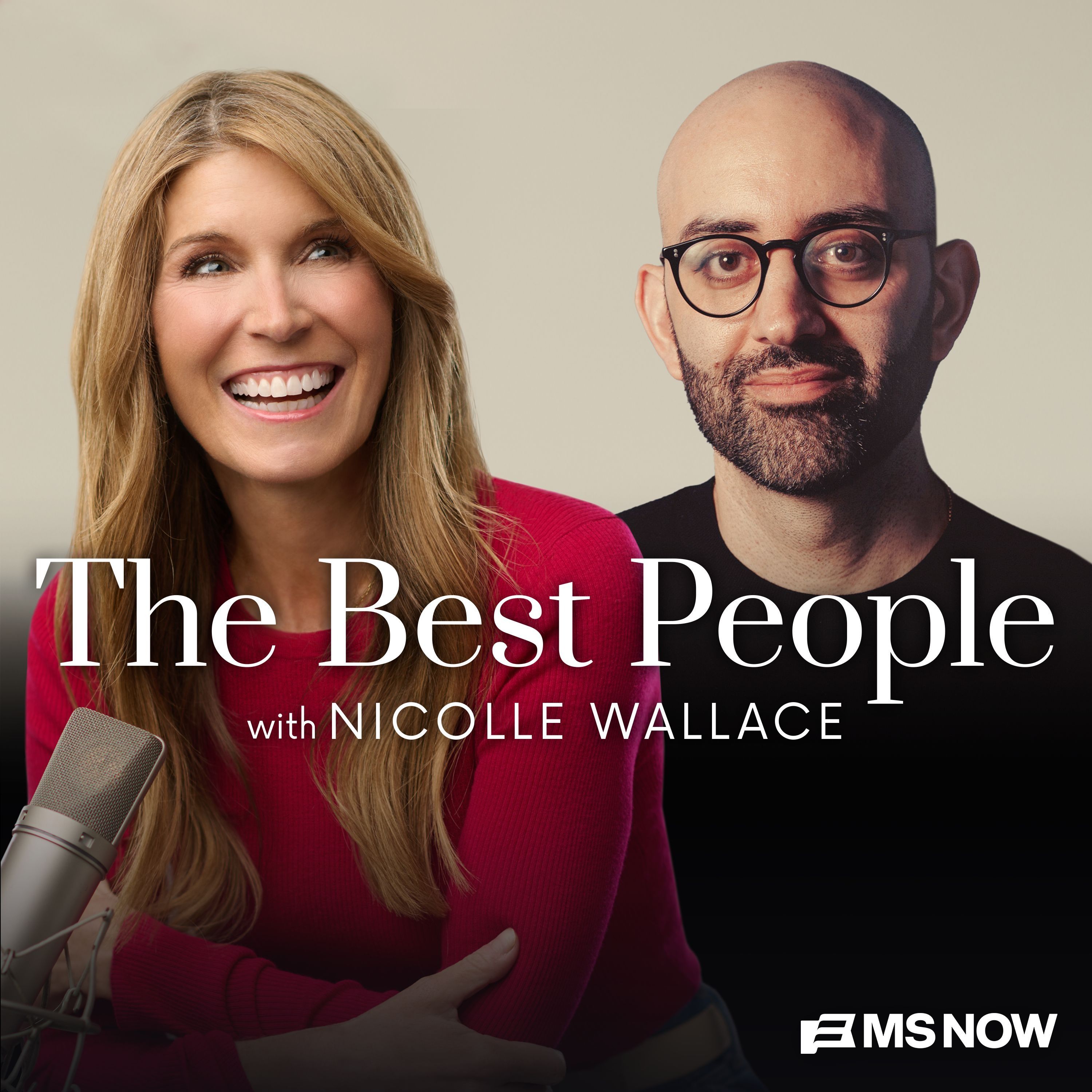
The Best People with Nicolle Wallace
Oliver Darcy on the Effects of a Steady Fox News Diet
00:48:31
Oliver Darcy keeps watch over the forces toxifying American media. And he’s ready for a reckoning.
Loading summary
Transcript173 lines
- [00:00]
Commercial Announcer
Now is your time to get into a new Dr. Horton home by taking advantage of its national red tag sales event going on right now through January 25th. Stop by any of its participating communities and find select red tag homes at Incredible Pricing. So whether you're buying your first home or looking for an upgrade, you don't want to miss the red tag sales event going on right now. Discover the Dr. Horton difference. Tap your screen now or visit Dr. Horton.com Dr. Horton, America's builder and equal housing opportunity builder.
- [00:30]
MeUndies Advertiser
Flowers die in three days. Matching underwear from Meundies. That's a gift that lasts. Meundies creates matching prints for couples and friends. Same adorable designs and different cuts for each of you. All made from their signature ultramodal fabric that feels impossibly soft. With 90,000 five star reviews, MeUndies matching prints are the perfect gift. Valentine's Day is February 14th, so don't wait. Get exclusive deals up to 50% off@meundies.com sxmcode sxm that's meundies.com sxm code sxm.
- [01:01]
Oliver Darcy
I think the news media to some extent has sort of kind of come to terms with how to cover Donald Trump, but there hasn't been a reckoning in how we deal with the media environment that allowed Trump to be birthed into existence really in politics. And I don't think until actually there is that reckoning. Trump might go away, but like the problem is still there and it's actually getting worse and worse.
- [01:27]
Nicole
This week's guest is someone we've wanted to talk to forever and ever and ever. And now the news just demands his voice on about everything that we are covering. He staked out ground that no one rivaled at CNN for years and then went out on his own as the founder of Status. He now also helms the podcast Power Lines. This is the best people. And this is Oliver Darcy. Thank you for being here.
- [01:52]
Oliver Darcy
I'm so excited to be here.
- [01:53]
Nicole
Nicole, I read you for years and years and years at cnn. My best friend is Dana Bash and I used to read your reporting and call her and say, oh my God, did you read what Oliver Darcy's writing? And especially during the Chris Lick story. How did you sort of have the presence of mind to cover your own institution like that?
- [02:17]
Oliver Darcy
I felt like the moment demanded it, to be quite honest. And I think this moment demands accountability journalism inside the media. Like there needs to be. It's a huge power center and like any other power center, if there's no one holding it to there's no one shedding light on what's happening. Bad things can happen and people make bad decisions often. And so I thought it was an important job. And also, like, you know, my name was on it, my face was on it. And I didn't sign up to be a journalist to do public relations for, you know, billion dollar corporations. And so, you know, if I wanted to do that, I would be in pr. And so I felt like it was important to, you know, shine light and to hold everyone accountable, whether that was my corporate company, you know, cnn, the corporate company that, or owner of that Warner Brother Discover. And I also told, you know, my bosses there, I said, I'm not going to call another news organization or another media company and hold them to a different standard than we're holding ourselves to. And so if we, you know, if CNN does something that generates controversy or is perceived as a bad decision, we need to cover that the same way we'd cover anywhere else.
- [03:24]
Nicole
I mean, I think everyone listening is nodding if they're in our business, but I just think it is the unicorn that does it. And I will say, like, for my own part, I think the only time I covered Comcast was when Trump demolished the East Wing and they permitted us, slash, encouraged us to cover them as donors to Trump's East Wing project. I guess the only other example is the hiring of Ronna McDaniel when we told our bosses, like, we have to cover this. It is really hard to do on a day in and day out basis. And I wonder if you can just talk a little bit more about how. It's not that you or I don't wanna put words in your mouth, it's not that you relish negative coverage for your own company, but the alternative sends us down a really, really unappealing path.
- [04:11]
Oliver Darcy
As journalists, it's very awkward to cover your own parent company to cover.
- [04:14]
Nicole
That's what I'm trying to say.
- [04:16]
Oliver Darcy
I mean, it's super awkward when you're, you know, writing coverage of your own boss, you know, the head of their company.
- [04:22]
Nicole
It's awful. Yeah.
- [04:23]
Oliver Darcy
And you see them in the elevator and you're like, oh, hey, hi. Right.
- [04:27]
Nicole
Check your phone to see if you've been fire.
- [04:29]
Commercial Announcer
Exactly.
- [04:29]
Oliver Darcy
It's just a very awkward scenario to be in. And I mean, I feel like when I was at cnn I was like, this has got to be the only job in the world where I am paid to, you know, cover aggressively my own company. And it's a very strange place to be in. But I did feel like it was important. And you're right, the alternative of being silent, I just personally, like, I can't go to bed at night knowing that I'm like doing the bidding of some giant corporation. Like, that's not, again, why I got into journalism. And so I felt like, look, and I think I made this pretty clear to powers that be there that if I couldn't go to bed at night feeling comfortable about the output that I was doing, then I wasn't the right person for the job. And I will say now, you know, even, you know, I left in 2024, in August, it would be very difficult, I'd say, to be covering what's happening with CNN and Paramount and Warner Brothers Discovery while inside cnn. I mean, it's a very awkward place to be. And I'm very thankful that I decided to leave the network and to launch status because we're totally independent. And so I can now cover and all these companies aggressively. There's no awkwardness. I'm not seeing anyone in the cafeteria. And it does just allow you. I mean, not that I was pulling punches while I was there. I think anyone who was reading the coverage would agree that wasn't the case. But it just allows you that additional breathing room to tell it like it's really happening.
- [05:51]
Nicole
Okay, so tell me, what is the biggest story right now that you're covering in the. In our world, in the media world, broadly speaking?
- [05:57]
Oliver Darcy
I think it's media executives, media companies and tech companies bending the knee in a very overt manner to Donald Trump and to power. And I think that's kind of the through line that we're seeing across industries, whether it's Hollywood, whether it's Silicon Valley or whether it's the news media. And there are a lot of examples, unfortunately, of this happening, whether it's at the Washington Post, whether it's at Paramount, whether it's at Meta or Apple or Google. It's happening across the board. And I think, unfortunately, it's the story that we have to cover. And I think, again, being independent, not working for these companies, not getting a paycheck from these companies, not being supported by them, allows us to say, wait a second, this is, this is very abnormal behavior. This is really, frankly, embarrassing behavior for them. And to call it out. And I think that's actually what made us attractive to subscribers, because they don't really get this coverage from other people because they're part of the problem. You know, their organizations are.
- [06:59]
Nicole
Well, and I also think if you look at where our industry is going, the relationship with the viewer slash listener is the whole ball game. And I don't view my competition every day. When we figure out what to do at 4 o'. Clock. Other TV outlets, I view it independent media, we are competing for eyeballs with substack with people getting their information solely from podcasts because that's where the trust relationship is. Just tell me how you see sort of your competition.
- [07:29]
Oliver Darcy
I think you're exactly right. I think like the YouTube audience in particular is growing every single day. And you can't compare YouTube views to cable news ratings. It's just not the way it works. But Some of these YouTube views are quite staggering. And it's clear there's an audience there and it's resonating with people because it feels like there's no censorship happening. Or, you know, censorship is a bad word.
- [07:51]
Nicole
But they trust it.
- [07:51]
Oliver Darcy
Yeah, they trust it. There's no self censorship too. I think that's often what happens in news organizations as well. It's easier if we didn't call Trump an autocrat wannabe. Right? It's easier if we just use softer language. It's easier if we didn't say Tucker Carlson's a right wing extremist. Maybe we just call him a former Fox News host. This stuff happens quite a bit and I think audiences recognize it when it does happen. And they see us, you know, in particular, like, like, okay, well, these guys are actually saying what these people are like. Tucker Carlson's not a normal conservative. He's not just a former Fox News host. This is someone who's poisoning the public. Well, yeah, the public discourse with really extremist thoughts. And he's pushing very radical conspiracy theories, whether it's about vaccines or about January 6th supposedly being a false flag operation, et cetera, et cetera. You know, you can go down the list. That's not normal. And we should not refer to him as just like a conservative host. And they see us calling it out.
- [08:43]
Nicole
Like, like, who's the conservative host now in the story? Like, I guess it's Dana Perino, right? Like that's a conservative host. But the words don't because, because you're right. I mean, there is. There's so many layers of what I think audiences recoil from some of just story selection. I always thought when I worked in politics that the power of Fox wasn't any individual anchor. It was the rundowns they created. And I still think that story selection is the most power we have, what you decide to shine a light on, especially now in the second Trump term. But the Language is maybe the second most important thing, how we talk about them. And I wonder if you can just talk a little bit more on what you see and what you cover in terms of self censorship.
- [09:26]
Oliver Darcy
I think you're right. What maddens me the most is that the people that actually wield power in today's politics are the people that are covered often the least. And what I mean by that is if you watch the evening news or you read the newspapers, very rarely do you read a piece about Sean Hannity or Tucker Carlson or Candace Owens or Megyn Kelly. They are almost non existent, even though they're the ones that are guiding the Republican Party into these extremist corners. We're not gonn kill Nicolas Maduro because we don't like the way he's treating his people. It's possible we're mad that he doesn't allow gay marriage. So those of you who thought this whole project was globo homo, not crazy, why did Charlie think he was a time traveler? He said, as I showed you in earlier messages, that he was a time traveler and he had to find me. Political leaders, some in the legacy media.
- [10:18]
Commercial Announcer
Mob, they are putting their supporters lives at risk.
- [10:23]
Oliver Darcy
Their endless, incendiary, dehumanizing rhetoric has resulted in more violence.
- [10:29]
Nicole
Fat, unattractive, gross people who were too chicken shit to actually sign up for the military and be true tough guys and gals have decided to find their courage through their rolls of lard on the streets of Minneapolis.
- [10:44]
Oliver Darcy
Instead, you read about random congressmen. You know, like when Marjorie Taylor Greene was first being covered, I was like, okay, like, so some random congressperson said something. Yes, I. Obviously very radical and you know, it should get some coverage. But like, are you listening to what's actually being said via these loud microphones?
- [11:04]
Nicole
Why were we not trained on. I mean, because I think that's, that's how 2016 surprises everybody, right? My job in 2016 was for NBC, the network kind of out there talking to voters. And there was a lot of interest in Trump that a lot of people missed. There was a lot of sort of hangover from his celebrity as the Apprentice that a lot of political journalists miss. But how are we still missing it?
- [11:30]
Oliver Darcy
I think you talk about self censorship. I think there's a hesitance to cover Fox News as a propaganda machine, which it is. And there's just like a reluctance to do so. Like, you know, you read the big paper still. And even after the Dominion documents came out, which really clearly show that top executives, top Fox News personalities knew that what they were peddling to their audience was a lie. Even still, people refer to them in the same bucket as CNN as if they're even in the same, like, industry line of business. Yeah. Like, they're not like CNN's news gathering. Whether you think about CNN, it's a news gathering operation. They have correspondents around the world. They get news, they report it as they see fit. And instead, Fox was dishonestly, knowingly pushing Trump's BS to people just in a way to make money. And even still, it's covered as if it's a news organization. I don't know why. I mean, I think there's a lot of reasons. I think part of it's self censorship, part of it just like laziness on behalf of news organizations that are covering Fox and others. Part of it is that there's not a appetite, I think, for aggressive coverage in this sector for whatever reason. Like, I think the news media to some extent has sort of, kind of come to terms with how to cover Donald Trump. Right? Like, they call out his lies, they say they're lies, et cetera. But there hasn't been a reckoning in how we deal with the media environment that allowed Trump to be birthed into existence really in politics. And I don't think until actually there is that reckoning and until executives that are allowing these lies to take hold across the country, I just feel like Trump might go away, but, like the problem is still there and it's actually getting worse and worse. If you look at like the media environment we were in in 2015, it was a lot healthier than it is today. Today's extremely toxic. And people like Candace Owens, you know, are just gaining more and more audience and more and more reach. And the organizations that were once willing to call them out are like, going away. You know, you don't see a lot of hard hitting media coverage these days. You know, like, there used to be these media teams. You know, I was part of one of them at cnn, but elsewhere at the Washington Post and Politico and you can go down the list, but media reporters are kind of like an endangered species now. And there's just not an appetite to do this. And I think it's, I guess part of it's self censorship. Part of it's like the owners don't want to be at war with Fox News and Donald Trump's MAGA media army. And a lot of it's just that they've worked the refs very efficiently.
- [14:00]
Nicole
With that stipulated, I'll throw in with not Always knowing what to make of it. I mean, I would nod to their outsized power in our politics and also feeling disoriented in terms of how to cover their intramural fighting. But we are having this conversation at a moment of peak civil war within the MAGA media universe, and I wonder if you could just take me through. I mean, there's Megyn Kelly calling out Fox, using words that I might have once used, calling them, quote, cheerleaders for the military propagandists, propagandists for the military operation in Venezuela, while Megyn Kelly, with the other hand, is defending Tucker Carlson's, you know, playing footsie with Nick Fuentes. So. And Candace Owens is sort of in a league of her own. A lot of it seems to have at its sort of spilling over moment, the assassination of Charlie Kirk. His wife is now probably more famous than he ever was because she's crossed over into sort of mainstream fame. But just. Just talk about the MAGA media universe right now.
- [15:02]
Oliver Darcy
Well, it's interesting, you know, if you listen to MAGA media, Trump is the best president ever. We are winning so much around the world and at home, like, everything's going swimmingly, and yet the media infrastructure that supports Donald Trump is at this civil war, which makes no sense. If everything's so good, everything's so awesome.
- [15:20]
Nicole
Why they're the worst winners in the world, though. I have to say, this is one of the three lines from 16. Most people win and sort of normal politicians go about trying to enact their agenda and then trying to be gracious to the losers. They are the worst winners ever.
- [15:36]
Oliver Darcy
It's very strange, but I think there's a lot of things going on. I think one is ego. So someone like Megan, I think, just likes taking shots at Fox maybe a little bit.
- [15:44]
Nicole
And everybody she texts, everyone from Meghan Markle to Kara Swisher to Fox to Hannity, she seems to hate everybody.
- [15:50]
Oliver Darcy
I'm sure she's come after you at some point.
- [15:52]
Nicole
Sure. I mean, I was always a fan, and I just sort of marvel at the choices she makes now.
- [15:57]
Oliver Darcy
It's very strange. I was a big fan of her when she was at Fox, when she was holding Donald Trump as a candidate accountable, and obviously he treated her in a horrendous way, and it is shocking to see what she has evolved into. And now I look and I'm like, what are you doing? Like, you're calling Nick Fuentes smart, the guy who denies the genocide of millions of people, and you're saying he's a smart guy.
- [16:21]
Nicole
What is that about, you think?
- [16:23]
Oliver Darcy
I have no idea. To be honest. I can't tell if she's been radicalized herself to some extent or if she just has to say things to get attention in the Internet economy. But regardless of what it is, like, motive almost doesn't matter. It's really damaging, I think, to the discourse. And it's really disturbing to see someone like Megan, to see someone like Tucker elevate someone like Nick Fuentes, who is a white supremacist. I mean, that's where MAGA media is, where the biggest stars are. Are really. I mean, like, Nick Fuentes used to be on the fringes. Like, no one would touch him. Like, Alex Jones too, right? Like, it was like you would. Everyone kind of make fun of them. Even conservatives used to make fun of Alex Jones. I used to be a thing.
- [17:02]
Nicole
Yeah.
- [17:03]
Oliver Darcy
And now they embrace him. Now they hold him up. And now, like, the infowars, like, strategy has almost been embraced by them all. Like, so even if Alex Jones is banned, like, the conspiratorial stuff is just a centerpiece of the.
- [17:18]
Nicole
Does it bleed into Fox too?
- [17:20]
Oliver Darcy
It totally does. It totally does. I mean, I watch Fox. I've started putting in our newsletter every night. The banners that run on the bottom of the show is the Chirons. And they're. They're just like, they would crazy home and infowars, right? They're like, dems want to take America down with them. Dems are leading the insurgency. Like, insurrection by the Dems. Like, it is just wild extremist language. And it's being, you know, normalized very much by Fox and by Rupert Murdoch and Lachlan Murdoch. And they're making billions of dollars doing this. And again, the frustrating thing is they're never held accountable for the most part. Like, I mean, they are in court, but if you look at the media, I mean, I'm sure people will say, oh, they're covered aggressively. Not really. It's not like you're seeing David Muir, like, point this out on Evening news or World News. They're getting away with a lot. And it's not only them. It's like, you know, Megyn Kelly has a SiriusXM show. I'd love to, you know, see the Sirius XM executives answer for some of the crazy things that she's peddling to their audience. You're not going to see that kind of coverage. There's a lot of people making a lot of money off of. Off of this stuff. And, you know, like, Google just decided that they're going to platform oan by putting it on YouTube TV. But love for Sundar Pichai to get a question or two about that or Neil Mohan, the head of YouTube. But they rarely do and I guess they're okay with this stuff. It's alarming and it's happening. It just has been so normalized now and I feel like why it's nice leaving CNN and being on our own. It's like we can just unsparingly call this stuff out.
- [18:59]
Nicole
We're going to take a quick break right here. When we come back, much more with intrepid media reporter Oliver Darcy. Stay right here.
- [19:15]
Sling Advertiser
With networks like Fox News, cnn, MSNBC and more, Sling is the best way to get the news you care about, which is great for everyone. Well, almost everyone. Where's that dang paper boy?
- [19:27]
Oliver Darcy
I need my news outdated and rolled up like a burrito.
- [19:31]
Sling Advertiser
Finally.
- [19:32]
Oliver Darcy
Now I can read all about what happened forever ago.
- [19:35]
Sling Advertiser
Get the most important news delivered reliably at the best price. Sling lets you do that. Visit sling.comnews to see your offer.
- [19:44]
Realtor.com Advertiser
Isn't home where we all want to be? Reba here for realtor.com the Pro's number one most trusted app. Finding a home is like dating. You're searching for the 1 with over 500,000 new listings every month. You could find the one Today, download the realtor.com app cause you're nearly home. Make it real with realtor.com Pro's number.
- [20:07]
Oliver Darcy
One most trusted app based on August 2025 proprietary survey. Over 500,000 new listings every month based on average new for sale and rental listings. July 2024 to June 2025.
- [20:16]
Culligan Water Advertiser
You lather, rinse, moisturize, repeat and repeat. But it never feels like enough. It's not your products, it's your water. Hard water leaves a mineral residue that clogs pores and dries out hair. Culligan water softeners remove damaging minerals, revitalizing brittle hair and dry skin. Upgrade your shower and skincare routine with Culligan water you love.
- [20:51]
Nicole
What is the counter to all that? Like, what is the moonshot of making the truth as sticky as the propaganda and the lies?
- [20:59]
Oliver Darcy
I think that's the million dollar question. I think one is by doing shows like this, you know, and I feel like being on platforms like, you know, people like Candace or Megan or, you know, Tucker even.
- [21:12]
Nicole
What's Candace's deal? She's, she's to the, to the wacky.
- [21:15]
Oliver Darcy
Of Megan yet certainly, I'd say, I.
- [21:18]
Nicole
Mean, is it right, left still or not?
- [21:21]
Oliver Darcy
It's not even right. Left. Cause she criticizes Donald Trump quite a bit, you know, probably. I don't think she's in necessarily good graces with them, but she just promotes conspiracy. I think she's beholden to almost an algorithm and. And you have to say outlandish things to get the attention. I think part of the problem you talk about is how does the truth win? The problem is the truth is less interesting, I think, often than the conspiracy theories. Right. People know that the sky is blue, but if you can try convincing them that it's red, it's like, wait, I mean, what is this person saying? And then you get kind of like sucked into these rabbit holes. So that's part of the problem, is like the algorithms reward people saying things that are outside the norm. No one wants to listen to the norm. They want to. And so you get sucked into these rabbit holes as a result, I think. And then part of it is that these big tech giants, I think, have been cowards. Like Meta was hosting a. Sponsoring a Breitbart event. A Breitbart event as well, I believe, as Microsoft. And it's like they want to not be seen as political and they're not willing to take basic stances and say, actually, Breitbart's not a news organization. They want to be seen as like, we support conservative news organizations and liberal news organizations. And Ms. Now is the same, you know, different side of the same coin as Fox News, which is absurd, and they know it's absurd, but they just play this game so that they can be in the good graces of Republicans. And anyway, I'm not answering your question about how the truth wins. I do think part of it, I guess, is going direct to audiences and being straightforward about what's happening in this country, not using soft language, not watering down coverage and not caring if these bad faith actors accuse you of being liberal. Like, this has nothing to do with liberal or conservative. And audiences understand that. And don't let these bad faith actors work the refs the way they have.
- [23:04]
Nicole
I think there's a toughness, too, that the audience is craving. And there are creators who are so authentic and so sort of attached to the truth and the truth of our history that have so much resonance that I don't think it's that the truth can't sell. I think it's that it's all this sort of fluffing that maybe has become a trust barrier. I mean, I think years of thinking you had to put the other side of the story in is what And I think coming out of politics, I stopped taking Sarah Huckabee Sanders before anyone else. And I said, when she goes to the podium and does something that I recognize, I'll cover it. Same with live comments from Trump. If he makes news, we'll roll on it and we'll play it back to you. But I think that some of what the mainstream media did to put distance between itself and the audience was both.
- [23:52]
Oliver Darcy
Sides ism and trying endlessly to appeal to people that hate them, which you can't.
- [23:57]
Nicole
I mean, it's like dating. And I feel like, I feel like all the dating movies of the 90s, like this has been settled in dating, but not in the media. You don't pursue someone who isn't going to show up. And I mean, you know, I feel like the idea that every story had to have a quote from the Trump campaign who basically says fuck you. And every. This story of Trump literally saying fuck you to someone who heckled him is something that the White House isn't even denying. And we're still putting both sides of the story. And it happened on tv. There are stories that happen on TV that don't need a quote or a comment from Maga because they happen on tv. And we're living through it right now with the ice shooting.
- [24:32]
Oliver Darcy
I think you're right. I think that a lot of this both sidesism alienates audiences. Like, if you look at CNN or.
- [24:38]
Nicole
Truth seekers, people who want the truth don't want to hear the lie. If that's the other side, that's why.
- [24:42]
Oliver Darcy
Is Scott Jennings on cnn?
- [24:44]
Nicole
Like, no, like, do you know, I knew him. I knew him.
- [24:47]
Oliver Darcy
He used to be normal. He used to work for the Bush White House. Right.
- [24:49]
Nicole
And now he's famous, I guess, for being what, Shameless? I guess.
- [24:55]
Oliver Darcy
I mean, just being a hack for Donald Trump. But it's like, why is he on cnn? He's not giving an honest perspective on the news. He's not giving smart analysis. He's just behaving like a lawyer for Donald Trump who will literally defend him to the ends of the earth. Right. And it's like, well, that is repelling the, the people who liked cnn.
- [25:14]
Nicole
Yeah.
- [25:14]
Oliver Darcy
And you look at what's happening at Paramount, I think that's they're going to learn a similar lesson. When you water down coverage, when you basically work the people in power who are making a mockery of the government, that is going to result in audiences who actually like your network saying, no, thank you, we will turn off the channel. And it's not going to attract the Fox News audience. The Fox News audience turns on Fox News for Fox and Friends and turns it off. You know, when Greg Gutfeld's done with his show, like they watch from morning till night. That's the audience behavior there. And they're not going to turn the channel for like 30 minutes of Tony de Coppol, no matter how much he tries to bend to them. It's just not going to happen. And so I don't.
- [25:52]
Nicole
So what's the better way to do it? I said that to a senior Paramount executive. I said I don't understand the business play. And it wasn't the case when I worked in Republican politics. But now that is the most oversaturated media market is the right wing. And it's not all news. I mean, to your point, if you sit and watch from Fox and Friends to the end of Gutfield, you get it all. You get hours and hours of coverage of manufactured crime propaganda in America's urban centers. That is a huge chunk of it. And just hours and hours of sort of culture warrior. I mean, it's not all news on Fox News.
- [26:30]
Oliver Darcy
They don't actually in fact often cover the news.
- [26:32]
Nicole
I mean, the Fox diet from Fox and Friends through Got Field is a lot more than sort of politics.
- [26:38]
Oliver Darcy
No. And you can't. If you were to watch that like for a year, even like being hardened as you are, your politics probably would change substantially.
- [26:47]
Nicole
Do you remember that doc on Super Size Me that if you just eat McDonald's, like your whole body chemistry changes? I think if you watch from Fox and Friends through Gutfeld, I think your brain chemistry could change.
- [26:57]
Oliver Darcy
I think so. And I think it's incredibly unhealthy. But people do it. And you know, they're not even covering the news half the time. That's the thing. Like prosecutors resigning because they refused to investigate the widow of Renee Goode got like passing mentions on Fox. I think it got like 15 seconds on Bret Bear's show. And then Jessica Tarlov, the liberal commentator on the 5, mentioned it on the Five. But otherwise they turn a blind eye to that story. Instead, they were covering the trans athletes case before the Supreme Court because that's what revs their audience up. And so in many cases they're not even, you know, this is a ostensibly supposed to be a news organization that doesn't cover the news when it's not flattering for Donald Trump. Instead, they cover culture wars.
- [27:37]
Nicole
I guess what I want to ask you though is what is the lesson in that? Because they have a Huge audience. I mean, is there a truthful counter to covering culture in a more honest way and building an audience around that?
- [27:48]
Oliver Darcy
I think there is. I think the lesson, though, is that propaganda sells.
- [27:52]
Nicole
Yeah.
- [27:53]
Oliver Darcy
And it's not the first time it's sold. And it's very powerful and very potent and it's very corrosive, I think, to our public, to our democracy and to our democracy. I guess you used to be able to shine a bright light on stuff and it resulted. Like people used to say it's the best dispectant. At this point, I'm not sure with MAGA media and these MAGA personalities whether that's the case.
- [28:14]
Nicole
Can I offer a counter and ask you if you buy it at all, if you think I'm just like sipping something wishful. Since Trump returned to office, the ICE story I have found to be such a perversion of what voters, his voters wanted. I know from working for George W. Bush that there is zero appetite in this country for interior enforcement, which they're doing. Not just interior enforcement, but militarized police state inside American cities. Nobody wants that. I mean, nobody. And their brutality is something that is repelling some of the most famous voices in the manosphere that only matter because they may have made the difference in his reelection. So I think that the coverage of the ICE excesses and the shooting last week of Renee Nicole Goode is breaking through all of that headwind that we're talking about. I think that does still matter. Do you think we're in such a post truth environment that it doesn't.
- [29:10]
Oliver Darcy
I think it matters to part of the universe of MAGA media. But like it doesn't matter to the FOX viewers. Right. The FOX viewers.
- [29:17]
Nicole
Do you think it matters to the country?
- [29:18]
Oliver Darcy
I think it does matter. I think when Joe Rogan is. It's not me or you saying this. He's equating ICE to the Gestapo. I think that certainly matters. And I think it's because his audience is broader than the FOX audience, which are like the die hards of the die hards.
- [29:33]
Nicole
Well, and they're old. I mean, I think the other thing is generational.
- [29:35]
Oliver Darcy
Right.
- [29:36]
Nicole
I mean, he's not just him and his very popular podcast. He's got a whole world of comedians that go to Austin and work for him. And they are sort of trying to win the future. And you don't win the future wrapping your arms around a militarized police force in the streets of American cities.
- [29:50]
Oliver Darcy
I agree. I think the ICE stuff is a very damaging thing. And I think Most people can agree that having masked federal agents clearly abuse their power, even just the way they talk to people, constantly cursing like, get the fuck out of the car. You know, back the fuck off. Like, who are you? You're like, this is insane.
- [30:08]
Nicole
And, like, whatever you think of cops broadly, none of them talk like that. I mean, that Apple does, and that's when it's news, but none of them talk like that. This is not about law enforcement. This is about something else.
- [30:18]
Oliver Darcy
This is about power and exerting power. And Donald Trump trying to punish liberal cities by sending in feds with who are masked to neighborhoods that he, I think, wants to punish. Right, yeah. And then setting up this me versus Tim Walls sort of situation. Right. Or the Democratic mayors and then saying they're the ones who are allowing crime. I think this is clearly what that's about. It seems quite damaging. I mean, I think when, again, when Joe Rogan's equating your actions to the Gestapo, that should be something that sounds the alarm in the White House, but you don't see them responding even. I mean, the thing is back to the sunlight thing. It used to be that if someone were to record an ICE officer behaving like that and upload it to the Internet, there would be outrage, which would lead to responsible federal officials saying, this is not acceptable. We're investigating this. These people have been suspended. They probably lose their jobs. Right. Like in a normal administration. Instead, you see DHS tweeting publicly that ICE officers, you should know you have impunity. If anyone impedes your efforts, it's a federal crime, and we will prosecute them, basically telling them, like, do whatever you want. And so I think that's what's strange about this moment is, again, like, it might be damaging to Donald Trump and his administration in the elections, but in this moment, the sunlight's not really resulting in any change of behavior. It's actually causing them seemingly to take a more aggressive posture. I saw Stephen Miller the other day. I mean, it seems like he's been emboldened by this, and it's crazy because someone just lost their life. And you would hope that there'd be some adults in the room where that at least could resonate with them. But instead, it's like they have no empathy and they use it to further their political agenda.
- [32:01]
Nicole
What I wonder is how far they'll sort of tolerate the protests. I mean, we know how much he hated the no Kings protests. Polls suggest that more Americans associate themselves with the no Kings movement than maga. So they're less popular than the no Kings protest. I covered the events last week. I think it's a sort of barreling through a threshold to shoot an American citizen dead with the cameras rolling, deny her any medical care at the moment at least, with the cameras captured, and then have the president defensive enough in a room full of New York Times reporters that he rolls the tape and says, c c C. And the tape doesn't show what he says at all.
- [32:49]
Oliver Darcy
I do think, too, when we talk about the media as well, bending over for Donald Trump, you know, they are seeking to, like, do business in many cases with someone who's deeply unpopular. And I do wonder, you know, like.
- [33:03]
Nicole
That'S the part that, I mean, I've asked you about this. Like, his brand is in the toilet. He's, he's as unpopular as he was during COVID He's more unpopular than Biden was. Why are they still capitulating?
- [33:14]
Oliver Darcy
I think because he's wielding power in a very obviously unprecedented but aggressive way and they still want their deals done and they still, you know, are afraid of him. But I agree, look, like if you're the Washington Post, I think there's a craving from audiences to see aggressive coverage that holds him accountable. If you're like the new CBS Evening News anchor, like, your brand could be like, I'm the guy that's going to carry on the tradition of Edward R. Murrow and call out this stuff. And this is the, this is the network. You should tune in if you want unfiltered language and plain language about what's happening in this country. We're not going to pull punches at all. I think there'd actually be an appetite for that. I would bet the ratings might go up, but instead you see them capitulating to power. And it's bizarre because it's a bad business move for the news organizations. But again, you have to look at who owns these news organizations. David Ellison, the owner of Paramount, is trying to get some deals done, and he doesn't want Donald Trump angry at him. Jeff Bezos, the owner of the Washington Post, has his blue origin space rockets thing and Amazon, and he doesn't want the Trump administration mad at him over the Washington Post. These are very tiny parts of their business portfolios, these news organizations. And so I think that's part of the calculation is they're willing to bend the knee a little bit to Donald Trump because they don't want their larger business empires to be threatened. It's just kind of pathetic, though. What's the point of having all that money and all that power. If you are going to be someone with no spine.
- [34:39]
Nicole
Well, here's the other thing. If you're in that group, right? If you are someone who wants to roll with Donald Trump, right? He can't stand wusses. And so to act like such a sack of weakness is the least appealing thing to him. The people that he respects and fixates on aren't the ones that could pitch. He has no use for Kevin McCarthy. And what good did it do Kevin McCarthy to pick out all the color of Starburst that Donald Trump wanted from the jar and give him his? He thinks that's lame. And it is.
- [35:08]
Oliver Darcy
It is.
- [35:08]
Nicole
To be clear, it is lame.
- [35:10]
Oliver Darcy
I agree with Donald Trump on this one. It is very lame.
- [35:12]
Nicole
It's so lame. So the capitulation is. Well. And I think Jimmy Kimmel is the counterfactual, right? I can barely figure out how to get the streamers to work. But to have millions of people cancel Disney and Hulu is a big thing that millions of individual Americans did. Because the FCC bullied Disney, they took Kimmel off the air. The public revolt was so forceful that they put him back on the air. And I think there's something in that strength that would have hoped, would have been a model, but instead, as you say, the CBS model is going the opposite direction to destroy the preeminent brand in journalism in this country in 60 minutes by yanking a piece that was vetted through 60 minutes extraordinary standards and then putting a journalist like Tony in the position of doing this weird interview with Trump last night where Trump said weird things.
- [36:02]
Oliver Darcy
He didn't say weird things. He said lies. But to say hundreds of thousands of murderers are in this country illegally, like what hundreds of thousands, like that seems like to be a big story if it's true.
- [36:12]
Nicole
And it just gets the year. Like, why is that the case, really?
- [36:15]
Oliver Darcy
Why is ICE targeting innocent people on the streets if there are hundreds of thousands of murderers apparently that are living in this country? It's just crazy nonsense that he spouts unchallenged. And to your point, like, look how Trump actually embraced Mamdani.
- [36:28]
Nicole
Loved him. It was the weirdest live event I've covered in 10 years of covering Trump live.
- [36:33]
Oliver Darcy
It was strangest thing, but it's like he respected him because he didn't love him, right?
- [36:38]
Nicole
He let him call him a fascist in front of him because he liked him so much. My conversation with Oliver Darcy continues right after the break. We'll be back in one minute.
- [36:58]
Realtor.com Advertiser
Isn't home where we all Want to be reba? Here for realtor.com, the Pro's number one most trusted app. Finding a home is like dating. You're searching for the one with over 500,000 new listings every month. You can find the one today. Download the realtor.com app cause you're nearly home. Make it real with realtor.com Pro's number.
- [37:20]
Oliver Darcy
One most trusted app based on August 2025 proprietary survey. Over 500,000 new listings every month based on average new for sale and rental listings. July 2024 to June 2025 the new.
- [37:28]
LifeLock Advertiser
Year brings new health goals and wealth goals. Protecting your identity is an important step. Your info is in endless places that could expose you to identity theft leading to lost funds. LifeLock monitors millions of data points per second. If your identity is stolen, our restoration specialists will fix it, guaranteed or your money back. Resolve to make identity, health and wealth part of your New year's goals. With LifeLock, save up to 40% your first year. Visit LifeLock.com SpecialOffer terms apply.
- [37:59]
Culligan Water Advertiser
You lather, rinse, moisturize, repeat, and repeat. But it never feels like enough. It's not your products, it's your water. Hard water leaves a mineral residue that clogs pores and dries out hair. Culligan water softeners remove damaging minerals, revitalizing brittle hair and dry skin. Upgrade your shower and skincare routine with Culligan water you love.
- [38:34]
Oliver Darcy
I think you're right. He does not respond, respect people that he can walk over and he's done with them, but he uses them. He uses them, but he doesn't respect them. And regardless who cares about what Donald Trump respects or whatever, the right thing to do is, I think should be the moral compass of these companies. Right? Like what is the right thing to do? What will history look back on us and say, like that company, that executive, they, they stood tall and they did the right thing. When you go to bed at night, do you want to be the person that's flattering power, or do you want to be the person that's a thorn in the side of power? And I think journalists should ask that question, whether they're producers or whether they're editors or whether they're star correspondents or anchors. I think executives should ask that question, and I think the owner should ask that question. And I don't think history is going to look kindly on the Mark Zuckerbergs of the world or even Tim Cook. I just think these are going to be very embarrassing moments in history and people are going to Be. What were those people thinking? What were they doing when it really mattered? The funny thing, too, by the way, is these guys all like to act like manly men, like, super tough. Like Jeff Bezos is now ripped, right? Like Mark Zuckerberg's doing MMA or whatever. They're all going to the UFC boxing events.
- [39:40]
Nicole
They're all, like, flaunting their, like, insecurities a little too closely.
- [39:44]
Oliver Darcy
Then they just get run over by Donald Trump. They don't even. They don't even fight him, right? They just get, like, used. It's like you, like, bow to the power of being. Again, what is the point of being that wealthy and being that powerful if you are just going to, like, suck up to power because of some threats? Donald Trump was talking about imprisoning Mark Zuckerberg during the campaign, and now he just kisses his ass on a regular basis. It's like, embarrassing for Mark Zuckerberg.
- [40:13]
Nicole
Well, and how is that not more associated with masculinity? Like, like, someday someone have to sit me down and explain how a guy that wouldn't go to a World War I cemetery in Europe because he didn't want to dampen his hair is, like, our icon of masculine aspiration. I don't actually even understand it. And I think that. And maybe this is my age, right? I think masculinity is being the guy that takes on the bully and defends the most vulnerable. And the fact that Joe Rogan, who built an audience around the trope of masculinity, allows Trump to define it for him is pathetic and the least masculine thing I've ever seen.
- [40:50]
Oliver Darcy
I don't understand it. I think these people have a very strange, I guess, view of masculinity. It's not about physically fighting. It's about, like you said, standing up for the weak, the people who can't. And it's sad because right now, you would hope that the most powerful members of society who have reaped all the benefits of the great things this country has to offer would be the ones defending our democratic institutions, right? Safeguarding it. Saying, we're not going to allow this country that has allowed us to prosper and flourish economically or in culture to be just ripped from our hands. We're going to be a bulwark against it.
- [41:27]
Nicole
But the inverse is true, right? You wrote about this after the Golden Globes. You have regular American citizens pouring into the streets after a regular American citizen was shot and killed for being in a protest. You've got artists who can barely afford to pay their dance or musical Companies pulling out of the Kennedy center commitments in protest of what's happening at the Kennedy Center. You've got independent journalists who are dependent on the trust that their readers or their listeners have in them. You've got a genuine grassroots example where they are braver and more confrontational than the elites. Like, why isn't Big Law following the country? Why aren't the titans of Hollywood following the country if that's where public opinion has gone?
- [42:15]
Oliver Darcy
I just think you would always have thought that our institutions were stronger than the. They apparently actually are. And I think that's what's been very alarming to see that actually, like, they all sort of just bow to power.
- [42:27]
Nicole
Yeah.
- [42:28]
Oliver Darcy
And like, these principles that these companies claim to have, whether it's on DEI or Big Tech saying, we take our information environment seriously and we're going to police misinformation and do fact checking, it's all bs And I think that's been very disturbing. And we've talked about this, too. It's like, I like to vote with my dollars, but because every single company basically has decided to appease Donald Trump, it's very difficult. Like, if I want to, like, have a cell phone plan, it's like, well, you know, every major carrier basically removed their DEI commitments because Donald Trump doesn't like them.
- [42:59]
Nicole
Or streaming music. What are you gonna listen to Tim Cook's Apple or Spotify, who until a week ago is running ICE ads? No, it's. I mean, it's. It's so pervasive. I want to ask you to sort of do a report card for how people are doing on some of the big stories that we're covering. While I can sort of borrow your big brain on these, let's start with Epstein.
- [43:16]
Oliver Darcy
I think the media is doing pretty good on Epstein. What do you think?
- [43:19]
Nicole
I mean, I think that the media is emboldened by the bipartisan nature of the push for transparency.
- [43:25]
Oliver Darcy
I agree with that. Yeah. I think. And I think Marjorie Taylor Greene and others like pushing for it.
- [43:29]
MeUndies Advertiser
Correct.
- [43:30]
Oliver Darcy
Giving them cover so it doesn't feel as partisan.
- [43:32]
Nicole
Which is ridiculous, because if you spend a second with a single survivor, they're the least partisan people I've covered in 15 years. Like, if they have personal politics, I've never been able to deduce what they are. Right. And so the fact that it took a bipartisan push in Congress, to me, is a failure. But I'll take it because it resulted in more robust coverage.
- [43:52]
Oliver Darcy
No, I agree, but it does. It does feel like because it is bipartisan, it's being embraced.
- [43:56]
Nicole
Yeah. And covered.
- [43:57]
Oliver Darcy
Do you have more topics?
- [43:58]
Nicole
Okay, yeah, I do. Trump's health.
- [44:00]
Oliver Darcy
Oh, really bad. Just horrendous coverage. I mean, no. Not non existent often. Right. Like, if. I hate to do the what about ism, but if Joe Biden were walking around with makeup over his hand, not releasing health records in a real way.
- [44:13]
Nicole
And any other politician of modern times presented like he presents and literally falling.
- [44:19]
Oliver Darcy
Asleep in meetings, like, it's very. His own meetings.
- [44:21]
Nicole
Right. It wasn't like at a foreign summit. These were, like, meetings in the Oval Office where arguably someone was like, hey, boss, you ready? Like, the pool only comes in if the President, United States is ready. So, like, it's his own event in his own office. And he's snoozing.
- [44:34]
Oliver Darcy
He's snoozing. I mean, obviously the ankle thing is very strange, but the idea that he has a swollen hand or whatever because he's shaking so many hands. Absurd and laughable. And, like, it does, to me, feel like that would be a very urgent topic if any other president or any other politician were in the public eye suffering these whatever mysterious health elements. And Donald Trump sort of just kind of like, gets away with it, which is wild.
- [45:01]
Nicole
The grift crypto and everything else.
- [45:03]
Oliver Darcy
Oh, I mean, that's just another one that just barely gets any coverage.
- [45:06]
Nicole
Right.
- [45:06]
Oliver Darcy
Can you imagine if Hunter Biden had, like, set up shop, like, a club in D.C. like, down the street from the White House or whatever? And Charlie. Outrageous amounts of money intermixing with government officials and affairs with, like, the family business. The thing about Donald Trump is, like, they flood the zone so well.
- [45:23]
Nicole
Yeah.
- [45:23]
Oliver Darcy
That there is an inability almost to cover all this stuff, and so they just get away with it.
- [45:28]
Nicole
It's incredible. I think that the destruction of the White House is, for me, the story that I hold back on because, you know, how many people care. Right. Trump was nominated by his own party three times, he won two times. Maybe destroying these things that I found precious and sacred and special is just a bias that I have to override. But to me, the notion that he, like, paved the Rose Garden is so fucking crazy to me. And then that he knocked down the East Wing blows my mind.
- [45:59]
Oliver Darcy
And, like, the renaming of the Kennedy center, which is not enough. And the plaques there are, like, not enough adjectives to describe how he's disgracing the office in so many ways. And you're right, it just sort of falls under the radar because there's so much other things to cover. I guess there's a huge Rounding error for Donald Trump. And it benefits him, I think.
- [46:17]
Nicole
What is your sort of over under on whether democracy in America endures? Like, at the end of the day, are you optimistic that no matter how awful it is, that will come out the other side?
- [46:28]
Oliver Darcy
I go back and forth, I think, day to day. I think what really makes me pessimistic is it looking at the media environment that we're in, it's getting worse and worse and more and more toxic. It's not. Not being cleaned up and, like, the guardrails have been totally removed by the Silicon Valley titans. Right. Like the fact checking that we saw in the first administration where, like, they were, like, committed to fact checking, they're committed to policing misinformation. That's all gone. That's all gone, Right. Like, Twitter had a lot of problems before. I mean, Elon Musk has removed all the guardrails. Like, his AI is literally undressing women and minors. And companies are still investing in. Like, it's crazy.
- [47:07]
Nicole
Like, like we're gonna have to, like, sew our money into our mattress. Like, not listen to any music or watch any show. Like, it's all of them. And I wonder if you think a decisive reaction from the country in the midterms, does that break the fever of the corporate capitulation?
- [47:21]
Oliver Darcy
I think maybe a little bit, because suddenly they'll have to answer at least to someone, which Democrats in Congress. But I think we need to really reckon with the fact that our information environment is at maybe its most unhealthy state ever.
- [47:37]
Nicole
And, like, our diet is sick.
- [47:39]
Oliver Darcy
It's very, very sick. And it's like the antibodies that were, like, you know, fighting the sickness are actually being depleted and patients itself is very sick. And it's like you go on like some of these crazy conspiracy theorists, you know, on their Instagram page, and you see all the people, you know, that are liking their content. That is just crazy and un. These are your family members, these are your friends. And they have, I think, fallen victim to a lot of bad faith actors and the garbage they're putting out into the public discourse. And I think that's what makes me very pessimistic. At the same time, what makes me optimistic is we have been through very turbulent times in America before. Obviously, there's McCarthyism, the country, you know, that fever broke and things got better. And so that's what gives me some hope.
- [48:26]
Nicole
Hope.
- [48:26]
Oliver Darcy
But it's certainly a very dark time, I'd say.
- [48:28]
Nicole
Well, how much responsibility do you place on the Democratic Party?
- [48:32]
Oliver Darcy
I think A fair amount. You know, I mean, Democratic Party has struck me as pretty weak over the past few years. And I think voters are basically signaling this, not up to the task of holding these extremists who are now in power accountable. I mean, I thought it was just pathetic that Hakeem Jeffries, for instance, would refuse to endorse or talk about Hamdani when he was running. Like, Donald Trump embraced him more.
- [48:56]
Nicole
Look pretty stupid, right? When he was like, the guy's a winner and I like him a lot, and I think New York City's gonna be great.
- [49:01]
Oliver Darcy
But Hakeem Jeffries was like.
- [49:03]
Nicole
Couldn't say that.
- [49:03]
Oliver Darcy
Was like. Was like filibustering until the very end. And it was like, embarrassing conduct from top Democratic leaders. And it's like, if you. If you're so afraid of, like, what Republicans, you know, who are obviously not engaging in good faith, are going to say about you because you like Mamdani, or you said you're gonna vote for him, that does not bode well. And it's like.
- [49:24]
Nicole
Or if you didn't like him, I thought it was just notable that they wouldn't say one more.
- [49:27]
Oliver Darcy
Yeah, just say you don't like them.
- [49:28]
Nicole
I mean, like, I worked for a guy who ran on the idea that you may not always agree with me, but you'll always know where I stand.
- [49:33]
Oliver Darcy
Right.
- [49:34]
Nicole
And, you know, there is something that voters respect about strength, even when they disagree with it.
- [49:38]
Oliver Darcy
And Straight shooters.
- [49:39]
Nicole
Yeah, right.
- [49:40]
Oliver Darcy
Like, I think you can even get behind a politician that you actually disagree with maybe 30 or 40% of the time. But you're like, on the other stuff, they're good. And you know what? I respect them because they at least tell me what they think. And that's so rare in politics today. I mean, the one thing Donald Trump does is he tells you exactly what he thinks on. Probably too much. Right.
- [49:59]
Nicole
Windmill sharks. Yeah, right.
- [50:01]
Oliver Darcy
He's not. He's not afraid of it. He's not embarrassed about it. He just says it. And it's like the Democrats can maybe learn some lesson from that.
- [50:08]
Nicole
Yeah. I guess my last question is, do you derive any hope in what you're seeing people react to and respond to? Whether it's Kimmel, whether it's the off year elections, whether it's the ice shooting, or do you rate the country as sort of numb.
- [50:24]
Oliver Darcy
I hate. To both sides of this? I see both. Right. You see the good and the bad. I guess my answer to you right now would be that it does feel like people are being awakened and that does give me some hope. But you know, one thing I'll say too, looking in Iran right now and people are risking everything to go to the streets. And it's sad to say that in the United States of America, people are also risking their livelihoods, in some cases now their lives to go protest in the streets. And the fact that there would be even a little bit of parallels between a very oppressive Islamic regime and what's happening in the United States is disturbing.
- [51:01]
Nicole
It's extraordinary. I mean, I cover those two stories. You were here on the show, I covered those two stories and it is like visceral that you feel there could be any parallel just in the act of protesting, that it could lead to anything violent. Thank you so much for doing this. We read you, we listen to you, we love having you on the show, and it was a treat to get to talk to you in an extended way. Thank you.
- [51:19]
Oliver Darcy
Thank you, Nicole.
- [51:24]
Nicole
Thank you so much for listening to the Best People. You can continue to subscribe to our premium service on Apple Podcasts to get this and other Ms. Now podcasts ad free. You'll also get early access access and exclusive bonus content. And if you subscribe before the end of the month, you'll get three months free. All episodes of this podcast are also available on YouTube. Visit msnow. The best people to Watch the Best People is produced by Vicki Vergelina. Our Associate producer is Rana Shabazzi, with additional production support from Pat Elliott. Our audio engineers are Greg Devins, Bob Mallory, and Hazik bin Ahmad Farad. Katie Lau is our senior manager of Audio production. Pat Burkey is the senior Executive Producer of Deadline White House. Brad Gold is the Executive producer of Content strategy, Aisha Turner is the Executive Producer of audio and Madeline Herringer is Senior VP in charge of audio, digital and long form. Search for the best people wherever you get your podcasts and be sure to follow the series.
- [52:33]
Sling Advertiser
Real talent is defined by what people can do, not where they learn to do it. So by stopping at the education section of a resume, you might throw away the perfect hire skills first. Hiring helps you see talent others miss, like more than 70 million stars skilled through alternative routes let their story unfold and gain a competitive advantage. Because hiring managers who start with skills are 60% more likely to find a successful hire. Hire skills first. Learn why at tearthepaperceiling. Org, brought to you by Opportunity at Work and the Ad Council.