← The Best People with Nicolle Wallace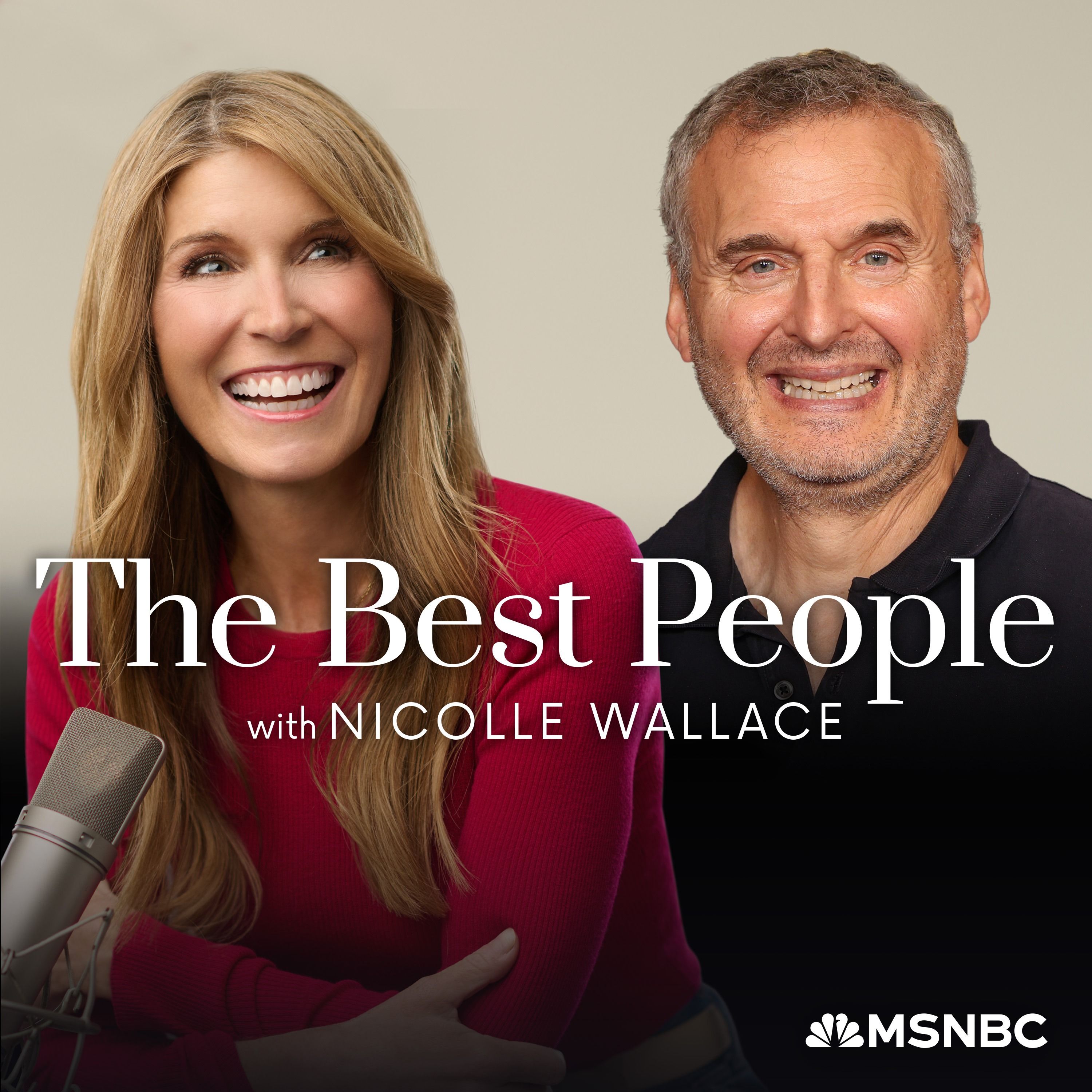
The Best People with Nicolle Wallace
Phil Rosenthal is Hungry… And Subversive
00:46:05
“Somebody Feed Phil” star Phil Rosenthal believes food is the great connector, laughter is the cement and if you can “open a mouth, you can open a mind”.
Loading summary
Transcript174 lines
- [00:00]
Emoji Health Representative
Hi, we're Emoji Health, your long term weight loss solution. We'll connect you with a board certified provider to discuss your unique goals. Eligible patients can Access custom formulated GLP1 medications at an affordable fixed price delivered to their door monthly. Take our free eligibility quiz@joinmochi.com and use code AUDIO40 at checkout for $40 off your first month of membership. That's joinmochi.com Results may vary. Eligible GLP1 patients typically lose 1 to 2 pounds per week in their first six months with Mochi when combined with a healthy lifestyle.
- [00:31]
Thumbtack Advertiser
Avoiding your unfinished home projects because you're not sure where to start, Thumbtack knows homes. So you don't have to don't know the difference between matte paint finish and satin or what that clunking sound from your dryer is. With thumbtack, you don't have to be a home pro, you just have to hire one. You can hire top rated pros, see price estimates and read reviews all on the app download today.
- [01:00]
Phil Rosenthal
But I figured there's a lot of people like me who watch Bourdain and say he's amazing. I'm never doing that. And maybe just getting off the couch is a step out of your comfort zone. So if I can get you just to go to the next town just to see what else is out there, just to expand your horizons a little bit. And I think if you can open a mouth, like taste the new food. If you can open a mouth, you can open a mind.
- [01:29]
Nicole (Interviewer, Host of Best People Podcast)
Hi everyone. Welcome to the Best People podcast. You have met a lot of the best people in the country, in the world, in their different fields. But I don't think you have yet met someone who is one of the best people. To me and to my family. This week's guest is someone we discovered during the COVID pandemic. We had movie and TV night as the pandemic wore on and one of the shows we discovered, one of the shows I discovered with my son was somebody feed Phil. And when we go to Croatia, which we will because of this show, we will watch that episode again and go everywhere where they fed Phil. So this is the Best People podcast and this is Phil Rosenthal. Thank you so much for being here.
- [02:13]
Phil Rosenthal
I love seeing you, Nicole. You know, I watch you too. I watch some of you. You're on a long time every day.
- [02:19]
Nicole (Interviewer, Host of Best People Podcast)
Yes.
- [02:19]
Phil Rosenthal
But I watch some of you, I think almost every day.
- [02:23]
Nicole (Interviewer, Host of Best People Podcast)
Really?
- [02:23]
Phil Rosenthal
Like my favorite. Absolutely. So, you know, I'm just delighted to be here with you.
- [02:29]
Nicole (Interviewer, Host of Best People Podcast)
I love the show so much And I felt jealous when I watched this season's premiere and saw that you're real world, big time famous now. Cause I feel like I was there at the beginning. But you have people flocking to your hotels all over the world. Is that weird?
- [02:47]
Phil Rosenthal
Yes. It's amazing at this age to wake up and find yourself Taylor Swift.
- [02:56]
Nicole (Interviewer, Host of Best People Podcast)
But you are. Is it you? Is it the food? Is it food?
- [03:00]
Phil Rosenthal
I think food's a big part of it. You know, people like food. That's why I'm using it to get you. I think you know what the real message of the show is. So I'm only using food and my stupid sense of humor to get you that real message, which is, I think the world would be better if we all could experience a little bit of other people's experiences. But what I learned from writing like a sitcom is that good writing is saying it without saying it. So I never want to be preachy and saying today's lesson is right. We should be kind to each other around the world. We should be friendly neighbors to everyone. We should abide by the golden rule. I don't need to say that. Why? Because I hope that I'm just demonstrating it. And the way I show love is to sit and eat with you. I say that food is the great connector, and then laughs are the cement.
- [03:57]
Nicole (Interviewer, Host of Best People Podcast)
What is it about food that shaped you and put you on what I think you would describe as an unlikely path, A hero's journey, superstardom. I mean, you talk openly, so I don't think I'm saying anything at a school that your mom wasn't a very good cook. Nicole, you don't cook.
- [04:17]
Phil Rosenthal
How dare you? That's my mother. Mother, you're talking. No, she was not the best cook. In fact, she once made for Passover, she made matzo lasagna instead of sheets of pasta, sheets of matzah. I think she found this recipe in an anti Semitic cookbook. So we didn't grow up with great tasting anything. And by the way, it wasn't until I left for college that I had food with any what most people call.
- [04:46]
Nicole (Interviewer, Host of Best People Podcast)
Flavor, and it's garlic. Right? That was like your Pandoras, right? What? Tell us what happened.
- [04:52]
Phil Rosenthal
So I go to Hofstra University, and now I'm free. And the kids and I, we go to a perfectly cheap Italian restaurant. Probably pretty crappy now that I think back on it, but I had pasta with sauce, and I'm freaking out. And the kids are going, what? What's wrong with him? I'm like, this is the best Thing I ever eat, they say, well, just pasta and sauce. I said, no, no, no. Well, like, what are these little, these little white bits? You know, what is that? And they said, what? Garlic? I said, that's garlic I never had. I was living like an animal.
- [05:25]
Nicole (Interviewer, Host of Best People Podcast)
That's so funny. I think most people remember, I don't know, their first drink or their first kiss at the beginning of college. I love your story about your first bite of garlic.
- [05:36]
Phil Rosenthal
That's it. And you know, it's like then in the wizard of Oz when she opens the door. Now the movie's in color. And then the next giant leap for me was going to Europe when I was 23. I got a courier flight. Didn't cost anything. You could go as a passenger, a coach passenger, and all their luggage tags was their cargo. So it was going as your excess baggage. That was the cheapest way for them to send cargo. You got a free trip to any destination that they went. So this was a great thing to have. Well, I got to Paris. I didn't have any money really. I had maybe $200 for the two weeks that I was going to be in Europe. Stayed in youth hostels, got a baguette and some cheese. You sit in the park in Paris, you're as good as anybody. You're in Paris, man. You're like. And that just. That blew my mind.
- [06:20]
Nicole (Interviewer, Host of Best People Podcast)
What determines where you go for the show?
- [06:24]
Phil Rosenthal
At first it was just where I want to go. Like, I knew I had to show the world Paris and Florence. And I started with Earth's Greatest Hits, right? So I thought. And that was the first show was called I'll have what Phil's Having. It was on PBS. You can still see those first six on YouTube. They're on YouTube now. But it was just where, you know, here's a budget. Go where you want. Okay, so we go Barcelona, Paris, Florence, Tokyo. It was absolutely phenomenal. After the first season of that, they couldn't afford to do more shows. Pbs, here comes this young startup, Netflix, and they pick up the show. So now we've done, I think we're their longest running unscripted original series in their history, eight seasons. So now we have tourism boards calling us. Please come. So we check them out. That's amazing to see. So I want to go everywhere. Like, you'll see this in this season. You'll see Tbilisi, which is a place I never thought to go.
- [07:18]
Nicole (Interviewer, Host of Best People Podcast)
How was the food?
- [07:19]
Phil Rosenthal
Amazing. I was expecting like Soviet era beets and dirt. I was expecting. And it wasn't the soil there Actually is very rich. So everything that grows. Did you know this. Did you know that wine was invented in Soviet Georgia 8,000 years ago, before the Egyptians. Before the. Yes, I didn't know. And they're still making it. That natural wine that you find sometimes that. That with that orange color. That's Georgian.
- [07:48]
Nicole (Interviewer, Host of Best People Podcast)
That's amazing.
- [07:49]
Phil Rosenthal
That started there. Yes, amazing. So all this great stuff that you find, the whole thing is you don't know what you're missing, literally. So you explore. All I do is I do research. Google, Best place to eat, Tbilisi, right? Oh, sorry about the phone. It's a busy house.
- [08:06]
Nicole (Interviewer, Host of Best People Podcast)
Mine too.
- [08:08]
Phil Rosenthal
Right. And so I'm doing that. And then I do have a production company in New York, which they've been everywhere, so they tell me that's not the best pizza place. This is the best pizza place. And then we leave room in the schedule for serendipity, for stuff to happen, which is my favorite stuff.
- [08:24]
Nicole (Interviewer, Host of Best People Podcast)
I think that's it. Right. Like, it's for everyone. But to your point, it's not fluff. I mean, it's perhaps the most profound, Profound and subversive content you could create. Right. Some of the most. Every stop, every city, you highlight the immigrant contributions to the best and finest cuisine. Talk about that. It's obviously not accidental.
- [08:46]
Phil Rosenthal
This is why I'm so happy to talk to you. Because, listen, I don't get political in the show. It's not for that. And I don't know if subversive is the right word. I'm not preaching one side or the other side. I'm just trying to be a human being. And maybe that's what we've lost.
- [09:02]
Nicole (Interviewer, Host of Best People Podcast)
Well, that's become subversive.
- [09:03]
Phil Rosenthal
I would argue you get no argument from me. I mean, that's the problem, isn't it? Is that we're losing that. And I'm trying to hang onto it. And I know I'm not alone. Since when did hugging someone from another culture define your political bent? I'm just trying to be a guy, just a nice guy. Most of the world, I find, is very nice. The news, I don't have to tell Nicole, they don't report on all the planes that landed safely today. You have to report the extraordinary. And the extraordinary is that 10% of humanity, that's not so nice. That gets our attention, that stands out. But I'm saying it stands out because most of the world is not that way. You know, I've been to Israel. There's a town called Akko. And I was told that Jews and Arabs Live in that town side by side. You gotta go see this. And I'm thinking, I'm gonna go there. You know what's gonna happen? They're gonna. They're gonna maybe meet in the town square and there's gonna be some kind of, you know, maybe it won't be so safe. Guess what? They meet in the town square every day. What do they do? They have lunch. The mosque is next to the synagogue in this town. They celebrate each other's holidays and weddings and bar mitzvahs. This is how the world wants to be. This is how the world is. I'm not showing you in my show the way I wish it was. I'm just showing you what I find. And what I find. I'll go one step further. Most people around the world are so much better than their governments. We all feel that no matter where I speak and I say this, I'm doing right now, a big North American tour right now. Everywhere I go, even in the Midwest, which we think is going to be a certain way, there's a lot of people who are feeling what we feel, that we don't want our humanity to slip away. And we don't want criminals, literal criminals, leading us and telling us what's right and wrong. When we know better, we inherently know better. We wouldn't raise our children this way. You know, isn't it a shame to. That you can't have your kid watch TV and emulate the President of the United States. What happened? So I'm looking, I'm looking at my show as maybe a little alternative programming. If you watch, if you, you report the news. But if you watch the news and you're. I can see by your face, you're. You're submersed in the news. It must be terrible sometimes to just have to live in that world. You can't. You have to have this other life that is life affirming.
- [11:54]
Nicole (Interviewer, Host of Best People Podcast)
I mean, I think one of my revelations after the 2024 election result was that to pull out just the politics. I can't think of an ingredient that this would apply to. To give you a good food analogy. But it's too intense, right? That the soup without all the other stuff is too much. And so the political just. It's so it's such a concentrated dose of the news that it is. I mean, to your point, I mean, it makes me, it makes me cry listening to you talk about going all around the world. Because I worry what people around the world think. And yes, people are always better than their government. Than their leaders because their incentive structure is different. They have to coexist. And most people want to be liked by their neighbors, and most people want to be called if there's a neighbor in need. But I. I wonder if you feel different when you travel around the world.
- [12:46]
Phil Rosenthal
Now I want to give you a little hope. When I go around the world and I meet people, they are exactly. They feel exactly like we do. Maybe even more so. Why? Because Russia's at their doorstep. They have counted for generations on the United States being their big brother, being the protector. We were the ones who saved the world, not ruin it. That might be naive to say, but at least that's a real perception. Everywhere I go, you know, that everyone has the phone. And when we get the news alert here says breaking news right from. They get it, too. Yeah, they get it. Oh, no. What did he do? Oh, no. They don't go to us. They treat us, I believe this, as the victims of a hostile takeover.
- [13:39]
Nicole (Interviewer, Host of Best People Podcast)
Really?
- [13:41]
Phil Rosenthal
Yeah. They don't see it as, you know, you guys are all stupid. What are you doing? I never got that. Never. I mean, I feel that we must be stupid. What are we doing? But they look at it as. Oh, God, we're so worried. They're worried. They have their literal own safety to worry about. Yeah, we have normalized this crime syndicate. Why don't questions start with, as a convicted felon, why did you. Why can't that be the question? Why don't we normalize that kind of question? You know, Jeffrey Epstein was convicted of raping children. Is that why you're worried that your name is in it? Why can't we be a little tougher with this guy?
- [14:27]
Nicole (Interviewer, Host of Best People Podcast)
Why do you think people aren't afraid.
- [14:30]
Phil Rosenthal
Of losing their position at the White House press corps? Maybe that you won't be welcome in anymore, but go out with a bang at least. Don't you love south park, what they're doing? Don't you love.
- [14:43]
Nicole (Interviewer, Host of Best People Podcast)
It's incredible.
- [14:43]
Phil Rosenthal
Talk about subversive. That's incredible. You're calling me subversive?
- [14:48]
Nicole (Interviewer, Host of Best People Podcast)
Look at that.
- [14:49]
Phil Rosenthal
They've got the big cajones. Look at Gavin Newsom. Like him or not, you gotta love, you know, the young lady who's. Who's working on that.
- [14:58]
Nicole (Interviewer, Host of Best People Podcast)
It took them nine years, but I think that they've figured it out that all of this, and I think Michelle Obama intended that line. When they go low, we go high. It's for Michelle Obama to say and do not the entire country and Democratic Party, I mean, Trump, the fight against Trump is happening. On the low road. And I think that to your point, whether you love Gavin Newsom or hate Gavin Newsom, he's the first one to figure that out.
- [15:20]
Phil Rosenthal
How great. And it almost seems like they're knocked back on their heels. They don't know how to deal with that. If they go after him, it's very obvious what they're doing. Right. And I'm sure they'll try because I think there's no shame. But I think Michelle Obama had to say that. I think it was at a time when we thought that that type of thinking would prevail and maybe because it hasn't, that we now need to fight harder. And also, who says that laughing at them is not staying high?
- [15:57]
Nicole (Interviewer, Host of Best People Podcast)
That's right. That's right. And that's, you know, when I call the program subversive, I mean, I think the levity, I think hides or disguises something really deeply profound, which is that if we're deeply connected to each other, it doesn't matter who you voted for, you won't let ICE haul them off in the middle of the night. And so I wonder what role you think reconnecting to each other plays in this moment.
- [16:20]
Phil Rosenthal
It's the most important thing. My whole thing is connecting with people. That's it. When the government fails to take care of us, what happens? We have to take care of ourselves. We can't turn on each other. That's what they'd like while they steal. This whole thing is so they can steal more. The whole. But I mean, we don't address this. It should be every single day addressing people. You should understand, the only reason he ran again was to avoid jail. And now that he's here, he's going to make sure that no one can arrest him again and he can steal more while he's doing it. Is it more complicated than that?
- [16:58]
Nicole (Interviewer, Host of Best People Podcast)
I mean, it's certainly what he's unafraid to show us.
- [17:01]
Phil Rosenthal
It used to be, at the very least, it was symbolic. The office, symbolic. Now it's all tacky gold leaf and paved over rose gardens. It's insane.
- [17:16]
Nicole (Interviewer, Host of Best People Podcast)
It's insane. It's insane. I mean, coming from your career in Hollywood, could you make it up? I mean, could anyone have made this up, this plot?
- [17:26]
Phil Rosenthal
No. That's why shows that are doing satire stop being funny when real life surpassed it.
- [17:33]
Nicole (Interviewer, Host of Best People Podcast)
Right, right.
- [17:34]
Phil Rosenthal
They couldn't. You can't make it up. Only south park or a show that goes way beyond, way beyond decency.
- [17:43]
Nicole (Interviewer, Host of Best People Podcast)
Right.
- [17:45]
Phil Rosenthal
Can show you the real depravity of what's there.
- [17:48]
Nicole (Interviewer, Host of Best People Podcast)
Yeah, the animation helps too because you can't even imagine that monster.
- [17:53]
Phil Rosenthal
Yeah, the animation helps because when real life gets to be so cartoonish, the only thing that could mock it is an actual cartoon.
- [18:07]
Nicole (Interviewer, Host of Best People Podcast)
We're going to sneak in a quick break right here. When we come back, we'll have many much more with award winning creator of Everybody Loves Raymond and star of the hit series Somebody feed Phil Phil Rosenthal. We will be back in a moment.
- [18:31]
Verbal/VRBO Advertiser
Ever wanted to stay on vacation longer? Us too. With Verbal's long stay discounts, you can stay longer and save more on select properties. Gotta love a win win book the perfect summer getaway today with VRBO Private vacation rentals. Your future self will thank you later. I'm not switching my team to some fancy work platform that somehow knows exactly how we work. And its AI features are literally saving us hours every day. We're big fans and just like that, teams all around the world are falling for Monday.com with intuitive design, seamless AI capabilities and custom workflows, it's the work platform your team will instantly click with. Head to Monday.com, the first work platform you'll love to use.
- [19:16]
Angie Hicks
Hi, I'm Angie Hicks, co founder of angie and one thing I've learned is that you buy a house, but you make it a home. Because with every fix, update and renovation, it becomes a little more your own. So you need all your jobs done well. For nearly 30 years, Angie has helped millions of homeowners hire skilled pros for the projects that matter, from plumbing to electrical, roof repair to deck upgrades. So leave it to the pros who will get your jobs done well. Hire high quality pros@angie.com.
- [19:51]
Nicole (Interviewer, Host of Best People Podcast)
I've been thinking a lot about culture and the role of artists and creators, people like yourself and south park. And it seems like it isn't a piece of it. And we all rode together. It feels like that's the vessel, our.
- [20:05]
Phil Rosenthal
Contribution, meaning the entertainment business. You know, Woody Guthrie had a guitar and on the guitar it said, this machine kills fascists. Isn't that fantastic?
- [20:17]
Nicole (Interviewer, Host of Best People Podcast)
It's incredible.
- [20:18]
Phil Rosenthal
So that's everything. This machine kills fascists. That's our only while we still have a little free speech. Use it. Use your powers for good. That's what I tell. You know my kids. That's what I tell. Use your powers for good. Why? Because some people are using them for not so good. So we have to counter it. We can't just sit there and take it. And by the way, it's not enough just to laugh at South Park. Just to laugh at Gavin Newsom. I would say that Gavin Newsom is actually doing more good because he can literally affect change. He can change the districting in California. He can literally. And while he's doing it, call people's attention to the hypocrisy and the insanity. I can't even believe that someone on the other news station said he shouldn't do that. Gavin Newsom. He looks foolish doing that. Yeah. Yeah. Have you been paying attention?
- [21:16]
Nicole (Interviewer, Host of Best People Podcast)
Yeah. I think in watching all of the interactions and to your point about people being the same wherever you go, people don't want to be played for fools and that. That feels universal still.
- [21:31]
Phil Rosenthal
Yes. Yes. Do you think that that's the thing that will change people's minds? You know, when. When everyone signed up for his university. Right. They were hoping that they would get an education and they'd become rich people, too, in the real estate world. And when they got scammed personally, then they sued.
- [21:54]
Nicole (Interviewer, Host of Best People Podcast)
Right.
- [21:54]
Phil Rosenthal
By the way, I thought that had to be the end. Wouldn't vote for a guy who does that.
- [22:00]
Nicole (Interviewer, Host of Best People Podcast)
Right.
- [22:01]
Phil Rosenthal
But until it affects them personally, you know, I don't even know if Epstein's gonna make the difference.
- [22:08]
Nicole (Interviewer, Host of Best People Podcast)
Well, he certainly makes some of Trump's prominent followers feel stupid, according to them. I mean, you've got some of the prominent podcasters saying, what does he think we're children? I mean, yes, he does. Who fall in line. But I wonder what you think of all the discussion these days about the manosphere.
- [22:28]
Phil Rosenthal
It's a real thing. I try not to participate too much, even though I'm a guy. I've met world leaders. I met that wonderful president of Finland and had lunch with her, a young mom, maybe 37. Spectacular. And you talk to this lady and you go, oh, yeah, more of the world should be like this. What if young moms were in charge? I think we'd have less war. We'd have nice programs to help and lift each other up. I'm all for it. Yes. Let the men have run things for a long time. The manosphere time for ladies fear.
- [23:15]
Nicole (Interviewer, Host of Best People Podcast)
I like it. You've got my vote.
- [23:18]
Phil Rosenthal
Yes.
- [23:18]
Nicole (Interviewer, Host of Best People Podcast)
Do you try to steer any conversations away from politics on your travels, or do you let them go where they go? I mean, do you? Do you.
- [23:27]
Phil Rosenthal
I let them go where they go and then edit out the blatant like I could not. I wouldn't talk this way on my show. I might make a little joke. I might make a little hint. I do. Even in my live show, you know, somebody's said, you know, I talk and they go, somebody goes, fill for president. I go, no, no, no, no, no. Thank you. That's very nice. But I happen to be one of the few people that still believes you should be really smart to be president. And that's as far as I go. I feel comfortable doing that with you because I actually want your reaction to this stuff. Because I'm trying to learn as much as I can from an insider. I'm just a guy trying to figure it out. How do we get here? How do we get out of here? How do we fix this?
- [24:10]
Nicole (Interviewer, Host of Best People Podcast)
I mean, I'm here trying to do the same thing. I mean. And I think that everyone's choices are so instructive. And what I would say as an insider is we don't have. We got nothing. So we're all turning to you. I don't think we have the answers. And I think what the voters have rejected twice now is the perception of insiders that know more than everybody else. And so not only do we not, but I don't think that's what people want. I think people want to be good, but I think they've made two out of three times the worst choice. And I'm trying to figure out if maybe more of us should use our platforms more overtly. Would you contemplate that, or is that just not what the show is?
- [24:56]
Phil Rosenthal
I feel like that's not what the show is. I feel like you are getting the message without me having to say it. I'd like to say it without saying it. If you're touched by the kind treatment of immigrants in the Amsterdam episode, for example, by this wonderful organization that tries to assimilate them to their new homelands. Imagine they're not locking them up and throwing them out. They're helping them assimilate. And when you help people assimilate to their new land, what does that do? It certainly makes their lives better, but it makes our lives better. Because here's the other thing I'm learning everywhere I go in the world, for the most part, immigrants make wherever they immigrate to better, not worse. Better.
- [25:45]
Nicole (Interviewer, Host of Best People Podcast)
Right. I worry that we have the most divergent public rhetoric about immigrants that we've had in maybe ever, but certainly in a generation or two. And I wonder, having spent time all over the world, what do you make of a sort of sadistic profile in an American policyholder?
- [26:08]
Phil Rosenthal
It can only be described as monstrous. It's disgusting how that they're selling merch for alligator Alcatraz. They even have a fun name for it. What's wrong with you. My parents are Holocaust survivors. They were in a concentration camp. My mother. What the hell? Just listen. Just the golden rule. Just the golden rule. If we just had that.
- [26:37]
Nicole (Interviewer, Host of Best People Podcast)
Do unto others.
- [26:39]
Phil Rosenthal
Yeah. Isn't it true that I don't have all the stats, but isn't it true that most of the people that they're apprehending have no criminal record at all?
- [26:49]
Nicole (Interviewer, Host of Best People Podcast)
A whole lot of them, yeah. And to the credit of some people who are speaking out, they seem to be operationally targeting people at work. And you've got about 80% of the country that thinks if someone has a job, they're filling a need. And those are not the kind of people you should send away. It makes me want to scream, somebody feed Nicole. I mean, I guess this is what we need to heal from. And I wonder if the. You're opening a restaurant, also a diner.
- [27:21]
Phil Rosenthal
So there's a. That could be seen as a tiny bit political as well. And again, saying it without saying it. So diners are disappearing in America, but we all know and love diners since childhood. You know, you. You'd be in, in. In maybe school athletics or the. Or the theater group or wherever it is, the chess club even. Where are you going after that? Going to the diner with your buddies? Right? That's where we go. It's where we grow up. We know that food, it's literal comfort food. Eggs all day, waffles, pancakes, burgers, sandwiches, milkshakes, ice cream sundaes, things like this. It's the food of our people, right? Of Americans. This is what we love. This is what we know. It's democratic with a small D. You don't have a lot of money, you can come. People with a lot of money, they like it too. We all love it. We love it so much, it becomes the center. And it's so easygoing. It becomes the center of towns, it becomes the center of the community. If they're disappearing, maybe we're losing our sense of community. This place where neighbors can come and talk over everything that they like. And if we lose these communities, maybe we lose the country. So, Nicole, I'm going to fix everything with my diner on Larchmont Boulevard. And the best part is I'm naming it after my parents. It's gonna be called Max and Helen's.
- [28:48]
Nicole (Interviewer, Host of Best People Podcast)
I love it. I love it. I love when you would call them at the end of your episodes.
- [28:57]
Phil Rosenthal
How many years? Married 25 happy years. And out of 56. That's not bad. Goodbye. They were the best part. Best part.
- [29:11]
Nicole (Interviewer, Host of Best People Podcast)
This was my Favorite part at the end.
- [29:12]
Phil Rosenthal
Yes, yes.
- [29:13]
Nicole (Interviewer, Host of Best People Podcast)
We talk about that whole thing that this whole show about universality, about friendliness, about food, about connection, ends with the ultimate connection.
- [29:23]
Phil Rosenthal
What's the subtext? We're all family. You relate to that because you have parents that you zoom with. You have parents that you call or maybe can't call anymore. I wish I could. They were so supportive and so loving, and I miss them terribly still. And the reason I called them was because they were also an amazing source of comedic material. They were funny. My brother and I marvel every single call. They always deliver as if they were great comedians, as if you're calling Robin Williams and he would be just bang. Always. You'd call, and right away they turn to each other. They don't even realize. Like, they. They know they're on television. They know we're filming, and within five minutes, they're fighting as if nobody's there. Hilarious.
- [30:18]
Nicole (Interviewer, Host of Best People Podcast)
Time. And the timing, you know, their timing is the timing.
- [30:21]
Phil Rosenthal
And my dad, you know, my dad, he actually. He was a tailor in the garment center in New York with his father, and his father's father had been a tailor and on and on. But what he loved doing was telling old jokes at an amateur night in a club in New Jersey. This is in the 1950s. He would get up, this skinny little tailor from New York City, having emigrated to New York from Germany, got up and told old jokes. My mother's on a date with another fella one night and sees this Max Rosenthal get up and tell jokes. And she says, you know what I like? I think I like this guy better than this guy. And I always say, if he's not funny that night, I'm not here.
- [31:05]
Nicole (Interviewer, Host of Best People Podcast)
That's amazing.
- [31:06]
Phil Rosenthal
So I learned everything to his sense of humor and to her sense of humor in recognizing it. And they were just really funny and charming and loving parents and grandparents. So of course I wanted them in the show. And now that they've passed, how could I? I thought, oh, God, how do I. How do I keep, first of all, the segment going? How do I keep their memory alive? How do I. How do I honor them? Well, a good way is calling my funny friends and having them do a joke for Max. And so this year, you'll see in the Australia episode, we have Mel Brooks.
- [31:43]
Nicole (Interviewer, Host of Best People Podcast)
It's amazing. That's amazing.
- [31:45]
Phil Rosenthal
We have wonderful people, comedians, really great people.
- [31:48]
Nicole (Interviewer, Host of Best People Podcast)
They all deliver. I mean, that's the funny thing about. And my son loves comedy, and he's got me watching some of the Men in the Manosphere shows and I'll watch the whole show with him. I mean, and they're funny. And I think comedy feels as essential as the air we breathe right now.
- [32:06]
Phil Rosenthal
It is essential. And look at Mel Brooks and look at how he treated the Nazis. Springtime for Hitler and Germany. He would tell you that that's one of the better ways to deal with them, is to first laugh at them, first bring them down a peg. Right.
- [32:27]
Nicole (Interviewer, Host of Best People Podcast)
Sorry for my dogs.
- [32:28]
Phil Rosenthal
No, it's okay.
- [32:29]
Nicole (Interviewer, Host of Best People Podcast)
They're laughing at me. The idea that I would record anything. Talk about the accidental nature of your fame now as a food traveler and I've heard you talk about Anthony Bourdain. It's such a self deprecating twist on the inspiration. But just talk about Bourdain and talk about the accidents that led to the creation of this real, real huge cultural force that you lead now.
- [32:57]
Phil Rosenthal
So after Everybody Loves Raymond was over, I thought that I'm supposed to make sitcoms. I thought that was my purpose in life. But the business had changed greatly in the nine years we were doing that show. And they told me, listen, they like you, they want another sitcom from you, but just we want you to be more hip and edgy. That's what they want, hip and edgy. I said, well, you got the right guy and Mr. Hip and edgy. And so I struggled for years. And then I thought, if I'm going to bang my head against this wall of show business, let's pick a spot that I would love. And I had been inspired by not only Bourdain, but everyone who's done this, but mainly Ray Romano. While we were doing Raymond like the first season, I asked him where he was going on his vacation in between season one and two. And he said, oh, I go to the Jersey Shore. And I said, that's nice. Have you ever been to Europe? And he said, nah. And I said, why not? He goes, I'm not really interested in different. Really didn't want to go, really. And this is a 40 year old guy at the time. And I'm thinking we're doing that episode. He goes, what do you mean? I go, we're going to send you to Italy as you and you're going to come back as me. Someone who's excited about travel and especially Italy and the people in Italy, the food in Italy. Right. It took me three years to convince him because he was afraid of flying too. But he got on the plane and this episode, I don't know if you saw that episode of Raymond where we go to Italy, but the episode is about Ray doesn't want to go, complains the whole time, and then slowly gets it. Well, what happened? The best part of this is that I saw Ray transformed the person. Phil, have you had gelato?
- [34:42]
Nicole (Interviewer, Host of Best People Podcast)
That also happens to be very, very funny.
- [34:45]
Phil Rosenthal
And now he goes all the time. And from that moment, I thought, what if I could do this for other people? So when I hit this wall of I can't get another sitcom on, I go, okay, how about this dream? And my agents thought I was nuts because they don't like you changing lanes. It'd be like you walking into MSNBC and saying, you know what I'd like to do now? I'd like to be a tap dancer.
- [35:08]
Nicole (Interviewer, Host of Best People Podcast)
It might come to that.
- [35:12]
Phil Rosenthal
So it took, I think, 10 years to sell the show, and I sold it to pbs.
- [35:19]
Nicole (Interviewer, Host of Best People Podcast)
Pbs.
- [35:20]
Phil Rosenthal
And I was ready. I walked into PBS and I sold the show. This is true. With one line I said, I'm exactly like Anthony Bourdain if he was afraid of everything.
- [35:31]
Nicole (Interviewer, Host of Best People Podcast)
And he was afraid of nothing. So that was a perfect. I love it. I read that line in a profile about you, and I love that.
- [35:39]
Phil Rosenthal
So that's true. And, you know, all of us that do any kind of food or travel, maybe in real life, too, owe a huge debt to Bourdain because he literally reinvented an entire genre. So my show is just a take on this type of show. I'm the guy who watches Bourdain and go, he's amazing. I'm never doing that, but I figured there's a lot of people like me who watch Bourdain and say, he's amazing. I'm never doing that. And maybe just getting off the couch is a step out of your comfort zone. So if I can get you not even to go to Japan or to Europe or Africa, but just to go to the next town just to see what else is out there, just to expand your horizons a little bit. And I think if you can open a mouth, like, taste the new food. If you can open a mouth, you can open a mind.
- [36:41]
Nicole (Interviewer, Host of Best People Podcast)
My conversation with Phil Rosenthal continues right after a very short break. Don't go anywhere.
- [36:56]
LifeLock Advertiser
Sometimes an identity threat is a ring of professional hackers, and sometimes it's an overworked accountant who forgot to encrypt their connection while sending bank details.
- [37:05]
Nicole (Interviewer, Host of Best People Podcast)
I need a coffee.
- [37:06]
LifeLock Advertiser
And you need Lifelock, because your info is in endless places. It only takes one mistake to expose you to identity theft. LifeLock monitors hundreds of millions of data points a second. If your identity is stolen, we'll fix it. Guaranteed or your money back. Save up to 40% your first year@lifelock.com specialoffer terms apply.
- [37:26]
Verbal/VRBO Advertiser
Oh, I'm not switching my team to some fancy work platform that somehow knows exactly how we work. And its AI features are literally saving us hours every day. We're big fans. And just like that, teams all around the world are falling for Monday.com with intuitive design, seamless AI capabilities, and custom workflows, it's the work platform your team will instantly click with. Head to Monday.com, the first work platform you'll love to use.
- [37:56]
Angie Hicks
Hi, I'm Angie Hicks, co founder of Angie. One thing I've learned is that you buy a house, but you make it a home. And for decades, Angie's helped millions of homeowners hire skilled pros for the projects that matter. Get all your jobs done. Well, @angie.com.
- [38:17]
Nicole (Interviewer, Host of Best People Podcast)
There'S something inside a restaurant. I mean, it's still. I still think there are people who walk into a restaurant and feel a little excited. What's going to be on the menu? What am I going to have? I mean, as a mom, like, I'd. I'm not gonna have to do any dishes. I wonder if you think that's part of what we have to get back to, turning off our phones or leaving the phones in the car, Going inside a restaurant because it's special.
- [38:39]
Phil Rosenthal
You know what? It's a lot like traveling.
- [38:41]
Nicole (Interviewer, Host of Best People Podcast)
Yeah.
- [38:42]
Phil Rosenthal
You're transported for the evening. A great restaurant does that.
- [38:45]
Nicole (Interviewer, Host of Best People Podcast)
Yeah.
- [38:45]
Phil Rosenthal
And it can be the diner. Of course it can be. We're traveling. It's also, Mommy's taking care of us. That's the other thing.
- [38:54]
Nicole (Interviewer, Host of Best People Podcast)
Yeah. Nurture.
- [38:55]
Phil Rosenthal
You know what my favorite moment, maybe in movie history is? It's certainly the best food moment ever in a movie. You ever see ratatouille?
- [39:04]
Nicole (Interviewer, Host of Best People Podcast)
Of course. Of course.
- [39:05]
Phil Rosenthal
When he takes a bite at the end, the critic, the whole movie's hinging on this. He takes a bite of the ratatouille, and what happens? He zooms back to childhood, and he zooms back to his mom's ratatouille.
- [39:18]
Nicole (Interviewer, Host of Best People Podcast)
Yeah.
- [39:19]
Phil Rosenthal
So it's all the feelings, the evocations of everything that food represents. How a scent can transport you back to a place and time and a feeling even. It's all connected. Sense of sight, sound, smell, taste. All connected to feelings, to emotions.
- [39:40]
Nicole (Interviewer, Host of Best People Podcast)
Yeah. Memories.
- [39:42]
Phil Rosenthal
Memories. So that's what the great chefs always tell me. We're trying to. Like Thomas Keller says, it's all about creating memories, touchstones back to special memories. And creating new ones.
- [39:56]
Nicole (Interviewer, Host of Best People Podcast)
My mother and grandmother were Greek and so all the Greeks.
- [40:00]
Phil Rosenthal
I haven't been there yet.
- [40:01]
Nicole (Interviewer, Host of Best People Podcast)
I know you haven't.
- [40:02]
Phil Rosenthal
I gotta go.
- [40:03]
Nicole (Interviewer, Host of Best People Podcast)
You gotta go, you gotta go. We'll come meet you, we'll come eat with you. But all the recipes of my great grandmother are, you know, handwritten on little index cards. And I keep telling my mom, you've gotta at least take pictures of them so they're stored on a cloud on some. But I, I wonder how much of this is, is for you. Your, your history, I mean your, your, your mother's, your parents history is, is, is harrowing. And your food journey is so connected to them because of how you've integrated them and shared them with us. But I wonder how, how much of that is, is so deeply personal for you.
- [40:40]
Phil Rosenthal
Probably deep, deep down, you know, I don't wear it on the top, but, but, but deep, deep down it probably is. Not for one second do I ever forget how lucky I am that I'm the luckiest guy you're ever going to have on your show that anyone's ever going to see. I tell every audience I see, take a good look, I'm the luckiest one because I'm living a dream beyond the dream. I can't even fathom how I got here and how lucky I got to be. So if you're that lucky, I think you owe it to the rest of the world to be, first of all, nice and second, try to give back a little bit. So that's everything.
- [41:23]
Nicole (Interviewer, Host of Best People Podcast)
What show, looking back, had the greatest impact on you or changed a perception you had the most dramatically.
- [41:31]
Phil Rosenthal
Oh goodness. I watched so much TV as a kid because for me it was so much safer than going outside because I was little and skinny and I'd get picked on and all my friends were on tv and I loved everyone funny, starting with my dad, but then everyone funny on tv. And my parents used to say, go outside. What are you going to do? Get a job watching television. And by the way, when I first got a job writing television, I sent them the biggest TV that they made at the time with a note on it that said, haha. And the shows that made the biggest impact on me, you can see their influences in Raymond, so on the Family, Dick Van Dyke Show, Roseanne, the Odd Couple, Taxi shows that were filmed, first of all in front of a live audience. So like theater, so you felt like part of it. Second, they were set on planet Earth. Everything in the shows could happen in real life, which is, if you think about it, that's something you don't. That A lot of shows, they don't keep that dictum. They don't have that.
- [42:32]
Nicole (Interviewer, Host of Best People Podcast)
Well, you call it low concept. I want.
- [42:34]
Phil Rosenthal
Exactly.
- [42:35]
Nicole (Interviewer, Host of Best People Podcast)
And your point is so profound in that. A high concept show. It's hard to keep thinking of a Zomb apocalypse in another galaxy. How do you keep that going?
- [42:44]
Phil Rosenthal
Just talk about that if you have a high concept. Our family comes from Mars and we have to pretend to be regular people so that they don't find out we're from Mars. Now you're servicing that premise. Every single episode has to be about that. So you run out of stories naturally. Low concept is a guy and his family live across the street from his parents. Turns out you can run a very long time. You can run nine years even.
- [43:12]
Nicole (Interviewer, Host of Best People Podcast)
Yeah. Yeah.
- [43:13]
Phil Rosenthal
Why? Because it's the stuff of life. And there are actually infinite possibilities. Or nine years worth for stuff with the family. Just like in your real life. We had one rule in the writer's room. Could this happen?
- [43:29]
Nicole (Interviewer, Host of Best People Podcast)
And the answer had to be yes.
- [43:31]
Phil Rosenthal
Yeah. Not that it would always happen that way in real life, but are we stretching credibility so much that the audience goes, that would never happen. Right.
- [43:40]
Nicole (Interviewer, Host of Best People Podcast)
That's so. It's so simple. I mean. And it's all related to the same thing. That you can't connect if you can't relate. And you can't relate if it couldn't happen.
- [43:50]
Phil Rosenthal
Exactly. Right. And so the same sensibility that was behind Everybody Loves Raymond is now right in front of you in Somebody feed Phil. It's like the road under your car. You take it for granted, but you'd know if it wasn't there.
- [44:04]
Nicole (Interviewer, Host of Best People Podcast)
No, I mean, look, newscast is built the same way. And over the last nine years, we've had a lot of structure to work with, you know, threats to our democracy, signs of hope. We've started spending a lot of time on culture. We led with south park after that episode.
- [44:19]
Phil Rosenthal
Right. You have to.
- [44:20]
Nicole (Interviewer, Host of Best People Podcast)
I mean. And it feels as essential whenever I see an artist speaking out with such great risk to their livelihood and perhaps more. I think it's newsworthy. I wonder if you see it that way.
- [44:33]
Phil Rosenthal
Absolutely. Yes. The air changed when that came. You were like, oh, my God, somebody, you know, somebody spoke out. What's that famous Apple commercial from the 80s where it looks like 1984 and somebody swings the thing and crashes it into the screen and it comes tumbling down. Those are little moments like that.
- [44:53]
Nicole (Interviewer, Host of Best People Podcast)
Yeah.
- [44:54]
Phil Rosenthal
We need more of those.
- [44:55]
Nicole (Interviewer, Host of Best People Podcast)
Right. Like the synapses are connecting and we're all still seeing the same thing. And we can laugh at it.
- [45:01]
Phil Rosenthal
And we're not crazy.
- [45:02]
Nicole (Interviewer, Host of Best People Podcast)
And we're not crazy. Yeah. Yeah. I guess the last thing I wanted to ask you, if there's a trip that's changed you or country or a stop or the making of your own show, an episode that's changed how you.
- [45:14]
Phil Rosenthal
See things, only every single time. Because every single time, starting with that first trip that I mentioned at the beginning of our talk about going to Europe, your mind is blown. What it does for you is it changes your perspective on life, and you bring that home with you. I'll give you an example. I go to Paris that first time, and I'm marveling at how gorgeous it is. Even the trees on the boulevard are spectacular, the way they're lined up. I go home after the trip and I'm walking in my neighbor in Washington Heights, in Manhattan, that I had a roommate. I could only afford a tiny apartment, not a fancy neighborhood. For the first time ever, I look and I go, hey, we have nice trees too, huh? That's invaluable. You now have, first of all, a basis for comparison, second of all, a perspective that you didn't have before. That's what travel does. And that happens with every human being that you meet. That happens with every. Every place that you see better or worse. There are ideas that you take from Japan. You go to the pharmacy, you buy a pack of gum, they wrap it for you as if it's for your hundredth birthday. The level of care and detail. The little children are out on the street in Tokyo, three year olds going to the supermarket for their parents, doing errands. What I said, how do you let this happen? They go, the community cares for the children. What? The community cares for the children. Is that a terrible idea? Would that be terrible to export?
- [46:59]
Nicole (Interviewer, Host of Best People Podcast)
It's beautiful. It's beautiful. The care, though, is something that you see in all the preparation from all the chefs.
- [47:06]
Phil Rosenthal
This is an expression of love.
- [47:08]
Nicole (Interviewer, Host of Best People Podcast)
Yeah.
- [47:08]
Phil Rosenthal
You taste the love.
- [47:09]
Nicole (Interviewer, Host of Best People Podcast)
Art and art. And they're creating something so exquisite. I mean, I think that's something that you get when you go to Europe. The beauty in everything they eat. Big and small, cheap and expensive.
- [47:22]
Phil Rosenthal
Do you go to Europe the first time? I'm like, I needed to buy a shirt and the store is closed in the afternoon. I'm like, what's going on? Everything's closed. Yeah, we closed from like 2 to 4. What? Why would you do that? We want to enjoy the day. Enjoy the day? What?
- [47:38]
Nicole (Interviewer, Host of Best People Podcast)
Imagine that.
- [47:39]
Phil Rosenthal
Imagine. And you go, oh, there are other ways to be.
- [47:43]
Nicole (Interviewer, Host of Best People Podcast)
Yeah, well, I want to be like you. I love that you did this. I'm so happy to talk to you. So yeah, we'll eat. We'll eat.
- [47:51]
Phil Rosenthal
That's great.
- [47:51]
Nicole (Interviewer, Host of Best People Podcast)
We'll eat.
- [47:52]
Phil Rosenthal
Okay, dear.
- [47:52]
Nicole (Interviewer, Host of Best People Podcast)
Thank you so much. Thank you.
- [47:54]
Phil Rosenthal
Thanks Nicole.
- [47:55]
Nicole (Interviewer, Host of Best People Podcast)
Thank you.
- [47:55]
Phil Rosenthal
Thanks everybody.
- [48:00]
Nicole (Interviewer, Host of Best People Podcast)
Thank you so much for listening to the Best People. Be sure to subscribe to MSNBC Premium on Apple Podcasts to get this and other MSNBC podcasts ad free. As a subscriber, you'll also get early access and exclusive bonus content. Content all episodes of the podcast are also available on YouTube. You just have to visit msnbc.com the best people to Watch and a reminder to get your tickets to MSNBC Live 25. It is an all day event. It's happening October 11th at the Hammerstein Ballroom. I will be there along with some of your most favorite MSNBC hosts and special guests. Tickets are on sale@msnbc.com live25 and we'll have a link in our show. Notes the Best People is produced by Vicki Vergelina and Senior Producer Lisa Ferri, with additional support from Clara Grubberg and Joanne Kong. Our Audio Engineer is Bob Mallory and Bryson Barnes is the Head of Audio production, Pat Burkey is the Senior Executive Producer of Deadline White House, Brad Gold is the Executive Producer of Content Strategy, Aisha Turner is the Executive Producer of Audio and Madeline Herringer is Senior Vice President in Charge of audio, Digital and Long Form.
- [49:28]
Angie Hicks
Hi, I'm Angie Hicks, Co Founder of angie. When you use Angie for your home projects, you know all your jobs will be done well, from roofing repair to emergency plumbing and more done well. So the next time you have a home project, leave it to the pros. Get started at ANGIE Combination.