← The Best People with Nicolle Wallace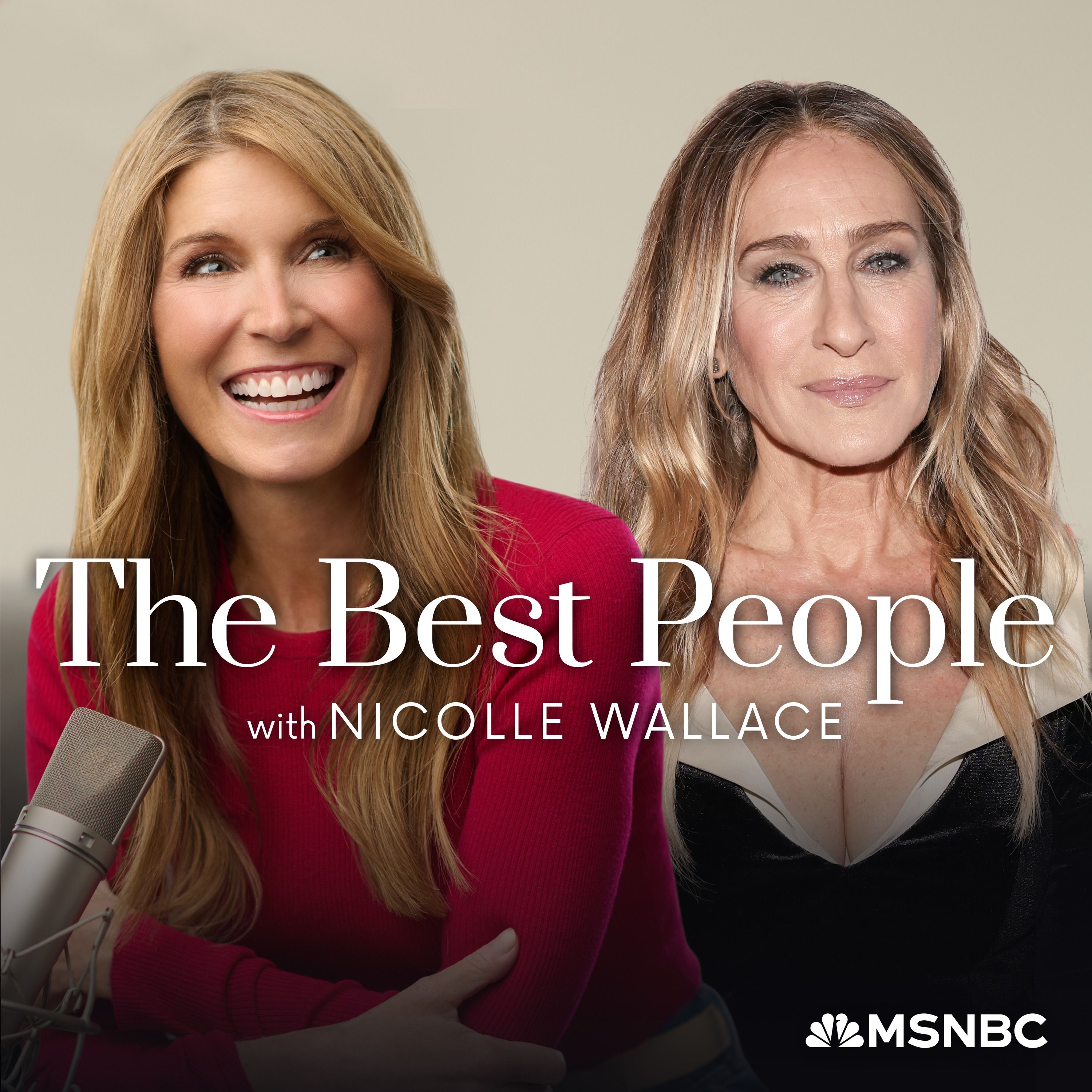
The Best People with Nicolle Wallace
Sarah Jessica Parker: “I Always Just Believed in Us”
00:42:45
Sarah Jessica Parker is an icon of style, grace and compassion. And a champion of books, ballet and journalism.
Loading summary
Transcript101 lines
- [00:01]
Unknown Announcer
If you could hear love, what would it sound like? Son, can we talk about your drinking? Yeah, Dad, I think we should. Helping those closest to you think about their excessive drinking. Maybe that's what love sounds like. More@rethinkthedrink.com An OHA initiative building a business may feel like a big jump, but on deck small business loans can help keep you afloat. With lines of credit up to $100,000 and term loans up to $250,000, OnDeck lets you choose the loan that's right for your business. As a top rated online small business lender, Ondeck's team of loan advisors can help you find the right business loan to fit your needs. Visit ondeck.com for more information. Depending on certain loan attributes, your business loan may be issued by ONDAC or Celtibank. ONDEck does not lend in North Dakota. All loans and amounts subject to lender appro.
- [01:07]
Sarah Jessica Parker
I think there are so many ways to work toward a more civil society than doing it. Like, sometimes I'll say when people are like, you've got to speak up on social media. I was like, fdr was elected without social media. Hi, everyone.
- [01:26]
Nicole Wallace
Welcome to the Best People with Nicole Wallace. One of the best and most iconic characters ever created is Carrie Bradshaw from Sex and the City. And now, of course, from and just like that and two movies in between. The actress behind Carrie Bradshaw is, of course, Sarah Jessica Parker, a beloved New Yorker, a mom, a wife, an actor, a lover of books and libraries and politics and journalism. We talk about all of it. This is the best people in Nicole Wallace, and this is Sarah Jessica Parker. Thank you so much for being here.
- [02:03]
Sarah Jessica Parker
Oh, my gosh. Thank you for having me. I'm gonna try very hard to be that person you've described.
- [02:08]
Nicole Wallace
I'm a big and just like that fan. I got to watch the news season and I asked Richard Pedler about Carrie and why she endures. And he said that she endures because of you and because it's a story about connection. And I feel like, what Sex and the City and what Richard said was so important that it was about New York and it was about Carrie, but it was about you pick up the phone and on the other end, they're always there. They never can't find one of them. And that's the fantasy. That's the fiction that everyone latches on to. I want to be in the diner with my three best friends telling them anything and everything.
- [02:53]
Sarah Jessica Parker
Yeah. Like the really intimate things. Yeah. I think it was really so clever of Darren Starr initially, to see. To understand from Candace's book, which was a collection of her. All of her columns from the observer, to recognize that there was something interesting about women talking intimately to one another and needing each other and testing, you know, friendships. You know, you mess up and you come back and you're. You fall short and you betray. You know, you go to the guy, then you come back, you're like, ugh. You know, and that's, like, how those long friendships go. And I was thinking, like, during COVID like, what did we watch? You know, we were watching Mary Tyler Moore and Bob Newhart and introduced those to my daughters, and we were feeling all sorts of nostalgia about it. It's actually why we started doing it just like that is during COVID I called Michael in April of 2020, and I just, you know, we've been back and forth about the show and movie and not and yes and no. And I just said, I feel like we should be talking about the show. You know, people are. They're reaching for these things that make them feel good even as they are in their own homes. So it's a very interesting relationship that people are sort of cultivating with art and stories. And we started talking about that, and I was like, I think, you know, we can do it. I can do it. I live in New York. You live in Los Angeles, and we can do this, and we can talk about it. And then. And he said on the phone one day, I was walking back and forth on our. On our deck, and he said, what about the show? And I was like, well, I was too afraid to say it because I thought it would make me. It felt greedy, you know, like, haven't you been given so much already with her? And no. He's like, no, I think that's what we should be talking about. But it was because we were home trying to connect to. We couldn't be with our friends. So we were trying to make it feel like we were with our friends. And everybody. Gosh, everybody was missing each other, like, so much that you didn't realize how reliant you were on the relationships outside your family, which were. That's a very specific kind of relationship. And I always said, like, Covid, creating relationships with children that you shouldn't. Like, you weren't meant to have those. I realized I was like, oh, they're home all day. My son had to come home. He was a semester away for his junior year of high school, and he had to come home, which I'm sure was hugely disappointing for him. And we're all together all day long. You know, that means not three meals a day. It means seven meals a day, you know.
- [05:51]
Nicole Wallace
Oh, I know. Cooked by us. Yes, me.
- [05:55]
Sarah Jessica Parker
And in our house, I was the grocery store person, but I was like, we are living in ways that, like, you actually were never meant to be here because we're not a working farm, and it's not, you know, 19, whatever, in this part of the country. Like, we weren't meant to be together all day long. And I'm seeing things about you, and you are seeing things about me. I mean, I remember at one point, just like I said, every time I had to fix an appliance, I was like, please, somebody take a picture of me. I never want my picture taken. I don't want selfies. I don't want any memories. It's all my husband and the kids. Like, I don't. I take the pictures. But I'd be inside a dishwasher. I rehung doors. I fixed the dryer. And I was like, where is everybody? But we were missing our friends. We were missing this escape, like the little quick, I'll meet you on the stoop. I'll meet you down the street. Just one little. Just a little, like, whatever. Tea, wine, a margarita, whatever. It was. It's a connection. And so when it was at that point that Michael and I were like, yeah, let's do this again. Cause this is what the show was based on, was connection.
- [07:13]
Nicole Wallace
I'm sure people come up to you all the time. I've seen your friends talk about walking around. I think Andy Cohen says walking around with you is like walking around with the Empire State Building. I mean, Sex and the City is not just sort of cross politics, it's cross cultural. It's an internat. I mean, Carrie Bradshaw is an international character that you play. Is there any part of your brain that, like, when. When a crowd walks up to you is. Is like they're walking up to the character they know, not the person that I am. All the other moments.
- [07:41]
Sarah Jessica Parker
Yes. I mean, I. I think that they'll often say, hey, Carrie. You know, they'll call me Carrie. And that's all right too. You know, I mean, there's such goodwill, and it's been such an extraordinary. You know, you could not have planned for this particular role. And the time spent doing it to come along, like, it just is so unique in so many ways. So it's generally really nice. And I do know that people confuse me and her, and it makes total sense. And I've Got no resentment or bitterness about it because it's afforded me. There's so much that has come from the experience. I mean, it's. It's just a bounty of extraordinary things. So, as Plepler, our mutual friend, used to always say to me, it's a. You know, it's the gang of 10 million, which was our initial audience, which is something. You know, it's a pretty big group. And that is, at the time, those were primarily women. And that means that inside that. That group of that gang of 10 million women are all sorts of women who have a lot of feelings, who were raised in a variety of ways, ways that I'll never know, understand, I'll never hear, I'll never learn. And I try to be thoughtful about the relationship that I have with other people. If anybody is interested, in my opinion, it's in large part because I played this character for a long time, and she allowed me to create a relationship with a large group of people. So when I talk about things that are important, I want to be thoughtful about it because I don't want to insult them. I really want to try to connect with people. When I talked about the reasons that I voted for the Harris Walz ticket, what mattered to me were things that I think actually affect all those women who allowed me in their home, Whether it's science and the way in which their mammograms are now looked at, or schools and the way that either they were raised or can send theirs, or there is a school or they teach in a public school. And the way I look at it is that it affords opportunities. But I feel I want to be thoughtful in the ways in which I am wielding this potential currency.
- [09:57]
Nicole Wallace
You know, the things that I text you about are news, right? News and politics.
- [10:02]
Sarah Jessica Parker
Yes.
- [10:03]
Nicole Wallace
The things that every now we text.
- [10:05]
Sarah Jessica Parker
Every now and then we text about family, kids, babies.
- [10:10]
Nicole Wallace
But I found a handful of journalists. And then when I told this story, I found more. That you are a secret supporter and champion of journalists, that you will use your contacts and your network to find an email address for someone who wrote a beautiful piece or had an incredible piece of reporting. And it extends to newspapers and investigative journalism and broadcast. And so above everything else, you are. You're a news junkie.
- [10:40]
Sarah Jessica Parker
I am. I think I'm one of millions and millions of people who either were brought up with news as a, you know, a centerpiece of our lives as young children. The news played a huge role in our dinner conversation, like it was very seriously tended to. And we grew up we didn't have a television for many, many years in my home, but. But my parents were early listeners to npr, so when we came home from school or ballet class, we were very familiar with the theme for All Things Considered. Like, we knew it. It was almost unpleasant how well we knew it, but it was a touchstone in our home. And my parents, from the. Long before I were. Long before I was born, were political people. They were involved in local, city, state, federal elections. And my mom was an educator. My father that raised me primarily was many things, but ultimately he was a truck driver. And they were just involved. And it was assumed that we would be. And in our case, we were dragged to protests. We wore black armbands to school for political prisoners. We picketed in front of buildings. We picketed in front of government buildings. We protested the Vietnam War. So being a news junkie, I think just simply, it was a part of my life to be aware, but that it was the expectation of our parents that we were. And the world has changed so radically since then. I think now, and I'm older than you, but I'm gonna reckon that you thought those were simpler times, that the way we consumed news, the way we talked with our neighbors about news, and we all knew our neighbors. And my mom would say, you, this is Mrs. So and so. She voted for Nixon, you know, but we would be talking to her. We would knock on our door, we would have conversations. She might send her child to the parochial school, but we were still in it. And I don't know how to not be in it. It's just a very different way of experiencing it today, and it's just so much more fraught.
- [12:57]
Nicole Wallace
Why do you think it is?
- [13:00]
Sarah Jessica Parker
I'm afraid that one of the reasons is that we. It turned out we didn't really like each other. We actually didn't like our fellow citizens. And for me, that is kind of the fundamental problem, is that everybody looks at each other now with suspicion, concern, hurt, anger, in advance of knowing anything. You get on a plane and people are looking at each other, well, they look like this. They must have voted this way. And you're afraid of conversations. If you bump into somebody now with your bag, there's all these little infractions that you fear are going to turn into a political conversation. So that's a very simple response.
- [13:41]
Nicole Wallace
No, I mean, look, this is you, right? You went like, right to the right, to the marrow of my bones. Because, I mean, look, what haunts me is something you said that I'm afraid we don't like each other. I had to finally quit social media because I wanted to tell everyone, like, if you knew me, you wouldn't hate me this much. Like, how can you say that? Like, if you came to dinner, you would definitely not think what you just wrote about me. I could win you over. I could show you that we both love the Mets so much that you wouldn't care that, you know. And I had to quit because it became so exhausting to want to change their mind and win them over. But I couldn't accept that we don't like each other that much.
- [14:24]
Sarah Jessica Parker
I don't like social media for the same reason, because it doesn't allow for any real conversation. And, you know, when you say it touches me to my marrow, like, that's a big deal, that that's where we're feeling all of this. And I don't think it's because things are. Because we're hysterical, and things are. And things are actually inconsequential. I think the reason that people are feeling this kind of agony, this kind of acute agitation, is because we don't see a way out of it. And if I tell you that I have great concerns about Social Security, someone might say to me, what do you care? You're wealthy, you have success, you have a home. You're not going to be reliant upon it. And I say to them, but there are people in my life who are deeply tied to that. I'm not even gonna call it an entitlement to the money they have invested for their entire working lives. We're at a point where we can't actually talk about the facts of what's happening. So all of this stuff hurts because we have no. It feels as if we can't have the conversations even with our elected officials. Yeah, like in the old days, we'd have these conversations in the House and the Senate. And so I think all this stuff that's hurting the marrow, and I'm sure people who disagree with me feel it in their marrow because they are getting their news from a place that is telling them all is okay, we're just getting rid of fraudsters, you know? And I say, But I know for sure my friend Bill is not a fraudster, but if he can't get someone on the line and his check is late, it is very consequential to him.
- [16:12]
Nicole Wallace
I still think that it will hurt everybody to their core to think that there's someone in our government who thinks that people are indifferent to whether or not the check comes. I mean, that should hurt everyone. And I do still think there are lines you can cross that'll hurt everyone. I mean, I think libraries are one of them.
- [16:34]
Sarah Jessica Parker
I think everybody. I get to libraries, I can barely even say the word without bursting into tears.
- [16:39]
Nicole Wallace
But I think there are still things that are sacred. And again, it isn't in a title. It is something that people paid into. And it's a matter of fairness.
- [16:46]
Sarah Jessica Parker
I've been paid into it since I was 8 years old.
- [16:48]
Nicole Wallace
Correct. It's a matter of simple fairness. And I still have this diluted optimism, maybe, that the things that are fair are fair and they're not partisan anymore.
- [16:58]
Sarah Jessica Parker
Yeah, I mean, I arrive at that every now and then, you know, I really do. And I sometimes I have these fantasies when I'm upset about something I've read about. And we can just. Let's just hang our hat on libraries. For instance, I'm not a fan of science fiction. I don't ever reach for that book.
- [17:15]
Nicole Wallace
Yeah, it doesn't speak to me either.
- [17:17]
Sarah Jessica Parker
It doesn't speak to me. But I'll stand in my kitchen and I'm listening to something or I've read something, and I'm very upset and very worried about millions and millions of people. And then I think, what if we are in this agitated cycle in the washing machine and it really is almost like science fiction and we will come out of it. The wash that I'm talking about, the cycle that I'm talking about is that somehow something radical happens that shakes us in a way that, I don't know, we're clear of some kind of crazy cloud. Because otherwise, how will we wake up every day if we don't believe in a correction where people feel heard, where differences can exist again in the way they used to? And it's not that those times were great in other ways. Those times were not great in other ways. But there was a kind of civility. There was a kind of elegance to our differences. There was a kind of nobility to office. There was a grace, there was a love for diplomacy. We understood government in a different way. I think we used to appreciate civics more. And I feel like all of that is gone and it's really just really angry words. So this thing you kind of are going to hold on to, I have that. I think we all have to. Because otherwise. You mean it's going to get worse? Do you mean. What does that look like? It will never be better than this. We're going to get to a place where we're in some kind of dystopia. Where we don't have libraries, where our children don't have access to information and books, and a public school system that can take care of them and support a history contest. And my mother and her friends can get their Social Security check not because I couldn't help them, but because it's a point of pride, you know, because she worked for it.
- [19:22]
Nicole Wallace
We're gonna take a quick break here. When we come back, more with my friend Sarah Jessica Parker. We'll be back in a moment.
- [19:40]
Unknown Announcer
Building a business may feel like a big jump, but On Deck small business loans can help keep you afloat. With lines of credit up to $100,000 and term loans up to 250,000, OnDeck lets you choose the loan that's right for your business. As a top rated online small business lender, OnDeck's team of loan advisors can help you find the right business loan to fit your needs. Visit ondeck.com for more information. Depending on certain loan attributes, your business loan may be issued by Ondeck or Celtibank. On Deck does not lend in North Dakota. All loans and amounts subject to lender approval.
- [20:11]
Nicole Wallace
And now a credit building journey told.
- [20:13]
Sarah Jessica Parker
Through the majesty of music. Here's what your credit sounds like before.
- [20:16]
Nicole Wallace
Using the GoToBank secured Visa credit card. But with the GoToBank secured Visa credit card, you can use your card for everyday purchases. And when you make on time payments.
- [20:24]
Sarah Jessica Parker
Your credit will start sounding like this.
- [20:28]
Nicole Wallace
It's easy with no credit check, no.
- [20:29]
Sarah Jessica Parker
Annual fee and credit limits starting as low as $100, building your credit is.
- [20:34]
Nicole Wallace
Easier with a GOTO in your corner. Open a Goto bank account today. Fees, terms and conditions apply. See details@gotobank.com coverage varies by plan.
- [20:42]
D
View contracts and exclusions@endurancewarranty.com if you're driving a car or truck with an expired warranty and suddenly lost your transmission or needed a full engine repair, would a $4,000 repair bill leave you stranded? I'm Danica Patrick. Don't get caught off guard with a vehicle breakdown. Choose the company I trust, Endurance. No matter the mileage. If your vehicle is less than 20 years old, endurance offers comprehensive auto protection plans for any budget, protection on the drivetrain, electrical transmission, AC and more, plus benefits like 24. 7 roadside assistance and rental car reimbursement. On any plan, Endurance handles everything from making the claim through the repair process to paying the certified mechanic of your choice. Don't get caught off guard with a vehicle breakdown. Act now and get one full year of elite benefits a $2,000 value free.
- [21:35]
Nicole Wallace
Visit endurancewarranty.com for your fast free quote today.
- [21:39]
Unknown Announcer
That's endurancewarranty.com.
- [21:49]
Nicole Wallace
I mean, I met you when I was still a Republican. Not that long ago.
- [21:54]
Sarah Jessica Parker
You just had a book out.
- [21:56]
Nicole Wallace
I had written 18 acres, my first novel. And so my fiction was about the first female president because I was sort of scarred and charred by the twin experiences of Hillary Clinton and Sarah Palin in 08. And I thought that gender trumped partisanship then. And so, like, the thing that informs me to go write three books is that it was harder to be a woman than a Democrat or a Republican. I thought that what Hillary had went through was so singular to being a woman. I thought there was a certain indignity to female politicians that was universal. How dumb am I? Right? Cause on a partisan spectrum, Palin sort of puts in motion this boiling rage at elites and elitism that had taken over in the eyes of the voters, the Republican Party. I mean, how much of a shift have you noted in your very involved sort of activism?
- [22:51]
Sarah Jessica Parker
I think when I watched the Democratic National Convention, I was really excited about, I guess they say, our bench, like I really was. You know, it took me a really long time after the election to listen to anything. For a while when I started listening again to things, I was struck by how much people were screaming about what the Democrats should do and what they couldn't do and how frustrated people are who are allies with them. But then I would be saying back to the radio or whomever, but what do you want them to do? I just, I feel like it's very hard. Like on immigration, you know, we can talk about that forever and how Democrats don't want to. You know, if they say we are concerned about this kind of idea, therefore they are for criminals roaming our streets and making people feel unsafe. So it's very hard, I think, for us to believe that somebody can punch through, who can inspire people, who you can believe in, who has the courage to risk losing election or being primaried or not being progressive enough or not being a centrist enough. So I feel the complexity and the challenge of the time. But that doesn't make me feel better about the future because I don't know how to tell them what to do. I can only tell them what I feel as a citizen and what's important for me. The things I feel are important for a lot of people, not just me. You know, the things that I care about have nothing to do with me in a lot of ways. I will Always be able to buy a book. I will always be able to find a school to educate my children. So the things that I'm worried about are not about me. They're about what I grew up. My free lunch, all my free access to arts and education, all my free access to information in libraries. A cool place in the summer, we didn't have air conditioning. And a warm place in the winter. All the great programs that used to exist that were federally and state funded, that we. My mom grabbed all of it. Who's going to take care of that? Who has the courage? Who has the charisma? Who's gonna dazzle us? I don't know. I know we've got such talent, but is our world who can punch through with everybody having their thing and their thing in their little place where they get their news? It's really different. Another thing I've been thinking about unrelated. Who's going to be interested in foreign service?
- [25:41]
Nicole Wallace
Right?
- [25:42]
Sarah Jessica Parker
Like, where is that group? Like, my daughters always say to me, remind me what you would have done if you weren't an actor. I was like, I would have wanted to be in foreign service. I would have wanted to, like, send me to that embassy.
- [25:52]
Nicole Wallace
I wanted to go to the. I read about the Georgetown. Georgetown school, and my parents were like, you will go to a UC school if you get in. Cause it's $700. That's how old I am. But I read about the Georgetown School of Foreign Service, and that was all that I ever wanted to be. But, yeah, so you're one of the kids that goes there. And then because of the way an election turns on one percentage point, your whole life's work gets pulled out from under you. Yeah.
- [26:19]
Sarah Jessica Parker
What's happened to diplomacy? Been, for me, it's been really heartbreaking because I love the idea of the ways in which we can export our thoughts and feelings, our culture, our ideas, our history of diplomacy. Like the things that we've done as Americans in the world, in the big world. And we're just this baby nation. We're just like a little baby. And somehow we got invited. Like, someone trusted it enough. We. We earned enough street credit that someone said, no, you can be a trusted partner. We know you're young, we're the upperclassmen, but we will teach you. And that came in large part because the way in which we chose to. And not always correctly, but we learned and we arrived. But I don't know of a lot of people who were, like, really interested in going, look what happens to our ambassadors.
- [27:17]
Nicole Wallace
No, I Mean, look, you think about the first Trump presidency and some of the people that we would have never known. Marie Yovanovitch, right. The ambassador who was told to leave in the middle of the night because her life was on the line was a call she got from the United States State Department.
- [27:31]
Sarah Jessica Parker
I think about her.
- [27:32]
Nicole Wallace
I think about her. I think about Fiona Hill, who worked for John Bolton. I mean, went in to work for a Republican administration because of her expertise. And then we're starting. If that was the line. We're starting in such a different place now.
- [27:46]
Sarah Jessica Parker
At a deficit. We're already at a deficit. Those are the kinds of deficits I worry about as well, but not just the financial ones.
- [27:53]
Nicole Wallace
I mean, back to my delusion, right? Like, I think that our kids will create the next NATO. They will eradicate measles a second time. They will walk into countries for the first time in years, like, hi, we haven't had an embassy here for. Right. Like, because. Because I can't, as a mother, think that those deficits are forever.
- [28:17]
Sarah Jessica Parker
Your son and my daughters are pretty close in age, and I think they're based. They're the same generation. And my daughters and your son, there is a little bit of, like, a buoyancy about them. Yes. That I find is. I don't know if you find this with your son, but my daughters. Things are not as personal. It's like a weird thing. They're not as wounded. So quick, quickly.
- [28:38]
Nicole Wallace
You can't get to the marrow as quickly. For better and for worse, they are. My son is a savvier consumer of, like. Like, where a tweet would, like, literally put me in a tailspin. I would cancel dinner and try to figure out how to win over some lunatic who, like, was probably Russian in hindsight.
- [28:52]
Sarah Jessica Parker
Right?
- [28:53]
Nicole Wallace
They. They. I mean, and I think it cuts both ways. Right. But there is a savviness that I find both instructive and hopefully. And. But I don't know, maybe I'm nuts. Maybe it's fueling my delusion that everything should be fine.
- [29:08]
Sarah Jessica Parker
No, I really feel it. But I do think that they are savvy. And so, yeah, so our children hopefully will, yes, look at government differently. Like, that's. One last thing that really confuses me is about this sort of. Gosh. I mean, government is so bad. Like, every. It's. It's like. It's like the evil empire the way it is now, as if I never read comic books, but it feels like what is projected onto the idea of government assistance, government playing a role to Me used to be very. What's that word? It was very beneficent.
- [29:50]
Nicole Wallace
Yeah, yeah, yeah.
- [29:51]
Sarah Jessica Parker
And now it's evil. It's an interloper.
- [29:56]
Nicole Wallace
It's been dehumanized.
- [29:57]
Sarah Jessica Parker
Yeah.
- [29:58]
Nicole Wallace
And it used to be this benevolent safety net that didn't intrude, but it was there to catch you. It was a piece of a civil society. Because I think about, how did we get here? How do we. And certainly as someone who used to be on the other side, how did we get to this point? But I worked in the government at a point when after 9 11, it was the government that protected us. So that was, especially on the national security side, a high watermark. So it happened quickly because that was what, 24 years ago when the government was the answer. The government was the reason you could get back on airplane. We told people the week after 9, 11, get back on airplanes. The government will protect you. Get back on the subway and just if you see something, say something. Get back on the subway. We told people to go shopping, the economy would be fine and the government would back them. And then at the end of my time in the party, the government will rescue. In 2008, with soon to be president Barack Obama and Speaker Nancy Pelosi at the table, the government will rescue the economy. So those are the eight years that I'm a Republican in government.
- [31:02]
Sarah Jessica Parker
And I want to keep in mind that, you know, when September 11th happened, it wasn't as if the entire country was in support of our president at the time. I was there half and half. Yes. It was a very. I mean, that was not a good relationship for a lot of Americans. But we had a mutual interest which was, what do we do for each other now? And New York was a really perfect example of that. And I'm sure people at the Pentagon and in Pennsylvania all felt that same idea and need is to like, what do we do for each other now? And I remember Matthew was doing the Producers at the time. And my husband was born and raised in New York City downtown. He's never lived north of where we live now, which is very far south. And we at the time, we lived around the corner from a firehouse that we knew very, very, very well. And we walked past them every single day. And they had been through some really awful stuff in their careers. And so we were downtown, very far downtown when that happened. And we saw some really awful things. And the Producers shut down, Broadway shut down, and they went back the next day. And I will just say this about my husband, is that he's well, you know him. He's kind of quiet, but he's not. And he's also. Does not. He's not someone who is going to share a lot of, like, his emo. His interior, emotional life. And they went back. I think they opened again on Thursday night of that week, so September 13th maybe. And they all stood up. I'm not gonna cry saying this, but they all stood up and they sang God Bless America. And my husband was weeping and weeping, and I will not forget him sitting on our bed saying, how. How could this be? How could this be? You know, because this is a city that he loves. And those firemen were gone. And he wasn't alone at all. Like, he wasn't singular at all. We all felt something, so. It was so unimaginable. But we had, like, the thing that happened with your. The fellow that you were working for and with and alongside was that we put all that aside and we decided that thing that happens, like when an audience walks into a theater and they all decide they're gonna be a bad audience. I'm like, what happened? Like, how did you decide that in advance or. They're great. We all decided without discussing it with each other. We were going to be good for each other, and we were gonna figure out a way to support businesses in downtown New York, to support our neighbors, to support our first responders, whatever it took. But that I feel like we don't have. Like, that felt like there was a beginning and a middle and an end. Like, this happened. What do we do? How do we do it now? Let's do it. But this feels like it has no middle or end. This doesn't have the abstract solution to. This is so big.
- [34:23]
Nicole Wallace
Yeah.
- [34:24]
Sarah Jessica Parker
That it's.
- [34:24]
Nicole Wallace
We're talking about science fiction that time.
- [34:27]
Sarah Jessica Parker
Because we knew what we had to do. You guys told us. Our local elected officials told us, Our neighbors told us, Our friends told us, our colleagues told us. Our businesses told us. This is like, duke it out, Duke it out. I just. I don't know. It feels. I think that's why it feels so amorphous. Except that they are things that concern me for others. And that's the part that's like, you'd be fine, but it's not gonna affect you. It's not gonna affect you. I hate that I'm like. But it does here. Because I've had all that. I got those things. I am here standing. I get to speak to you because of all. All of that stuff. All of the. What do they call it? The scaffolding that government offered and it was good. And everybody I knew who got it was true and good. We weren't con artists. We weren't fraudsters. We just wanted to get as much out of our lives as we could so that we could have more to offer. You know, I've never met somebody who didn't have a job who didn't want one. Never. I've never met someone who lost their job for 20 minutes and was like, not panicked about a host of things.
- [35:46]
Nicole Wallace
My conversation with Sarah Jessica Parker continues right after a quick break. Stay right here.
- [36:04]
Unknown Announcer
Building a business may feel like a big jump, but On Deck small business loans can help keep you afloat. With lines of credit up to $100,000 and term loans up to 250,000, OnDeck lets you choose the loan that's right for your business. As a top rated online small business lender, OnDeck's team of loan advisors can help you find the right business loan to fit your needs. Visit ondeck.com for more information. Depending on certain loan attributes, your business loan may be issued by On Deck or Celtibank. On Deck does not lend in North Dakota. All loans and amounts subject to lender approval.
- [36:35]
Sarah Jessica Parker
Okay, we each owe 15 bucks. Can you cover me? Payday can't come soon enough. Haven't you heard? With Goto bank, payday comes early plus no monthly fees with eligible direct deposits, which means more money for me. Wow, that sounds like less like a bank and more like my new Go To.
- [36:51]
Unknown Announcer
You don't need a big bank making you feel small. You need a Go to tap to open a Go to bank account today. Early direct deposit availability depends on payer type, timing, payment instructions and bank fraud prevention measure. No monthly fees with eligible direct deposit. Otherwise, $5 per month coverage varies by plan.
- [37:06]
D
View contracts and exclusions@endurancewarranty.com if you're driving a car or truck with an expired warranty and suddenly lost your transmission or needed a full engine repair, would a $4,000 repair bill leave you stranded? I'm Danica Patrick. Don't get caught off guard with a vehicle breakdown. Choose the company I trust, Endurance. No matter the mileage. If your vehicle is less than 20 years old, endurance offers comprehensive auto protection plans for any budget, protection on the drivetrain, electrical transmission, AC and more, plus benefits like 247 roadside assistance and rental car reimbursement. On any plan, Endurance handles everything from making the claim through the repair process to paying the certified mechanic of your choice. Don't get caught off guard with a Vehicle breakdown. Act now and get one full year of elite benefits, a $2,000 value free.
- [37:59]
Nicole Wallace
Visit endurancewarranty.com for your fast free quote today.
- [38:02]
Unknown Announcer
That's endurancewarranty.com.
- [38:12]
Sarah Jessica Parker
It is a very strange phenomenon to feel worried about so many things. And elections have consequences like you vote or you don't vote and we didn't vote in enough numbers where it mattered. And that's just plain and simple. We've won a bunch and we've lost a bunch and that's just the ugly truth. It's the beauty of living in a democracy, you know, but like the fact that I even have to say that, that I have to clarify that I'm not angry, even though it's okay for other people to be angry, you know, or that someone will say to me, shut up and act, that I can't, or others can't have an opinion. It's so interesting that like so many people on the other side, they seem to want anyone who disagrees to shut up. It's the weirdest thing. It's so off kilter that like, who can talk and who can't? Who's told to shut up and who isn't? I'm just a citizen.
- [39:19]
Nicole Wallace
Do you feel that? Do you feel like you can't talk or you shouldn't talk or if you were at a younger point in your career, you wouldn't talk?
- [39:25]
Sarah Jessica Parker
I think I would always talk to the degree that I'm comfortable speaking. I often don't talk on social media because a, I don't think it's a place that's deserving of any real complicated conversation. I'm not interested in like quick little snippets when it's dealing with conflict or even elections sometimes. I really was so thoughtful about how I wanted to talk about the election because I think it turns into a distraction from a campaign, it turns into fodder. It's misunderstood. You have no control over it. And I think there are so many ways to work toward a more civil society than doing it. Like sometimes I'll say when people are like, you've got to speak up on social media. It's like FDR was elected without social media. Like many things happened right and left, Republicans and Democrats for many, many, many, many years. Many generations were elected without someone having to say something on Instagram. And I think we can be a lot more productive sometimes when we're not doing that and people will disagree with that. They'll say, be vocal, be vocal. And I am vocal. I'm vocal. In the ways that I feel comfortable being vocal, informed. So I'm not gonna talk about stuff that I don't feel educated on. I'm not gonna jump in on really complex areas that I feel are deserving of far more thought, consideration, nuance, which I know no one's interested in. And I just feel like I want to be helpful. I don't want to hurt something that matters to me.
- [40:58]
Nicole Wallace
What is the best way that you've sort of come up with to get through the moment?
- [41:03]
Sarah Jessica Parker
I listen to a lot of people. I try to read a lot. I try to really understand, like, what is scary and what is dangerous. Like, what's the difference between something being said and the reality of it happening? Because that's the other thing, too. It feels a little bit like I'm not sure if this is gonna really happen. So especially in the beginning, when I wasn't reading and I was just getting my news from. Well, mostly my husband, who's much. He's much braver than me. He's just kind of puts his head down and looks at it. And he reads a lot of editorials. So he'll say, paul Krugman says we should or shouldn't worry. That was back in the day, in November 12th onward. But I think after learning and reading as much as I can, the thing that I feel is most helpful to me, and this is not some panacea or answer for everybody, is, okay, what can I do? That feels really real, like, I will support our libraries. It's not just a book that we're talking about. It's not just somebody going in and be able to borrow a book. It's so much more. Because the things that we tend to be chasing that I think are laws and issues that affect everybody. I don't care who you voted for. I want women in this country to have access to healthcare. Like, I really. It matters to me. Why? I don't know. I can't tell you. But I want them to have their mammograms. I get to do that every year, and I have no problem doing it. I pick up the phone and I call and I go. And they make time and they're nice and they remember me. And that's the way it used to be. Like, the old ideas of, like, how do we keep each other safe, smart, informed, educated, warm, healthy. Healthy.
- [42:47]
Nicole Wallace
Yeah. Another thing that Richard said about you is. And I think everything that's ever been written about you and anyone that's ever worked with you has talked about your work ethic. That there's no. When she's done with this, she'll do that. That you do everything at once. Do you? I think all working mothers do. I talked to my working mother this morning and I said the working mother mentality is like, oh, my arm fell off. I'll deal with that the day after tomorrow when I have it open, like for exactly 45 minutes.
- [43:14]
Sarah Jessica Parker
Yeah. Just someone pushing someone. I'll put.
- [43:17]
Nicole Wallace
Give me a band aid and like, you know, I've got 40 minutes, I think after drop off and before my parent teacher conference. I mean, like, what is the best thing that you're, like, waiting to do?
- [43:27]
Sarah Jessica Parker
Probably travel more.
- [43:28]
Nicole Wallace
Yeah.
- [43:29]
Sarah Jessica Parker
You know, there are times. We were just talking this morning. There are times that other countries are at their best. And right now, with my children in school, I can't go where I would want to go in September.
- [43:41]
Nicole Wallace
Kids are so busy. I know my son is always.
- [43:45]
Sarah Jessica Parker
They're busy and their school schedules. I want to be with them. I don't wanna go to this place that I'm excited to go to in September because I'm gonna miss. They'll need me at the top of the school year. I know it. So I think time allows for travel. For me, in my case, travel and just. I think for so long you just work so hard and you just work every day for years and years and years. And you're a parent or you're a sibling or you're a family member that's caring for somebody else. And you don't imagine days where you don't know what to do. Like, you don't imagine days where you're like, what should I do today? What should I do today? Because that's just not been no fault but my own, like, the way I've functioned. And I do, like, I do the laundry. I love doing the laundry. I love, you know, housework. I love it. And I think. Cause I. When I grew up, it was just crazy all the time. So I like to have and my.
- [44:44]
Nicole Wallace
Mom listen to a podcast.
- [44:46]
Sarah Jessica Parker
My mom is famously good at laundry. So I learned. But just like the idea of leisure is pretty amazing to think about. But not until I'm not overly eager for it because I don't want it until I know that my children are pursuing their next stage of life in their academic careers. You know what I'm saying is when they go to college, I can think about traveling in September.
- [45:14]
Nicole Wallace
When you're an empty nester, is there anything I didn't ask. That's on your mind?
- [45:16]
Sarah Jessica Parker
Oh, my gosh. The only other thing I want to say is that I always just believed in us, like, I didn't know any differently. And you and I come from different backgrounds, hardworking, like you said your parents were like, this is where you're going to go to school. This is what we can pay. This is what you'll do. And you were like, great, I'll take what is the best opportunity and make the most of it. And you did. And that is a very American story. And a lot of us did. And I know people in this room did. And that's what I know and that's what I believe. And we've talked a lot today about, like, disappointment and fear and worry and some angst. But I say this and we go on like, you are still getting on the air every day and now you're gonna do a podcast because it matters enough to keep talking about it. So I would only say that this is a testament to the belief, even if we don't know how, we're gonna get there, to a place where we are better to each other.
- [46:22]
Nicole Wallace
Again, thank you so much. Thank you for being so generous with your time.
- [46:26]
Sarah Jessica Parker
My pleasure.
- [46:26]
Nicole Wallace
Thank you so much.
- [46:27]
Sarah Jessica Parker
The easiest yes ever.
- [46:28]
Nicole Wallace
Thank you. Thank you so much for listening to the Best People. Be sure to subscribe to MSNBC Premium on Apple Podcasts to get this another MSNBC podcast ad, free. As a subscriber, you will also get early access and exclusive bonus content. If you've been enjoying our conversations with the Best People, please be sure to to rate and review the show. Your reviews will help others discover the show. All episodes of the podcast are also available on YouTube as well. Visit msnbc.com thebestpeople to watch. The Best People is produced by Vicki Vergelina and senior producer Lisa Ferry, with additional support from Clara Grubberg and Rana Shabazzi. Our audio engineer is Bob Mallory and Bryson Barnes is the head of audio production. Pat Berkey is the executive producer of Deadline White House. Brad Gold is the executive producer of content strategy. Aisha Turner is the executive producer of audio, and Madeline Herringer is the senior Vice president in charge of audio, digital and long form search for the best people in the Cole Wallace wherever you get your podcast and follow the whole series.
- [47:54]
Sarah Jessica Parker
Okay, we each owe 15 bucks. Can you cover me? Payday can't come soon enough. Haven't you heard? With Goto bank, payday comes early. Plus no monthly fees with eligible direct.
- [48:04]
Nicole Wallace
Deposits, which means more money for me.
- [48:06]
Sarah Jessica Parker
Wow, that sounds less like a bank and more like my new go to.
- [48:10]
Unknown Announcer
You don't need a big bank making you feel small. You need a Go to Tap to open a Goto bank account today. Early direct deposit availability depends on payer type, timing, payment instructions and bank fraud prevention measure. No monthly fees with eligible direct deposit. Otherwise $5 per month.