← The Binge Cases: My Mother's Lies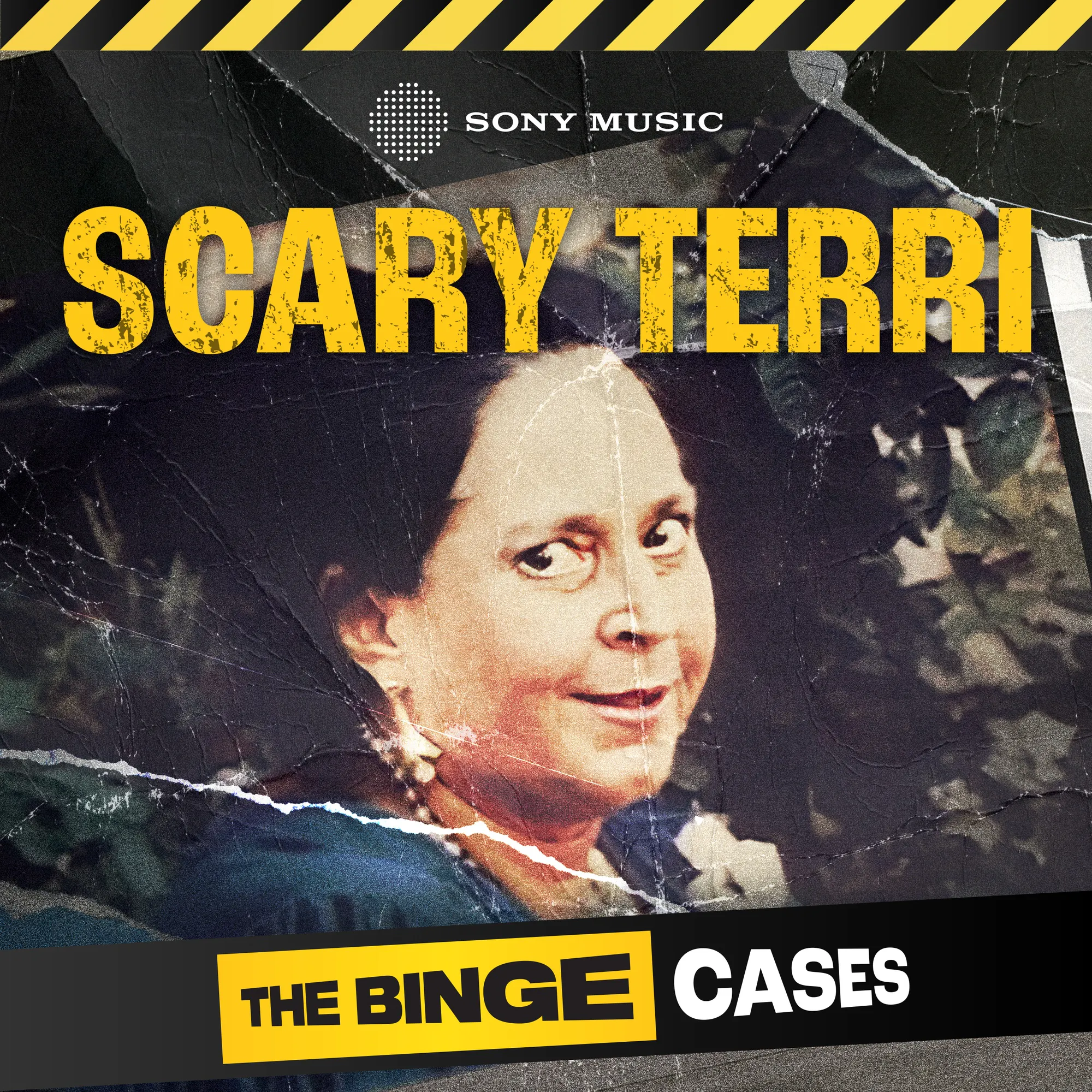
Loading summary
Transcript139 lines
- [00:00]
Jonathan Hirsch
This episode is brought to you by NordVPN. This season you can give the gift of one tap protection from hackers, trackers and prying eyes across all your devices. NordVPN offers a powerful but easy way to protect your online privacy and access content without restrictions. A virtual private network or VPN is a service that protects your Internet connection and privacy online. VPNs create an encrypted tunnel for your data, protect your online identity and allow you to use public WI fi hotspots safely. I find it perfect to watch my favorite thrillers. I love catching a Nordic Noir to use my devices safely when I'm traveling and to find the best online deals. I love being able to unlock films and global content with a single click by switching my virtual location in 111 countries. And it's the fastest VPN on the market with no annoying buffering. NordVPN A must have holiday safeguard offering privacy, freedom and total control over your online experience. No mysteries or loose ends. I get enough of those in my Scandinavian thrillers. Unwrap a huge holiday discount on NordVPN by heading to nordvpn.com thebinge plus with our link you'll get an extra four months free on the two year plan and it's risk free with Nord's 30 day money back guarantee. Check the link in the description you're listening to the season finale of Scary Terry. But if you want more heart pounding true crime stories, there's tons waiting for you on the binge channel. And as a subscriber, you can binge them all ad free right now.
- [01:41]
Bob Webster
The binge.
- [01:52]
Jonathan Hirsch
It had been over 15 years of Terry Hoffman being in the spotlight.
- [01:57]
Cecil Emerson
Glenn Cooley overdosed on drugs in 79. Devereaux Cleaver drowned. Sandy Cleaver's car went over a cliff in 1981.
- [02:06]
Jonathan Hirsch
Wrongful death suits wills contested.
- [02:11]
Cecil Emerson
Robin Lynn Otstott, Mary Levinson and Richard Hoffman committed suicide. Jill Bounds was murdered.
- [02:18]
Jonathan Hirsch
Smoke was filling up the room so thick you can't find the handle of the door. But where was the fire? Ever since Gail and Chuck contacted Cecil Emerson, the assistant da, he'd been looking into Terry at this point. Cecil had known about Terri for a decade, since Devereaux's death.
- [02:44]
Cecil Emerson
Can these cults be deadly?
- [02:47]
Jonathan Hirsch
Oh, they're very deadly. But he hadn't brought criminal charges yet. Then new evidence came to light. Cecil found out that Terri Hoffman might be pushing pills on her acolytes and even injecting them with God knows what. In fact, Cecil had some Evidence that Terri was throwing out needles, syringes, countless pill bottles. Her trash even had a suspicious letter postmarked from San Diego. It read, here's your bulk order plus the samples. Number one is a new formula that's slightly more complex and will cost 35 cents more per capsule. It should contain more amphetamine along with a balancer to mitigate side effects. Number two is the basic E formula without the final purification step to remove all amphetamines. E here, I think, is safe to say, is ecstasy. The white pills, the drug that was found in Don's system. Terry was no doctor. Why was she buying amphetamines if she was giving her followers drugs? Then maybe Cecil could go after her for a new charge. A local TV station interviewed him in February of 1990. This is nearly a year and a half after Don Hoffman overdosed and left behind that harrowing video. And three months after the Goodmans took their lives and were found decomposing.
- [04:36]
Cecil Emerson
Cecil Emerson heads up the DA's investigation of Hoffman. Says he believes she is practicing medicine without a license. And that can be dangerous.
- [04:44]
Jonathan Hirsch
Would you want a tree surgeon doing open heart surgery on you? Is the way I look at it. So Cecil's investigation pivoted to trying to get Terry for giving pills. This is when the DA finally admitted on record that they were pursuing a criminal investigation. But then multiple people told me, just before the grand jury hearing was to be held, Terry's case was pulled from the docket. The criminal case against Terry seemed to be a lost cause. It was deeply disappointing for victims families who had, in some cases, been waiting 15 years for justice. Some even questioned whether Terry had influential followers within the Justice Department or politics who might have been able to summarily quash any trial. But Terry wasn't out of the water yet. After she filed for bankruptcy, the IRS and FBI launched an investigation into her. This would be the final showdown.
- [06:05]
Jerry Melton
These shark eyes, those cold, dark eyes.
- [06:10]
Jonathan Hirsch
The most sophisticated sociopath I've ever observed. Her love of money. It just was so evil.
- [06:18]
Jerry Melton
She wasn't accustomed to anyone saying no to her.
- [06:22]
Cecil Emerson
I kind of pulled on a thread.
- [06:23]
Jonathan Hirsch
And the sweater came undone.
- [06:26]
Cecil Emerson
They're saying that I wanted her to die and I hypnotized her and got.
- [06:31]
Jonathan Hirsch
Her to die and all this bullshit stuff. Why do you think it was so difficult to tie Terry to these deaths?
- [06:40]
Cecil Emerson
Because there's no smoking gun.
- [06:45]
Jonathan Hirsch
From Sony Music Entertainment. This is scary. Terry. I'm Jonathan Hirsch. Chapter six. I need some Money, Honey. Hello? It is Ryan. And I was on a flight the other day, playing one of my favorite social spin slot games on jumbaccasino.com I looked over the person sitting next to me and you know what they were doing. They were also playing Chumba Casino. Everybody's loving having fun with it. Chumba Casino's home to hundreds of casino style games that you can play for free anytime, anywhere. So sign up now@chumbacasino.com to claim your free welcome bonus. That's chumbacasino.com and live the Chumba life. Sponsored by Chumba Casino. No purchase necessary VGW Group void where prohibited by law. 18/ terms and conditions apply. What was the last thing that filled you with wonder that took you away from your desk or your car in traffic or your sink full of dishes? As an actor, it's very free being part of these shows. You can step in the booth and kind of be anything. Well, for us, and I'm gonna guess for some of you, that thing is anime. Hi, I'm Nick Friedman. I'm Lealec Murray. And I'm Leah, President. And welcome to Crunchyroll Presents. The Anime Effect. It's a weekly news show.
- [08:02]
Cecil Emerson
I literally, when I saw it, when.
- [08:04]
Jonathan Hirsch
I found out about this, I literally had like a nervous breakdown in a.
- [08:10]
Jerry Melton
Good way, with the best celebrity guest.
- [08:12]
Jonathan Hirsch
I've never pirated anything, but I'll steal it if I have to. That was how I felt when I started to get really hooked on Black Butler. Oh, it's coming back. It's coming back. So join us every Friday wherever you get your podcasts and watch full video episodes on Crunchyroll or on the Crunchyroll YouTube channel. When Terry filed for bankruptcy, she did so amid a snowball of legal issues that went back several years. Don hoffman died in September 1988. A wrongful death suit was filed. The Goodmans died in 89. Another wrongful death. And two years later, by October of 1991, Terry had filed for bankruptcy. This was not a normal bankruptcy case. And these were not normal creditors because it wasn't just MasterCard or a mortgage company that wanted their money back. It was the victim's families.
- [09:18]
Cecil Emerson
How many items have been sold? I have sold.
- [09:26]
Jonathan Hirsch
The auto bond Audubon Prince.
- [09:29]
Jim Barklo
And what amount did you derive from those sales?
- [09:35]
Cecil Emerson
$65,000.
- [09:38]
Jonathan Hirsch
This is Jim Barklo, the lawyer who helped Sandra's brother contest her will. At one of these creditor meetings, Jim Barklo asked who she sold the autobonds to. The sale happened on the last day of 1990, just months before she filed for bankruptcy.
- [09:58]
Cecil Emerson
Good Gentleman named Roger Simon.
- [10:02]
Jonathan Hirsch
A gentleman named Roger Simon.
- [10:06]
Jim Barklo
That Roger Simon had stayed with you during the Christmas holidays of this year.
- [10:10]
Jonathan Hirsch
You mean the guy you spent Christmas with this year?
- [10:13]
Cecil Emerson
Yes.
- [10:15]
Jim Barklo
What type of business is Mr. Simon in?
- [10:19]
Cecil Emerson
Nutritional sales.
- [10:22]
Jonathan Hirsch
Nutritional sales? Pharmaceutical?
- [10:26]
Cecil Emerson
No, nutrition, like vitamins.
- [10:30]
Jonathan Hirsch
Ah. Herbs. Quite a lucrative business, I gotta say. These herbs, enough to buy a couple of pieces of land in Colorado and a bunch of very expensive artwork. It seems too convenient that her boyfriend had that kind of money, like, lying around. It does seem like another simpler answer is possible. Maybe Terry wasn't that bright when it came to money. She collected things, people and cash, the way she collected junk in her house. Cravenly and indiscriminately. As the meeting progressed, you can hear Terry becoming increasingly agitated.
- [11:14]
Jim Barklo
So are you familiar with that account? It's in your name.
- [11:19]
Cecil Emerson
Uh, yes.
- [11:21]
Jim Barklo
That account is not listed in your schedules.
- [11:24]
Jonathan Hirsch
The account he's talking about was opened in 1988, the year before the Goodmans died. The same couple who donated more than 100k to Terry before they died. The checks were written to cash and had been addressed to David and Glenda Goodman. Jim Barklow wanted an explanation.
- [11:44]
Cecil Emerson
I had David and Glenda Goodman put this in an account for me. I wrote the checks to David and Glenda Goodman. They cashed them, and they gave me the cash and I gave it to my husband.
- [12:01]
Jonathan Hirsch
Why not just make a withdrawal from your own account? Unless the plan was to hide the flow of money for some reason.
- [12:08]
Jim Barklo
This will show and demonstrate the debtors ability and knowledge of how to manipulate bank accounts, transactions through bank accounts without showing the money being directed to the source that it was supposed to be directed.
- [12:25]
Jonathan Hirsch
You can hear Terry scoff on tape when Jim said this. He believed she knew how to hide assets, that she was capable of it, despite the way she made it seem.
- [12:37]
Cecil Emerson
Maybe my mind is too.
- [12:40]
Jim Barklo
Ms. Hoffman, why did you write the checks to the Goodmans if the cash was supposed to go to Don Hoffman?
- [12:51]
Cecil Emerson
Because I borrowed the money from David and Glenda Goodman. And my husband lost, came to me and said, quote, I need some money, honey.
- [13:06]
Jonathan Hirsch
Don had asked for the money in cash and the Goodmans had offered to cash the check. Easy, right?
- [13:13]
Jim Barklo
Can you not go to the bank and ask for a cashier's check or cash?
- [13:17]
Cecil Emerson
Yes, I could.
- [13:18]
Jim Barklo
Would you tell me why you didn't?
- [13:20]
Cecil Emerson
Because David and Glenda offered to do it, and I did it.
- [13:24]
Jim Barklo
All right, let me ask you.
- [13:26]
Cecil Emerson
And I was to say the rest of it, I think later. This is exactly the money that my husband gave his children that they won't admit to.
- [13:36]
Jim Barklo
Let me ask you why those amounts? You'll notice the amounts are in less than 10,000 each.
- [13:42]
Cecil Emerson
I wish Don Hoffman was here to answer that question.
- [13:46]
Jim Barklo
I'm sure they join you in that, Mrs. Hoffman.
- [13:54]
Jonathan Hirsch
Terry seemed to be accusing Don Hoffman of grifting her. If anything, these creditor meetings were a red flag. Another indicator that Terry Hoffman needed to be stopped. That's how an FBI field agent by the name of Jerry Melton got a visit to his office in Dallas.
- [14:14]
Jerry Melton
This middle aged couple walks in and it's Chuck and Gail Cleaver.
- [14:20]
Jonathan Hirsch
They'd never given up hope in finding justice for their daughter, Devereaux.
- [14:26]
Jerry Melton
And they start telling me this story about this Terri Lee Hoffman. And I'm listening to it and I'm going, well, this is interesting. She wanted to avoid those lawsuits. And so allegedly she filed bankruptcy to do that. So I look at that and I go, all right, well, she's getting a lot of insurance policies and been left a lot of stuff in wheels. She's probably got a lot of cash or other things or jewelry and so on. What happened to all those assets?
- [14:59]
Jonathan Hirsch
Some of the ways an FBI agent might investigate a case like this weren't exactly possible in Terry's situation. Her exes, at least the ones involved in the group, two of them were dead. And the people close to her, they didn't want to talk to the FBI. The cult like nature of the group sort of prohibited that kind of shoe leather investigation. And so Jerry had to resort to what's known as trash covers.
- [15:29]
Jerry Melton
That's an old, tried and true method. It is legal for law enforcement to dig through your trash if you've left it out by the side of the road and because it's considered abandoned property by the courts.
- [15:43]
Jonathan Hirsch
But in Terry's case, this also became an issue. The story was white hot in the press, and Terry's close circle knew it. Victims families had also come looking for clues in Terry's trash.
- [15:56]
Jerry Melton
They had already picked up on the fact that the families of the people who had died were already looking through her trash. So I think what they were probably doing is she burn it or have a follower take it off somewhere.
- [16:10]
Jonathan Hirsch
And to get a warrant either to raid safety deposit boxes or her home, they would need probable cause. The FBI can't just storm your house because they believe you're buying jewelry in cash and hiding it to protect your wealth. They need proof.
- [16:26]
Jerry Melton
One of the issues is, and I think this probably happened, I would definitely think somebody in this situation would do this, they'd take a lot of that and they would hock a lot of it, sell it just for cash, convert it, and then literally, maybe even give a shoebox of money to a follower and say, keep this in your closet kind of thing. There's a saying we have, and it probably applies in a lot of areas in the south and Midwest, is called poor mouthing. People always talk about how bad they got it. You know, they don't want it, seem ostentatious or whatever. And Hoffman seemed to poor mouth a lot when this was going on.
- [17:08]
Jonathan Hirsch
This is part of what made the financial crimes part of this so puzzling. In public, Terry came across as a bit of a bumpkin. Oversized clothes, a thick, almost turn of the century twang to her voice. She'd roll into court like a Texas tumbleweed. It became part of the defense.
- [17:26]
Jerry Melton
Like I said, she had a very vigorous defense fence.
- [17:29]
Jonathan Hirsch
Terry's defense would have the public believe this was a witch hunt. Authorities had torches in their hand, Shirley Bacchus LaBelle, Terry's counsel, told the Dallas Morning News, and they were leading the townspeople up the hill to burn Frankenstein. The point was to downplay Terry's ability to manipulate anyone, though Frankenstein as a metaphor for your client, it's an interesting choice. Anyway. At the time, Jerry wondered how the supposedly destitute Terry was even paying for her lawyer.
- [18:06]
Jerry Melton
Her followers would write her checks gladly to pay for her defense. So it could have come from there, but a lot of it had to come from somewhere else. I saw these people who had died, and there were life insurance policies and wills and so on, but they were spread out over enough time that she would have had the opportunity to hide that money, to convert it into cash or gold or whatever you wanted to. You tried to convert it into something. And that's what I believe probably happened.
- [18:37]
Jonathan Hirsch
So, in short, Terri either bought assets, jewelry, property, et cetera, through her followers in a way that would never be traced back to her, or she bought a bunch of stuff and sold it for cash and stuffed it away in a mattress, like my Hungarian grandma used to do.
- [18:53]
Jerry Melton
And there were a lot of dead ends because one of the things that happened, as I recall, she kept going back and amending her bankruptcy schedules because normally once you file, you file, and that's it. The bankruptcy moves forward.
- [19:08]
Jonathan Hirsch
Things just kept popping up. Property, assets that she forgot to mention, little bits and pieces of things that she'd have to share in. Jerry said they were in a hurry to pin her with an indictment, though he thinks as a result, they didn't have enough time to build an airtight case.
- [19:26]
Jerry Melton
And the problem is when you try to rush into cases, there's only so much you can do. I was actually set to. I had it approved and everything. I was going to travel to the island of Montserrat in the Caribbean. Hoffman had a. It was her boyfriend or fiance at the time or something like that that was in med school down there.
- [19:51]
Jonathan Hirsch
Roger Simon. Terry had started dating him after Don Hoffman's death. He was from the Chicago area originally and had been involved in CDBMS for some time. Before that, he'd gone to medical school in the West Indies.
- [20:06]
Jerry Melton
We believed that she had transferred a lot of stuff to him, the law of the property. So I wanted to go interview him and we're going to subpoena him to the grand jury because the loyalty does go a long way. But when you're sitting in front of a grand jury or in court and that that willingness to lie for someone suddenly starts dissipating pretty quickly. And so I was literally going to fly to Miami, fly from there to Antigua and take a Montserrat and interview the guy.
- [20:41]
Jonathan Hirsch
Before he left for med school, Roger had given a power of attorney over to Terry. This allowed her to access his bank accounts. The argument was that Roger needed help paying his bills, his mortgage while overseas, and so he gave that ability to Terry. But it could have also been an easy way to launder money for her. Whatever cash she'd held onto could be used by him, and no one would be the wiser. Jerry planned to subpoena Roger Simon and to escort him back to Dallas. But the grand jury date approached too quickly. They wouldn't have enough time. Throughout the bankruptcy proceedings, there was this uneasy tension between the laws Terry actually ran afoul of and the larger manipulation that families wish to hold her accountable for. Do you swear that the testimony you're.
- [21:36]
Cecil Emerson
About to give should be the truth of the truth and the thing that's true? Yes.
- [21:40]
Jim Barklo
This is in cause number 391-38177, SAF 13A, Chapter 13 bankruptcy. Are you Terry Lee Hoffman, the debtor in this matter?
- [21:54]
Cecil Emerson
Yes.
- [21:58]
Jonathan Hirsch
In late summer of 1992, Terri was deposed. She's sobbing at the beginning, as her counsel explained that Terry was on medication, that the stress of this case might have pushed her over the edge. Quite the irony there. She invoked the Fifth Amendment.
- [22:18]
Jim Barklo
Do the teachings of conscious development, Body, Mind and Soul, Inc. Include teachings that are known as the Magic Circle?
- [22:28]
Cecil Emerson
I invoke the Fifth Amendment.
- [22:30]
Jim Barklo
The Magic Circle. Documentation indicates that it was copyrighted in 1970 by Terry Cooley. Is Terry Cooley. Are you Terry Cooley Hoffman?
- [22:41]
Cecil Emerson
I invoke the Fifth Amendment.
- [22:43]
Jim Barklo
This object here, can you tell me how that's used in your teaching?
- [22:47]
Cecil Emerson
I invoke the.
- [22:48]
Jim Barklo
Is this a shield?
- [22:49]
Cecil Emerson
I invoke the Fifth Amendment.
- [22:50]
Jim Barklo
Is that included in the teachings of the Magic Circle?
- [22:52]
Cecil Emerson
I invoke the Fifth Amendment. I invoke the Fifth Amendment.
- [22:55]
Jim Barklo
Are those your teachings?
- [22:57]
Cecil Emerson
I invoke the Fifth Amendment.
- [22:58]
Jim Barklo
Are you Charlie Hoffman?
- [22:59]
Cecil Emerson
I invoke the Fifth Amendment. I invoke The Fifth Amendment.
- [23:05]
Jonathan Hirsch
This lasted for 45 minutes. In the winter of 1993, Terry Lee Hoffman was indicted on bankruptcy fraud charges.
- [23:19]
Jerry Melton
So I drive over there and we. And then eventually we got it. And that's it. And so an arrest warrant is issued, but she actually surrendered herself.
- [23:29]
Jonathan Hirsch
It was one of the most bizarre bankruptcy fraud cases anyone I'd talked to had ever heard of. But it was also a case of ones and zeros. Did she have cash stored away here? Did she not claim property there? This would be the victim's family's last hope at finding justice. Their last chance to stop the manipulation, the grift, the senseless deaths needed to end. Hello, it's your beauty and wellness BFFs, and we're here to answer all your burning questions. Skincare, makeup, parenting, and more. We have got you covered. Oh, yes, we do. We'll speak with industry insiders, celebrities, and our close friends and give all our honest and unfiltered thoughts. Always listen to Lipstick on the Rim now on Apple or wherever you get your podcasts. Infamous is celebrity gossip, but smart. It takes you deep into the stories that we just can't stop ourselves from following, from who Meghan Markle really is. Apparently, ambition is a terrible, terrible thing. To the scandal at Lululemon. You've got this man saying that his yoga pants don't work for women because they're too fat to wear em. We've got over 100 episodes. Ready for your binging pleasure. Listen to Infamous, the gossip show. That's smart. Bob Webster was a Prosecutor at the U.S. attorney's Office when the bankruptcy fraud indictments came down against Terry.
- [25:10]
Bob Webster
I think I first learned of it in the newspaper. And then I came to learn that we had an open investigation on Terry Hoffman involving some shenanigans in the bankruptcy court.
- [25:22]
Jonathan Hirsch
A bankruptcy investigation, no doubt thrust into the view of the federal government by the cleavers.
- [25:31]
Bob Webster
You know, the cleavers were very, very active. They took a very aggressive role to try and seek justice.
- [25:42]
Jonathan Hirsch
Bob was brought on after the indictment to support the lead prosecutor in the case, Larry Jarrett.
- [25:48]
Bob Webster
I, of course, knew that there was a lot of smoke, there was background, there was noise associated with the defendant that undoubtedly was most motivating the government.
- [26:02]
Jonathan Hirsch
The smoke Bob's talking about is that same smoke the reporters had been seeing. The drama of Terry's dark opera wasn't lost on them.
- [26:12]
Bob Webster
You know, we were not prosecuting a cult. We were not prosecuting evil. We were prosecuting somebody that we believe defrauded the bankruptcy court.
- [26:23]
Jonathan Hirsch
And so the bankruptcy case against Terry Hoffman raises the same fundamental questions about all of the financial crimes allegations against her. Was she a criminal mastermind or a profoundly incompetent person or both?
- [26:39]
Bob Webster
I can't tell you which end of the spectrum that is. I think it, you know, I drove by her house every day that I drove home and, you know, it looked like it had needed a new roof for the last 10 years. Lawnscaping was ill kept. I struggled with exactly that kind of attempt to get an understanding of what sort of defendant she was or would be. It's not unusual in my experience for FBI agents and government prosecutors to give more credit to defendants than they deserve. You know, in being masterminds, in being evil, you know, quite often they are just sad figures.
- [27:28]
Jonathan Hirsch
Terry had certainly hired some of the best in class attorneys to represent her in the many cases levied against her. Her bankruptcy attorney, Jim Palmer, was quite well known around town at the time. In fact, he himself had been in the federal government's crosshairs for, get this, bankruptcy fraud. He was ultimately acquitted. It was going to be a tough road to conviction. In fact, a couple of weeks before the trial, the prosecutors had to adjust their indictments against Terry because they no longer had enough evidence. Not a great sign.
- [28:02]
Bob Webster
There were essentially three indictments in the case. You know, I think an expert in federal criminal prosecutions would say that that's a, that's a red flag.
- [28:18]
Jonathan Hirsch
The trial took place over six days in November of 1993.
- [28:22]
Bob Webster
We didn't even try hard to even go down the road of having the noise. The mumbo jumbo admitted at trial she didn't take the stand, so we couldn't even inquire.
- [28:34]
Jonathan Hirsch
Despite the narrow terms of the indictment, the court decided that Terri Lee Hoffman was guilty. Terry G. Was going to Terry jail. She appealed the case, requested bond while on appeal, which was denied. Terry would wait the results of her appeal from behind bars. It took about a year for the appeal to make its way to the fifth Circuit. Meanwhile, Terry was finally out of the hair of the families that had fought so long to see her pay. It wasn't everything, but it was something. And something, as they say, is better than nothing. That is, as long as it stands. Which, sadly for the families, wasn't very long.
- [29:30]
Bob Webster
You know, it's a singular event, almost a singular event to have a criminal case thrown out by the Court of Appeals in the 5th Circuit. You remember every one of those that you ever had to suffer. And honestly, it's the only case that I was ever in that resulted in a complete dismissal of the case for, you know, essentially the government not stating a crime.
- [30:02]
Jonathan Hirsch
The very last effort at bringing Terry to justice. Twelve inexplicable deaths, a messy pile of lawsuits and tomes of breadcrumbs in a fragmented case against the clever enigma of Terry Hoffman. Conscious development yielded nothing. Devereaux Cleaver, the bright and beautiful girl with a whole life ahead of her. The troubled lives of Sandra Cleaver, Glenn Cooley, Don Hoffman, Mary Levinson, Robin Otsdott, Glenda and David Goodman place markers in a path of scorched and deadly earth. Terry Hoffman was released from prison in 1995. She changed her name to Terry Lilia Keenly. She never made news after that. She started a website where she sold photographs, quite dreadful ones, if you ask me. They look more like accidents than art. She remarried and lived out the rest of her life in relative obscurity in that house on Dunhaven Road. And then on October 31, 2015, Terri Hoffman died Halloween night. You can't make this stuff up. And her passing didn't do anything to resolve the many questions that remained unanswered.
- [31:37]
Jim Barklo
You fear death at the moment.
- [31:40]
Cecil Emerson
Now watch out. I feel that my spirit lives on.
- [31:45]
Jonathan Hirsch
Was this really the end of the road? This story for me begins and ends with Gail. She's why I did it in the first place, her love for her stepdaughter and her now deceased husband. She carried the torch all these years, and she deserved to have her family's story told. Hi, Gail. Nice to meet you.
- [32:21]
Cecil Emerson
So nice to meet you too.
- [32:23]
Jonathan Hirsch
Yeah. After all of our conversations.
- [32:25]
Cecil Emerson
Absolutely.
- [32:27]
Jonathan Hirsch
Wow. Thank you. We drive around the neighborhood in North Dallas, where she still lives, not far from Sandra Cleaver's old house and Terry's. But first, we've got an important visit to make. We're here at the Sparkman Hillcrest Cemetery in Dallas, which is the place where Devereaux and Chuck are laid to rest in a mausoleum here at the cemetery. So Gail and I are going to walk along over there and take a look and talk. What. What would you hope for? The telling of the story of.
- [33:16]
Cecil Emerson
To save your kids, any child's life, any. Any person's life from spiritual deception. And that's what it was. It was spiritual deception and plain evil. Plain evil and greed. Telling this story will be closure for me because if it impacts and saves anybody from that kind of evil, it'll be good enough for me.
- [33:47]
Jonathan Hirsch
We walk through the empty halls of the mausoleum at Sparkman Hillcrest, looking for the cabinet on a high shelf where Devereaux and her daddy were interred together. I've come to believe there's really only one black lord in this cautionary tale. A remorseless grifter turned body snatcher. Even in death, they seek respite from her influence. Chuck told Gail he wanted his and Dev's ashes resting on the highest rung of the mausoleum so nobody could get to them, so nobody could take Deb's ashes like some kind of sick trophy. We're approaching Sandra Cleaver's home. My God, these houses. These are like estates.
- [34:37]
Cecil Emerson
This is it.
- [34:38]
Jonathan Hirsch
And when you see this house, what emotions does this house evoke for you?
- [34:45]
Cecil Emerson
I wish it were gone.
- [34:48]
Jonathan Hirsch
Does it make you sad or angry? Maybe?
- [34:54]
Cecil Emerson
Angry. Oh. Terry wanted this house.
- [34:58]
Jonathan Hirsch
We keep driving, so we're sitting in front of the house, and unlike all the houses that surround it, the. The lawn is overgrown, it's messy. There's a bunch of old outdoor ceramic pots and artwork. There's broken rattan furniture in the front yard. There's a part of me that really wants to go inside, but. But of course, this is an open carry state. I'm not about to go doorsteping somebody and risk my life. But I will say that in an area of immense wealth and resource, this house sticks out like a sore thumb. Anything you feel when you come here, I'm disgusted. It looks like an abandoned house. Like, I don't even know if anybody lives there. Want to drive down the alley? Yes. Which way do I go?
- [36:16]
Cecil Emerson
It's that way.
- [36:17]
Jonathan Hirsch
It's right behind her. Okay. And this, of course, is the ALLEY where maybe 30 some odd years ago, y'all would have been scoping out the house, trying to see what was going on inside. Yeah, pretty much. As we bounced down the dirt road behind the house, gazing through the cracks in the fence, I saw broken chairs and a shed in the backyard. And I saw us gazing through the dark looking glass of Terry's deeds. It's been nearly half a century since Devereaux died. And what is different? Quite a bit, actually. Terri's origin story, we've proved, is about as factually accurate as the mythical biographies of the spiritual teachers she venerated. She preyed upon Vulcan, vulnerable, marginal people. She seduced them with a carefully designed nurturance. And when they were no longer useful to her, all she needed to do was gently encourage them to cross over that invisible line separating life and death. A line she'd primed them to unsee. And we know now that Terry was painting Devereaux as a troubled soul possessed by the Black Lords. In fact, she was the target of one of the infamous Black Lord battles. The ones that happened in the living room of her mom, Sandra Cleaver. And multiple sources confirmed that the plan was for Devereaux and Sandra to die that day out on the rocks of the Huilupe Peninsula. Terri may have guarded against criminal prosecution, but we know the truth. She didn't pull the trigger, but she did pull the strings. A horrific and unforgivable series of crimes that she deserves to go down in infamy for. There is one last piece we should discuss. The money and the possibility that someone, a man, had been helping Terry stash away money for years. There's been no evidence proven in a court of law that Terri's bankruptcy was a long con to get out of the two wrongful death suits she no doubt stood to lose everything in. But there is something that came up when. When I started looking into this. A name I heard time and time again. Roger Simon. Roger Simon. Roger Simon.
- [39:15]
Jim Barklo
Roger Simon.
- [39:17]
Jonathan Hirsch
Was he the man behind the woman? We first hear about Roger Simon in the 80s, when Terry expanded her reach to a small community of CDBMS followers in the Chicago Evanston area. He had a house there and according to followers at the time, was an herbalist. On December 31, 1990, Roger Simon makes a major payment to Terry. He buys up 65k in Audubon prints from her prints she'd gotten in the settlement over Sandra Cleaver's estate. This was, mind you, two years after Don Hoffman's death. And in each relationship we know of with Terry, she began seeing somebody almost simultaneous to the deaths of her spouses. Then, in the early 90s, Roger decided to go to medical school in Montserrat in the West Indies. And before he did, he gave over power of attorney of his accounts to Terry Hoffman to pay his bills while he was out of town. That was all fine until she started writing checks out of his accounts. The body count rose and the wrongful death Suits poured in. She filed for bankruptcy Oct. 91. She filed the paperwork. Roger also, according to Jim Barklow during the creditors hearings, threw down 20 grand to purchase land Terry owned in Colorado. The power of attorney issue underpinned one of the charges against Terry by the federal government. She had not disclosed that she controlled that account. Ultimately, the government determined in the reversal of her conviction that she hadn't intended to withhold information from creditors about her access to Simon's accounts. She just didn't put two and two together as far as most people are concerned. This is where the matter of Roger Simon and Terry Hoffman petered out. Terry was released from prison in 1995. This is where most left off and where we picked up. It's unclear from the records we have whether Roger ever completed medical school, though he lists himself as having a medical career degree. We do know, however, that he returned to the states, to Texas, in fact, Dallas. And this is where things start to get a little weird. In 2002, long after the dust settled on the bankruptcy fraud case, Roger Simon decided to change his name to Roger Keenly. Six. Six months after that, Roger Keenly gets married. The address on the marriage paperwork, the house on Dunhaven, Terry's house, and his bride, Terry Lee Hoffman. Or I should say, Terry Lilia Keenly. So now the man who bought up her assets to the equivalent of nearly $200,000 today, whom Terry was accused of unlawfully using his accounts by not disclosing that information to creditors, he was married to her under a different name. His property was now hers, too. And, of course, should anyone come knocking, you needn't worry about testifying against your spouse. I wrote Roger. I called asking for comment. He never responded. So I can't say for certain as to why he changed his name, whether he'd been holding property in funds that Terry wished to shield from her creditors and detractors. But multiple experts on financial crimes, including Bob Webster, told me that if the goal had been to park Terry's cash and assets, marrying someone in possession of those assets, cash, property, etcetera, would be an easy way to do it. And, of course, changing one's name further obscures the chain of events.
- [43:44]
Bob Webster
I don't recall the specific circumstances of Roger Simon's participation in the case, but if. If she was parking assets, knowing that if they cleared bankruptcy, she was going to be able to get to him on the rebound after the bankruptcy, he would be complicit, of course, in a bankruptcy fraud. I don't think we ever explored that possibility.
- [44:10]
Jonathan Hirsch
When I told the former investigator in the case about Roger's name change. They instantly raised the same question I had. Was Mr. Simon the Strawman after all? I had one last stop in Dallas before my flight home. A bar near where Jeanine Snyder first met Terry in the early seventies called Louie's Tavern. It used to be a haunt for Secret Service and FBI guys back when the Dallas headquarters were located downtown. The Oklahoma City bombing changed all that. I'm here to meet Jerry Melton, the FBI field agent who first investigated Terry for financial crimes. He shows me these portrait sketches made by a regular owner. The walls, many of them legendary figures in Dallas law enforcement. He brought along a buddy with him, an old colleague from the FBI. He's a private investigator now. The bar is known for its pizza and martinis. He points to the booth where the FBI guys used to sit back in the day. I lay out my case for them, the questions I could spend the night next decade trying to answer with certainty, and they mostly wave it off. You just gotta tell the story, you know, they said, and then let it go. It was getting late. I said good night and good luck to Jerry and his friend, then exited the bar into the hot Texas night. Scary Terry is an original production of Sony Music Entertainment. It was hosted and reported by me, Jonathan Hirsch. Cooper Maul is our lead producer and co reported the series with me. Catherine St. Louis is our story editor. I'm our executive producer. Sound design and mixing by Scott Somerville. We use music from Epidemic Sound and apm. Our associate producer is Zoe Kulkin. Our fact checker is Tracy Lee. Our production managers are Tameka Balance Kolasny and Sammy Allison. Our lawyers are Rachel Goldberg, Allison Sherry and Lauren Pagoni. Special thanks to Steve Ackerman, Emily Rossick, Jamie Myers, Liz Taylor, Daniel Raulston, Alex Pennebaker, George Rodrigue and Peter Elkin, whose reporting for the Texas Monthly is an essential piece of the story of Terry Hoffman.