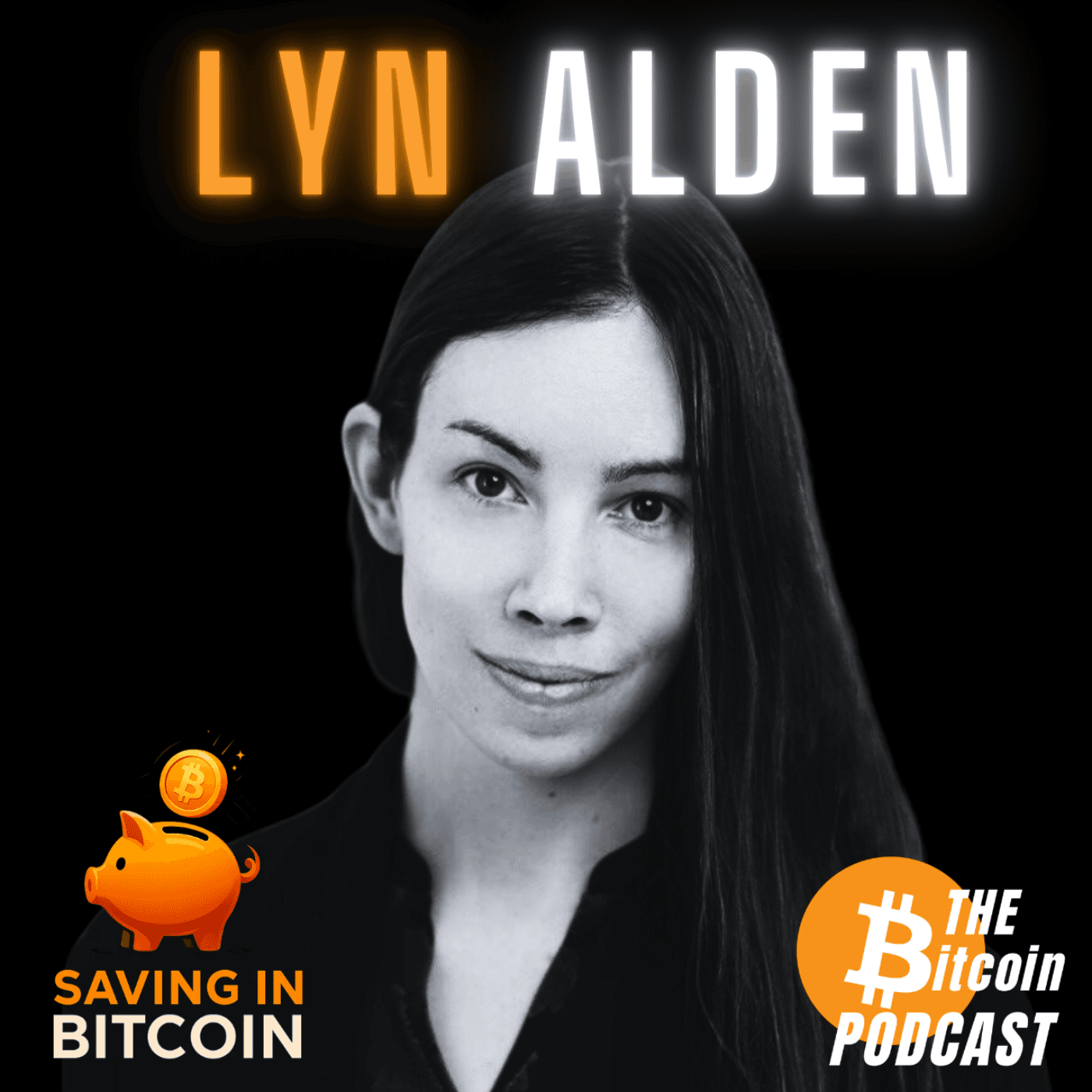
THE Bitcoin Podcast: Saving in Bitcoin Ep. 2 with Lyn Alden
Episode Title: BROKEN MONEY, FIAT INFLATION VS SOUND MONEY DEFLATION, & GETTING OFF ZERO BITCOIN
Release Date: April 11, 2025
Host: Walker America
Guest: Lyn Alden, Independent Investment and Macroeconomic Analyst, Author of Broken Money, and General Partner at Ego Death Capital
1. Introduction
In the second episode of the limited six-episode series titled "Saving in Bitcoin" on THE Bitcoin Podcast, host Walker America sits down with esteemed economist Lyn Alden. The discussion revolves around the fundamental issues plaguing the current monetary system, the impact of fiat inflation, the concept of sound money, and how Bitcoin emerges as a viable solution for financial freedom.
2. Understanding the Problem: Broken Money
Lyn Alden begins by framing the monetary system's flaws as a primarily technological issue. She emphasizes that the misalignment between transaction speeds and settlement speeds has historically necessitated centralized ledgers, which are vulnerable to manipulation and loss of trust.
- Technological Mismatch:
Alden breaks down financial history into three eras:
- Pre-Telegraph Era: Characterized by analog monetary technologies like coinage and the printing press, facilitating physical transactions.
- Telegraph Era (1830s-1860s): Introduction of telegraphs and cross-continental cables enabled near-instantaneous transactions globally. However, settlement remained physical (e.g., gold), creating a significant mismatch.
- Bitcoin Era: Bitcoin bridges this gap by introducing fast settlements that align with transaction speeds, eliminating the need for centralized ledgers.
Quote:
"Money's been broken, it's partially because of individuals making decisions... the structural underlying problem... is because we've lived through this technological mismatch."
— [02:58] Lyn Alden
Alden argues that the rapid technological advancements outpaced the settlement mechanisms, leading to a system that inherently favors central authorities and is prone to corruption and inefficiencies.
3. Inflation and Its Impact on Everyday Life
The conversation shifts to inflation, particularly how the modern fiat system facilitates sustained price increases due to unchecked money supply growth.
-
Definition of Inflation:
Alden distinguishes between structural inflation (caused by sustained money supply growth) and temporary price inflation (resulting from specific events like wars or shortages).
-
Impact on Consumer Prices vs. Asset Prices:
- Consumer Prices: Persistent increase in overall price levels, forcing individuals to seek higher wages to keep up.
- Asset Prices: Inflation also inflates asset values like housing and equities, creating barriers for new entrants and exacerbating wealth inequality.
Quote:
"Structural inflation, the underlying cause, is growth in the money supply on a sustained basis... That has to be because the money supply itself is also growing."
— [07:17] Lyn Alden
Alden explains how categories like healthcare and real estate experience higher inflation rates compared to areas like electronics, which may still benefit from productivity-driven deflation.
4. Structural Causes of Wealth Inequality
Alden delves into the Cantillon Effect, where those closest to the money creation process benefit the most from a growing money supply.
Quote:
"The closer you are to the source of money creation, generally the more you benefit from this perpetually expanding money supply system."
— [18:32] Lyn Alden
Alden emphasizes that the system inherently favors those with established wealth and influence, making upward mobility increasingly challenging for the broader population.
5. National Debt and Monetary Policy
The discussion turns to the persistent growth of national debt and its implications for everyday citizens.
Quote:
"Persistence fiat debasement is kind of that memory leak in the system."
— [33:12] Lyn Alden
Alden warns that continual monetary debasement erodes trust in the financial system and exacerbates economic inequalities, ultimately threatening societal stability.
6. Bitcoin as a Solution
The crux of the episode focuses on Bitcoin as a potential remedy to the flawed fiat system.
- Bitcoin as a Savings Tool vs. Speculative Asset:
- Emerging Store of Value: Alden classifies Bitcoin as an emerging savings technology rather than a traditional hedge. Its fixed supply contrasts with fiat currencies' inflationary nature.
- Risk Management: While Bitcoin exhibits volatility, its long-term potential as a deflationary asset can protect against fiat currency debasement.
Quote:
"I think it's the best tool that's available. I don't think it's a silver bullet for every single thing."
— [36:57] Lyn Alden
- Investment Strategy:
- Getting Started: Alden recommends starting with a modest investment to "get off zero," gradually increasing exposure as understanding and comfort with Bitcoin grow.
- Education and Self-Custody: Emphasizes the importance of self-education and moving Bitcoin to personal custody to enhance security.
Quote:
"The more someone is knowledgeable about Bitcoin, the larger share of the net worth it ends up being."
— [47:58] Lyn Alden
- Bitcoin's Resilience and Future:
- Technological Robustness: Similar to enduring communication protocols like Ethernet, Bitcoin's design ensures its persistence and adaptability.
- Market Potential: With Bitcoin representing a fraction of global assets, there is significant room for growth, positioning it as a long-term viable store of value.
Quote:
"Bitcoin is the dominant communication protocol for money, and it exhibits very similar dynamics... to those other types of communication systems."
— [55:17] Lyn Alden
7. Practical Steps for Adopting Bitcoin
Alden offers actionable advice for individuals considering integrating Bitcoin into their financial strategies.
- Start Small: Initiate Bitcoin holdings without overextending financially, ensuring comfort with potential volatility.
- Educate Yourself: Invest time in understanding Bitcoin's mechanisms, benefits, and risks through quality resources.
- Gradual Increase: As confidence and knowledge grow, consider increasing Bitcoin exposure proportionate to one's financial situation and risk tolerance.
Quote:
"There's a danger at buying too much that exceeds your conviction level or your volatility tolerance."
— [47:58] Lyn Alden
Alden underscores the importance of a measured approach, advocating for incremental investment aligned with personal financial capacity and informational readiness.
8. Key Takeaways and Final Thoughts
Lyn Alden concludes with two primary insights:
-
Understanding Dilution Rate:
- Recognizing the inherent dilution of fiat currencies due to money supply growth is crucial for effective financial planning.
- Assessing the net dilution rate helps individuals make informed decisions about asset allocation.
-
Bitcoin's Enduring Value:
- Bitcoin's entrenched position as a communication protocol for money ensures its resilience and long-term viability.
- Despite perceptions of being a speculative asset, Bitcoin's foundational strengths position it as a formidable savings tool against fiat currency depreciation.
Final Quote:
"Bitcoin is something like 0.2% of global assets... I think that's worth at least several percentage points of global assets."
— [55:17] Lyn Alden
Alden passionately advocates for Bitcoin as a transformative financial instrument capable of addressing systemic monetary flaws, urging listeners to consider its potential as a cornerstone of their financial strategy.
Conclusion
This episode of THE Bitcoin Podcast provides a comprehensive exploration of the systemic issues within the current fiat monetary system and positions Bitcoin as a strategic solution for individual financial freedom. Lyn Alden's insights offer listeners a nuanced understanding of inflation, wealth inequality, and the structural advantages afforded to elites, all while presenting Bitcoin as a practical tool for mitigating these challenges. The conversation underscores the importance of education, measured investment, and long-term vision in leveraging Bitcoin's potential to safeguard and grow personal wealth in an increasingly flawed financial landscape.