← THE Bitcoin Podcast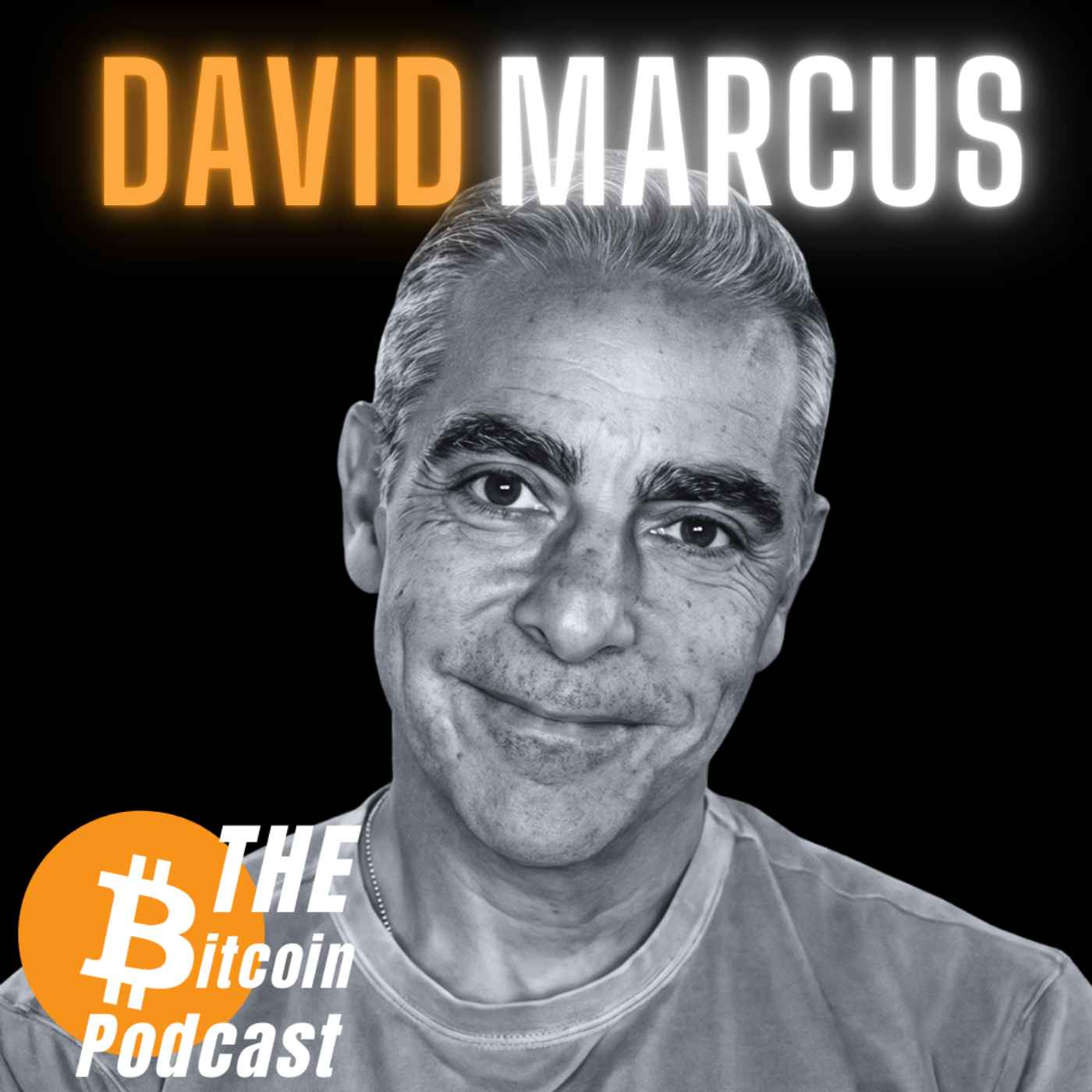
THE Bitcoin Podcast
The Internet of Money: Why Bitcoin Is the Future of Global Value Transfer | David Marcus
01:19:09
Loading summary
Transcript68 lines
- [00:00]
David Marcus
If the Internet could move money natively, would you use anything else? Of course you wouldn't. We were going to actually take over the unit of account that is actually being used by citizens of sovereign countries. Bitcoin was the only network that was neutral and open enough to be around in 100 years as kind of this open network for money, for all of the money in the world. The way we think about ourselves is that the network has no notion of compliance or enforcement. If you think another company is not doing it right, build a better thing. Instead of just complaining on X, just build a better fucking thing. Money is like water. It'll flow in the path of least resistance. Bitcoin is an escape valve to mismanagement of monetary policies and currencies, and the fact that it exists is so valuable. Within the next 10 years, most of the money in the world, most of the global money movement will happen on top of Bitcoin.
- [00:58]
Walker
Greetings and salutations my fellow plebs. My name is Walker and this is the Bitcoin Podcast. Bitcoin continues to make new blocks every 10 minutes and the value of one bitcoin is still one bitcoin. If you are listening to this right now, remember you're still early. This episode is brought to you by Blockware. What if you could lower your tax bill and stack bitcoin at the same time? Well, with blockware you can. New US tax rules let miners write off 100% of their mining hardware in a single year so so earn Bitcoin daily while saving big come tax season. Get started at mining.blockwaresolutions.com Titcoin use the code Titcoin to get $100 off your first miner when using the Blockware marketplace.
- [01:39]
Podcast Host
This is not tax advice so go.
- [01:41]
Walker
Speak to the team at Blockware to Learn more. That's mining.blockwaresolutions.com tcoin Head to the Show Notes for links to find the show on centralized social media platforms and on Nostr. Or just go directly to bitcoin podcast.net you'll find it all there and kind reminder that you can support this show by becoming a paid subscriber on Fountain or don't. Bitcoin doesn't care but I sure do appreciate it. Without further ado, let's get into this Bitcoin talk.
- [02:14]
Podcast Host
David Marcus thank you so much for coming on the show. We got a chance to talk in Lugano, had a fireside chat. We now have a little bit longer than the stage time allowed for, so really appreciate you coming on Here. Excited for this.
- [02:25]
David Marcus
Glad to be here. Thanks for having me.
- [02:27]
Podcast Host
So, a good place to start, I think for people who may not know your story is with your story. You've got a pretty. You're what I would call a fintech veteran, a payments veteran. I mean, you've been at kind of these key inflection points in payments, in digital payments for a number of years now. PayPal, Facebook's Libra Diem project, we can maybe get into a little bit of that. And now you are the CEO and co founder of LightSpark. So maybe could we just kind of start off with a little bit of who you are and how you got here today and maybe talk about that journey a little bit? Because it's fascinating to me.
- [03:03]
David Marcus
Of course, of course. So look, I built a number of startups and that's how the real professional side of my life started. I was 23 when I started my first startup, which was actually a telco and ISP in Switzerland. Um, and then I sold that. And the next company that I built was actually a mobile entertainment company at the time, like that, like I'm going to date myself, but that was like pre iPhone era where you would still buy things like ringtones and wallpapers for your Nokia or Ericsson phone. And so we built that into a pretty big business. And then we did live voting for the European version of American Idol and all of these things that like, were, you know, taxed at 50 cents or a dollar a pop. And so we built like this whole network around like, you know, payments on your phone Bill with over 200 mobile operators or carriers around the world. And then when the iPhone came out, I realized that actually this was a good time to pivot because no one was going to download a wallpaper for $2 when you can actually browse the web on your phone. And so I moved to Silicon Valley, this was early 2008, and converted that company into a payments company, pivoted and leveraged basically the connections that we had with so many mobile operators around the world to build a payments network on top of the mobile network's capabilities to bill on behalf of third parties. And I'm saying all of this because it's actually relevant to the work we're doing now. And that thing really took off. And this was at the time where Facebook, interestingly enough, had a lot going on with their gaming platform, if you remember the farmville era and all of these things.
- [04:48]
Podcast Host
Oh, yes.
- [04:49]
David Marcus
And, and, and you know, I mean, Zynga at the time was selling virtual cows on virtual farms for dollars a pop. And like, you know, if you're actually entering a credit card and 16 digits of your pan and your expiry date and your CVV and all of that while you're buying a $4 virtual cow on a virtual farm, you know, by the time you end up like, you know, just inputting all of that data, you're like, what the hell am I doing? So, and you're not. And so there was just too much friction with card payments at the time. And so we figured out that if you can use mobile with no friction, you could just put your phone number, get a text message and respond and boom, you're done. That then you would buy more virtual cows on more virtual farms. And this really blew up. And that's what got me into PayPal because like, at the time they really had this drive to figure out their mobile strategy and our company was like on fire. It was like really growing by leaps and bounds. And Facebook was a client and all the digital assets, like the digital content providers were clients and were growing really Fast. And so PayPal at the time acquired our company and then five months later, the then CEO of PayPal left to become the CEO of Yahoo. And I'm like, great, I'm just going to go back to startups, but. But it turns out that everyone else on that leadership team wanted that CEO role and I didn't. And I was like, okay, that's great. But, but I ended up, I ended up being asked by John Donahoe, who at the time was running eBay because PayPal was still part of eBay, to go lead PayPal. And you don't say no to that, even if you don't have the right experience. So I did that for a few years and really revamped the culture of the company. And then I was getting frustrated because I was too far from the product and I was about to get ready to move on when Mark Zuckerberg basically reached out to bring me into Facebook. And that was my almost four year sabbatical from payments, where I basically built messenger and business messaging at Meta. And then I was really frustrated with the fact that it was at the time 2017 and money still didn't move on an open network like any other type of content. And I was like, okay, this is the right time. I had been in bitcoin since late 2011. I had been on the board of Coinbase. So I saw what was going on there and I was very much deep into the digital assets, crypto, blockchain, Bitcoin world. And so I wanted to go build that. And so that's how the Libra journey started basically. And we wanted to actually build that on bitcoin at first, but it just wasn't ready for prime time. So we went full on proprietary with one of the first arguably corp chains. Now I call these things corp chains. And that thing got killed by Janet Yellen on the morning of June 2021. So I packed my bags and, and here we are at lightspark and we can talk about why bitcoin and what we're doing whenever you're ready for that.
- [08:05]
Podcast Host
Yeah, maybe one follow up question to that would be, let's just say Janet Yellen hadn't put the nail in the coffin or whatever analogy we want to use, do you think? I mean, would that have been something that really was beneficial ultimately to the whole ecosystem or to bitcoin adoption more broadly? Would it have normalized it, do you think it would have cannibalized some of bitcoin adoption? Have you thought about that? I mean, it's a hypothetical of course, but yeah, you know, where do you think we would be now if that hadn't happened, if they hadn't shut it down?
- [08:34]
David Marcus
It's really, it's a hard question to answer if we don't unpack like the details. If it was like the true original vision for Libra, I think it would have helped literally billions of people move money in real time on top of an open network. And because Facebook had a reach of over 3 billion people using their products every month, and we had Shopify, Spotify, Uber, lyft, even Visa, MasterCard, PayPal, like as part of the consortium, everyone would have actually adopted that stablecoin and used the network to start moving money around. And that would have completely changed the game. But that was kind of the idealistic vision that we had, which is like, okay, money should move natively on the Internet. What is the network that is going to be the best, most efficient network to actually move that money in real time at a very low cost. And let's go build that and then let's build an alliance of companies that would serve as distribution for all of this. So I think the original version would have really helped a lot of people. But I think it was naive to be candid. It was naive to think that the consortium of very large tech companies, some of them especially Facebook at the time, really not liked as a company, to say the least, and that we were going to actually take over the unit of account that is actually being used by citizens of sovereign countries and that governments were not going to actually go crazy. Right. It's like. And so I think the general idea was really a replace all of the financial system kind of thing for money movement at least. And that included literally going all the way to the consumers holding the asset and as such not having to worry about adapting to the legacy Rails and systems and all of that. I think that part was a little naive in the sense that governments are not going to let that happen. And so that's actually what got us and me to Bitcoin, which is like, if you want a mobile, like if you want a payment network to actually exist, an open payment network to exist where all of the money in the world can move and you're going to intermediate in and outflows of very large sovereign countries that are very proud of their currencies. You can't do it from a core chain or a controlled thing, or a thing that flies an American flag, or a thing that's run by a CEO, a corporation, a foundation, an association, a conglomerate, or whatever you want to call that. It has to be really open and neutral and feel like TCP IP for money, basically. And so that's how we got back to building on Bitcoin, no matter how hard it was.
- [11:28]
Podcast Host
So if Bitcoin is the, you know, the TCP IP for money, what, what are you building right now at lightspark? What's. What's the analogous layer there?
- [11:39]
David Marcus
Yeah, so we started. So let's do the whole journey. So we started at lightspark with this conviction that Bitcoin was the only network and settlement asset that was neutral and open enough to be around in 100 years as kind of this open network for money, for all of the money in the world. And so once we decided that that was like, or we built that conviction that this was the only thing that would withstand the test of time and everything else. We then had to ensure that Bitcoin, if you look at it really as TCP IP for money, could actually move real time, really fast, super scalably at a low cost. And so the thing that was available to us at the time to actually go build on was lightning, the lightning network. And when we started, I remember vividly that, you know, 50% of transactions over $100 were failing very, at a very high rate because you just couldn't find a routing path on the network that was actually going to work. Channel management was still like super manual, cumbersome, non automated, et cetera. And so we got to work to actually try to make lightning more enterprise grade. So like the actual endpoints like exchanges and others could actually get on without a hefty kind of investment. ROI analysis of like, I need two full time people to rebalance channels and optimize our routes and there's no volume. And of course then it becomes a self predicament, right? Because it's like, oh, there's no volume and so why should I put the effort then? No one puts the effort then there's no volume, right? It's like. And so we tried to automate a lot of that and we spent probably the first year and a half or so because it's complicated to actually get this thing to work. And we're assembling the team of the company and all that. And the proof point for us of like, we did a good job at this was signing Coinbase and a dozen exchanges around the world to support their lightning implementation. But obviously like, we were not into this just to become a better lightning company. We're into this to build a global open Internet for money, for all of the money in the world. And so the next step was, okay, how do we move now real money now that we figured out like a scalable way to actually make the TCP IP for money on Bitcoin work? How do we get real endpoints to actually build a very good user experience for people around the world to move money? And so that's when UMA came out like a universal money address standard. It came out of this idea that if you use Bitcoin as a neutral settlement asset between real time domestic payment systems, that I can now send dollars from the US to someone in Mexico receiving Mexican peso in real time. 247 in real time. Which, you know, now you can try if you, if you're, if you have a SOFI account, you can send in many countries in real time at a very low cost 247 using the network. That's a good example. And we started really developing this, building all of the capabilities so that if you're an endpoint on this network, you can actually reliably send and receive transactions using Bitcoin as a neutral settlement asset. You can meet your compliance obligations for those things. And by the way, this is something that gets really misunderstood. Lightspark in the core Bitcoin circle has this brand of you're a surveillance thing, you're a compliance company. And so that's not the way we think about ourselves at all. The way we think about ourselves is that the network itself has no notion of Compliance or enforcement. And that's true whether you're using one of our Lightning implementation or spark. And we'll get to that, I'm sure. But if you want volume, real volume, you cannot expect the whole world and businesses and people and all of that to accept Bitcoin as a unit of account in real time and pay their bills in Bitcoin and get paid their salaries in Bitcoin and buy their stuff in Bitcoin. You know, maybe someday that'll happen, but like it's not going to happen for a while, right? So if you need banks where people hold their money, pay their bills from, etc. To be on the network, you have to provide them with capabilities that enable them to actually meet their compliance requirements. So at the edges of the network between regulated entities, we give people like businesses, banks, wallets, tools to remain compliant. But we don't have a point of view on what happens on a network. We give off band messaging capabilities with UMA for, for banks to be compliant, remain compliant. So anyways, this was long winded. But, but so that, that was part two. Part two is like moving real money. Fiat pairs basically start with dollars, start with any other currency, end up in another currency in another part of the world in real time 247 on top of UMA and on top of Lightning. And then we started realizing, okay, a lot of the banks cannot actually do the implementation natively like nubank did in Brazil and other places. So we need to actually go do the work to connect to every domestic payment system all around the world so that wallets and banks and businesses can actually use their domestic payment network denominated in fiat to use the Bitcoin network to settle in real time in another country, in another currency. And so that's a lot of hard work because it's complex, it's difficult. Sometimes you don't find the right partners, sometimes the partners are not, you know, set up for the right thing. And so that, that took a while for us to actually get the reach we have now of over 60 countries that we can send receive money in real time 247 at a low cost using the Bitcoin network. So that was kind of Act 3 of the company. And then we're like okay, great, now we have like a really good network that can move money on top of Bitcoin for the benefit of businesses, banks, wallets, but the network is not open enough because it doesn't work on a self custodial wallet. It just doesn't work. You can't actually use the network on a self custody wallet. Because lightning really sucks at this. You have to put liquidity in front of every wallet so that you can actually receive money on the network. If you do it yourself, it's the most counterintuitive thing that you can ask a consumer to do. What do you mean I need to actually put money to receive money? Or you have to use an lsp. And it turns out that a lot of those LSP activities turn out to be money transmission. So like, and you know, if you're not a regulated entity, you're not supposed to do that. So it's not scalable. Right? And then the stablecoin conversation started really blowing up. And more and more hype was starting to build around stablecoins. Legislation started to catch up. And then I had this like super long schizophrenic, soul searching moment where I'm like, okay, we worked so hard to actually make this network unassailable built on top of Bitcoin. And then I'm going to put a fully centralized stablecoin on top of this thing. It killed me for months. But ultimately you can't go against a tide of that size. And so we decided to fully embrace stablecoins and actually enable them to be issued on top of Bitcoin via Spark. But the genesis of Spark is basically that, right? It's like self custodial Bitcoin at scale, real time, low cost, super developer friendly, and then a tokenization standard to enable stablecoins to be issued on top of Spark, which you know is the BTK and standard which also exploded completely as a Bitcoin defi use case which we didn't actually plan for. And that's kind of the act we're in right now. So making lightning scale so that people can use bitcoin efficiently as TCP IP money for money, enabling fiat use cases by enabling UMA and enabling connectivity to domestic payment systems in 65 countries. And then a new Bitcoin L2 that's backward compatible with Lightning and enables stealth custodial wallets, stablecoin issuance and all kinds of other things. So that's kind of the arc of the three and a half years at the company and how we actually are building layers of capabilities to enable Bitcoin to be the winning network to move all the money in the world. Okay, this was so long winded. Wow.
- [20:38]
Podcast Host
No, no, it's okay. This is really helpful too because I think again a lot of people who are not as engrossed in the payment side of this who are perhaps just more focused on the store of value side of bitcoin, which of course is an incredibly important part of the narrative.
- [20:52]
David Marcus
Right.
- [20:52]
Podcast Host
That is what drives, I think most adoption generally is people see number go up and they get interested.
- [20:58]
Walker
Right?
- [20:58]
Podcast Host
This is a reality. It's not a bad thing, just the reality of the world. But the payment side is so fascinating to me and maybe one thing to kind of talk about a little bit and then we can kind of go deeper into some of these aspects of lightspark specifically. But I mean for you, is it safe to say that you're of the Jack Dorsey camp, which is that if bitcoin's not used as a medium of exchange, it's really, it's not an ultimate success like it needs that side of the adoption. It can't just be store value. It needs medium of exchange to achieve its full potential.
- [21:28]
Walker
What if you could lower your tax bill and stack bitcoin at the same time? Well, by mining bitcoin with blockware you can. New tax guidelines from the big beautiful bill allow American miners to write off 100% of the cost of their mining hardware in a single tax year. That is right, a 100% write off. So if you have $100,000 in capital gains or income, you can purchase $100,000 worth of miners and offset it entirely. Blockware's mining as a service enables you to start mining right now without lifting a finger. Blockware handles everything from securing the miners to sourcing low cost power to configuring the mining pool. They do it all. You get to stack bitcoin at a discount every single day or while also saving big come tax season. Get started today by going to mining.blockware solutions.com TitCoin Again, that's mining.blockware solutions.com titcoin Use the code TitCoin to get $100 off your first miner when using the blockware marketplace.
- [22:34]
Podcast Host
Of course, none of this is tax advice from me.
- [22:36]
Walker
Go speak with the team at Blockware to learn more one more time. That is mining.blockwaresolutions.com wish you could access cash without selling your bitcoin. LEDN makes that possible. The global leader in Bitcoin backed lending, LEDN has issued over $10 billion in loans since 2018 and has a perfect record of protecting client assets. Why is a leadn loan different? Well, with custody loans, collateral is not lent out to generate interest. No credit checks, no monthly payments. Apply in minutes and repay whenever you want with zero penalties and proof of reserves reports verified by A top accounting firm are published every six months. Gives Bitcoin holders a secure transparent way to unlock liquidity without selling. Learn more at LEDN IO Walker. That's LEDN IO forward slash Walker. Hey everyone, quick word from my sponsor Blockstream. Right now through the end of 2025 they are running their biggest sale yet. 21% off every blockstream Jade hardware wallet. No code needed. This is the lowest price you'll see all year on the most trusted Bitcoin only hardware wallet on the planet. Bitcoiners will always tell you not your keys, not your coins because they've seen exchange after exchange fail over the years and rug people of their funds. Having a hardware wallet means you never.
- [24:06]
Podcast Host
Have to worry about that happening to you.
- [24:08]
Walker
Blockstream Jade is the simplest, most secure way to protect your bitcoin whether you're brand new or a hardcore stacker. It's sleek low profile design, full color display and dead simple setup lets you secure your sats in minutes. As your stack grows, Jade scales with you air gapped setup, fully functional QR mode with the built in camera, native multi sig support and tons more advanced features. Head to store.blockstream.com right now. The 21% holiday discount is live now through December 31st and you can use coupon code Walker for an additional 10% off. Stock is limited at these prices and once they're gone, they are gone. Secure your wealth today before the next leg up. Grab your jade today@store.blockstream.com and rest easy like Satoshi intended. Now back to the show.
- [24:59]
David Marcus
Yeah, the only thing I would. So yes, so generally I think Jack and I are on the same page here, but I think there's nuance. Right. It's like, I think the word, the way that he says this is like, you know, if, if Bitcoin is not everyday money then you know, we're not, we're, we're actually not there. And I, I agree with that. I just think we need to unpack and double click on what everyday money means. Does it mean it's actually a medium of exchange like you said? Or does it mean that it's used in everyday payments? But in some cases people and businesses don't even know they're using it. Like the same way that when you send an email you don't think about SMTP and tcpip. And to me my definition is really that it's both and that one is probably required as a prequel to actually what's going to happen next. Right. And as a prerequisite as well. It's like if you don't, money is like water, right? It'll flow in the path of least resistance. And so if you connect bitcoin real time, super cheap, super deep liquidity of bitcoin into the places where money is stored in like namely banks and wallets and all of that, and it's super cheap and it's available real time and it allows you to actually get the money to the other part of the world or wherever you need it to be in the most efficient way, then the money will actually go to Bitcoin. And that's what we're doing at lightspark. We're actually trying to connect all of these pockets of money wherever they exist and where they need to be, start from and end to, onto real time fast Bitcoin on lightning spark, etc. To actually make Bitcoin the winning settlement network, also add stable coins. If you have stable coins, you want to use the network, fine, use it. You need to drive real money movement utility for the network to win. And that's what we've been really focused on. And I think that if we do that, then people will have all kinds of opportunities to start accruing Bitcoin. I think, you know, if you look at what Square did with the, the, the Square terminal, it's so clever the way that they did it, right? Because like, first of all, they tell their merchants, you don't have to actually pay fees anymore, so no more interchange if you accept Bitcoin. So like super big incentive for merchants two is you can receive all the payments from people paying in Bitcoin in full dollars or a portion in Bitcoin, a portion in dollars. So like there's an opportunity for people to learn and think, ask themselves the question as a merchant, a coffee shop, anything like, do I want to keep some bitcoin for every single purchase or not? And every month you see it in your settings. And so you know, you start to learn about it, you start to care. But then what's really great is what they did on the reverse. On the flip side, on the Cash app side, which is that you can choose to pay with Bitcoin using Bitcoin and Lightning or you can fund your bitcoin transaction with US Dollars with Fiat. So you go dollar, Bitcoin and Lightning. And then on the merchant side it could be a dollar to dollar transaction, but it's using Lightning Networks. So I'm a fan of that, right, because it gives people the opportunity to use the network and get a benefit from using the network. And it gives both the merchants and the consumers the ability to use Bitcoin if they choose, but not force them to. And I just posted a demo like I think it was last week or so of me paying with a stablecoin on a Spark enabled wallet at a Square terminal, which is kind of next level when you think about it, like you have a stablecoin balance. And now I'm using the Lightning network to actually pay a merchant. That could be settled in dollars or in Bitcoin. But that's the beauty of an open network, right? And I think that that's the way that we will collectively, all of us, make bitcoin everyday money, whether it's money or settlement, but used in everyday transactions.
- [29:13]
Podcast Host
What I love about this is that what you're doing really flies. And what Square and Cashapp are doing as well is flying in the face of a lot of the narratives that you saw from the quote, crypto side of things, where it's like, oh, well, bitcoin, bitcoin might be good, you know, but it's just, it's just digital gold. But for payments it doesn't work. You know, it's too slayer, one's too slow, the layer twos don't work. It's that, please, you know, use my altcoin chain instead. And what you're doing is just directly flying in the face of that. It's saying, no, we believe this is the, the, the best credibly neutral network that there possibly is and we're going to build on top of that. I mean, do you have a perspective? Did you guys ever explore or think about like, oh, maybe we should use one of these other chains? Or for you, was it always we're going to do this on Bitcoin because we need to do this on bitcoin.
- [29:56]
David Marcus
Look, I mean, I think it depends what kind of company you're building and what's the purpose of the company. We're here to build an open network for money on top of bitcoin. And the reason we build on top of Bitcoin is for all of the things we discussed. And if you look at companies that have been very successful at payments on top of other chains and using stable coins, like there's bridge, there's bvnk, there's a bunch of others, what they're doing is orchestration. So you give us Fiat and we'll terminate in stablecoin. You give us stablecoin, we'll terminate in Fiat. Give us all kinds of permutations of that. From one network to another network and all of that. And that's great. And those guys have built really great businesses on top of that. But personally, this is not the kind of stuff that gets me out of bed and excited to actually go build something because we have those payment companies on top of traditional financial networks. They're called Stripe and Adyen and Checkout. And it's the same thing. It's like, oh, I have a payment network here. I'm just going to take a thing, build a little bit of a better functionality here. And those are fabulous companies. So don't get me wrong, I wish I built one of them. But for me, what's more exciting is actually, can we all build an open network and an open standard for developers, banks, wallets, people to actually move money on an open network that's unassailable, will be around in 100 years and is not controlled by anyone. And that gets me really excited. If we can really do that, that's not only a great successful company, but it's also an insane, multi generational impact to have on the world and potentially something that lifts global GDP by a couple of points and get the money where people need to have it. And it's the way it should be, in my opinion. And you know, I can't remember who said that, but it's like, you know, you should go build the future you want. That's what gets me excited. That's the future I want. I don't want like the financial system to be the same financial system as today, which is different Rails, different names and different companies. I want an open Internet for money. And I personally believe that the only way that you build an open Internet for money is by building it on top of something that's truly neutral, truly open, truly decentralized. And that's Bitcoin.
- [32:38]
Podcast Host
I say amen to that. And I agree. Maybe we can get into a little bit, just kind of a little bit of the nuts and bolts of what you guys have built and released more recently. So you have spark. This is another Bitcoin L2 you guys still, it's backwards compatible or interoperable with lightning. Correct. And then you also have light spark grid. Can we maybe kind of talk about the, the like what these different vectors are in terms of how you're approaching it and just how that kind of informs your overall roadmap. Because you guys are clearly thinking, you're not just thinking in years, you're thinking in decades or 100 years. Right? You're thinking about this in the Long term, what does that start to look like? What are these building blocks? Why are they important right now?
- [33:18]
David Marcus
So spark like, honestly, I wish we didn't have to build Spark like and no, I mean I'm serious, I wish someone else did because it's so hard to build a protocol and make it scale and make it not vulnerable to attacks and decentralize it and have all the right trust assumption and it's really hard. But the problem is Bitcoin didn't have enough utility for payments use cases with just Lightning. And the two major issues were really that you can't serve self custody endpoints well with Lightning. It's just like for the reasons we discussed and you can't support stablecoins. I think people would disagree with me. There's a bunch of stuff happening on, on the Lightning network with Taproot assets, with rgb, with this, with that. I developed this conviction that it was just not going to work, not going to scale too complicated or you have to have a middleman again engaged in money transmission that requires licensing and all of that to make it work there. If you want to compete with other networks with Bitcoin and you don't have at least the same capabilities, on top of the neutrality, the decentralization, all these things, then how are we going to win? And so the state of things kind of forced our hand into spending a ton of energy and resources and investment into building Spark into what it is. And, and the goal is really to provide a technology, a settlement network on top of Bitcoin that actually competes with other chains really, really well. And, and it's working, it's really working. Like all of the, all of the self custodial wallets or wallets that wanted to operate in a bunch of countries in a self custodial way for Bitcoin are now like, if not all of them, like you know, 90% of them that have like traction are on Spark. Like you know, it's like Wallet of Satoshi and it's X verse and it's like Breeze. And Breeze has a phenomenal SDK that enables all of these wallet developers to actually integrate and they're doing a fantastic job. But it's like dozens and dozens of other wallets that have built really cool experiences on Bitcoin for the first time. It's like the Bitbit wallet on Twitter on X that enables you to tip people in real time, et cetera, stuff that really wasn't possible before. And so I view the Spark piece as a core required infrastructure layer for Bitcoin to have a winning chance. And then Grid is different. Grid is basically taking everything we talked about until now, like all of the capabilities we built over the three and a half years that we've been around in connecting to 65 countries payment systems and enabling all of these flows and actually unbundling all of it and putting it in a very simple API front end to enable global money movement using the network. And that's already getting a huge amount of traction because people need to move businesses and people need to move money around. And it turns out that actually in many, many cases using Bitcoin, the network, if you're moving fiat to fiat for instance, is actually cheaper than using a stablecoin sandwich as being used in a lot of payments use cases because of the depth of liquidity of Bitcoin with a number of different currencies. It's not always true, but it's true for many destinations. And so we can be super competitive with real time payments and money settlements and we can enable actually by unbundling the capabilities developers to build the money movement experience of their choice without us imposing our views. No, you have to use uma, you have to use this like they can do whatever they want now.
- [37:29]
Podcast Host
I mean it's, it's super fascinating because again I think for a lot of people who are listening to this, they may kind of just be shocked to hear at the widespread adoption that is already happening with the tools that you guys are building and some of these things. Again, it's a lot of it's behind the scenes because that's the purpose of it is to be using Bitcoin as the network, as the settlement layer, building the layers on top that are happening behind the scenes. And I mean maybe just a slight divergence here, but I'm just kind of curious. You mentioned, obviously I'm not of the opinion that fiat currencies are going away anytime soon. There's a lot of dollar doom out there and we all know that the dollar is debasing every year. I'm not debating that, I talk about it all the time. But also the dollar is the prettiest horse at the glue factory, right? It's the skinniest kid at fat camp. If the dollar fails, it will have meant that probably every other fiat currency already failed once or multiple times or whatever. The boy being, it's going to take some time, right? The can keeps getting kicked down the road and, and they're very good at this, you know, this monetary engineering to keep that going. That being said, you know I also think that even after something like that would happen at some point in the future that the dollar fails, I think fiat currencies end up still springing up for a very, very long time because governments have a, they have a rationale for doing so, even if Bitcoin becomes the neutral reserve asset. But I'm curious for you, given all the things that you're building, given all of the kind of interplay between these technologies, interplay between these currencies that you're enabling through Bitcoin and the other layers you're building. How do you look at, quote, hyper Bitcoinization? Is that something that you think is that means that only Bitcoin exists and Bitcoin is the only currency out there, or is it something more nuanced where. Yeah, of course Bitcoin exists, of course Bitcoin's the reserve asset. But look, it's just also the network, it's the settlement, it's everything. But there's still different types of currencies moving on top of Bitcoin. How do you think about that?
- [39:25]
David Marcus
Yeah, I mean, look, I think, I mean we're definitely working on the latter, not the former, because I think it's nice to have ideals like, you know, that code is controlling the unit of accounts that is being used by humans and AI agents alike to actually move value around. I think actually that we might be in a reality where a lot of the net settlement happening between AI agents in the context of agentic commerce will actually happen using Bitcoin. Because if I was an AI, that's what I would pick, right? I wouldn't trust humans on, on, on getting everything right. And if it can be used in real time, very fast and very low cost, then if, and it's the most efficient way to move value without like touching any human, which it really is, then maybe hyper Bitcoin Bitcoinization happens on, on, on AI networks before it, it, it gets to, to humans. But that, that's kind of a segue. But I think, look, at the end of the day, you have to meet people where they are and businesses where they are. You cannot have ideals of everyone's going to use Bitcoin and then not solve any problem for anyone and hoping it's going to happen, right? It's like this is a very rich country, rich person, ideal point of view that actually never meets the reality of the real world. People need to put food on the table, they need to pay their bills, they need to get paid. And you can't force the replacement of the units of accounts that are being used for all of these purposes on the whole world in a short amount of time. I'm not saying it's not possible in places where you live in a country that has like a really shitty currency that's really poorly managed and that's being debased all the time and, you know, being hyper inflated all the time, you know, that will happen naturally. I think people are already using Bitcoin and stablecoins in parts of the world to actually replace their home currencies for lots of that. And I think, you know, maybe it's the views of people that, you know, within our lifetime, you know, of like, you know, 50 plus years like that fiat currencies are going to be so mismanaged around the world that everyone's going to actually run to bitcoin and then we get to hyper bitcoinization. Maybe that'll be true, but like, if that happens, we have like, much bigger problems. I think, you know, to your point earlier, I think that if all fiat currencies cease to exist within the next, like couple of decades or so, it's going to be so disruptive that I'm not sure I wish for that to happen within that time frame. So if we're talking many hundreds of years, many or 100 years or whatever it is that might be possible. But I think they're like, I'm very focused on what I can do in my current lifetime to see the fruits of my labor rather than just hoping for what's going to happen after I'm long dead.
- [42:44]
Podcast Host
I think that's fair. And I appreciate you engaging in the thought experiment with me because it's something I think about a lot of, because again, I think a lot of what is being built now, a lot of what we're talking about right now in the future, like, it is something that, like, maybe my son, who's like 2 years old, maybe he'll see it in his lifetime. But it, you know, likely will not be something that happens in mine. And if it does, that will likely mean that we went through a period of like, what happens when currencies collapse? Well, economic, you know, monetary collapse leads to societal collapse, leads to really, really brutal things happening. And if that happens in a lot of places at once, that like, that's not a good thing. That means a lot of people die, a lot of people go hungry, a lot of governments are overthrown, and what replaces them may not be something that you like. And so it's, you know, we should think about that being said, you know, we can't. We're not going to be able to help the governments and central banks of the world manage their fiat currencies better, unfortunately. But at least we have credible exits at this time.
- [43:40]
David Marcus
Exactly. So there's that at least, I think. By the way, I think you really hit the nail on the head here. It's like Bitcoin is an escape valve to mismanagement of monetary policies and currencies. And the fact that it exists, not the fact that everyone's using it, the fact that it exists is so valuable. And I think people really don't understand that. The fact that if you know you're going to mismanage your country's currency, people will actually escape to stable coins, to Bitcoin, etc. Like, that's immensely valuable because it keeps those people, like, in check and, and it creates a viable alternative. And so they have to compete for, you know, to keep people using their thing. And I think that that's, that never happened before. And, and it's, it's, it's a, it's huge value.
- [44:32]
Podcast Host
Yeah, I couldn't agree more. And so I want to bring it back to lightspark a little bit. You had your yearly, I guess, kind of developer and business conference that you did in October, and I was watching that keynote there. I enjoyed it, watched through the whole thing, and there were a lot of really cool announcements there. That's where you kind of debuted LightSpark grid as well. Talked about a lot of the integrations you have. I want to talk about the one with SoFi, because I think that's again, a really interesting example of using Bitcoin as the transport layer and nobody on the other end is any the wiser. They're just moving money in a way that's better. But you opened it up with a quote that was, it was really nice. You said, if the Internet could move value natively, would you use anything else? And I loved that framing. But can you talk about, like, why that framing? Why, why that? To open it up to that room. Why did you choose those words?
- [45:19]
David Marcus
Because I think it's just so obvious. But people don't think about it this way. Like, you know, we, like, if you were to go back to the time where you had like a landline and you were paying a dollar a minute for an international car call, and you would go back to that time with modern tools right now, it would be obvious that you would not use that thing and you would use what we currently use. But if you go Back then without the knowledge of the value of the network right now and tell people, hey, you're going to be able to hold a piece of glass and talk and high quality video, you know, at no cost 24, 7. Like people would think you're, you're crazy. And like it's just a leap, right? And, and, and we have a little bit of that right now. It's like no one is sending faxes like in the era of the Internet. And I think the equivalent of the way we're sending money is sending faxes like you know, the wire transfer swift correspondent banking closed, you know, global money movement platforms that front liquidity of their own or their clients to fake real time money movement. It's crazy. It's like, you know, we call wire transfers wires because in 1871 that's the first time that actually money was sent across two copper pair of wires. Like with Western Union being the telegraph operator, this is 1871 and we still call them wires. And actually when you look at the way that money moves through the banking system today, it hasn't changed all that much. Like, you know, there is a little bit of automation here and there, but it's like, you know, to a great extent the same process of moving money around the world. And like when you see the evolution of AI and you see all of the crazy things like, you know, I live in LA and I see waymos everywhere driving without a driver and you're still like sending money that way. It makes no sense. Looks like it's a massive anomaly. And so yes, if the Internet could move money natively, like if you could actually as a developer build a thing that will enable you to send and receive money for others and if banks and wallets could do the same, would you use anything else? Of course you wouldn't. Of course you wouldn't. And our stipulation is that that thing is Bitcoin fast, real time Bitcoin using Lightning, using Spark and the connectivity of that network to all the places where the money is at right now. So you can enter and exit the network in real time at a very low cost to use the network. And now we just have to continue connecting all these things. I also said in my intro, I think of lightspark and all of us working here as Bitcoin plumbers, which is basically plugging tubes into every payment system so that people can actually get on the network. And I think once that happens, it's obviously going to be the thing that's going to be used by everyone. Not only the few people that we got to right now, the network effects are going to start playing out.
- [48:27]
Podcast Host
Well, let's talk a little bit about some of that plumbing work that you guys are doing and connecting some of these different pools of money. I think. And this obviously relates to banking specifically. Banks have obviously. I'm just going to speak broadly here. I'm going to generalize. Been slower to understand the benefits of bitcoin. Right. This is not a controversial statement. I think it's pretty obvious. But there are some. And you guys are working with one sofi who you guys have now plugged in and made it possible to basically again use Bitcoin as the transport layer, give a better, cheaper, faster 24. 7 user experience. And the end user is none the wiser. They're still just sending money, but they can do it cross border. They can do it on a Sunday night. Can you talk about that integration a little bit? Because I think, and we spoke about this a little bit in Lugano, but to me this was just such an interesting application and one where it's like, wow, it just makes sense. I can imagine there's not going to be as much resistance from the bankers to implementing this because it's just, it's better for everyone. Right. Can you talk about that integration a little bit and kind of how that came to be?
- [49:29]
David Marcus
Sure, yeah. And we power many banks now with the system and they can connect in a variety of different ways. I think, you know, in the case of SoFi, you know, you're either an institution that can actually connect natively onto the network. Like so you can connect on, can have a Spark Wallet or Lightning integration that can receive and send Bitcoin and you can convert in and out on behalf of your clients. That's a certain smaller subset of regulated financial institutions and banks. And then for the others, and by the way, Nubank is one of those like, you know, 100 million plus customers in Latin America and a bunch of other countries like, you know, they have like, they have a bitcoin buy and sell business. So they had the capability to actually connect natively onto the network. But in the case of sofi and many other banks, the way that we are onboarding them, we are onboarding them using their domestic real time payment system. So the way that money travels from sofi to say India or Europe is that like a SOFI customer or member, as they call them, can actually go to their checking account, click on pay and they can pick a recipient in one of these countries or send them an invite and they Send dollars to say someone in India receiving rupees, or someone in Europe receiving euros or someone in Mexico receiving Mexican peso and so on and so forth and they can see the exchange rate in real time and you can just move money. And the way that it works is SoFi. We're interconnected with SoFi using FedNow. And so FedNow is real time 24.7domestic. And so that allows them to actually send dollars to us. In this case, we're kind of the switch for them to get on the network. And we're the ones like doing the conversion to Bitcoin and the push to the other side of the world where like if it's in Mexico, we have a partner there that can actually take the bitcoin, convert to Mexican peso and push to the Spain network if it's in Europe. We now acquired Striga, which is now lightspark Europe, which has the licensing and a connection to Sepa Instant to actually convert the Bitcoin to Euro and push to a bank account in Europe instantly. And so the experience is really a magical experience that actually takes a second to get to the endpoint. 24. 7 is super competitive and, and you can do that like, you know, and no one knows you're using Bitcoin. And the reason SoFi does it is because they can offer something that their competitors can't offer to their clients. They can offer 24.7real time fiat settlements in 60 plus countries at a most competitive rate. And, and that's a competitive advantage. Like people are opening SoFi accounts just to use that, that feature and it drives customer adoption. You know, it's a, it's a, it's a good business to be in and, and it just works.
- [52:36]
Podcast Host
I mean it's, it's really cool. And I think this, again, I'm sure I'll get some pushback on this, but I think that people should, you know, use like, they should use money how they want to. And I, I agree with the, from a design principle standpoint, meeting people where they are. Right, because that's how you're actually going to drive meaningful adoption of, and network effects and network growth. It's not by forcing down people's throats something that they are just purely not ready for yet. They will be eventually. But to me this is like, this is something that normalizes Bitcoin in a really widespread way to the point where it becomes from an attack vector standpoint. Also in my mind I look at this and I say, well, this is just more and more people who are actually being onboarded to the bitcoin network. They just don't know it yet. They're being onboarded, they're using it. More institutions, more people all around the world, to me, that's a strengthening function. Right? That's something that's going to make the network more resilient and it means more people are ultimately using bitcoin. They just have no idea it's bitcoin.
- [53:35]
David Marcus
Yeah, exactly. And by the way, we should talk about why, why we're in this position of we're going to get a lot of flack for saying that in the first place, because we have this in the bitcoin community, which is like, no, you're not using it right. My way is the right way and that's not the way the world works. Look, if you want to use it, by the way, this is the beauty of an open, neutral network. It's like, you do you, you do you, you want to use it in a certain way, that's great. If you think another company is not doing it right, build a better thing. Instead of just complaining on X, just build a better fucking thing. And so, you know, it's, it's wild that we have so many different, like, dogmatic people that are trying to impose their. The righteous way of using the network and are basically throwing shade at other people building something that's actually being used just because it's not their way. I think it's kind of a. Kind of. It comes with the territory of building on bitcoin. But I think it's an issue because I feel like many developers, they got turned off by this. I don't care. I have rhino skin. So people can just complain all the time. I don't really care. It flies over my head quickly. But I know it chased away a lot of bitcoin developers that are now building on other networks because they don't want to deal with the hate of not doing it the way that some people think they should be doing things. That's more of a bitcoin ecosystem conversation. But I picked up on your comment and I'm like, I have to say something about it.
- [55:11]
Podcast Host
No, I appreciate it and I agree with you because I ultimately think, first of all, I'm a bitcoin maximalist. And part of being a bitcoin maximalist means, in my opinion, because just like bitcoin is an open protocol, maximalism is an open definition. Define how you want. How I define it is somebody who saves in bitcoin, spends in bitcoin and uses bitcoin as money and uses bitcoin, the network, like that. That is. That is how I define it. Personally, I think that I'm also. Because I truly have embraced the bitcoin ethos. I don't think we should tell other people how or in what way they should use their own money or interact with E commerce. Like, if people want to use gold or tokenized gold, I'm fine with that. Like, I don't give a fuck what you want to do. Do whatever you want. If there is a product or service out there that you don't want to use or don't agree with, don't use it or build something better. And ultimately it's like, this is part of Bitcoin's entire reason for existence is being able to be a monetary network like that. That is what. Ultimately you're using that as a transport layer.
- [56:14]
David Marcus
Like it is an open monetary network.
- [56:16]
Podcast Host
Yeah, an open mon. Exactly. And so for me, it's like, I like seeing these different ways of bitcoin being used as that monetary network. Yes. Bitcoin is money. Bitcoin is also a monetary network. Like, those two things are not incompatible. In fact, they are directly linked and cannot. They're inextricably linked. You know, so it's like, for me, I had to put out that caveat for people because I know, you know, I always get some. Some flack for certain things, but I embrace the flack. I like open fiery debates. But like, I think this comes down so much. Anybody who's designed any sort of product knows that you're not going to have a successful product if you don't meet people where they are.
- [56:53]
David Marcus
Exactly.
- [56:54]
Podcast Host
And if you try to bring them to someplace that they are not and bring them to where you want them to be, your product's not going to get used very much.
- [57:02]
David Marcus
And sometimes you want to bring them to the place you want them to be for idealistic reasons rather than actually solving the problem of the people you want to serve. That's our problem. Like, then it's like everyone's fighting about something that actually has zero consequences because there's like two dogs and a pony using it because you made it so hard. Right? That's like. Anyways, it's.
- [57:25]
Podcast Host
It's the same with stable coins, though. Like, a lot of people have issues broadly with stablecoins. But it's like, where do we see the highest rates of stablecoin adoption? Like, it's not in the usa, it's in the developing world. Why do you see the highest rates of Stablecoin adoption in the developing world. Well, because they need it. It's a problem that they want dollars. Some of them want bitcoin too, very much so. But they also want dollars. Like, who are you to tell them, you know what?
- [57:48]
David Marcus
Like, you know. Yeah, that's a great example of something that's really interesting. Like, you know, you can take the stance that like, people shouldn't use stable coins because they're fully centralized, run by, you know, CEOs. Like, that's actually the way that stable coins function. And there's no, like all of the attempts at doing algorithmic stable coins and all these things actually failed. And I don't think it's a thing or it will be a thing. But so you can either say people shouldn't use stablecoins, they should only use bitcoin because actually no one can mess with their bitcoin. Or you can say, no, actually people want dollars and they like. If you go talk to these people in Argentina, in Venezuela, in Turkey, in Africa, their dream is to have a dollar denominated Chase account. They just can't have it, right? And so a stablecoin is basically a version of a Chase account in the US with dollars in a country where they don't have the real thing, right? So you can actually build a version of a wallet, say on Spark, that has stablecoins and bitcoin and then you own a stablecoin as like the thing that you're going to use for payments for a stable, stable balance, basically. But then you could earn yield or rewards in bitcoin. And so suddenly you're actually doing the thing that people want, which is hold dollars. And gradually you're introducing them to Bitcoin by giving them small amounts of bitcoin rewards. And you drop sats or bits or whomever wants to decide how we call these. I like sats and people. Now, I mean, you know, another thing that's like, people have very strong opinions about I don't care. But so you drop like small amounts of bitcoin into these wallets and suddenly people are exposed to it. Like Bitcoin appreciates, they care more and more about it. Some of their transactions are going to become like bitcoin denominated because they have a balance. You make the balance between bitcoin and stablecoin super fungible the way that we can right now. And so Spark and suddenly you have like hyper bitcoin bitcoinization by, by just like actually drafting behind something that people want, which is the stablecoin instead of fighting it. And I think, you know, that's, that's the way I think about this particular topic and, and how we're thinking about it in terms of enabling really. Super, super like solid use cases using stablecoins and Bitcoin on top of Spark.
- [60:20]
Podcast Host
No, I love that. And an example of just kind of what you're talking about, obviously outside of Spark, but just to give a shout out to a wallet. I like the Aqua wallet that they built out. It's nice. It's got your USDT on Liquid. So again, it's not on Tron, it's not on Polygon or one of these other. It's on Liquid. So it's a bitcoin, Bitcoin Sidechain Federation, L2, however you want to call it. I know there's debates about whether it's a sidechain or at L2, but again, semantics. But that's a great experience to be able to have that. And it's like it's a wallet that I personally use. And I'm curious, kind of based on what you guys are enabling and kind of the fact that is all of, all of Spark, obviously it's like, it's a protocol, so that's all open source. Are you guys building pretty much out in the open on a full open source standard? Yeah. That's awesome.
- [61:10]
David Marcus
Spark is like, you know, fully open sourced and we have a bunch of contributions from many developers. There's huge chunks of Spark that are being developed by other companies. We talked about Breeze earlier. Breeze has developed a really cool SDK for developers and many, many wallets are using it because it's so easy to build on top of so many other Flashnet builds. Like the ammo, one of the AMMs, the first one on top of Spark that allows you to swap between different assets and Bitcoin, so you can swap between Stablecoin and Bitcoin and back or any of the other tokens that could be issued on top of the network. So there's lots of building blocks that are being built not by us, but by the overall community and ecosystem that's developing around the network. And that's been amazing actually.
- [62:04]
Podcast Host
What do you think about just in terms of wallet experience or ways of interacting with the bitcoin, Bitcoin or Stable coins or whatever on top of Spark? How do you think about it in terms of like, you know, do we just need a massive wallet proliferation? You want to see a million wallets bloom? Do you see this as more of a rise of like embedded wallets so you have, you know, whatever, like you know, Rumble for example, they're building out their, their own wallet that's going to have Bitcoin USDT and WDK has, WDK.
- [62:34]
David Marcus
Is the support Spark and that's the way that they integrate with Lightning. Actually that's like the lightning gateway to, to the Rumble wallet is via WDK Spark.
- [62:45]
Podcast Host
See that, that, that's awesome. And I'm curious, I mean do you see that like the embedded wallets, I guess you could call that an embedded wallet. Right. It's something that's inside another platform being used within there but it's also interoperable with the rest of the open monetary network. Is that where you think we're kind. How do you look at sort of the future of wallet proliferation more broadly?
- [63:04]
David Marcus
Yeah, I think embedded wallets are going to be massive. And you know, we're already in wdk, we're already working with Privy and like Privy is doing a really good job at building those embedded wallets into third party experiences. I think you're going to see more and more of that. Like there's this UK bank that's really interesting. They're called DBLOCK or D E, B L O C K D Block and basically what they do is like they have one side of their business that's actually a normal bank type of thing where it's all fiat denominated. You can borrow and have a credit card and do all these things but then they have what I call, they probably don't call it that but they have a self custody sidecar that they attach to it where they can do all kinds of defi related stuff. And so we have, we power that side with Spark for instance, like you know, and so you can actually move from you know, GBP bank account to Bitcoin but the Bitcoin is not on their balance sheet, it's actually in a Spark wallet and you can move between those balances in real time. You can borrow against your Bitcoin or other assets that are on your self custodial wallet in your main bank account and use all of the normal payment trails, etc. So I think those hybrid experiences that are going to enable more and more players to touch Bitcoin and overall digital assets without actually having like the burden of running a super cumbersome regulated business is going to be huge, huge like the, like that like and it can be for anything, right? It can be like I'm Target right now and I want to offer the ability for people to Convert their target points into bitcoin as a new way for them to have a sync for their points that are basically held on their balance sheet. You can do that right now. You can actually totally spin up a Spark Wallet for every single red card member. I don't know. I'm just making this up, by the way. But you. You could do that. I might go call them after this thing, but. But you can do that, right? And why not? Right? It's like the friction for you to create that experience is minimal. You don't have to run a set of regulated entities and all of that to do it. And you can provide people a lot of value. And I think that's a great way for bitcoin to get in the hands of many, many more. Millions of people is really receiving it, receiving small bits of it here and there and starting to be exposed to it.
- [65:44]
Podcast Host
It's one of the reasons I've been really happy to see the uptick in bitcoin rewards credit cards. Just because it's a product I wanted. I used the blockfi one before blockfi went belly up. I lost some of my reward points in there. I was pretty good about taking them out, but I lost a few sats in there. But that was a product that was really, really popular and clearly is still popular. People still want that. You've seen between, you know, Coinbase and Gemini, I know Fold still has one on the horizon as well. Like, this is a product that people want. People want to be able to get rewarded in something that is the hardest money that's ever existed. Like, and it's. It's awesome to see because unlike rewards points, which they can just kind of. I mean, rewards points are like fiat on top of fiat, right? They're just. They can print as many airline miles as they want at the drop of a hat, but they can't print more bitcoins. Like, I, I love that experience.
- [66:35]
David Marcus
Yeah, we. We just launched this week with Lolli, which is this actual bitcoin reward company, and so you can use their Chrome extension or their app and basically when you're shopping, they enable you to earn Bitcoin, basically, that are dropped now in the Spark Wallet for the benefit of their customers. So it's a really cool experience. The other thing that's like, you couldn't do that before because if you're trying to do that on L1, like, there's no instant gratification of you, like tapping a card or doing an action and receiving bitcoin in real time. You can't like, actually do that on L1 for all the reasons that I don't need to explain here. And you can't do it on lightning because you can't spin up a wallet for someone and send Bitcoin to it instantly because of the channel and, you know, the liquidity that you need in front of the channel. So you couldn't do that on lightning. So now that Spark doesn't need channels to do that. And you can spin up, if you want, billions of Spark wallets and push Bitcoin to it in real time at virtually no cost. Like, we're seeing an explosion of that, and we're just getting started. Like, Spark is maybe six, seven months old. And so since we timidly launched it in mainnet Beta and we had so much more work to do to get it to where it is today. But so we're just at the very beginning of this, but now you can. And it's unlocked all of these use cases that I think were just seeing the. The tip of the iceberg for.
- [68:04]
Podcast Host
Can I ask. And if. If this gets, like, too technical, forgive me, but I'm just. I am curious for people out there who are wondering, okay, like, how are you able to do this on Spark without the channels? Like, light. I think even people who are roughly familiar with lightning know about channels, even if they've only interacted with lightning through custodial lightning, which custodial lightning. Wallets are pretty darn good, right? Yeah, they work great. They've got big fat channels open. It works if you've tried to. Like, I set up a Raspi Blitz Back in 2021, I think, or. And that was. I mean, that was my first time using, like, you know, opening the terminal window and doing command line. And I got it set up. I think I ended up losing some sats in there. I don't know, because the thing fried out of me. And, like, it. It was a learning experience, though, but it was a terrible experience, like, trying to manage that. Yeah, but so how does that work for you guys? How were you able to get around that aspect of it?
- [68:58]
David Marcus
No, so, I mean, basically what Spark is is that it's basically a state chain. And so what happens is, like, when you start moving Bitcoin in and out of Spark, you create, like, leaves of. You borrow leaves of sats, basically, that exist. Right. And you reassemble them through cryptographic primitives on the other side. So it enables you to actually have a lot of scalability on top of a Layer two. And then the backward compatibility to lightning happens through something that we call an SSP or a spark service provider that basically does atomic swaps between spark and lightning, and that allows you to actually fulfill, basically just pay a lightning invoice from Spark. And for that you need an SSP that actually does those atomic swaps for you. But if you're spark to spark, you're basically moving around small leaves of sats between owner A and owner B. And you do it with what I call a maximally trustless way of doing that, given the circumstances and limitations we have. Which means that the only case where you have a trust assumption that actually will actually get you in potential trouble if you're really paranoid is actually if the previous the sender of the funds to you, the previous owner of the funds colludes with all of the spark operators that are malicious. If one actually behaves and forgets the key after a transmission, then there's just no way for anyone to actually steal your funds. And that only happens at the time of transmission, not when you have your balance staying put. And so the trust assumptions are actually really quite good. I mean, in my opinion, sufficient for 99% of the people who want to just use a very fast transactional high utility network to move Bitcoin and stablecoins. On top of Bitcoin, it has unilateral exits to L1. So you can at any time pull that rip cord and get your funds in on L1 without anyone having the ability to stop you. So that enables the network to actually inherit a lot of the trust assumptions of Bitcoin L1, which is huge. And so I think we hit the right sweet spot between, you know, the max trustlessness we can get, you know, on a network like this, with unilateral exits and all of the cryptography and the way that we've deployed it across the Spark operators and the way that the network operates. But more importantly, max utility, because now you can move Bitcoin in real time at virtually no cost. You can spin up billions of wallets, you can issue stablecoins, you can move stable coins at virtually no cost. And you can also benefit from, like, all of the connectivity we have with Grid on the other side of the business that gives people on and off ramps in 65 countries onto the network. So the combo is really super valuable for developers trying to build really great consumer experiences using Bitcoin.
- [72:21]
Podcast Host
Do you have a personal, and I don't want you to play favorites here, but I'm curious, do you have a personal favorite implementation of Spark in A wallet that someone has done. Is there one where you're like, that's really nice. That is like my number one.
- [72:35]
David Marcus
So there's lots of those out there that I really like. I think actually the demo we did, we did a demo the other day for this, like this stablecoin to square terminal cash out. And Alex, who's running design on our team here for Spark, actually vibe coded a wallet using the Breeze SDK. I think that one might be our my favorite wallet. I think it's like really well designed and so maybe we'll open source it so everyone can actually use it. That's like a discussion we had yesterday. So maybe we'll do that. But look, there are plenty of really good wallets on bitcoin that are using Spark right now. So xverse that is the largest wallet for all the bitcoin defi stuff is running on Spark and has done a really good job at implementing Spark and all of the tokens. I think on the Using Spark for Lightning implementation, Wallet of Satoshi is using Spark and has done a really good job at providing a super delightful fast experience for people wanting to move bitcoin on the Lightning network using Spark. And it's one of my favorites as well as well. I think the work that Breeze has done on the SDK, the app, etc is like actually really solid as well. And then there's a bunch of others, like there's like Satgo terminal for like people who want to actually go and trade tokens. On top of Spark, there's the Bitbit wallet for tipping and all kinds of other things that I think is pretty neat. So there's, there's like so many.
- [74:19]
Podcast Host
I mean it's, it's nice to see that proliferation. Right? It's, it's because it's all about optionality, right? Like you want people to have options.
- [74:26]
David Marcus
Yeah, yeah.
- [74:29]
Podcast Host
Well, Dave, I want to be conscious of your time here because we're kind of running up and I want to get you out of here as agreed. I do want to ask you, but just before we close out, maybe we've covered a lot of things today. I think the work that you guys are doing is really cool. I'm curious, just broadly zooming out a little bit. Where do you think we're actually at for bitcoin adoption? Do you think bitcoin adoption follows the same technology s curve as other things? We'd like to put these different other labels on it or make it analogous to other things. Do you think it behaves that same way or do you think it's something different? Where do you think we're at more broadly in terms of adoption?
- [75:03]
David Marcus
So for me, I think of adoption in different ways. Like we discussed. I think there's consumers being expanded, exposed to bitcoin and then there's like using the network to move money around the world. On the latter, I think within the next 10 years, maybe seven, most of the money in the world, most of the global money movement will happen on top of bitcoin. I think that's like, you know, within, within a decade, like if not less. So I'm very bullish on that. Otherwise I wouldn't be like, you know, building LightSpark because that's what we're dedicating the company to. And I think on the former it's more of a question of like, how bad do certain countries mess this up, like their own monetary policy, currencies, etc. How bad are some of them doing it and how soon? That's like outside of our control. And then how successful are we collectively at giving a taste of bitcoin to billions of people by doing really great rewards program, dropping bitcoin here and there in parts of user experiences that are unexpected and then people start learning about it, caring about it and owning it. So yeah, I think that really depends. And the two are of course like accelerating one another. Right? It's like if you have a bunch of people that get a bunch of bitcoin rewards on self custody wallets for buying something or completing a level in a game or whatever it is, and then their government is messing things up on their monetary policy, then they're going to really care much faster. So some things are in our hands and I tend to focus on these things which is like build great products and really great experiences and great capabilities that solve real world problems with bitcoin and then generate adoption that way. And then for the messing up part, I'll leave that to others.
- [77:11]
Podcast Host
Yeah, they're doing a great job of that part, luckily. Well, David, I really appreciate you sharing your time. This was a fascinating conversation. Maybe I would just ask you where would you want to send people who are interested in either building on some of the tools that you guys have or utilizing this. Any resources you guys have that you want to share, I can link them in the show notes.
- [77:31]
David Marcus
Yeah, for sure. So if you want to learn more about Spark and building wallets and experiences on Spark and all these things, Spark money. And if you want to build the global money movement apps and all kinds of other things, leveraging the on and off ramps and all the capabilities that we built with payment systems go to lightspark.com easy enough.
- [77:52]
Podcast Host
Well David, thank you so much for your time. Really appreciate it. And yeah, hopefully we can do it in person from their Fireside Chat at some point. But it was great seeing you today.
- [78:00]
David Marcus
Great to see you too. Thank you.
- [78:09]
Walker
And that's a wrap on this Bitcoin Talk episode of the Bitcoin Podcast. Remember to subscribe to this podcast wherever you're watching or listening and share it with your friends, family and strangers on the Internet. Find me on noster@primal.net Walker and this podcast@primal.net Titcoin on X, YouTube and Rumble. Just search Walker America and find this podcast on X and Instagram at tcoin Podcast. Head to the Show Notes to grab some sponsor links. Head to substack.com walker America to get episodes emailed to you and head to bitcoin podcast.net for everything else. Bitcoin is scarce, but podcasts are abundant. So thank you for spending your scarce time listening to the Bitcoin podcast. Until next time, stay free.