
Podcast
The Black Dahlia and The Blue Dahlia
Hosted by Scott Tracy · EN
Mystery of the Black Dahlia
Murder of Elizabeth Short
10episodes
Episodes
Newest firstAll episodes

EPISODE 12: Alone Women
Apr 27, 2022Tap to summarizeTrelstad, Mondragon, Asher and Norton were significantly intoxicated late at night and were approached because they appeared to be easy prey. Elevated alcohol levels are critical factors in the Jeanne French and Evelyn Winters murders. Being sober didn’t save Elizabeth Short or Louise Springer or Gladys Kern. Alcohol plays no role in those deaths and to me that is indicative of a very different predator.
Transcribe →
EPISODE 14: The Last Suspect & Conclusion
Apr 1, 2020Tap to summarizeElizabeth had fantasies of a husband to marry. The Black Dahlia Avenger had fantasies of a victim to torture.
Transcribe →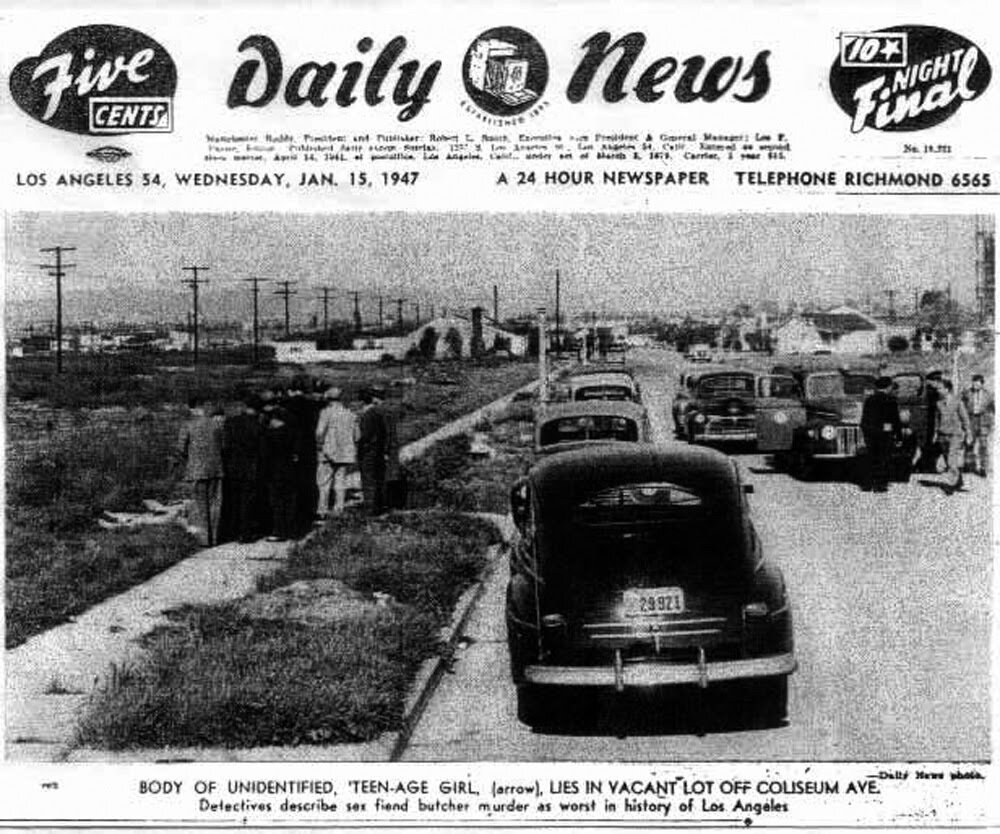
EPISODE 1: Jan 15th 1947
May 30, 2019Tap to summarizeI explore the death of Elizabeth Short with a mindful eye on the noir culture of the Los Angeles
Transcribe →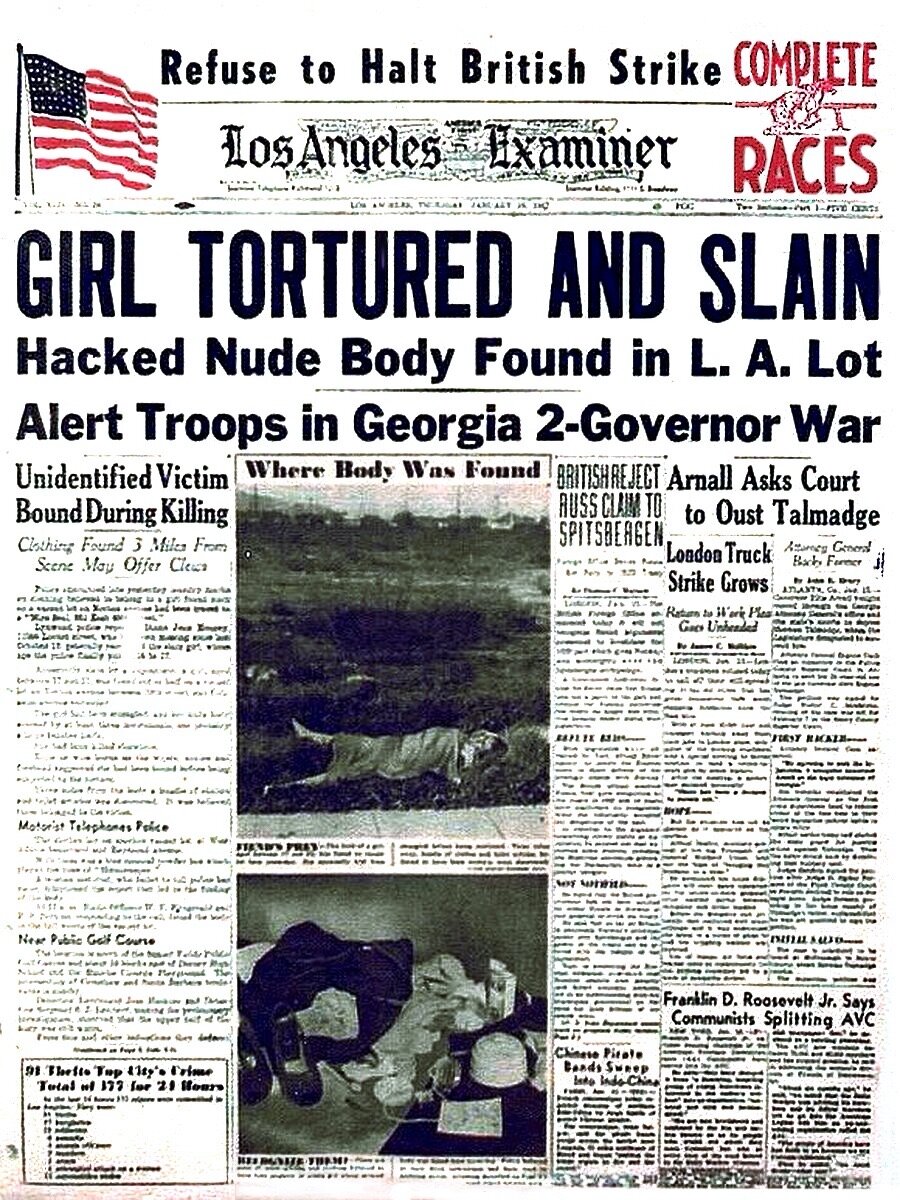
EPISODE 2: Jan 16th 1947
May 29, 2019Tap to summarizeTwo very different front pages on January 16th 1947. Welcome to the Black Dahlia and Blue Dahlia podcast. This is your host, Scott Tracy. Jan 16th 1947 The Los Angeles Examiner has written the headline to remember. The Los Angeles Times has written a headline to forget. It’s difficult to conceive in today’s world how essential daily newspapers were to our culture in the 1940s. The second world war had turned Americans into news junkies. Every day there were stories on three fronts. From Pearl Harbor to the Atomic bomb, from Adolph Hitler to Alger Hiss; the future of civilization had been at stake and the excitement of war news created a public that became addicted to reading the paper like never before. The American public is still thirsty for news after VJDay. The impact of news you can hold in your hands has the greater reach in media. Although It is peacetime, American newspapers are still at war with their rivals. In 1947, Newspapers are either a morning or evening publication. The Los Angeles Times was the more successful morning newspaper. The Los Angeles Herald Express was the primary evening paper. The Hearst morning paper was the Examiner. Morning papers were delivered to the homes and offices. Housewives and businessmen could read the paper at their leisure. The Los Angeles Times was a white collar publication, very much a cheerleader of business interests. The Los Angeles Times is a historically anti-union publication. In contrast, the evening papers are sold to the worker class readers by sound and sight. At the newsstand, a paper needs big headlines to jump out so it can be read from a distance. The afternoon papers gives the public the news the morning papers doesn’t have; up-to-date stock market news, horse racing results and night baseball scores. Citizens read the paper at home at dinnertime commonly just as we might watch the TV news. Bold dramatic headlines were key to evening newspaper sales. A headline needs to grab the attention of the public. Newsies, 10, 11 year-old boys screamed out lurid headlines to sell papers at trolly stops and train stations. HEAD IN TORSO MURDER STILL MISSING was shouted out-loud by young boys on street corners on Jan 28th 1946. That’s a headline that grabs. Jane Doe number one would become the number one story of 1947. The Hearst newspaper offered one of the most successful headlines in history and the paper sold the most copies of any issue in the post war period. It is an expressive, shocking and descriptive headline. GIRL TORTURED AND SLAIN; Hacked Nude Body Found in L A Lot. The Herald gets everything right on that front page; Note the sequence is correct. Beth Short is tortured then killed then cut in half and displayed in the vacant lot. Remarkable in contrast, the headline in the Times is less successful; beginning with the fact that it’s on page 2. GIRL VICTIM OF SEX FIEND FOUND SLAIN it is a two column headline. When I was a journalism student I was given an example on how not to write a headline. The story as an example, discussed was about the undeveloped areas of Siberia. The headline was “Russian Virgin Lands” semicolon, “Short of Goal Again”. The problem was with the way the headline translates is when its shrunk into a one column story. So the first line is racy, Russian Virgin, the second line Lands Short, the third line— of Goal Again. Russian Virgin Lands; Short of Goal Again Put together, it seems to be a call for help. The Los Angeles Times Black Dahlia headline fails when the words are crammed in to two columns. First line reads Girl Victim of Sex. Second line reads Fiend Found Slain. As if the Fiend is murdered and the crime committed against the woman was sex. The sub-headline is troublesome as well. Nude mutilated body indicates; first line. Orgy of torture before murder; second line. The first word in the sub-headline is “nude” and the first word in the second line is “orgy”; those words jump out at the reader. The way the sub-headline bonds with the use of sex in the primary headline that strikes me as distasteful and heavy handed. Another copy editor might have chosen to say. Frenzy of torture, for example. I recognize that the killer pleasure from the controlled torture, but for the rest of us, orgy doesn’t fit. The headline draws the reader, but it creates an uncomfortable connection as if we, the readers, are meant to feel what the killer feels. The language has a pulp quality to it. An orgy of torture sounds like an illustrated cover article in a post-war men’s racy pulp magazine, like “Hostages in Hitler’s Passion Cave; Orgy of Torture Before Murder.” The two main papers use very different pictures as well. The Herald airbrushes a blanket over the hacked and nude body without explanation. The Times shows that location from safe distance and a very low height, the photo taken level with car’s lug-nuts, so that the grass on Norton Ave lot is tall enough to obscure the dead body. The reporters and police are taller than the telephone poles on the next block and stand with backs to the camera and eyes down on the unseen body as if the are praying. The significance of the success of the Herald headline was not lost on the Hearst newspaper syndicate. Detective Finis Brown spoke about the placement of the victim on the grass and the press coverage during the Grand Jury inquest in 1949. “the two halves were about a foot apart, but the legs were spread and the type of mutilation that was done would indicate a person – to my estimation who had a mania for publicity. The newspapers up until the 23rd when things began to slack off and we only had one page in the newspaper – one column, the 23rd and the 24th – that night we received the belongings of the Short girl. The next day it was full. The papers was full of it then. It continued that way until altogether about 33 days. To my estimation, the person sent that in because they wanted publicity to gloat over the fact that they had been successful in their crime and got a kick out of it.” The reason to quote Detective Brown is to point out how important the press is to the killer and how important an ongoing crime story is to the afternoon papers in particular. The Killer sought anonymous notoriety, the papers needed everybody’s nickel; the relationship of the killer and the press is a courtship made in hell. One subscripted to the morning papers, they came automatically. The afternoon papers were bought on a whim. So competition is fierce. The Herald wrote better headlines or they went broke. This press coverage Detective Brown speaks of when he says 33 days, is referring to the Hearst newspapers. Not the Los Angeles Times. I mentioned that the murder story is on page two on January 16th 1947, the front page of the Los Angeles Times is concerned with the request of the Mayor for issuing 40 million dollars in bonds. London Strikers are creating the worst labor crisis in 40 years. Ford Motor Co is cutting the prices of new cars by $15 to $50. Quadruplets were born in France and Elenor Roosevelt driver’s license is being revoked. During this post war decade, the Black Dahlia story was NEVER front page news in the Los Angeles Times. Once again, A strike in London, Ford drops prices and Eleanor can’t drive. Front page news in the Times. For the Herald; Girl Tortured and Slain; Hacked Nude Body Found in L A Lot. The police canvas the Norton ...
Transcribe →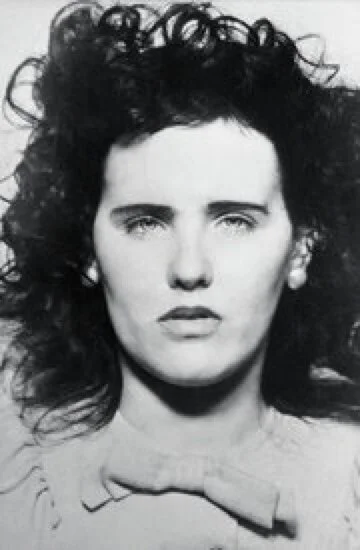
EPISODE 3: Jan 17th
May 29, 2019Tap to summarizeWelcome to the 3rd podcast of the Black Dahlia and the Blue Dahlia, this is your host, Scott Tracy. The Los Angeles Police expect to send Jane Doe’s fingerprints to the FBI by air, however, blizzards grounded flights on the east coast. Los Angeles Examiner City Editor James Richardson offered the LAPD an opportunity to use the Hearst newspaper exclusive Soundphoto, an early incarnation of the fax machine. A wire photo transmission of each fingerprint was enlarged and send to the Washington Herald where FBI agents wait for the large copies of each single fingerprint. Within hours the FBI identifies Elizabeth Short as the victim based on her employment at the Camp Cooke military base and her arrest for underaged drinking by the Santa Barbara Police at the age of 19 at the bar of the El Paseo Restaurant. This arrest photo is the one commonly used on book covers and in magazines. One can easily understand why it would be chosen, as it is a striking image; Elizabeth Short is handsome, defiant and vulnerable. I am very drawn to the range of emotions visible in this photograph as there is chaos at the edge, Beth’s the wild dense hair and untidy bow tie frame her face. The use of make-up is restrained, atypical for Beth. The earrings are elegant. There is a compelling architecture to this face, her cheekbones are a force, her neck is noble, her jaw juts powerfully forward, challenging the camera. Her lips are slightly parted, tender and full, there is no expectation of words. This is a mouth that is as likely to spit in your face as blow a kiss. At the center of this the enigmatic photo, her imbalanced eyes; cautious and curious. These are the eyes of an animal captured at the moment of decision; to fight or flee; revealing an unexpected level of tension between Elizabeth and the camera. The beam of light that travels from her face to the lens is taunt as a rope. It is a photograph that captures the elusive essence of this beckoning and rebellious young woman, a visual that calls out equally to Bonnie Parker and Jane Russell. It is in every way an arresting picture; many of us struggle with our embarrassing driver’s license ID photos and here is Beth Short with what may be the most attractive mug shot in history. It’s a haunting familiar image as we know the horrific fate that awaits the Black Dahlia. This mug shot was taken by Santa Barbara arresting police officer, Mary Unkefer, Short stays with Unkefer in the days after the arrest until the juvenile court released Miss Short on probation. Beth is send home on a bus on October 2nd 1943, heading east to Boston Massachusetts. Officer Unkefer noticed Elizabeth “had a rose tattooed on her left leg. Beth loved to sit so that it would show.” The Hearst newspapers are quick to act on their scoop. Reporters are sent to Santa Barbara to learn more about her time at the military base. James Richardson instructs reporter Wain Sutton call Beth’s mother, Phoebe Short in Medford Massachusetts. On instructions from his boss, Sutton informs Phoebe that Elizabeth has won a beauty contest to get more information before revealing the true reason for the contact. The newspaper learns that Elizabeth was in San Diego recently where she worked at Naval hospital, previously she had been in Hollywood working as a film extra It’s horrible for the newspaper reporters to lie to Phoebe Short about her daughter, ironically much of what the mother tells the reporter are lies Elizabeth Short told her mother, Beth never worked at the San Diego Naval hospital at Balboa Park, she never worked at all in California, she was never had acting parts in any Hollywood studio movie. The Hollywood myth begins with a lie in a daughter’s letter to her mother repeated to a newspaperman. It is compelling to compare how news framed the murder and the victim in the first days of investigation. Beginning Murder Of The Black Dahlia Laid To A Sex-Perverted Madman, Baltimore Sun The mutilation slayer of attractive 22 year old Elizabeth Short whose butchery was described by a police psychiatric as the work of a sex perverted madman, was being sought on a nation-wide scale today with authorities trying to locate her several “boy-friends” Her suiters were many, said Police Captain Loren Q. Martin of Long Beach where she lived until recently. He added that ... hangers-on at a neighborhood drug store near where she lived, (they called her) “The Black Dahlia” because of her raven hair and the jet-black clothing she usually wore. As the newspapers grapple with the shock of the mutilation the story is framed by psychology. Who would do this? A sex pervert. Then one wonders which one of her many boyfriends is a perverted violent sex killer. Note the police statement that it’s Hangers-on at a drug counter, not friends.Boy Friends in Three Services… Police would particularly like to question an unidentified army lieutenant, described as “tall and handsome” Miss Short allegedly told friends she intended to marry him. She also was frequently visited at her Long Beach hotel by a navy man. Policewoman Myrl McBride asserted Miss Short once asked her for protection from a discharged Marine whom the girl described as “insanely jealous.”Note that McBride says Miss Short asked her for protection from an insane serviceman. This will come back to haunt McBride as she did everything correctly given the circumstances but its unfortunate for the image of the LAPD that Elizabeth Short is brutally tortured and murdered just after she asks for police protection earlier that same day.Continuing with the Baltimore Sun. “Shortly after she took a clerk’s job in the Post Exchange at Camp Cooke, near Santa Barbara where, said her former boss, Mrs Inez Keeling, she at first was shy and bashful and never dated soldiers. At that time she was a model employee in all respects, not smoking and seldom drinking. A few months later, said Mrs. Keeling she began to go out with the soldiers several times a week. The Baltimore Sun supposes the crime was committed by a crazy ex-serviceman. Let’s compare two other versions of the same news day story. 24 Former Suitors of Slain L.A.Girl Sought SF CHRONICLE …Officers concentrated on locating … a supposed airline employee known as "Red" with whom Beth left San Diego a week before the killing. Also still unidentified is the "short, dark man" who paid Miss Short's rent when she lived previously at a Hollywood hotel. He drove an old black Ford sedan, similar to one observed by the vacant lot a few hours before the body was discovered. Still another suspect police want to question is a jealous marine suiter. A search for him was started after an incident related by Policewoman Myrl O. McBride. She related that the girl, so filled with terror that she was crying, run up to her at a downtown bus station and asked for protection against an "ex-marine boy friend who once, threatened to kill me if he found me with another man," Beth explained that she had just encountered the marine In a bar and had been so frightened that she had run out without her purse and wraps. Officer McBride went to the bar with the girl while she retrieved those articles. The policewoman advised Miss Short to go home, but the girl returned to the bus station, explaining: "My daddy's coming: in two hours from now." "Two hours from now" was the time a bus was due ...
Transcribe →
EPISODE 4: Jan 19th
May 29, 2019Tap to summarizeWelcome to episode 4 of The Black Dahlia and the Blue Dahlia podcast. This is your host, Scott Tracy.On January 15th 1947, a body is discovered in a vacant lot; bisected and drained of blood. On the 17th the name of the murder victim is identified, On January 18th the press learns the Long Beach lunch-counter epithet and the legend of the Black Dahlia commands the headlines, In numbers, the victim is named Elizabeth Short for 22 years, 5 months and 30 days. For a day and a half Jane Doe #1 is known as a victim of the werewolf killer. For 73 years, 7 months, 19 days and counting she is the Black Dahlia.Aggie Underwood used the “Werewolf” to describe the killer on the first day of coverage. The name acknowledges the brutality of the mutilations and highlights the terror the killer inspires in Los Angeles as an inhuman monster is on the loose. Interestingly, other Hearst syndication newspapers such as the San Francisco Examiner do not pick up the use of the Werewolf name; that moniker is unique to movie town.A Movie horror theme in this movie making town seems most appropriate; as I look at the crime today, I might chose the Vampire as the monster instead of the werewolf? A Vampire is an organized hunter; ensnaring victims in a web of seduction and manipulation. Drained of blood; sounds like A vampire. A wild Werewolf is an opportunity hunter.Aggie was there observing the depth of the damage to the body of the victim, and she can not unsee the significant amount of overkill, which she reads as incomprehensible and vicious and she chose the name “werewolf”. As if a man had been so full of hate he acted like an animal, wild with the madness of rabies. The werewolf nickname is typical in that it refers to the Killer not the victim. That’s common.I don’t remember Lizzie Borden’s mother’s name but I remember she got 40 whacks. Commonly, the Killer gets the moniker, the headline and the fame, not the victim, We are familiar with The Zodiac and with the Hillside Strangler. The idea that a monster is the killer becomes part of the problem.The killer isn’t a werewolf. The police are looking for a monster and don’t see him. The headline of the Washington Post on this day shows the degree to which the press picks up Dr.DeRiver’s birdseed. POLICE SEEK MAD PERVERT IN GIRL’S DEATH. The news on this day A Greyhound rider gets off the bus in Fresno and tells police that another bus rider, mumbled in his sleep about how he should have cut the scar off the leg! Edward Glen Thorpe is pulled off a bus at Modesto and police find blood on his jacket. Thorpe is arrested. It gets worse for Thorpe.It is revealed that he viewed the “Jane Doe #1” body in the morgue because he thought it could be his wife who had disappeared from Riverside. Thorpe is from Wyoming so the Des Moines Register calls him a cowboy. The truth is less romantic. The Oakland Tribune tells us he is a member of the Cook and Waiters union in San Francisco. The union helps him get Thorpe released after questioning. The Los Angeles Times locates a witness who believed he saw Beth Short made phone calls.Quote …grocery clerk. Jack Fleming …said that, last Tuesday at about 10 a.m. a "pretty, tall" and slender girl" whom he recalls as exactly answering the murder victim's description came into the Daniel J. Regan market at 5833 S. Hoover St., clad in a gray pin-striped suit with short jacket, and made several telephone calls. ' "I changed a quarter for her," Fleming recalled, “…she did not seem at all excited or nervous, was very pleasant." Fleming said she went into one of several (phone) booths facing the street and remained near them for about 20 minutes, occasionally waiting outside the booth as if waiting for a busy line to clear. Later, according to Fleming, she came out of the market, adjacent to a corner service station, and crossed Hoover at 58th Street slowly “with an air as if she were waiting for someone.” Then she walked southward on Hoover, Fleming said. This is significant because Tuesday, the day Fleming says he sees the victim the day before she is tortured and killed. EndquoteIt sounds very much like Beth, her hovering by the phone booth is similar to her missed connections at the Biltmore Hotel. He does call her tall. How tall was Beth Short? 5’5”. Likely wearing heels. Note Fleming has Elizabeth wearing a gray pin-striped suit, not a black outfit. One may question if Fleming saw Elizabeth Short or a look alike but it is clear Beth didn’t wear all black all the time,At the Biltmore Hotel, Beth wore black shoes and suit, but white fluffy blouse, white gloves, camel colored overcoat and no flowers in her hair. Dr. Melvin Schwartz dentist with an office in the Cherokee Building on Hollywood Boulevard dubbed her the lady in red as he and his nurse describes a woman in red dress who tries to gain favor by placing the doctor’s hand under skirt. John Egger, 20 years old usher, described Beth, "The thing is sir, we always notice a girl like that, she was a striking girl, with that raven hair, blue sweater or pink sweater, George Bacos picked up Beth one night and went for a drive, parking on the Sunset Strip and chatting. "She wore a black satin skirt with a sweater - a pink sweater. Not black on black and flowers but always tasteful, this is a girl who dresses fashionably yet did not always have money for rent. Returning to the news of the day— The press on this day, Jan 19th, introduces it’s readers to the French family in San Diego Miss Dorothy French works at the Aztec movie house as a cashier notices Elizabeth Short trying to sleep at the open all night theater. Dorothy took her home to meet her mother, Elvira French takes Beth in. Mrs. Elvira French informed the police that Miss Short claimed she was the widow of an air corps major who was killed in a plane crash. And Beth Short told her that bore him a child that later died. Mrs French says she was shown a newspaper article about the death of Matt Gordon but the article has a line crossed thru another woman’s name. Mrs. French is told that the newspapers made a mistake and Beth was the bride. A frequent caller was a red-haired ex-marine flyer, Elizabeth called him “Red” and sometimes “Bob”. Recently Mrs. French got tired of boarding Elizabeth for nothing and told her she would have to leave. She said Elizabeth wired “Red” and that he came and got her. “Be there tomorrow afternoon late. Would like to see you. Red.” The Los Angeles Police sends out a Bulletin describing the red-haired suspect. His car is described as being possibly a 1940 Studebaker coupe, Cream or light tan in color, California license number… Suspect is described as a white male American, approximately 25 years old 6 feet tall, weighing 175 pounds with red hair blue eyes and light-complexion. Robert Manley is a pipe salesman and an ex-army musician. Robert is not an angry jealous Marine. Manley was never at Camp Cooke. Red Manley is not the Marine that threatens Beth Short in downtown Los Angeles before Beth is saved by Officer Myrl McBride. Look if you have red hair, Red is a your nickname*, however, the press unfortunately attempts to tie everything to the last man to see Beth alive.Reporters locate Beth Short’s “lost” Chicago trunk at the Los Angeles train station. Photos of Beth’s sisters are printed in the paper as w...
Transcribe →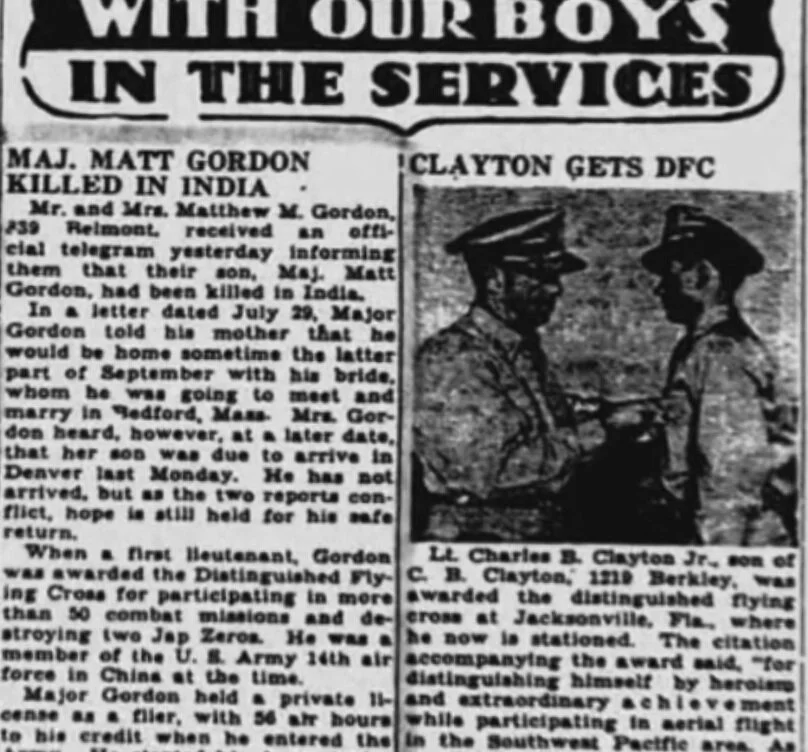
EPISODE 5: Jan 22nd
May 29, 2019Tap to summarizeNotice how they pose. Beth presents herself openly, and Marge Dyer is more modest. Welcome to episode #5 of the Black Dahlia and the Blue Dahlia podcast. This is your host Scott Tracy. The search for “Red” is over. Robert Manley is under arrest and co-operating with the Los Angeles Police. Manley is called “the last person to see Elizabeth Short alive” in the press. It’s not true. Beth is seen exiting the Hotel three hours later. The last person to see her was her killer. The press and police use the tag “last man to see her alive” to shoehorn Red into the role of murderer. The photos taken for the newspapers do him the disservice of making him look like a convict. I recommend you look at the film noir comparison photos on my web site. One can find books and web articles that still offer Red Manley as a suspect based on the initial police enthusiasm for his culpability. You may ignore those articles. Red Manley is a victim in this investigation; he is not a suspect, he’s not a criminal. No one with a solid foundation of the facts of the Black Dahlia case considers Red Manley a valid suspect. The police expected him to come forward earlier, but of course, Manley has hesitated because he hopes to not lose his marriage because of an affair. Manley admitted to a flirtation with Elizabeth Short in San Diego “I had a date with her … and kissed her a few times but that's all.” Police question Manley for 12 hours without an attorney and without charging him with a crime. Manley is drowsy and the polygraph test is declared inconclusive. Manley’s Studebaker is checked for blood. There is none. There is nothing on his clothes. The press quotes Robert Manley’s mother, Mrs. Morris Manley declared, “It’s ridiculous. He’s a wonderful son. He’s never been in any trouble in his life. They are just questioning everyone with red hair, that’s all it is.* Naturally they have to find out who did it. Everyone with red hair gets the nickname “Red.” Manley’s wife, Harriet, and another couple maintain he is playing cards with them the night in question. His story is believable. He passes the second polygraph. Robert Manley is interviewed by Agnes Underwood. The police are playing bad cop, good reporter; with the hope a woman might get a better result. Indeed there is a helpful clue and a new fact that changes things. The clue is that Robert Manley remembers a phone call Beth made from a San Diego restaurant to an unknown person. In time it will be learned this was a phone call to Mark Hansen on January 8th at his home requesting to stay there when she returned. Not until Anne Toth comes back was Hansen’s reply.The important fact: Manley tells Aggie it was him that mentions the Biltmore. Beth never says take me to the Biltmore Hotel. Manley admitted to Aggie that he told Beth he was married, during the evening, and said she had told him she had been married to 'a Major Matt somebody," who had been killed. "When I walked her to the door, I told her I might be down that way again and asked if it would be all right to wire her when I was arriving. She said yes. “… on January 7, about 3 p. m. I sent her a wire that I was arriving next day. …”She asked me if I would drive her to Los Angeles. I said yes, but I told her I couldn't leave until (tomorrow).… (returning north) we drove to Laguna Beach. There we stopped and got gas. En route she asked whether she could write to me. She said she was going to meet her sister from Berkeley, Mrs. Adrian West. “I asked where she was going to meet her, and without waiting for her to answer I said, “The Biltmore?” and she answered “yes.” “She wrote my name and business address in her notebook, so she could write to me. “When we got in to Los Angeles, she wanted me to take her to the Greyhound Bus Station so she could check her bags before she met her sister. I drove her to the Greyhound bus station and carried her bags in. I had to go out to move my car, but told her I would drive around and pick her up and take her to the Biltmore. I didn’t want to leave her in that neighborhood. “When we got to the Biltmore, she said she had to go to the restroom and asked me if I would check at the desk on whether her sister had arrived.…She hadn’t.That is the last time I ever saw Betty Short. I'll take the truth serum or anything they want to give me. And, I'll swear on a stack of Bibles and tell my minister too, that was the last time I ever saw Betty Short. I did not kill her. "But, brother! I'll never cheat on my wife again!” A couple of points related to the interview: One, Manley makes the comment about the Greyhound bus station because the location is adjacent to skid row. He is being a gentleman. Two, The Biltmore is an emotional touchpoint for the Black Dahlia legend but the Hotel holds no more significance to the destiny of Elizabeth Short than it does for Winnie Ruth Judd; it is a place both women pass thru. There is no more of a black dahlia ghost at the Biltmore than a black dahlia ghost at the greyhound bus station. For the most part, Robert Manley gets a raw deal from the press. His mistake is his own doing and he pays for it the rest of his life; Elizabeth Short is an attractive girl, Harriet Manley is a beautiful woman. After the Aggie Underwood’s exclusive article in the Evening Herald Express, Manley is released. Aggie later writes in her autobiography, Newspaperwoman, that she was “removed” from the Black Dahlia case. Partially true. She was promoted to city editor. One Black Dahlia writer suggests her removal is evidence of a police cover-up. Eatwell writes, “Who was trying to take the star reporter off the biggest newspaper story of the decade? Who wanted her of their back? Why?”Eatwell doesn’t answer any of the three questions she poses in her book. ** Let me do that now. The answer to these questions is no one. Nor does Eatwell make any specific claim stating the LAPD told the Hearst Newspaper to take Underwood off the Dahlia case. How would the LAPD order the Los Angeles newspaper to remove a reporter? Aggie taken off the case—there is not much truth to that, that’s how Aggie felt. So maybe 10% true. The 90% part is that it’s a significant exaggeration to suggest this is of any importance. Firstly, this case was not the story of the decade five days in. The Hearst newspaper just stated the investigation was going to focus on a violent San Diego date who scratched Beth’s arms. There is no one for Aggie to interview in Los Angeles. At this point in the crime investigation, there is little reason to assume the murder of Elizabeth Short will be a bigger newspaper story than the Red Rose Murder, the B girl stabbed repeatedly until the knife broke off in her back or the Red Hibiscus Murder where a mother of three WWII veterans is hit with a five inch bolt, raped and dumped in a public park. No one, on the 21st of January 1947 could assume this case will be talked about in March or April of 1947, much less 70 years later. Especially with Manley released, there is no clear investigation path forward. However, if Aggie had any valuable information to follow up with, she was now the city editor. She could assign reporters anywhere she wanted. If this is a conspiracy to silence Aggie Underwood, why would she be given more authority and more independence? She loses the byline but gains a surprising position of power in the newspaper industry; this is only the second time in American history that a woman had been in charge. ...
Transcribe →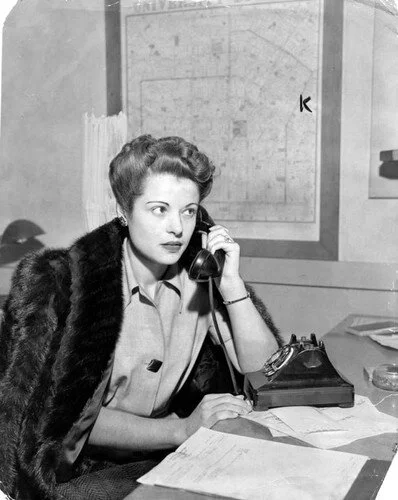
EPISODE 6: Jan 23
May 29, 2019Tap to summarizeThe Crown Grill & Jewel Room were separate businesses with same ownership in 1947. Hotel Olive occupied the 2nd & 3rd floor of building and had significant symbiotic relationships with the Jewel Room & the Crown Grill. In center image I embellish the matchbook map to show the Hotel Olive. Welcome to the The Black Dahlia and the Blue Dahlia podcast episode 6. I am your host Scott Tracy. The police have located Lynn Martin, an ex-roommate who had lived with Beth Short in Hollywood and who disappeared at the same time as Beth.The discovery of Miss Martin climaxed a backtracking by 1,000 officers of the gay path cut through Hollywood and Los Angeles night life by "the Dahlia.” Det. Lt. William Cummings, who traced Miss Martin to the valley auto court, said she has a record of eight arrests on juvenile charges in Long Beach. The girl, who appears to be in her early 20's, will be 16 next Saturday. She broke her stoic resistance to investigators' continuous questioning when Cummings began asking her about the scars... Through acquaintances of the girl the detective had learned that her upper body was scarred by the removal of tattooing, he said. When confronted by the detective's apparent intimate knowledge of her past, Miss Martin was quoted as blurting, "Oh, what's the use of trying to hide anything from you!" She then admitted her juvenile record and other more recent associations. Investigation had traced Miss Martin to a motel on Ventura Blvd., where she was seen as late as midnight Jan. 14, the night before Miss Short's severed body was found in a vacant lot near busy Crenshaw Blvd.* The police hoped for a useful lead from Lynn Martin. Of course she wasn't hiding because she was involved in the crime, Lynn is only guilty of being underage. Lynn has not been in contact with Beth for many weeks. Certain witness are sure they saw Beth Short in the days prior to her death. Many of the observations from strangers turn out to be false leads; the baggage handler that sees Red with a black haired woman who asks about Alaska, turns out to be wrong. A Greyhound bus driver mistakenly believed Beth was on his route from Santa Barbara to downtown Los Angeles on January 14th.Elizabeth Short’s appearance is striking and uncommon; there is no such thing as a Goth look in 1947. The heavy make-up resonates with an identity one would associate with a silent film star or geisha girl; neither of these is a foundation for a movie career, but it makes a dramatic impression. The newspapers describe her contrasting appearance of black hair and pale skin, however if you think about it, that description would fit Elvira as well as Dita Von Tease. I believe the witnesses who knew Elizabeth Short when they speak of seeing her during the lost days and tend to be dismissive of strangers who think they saw Elizabeth, with one very important exception. Myrl McBride, a policewoman. A Police bulletin is issued in the 21st of January seeking witness who would assist the investigation WANTED INFORMATION WHEREABOUTS OF ELIZABETH SHORT Between January 9th and 15th 1947.Description female American 22 years 5‘6“ 118 pounds black hair green eyes very attractive bad lower teeth fingernails chewed to the quick this subject was found brutally murdered body severed and mutilated January 15, 1947 at 39th and Norton Ave. Subject on whom information wanted was last seen January 9, 1947 when she got out of the car at Biltmore Hotel ... Subject makes friends with both sexes and frequented cocktail bars and night spots. Note the police seek information starting with her arrival at the Biltmore. Of course Beth was seen leaving the hotel, they clearly hope for more Biltmore witnesses. Elizabeth Short is not reported missing on the evening of the 9th or 10th or 11th 12th or 13th or 14th. The police have witnesses who have seen her, but have no knowledge where she spends the night. As I have noted previously, where is she missing from? She doesn’t live anywhere so who would report her missing? Anne Toth thinks she’s in Berkeley, Joseph Fickling believes she’s on the way to Chicago, Phoebe Short thinks she working at a naval hospital in San Diego, Mark Hansen declined to allow her to return to his house and Lynn Martin hasn’t seen or spoken to her for over two months. Beth is HOMELESS. There are only two options for these seven days. She been abducted and all the witnesses are wrong. Or she has been depending on the kindness of strangers as she did in San Diego and she is sleeping on couches until her luck runs out? THE local newspapers tell a story as a Hollywood tragedy of abduction and torture. The out of town papers tell a story of a squandered life tossed aside like a cigarette. In another decade, Beth might have been a beatnik or a hippie. She is only 22 years old. but has seen more of America than most 22 year olds. Emotionally she still a teenager, infatuated with different men on different nights. A day dreamer and freeloader, not much of a doer. Age-wise, emotionally, I would say Lynn Martin is the 22 year old and Beth Short is the 15 year old. The police bulletin states Beth is friendly, in fact, she has few friends. It becomes frustrating for the police to find so many that recognize Beth but do not know her at all. Her drunken father abandoned her twice. Beth seems to carry that betrayal within her, along with the idea that the world owes her; folks do feel sorry for her and try to help. Oddly, she isn’t as thankful as these Good Samaritans might expect. Beth is narcissistic but not malicious, she lies easily and often. I was bothered quite a bit when I first started to research the crime about this pattern of dishonesty, and now I think of it as situational. Sometimes Beth lies when she first meets someone, to add depth to her story she gives herself a past; she was married she had a baby and lost it; sometimes she gives herself a future as a movie extra or model going to Chicago. Beth simply is inventing a more interesting version of herself to present to others. Sometimes she introduces herself as Beth, other times Bettie or Elizabeth; is one name better than another? Beth is trying them out. When police interviewed acquaintances they find a trail of disappointed men and disapproving women.Since police think criminals lie; in the eyes of a police detectives like Hansen and Brown, her actions are those of a grifter. Beth has no job, how does the rent get paid? Why is she hanging around in bars like a freelance “B” girl, Hansen sees a young woman with the game plan of a carny. Hansen realizes Beth’s dating game is rigged sideshow. No kewpie doll for you, sailor but thanks for picking up the tab. As of this date, the current police thinking was that Beth would date men for free meals and save her passion for women. January 22nd 1947 Bakersfield Californian QUOTE "It sounds like a cheap detective thriller," said Capt. Donohoe of the homicide squad, "but we finally were forced to turn to the theory that a woman was at the bottom of it." (Donohoe) pointed to other mutilation murders in which women in jealous rages hacked their girl friends to death.**The sighting of Beth during these 7 days that strikes me as the most solid is the commentary of bartender Buddy La Gore, who told of observing Beth Short with two brunettes. “Always fastidious and proud of her apparel, she appeared disheveled and ‘frantic-eyed’ that night, La Gore said. "She, ...
Transcribe →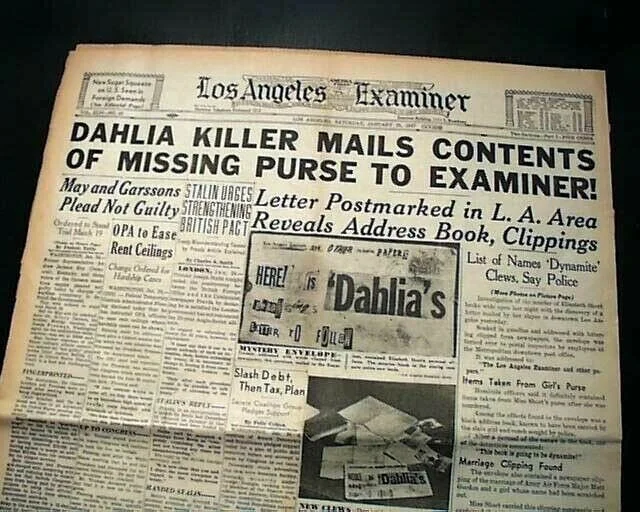
EPISODE 7: Jan 24th
May 29, 2019Tap to summarizeWelcome to the Black Dahlia and the Blue Dahlia podcast. Episode 7 I am your host Scott Tracy. in news today… An unknown man threatened the life of Sultry Toni Smith, who now lives in the Hollywood apartment once shared by Miss Short. QUOTE The brunette beauty, her lips trembling with fear, said she answered the telephone in Apartment 501 last night to hear a strange man's gruff voice say: 'Well Toni. you are next.” "I honestly have no idea who he might have been. I don’t know why he should have threatened me.” * Miss Smith moved into Apartment 501 two weeks after Miss Short moved out. Fearful that she might be the next victim of the fiend who tortured Miss Short to death, then savagely hacked ...(her) in half. Miss Smith was given police protection. END-QUOTE Toni Smith is a very photogenic non-Black Dahlia suspect. A person of interest for ten minutes. The press uses the word “sultry” as if it is Toni’s first name. In fact, Georgia is her first name. Toni is her actress name and she is a single mother of a three year old boy. I am not sure there would be much of a story in the paper without the accompanying photo of an ambitious and beautifully dressed actress sitting on the couch smiling with her long legs folded and posed underneath her body. Sultry Toni Smith appears to be auditioning for attention rather than trembling in fear. The Toni Smith story and this ‘actress as damsel in distress’ photo are not printed in the LA TIMES. However, because the Black Dahlia news is drying up. Many papers such as Bakersfield Californian, San Mateo Times believe the public is still thirsty for the sex and violence headlines of the Black Dahlia stories. It is amusing to imagine Sultry Toni Smith was ever a suspect; Question of the day: raise your hand if believe the police think a Mother a of three year old boy, might be the dangerous Lesbian thespian they were seeking in the murder? Interestingly, the Toni Smith story is put to use in some newspapers as part of the shift of the focus of the LAPD because a man telephoned Toni Smith. QUOTE Police, previously convinced that a woman was responsible, widened their search after hearing Miss Smith's story and finding other clues which pointed to a man. Police Lieutenant P. W. Freestone said be believed the killer in dumping the body onto a vacant lot early last Wednesday lowered one foot on a very small pool of blood on the ground, staining his shoe. He indicated the print was left by a man. Other "tips" were telephoned to the homicide detail, ... A bloody towel was found (on) Hobart St. near 29th and was sent to the police crime laboratory for tests. A pair of nylon stockings picked up at 12th and Hoover; likewise were considered significant. Let’s step back from the news and state the obvious. These stockings, the bloody towel and the threatened actress are all dead ends. We don’t hear about Sultry Toni again in the police blotter or on the big screen. The thirst for news of the Black Dahlia has created significant pressure for new headlines. As the Black Dahlia Avenger has said to James Richardson yesterday, “you seem to have run out of material.” The Tortured Slain Nude Girl is what the public wants to read about. This is not lost on anyone in the publishing business. The Black Dahlia case plays a significant role in media historically as it changes the floor and the ceiling to what is permissible to show and tell the American public. From this point forward, the illustrated paperback covers for detective stories show more of the female figure. True Crime magazines change their covers and stories. On my web page I have a section of pre-war covers that are much more tame than the post-1947 covers. Pre war: Women in torn negligees, tied to the bedpost, Men with perfect hair and handguns are there to save them. Post war the images are raw. Women now have cigarettes, cleavage and Tommy guns. In five years, Paula Klaw will be selling pictures of Bettie Page based on customer requests for poses. There is no place for Pollyanna in this new detective world that embraces the threats of torture and bondage. As in Film Noir, the post war female is at the center of the spiderweb and a big part of the mystery is to find out if the woman is a victim or the spider. From an essay on True Crime magazines by Eric Godtland, QUOTE “In January 1947 a crime occurred that foreshadowed the direction of detective magazines for the remainder of their lifespan. The Black Dahlia murder case, involving the mutilation of a beautiful Hollywood starlet riveted the detective world. Horrible as it all was, the obvious sex appeal lurking in the backstory was not lost on publishers struggling to hold a shrinking readership.”** Back to the news, Mrs. John Bersinger arrives at the University Police Station with her husband, wearing a fur coat. The paper states QUOTE…Mrs. John Bersinger, 3705 Norton Ave., volunteered that she was woman who first telephoned University Police Station on Jan. 15. “I was terribly shocked and scared to death," she said. QUOTE "I grabbed Anne and we walked as fast as we could to the first house that had a telephone. "When I called the police, they asked me what number I was talking from, and I gave it to them. They didn't ask me my name.” We have covered this. I love that Betty Bersinger, gets dressed up to got to the police station. The newspapers were everything in 1947. It was exciting to be in the paper and be photographed. Of course she put on a fur coat, she is a star witness; she wanted to make her husband proud and look pretty. I have a photo essay on the press coverage of Mrs. Bersinger on my web site as the press brackets her pictures. In the Los Angeles Times this day an article about a new witness…they refer to …a thin man. QUOTE Out of the shadows of the Norton Ave. "lovers lane," where the mutilated, nude body of Elizabeth Short was found in a weed-webbed vacant lot, a thin man walked yesterday into the case. This new character in the grisly murder story, … was pictured to police by Walter A. Johnson, 3815 Welland St.§ Two notes, first is it possible to tell this story without including the word “nude” but there it is for the reasons we just discussed. Second, Welland Avenue is seven blocks east of Norton so Walter Johnson drove over half mile at night to dump his lawn clipping among the weeds of a vacant lot. Johnson said that at about 9 p.m. on Jan. 14 he went to the area, an undeveloped tract known as a haven for smoochers and trash haulers with a carload of shrub cuttings. As he slowed his car to a stop, he noticed a light colored 1935 model sedan parked on the west side of Norton directly opposite the fire plug near which Miss Short's body subsequently lay. The right rear door of the sedan was open. Standing near the car was the thin man, described by Johnson as 45 years of age, 5 feet 8 inches tall, thin build, wearing tan top coat and a dark hat pulled low. As Johnson stopped, the man looked up, startled. He then crossed the street and walked slowly past Johnson's car, hands in pockets. He scrutinized Johnson thoroughly and then craned look into Johnson's sedan. … At this point Johnson fearing the thin man was a bandit, drove away, circled the block, and returned to the spot. This time, he said the other car sped away with grinding gears and burning tires. Let’s digest this — the other guy is parked on the wrong side of the street and neither of them expected to another person. Clearly the two men spooked each other. It’s 9 p.m. Beth Short is alive for at least six more hours. This has nothing to do with the Black Dahlia, this is only Norton Ave news, QUOTE a haven for smoochers and trash haulers. END-QUOTE What are you going to say to the wife? “Honey now that I finished mowing the lawn today, I’m in the mood for a bit of hanky-panky, let’s you and I drive around the corner to a special vacant lot I know..” Honestly, it is a thick line between a dump and a lovers lane. Mr. Johnson didn’t go the the neighborhood to smooch. Let’s talk about a couple of things. One, criminals and lovers lanes, and two newspapers and lovers lanes. Let’s begin with killers and lover’s lanes; is there any history of this, is a lover’s lane is a good dumping ground? No. Teenage lovers in cars and killers with a body in the trunk are seeking very different types of privacy and isolation. Historically, an isolated lover’s lane is where serial killers go shopping not dumping. Let’s name some lovers lane incidents. The Texarkana Moonlight Killer attacked four couples in cars over eight weeks from Feb 22nd thru May 3rd 1946 in isolated lovers lanes. The Red Light Bandit, Carl Chessman robbed Regina Johnson and her date as they parked in isolation on a hill in west Pasadena on Jan 19th 1948. The Zodiac killer shot teenage lovers Jensen and Faraday in their car on Lake Herman Road north of Benicia on December 20th 1968. The Valentine’s Day killings of Patricia Mann and Jesse McBane of Durham North Carolina, began with an abduction from a lover’s lane near Hillandale golf course. The lovers were found on February 25th 1971, ten days after their date and 4.2 miles from their car. They had been tortured but died fully clothed, tied to separate trees next to each other. All of these killings seem to be murders of opportunity. There is little indication of a killer stalking these victims ahead of time. These “lover’s lanes” were isolated, not this classic high school movie trope of cars parked next to each other as they might be at a drive-in movie. None of these...
Transcribe →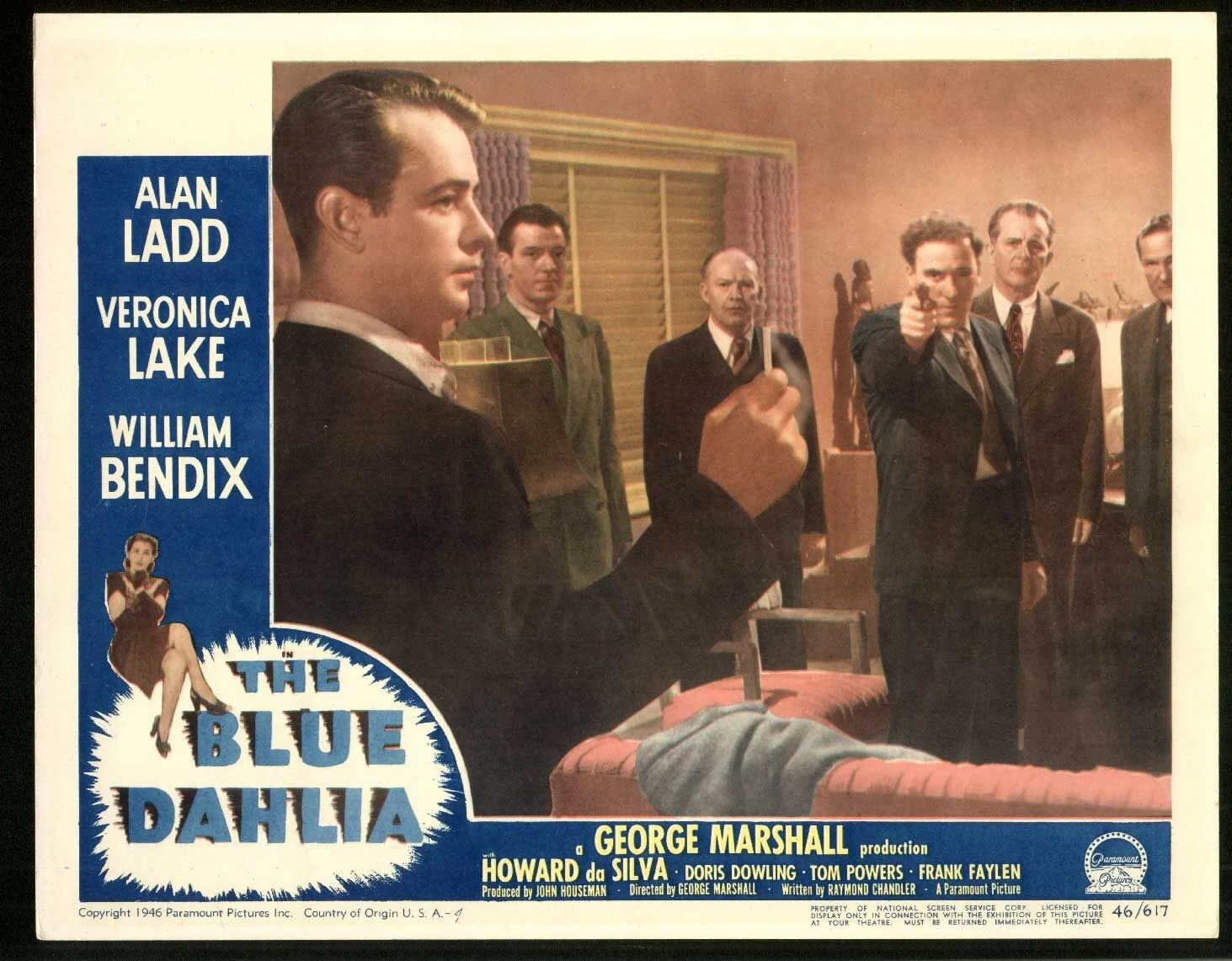
EPISODE 8: Jan 25th & 26th
May 29, 2019Tap to summarizeThis is a significant topic that has been ignored by other researchers.
Transcribe →