← Clock It with Symone & Eugene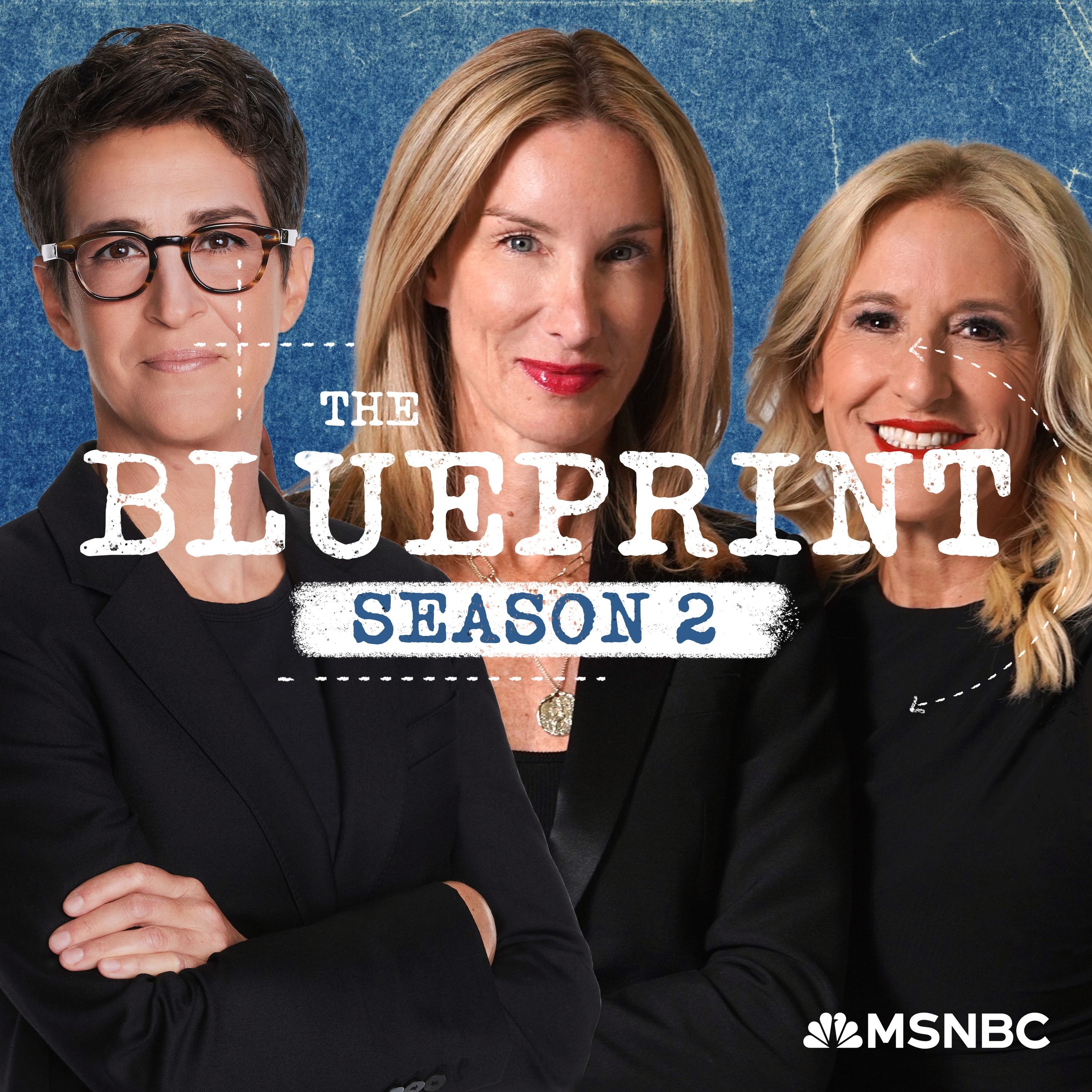
Clock It with Symone & Eugene
Buckle Up and Fight This Thing, with Rachel Maddow and the hosts of “I’ve Had It”
00:36:17
At MSNBC’s annual fan event, Jen and Rachel Maddow examine the future of the Democratic party. Then, Jen sits down with the cohosts of the hit podcast “I’ve Had It.”
Loading summary
Transcript98 lines
- [00:00]
Angie Pum Sullivan
911, what is your emergency?
- [00:02]
Jen Psaki
Get off the pier.
- [00:05]
MSNBC Announcer
911 has faced nearly every emergency on earth. ABC Thursdays they will go where no first responders have gone before.
- [00:14]
Jen Psaki
Five everyday heroes were launched into space.
- [00:17]
Rachel Maddow
All contact with the spacecraft was lost due to a sudden geomagnetic storm.
- [00:22]
Jen Psaki
Mission control dude, you copy?
- [00:25]
MSNBC Announcer
911 all new Thursdays, 87 Central on ABC and stream on Hulu.
- [00:31]
LifeLock Advertiser
It's Cybersecurity awareness month and LifeLock is here with tips to help protect your identity, use strong passwords, set up multi factor authentication and report phishing scams. And for comprehensive identity protection, Lifelock is your best choice. LifeLock alerts you to suspicious uses of your personal information and also fixes identity theft. Guaranteed or your money back. Stay smart, stay safe and stay protected with a 30 day free trial@lifelock.com Specialoffer terms apply.
- [01:13]
Jen Psaki
Hi, this is Jen Psaki and this is the Blueprint. So we had an event this weekend in New York City where I joined Rachel Maddow and Simone Sanders Townsend, Alicia Menendez and Lawrence o' Donnell and many other MSNBC hosts you know well. And at that event I interviewed the co host of the podcast. I've had it. You'll hear that a little bit later. But first I want to share a conversation I had with Rachel Maddow at a dinner hosted by Luke Russert. So here is the blueprint live from MSNBC FanFest25. We started the conversation with a question from Frank Paula of Chicago.
- [01:55]
Event Moderator
First of all, thank you both for the incredible work you've done and continue to do. You provide support and encouragement to everybody here and millions more. And you know that.
- [02:05]
Rachel Maddow
Thanks.
- [02:06]
Jen Psaki
We're both going to cry now.
- [02:07]
Event Moderator
Well, here goes. I had the privilege at last year's MSNBC convention dinner to ask you both how, given all the political noise that was going on at that time, how you determine what issue you would focus on on any given news day. Well, over the last nine months, the noise has changed. It's gotten louder and nearly unbearable. My question to both of you is how, if at all, have you changed your approach? In short, sorting through the sludge of a news cycle and what considerations you take into account now to prioritize what issues are worthy of political commentary.
- [02:48]
Jen Psaki
That's a great question. It's great to see you again. I would say first, I'm the child of a therapist, so I am in a constant state of self reflection and it's a healthy thing to be, just like it's healthy to cry. And I have thought a lot about, unless I could just speak for myself after the election last November, whether I was talking about and providing a platform for and shedding light on the right things. And I think there was too much time for me spent navel gazing at how bad Trump was and talking about how bad Trump was and having people on who talked about how bad Trump was. I'm not saying that's their fault. It just became the totality of the discussion. And where I have really self reflected is really thinking about people who are in the arena who are really doing something about it. So what are you doing about it? What are you doing to fight back on people who are disappearing? People on the streets of our nation's cities? Right. What are you doing about the fact that you feel frustrated that, that they're not extending healthcare subsidies to millions of Americans as they should? And so the prism for me is part that. And I've thought a lot about not allowing. Even when politicians come on and say, well, Trump is terrible and he's a horror show, it's like, okay, well you have a platform, what are you doing about it? What power do you have and what levers of power you can use? That's one. The other part I've really gotten comfortable with my nerdy knowledge of how government functions, which I think is very important to understand and talk about right now. And what is normal. Thank you. We love all the nerds in this room. What is normal, what is not normal? The things that they are trying to do that don't seem important but are important. Like firing inspectors general, like not allowing whistleblowers to post their complaints through websites, which is something they did this week. So I've gotten real comfortable in my nerdiness and that took some self reflection, but those are some of mine. But what about you?
- [04:49]
Rachel Maddow
I love the governance part of it too because I do feel like we have devalued the idea of serving in Congress. We've devalued the idea of making legislation. We've devalued the idea of serving in government agencies, particularly Washington based government agencies like we. I think as Americans, it's not just been a project of the right. I think a lot of us have allowed ourselves to, to let our respect for the mechanics of our democracy erode a little bit. And that's wrong because our democracy actually is for all its faults, it's what we've got and it's the best system in the world and it's fragile and we have to stand up for it. And that means Even standing up for Congress, I know it's terrible. So sort of relearning governance, I think, right now. And what's not perfect about it, but what's why it's better to have it than not is one of the things I've been learning from your show. And I've been trying to think in those lines. And actually, similarly, I've been trying to shift my gaze. I know what Trump wants to do, and I think I know a lot about how he wants to do it. I don't think there's much mystery there. With a translation app, you can just watch it happen. In any of the other countries where this has happened in the last hundred years. Right. The last century has been the story of democracies turning into authoritarian or falling to authoritarian movements and leaders. We know what they all want to do, therefore, it's not news. What's news is what our country is going to do about it. What's news is how our country is going to respond. What's news is how our country is going to stand up for the democracy that we all say we don't want to lose. And so that's the story. Trump is the background, but the actual action is us. And that's how I try to focus every day.
- [06:44]
Jen Psaki
All right, next we have a question.
- [06:46]
Rachel Maddow
From Jacob Lacks from Raleigh, North Carolina. Jacob?
- [06:50]
Jen Psaki
All right, thank you. So to both of you. Rachel, you often place current events in a longer historical arc. And Jen, your work focused on communicating policy as it unfolded in real time. So I'm curious how each of you thinks about time in your own work. The tension between helping people react to what's going on right now and helping them to understand how we got here.
- [07:24]
Rachel Maddow
I think of time as being a little bit interchangeable with place in the sense that I think sometimes it's hard to recognize the situation that you are personally in at that moment. And so sometimes the reason that I will use a historical analogy is it is definitely something that we weren't all there for. So if I'm talking about something that happened in the 1800s or I'm start talking about something that happened in some other previous multiple generations, you have to get outside yourself a little bit to see that. And then that can sometimes help us recognize the parallels for today or recognize the model of heroism or the particular threat or some other analogy that I think is helpful. It's also sometimes true that it could be something that's contemporaneous, but it's happening in Poland or it's happening in New Zealand. Or it's happening in West Africa somewhere. It's just the way that my own brain works. I sometimes need to get outside myself to see it from through different eyes. And either time or place or some other variable like that helps me do it.
- [08:39]
Jen Psaki
Everybody's mind doesn't work the way Rachel Maddows mind works. Does everybody, everybody know this? You know, my mind does not work in the same way. And I often think much more about present day. Ish.
- [08:53]
Rachel Maddow
Right.
- [08:53]
Jen Psaki
The last 20 to 30 years in politics and government and what I've lived and experienced. Experienced and what moments tell us about what is normal, what is not normal. Sometimes it is. I've probably shown more clips of John Boehner because this is the world we're living in now and how people behave from other parties or in working together to reopen the government or in response to a mass shooting or things like that than I ever would have predicted.
- [09:20]
Rachel Maddow
And also, I mean, doing a show just weekly rather than doing a show every night, I have to think about time in terms of am I talking to you about what's happened in the last week, or am I talking to you about what's happened in the last day, or am I talking to you about what might have happened since the last show started? You know, that's something that you just have to juggle every night. Based on the imperatives of the moment, I think we have Madeline Bolden from Savannah, Georgia.
- [09:44]
Jen Psaki
Good evening, Ms. Madeline Misaki. Good evening. Good evening. We can be on a first name basis, Madeline.
- [09:50]
Rachel Maddow
I hope empathy is being attacked in today's society. Do you think empathy can survive in.
- [09:58]
Jen Psaki
Journalism without being seen as a weakness? I love this question. Before I was at msnbc, I worked with journalists, of course, in communications and media for 20 years. And what I found were some of the best journalists had tremendous empathy for humans and people and what they were experiencing and events in the world. And when I was at the State Department for a couple of years and the reporters and journalists there, hard hitting, tough, really smart, they covered those issues because they cared about global movements and they cared about peace deals and they cared about negotiations and they cared about ending wars. And that's what made them great journalists. So I would say I think empathy is a strength. Empathy is a superpower. Empathy allows you to connect and really digest things in a way that is different from robotically repeating things on television. That's not what any of us do. So that's how I see it. But you're gonna say something wiser than me, and I'm here for it?
- [10:56]
Rachel Maddow
No, no, it's here just to underscore what you said. I think that you can't tell a good story without empathy. Cause otherwise, I mean, I don't have a parent who's a therapist. And so maybe people hearing stories about themselves is a helpful thing in therapy. I don't know. But otherwise, every story by definition is asking you to leave your own mind and your own experience and imagine or embody somebody else's. And that in storytelling. I agree with Ken Burns on this. The great documentarian stories are what changes the world and stories are indeed what explains the world. And there is not a story, again, outside of potentially a therapeutic context that isn't about, that isn't, that's about you. It's always about imagining or seeing something else. And so I think it's the core of what it is not only to be human and have love in your life and have moral relationships with people who you care for. I think it's the absolute core of what we do in terms of talking about the world. But thank you for the question. It's beautifully phrased too, as well. Thank you.
- [12:09]
Jen Psaki
We're going to take a quick break here, but when we come back, more from me and Rachel and the audience and at MSNBC FanFest Live 25.
- [12:24]
LifeLock Advertiser
It's Cybersecurity Awareness Month and LifeLock is here with tips to help protect your identity. Use strong passwords, set up multi factor authentication and report phishing scams. And for comprehensive identity protection, Lifelock is your best choice. LifeLock alerts you to suspicious uses of your personal information and also fixes identity theft, guaranteed or your money back. Stay smart, stay safe and stay protected with a 30 day free trial at lifelock.com Specialoffer terms apply as President Trump.
- [12:55]
MSNBC Announcer
Continues implementing his ambitious agenda. Follow along with MSNBC's newest newsletter, Project 47. You'll get weekly updates sent straight to your inbox with expert analysis on the administration's latest actions and how they're affecting the American people.
- [13:11]
Jen Psaki
The American people are basically telling the president that they are not okay with any of this.
- [13:15]
MSNBC Announcer
Sign up for the Project 47 newsletter at msnbc.com project47.
- [13:24]
Tommy Vietor
The headlines never stop and it's harder than ever to tell what's real, what matters, and what's just noise. That's where Pod Save America comes in. I'm Tommy Vitor, and every week I'm joined by fellow former Obama aides Jon Favreau, Jon Lovett and Dan Pfeiffer to break down the biggest stories unpack what they mean for the future of our democracy and add just enough humor to stay sane. Along the way. You'll also hear honest, in depth conversations with big voices in politics, media and culture like Rachel Maddow, Gavin Newsome, and Mark Cuban that you won't find anywhere else. New episodes drop every Tuesday and Friday with deep dives every other weekend. Listen wherever you get your podcasts, watch on YouTube or subscribe on Apple Podcasts for ad free episodes.
- [14:08]
Event Moderator
All righty.
- [14:09]
Rachel Maddow
We have here Mary Jean White from Aston, Pennsylvania.
- [14:13]
Jen Psaki
Hi, Mary Jean.
- [14:14]
Rachel Maddow
Hello.
- [14:14]
Jen Psaki
Hi, Mary Jean Delco.
- [14:18]
Audience Member
So for both of you, what do you see as the biggest challenge in helping the public understand accountability and how it works, how oversight works and how important your role is? And our role is you mentioned earlier about the IG websites going down, right? So the fourth estate, you all are all we have left. How do you translate that to folks to have them understand how important it is to understand what oversight is and how it is important that we have it and how we don't have it. Now, how can we make that real for people when they're sitting in their kitchen and talking to each other after they turn off your show or before they go to bed? So how do you do that every day?
- [15:11]
Rachel Maddow
I have one small point, but I'm interested in your take on this. I mean, I would say, I think that whether or not you are conservative or liberal or engaged or apathetic, I think the idea that it's better to know than to not know is a pretty human thing, that even if we enjoy escapism, even if a lot of us turned off the news once the news started going in a direction we didn't like, in general, I think it's better to know than to not know. And one of the great assists that we've got from this administration in particular on convincing people that it's better to know than to not know, that you'd better pay attention, you better have some way to find out what's happening rather than leaving them to their own devices, is that they keep robbing all of us blind. Donald Trump making billions of dollars in less than a year since he's been back in office is something that means something to people because they know they're having their pockets picked. And so is it better for us to know that that's happening or just to close our eyes and pretend it's not? And I think there is something instinctual in not just the American people, but in people generally to know that you'd rather not be blindsided And I think people know instinctively that there is something, there's a lot going on that is self dealing. And I think people are reflexively repulsed by that and want to know about it. And so that's a good way to talk about, well, how will we know about it? There's no inspectors general. The FBI is instead chasing all the President's political enemies. It's the free press. Right? That's how we're going to know. And that's a pretty straightforward argument, I think, particularly in an era of really blatant self dealing and corruption.
- [16:52]
Jen Psaki
I will tell you the thing that worries me is the things that we don't know and that it's hard to know. The inspector general's is an example because it's like, what would they be investigating right now? We don't know. It's kind of an unknowable. The FBI. It's not just Kash Patel's hawking of weird goods and doing what he's doing. It's also the firing of very qualified FBI officials across the country. What are they not what threats are they not looking after? What threats are they not following? And I will say like a personal one that I'm concerned about. And then I will get to a positive point because I think that's the point here. But is the press briefing room, which may sound like a small thing, it is a big thing because. And what I worry about is it's very hard to understand what's happening in there unless you've lived in that room and been the press secretary or a staffer or a reporter. And there are still some very excellent reporters, hard hitting, tough, smart reporters in there. But slowly but surely, they're reshaping the people who get questions and the people who fill that room in into people who are sycophants for the administration. And if you look at the press briefing, and I do more than most people, probably because we do a little shtick on our show about it, you see that, you know, some days it's maybe a third of the question, some days it's half, sometimes it's 15%. And there are questions like, and this is literally one, once President Trump looks like he's in such good shape, I want to know what his health regimen is, right? So, and that's funny, but there's also some that are serious, right? And I'm concerned about that because that shapes the public's perception of what the media is. Most people don't know how to differentiate Benny Johnson from other people in the room. Okay, so those are my concerns. What I think is a powerful thing is the most powerful tool of information is all of you and individuals and people. People trust their neighbors. They trust people in their community. They trust people they know more than they trust any of the institutions. I mean, government, media, anyone. So what I think about a lot is how can we provide a couple of pieces of information that are digestible and warning signs so that you can end the show and be like, you know what's weird? There's eight reporters in that briefing room who got questions, who are propagandists. Right. That's something that should concern anyone. But I think part of it is people needing to feel empowered themselves to share the story of what's happening right now, take the information they have and pass it along, which is happening. And that is a plus of social media platforms, I would say, that have many negatives, but that's a plus of them.
- [19:36]
Rachel Maddow
All right, Luke, Luke, Luke, Luke, Luke. Do one more. I know we're supposed to be done. Can we just do one more? I'm sorry. Then you can pick someone from the crowd. Rachel.
- [19:45]
Jen Psaki
Oh, okay. Use my microphone.
- [19:50]
Angie Pum Sullivan
Sorry, that was me.
- [19:51]
Jen Psaki
Hi. Thank you so much. I'm here from Florida, and I would just like to thank you for showing all of the film clips you have showed from across the nation in tiny.
- [20:06]
Jennifer Welch
Little red places to show us that.
- [20:10]
Jen Psaki
We are not alone. And that has been made such a difference. And I think one of the things we all need to do right now is be in community, and that is helping so much. So thank you, Barbara. Barbara, thank you. Thank you so much.
- [20:27]
Event Moderator
Thank you.
- [20:28]
Audience Member
I will.
- [20:29]
Rachel Maddow
You know, let me just. Let's just finish with that. That being in community thing is for real, and what you just said about social media and sharing things that are things that you understand, that you think other people should understand, that's for real. But there is something about being in a physical place with other people where you can look them in the eyes. And that's why I said, make sure you meet somebody here tonight who you didn't know before you got here. There is something about, in real life, communication, eyeball to eyeball, talking with people about how you are feeling and what you guys might be able to do together, what you might be able to share the burden of in terms of what you think needs to happen in the country. And if you haven't, I don't care what you join, but if you haven't joined something. Since we've entered into an authoritarian era in American politics, this is a time to join something. And again, it can be a Zumba class. It's fine. It can be anything where you're meeting in real life offline with other human beings with whom you can make common cause or at least share your humanity. Part of the way an authoritarian works is that they stop us from seeing one another in any way that yields to solidarity. They keep us afraid of each other. They keep us angry at each other. They keep us atomized and depressed and not wanting to participate in things, in our civic life, because civic life seems alien or dangerous. One of the things we can all do, no matter what your interests are, no matter what your skills are, is join something so that you are seeing people in real life. And I would just encourage you to find that community where you can take inspiration from the fact that they really don't want us to do it. Thank you, guys. Thank you guys so much. Thank you, guys. Thank you, thank you, thank you, thank you, thank you.
- [22:21]
Jen Psaki
Rachel, Jen, thank you so much. Coming up next, my interview with the hosts of the I've had it podcast. Live @ MSNBC FanFest 25 in New York City.
- [22:38]
MSNBC Announcer
MSNBC presents the chart topping original podcast, the Best People with Nicole Wallace. This week, she sits down with former White House communications director Anthony Scaramucci.
- [22:49]
Event Moderator
We are a beautiful, colorful mosaic of people, and we are exactly what Lincoln said, the last best hope for mankind.
- [22:57]
MSNBC Announcer
The best people with Nicole Wallace. Listen now. For early access and free listening and bonus content, subscribe to Ms. Premium on Apple Podcasts. Start your day with the MSNBC daily newsletter. Sharp insights from voices you trust, standout moments from your favorite shows, and fresh perspectives from experts shaping the news. Sign up now@msnbc.com.
- [23:29]
Jen Psaki
Before Jennifer Welch and Angie Pum Sullivan launched I've Had It. They once co starred on the Bravo reality series Sweet Home Oklahoma. Kind of an interior design meets Real housewives show. Now they have over a million subscribers on YouTube where fans watch the duo mix political commentary with pop culture. They've interviewed everybody from Barack Obama to David Hogg to Roy Wood Jr. To Chelsea Handler. And then this weekend, I got to interview them on stage.
- [23:54]
Rachel Maddow
All right.
- [23:55]
Jen Psaki
Hi, everyone. Okay, you guys sit right there. All right? Okay. We are so excited to be here and doing this with all of you guys. Have a seat. Now, if you have not heard of the have had it podcast, and I suspect most of you have, it is a part of my soul connection to all of the things that are happening in our world and how we need to respond to them. It is a part of my weekly routine I listen to it on the way home from work. I'm so thrilled to have you both here. And we're going to talk about all the things in a totally unfiltered way, as everybody would expect. Right? So let's do it.
- [24:37]
Angie Pum Sullivan
Thank you for having us. Okay.
- [24:40]
Jen Psaki
Okay. So for those of you who aren't familiar with these amazing ladies, I'm going to give you a little. We'll do a little introduction so you know a little bit about them. So let, let me just start. You guys have had your podcast for a while. It. It didn't start as a political podcast. We looked up what the topic of the first podcast episode was. Do you remember what it was?
- [24:58]
Angie Pum Sullivan
Yeah.
- [24:59]
Jen Psaki
So the topic was toddlers are assholes. That was the topic of their first episode. And I will say my kids are 7 and 10, so they're kind of out of the toddlers or assholes stage. Although toddlers can be assholes, so I can confirm that. But you've kind of evolved over time. It's become more political. It's very direct. How did that evolution happen? Why did it happen?
- [25:21]
Angie Pum Sullivan
Well, I've always been a die hard political junkie, and she started getting more and more political during Trump. One point, I can't help but talk about politics, and I can't help but speak up when I see injustice or racism or sexism or homophobia. And so I. It just in, you know, Trump, even when Biden was President, Trump was so omnipresent, you couldn't help but get irritated, pissed off, and want to just, you know, talk shit about it. And so that's what we do, because it's the only way that you can look at somebody and say, am I crazy or are these people crazy? Because I need to know what's going on here. So we started talking about it. And originally a lot of people were. It was Heartbreak Hotel, two white women from Oklahoma City that were liberal. I mean, it was.
- [26:17]
Jen Psaki
It's not an easy way to live.
- [26:19]
Angie Pum Sullivan
These people were so mad when they found out we weren't maga. And that made us want to triple down, quadruple down. And we shed all the MAGA support and then we got the people who really love social justice, equality, democracy, and we built a community and we just like to talk shit.
- [26:40]
Jen Psaki
We love it. Okay. One of the most interesting things, I mean, you're both from Oklahoma or you both have lived in Oklahoma. You just moved here, though.
- [26:49]
Angie Pum Sullivan
I did.
- [26:49]
Jen Psaki
Welcome to New York. Right. I mean, this is a great addition to the New York community. So Angie you could come from a religious background. You grew up in a religious family. You talk about this a lot on the show. It's interesting because I think it helps listeners understand a different perspective and a different way people perceive things, which is really important in this moment. So how has that shaped how you talk about politics or how you see events happening in the world right now?
- [27:14]
Jennifer Welch
Well, I was raised super evangelical Christian. And what I think people don't realize is, is how religiosity is baked into every single thing in middle America, particularly rural America, because they have church and they have their communities, and it's the same white people they've seen their whole lives. So for me, there was, like, a turning point in my life where I was like, all the things I'd been sold with my religion. I'm special. Nothing bad can happen to me because I'm doing everything right and I'm better and I have this entitlement that makes me able to judge. Judge other people. So I had an awakening and kind of had to deconstruct all of that, to realize that the faith I was brought up in was, in fact, not empathetic. It was not what I was taught that, you know, be nice to everybody. It was very judgmental and entitled. So many people have reached out and said, we had that same upbringing, that their religion was not empathetic. It was mean and hateful and judgmental. And so I just want to be a person that was inside of that, but now is able to say that's wrong. And I know why you're thinking that, and it's not.
- [28:31]
Jen Psaki
Okay, very well said. You do this amazing thing on your show that everybody who listens and watches knows where you talk about what you've had it with, hence the name of the show. So I thought we could do a little round. It's your thing, but. But it's helpful for everybody. It's a form of therapy, I will say. I think.
- [28:54]
Rachel Maddow
So.
- [28:54]
Jen Psaki
Let me start by saying what I've had it with. Yeah, I have had it with little Mike Johnson, who I will forever call him, and less little John Thune. He's much taller, so he's less little. Little bigger. Pretending they are powerless in this moment, even though they are the speaker of the House, the second in line to the presidency, and the Republican leader of the Senate, Pretending they are powerless in this moment to end the shutdown, to make sure people have health care subsidies, to ensure earlier than today that military would be paid, and to do all the things that they have the power to do. But they behave like they're observers of everything happening in the world, even when they've created it. What have you had it with?
- [29:41]
Jennifer Welch
There's so many things. I am a lawyer, but I just. I didn't do, like, smart people law. I did divorce law, so. But I have had it with the Supreme Court because I revere. Yeah.
- [30:02]
Jen Psaki
A lot of people have had it with the Supreme Court here. There's a. There's a condition. I don't know if these are lawyers, but there's a standing ovation to this. I've had it happening in the back, which kind of tells you something. This is a good. I've had it.
- [30:15]
Jennifer Welch
Well, it's because you've. As a lawyer, I learned to revere them. They were above ethics, they were above personal decisions, conflict of interest. And I realized now they're the most radicalized, shilling for fascism. And everything I learned in law school was a lie. So I feel very betrayed by them, and I feel like they're complicit in what's going on.
- [30:43]
Jen Psaki
Yeah, that's such a good point. I mean, I've been talking to my kids about things like the three branches of government and the traditions of them. I actually taught one of my daughter's Girl Scout Troops for a Democracy badge. And you're explaining the three different parts of government, and you're thinking, there's a modern version of this. But I'm not going to educate the 4th graders on it quite yet. Give me a few years. Okay. I know there's a lot. I mean, part of the thing that's so wonderful about this event and was wonderful last year, is that it's a community of people. Sometimes you're meeting people for the first time. Sometimes you saw them last year. Sometimes you're meeting somebody you're sitting with, and there is. This is a safe place for stressing, griping, worrying, talking about the things that concern you. But I'm a believer we also need to have kind of moments of light in this moment and things that inspire us, or not even inspire, and we'll talk about that later, but things that are good. So let's call out some good things. We will get to some griping, because griping is a safe and happy thing to do in therapy sessions. So I'm gonna start with a thing that I think the Democrats in Congress are doing well right now. I think this fight that they have picked over the extension of healthcare subsidies is the best fight that they have done and led and run the most effectively since Trump was elected. And I say that as someone who very critical of what they did in the spring. Okay, I know because I am a listener. I know how you both feel about the Democratic leaders in the House and Senate. And we will have time to talk about that. Is there one thing they're doing right now that you think is good?
- [32:15]
Jennifer Welch
I have been so incredibly impressed with Robert Garcia.
- [32:20]
Jen Psaki
Oh, that's a good one.
- [32:21]
Jennifer Welch
He's done such a good job in the leadership position that he has. He has been relentless about the Epstein files, even though I'm not convinced we'll ever actually get them. But he will not let it die. And I really appreciate that in the minority. He has done a great job.
- [32:38]
Jen Psaki
This is a really good one. Really good one. Yeah, it's a very good one also, because for a long time it was this theory that it didn't matter who were the ranking members on committees, and it really matters who the ranking members are on committees, because Robert Garcia is not even the chairman of the committee. He's the ranking member. He's tireless and he is pushing like heck to get things done.
- [32:57]
Angie Pum Sullivan
Okay, do you want me to say something positive?
- [32:59]
Jen Psaki
Well, you can add a little, just a little, like a little flavor of something. Something positive.
- [33:03]
Angie Pum Sullivan
We had Chris Murphy, and I think he's excellent. And we had an Oklahoma City native, Senator Elizabeth Warren, who's one of my favorites.
- [33:14]
Jen Psaki
And they are.
- [33:17]
Angie Pum Sullivan
When you're speaking to politicians that aren't beholden to corporations, you can tell because you can just ask them questions and they answer it very clearly. And both of them recently, you can just tell they're speaking our language, they understand the fight they're up against. So I really enjoy them.
- [33:34]
Jen Psaki
Those are very good examples. I think one of the conversations I had the other episode of my new podcast is with Greg Kazar, and he is a very impressive, young, up and coming rising star. And one of the things we were talking about was the fact that there sometimes is a inaccurate description of what the dividing lines are to me. And this, you reminded me of this. It is about people who are anti corporation, anti corruption, and those who are not and those who are not afraid to call it out. And that is, it doesn't have to be progressive or moderate. It can be all of those things. It's people who are willing to do that, and those are some of the people who are willing to do that. And they are very good examples.
- [34:13]
Angie Pum Sullivan
Yeah, definitely. I think that when we have like a corporate style Democrat on the podcast, I'm like, we're at the stage in this Authoritarian takeover. We're not at the beginning of it, we're in the middle of it. So if we ask you a question, just answer it. I mean, look at all this shit that Trump gets away with all day, every day. Quit with the controlled Democratic messaging.
- [34:40]
Jennifer Welch
Let it rip.
- [34:41]
Angie Pum Sullivan
Let's just go. I mean, buckle up and fight this thing. And I just. When you have those voices on that aren't beholden and you ask them a yes or no question, you just get that answer, and it's just so refreshing. And it's that very vacuum that the Democrats have not filled that caused Trump to rise up.
- [35:03]
Jen Psaki
Let's talk about male fragility, because that's fun to talk about. First of all, if any. Any male in here is not fragile because you're here and you're so supporting all of the important causes and rights and things that you all stand for in a community. Male fragility is a fun thing to make fun of in the, you know, the notion that if you are liberal, you are weak, you are woke, whatever, that all means, it's not true. We need some of those men, I think, who are. Have fallen into that male fragility and are making these accusations to come back and support Democratic candidates. How do we do that?
- [35:44]
Jennifer Welch
I keep thinking that because Trump whines like he's a victim all the time, everybody's mean to me. Nobody does what I say. That at some point, these alpha men will be like, I'm tired of listening to this grown man that inherited a gazillion dollars. They're going to get sick of it. But I have failed to see. See that. But what I have seen of late, and I'm speaking very late, are these bro podcasters in the manosphere. It is starting to break because people are starting to see how they treat immigrants, the First Amendment issues. So I'm hopeful that that will be a fissure. And at the end of the day, it's money. These people are motivated by money, like meaning, or.
- [36:31]
Jen Psaki
Tell me this is what you mean. Like Theo Vaughn or Joe Rogan kind of being critical of some things that the Trump administration is doing.
- [36:37]
Jennifer Welch
It's not straight down the line. He's a big alpha man, and we're alpha men. They're kind of starting to see the cracks.
- [36:45]
Jen Psaki
One of the things that I love about your podcast is that you, as you can all tell, say it straight and just hold back nothing. And you talk about your own personal lives and backgrounds, too, a lot to help people understand. I think a lot of people in this room are thinking ahead to holidays, Thanksgiving, Christmas, perhaps you're sitting going to have to sit at a table, be at a holiday party with people who maybe maga people who are from places like Oklahoma. What do they do? What's your advice for people in this room who are going to go and have to engage with people who they viscerally disagree with on lots of issues?
- [37:23]
Jennifer Welch
Well, originally it was news, weather, sports because my parents, like Jesse Waters is like here's Jesus and here's Jesse Waters and it grosses me out so, so bad. And so I used to just news, weather, sports it with them and now I just keep saying to my mother specifically, that makes me so sad for you. That makes me so sad you can't have empathy for poor people. Makes me so sad you don't have empathy for people that are being ripped away from their families. And she sputters and she doesn't respond, but she can't defend it. I even asked her what would Jesus do? And she said, oh, he'd be all for this. And I'm like, that's a lie.
- [38:07]
Jen Psaki
All right, well there you go everyone. Thank you to these fabulous ladies of the have I had it podcast. You can find it anywhere where you get podcasts. Thank you all so much.
- [38:18]
Rachel Maddow
Thank you.
- [38:26]
Jen Psaki
Thanks so much for listening to the Blueprint. You can subscribe to MSNBC Premium on Apple Podcasts to get this and other MSNBC podcasts ad free. As a subscriber, you'll also get early access and exclusive bonus content. You can also subscribe to my newsletter the Blueprint with Jen Psaki, where every week I look at the debate within the Democratic Party over how to win back voters. Sign up for that@msnbc.com blueprintnewsletter all episodes of the Blueprint are also available on YouTube. Visit msnbc.com theblueprint to watch this episode of the Blueprint with Jen Psaki was produced by Franny Kelly alongside Julia Diangelo, Michelle Hoffner, Andrew Joyce, Tricia McKinney and Eggy Monda. Additional production support from McKenna Roberts. Our audio engineers are Bob Mallory and Mark Yoshizumi. Katie Lau is the senior manager of Audio production. Our senior producer is Miguel Suzana and Alex Lupica is the executive producer of the Briefing. Aisha Turner is the executive producer of MSNBC Audio, and Madeleine Herringer is as senior Vice president in charge of audio, digital and long form.
- [39:43]
LifeLock Advertiser
It's Cybersecurity awareness month and LifeLock is here with tips to help protect your identity. Use strong passwords, set up multi factor authentication and report phishing scams. And for comprehensive identity protection, Lifelock is your best choice. Lifelock alerts you to suspicious uses of your personal information and also fixes identity theft, guaranteed or your money back. Stay smart, stay safe and stay protected with a 30 day free trial@lifelock.com Specialoffer terms apply.