← Clock It with Symone & Eugene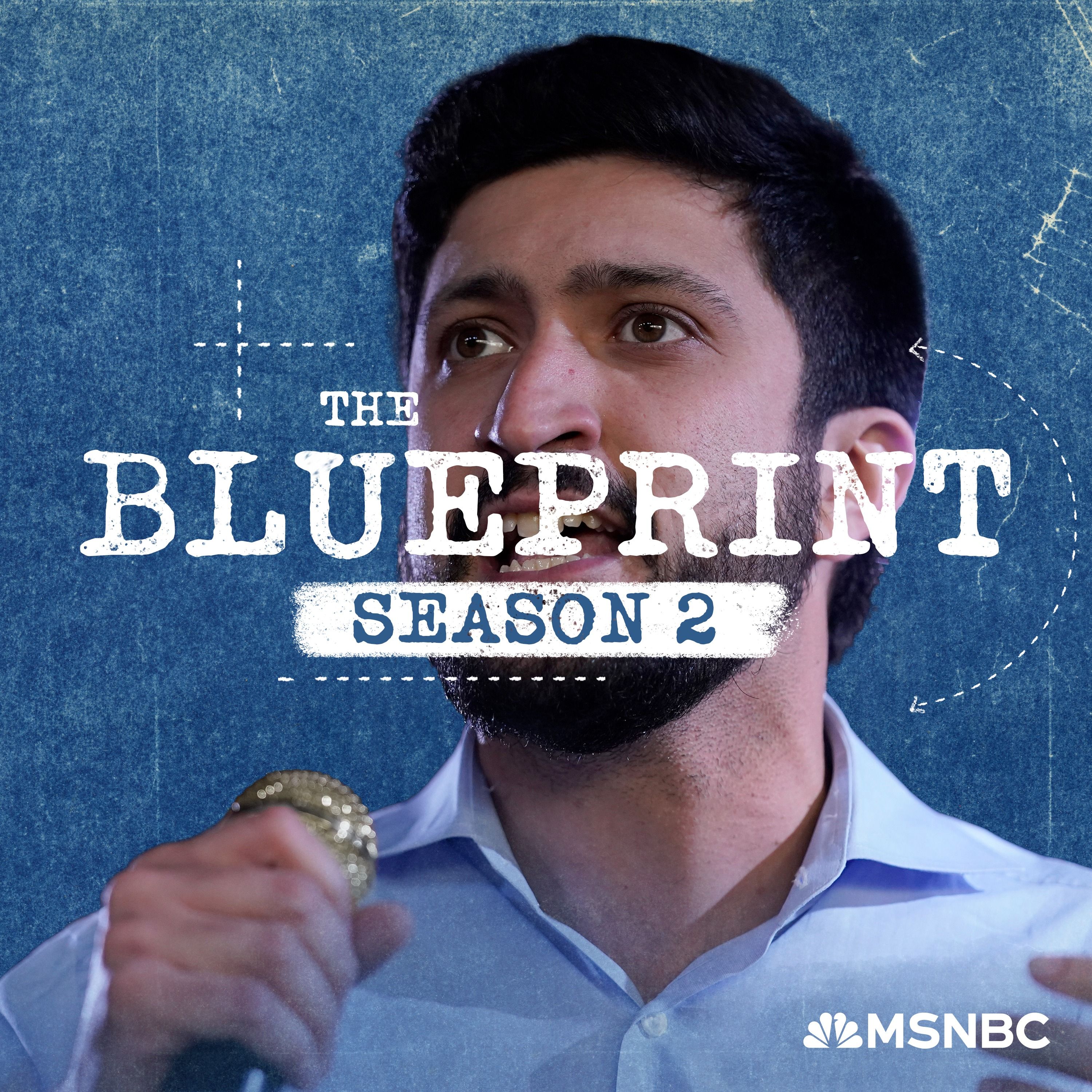
Clock It with Symone & Eugene
Dems Need to Rethink Their Litmus Tests, with Greg Casar
00:47:24
Strategist Lis Smith joins Jen to assess the latest in Democratic politics, and Rep. Greg Casar (D-TX) offers his prescription to Dems for winning back voters’ trust.
Loading summary
Transcript100 lines
- [00:01]
LifeLock Announcer
It's Cybersecurity awareness month and LifeLock is here with tips to help protect your identity, use strong passwords, set up multi factor authentication and report phishing scams. And for comprehensive identity protection, LifeLock is your best choice. LifeLock alerts you to suspicious uses of your personal information and also fixes identity theft, guaranteed or your money back. Stay smart, stay safe and stay protected with a 30 day free trial@lifelock.com Special terms apply.
- [00:31]
Nicole Wallace
MSNBC presents the chart topping original podcast the Best People with Nicole Wallace. This week she sits down with actor Martin Macheen.
- [00:40]
Jen Psaki
It's a mighty battle going on. It's not about winning or losing. It's about being in touch with your own personal humanity. Because there's such a lack of it coming from this administration.
- [00:51]
Nicole Wallace
The Best people with Nicole Wallace listen now. For early access ad free listening and bonus content, subscribe to MSNBC Premium on Apple Podcasts.
- [01:13]
Jen Psaki
Hi everyone, it's Jen Psaki. I'm back with season two of the Blueprint. No matter where you fall, it's pretty clear that the Democratic Party is at a bit of a crossroads. Democrats are looking to regain power, but there's a lot of disagreement about what the winning formula looks like to get there. So this season on the Blueprint, I'm going to sit down with some of the biggest names at the center of the debate over reshaping the party. And I'm also going to keep an eye, of course, on the races that are coming up a few weeks from now and what they may tell us each week. I'm also going to link up with political strategist Liz Smith. Liz is a veteran of just about every kind of Democratic campaign you can think of. She's worked for Barack Obama. That's where I met her. Pete Buttigieg, Mallory McMurrow. If there's an up and coming Democratic candidate anywhere, Liz is probably involved somehow. And we're going to talk about the big debates within the Democratic Party right now, too, the candidates running primaries and what it all says about where the party is headed. I don't think we'll see everything the same way, and that's okay. And I won't see everything the same way with the guests I have on. They probably won't see everything the same way with each other. That's the point. Now's the time to have the discussions with that. Let's kick this off with Liz, then we're gonna toss my conversation over to one with Greg Kazar, chair of the Congressional Progressive Caucus. Okay, Liz. Liz Smith, I'M so happy to see you. How are you?
- [02:38]
Liz Smith
I am great. You left out. I'd also worked on DA races, state rep races. There really isn't race in electoral politics that I haven't touched in my career.
- [02:48]
Jen Psaki
Dog catcher. You've done all the things. I mean, I really couldn't list your whole resume because we'd be here forever. I just wanted to give people a sample of it. So I was thinking last night about when I first you because I first met you in the 2012 election when we were both working for Barack Obama and we had very different jobs. My job was to travel around with Barack Obama and do, I would say, more of the positive messaging. I did these briefings on the plane with Jay Carney, which were kind of funny, but we would mainly talk about what he was up to, what the candidate was up to. We were talking to the reporters about that. I would staff him for local interviews. And your job was different. It was more of the negative side. Tell us about that.
- [03:32]
Liz Smith
Yes. You know, in the industry, I believe they call it rat fucking.
- [03:35]
Jen Psaki
Oh.
- [03:36]
Liz Smith
That was my job and it was really to make Mitt Romney's life hell every day, to track his every utterance, but make sure that a negative message got out there about him. And you know, we were running in 2012 and it was a tough economic environment, the Obama administration. The country was clawing its way out of the recession. And so we had so many different directions we could have gone in against Mitt Romney, but we chose to keep it almost singularly focused on economics and discrediting him as an economic messenger, talking about his work in private equity, buying up companies, laying off workers, destroying communities, rather than going down all the other rabbit holes about social issues or even his faith, which some people wanted us to do. And I think that that experience, right, both of us doing both the positive and negative track is important for right now, but also that relentless focus on the economy and speaking to the issue that is most animating with people is something that a lot of Democrats could.
- [04:37]
Jen Psaki
Learn from right now, no question about it. And you made me. First of all, I got to be a part time participant in the rat fucking team because I would do some of these attacks on Mitt Romney when we were doing the briefing, but it is such an important part of it. Every successful campaign has both what does the candidate stand for and what are they presenting that's different and why is the opponent terrible? And keeping it focused on issues people care about is such a good reminder of what candidates are facing and should be thinking about right now.
- [05:07]
Liz Smith
I know. I noticed you never looked happier on that plane than when you got to go after Mitt Romney.
- [05:12]
Jen Psaki
First of all, I know I always wanted to be on the rat team and I sometimes got to be. And I cherish those moments. Okay, so we are here. It's October. There are a bunch of races coming up. Of course, in a couple of weeks we'll talk about them. But the big political story of the week right now seems to be, at least in, in races, seems to be Maine. Because just today we're taping this on a Tuesday. Just today, Governor Mills of Maine announced she was going to get into the Senate race at the urging of Chuck Schumer, clearly, and the Democratic Senatorial Campaign Committee, which is the body that oversees all of this from the national party. And so she's entered the race as of today. She's joining a couple of other candidates who are already in the race. The one who's getting the most buzz is a guy named Graham Platner. And Graham Platner is an O, which you gotta love that piece of his bio. And he kind of goes around and he speaks in human speak about a range of issues, including the economy, which he's relentlessly focused on. He also has this riff he did that went a little bit viral. And I just in case people listening haven't heard it, I just wanted to play it and we'll talk about it and a little bit more about the race on the other side.
- [06:21]
Graham Platner
When we have defended our democracy and our country and our freedom, let it be a different kind of freedom. The freedom to not be condemned to scraps and to struggle, but the freedom to live lives with dignity and fulfillment. The freedom to not be ripped off by a for profit health care system. The freedom to have a roof over our heads that we own. The freedom to have time, to build, to create, to love, to live lives not just of survival, but, but of fulfillment and joy.
- [06:59]
Jen Psaki
Okay, so he's got a thing. He's got the thing. The quality that good candidates have, which is that that's a great riff on freedom that ties together cost of living issues and issues people care about deeply. And he just feels very relatable. He's also 41 years old and Governor Mills is 77 years old. So this is a big age question in this race. But I do wanna say for Governor Mills, cause this is the argument people of her supporters, she is very popular. I think she has about a 51% approval rating. Susan Collins has 14%. And she has been Governing a state where she's been elected twice, where the population is growing older, and also isn't quite as progressive as some people who live outside of Maine might think. And I just wanted to play one thing from her, but people may have not remembered when she stood up to Donald Trump a couple of months ago. This is one of the things her supporters talk about. So let's play that too, and then we'll talk about the race.
- [07:57]
Is the Maine here, the governor of Maine? Are you not going to comply with it?
- [08:03]
I'm complying with state and federal laws.
- [08:05]
Well, we are the federal law, so you better come, you better comply because otherwise you're not getting any, any federal funding. Every state.
- [08:14]
Nicole Wallace
Good.
- [08:15]
Jen Psaki
I'll see you in court. I look forward to that. That should be a real easy one.
- [08:17]
That was her saying, see you in court. Basically like, f you, buddy, I'm going to see you in court. And she sued him and she won. So I share that because her announcement video was cringy and she seemed very old and out of touch, which is a contrast to Platner, who's getting a lot of buzz, raised a lot of money. I mean, the issue here, to me, my core issue is that there's this obsession by Chuck Schumer and others in Washington. I realize I live here with going with the old same playbook that worked 20 years ago and not recognizing that politics in the country change and there are people who don't come from the political world who might be worth giving a shot. And instead he seems to be putting his finger on the scale here. But what do you think?
- [09:02]
Liz Smith
Yeah. So he has that obsession. There is an obsession right now with Democratic primary voters, especially to not nominate super old candidates, to sort of say goodbye to the gerontocracy. There's also an obsession among Democratic primary voters to nominate people from communities, people who aren't just like lifetime lawyer lobbyists politicians, you know, people with unconventional backgrounds like Graham Platner. And to your point, you know, you said he has a thing. I'd say he's got Riz, you know, he's got the sauce. Janet Mills has a backbone, but my issue isn't with primaries. Right. I think primaries are good things. When you have a primary.
- [09:41]
Jen Psaki
They can strengthen everybody.
- [09:42]
Liz Smith
Exactly. And you end up being a better general election candidate when you have a primary. What my issue is with here is one telling a 77 year old elected official to not to retire, but instead to go for a promotion. When voters are saying, please, no more of this after what happened with Joe Biden. And my second issue is that the DSCC is putting their thumb on the scale for her. As you mentioned, Maine is a weird state.
- [10:11]
Jen Psaki
Right.
- [10:11]
Liz Smith
They have two congressional districts that split in the presidential race. One is very blue, one always goes for Trump. And so this is not a down the line blue state. Collins is a very, very tricky opponent. So let's have a primary, let's play it out. There are other candidates in there. But I do not think the DSCC is doing anyone any favors, let alone Janet Mills by putting their thumb on the scale here. Because let's be real, Chuck Schumer is one of the least popular elected officials in American politics today.
- [10:45]
Jen Psaki
Yeah. I mean, if you're Graham Platner or the other candidates in the race, you might say, yeah, Washington doesn't want me because I'm not from Washington. You can just see that as an ad. It's also not even the only place where they're bizarrely putting their finger or their thumb on the skull. It's not that they don't do this. They do do this as long as you and I have been involved in politics. But it feels so overt this time is one of the reasons it feels there's races where there are good candidates and they're kind of weirdly putting their thumb on the scale. Like Michigan is one, but also Connecticut. And you mentioned this to me, and this is kind of a race. I think if people aren't paying attention to it, it will blow their mind a little bit. But you tell us a little bit more about the Connecticut race. Yeah.
- [11:23]
Liz Smith
In Connecticut, there's a member of Congress, John Larson, I think he also 77 years old. Last year he had, or earlier this year he had a health incident on the floor of the House, a seizure like incident where he just stopped being able to speak. He sort of dropped out of the public eye for a while. Then again, over the summer had an event, same thing happened. And this is one of those scenarios where again, you'd think a lot of Democrats would step in and say, hey, you've had a long story career. Maybe it's now time for you to step aside, let a new generation lead. Instead, you have all of the leadership like Hakeem Jeffries, et cetera, behind the scenes saying no one should challenge him. You saw Chris Murphy over the weekend endorsing him with so much of the same language that we heard Democrats using to back Joe Biden. Oh, he might have lost a step or two, he might have had a health challenge or two, but he's still going to go out there and fight for us. Meanwhile, in that primary, you've got that Luke Bronin, two term mayor of Hartford who had been in the Obama administration as a veteran and already has raised $1.2 million. And what I think is why don't we one, encourage these primaries and two, maybe lift up this next generation. Because what people are saying and what we're seeing in both these races is that we don't want the gerontocracy and we don't want the establishment telling us who to vote. Think about 2024 and how much the Democratic establishment k and screamed whenever anyone even like Dean Phillips tried to challenge Joe Biden. And so I think we need to let these races play out. And I think as a party we gotta have that conversation with like grandma and grandpa that like we gotta take away the keys. Maybe it's time to retire, spend some time with your grandkids and let a new generation step up and lead.
- [13:18]
Jen Psaki
I mean also, no offense, Dean Phillips, but I don't think anyone thought he was gonna be president. I mean, Luke Bronin could be a member of Congress. Right. Easily.
- [13:27]
Liz Smith
Right, right. And a great one.
- [13:29]
Jen Psaki
Right. And a. So, so it's just. And he's 46 years old, he could be in Congress for a long time. So it's a little disconnected from what is clearly happening in movements across the country that I don't even think is necessarily tied to a wing of the party. It's tied to age and new energy and something different and people coming from communities in a different way.
- [13:51]
Liz Smith
And just like this constant circling of the wagons I think is what is so frustrating to people. Why are you afraid of change? Why are you afraid of this? And so I. They'll get a wake up call in the Larson race. They may get one in Maine. I don't know. We need to see how these things shake out.
- [14:08]
Jen Psaki
We will see. That's what we love about primaries. We don't decide. The people voting decide. Okay. There's another race happening, a big one in a couple of weeks in New York City, which I think we've all been paying quite a bit of attention to. You were actually a New York City longtime politico. So tell me your take on that race right now.
- [14:28]
Liz Smith
Well, the New York City mayoral was.
- [14:30]
Jen Psaki
That was a sigh. That was such a deep breath.
- [14:32]
Liz Smith
It's getting super weird. As we all know, in June, zoran Mamdani, the 33 year old Democratic socialist, beat Andrew Cuomo in the primary. The former two plus term governor of New York, Andrew Cuomo, who had been sort of run out of office in disgrace. Despite that, Andrew Cuomo had been backed by essentially all of the Democratic establishment, even by the New York Times. And so it was an earthquake when Mamdani won. And he won by bringing out all these young voters who never, ever vote in low turnout primaries like that. And he brought so much excitement to the process. But now Cuomo's running as an independent. That sort of this zombie campaign. And speaking of the weird nature of this, there's some sound I wanted to play for you to show you the very weird, bizarre, uncomfortable position he's in right now.
- [15:25]
Jen Psaki
Okay, let's play it.
- [15:26]
Should the president have gone after the Attorney general? Was he right to do that?
- [15:30]
Graham Platner
Well, he would say he didn't go after her. The prosecutor will say they were just doing justice, which is what Tish James said about going after President Trump. I'm just pursuing justice. That's why it's political.
- [15:47]
Jen Psaki
But what do you say?
- [15:49]
Graham Platner
Neither side should be playing politics.
- [15:52]
Jen Psaki
I mean, first of all, neither side should be playing politics. Everybody listening probably knows the whole backstory here. There is a woman who is not qualified at all for her job, who Trump basically put in a job so that she could indict Tish James and also James Comey. And that's what we're talking about here. Cuomo also seemed to speak on behalf of Trump there at a moment. Here's what he would say, which is so strange, it makes me wonder, like, what kind of compromise book that the Trump administration has on him. I'm not saying they do, but that's the kind of strange response when you want to get kind of in good with Trump when you're running for mayor of New York City. It's bizarre.
- [16:30]
Liz Smith
Cuomo's in this weird position now, lifelong Democrat running as an independent. He's trying to get Trump to signal to Republican voters that they should be voting for Cuomo in this primary. So, you know, it's rumored Trump helped get Mayor Eric Adams out of the race. Trump is trying to undermine Curtis Sliwa, the Republican candidate. And so that's why I think you see Cuomo cozying up to Trump all while running ads and saying out there that he is the one candidate who can stand up to Donald Trump, so make it make sense. But then, to me, the weirdest part of all of this is all of Democratic leadership, which is based out of New York. You've got Chuck Schumer, Senate Leader Hakeem Jeffries, House Leader Kirsten Gillibrand, the head of the aforementioned dscc, all refusing to support Jordan Mamdani. Which is crazy. Which is crazy. And like part of the reasoning is maybe it would hurt Democrats across the country if we're associated with him. I was in McLean County, Illinois this past weekend and I gave a speech to Democrats there, very Purple County. And I mentioned a lot of names. Barack Obama, Dick Durbin, Pete Buttigieg. The name I mentioned that got the most applause was Zoramdani. There's something about that guy generating a lot of excitement. Maybe we should learn from him. Maybe we should harness some of the energy he had.
- [17:51]
Jen Psaki
What strikes me here is there's this calculation by all of these leaders. I shouldn't endorse him because I will upset the Jewish community, I will upset the business community, whatever all of their calculations may be. You mentioned some of them. There is a calculation of not endorsing him too, which is that you seem completely out of touch with the mass group of voters in your city who turned out to support this guy. And he is generating such tremendous excitement and buzz even by just being out in the community. I saw a video recently of him on a city bike and just taking photos with people. But it feels. So there is a huge drawback to not participating also. The guy's gonna be mad. Mayor of New York City in a few weeks. That's what's gonna happen, everybody. So it just, it feels related to all the story of Maine that we were talking about in the story of Connecticut. Because the job of these leaders is also to provide the resources and the know how when needed to candidates who are already have the pizzazz to win. Right. Who are moving people in their districts not to put their thumb on the scale with their old friends, literally old friends. And it feels like we're not quite doing that yet. And that's a place where I think there could, there should be some real change and self reflection within the party.
- [19:09]
Liz Smith
Yeah. And literally all we're doing here, Jen, is asking them to listen to voters, to trust voters. Don't just make it about the donors, about the business interests, all of that. And I think that is a really key lesson after 2024. And we are not seeing Democrats take it yet.
- [19:26]
Jen Psaki
Well, Liz, we're gonna talk again in a week. Who the hell knows what will happen this week in the political world? But I can't wait to talk to you again for joining me.
- [19:34]
Liz Smith
Yeah, thanks for having me, Jen.
- [19:37]
Jen Psaki
Let's take a break and when I come back, I'll have Texas Representative Greg Kazar with me. He's chair of the Congressional Progressive Caucus. We spoke last Friday about how progressives can help make the Democratic Party's tent even bigger.
- [19:48]
Meghna Chakrabarti
That's next.
- [19:57]
LifeLock Announcer
It's Cybersecurity awareness month and LifeLock is here with tips to help protect your identity Use strong passwords, set up multi factor authentication and report phishing scams. And for comprehensive identity protection, LifeLock is your best choice. LifeLock alerts you to suspicious uses of your personal information and also fixes identity theft. Guaranteed or your money back. Stay smart, stay safe and stay protected with a 30 day free trial@lifelock.com Specialoffer.
- [20:25]
Meghna Chakrabarti
Terms apply when news first breaks it's everywhere. In the headlines, on TV, all over social media, in your push notifications. It's like a storm, but the coverage leaves you feeling unsatisfied. Well, that's where we come in. I'm Meghna chakrabarti, host of OnPointe. We ask the questions that still need answers. We analyze the meaning behind the news and why it matters to your life. We equip you with the knowledge you need to face the next news storm. Enpoint is Claire When It Counts. Subscribe today wherever you get your podcasts.
- [21:10]
Tommy Vietor
The headlines never stop and it's harder than ever to tell what's real, what matters, and what's just noise. That's where Pod Save America comes in. I'm Tommy Vitor and every week I'm joined by fellow former Obama aides Jon Favreau, Jon Lovett and Dan Pfeiffer to break down the biggest stories, unpack what they mean for the future of our democracy, and add just enough humor to stay sane along the way way. You'll also hear honest, in depth conversations with big voices in politics, media and culture like Rachel Maddow, Gavin Newsom, and Mark Cuban that you won't find anywhere else. New episodes drop every Tuesday and Friday with deep dives every other weekend. Listen wherever you get your podcasts, watch on YouTube, or subscribe on Apple Podcasts for ad free episodes.
- [21:52]
Jen Psaki
Texas Congressman Greg Kazar has only been in Congress for one term, but he has quickly moved made quite a name for himself as one of the most effective communicators in the Democratic Party in Washington. And that's not just on my secret list I keep of such that sort of thing. It's important to keep a list like that. He's also been a big presence on the Fight the Oligarchy tour with Bernie Sanders and aoc of course, and he's kind of at the top of his class when it comes to calling out BS on the other side of the aisle. And I know this because I've had him on my TV show a lot and I watch him a lot. And I'm sure you've maybe have seen him as well. He's also literally the fastest man in Congress, which means something at least it means for those of you who are being introduced to him right now, he's not 85 cuz he wouldn't be the fastest man in Congress if he was 85. But anyway, welcome Congressman Greg Cazar. I'm so excited to talk to you.
- [22:45]
Yeah, thanks so much for having me on.
- [22:46]
I want to say, just as some listeners may be just meeting you for the first time, maybe they've heard of you, maybe they're looking for a little hope and spirit in their veins right now. Everybody is the reason I wanted to talk to you. There's a couple reasons I want to talk to you. One is that but you speak like a human being and I wish that was the case for every person in the Democratic Party and every person with a platform who believed in a lot of the things you believe in. But it is not. There are a lot of people who are just robotically reading off of talking points. You are not one of them. You also say things that are surprising. And that is interesting to me because sometimes when people hear someone is the chair of the Progressive Caucus, which you are, they may think if they don't consider themselves a member of the progressive wing of the party, I'm not gonna have anything in common with this person. This guy is prob somebody who is drinking a Matcha latte and hugging a tree in Brooklyn. And you are definitely not right. Not that there's anything wrong with any of those things, but there's this perception that I just don't think is right. And the third reason is the one I already touched on, which is that as the fastest man in Congress, you obviously are not 85. You are a rising star because you're young, you're very good at what you do, but also because you're somebody who I think is going to be around for a while. So I'm delighted to have you here and I just wanted to introduce to people listening kind of why I wanted to talk to you so much. So let me start with this. This is a question that has not just been on my mind, but you see it in poll after poll. It's something that comes up in focus groups and even beyond that, just average people out there who are Trying to figure out where their politics are. Who is the Democratic Party and what does the Democratic Party stand for? So what do you tell people in answer to that question?
- [24:26]
I tell people that the Democratic Party party has been, really should be the party of working class people, the party of the many against the few, the few people that want to use the economy to screw you over and take your work and your labor and your money, or the few that want to take over the government to enrich themselves and screw you over either through discrimination or taking away your voice or your power and say, and so I believe kind of that old school democratic party of 100 years ago that took on the robber barons or the Democratic Party that created a Head Start and Medicaid and Medicare and the Civil Rights act and the Voting Rights act all in one presidential term under a Texas president, Lyndon Baines Johnson. And I think that's the kind of Democratic Party we're trying to create today. And I know that folks may look back at this in a few months, but my hope is that right now, when folks see this fight over reopening the government where the Republican Party of today wants to take away your health care and your money, all to hand it over to billionaires, that the Democratic Party right now is trying to lower your costs and help you keep your money and keep your health care and stand up to that billionaire class. So that's who I think the Democratic Party is or should be when we're at our best. And I believe progressives play a key role in that. That not to knock on any of my tree hugger friends, but not just on single issues, but progressives really have been the folks that have been willing to stand up against the rich and powerful and stand up for the mass number of our constituents who really share a lot more in common than we're different between us.
- [26:06]
So there was a lot packed in. And first of all, I love a matcha latte every now and then. Sometimes it tastes.
- [26:11]
Yeah, we're not kicking the matcha. No, not kicking our friends in Brooklyn either.
- [26:15]
No, I love Brooklyn and I love trees. It's just this perception, right? How should people who are trying to connect with voters, trying to connect with their neighbors talk about these issues in a, in a human speak way.
- [26:28]
Look, I started out my career not as a lawyer, not as a city council member or as a member of Congress, but on construction sites. I was a labor organizer helping bring construction workers together other to take on oftentimes really wealthy real estate developers and huge corporations that were screwing Them over and on a Texas construction site, you oftentimes have 200 people, mostly guys with about 200 different opinions, different races and ethnicities and backgrounds. And we had to figure out that amongst everybody's differences, usually people's economic interests could bring people together. And that's I think how the Democratic Party should be thinking. And we should be talking about saying, look, the folks at the top that are working the least and making the most can afford to give everybody else here a raise. And we've seen it a ton of times when you're organizing in the union movement, that the guys at the top, the rich real estate developers who think the rules don't apply to them, who don't want to give people a raise, who are self interested, they try to exploit immigration status or race or find ways to divide us. But we can bring all those folks together around saying folks deserve a raise. People should be able to retire, your kids should be able to afford to go to school after you've been out here working all of these long hours. And I think if we're talking to people like we talk to them on a construction site, then we will be way better off as a party. I even have talked about the construction site test where if Democrats are trying to figure out whether we should be talking about an issue or not, we should ask ourselves, should somebody that is pulling seven 12s on a construction site, will this issue make a difference in that person's life, Would they give a. And if the answer is no, then maybe it shouldn't be the primary issue. If the answer is yes, then we should absolutely be fighting to make sure you get a raise and can afford your house and can afford to live. And I think that's how we win back voters trust and then really start beating back the authoritarianism problem that we're dealing with right now.
- [28:30]
Now, one of the things that used to drive me crazy is when people would talk about the Paris climate agreement, which is a very important thing, as like their lead point about climate change. And you're like, no, no, it's clean air, it's clean water, it's communities being able to have those things right.
- [28:45]
And, and I've started to learn that and see it myself. I went back and looked at my old campaign materials from the first time I ran for city council and climate change was on there. You know, it was the first time I was running. We this is a critical issue. One of the issues on the piece of literature we'd go hand out at the doors, but after knocking on doors and talking to people. We started changing the materials to say much more clearly, like, we've got to stop these wildfires that we see growing all around our city. We've got to stop the next winter storm here in Texas. I grew up barely ever seeing it snow and when it did, like it would melt on the ground. Now we have these crazy freezes where the power goes out for everybody and the water goes out. It's talking about the things that affect us directly. Especially if you're not somebody that can watch or does watch MSNBC every night, no matter how wonderful it is to see you, we know the vast majority of the folks that we need in our coalition are folks that that's, you know, you're out there just doing your job and want to know who's out there to make your daily life better.
- [29:45]
Right. You can't assume people are going to go looking for all of this. You have to provide the information out in all the places where people may just run across it, which is a hard thing to do. So let me, because you touched on an interesting thing and I know you feel this way, that there needs be, I think, a greater percentage in your view of what Democrats talk about related to cost of living, economic issues, health care, cost of housing, things like that. Now, that means because there's only so much space in what people say publicly and what's in campaign ads and what's on their website, less time for other things could be less time for talking about democracy, abortion rights, defending trans rights and trans kids, all things that Democrats stand for. Tell me how you think about that question, because it is one of the debates, debates within a lot of people in the party right now.
- [30:34]
Yeah, look, I think about this question as how is it that we actually go and defend the rights of all people? And I disagree with colleagues and pundits who say, well, the way that we defend abortion rights is that we become a little bit more Republican on that issue. Or the way that we defend immigrants is to start acting Trump light on that issue. I don't think anybody buys that. I don't think it's right and I don't think it's will work. The way that we go and defend abortion rights is to make sure that people know that we are there for their baseline economic issues where even if we may disagree on that social issue, the social issue or that one that we have win back the trust of the overwhelming number of voters on those economic working class issues and then we can have the kinds of majorities necessary, I think to defend and restore abortion rights in places like Texas, to make sure that we have a humane main immigration system. But I don't think we go and throw those folks and those issues under the bus. I actually really think about when I traveled for the Harris campaign outside of Texas. I spent a lot of time here in Texas, but then I went to Nevada during early voting and I kind of knew we were toast. Unfortunately, when I was sitting in a large group of Latino voters, overwhelmingly men, and one of the guys said to me, look, me and everybody else I work with, everybody in my union, union, you know, we're H vac workers. We all voted for Obama and most of us voted for Hillary and then for Joe. But now we're at the point where most of us are going to vote for Trump this time. And when I asked him why, he said, well, look, I try to make sure we have work all year round. And when I can't work for a couple months because there's not enough construction, you know, it gets really tough for us. And I feel like even though Trump's a jerk and I don't like him, I feel like he's more focused on that. That and Democrats, y' all are focused on other stuff. And Jen, you know that President Biden was very focused on building stuff, but the fact that he said y' all are more focused on other stuff, like.
- [32:33]
Trans rights, things like that.
- [32:35]
Exactly, yeah. You've heard lots of guys say, oh, other stuff, and they don't want to tell you what they really mean. You push them. And they were like, yeah, like trans stuff. And I said to him, I'm an advocate for equal rights for everybody, including in the LGBT community. But our number one priority is to make sure you have work year round and to make sure you're paid the overtime for all those over 40 hours hour weeks that you work and to make sure that you can afford to buy a house. And he said to me, well, even if we disagree on the gay stuff, that's the way he said it. He said, I'd still vote for that. I would vote for that Democratic Party that you just described. Which shows that I think our message has to break through and we have to honestly put our money where our mouth is and be willing to fight hard on those working class issues. Even when special interests or big money that are oftentimes involved in the Democratic Party disagree, we've got to be able to break through that so that people, people know that we're not just talking one way and walking another.
- [33:31]
We're going to take a quick break here, but when we're back, more from my conversation with Representative Greg Kazar. Stay with us.
- [33:44]
LifeLock Announcer
It's Cybersecurity awareness month and LifeLock is here with tips to help protect your identity. Use strong passwords, set up multi factor authentication and report phishing scanning. And for comprehensive identity protection, LifeLock is your best choice. LifeLock alerts you to suspicious uses of your personal information and also fixes identity theft, guaranteed or your money back. Stay smart, stay safe and stay protected. With a 30 day free trial at lifelock.com specialoffer terms apply.
- [34:14]
Jen Psaki
The connection between the guests on the show is the show. All that we do is put together people who are smart, people who are brave, people who are honest, and lots of times people who've never met each other to have a conversation that has never happened before. But on that day deepens everyone's understanding about the moment in which we gather.
- [34:35]
Nicole Wallace
Deadline White House with Nicole Wallace, weekdays from 4 to 6pm Eastern on MSNBC. Start your day with the MSNBC Daily newsletter. Sharp insights from voices you trust, standout moments from your favorite show, and fresh perspectives from experts shaping the news. Sign up now@msnbc.com.
- [35:05]
Jen Psaki
Yeah, look, I want to get there, too. I mean, I think what you're kind of saying, which is a choice and you have to make choices in these moments. And as much as it's like we gotta look forward now, you were a year past the shellacking of last year, but you know, about a third of the ads, I think, if I remember correctly, were on abortion rights.
- [35:21]
Rights.
- [35:21]
I'm a big defender of abortion rights. I think there are questions about where you spend paid money and where you spend your time, which the most valuable thing about any politician is their time and how they're using their voice. It sounds like you're saying a greater swath of that budget and also of time needs to be on these issues that are related to cost of living. Now, here's the question I have, though. One of the challenges is that people who are having their rights attacked, and that includes women on abortion rights, it includes the trans community and trans kids, it includes people in the LGBTQ community, feel like, well, wait, if the Democrats aren't going to spend their capital defending me, then who's going to defend me? And they feel lost, too. Right. And maybe feel like the party isn't for them. So how do you address that?
- [36:10]
Well, look, this is, I think, really important because we shouldn't be throwing anybody under the bus. And there have been folks that Advocate and say, yeah, when trans issues are brought up, either just don't talk about them at all. That doesn't work because the Republicans, of course, bring it up, so you've got to talk on them. Or they say, yeah, just have a more Republican ish position. I don't think that works either. So I think the way to address it. One example I'll give you is just a few months ago, this independent report was about to come out from the budget office. Big bombshell report that the bill that Trump was pushing through, that we now know of as this billionaire betrayal bill, was about to kick 15 million people off of their healthcare. The very day that report was coming out. Marjorie Taylor Greene, who is the chairwoman of the Doge Committee and I sit on that committee, she called a big hearing, an emergency hearing. And what did she call it on? She called the hearing on trans, semi professional athletes in fencing. Not fencing like the thing around your house, but like the sport of fencing with the swords.
- [37:15]
Like with a sword?
- [37:16]
Yes. And no disrespect to fencers. It wasn't till that day that I had ever met somebody that competed in fencing. I'm sure it's great. And so she's being a bully, she's being horrible, and she's picking on this specific issue to pick on a minority of our community that's already having a hard time. And I think where I was as a progressive in the past thought, you know what, the first thing we just do is come in and defend on that issue. And there's something to that. But to your point, actually there is a way to make sure we defend the basic rights of all people and call out Donald Trump for being a swindler and a con man and trying to take your money. And so in that hearing, I talked about how Donald Trump is trying to take your money and take your health care. No matter who you are and where you live or who you love or how you voted, he's taking your money. And then he has people like Marjorie Taylor Greene over here, obsessed, passing over semi professional fencers and beating up on people that have no business being beat up on by the government because he wants to take your money over here while distracting you over there. And I think that's a way that we can still be standing up for the rights of even the most marginalized people while making sure we don't lose the plot. Because people like Marjorie Taylor Greene, I have found in my time in Washington, are very disciplined and purposeful and they very purposefully pick these issues because they don't want to show you the way that they are being hypocritical and taking working class people's money, their own constituents money.
- [38:51]
This is a very good. So what in that moment, and then I have so many other questions for you. What should Democrats have done?
- [38:58]
Well, in that moment, I think we did actually a good job where we called out the fact that they're trying to distract from this report that they're going to take 15 million people's money, kick them off of their health care, and that they were obsessing over something like, you know,.00x percent of the population, and that, frankly, this is something I learned in fencing. A lot of these tournaments are mixed gender anyway. You know, laugh at them, call them out. You don't have to backpedal on the basic rights of people, but you do have to. I think we do and should say, look, these Trump Republicans are the ones that are upset, obsessed with LGBT issues instead of being obsessed with making sure you make your money. And in fact, they're obsessed with taking your money and beating up on, you know, yelling it's an immigrant's fault or yelling it's an LGBT person's fault. Look, it wasn't a Venezuelan asylum seeker that jacked up your rent. It was a Wall street hedge fund that's donating to Trump and the Republicans that jacked up your rent. It wasn't a woke university over here that screwed up your healthcare. No, it was a healthcare CEO that's making your health care care worst. And, you know, that's, that's the fight that we're in. But we have to be willing to actually call out the Republican bs, call out their essentially corporate puppet masters, and be willing to get uninvited from some of those corporate dinners and point out that the real villains are those corporations and the Republican funders and not, you know, these vulnerable people that Donald Trump writes into the story.
- [40:29]
This is a very important thing because it's like, you can't. I've been joking this week that little Mike Johnson is not inviting me to his holiday party because I have relentless every night. And it's just, you have to kind of cut these people down, I think, and call it out, because otherwise you're allowing them to have a free pass. Let me ask you about something that is another kind of debate, and it's a big electoral question, really, is this question of litmus tests, right? And what candidates should be a part of running as Democrats? I mean, you know. Well, I mean, not that you're in a conservative district in Texas, but you're in Texas. Right. And districts are different all across the country. I've been through my own journey on this particular question. I'm just going to acknowledge because I worked at the DCCC in the 06 cycle when Rahm Emanuel was the chair, people have all sorts of views on him, which is fine. And his view was like, you just have to recruit the candidate who can win in the district. They don't have to be aligned on every issue. So there were people who ran that year and won who were not pro choice, who were probably card carrying members of the nra, who probably had questionable positions on issues related to the climate and energy companies. Those aren't things I agree with and I know they're not ones you agree with. We didn't win, but win back the House that year for a range of reasons. Now, since then, I was one of the people who argued to President Obama at the time that he should not give money to candidates who didn't have expansive gun reform platforms.
- [41:56]
Right.
- [41:56]
Or didn't to support that. I now don't think that was like the right thing. I'm asking this, I'm acknowledging, I guess that I've struggled with this. How do you see it? I mean, because there's a question of, of should the Democratic Party recruit candidates or financially support, which matters because you need that money when you're running for Congress. Sometimes people who are not pro choice, people who are members of the nra, things like that. What do you think?
- [42:21]
Look, I, from my time on the City council and now even as Progressive Caucus chair, recognize that we need a really sizable majority of the American people with us if we want to achieve our progressive goals. And so I've always been un used to donating money and raising money for folks that are to the right on me on a variety of issues. I think that we do need to turn off some of our litmus tests because we need the vast majority of the public with us. We also have to win these upcoming midterm elections, but even more than that, then win the subsequent elections after that. Now that doesn't mean we throw our values out at all. I think it's really important that the Democratic Party have a message and stand for something and that we be able to say that Democrats are going to stand for the rights both in the workplace and in the government of the many, against the corruption and the tyranny of the few. I think that's a winning message that wins in deep blue districts, purple districts Red districts all across the country. It's that kind of message that I've brought to coming up on a dozen different Republican districts that I've gone and traveled to over the last few months. A lot of people wouldn't expect the Progressive Caucus chair and progressive members, you know, your Mark Pocans and Yasmin Ansaris and Maxwell Frosts to be the first ones going out to Republican districts. But we have been with this message that is not, not the typical litmus test message, which is, you know, what can we talk about? The fact that a few people are enriching themselves while destroying our entire government for themselves, against you. And so I think that that can be the umbrella message that brings more people together this election cycle. And I do think that as Progressive Caucus chair, then my job is, once we have a governing majority, to push to make sure we fully restore abortion rights, to push to get that assault weapons ban. But as this propaganda takes hold from the right wing as they buy up media companies, as they strip us of our basic rights, I think we should be going really big to win really big come these midterm elections. They're going to try to gerrymander. They're trying to change every rule they can before this midterm. And I think we've got to be fighting them tooth and nail. And that means bringing people in that may not agree with you and me on 100% of issues, but I think we've got to have 60 or 70% of the country with us in this moment. My job, I think, is to make sure that our progressive movement is a bigger tense, that more and more people can identify with and connect with our overwhelmingly progressive economic message, and that we keep moving people, people on those social issues that we need to move them on. But I, I have campaigned and will continue to campaign for Democrats that are more conservative than me, that we need to win in more conservative areas to have a majority.
- [45:17]
I should also add litmus tests are not just about progressives accepting more moderate positions. I think the refusal to endorse Mamdani by a number of Democrats is a litmus test too. Right. It's about accepting people who you may agree with on 80% of things and you may have disagreements with which to your point, that's like how you exp the majority.
- [45:38]
Yeah. And the last quick points I'll make on one, of course, a good plug for Mr. Mamdani. He's great. I mean, the fact that he can go out there and just say, make the buses and people will yell back Fast and free. That's a message that connects with people. It's amazing. And then second, I do think that some of the conceptions of what was a center position have also been losing and wrong. I mean, the idea that so called, we would call it moderate for Kyrsten Sinema to defend the carried interest loophole, I mean, that's not bringing together Americans from middle America. It's bringing together people in the C suite of some hedge fund. Like that's the only people who are being defended. So I think that we also have to change the idea of what a moderate or center position is because I don't think that's actually winning over voters.
- [46:23]
I think that is a very important point. I also think it's like people evolve, right? And people also. So there are people who've been involved in elected office and you know, for 20 years or 30 years and are quite progressive, right? Or have, have like moved on issues. And I think that's something there needs to be space to as well. But it is, it's like holding on to the old school kind of establishment of things and being willing to recognize and be open to movements and where the country is moving and the country is moving on a lot of issues. Let me ask you one more thing before I let you go.
- [46:56]
Oh no, we're almost already done. I felt, I know, it's been so fun.
- [46:59]
I could keep talking to you. One of the things I hear people say which I don't agree with and I'm an optimist, I feel like you're an optimist too, is my guess is that in 2028, which is a long time from now, there's a big midterm, there's governor's races, lots of stuff to happen. The only way the Democrats can win is by nominating a boring white man. Right? Like the country is not ready for anything but a boring white man. Now my take on this is a boring white man will not inspire people to turn out and vote. And that's part of the problem. But what do you think of this or how do you help address it with people who say the Democrats can't nominate a woman, they can't nominate a black woman, I don't even know if they can nominate a black person. I hear this all the time. I mean, you may hear this too. What do you say to people? What should people think about that?
- [47:45]
We have to go out and inspire millions and millions of people. And when the Democrats lost the presidential devastatingly to George W. Bush the second time, nobody thought hey, there might be this first term senator from Illinois, Illinois, who might come out of nowhere and help inspire the entire country. And so what I'm thinking a lot about right now is how so many people can know that the Democrats are against Trump, but don't know what it is that we stand for and believe in in this moment. So, as Progressive Caucus chair, we are helping right now develop a set of policies and platforms that we will pass and push for if we win back the House majority. And then if Donald Trump vetoes that, doesn't sign it. That sets up the platform for all sorts of people to go run for president. And it can't be the same boring stuff. I've been told so many times, buy a pollster, they tell all the House Democrats say the words, defend Social Security. It polls at like 90%. But it's not just about saying those words. What if nobody hears you? What if nobody cares? We should be saying, make sure Elon Musk pays the same tax rate into Social Security as a custodian does, and that will keep it solvent for generations to come. Pull every senior in this country out of poverty. And if you're a young person, a lot of times you take money out of your paycheck to keep your parents in their house, which is nuts. They've worked their entire life. If we pass something like that and if we make that what we're running on and then actually vote for it and Trump vetoes it, then I think we set up the ground for exciting candidates to run on stuff that people will actually care about, even if they're working 12 hours a day on a construction site.
- [49:18]
I love that. I'd also just say we don't know what the country is ready for until we see what moves the country. None of us can sit here and deem that or project. Congressman Greg Kazar, this was a real pleasure. It went really fast. Thank you for taking all the time today.
- [49:32]
It blew by. The very last thing I'll say, I think with this whole, like, obsessing or thinking about who can run for president. And I get how important it is. I think we're always out there, like, looking for who the hero is going to be. But I actually, I know it's cheesy as hell, but I really believe the hero is millions of millions of people out there speaking up, knocking on doors, talking to their friends. And I think y' all folks, listen, are a big part of that so that we can get ourselves out of the situation.
- [49:57]
That's a perfect note to end on because it's like people always ask me, who's gonna, who's leading the Democratic Party? Who's gonna be the leader? And it's like, maybe it's you. I mean, that's, that's what's inspiring right now. Thank you again. I love talking to you.
- [50:11]
Thanks a bunch. Catch you later.
- [50:18]
Thanks so much for listening. Listening to the Blueprint. You can subscribe to MSNBC Premium on Apple Podcasts to get this and other MSNBC podcasts ad free. As a subscriber, you'll also get early access and exclusive bonus content. You can also subscribe to my newsletter, the Blueprint with Jen Psaki, where every week I look at the debate within the Democratic Party over how to win back voters. Sign up for that@msnbc.com blueprintnewsletter. All episodes of the Blueprint are also available on YouTube. Visit msnbc.com theblueprint to watch. The Blueprint with Jen Psaki is produced by Franny Kelly alongside Leah Collins, Michelle Hoffner, Andrew Joyce, Tricia McKinney and Eggy Monda. Additional production support from McKenna Roberts. Our audio engineer is Bob Mallory. Katie Lau is the senior manager of audio production. Our senior producer is Miguel Suzanna, and Alex Lybica is the executive producer of the Briefing. Aisha Turner is the executive producer of MSNBC Audio, and Madeleine Herringer is senior vice president in charge of audio, digital and long form.
- [51:31]
Nicole Wallace
From executive producer Rachel Maddow. MSNBC Films presents Andrew the Dirty Work.
- [51:37]
Graham Platner
I will call for Andrew Young, that dedicated leader.
- [51:41]
Nicole Wallace
The inside story of Martin Luther King's trusted friend and advisor.
- [51:45]
Jen Psaki
If I had to take a few kicks and licks to get a civil Rights act, I'd do it any day of the week.
- [51:49]
Nicole Wallace
And how he carried the dream forward onto the world stage.
- [51:53]
Jen Psaki
We had to take the movement into politics.
- [51:55]
Nicole Wallace
Andrew Young, the Dirty work, Friday at 9pm Eastern on MSNBC.