← Clock It with Symone & Eugene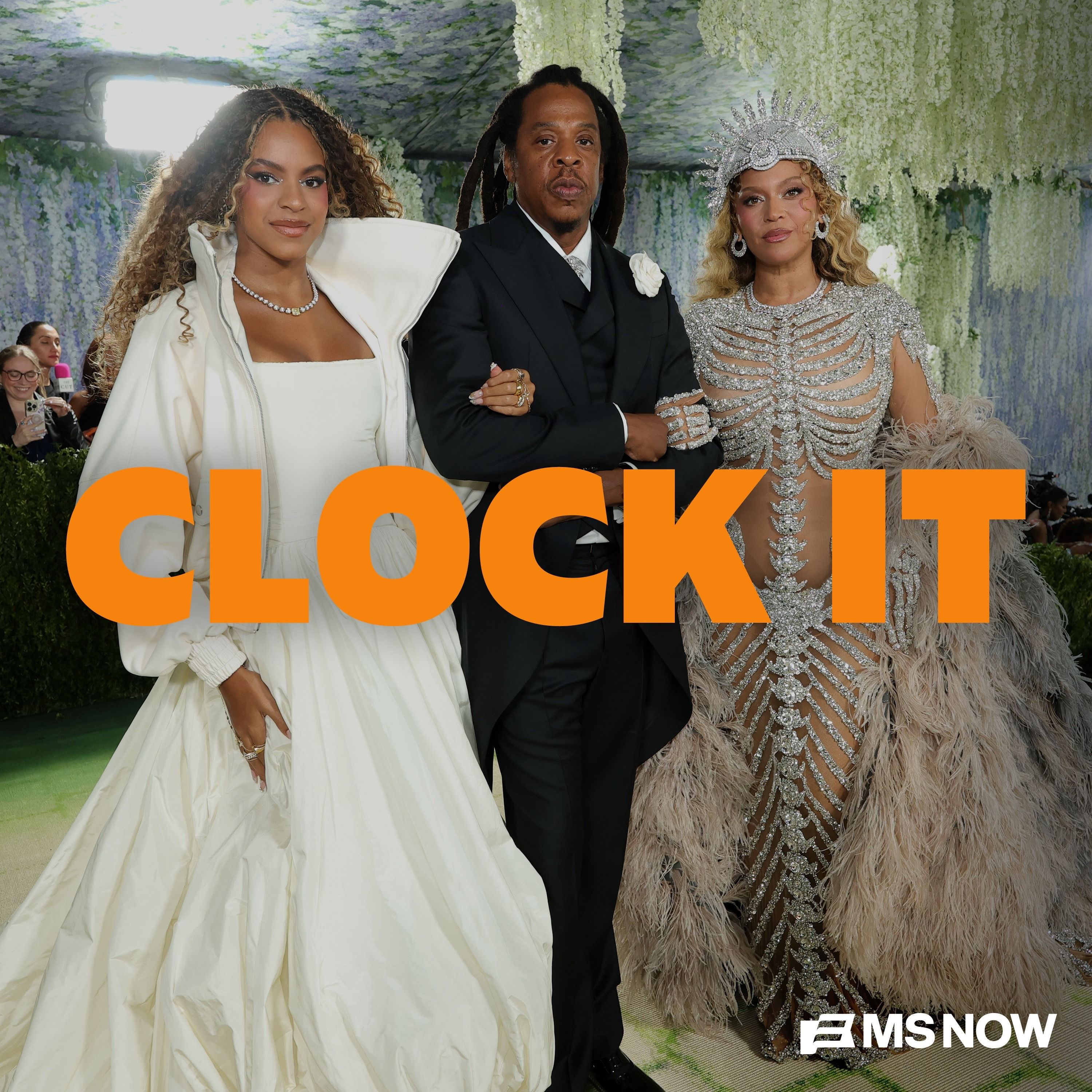
Clock It with Symone & Eugene
Money for War (and the Met Gala) but Can't Feed the Poor
00:48:12
Some Americans are choosing between paying for gas or paying for food, while other Americans – celebrities – descended on New York for the Bezos-sponsored, Vogue-run Met Gala.
Loading summary
Transcript361 lines
- [00:00]
A
Lots of places can expose you to identity theft.
- [00:03]
B
Oh no.
- [00:04]
A
That's why LifeLock monitors hundreds of millions of data points a second for threats to your identity, which is way more than anyone can do on their own. If we find anything suspicious like new loans or changes to your financial accounts, we alert you right away all through text, phone, email or the LifeLock app. Get the alerts that could make all the difference. Save up to 40% your first year@lifelock.com Spotify terms apply.
- [00:31]
C
There's nothing like your first Mac. Here's what people online are sharing. Rhain says everything is just so smooth and fast. I still can't get over it. Syncing stuff between my phone and this is just chef's kiss. Rincredible488 says Apple Silicon basically cures low battery trauma. That's how they felt with their first Mac. How will you. Introducing the all new MacBook Neo, an amazing Mac at a surprising price. Find out more on apple.comMac. Greetings. Welcome back to Clock it. Don't you love it?
- [01:07]
A
I knew she was.
- [01:08]
C
I'm just saying, child, we look good. I'm not going back. I'm not going back this week. Folks. Our recommendation to you is to set up your Google flights price alerts for your summer vacation, please, right now, immediately. Okay? Because these prices, child, they are high and. And they're only going to get higher because the carriers are passing the increased jet fuel costs onto the consumers. That would be us now. I mean you can't even fly Spirit. Eugene, if you wanted to.
- [01:37]
A
Can I just say everyone hates on Spirit. I think if you just pay attention to what Spirit tells you before you go. And I have flown on Spirit. It's been a little while. But if you just listen to what they're saying. They say don't talk to us. Cost 15 extra dollars to get advice. When you're there, rebook the checked bag. They do prepay for your carry on. If you do that, it's fine.
- [01:55]
C
I mean, you know what. And shout out to Spirit now that they are not an option. You're hearing so many stories about how Spirit was the way in which folks
- [02:05]
A
everybody else's prices stayed low.
- [02:06]
C
Yeah, folks could get to where they needed to be in emergencies in times of need like it is.
- [02:11]
A
Yeah. $20 flight.
- [02:12]
C
Good child. I've never flown Spirit, but I heard about it.
- [02:16]
A
I have man of the people. You know what else is up? Trump's disapproval rating. The Washington Post ABC Ipsos poll released on Sunday has him at 62. Disapproval that's the highest it's been in either of his terms.
- [02:34]
C
Yes, 76% of people polled say they disapprove of the way Trump is handling the cost of living. And if you watch Ms. Now, which, you know, I hope you guys are.
- [02:43]
A
You should be.
- [02:44]
C
You should be. You have seen our reporters crisscrossing the country, talking to voters at the pump. Now, this is what they told Alex Tabitt.
- [02:51]
A
Right now we're seeing 519 a gallon
- [02:54]
C
here at this station.
- [02:55]
A
I mean, what do you make of gas prices? How is that impacting your life right now? It's bad. You know, people gotta live, people gotta eat. You know what I'm saying? And believe it or not, transportation is very, very important. And, you know, you have to choose whether you drive or eat. You know, drive or eat, baby.
- [03:18]
C
Ms. Now stay a gas station, get sound from voters. I love it.
- [03:22]
A
Simone, how about we check in with the churn, my eagle, our colleague also the Gen Zers. Yeah, the Gen Z'. Ers. She sat down with some Gen Z voters. She had six Wisconsin voters from across the political spectrum. Tell her what they think of Trump's performance today.
- [03:35]
C
I want to hear this.
- [03:36]
A
That's very good.
- [03:37]
B
Want to do a quick, rapid fire.
- [03:39]
C
So just one word to respond to this.
- [03:42]
A
How would you describe the Republican Party right now?
- [03:45]
C
Disjointed, misguided. Failing.
- [03:49]
A
Large, undemocratic, spineless.
- [03:52]
C
In one word, how would you describe the Trump White House during this second administration? Ty, we'll start with you.
- [03:59]
A
Say failed.
- [04:00]
C
I would say
- [04:03]
B
tyrannical.
- [04:06]
C
Strong, authoritarian, Directionless, Uncommitted.
- [04:12]
A
Oh, my God. Not one episode.
- [04:14]
C
Oh, this is a. I mean it to be clear, accurate, but also, like the children were unforgiving.
- [04:20]
A
Absolutely. They do not care. They're going through a lot. So the Gen Zers are very honest.
- [04:25]
C
Speaking of things, many Americans disapprove of the Iran war. The Iran war. We're going to get into that. I believe it's 66% disapproval. And then we're also going to get into AI.
- [04:37]
A
I was right.
- [04:37]
C
Look, 44% of people do say AI is developing a little too quickly.
- [04:42]
A
I'm up in there with them.
- [04:43]
C
Well, artificial intelligence CEOs Elon Musk and Sam Altman, well, they are battling it out, Eugene, in a federal courtroom. So far, Musk's lawyer has said, quote, we all could die as a result of artificial intelligence.
- [04:58]
A
So what do you have to say? Symone?
- [04:59]
C
I have to say this, okay, about me being coerced. I think you're. Look, look, I Seen Smart House, okay? All the millennials, all the millennials in there, y' all seen Smart House. You know what I'm talking about. The young people. Google it. I think that AI is here. It is happening. It is necessary. We need.
- [05:14]
A
So are diseases, but we still trying to fight them.
- [05:17]
C
We don't have to accept it. We need responsible ways in which to develop the AI. And look, I'm glad that they're saying the truth out loud. We all. We've seen the movies, we've seen. I've read the reports, but I don't think that the potential. The negative aspects of this technology should keep us from engaging with it. But I do think we need responsible people, and I do not think Elon Musk is responsible.
- [05:42]
A
That's the problem.
- [05:43]
C
And I don't. And I also don't trust Sam Altman at this point. I barely trust anybody. Anthropic. Anthropic is the only one where I'm like, well, so then how. They told us what was going on.
- [05:52]
A
So in what world can we. If we don't trust any of these people? And I think there are a lot of the American people who would look at what they've said, the kind of studies they've done. You know, the little things with the AI is like, I would kill all the humans instead of being turned off. Like, that's absolutely damn crazy, the anthropic people.
- [06:09]
C
But we only know that because anthropic told us.
- [06:11]
A
They told us. But are they fixing it? And what does the fixing look like? If you don't trust the people running the organizations, how can we trust the thing that they are presenting to us?
- [06:19]
C
This is why we need regulations. And not just on the federal level. State. State regulations. We need state regulations, and we need some state laws passed about AI, not just the data centers, which are also literally insane.
- [06:30]
A
This is the problem with trying to regulate tech and this happened with social media, is that it moves so quickly. By the time you finish arguing on the floor, writing the bill, passing the bill, getting it to the president or the governor's desk, we've already changed. It's already too late.
- [06:45]
C
I'm sorry, but in Maryland, they have a truncated legislative session. It's literally only like 90 days, which is crazy. And in Maryland, they get all the work done. Maryland's not the only state that that happens. So how we getting work done in 90 days on all the bills? On all of the bills. And you know what I'm saying? So if they can do that in Maryland, they should be able to do that in other places across the country, we cannot afford. Because the AI could get low.
- [07:06]
A
Yes.
- [07:06]
C
We cannot afford to let these tech companies operate unchecked and unregulated. Because I'm using the AI.
- [07:13]
A
Okay.
- [07:14]
C
I'm paying for Claude. Okay. I'm using the chat.
- [07:17]
A
GPT. Probably gonna have her locked up in the house.
- [07:20]
C
Oh, Lord, Lord. This is why.
- [07:22]
A
Door locked.
- [07:22]
C
Eugene. I. We do have the automatic locks on the house.
- [07:27]
A
I've been there.
- [07:27]
C
But I guess. Is that AI?
- [07:29]
A
Yes. Anything connected to the Internet can be hacked.
- [07:32]
C
I'm gonna need to speak to Mr. Townsend. I'm gonna talk to Mr. Townsend. Okay. In the group chat, we are gonna be talking about something we actually agree on.
- [07:40]
A
Finally.
- [07:41]
C
That is the Matt Gaylor. It is the stage for actually some of the most interesting power struggles of our time. We've got class. We've got politics. We've got racial politics. Okay. Racism, one could argue. We've got taste politics. Like politics. Yeah.
- [07:55]
A
Cause just because you got money doesn't mean you.
- [07:57]
C
We saw it last night.
- [07:58]
A
We have someone who's breathed the same air as Madame Beyonce, writer, editor and exec, Kierna Mayo. She's gonna be with us to break down the looks and what those looks were saying or not saying.
- [08:10]
C
Yes. Okay. But the first thing that I think we should talk about is the Supreme Court.
- [08:15]
A
You're very high on this for a lot of reasons.
- [08:16]
C
Yes, yes, yes. Look, last weekend, for the first time since 2021, if you needed mifepristone. Okay. Mifepristone is a drug that they give you, whether for an abortion. Right. But it's also. If you have an atopic pregnancy, if you had a misc. Mifepristone is the drug that they, in fact, give you. Well, if you needed mifepristone, couldn't get it. You could not get it through a telehealth appointment. You had to take off work and see a doctor in person. Because last Friday, the Fifth Circuit Court of Appeals ruled in favor of the state of Louisiana. Louisiana in the news a lot lately.
- [08:47]
A
They're very busy.
- [08:47]
C
Which sued the fda. And Louisiana said that mifepristone by mail was problematic. Eugene. Because it has been allowing abortions to continue in the state, even though Louisiana has an abortion ban. And so they didn't want that to be going down. And in every state in the south, except Virginia, there's basically an abortion ban. You can't get an abortion.
- [09:09]
A
Since jobs.
- [09:10]
C
Since jobs. Those are the effects of it. But I'm thinking about the Court case as it relates to voting rights in Louisiana. They won at the Supreme Court last week in that 6, 3 decision that basically gutted the Voting Rights act section 2.
- [09:24]
A
It's been gutted, basically killed it.
- [09:26]
C
Yes. So Wednesday SCOTUS came for the VRA and what about two days later the 5th Circuit came for Mifepristo. I think the two are connected. It is not a coincidence. This is the same state using the same playbook, going to the courts to roll back the rights of people in this country.
- [09:42]
A
There is an update, Simone. On Monday, the Supreme court put the 5th Circuit ruling on hold. So for now, mifepristone by mail can happen after a telehealth visit. It is still legal, but that pause is only in effect until May 11. After that, accessing this medication could require an in person appointment with the provider, which means time off work, figuring out transport with all this expensive ass gas and or childcare. And in states like Louisiana, it may not be available at all. And this has been when you talk to abortion advocates for years. Before Dobbs and definitely after Dobbs, when they got rid of Roe v. Wade, what they said is you're gonna have a country with a patchwork of laws and basically two different countries. And that means the people that live in red states or the people that live.
- [10:29]
C
If you live in the south.
- [10:30]
A
If you live in the south, you have an inability to get what you need. And some of the. I think that the problem has been that the right has. And the anti abortion advocates, what they have done a very good job at politically is convincing a lot of the American people that the folks getting abortions are just like teenagers out here just going, just laying down anywhere. But that's not what's happening. Some of the people who want to have abortions are because they can't afford more children, can't tell about that there
- [11:03]
C
are complications, that the pregnancy needs to be terminated in order to save the life of the mother because the fetus is not viable. Like when you miscarriages are actually so common in this country. More women have miscarriages than people I think realize. And when you have a miscarriage, depending on how far along you are, they give you two drugs. One is mifepristone and the second is misoprostol. Okay, think about the women who have gone through these like harrowing experiences, who wanted to have children, they have a miscarriage. Now you saying they gotta go all the way into the doctor's office. Let me tell you, they need to
- [11:42]
A
get a doctor's Appointment or where the doctors are. Come on. Because if they're in a rural area, the doctor might be 30 damn miles away. We also need to talk about what's going on in Iran in the Strait of Hormuz. We also need to get that more.
- [12:00]
C
Eugene's like, look, I don't got a uterus. I can't have a baby. But this is insane. So let's get into it.
- [12:05]
A
There's a lot of things. It's terrible. We hate it. I will say this. So I may have heard from someone in Dubai that they were getting all of these alerts, right? They were getting alerts that bombs were happening. This person called me like, what are you hearing? What the hell is going on? And I'm like, it's a ceasefire. What are you talking about? I ain't saying that. Okay, they gonna try to get a check.
- [12:26]
C
Here's the kid.
- [12:26]
A
Can't trust this person.
- [12:27]
C
The fact that you said that this unnamed person called you and said like, oh, there's these alerts. They're like, oh, there's bombs. Maybe not exactly where were, but where. Some of the people that they know are in the uae. And again, this person lives in Dubai. I don't understand how people keep writing that the ceasefire is in trouble. A ceasefire is only intact when people have ceased to fire.
- [12:53]
A
It's pretty clear. Very simple, very simple.
- [12:56]
C
So the ceasefire is not in trouble. In my opinion, the ceasefire is non existent. And we asked this gentleman, his name was Rob Malley, R M A L L E, y'.
- [13:03]
B
All.
- [13:03]
C
Rob Malley was the special envoy to on Iran in the Biden and Obama administration. Like the two different administrations. And I asked him, we had him on our show earlier this week. And I'm like, is this a ceasefire still? He's like, no.
- [13:18]
A
Well, let's hear what Pete Hexseth says. You're a Secretary of Defense. Because he was asked on Tuesday in a press conference if there was a ceasefire.
- [13:26]
C
Okay. And he usually tells the truth, right? Let's hear. Every time Iran's fired at us, we fired at Iran. Just going to ask you more directly, is the ceasefire over?
- [13:36]
A
No, the ceasefire is not over. Ultimately, this is a separate and distinct project. And we expected there would be some churn at the beginning, which happened. And we said we would defend and defend aggressively, and we absolutely have. Iran knows that. And ultimately the President's going to make a decision whether anything were to escalate into a violation of a ceasefire. But certainly we would and urge Iran to be prudent in the actions that they take to keep that underneath this threshold.
- [14:06]
C
Okay, now you know, part of the reason they don't want the ceasefire to be over is because or they want to keep this notion that oh, the ceasefire is intact is because they have not gone to Congress to get authorization. And there's this like 60 day rule 66 and the administration is now trying to say that oh, the ceasefire pauses. That now ain't nowhere in any of the documents or any of the history folks.
- [14:28]
A
That that's true.
- [14:28]
C
That that's true. I've never heard that before. The first time I heard that was when Pete Seth went before Congress and said it and said it. So again, a ceasefire means people have ceased to fire.
- [14:38]
A
And they still shooting.
- [14:39]
C
And they are still shooting. The head of CENTCOM said on Monday, folks, that US warships shot down cruise missiles and drones that Iran fired at the ships the navy was guiding through the Strait of Hormuz. An army Apaches sank six Iranian military speedboats. Okay, now sounds like fire to me. Sounds like fire to me. Now to be clear, we do not have an unlimited supply of munitions. Just last week Senator Mark Kelly Remember when we said that Pete Hegseth went before Congress first time since this war happened. Senator Mark Kelly was asking Pete Hegseth about this very thing. Take a listen.
- [15:15]
A
So I actually think it's closer to 330 billion in munitions. OK, how many to replenish? That's the question. I think that's exactly the right question too Senator, because the timeframe we were existing under was unacceptable. Okay, well tell me what this budget does. I mean months and years, fast years. I mean we're building new plants in real time. So just to replace what we had expended. I said months and then you said years. It depends on the weapon system, but 2 to 3 4x of what we have today. So yes, we're dealing with a reality under the previous administration of what they sent to Ukraine and what they allocated elsewhere. I got it. So we fired years worth of munitions and it is clear that we're these are being expended to try to achieve some objectives. That was the plan. But Mr. Secretary, this war is stuck. The Strait of Hormuz is closed. The Iranian regime is in place. Now to be very clear, we had someone named Katherine on our show this weekend. She worked at Pete Hegseth's Department of Defense.
- [16:23]
C
Was she fired?
- [16:24]
A
She left.
- [16:24]
C
She just left.
- [16:25]
A
I think it was time we asked her about this. We asked her about the munitions because it's concerning, you know. Cause if you're a country who keeps going places and shooting people up with bombs and things. We wanna make sure we have them to protect the homeland in case something does happen. She said to me and Jackie and Jonathan on the show that it is. She's concerned the policy people within the Defense Department are concerned. They're worried because there is Taiwan possibly.
- [16:52]
C
Yeah.
- [16:52]
A
Taiwan and China could move on at any time.
- [16:55]
C
And would we have enough munitions to defend Taiwan? Defend them? One wouldn't even want to. That's another US Policy is supposed to be that we would. But I don't know what these folks are doing.
- [17:04]
A
They do whatever they want.
- [17:05]
C
First of all, there was a, I believe it was a New York Times article earlier this week that talked about the money that is being spent on the war. One of the estimates was like the 25 billion, $25 billion was the same amount of money that it was going to take for the Obamacare subsidies to be extended. And so again we got money for war became feed the poor. We got money for war but no money for health care. And there are many people in this country now that are living without health care because they cann afford it. The last point I want to make to go back to Spirit Airlines is that Spirit said they jet fuel, jet fuel was too expensive and that's why they actually had to shut down.
- [17:42]
A
It was a little raggedy.
- [17:43]
C
Now Spirit has been in trouble for a while now. They done had some real issues. But I just want to play this interview. It is Margaret Brennan talking to Kevin Hassett, okay. From the administration talking about Spirit Airlines. Listen to what Margaret says and what Kevin said in the statement Spirit released explaining why they were shutting down. They said, quote, the sudden and sustained rise in fuel prices in recent weeks ultimately has left us with no alternative. Are other industries also at risk of collapse or other major companies due to this energy shock?
- [18:17]
A
You know, the other airlines are operating what they've done because they have thought ahead way more than the management of Spirit. It is hedge their jet fuel purchases and so on so that energy short term energy shocks don't have a big
- [18:32]
C
effect on their business.
- [18:33]
A
Certainly it'll affect profits for the airlines for a quarter or so, but they're very, very healthy right now. Baby. That's what we call hemming and hawing.
- [18:40]
C
Hemming and hawing. Hemming and hawing. Now I hope I was reading that apparently JetBlue could be in trouble for some of these same reasons by the end of the year. They have already been in a precarious financial situation. But last weekend it was Spirit Airlines. Next week it could be another airline. Next week it could be another business. This war is hurting a lot of people domestically because it's too expensive.
- [19:03]
A
And we have no answers.
- [19:05]
C
Well, no answers.
- [19:06]
A
Take us a break.
- [19:07]
C
We're gonna take a break, folks. Cause we need one.
- [19:10]
A
Thank you. Yes.
- [19:10]
C
And when we come back, we will be joined by writer and editor Kierna Mayo. Because what we really want to talk about is the power and the politics of the Met Gala and what's going on in the street.
- [19:21]
A
All right, we're going to take a little break, but don't go anywhere much more with editor extraordinaire Kieran Mayo is up next.
- [19:43]
B
America is an idea. For 250 years, that idea has helped
- [19:47]
C
expand our rights and our freedoms.
- [19:49]
B
But progress isn't guaranteed.
- [19:51]
C
Today, those founding principles are being challenged by efforts to mix religion and government. The Freedom from Religion foundation is working
- [19:57]
B
to protect the Constitution and keep power where it belongs, with we the people. Visit FFRF US MSNOW or text MSNOW to 511511. Text MSNOW to 511511 and keep state and church separate. Text fees may apply.
- [20:13]
A
For 45 years, Dish has been connecting America with the best in family, tv, entertainment and advanced technology at an unbeatable value. And that commitment continues with our new 45th anniversary special offer. Get the lowest price in satellite TV starting as low as $89.99 a month. In a world of rising costs and hidden fees, Dish stays transparent, reliable, and honest, just like our founders intended. Learn more by calling 888-add-D dish or visit dish.com terms and conditions apply.
- [20:44]
C
There's nothing like your first Mac. Here's what people online are sharing. Rhain says everything is just so smooth and fast. I still can't get over it. Syncing stuff between my phone and this is just chef's kiss. Rincredible488 says Apple Silicon basically cures low battery trauma. That's how they felt with their first Mac. How will you Introducing the all new MacBook Neo, an amazing Mac at a surprising price. Find out more on apple.comMac. Welcome back and welcome Kierna May.
- [21:21]
A
Hello. Hello.
- [21:22]
C
Now, Kieran, folks, is one of the original writers for the Source, co founder of Honey and former editor in chief of Ebony. She also was the editor for Ms. Tina's number one New York Times bestseller, matriarch.
- [21:37]
B
Matriarch.
- [21:38]
C
Yes, yes, yes.
- [21:39]
B
It's out in paperback right now.
- [21:40]
A
Come on now. New pictures and everything.
- [21:43]
C
Goat, we are so happy to have you.
- [21:46]
B
Thank you.
- [21:46]
A
First of all talk about your outfit, because the Met Gala, the theme was costume is art.
- [21:52]
B
Fashion is art.
- [21:52]
A
Fashion is art. And you're giving fashion is art because fashion is art. Correct.
- [21:57]
B
And my daddy, Joe Mayo, had a store in the West Village called Avant garde for almost 40 years.
- [22:03]
C
Oh, wow.
- [22:03]
B
He. Everything was couture, Everything was handmade. He made this suede and mirrors in the 1960s. Just a really incredible time. But when I think about fashion as art, I can't help but think about how black people have always come related to fashion. So I'm very proud to still have this. I lost my dad about 18 months ago or so, so this is in his honor.
- [22:25]
A
So I'm gonna steal it from you when you walk out.
- [22:27]
C
I love that he's walk fast right now.
- [22:28]
B
Definitely.
- [22:29]
C
He is. And Eugene is a thief.
- [22:30]
A
So please brought the studio security, because that is gorgeous.
- [22:34]
B
Last year, when they were doing dandies, Black dandies, you know, Joe Mayo was all in the building.
- [22:40]
C
So what did you think about this year's Met Gala and. And specifically the theme, the co chairs. There's been a lot of controversy around it all, you know.
- [22:50]
B
Yeah.
- [22:50]
A
And did anybody actually do their job and do the brief? Cause one thing I'm sick of is these men coming in black suits. That wasn't what the woman told you
- [22:57]
C
to do in the door.
- [22:59]
B
That was not the assignment. But Naomi Osaka was not the assignment. There were several people I had to, like, write my little list. Yes.
- [23:08]
C
Okay, let's hear it.
- [23:09]
B
Okay. I had Angela Bassett.
- [23:10]
A
Yes.
- [23:10]
C
Always.
- [23:11]
B
If you know, you know, the girl in the pink dress is actually a piece in the. A classic piece of art. That was her reference. Gabrielle Union. Oh, I just. First of all, if you can do brown, you can do anything, honey. You can do anything. Just statuesque and amazing. Jon Batiste. I was really loving. Just. He did look good idea of the white cloud. I feel like Ms. Blue Ivy was right on point with that with the popped collar. Speaking of matriarch mama, Beyonce was giving me. You know, I count.
- [23:46]
C
She was giving us both.
- [23:47]
B
I get. Yes, she's giving.
- [23:48]
A
And that long train on that train
- [23:51]
B
was forever the crown. But honestly, what she was giving me was mother. See, you know, if fashion is art, fashion is also self expression. And to be a mother in today's world is a tough thing. And counting Miss Tina among my mentors and friends, after our work together, I can't help but see how Beyonce is mothering as art. We're witnessing how she is applying her feminism to her first baby, allowing her to show up as herself. Everybody always talks about what's appropriate, what's not appropriate. The girl is bad. I've been 14 and a fly girl. I have one real recognized woman all day.
- [24:34]
C
You know, she did say that her inspiration is her children and that it was given family. And I do think that at a time when so many families are struggling, where there are so many people that are. I mean, literally going through so much in this country to see a family centered in that way, a black family center, that's what I see. The black father who was there, proud, looking at each other.
- [24:56]
B
Real royal family. Yes, actual royal family.
- [24:59]
C
I think that there is something powerful about that imagery. And I do think that the two things can coexist.
- [25:04]
A
Right? That's right.
- [25:05]
C
There is. We understand what is going on in this country now. I don't know. Are we supposed to. I enjoyed.
- [25:11]
B
Listen, listen, listen.
- [25:13]
C
Was I not supposed to enjoy the cause?
- [25:16]
B
I have many thoughts.
- [25:17]
A
So before we get into our own clocking ourselves.
- [25:19]
B
Yeah.
- [25:20]
C
Like, do we need to be clocked?
- [25:21]
A
I have a question. Yes, sir.
- [25:23]
C
Okay.
- [25:23]
A
Lauren Sanchez Bezos, who is a honorary co chair because her husband spent, I think, $10 million.
- [25:30]
C
And I would just note that is. Correct me if I'm wrong, but the first time that the Met Gala had a single, like, big sponsor like that,
- [25:38]
A
usually it's a bunch of different ways.
- [25:39]
B
Yes.
- [25:39]
C
It's a bunch of different fashion houses that take the lead. This year, Amazon took the lead, which is unprecedented, unheard of, and I think a sign of a recession time.
- [25:49]
A
Correct. Let's look at what she wore. They got hit a lot rhetorically in the run up. They caught all types of things. And then she wore this.
- [26:00]
C
This is what she had on. I mean. And it was a nod to Madame X. Yep. And a velvet. A velvet stuff.
- [26:08]
B
Yawn.
- [26:10]
C
It was a nod to this, like, very controversial painting from the Western world.
- [26:16]
A
Yes. Cause she was showing a little bit
- [26:17]
C
too much because the woman in the original painting was showing a little too much. It was very controversial at the time. And so some people online were like, this is her giving an F. You like, I know what y' all think about me, but forget it. Other people online were like, law Roach is actually a part of the resistance. And the way he is dressing her, he's like, clocking.
- [26:33]
B
I love the people, because that was my thought. You know, I thought about Sir Lowe, and interestingly enough, Zendaya wasn't there.
- [26:40]
A
Correct.
- [26:41]
B
Right. Like, there's a lot of ass.
- [26:41]
C
She said she was tired.
- [26:42]
B
Yeah. Okay.
- [26:43]
C
She said she had been on the
- [26:44]
A
press, we're tired of power being shown on the stage.
- [26:47]
B
We're tired of it. So is what we're saying, we all
- [26:51]
A
three of us, I think, like, love fashion. We love looking at beautiful things. We do. Like celebrity culture. I'm gonna say, like, because sometimes I don't.
- [26:59]
B
With a critical lens.
- [27:00]
A
Yes, yes. And that's the thing.
- [27:01]
B
Yeah.
- [27:02]
A
And so. So in the world we live in, where, as Simone talks about, beef is up 15%, the gas is damn high. All of the things that are happening in this country, people feel that we are watching immigrants and citizens alike being snatched up. There are real things happening in this country, and yet this event continues to happen. It is. They're raising money, in theory, the benefit. So that is important to note. But sometimes it feels a little bit like the Hunger Games are happening and the party and the Capitol still happening.
- [27:32]
B
That's right. Okay, so I was thinking about this a lot because I wrestle with this personally, and I'm calling this Our era of 50 shades of cognitive dissonance. All conscious folk, but particularly black conscious folk.
- [27:46]
A
Right.
- [27:47]
B
But this is also the business of being American. There are many things that are true at once. Not just two things. Many things. I had to write my little list. Like right now in current culture, the Michael Jackson movie. Now, I'm not gonna take on black America. I'm just not gonna do that. But I'm gonna say Kierna Mayo was not sending her children to Neverland. Never, ever, ever. I had a conversation, interestingly, with my good friend Dream Hampton. She's brilliant. Writer, filmmaker, surviving R. Kelly. We were talking about whether or not you agree with the allegations against Michael Jackson per se. Do you agree with a 40 year old being best friends with an 8 year old? Was that ever. Okay, but look at where we don't wrestle with things. Like, it's important to remember because I
- [28:35]
C
went to go see MJ Tradition, Love, and it was a good move, but they did not address the. There was a whole thing about why
- [28:43]
B
they didn't address any of it. But this is part of what I'm talking about. The dissonance, this learned dissonance that we are now in practice on a daily. Right. Did y' all see Rachel last night? Oh, my God.
- [28:55]
C
We are now about 16 months into what has been from day one, a concerted and intense targeting of black Americans, specifically by this president and by this administration.
- [29:09]
B
The first half of her show was
- [29:10]
C
dedicated to talk about it.
- [29:12]
B
It was unheard of about how black
- [29:14]
C
people are attacking the Rachel Maddow.
- [29:17]
B
Rachel Maddow broke my brain telling me what I already instinctively knew, intellectually understood.
- [29:24]
C
We gonna put it in.
- [29:24]
B
So the people, but the real numbers, like the real crisis that is facing black people specifically under this Trump administration.
- [29:32]
C
We are in the middle of something really radical in this country. Not just to get rid of our constitutional republic, to replace our form of government with something else, but to get rid of the multiracial democracy that our Constitution is supposed to protect. It is a war on black America. The fight to save it is looking like it's going to be the fight of all of our lives.
- [29:55]
B
Right? And yet, and I'm just gonna say and yet ellipses because it's not really about filling in the blanks. There's always a fill in. There's always something more that could be said. There was always more personal protests that we could make. You know, people talk about the billionaire class, but when I think about B and J, I think about royalty, I think about black family united in a way that we haven't seen on the global stage, in this way celebrated.
- [30:24]
C
And in a time where they're trying to take us whenever they're trying to tell us we don't get to show up in spaces and politics.
- [30:31]
B
And in a time where hyper capitalism has been, listen, this has been the law of the land forever, right? So we could have a honest critique about capitalism, we could have an honest critique about the billionaire class. But it ain't gonna start with Beyonce and Jay Z. You see what I'm saying? So there's a lot for us to wrestle with. Let's talk about Anna Wintour herself. I had to have a long think about this as a. A magazine editor. Began my career as a magazine editor in print, lost my job many times over to digital, to transformation, to the new ways of the world. And, you know, we lionize Anna Wintour as we should. She is a creative maverick who changed all of our worlds. But I'm gonna tell you about a vogue that was very problematic for a very long. The thing is called the Devil Wears Prada. She was the devil. We don't say this because it's uncomfortable. It's easy to have a lot of like, erasure and again, this dissonance 20 years later. But this is what happened.
- [31:31]
C
No, I'mma tell the story. I'm going to tell the story.
- [31:34]
B
I don't have nobody's job to protect.
- [31:38]
C
Eugene was like, I want to jump into the hole.
- [31:39]
A
I know this story very well.
- [31:41]
C
People will hear Kieran say this and be like, well, why are you talking to him about the Met gala. And why does Anna Wintour matter? Because culture help dictates what is acceptable, what is cool, what is is accessible.
- [31:52]
B
And in this is predicated on black lives.
- [31:55]
C
Correct. And when I worked for Vice President Harris. Oh, Lord. I think everybody remembers this. Remember when she had the Vogue cover? Oh, Lord.
- [32:03]
A
All right, we're going to take a little break, but don't go anywhere much more. With editor extraordinaire Kieran Mayo is up next.
- [32:20]
C
Out on the road, it's nice to
- [32:21]
B
have a partner who can help you make the most of your journey. A partner like the Love's Rewards app.
- [32:26]
A
With Love's Rewards along for the ride,
- [32:28]
B
you save 10 cents on every gallon of gas every time you fill up at Love's.
- [32:32]
A
And up to 25 cents on every gallon of auto diesel.
- [32:35]
B
That's why it's the best fuel discount
- [32:37]
C
program on the road.
- [32:39]
A
Download the app today, then watch those
- [32:41]
B
savings add up miles after mile.
- [32:44]
A
Love's Rewards Save and earn at every turn. Terms apply.
- [32:47]
B
Not available in all states.
- [32:50]
A
Folks knew the colonel approved of his new Honey, Chili Crisp and jalapeno ranch sauces the moment he tasted them and said, that's right. No notes, just absolute silence. Turns out some flavors don't need explaining. They just need need dipping. It's saucy season at KFC with new honey Chili Crisp and jalapeno ranch. Get dipping with a boneless bucket today.
- [33:18]
B
Prices and participation vary.
- [33:22]
C
At dsw.
- [33:23]
B
We ask the important questions, like what shoes are you going to wear? Whether you're prepping for wedding season, festival season, or just planning the ultimate vacay, the right shoes can make or break in rsvp. So own the moment. You've got big plans, and we've got just the shoes at the perfect price, of course. Get ready to get ready with designer shoe warehouse. Head to your DSW store or dsw.com today and let us surprise you.
- [33:56]
C
So when I work for vice president Harris, before she had, before she went into office, when she was a vice president elect, she had a lot of offers. One of the offers was to do the Vogue cover. The vice president, she is about the business.
- [34:08]
A
Okay.
- [34:08]
C
Vice President Harris, she doesn't like to do photo shoots.
- [34:11]
A
Yes.
- [34:11]
C
Contrary to popular belief, even though she a baddie, let's be honest, she's a baddie. Okay, come on now, vp. So she says yes, we say yes to do it. The young man that shot Beyonce's Vogue cover when she was pregnant, Tyler, he came and did it. We talked through all these Great concerts. The vice president was in this beautiful marble pores, powder blue, strong shoulder suit for the COVID For the COVID shoot that we did. Cause we did a cover shoot and then we had another one for the inside that we did with them where she went and she changed, but there was, like, this pink and green pipe draping, which was a nod to her sorority, AKA at Howard and the Alpha Chapter. So, like, all of these things that she went and she changed and she put on this jacket that was. He was a black designer that dressed Everybody in the 80s and 90s. Donald Diehl.
- [35:03]
B
Okay.
- [35:03]
A
Yes.
- [35:04]
C
He dressed everybody in the 80s and 90s. And so she said, I wanna wear this jacket. And I said, okay. And then she had these, like, black stretch pants that cost more than any stretch pants I've ever seen, to be clear. But they were black stretch pants. But luxury. Okay, lady look good. And they had all these shoes laid out for her. And she said, you know what? I just wanna keep my chucks on.
- [35:23]
A
She looked. She was running on the campaign trail. That was her campaign trail outfit.
- [35:26]
C
Yes, yes, yes. And so she said, I just wanna keep my chucks on for this. And I said, do you feel comfortable? She was like, I feel great like this. And this was the.
- [35:34]
A
A lesson for you.
- [35:35]
C
This was the one time. This was the first and only time that I did not ever tell her the truth about what I thought. And the truth was, I think you should have put them other shoes on. But honestly, I was like, if she
- [35:44]
A
felt you should have told her, we
- [35:45]
C
already shot the COVID This is just on the inside. She'll look.
- [35:48]
B
Exactly.
- [35:49]
C
It'll look trendy.
- [35:50]
B
And we on the outside, we had known her for her Chucks, like, so it made sense.
- [35:55]
A
It wasn't out of nowhere. It was out of nowhere.
- [35:57]
C
She goes out there and even the Vogue team out. Like, oh, she gonna change her shoes. I'm like, this is what she wanna wear. Like, take the picture. So fast forward maybe like a week before the cover's supposed to come out. I'm sitting at home one night drinking a Hennessy, back when I used to drink Hennessy and Coke. And I'm scrolling Twitter and I see a cover, a Vogue cover. They say, this is the upcoming Vogue. This is the January Vogue with Vice President Harris on it. And the COVID is the stretch pants and the baby. I got on the phone, called everybody up at Vogue. I'm like, is Anna Wintour.
- [36:31]
A
Everybody that knew everybody at Vogue, I
- [36:32]
C
wake Anna up, they're like, anna, don't get up till 4 or 5, you can call her at 5. I get back on the phone, I speak to anna Wintour at 4 or 5 o'. Clock. I would like you to know that I directly asked why is the Vice President of the United States of America on the COVID of Vogue in stretch pants and a T shirt and some chucks? And she told me, well, I picked this image because I thought she looked more relatable and accessible.
- [36:56]
A
And what did you say?
- [36:57]
C
I don't want her to be relatable and accessible. She's the first woman vice president of the United States of America. I want her to look like a bad bitch on the COVID of both. And that's what we shocked. So you don't get to make the decision. So I did not have a great conversation with Anna Matur. She got off the phone.
- [37:11]
A
You know who won't be at the Met?
- [37:12]
C
You know who won't ever be at the Met?
- [37:13]
B
Me.
- [37:13]
C
And that's why she called Huma Abedine and them we called Huma as well. Cause we needed some help. Huma and them said that Anna Wintoura said oh anawa tor and the Vogue people are scared of me. And I said, well see, they need to be listening to black women online who are telling them that they don't like how they've depicted the Vice President of the United States of America. Long story short, we did get some magazines printed in that powder blue. I have the powder blue suit they got printed, they were in dc, they went in New York, they went in Oakland where she from and la. But it shouldn't have to be like that.
- [37:43]
B
I never saw that one. I only saw the one that devastated
- [37:45]
C
my whole ass life.
- [37:46]
B
I know, I was like, this is what we're doing with the black woman who is the vice President of the nation. I couldn't make it make sense.
- [37:53]
C
Why does it matter how the vice president depicted on the COVID of something like Vogue?
- [37:58]
B
Well listen, we just talked about this. We talked about the power of culture and we understand that Vogue in and of itself is a massive communicator. Vogue is a megaphone. If you want to make a statement, first of all be invited to the COVID of Vogue. That in and of itself is a huge statement of Melania. Has not relevance about purpose, about in this country, about who matters. About who matters. And listen, I come from an era, maybe some of your audience won't recall this time. I'm not that old, but I come from an era where there were no black people on the COVID of Vogue. Like once Anna came and we shifted from models to celebrity. Celebrity meant white women. I worked at Hearst Magazines for five years in that five years at a magazine that I won't name right now. We had one black cover in five years. This is in the 2000s. I'm not talking about in the 50s. What the fuck? So it's crazy. Listen, I've gotten over my lust for the Met Gala. They ain't ever gonna invite me. If it was ever gonna happen, it would've happened. It didn't happen. I'm fine. Anna Wintour and the like, I don't even just wanna pin this on her. I'm talking about cultural.
- [39:09]
C
The industry.
- [39:09]
B
The industry, the purveyors, the folks who are decision makers, the gatekeepers, if you will. They are often very conveniently blind to black aesthetic. They are often very conveniently passive when it comes to highlighting the beauty and the glory and the elegance of black women per se. I mean, I've lived this, I dreamed this.
- [39:33]
A
How do you square that with last year at the Met Gala and it being not like dandyism, black dandyism being the key.
- [39:41]
C
But we've always been the blueprint.
- [39:42]
B
We've always been the blueprint.
- [39:43]
A
How do you square that with.
- [39:44]
B
But it's a reaction, you know, how do you square all that has happened since 2020, since Black Lives Matter, since many corporations decided that we suddenly matter. They suddenly saw us. Now, granted, we're doing the reverse now.
- [40:00]
A
They got blinded.
- [40:01]
B
We're doing the moon walk back out of that shit right now. With DEI gone everywhere, whatever, every industry, every place in the world. You can't even say the word diversity.
- [40:11]
A
Not at Ms. Now, we love diversity.
- [40:12]
C
We love diversity, which is why we
- [40:14]
A
appreciate correct them other places, I can't speak for them.
- [40:17]
B
And we, from a corporate perspective, we can continue on and fight the power, but the point is, it's a reaction and it's a late reaction. Thank you. But I'm gonna tell you about Black Dandy. I'm gonna tell you that these things have existed in culture forever. But the blinders that have always been convenient for the so called tastemakers, for the so called gatekeepers, it's problematic overall for somebody like myself who has a little chip on her shoulder. I'm jaded and I'm kind of over it. So while I always here for a good time, I'm always here for a good look. I'm always here for art. I'm always here for fashion as art. The lack of criticism, the lack of critique to pretend that what's real ain't Real. I can't do it personally.
- [41:02]
A
So there's a lot of criticism of last night. There were protesters that.
- [41:06]
C
Oh, yes.
- [41:07]
A
That were all over the place. Chris Smalls, who was the labor activist who started.
- [41:10]
C
I know it wasn't Amazon.
- [41:12]
A
It was at Amazon, at the Amazon facility back in 2022. What's going on, Jeff? Remember me? He was arrested at a barricade and he jumped it. But I also want to show us Chris Smalls projected on a building to protest the Met Gala. He's become a symbol. We gotta remind ourselves that it's more of us than there is of them. And when we fight back, every time, we win. Billionaires shouldn't exist. Billionaires, they gotta go. I also want to play from Lisa Ann, Walter from Abbott elementary, and the parents for those millennials. They had a ball without billionaires. Listen to what she called Jeff Bezos.
- [41:50]
C
We all know what's happening uptown tonight. We know, right? There's one guy, one very big, very bald billionaire who wants to make the Met Gala all about him.
- [42:02]
A
Ew.
- [42:03]
C
Boo. And what's that even about? How did an event that's supposed to celebrate creativity, artistry and fabulousness in all genders end up revolving around this Temu. Lex Luthor, right?
- [42:17]
B
Oh, right.
- [42:18]
C
Whose profits are pushing working people to their very brink. How did an event that is supposed to be about celebrating our culture become a vessel for one man's ego? It's a very good question. I mean, that's a very good question. One could argue that whether it was all for if it was offered, I would argue that they should have rejected, critically, thought critically. But if they came together themselves and then approached him, then I also have questions about that. Because, look, I'm. Be honest. I got an Amazon order last week. Okay, this is what I'm hearing about. Amazon orders. I got it day to day, every day. I'm sorry, y'. All. I am getting an Amazon order.
- [42:58]
A
However, it's real, because we need to plan better. That's the problem.
- [43:01]
C
Yes, we do need to plan better, and that's on.
- [43:03]
A
That's what Nate and I talked about.
- [43:04]
C
But we also.
- [43:05]
B
It's inescapable. It's what it means to be a man.
- [43:08]
C
That's what I'm saying. But I think that we can hold, as you said, many things at the same time. And Jeff Bezos has made a calculated decision on where he wants to align himself for this moment. History, I believe, will judge him harshly, given what has happened to the Washington Post and his treatment of the Amazon workers. Treatment of the Amazon workers and his rabid alignment with this particular administration.
- [43:31]
B
Yeah. The Trumpism of it all. You know, mother bell hooks would call it imperialist, capitalist white supremacy. And it is front and center. And white men are doing their thing under the banner of it all. And we're witnessing it. We are dancing under its lights. And we just have to be careful. We have to remain critical minded. Put your shit on. Go to the ball. But remember what matters. Chris Smalls is a real smart guy. You know, I appreciate this conversation because there's nuance.
- [43:59]
A
Yeah.
- [44:00]
B
And we have to stay in that space. I'm not here to judge anyone who makes one decision over another. It's not about that. But it's about reckoning ourselves with what's actually happening. It's dangerous. A dangerous time, especially for us.
- [44:13]
A
Because one thing that you hear a lot from folks, especially folks on the left who say, like, power corrupts. Right? And so being close to power corrupts. And that those of us who find ourselves near it or having it ourselves always think that we can not be impacted by it, that we can't be impacted. That we are inoculated by somebody.
- [44:36]
C
That's not true.
- [44:37]
A
That we have because we came about the muck. It's not true.
- [44:39]
B
And so like.
- [44:40]
A
Cause I'm trying to reckon with this myself in this conversation. Because the Amazon of it all, the love of these things, while at the same time covering and watching and being related to people who are being hurt by what's happening in this country who are not able to feed without the gas station. Who told Alex, Tabitha that he has to decide between getting gas and feeding. Which is crazy. And the damn United States of America, where people like to say we're the greatest country on earth. And people, anyone in this country is having to decide between gas and. And it's not new. It's been happening for a very long time.
- [45:14]
B
Check it out. Yes.
- [45:15]
A
And so as someone who has been in powerful spaces, how do you keep yourself inoculated? Can you keep. Can we keep ourselves inoculated or do we become part of the problem?
- [45:27]
B
I believe that's why we can keep ourselves inoculated. I think that's a false notion. I'm gonna keep arguing that to be American means we wear the mask. Right? Even when I'm working around certain black folks, I show up differently than I do at home. So to keep it all the way.
- [45:50]
C
All cloddy.
- [45:51]
A
Right?
- [45:53]
B
But that's the thing. It's the honesty of it all. Like, where is your personal line? What does it take for you to not be able to look in the mirror and be okay. For me, it really is around Michael Jackson. It's because I devoted my entire youth to wanting to be Jackson. Had a big cousin, was listening to the Jackson 5. I was absolutely obsessed with them. I wouldn't even wear Michael Jackson button because it was too pedestrian. I was like, I ain't like the rest of y'.
- [46:18]
C
All.
- [46:18]
B
My relationship with him is spiritual.
- [46:20]
C
Okay?
- [46:21]
B
So when I recognize as a full grown adult that for me, I don't play games around children.
- [46:28]
A
Yes. Alleged mistreatment and the misconduct.
- [46:32]
B
I don't play games around the abuse of women. These are my lines. These are my red lines. Not pretend red lines.
- [46:39]
A
You have to keep those.
- [46:40]
B
And so we have to decide for ourselves what our red lines are.
- [46:43]
C
But I don't think people should miss what Kierna said, that these are her red lines and not her pretend red lines. Because everybody, in every single space and place that you work, you will be faced with, what are your values?
- [46:54]
A
Yeah. What are your values?
- [46:55]
B
Yeah.
- [46:55]
C
Yes. I often, when I used to give these speeches to young people, college students, I would talk about, you have to know what your personal and professional line is and what you are going to do if someone crosses it. And oftentimes, especially in this day and age, I think in many different sectors, fashion, music, business, politics, the media, we are seeing people not clearly understand what their personal professional lines are. One or two, not truly being prepared to address the situation when in fact someone crosses it. Like nowadays you have to be prepared to. To like lose your job.
- [47:33]
B
You have to be prepared. And you also have to understand it's easier to lose your job when you recognize it was never secure. Right? So have a relationship. What job?
- [47:43]
C
Why is she in here preaching this good, dude?
- [47:45]
B
What job? You know what I'm saying? Come on, like, understand.
- [47:49]
C
Cause all of this is fired.
- [47:51]
B
All the black folks anyway. So any one of us could be. This, this is a dangerous time. So we need to have some personal clarity, some personal integrity and not over invest in these systems that are destroying us. It does not mean don't order your Amazon. I like a little Chanel. Listen, we all have to make our own peace. But at least make your own peace.
- [48:15]
A
But if. Because I'm still struggling with this, and I think we all are struggling with this because you just said you have to make your peace. And if we consider ourselves people of moral clarity in the world that we live in right now, now it's one thing for us to know it, right? It's one thing for me to know what my personal line is, what my professional line is, what I'm not going to allow, what I'm not going to engage in, who I'm going to criticize and how I'm going to do it. We talk about good or bad billionaires. I think they're all together in a little pot mostly. But if the world doesn't know our moral clarity, if we aren't living it right, if we aren't actually living it, do we actually have it?
- [48:56]
C
But that's the challenge. That's the challenge.
- [48:58]
B
Yes. That's what I'm saying.
- [48:59]
C
The world is made up of people. I mean, frankly, all of these systems are only made up of people. Our government literally is actually predicated on people. Is literally Veep, y'.
- [49:08]
A
All.
- [49:08]
C
It ain't the West Wing, It's Veep. Veep is real life. And what we are seeing play out in America right now is predicated on people stepping up and doing what is important. And sometimes. And we are seeing people not move with moral clarity. We are seeing others do that. We are seeing people in real time calculating and making decisions about what they will and won't do. And listen to Rob.
- [49:31]
B
She stood down. She didn't come to this. And had some commentary about it. I was trying to see, like, who said I can't do it. But again, I don't think this is the cross to die on. Right? So you gotta decide what that is. And it's a personal endeavor. As an American. We're making decisions day to day about where we spend our money, about where we spend our time, about what we teach our children, about what we resist against, about what we protest in the street for. For or against, It's a constant question. It's a personal question. But it needs to remain ever present. Otherwise you will go right to sleep. And these people will steamroll your entire life, your generation and the world as we know it.
- [50:14]
A
We are gonna keep asking these questions. Child.
- [50:16]
C
This is amazing. This is amazing.
- [50:18]
B
Thank you all are so smart.
- [50:19]
C
Thank you.
- [50:19]
B
So fly.
- [50:20]
A
Thank you.
- [50:21]
C
You were the perfect person to have this conversation with today. Thank you for coming to the group chat. We appreciate. I appreciate you. There's nothing else to say.
- [50:33]
A
I'm still working through. I'm gonna go home and talk to my husband. Cause I still have some internal stress about this. Living your values? What does that look like?
- [50:43]
C
Well, child, I'm gonna have to play this episode back again. That was excellent.
- [50:46]
A
That was amazing. Than y' all for watching.
- [50:48]
C
We'll see you next week. Rate us.
- [50:54]
A
You can subscribe to Ms. Now Premium on Apple Podcasts to get this and other msnow podcasts ad free. As a subscriber, you also get exclusive bonus content. All episodes of Clockett are also available on YouTube. Visit Ms. Now Clockett to watch.
- [51:11]
C
Clockett is produced by Franny Kelly. Our associate producer is Iggy Monda. Additional production support from Brittany Ruff, Adrianna Thomas, Elijah Gibbs Jones, Malcolm Thomas, Colette Holcomb and Lynn Hilton.
- [51:23]
A
Our director is Renee Amro. Our cameraman is Sean McMillan. Our lighting director is Dina Santillo. William C. Ford is our lead stage hand and Greg Peterson is our stage hand. Jeff Edelman is our technical Production manager and Chris Wan is our Operations manager. Our audio engineers are Hazid, Ahmed Fared and Bob Mallory.
- [51:44]
C
Katie Lau is the senior manager of audio production, Aisha Turner is the Executive producer of Ms. Now Audio and Madeline Herringer is Senior Vice President in charge of audio, digital and long form.
- [51:56]
A
Our theme music is by Jesse McGinty
- [51:59]
C
and we're your hosts Simone Sanders Townsend and Eugene Daniels.
- [52:03]
A
See you next week. Now at McDonald's. A McDouble is 250 so you can get your gym gains on or just
- [52:19]
C
get lunch for only 250.
- [52:21]
A
Get more value on the under three dollar menu. Limited time only. Prices and participation may vary. Prices may be higher for delivery.