← The Bobby Bones Show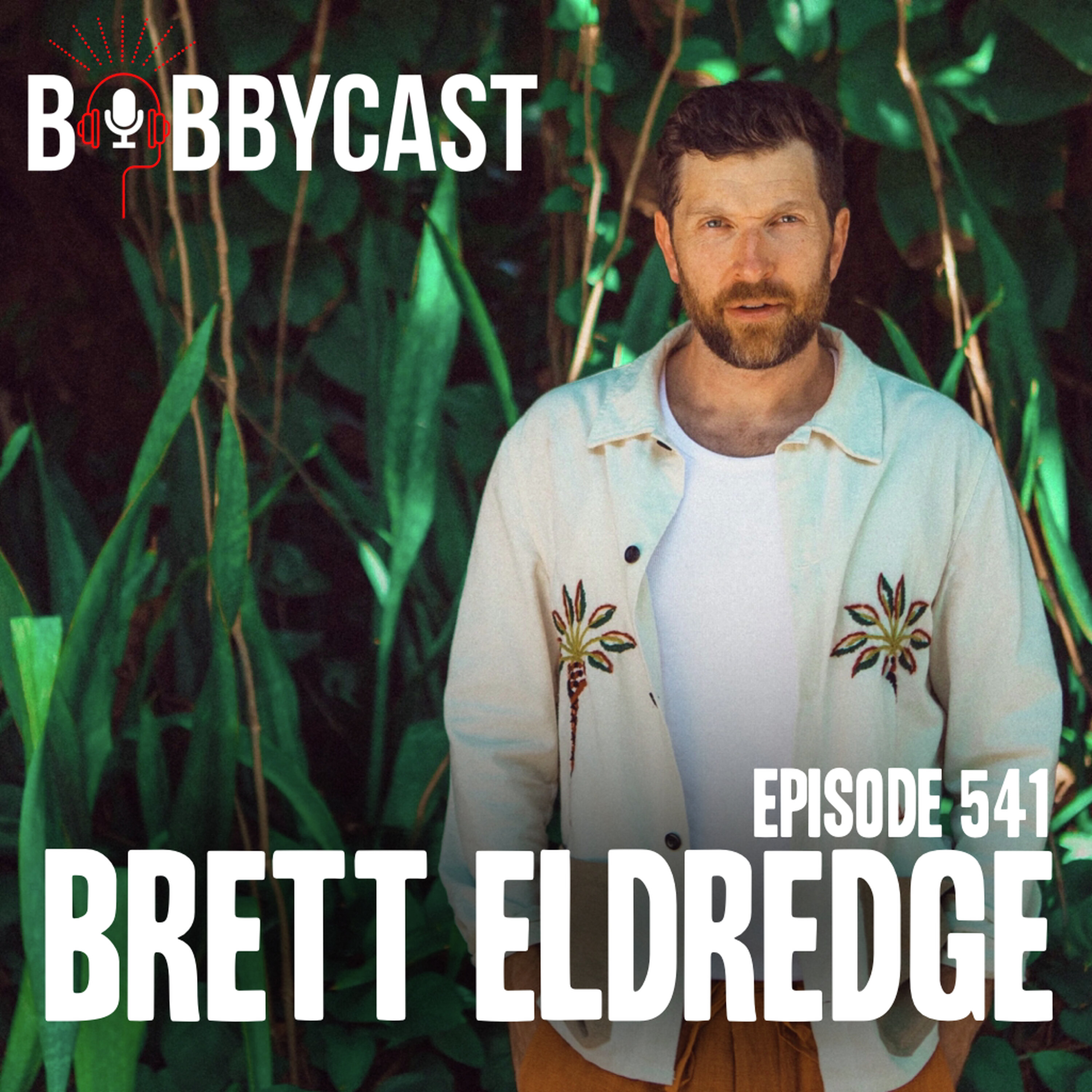
The Bobby Bones Show
BOBBYCAST: Brett Eldredge on Getting Anxious Before Shows + How He Dealt with His Vocal Disorder + Why He Stopped Performing as Much + The Origin of 'Glow' and How it Became a Christmas Tradition
01:15:22
Loading summary
Transcript415 lines
- [00:00]
Bobby Bones
This is an iHeart podcast.
- [00:05]
WashablesOfAs.com Advertiser
Tired of spills and stains on your sofa? WashablesOfAs.com has your back featuring the Annabe collection, the only designer sofa that's machine washable inside and out. Where designer quality meets budget friendly prices. That's right, sofas start at just $699. Enjoy a no risk experience with pet friendly, stain resistant and changeable slipcovers made with performance fabrics. Experience cloud like comfort high resilience foam that's hypoallergenic and never needs fluffing. The sturdy steel frame ensures longevity and the modular pieces can be rearranged anytime. Check out washablesofas.com and get up to 60% off your Anna Bay sofa backed by a 30 day satisfaction guarantee. If you're not absolutely in love, send it back for a full refund. No return, shipping or restocking fees. Every penny back. Upgrade now@washablesofas.com Offers are subject to change and certain restrictions may App Looking for.
- [01:05]
TiVo Plus Advertiser
Entertainment everyone will love TiVo plus has you covered with over 300 free channels from movies for family night to kids shows, live news, sports and your favorite TV series all in one place. No signups, no credit card required, just turn on and enjoy. And with new channels and fresh content added all the time, there's always something to watch. TiVo plus free, binge worthy and always on. Check us out@tivo.com.
- [01:37]
Malcolm Gladwell
So your AI agents.
- [01:39]
Brett Eldredge
They make the team that uses them more productive, right?
- [01:43]
Bobby Bones
But if they aren't connected to other.
- [01:44]
Brett Eldredge
Agents or your data or your existing workflows, how productive can they really make your teams?
- [01:51]
Malcolm Gladwell
Any business can add AI agents.
- [01:54]
Brett Eldredge
IBM connects your agents across your company to change how you do business.
- [01:58]
Malcolm Gladwell
Let's create Smile to Business IBM.
- [02:12]
Brett Eldredge
I do think about that a lot, but some reason I've just had a poll that like it continues to pull me back even when I play less shows than I used to. But I still have this feeling of like this is an important thing for me to do. Like I need to do this. I don't have to do it on somebody else's terms. I want to do it in my own way. And I can't let the fear keep me from doing it.
- [02:33]
Bobby Bones
Welcome to episode 541 with Bret El this was a very difficult interview for me because when you know someone really well, you know too much even. Does that make sense? Makes a lot of sense. And going into this I thought, man, I know everything. Like Brett's one of my closest friends and I mentioned this, he was going to do no press for his Christmas tour. He's not one to ever ask to do anything, especially me. He's not gonna ask me for anything. And I was like, dude, come do the podcast. And he doesn't really need promo for his tickets for his Christmas shows. They sell out constantly, but it don't hurt. But, yeah, he was coming over, and I was like, man, I know every question I'm gonna ask. I think I know the answer to. We had just hung out, like, three days prior and spent, like, two hours talking. So I do like how it ended, though, how it ended up, I should say. I think it was pretty good. I thought it was good. Yeah, I did, too. I don't really know because we did it over an hour together, and then he came up to the house and we hung out for, like, another 45 minutes. But the Christmas show is awesome. I'm not even a Christmas guy. It's fine. Just never had many Christmases that I look at as, like, super happy memories. And I've been to Brett's show the last three years. The first year we just went because we were just supporting Brett, and now we go every year because it's an awesome show. So if it's anywhere near you, he's doing his Tour. Nashville, Chicago, St. Louis, New York, Detroit, and Boston Right after Thanksgiving. It's like night one after Thanksgiving in Nashville. It's Friday, November 28th. So I'm assuming that Thursday, November 27th, is Thanksgiving this year. Yeah. So you guys should go. It's really great. You can even. I would even say if you can afford it, it's good enough to get flights and go and do the whole thing. People dress up. It's really cool. But, yeah, he's one of my dearest friends. And he asked before we started this, he was like, do we act like we're friends? Well, we just haven't done a lot of stuff publicly. I think that's one of the great things about our relationship. We ain't using each other for clout. Hardly ever post each other. I think when he sang to Caitlin at her birthday, because he was in Oklahoma back in the day. She's from Oklahoma. It's like, one of her favorite movies. And he sang at her birthday for many years in a row. Oh, what a beautiful morning. Because that's from Oklahoma. It's really the only time we put Brett up. Or that time we all played basketball at Vanderbilt. Oh, yeah, yeah. Like, my wife rented that out for my birthday. Like, he played that time, didn't he?
- [05:02]
Brett Eldredge
Was There.
- [05:02]
Bobby Bones
Yeah. Yeah. So go to Bret Eldridge dot com. Depending on when you hear this, it could be after tickets go on sale, it could be two years later. But tickets go on sale this week, 12pm local time. Here he is, Brett Eldridge. All right, honest question, how anxious are you doing this?
- [05:20]
Brett Eldredge
I'm not bad. I'm. I am. I am full raw dog right now. No, no beta blocker, nothing, really. Yeah. So. But I do. But I. I'm like, I'm. I'm turning a new leaf today.
- [05:34]
Bobby Bones
Why?
- [05:34]
Brett Eldredge
What.
- [05:34]
Bobby Bones
What leaf?
- [05:36]
Brett Eldredge
Like a maple or maybe an oak? No, I don't know, I just. I. Sometimes I get. I mean, I've known you for a long time. I feel very comfortable around you, but I think it's. Yeah, it's been. I've learned lately to just kind of, like, go into things. No, I'm going to be vulnerable and I might get nervous, and I just kind of have to feel whatever my body's feeling and be like, I've never died from this, so I'm not going to die this time.
- [06:05]
Bobby Bones
That sounds like therapy taught you that.
- [06:06]
Brett Eldredge
It is.
- [06:07]
Bobby Bones
Yeah.
- [06:07]
Brett Eldredge
But, like, I get that on when I go on stage.
- [06:11]
Bobby Bones
You still get anxious going on stage?
- [06:13]
Brett Eldredge
Yeah. Yeah. In fact, I played two weeks ago, and then I hadn't played a lot of shows this year, so I was going into the show days before, like, stomach hurts, you know, Like. And I'm not even really thinking about it, but my. My subconscious mind is thinking about, oh, I'm preparing for a show, but my body feels like I'm dying or something, because it's just so much pressure that I'm putting on myself. I get to the show, I'm, like, backstage dancing with the band. I'm trying to do things to loosen myself up, and then I'm like, holy cow. I can really feel intense right now. And I feel tight and my chest feels tight, and I'm just like, I'm just gonna go out there. Never died on stage. I've never passed out on stage. I've never thrown up on stage, but my mind feels that way sometimes. And then I go out there and. There were some of the best shows I've played in a long time. There's some of the first shows I've played in a while, too, but they were amazing. So I guess, like, even in those moments, my nephew was in the crowd at one of the shows, and I started to have the feelings of adrenaline, I'll call it. It's really, like, some people would say panic or something, but it's just the same thing as adrenaline rush. So I start feeling that, and I start feeling the kind of wave of, like, my. Me wanting to jump out of my skin and out of my body and, like, run away. And this is a. One of those spinning stages, you know, where just slowly spins, and it's like an arena sitting in a. In a room. And I. I was like, okay, my nephew's right here. I'm going to go engage with my nephew and, like, do this for him and be strong for him. And then as soon as I grounded myself into that, I looked at him smiling, I looked at him just kind of in awe of the crazy experience. And he's like, three years old. Then I kind of grounded back into it. So I've learned these different tools, but I think I've just kind of tried to accept that we're sensitive people, being creative people, and. And it's okay to be sensitive and be up here. And I'm just. There's so many people out in the crowd that would never want to do something like this either. And, like, I'm just as scared as they are in some ways. But I want to be a voice, to be able to. To just express what people are going through, what I'm going through, what I've experienced with. With heartbreak, with love, with life, with whatever it is. And maybe. Maybe that's okay to just kind of feel a little on edge because you're doing something that's important to you and also scares you. And maybe that gives us our gift. I don't know.
- [08:44]
Bobby Bones
I asked if you felt anxious because I know you've talked openly about being anxious before shows or even interviews, especially interviews, because you don't have control over that. At least a show you have control over.
- [08:52]
Brett Eldredge
Yeah.
- [08:53]
Bobby Bones
Like, you're the guy that runs it, but you're walking into a different setting where you're getting interviewed. You've talked about being anxious before, but you and I are friends.
- [09:02]
Brett Eldredge
Yep.
- [09:02]
Bobby Bones
And so the juxtaposition of us being close in real life versus this is a setting that you don't usually find yourself being comfortable. I wonder how you really felt.
- [09:11]
Brett Eldredge
Yeah. Yeah.
- [09:12]
Bobby Bones
Like driving over here.
- [09:13]
Brett Eldredge
Yeah. It wasn't bad when I was driving here. Over here, like, right now, I could feel it a little bit right here. Even if I. It's. It's lights. It's like. It's all these old programming, like, Good Morning America. All right, we're going live in 10, 9, 8. And then all of a sudden, I started to have that thing come over through my head of, oh, my God, here comes the pressure. Millions of people about to watch me. Nobody. Like all this zooms in and closes around you. And that's. So sometimes cameras and stuff can do that to me. But I've learned exposure therapy is a great thing. If you go up and you show up, I mean, it is the number one way to. To get through something. Like, if you're. If you're scared of spiders, Mike can be over there, stand there with a spider, and you'd be like, okay, that kind of scares me. But he's over there. And then he moves like halfway over here. And I'm like, okay, I'm still alive. And then eventually. And he's. And he gets closer, and eventually I'm holding it in my hand. I'm like, I'm a spider man now, you know?
- [10:09]
Bobby Bones
Yeah. I found myself after having done a few really crazy thing with heights.
- [10:16]
Brett Eldredge
Oh, man. I remember the Grand Canyon thing or whatever.
- [10:18]
Bobby Bones
Yeah. A few still being really scared of heights, however, because I had to jump off a cliff in Norway with Bear Grylls.
- [10:26]
Brett Eldredge
Yeah.
- [10:26]
Bobby Bones
Had to do a different one in Northern California. I had to do the Grand Canyon. I had to learn how to stuntman off a house. I hate heights. But it's not that the heights were easier, but it was. I've done this before and gotten through it, and I'm going to do it because I remember having to swing under the Grand Canyon. It's 4,000ft. It's the scariest thing I've ever done. And I've skydived. And I hated same.
- [10:48]
Brett Eldredge
I hated it, too.
- [10:50]
Bobby Bones
And I was sitting on the edge of the cliff and there's just a rope that was keeping me from dying. And I'm thinking to myself, I don't know if I can do this. But it's almost like a secondary voice comes in and says, regardless of what you think, you're going to do it. So it's either go ahead and do it now or wait and be miserable for another unspecified amount of time as you sit here.
- [11:10]
Brett Eldredge
And.
- [11:11]
Bobby Bones
And that's what got me to go to the edge, was I knew I was going to do it eventually, so let's just go. And I've done crazy things before, and I think what that's done is allowed me to do other things I'm really scared of. It doesn't make me less scared. It allows me to be open to the possibility of getting through it and being stronger at the end.
- [11:30]
Brett Eldredge
Yeah. Yeah. For sure. And. And I mean, do you get Is your anticipatory anxiety really strong when you, when you go into that? Like, you know, the night before tomorrow, I'm gonna be hanging off the. And the, The Grand Canyon underneath this.
- [11:45]
Bobby Bones
Depending how big it is. Yeah. How drastic it is. Yes. Like that one. I couldn't sleep the night before.
- [11:50]
Brett Eldredge
Yeah. Yeah.
- [11:51]
Bobby Bones
Because I knew what was gonna happen. And we had done some pre production the day before and I looked at it. Some of the stuff I didn't know until I got there, but yeah, that and even like doing the radio show, like, I don't sleep well because every night I'm going to sleep thinking I might oversleep and be late. And if I'm late, the show's not gonna be good. If the show's not gonn. Ratings are down. If ratings are down, I'm not gonna have a job. If I don't have a job, I'm gonna be back in the trailer park or back. Like all of that happens. And that's a different version of anxiety. I don't have performance anxiety at all, but I do have getting there anxiety. Like if I'm. When I was doing a bunch of standup, I felt like I was gonna be sick every day of the show.
- [12:30]
Brett Eldredge
Yeah.
- [12:30]
Bobby Bones
I got a sore throat coming on. I was convinced every day I was getting sick and I wouldn't be able to go on.
- [12:35]
Brett Eldredge
Feel like a tick kind of thing where always. Me too. I got clear my throat or something.
- [12:38]
Bobby Bones
Or, or I start feeling that early stage of a sore throat even though it's not there.
- [12:42]
Brett Eldredge
Yeah.
- [12:42]
Bobby Bones
Like I might be getting. I might be getting a little sore throat. Do you deal with that at all?
- [12:48]
Brett Eldredge
Oh, yeah. I. I had at one point and I could talk about it now because it. I understand what was. I was going through, but I had what they call dysphonia.
- [12:57]
Bobby Bones
I don't know what that is.
- [12:58]
Brett Eldredge
It's basically you get obsessed with how your voice feels and the, the. The. The connection of your muscle and your voice. You get so focused on how tight it feels and how it feels tired that you think that you can't sing anymore or you. Or that your voice gets really tired. And like. So I would go in the first song, I'd be so clinched, so nervous and so tight. I'd be thinking about my vocals the whole time. I want them to sound perfect or whatever. It's putting so much pressure that I was focusing on that. And in my head, with one song in, I would be. I could hardly even talk. I could hardly even sing. I would still make it through and I would still sound okay, but in my mind, I was in hell, you know, like.
- [13:42]
Bobby Bones
And how'd you know this existed, though?
- [13:45]
Brett Eldredge
A lot of singers have gone through it and. And I. I went to a specialist. I went to, like, a. Just a psychology, like a therapist that specialized in that. And they started doing, like, all this work on my neck, like, neck muscles and all this stuff, and. And I slowly started to understand that, yeah, maybe the neck. Maybe the PT stuff was doing something, but really, I was just thinking about it so much, and what you just keep thinking about, you keep focusing on. Keep focusing, focusing on it. And it gets. It becomes more of a thing. And then eventually I kind of had to just train myself to loosen up. That's why I started dancing before shows with the band and, like, doing. Engaging with people in the crowd when I'm nervous, or instead of, like, just holding onto the microphone for an hour and a half as tight as I could, like, and nobody in the crowd. This before I kind of started opening up to my fans and everybody about how I would feel was. Nobody in the crowd even knows you're experiencing that, but in your head, you're an absolute vortex of emotions.
- [14:46]
Bobby Bones
Why would you get into a career that is so hard for you to even get on the stage?
- [14:52]
Brett Eldredge
Yeah, it's a great question. I think about that all the time. I think I still think about that. And then I play the show, and I'm like, that was so fun, but I think about that a lot. I was like, man, it'd be so much easier to just, you know, I don't know what else I would do but work on a fishing boat or something. I don't know. But, like, it would be. It wouldn't be. That wouldn't be easy life either. I've seen fishermen, they get up at like 3am but I do think about that a lot. But some reason, I've just had a pole that, like, it continues to pull me back even when I play less shows than I used to. But I still have this feeling of, like, this is an important thing for me to do. Like, I need to do this. I don't have to do it on somebody else's terms. I want to do it in my own way, but I need to do this, and I can't let the fear keep me from doing it. And so there was a time where I kind of stopped almost fully for a while, and I was like, I got to find some balance because I need this in my life.
- [15:50]
Bobby Bones
Did you feel like you missed the stage or you feel like you needed to get on the stage as a kind of a coping mechanism even.
- [15:58]
Brett Eldredge
Oh, the both. Because I had to learn if I did miss the stage, I had to go play a show to see if I did. You know, the kind of thing of it's such an avoidant thing after, you know, I want years of playing like 100 some shows or whatever. And. And I had so many amazing things. And also with success comes pressures, comes all these things. And I got so burnt out that I especially once 2020 came, then we were used to not being around people, which then made somebody who's already kind of a shy guy in some ways, if you don't see that on stage, get even more used to being away from. From other than the close core people here too. So I kind of had to like tiptoe back into getting back out there to see do I still like this? Do I still love this? And the answer was yes. But I'm still always finding that dance of what the balance is, you know.
- [16:53]
Bobby Bones
You said you played less shows. What was that decision?
- [16:57]
Brett Eldredge
I just kind of like, you know, I have the Christmas thing, I have my other shows, but like, I. I wanted to be home and like work on relationships and in life too. Like, I'd been on the road for so long. I mean, I've been on the road for a decade, missing friends, weddings, missing, you know, family events, missing all the. All this different stuff. I wanted to be there for the birth of my nephews. I wanted to get in relationships that I could actually stay in. You know, I wanted to really have that part of myself too, because I felt like I neglected that for a long time. I mean, and I. In some ways that's kind of what it required, I think, to learn that also. I can do both, but just with a balance. And so that's kind of where I've been now and you know, and just kind of learning that balance.
- [17:48]
Bobby Bones
My anxiety would come on ticket sale days, the most. The most. And I would be like, this could be the time that I'm over. Because if nobody buys tickets, all right, nobody cares. It's over. Yeah, I'm not bouncing back, so. So I would get extremely anxious on those days. Is that an anxious day for you?
- [18:04]
Brett Eldredge
Oh, yeah, that and releasing a creative project, whatever it is.
- [18:08]
Bobby Bones
Oh yeah.
- [18:09]
Brett Eldredge
So like, if I release something, you know, I've been so excited to plan it for people. I'm very. Also scared to play it for certain people, like, because I. You're so dear to this art, you know, you're like okay, like I can't. I have to wait till it's exactly perfect in my head before I play it for anybody. But like the process is so is what feeds me of like creating music. I love that. And then the feeling I get subconsciously even going into releasing music, even if I don't realize that's what I'm thinking about. Kind of like a show. But I once that whether it be dopamine or excitement of like sharing it is then launched out and it's out there. I feel this kind of drop of like oh man. Because you have this expectation, it feels so good to you that no matter what happens from it, whether it went to the number one on all genre or whatever, your head, you just were in it so much that through the years it was, it was treating you like this is what success is or whatever. Like it's got to be somewhere way up at the top. And I've had to learn slowly through the years because that, that really doesn't matter as much. I mean it does. You want it to do well, you want people to receive it well. But at the end of the day it's like you got to feel good about it, you got to love it and, and you got to be able to go home and go to bed at night and be like, man, I made music. That was me. I can't. I can't please every single person in the crowd and I sure as hell I can't make every person want to drive around and listen to this because that's just impossible.
- [19:39]
Bobby Bones
Are songs ever actually finished then? If, if it were up to you?
- [19:45]
Brett Eldredge
Not a lot of the time. I mean I was, I was, I was on my computer earlier and I have, I've been. I've started one of the A substack and it's kind of more long form articles and stuff I've got.
- [19:57]
Bobby Bones
That you're writing?
- [19:58]
Brett Eldredge
Yeah, that I'm writing. I'm just stuff to express myself and because the kind of quick, you know, dopamine 13 second video stuff, just my brain is past that right now. I guess. I'm so burned on it. But I have so many written that I haven't finished. Then I looked at another file next to me. All these songs that I've never finished and I've always got all these different songs. I guess it has. You always have a place to go with them. But a lot of times I'm sure they just sit there 30 years from now. Maybe my kids discover them in a, in a.
- [20:29]
Bobby Bones
After you Die. We release them.
- [20:31]
Brett Eldredge
Yeah, yeah, yeah. After I die. And then they become hits from like, my. My voice memos on my phone or somebody made some weird meme or some weird song sampled from it. But yeah, I think it's really hard to finish something.
- [20:44]
Bobby Bones
What about, like, your hits or even songs that go on an album? Are you. Would you still tinker with them except there's a deadline.
- [20:52]
Brett Eldredge
Oh, yeah, yeah. All the way up to. There's still like. I think there was a part in Want to Be that song that annoyed me. Even when I put it out, I can't remember what part it was. Now I'm. It just is what it is, and I. I'm great with it. But there was a part for a while I was like, God, I wish I'd made that part of the bridge a little bit different, or whatever it was. I can't remember. And I still remember thanking that and be like, that's so stupid to care about that. It's like a lot of people love this song. It's become a hit or whatever. But there. There is this part of you that, like, kind of has to step back and be like, you gotta. You gotta just let. Let the ink dry at some point and let it fly. But it's really hard. I've found that. Really hard to do.
- [21:31]
Bobby Bones
Yeah. So do you think that deadlines are the reason a lot of your albums got done?
- [21:36]
Brett Eldredge
For sure. On anything, if I don't have a deadline. And I recently. I recently got diagnosed with adhd. And when I was a kid, I got diagnosed with, like, a processing disorder and dyslexia. So. But, I mean, maybe that was what they were going to call ADHD back then, but at that point, it was just. That's what they called it. So I got a time and a half on tests, and I still, like, the kids would get done with their test. 30 minutes in the class, I'd still be on my first page. By the time everybody left the class, then I'd have to go to this different room from everybody. It's always taken me longer to figure things out. It's also a gift, I think, in some ways because I think differently. I think a lot of creative people have ADHD or whatever or these different ways of seeing things, but finishing a task is really hard for me to do. And, yeah, if I didn't have a deadline on about anything, I would be. I would be in trouble. I think I don't even. Because that's usually also when I do some of my best work. Is that it's crammed in. I've been ruminating on all these different ideas over and over and over and over for a long time. I just haven't put them to work because I hadn't had to. But if I have a deadline, I was just. I'm working on a Christmas children's book, and the call was earlier today, and I hadn't even finished my revisions yet or anything. And then I sat down like an hour before the thing and I got it done. But that was only because I had the deadline. And I wish. A lot of times I'm like, why can't I just do it like a normal person? That's what your head says is like, what's wrong with me? Or, why can't I just do it like a normal person? And I do feel that way a lot of time, but also, like, it usually ends up happening. I just gotta have good people in my corner that help kind of guide me along. And I'm sure it's very frustrating to deal with somebody like me in that way. But it also, you know, here we are.
- [23:37]
Bobby Bones
What's up with the dyslexia? What version? What kind?
- [23:41]
Brett Eldredge
I don't know. I don't even. I guess I didn't know. There's different flavors.
- [23:44]
Bobby Bones
But, yeah, like, Eddie has dyscalculia, which is a number type. Amy has dyslexia, where it's not so much backward, but things are out of place. I don't know if there was ever any specifics they gave you about yours. Is it backward at all?
- [23:58]
Brett Eldredge
It's not backwards. It's. I mean, I know, like, when I read some. I do all audiobooks and I don't remember because it was so long ago when I got diagnosed with that. But when I read something, I have to go back and read a bunch of times. So it's not like, technically I read backwards. I just don't, like. I don't retain it a lot.
- [24:15]
Bobby Bones
That could be the ADD or ADHD as well.
- [24:17]
Brett Eldredge
Yes, for sure. And which I. When I got diagnosed with that, probably, I don't know, six months ago, it was. I did like. I did all these question. I did all these questionnaires. I had like a. A specialist that kind of. I was like, I want to really dive into my. I'm always trying to figure out what's going on up here. And it went through all these questionnaires he called close relationships of mine for my family and stuff, to see how they experience whatever these things are, which is a very vulnerable thing. They're probably telling me. Yeah, which. But I thought it was cool. Like, I didn't. Luckily he didn't tell me all the things that, you know, they had said. Maybe that actually would be good feedback. But he had came with, you know, that I had diagnosed with adhd. And I wasn't surprised. But I also felt kind of seen in a way of like I've known my whole life that it didn't like, make me feel less than. It just made me feel more like, okay, I'm not crazy on when I struggle with these things like clutter or I get really anxious from clutter, but I also make clutter because I can't figure out how to. Where to put it in organization and that kind of stuff. But I can create really well. You know, my. My therapist calls it ADHG sometimes, like attention deficit hyperactivity gift. Like the gift part, it can be like a gift in some ways. It feels a lot of times not. But if I'm writing a song, I will jump around to about six different ideas in the middle of the rite, which some writers, I'm sure, get driven nuts. Like, we could be two hours into an idea and I'll just lose kind of that feeling of this is wasting all of our time. I have this other idea and then I'll bounce to another one and somehow usually my instinct will go, this thing feels like the best expression of me. And so I think without that, I don't know if I would have the same creative skills and gift, if you want to call it adhg. And so in some ways, it's really debilitating and it makes life very difficult sometimes. Even when I was a kid, I can still hear my mom saying, when you, when you take something off, take it straight to the hamper and put it in the hamper. And I'd be like, I'm trying, Mom. I've tried this so many times and I still hear that in the back of my head and I still struggle with it all the time. And I like, I'll see something that's sitting in the corner of the room that I've been saying I'm going to move for like a month and I still haven't done. And I know I want to do it, but I just get frozen from all these different things or booking hotel rooms. If I have different options, I freeze and I'll take months to do it.
- [26:52]
Bobby Bones
Are you able to pick a TV show or a Netflix show?
- [26:54]
Brett Eldredge
If you don't, that's hard.
- [26:55]
Bobby Bones
If you don't have one going in.
- [26:56]
Brett Eldredge
That's really hard. Like, I'll do that. Like the, or even restaurants, like go through Yelp for like an hour to figure out the exact one. And I, I remember that show, Master of None. They did that on that show. But it's so true. Like, I'll spend an hour. Look, I mean, maybe not an hour, but half an hour. But it could be an hour looking for the right restaurant, for the right hotel. And at the end of the day you're like, okay, I would have had a good time at any of the restaurants, any of the hotels. I would have enjoyed it either way. I just need to jump into the thing. It's easy to say that, but when you're in that space, man, it absolutely freezes me up. Let's take a quick pause for a message from our sponsor.
- [27:38]
WashablesOfAs.com Advertiser
Life's messy. We're talking spills, stains, pets and kids. But with Anabe, you never have to stress about Messes again. @washablesofas.com Discover Annabe Sofas the only fully machine washable sofas inside and out, starting at just $699. Made with liquid and stain resistant fabrics, that means fewer stains and more peace of mind. Designed for real life, our sofas feature changeable fabric covers allowing you to refresh your style anytime. Need flexibility? Our modular design lets you rearrange your sofa effortlessly. Perfect for cozy apartments or spacious homes. Plus, they're earth friendly and built to last. That's why over 200,000 happy customers have made the switch. Upgrade your space today. Visit washablesofas.com now and bring home a sofa made for life. That's washablesofas.com offers are subject to change and certain restrictions may apply.
- [28:37]
TiVo Plus Advertiser
TiVo plus gives you 300 channels of movies, shows, sports, even kids favorites. All free. And no, we don't want your credit card. Watch live, watch on demand. Watching your PJs eating pizza. It's all right there on your TiVo home screen. With so much variety, from comedy and action to live news and family programming, you'll never run out of options. TiVo plus free binge worthy and always on. Check us out@tivo.com.
- [29:10]
Malcolm Gladwell
Malcolm Gladwell here. I recently recorded the first episode of Smart Talks with IBM where I learned how AI agents are joining AI assistants as a major productivity tool. Let's start with AI agents. AI agents can reason, plan and collaborate with other AI tools to autonomously perform tasks for a user. Brian Bitzel, an expert from IBM, gave me an example of how a college freshman might Use an AI agent.
- [29:37]
Brian Bissell
As a new student, you may not know how do I deal with my health and wellness issue?
- [29:42]
Brett Eldredge
How do I.
- [29:42]
Brian Bissell
How many credits am I going to get for this given class? You could talk to someone and find out some of that, but maybe it's a little bit sensitive and you don't want to do that.
- [29:50]
Malcolm Gladwell
Bissell told me you could build an AI agent, a resource for new students that helps them navigate a new campus, register for classes, access the services they need, and even schedule appointments on their behalf, which in turn buys them more time to focus on their actual schoolwork.
- [30:07]
Brian Bissell
We can see patterns of how agents and assistants can help employees and customers and end users be more productive. Automate workflows so they're not doing certain types of repetitive work over and over again and streamlining their lives and making data more accessible to them 24 hours a day.
- [30:28]
Malcolm Gladwell
To learn more about IBM's AI agents and how they can help your business, visit IBM.com/agents.
- [30:45]
Bobby Bones
And we're back on the Bobby Cast. Last question about this. Have you tried Adderall?
- [30:51]
Brett Eldredge
No, but I, I've, I've, I've tried a non stimulant medication for that and it kind of, it didn't work for me. It works for some people. But I, I'm, I'm kind of open to different ways of trying different medications because I think I saw something like I actually research. I remember big researchers, like 6 to 8% of the population has ADHD. So like 15, some million or I can't remember what the number was. But in the US and like there's a lot of downsides if you don't treat it, you know, to relationships, to a lot of different things. So I'm not against it. You know, I think everybody's got to find their own thing. I just, I'm always, I'm always cautious. But I'm also open to trying something.
- [31:38]
Bobby Bones
I'd never tried Adderall. I mean, especially growing up.
- [31:42]
Brett Eldredge
Yeah.
- [31:42]
Bobby Bones
And I don't really feel like I have any sort of ADD or adhd. I like hyper focus, which I also learned is a version of it as well.
- [31:50]
Brett Eldredge
Really?
- [31:50]
Bobby Bones
A hyper focus.
- [31:51]
Brett Eldredge
Hyper focus in what way?
- [31:52]
Bobby Bones
Like on anything, I get obsessed, even addicted. Even working on a singular project, I get hyper focused on. I can't do anything else. I won't even allow myself to like get water because until I get to this point, I don't deserve water yet, really. So it's very much that. And I'd never tried Adderall, but then I had and it's something I haven't talked about a bunch, but I had those and you know about it. But I had like those ischemic strokes at three of them. And we had tried all kinds of stuff to get my brain back. Almost like jump started, like kickstarted. And the do. My doctor was like, you should try Adderall. Because I was like 80% there.
- [32:29]
Brett Eldredge
Yeah.
- [32:29]
Bobby Bones
But I'm talking about for a year I just couldn't click right. And I had. We had just found out that that's what it was. These, these blood clots in my brain and that it had created these ischemic strokes. And it's like, try it out. And so I started taking it and it was the greatest thing I had ever tried, except I super hyper focused again like I did before. But I felt like myself for the first time forever.
- [32:56]
Brett Eldredge
Yeah.
- [32:56]
Bobby Bones
And I stopped taking it. Probably. I don't know, it's been a while since I've taken it. But I only stopped taking it because I got fearful that I wasn't going to have it anymore because I would see all the news stories about how they were running out of Adderall and I was like, I gotta get ahead of this. I gotta stop taking it. Because if I get attached to it or addicted to it or depended on it and they run out, my life's gonna be over. So then I started getting anxious about that. So I just stopped taking it. But it's what helped my brain so much after those strokes. I think I'm probably 97 there at this point, really. But I think Adderall and I'd never known to take it, but there are people that took it in college and they were like, man, you focus so good. I didn't really feel a different. I never felt like a euphoric feeling with it.
- [33:39]
Brett Eldredge
Right.
- [33:39]
Bobby Bones
Because I would watch like righteous Gemstones and they would like take Adderall and be like, let's get messed up.
- [33:43]
Brett Eldredge
Yeah.
- [33:44]
Bobby Bones
I never got that from Adderall. It actually made me feel a bit like I used to feel before I had those brain issues.
- [33:51]
Brett Eldredge
Those blood clots made you feel normal.
- [33:53]
Bobby Bones
Kind of made me feel as close that I've ever felt to be in back the me before I had those brain issues.
- [33:58]
Brett Eldredge
Yeah. So that's cool.
- [34:00]
Bobby Bones
Yeah. And that was kind of like a last ditch effort by us. He was like, you should try Adderall because it could actually affect your brain in a way that stimulates it because it is a stimulant for sure. And I tried the long, the slow release and for somebody that doesn't sleep well anyway. And it's still slow releasing at 3 o'. Clock. Never, never slept. So then I would take. And I, I don't, I forget the name of it, but it's a pill that's not a slow release. Like it all hits you all of a sudden and then by noon it was gone. Now you're just like, yeah, well, I still, I still had trouble sleeping, but it wasn't from the Adderall. The Adderall affected me in a way when it was a slow release that I, it was affecting my already bad sleep.
- [34:35]
Brett Eldredge
Yeah.
- [34:35]
Bobby Bones
But, yeah, I enjoyed it. I just thought, well, they're gonna run out, so I'll go ahead and cut right now.
- [34:40]
Brett Eldredge
Yeah. Like what happens if a zombie apocalypse happens?
- [34:41]
Bobby Bones
And I don't have any Adderall, so.
- [34:43]
Brett Eldredge
I'm gonna be at the anxiety comes in as it is.
- [34:46]
Bobby Bones
Yeah. So I started feeling anxious that they were gonna run out of Adderall. So I stopped taking Adderall. And I don't really feel any different not having it now. But it really did help my brain. I'm convinced that that is what stimulated my brain to more of a sense of normalcy or it could have even been. Because I'm a big believer too in that if you just believe something, sometimes you can trick yourself into thinking big time. I could have taken it and felt more normal and then convinced myself that it's possible to feel more normal, that I'm not totally broken. And since it was like the first time they ran a four minute mile. Right. Nobody could do it. One person did it, then everybody started doing it. I took it and then I thought, oh, I can be more normal again. So I'm going to work toward that. And so, yeah, I haven't taken it in a long time, but one, it worked so effective. It was so effective for me. And two, I think I needed that.
- [35:34]
Brett Eldredge
Yeah.
- [35:34]
Bobby Bones
Like, I needed that.
- [35:35]
Brett Eldredge
I, I, it's so interesting. There's, you know, we live in an era of so much information thrown at us all the time and you, and there's a, a lot of bad stigma towards medications and everything. I used to be very, like, very natural and I, and I still am as much as I can, but even with anxiety through the years, you know, and I, I haven't really talked a lot about this, but I'm very much, I've, I've, I would try to just get through it by, you know, sheer strength and resilience and, and I would never think, okay, I'm Gonna try medication, because there's all these things of, you know, you just hear all this different stuff online and. And it felt like a weakness or something. To try medication.
- [36:21]
Bobby Bones
Yeah, there's definitely shame attached to it. Yeah, I get through that, too.
- [36:24]
Brett Eldredge
And it's. And it was stu. I mean, hindsight is stupid because I ended up, you know, trying different things, and I found something that really helped me, and I did. That I took for a while. And. And so, you know, I think every person needs to go to a doctor and talk to him about it. But I think, you know, mind. You know, meditations helped me a lot. They're all just tools, and they're not gonna. You're not gonna cure your ailment or whatever you want to call it, your challenge. But even with something like, I haven't, you know, because I remember one of the first doctors I went to, he's like, you know, I'm not going to give you Adderall because it's. It's pretty much legal speed. And that's a terrible. Like, I remember telling my. My. My. My therapist that, and he's like, that's the worst kind of way of phrasing it, because this is what. This actually saves people's lives, and it really helps people. And so, yes, they can be abused, and there's different medicines that can, but there's also stuff that really help people. And I think everybody should be curious and also know that it's not going to. It's not going to cure you. But there are different tools, from natural to pharmacological, whatever it is that can help you. And I've. And I've. I fully am open to different ways that. That helps you move forward in life.
- [37:37]
Bobby Bones
You know, my wife is a big part of me removing the shame of taking medicine. And I have a different history with taking anything because a lot of my family died from drugs and alcohol. So it's kind of a double. But I remember I was going through some issues, and I didn't want to take this medicine, and it's a bit ptsd. It was a bit. A bit. I mean, you know, I got a bunch of things happening up here.
- [38:00]
Brett Eldredge
Yep.
- [38:01]
Bobby Bones
And she was like, if your knee hurt, would you be ashamed to take the medicine?
- [38:06]
Brett Eldredge
Yeah.
- [38:07]
Bobby Bones
If your stomach was messed up, would you be ashamed to take the medicine? If you had blood pressure issues, would you be ashamed to take the medicine? And I was like, no. She's like, so why would you be ashamed to take medicine? Just because it's working on a different part of your body. And I was like, that's a good point. And then she said, what if one of your friends came to you and said, I don't know. I have shame, what would you say? I'd be like, no, it's medicine. She's like, exactly. Treat yourself with the same love.
- [38:32]
Brett Eldredge
Yeah.
- [38:32]
Bobby Bones
That you would treat somebody that you do love.
- [38:35]
Brett Eldredge
Yeah.
- [38:35]
Bobby Bones
And I felt like that impacted me in a very healthy way. And so now I'm able to be a little better at taking any sort of medicine because I understand if I'm not abusing it. It's created for a reason.
- [38:46]
Brett Eldredge
100%.
- [38:47]
Bobby Bones
Yeah. So, after all, it is very awesome. I haven't had it in a while, but, man, it's pretty awesome. I remember seeking my wife. I remember we went to your Christmas show a couple years ago for the first time, and her relationship with you has been that of. She did not know Brett Eldred's the singer.
- [39:03]
Brett Eldredge
Yeah, yeah.
- [39:04]
Bobby Bones
Because especially all during COVID when she moved here, you would obviously come over, and we hung out a lot because there was that you had your circle, and you just hung with your inner circle, and we were in each other's inner circle, and so we had spent probably a good year and a half spending a lot of time together, but there was no performance aspect to any part of us. There's no mu. We didn't talk about, really music unless it's music that we like to listen to. But it was like, we'd eat food and talk and hang out, played knockout and. Yeah, yeah. Whatever it was, it was so normal. And we went to your Christmas show the first time, and it was a little weird for her because she didn't know that version of you.
- [39:37]
Brett Eldredge
And she.
- [39:38]
Bobby Bones
And I've told you this story, but she was like, I don't know. This feels weird. Like, she felt like you were going to come out, and if it was the same guy that we hung out with, she was going to be like, this is awkward. And you came out and you embraced and definitely attacked the stage, and she started crying, and I was like, are you okay? She was like, I've never seen him be so in his element when you were doing your Christmas shows. Like, she was emotional at watching you own something and look like that you just belonged there.
- [40:14]
Brett Eldredge
Yeah.
- [40:15]
Bobby Bones
And there is such a difference. It's the same person, but it's different parts of that same person of you when you get up on stage. And I would say, especially during the Christmas shows, because I've seen you perform in a bunch of different ways, of course, but when you come out and you're in the talks, it's almost like you're putting on a costume.
- [40:32]
Brett Eldredge
Yeah.
- [40:32]
Bobby Bones
Like Superman cape that allows you to be a different version of yourself. Would you agree with that?
- [40:37]
Brett Eldredge
Yeah, 100%. And I think I always feel it almost as like a Superman cape throwing on a velvet tux, you know, because it gives me this confidence of all the people that I love doing that growing up too. Like, I idolized the Dean Martens and Sinatra and Nat King Cole and all these, these people. And I don't know, like, it becomes this aura of, of old soul storyteller that I get. That's kind of a huge part of who I am, but I get to like, really step into that and like, it's not a character, but in a way, you know what I mean? Like, it's fully me. It's just the most full exaggerated version of me. And in a way that I mean, like, it's fully my heart, but it's like I am getting to perform it and, and portray it in a, an extreme and, and powerful way. And it makes me feel, it makes me feel like I have an important story to tell. It also builds pressures from other parts of my head. But, but when I really get to see, when I go out to these shows and it's, we're coming up, I think on next year will be like 10 years of glow, which is crazy when I get to go see these just beautiful venues that we get to play these shows at. And I see everybody dressing up and like people are wearing top hats now and full tuxes and, and dresses and ugly Christmas sweaters. You know, it's like a very much a tradition now to get to see that and get to feel that. And like, it reminds me of like when I was a kid decorating the tree with my mom and dad, like, and, and listening to Nat King Cole and being Crosby and like, all that kind of just swirls in this feeling of tradition and, and connection. It really gives me this sense of purpose. And I, I, it, it makes me, it just transports me in the weirdest way that I can't even really explain other than when, if you go see a GLOW show or whatever, you can feel it even from everybody in the crowd because this music is so, it's such a shared experience for everybody. Everybody has some, you know, people have different story, but if you love Christmas music, you know, you have different stories that a family or friendship or whatever it is or just watching these movies or listen to this Music and you have this, like, feeling of connection with everybody. Like it's a shared experience. And so, yeah, I am up there, but it's kind of everybody's show and I just get to be this, like, larger than life part of it that, like, pulls us all together. And I'm really pulling from all their energy as well. And it's just really cool to do that.
- [43:09]
Bobby Bones
Do you put the tuxes on before the show again to make sure you either haven't lost or put on a bunch of weight?
- [43:13]
Brett Eldredge
Oh, every year. And like, this year I. This year I. I've been. I've been lifting a lot. And like, I know, I know I don't look like crazy jacked, but I. But I. I put on a lot of muscle through, like, over the last year, and I tried to put on a tux the other day and it did not. One of them did not fit the way it. Like, my arms and shoulders. Yeah, arms, shoulders, chest were tighter there. And I was like, damn. I guess I'll just have to go hit more. I have so many tuxes. But, yeah, every year, because I do it now. I've got these really nice tuxes, but.
- [43:49]
Bobby Bones
How many do you have?
- [43:52]
Brett Eldredge
Probably 15.
- [43:53]
Bobby Bones
No way.
- [43:54]
Brett Eldredge
Oh, yeah, I would say 15. I would say no, no less than 12, but probably 15.
- [43:59]
Bobby Bones
Do you have an entire.
- [44:00]
Brett Eldredge
I probably get three or four more this year.
- [44:02]
Bobby Bones
Do you have a closet of them?
- [44:03]
Brett Eldredge
Yeah.
- [44:03]
Bobby Bones
And it stays in a different part of the house. Like it's a dedicated tuxedo closet.
- [44:07]
Brett Eldredge
Yeah. And. And I will tell you because a couple years ago, I left one on a plane and it was this whole drama and we couldn't find it. And I know it was in the. In the plane. And eventually, like, social media, all my fans got on and actually helped us find the tux and I got it back. What was it? It was somehow just magically appeared from the airline. Like it wasn't there. And then when I told the story about it, fans got a hold of that, and all of a sudden all these people from different airlines started hitting me up. I can't remember which airline it was. I don't want to call them out.
- [44:42]
Bobby Bones
Was it like a lost and found?
- [44:44]
Brett Eldredge
No, it was. Well, I don't know. I don't know.
- [44:47]
Bobby Bones
It just showed up.
- [44:47]
Brett Eldredge
It is kind of all of a sudden, like, I couldn't get a hold of them. Couldn't get a hold of them. I had, like, my management reach out or something. And as soon as, like, I had. I had talked about it on some podcast or whatever it was. I can't remember. Some. Some of my fans caught onto it, started talking about it, and the next thing you know, it shows up. And so. But these things are so delicate, like, these tuxes, and they're. They're really nice. But, you know, I wear these every year. So, like, this is my Persona. You know, I want to feel a certain way when I put on a tux. I love a good suit, a good tux. I love the way it makes me feel confident in it. That fits good. And so I have these really nice. But, like, if you get a little bit of, like. I remember Edgar, you know, I used to bring him on stage with me. Your dog? Yeah, my dog Edgar. He's been retired for years now, but he. He used to be on stage with me, and he got a little bit of drool on one of my tuxes, but it's velvet. Ruins it. One time I was doing a Target commercial. I had a red velvet tux on. They made this fake snow on my head. The whole tux was ruined because it. Because the fake snow was like a wet, like, fake snow.
- [45:54]
Bobby Bones
Did you invoice them for that one?
- [45:55]
Brett Eldredge
They. They had already bought it anyways. But. But just any, like, anything, if you breathe wrong on those. Those velvet tuxes, they. They. They get injured. At one time, a dry cleaner ruined a Tom Ford one I had. Yeah, they just kind of. They're very delicate, so you have to really handle them with care. And. But I love. I love having them, and I think, you know, there's things that I'll pass on to family one day, and I love that.
- [46:21]
Bobby Bones
How did these shows start?
- [46:25]
Brett Eldredge
Huh? It started as a. At a place called the Sutler. Do you remember the Sutler? It was. It was in Nashville. It was. I think it's like a poncho and lefties or something now. It's. It's like a small bar. Yes, it's like a small bar. It's like. There's, like a. There's a club in the basement. And I was like, I want to start doing these, like, a jazz Christmas show. Play some. Some. Because, you know, jazz is just as much a huge part of my life as country was. That's kind of how I started. So I was like, I want to do one of these shows. I'd already had hits on the radio and stuff, but I wanted to really have some fun and just invite some. Some friends, some industry people that, you know, people from the label, all that kind of stuff. So we had, like, maybe a hundred tickets Like a golden ticket kind of thing. We invited them to this show wasn't called Glow yet. It was just like a jazz. I had like maybe a three piece or four, four piece horn section and a rhythm section, like drummer, piano player, bass player, guitar player down there. We played the songs. It was like really. I had the tux. I was like, I was fully in the group. I hadn't found the exact groove of what it is now, but that was the start of it. And then I. And everybody kept talking about it. So the next year we'd do it at a little bit bigger place. I think we did it Skull's Rainbow Room, which is downtown. And then, and then we did it, you know, like City Winery, maybe the next year. And then we did it at the Country Music hall of Fame. So we just keep growing it every year. And then all of a sudden I made the Glow album and I was like, I'm going to fully record this music. It's not, it's not going to be like I'm. People know enough about me that I'm. I've got this jazz background, that I've got this, this crooner kind of voice kind of stuff. I'm just going to go for it. I'm not going to try to make a country. I'm not going to. I'm going to do exactly what this, this kind of stuff that I grew up listening to that I love. And I think we can pull it off. And we went and made the record and it just worked. Like when Glow came out, it worked and then all of a sudden we did like one show at maybe Irving Plaza, I think in New York, a little venue, but like pretty old classic venue. And then it just took off. And then every year we do one night at the Ryman, two nights, three nights. Did Bridgestone last year we go the Beacon, multiple nights, Chicago, three nights in Chicago. And so it just kept growing and it just like I get to do this thing that I love and as much pressure and as much like small amount of time. You have a window of three and a half weeks to do this tour. Like and it's a lot in a short amount of time. But it's so much fun and it's so fulfilling in a way. I just have to stay in my A game. I gotta get my best sleep because I feel this obligation to, to bring something special to the crowd on these shows. And like if I could, I was saying this the other day, if I could convince it and I want people to see my regular shows too, and they're really special. But if I could convince anybody of anything, it was to go see a glow show of anything in my life. Like I want them to see that because it's once in a lifetime kind of experience to be able to step back into this, you know, comfort and almost like escape the world for a while. And it's, it's way bigger than us up there on the stage. It's kind of everybody and I think it's just a tradition that, you know, I'm just glad to get to be a part of the Bobby cast.
- [49:56]
Bobby Bones
We'll be right back.
- [49:59]
WashablesOfAs.com Advertiser
Time for a sofa upgrade? Visit washablesofas.com and discover Annabe where designer style meets budget friendly prices. With sofas starting at $699, Annabe brings you the ultimate in furniture innovation with a modular design that allows you to rearrange your space effortlessly. Perfect for both small and large spaces, Anibe is the only machine washable sofa inside and out. Say goodbye to stains and messes with liquid and stain resistant fabrics that make cleaning easy. Liquid simply slides right off. Designed for custom comfort, our high resilience foam lets you choose between a sink and feel or a supportive memory foam blend. Plus our pet friendly stain resistant fabrics ensure your sofa stays beautiful for years. Don't compromise quality for price. Visit washablesofas.com to upgrade your living space today with no risk returns and a 30 day money back guarantee. Get up to 60% off plus free shipping and free returns. Shop now at washablesofas.com Offers are subject to change and certain restrictions.
- [50:58]
TiVo Plus Advertiser
Restrictions may apply over 300 channels, zero bills. That's TiVo plus live news, reality movies and more. No credit card, no signups available on smart TVs powered by TiVo. Grab the remote, press play and start watching TiVo plus free binge worthy always on. Learn more at TiVo.com.
- [51:17]
Malcolm Gladwell
Malcolm Gladwell here. I recently recorded the first episode of Smart Talks with IBM where I learned how AI agents are joining AI assistants as a major productivity tool. Let's start with AI agents. AI agents can reason, plan and collaborate with other AI tools to autonomously perform tasks for a user. Brian Bitzel, an expert from IBM, gave me an example of how a college freshman might use an AI agent.
- [51:45]
Brian Bissell
As a new student, you may not know how do I deal with my health and wellness issue? How many credits am I going to get for this given class? You could talk to someone and find out some of that, but maybe it's a little bit sensitive and you don't.
- [51:56]
Brett Eldredge
Want to do that.
- [51:57]
Malcolm Gladwell
Bissell told me you could build an AI agent, a resource for new students that helps them navigate a new campus, register for classes, access the services they need, and even schedule appointments on their behalf, which in turn buys them more time to focus on their actual schoolwork.
- [52:14]
Brian Bissell
We can see patterns of how agents and assistants can help employees and customers and end users be more productive. Automate workflows so they're not doing certain types of repetitive work over and over again and streamlining their lives and making data more accessible to them 24 hours a day.
- [52:35]
Malcolm Gladwell
To learn more about IBM's AI agents and how they can help your business, visit IBM.com/agents.
- [52:52]
Brett Eldredge
This is the Bobby Cast.
- [52:55]
Bobby Bones
And so you're doing this year 12 dates. Looking at the cities here.
- [53:01]
Brett Eldredge
Yeah, tell me because I don't remember all of them.
- [53:03]
Bobby Bones
Boston, St. Louis, New York, Chicago, Detroit, Nashville.
- [53:08]
Brett Eldredge
Yep. Yeah. And it's so hard to, to pick how you do it because there's such a small amount of time and fans get so mad like, well, why don't you come to California? Or why don't you come to Florida? It's like there's only, like, there's only so many days and, and you have to hit these major Christmas cities.
- [53:24]
Bobby Bones
What about the band? It's a big band with people that you don't normally play with.
- [53:28]
Brett Eldredge
Well, now that's how I used to do it. I used to fly to like New York. I'd have the players from New York, which are like some of the best out there, but we have incredible jazz musicians in Nashville. And so we're like, let's keep this consistent. I don't know, maybe four years ago or so, we started traveling with Nashville musicians. And so we have the same band now.
- [53:49]
Bobby Bones
The whole band travels with you?
- [53:51]
Brett Eldredge
All the brass? Yeah. We have a eight, eight piece horn section. Yeah. So it's like a 12 piece orchestra. Yeah.
- [53:58]
Bobby Bones
Is that way more expensive than your normal band?
- [54:00]
Brett Eldredge
Oh, yeah, yeah, yeah. It's an expensive. It's an experience. It's an expensive experience. And on the business side, but like for me it's like, yeah, it's very expensive to put on, but man, it just. There's the only way to do it. And it's, and it's so worth it for me. Like, I would rather spend that money and like feel that punch of the horns and that this explosion that you feel from that of energy from the horn section. And also like the gentle moments of a Holy night and Silent Night and, and, and some of these original Songs I've got to write. And it's just a beautiful flow. And without, without that big orchestra, it just. It makes the experience even more special. And then the stories, I share these stories of my past, you know, from being a kid to still creating memories with my family every year. And, and, and it's just really cool to do that. And I think all of that kind of makes it the element that makes it special.
- [54:57]
Bobby Bones
If anybody's going to these shows, I'm sure some of you are that are listening. I would make a suggestion that there are a couple times during the show where the music cuts out and Brett sings Barry Acapella. Don't talk.
- [55:08]
Brett Eldredge
Yeah.
- [55:09]
Bobby Bones
Like people have no understanding of. Hey, shut up.
- [55:14]
Brett Eldredge
Yeah.
- [55:15]
Bobby Bones
Because it's a moment and I don't. One of the. What's one of the songs that you do that at the end?
- [55:20]
Brett Eldredge
I do. I close with the first Noel. That's it.
- [55:23]
Bobby Bones
Yeah. And so the band goes down and it's just you.
- [55:25]
Brett Eldredge
Yeah.
- [55:26]
Bobby Bones
And that's really the only time that I think everybody's encouraged to be quiet.
- [55:30]
Brett Eldredge
Yeah.
- [55:31]
Bobby Bones
Because these are songs we know. Everybody sings along and you have good energy. Your band leader's great. Everything's happening and it's awesome. But that. The first Noel, it's a shh. And there are. There are shushers. And I respect the shushers.
- [55:44]
Brett Eldredge
I love the old third grade school teacher shushers.
- [55:46]
Bobby Bones
I respect the shushers of somebody's talking in this situation. Because I never have a problem at any kind of show of singing along, of having a good time standing up. Like, do all of that. You bought a ticket. It is your right.
- [55:56]
Brett Eldredge
Yeah.
- [55:56]
Bobby Bones
But my, my encouraging moment here is don't talk during the last Noel. Would you co sign that?
- [56:02]
Brett Eldredge
The last Noel.
- [56:04]
Bobby Bones
Sorry.
- [56:05]
Brett Eldredge
Starring Bobby. Yes.
- [56:06]
Bobby Bones
The first Noel. Yeah.
- [56:07]
Brett Eldredge
There was a first and now there's a last.
- [56:11]
Bobby Bones
I love that you would encourage people to be quiet for that one, right?
- [56:13]
Brett Eldredge
Oh, yeah. And I've had. I've. I've had some weird stuff happen during that because mostly everybody knows it too. Like it's a tradition now to where I close with it. Like I want it to be how we end every show. It's this really gentle moment that is so magic and people stand up. Sometimes people cry. Sometimes somebody will sing along with you and they're way out of tune. I mean, there was one time where there's no music.
- [56:38]
Bobby Bones
Again.
- [56:38]
Brett Eldredge
Yeah, there's no music. It's just me. No, I'm not even holding a microphone. And it's. It's actually, Tony Bennett used to do this. And that's how I wanted to try. It was like Tony Bennett used to put his microphone down and sing a capella to the crowd. And I'm a huge Tony Bennett fan and so I wanted to try it. And then I did it and it started to just become this thing. Well, yeah, I've had years where somebody would be like somebody up in the balcony. One year was so out of key and it's hammered drunk and they're singing the first Noel and I am about to lose it. Like, I. And I'm only person singing up there with no music. I don't have a. They can't take it solo behind me as this lady's just shredding the first Noel and every note that doesn't exist in the actual key of that we're singing in. And I just held it together. But everybody. After the show, the man's like, did you guys hear that lady? It was like. It was unbelievable. And it still makes for great memories, but I'm so glad that hardly ever happens. But there's all. There's there. You know, you can't predict anything from a show, but. But that's cool too. But I love that the prediction is that the shows are going to end like that because, like, it leaves everybody walking out, like with this. This piece of. Of of joy and warmth in their heart and they can go on to their. Their life. They can, you know, hug the person next to them and. And think, you know what? We were all in this room sharing, you know, something special together. Nobody was fighting. I've never had a Christmas fight. I've had. I've seen fights in my crowds at. At regular shows. I remember playing Mean to Me one night and watching a guy just pummel somebody over the head from like a. And. But I've never. I've never had a fight at a Christmas show. And that's. It's not that kind environment, but it's. It's pretty cool.
- [58:21]
Bobby Bones
Did you ever think that you would play your hits during the Christmas shows? At least at first.
- [58:27]
Brett Eldredge
You know what? I. I made a full commitment. I was like. Because, you know, when the tour first started, I didn't know if people would understand. Like, this isn't a, like, country show at all. There's nothing to do with country show. This is full on Christmas. And I was like, I. I don't want to. I don't. I can do that in other shows. I want this to be full on Christmas when you come. This is what you're getting and it's going to be really damn good. And so I never, I never did any of my other songs because I, I, it's just a whole different thing. And I wondered if it would be a problem. And it, it was like the opposite of that. Like, it was just like everybody knew what they were coming for, especially after we started to build it every year. And it's just like, yeah, it's full on Christmas, nothing else. And it works.
- [59:17]
Bobby Bones
What's your biggest song? Not Christmas. What's your biggest song?
- [59:21]
Brett Eldredge
I don't.
- [59:22]
Bobby Bones
What song do you play at a show and you feel the most energy back from the crowd?
- [59:28]
Brett Eldredge
Drunk on your love or beat of the music?
- [59:29]
Bobby Bones
Maybe I don't ask me, I'm asking you.
- [59:32]
Brett Eldredge
No, no, no. I don't even know either. I mean, I'm trying to think like, I mean I, it's different every night, but I would say between Drunk on your love, be the music and want to be that song. Between those three, I think you just pick like I picked three songs because. I don't know, I don't know. It's like I, I, A lot of times I close out with beat the music and people go nuts for that one and, and that was a big one. But I, some nights people really want to, you know, be the crowd that throws their arms up and want to be that song and wave them around. Or some people want like a groove like drunk on your love. So it's so hard to pick, but I would say if I had to pick one of them, maybe it's be to the music, but it's, it's all, it's a. Definitely a toss up.
- [60:10]
Bobby Bones
What was the song that changed your life?
- [60:12]
Brett Eldredge
Oh, I think that the album that changed my perspective was Sunday Drive, the song that changed my career.
- [60:23]
Bobby Bones
Yeah, like, what changed your career? You're in town, you're trying to make it. Yeah, this song, you cut it, it gets put out and your life is different after it makes its run, don't you?
- [60:32]
Brett Eldredge
For sure.
- [60:33]
Bobby Bones
The first.
- [60:33]
Brett Eldredge
Yeah, yeah, the first. And that was. Took like 50 some weeks to go number one. And yeah, it was a really slow climb. And yeah, it was definitely doncha.
- [60:48]
Bobby Bones
Did you have any songs before that that didn't work?
- [60:51]
Brett Eldredge
Yeah, Raymond. Raymond was my first single and it was about. My grandmother had Alzheimer's and so I wrote a song about basically a guy working in a nursing home that forms a relationship with one of the patients there that they, she thinks he's her son. And I wrote this song about it. And it was. It was a beautiful song. I think it went to the 20s, I think maybe 22 in the chart. So it wasn't like a big hit, but it was a good start.
- [61:17]
Bobby Bones
That's a hard launch. That's some. That's some deep stuff. Yeah, I'm new. Hard to spread else.
- [61:21]
Brett Eldredge
Yeah, yeah.
- [61:21]
Bobby Bones
Here's a song about it.
- [61:23]
Brett Eldredge
Yeah, yeah.
- [61:24]
Bobby Bones
Wow.
- [61:24]
Brett Eldredge
Yeah, it was. But it was like. So my grandmother had passed from Alzheimer's around that time. It was something important to me. And I. I'd always loved that about country music is like, you can go straight to the heart, even if it's deep and sad. Like, I was like, I'm going in. And I think. I think it was the perfect way to launch because it's. It gave me some legitimacy. But I, like, I had to go back and. And I had a whole. Like, I had a whole album put together before don't you came and I once Raymond kind of like, did his thing and fizzled out in the 20s, whatever. I was like, you know, I'm going to go in. No one said, like, this album is going to work. I was just like, I'm going to go and I'm going to write a bunch more stuff. And I. I just started grinding. I really got into working out. I try to, like, get myself healthy and like, you know, if I'm gonna go, I'm gonna go hard. And. And I wrote don't you be to the music mean to me. Like, all these songs from my first album, and. And then that was the album that became the album. But there's still songs from that first album. But it was way more. There was some really, like, super country stuff on the first one, and. And then I went back and kind of found more of what was me.
- [62:33]
Bobby Bones
When Raymond didn't work, was there at all, like an internal crisis?
- [62:39]
Brett Eldredge
You know, it's so weird. I would. The way my mind works now, I would probably think so, but I don't know, it was like kind of this thing of, you know, I had a record deal, which is never a guarantee. I mean, there's, you know, so many people like a record deals, and sometimes it works, sometimes it doesn't. And sometimes luck is on your side, sometimes it's not. Whatever. But for some reason, no. I almost like, fired me up more to, like, I'm gonna go figure this out. I think now, like, once you get the success, you're like, oh, I've worked so hard to get this. Okay, what happens when that changes or when you, you know, and then you have to just revision what success is. And I'm, I've definitely done that over the last five years or so, probably since COVID But at that point, yeah, I would have thought like, if, if I looked at my mind from years later after success, you'd be like, yeah, you think that would have shot me down and been like, oh man, maybe I'm gonna have to go back to living in my little town in Illinois or whatever, you know, But I never had that. I never had that.
- [63:41]
Bobby Bones
I'm surprised you don't have a boat.
- [63:43]
Brett Eldredge
I, I've, you know what, the reason why I don't have a boat yet is because I'm scared I'm gonna crash into somebody else's boat. I don't care if I hurt my boat. But I, I'm very much like a non confrontational person a lot of things and I'm, I spent a lot of time in like the Bahamas and different places and there's so many nice boats and like the worst thing that can I imagine my mind is I'm trying to park my boat and I run into like somebody's yacht or something and, and all these scary rich guys like come out and like all this stuff gets involved.
- [64:15]
Bobby Bones
That's your irrational fear.
- [64:17]
Brett Eldredge
Yeah, serious.
- [64:18]
Bobby Bones
That the boat you haven't bought yet is going to crash into 100%.
- [64:20]
Brett Eldredge
I'm worst case. I'm worried. Absolutely. I'm worst case scenario. And I, I almost actually a few years ago, probably in like a bachelor stage or like, I don't know what I'm doing with my life, I almost bought a boat. And like I was like, seriously looking, I was like, I could live on a boat like in Florida and just like live on a good sized boat and like have you know, bedroom or two and have family come visit. But I was like, I'm never going to probably drive it. I'm not going to drive this big boat around and I have to park it and.
- [64:50]
Bobby Bones
And then you probably crash it.
- [64:51]
Brett Eldredge
Then I'll probably crash it. Yeah. And you know, and so I never did, I never did that. But maybe one day, you know, technology is advancing and it's going to be able to drive for me.
- [65:01]
Bobby Bones
So, you know, that's a hilarious fear. It's not sinking, it's not drowning, it's crashing into somebody richer than use big boat.
- [65:08]
Brett Eldredge
That is what my, my brain through, what do you want to call it, anxiety through the years is looking for that crash, you know what I mean? And I had to like retrain it like I know that's not a rational fear. You know, if I have pain in my arm, am I dying from shoulder cancer?
- [65:27]
Bobby Bones
For sure. Yeah, for sure.
- [65:28]
Brett Eldredge
Arm cancer, yeah. So I have that dialed in my system. I have to override it by being like, that's silly. That's. That's just a thought. But that is my thought on boats.
- [65:42]
Bobby Bones
What's your relationship with your phone right now?
- [65:45]
Brett Eldredge
Really good. It's much better. I, you know, I did the flip phone back in the day, did all that stuff. Now I've got something called Screens in. You know, I'm always got, I've always got the tech dude. I know it's called Screens and I'm only on Instagram maybe five minutes a day. I, for a while I was doing it like 30 minute on a different app called Opal, but now I have this thing called Screens in. It makes you wait 30 seconds and tells you to take a deep breath. And I'm usually like, okay, yeah, I'm just gonna go look at stuff that I don't care about. So usually I'll just zip out of it. And the only times I'm really on it doing that stuff are like, if I'm posting my tour dates or something. But I can't, I can't do this stuff anymore. I can't do that. I, I did so much of it and I can't blame anybody for doing it. I just, like, I just gotta, I am so burnout on, on phones. It makes me just, it makes me really anxious. Like if I look at social media for more than 10 minutes, I get tight in my chest. I, I get really anxious. I get to feeling like I'm supposed to be doing something different than what I'm doing right now. I get to feeling like, oh, I'm. I'm not doing enough on there. So I've, I've really like, yeah, my relationship with my phone's better. Sometimes it annoys people because I don't say a whole lot on there, but like I'm, I'm going to my shows and that's where you're gonna get to see me. But I just like the balance more of where I am in my life with, with, with everything. I think I'm, I'm learning it more. It's just a day by day process, as you know.
- [67:18]
Bobby Bones
You used to have. I don't know if you've ever shared this and I don't think you'll care, but used to have this app that you had to like have a password or. Oh, yeah, and it'd cut you off and like your manager was the only one that had the password.
- [67:29]
Brett Eldredge
Yeah, yeah.
- [67:30]
Bobby Bones
What was that app that, well, part.
- [67:32]
Brett Eldredge
Of that was just the screen, the screen time on your iPhone. But I would have somebody else set the password. So there's absolutely no way that I could get on apps once that time went up. So like, if somebody's like, well, we need you to post about your new album coming, I'll be like, sorry, I ran out of my 20 minutes, like I am allotted today. And they'd be like, well, how are you going to tell people your new album's coming? I was like, we'll have to wait till tomorrow. But I think having those boundaries has helped me because, you know, I was at one point the Snapchat king and like that's what the, like I had all these weird names. Like I was known to be a social media guy and it just exhausted me and I just, I, I, I think it's a great tool in some ways, but for me it's, it's, it's tough. So I got, I gotta put boundaries and I gotta, I gotta find a balance and I'm always trying to learn what that is. Let's take a quick PA for a message from our sponsor.
- [68:30]
WashablesOfAs.com Advertiser
Time for a sofa upgrade. Visit washablesofas.com and discover Annabe where designer style meets budget friendly prices. With sofas starting at $699, Annabe brings you the ultimate in furniture innovation with a modular design that allows you to rearrange your space effortlessly. Perfect for both small and large spaces, Anabe is the only machine washable sofa inside and out. Say goodbye. Goodbye to stains and messes with liquid and stain resistant fabrics that make cleaning easy. Liquid simply slides right off. Designed for custom comfort, our high resilience foam lets you choose between a sink in feel or a supportive memory foam blend. Plus our pet friendly stain resistant fabrics ensure your sofa stays beautiful for years. Don't compromise quality. For price. Visit washablesofas.com to upgrade your living space today with no risk. Returns and and a 30 day money back guarantee. Get up to 60% off plus free shipping and free returns. Shop now@washablesofas.com Offers are subject to change and certain restrictions may apply.
- [69:29]
TiVo Plus Advertiser
Over 300 channels, zero bills, that's TiVo plus curated movies, new series and sports highlights. No credit card, no logins, just TV that gets straight to the good stuff. Grab the remote, press play and start watching TiVo. Plus free binge worthy always on. Check us out@tivo.com.
- [69:48]
Malcolm Gladwell
Malcolm Gladwell here. I recently recorded the first episode of Smart Talks with IBM where I learned how AI agents are joining AI assistants as a major productivity tool. Let's start with AI agents. AI agents can reason, plan, and collaborate with other AI tools to autonomously perform tasks for a user. Brian Bitzel, an expert from IBM, gave me an example of how a college freshman might use an AI agent As a new student.
- [70:16]
Brian Bissell
You may not know how do I deal with my health and wellness issue? How many credits am I going to get for this given class? You could talk to someone and find out some of that, but maybe it's a little bit sensitive and you don't want to do that.
- [70:28]
Malcolm Gladwell
Bissell told me you could build an AI agent, a resource for new students that helps them navigate a new campus, register for classes, access the services they need, and even schedule appointments on their behalf, which in turn buys them more time to focus on their actual schoolwork.
- [70:44]
Brian Bissell
We can see patterns of how agents and assistants can help employees and customers and end users be more productive, automate workflows so they're not doing certain types of repetitive work over and over again and streamlining their lives and making data more accessible to them 24 hours a day.
- [71:05]
Malcolm Gladwell
To learn more about IBM's AI agents and how they can help your business, visit IBM.comagents.
- [71:23]
Bobby Bones
And we're back on the bobbycast. As far as texting goes, it might be a five minute return or you might not text me back for 36 hours.
- [71:32]
Brett Eldredge
Yeah, you too, though. Game knows game, baby.
- [71:39]
Bobby Bones
Yeah, I think it's different though, because I know you're not just a. You're not a big phone guy, you're just not, you're not a texter. If we're gonna have plans, it's either you'll hit me in the morning. Be like, you don't play pickleball in 30 minutes.
- [71:53]
Brett Eldredge
Yeah.
- [71:53]
Bobby Bones
And I totally respect it. And I'm like, yep, I'm in or not in town. But I know if I'm going to ask you if you want to do something, I need to give you about a day and a half because you might not even see it.
- [72:03]
Brett Eldredge
Yeah, I either don't see it or I saw it while I'm doing something and I'm add and I'll be like, okay, I'm going to respond to that. And then I don't get back to my phone or I have major decision anxiety of just making a plan and like, I don't want to let somebody down of what time I do It. And. And so, like, I'll freeze and then I don't know what to say. And I don't want to let the other person down. That's. Sometimes. Why not. A lot of times it's because I'm not around it, or I'm. Or I'm just, like, dazed and out of a different planet or something. But sometimes it's. A lot of times, like, I get. I want to say the exact right thing in a response in a text. Even though, like, to you. I've known you forever, so, like, I'm not worried about what you think about what I said, really. But it's still, like, hard. I get definitely, like, anxiety of, like, feeling like I should respond to somebody right away. And then you get. Then they get stacked up of, like. It's not like I get a thousand texts a day, but, like, even if I got five, I might struggle to get to some because I don't know exactly how to say exactly what I. What's. What's there. Even if it was just like. Okay, what about. Yes.
- [73:15]
Bobby Bones
Red dots on your phone?
- [73:17]
Brett Eldredge
Do.
- [73:17]
Bobby Bones
Do.
- [73:17]
Brett Eldredge
What are those?
- [73:18]
Bobby Bones
Do you allow them? Well, unread red text. Yeah, they just. To me, those are just red dots. Yeah. R dots. Yeah, Red.
- [73:25]
Brett Eldredge
Oh, R, E, D or R, E, A D. No, R. Oh, that's Reed. Yeah.
- [73:29]
Bobby Bones
Well, it could also be right.
- [73:30]
Brett Eldredge
It could be both, but.
- [73:31]
Bobby Bones
R, E, D. Take that out.
- [73:34]
Brett Eldredge
Oh, God.
- [73:37]
Bobby Bones
Re.
- [73:37]
Brett Eldredge
Re is not red.
- [73:39]
Bobby Bones
It is.
- [73:39]
Brett Eldredge
Well, it is. You're right. It's both. It's both. You're good. Oh, my God. You're good.
- [73:44]
Bobby Bones
It is red and red.
- [73:45]
Brett Eldredge
I am not high, but it made me feel high.
- [73:49]
Bobby Bones
I was just asking, like, do you let. Do you leave un. Like the color red? Because that shows you the reds that. The dopamine color that they put on your phone. Do you. Do you have them on your phone, or do you have to keep them all clear?
- [74:00]
Brett Eldredge
Oh, no. I have so many unread. Yeah, that's crazy. I have. I can. I mean, I don't know. My phone's over there, but I think I have 30 some thousand unread emails. Does that make you want to.
- [74:12]
Bobby Bones
Yeah, yeah. Because if I pull out my phone, the only messages that are unread that I have are. Are the ones that have come during this interview. So right now I have three unread emails.
- [74:21]
Brett Eldredge
No way.
- [74:22]
Bobby Bones
And five unread texts. And the. That is just what I've gotten since we've been sitting here.
- [74:30]
Brett Eldredge
Wow.
- [74:30]
Bobby Bones
Yeah.
- [74:31]
Brett Eldredge
I. Here.
- [74:32]
Bobby Bones
But it's a different kind of Focus like it's overly. It's overly where I must eliminate.
- [74:36]
Brett Eldredge
Like that can make you have anxiety too.
- [74:38]
Bobby Bones
Crazy anxiety.
- [74:39]
Brett Eldredge
Like I have anxiety also because I have so many unread and it's just. It's just like stuff piling up in the corner of the room or whatever. It's the same kind of thing. It's like having 30 some thousand emails somebody. And a lot of times I get emails I don't even know I got them because they're just.
- [74:55]
Bobby Bones
Yeah.
- [74:55]
Brett Eldredge
And. Or text sometimes too because like I don't even know what is what. But yeah, like I'm a hoarder for texts.
- [75:03]
Bobby Bones
I guess One of my text is from you going, just got here. Yeah, yeah, yeah. I don't keep the. I don't.
- [75:11]
Brett Eldredge
And that's me basically saying in case you're not ready for me to say I'm.
- [75:14]
Bobby Bones
No, I text you before that I was like, hey, we're back. You know your way around the yard. So I wasn't worried about you getting back here. Usually Mike has to go up and meet people at the front because I'll try to go in the house.
- [75:22]
Brett Eldredge
Ah.
- [75:22]
Bobby Bones
And that's awkward.
- [75:23]
Brett Eldredge
Yeah, yeah.
- [75:23]
Bobby Bones
Like they'll show up and my wife.
- [75:25]
Brett Eldredge
St. You'll eat them too.
- [75:25]
Bobby Bones
Yeah, my wife's like hello. Cuz she doesn't know.
- [75:28]
Brett Eldredge
Yeah, yeah, yeah.
- [75:28]
Bobby Bones
And so yeah, Mike has to beat him to the front door. So. Oh yeah. We talked about the tour before you came in as far as where people can get tickets. But you guys should go see it. It's a great show. And just find the show that's closest to you.
- [75:41]
Brett Eldredge
Yeah, yeah, do that. Yeah. And I like, it's crazy because we started to have a lot of people fly from different countries even now because obviously there's only so many shows you can have in different states. But it's an amazing like these are amazing Christmas cities where you can fly to Boston, Chicago, New York, Nashville, St. Louis, you know, Detroit. Like you could fly to these cities that feel Christmy. There's so many different activities you can have around for a weekend for these shows. It's just like it's the perfect date night. Whether if you want to have, you know, have a big date night, it's a ma. Like I had so many friends of mine thank me because it's the perfect date night when they go out on a date night or fan, you bring your whole family, bring the kids. It's. It. It's just kind of the perfect scenario for, for family and for. For connection and for just a place to have something fun around the holidays.
- [76:35]
Bobby Bones
All right, final two questions. Where's the coolest place you've ever been?
- [76:40]
Brett Eldredge
Coolest place. Switzerland's probably my favorite. I love Switzerland. I think I could live there for, I don't know, about a year, but I could live there multiple months, and I'm thinking about doing that at some point. So. I love Switzerland. I love Costa Rica, as you know. I love. I love hikes and being in nature. Rainforest. Yeah. Those are two of my kind of my favorite places, for sure.
- [77:09]
Bobby Bones
Totally different.
- [77:10]
Brett Eldredge
Yeah. 100. Like, I mean, they're both nature, like, very, like.
- [77:13]
Bobby Bones
But, like, cold and hot.
- [77:14]
Brett Eldredge
Yeah. Yeah. But Switzerland's like. It just feels so untouched. And Costa Rica does too, in some ways. Like, when you're in the rainforest, you feel like, like not the main thing going on there. I mean, there's. There's so much just nature surrounding you and. And you're just a part of it. It's really cool. Switzerland feels, like, so perfect in the craziest way when you go there. It's. It's so serene. It is so peaceful and so clean. Yeah.
- [77:42]
Bobby Bones
We tried to go. Caitlyn got sick at the airport.
- [77:44]
Brett Eldredge
That's right.
- [77:44]
Bobby Bones
Our bags went.
- [77:45]
Brett Eldredge
I remember that.
- [77:46]
Bobby Bones
And they had to ship. They came back with snow on them.
- [77:49]
Brett Eldredge
Yeah.
- [77:50]
Bobby Bones
They got dropped off at the house with snow on them. Yeah, yeah, that, that's, that's where we haven't been that we'd really love to go, but. Yeah. It's cold.
- [77:57]
Brett Eldredge
Yeah. Man, that's tough. Yeah.
- [77:59]
Bobby Bones
I'm not a cold guy.
- [78:00]
Brett Eldredge
Let's go there.
- [78:00]
Bobby Bones
I'm not a cold guy. I'm also not a beach guy.
- [78:03]
Brett Eldredge
Really?
- [78:03]
Bobby Bones
Yeah. I hate. I don't like the beach at all.
- [78:05]
Brett Eldredge
Just get bored.
- [78:06]
Bobby Bones
What am I gonna do?
- [78:07]
Brett Eldredge
So you get, like. You can't just sit there and, like, lay in the.
- [78:09]
Bobby Bones
If there's like a water sport. But the ocean doesn't really have water sports because the waves.
- [78:13]
Brett Eldredge
So you can't sit by the pool and read a book or anything or can you?
- [78:15]
Bobby Bones
I mean, I can, but if I'm gonna read a book, why not do it in the air conditioner?
- [78:21]
Brett Eldredge
Yeah. I mean, that's not bad. What about California? Like, what about more of a, like a 75 sunny and 75 kind of place?
- [78:27]
Bobby Bones
It's fine if I have a reason to be out there.
- [78:29]
Brett Eldredge
Okay.
- [78:30]
Bobby Bones
I don't have a reason to just be outside for the sake of being outside.
- [78:33]
Brett Eldredge
Yeah. Yeah.
- [78:34]
Bobby Bones
I spent a lot of my early life outside. I'm good and I. I never went to the beach. I also, like, I don't drink, so some of my friends, they want to go to the beach and sit on the beach and, you know, drink beach drinks or get wasted or as we get older, it's not so much get wasted.
- [78:48]
Brett Eldredge
Yeah.
- [78:48]
Bobby Bones
But I don't really have a need if I'm going to be hot, sweaty. I'll just play a sport. Yeah, yeah, yeah.
- [78:53]
Brett Eldredge
What is. What does Caitlin say about that? Like, she likes the beach. Because she likes the beach.
- [78:56]
Bobby Bones
Yeah.
- [78:57]
Brett Eldredge
And she likes hikes and stuff, too.
- [78:58]
Bobby Bones
Yeah, no, she's extremely normal. Like, she. She's normal and mentally healthy. And, you know, she.
- [79:05]
Brett Eldredge
She's on it, but it works for that reason, you know, it's like, she can have her thing. You can have yours.
- [79:09]
Bobby Bones
Yeah. Except I don't really have a thing.
- [79:11]
Brett Eldredge
Yeah. Yeah.
- [79:12]
Bobby Bones
Like, what's my thing? I'll ask.
- [79:13]
Brett Eldredge
What, sports.
- [79:15]
Bobby Bones
Yeah. But I got all of them.
- [79:18]
Brett Eldredge
Sure.
- [79:18]
Bobby Bones
But I mean, like, vacation, even.
- [79:19]
Brett Eldredge
Oh, yeah.
- [79:20]
Bobby Bones
Like, I don't have a place that I like to go like you do. I don't.
- [79:24]
Brett Eldredge
Yeah.
- [79:24]
Bobby Bones
What do I want to do? Mostly I just want to sleep in my own bed.
- [79:27]
Brett Eldredge
Yeah. Yeah.
- [79:27]
Bobby Bones
And get, like, sleepy.
- [79:28]
Brett Eldredge
Prefer routine and being home nowadays, more like, you know, you've always traveled all over the place. I mean, you're always traveling. You're. But, like, do you. Have you. As you've grown up more, have you feeling, like, routine and like, just being in the same place is way better for you. Like, even if you're able to go and do something really cool, it's a bit.
- [79:50]
Bobby Bones
Grass is greener.
- [79:52]
Brett Eldredge
Yeah.
- [79:52]
Bobby Bones
Whatever I'm doing, the other is better. Yeah, yeah, yeah. So when I'm here and I'm doing a lot of time at home now because I have multiple podcasts and I can't. Just can't leave.
- [80:03]
Brett Eldredge
Yeah.
- [80:03]
Bobby Bones
And I'm not touring at all. And I'm like, man, I could really be out on the road having a great time. But then once I get on the road, I'm like, I don't. Like. Yeah. I'd rather be home and sleep in my own bed. So I think if I could just do it in spurts.
- [80:14]
Brett Eldredge
Yeah.
- [80:15]
Bobby Bones
But, yeah, I think there's a happiness chase that I don't think ever actually. You don't actually catch the rabbit ever.
- [80:21]
Brett Eldredge
Oh, yeah.
- [80:22]
Bobby Bones
And I think part of happiness is knowing you're never going to catch the rabbit. So a little bit enjoy the fact that you're getting to chase the rabbit instead of catching the rabbit.
- [80:29]
Brett Eldredge
Yeah. Yeah.
- [80:30]
Bobby Bones
I think that's what I try to focus on more now.
- [80:32]
Brett Eldredge
Yeah. Yeah.
- [80:32]
Bobby Bones
I'll never be happy not catching the rabbit, but I can be a little more happy in the chase of the rabbit, knowing that pure happiness isn't the actual catching of the rabbit. Yeah, so that's a weird answer.
- [80:42]
Brett Eldredge
I love rabbits, too.
- [80:43]
Bobby Bones
Yeah, yeah, yeah.
- [80:44]
Brett Eldredge
Rabbit talk.
- [80:45]
Bobby Bones
Last question. It's not, you know, it's a figurative rabbit, not a real rabbit. Which of your hits almost didn't happen?
- [80:57]
Brett Eldredge
Trying to think which one almost didn't. I think Love Someone almost didn't happen. And it almost became a song called Cycles. I think that was what it was.
- [81:15]
Bobby Bones
How does that happen? Like, what happened?
- [81:17]
Brett Eldredge
Well, actually, I know Be the Music. I had cut Beat of the Music with another friend of mine before, and. And they were just like, I don't know. I'm not feeling it. It's not quite working right. Which is fine. And nothing against that person. It just wasn't, you know, the right person for that song or whatever. And so at that point, it's felt like that song was kind of dead in the water. And I was like, man, the original demo is pretty great. Why don't we just build off the energy of that? And I went to Ross and Ross and I. Ross Copperman. Ross Copperman, yeah. Sorry. Who we wrote a lot of.
- [81:59]
Bobby Bones
We have microphones in front of us now. It's not just talking.
- [82:01]
Brett Eldredge
Yeah, yeah, yeah, I know. We both know Ross. Oh, yeah, that's right. Ross Copperman, who I've. I've written a bunch of my songs with. And. And he produced a lot of my music. And he was like, why don't we just make a bunch of this stuff? And actually, that's what happened was then all of a sudden, he started producing, because don't you was actually produced by. I wrote with Ashley Gourley and Chris Estefano. Chris produced that. And then Ross. I went and cut Be the Music with Somebody Else and Mean to Me. And Be the Music didn't quite work, and they weren't feeling it, so I took it to Ross. I was like, let's just cut it, you and I. And then all of a sudden, that connection of him just creating the music became a thing. And I remember I was playing a. A show in. I think it was Oregon or something. I remember pacing around the parking lot was. Scott Hendricks, was my A R guy at Warner. He's like, man, we could go with a lot of these different songs, but I really think Be the Be the Music is definitely the. The next single. And I remember thinking we went from nobody sure this was the right thing at all, to, you know, if you stick with the song and you believe in it, it can make a huge turn all of a sudden, like, we're talking about this being the single. And then it became the most played song on country radio that year. And so it's like, you just got to stick with it sometimes. And also, when we're recording beat of the music, we go the first verse, chorus, and we go to a bridge before the even second verse, which nobody really ever does that. And I. There was an engineer or there was somebody in the studio, some part of the. Of the recording crew that thought it was crazy that we were putting a. A bridge. It wasn't one of the producers, but somebody else in there thought it was crazy that we were putting a bridge before the second verse. Where I was like, no, it's got. We were like, no, it just feels right. We're putting a. Putting a bridge in this spot. And kind of fought it for a while, and we kept it in after the. The first chorus, and it. And it worked. And it's very unconventional, but it was. So that song really had a kind of a crazy journey.
- [84:05]
Bobby Bones
How's the bridge go?
- [84:06]
Brett Eldredge
Oh, why wouldn't I want to stay? Oh, and let that plane fly away? Hey, hey. Cause you got the soul and you know how to use it. Yeah. So that's a bridge. And then it goes back to another verse after that chorus. And that's just.
- [84:24]
Bobby Bones
I've never noticed that.
- [84:25]
Brett Eldredge
Yeah, it's a bridge.
- [84:26]
Bobby Bones
There's an early bridge in that song.
- [84:28]
Brett Eldredge
Yeah.
- [84:28]
Bobby Bones
It's weird, and I don't think it's that again. I'm a consumer. However, I do know music.
- [84:35]
Brett Eldredge
Like, your ear doesn't say, oh, they went Britain never.
- [84:37]
Bobby Bones
Yeah, and my ear says a lot of things. If a song starts with a chorus, I'm like, oh, that's interesting. They started with a chorus, or they did two verses before a chorus, which is very traditional. Like the 90s.
- [84:45]
Brett Eldredge
Yeah. Yeah.
- [84:45]
Bobby Bones
But I've never heard that song and thought that bridge is way too early, because usually, like you said, it goes verse, chorus, verse, chorus, bridge.
- [84:52]
Brett Eldredge
Yeah.
- [84:52]
Bobby Bones
Chorus, sometimes double chorus.
- [84:55]
Brett Eldredge
Yep.
- [84:56]
Bobby Bones
I feel like I learned something today.
- [84:57]
Brett Eldredge
Yeah.
- [84:57]
Bobby Bones
Okay, we're done. How do you feel?
- [84:59]
Brett Eldredge
I feel really good. Yeah. Feel really good. Yeah. Good. I'm not.
- [85:02]
Bobby Bones
We haven't started recording yet now.
- [85:04]
Brett Eldredge
Now we're starting.
- [85:05]
Bobby Bones
That was us dancing before the stage, like you and your band. Now we're gonna hit record.
- [85:08]
Brett Eldredge
Yeah. Yeah.
- [85:09]
Bobby Bones
All right. You guys, go check out Brett shows. They're really awesome. And the thing about Brett is he was going to do no promotion for this. I know you. And I was like, dude, your tickets are going on sale Friday. And I put me, because I do love you, I put myself in your shoes and I'm like, if it were me, I'd be so anxious about tickets going on sale even with a highly successful tour many years. And so I just text you, I was like, dude, come do promo and yeah, hop over to the house and we'll do this.
- [85:36]
Brett Eldredge
So that's the kind of friend you are.
- [85:37]
Bobby Bones
This has been awesome. I appreciate you coming over. And you guys go to the show. We'll put the information down in the bottom. And that is Brett Eldridge and we'll see you again in like seven years over here.
- [85:46]
Brett Eldredge
Yes.
- [85:46]
Bobby Bones
That's about the. That's about it. All right.
- [85:48]
Brett Eldredge
Yep. Thanks for listening to a bottle. Hobbycast Production.
- [86:00]
WashablesOfAs.com Advertiser
Tired of spills and stains on your sofa? WashablesOfAs.com has your back. Featuring the Annabe Collection, the only designer sofa that's machine washable inside and out, where designer quality meets budget friendly prices. That's right, sofas start at just $699. Enjoy a no risk experience with pet friendly stain resistant and changeable slipcovers made with performance fabrics. Experience cloud like comfort with high resilience foam that's hypoallergenic and never needs fluffing. The sturdy steel frame ensures longevity and the modular pieces can be rearranged anytime. Check out washablesofas.com and get up to 60% off your Anna Bay sofa backed by a 30 day saving satisfaction guarantee. If you're not absolutely in love, send it back for a full refund. No return shipping or restocking fees. Every penny back. Upgrade now@washablesofas.com Offers are subject to change and certain restrictions may apply.
- [86:59]
TiVo Plus Advertiser
Over 300 channels, zero bills, that's TiVo plus curated movies, new series and sports highlights. No credit card, no logins, just TV that gets straight to the good stuff. Grab the remote, press play and start watching TiVo plus free binge worthy always on. Check us out@tivo.com Chances are you've been.
- [87:16]
Brett Eldredge
To the doctor recently and you probably handed over your insurance, your ID and even your Social Security number. Your doctor is just one of many places that has your personal info and if any of them accidentally expose your details, you could be at risk for identity theft. Lifelock monitors millions of data points a second. If you become a victim, they'll fix it, guaranteed or your money back. Save up to 40% your first year. Call 1-800-LIFELOCK and use promo code iheart or go to lifelock.com iheart for 40% off. Terms apply.
- [87:48]
Bobby Bones
This is an iheart podcast.