← The Bobby Bones Show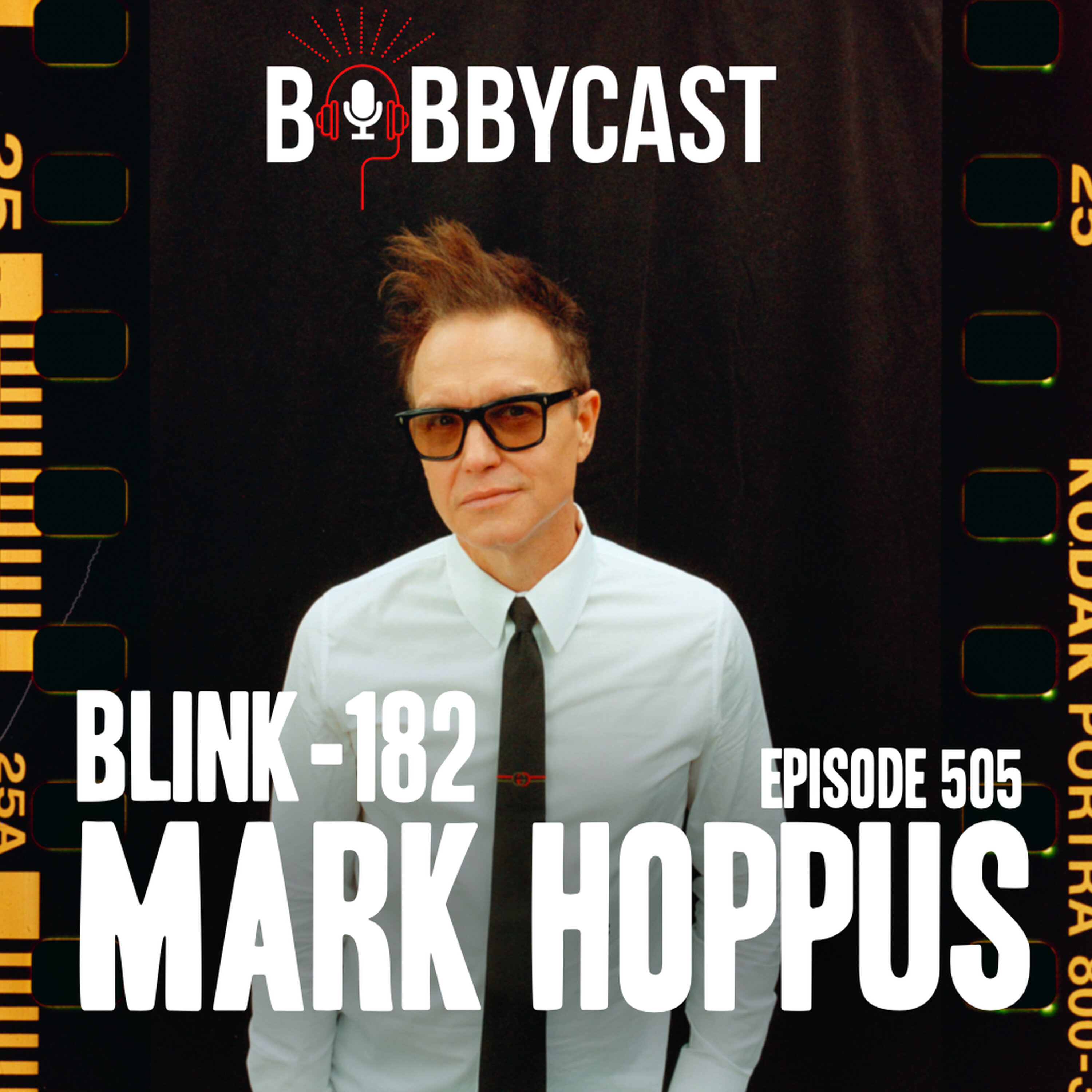
The Bobby Bones Show
BOBBYCAST: Mark Hoppus of blink-182 on How He Met Tom Delonge & Travis Barker + His Musical Hero Kissing Him on the Mouth & The Coolest Thing About Fame + Bands Who Changed Lead Singers with Bobby & Eddie
00:58:20
Loading summary
Transcript528 lines
- [00:00]
Bobby Bones
How to have fun anytime, anywhere. Step 1 Go to chumbacasino.com chumbacasino.com Got it.
- [00:06]
Mark Hoppus
Step 2 Collect your welcome bonus. Come to papa.
- [00:09]
Bobby Bones
Welcome bonus.
- [00:10]
Adam Lambert
Step 3 Play hundreds of casino style games for free. That's a lot of games, all for free.
- [00:14]
Bobby Bones
Step 4 Unleash your excitement.
- [00:16]
Adam Lambert
Woo hoo. Chumba Chumba Casino has been delivering thrills.
- [00:20]
Mark Hoppus
For over a decade.
- [00:21]
Bobby Bones
So claim your free welcome bonus now.
- [00:22]
Mark Hoppus
And live the chumba life.
- [00:24]
Adam Lambert
Visit chumbacasino.com no purchase necessary vgw group.
- [00:27]
Bobby Bones
Void where prohibited by law 21 + terms and conditions apply.
- [00:30]
Adam Lambert
Does this podcast make you happy? Of course it does. That's why you're here. But it only comes out once a week. For happiness. Every night. You need Adam and Eve.
- [00:40]
Mark Hoppus
Yes.
- [00:40]
Adam Lambert
I'm talking about sex toys. It's cool. It's cool. You have earbuds in right? Adam and Eve, America's most trusted source for adult products, has been making people very happy for over 50 years with thousands of toys for both men and women. Just go to AdamAndEve.com now and enter code IHEARTRA for 50% off. Almost any one item, plus free discreet shipping. That's AdamAndEve.com, code IHEART for 50% off.
- [01:07]
Eddie
You know, some people say that Odoo business management software is like fertilizer, the way it promotes growth and all. But other people say Odoo is like a magic beanstalk because it grows with your company and is also magically affordable. And there's some people who would even say Odoo's individual software programs come together to build the perfect suite. Like building blocks. Well, Odoo is all of these things. Fertilizer, magic beanstalk, building blocks for business. So sign up now@odoo.com o d o.
- [01:37]
Bobby Bones
O.Com welcome to episode 505 of the Bobbycast with Mark Hoppus from Blink 182. And I'm a Blink 182 fan. But Mike, you're a super fan. I would say my favorite band of all time. Dang. We got Counting Crows and Mark Hoppus from Blink in the same week. That's crazy. So you read the book? Yeah. Watch it in three days. I haven't read a book in three years. What'd you learn about him that you did not know, even though you're a superfan, that behind all the funniness and like, him being like, so over the top, he had a lot of anxiety and depression that you would never think about? I don't know. Isn't that kind of common for funny people. But, I mean, Blink is like, just known for their humor, like on stage, off stage. And just to hear him write about that stuff, what he was really going through, and especially during the time of the band broke up, like, kind of losing his identity because he's like, I'm not going to be the guy from Blink 182 anymore. He grew up a Navy brat, which I didn't know. Yeah. Crazy things he saw as a kid. What do you mean? Like. Like he saw a plane crash when he was a kid that in order to avoid hitting the school, like, drifted off to the side so I wouldn't hit crash into the school. Wow. That was like one of his earliest memories from Blink 182 and his book, which is called Fahrenheit 182, here is Mark Hoppus. Hey, Mark. Book's awesome. Read the book. Didn't think I'd read it all as quick as I did. We just got a few days ago.
- [03:03]
Mark Hoppus
Oh, thanks.
- [03:03]
Bobby Bones
And jammed out. It was all. It was awesome. I have some notes actually from. Specifically from the book that I have listed here. And if you're okay, I would just like to go through my notes about your book.
- [03:15]
Mark Hoppus
Totally. Let's go.
- [03:16]
Bobby Bones
Okay, first of all, first off, Elton John kissed me on the mouth once. And so it was awesome. And I was at a charity deal and I was sitting with him, and he grabbed me at the end of a song and kissed me on the mouth. And I was like, that was awesome. Elton John just kissed me on the mouth. Now, when I read your story, it felt a bit similar. So a musical hero of yours kissed you on the mouth. True or false? True.
- [03:37]
Mark Hoppus
Very true. Do you want to reveal who it.
- [03:39]
Bobby Bones
Is or shall I tell the story behind it? Please.
- [03:43]
Mark Hoppus
So when we were recording the Untitled album back in 2003, we had this song that was really cool and a little bit dark. And Tom said, you know who would sound awesome on this song is Robert Smith from the Cure. And I was like, oh, that'd be so cool. I wonder how we get ahold of him. And Tom's already on the phone making calls. And one of our friends was managing the Cure at the time. And so we got Robert Smith to sing on a Blink 182 song. And it was one of the biggest coups of my whole career. Just like a hero of mine grew up listening to the Cure. Hugely influential, on a Blink album. So we go to London and we're performing a show and we say, hey, Robert Smith, Will you come out and perform this song with us? And he very graciously said yes. And he came to the show and we did the song and we covered Boys Don't Cry. And then afterwards we were hanging out in the dressing room and I was leaving with my wife and I went to give him a hug and I said, hey man, thank you so much. It means the world to me that you were here and you were on this song. And then he leaned in and he gave me a kiss on the mouth.
- [04:41]
Bobby Bones
That's awesome. I mean, that's just an awesome story. And I tell people my Elton John story. They're like, really? I'm like, yeah, it was great. And yeah. So questions. So you're a self taught basis. How do you think that's affected how you play? Meaning since you taught yourself, it's a little different than like what standard. Standard teacher would teach a bass player. How do you feel like that? How do you feel like that's affected, like the sound? Blink?
- [05:06]
Mark Hoppus
I feel like my technique is terrible, but I feel like I write from a place of joy and I write from a place of, you know, growing up literally playing the Cure songs and playing Descendant songs and Bad Religion and the way that I played bass and Blink is kind of a combination between a bass guitar and a rhythm guitar because we only have one guitarist. So when Tom would go and noodle things, I was more almost a rhythm guitarist. So I really like playing bass and what it does in songs and what it does in music and what it does in Blink 182.
- [05:36]
Bobby Bones
You grew up as a Navy brat. I'm going from my notes here. You lived in a trailer. Your dad worked for the U.S. department of Defense designing missiles and bombs. So what would you see in the house? Was it like. I just pictured as I was reading, like a architects kid, but it was about bombs.
- [05:50]
Mark Hoppus
Yeah, kind of. My dad. I remember one time my dad brought home a steel plate that was about a half an inch thick and was twisted. And what he said that it was, was it was. They called it Witness plates. And what they would do is they would set up a target in the middle of the desert. Which is why I lived in the middle of the desert when I was growing up. Because the Navy would test missiles and bombs there and then they would shoot the target. And then they would have steel plates in circles going out from the target and they could tell what the damage pattern was. And I thought it would be so cool to take these heavy, twisted pieces of metal and create art with them or Put them in some kind of an art display because they had seen. They had literally witnessed such destruction.
- [06:33]
Bobby Bones
Your dad being Department of Defense, but you growing up like you did musically, like, having it. Where was he in the hey, I want you to do music, or I don't want you to do music spectrum.
- [06:44]
Mark Hoppus
He was supportive of me doing music. In fact, he bought me my first bass guitar. But when I said that I wanted to play music full time in a band and drop out of college, he was like, that's cool, but make sure that you have a backup plan. He was a lot more practical than my mom was, who said, absolutely, drop out of college. You can go back to college anytime, but you only get one chance to be in a band.
- [07:03]
Eddie
Wow.
- [07:04]
Bobby Bones
That is not really the answer I would expect from that. Sounds more like love than parents that are disciplined by their career. It feels like love won that. That internal battle of parents who want the best for their kid. Because, again, if you're in the Department of Defense, that is a job that has. It's. That's a dependable job. Like, that's.
- [07:24]
Mark Hoppus
Yeah.
- [07:24]
Bobby Bones
And what you. What you liked and what you did there. There's nothing there. I mean, you got to be one in a million to have even a career that pays your bills. Yet they still were supportive of that.
- [07:34]
Mark Hoppus
Totally. Yeah. My parents have always been really supportive, and they've always come to shows. And in fact, my parents are coming. I'm doing this book tour now, and my parents are coming out to the show in San Diego. So I think that'll be really fun to perform this book show in front of them and share the joy with them.
- [07:50]
Bobby Bones
Whenever you and Tom met, you talk about. I mean, my favorite parts when you felt like, not that it was funny that you hurt yourself, but it's funny now that you hurt yourself.
- [07:58]
Mark Hoppus
It is funny now.
- [07:59]
Bobby Bones
Yeah. So you guys meet. Would you mind telling that story about climbing the light post?
- [08:02]
Mark Hoppus
So, literally, the day that I met Tom was the day that I moved to San Diego from living in the middle of the desert. I moved to San Diego from Ridgecrest so that I could go to college in San Diego. And I was moving in with my mom and stepdad and my sister. So I drove three hours to San Diego. I unloaded all my stuff, which was a bag of clothes, a garbage bag full of clothes, a bass guitar and a bass amp. Unloaded my clothes and sat down and said to my sister, well, what the hell do I do now? And she was like, well, you should meet my friend Tom. He's My boyfriend's best friend, and he plays guitar and he skateboards, and you guys have the same sense of humor. So we drove over to Tom's house, went into his garage, started writing songs together, became instant best friends. We were hanging out in his cul de sac afterwards, and I was looking at the street light, and it was like 10:00 at night. I'm like, I bet I could climb to the top of that street light, and nobody really cared, but I climbed to the top of it anyway. I slapped the top of the pole, and I started climbing back down, and I jumped off from way too high, and I landed on my heels. I didn't break my heels, but I definitely bruised them badly enough that I needed to walk on crutches for six weeks. But the great part of the story is the next day, I woke up, got a call after I got back from the hospital, and it was Tom saying, hey, how do you feel? And I said, well, I'm fine, but I'm on crushes. And he said, oh, cool. Do you want to come over and write some more songs? And then we have been writing songs together ever since.
- [09:28]
Bobby Bones
I have friends that are in duos and, you know, and most of the hits are with one singer where you guys actually split it out. We were kind of going through it before you came on. How do you manage? What's the dynamic there of picking who does what?
- [09:42]
Mark Hoppus
Tom and I are very liberal with using one another's voices. For instance, Tom will write a song, and he'll say, I think that you should sing this part. Generally, in the past, when we were first writing songs together, if Tom wrote the lyrics to the songs, he would sing those songs, and if I wrote the lyrics, I would write the songs. But there were parts where I'd write something, and I said, I think this would sound better in your range, because Tom has a really cool, aggressive, screamy voice that hits really great in kind of, like, the upper midsection. And I think that my voice is better suited to, like, the lower midsection and the deeper section. So we'll write songs with one another in mind.
- [10:18]
Bobby Bones
Like that whenever you guys got your deal, it was because a record label's kid was a fan. Like, how did. How did that come together? And how did you even know that he was a fan?
- [10:29]
Mark Hoppus
He had come to a bunch of shows that Blink were playing when we were playing, literally, like, coffee shops and backyard parties and, like, little venues wherever we could. And this. This kid kept showing up, and then we would see him. We were skateboarding he would end up at all the same spots. And he would say he was a fan and that his dad ran a record label. And the record label that his dad ran was called Cargo Records. And when we were in San Diego in 1992, that was, like, the cool record label in San Diego. It had all the cool San Diego bands, like Rocket from the Crypto and Drive, like J. Who and all these cool San Diego bands. So this kid's name was Brahm, and he used to take our demo cassette, and he was trying to get our. His dad to sign our band. His dad's like, we're not a punk rock label. We're like this kind of nouveau grunge San Diego scene. And his kid was like, yeah, but this band's cool. And he kept putting our cassette into his dad's car's cassette player and turning the stereo all the way up. So when his dad got in the car in the morning and started up his car, it was just blasting Blink 182 at him every day until he finally relented and said, fine, I'll sign these dudes to get you off my back.
- [11:32]
Bobby Bones
There's a bit of a parallel in the next story where it was pretty cool. We had Ringo Starr here, and Ringo was sitting.
- [11:38]
Mark Hoppus
No way.
- [11:39]
Bobby Bones
Yeah, it was so sick. He sat with me for, like, 45 minutes, and he talked about how he would play in a band at the same time that the Beatles would play in a club. And so he would play for whatever amount of hours, and the Beatles would play. And then we've all heard the story about how Ringo wasn't the drummer, Pete Best was. And Ringo ended up being the drummer because he was around and they needed a new drummer. And he also fit what they were looking for, not just in drumming style, but also, like, sensibilities. Right. I think that's a. And he admits that. And he was like, I was at the right place, but also I was the right kind of person that they needed in the band. And I was around. So I just started playing with them, and I thought it was such a cool story. And I was reading about your old drummer, Scott, who quit, and that was right before Enema of the State. But where was Travis whenever he was the drummer? Did you know him and how did that happen?
- [12:31]
Mark Hoppus
Yeah, Travis had been a friend of ours for a bit before he joined Blink 182. He had played in a band called Feeble, which was a punk rock band that had played around Southern California. And I'd heard of Feeble And I'd heard of Travis Barker, but never met him until he played in the Aquabats, which was a ska punk band. And we. We toured together and played a lot of shows together. And then we were actually on tour together with Primus. And Travis used to come and hang out on our bus because we smoked and drank on our bus. And so Travis wanted to hang out in our bus so he could blast cigarettes with me and talk about skateboarding and talk about punk rock bands. And we became friends that way. And then when Scott, we were on tour and Scott, our drummer, got an emergency call that he needed to go home, so he flew home. And Travis, we turned to him and said, hey, we're missing our drummer. Can you fill in tonight? And he's like, yeah, I can fill in tonight. We were like, okay, well, we have whatever. It was, 60 minutes of music for you to learn. He goes, yeah, I can learn that. And he learned the whole set in like an hour. We just showed him the songs. I think he was fairly familiar with him at that point from touring with us, and he knew what the structures were. And then we walked on stage with Travis and played a show, and it was really special and really cool. And we were like, oh, this feels. This feels really good. So it wasn't. Scott quit. He was the first guy that we called.
- [13:50]
Bobby Bones
Yeah, it was a feeling like you played with Travis and was like, dang. That actually felt like kind of organically way better than it should being the first time we played together.
- [13:57]
Mark Hoppus
Yeah, totally. I mean, we were halfway through the first song, I think, and Tom and I look at each other like, oh, this feels really different and cool. And Travis just has a really awesome musical sensibility and he became friends with me and Tom and just fit right in.
- [14:10]
Bobby Bones
Let's take a quick pause for a.
- [14:12]
Eddie
Message from our sponsor.
- [14:13]
Bobby Bones
It is Ryan here and I have a question for you. What do you do when you win? Like, are you a fist pumper? A Woo Hooer? A hand clapper? A high five? If you want to hone in on those winning moves, check out Chumba Casino. Choose from hundreds of social casino style games for your chance to redeem serious cash prizes. There are new game releases weekly, plus free daily bonuses, so don't wait. Start having the most Fun ever@shambacasino.com no.
- [14:38]
Mark Hoppus
Purchase necessary VGW Group void where prohibited by law.
- [14:41]
Bobby Bones
21/ Terms and Conditions apply.
- [14:43]
Adam Lambert
Does this podcast make you happy? Of course it does. That's why you're here. But it only comes out once a week for happiness every night. You need Adam and Eve.
- [14:53]
Mark Hoppus
Yes.
- [14:54]
Adam Lambert
I'm talking about sex toys. It's cool. It's cool. You have earbuds in, right? Adam and Eve, America's most trusted source for adult products, has been making people very happy for over 50 years with thousands of toys for both men and women. Just go to AdamAndEve.com now and enter code IHEART for 50% off. Almost any one item, plus free discreet shipping. That's AdamAndEve.com, code iHeart for 50% off.
- [15:21]
Bobby Bones
At Ameca Insurance, we know it's more than just a house.
- [15:26]
Mark Hoppus
It's your home. The place that's filled with memories. The early days of figuring it out to the later years of still figuring it out. For the place you've put down roots.
- [15:44]
Bobby Bones
Trust Amica Home Insurance. Amica.
- [15:48]
Mark Hoppus
Empathy is our best policy.
- [15:58]
Bobby Bones
And we're back on the bobbycast. A couple other notes from the book that I wanted to ask about before. I just ask more general questions, but the story about playing for troops overseas, and it's a double part here. So one, the helicopter, which is wild, and then two, learning about them playing your music at the torture. Like, can you do both of those stories?
- [16:19]
Mark Hoppus
So while we were recording the untitled record, I was reading, like a Maxim magazine or some kind of lads magazine from back in the day, and they were talking about how they had the secret forces or special forces, I mean, had like, captured suspected terrorists and they had brought them back and they were interrogating them, and the method of enhanced interrogation was that they were blasting rock music at them. And we read in the article that one of the bands that they blasted to interrogate suspected terrorists was our band Blink 182, which I thought was, okay, you're using our music as a means of torture. Awesome. Very cool. And then we actually got invited by the navy to go overseas and meet and perform for the troops. So we went to Bahrain first to a military base there, a naval base that had submarines on it, nuclear submarines. And so we got to climb around the nuclear submarines and I got to climb in, literally, the torpedo tubes for a nuclear submarine. We performed on the Navy base for the sailors and their families. The next day, we flew out to Kuwait City. We landed in these, like, literally bombed out airplane hangar bunkers. They put us in these forerunners and they tore ass across the desert. And we literally saw, like, herds or packs or whatever you call them, of camels, just wild camels in the desert. We went to the border of Iraq and Kuwait where the soldiers were just back from the front line or just about to go out to the front line and we signed stuff and had a meal with them. And then the next day we went out to the Persian Gulf on a helicopter, landed on an aircraft carrier, the USS Nimitz, and got a tour of the aircraft carrier. We performed for the sailors in the hangar of the aircraft carrier of the USS Nimitz while it was at war. And it was pretty awesome.
- [18:15]
Bobby Bones
So when reading the book, I admired how candid you were. I've written a couple books and there were times where I'd written things that I felt like were so candid. One that I don't really feel sorry for me, but I wanted them to actually feel like empathy or have understanding. And there was a fine line for me. And Right. There were also things that like triggered certain things in me. Like it was like a whole therapeutic four or five months, honestly, to where I questioned some of the stuff that I left in. Was there any of the stuff that you left in that you, you questioned for any reason whatsoever that it was too personal or too triggering, or did some of that stuff actually feel so therapeutic that that was positive in the process?
- [18:54]
Mark Hoppus
Both all the stuff that I wrote about anxiety about, you know, self doubt about when I was sick with cancer and the, you know, felt like I was facing death, all that stuff I left in and I was like, do I really want to put this all out there? Because the same as you, like, I don't want anybody to feel sorry for me. I'm very lucky, I'm very blessed. But I feel like when I write from my heart, that that's what connects with people. When I'm writing lyrics or I'm writing songs and I write something that really means something to me, I feel like that's what connects. I feel like that's what I listen to or react to if I watch a movie or read a book or listen to a song. And so I was like, look, I'm going to put it all out there and people can sift through it and ignore it if they want to, but hopeful instead of ignoring it, they connect to it and it means something to them. Because I feel like they're pretty universal themes that we all go through.
- [19:43]
Bobby Bones
Yeah. And I learned that even if it wasn't specific to the person reading, I think you said it best. It's a universal theme more than it has to be them relating on a specific molecular level. And there's a difference. Right. Can I watch a movie? Same thing you just said. I feel in many ways, but I don't like, relate specifically to the exact storyline. But there are. There's absolute relatability that makes me happy, sad, sad, angry, whatever it is about the movie. The same way in the book, have you had the people that have read the book that, you know, what, have they come back to you and said, wow, I didn't know even this about you?
- [20:20]
Mark Hoppus
Well, one of the things that's happened since the book has come out and since, you know, since my cancer story is that people come up to me and they share their cancer stories and I feel really honored. Like, even today I was on Good Morning America and one of the producers came and was like, you know, when you're going through your cancer stuff, my mom was going through the exact same cancer stuff. And you talking about it or posting about it or being so honest about it helped her through it. And a lot of people have come up to me in the past couple years and been like, hey, my girlfriend or my friend or me personally, whoever has cancer, like, what do I say? What do I do? What would you suggest? And so being able to feel like because I was lucky enough to survive, that I could help other people with their figuring it out, because I really didn't have someone like that when I was going through it. I like being the cancer guy that can help people, either themselves or with friends or family.
- [21:14]
Bobby Bones
What role did TRL play with you guys? Fame.
- [21:17]
Mark Hoppus
Oh, it's huge. It was such a special time in music and in our band's career. I feel like at that point TRL was really undergoing a change. There were the. There were the bread and butter, the gold standards, artists on TRL, the Britney Spears, Destiny's Child, Christina Aguilera, NSync, Backstreet Boys, 98 Degrees, all these huge pop acts. But when Blink 182 was at our heyday, coming like. But in the late 90s, early 2000s, rock and roll and punk rock and kind of like that sports metal stuff was starting to break through as well. So it was this interesting time to be popular on a show that was popular for being so poppy. And here's our rock band coming in with like sideways baseball hats and skateboard clothes and big dickies, performing with people who are wearing like Versace and really nice clothes and really professionally trained. And we were just sloppy and dumb and it was fun.
- [22:15]
Bobby Bones
Was there ever an identity crisis with the band? Because again, you guys shifted music to pop, emulating what you were doing, but in turn you were. Because you were so popular, you were now part of pop. You actually led that, that sound in pop, which that was what you guys weren't. Now all of a sudden, you're not pop, you're punk, and now you're pop. But because you've changed it, you've changed what pop is, right? Did you guys ever have the Man? Maybe we should just go so hard and make sure people don't know that so they know we're not pop. Was there ever an identity crisis with Blink?
- [22:49]
Mark Hoppus
I think that after Enema of the State and how popular we got and how we were on pop music stations at the time, that came to us. And like you said, I don't feel like we changed our music at all. But music had come to us. And so on the next record, Take Effort, Pants and Jacket, we were like, we are going to plant the flag that we are a rock band, that we are not chasing some kind of fame, that we are not chasing some kind of sound. We want to do a post hardcore, you know, really dark, cool record. And so if you look at all the stuff for Take Effort, Pants and Jacket, we're like wearing all black. We're not smiling at anything. We're looking straight to the camera. Our R's crossed like, we are the serious rock band now. So a little bit of that. But I would like what Take Care from Pants and Jacket did to us and really focused us on, wait, what are we trying to do? Like, I feel like Anima of the State was kind of our party punk rock record. And then Take Care for Pants and Jacket was like, a lot more dark and vibey.
- [23:47]
Bobby Bones
So I have three extremely cliche questions and only have a few minutes left, but three, these are extreme cliche. So number one is going to be what is your favorite Blink Hit?
- [23:58]
Mark Hoppus
Favorite Blink hit. I'll go with Feeling this. Feeling this was the first song that we wrote for the untitled record. And if aliens ever came down from outer space and said, What's a Blink 182 song? I would play that and I would play all the small things. But I think that feeling this really showcases each one of us in a different way. And it's kind of an artistic take on a traditional Blink 182 song that pushes things in a new direction that we were really excited about when we wrote it.
- [24:27]
Bobby Bones
Second cliche question. What was the best part about fame and what was the hardest part about fame?
- [24:33]
Mark Hoppus
Best part about fame is the. Okay, here's the coolest thing that I ever got to do by being famous. When they launched the first Pirates of the Caribbean movie. We got invited to the premiere at Disneyland, and they shut down the whole park. So the red carpet, the press line was all the way down Main street, and then we turned left into Adventureland, and the whole thing was closed off. And there were literally people at Disneyland begging us to go on their rides because there was nobody else there. So, like, Big Thunder Mountain and Pirates of the Caribbean and all these great rides we got to ride. And then they premiered the movie on Tom Sawyer's island on a huge screen. But we were sitting out in front of Pirates of the Caribbean on these cool bleachers. So we watched the movie, and then at the end of the show, at the end of the movie, you walk out and they hand you a video game of the Pirates of the Caribbean video game. And you get in a limo, and they drive you down Main street of Disneyland and then take you home. That was rad. The hardest part. This, the worst part about being famous. Stalker. We had a stalker for a while that was a bum out.
- [25:38]
Bobby Bones
You wrote about that? Yeah, that. Yeah. That sucks. We've had that issue, too, because it feels like you're not in control. Like, I didn't realize that until. It just feels like you're. It's the. You stay your whole life trying to control everything, and then all of a sudden, you're not in control. Like, that sucks.
- [25:52]
Mark Hoppus
Yeah. Yep.
- [25:54]
Bobby Bones
Okay, my final cliche question. How important is it to you that people do lowercase b and the dash in Blink 182?
- [26:03]
Mark Hoppus
It's important. I would say it's an 8 out of 10 importance.
- [26:06]
Bobby Bones
Wow.
- [26:07]
Mark Hoppus
It's not necessary, but it's like, yeah, that's what it's supposed to be. But people can write it however they want. People overseas say Blink 182 instead of Blink 182, and it's always a point of contention. We go overseas and they're like, well, what are you supposed to say? Blink 182 or 182? And it's 182 to us, but. But as long as you're talking about us, that's all we care about.
- [26:27]
Bobby Bones
My producer, Mike. You're his favorite band of all time. Mike has got a couple of questions. Mike. Hey, Mark. Huge fan. I've only ever cried once in concert, and it was in 2023 when I saw you guys play, and it was the intro you did for Adam.
- [26:41]
Eddie
Song like.
- [26:41]
Bobby Bones
That's my favorite.
- [26:42]
Mark Hoppus
Blink.
- [26:43]
Bobby Bones
Has that song kind of changed for you from when you first wrote it to now to kind of having a Different meaning to you?
- [26:49]
Mark Hoppus
I mean, it meant the world to me when I wrote it. It was a song that I wrote at a very dark point during the, you know, period of time between Dude Ranch and Enema of the State where our band was starting to get successful. But I would come home and I would be totally alone and feel alone, and we go out on tour and I'd feel fulfilled and whole, and then I'd go home and I'd feel empty again. So I wrote that song, and it meant a lot to me because I was honest with pain and depression. And then as I've gone through life and gone back to that song, and especially when the band got back together after I was sick and we were playing this song that meant so much to me, I would walk on stage and say, very honestly, like, this song saved my life once and this band saved my life a second time. So it, like, it. It's almost now, like, it means so much to me that I don't want to play it. And I always find excuses to not play it because. Because I get in my own head when I do.
- [27:41]
Bobby Bones
The other part that stuck out to me about the book, we talked about it earlier about you begging your dad to get you a bass. Like, I did the same thing because I saw Blink 182 and I was like, I gotta play guitar with my brother. He's like, all right, we got to convince our parents he got a bass. So we learned playing guitar and bass by getting tabs off the Internet for you. What are your top four Blink 182 bass lines?
- [28:01]
Mark Hoppus
Top four Blink 182 bass lines. I would say the bass line in Mutt. I love. I would say the bass line in Feeling this. That I love. Dysentery. Gary's a lot of fun to play. And what's the fourth? Oh, Wishing Well.
- [28:13]
Bobby Bones
No, Carousel.
- [28:14]
Mark Hoppus
Oh, Carousel's a good one. But that one, the intro is hard to play, and I love that bass line. And it's literally the song that Tom and I wrote the first time that we got in a room together. I'll bump a carousel now, too. Sure. Let's kick out. Let's kick out Wishing well and we'll put a carousel in.
- [28:29]
Bobby Bones
I like that Mike changed Mark's mind. That's the funniest thing. Final two questions. Were you at all concerned that when you reunited, people wouldn't come?
- [28:40]
Mark Hoppus
Yeah, I think always that. But it wasn't about the people coming back. What was important to us was that the three of us, we're Continuing to do what we love, which is playing Blink 182 songs and writing new songs. When we got back together, there wasn't even in talk about, like, we're going to tour and play these songs. It was like, we're going to get in a studio and write a new record and keep doing what we love and keep writing new things and keep pushing forward. So it wasn't so much about, like, well, you know, we want a bunch of people to come and watch us play shows. We do, obviously, but we want people to come and listen to new stuff as well as old stuff. So, yeah, I think that we were less concerned about the people being there and more being true to ourselves.
- [29:24]
Bobby Bones
My final question, you wrote about this in your book about you and Tom going from best friends to being not even on speaking terms. And you talked about just communicating by email only. What is the communication like now between you two on a personal level?
- [29:42]
Mark Hoppus
We text all the time. Whether it be about, you know, Blink Blink stuff or just jokes or memes or memories or whatnot. Talking about everything, really. Like, I'll just call Tom up and I'll be like, what are you doing? And I called him, like, last week. I'm like, what are you doing right now? And it's like, nothing. I'm literally sitting in my yard watching my dogs run around. And so then we just talked about dogs for a while.
- [30:07]
Bobby Bones
So it's now it's just totally normal cool.
- [30:09]
Mark Hoppus
Yeah, absolutely. It's better than normal cool. Like, you know, like all brothers again.
- [30:14]
Bobby Bones
The book's fantastic. I hope everybody reads it. Fahrenheit 182. With a dash, though. Fahrenheit dash 182. We gotta make sure that. Yeah, that's the thing.
- [30:22]
Mark Hoppus
Get it right.
- [30:22]
Bobby Bones
Yeah, yeah. Fantastic. Hey, massive fan. We're both massive fans. Thank you for the time. Mark, congratulations on a wonderful book. And, yeah, just. I don't know what I'll say, except, massive fan. I guess I'm not gonna see you because you're not here, but massive fan. I'll just end with that. Mark, thank you for your time, buddy.
- [30:37]
Mark Hoppus
Thanks, Bobby. Nice talking with you. Really appreciate it.
- [30:39]
Bobby Bones
See you, Mark. The Bobbycast. We'll be right back.
- [30:42]
Adam Lambert
Does this podcast make you happy? Of course it does. That's why you're here. But it only comes out once a week for happiness. Every night. You need Adam and Eve.
- [30:52]
Mark Hoppus
Yes.
- [30:53]
Adam Lambert
I'm talking about sex toys. It's cool. It's cool. You have earbuds in, right? Adam and Eve. America's most trusted source for adult products has been making people very happy for over 50 years with thousands of toys for both men and women. Just go to AdamAndEve.com now and enter code IHEART for 50% off almost any one item plus free discreet shipping. That's AdamAndEve.com code IHEART for 50% OFF.
- [31:20]
Bobby Bones
At Ameca Insurance, we know it's more.
- [31:22]
Mark Hoppus
Than just a car. It's the two door coupe that was there for your first drive, the hatchback.
- [31:30]
Bobby Bones
That took you crossing country and back.
- [31:34]
Mark Hoppus
And the minivan that tackles the weekly carpool for the cars you couldn't live without. Trust Ameca Auto Insurance Amica Empathy is our best policy.
- [31:49]
Bobby Bones
This message comes from Greenlight. Ready to start talking to your kids about financial literacy? Meet Greenlight, the debit card and money app that teaches kids and teens how to earn, save, spend wisely and invest with your guardrails in place. With Greenlight, you can send money to kids quickly, set up chores automate allowance, and keep an eye on what your kids are spending with real time notifications. Join millions of parents and kids building healthy financial habits together on Greenlight. Get started risk free@greenlight.com iheart this is the bobbycast, right? So bands that changed their lead singers, for better or worst, and it can be because somebody died because they got in a fight. I can give you a couple examples and why I actually am bringing this up. And you had no knowledge of this topic, which is my favorite way to do music topics with you because you have a lot of music knowledge. And I really just wonder what comes to your mind when I say that. So give me a band that comes to your mind immediately.
- [32:52]
Eddie
Van Halen.
- [32:53]
Bobby Bones
Okay. Van Halen started with David Lee Roth.
- [32:57]
Eddie
Then went to Sammy Hagar.
- [32:59]
Bobby Bones
Can you name the third?
- [33:00]
Eddie
No clue.
- [33:01]
Bobby Bones
The singer for Extreme, Gary Sharon, who is a singer of Extreme. But yeah.
- [33:04]
Eddie
And that was. Did they even do an album? I have no idea. I don't even know how long he lasted.
- [33:07]
Bobby Bones
I think so, but not long.
- [33:09]
Eddie
Yeah.
- [33:09]
Bobby Bones
So Van Halen, one of the ones on my list for sure.
- [33:12]
Eddie
Which is funny because when stuff like that happens, especially three lead singers, you start seeing like, all right, common, common denominator. I know who the problem is here.
- [33:21]
Bobby Bones
The third Sharon kind of doesn't count, though.
- [33:24]
Eddie
No, but, but, but technically he does.
- [33:26]
Bobby Bones
Okay. And yeah, the common denominator is it. Oh, must be Eddie Van Halen. That's difficult. Totally.
- [33:32]
Eddie
Yes. And David Lee Roth, I guess, was the last lead singer.
- [33:36]
Bobby Bones
Yeah, he came back and he came.
- [33:38]
Eddie
Yeah.
- [33:38]
Bobby Bones
And I Think that's just because guys get old and they want to tour and nobody will come. With Gary Chiron as the lead singer. Yeah. Who did you like best? Because I think your older brother was a Van Halen guy. So you listen to a bunch, correct?
- [33:49]
Eddie
It's just me driving in the passenger seat listening to his music.
- [33:52]
Bobby Bones
Which Van Halen did you like best?
- [33:54]
Eddie
Sammy Hagar. And I think that just is purely just my age, because Sammy Hagar was the one when I was, like, in.
- [34:01]
Bobby Bones
High school, and I never listened to Van Halen. So I only, as I got older and didn't have an older brother or anyone pushing it down on me. Mine's David Lee Roth because I got it all at the same time, basically, and Just a Gigolo. And I love that song.
- [34:18]
Eddie
And that's his solo song, but that's him. Yeah, solo.
- [34:20]
Bobby Bones
So I was, like, in love with him. I thought he was so cool. So then when it was, like, Van Halen and the lead singer, I like the early stuff better.
- [34:29]
Eddie
I mean, those are the.
- [34:30]
Bobby Bones
Just. The gigolo guy was doing it. That's why.
- [34:33]
Eddie
I mean, those. Dude, that was Van Halen's Prime. When David Lee Roth was the singer. That was. That's what.
- [34:38]
Bobby Bones
Oh, I don't know. I think David Lee Roth. Yes. But I. Oh, I would argue that.
- [34:44]
Eddie
Really?
- [34:45]
Bobby Bones
Even though Roth. And I don't want to do a whole Van Hanna podcast because I'm not knowledgeable enough. But Sammy Hagar has, I think, the better songs.
- [34:52]
Eddie
You do? Like which ones?
- [34:54]
Bobby Bones
Let's. Let's. We can pull on, like. Right.
- [34:56]
Eddie
Panama, That's David Lee Roth.
- [34:59]
Bobby Bones
Oh, really?
- [34:59]
Eddie
Yeah. So, Panama, let me read you.
- [35:02]
Bobby Bones
Tell me if you can tell me who they are.
- [35:03]
Eddie
Got it. Go.
- [35:04]
Bobby Bones
Okay. I do, like, Might as well jump. Jump.
- [35:09]
Eddie
David Lee Roth.
- [35:10]
Bobby Bones
David Lee Roth.
- [35:10]
Eddie
Yeah. Okay.
- [35:11]
Bobby Bones
Classic. That's one of my favorites. Panama. Is that Ably Roth?
- [35:17]
Eddie
David Lee Roth.
- [35:17]
Bobby Bones
Okay. Who did the whole 1985 album or whatever that's called?
- [35:20]
Eddie
1984.
- [35:20]
Bobby Bones
Yeah.
- [35:21]
Eddie
David Lee Roth.
- [35:21]
Bobby Bones
Okay. That's a good one.
- [35:22]
Eddie
Yeah, man. I'm telling you that that was the prime. Van Halen. Okay. David Lee Roth, maybe.
- [35:27]
Bobby Bones
So maybe that's why I like him. Just because of all the songs.
- [35:29]
Eddie
I think it's hard for anyone to even name a hit when Sammy, like.
- [35:33]
Bobby Bones
Hopper Teacher was awesome. The motorcycle. Well, so what did Sammy Hagel. What was his.
- [35:40]
Eddie
Right here, right now.
- [35:41]
Bobby Bones
That was good.
- [35:42]
Eddie
Why can't this be loved?
- [35:43]
Bobby Bones
Why can't.
- [35:44]
Eddie
Yeah, that kind of stuff.
- [35:46]
Bobby Bones
Okay.
- [35:47]
Eddie
I don't know, like, maybe five songs, like a Handful of songs that were. Oh, he did like the song that would. That played during Twister. The movie. Remember the movie Twister?
- [35:55]
Bobby Bones
The first one or the second?
- [35:56]
Eddie
The first one.
- [35:56]
Bobby Bones
Oh, yeah. No, I couldn't even tell you how it goes. Okay, I have a list. I'll tell you why this comes up. We were putting together our million dollar show that we did. Now it's been a couple of months ago. We have a lot of acts that come in and perform with us and they kind of rotate in and out. And every year we look for bands that aren't country. Like this year we had O Town and they were straight pop. In the past, though, we've done, like, better than Ezra. We've done three Doors Down. Lit Creed. Yes.
- [36:29]
Eddie
Scott Stapp.
- [36:30]
Bobby Bones
So the Fray doesn't have their lead singer anymore, but the bald guy, he quit. I don't know what the deal was, but I was watching an interview where, like, the guitar player is now the lead singer. And I was considering reaching out to the Fray. And I thought to myself, I don't know.
- [36:50]
Eddie
Yeah, I didn't know.
- [36:51]
Bobby Bones
I was kind of unfairly turned off without even giving it a chance because I was like, if I were going to reach out to the Fray, then it's not the lead singer that sang all the hits.
- [37:02]
Eddie
And I couldn't tell you his name or anything about him, but bald, white and bald headed. That's all I know. And. But I would know if they showed up and it wasn't him. Yeah, I would know that.
- [37:11]
Bobby Bones
And I was listening to an interview with the now lead singer, but. But the guitar player going, you know, we were nervous about looking for a new lead singer and I was like, well, let me try it. And like, I admire all of that and nothing. Yeah, because you got to pay the bills. Why not be the bills as the Fray if it's still the band? But I. I didn't even pursue the ask. And they. They probably would have said no or we can't or. But I was like, you know what? If the phrase shows up and it's not the main guy, I think people will be disappointed. Right.
- [37:36]
Eddie
I. I agree. I completely agree. I'd be disappointed.
- [37:39]
Bobby Bones
Me too. And unfair. So that's what led me to this idea of bands that change their lead singers for better or for worse. And on my list, Van Halen is at number two.
- [37:51]
Eddie
Oh, good. Okay.
- [37:52]
Bobby Bones
At number one. Well, it's. It's Genesis.
- [37:55]
Eddie
Oh, right.
- [37:56]
Bobby Bones
And the age old story of Peter Gabriel was the original singer and their drummer was Phil Collins. And it was. They were looking for a lead singer and Phil Collins just kept singing basically behind the kit. And so they changed.
- [38:13]
Eddie
Yeah.
- [38:13]
Bobby Bones
And they arguably became a bigger band with Phil Collins as the lead singer.
- [38:19]
Eddie
Interesting. Yes. But I didn't know that. I didn't know that he quit. I guess I never knew that part. I thought the band broke up and they.
- [38:27]
Bobby Bones
Peter Gabriel.
- [38:28]
Eddie
They just kept going with Phil Collins. I didn't know that.
- [38:30]
Bobby Bones
I didn't listen. Quit or fired? Don't know. But they changed. So from this. What I read looking into this for this episode was they were openly looking for a new singer either if they broke up or not. But it ended up being Phil Collins who was behind the kit, who really was never going to be a lead singer, but could obviously sing and then turn into a massive. One of the biggest. Just solo stars of the 80s on my list. This is. I'll give you a hint. Lead singer died. A non American band. The lead Singer died in 1980.
- [39:09]
Eddie
Got it.
- [39:10]
Bobby Bones
Who is it?
- [39:10]
Eddie
Queen? No, lead singer died in 1980.
- [39:14]
Bobby Bones
Died in 1980. The lead singer was Bon Scott.
- [39:18]
Eddie
Oh, ACDC.
- [39:20]
Bobby Bones
And so Brian Johnson was there and is their lead singer.
- [39:24]
Eddie
So was it the same sound? Did. Did von.
- [39:26]
Bobby Bones
Is it similar? Yes. So Bon Scott was very. Yes.
- [39:31]
Eddie
But did he kick off a kangaroo?
- [39:34]
Bobby Bones
It's funny to hear him both.
- [39:38]
Eddie
I do. I need to do a deep dive in the.
- [39:40]
Bobby Bones
Bon Scott definitely has that sound. And I heard an old commercial with Brian Johnson, who's a lead singer who was singing on a TV commercial before he got an acdc and it didn't sound like the Brian Johnson we know is AC dc. So from my perspective, if I have to speculate, I think his singing style is very derivative of what Bon Scott's was because ACDC sounded like that.
- [40:02]
Eddie
They were known for that.
- [40:03]
Mark Hoppus
Yes.
- [40:05]
Bobby Bones
So the first album with Brian Johnson was Back in Black, one of the best selling albums of all time. So that wasn't a we're going to replace our guy. That's like he died and let's find something. And then exploded with him. The new guy's elite singer, but also sounded like the old singer. Journey's at four on my list.
- [40:24]
Eddie
Oh yeah. That was a big deal.
- [40:26]
Bobby Bones
So. And. And it's not always about it succeeding. It's like when I think of bands that replace their lead singer, period.
- [40:32]
Eddie
Yeah.
- [40:33]
Bobby Bones
And Journey had Steve Perry and they got the guy from YouTube.
- [40:38]
Eddie
Yeah, it was. Was it on audition or does it just like, let's try this guy.
- [40:42]
Bobby Bones
Arnel Pineda was his name. Not sure how they came across his YouTube video, but he sounds just like Steve Perry. Does. Doesn't look like him. I think.
- [40:55]
Eddie
Dark fella. Right.
- [40:58]
Bobby Bones
Well, his name is Arnel Pineda. I think he's from a Latin American. Yeah.
- [41:03]
Eddie
He might be Filipino.
- [41:05]
Bobby Bones
I think that's it.
- [41:06]
Eddie
Okay. Right. Is that right?
- [41:07]
Bobby Bones
And as you. As a dark fellow, only you could say that. Say that. Yes. I can't say he's Filipino. Okay. Yeah, I can't go. Dark fella.
- [41:14]
Eddie
Yeah.
- [41:14]
Bobby Bones
But I. Yes. I knew he was.
- [41:17]
Eddie
What's funny?
- [41:18]
Bobby Bones
His name's Pinata, so it's Latin, right? Yeah. Right.
- [41:20]
Eddie
Which, you know, Filipinos. Latin. Same deal. But like, what's funny about. About that is like, you know, Big Head Todd on the Monster. Saw him on YouTube just the other night, and I'm like, that guy's not what I thought he looked like. He is also from a different.
- [41:39]
Bobby Bones
I can't play some right now.
- [41:41]
Eddie
Okay.
- [41:41]
Bobby Bones
Nail. I don't know what he.
- [41:43]
Eddie
But that was weird, too, because when someone sounds like Steve Perry and he looks very different than Steve Perry, that's.
- [41:50]
Bobby Bones
A shock for those. Maybe if you've stumbled into this podcast. Eddie is a dark fella. He can say that I'm Hispanic. Yes. Dude. He's lighter than you, though.
- [41:59]
Eddie
Look at this.
- [42:00]
Bobby Bones
Is he. Yeah, I think we're like the same color. Steve Perry was a white guy.
- [42:05]
Eddie
Yeah, he's a very white guy.
- [42:06]
Bobby Bones
But Pinata's voice is shockingly similar.
- [42:08]
Eddie
I know, man. He's so good.
- [42:10]
Bobby Bones
Black Sabbath.
- [42:11]
Eddie
Yeah.
- [42:12]
Bobby Bones
Oh, can you name the lead singer?
- [42:14]
Eddie
The original Ozzy.
- [42:16]
Bobby Bones
Right.
- [42:16]
Eddie
But who. Who took his place?
- [42:18]
Bobby Bones
So. Ronnie James Dio. And who was also like a rocker himself.
- [42:23]
Eddie
He was Hispanic. No, I'm kidding. I have no idea.
- [42:25]
Bobby Bones
Oh, I didn't know. Dark Fella. I had no.
- [42:27]
Eddie
No idea. I had. I see. Again, I didn't know that Black Sabbath carried on. I thought Ozzy just left and they broke up and then Ozzy did his.
- [42:36]
Bobby Bones
Thing and they were critically and musically strong even after Ozzy did his thing. Heaven and Hell was the album that was kind of a reinvention. Hardcore fans love Ozzy because he was Black Sabbath. But also do respect. Do as well.
- [42:52]
Eddie
Yeah.
- [42:53]
Bobby Bones
In excess. Gosh. Do you remember the original. He.
- [42:58]
Eddie
He died. Right. He hang himself.
- [42:59]
Bobby Bones
I believe he was like, hanging. He, like, whacked off while hanging himself. Asphyxiation thing.
- [43:04]
Eddie
Doing the thing.
- [43:05]
Bobby Bones
Yeah. You may Google that.
- [43:06]
Eddie
That was the theory.
- [43:07]
Bobby Bones
How you choke. Yeah. I don't want. It's almost like people pumping their stomachs. Like, we heard every artist have to pump their stomach. Wait, so I don't know if that's true. What do I Google again? Google Michael Hutchins in excess.
- [43:19]
Eddie
Death.
- [43:20]
Bobby Bones
Death. Like how he died. So I remember this TV show. So they did a reality show to find a new lead singer, and J.D. fortune was the guy.
- [43:27]
Eddie
J.D. fortune.
- [43:28]
Bobby Bones
Very unsuccessful. Did not work at all. They never recovered from Hutchins death. And then reality TV didn't help the credibility of it. Yeah, but I have that on my list.
- [43:38]
Eddie
But a great idea.
- [43:39]
Bobby Bones
Yeah.
- [43:40]
Eddie
Trying to find a new lead singer.
- [43:41]
Bobby Bones
What do you see? Read over there?
- [43:43]
Eddie
Yay.
- [43:44]
Bobby Bones
He died from hanging.
- [43:46]
Eddie
But does it say while he was.
- [43:48]
Bobby Bones
It didn't say specifics here. That's good enough. Let's go with hanging from.
- [43:55]
Mark Hoppus
Yeah.
- [43:56]
Bobby Bones
Apparent suicide, but doesn't say anything. Oh, well, suicide's different, though, because if it's suicide. That's not that.
- [44:01]
Eddie
No. Well. Right, right. That's what I'm saying. I think the theory was just that he was doing that. But I think the coroner. Whatever the.
- [44:08]
Bobby Bones
We're not questioning anybody. We don't care that much to question the judgment of the correct read. It also says it resulted from an act of auto eroticism. That's it. That's choking yourself while wacking off.
- [44:19]
Eddie
But you have a good point, though. If it is that auto eroticism, whatever, then it's not suicide.
- [44:25]
Bobby Bones
Correct.
- [44:25]
Eddie
You weren't trying to kill yourself. You were trying to do something else.
- [44:28]
Bobby Bones
And there have got to be some factors, because it's not like you. Never mind. We just got to move on. Because I've.
- [44:33]
Eddie
Man, this is so interesting, though. Hey, when we're done with this, can we talk more about it?
- [44:37]
Bobby Bones
No, actually, that would be even weirder. Allison Chains.
- [44:40]
Eddie
Yeah. Elaine Staley.
- [44:42]
Bobby Bones
He died.
- [44:43]
Eddie
He died? Overdose.
- [44:45]
Bobby Bones
Any chance you know who they replaced him with?
- [44:48]
Eddie
I wasn't Jerry Cantrell.
- [44:49]
Bobby Bones
Was it William Duvall?
- [44:51]
Eddie
No. And that didn't work.
- [44:52]
Bobby Bones
They did fair, but. And they made okay albums and.
- [44:56]
Eddie
And Jerry Cantrell had a pretty good career.
- [44:59]
Bobby Bones
I think William Duvall is still touring with them.
- [45:02]
Eddie
Really? I didn't even know they toured. They probably do a cruise or something, Right?
- [45:06]
Bobby Bones
Who doesn't?
- [45:07]
Eddie
The grunge tour. The grunge cruise.
- [45:09]
Bobby Bones
Stone Temple Pilots.
- [45:11]
Eddie
Yeah. Scott Weiland. And then he dies. And then who took his place?
- [45:20]
Bobby Bones
Chester Bennington.
- [45:22]
Eddie
Really?
- [45:23]
Bobby Bones
And then Jeff Gut G U T.
- [45:26]
Eddie
T. That sounds familiar.
- [45:27]
Bobby Bones
Mixed result. They kept going, but the original charisma and sound never quite returned. I loved Stunted Violets.
- [45:33]
Mark Hoppus
You did?
- [45:34]
Bobby Bones
Yeah. Loved them. They were to me, top five. I won't. I don't know if I'm doing a top five favorite, but top five 90s alternative bands that remind me of that era.
- [45:46]
Eddie
Yeah.
- [45:46]
Bobby Bones
Like if you were to go, who were those bands that defined that time? Which was like for me, right. In a country and alternative. It's STPs there.
- [45:53]
Eddie
Did you like Velvet Revolver?
- [45:55]
Bobby Bones
No, I didn't actually.
- [45:57]
Eddie
There is different.
- [45:57]
Bobby Bones
Yeah.
- [45:58]
Eddie
Sounded very different than Stonetable Pilots and.
- [46:00]
Bobby Bones
Velvet Revolver had as the lead singer Scott Wyland. And so because that he left before he died.
- [46:07]
Eddie
Yeah, he did.
- [46:08]
Bobby Bones
And it was. They didn't have any of my hits, so I guess not. It was just like a band of other band members.
- [46:14]
Eddie
Slash was in it.
- [46:15]
Bobby Bones
Yeah.
- [46:16]
Eddie
I can't tell you.
- [46:16]
Bobby Bones
And I was never a Guns N Roses guy.
- [46:18]
Eddie
Did you know that Scott Weiland was a. And I might be saying it right? Scott Whalen. Scott Weiland, yeah. He was a good football player.
- [46:26]
Bobby Bones
I didn't know that.
- [46:26]
Eddie
Like, I think he's just like a really good football player.
- [46:29]
Bobby Bones
On my tick tock, I'll get a bunch of 90s acoustic alternative bands. Like, man, you talk about a distinct, really pure voice, but very distinct. Oh yeah, it's awesome. And like, you watch them do acoustic. I am smelling like a rose that Somebody Gave me or Plush was so good as a studio song, but when they recorded it acoustic, it became a hit again.
- [46:55]
Eddie
They released it acoustically. Song called Plush.
- [46:57]
Bobby Bones
I know. It's awesome.
- [46:58]
Eddie
So good.
- [46:59]
Bobby Bones
Let's take a quick pause for a.
- [47:01]
Eddie
Message from our sponsor.
- [47:03]
Adam Lambert
Does this podcast make you happy? Of course it does. That's why you're here. But it only comes out once a week for happiness. Every night. You need Adam and Eve.
- [47:13]
Mark Hoppus
Yes.
- [47:14]
Adam Lambert
I'm talking about sex toys. It's cool. It's cool. You have earbuds in, right? Adam and Eve, America's most trusted source for adult products, has been making people very happy for over 50 years with thousands of toys for both men and women. Just go to AdamandEve.com now and enter code IHEART for 50% off. Almost any one item plus free discreet shipping. That's AdamandEve.com code IHEART for 50 percent off.
- [47:40]
Bobby Bones
At Ameca Insurance, we know it's more.
- [47:43]
Mark Hoppus
Than just a car. It's the two door coupe that was there for your first drive.
- [47:50]
Bobby Bones
The hatchback that took you cross country and back. And the minivan that tackles the weekly.
- [47:57]
Mark Hoppus
Carpool for the cars you couldn't live without. Trust Amica Auto insurance.
- [48:05]
Bobby Bones
Amica empathy is our best policy.
- [48:10]
Mark Hoppus
Introducing Instagram teen accounts A new way.
- [48:13]
Bobby Bones
To keep your teen safer as they grow.
- [48:15]
Adam Lambert
Like making sure they've got the right gear for writing.
- [48:17]
Mark Hoppus
Knee pads, shack and helmet. Done.
- [48:19]
Bobby Bones
See you, dad.
- [48:20]
Mark Hoppus
New Instagram teen accounts.
- [48:21]
Bobby Bones
Automatic protections for who can contact your.
- [48:24]
Mark Hoppus
Teen and the content they can see.
- [48:33]
Bobby Bones
And we're back. Back on the Bobby cast. The Doobie Brothers.
- [48:38]
Eddie
Oh.
- [48:40]
Bobby Bones
God.
- [48:41]
Eddie
All the only. I only know Michael McDonald and he wasn't the original. I couldn't really even tell you.
- [48:46]
Bobby Bones
I wouldn't have either. I wouldn't have known from Tom Johnston to Michael McDonald.
- [48:49]
Eddie
Was there any Doobie? Jim Doobie?
- [48:53]
Bobby Bones
I don't think that's the purpose of the name that it's like a Van Halen. I think it's a reference to something else. Shifted from rock to like, like soul. Like the Doobie Brothers ended up with Michael McDonald ended up being a bit more of what they would call yacht rockish now.
- [49:08]
Eddie
Yeah.
- [49:09]
Bobby Bones
But the hits kept coming. So they had hit so like three.
- [49:12]
Eddie
And Dixieland and those songs. That's the old Doobie Brothers before they turn into a yacht rock gonna take.
- [49:22]
Bobby Bones
If I were guessing, I would think a lot of that. Oh, sweetheart. Yeah. I would imagine that that's a lot of Tom Johnson.
- [49:30]
Eddie
Okay.
- [49:30]
Bobby Bones
But we could have read that up.
- [49:32]
Eddie
I think that's right.
- [49:33]
Bobby Bones
Because we's a long haired hippie sound feels to me like Tom Johnson.
- [49:38]
Eddie
Yeah. Different than when you see what you hear now.
- [49:41]
Bobby Bones
Lynyrd Skynyrd.
- [49:42]
Eddie
Oh, yeah. Ronnie Van Sant.
- [49:45]
Bobby Bones
Original Dynaflane. Crash, Johnny Van Zandt. His brother. You know, as a legacy act, it's been successful. It's not like they've had other hits, but they have been able to continue on and tour and also because it's family. Sure. It feels more credible.
- [50:02]
Eddie
It does, it does. And they still dress the same as Ronnie did because I think that was Ronnie's style, that hat and the leather. But it. His brother sounds just like him, you know, like when I see them now and like I've never seen them live, but you watch them on TV or whatever, do performances.
- [50:21]
Bobby Bones
They're on tv. Yeah.
- [50:23]
Eddie
Like, you know, there'll be an award show where like, like Led Zeppelin plays or New Year.
- [50:27]
Bobby Bones
I'm talking about Skinner though. Specifically.
- [50:29]
Eddie
Oh, I'm sorry, I'm sorry. Skinner. Skinner. And like even they played the New Year's Nashville New Year's party.
- [50:34]
Bobby Bones
Skinner did on tv.
- [50:36]
Eddie
Skinner played on tv. Yeah. And he sounds like his brother.
- [50:39]
Bobby Bones
So creatively it's not like they had any hits, but again the brand and they've been able to Tour and continue to make money.
- [50:48]
Eddie
Yeah, it's pretty good. Audioslave, Chris Cornell.
- [50:53]
Bobby Bones
So, yeah, it kind of reversed, but, yeah, Chris Cornell, who is in Soundgarden. And that was. Audio Slave, to me, is kind of like Velvet Revolver, though.
- [51:04]
Eddie
It was. It was a.
- [51:05]
Bobby Bones
What do you call it?
- [51:05]
Mark Hoppus
Super.
- [51:06]
Eddie
A super group. That's exactly what it's called. Yeah. So. So once he died, they. They substituted someone else in there. Another lead singer of Audio Slave. Yeah.
- [51:20]
Bobby Bones
I. I don't understand.
- [51:23]
Eddie
Because the whole thing's about, like, replace lead singers, right?
- [51:25]
Bobby Bones
Yes, but this was kind of. This was a reverse one, so. So Audio Slave and Chris Cornell, who was in Soundgarden, who went from Soundgarden to Audio Slave and then to the band and Rage against the Machine.
- [51:43]
Eddie
That's Audio Slave.
- [51:44]
Bobby Bones
That's part of.
- [51:45]
Eddie
Right, That's Audio Slave. Yeah. Audioslave was Chris Cornell.
- [51:50]
Bobby Bones
Rocha.
- [51:50]
Eddie
Yeah.
- [51:51]
Bobby Bones
De la Rocca, Della Rocco, De la Rocha, whatever.
- [51:54]
Eddie
Yeah, yeah, yeah. They were there, both of them.
- [51:56]
Bobby Bones
It was kind of a boat. One lost a lead singer. One lead singer from another went to the lost lead singer. But they made a new band. Correct.
- [52:02]
Eddie
Called.
- [52:03]
Bobby Bones
Instead of it being what I would have called them, Sound against the Machine.
- [52:08]
Eddie
Did anyone think of that?
- [52:09]
Bobby Bones
I'm sure they did, but. But again, you have two brands.
- [52:13]
Eddie
Pretty amazing where you have the lead.
- [52:14]
Bobby Bones
Singer from one big brand and the band from another. Yeah. And then you pick a whole new name.
- [52:18]
Eddie
Yeah.
- [52:19]
Bobby Bones
And do you think they all were just lost in being so successful? They just thought it would just work, I guess.
- [52:23]
Eddie
And it was cool because Chris Cornell, again, unlike Velvet Revolver, which was so different, the STP sound from Velvet Revolver was so different. Velvet Revolver was a lot heavier. But Audio Slave, with Tom Morello, definitely different music sound. But once you have Chris Cornell, because Soundgarden was. Was hard. Black Hole, sun, some of their stuff, like Spoon man, is heavy. So the transition from Soundgarden to Audio Slave wasn't too different. And it sounded almost the same, but with Tom Morellos, like, weird guitar sounds.
- [52:58]
Bobby Bones
Like Rages. Yes. The only song that I really remember from Audio Slave is. Yeah, that's a good one. Let's see. I got a couple more here. Queen. So Freddie Mercury died. Paul Rogers for a bit, but then Adam Lambert. Paul Rogers. Meh. But Adam Lambert, a success. Not so much in putting out new music, but much like Skinner did, except without the blood. Like the blood. Rel. Like, they. They had credibility and toured again. One, because Adam Lambert could really.
- [53:40]
Eddie
She really could. Sounded just like him.
- [53:42]
Bobby Bones
So he modernized the live act and allowed them to keep touring. And people didn't feel like they had just put something together for just money.
- [53:50]
Eddie
Right.
- [53:51]
Bobby Bones
Because Adam Lambert was that good.
- [53:52]
Eddie
And weird at first. Right. Like, weird at first because Queen was such a legendary rock band, but then after a while and got normal. Like, pretty normal. You're gonna go see Queen? Yeah. Not even mention the. Adam Lambert is singing just like, oh, cool, let's just go see Queen.
- [54:07]
Bobby Bones
Oh, I. I guess I don't know anybody that ever saw Queen with him.
- [54:10]
Eddie
No, but what about your house?
- [54:11]
Bobby Bones
Like, talking about going to see Queen?
- [54:12]
Eddie
No, but what I'm saying is, like, you would always be like, oh, yeah, Queen with Adam Lambert from American Idol. To like, just it be normal. Yeah. Just Queen. You already know who the lead singer is. Obviously it's not Freddie Mercury.
- [54:24]
Bobby Bones
Out of respect. I would always say Queen with Adam Lambert because, you know, Freddie deserved more, but something similar to that.
- [54:30]
Mark Hoppus
So.
- [54:30]
Bobby Bones
And this has happened a couple different ways, but so Sublime originally with Brett Bradley Noel, and then he dies and then it becomes Sublime with Rome.
- [54:40]
Eddie
Yeah. Yep.
- [54:42]
Bobby Bones
And so Sublime with Rome continued to tour relatively well, but they didn't have at least that I know of many massive or even big songs.
- [54:55]
Eddie
Don't even know.
- [54:55]
Bobby Bones
I don't either. I don't want to speak for, like, all of alternative because I think I missed that. But now they've kind of switched singers again and now this is cool. Bradley Knowles son is the lead singer.
- [55:04]
Eddie
That's really cool.
- [55:05]
Bobby Bones
And that's who.
- [55:06]
Eddie
Who sounds like him, looks like him. It's pretty cool. Probably pretty cool for the band members, too, to have some have that, I think.
- [55:14]
Bobby Bones
Pretty cool for the band members because it gives a spark to touring again.
- [55:20]
Eddie
Yeah.
- [55:20]
Bobby Bones
And for them to make money.
- [55:22]
Eddie
Yeah.
- [55:22]
Bobby Bones
Again. Because how many times you're gonna see Sublime with Rome, right?
- [55:25]
Eddie
Yeah.
- [55:25]
Bobby Bones
I gotta go three times to watch Sublime with not even the original lead singer.
- [55:29]
Eddie
But see, they never went to just let's go see Sublime. It was.
- [55:32]
Bobby Bones
Let's always Sublime with Ro. That was their name, though.
- [55:35]
Eddie
It was their name.
- [55:36]
Bobby Bones
Yeah. Another one. And my final one. And Reed, I want you to look up Doobie Brothers songs with the different lead singers. Because I at least want to be semi accurate before we hang up. I like. This is a phone.
- [55:48]
Eddie
Before we hang up the phone.
- [55:49]
Bobby Bones
Thank you. Is the Barenaked Ladies. So they had two. They had two. They had the singer Steven, and they kind of also singer. But the rapper Ed and I think Stephen gots in trouble. Want to leave the band. They kicked him out. Ed's been Doing it for the last over a decade.
- [56:09]
Eddie
So the it spin is different than the Jeopardy. China, the Chinese chicken. Two different guys.
- [56:15]
Bobby Bones
Yeah.
- [56:16]
Eddie
Didn't know that.
- [56:17]
Bobby Bones
And so Stephen was the. A really great, pure singer. And Ed was a good singer, but would do a lot of the goofy. The rapping stuff. But now Ed does almost all the lead vocals. And you really. And I'm a Bare Naked Ladies fan. You can still really enjoy Bare Naked Ladies.
- [56:31]
Eddie
Yeah, I would think so.
- [56:32]
Bobby Bones
Like, stuff to like, you know, Went to the old apartment. This is where we used to live. Like, that's all old school.
- [56:41]
Eddie
You're a big fan.
- [56:42]
Bobby Bones
I love Bare Naked Ladies. You do reed? What do you have for us? All right, so which song are you. Are you talking about? So I don't know. What do you have over there? So, I mean, we got. Let's see what a Fool believes. That's Michael McDonald. Okay. And then we got Walk this Road is Mavis Staples.
- [57:03]
Eddie
Mavis.
- [57:03]
Bobby Bones
Mavis. Never a lead singer of the Doobie Brothers.
- [57:06]
Mark Hoppus
No.
- [57:06]
Eddie
I think that's maybe a feature, maybe.
- [57:08]
Bobby Bones
Yeah. Yeah, it's a feature. Okay. Yeah. Talking it. Yeah. Taking it to the streets. Is Michael McDonald. Okay. We're looking for some Tom Johnson or Michael McDonald. One of the two.
- [57:15]
Eddie
Okay, let's see.
- [57:16]
Bobby Bones
Tom Johnson is China Grove. There we go. Whoa, whoa, whoa. China Grow. That's more the 70s. Tom Johnson is a long train running. Okay. And listening to the music.
- [57:28]
Eddie
Whoa, whoa.
- [57:29]
Bobby Bones
Listen to the music.
- [57:30]
Eddie
We're right. Yeah.
- [57:31]
Bobby Bones
Tom Johnson. Jesus is just all right Jesus is just all right with me Jesus is just all right oh, yeah South City Midnight Ladies. Patrick Simmons. Leave up.
- [57:42]
Eddie
I don't know that guy.
- [57:43]
Bobby Bones
It probably wanted the other dude. Be brothers. They give a song to maybe. I don't know any other Tom Johnson hits that you see there. Let's see here. Pretty much just Michael McDonald after that. Okay. And then Patrick Simmons. Classic Patrick Simmons.
- [58:01]
Eddie
Good Old Patty.
- [58:02]
Bobby Bones
Sometimes they just give another guy in the band a song.
- [58:05]
Eddie
Like Ringo.
- [58:06]
Bobby Bones
Like Ringo. But Ringo at least wrote some of his. He did, yeah. He did, like, hits, too, for the People.
- [58:11]
Eddie
Which is cool of the Beatles, right?
- [58:12]
Bobby Bones
Yes.
- [58:13]
Eddie
To be like, no, no, no. We're like. We're the songwriters here. No, they like, hey, dude, you wrote a song. Pretty cool.
- [58:19]
Bobby Bones
And we like it. And we're going to record it and we'll make it a single because singles they pressed on vinyl. One. Yeah. I used to go to Goo Goo doll shows whenever they were close.
- [58:30]
Eddie
I didn't know this about you.
- [58:31]
Bobby Bones
I love the Goo Goo Dolls. Like, loved and loved is that Johnny Resnick. Never met him. Have probably been to, conservatively speaking, eight Google shows.
- [58:42]
Mark Hoppus
No way.
- [58:42]
Eddie
That's a lot.
- [58:42]
Bobby Bones
Conservatively speaking. Yeah.
- [58:44]
Eddie
Wow.
- [58:45]
Bobby Bones
But they would always like the best bass players sing like a song.
- [58:48]
Eddie
Every record was that time to go to the bathroom.
- [58:51]
Bobby Bones
It was awful. It was never good. And it would always be like a little harder. And he'd be like, it's just weird. So sometimes bands will just let other guys sing. And we'll end in this end on this. Who have you seen the most in concert ever? And if we're just roughly guessing numbers, how many times do you think you've seen them?
- [59:13]
Eddie
I mean, I'm trying to think. I'm only taking a second. Because I'm trying to see if there's any more than.
- [59:17]
Bobby Bones
And think about it. I can do mine. Because I know who I've seen the most. So I would say at this point because for a long time it had been my number two. But I think John Mayer now is number one. Probably 11 or 12 concerts. But like an ACL live. Like I would go to that taping. I count that as a show.
- [59:39]
Eddie
Yeah.
- [59:40]
Bobby Bones
Because he played. Right. It wasn't just bought ticket. I bought a bunch of tickets. I've been to a bunch of shows. John Mayer's at 1, at 2 and 2A. Because I saw them twice together. Foo Fighters. I'll put foo fighters at 2. I'm probably near 10 Foo Fighter concerts.
- [59:57]
Eddie
Wow. That's a lot. That's almost Google Goo Goo Doll numbers. Well, you know, a little more than.
- [60:02]
Bobby Bones
Google Goo Doll right below Foo Fighters, Chili Peppers.
- [60:05]
Eddie
Oh, wow.
- [60:06]
Bobby Bones
And they toured together for a while, so that counts. Yep. And then probably Goo Goo Dolls.
- [60:13]
Eddie
That is so surprising.
- [60:14]
Bobby Bones
That's like eight.
- [60:15]
Eddie
I've known you for a long, long time, and I did not know that about you. We didn't see Goo Goo Dolls together, did we?
- [60:21]
Bobby Bones
Nope.
- [60:22]
Eddie
Okay. Because we went to that 90s.
- [60:25]
Bobby Bones
I went. I took Nikita to see Goo Goo Dolls because.
- [60:28]
Eddie
In Nashville.
- [60:29]
Bobby Bones
Yeah. Because Nikita had just moved to play with us, the Raging Idiots. And I don't even think she knew they were.
- [60:36]
Eddie
That's.
- [60:36]
Bobby Bones
And she didn't have any friends. And I was like, I'm going to watch the Goo Goo Doll. I was going by myself. I only bought a ticket yet my favorite band. And so she was from Australia and she came and we went.
- [60:46]
Eddie
Do you like it?
- [60:47]
Bobby Bones
I don't think she was super.
- [60:49]
Eddie
She like it when the bass of.
- [60:50]
Bobby Bones
The bass player saying that's the one song she liked. Was when the bass players.
- [60:53]
Mark Hoppus
Good.
- [60:54]
Bobby Bones
Yeah. And Country X. I don't know if that counts as much, like. But I also don't think I don't have as many because I haven't paid. I just don't go to concerts anymore. Almost never. Because either working or we're selling music that we don't really go to many shows. Yeah. But maybe Garth. Three or four.
- [61:13]
Eddie
Sure. Yeah. I think I have three Garth shows.
- [61:16]
Bobby Bones
Yeah.
- [61:17]
Eddie
Under my belt.
- [61:17]
Bobby Bones
Who would be the top of your list?
- [61:18]
Eddie
It's got to be Pearl Jam. I've probably seen Pearl Jam 10.
- [61:23]
Bobby Bones
Good.
- [61:24]
Eddie
Maybe 12, 11 times.
- [61:26]
Bobby Bones
Awesome.
- [61:27]
Eddie
Yeah.
- [61:27]
Bobby Bones
Your number one should be 10 or more.
- [61:29]
Eddie
Yeah.
- [61:30]
Bobby Bones
At our age and for as long as they've been around. Yeah, I think that's.
- [61:35]
Eddie
And they're coming in May, so let's just make it 12. Because I'm. I'm going. Which if everything works out and I'm here in town, like, because for the. For the past six or seven years, every time Pearl Jam has come to Nashville, I've been out of town, which is. Just makes me upset, even. I think Eddie Vedder played one of.
- [61:52]
Bobby Bones
What's the Opry? He played the thing at the Aubrey.
- [61:54]
Eddie
No, that.
- [61:55]
Mark Hoppus
But.
- [61:55]
Eddie
But I wasn't here for that. The festival they do in Franklin. Pilgrimage.
- [62:01]
Mark Hoppus
Yeah.
- [62:01]
Eddie
Eddie Vedder played the Pilgrimage. I wasn't here.
- [62:03]
Bobby Bones
Do you ever want to go see just Eddie Vedder, though?
- [62:05]
Eddie
Absolutely. I've seen him. I've seen Eddie Vedder, like, three times.
- [62:07]
Bobby Bones
Does he do Pearl Jam songs?
- [62:09]
Eddie
Yes. And he does them either acoustically or with a ukulele.
- [62:13]
Bobby Bones
But he does enough.
- [62:13]
Eddie
Yeah, he'll do better, man.
- [62:15]
Bobby Bones
He'll do the Don't Call Me Daughter.
- [62:18]
Eddie
No, I don't think he's done. He did Daughter. He's done, like elderly woman behind the counter. He's done better, man. Yeah.
- [62:26]
Bobby Bones
A few other yellow Ledbetter. Probably yell at Better on a ukulele.
- [62:30]
Eddie
No, I think that one's on acoustic guitar. Yeah. But, like, Eddie. Better is good, dude. He does a really good live show and he's got enough songs. I think he has, like, three or four solo albums. So, like, he's got good songs out there that are not Pearl Jam.
- [62:44]
Bobby Bones
Yeah. I probably pass on going to Eddie Vedder's show. Unless he's gonna do half Pearl Jam songs. What else you got?
- [62:49]
Eddie
And then probably behind him, Bob Schneider in Austin. When we lived in Austin, I would go all the times. Honestly, I've probably seen Bob Schneider 20 times.
- [63:01]
Bobby Bones
Yeah, he played a lot. He lived there.
- [63:05]
Eddie
Yeah. And that's Just because he's a local dude.
- [63:07]
Bobby Bones
Blue October 71 times when we were in Texas, right?
- [63:12]
Eddie
Like, dude, Bob Snyder played every Friday night at Anthems. Like, it was just a thing. It.
- [63:16]
Bobby Bones
Reed, who would you say you've seen the most in concert? Dude, honestly, I can't even think of a. Of a band that I've seen more than once. I've seen a lot of bands live once. Wait, take that back. I saw Kendrick Lamar in Dallas and then at the super bowl, if that count.
- [63:32]
Eddie
That does count. It counts. It's a performance now. It doesn't count.
- [63:36]
Bobby Bones
You're not there for them. You're not there for Kendrick. You've not seen anybody twice. Oh, man. Who would you say your favorite artist of all time is? My favorite artist? No. Chris Stapleton. And I still haven't even seen him.
- [63:48]
Eddie
Really?
- [63:48]
Bobby Bones
No. You never been to Stapleton? I need to get out more. No, I haven't. I do. Like, he's your favorite of all time. He never been to a show? No, never been.
- [63:56]
Eddie
When did. When did he take that crown as your favorite of all time?
- [64:00]
Bobby Bones
I think when I was in college when I started, like, wanting to write songs more and I started to appreciate songwriting more, I was like, dang. He is actually an incredible songwriter. Yeah. I mean, that's what he. Yeah, both. Right. Like, he. I was gonna say that's what he did before he made it, but he was trying to make it as a part of a band, so. But yeah, okay.
- [64:19]
Eddie
Yeah.
- [64:20]
Bobby Bones
I didn't even know. Hey, open the door. Bring him in. He's gonna play for you now. Here he is, Chris Stable. Oh, my God. Chris.
- [64:24]
Eddie
Thanks for listening to a Bobby Cast production. New out of Nowhere obstacle. New all or nothing moments. New Less than likely triumphs. Season two of the Unshakeables podcast has it all. Hi, I'm Ben Walter, CEO of Chase for Business and host of the show. We're excited to bring you more inspiring stories from small business owners who share the what are we gonna do? Moments that ended up changing everything. Listen wherever you get your podcasts. Chase mobile app is available for select mobile devices. Message and data rates may apply. JP Morgan Chase bank and a member, FDIC. Copyright 2025 JP Morgan Chase & Company.
- [65:10]
Adam Lambert
Does this podcast make you happy? Of course it does. That's why you're here. But it only comes out once a week. For happiness, every night. You need Adam and Eve. Yes. I'm talking about sex toys. It's cool. It's cool. You have earbuds in, right? Adam and Eve America's most trusted source for adult products, has been making people very happy for over 50 years with thousands of toys for both men and women. Just go to AdamAndEve.com now and enter code IHEART for 50% off. Almost any one item, plus free discreet shipping. That's AdamAndEve.com code IHEART for 50% OFF.
- [65:47]
Eddie
You know, some people say that Odoo business management software is like fertilizer, the way it promotes growth and all. But other people say Odoo is like a magic beanstalk because it grows with your company and is also magically affordable. And there's some people who would even say Odoo's individual software programs come together to build the perfect suite. Like building blocks. Well, Odoo is all of these things. Fertilizer, magic beanstalk, building blocks for business. So sign up now at odoo. Com O D O O com.