← The Bobby Bones Show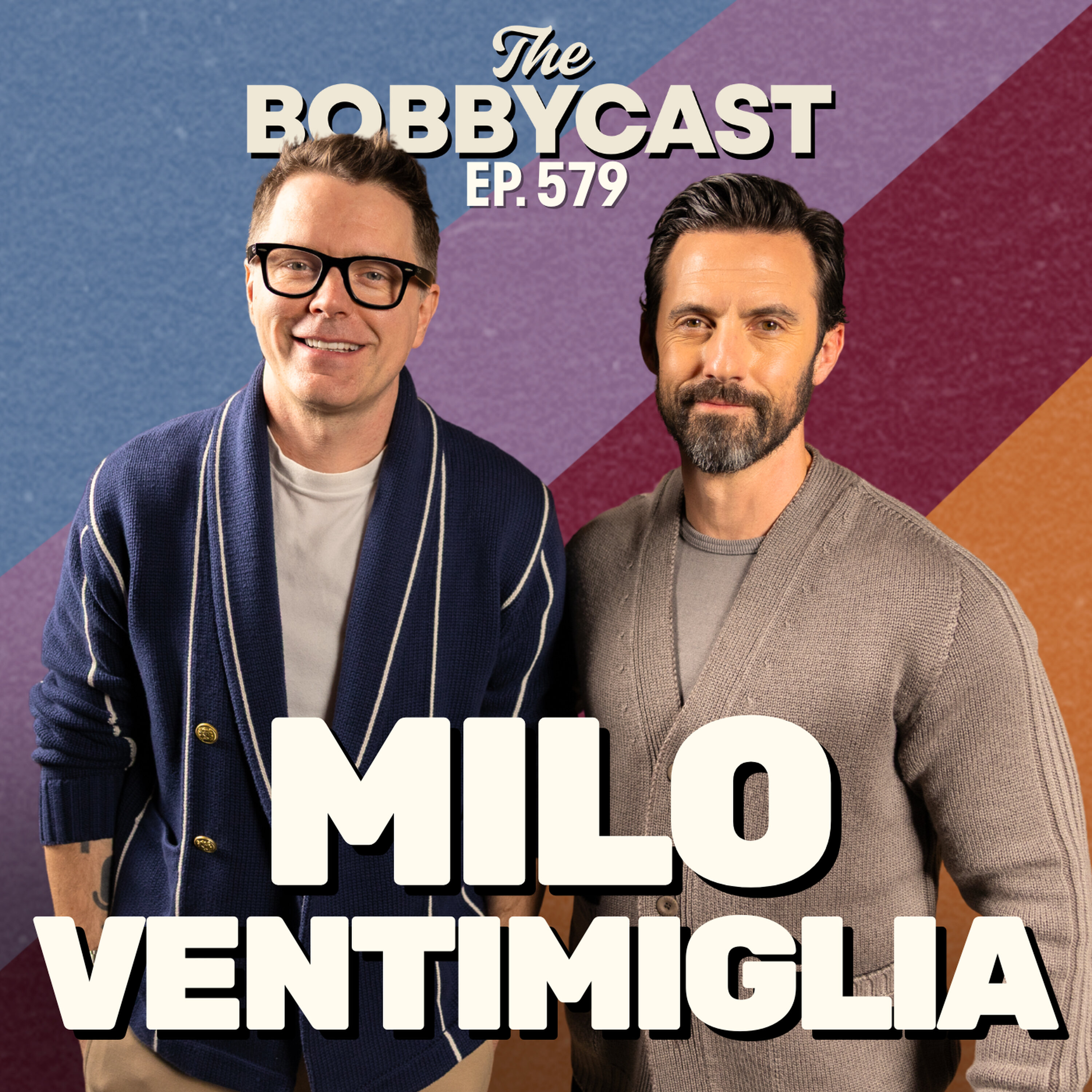
The Bobby Bones Show
BOBBYCAST - Milo Ventimiglia on His First Big Yes, Gilmore Girls & This Is Us
01:12:00
Loading summary
Transcript374 lines
- [00:00]
Bobby Bones
This is an iHeart podcast.
- [00:02]
Milo Ventimiglia
Guaranteed Human.
- [00:05]
Bobby Bones
Madam President, the sale at Denver Mattress.
- [00:07]
Milo Ventimiglia
It's been extended.
- [00:08]
Bobby Bones
Walk with me.
- [00:09]
Milo Ventimiglia
We need to get the word out. Reports are still showing the more you
- [00:12]
Bobby Bones
buy, the more you save.
- [00:13]
Milo Ventimiglia
In English, that's 100 bucks off every thousand you spend. And Doctor's choice.
- [00:17]
Bobby Bones
Check out the Consumer Reports recommended Doctor's
- [00:19]
Milo Ventimiglia
Choice plush and save 100 bucks.
- [00:21]
Bobby Bones
Check out the Colorado Queen for only $199.99.
- [00:24]
Milo Ventimiglia
Financing. We've got 60 months, no interest, and free shipping.
- [00:27]
Bobby Bones
Now we're talking. This is an all hands on deck scenario, people, but hurry. The extended President' super sale at Denver Mattress ends soon.
- [00:41]
Milo Ventimiglia
Ashley was having a party, and my role was I walk down the steps with a girl in my arm, and Ashley runs up to me as this party's happening while her parents are out of town. And she says, nobody's supposed to be upstairs. And I say to her, relax, Ash. We're just taking a little tour and walk off.
- [01:01]
Bobby Bones
Hey, guys. Bobby Bones here today on the BobbyC. Out with Milo Ventimiglia. Actor, director, producer. I know him mostly as Jack Pearson on this Is Us, but also he was on Heroes. He was on Gilmore Girls. Heck, he was even Fresh Prince of Bel Air.
- [01:17]
Milo Ventimiglia
The dude's awesome.
- [01:19]
Bobby Bones
Like, I really enjoyed this. I had never met him before, and he's in a new movie, I can only imagine two, where he plays Tim Timmons. And Tim actually lives in Nashville. And it's pretty cool because Milo's in Nashville recording this. But I can only imagine two in theaters. Here he is, Milo Ventimigl. I often try to find the three questions I think people are asked and not ask them.
- [01:41]
Milo Ventimiglia
Okay.
- [01:43]
Bobby Bones
But I want to see if I can guess the three questions that you get asked the most.
- [01:46]
Milo Ventimiglia
Okay.
- [01:46]
Bobby Bones
And you don't have to go into a full answer, but just give me a quick answer. Question number one. How did you feel about the ending of this Is Us?
- [01:54]
Milo Ventimiglia
I thought it was wonderful. I know that Dan Fogelman, he. We. We prepped for it ahead of time. He knew exactly what he wanted to do with the end of this Is Us at the beginning of season three. So we still had three. Well, four to go, if you count season three, four, five, and six. That we had to plan ahead because we needed the kids at that age. So the last episode, you know how it flashes back to when the kids are small and, like, they had already, at that point, aged out and their voices are cracking and they're like. They're well into. Like, teenagers couldn't capture them and Film them again so he knew he was ahead. And what I thought was beautiful that Dan did was he shifted from, you know, kind of centering Jack around the family. And then by the end, you realize, oh, wow, it's about mom. And, like, this journey that we'd been on with this family and these kids and about mom and. And where she's going, I just thought was a beautiful love letter to, like, the strength of women out there and what they experience and go through. And I know Dan lost his mom, and I think that was a pretty big impact, and I think that might have been a gift for her. Changing the perspective or shifting. Shifting the perspective of the family and the point of view and what Mom. The impact of mom and mom's death and all that was. And, you know, again, like, Dan just knocked out of the park. I thought it was a beautiful thing to live in that world of Ron Cephas Jones, God bless and rest his soul. Now, being a conductor on the train and Mandy Moore's character going through and not knowing what's going to happen. And then, hey, there's Jack right at the end. And then jumping back into, you know, all the points of view of the adult kids, seeing Sterling, seeing Justin, seeing Christy and what they're experiencing, and then, you know, jump into them as children with Lonnie and Parker and Mackenzie and Mandy and I, and then just kind of like going out on, like, that last little beat with the camera just shifts from young Randall to Jack, and then, boom, out black.
- [04:05]
Bobby Bones
Is that one of the top three questions you get asked?
- [04:07]
Milo Ventimiglia
No.
- [04:08]
Bobby Bones
Okay, good. The other one. I'm sure you get asked a lot, and you can abbreviate the answer. I have to think. Everybody goes, hey, your first job was on the Fresh Prince of Bel Air.
- [04:18]
Milo Ventimiglia
Yes. Top question.
- [04:20]
Bobby Bones
Do you dread answering that question? No.
- [04:22]
Milo Ventimiglia
Not at all. I don't care. It's fine. I mean, there's a lot of different ways to answer it, too. And, yeah, that was, like, my first real Credit. I was 18. I was going to school at UCLA. I got a phone call saying, hey, this job you auditioned for, you got a. Yes. To be on Fresh Prince of Bel Air. I remember my childhood friend Aaron Steger. We shared a room. We roomed together in an apartment. And I remember, like, getting the phone call early in the morning, and his bed is there, and my bed's here. I'm like, dude, I got the job. He's like, you got the job? Like, cool. What are we gonna spend the money on? Like, we're gonna buy A tv. We're gonna buy a vcr. What are we gonna buy? This is so cool.
- [04:53]
Bobby Bones
What was the role I played?
- [04:55]
Milo Ventimiglia
Party guest number two.
- [04:56]
Bobby Bones
Oh, that was what it was credited as.
- [04:58]
Milo Ventimiglia
Party guest number two. Yeah. Ashley was having a party, and my role was I walk down the steps with a girl in my arm, and Ashley runs up to me as this party's happening while, you know, her parents are out of town, and she says, nobody's supposed to be upstairs. And I say to her, relax, Ash. We're just taking a little tour and walk off. The best part about it was, it was 1995. I had overalls on. My hair was parted. 1995. I had a shirt that was open, that was vintage. I'm like, oh, man, I'm so 90s. This is rad. Doc Martens on just, you know, living my best 95 life. But that being my first job, gave me the opportunity to be around the movie star Will Smith. And what I saw on that set was kindness and inclusion from him. From him, which I think are important lessons to learn for a young actor. It is not about you. You're there as a community. You're there as crew. Will knew everybody's names, embraced everybody. I was a kid who had one line. He came up, like, walked up to me. Not in passing, but walked up to me, stopped to talk to me for probably five or six minutes. Felt like about 20. Asking me questions about myself. Oh, I was going to school. Cool. You know, where was I from? And things like that, and thanking me for being on his. And I think that set me in a direction to make sure that every set that I was on, hey, be like Will Smith. Just, like, be inclusive, be cool. Know people's names, make this a very warm place for people to be, make it a safe place for people to be. And I learned that from Will. Early days.
- [06:38]
Bobby Bones
Hey, that's a. That's a great answer.
- [06:40]
Milo Ventimiglia
Thanks, man.
- [06:41]
Bobby Bones
The third one. Do people ever go, how do you say your last name all the time? I've heard your name said, but people often say it differently. And there's no G. How do you say your last name?
- [06:53]
Milo Ventimiglia
Ventimiglia.
- [06:54]
Bobby Bones
Okay, so there's no G, like I said.
- [06:55]
Milo Ventimiglia
Yeah, G is silent, but, like. I mean, you look at, you know, any kind of. Like, you go to Italian restaurant Tagliatelle. Not Tagliatelle, but also, it's geographic. It's regional. You're from, like, New York. You're from Staten island, you're going to say Tagliatelle. You're Going to say things a little differently. It's like I got in a car the other day, and the guy driving me, he talks about Pasta Valley. And I was like, bro, I'm like, where are you from? Pasta Bajul. Like, I'm like, I know what that is. That's a bean soup pasta. Like, that's the best thing in the world. My grandma Nana used to make that. That's incredible. I'm never offended by it. I realize it's a difficult last name. When I was a child, like, playing, like, Pop Warner football, running onto a field, you know, in this, like, big important game, all these kids are getting their names announced. And as I'm running on, you know, I get Milo Ventima. Whatever. Not offended. It happens. My first name, people call me Milo. And I'm like, nah, it's Milo. You know, it is what it is. But the nice thing about having a long, difficult last name is I've got a short, not as difficult first name. And so kind of in town, I'm able to be like, if you just say Milo, people like, oh, yes, that's him. They know who that is. It's not like James Ventimiglia. There's a ton of James's.
- [08:05]
Bobby Bones
You know, I think when that kind of popped, they put the sign up.
- [08:09]
Milo Ventimiglia
Okay.
- [08:09]
Bobby Bones
Now it's got bullet holes in it. That's a whole.
- [08:11]
Milo Ventimiglia
Was like a city council kind of thing probably.
- [08:13]
Bobby Bones
I just know they.
- [08:14]
Milo Ventimiglia
Yeah, no problem.
- [08:15]
Bobby Bones
I was dropping on the ground.
- [08:16]
Milo Ventimiglia
We had. Gina's good. Thanks, man.
- [08:18]
Bobby Bones
Yeah, I was going back and it was a surprise.
- [08:20]
Milo Ventimiglia
Okay.
- [08:21]
Bobby Bones
It's super cool, but they have it, you know, when you're in. And then we were building the studio.
- [08:25]
Milo Ventimiglia
Yeah.
- [08:25]
Bobby Bones
When we were doing the deal with Netflix. And I was like, man, we need something that's like. So we asked them for the design of the sign in order.
- [08:31]
Milo Ventimiglia
Oh, cool.
- [08:32]
Bobby Bones
Yeah.
- [08:32]
Milo Ventimiglia
So did you ever find out who, like, shot holes through it?
- [08:34]
Bobby Bones
Probably a little bit. Everybody. Only 772 people. So probably there's.
- [08:38]
Milo Ventimiglia
You knock on every door and be
- [08:39]
Bobby Bones
like, hey, yeah, we did that.
- [08:41]
Milo Ventimiglia
What caliber is your favorite? Yes. Birdshot.
- [08:43]
Bobby Bones
It's a lot of birdshot.
- [08:44]
Milo Ventimiglia
Got it. Oh, so long gun. Okay.
- [08:47]
Bobby Bones
Yeah. Where I come from, nobody's shooting handguns.
- [08:50]
Milo Ventimiglia
No. No pistols.
- [08:50]
Bobby Bones
No. It's all shotguns.
- [08:52]
Milo Ventimiglia
Wow. Like racks in the back of windows of trucks.
- [08:54]
Bobby Bones
Oh, yeah. We would leave. Are you rolling, Mike? This is fun to talk about anyway,
- [08:58]
Milo Ventimiglia
dude, by the way, this is the best. This is the best kind of conversations.
- [09:01]
Bobby Bones
When I was in high school and I graduated in 98. So. But we would leave for two reasons without ever having to check out. One, if the trout truck drove by. Are you familiar with the trout truck?
- [09:14]
Milo Ventimiglia
No.
- [09:14]
Bobby Bones
So we would. I'm from a very rural town, and so the game fish would stock trout, and so you'd see the truck drive by, and it'd be loaded with trout. And so we would just jump in our cars and drive down. And since they're stalking them, you're just yanking, really, that. And then everybody had guns in their cars and trucks because especially during hunting season.
- [09:33]
Milo Ventimiglia
Yeah, sure. Just leave. You got to be ready.
- [09:36]
Bobby Bones
Or you came to school late because you went early and you don't go home and drop your, you know, your 12 gauge.
- [09:42]
Milo Ventimiglia
We did the exact same thing in Orange County, California.
- [09:45]
Bobby Bones
I'm gonna say that's probably not true, but. Yeah, obviously it was a different time then, but. Yeah, in rural Arkansas. Yeah, those are just tools.
- [09:55]
Milo Ventimiglia
Yeah.
- [09:55]
Bobby Bones
You know, but everybody had shotguns in their car all the time because you came from the woods or you went to the woods after school or. A fishing pole. Yeah, a lot of fishing poles.
- [10:03]
Milo Ventimiglia
Yeah.
- [10:04]
Bobby Bones
Did you fish at all ever?
- [10:06]
Milo Ventimiglia
Once, I think I might have been. I might have been in high school, and it was more like out in the ocean, and I went on a boat, and I didn't do so well on boats back then. And I remember before I went, my dad told me to take a Dramamine, and I didn't take a Dramamine. And so I spent quite a bit of the boat ride out on the ocean, which, you know, is up and down. Just not really looking at the ocean.
- [10:28]
Bobby Bones
That's tough. I had a show on Nat Geo for a while, and one of the things that we did was we went out. We were spending time with a guy who. He was a career halibut fisherman. And so we went to San Francisco. And, yeah, only time I'd ever seen Alcatraz. But, you know, we go out that way, and we go out like five miles, and he's in a small boat. I get motion sick in an elevator being on a small boat like you're talking about. I vomited so much. It was to the point where I was vomiting. Nothing. It was just me going bio. It's worse, like, screaming. I would lay down and just do this until they said, we need you. You need five. You gotta give us five minutes. Stand up, shoot the scene.
- [11:10]
Milo Ventimiglia
So here's something really quick, good tip and trick. If you don't have Dramamine or, like, a meclizine patch that goes behind Your ear ahead of time, pressure points on the inside's your wrist, either side. You can sit there and squeeze the heck out of your wrist on either side. And it should help you to bridge the gap of when you're having motion sickness.
- [11:29]
Bobby Bones
Why do you think that is?
- [11:31]
Milo Ventimiglia
I don't know.
- [11:31]
Bobby Bones
I don't know if you studied, like, Eastern medicine.
- [11:33]
Milo Ventimiglia
I would say, like, yeah, Eastern medicine or something like that. It was just. It was something. I feel like my dad. My dad has Meniere's, which is like a deep inner ear. I don't even know what it's called, like, what it really the. The condition is, but my dad will. His cochlear or something. The. The fluids in there just kind of flip and he gets really. Just knocked down. You know, it's almost like somebody has a migraine, like a really bad migraine. They just, like, want to be in a dark room and just, like, have nothing around. So my dad had this issue, like, his entire life, and I think he was always trying to find remedies and things like that and just pressure points.
- [12:07]
Bobby Bones
It really worked.
- [12:08]
Milo Ventimiglia
It did. The only time I tested it out, I was on a flight to Hawaii with my wife, and she's watching a documentary about Hawaiian culture, and she's from there of Hawaiian culture. And I was just trying, like, not to vomit our breakfast. And I didn't have any Dramamine. And I'm trying to be present, and I'm just sitting there, just grip and it's just turbulent and it's moving up and down. Hit a bad air pocket or something. And I'm just holding. Holding for dear life onto my wrist just as hard as I could. Like, when the flight was over, I was looked down and just. Just the deepest pit of my thumb going straight through.
- [12:44]
Bobby Bones
Yeah, pretty much you get sick on a flight.
- [12:48]
Milo Ventimiglia
It was. I think it was just circumstantial with. With. With that flight. It doesn happen all the time. It actually. I used to be really good with flights. Boats were, like, not as much, but I could manage to handle it. But then I spent a bunch of time with the Air Force Reserves and I went up in an F16. And what we were doing in that jet actually tipped the scale to where, like, the smallest of things, like sometimes an elevator or a car drive and like, whoop, you know, bananas.
- [13:18]
Bobby Bones
I'm curious about that flight. I went and flew with the Blue Angels once.
- [13:21]
Milo Ventimiglia
Yeah.
- [13:24]
Bobby Bones
I would never do it again. I'm so glad I did it. Sure. And both can exist.
- [13:28]
Milo Ventimiglia
Yeah.
- [13:28]
Bobby Bones
And they called and said, hey, we're coming to town. We're selecting someone from your city, we think based on Da da. We like you to do it as an immediate yes, of course.
- [13:38]
Milo Ventimiglia
Because it's an experience that is not often offered to anybody. And you're like, cool. I'm in a position to go do something cool that I would never get to do in a million years. Like, I'm going to do it.
- [13:48]
Bobby Bones
Can't pay for it.
- [13:49]
Milo Ventimiglia
Can't pay for it. Well, there used to be a program with American Express. If you had a million points legit. A million points, you could go fly in whatever particular kind of jet. I was like, man, I'm going to save up for that. And then, yeah, it never happened because, like you need a million points on. I didn't know that.
- [14:06]
Bobby Bones
So you could kind of pay for it.
- [14:07]
Milo Ventimiglia
You got to pay for it, but also you can't pay for it. Yeah, it's one of those like invited experiences that are just priceless.
- [14:12]
Bobby Bones
I was nervous. I'm not a big fan. Fly. I don't like flying, but I do. And they put the little suit on you, except it's not an anti G suit. It's literally just a bow constrictor. Overalls.
- [14:25]
Milo Ventimiglia
Well, you're. Yeah, you're in. You're in like a jumpsuit. Like a car mechanic. And then the suit, the G suit.
- [14:31]
Bobby Bones
I didn't have a G suit.
- [14:32]
Milo Ventimiglia
You never G suit.
- [14:33]
Bobby Bones
No, that's their pride thing. They don't wear a G suit. So there's no.
- [14:37]
Milo Ventimiglia
Yeah, but they do this for a living. You don't.
- [14:40]
Bobby Bones
But nobody had a G suit on.
- [14:41]
Milo Ventimiglia
Why didn't they give you a G suit?
- [14:42]
Bobby Bones
Exactly.
- [14:43]
Milo Ventimiglia
Do they teach you how to chirp?
- [14:45]
Bobby Bones
So I don't know what that means.
- [14:46]
Milo Ventimiglia
Okay, so chirping is a way of breathing. When you're in a fighter pilot, fighter jet, you're basically. So the idea really quickly, gravity. Gravity is going against you and you need to stay awake and keep blood in your heart and in your head when you are flying and under G force or you will get G lock, which means you're just going to pass out.
- [15:07]
Bobby Bones
That happened to me, but yeah, exactly.
- [15:09]
Milo Ventimiglia
So it happens to all of us. All of us civilians, man. It always happens. But a G suit is like a boa constrictor. So it's from your sternum all the way down through your rib cage and then wraps around your legs. And the idea is under 1G, 2G, 3G's which is equivalent to your own body weight being forced on top of your Blood system. Your G suit is filling up, compressing everything, keeping all the blood out of your extremities and in your heart and in your head.
- [15:41]
Bobby Bones
Is it compression? It's like.
- [15:43]
Milo Ventimiglia
It's compression suit, but it's. I mean, it literally feels like you're being strangled by a boa constrictor. But on top of that, you have to learn how to chirp, which is a style of breathing that is basically same thing that your. Your suit is doing, which is forcing all the blood up into where you need it, your heart and your head, so it doesn't stop and you don't pass out. And so, like, I mean, this was the. The Blue Angels. Might have been different. Air Force Reserves. These guys ran me through the program, taught me how to parachute, all this stuff, how to fly the jet. Everything. Everything I need to know about an F16 was told to me ahead of getting into the jet and going up on a flight.
- [16:19]
Bobby Bones
What's the actual physical chirp, though? Because I just.
- [16:21]
Milo Ventimiglia
The physical chirp. You're basically
- [16:27]
Bobby Bones
Lamaze.
- [16:29]
Milo Ventimiglia
Yeah, I'm doing. Yeah, you're doing Lamaze right now.
- [16:31]
Bobby Bones
Yes.
- [16:31]
Milo Ventimiglia
100%. Boom. There's. There's a child. Yeah.
- [16:34]
Bobby Bones
Did you feel like that helped you?
- [16:36]
Milo Ventimiglia
I think it did, but I still hit, I think, eight and a half GS before I finally succumbed to that and passed out and I absolutely vomited.
- [16:48]
Bobby Bones
So when I went up in the jet, just overalls. Yeah, whatever they are.
- [16:55]
Milo Ventimiglia
You're a stud.
- [16:56]
Bobby Bones
No, I'm not, because I get in. And what they teach. They taught us was a bit different. Where it was you have to shove your feet into the ground so hard to keep the blood up because. And. And he would tell me, because I'm. I'm a novice. Right. Rookie. Novice. All right, we're gonna hit two GS. Three GS.
- [17:15]
Milo Ventimiglia
Yeah. And they count it for you?
- [17:16]
Bobby Bones
Yeah. They start telling me, yeah, yeah, yeah, push. And so I'm pushing as hard as I can, and I.
- [17:21]
Milo Ventimiglia
Did you. Did you poo yourself?
- [17:22]
Bobby Bones
I didn't poo myself. They told me to do it beforehand.
- [17:25]
Milo Ventimiglia
Okay, good.
- [17:26]
Bobby Bones
I probably would have, but they were like, you need to use the bathroom? And I was like, rdp. They were like, no, no, no.
- [17:32]
Milo Ventimiglia
Yeah, yeah.
- [17:33]
Bobby Bones
You need to make sure the other one, everything. And so I remember when we were hitting, like, three or four GS, I would start to see the bottom of my eyes get a little black.
- [17:41]
Milo Ventimiglia
Yeah, just a little. Yeah. I'd go gray when we hit.
- [17:44]
Bobby Bones
You see me in the video? I couldn't I was pushing back as hard as I could. Yeah, it was overtaking me. There was a point where my eyes were wide open and it was all black. I was still conscious.
- [17:54]
Milo Ventimiglia
And you heard.
- [17:55]
Bobby Bones
Yeah, except I couldn't see anything. And then you see in the video, me go, yeah, we're tumbling and I'm just doing it. And then I come back alive and I'm like, oh, God, dude.
- [18:05]
Milo Ventimiglia
It's wild, dude. I had the same thing. My pilot, his name's Duke Boy. That was his call sign. And as we're like pushing GS, I hear him count them out, count them out, count them out. And I see the worlds go gray, gray, gray, gray, gray. And then I snap back and I hear him saying my name. Milo. Milo, you still there? I'm like, yeah. Oh, yeah. No, I'm still here. And he goes, good. I heard you stop breathing, like chirping, because I was chirping all the way through. We got to eight and a half GS. And then I was like, I'm done. I'm tapped out.
- [18:31]
Bobby Bones
Why were you doing that? Was it for a role?
- [18:33]
Milo Ventimiglia
No, no, the actors just kind of get to do cool things.
- [18:38]
Bobby Bones
That's a cool thing.
- [18:38]
Milo Ventimiglia
That's a cool thing. Yeah. No, I do a lot of work in the military space. I do a lot of work with gold star families, so families that lost loved ones in combat do a lot of work with active duty and veterans. But that was just one of those things that got invited to spend some time with Air Force reserves at Luke Air Force Base in Arizona. And they're like, look, you know, put you up in an, in an incentive flight.
- [19:03]
Bobby Bones
What's that mean?
- [19:04]
Milo Ventimiglia
You basically just to get to go in a jet and go for like a second seat ride.
- [19:09]
Bobby Bones
You have credit card points. Yeah, sorry, American Express points.
- [19:11]
Milo Ventimiglia
No, no, I didn't use my points. I hung out my points for like, other vacations. But no, they just. I just got invited to go spend some time with these like awesome men and women that, you know, serve the nation and do it on the reserve side and te other nations, like, fighting skills of the F16 and other far more superior jets.
- [19:30]
Bobby Bones
That's crazy.
- [19:31]
Milo Ventimiglia
Yeah, it's pretty cool. I mean, and also, I mean, like, dude, like, been on aircraft carriers in Persian Gulf, like Iraq, Afghanistan and stuff. Just kind of there to like, serve the community, the military.
- [19:39]
Bobby Bones
Did you jump?
- [19:41]
Milo Ventimiglia
I jumped with the. I think they're called the Black Daggers. Army Special Forces at Fort Bragg. Yeah, that was fun.
- [19:48]
Bobby Bones
Yeah.
- [19:49]
Milo Ventimiglia
But also like, too. You're kind of like you're strapped to Captain America and you're like going out of plane. You're like, what's going to go wrong?
- [19:54]
Bobby Bones
That's how I felt in, in my flight. Yeah, you. I'm in a blue angel. And again, I don't like flying southwest. And it's not about Southwest. I don't like flying, but I'm up there with the best of the best.
- [20:04]
Milo Ventimiglia
Yep.
- [20:05]
Bobby Bones
And so there was a comfort in that. When I got out of the plane, I was, I was sick for eight hours. I laid on the floor in the room for a while and then I was just humiliated. They had to look at me and
- [20:13]
Milo Ventimiglia
where were, where did you do your
- [20:14]
Bobby Bones
flight at like 30 minutes from here. They were, oh God.
- [20:17]
Milo Ventimiglia
So he's like in town. So you just like hopped into a
- [20:19]
Bobby Bones
car, still couldn't get home? No, I laid on the floor for. Yeah, to drive there and then I laid in the floor and then I laid on the floor in the bathroom, which was disgusting. Then I went to my car and leaned the seat back and did that for about an hour and then finally got home. It was a rough one.
- [20:33]
Milo Ventimiglia
I was in Arizona, but then I had to fly to Vegas for something and I got onto a southwest flight and I remember as we're like landing and descending and I'm by myself and I kind of like lean to the person next to me, I'm like, this is not even like a half a G like thinking I'm all high and mighty. Like I just passed out at eight and a half GS, like a quarter G. This is ridiculous.
- [20:55]
Bobby Bones
What was your jumping out of a plane experience like?
- [20:59]
Milo Ventimiglia
So was over at Fort Bragg, spending time with army special Forces USASAK over there. And you know, they just. The good thing about the military community, like they pull you in and they wanna show you all of the cool stuff that they do, but also just really immerse you with the troops and the guys and gals are in uniform that electively serve. And so I mean, you know, I would be there like running programs with those guys where we're blowing doors off of hing and clearing rooms and stuff. All the way to watching life saving field medic skills on another soldier who's just pretending to be wounded. And then they were like, hey, do you want to jump? And I was like, yeah, of course. Never done it before in my life.
- [21:46]
Bobby Bones
They just say, do you want to jump? Yeah, yeah.
- [21:48]
Milo Ventimiglia
Hey, do you want to blow? Here's some explosives. Go take the door off those hinges. Hey, here's a rifle. Go shoot long distance. Hey, here's a parachute. This guy's going to strap you in it, jump out of plane. I'm like, okay, cool, here's a jet. Go fly in it. Cool.
- [22:05]
Bobby Bones
Do you chase?
- [22:06]
Milo Ventimiglia
No.
- [22:07]
Bobby Bones
Adrenaline?
- [22:08]
Milo Ventimiglia
No. Absolutely not. I mean, and now being a father, really? Not really. Not like I've had a wonderful lifetime of it. Gave up my motorcycles, have no interest in going headstrong into anything like that. And to have made it out the other end with all my arms and my limbs and feeling pretty good and my sanity and my mental acuity, I'm kind of like, I'm good.
- [22:33]
Bobby Bones
Have friends that became successes and they were like, I'm bored. I'm gonna be a pilot. You ever have that itch?
- [22:41]
Milo Ventimiglia
Not so much out of boredom, but like curiosity. Like I always have a curiosity to be like, that's a rad practical skill. Maybe I'll go do that. Yeah, flying, piloting, flying a helicopter, anything even down to like boxing or language. I don't say I got so bored, but I got so in tune with what I was doing with like being behind a camera, directing and producing and being in front of a camera, acting that I'm like, okay, cool, I get it. I understand what my scope of work is. Let me do something different with my brain. So I went back to school, took a started with three languages. That was too much to do with a full time, two full time jobs running a company and being on a show. And then I was like, let me just back down to one. And I just went to school because I'm like, I got to do something different with my brain. Not out of boredom but just out of like curiosity, you know, keep it active.
- [23:29]
Bobby Bones
Do you know other languages?
- [23:31]
Milo Ventimiglia
Not well anymore. That was that stretch. I started with Russian, Spanish and Japanese and realized that those languages were too much. So I backed off on the Russian and Spanish and just stuck with Japanese for like two years. Let's take a quick pause for a message from our sponsor cafe Quality brews without a barista. That's the Ninja luxe cafe. Yep, no skills needed. Rich espresso balanced drip coffee, wrap it cold brew. All made by you. Because barista assist technology handles the details. Grinding, weighing, brewing. So you don't have to finish with silky microfoam made with dairy or plant based milk. Hot or cold, hands free. Still no skills needed. From first timer to full blown coffee fan, you can brew it all with the Ninja luxe cafe. Stop now. And we're back on the bobbycast.
- [24:32]
Bobby Bones
What do you Consider your first major. Yes.
- [24:37]
Milo Ventimiglia
I mean, I had a. I had a few definitely ahead of Gilmore Girls. You know, early days of, like, building a resume and whatnot, and, like, working in town and being kind of a working actor. I hit early 21A the last time I had, like, a job job.
- [24:53]
Bobby Bones
What was that job?
- [24:53]
Milo Ventimiglia
I was selling snowboards at a snowboard shop. And then just before that, I was waiting tables at a restaurant in Brentwood, California. But I'd done a few shows for Warner Brothers. They put me under contract, like, paid, hey, you're held. You work for the studio now. I was like, okay, I guess I don't have to have a job job, because this will pay my rent, pay my meals, things like that. But then I think Gilmore kind of put me on the map beyond that. I was still kind of, like, working, working, working. A bunch of Warner Brothers shows, a few Universal shows. And then I did Heroes, which put me, like, above the map, where it's kind of like, oh, I went from, like, known in the industry to known globally with Heroes.
- [25:39]
Bobby Bones
Could you feel that?
- [25:41]
Milo Ventimiglia
Oh, yeah, yeah. Absolutely feel the. Absolutely feel the shift of, you know, industry to being out on the streets and someone, like, just running up to you and sobbing or, you know, one photograph or an autograph back in the day, you feel it energetically. And then it was, I think this is Us that hit, like, a whole other stratosphere. And even, like, you know, along the way, you have things like Rocky Balboa or, you know, a movie. A couple movies with Adam Sandler or a movie with Nicole Kidman or Jennifer Lopez. And, like, there's just these little iconic hits that are happening. You're like, wow, I'm with some pretty prolific people, and when I'm on set with them, we're doing the same job. And they're lovely human beings, Adam and Jennifer and Nicole. And you're like, oh, I get it. I know what this. It's a job. But also, I'm in a very fortunate position to work with legends that I get to learn from and then also pass on to, like, younger actors and things like that.
- [26:44]
Bobby Bones
I feel like there are only a few shows, like, in my lifetime where I can remember kind of where I was in my life. I think music does this to me, too, where I can hear a song again, and I go, oh, I remember exactly where I was when this song became, like, a song.
- [26:56]
Milo Ventimiglia
Sure.
- [26:57]
Bobby Bones
And I'm not just saying this because you're here, but when this Is Us hit, that was one of the last. I feel at Least for me. One of the last cultural network phenomenons.
- [27:07]
Milo Ventimiglia
Totally.
- [27:08]
Bobby Bones
Do you feel that?
- [27:09]
Milo Ventimiglia
Yeah, absolutely.
- [27:10]
Bobby Bones
It was so big, so fast, and
- [27:13]
Milo Ventimiglia
we knew it going in. We knew the impact it had, because I think it impacted us on the inside that we're reading the scripts and a part of this beautiful show that Dan Fogelman put together.
- [27:23]
Bobby Bones
But you never really know, right?
- [27:25]
Milo Ventimiglia
No, I mean, you don't know if it's gonna be a hit. What you do know is this made me feel something. This made me feel something. And that is what we try and do as artists. If we can feel it, hopefully someone on the other side of a movie screen or a television screen can feel it too. Like, that's the job, you know, that emotional vulnerability, that emotional connection. That's what we do for a living. We're emotional professionals. But you don't know the successes with it. It could be like the most feel feeling show ever, and nobody watches. Just that's how it goes. But to get them both the same where, like, we on the inside were feeling it, and then everybody on the outside is feeling it, and then it just kind of kept going and going and going. I think it was also this moment in the world that people needed something like that. They needed family and community and to understand that we're all going through some times, and we kind of need to open the valve of communication and understand and recognize our differences. And I think this is us gave that to audiences to take into their own lives, to actually make their lives more connected and make their lives more validated in a way sometimes. And we hit so many different subject matters, you know, but without trying or preaching it or saying it.
- [28:48]
Bobby Bones
Didn't feel forced. You're right.
- [28:49]
Milo Ventimiglia
No. You know, what Dan Fogelman and all the writers do did was they were able to take a point of view and then shift, like, just 2 or 3 degrees one direction and just show it from a slightly different angle, slightly different lens. And then you're able to really understand something and then take it almost as a lesson to apply it to your own life, which I think is a wonderful gift. As artists, you know, you get to, like, hey, we're handing this to you to do what you will with it.
- [29:17]
Bobby Bones
Was that an audition?
- [29:19]
Milo Ventimiglia
Actually, that was. That was. And that was a yes.
- [29:22]
Bobby Bones
Did you audition for the role that you ended up getting?
- [29:24]
Milo Ventimiglia
I did. So when I read the first script, I was like, wow, man. I think maybe am I more Kevin? I'm like, but I don't think I'm a Kevin. But then they wanted me for Jack. But it wasn't that they wanted me. They just said, hey, you know, they want you to read for Jack and John and Glenn. Our directors, John Riqua and Glenn Ficara. We had some common ground with a good friend, Dan Fogelman, who created the show. We had common ground with a good friend. And so I walked into a very warm room, and on the page, Jack Pearson, which was not named Pearson in the pilot, he, as Fogelman likes to say, didn't look like me. Like, I was off my motorcycle, was holding my helmet, walking in, you know, had a conversation like, I'd never met Dan. I knew I'd never met John and Glenn either. Our directors, we just all knew of one another and had, like, friendly, friendly connections. Connections. And so we just kind of were talking about the people that we knew. And then they were like, casting directors. Like, okay, so you want to read? I'm like, yeah, cool. Let's do it. I'm not pulling pages out. I'm not there to, like, read lines. Like, I already have this in my head. And they were like, oh, I'm like, yeah, no, I'm ready. Let's go. And we just start doing it, and we do, like, a take, and I kind of glance back at the end of it, and I see Dan sitting like a little boy about to open a bunch of presents at Christmas, just this big smile on his face. And I'm like, okay. I think that went pretty well. I walk out. By the time I get back to my motorcycle, like, I get a call from my reps, like, hey, they want you. And I was like, that quick? Yeah, it was that fast.
- [31:00]
Bobby Bones
It wasn't like, we do a chemistry. We need to.
- [31:02]
Milo Ventimiglia
Well, it was. They want you. But of course, like, you know, for. For studio purposes and network purposes, like, they're gonna have a couple backup guys. They are. But now, Milo, you're the person to beat. Like, they. The creatives all want you. They would like you to read with other actresses to play your TV wife. So Mandy Moore was in there, and then I think three. Two or three other actresses were in there that I read with. And so they just pulled me into the process. And, like, I think they were also testing out the waters. And, like, they had an idea about the other actors. Like, I think John and Glenn had worked with Sterling, and Fogelman knew him, so it's kind of like they were eyeballing Sterling. They didn't have Christy Metz yet, who's local and wonderful here in Nashville. They didn't have Justin Hartley, who's I mean, that guy's such a talent. One of. One of the best actors I'd. I'd worked with or seen. And they didn't have Mandy and I, you know, so, like, it kind of had ideas, but then I think I was the first one. They're like, okay, cool. This guy's gonna anchor the family. He's the patriarch. He's the dad. And then once they saw what Mandy and I were doing together, like, oh, wow, there's mom and dad. Got the two of them. I think at that point, Sterling came on and then brought Justin and Chrissy, and it all made sense and took shape.
- [32:26]
Bobby Bones
That show was a phenomenon.
- [32:28]
Milo Ventimiglia
Yeah.
- [32:28]
Bobby Bones
Like, really one of the last. Because it's so fractional now. Everybody. Everybody has somebody that's super famous to them that somebody else has never heard of.
- [32:35]
Milo Ventimiglia
Okay, okay.
- [32:36]
Bobby Bones
Because I could. I could. You know, there's a guy I watch on TikTok named Anatoly who does jokes and is a power lifter. And I mentioned my friend. Nobody's ever heard of him.
- [32:43]
Milo Ventimiglia
Okay.
- [32:44]
Bobby Bones
Like, fame is so fractional now. I feel like that was, like, one of the last things where everybody.
- [32:50]
Milo Ventimiglia
Yeah.
- [32:50]
Bobby Bones
Knew it.
- [32:51]
Milo Ventimiglia
It didn't matter where you were from.
- [32:52]
Bobby Bones
Didn't matter. It represented a version of. Of all different kinds of people without
- [32:58]
Milo Ventimiglia
forcing anything down your throat. It was actually inviting you to just watch these stories to people offering you to connect with what they were living through, which was, I think, again, like, the most wonderful thing about being an artist. Like, that's what you want to be a part of. Even to me, like, that's what I feel like I can only imagine two is doing. You know, it's. You know, it has an audience because the first film was, like, incredibly successful. But I think it also. It. It opens its arms and says, hey, here's a story. And here are some people we think you might relate to. Why don't you come join us in this and, like, see what you can take from it.
- [33:34]
Bobby Bones
There's a guy that I see on TikTok. He is Japanese, speaks English wonderfully. But he goes to people and he says, hey, I know your language. What is it? And just people walking through, and it doesn't matter. Farsi, Mandarin. He knows every language. It's the wildest thing. Some people's brains are obvious.
- [33:54]
Milo Ventimiglia
Dude, that's incredible, man. I wish I had that skill. I mean, even. Just think about the practical use of it. It. Communicate. Just communicate with people to understand somebody on the other side, and, like, maybe we'll find more common ground if we actually realize just how similar we all are. Not to get, you know, what about accents?
- [34:11]
Bobby Bones
If you're acting so to more, you know, practical talk about what you do
- [34:15]
Milo Ventimiglia
for a living, not just random conversation.
- [34:18]
Bobby Bones
Well, no, that's the best stuff, honestly.
- [34:19]
Milo Ventimiglia
You're right.
- [34:20]
Bobby Bones
Like, the best stuff is when you're just talking about stuff that you're passionate about. But that. That puts me into the space of, have you ever had to do an accent and train for an accent and stay in that accent for an entire duration of a shoot?
- [34:33]
Milo Ventimiglia
I can't say there was anything too targeted or specific, but, like, sometimes, you know, you throw a little nuance into something. Like working in Boston, you don't want to pack the cat, have a yard, but, like, you kind of throw a little something in there. A little New England more than anything. Or playing a character who's maybe a little more traveled. It's like enunciation, pronunciation, things like that. Kind of, like, factor in, I think, talking about accents and talking about the current film coming out. I can only imagine, too, Tim Timmons, He's a real person.
- [35:07]
Bobby Bones
He lives here. We know him.
- [35:08]
Milo Ventimiglia
He lives here. You know him. He's a real human being. Like, my job is to give an honest existence, not performance, honest existence, representing this real human being who's living his life, who has a beautiful family, who has all these things. And I'm like, how do I sound like him? And study and break that down. And like, I had singing, a vocal coach that was getting me to my range, what I could do before they kind of married both Tim and my voices together. But then on top of it, I'm like, how do I actually talk like him? Because he and I are very different. Even though we're both from Orange county, both group in the same era, both, like, there's a lot of common ground that Tim and I found in our conversations. But. But I had a separate dialect coach that I had worked with previously for, like, random jobs and whatnot, and found out she's as she's studying Tim, and I never noticed. She goes, he kind of has a little bit of an overbite. She's like, it's so subtle. The second I was able to plug that into my Tim talk and, like, kind of just tip my jaw just a little forward on the front, I was like, oh, wow. I could capture Tim and hang onto that as, like, bedrock, you know, foundation of performance. Again, a performance star existence. You know, I would think it would
- [36:29]
Bobby Bones
be a different animal, too, to play somebody that's alive, that you could still talk with, versus either a fictional person, which there is no frame of reference, or a historic dead person because they can't go, that's not me.
- [36:41]
Milo Ventimiglia
Yeah, well, and it's even too. Like, when we were getting into ahead of production, Tim was like, hey, are you cool if I'm gonna be on set? I said, yes, please, as much and as often as you can physically be. One, because I can bounce things off you. Two, you could tell me if I suck, do it differently. And three, just, like, comfort. Like, hey, man, I'm here representing who you are, and I want to do it honestly and as raw as I can. So please be there. Please help me. Please, like, walk with me with, you know, in this process.
- [37:11]
Bobby Bones
What about the music? The guitar part of it? Did you play already?
- [37:14]
Milo Ventimiglia
I mean, like, friends in high school, you know, I think in my 20s, I had a bunch of punk rock friends in Los Angeles, and we, you know, thought we'd be a band, but no, never happened. So I kind of, like, play a little bit of guitar by myself as loud as I could in my house. And then I was like, ah, you know, fun, but never stuck with it. But for this, again, wanting to honor my friend Tim and the script ahead of me that Brent McCorgill wrote and Andy Irwin's directing those guys, I'm like, hey, let me put the work in. And so I had a buddy who was in music back in California named Nate White. Nate White Shark. He helped get my fingers moving again and then had a vocal coach to do the singing stuff, Eric Vetro. And then I had Tim as, like, the best reference to be able to say, like, hey, my. You know, this is. This is how I'd play the song. This is like, these are the chords that I would use. And he would teach me, like, 12 ways to play one note. I'm like, bro, give me one way to play it. I don't need, you know, the 42,000 ways. And, like, it's very fun to watch you do that, but, like, help me. Help me make it look real and good. So I just worked at it. And I did all this, too, like, with a newborn baby and on the road, like, out of my house because it burned down and all this stuff. And it was just like, all right, cool. Let me just throw myself, my entire focus into making sure my family's okay and making sure I'm doing right by Tim.
- [38:37]
Bobby Bones
You know, obviously you're playing a guy that plays music, and again, a guy that we know from being here in town, but depending on how much music you actually played. There's learning how to play guitar and learning chords. There's learning how to sing, but there's a whole other. And the monster of playing and singing at the same time. Yeah, because that's something I didn't know. Where were you? Did you already kind of have that with your background?
- [39:01]
Milo Ventimiglia
Dude, absolutely not. Add zero of I had none of it. So, I mean, and Tim, he's so gracious. He says to me, like, whenever people, like, we're in company, people ask me about guitar. He's like, not only did Milo have to learn how to play four songs of his sing, I played a kick drum with a heel, tambourine, and a harmonium all at the same time. And they threw the harmonium and the kick drum and tambourine in like, a week before we filmed all that stuff. Like, what but one. Once I had the comfort of the guitar and not having to think about where things were going. Just that memory, that finger muscle memory of where things go to play whatever note and the confidence to sing. Also knowing that, hey, I got filmmakers that are going to look out for me. You know, my voice may not be as strong as Tim's, but they're going to make sure that Tim's voice is very present and mold us together.
- [39:53]
Bobby Bones
What do you mean, mold you together?
- [39:55]
Milo Ventimiglia
So, okay, so John Michael Finley, who plays Bart Millard, that dude's on Broadway. He's like, mega singer, beautiful, wonderful voice. Like, he does that for a living. Like, I'm a straight actor. I don't have vocal in my bag of tricks. I don't have guitar in my bag of tricks. Those are things I have to, like, strap on for whatever character I'm playing, I. E. Timmons. So when I said this to Andy and Brent, I'm like, guys, I don't naturally sing. How does that. How will that work for you? And they were like, well, are you willing to do vocal coach? I said, absolutely. So I got with the vocal coach, worked on it, did the best I could, and got to a point where when I was laying down a scratch track with Andy and Brent and Jeremy Redmond, who was doing the music on the movie, I went in for, like, the first recording and, like, gave him my old. Warmed my voice up, did the whole thing, sang into the mic in, you know, little. Little box room. And then I turn back and look at everybody, and they're like, we're surprised. That was pretty good. You want to go again? I'm like, yeah. I knew it wasn't the same quality as Tim, and it needed to be for the movie. So what they did was they took my voice, what I'd recorded, and Tim's voice and what he'd recorded, and they just put them together and they digitally, somehow, musically molded together that it's both his voice and my voice in there as this kind of combo, hybrid Hollywood movie version of Tim Timmons.
- [41:29]
Bobby Bones
Do you feel like after this project, you could elevate into another music role? Is that. Or do you think you would want to go out and just do music like, as, like, fun side?
- [41:42]
Milo Ventimiglia
I mean, right after this film, my wife and family and I, we drove straight from Nashville to Toronto to go do a complete opposite character than what I was playing with Tim. And we, of course, had, I think at that point our daughter was four months old, taped my guitar, went back in the case, a guitar that was gifted to me by Tim and Andy Maten that he plays, which is just this beautiful, beautiful tool, stayed in the case. I think I pulled that out once when I was on this job in Toronto, but I was like, man, not only do I not have time, I've done my job with this instrument and this role, and I need to kind of let it go for a moment so I can focus on where I presently was, which was the next job, this Netflix series. And I had to focus on that. And even from there, like, a drive from Toronto back to California, then up to Vancouver on a whole different role, whole different movie for Netflix again. And, you know, it's like I kind of have to stay present where I'm at. So my own desire to even just pick a guitar up and just kind of, like, find those things that I was finding when I was in rhythm with it in. In the filming of the movie, it just. I have to wait. It goes to the back of the list.
- [42:56]
Bobby Bones
Have you had to embrace other skills, though, in your other roles? Meaning like a snow skier so you got to learn how to slalom?
- [43:02]
Milo Ventimiglia
Yes. No, like a movie I did a thousand years ago. Literally, like, probably 27 or 28 years ago, was on the mountains, and the character was a skier. And I grew up snowboarding. Had to learn how to ski. Cool Land, a bad, you know, big action film. I'm playing elite Tier one Army Special Forces. Okay. Let me go train with those guys. Let me spend some time over there and, you know, pick up some, like, weapon skills and things like that. I'm sure if a role came up or I'm playing a ballerina, hey, man, time to do some, like, toe points and things like that, and you just. Just dive in and focus. You know, that's the good, fun and joy of being an actor, being an artist. In that way, like, I get to live another existence and soak it up so much that it's believable on camera. But I also don't al. I don't need to necessarily hold on to it. And if I ever want to revisit it, like, later in. In my years, like, when I got some time. Sure. I may. I may. Like, I still have the guitars. Cool. I may pick them back up. Yeah.
- [44:04]
Bobby Bones
It is cool to learn stuff and then also not to be forced, but there's a pressure to learn it because your job says you should. I had to learn how to be a stuntman. I'm not a stuntman, and there's nothing about me that's tough.
- [44:16]
Milo Ventimiglia
What was the stunts that you were performing?
- [44:18]
Bobby Bones
So I had to be lit on fire.
- [44:20]
Milo Ventimiglia
Oh, that's the one stunt I won't do.
- [44:22]
Bobby Bones
I was forced to do it. I didn't choose.
- [44:25]
Milo Ventimiglia
Was it like, hey, your arm is here. We're gonna do this portion of your arm.
- [44:28]
Bobby Bones
It wasn't my face. Obviously. I'm great looking. It's the money makers.
- [44:32]
Milo Ventimiglia
Yeah, man. You don't want to do that.
- [44:34]
Bobby Bones
But it was like, the side of my body.
- [44:36]
Milo Ventimiglia
Wow.
- [44:37]
Bobby Bones
So I studied.
- [44:37]
Milo Ventimiglia
Gel you up. Yeah, yeah.
- [44:39]
Bobby Bones
They gelled me. It's in loud at first. They're going, we're gonna jail you. You're not gonna feel anything. And they would just do it, like, on a part of my arm, and I would be like, oh, there's nothing to it. But then when they would have to put it out, they would all come rushing in like I was about to die. So then I started going, this must be way more serious than I. I think, because when it's time to put it out, like, they're rushing in to cover me. So by the end of was we have this much time. You've got to run and do this. The fire was scary. The worst was falling off a house.
- [45:11]
Milo Ventimiglia
Yeah.
- [45:12]
Bobby Bones
Because I had to be in control of how my body landed.
- [45:15]
Milo Ventimiglia
Tumbled to a pad, a bag or a line.
- [45:19]
Bobby Bones
It was more like. And it wasn't really a mattress, but if it wasn't a full pad, because it couldn't be high, because it couldn't be seen. But it was a low, and I was on. It was probably 11ft, which doesn't feel like it's. But that's high. Whenever you're falling backward off.
- [45:35]
Milo Ventimiglia
Yeah. Of course. You got to trust It.
- [45:36]
Bobby Bones
And if you don't tuck the right way, like, you will hurt yourself. So, yeah, it was on me to make sure that I didn't break my neck. It's something that it was not on me to do. But I learned and I had a real respect. Not that I didn't have a respect. I just didn't have the education to know I should respect stunt people as much as I do now after doing that. And when you're doing these roles, like you're skiing, you're playing guitar, but you leave that with not only a skill set, but with a whole new respect of what people, what they're doing that you probably knew what they were doing, but not what they were doing.
- [46:07]
Milo Ventimiglia
What's interesting to me is, you know, you look at, like, the big action films, and then you see the actors playing these roles, like delivering the lines, the face, and all of this. And then to know that there's another human being behind that person. I'll say behind just because, you know, stunt. Stunt performers are always hidden because that's the job. You know, they have the face, and these guys are guys and gals are like the real deal. But then sometimes to see the actor kind of wear the bravado of the stunts, you're like, bro, that wasn't you.
- [46:38]
Bobby Bones
If people only knew.
- [46:39]
Milo Ventimiglia
Yeah, that wasn't you.
- [46:40]
Bobby Bones
I left that with a real respect for stuff, for stunt people.
- [46:43]
Milo Ventimiglia
Yeah.
- [46:44]
Bobby Bones
Because it's not. Nothing is completely safe, just generally speaking, and especially in that world, like, they have to do everything right to stay safe. And so, like, that was cool. The other thing that I did was I don't like heights. And I went over with a guy who cleaned. He cleaned high things, like, high buildings. But the top, there's a sky bridge over the Grand Canyon.
- [47:07]
Milo Ventimiglia
Yeah.
- [47:07]
Bobby Bones
Which I hadn't been to, but he has to clean underneath it.
- [47:10]
Milo Ventimiglia
It.
- [47:11]
Bobby Bones
Oh, it's 4,000ft up.
- [47:13]
Milo Ventimiglia
Yeah. She's on a wire.
- [47:14]
Bobby Bones
Just so I had to do that.
- [47:16]
Milo Ventimiglia
Fun.
- [47:17]
Bobby Bones
And I thought, this is my new hero.
- [47:19]
Milo Ventimiglia
Yeah.
- [47:20]
Bobby Bones
Like that guy who does that every day. To him, it's nothing.
- [47:22]
Milo Ventimiglia
Well, it's like, you see Alex Honnold, you know, going up the side of El Capra, you know, Taiwan 101 or Taipei 101. You're like, what?
- [47:30]
Bobby Bones
Crazy.
- [47:31]
Milo Ventimiglia
You know, you have to have something. I mean, that guy in general, he also has everything memorized. He knows every way up. It's a math equation to memorize, you know, 3,000 moves as you're ascending. Like what? Like, that's the most that's as impressive as the physical going up. Like, how are you, like, learning that dance rhythm? 3000 moves all the time.
- [47:56]
Bobby Bones
How do you do with memorizing?
- [47:58]
Milo Ventimiglia
Pretty good. But it's. It's like a muscle, you know, that gets flexed if you're. You're doing push ups every day. Like, you're gonna do them a little more effortlessly. For me, if I'm aw from a set, it takes me away a ways, a little bit of time to kind of, like, get back into it. But for me, I gotta be old school. Like, I read my lines, I write my lines, and I write them in certain ways. Like, I'll have my page, my script in front of me. I write my lines next to the line so I see them, and then I put that away, and then I get a blank piece of paper and I write only my lines like I'm writing, you know, a journal entry. And then I do it where I'm separating things out, and I just do it over and over and over and over again. But I do that in the beginning of a job because that gets my muscle flexed, my brain flexed. But then after a while, you know, you just hand me the page, look at it, and go, okay, cool, I got it. Because it's just. You're there, you're in it, you know, you don't have to think about it. The Bobby cast. We'll be right back.
- [49:07]
Bobby Bones
This is the Bobbycast we were talking about before you came in the movie, which when this airs, day one. The movie comes out tomorrow, but most people watching this on Netflix, the movie will be out. So just so everybody kind of knows where we stand with the movie coming out.
- [49:21]
Milo Ventimiglia
Sure.
- [49:22]
Bobby Bones
Whenever you get a script, like a movie versus if you're doing a television project or, you know, a series project, are there different rules on how much you can add lift, if at all?
- [49:36]
Milo Ventimiglia
It depends on your filmmakers.
- [49:37]
Bobby Bones
So it's not really movie versus television?
- [49:39]
Milo Ventimiglia
No, no, not at all. I mean, honestly, it's. It's your filmmakers. And I say filmmakers is a broad term. You know, it's. It's whoever's behind the writing on a TV show. Whoever's behind the writing and directing in a feature.
- [49:50]
Bobby Bones
What about this project?
- [49:51]
Milo Ventimiglia
First of all, this project, it was less about. The words were so right that they stuck. Brent McCorkle is such a talented writer that the words stuck. I didn't have to search for them. I wasn't struggling with retaining the words because they just the rhythm of them, the cadence of them, the choice of them was right. And because of that, as I'm reading it, it's literally like, oh, cool. Got it. It just sits in your head. But the way Tim is. And you know Tim, like, Tim, his brain is just constantly moving all the time.
- [50:25]
Bobby Bones
Time.
- [50:25]
Milo Ventimiglia
And he holds back on those things that he. His brain wants to. His brain wants to say, but his mouth won't allow him to. And so he and I would have a lot of asides where we'd find. I'd find little moments to go touch off script and add something that's very Timmins into the scene. But it was stuff like that. It wasn't like. There wasn't a whole lot of ad libbing that was happening. It was just kind of like, well, this feels more like Tim. And I'd kind of confer with him first, and I'd talk to Brent and Andy, and then I just kind of plug it in without John Michael or Sammy Dell or. So you're rewriting Ariel Kebbell, like, doing.
- [51:02]
Bobby Bones
I'm sorry, you're rewriting.
- [51:03]
Milo Ventimiglia
No, not rewriting. I'm adding.
- [51:06]
Bobby Bones
Is that not a bit of supplement? You're supplementing the writing?
- [51:11]
Milo Ventimiglia
Sounds like. It sounds like. Yeah. I'm just trying to flesh it out.
- [51:15]
Bobby Bones
Yeah.
- [51:15]
Milo Ventimiglia
Cause there's like an interpretation. You jump out as an actor and like. And I've been on sets before, like, you cannot change a punctuation. There's a period, you take a pause, it says street. You can't say road. If it says pop, you can't say soda. I've been on those jobs before, but also on that job, that one particular job, the words again, were right. And you don't need to muck them up. You just have to get them right in the cadence that they're asking you to do. Maybe not asking or telling you to do. And when you do it, you're actually a part of the vision of it, and it becomes what it's supposed to be. Be.
- [51:49]
Bobby Bones
What do you prefer?
- [51:51]
Milo Ventimiglia
Either. Or. Man, I could. I could. I could dance in any of these halls. Doesn't matter to me. You know, I. I think it's good to have filmmakers that know exactly what they want. I think it's good to have filmmakers saying, make some choices for us. Make. Put. Put your flavor on it. You know? And like, on this one, that was Brenton, Andy. Those guys are like, hey, bring what you bring. You know, like, here's the framework. Like, we're here, but they're. They're linking arms with you, then kind of like putting a thumb over you, saying, do it this way.
- [52:19]
Bobby Bones
How do you feel about watching yourself back?
- [52:21]
Milo Ventimiglia
It's way too critical. Last night at the premiere was the first time I'd seen it on a big screen. And Andy had been inviting me to see it on a big screen. And I only saw it on the screen just because, you know, again, like infant daughter and busy work, life, schedule. So I just didn't have a chance to hop into a screening room with him. But it was the first time I saw it on the big screen and I was not as critical of myself. I could actually watch and experience what movie Tim was going through. And everyone else, like all my friends on screen, John Michael and Sophie and Ariel and Sammy and Trace Adkins, my goodness. Like, I saw what they were living on camera from the moment I saw the film. But I always have a hard time with myself because, like, I'm in my head, in my performance, and you see how things are edited and you're. And you're like, whoa, wait a minute. Is that the choice that I made? Is that, you know. But last night was the first time on a big screen where I was able to not look at what I was doing and just let movie Tim exist. And it was enjoyable and it was moving and I really felt what Tim was going through.
- [53:32]
Bobby Bones
Is that personal growth that's allowed that?
- [53:34]
Milo Ventimiglia
I don't know. I don't know if it's personal growth or just, you know, something bigger than, you know, 70 inches at home, but where I could see maybe like a little more nuance or detail or maybe it's like that energy you get watching a movie in a theater with people, which I think is a powerful experience that is kind of lost in modern day, or modern day, but in where we find ourselves in 2026. Everybody wants the comfort of their homes, which I get, and I enjoy myself. But being in a theater, watching something with a group of people, collectively, there's an energy you feel, and it's just different. So I kind of. I felt it last night, which was cool.
- [54:11]
Bobby Bones
Did you just have your first baby a year ago. So we're about to have our first baby.
- [54:16]
Milo Ventimiglia
No kidding.
- [54:17]
Bobby Bones
Soon.
- [54:18]
Milo Ventimiglia
How soon?
- [54:19]
Bobby Bones
Real soon.
- [54:20]
Milo Ventimiglia
How prepared you feel?
- [54:23]
Bobby Bones
I have the understanding that I cannot feel prepared.
- [54:27]
Milo Ventimiglia
Yeah.
- [54:27]
Bobby Bones
And that I have done the things that. That would make me feel prepared if I could feel prepared. But I feel like there is no being fully prepared. So that's why I'm asking you. You're in a time machine. You're a year ahead of me.
- [54:40]
Milo Ventimiglia
Yeah. What's up? I would offer this, you can prepare. You can't plan because your plans will change. And by the way, your kid is in charge. Pick up the four cues when they're babies of what their cry means. Does it mean they're hungry, uncomfortable, tired or gassy?
- [55:00]
Bobby Bones
Are those different cries?
- [55:01]
Milo Ventimiglia
They're way different cries. And all four are distinct when they're infants. When they're infants, all four of those are so distinct. And if you kind of like paid. My wife is amazing and she was able to coach me through these. She's like, she's tired and I'm like, how do you know this? I'm like, okay, she's tired, put her bed in my arms, whatever, she's asleep. Or like she's hungry. I'm like, how do you know this? She's hungry, Give her a bottle. She's getting, I don't know. Women, women, women are incredible creatures that just inherently feel these things as mothers. And, and I will never as a father, like really understand. But you learn as a dad. Yeah, beyond that, but like, you can't, you just can't plan. You have to prepare because in preparation you're ready for it. And then be flexible to be like, you know what? Oh, baby, things didn't go the way I was thinking they were going to go and baby's in charge and taking us on a whole different direction. Cool. We're going to go this way, way, you know, I would say, you know, and, and I'm new at this and we're just about to get into it again, having a second one. But just love that kid and just be happy and know you're not going to sleep and know you're going to do everything you can for the rest of your life to just give to this kid and have fun. You know, everybody would tell me, like, I remember like my brother in law, he was holding, holding our daughter and you just see just love in his eyes. And his kids, my niece and nephew are you know, late single digits, you know, double digits now. And he just remembers so reverently that time when they're just babies. And like right now I just try and like look at my daughter, whether she's crying and upset in my arms and just sit there and just kind of look at her and observe her and be there and like try and connect with her or she's asleep and peaceful and laughing in her sleep, like just, I just stare at her. She's just, she's the coolest kid. So I'd say just get into it. Soak it up, man. It's gonna be whatever experience like you have with your child, but just enjoy it.
- [56:59]
Bobby Bones
Did you like the baby? The first three to six months, bro,
- [57:02]
Milo Ventimiglia
it was so hard because. So for my wife and I. My wife was nine months pregnant when we lost our house in California to the fires. Two weeks after that, that our daughter was born. So we're in a rental house. And also I was prepping. I can only imagine two the fires actually popped off. I was on a zoom with Timmons. First time we'd ever, like, talk, you know, face to face, in a way. And there's a fire behind my house and we gotta go. So we had a lot happening in those first, you know, I'd say four months. Lost the house, had the baby, traveled cross country by truck and trailer because we got a hundred pound dog as well that we had to bring with us and, you know, get there safely and got to Nashville. Dove right in on this movie, which was just such a safe haven for me. I mean, everything Tim talks about, you know, in. In the course of the film, you know, God is in the fire and just all this stuff and holding grief and gratitude in, like, equal measure was very healing to be a part of. But also, you know, I wasn't necessarily thinking about, oh, man, I'm really not sleeping. And, you know, again, my wife allowing me to, like, go out and handle the mess of what the fires left us with and handle the art of what I have. I'm faced with in the music, in the performance and all of that for the movie. And then also just the safety of the family, you know, there was just. There was so much. It was just hard. It's a bit of a blur. But when I do look back on photos and videos and everything, and typically at night, my wife and I will be in bed and one of us will have our phone and we'll come across a photo of our daughter from whatever time in the last year. And either of us would just kind of share it and talk about that moment. Her hair, her smile, or her laugh or how pissed off she was, any of that stuff. And like, it's. It's just fun to revisit. But, yeah, those first couple months are hard, man.
- [59:10]
Bobby Bones
I get into the whole existential thing, like, you know, the baby didn't choose. I didn't choose to be. To exist. And all of a sudden you're just thrust into existence and expected to figure out your.
- [59:20]
Milo Ventimiglia
Your. Your path, you know? The good news, though, please, I need it.
- [59:25]
Bobby Bones
Because I started getting these existential thoughts. I'm Like, I need some good news.
- [59:28]
Milo Ventimiglia
Everybody's done it. You know, you're not the first one to go through this. You're not the only one to go through this. There's other people before us that have. Have done it under worse circumstances and better circumstances. So you get to have this journey with your kid, which is wonderful and unique and yours and your partners and, you know, it's just. It's a beautiful and amazing thing. I mean, I. I had kids late in life. I was 48 when our daughter was born.
- [59:55]
Bobby Bones
Yeah, I'd be 45.
- [59:56]
Milo Ventimiglia
There you go.
- [59:57]
Bobby Bones
Yeah.
- [59:57]
Milo Ventimiglia
You know, and it's different when you're a fully shaped human being. And as a man, like, you're at a point point, you're like, now my life is good. And like, whoa. I didn't think life could change as drastically as it just has. But you know what? I'm here for it, and I love it, and I'm into it, and I wouldn't give it up for. For anything, you know?
- [60:14]
Bobby Bones
That's crazy. You're 48 or 49. Like, you look like you're, like, 31.
- [60:19]
Milo Ventimiglia
Thanks, man.
- [60:20]
Bobby Bones
What's the skincare routine?
- [60:22]
Milo Ventimiglia
Moisturizing. Good living, I guess. Don't drink, don't do drugs, try and stay healthy, eat well.
- [60:29]
Bobby Bones
You hitting the gym?
- [60:30]
Milo Ventimiglia
I have been recently. When we were doing this film, I actually had to back off on weight because I wanted to lean into the cancer journey that Tim was in. And also, too, like, I'd seen a whole bunch of just photos of him when he was in his 30s, which I was playing that era, and Tim was just a thinner, trimmer dude. And, you know, not that I live at a gym, but, like, I like to just stay healthy. And so I backed off. But now, more recently, like, my next job coming, like, I gotta pack weight back on. So, yeah, hitting the gym and just eating right, like I said. Moisturize, sunscreen, drink a lot of water.
- [61:06]
Bobby Bones
Yeah, the water.
- [61:08]
Milo Ventimiglia
Yeah.
- [61:08]
Bobby Bones
It's the two fundamental things that should be the easiest are often the things we do not as much, which are drink water and sleep.
- [61:16]
Milo Ventimiglia
Oh, totally.
- [61:17]
Bobby Bones
Because we think, oh, we can always catch up on that. It's so easy to get water if I don't get enough sleep tonight. But those are, like, the two most important things.
- [61:23]
Milo Ventimiglia
Totally. Like, I think my watch told me. I was like, oh, you're. You're. You got four hours of sleep last night. And I'm like, I did, like, so much. So, like, I woke up this morning, my daughter was on my chest. I'M like, wait, I don't remember grabbing her. What time is it? What time do I be up? Oh, okay. And I look at my watch and I was like, oh, yeah, you got four hours.
- [61:40]
Bobby Bones
Yeah, I wore the oura ring.
- [61:42]
Milo Ventimiglia
Yeah, yeah, I saw.
- [61:43]
Bobby Bones
What I like about it is if I wake up and I feel a little tired and it tells me I got good sleep, I'll just be back. I'd be like, well, I have the data, but the problem is if I wake up and I feel pretty good and it's like, well, you didn't get enough. I'm like, you know, I was thinking, I am kind of feeling bad. I'll let it convince me which way to go.
- [61:59]
Milo Ventimiglia
So my wife wears an aura too, and she's the same thing. And I'm like, don't let it rule you. How do you feel? But it's amazing though, the influence something can have in our brain and make our bodies feel something. What if it's the other way around where we influence ourselves positively to feel good. Like there's something about that brain body connection where we're able to really. And brain body existence where we're able to impact things. It's like you walk into a bad situation, think positively. You think positively about the situation you're going into. It's like, hey, maybe things are actually gonna end up on the right side. Maybe you won't feel as tired, you know, like I didn't get a great amount of sleep, but you know what? Got a little when I woke up. And I'm here grateful for that.
- [62:45]
Bobby Bones
Yeah, I'm a big perspective guy. Yeah, yeah, I'm a big. There is a way this situation could create something awesome for me, depending on the situation. So I'm a big perspective guy. I was recently talking about this with a friend of mine and he had been through. He lives in la, is big television, he's hosted so many major shows and I was talking to him about all the nos that he would get. And I think that's probably something common to would 100%. Because I would see you and I would be like, man, this guy's acted such high level, so many things. I know him from all these things. There's probably never a no that comes.
- [63:21]
Milo Ventimiglia
There's. There's probably about. Well, depends on what point in my career. Early days, probably about 99 no's before I get a yes as years march on, maybe about 60, maybe it's about 40, maybe it's 2010, 2. And then at a certain point it kind of ships over. Things just show up for you. And it's not a no, but you're kind of like, oh, I got through that. I got through those trials. I'm on the other side of it now. But still, it doesn't change my work ethic approaching it. It's like, hey, I'm grateful to be here. May have been an offer, but I've had my nose, so I know what that feels like. So to be given a gift like this movie or a role or an opportunity, I'm like, oh, I've not only earned it, but I'm going to be grateful for this thing that's offered or put in front of me, and I'm going to put my whole heart into. It's kind of like, you know, why spend your time, your energy on someone that doesn't want you or doesn't want to be around you? You know, it's kind of like, you know, I tell, like. Like, my God, kids or things like that, you know, they're teenagers. Like, that boy's not good for you. He's not giving you the proper attention. Why put your energy into him if you know or hurt if they're not giving energy to you? It's like if there's people giving you energy, it's like, hey, pick up on that. Be aware of it. Perspective, point of view, you know. Let's take a quick pause for a message from our sponsor. And we're back on the Bobbycast.
- [64:55]
Bobby Bones
What did you take from this movie? I want to end with this. Like, what. What did you take from not only learning the story, but also being a part of the.
- [65:04]
Milo Ventimiglia
I don't know if it was a taking as much, and I've said this before, but I truly believe it. A little more of an affirmation of how I already lived, which is holding gratitude and grief together, understanding that two things that are completely opposite can actually coexist at the same time. And we have the opportunity with whatever is presented to us, whatever is put in front of us, Obstacle wall, whatever you want to liken it to sickness and ailment, difficult times, you're able to get through it. You're able to get around it. You're able to just get through it in a way that will hopefully leave the place better than you found it. That's kind of always how I'd been in watching a man like Tim Timmons, you know, take such a difficult sentence as, hey, terminal cancer, five years. That's what you got. Turn it into this beautiful life of just giving and Serving, I think, affirmed how I try to be without the cancer presence. You know, I like going into work in a room and just company like, hey, man, what can I do for you? How can I serve you? You know? So I think this film was very much, for me, an affirmation of, oh, I think I'm on the right path. I think I'm doing pretty good. Let me just keep in the direction that I'm going, knowing that, oh, there's other people out there doing the exact same thing. It's just labeled differently, you know, so that's kind of what I'm taking from it or actually what I'm given from it.
- [66:43]
Bobby Bones
Yeah. Congrats on the movie. Congrats on the baby. And also congrats on. As you were talking earlier about Will Smith being that way. A lot of times. I'm not putting you in this, but I'll say Hollywood folks come in and have a different aura about them.
- [66:57]
Milo Ventimiglia
All good.
- [66:58]
Bobby Bones
Yours was awesome.
- [66:59]
Milo Ventimiglia
Thanks, man.
- [66:59]
Bobby Bones
It was extremely warm, and it was very instantly kind, and, you know, just a business. Who knows if we ever see each other again. And, you know, that, too. But you were. Yeah, just a delight off camera, too.
- [67:12]
Milo Ventimiglia
Thanks, man.
- [67:13]
Bobby Bones
So I want to say that on camera so people know, like, that that's what you're saying there about that movie. I. I was thinking you actually do live that, because when you entered the room, it felt like that with you.
- [67:22]
Milo Ventimiglia
Thanks, man.
- [67:23]
Bobby Bones
So I appreciate that.
- [67:24]
Milo Ventimiglia
No problem, man. You mind if I leave us with a quick Trace Atkins story?
- [67:29]
Bobby Bones
Yes. Can I tell one first and you tell a better one second, please.
- [67:33]
Milo Ventimiglia
Go for it.
- [67:33]
Bobby Bones
Because I know Trace. I've known Trace for a long time, and I saw Trace at the Grand Ole Opry. We were both playing the show probably two months ago.
- [67:43]
Milo Ventimiglia
Huh.
- [67:44]
Bobby Bones
I was playing a little before him, but he was side stage as I was coming off. I was telling some jokes, playing little guitar songs.
- [67:49]
Milo Ventimiglia
Yeah.
- [67:50]
Bobby Bones
He's like, hey, them shoes. You wear those women shoes? And I said, yeah. I said, they are not women's shoes. He goes, they should be women's shoes. And so I said, now, Trace, you know, I like to like to dress nice. And he said, you see these? And he had a old pair of boots on. He said, these are my favorite old boots.
- [68:15]
Milo Ventimiglia
I said, pair of Justin's.
- [68:16]
Bobby Bones
I said, what makes them your favorite? He goes, well, I recently almost died in them. I said, what happened?
- [68:22]
Milo Ventimiglia
He goes, well, is this when he got shot through the heart?
- [68:24]
Bobby Bones
No, this is like he was on a cane at the Opry. And this Is like, three weeks prior. And I said, what do you mean you almost died?
- [68:31]
Milo Ventimiglia
Oh, this is when he fell?
- [68:32]
Bobby Bones
Yes. He said they were working. They were working on my roof, and I needed to get up there and see if they were doing a good job. So I got up there, climbed up to see if they were doing a good job, and next thing I knew, I was on my back, but I had my boots on. These are my lucky boots. I'm here today.
- [68:48]
Milo Ventimiglia
And he might have said it probably a little more colorfully.
- [68:51]
Bobby Bones
He definitely did.
- [68:52]
Milo Ventimiglia
I know exactly the line that he used to make it more colorfully, which we won't talk about.
- [68:56]
Bobby Bones
So I made fun of my shoes. He then told me a funny story, and he ended it with, I wear these boots when good times here at the stage and when I'm working out. When I'm working out at the house. And I met him tonight, and I. It's just a total trace360.
- [69:10]
Milo Ventimiglia
In all ways, Trace is the best. He. Some. Some. A quick little thing in. In line with Hollywood folk. I'm the outsider on this set. Complete outsider. I'm from California. Y' all are. Nashville, like, so let's start with that. So I think Trace might have said to Andy Irwin, I don't know about this Hollywood kid. I'm like, I'm actually not from Hollywood in California. But he kind of like. And when I meet him, hey, Trace. Hey, I'm Mila. Nice to meet you. You know, just kind of grumbled. And I'm like, ah, Trace Atkins is cool. Whatever. That. After that first couple days of filming, I had to go to the Guitar center in Nashville to go pick up a few things that I just. I needed for. For my guitar are. And I'm at the checkout counter, and as I'm paying for my things, like, at the end of the transaction, the. The gent behind the register says me. He goes, hey, do you want to donate, you know, a dollar or two, whatever to? And before he said. I'm like, yeah, sure. He goes to the fire relief fund in California. I say, hold on a second. Absolutely not. Sorry for my language. I'm like, absolutely not. The guy looks at me. I said, I lost a house. I lost two houses in that fire. I doubt I'm gonna ever see a scent from Guitar Center. So, no, thank you. I would like to not donate money to my own house that I lost. And the guy was like, oh, okay. I'm like. And that was it. That was, like, my interaction at Guitar Center. I'm like, wow, where is that money going. And you start kind of, like, unwrapping those things. And, like, there are people, like, picking up off of the calamity of others. And this is horrible. So I go to work the next day. Day, we're filming the big bus bonfire scene. Bus breaks down. We're on, you know, night under this overpass. And it's, like, cold. It's dark. And, you know, I really hadn't had much interaction again with Trace. And he walks right up to me within his Justin's boots. I heard your house burned down. Mine burned down, too. And that was it. And, like, after that, dude, he was my boy, and I think he kind of figured. And he. And later on, I'm like, hey, what? And he goes, well, I heard your house, but I heard you told some sales assistant, go fuck himself because he wanted your money and your house burned down. And I was like, yeah. I'm like, trace, look, man, I'm like, it doesn't make sense. Doesn't add up. It's bad math, as Stallone would call it. You know, it's bad math. And he's like, I like that.
- [71:39]
Bobby Bones
Yeah. I feel like Trace is a guy who. Nobody gets the free pass or the benefit of the doubt, but once there is an understanding of what everybody's about, like, he is in.
- [71:49]
Milo Ventimiglia
Oh, he's so.
- [71:50]
Bobby Bones
He's in, and he's your dude.
- [71:51]
Milo Ventimiglia
I mean, even last night, we're on. You know, we're on. We're on the press line, and there's a bunch of us lined up and. Hey, Milo. Hey, Trace. What's up, man? Haven't gave you a hug yet? Your wife leave you yet? Not yet, Trace. Okay, let me know when she does. I'm like, okay, Trace. I'm like, she's the pregnant lady over there. I'm thinking, she's in. We're staying for a little bit.
- [72:08]
Bobby Bones
Yeah.
- [72:08]
Milo Ventimiglia
Yeah. But then later on, you know, it's like when, like, the quiet moment happens, you know, for a guy like Trace Atkins, who's lived the life that he's had and have the success that he's had, to, like, just come up in, like, a quiet, intimate moment where he's like, how you doing? How's things? How's your house? Like, I'm like, wow, dude, this guy is. He. He cares so deeply, you know? And you're right. Like, once you're in, like, you are in.
- [72:31]
Bobby Bones
Yeah. I love him.
- [72:31]
Milo Ventimiglia
He's the best.
- [72:32]
Bobby Bones
I love him. I didn't understand him at first, and he wanted to kill me at first, but now we've just done enough together. Now there's an absolute understanding. Like, I'm the guy that wears the cardigan and he wears the cowboy hat, and it's the cowboy. But it's like we both know we have very much the same values with people.
- [72:45]
Milo Ventimiglia
People. Yeah.
- [72:46]
Bobby Bones
And that's what it is to him. I really appreciate this, Milo. I hope the movie does exactly what you want it to do. Big fan of your work. Thanks for stopping by the show.
- [72:53]
Milo Ventimiglia
Absolutely, man. Thanks for having me. Thanks for listening to a Bobby Cast production. This is an I heart podcast. Guaranteed human.