← The Bobby Bones Show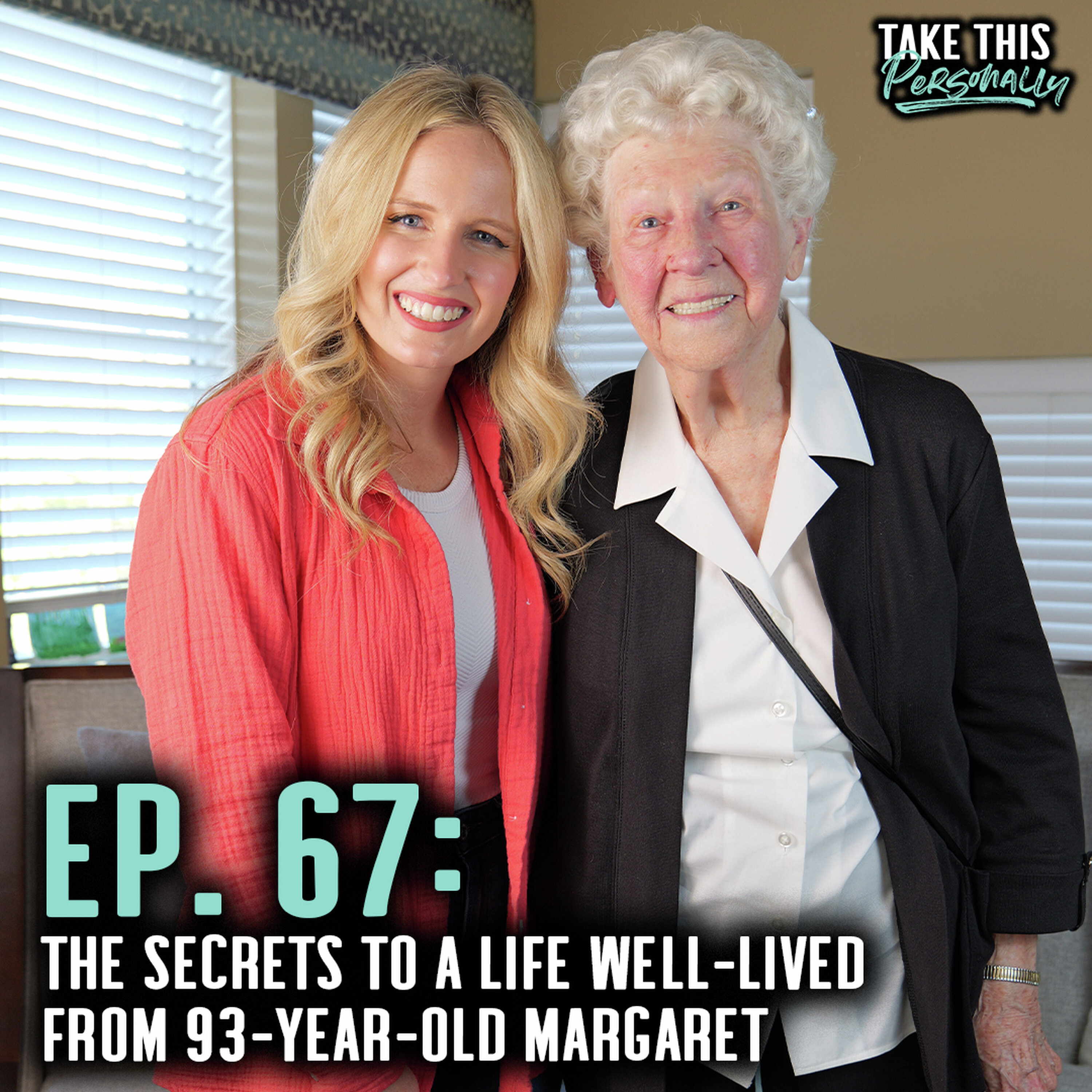
The Bobby Bones Show
MORGAN: 93 Years Young: Margaret's Lessons on Life, Love, and Aging Gracefully
00:40:26
Loading summary
Transcript286 lines
- [00:00]
Host (Interviewer)
This is an iHeart podcast.
- [00:04]
Lenovo Ad Voice
In the heat of battle, your squad relies on you. Don't let them down. Unlock elite gaming tech@lenovo.com Dominate every match with next level speed, seamless streaming and performance that won't quit. Push your gameplay beyond performance with Intel Core Ultra processors for the next era of gaming. Upgrade to smooth high quality streaming with Intel Wi Fi 6e and maximize game performance with enhanced overclocking. Win the tech search power up@lenovo.com lenovo.
- [00:31]
Margaret (Interviewee)
Lenovo.
- [00:35]
Kal Penn
Hey audiobook lovers. I'm Cal Penn.
- [00:37]
Ed Helms
I'm Ed Helms.
- [00:38]
Kal Penn
Ed and I are inviting you to join the best sounding book club you've ever heard with our new podcast, Hearsay. The Audible and iHeart Audiobook Club.
- [00:47]
Ed Helms
Each week we sit down with your favorite iHeart podcast hosts and some very special guests to discuss the latest and greatest audiobooks from audible.
- [00:56]
Kal Penn
Listen to Earsay on America's number one podcast network, iHeart. Follow Earsay and start listening on the free iHeartrad radio app today.
- [01:05]
Annabe Sofa Ad Voice
Tired of spills and stains on your sofa? Wash away your worries with annabe. Annabe is the only machine washable sofa inside and out where designer quality meets budget friendly prices. That's right, sofas start at just $699. Enjoy a no risk experience with pet friendly stain resistant and changeable slip covers made with performance fabric Experience cloud like comfort with high resilience foam that's hypoallergenic and never needs fluffing. The sturdy steel frame ensures longevity and the modular pieces can be rearranged anytime. Shop washablesofas.com for early Black Friday savings up to 60% off site wide backed by a 30 day satisfaction guarantee. If you're not absolutely in love, send it back for a full refund. No return, shipping or restocking fees. Every penny back Upgrade now@washablesofas.com Offers are subject to change and certain restrictions may apply.
- [02:18]
Lenovo Ad Voice
Take this personally with Morgan Huelsman.
- [02:23]
Host (Interviewer)
I'm bringing back the Aves Garden Resident series. This week you're going to hear from Margaret. She's 93 years old and has so much life and wisdom to share. And then next week you're going to hear from Baxie. You guys love this series last time so we brought it back for another round and hopefully many more in the future. So for now, let's get to it. Everybody meet Margaret. I'm really excited to be joined by Margaret this week. Hey Margaret. Hey, how are you?
- [02:57]
Margaret (Interviewee)
I'm doing well.
- [02:59]
Host (Interviewer)
I hear it. We pulled you from your favorite Game ever. Mahjong to do this interview.
- [03:03]
Margaret (Interviewee)
That's exactly right. And I had almost mahjonged. I liked one towel.
- [03:08]
Host (Interviewer)
Oh, so you're not happy with me right now, are you?
- [03:11]
Margaret (Interviewee)
No. Someone else Mahjong before I did.
- [03:14]
Host (Interviewer)
Okay.
- [03:14]
Margaret (Interviewee)
And that can happen.
- [03:16]
Host (Interviewer)
And so I hear you were in a league once upon a time. Is that true?
- [03:20]
Margaret (Interviewee)
That's true.
- [03:21]
Host (Interviewer)
What were you just like this great mahjong player?
- [03:26]
Margaret (Interviewee)
Not exactly. But I was better than I am now.
- [03:30]
Host (Interviewer)
Okay, how did you get into to mahjong? Where did that love for mahjong start?
- [03:36]
Margaret (Interviewee)
Probably in the late 50s.
- [03:39]
Host (Interviewer)
Okay. That somebody introduced it to you.
- [03:42]
Margaret (Interviewee)
That's right.
- [03:43]
Host (Interviewer)
Was it a family member or.
- [03:45]
Margaret (Interviewee)
No, it was a friend. She was having a class on Marjan and asked me if I would like to join, and I said yes. And it was four of us that had never played before, and she was teaching us how to play. Wow.
- [04:01]
Host (Interviewer)
And now you still play to this day.
- [04:03]
Margaret (Interviewee)
That's right.
- [04:04]
Host (Interviewer)
And if you don't mind me asking, how old are you, Margaret?
- [04:08]
Margaret (Interviewee)
I'm 93.
- [04:09]
iHeart Radio Ad Voice
What?
- [04:10]
Margaret (Interviewee)
Oh, in June, I was 93. This next June, if I still kicking?
- [04:15]
Host (Interviewer)
Yeah.
- [04:16]
Margaret (Interviewee)
94.
- [04:17]
Host (Interviewer)
Do you see? You. You look amazing.
- [04:20]
Margaret (Interviewee)
Thank you.
- [04:20]
Host (Interviewer)
I need the secret.
- [04:21]
Margaret (Interviewee)
You're 93 years old, I'm 93. How?
- [04:25]
Host (Interviewer)
Like, what do you do?
- [04:27]
Margaret (Interviewee)
I just forget that I'm living.
- [04:32]
Host (Interviewer)
What exactly does forget that you're living mean?
- [04:35]
Margaret (Interviewee)
I just go on and don't think about it.
- [04:38]
Host (Interviewer)
Okay. We just live. You just do what you're gonna do regardless. That's right.
- [04:41]
Margaret (Interviewee)
I just get up and start.
- [04:43]
Host (Interviewer)
Okay. And what does a normal day look like for you now?
- [04:48]
Margaret (Interviewee)
Well, since I retired the third time, I just get up and sometimes I read the paper and have a cup of coffee before I get dressed. And then I go get dressed and start off with whatever comes in front of me.
- [05:08]
Host (Interviewer)
Well, Margaret, we're gonna walk this way back.
- [05:11]
Margaret (Interviewee)
Okay.
- [05:12]
Host (Interviewer)
I want to hear your life story. If you were to make your story into a movie or a book, what would you be telling? What would that story look like?
- [05:23]
Margaret (Interviewee)
Well, I grew up in the country on a farm. We had no electricity. There was no running water except in the river that ran down the hill from us. So we had lamps for light at night. So most everybody went to bed early as soon as the sun went down because there was not enough light to do anything from a lamp. There was no roads, only the wagon roads that went through. And most of the way we traveled was on foot in a path we cut through everybody's property.
- [06:10]
Host (Interviewer)
Okay. You were very country living.
- [06:15]
Margaret (Interviewee)
To get to where we were going quickly. When I was five years old, my grandmother, my mother's mother had a stroke, and we moved in with her to take care of her because she was paralyzed from her neck down. And my other grandmother lived by herself. And my sister that's just older than me, she used to come and get us to cut her wood for her to burn through the winter because we didn't have electric heat or anything. We burnt wood for heat and we cooked with wood. We had a wooden stove that we. That my mother cooked on. And she didn't have anybody to cut her wood for her. So she would come. She would walk over to our house to get us to come to her house to cut her wood for her for the winter. And she had me to help her saw. It was a long saw with a handle on each end. And she had my sister to sit on the log to hold it because they had a rack like this that they put the log through so it wouldn't roll because my sister didn't pull her weight on the saw. So my grandmother said it wore her out pulling my sister across the saw when she was sawing the wood. So she had me because I pulled a saw.
- [07:57]
Host (Interviewer)
Okay, so at what age were you when you started to have running, you know, electricity and water in the house? When did that happen in your life?
- [08:08]
Margaret (Interviewee)
I had already left home. I was 14.
- [08:12]
Host (Interviewer)
You left home at 14? Is there. Was there a particular reason?
- [08:18]
Margaret (Interviewee)
Well, there was 10 children, and that was one less mouth to feed. So I got a job. My sister took me to this ice cream place called Cat Nannies. Ice Cream, Cat Nannies. It was on 3rd and Gay Street. And they hired me, and I went to work that day.
- [08:43]
Host (Interviewer)
Wow.
- [08:44]
Margaret (Interviewee)
And I had been working there. I went to work in May, and it was about July. I heard this woman in the ice cream department. My job was sacking popsicles. You had these little sacks, wax paper things, and you opened it with your finger and you put the popsicle in there, and you picked them up and put the popsicle in there. They brought the popsicles out of the freezer where they had gotten solid, and they opened this thing up and all these popsicles came out. So there was about six of us around the table that sack the popsicles. So I heard this lady telling this guy that they closed. They were going to close the plant in about a month. And by the time school started at that time, the school year started on Tuesday after Labor Day. So I thought, oh, I'm not going to Have a job. So I need to find another job. So I went in the office and I told the guy that owned the place that my grandmother was coming in from Washington, D.C. and she was coming into the train station. At that time, we had trains that come through Nashville and passenger trains and that I had to meet her and take her to the bus station so she could go home. Of course, that wasn't true. So he said, okay. So I left and I went up on Fifth Avenue and there was three dime stores. There was Woolworth, McClellan's, and Crass's in.
- [10:48]
Host (Interviewer)
Dime store, meaning what's a dime store?
- [10:51]
Margaret (Interviewee)
Dime store meant that you could get things for a nickel or dime.
- [10:56]
Host (Interviewer)
Okay.
- [10:57]
Margaret (Interviewee)
You know, they had things that was more expensive, but it was called a dime store because they had certain Items that was 10 cents.
- [11:06]
Host (Interviewer)
Okay. So kind of like we have dollar stores today.
- [11:09]
Margaret (Interviewee)
Okay, Right, got it. And so I went in and I interviewed with this lady, and she told me I could start to work next day. Well, being young and never having a job before, I didn't know that I needed to let them know I wasn't coming back in.
- [11:29]
Host (Interviewer)
Yeah, you're 14.
- [11:31]
Margaret (Interviewee)
So I go home that night, and I get up and I go to my new job the next morning, and I work there until I work behind the lunch counter. And they move me during Christmas down to the toy department. And I think everyone sometime in their life should work in the toy department.
- [12:01]
Host (Interviewer)
Okay. Was it a very stressful situation?
- [12:06]
Margaret (Interviewee)
Well, people came in with their children and turned them loose in the toy department.
- [12:11]
Annabe Sofa Ad Voice
And.
- [12:12]
Margaret (Interviewee)
And you had to pick these toys up everywhere, all over the store that they had taken and played with. And anyway, somebody came through and they saw me. Came through for my hometown. And they saw me, and they knew that I wasn't 16 at the time. You had to be 16. They kept moving the date. You had to be 16 at the time to work. So the lady that was. That had hired me came around and told me that someone had come through and saw me working and knew I wasn't 16. She says, when will you six be 16? And I said, next week.
- [13:00]
Host (Interviewer)
You weren't.
- [13:02]
Margaret (Interviewee)
So she said, well, you go ahead and take the rest of the day off and come back next week and start from there. So I said, okay. So I got my purse and I left, and I went down the street to Chris's and I applied for a job.
- [13:25]
Host (Interviewer)
You were a working woman.
- [13:27]
Margaret (Interviewee)
And they were getting ready to open the lunch counter, and they wanted me to work in the lunch counter. So I told them that I would and they had a week's training so I went in the next week for my week's training. They trained us on the cash register and different things and that let us work in the store for a week before the lunch counter opened and the lunch counter was only open for lunch and, and anyway I was working behind the lunch counter so somebody came through that saw me working and knew I wasn't 16. So I had worked about almost two years and so they made me go back to school. So this was like in the end of March. School was out first May. I don't know why they didn't leave me alone.
- [14:35]
Host (Interviewer)
You're like, I just want to work. Why? Why is this so hard?
- [14:39]
Lenovo Ad Voice
In the heat of battle, your squad relies on you. Don't let them down. Unlock elite gaming tech@lenovo.com Dominate every match with next level speed, seamless streaming and performance that won't quit. Push your gameplay beyond performance with Intel Core Ultra processors for the next era of gaming. Upgrade to smooth high quality streaming with Intel Wi Fi 6e and maximize game performance with enhanced overclocking. Win the tech search power up@lenovo.com Lenovo.
- [15:06]
Margaret (Interviewee)
Lenovo.
- [15:10]
Annabe Sofa Ad Voice
Tired of spills and stains on your sofa? Wash away your worries with Anabe. Anibe is the only machine washable sofa inside and out where designer quality meets budget friendly prices. That's right, sofas start at just $699. Enjoy a no risk experience with pet friendly stain resistant and changeable slip covers made with performance fabric. Experience cloud like comfort with high resilience foam that's hypoallergenic and never needs fluffing. The sturdy steel frame ensures longevity and the modular pieces can be rearranged anytime. Shop washablesofas.com for early Black Friday savings up to 60% off site wide, backed by a 30 day satisfaction guarantee. If you're not absolutely in love, send it back for a full refund. No return shipping or restocking fees. Every penny back. Upgrade now@washablesofas.com Offers are subject to change and certain restrictions may apply.
- [16:13]
Ed Helms
Hey everyone, Ed Helms here and hi.
- [16:16]
Kal Penn
I'm Kal Penn and we're the hosts of Irsay, The Audible and iHeart Audiobook Club.
- [16:22]
Ed Helms
This week on the podcast I am sitting down with Jenny Garth, host of the iHeart podcast. I choose me to discuss the new Audible adaptation of the timeless Jane Austen classic Pride and Prejudice. This is not a trick question. There's no wrong answer. What role would I play?
- [16:43]
Host (Interviewer)
You know what I can See you as mistake.
- [16:45]
Annabe Sofa Ad Voice
Mr. Darcy, you got a little call in firth.
- [16:48]
Ed Helms
Okay, that's really sweet, I appreciate that, but are you sure I'm not the dad? I'm not Mr. Bennett. Here, listen to Earsay the Audible and iHeart Audiobook Club on the iHeartradio app or wherever you get your podcasts.
- [17:09]
Host (Interviewer)
Where were you living at the time in all of this? Cause you had left home.
- [17:14]
Margaret (Interviewee)
Well, they used to have boarding houses and you would rent a room.
- [17:20]
Host (Interviewer)
Okay. And that's where you were renting from?
- [17:24]
Margaret (Interviewee)
Move from boarding house to boarding house. Just like I moved from job to job.
- [17:29]
Host (Interviewer)
How? Okay, by the time you were 21, how many jobs had you had? Had?
- [17:35]
Margaret (Interviewee)
Oh, by the time I was 21, I had worked at Cat nannies, I had worked at Woolworth, I had worked at Crass's, and then I went to work for Worthen Industries.
- [17:46]
Host (Interviewer)
Okay, so you went back to school. Did you end up graduating high school?
- [17:51]
Margaret (Interviewee)
I did.
- [17:51]
Host (Interviewer)
Did you go.
- [17:52]
Margaret (Interviewee)
They wouldn't let me go to high school until I was 18.
- [17:56]
Host (Interviewer)
You couldn't go to high school until you were 18?
- [17:59]
Margaret (Interviewee)
That's right. Because it was an adult high school and if you were under 18, you needed to be in regular school. I needed to work.
- [18:08]
Host (Interviewer)
And did you ever do college? Was college.
- [18:11]
Margaret (Interviewee)
I went to night college.
- [18:12]
Host (Interviewer)
Okay, and when did you finish UT.
- [18:15]
Margaret (Interviewee)
Had a Nashville branch, like Chattanooga branch of UT from UT and it's now Tennessee State.
- [18:26]
Host (Interviewer)
Okay, so you go to night school. When did you finish night school? Night college.
- [18:32]
Margaret (Interviewee)
I didn't finish. I had 30 something credits and I got married, so I didn't get to finish.
- [18:40]
Host (Interviewer)
Okay, so you. Did you meet your husband?
- [18:44]
Margaret (Interviewee)
Yes, in night school.
- [18:46]
Host (Interviewer)
Okay. In night school.
- [18:48]
Margaret (Interviewee)
Tell me about going to night school as well.
- [18:52]
Host (Interviewer)
And tell me about this husband. Are you guys still together? What's the situation?
- [18:56]
Margaret (Interviewee)
We are.
- [18:57]
Host (Interviewer)
Okay.
- [18:57]
Margaret (Interviewee)
We're still married, but he has dementia and he's in the veterans Administration in Manchester. Okay, Not Manchester, Murfreesburg.
- [19:07]
Host (Interviewer)
Okay, so when did you guys. Because you're here at Abe's Garden now. When did you guys go into different places? When did that happen? How old were you guys?
- [19:17]
Margaret (Interviewee)
He was there two years. 16th September. Okay, so he fell and broke his hip and had to go into rehab.
- [19:27]
Host (Interviewer)
Yeah, that recently happened to my grandma and I know how difficult that is, especially recovery wise. So you guys have been married then? For gosh, if you met in night school, how many years have you been married?
- [19:40]
Margaret (Interviewee)
65.
- [19:41]
Host (Interviewer)
Wow. What. What's the key to that? You're hanging out with a boy for 65 years. How'd you do that?
- [19:50]
Margaret (Interviewee)
Well, I just liked him a little bit.
- [19:53]
Host (Interviewer)
Yeah, Just a little bit. Was it positively love at first sight at night school?
- [20:00]
Margaret (Interviewee)
No, not really. Not really. He was in one of my classes and I don't know, I was late for class one night and the only seat that was available was next to him. So I sat down and I started talking to him.
- [20:14]
Host (Interviewer)
And so how fast was your guys's first day after that meeting?
- [20:21]
Margaret (Interviewee)
We probably didn't have a date for two or three months.
- [20:24]
Host (Interviewer)
Okay, so just kind of friendly?
- [20:27]
Margaret (Interviewee)
Yeah, we just was friends and then.
- [20:29]
Host (Interviewer)
It just kind of morphed into more.
- [20:31]
Margaret (Interviewee)
Yeah.
- [20:32]
Host (Interviewer)
All right. Did you guys end up having any kids or anything?
- [20:35]
Margaret (Interviewee)
Like two sons.
- [20:36]
Host (Interviewer)
Were you a stay at home mom or did you work?
- [20:39]
Margaret (Interviewee)
I was. When I left Worth an Industries, my husband was working for Kay Jewelers and they moved him to Columbus, Ohio. So I had to leave my job and I was pregnant. I had to leave when I was six months pregnant. Anyway, so I moved to Columbus, Ohio and both of the boys was born in Columbus, Ohio, and. And then they moved him to Huntington, West Virginia. They used him as. When they were having problems at a store. He was. He would go and straighten out what was going on.
- [21:17]
Host (Interviewer)
Okay, so because he worked at Kay Jewelers. Do you have a very extensive jewelry collection now?
- [21:23]
Margaret (Interviewee)
Not anymore. I gave it to the grandchildren and the daughter in laws.
- [21:28]
Host (Interviewer)
Oh, okay. Well, that's a cool thing to pass down. Would he just come home from work and just have a new thing for you often?
- [21:37]
Margaret (Interviewee)
Sometimes. Sometimes.
- [21:39]
Host (Interviewer)
Or was it when he owed you an apology and he'd bring one home?
- [21:42]
Margaret (Interviewee)
That happened too.
- [21:43]
Host (Interviewer)
Okay, like this is my apology bracelet. I got apology earrings.
- [21:49]
Margaret (Interviewee)
That's cool.
- [21:49]
Host (Interviewer)
What was your favorite thing that he gifted you? It doesn't have to be from K's, but if that's one of them.
- [21:56]
Margaret (Interviewee)
No, I don't know that I have anything from K's. It was most. Most of everything was after he purchased the store. He owned a store in Arcade.
- [22:08]
Host (Interviewer)
Wow. A jewelry store.
- [22:09]
Margaret (Interviewee)
Yeah. That's cool. And then he opened up another store in Brentwood.
- [22:15]
Host (Interviewer)
Wow. Okay. So yeah, you were rolling in the jewelry, right?
- [22:21]
Margaret (Interviewee)
I had a few nice pieces, yeah.
- [22:23]
Host (Interviewer)
But now I see you and you don't. You really don't have much on. Not anymore, No.
- [22:28]
Margaret (Interviewee)
I have arthritis in my hands and it causes my fingers to ache. The weight of it.
- [22:34]
Host (Interviewer)
So the joys of getting older, that's.
- [22:37]
Margaret (Interviewee)
Part of your golden years.
- [22:41]
Host (Interviewer)
No more wearing golden things, right? That's what it is. Okay, so that's marriage. And did you learn anything about yourself and in this long years of marriage, did you learn anything about marriage? Maybe marriage advice you could give us young people that aren't married yet?
- [23:00]
Margaret (Interviewee)
Well, everything is supposed to be 50, 50, but it's not.
- [23:04]
Host (Interviewer)
Okay.
- [23:04]
Margaret (Interviewee)
It's more like 90, 10.
- [23:07]
Host (Interviewer)
Okay.
- [23:08]
Margaret (Interviewee)
Most of the time. I don't know. You just can't take too much seriously.
- [23:14]
Host (Interviewer)
Did you guys have a lot of laughter?
- [23:16]
Margaret (Interviewee)
We had a lot of laughter and a lot of tough times too.
- [23:21]
Host (Interviewer)
You look at your life now and you look at those tough moments that you guys went through. How did you find your way through it? Like, what was your experience? Like that maybe if somebody is going to be facing that because they inevitably will, how would you tell them to manage and get through those situations? Well.
- [23:43]
Margaret (Interviewee)
My husband, when he got angry about something, he wouldn't talk to you. That was his way of punishing you. To me, that was a great moment of silence.
- [23:58]
Host (Interviewer)
So he thought he was punishing you. You took it as a gift?
- [24:02]
Margaret (Interviewee)
Yes. Yes. So you just have to take the gifts when you get them.
- [24:08]
Host (Interviewer)
Okay, that's a good one. What about as a mom? What did you learn about yourself as being a mom?
- [24:15]
Margaret (Interviewee)
Well, I tried to be a good mom. A lot of times whenever you're. You have small children and there's a lot to be done, sometimes you get stressed out. So I probably did some things that I shouldn't have done or not that I shouldn't have done, but maybe I should have done it at a different way. So I learned how to do that because at that time everybody thought, you know, spanking was what you were supposed to do. But I learned that you could talk to someone and get the same results.
- [24:59]
Host (Interviewer)
That's good advice. And were there a lot of things that you look back on now and realize it was just what you were being taught how to handle things or you were being. This is what everybody was doing. So this is what you did.
- [25:12]
Margaret (Interviewee)
Yeah. And there's no book on. On what you're supposed to do. It's all learn as you go.
- [25:20]
Host (Interviewer)
I often say whenever I have conversations with my mom or I look back on, like our life and me growing up as I see my mom now as someone who is. It's also her first time living too.
- [25:33]
Margaret (Interviewee)
Yes.
- [25:33]
Host (Interviewer)
She's trying to figure it out just as much as I am.
- [25:36]
Margaret (Interviewee)
Yes.
- [25:37]
Host (Interviewer)
Even though, you know, we often call the adults in our lives. I call my mom a premium adult. I'm an adult. But she's a premium adult because she's had more Experience she has the more wisdom. But still it's both of our first time living.
- [25:50]
Margaret (Interviewee)
Right.
- [25:50]
Host (Interviewer)
And it's. Each age is the first time you're going to be there.
- [25:54]
Margaret (Interviewee)
That's right.
- [25:55]
Host (Interviewer)
So you don't know how to handle it right until it's there. And so very much of what you're saying aligns with that. Did you have any regrets over like you, you look at this point, I mean, you are, Gosh, you've lived 93 incredible years. Is there anything you look back in your life and you regret or you wish didn't happen or anything along those lines?
- [26:17]
Margaret (Interviewee)
Oh, sure, there are things that, you know, I would have liked to been different, but I wouldn't have been who I am if it had been different.
- [26:27]
Host (Interviewer)
Is that, does it help when you look at things now and you feel that way to have that perspective that you're glad it worked out how it needed to work out?
- [26:37]
Margaret (Interviewee)
Yeah. I mean, you know, you can't change, you can't change anything that's happened. And at the time what you did you thought was right, but you look back on it and you think, you know, I could have handled this differently or I could have done something differently. But you can't go back and redo it. It's all, it's a one time thing that you go. Life is a one time thing you go through. So it's not something that I dwell on because I know I can't change anything. So I do think about things from time to time, but I can't change it. So I just have to go on.
- [27:19]
Host (Interviewer)
Is there stuff that. Do you ever write a bucket list or do you have a bucket list or things that you've wanted to do now?
- [27:26]
Margaret (Interviewee)
Well, not now, but I did and most everything was done that I really wanted to do. There's a lot of things that was not on my bucket list that I had that happened.
- [27:40]
Host (Interviewer)
Okay, what are some of those, those things that were not on there that did happen?
- [27:45]
Margaret (Interviewee)
Well, when I fell and hurt my back.
- [27:48]
Host (Interviewer)
Oh, we're talking negative things that was.
- [27:49]
Margaret (Interviewee)
Not on my bucket list. And yeah, so there's a few things that wasn't on my bucket list but I had to go through.
- [27:57]
Host (Interviewer)
You were telling me a story about how you had fallen and you had to go to the hospital.
- [28:02]
Margaret (Interviewee)
Yeah.
- [28:03]
Host (Interviewer)
Can you tell me that story a little bit again?
- [28:05]
Margaret (Interviewee)
Well, when I fell, I was on concrete and I was putting some stuff in the recycle bin and I forgot that it was empty. So I had this big box of stuff that I was going to put in the recycle bin. So I put the. The box, the other end of the box on the recycle bin, and I was going to dump it over in there, and the recycle bin moved with me, and the stuff that I was going to dump come back on me and I lost my balance and fail. And I had my glasses on, so my glasses was embedded up under my. My eye bone and cut all the way across my eyelid.
- [28:55]
Host (Interviewer)
Gosh, you can't tell now.
- [28:57]
Margaret (Interviewee)
No, she did a great job. And I wish she had a.
- [29:00]
Host (Interviewer)
Done a tuck trying to show everything away. Yeah.
- [29:05]
Margaret (Interviewee)
I mean, if she just, you know, pulled up some stuff and cut it off and stitched it up, it would have been the same thing. I still had black and blue all over my face. And I asked her when she was going to do the stitching if she couldn't, you know, do some little tucks here and there. And she said she wasn't qualified.
- [29:29]
Host (Interviewer)
You tried, though.
- [29:30]
Margaret (Interviewee)
I did.
- [29:31]
Host (Interviewer)
You're like, I'm going to be stuck here. Please make it worth it.
- [29:34]
Margaret (Interviewee)
That's right. I might as well get as much as I can out of it.
- [29:40]
Host (Interviewer)
This is not what I asked for, but, dang it, I'm going to get something out of it.
- [29:44]
Margaret (Interviewee)
Yeah. I mean, I needed my insurance to pay for it.
- [29:49]
Host (Interviewer)
Don't we all? Oh, man. You have gotten older. So what is the moments in your life? And you look at, you're like, dang. What's the best part about getting older and what's the worst part about getting older?
- [30:03]
Margaret (Interviewee)
Well, the best part about getting older, I guess, is just racking up the age. The worst part about getting older is everything goes and everything.
- [30:15]
Host (Interviewer)
Meaning.
- [30:16]
Margaret (Interviewee)
Well, your body just gravity pulls it towards the ground.
- [30:22]
Host (Interviewer)
And this is where you were talking about that you've lost inches in your height.
- [30:27]
Margaret (Interviewee)
Yes. And I feel like my shoulders is on my waist. I mean, I feel like I look like spongebob.
- [30:36]
Host (Interviewer)
That's never not gonna be funny. You don't look like SpongeBob, by the way.
- [30:40]
Margaret (Interviewee)
Well, I feel like I'm look like spongebob. I feel like a square blob.
- [30:48]
Host (Interviewer)
You don't like it. You look amazing. But it's something you probably aren't prepared for either. As it starts to happen, your body starts to change and things are happening. You're like, what's going on?
- [30:57]
Margaret (Interviewee)
That's right.
- [30:58]
Host (Interviewer)
And then you're just there. And now there's nothing you can do about it.
- [31:02]
Margaret (Interviewee)
I mean, like, all your muscles go, like, under my arms. I just tell everybody. I'm growing my wings because you're an angel. That's right. I'm working on it.
- [31:16]
Host (Interviewer)
Oh my goodness. Talking just about your life and all the things that you've learned. What are some lessons you've learned over the course of your life?
- [31:27]
Margaret (Interviewee)
I guess the best lesson that I learned was not to give self away. When somebody says something, just ignore it. Or if somebody says something negative, just leave that with them. It's not on you. Just don't give them your spirit or whatever.
- [31:49]
Host (Interviewer)
It's not worth the time.
- [31:50]
Margaret (Interviewee)
No now because it doesn't change anything about you, but whatever somebody else thinks about you, it doesn't change anything. So you know, whatever they think is their thinking, not your thinking.
- [32:08]
Lenovo Ad Voice
In the heat of battle, your squad relies on you. Don't let them down. Unlock elite gaming tech@lenovo.com Dominate every match with next level speed, seamless streaming and performance that won't quit. Push your gameplay beyond performance with Intel Core Ultra processors for the next era of gaming. Upgrade to smooth high quality streaming with Intel Wi Fi 6e and maximize game performance with enhanced overclocking. Win the tech search power up@lenovo.com lenovo.
- [32:34]
Margaret (Interviewee)
Lenovo.
- [32:38]
Annabe Sofa Ad Voice
There'S nothing like sinking into luxury. Anabe sofas combine ultimate comfort and design at an affordable price. Annabe has designed the only fully machine washable sofa from top to bottom. The stain resistant performance fabric slipcovers and cloudlike frame duvet can go straight into your wash. Perfect for anyone with kids, pets or anyone who loves an easy to clean spotless sofa. With a modular design and changeable slipcovers, you can customize your sofa to fit any space and style. Whether you need a single chair or loveseat or a luxuriously large sectional, Anna Bay has you covered. Visit washablesofas.com to upgrade your home. Sofas start at just $699 and right now get early access to Black Friday savings up to 60% off store wide with a 30 day money back guarantee. Shop now@washablesofas.com Add a little to your life. Offers are subject to change and certain restrictions may apply.
- [33:41]
Ed Helms
Hey everyone, Ed Helms here and hi.
- [33:44]
Kal Penn
I'm Kal Penn and we're the hosts of Irsay, the Audible and I Heart Audiobook Club.
- [33:51]
Ed Helms
This week on the podcast I am sitting down with Jenny Garth, host of the iHeart podcast. I choose me to discuss the new Audible adaptation of the timeless Jane Austen classic Pride and Pride Prejudice. This is not a trick question. There's no wrong answer. What role Would I play?
- [34:11]
Annabe Sofa Ad Voice
You know what?
- [34:12]
Host (Interviewer)
I can see you as Mr. Darcy.
- [34:15]
Annabe Sofa Ad Voice
You got a little Colin Firth.
- [34:17]
Ed Helms
Okay, that's really sweet. I appreciate that, but are you sure I'm not the dad? I'm not Mr. Bennett. Here, listen to Earsay the Audible and iHeart Audiobook Club on the iHeartradio app or wherever you get your podcasts.
- [34:38]
Host (Interviewer)
And, Margaret, you strike me as someone who is quite sassy. When you were younger, would that be correct?
- [34:44]
Margaret (Interviewee)
Probably. But I didn't think that.
- [34:46]
Host (Interviewer)
I hear this beginning of your life story. What about looking at the world today? You came from a family of 10 kids. You guys didn't have running water, you didn't have electricity to now. And now we got these, like, little crazy phones that have everything in them. We've got all kinds of camera technology and stuff. Like, what is your perspective on the world as you look at it and everything that you've seen and all the changes that have happened?
- [35:13]
Margaret (Interviewee)
I just move when the time moves. I want to know all of the stuff that's going on. I mean, when I was at Vanderbilt, I was the first one to get a computer. I didn't know how to use the computer, but you better believe I was in there trying to learn. If that was going to be what the world was going to be, I had to join it. I know a lot of people that were afraid to try things, but I figure if you don't try, you fail. Before anything happens, you've already failed. So I'm going to get in there and give it a try.
- [35:53]
Host (Interviewer)
So you were always very much changing with what was happening.
- [35:57]
Margaret (Interviewee)
You have to. You have to just think of what we're on the edge of AI and just think what the world is going to change with this artificial intelligence. And of course, probably the kids now that's growing up will be a part of that. But for my age, I don't know if I will live long enough to understand that much about it or be able to learn that much from it. But if I am, I want to be in there learning about it just like everybody else, because otherwise you stand still, you don't grow.
- [36:41]
Host (Interviewer)
It's a very cool perspective to hear from you because there's a lot of people that are very afraid of change.
- [36:48]
Margaret (Interviewee)
Yeah.
- [36:49]
Host (Interviewer)
And the world is constantly changing, especially now.
- [36:52]
Margaret (Interviewee)
Yes.
- [36:53]
Host (Interviewer)
We have technology of all kinds. As someone who has seen it all and you've what we often call the good old days before all of this, do you often feel that way? Are you like, wow, it's really cool. What's Happening. What's your kind of perspective on that?
- [37:12]
Margaret (Interviewee)
Well, I think it's cool that the stuff is happening. I mean, just think of the people that's going to outer space and they say that they're going to have people living on Mars. If I had been younger, I'd say I want to be the first one up there.
- [37:31]
Host (Interviewer)
Send me to Mars.
- [37:32]
Margaret (Interviewee)
That's right.
- [37:33]
Host (Interviewer)
You'd have been 14 when you were supposed to be 18 and they would have said, okay, well we're going to send you and it'd be too late to send you back.
- [37:40]
Margaret (Interviewee)
Right.
- [37:43]
Host (Interviewer)
You, what about your other, like these different phases of your life? One where you were a young kid and you were working to then being, you know, in your 20s and you get married and then you have kids and you have all these different phases of your life. Is there anything in those phases that you wish you would have done differently or are you happy with the things that you chose?
- [38:10]
Margaret (Interviewee)
I could have done some of the things different. But as I said, you can't change. I mean, even though if you look back and say you wish you had done something, it doesn't make it any.
- [38:20]
Host (Interviewer)
Different because you hear a lot of people talk about how if I took this route then this would have been my life or if I did this, then this is what would have turned out. And I think you have a lot of people who just live with this idea of what if.
- [38:36]
Margaret (Interviewee)
Yeah. And you can't because you can't live in the past. You got to live for tomorrow. You got to figure out what I'm going to do tomorrow rather than what did I do yesterday? Because yesterday's gone.
- [38:51]
Host (Interviewer)
Yeah, it is. You got to live very much in the present moment. What's happening now?
- [38:55]
Margaret (Interviewee)
Yep.
- [38:56]
Host (Interviewer)
And what about you today? We've learned about young Margaret in your 20s and you working. What about you now? What is the things that you're doing in your life now as a 93 year old woman that maybe look different or maybe can showcase what life can look like as you get older?
- [39:15]
Margaret (Interviewee)
Well, I try to live each day and do something. It, I mean life doesn't start because you get 93, you wake up tomorrow and you try to make the best.
- [39:29]
Host (Interviewer)
Of it, which includes mahjong.
- [39:32]
Margaret (Interviewee)
Includes mahjong. We have meetings, we have the goodies new sale and I've been baking fruitcakes for the sale and you just try to do something productive.
- [39:48]
Host (Interviewer)
If we could leave anybody with something, it can be a piece of advice, it could be motivation, it can be a story maybe that we didn't get to that you really want to share what's something you would want people to know that are listening to this.
- [40:05]
Margaret (Interviewee)
Well, to get old, you lose a lot of your ability to make decisions. It gets very hard to make decisions because you know that you don't have many years to change anything that you've made a decision for. So you want to make the right decision. And it's difficult to decide that this is this and that's that. You lose your. A lot of your patience. Things that used to never bother me. I never give it two thoughts. You just don't have the ability to blow things off like you did when you were younger. It gets to you. I mean, it gets harder to take care of things, take care of your own business. I still do all of my check writing and paying bills and all of that. And it gets harder to do all of that as you get older. You don't move as fast, you don't get as much done. And a lot of times at night, I think back what I did during the day, and I didn't accomplish all the things I wanted to do. A lot of times I make a list of what I want to do during the day and I mark them off so that I feel that I have accomplished something.
- [41:46]
Host (Interviewer)
Nothing feels as good as checking something off a list.
- [41:50]
Margaret (Interviewee)
You're absolutely right. And I don't have any difficulty in doing that.
- [41:56]
Host (Interviewer)
That part's easy. I wish I could just do that. Do I have to do the task? No, just let me mark it off. That's what I would like to do. Just every day.
- [42:05]
Margaret (Interviewee)
Yep.
- [42:06]
Host (Interviewer)
Okay. Well, that was a really good thing. And what about a piece of advice for anybody who's listening? Maybe they're my age, maybe they're your age. Maybe they're anywhere in between something that you just think would be important for them to hear.
- [42:19]
Margaret (Interviewee)
Well, what I learned was that most people worry about the wrong thing. They let things. That is, you worry about things that may happen, could happen. You have to let that go. If it happens, it happens, and you deal with it when it happens. You can't worry about it before because you're losing a lot of time and a lot of effort that you could be spending somewhere else. We get bogged down with a lot of things that that is not that important. At the time it seems important, but later you realize it was not important. The most important thing is spending time with your family and friends and doing good things for people that need help and that sort of thing. Because there's always someone that's not as well off as you.
- [43:23]
Host (Interviewer)
Those are very meaningful things and things I think we all know, but is always a good reminder to have.
- [43:29]
Margaret (Interviewee)
Yeah.
- [43:30]
Host (Interviewer)
And I don't want to leave this without asking you to, because you had mentioned that. Now that you and your husband are in. In separate places, what's that been like for you?
- [43:40]
Margaret (Interviewee)
Well, it was very difficult. And at times I have. It's difficult to try to go visit him because he doesn't remember anything, except sometimes he remembers things that happened when he was a child. At times he doesn't remember me. He remembers Margaret, but sometimes he doesn't realize I'm Margaret. He knows he was married to Margaret, but he sometimes doesn't fit all of that in. And he has a hard time with finding words that, you know, that he wants to use. And sometimes his words are just jumble. And it's really cruel what the disease does to people. I mean, like, I still have my memories of the children when they were kids and growing up. I still have memories of my childhood, but he doesn't have that, so it's hard.
- [45:03]
Host (Interviewer)
Well, I just want to give you a big hug right now because I can only imagine that separation of somebody that you've been with your entire life, and you shared a very full life with them, and it's one you hope that they can always remember.
- [45:20]
Margaret (Interviewee)
Well, it hurts. I mean, he may not know that he's going through it, but I know.
- [45:29]
Host (Interviewer)
And to witness and to see it is a different pain all in itself.
- [45:35]
Margaret (Interviewee)
Yeah.
- [45:35]
Host (Interviewer)
It's different types of grief, and it's. You know, I never want people to have to talk about it, but it is something that. It's just so common that I wish more people would see that other people are going through it. And it makes it maybe easier for you guys who are having to face that reality. It's something I wish didn't exist. That's the reality for me.
- [45:59]
Margaret (Interviewee)
Well, I think at this point, it's harder on me than it is on him.
- [46:04]
Host (Interviewer)
Yeah. Yeah. Again, you're the witness.
- [46:07]
Margaret (Interviewee)
Right.
- [46:07]
Host (Interviewer)
And you can't do anything.
- [46:08]
Margaret (Interviewee)
Right.
- [46:09]
Host (Interviewer)
You just have to be there and love them and show up however you can.
- [46:13]
Margaret (Interviewee)
Right. And I tried to be wherever he is when we visit. I tried to. You know, that's what we talk about and that's what we do.
- [46:23]
Host (Interviewer)
Yeah. Well, Margaret, you are a beautiful human being. You don't look a day over 50. I'm not sure how the heck you're 93 years old. And you shared so much wisdom and vulnerability with us. And I'M internally grateful for that because I know your message, your story is important and I just love all that you've embodied in your life and I appreciate you taking us through it.
- [46:50]
Margaret (Interviewee)
Thank you.
- [46:51]
Host (Interviewer)
Abe's Garden Community is a local treasure here in Nashville, doing amazing work, caring for and engaging people living with memory loss, much like you just heard Margaret talking about not just her husband, but also for herself. They're expanding to help even more families and they rely on support from people like us. We all have aging brains, so so supporting Abe's Garden benefits us all. And if you're interested in learning more on how to help, you can do so@abesgarden.org that wraps for this week and I'm excited to bring you guys back to the story next week. So make sure you subscribe so you do not miss it. And of course follow the podcast on Instagram at. Take this personally. I'm so happy that you're here. I'll talk to you guys next week. Bye.
- [47:29]
Lenovo Ad Voice
In the heat of battle, your squad relies on you. Don't let them down. Unlock elite gaming tech@lenovo.com Dominate every match with next level speed, seamless streaming and performance that won't quit. Push your gameplay beyond performance with Intel Core Ultra processors for the next era of gaming. Upgrade to smooth, high quality streaming with Intel Wi Fi 6e and maximize game performance with enhanced overclocking. Win the tech search power up@lenovo.com lenovo.
- [47:56]
Margaret (Interviewee)
Lenovo.
- [47:59]
Hari Kondabolu
On the Podcast Health Stuff we are tackling all the health questions that keep you up at night.
- [48:04]
Host (Interviewer)
I'm Dr. Priyanka Wali, a double board certified physician.
- [48:07]
Hari Kondabolu
And I'm Hari Kondabolu, a comedian and someone who once googled Do I have scurvy at 3am and on our show we're talking about health in a different way. Like our episode where we look at.
- [48:17]
Host (Interviewer)
Diabetes in the United states. I mean, 50% of Americans are pre diabetic.
- [48:22]
Hari Kondabolu
How preventable is type 2?
- [48:25]
Host (Interviewer)
Extremely. Listen to Health Stuff on the iHeartRadio app, Apple Podcasts, or wherever you get your podcasts.
- [48:33]
iHeart Radio Ad Voice
Wishing the holidays could come early. If you own or manage your business, they can. With help from iHeartradio. People are already shopping for their loved ones and hunting for deals wherever they can find them. Including right here. They're listening to the radio. They're listening to podcasts. They could be listening to you. Don't wait for everyone else to kick off the holidays. Get your best season of the year up and running today. Call 844-844 iheart or visit iheartadvertising.com.
- [49:03]
Margaret (Interviewee)
This.
- [49:04]
Host (Interviewer)
Is an iheart podcast.