Loading summary
Transcript299 lines
- [00:00]
Bobby Bones
This is an I Heart podcast. Guaranteed human.
- [00:05]
Podcast Narrator
In the middle of the night, Saskia awoke in a haze. Her husband Mike was on his laptop. What was on his screen would change Saskia's life forever.
- [00:15]
Bobby Bones
I said, I need you to tell me exactly what you're doing. And immediately the mask came off.
- [00:23]
Podcast Narrator
You're supposed to be safe.
- [00:24]
Bobby Bones
That's your home.
- [00:26]
Podcast Promoter
That's your husband.
- [00:28]
Podcast Narrator
Listen to Betrayal Season 5 on the iHeartRadio app, Apple Podcasts, or wherever you get your podcasts.
- [00:34]
Rider Strong
This is Ryder Strong, and I have a new podcast called the red weather. In 1995, my neighbor Anna Traynor disappeared from a commune.
- [00:42]
Bobby Bones
It was nature and trees and praying and drugs. So, no, I am not your guru.
- [00:50]
Rider Strong
Back then, I lied to everybody.
- [00:52]
Podcast Promoter
They have had this case for 30 years.
- [00:55]
Rider Strong
I'm going back to my hometown to uncover the truth. Listen to the Red Weather on the iHeartRadio app, Apple Podcasts, or wherever you.
- [01:03]
Podcast Promoter
Get your podcasts on the Adventures of Curiosity Cove podcast. What if there's more to the story than we've been told? This Black History Month Adventures of Curiosity Cove invites families into a playful mystery that blends history, science, and imagine. As Ella and her friends investigate a missing peanut butter case, they uncover the legacy of a brilliant innovator, George Washington Carver, and learn how curiosity fuels creativity. In this Black History Month adventure, Adventures of Curiosity Cove shows kids that asking questions, thinking creatively, and imagining what's possible can lead to amazing discoveries. Because history isn't boring, it's full of surprises at Curiosity Cove. Listen to a Adventures of Curiosity Cove every Monday from the Black Effect Podcast Network on the iHeartRadio app, Apple Podcasts, or wherever you get your podcasts.
- [02:05]
Podcast Narrator
Premier Protein it's for getting after life, not just fitness. Because life isn't lived only in the gym. It's lived in the moments that matter most. That's where Premier protein shakes come in. With 30 grams of protein, just 160 calories and no sugar added, they're made to help people fuel their joyful lives. We all know the feeling when life gets really busy. Taking care of yourself can feel impossible. But with Premier Protein, you can say yes to more. Yes to crushing that big presentation at work. Yes to building an epic fort with the kids. Yes to hitting the hiking trail with friends and still having energy left to laugh at the top. And with a wide variety of flavors, from cafe latte to cake batter, from chocolate to cookies and cream, it never feels boring. Premier Protein makes it easy to keep going strong no matter what your day looks like. Find Your favorite flavor@premierprotein.com or pick them up at Amazon, Walmart and other major retailers. Premier Protein. Fuel your life and say yes to more.
- [03:11]
Bobby Bones
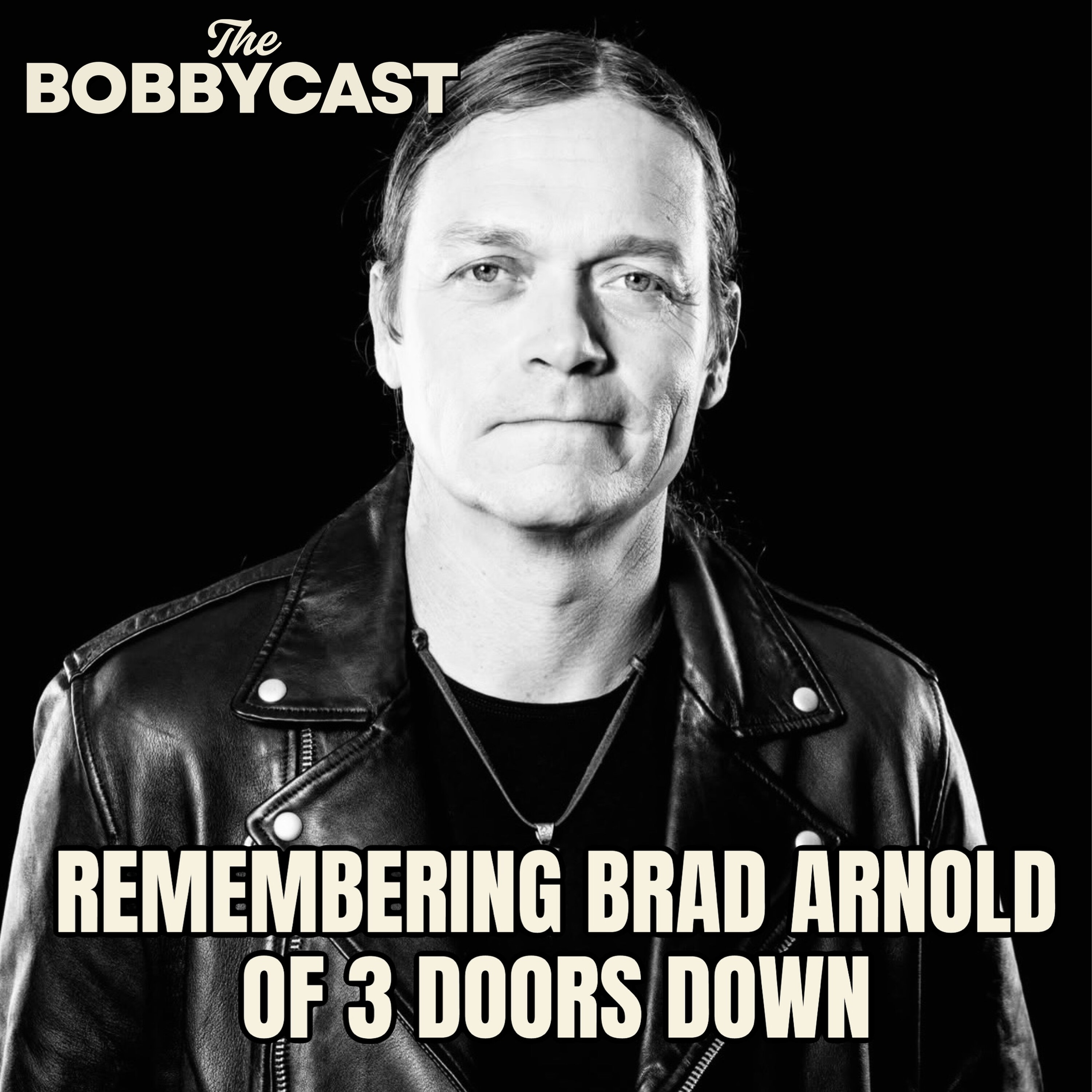
Hey everybody, it is Bobby. And I said on my Instagram story that Brad Arnold, who was the lead singer of Three Doors down, that he had died. And so many people said this is one of the best Bobby cast they had ever heard. So I wanted to put it back up in case you guys had missed it. Maybe you hadn't even subscribed at the time and maybe you didn't know a story. So I'm going to get to that. But Brad passed away age 47, following a battle with cancer that he was very public about. He had stage 4 kidney cancer. He announced that in 2025. The band shared a statement which announced his death, which was the first I'd heard of it too. They said with heavy hearts. We share the news that Brad Arnold, founder, lead singer and songwriter of Three Doors down, passed away on Saturday, February 7th at the age of 47 with his beloved wife Jennifer and his family by his side. He passed away peacefully, surrounded by loved ones in his sleep after his courageous battle with cancer. So I'm gonna play this for you. And I was fortunate enough to get to know Brad over the last six or seven years. And it started with a morning show appearance, like so many times. It does. And then I think he was on the show a second time. And then I went and hosted a Three Doors down anniversary special for them. So just returning the favor. Also, I just really like Brad. And then Brad played with us on one of our Raging Idiots million dollar shows. And again, such a sweet guy. And even with all the songs that they have, he was like, just pick the songs you want to do. And obviously we did Kryptonite. Brad wrote most of the first record when he was in high school, which is crazy, and started as the singer and drummer for the band. So we're going to talk about this. And he does talk about getting sober, which I know was a big deal to him. He was always sharing his sobriety journey and sharing his coins. And again, extremely sad. 47 years old. Rest in peace to Brad Arnold. And here's the episode of the bobby cast with 3 Doors down singer Brad Arnold. This is an exciting one for me because it's Brad Arnold from 3 Doors Down. Glad to have you, man.
- [05:28]
Brad Arnold
Thank you for having me, man. I'm glad to be here.
- [05:29]
Bobby Bones
I'm such a fan of 3 Doors down because how old of a guy are you?
- [05:33]
Brad Arnold
I am 40 we're about the same age.
- [05:35]
Bobby Bones
I'm about to turn 39.
- [05:36]
Brad Arnold
Yeah.
- [05:37]
Bobby Bones
God, you were so. You were the same age basically, right. You were so big and I was like an idiot on the radio in Hot Springs, Arkansas, and you were like all over the world. I feel so, so small now, man.
- [05:48]
Brad Arnold
We did start young. I started touring when I was 20. I just turned 21 and it was, you know, they say like youth is wasted on the young. So it's touring.
- [05:59]
Bobby Bones
Yeah.
- [06:00]
Brad Arnold
Because I think I would have enjoyed it so much more now in the mindset that I'm in, in my life and just the place that I am than I did then because, you know, you get up there and you're young and you start touring and it's. That's a lot to handle hand a 21 year old, you know, and it's basically, you know, just. Here's the back. I used to tell people it's like having a backstage pass to life and you get out there and. And I was an idiot and I didn't, you know, I didn't do a lot of things, but I was just. I guess my main thing that I got out. I just got out and drank so much and things like that and. And I've been without alcohol, been alcohol free for a little over three years. And I wish, man, I could just take that and apply it to my whole career. I would have enjoyed it so much more.
- [06:45]
Bobby Bones
I think I saw you guys probably five times, you know, all through my years. And so for me, I think the last time I saw you guys was you guys in Fuel. You guys were playing together. But I bet a lot of those bands did you guys kind of cross paths and tour randomly with a lot of those guys kind of in that same class of when. When pop was rock. So how did those tours often come together? And did you. Did you switch places sometimes, like who had the bigger song would kind of lead the tour?
- [07:10]
Brad Arnold
Well, we, by the grace of God, our first record, like done really good and we started touring together with Nickelback was. Used to be their second record kind of took off for them and so that was the first tour that we would kind of. They opened for us for man, a couple. First couple of years that both of us were out and. And then their second record took off and we'd done a tour together to where we kind of flip flop back and forth playing and then we had. We went our separate ways. So like.
- [07:41]
Bobby Bones
Not good blood.
- [07:42]
Brad Arnold
Not good blood.
- [07:43]
Bobby Bones
So what's the deal with Nickelback? Why does everybody hate On Nickelback, I don't know. Why do you think people hate on Nickelback? And I wouldn't have went there, but, you know, I didn't know you guys tore with Nickelback a lot.
- [07:54]
Brad Arnold
There's been a lot of times where maybe Both started on two already.
- [07:58]
Jacob Goldstein
Eagles.
- [07:59]
Brad Arnold
You like the 1980s Eagle buses, and one of them was always broke. So there was a lot of times where there was. I mean, you know, in those days, all band and crew on one bus. On that tour, there was both bands and both crews. One bus for a lot of times, because one of the bus was always torn, tore up, and it would break down, and we just had to get to the next gig. So everybody just get on one. Which.
- [08:20]
Bobby Bones
If a bus only holds 12 now, a bus will hold 12 legitimately. Like, my bus will hold 12 legitimately. So it means there's enough bunks, and legally you can have 12. It sounds like there's more than 12 people on that bus.
- [08:30]
Brad Arnold
There was a lot of people. Somebody would always give me a bunk and so. So the two singers could sleep or whatever. But, yeah, we just kind of. We. Our old drummer is now their drummer. Daniel used to be our drummer for quite a while, and he's a great drummer, you know, and they were just. I don't really know, honestly, how it got to be bad blood, but I think kind of it was a thing in the award show, and I don't even remember what award show it was, and it wasn't even between the two bands. It was between some crew guys or something. But I don't know why people. I don't know why people hate on them so much, but.
- [09:08]
Bobby Bones
Well, if you don't like them, I now hate Nickelback, too. Mike, let them know. Let them know I'm tired of defending them. I don't like them anymore. Brad. Don't like them.
- [09:14]
Brad Arnold
I don't dislike. You know, honestly, I hadn't talked to him in a really long time.
- [09:18]
Bobby Bones
Here's a story one of my friends told me, because they went to Canada and they're a country band, and they said they were playing with Nickelback. And I guess those guys are really rich, or I guess Chad Kroger's really rich. And apparently they went on a yacht. This is all hearsay, right? They went on a yacht and they were throwing pillows into the air and shooting them with guns and that he was just wild and they just had guns and still, like, partying on boats and off the coast. And I was like, man, Nickelback's still going hard right?
- [09:43]
Brad Arnold
Now I guess so, man, I've heard some stories about Ted doing some pretty outlandish things, but it was mainly like throwing money around and, and stuff like that. And for me personally, I mean, I come from a good family of seven kids, but my mom and dad taught me to the value of money. And I still remember the value of money. And I just think about it, you.
- [10:06]
Bobby Bones
Know, I guess probably I was probably like 19 or 20 and you guys in my mind really blew up and that rock sound became the pop sound because I was working on pop radio and every song you guys have put out would just be massive. And when you're in the mix, and I can feel this a bit with me now, meaning I work so hard, I really don't see the cool things that are happening around me at the level I should really appreciate and see them. I wonder because you were so successful just one after the other, what felt like? Did you really feel it and experience it or were you just running so hard?
- [10:35]
Brad Arnold
I think you just run in so hard that you feel it. And I think I feel it more now looking back, you know, and Jen and I will talk about it sometimes and, and, and I mean we really were like truly, truly blessed. And we still are, man. We still go and we still play a lot. We don't tour when we, you know, those first several years we played 300 shows a year.
- [10:56]
Bobby Bones
You're on the road that much.
- [10:57]
Brad Arnold
We were, man, we would, we would go. We developed kind of the three week rule to where, you know, we don't want to be gone more than three weeks and we'll come home for a week and go again sometimes. But I remember like going for three or four months and not even coming home, you know. But we always, we've always been a radio band and radio has always been our lifeblood and they've always been very, very good to us.
- [11:20]
Bobby Bones
Did you want to be a radio band at first or were you just a rock band that the times happened to fit the sound?
- [11:25]
Brad Arnold
I think that it just kind of happened because, you know, we never toured before we got signed. We were from South Mississippi and, and we're from Biloxi, Mississippi or Malls Point, Mississippi, but basically Biloxi, which is like halfway in between New Orleans and Mobile. And we couldn't get a gig in New Orleans, we couldn't get gigs in Mobile. Nobody. I mean, we just had to play like right there. It worked out. What worked to our benefit was the fact that there just wasn't a whole lot to do in the area so we always had a ton of friends at the shows and stuff like that. And so we went and made a local. A little CD at a local studio and had Kryptonite on it along with what would become like half of the first record. And so we begged our local radio station to play it. And, you know, they can't just do that, but they had a local radio show that they would do once a month, and so they played us on there a lot. And finally we begged the program director long enough that he was like, okay, I'll add Kryptonite. And he tried it, and it became the most requested song they'd ever had. And now some of those people might have been our friends or family for a little while, but after a while, it became like a hit on that station. And they were a reporting station. And so, you know, the report was going out that this number one song and. But there was no record company beside it, so there came the record companies, and. And we weren't even trying to get signed. We. They just came and it just happened.
- [12:50]
Bobby Bones
So where all you guys? Where'd you come? How'd you come together?
- [12:52]
Brad Arnold
We were all from the same little town, Escataba, Mississippi. And Matt and I, which. Our original guitar player, he's. He's passed away. We had. He's my cousin, and we just always played together and started playing his garage before I even had a drum set. And one of his buddies left a drum set over there for me to play. And. And Todd, our original bass player, he asked me and Matt to come over to his house one day and play. And we just started the band and I was the drummer. I. I did. I'd never sang in front of anybody ever. And I just. I was like, well, I'll try it. And I was so shy that Todd lived in a trailer. And I would sit in the. In the front living room of his trailer, and I would. A couple of his girlfriend and one of her friends would always be over there. They were always at Todd's house. I was so shy, sitting my face in the corner and singing. Yeah.
- [13:43]
Bobby Bones
How hard was it to drum and sing?
- [13:45]
Brad Arnold
Not.
- [13:46]
Bobby Bones
Not so bad, really.
- [13:47]
Brad Arnold
I always wonder how people play guitar and sing because, I mean, I just can't get my fingers to do that. But for the drums, I played. And I'm not a great drummer or anything, but I played all my life. And so it was never. I never really thought about it too much.
- [14:00]
Bobby Bones
So you never sang, and you hop up and you start singing, although you're shy, like could you feel you were pretty good at it?
- [14:07]
Brad Arnold
I felt like I was. I think probably the breakthrough for me was when they told me, like, Todd's girlfriend was like, you sound really good. You know, I was like, okay. You know, I went with it from there, and that definitely helped me come out of my shell. But I remember when we recorded that first record, I, like, I took it home and I played it for my parents, and my dad said, who's that singing? I was like, that's me. He's like, no, it ain't. I said, yes, it is.
- [14:33]
Bobby Bones
That's funny. And it's such a funny story that your local radio station playing the song is what ended up getting you guys a deal. Because just to kind of break it down for our listeners, if stations are big enough, their playlists get reported to basically a database. And they take the database and they go, okay, this song had this many plays at reporting stations, and that's what builds the chart. So any station that's big enough has a reporting tag. And you're on a reporting station and there's this song, the number one song that has no record label beside it, because every song, every band has a label written right beside it, like if they're on Mercury or Hollywood. But 3 Doors down had nothing.
- [15:08]
Brad Arnold
Nothing.
- [15:08]
Bobby Bones
And so the label did multiple labels approach you guys?
- [15:12]
Brad Arnold
They did Universal and Atlantic. It was the main two that we talked to and a couple of. Couple of others. And. And Monty Lippman came down, who's now the president of Universal. That was when he and his brother Avery Lippman at first started, or not just started, but recently started Republic, which was a rock label on inside of Universal. And he came down and talked to us and. And we just like what money had to say, and he was honest with us. And. And what does he say to you? You know, what stands out about the meeting above, what made us ultimately go with them, above anybody else? He said, look, he said, a lot of people come down here and lie to you and tell you this and that and tell you what you want to hear. He said, it's like this. You sell me records, it's all good. You stop selling records, I stop answering the phone. I said, good enough.
- [16:01]
Bobby Bones
And when you get signed, is it like a recoup? Whenever they give you money for a record, do they give you any sort of money up front? Like, you hear, have money to go buy some clothes?
- [16:10]
Brad Arnold
They did. They gave us. They gave us a signing bonus when we first signed, and it wound up that we all got $15,000 apiece to sign. And all four members were four of us at the time. We all went and spin it all on jet skis.
- [16:27]
Bobby Bones
That if in $15,000 again, we're the same agent, basically from the same part of the world. Because I'm from Arkansas, you give me $15,000 as a 19 or 20 year old. I mean, one, that's more money than I'd ever seen at once, ever. And then two, I'm probably going to make some dumb decisions too. And so you guys all go buy jet skis. Do you ride them in the Gulf?
- [16:46]
Brad Arnold
Yeah. Oh, yeah, right. We lived right on the Gulf and. Right. Kind of. We grew up on a river, but just right up the river from the Gulf.
- [16:52]
Bobby Bones
That's funny. You know, what I didn't know is that you wrote Kryptonite in high school.
- [16:55]
Brad Arnold
I did.
- [16:56]
Bobby Bones
Which is, which is not. This is to me the song that you guys would be known most for. Is it. Is it to you?
- [17:03]
Brad Arnold
It's what got us started. Definitely. I guess maybe Here without you is kind of the song that kept it going. But Kryptonite is definitely what got us going.
- [17:12]
Bobby Bones
I'll play a little Kryptonite.
- [17:13]
Brad Arnold
Man.
- [17:13]
Bobby Bones
This was the jam. I remember when it came out, I was like, I don't even know who these guys are, but I love them. So tell me about this. You write it in high school. How old are you? Like junior senior, high school.
- [17:22]
Brad Arnold
I was a senior.
- [17:23]
Bobby Bones
And so you sit down and go, are you watching Superman?
- [17:26]
Brad Arnold
Or. You know, it was. It was. I guess it was just me asking a question of. Of like, unconditional friendship. It's like, if I'm doing good, will you be there for me? And if I'm down, will you be there for me? And you know, honest to God, I didn't think a whole lot about it. You know, it sounded good and the words rhymed. It. It meant a lot more to me later and it still means things to me as right now because later on in my life I started realizing that question was kind of a pretty good question. If I go crazy, will you still call me Superman? Or if I'm alive and will you, will you be there holding my hand? And the reason it became more meaningful to me later was the fact that so many times it's like people are willingly there for you when you're down. But those same people, that's like, oh, yeah, man, you're gonna do great. You're gonna do great. Well, if you start doing great, those same people will kind of turn on you sometimes, you know. And so that question kind of became a valuable question to me and. And pretty meaningful for me.
- [18:29]
Bobby Bones
It's almost like a marriage vow, you know, for richer or poor. So, yeah, so that comes out and you got to be feeling pretty good. But do you start to feel like, man, I wonder, for a one and done band.
- [18:39]
Brad Arnold
Oh, man. Because that can be the kiss of death. Like one huge song can. That can do you in.
- [18:44]
Bobby Bones
Just. Would you rather have had one huge song, let's say like a Chumba Wamba or Lou Vega and Went Away, or had no major song at all but a few that were okay?
- [18:54]
Brad Arnold
I think I'd rather have a few that was okay.
- [18:56]
Bobby Bones
Yeah. Why is that?
- [18:58]
Brad Arnold
Because I think it would create more longevity in your career and allow you to go play more shows. Because, you know. You know, a lot of bands kind of look at it as like, we tour to promote a record, but we put out a record so we could go tour, you know, and we always. We just always like to go play live.
- [19:17]
Bobby Bones
And you also, I guess, would become kind of a character of yourself if you have one song. Like, you're always that image of that one song, because there's not another one or two to balance it out so much. And I say that because I was watching this story about Bobby McFerrin who has. Don't Worry, Be Happy, he won't play that song anymore because he's like, that was like a goofy song that I never expected to be a hit, and that actually doesn't represent me at all. And so he doesn't play that at all, really. Yeah, he doesn't play it at all. Like, what, do you get tired of playing the big hits?
- [19:48]
Brad Arnold
I don't. I don't.
- [19:49]
Bobby Bones
Because.
- [19:51]
Brad Arnold
And we're. We're doing a lot of acoustic shows right now. And I like doing the acoustics because it gives me a chance to talk to the crowd. And one of the things I was telling the crowd the other night, because I just talk whatever on my mind, you know, and. And I was just telling him, I was like, you know, it never. It never gets old. And. Because I love hearing them sing it back. And it's weird because for the last 15 years, we wore in ear monitors. Well, I had a weird situation, like, two weekends ago. My monitor guy, we were in and out of town, you know, and he left our in ears at home. And thank God we had some wedges. And so that was my first time to sing with wedges in like 15 years. Wow.
- [20:27]
Bobby Bones
And so, by the way, wedges for people that don't know, the inner ears are little. The tiny things that you see the artists wear in their ears. And so basically, it's a mix inside the ears, and it seals off all the outside sound and what the monitors are or the wedges are on stage, the little box speakers that everybody can kind of hear them, but they're pointed at you. And so it was the first time in 15 years you'd use those. Yeah.
- [20:48]
Brad Arnold
And for one of our shows, and it allowed me to hear the crowd, and I was like, man, I've been missing this because, you know, sometimes with the in ears, you only hear what you want to hear, but it can really kind of. It can definitely separate you from everybody out there. I have. I usually have some ambient mics in there a little bit, but. And coincidentally, the first. The first of those two shows was. It's pretty small, and I could. I could hear people, like, talking while I was singing.
- [21:16]
Bobby Bones
I did a whole thing on the air where I was talking about acoustic shows or even when I do stand up. Like, there's a difference. Because when someone's talking and I'm doing stand up, it kills all of, like, my rhythm. I'm talking. And if you yell, hey, you're all. Even if you go, hey, you're awesome. It's. It stops it. It kills everything. And I'm like, there's a difference in screaming that out when I'm doing stand up or someone's doing an acoustic show versus when there's fire and there's big electric guitars and those. You can scream it all you want. Like, tell. Tell the artist you love them. But if he's depending on the attention of the room, he's got to have the attention of the room.
- [21:52]
Brad Arnold
Absolutely.
- [21:53]
Bobby Bones
And so you're playing these acoustic shows and you started to notice that was a thing. Huh? You do. It is irritating because for me, Brad, I don't know about you, but I feel bad. Not for me. I'll be fine. Like, I go, I do the best I can, and I feel good about it.
- [22:04]
Brad Arnold
That's right.
- [22:04]
Bobby Bones
But it's the people that are sitting out there that paid for the ticket that have to hear some idiot yelling. And I feel bad for them.
- [22:10]
Brad Arnold
I do, too.
- [22:11]
Bobby Bones
And I get mad for them. And sometimes, like, I've popped off a crowd at people in the crowds. I'm like, dude, they didn't pay to hear you tell jokes.
- [22:18]
Brad Arnold
That's right.
- [22:19]
Bobby Bones
They paid to come and experience whatever I'm bringing.
- [22:21]
Brad Arnold
That's right.
- [22:22]
Bobby Bones
And I wonder, do you feel that way.
- [22:24]
Brad Arnold
I do. I do. And you know, and at one of the shows that. That first show, so there was somebody over, over out in one side of the crowd that was just kept on screaming. And I remember I could hear it while I was singing. And I mean, they weren't like screaming obscenities or something hateful or anything. But after a couple of songs, security came and got them and take them, took them out. And I don't like to see anybody get taken out of a show. I was kind of glad. Yeah.
- [22:46]
Bobby Bones
And you know what? And they paid for it too. But they can't run it for everybody else.
- [22:48]
Brad Arnold
That's right.
- [22:49]
Bobby Bones
That's what. That's all it's about to me is that you're ruining it for everybody else that got a sitter that took a night and dedicated to come watch freaking three doors downplay. And there's some guy won't stop screaming as you guys are playing here without you acoustic, which is cool.
- [23:03]
Brad Arnold
We interrupt this interview to bring you.
- [23:05]
Bobby Bones
A message from our sponsor.
- [23:09]
Jacob Goldstein
Welcome to the A building. I'm Hans Charles. I'm Menelik Lumumba. It's 1969. Malcolm X and Martin Luther King Jr have both been assassinated. And black America was at a breaking point. Rioting and protest broke out on an unprecedented scale scale. In Atlanta, Georgia, at Martin's alma mater, Morehouse College, the students had their own protest. It featured two prominent figures in black history, Martin Luther King senior and a young student, Samuel L. Jackson.
- [23:39]
Brad Arnold
To be in what we really thought was a revolution.
- [23:42]
Jacob Goldstein
I mean, people were dying. 1968, the murder of Dr. King, which traumatized everyone.
- [23:48]
Brad Arnold
The FBI had a role in the murder of a black Panther leader in Chicago.
- [23:55]
Jacob Goldstein
This story is about protest. It echoes in today's world far more than it should, and it will blow your mind. Listen to the A Building on the iHeartRadio app, Apple Podcasts or wherever you get your podcasts.
- [24:09]
Rider Strong
This is Rider Strong and I have a new podcast called the Red Weather.
- [24:13]
Bobby Bones
It was many and many a year ago in a kingdom by the sea.
- [24:18]
Rider Strong
In 1995, my neighbor and a trainer disappeared from a commune.
- [24:22]
Bobby Bones
It was hard to wrap your head around.
- [24:23]
Rider Strong
It was nature and trees and praying and drugs.
- [24:27]
Bobby Bones
So, no, I am not your guru.
- [24:31]
Rider Strong
And back then, I lied to my parents, I lied to police, I lied to everybody.
- [24:36]
Brad Arnold
There were years, right, where I could.
- [24:38]
Bobby Bones
Not say your name.
- [24:39]
Rider Strong
I've decided to go back to my hometown in northern California, interview my friends, family, talk to police, journalists, whomever I can to try to find out what actually happened?
- [24:47]
Brad Arnold
Isn't it a little bit weird that they obsess over hippies in the woods and not the obvious boyfriend?
- [24:52]
Podcast Promoter
They have had this case for 30 years.
- [24:55]
Bobby Bones
I'll teach you sons of come around.
- [24:57]
Brad Arnold
Here and my wife. Boom.
- [24:59]
Jacob Goldstein
Boom.
- [24:59]
Rider Strong
This is the red weather. Listen to the red weather on the iHeartRadio app, Apple Podcasts or wherever you get your podcasts.
- [25:09]
Jacob Goldstein
The Volkswagen Beetle started out as Hitler's dream car. It wound up as a beloved hippie icon and the best selling car of all time. How did that happen? I'm Jacob Goldstein. And I'm Robert Smith. On business history, we tell the surprising stories behind the inventions and entrepreneurs that shaped our economy. And the story of the Beatle is truly surprising. It has so much in it. It has Nazis, it has the German economic miracle. And it features one of the most famous ads of all time. An ad that really redefined what advertising was in the United States. The calculation was that there was some number of Americans who were ready for something different, who were ready for something that was counter to the culture, if you will. Perfect timing in this decade of the 1960s. Listen to Business History on the iHeartRadio app, Apple Podcasts or wherever you get your podcasts and watch episodes on YouTube.
- [26:04]
Brad Arnold
Crook and Chase Nashville chats with the true life adventures of hot new country star Hudson Westbrook. Early in his career, he shocked his mom more than once and we even shocked him on what we had to.
- [26:15]
Bobby Bones
Do to get to visit with him. I've seen some people do some crazy things, but nothing like that.
- [26:19]
Brad Arnold
Plus what Hudson almost had in common with Billy Bob Thornton. Crook and Chase Nashville chats with Hudson Westbrook. Listen and subscribe on the iHeartRadio app, Apple Podcasts or wherever you listen to podcasts.
- [26:40]
Bobby Bones
And we're back on the Bobby cast. So what was the second single?
- [26:44]
Brad Arnold
Loser. I wrote Loser right around that same time, but actually wrote her about one of my friends. And I wasn't actually calling him a loser, but he and I grew up together and I'd known him since we were little bitty kids and he started getting into like drugs pretty bad and stuff and I wasn't right calling him a loser. I watched his attitude change to where I could tell that like he thought he was a loser. And I was, I was almost writing it from his perspective, looking at himself, you know, you know what I mean? And, and thankfully dude straightened up and he's a good dude and I had talked to him a long time but that it was written really about one of my Friends.
- [27:24]
Bobby Bones
You wrote those songs in high school, huh? And here they are lasting 15, 20 years later. That's crazy.
- [27:33]
Brad Arnold
By the grace of God.
- [27:34]
Bobby Bones
So were you in high school? Were you the cool music kid, or you the dorky music kid?
- [27:38]
Brad Arnold
I kind of hang out with everybody.
- [27:40]
Bobby Bones
Yeah.
- [27:41]
Brad Arnold
And it was really, like I was saying earlier, it worked hard, Venice, to be from that little town. And, I mean, I kind of knew everybody. I wasn't like the kid that got picked on, but I wasn't the kid that got invited every party either, you know, and because we.
- [27:57]
Bobby Bones
We.
- [27:58]
Brad Arnold
We practice all the time. We just. We played all the time, and we should have been better, but. But we knew. We got to where we knew everybody because it was one little bar in our town, and. And we played there every weekend, and I was only, like, 16, and I had to get. I literally had to get a note from a parent saying it was okay for me to be in there and.
- [28:16]
Bobby Bones
A note. That's funny. Yeah, a note to break the law.
- [28:19]
Brad Arnold
That's funny.
- [28:20]
Bobby Bones
Isn't that funny, you know, to go into a bar? Yeah.
- [28:23]
Brad Arnold
So you playing the bars, and we just. We'd always have, like, three or four hundred people in there. It was never like. But that was all there was to go do. And we charged, like, three or three or four dollars to come in, and we just got to keep the. Keep the COVID charge.
- [28:36]
Bobby Bones
So they made the alcohol money and you guys got the COVID We did. I bet you guys were doing all right then, because again, how we grew up, you and I both, heck, yeah. That's a lot of money.
- [28:47]
Brad Arnold
I worked at McDonald's, and I could make more playing in a bar both nights of the weekend that I can make at McDonald's all week.
- [28:53]
Bobby Bones
Did you continue to work at McDonald's.
- [28:55]
Brad Arnold
For a little bit.
- [28:55]
Bobby Bones
When did you go? All right, I'm just going to dedicate myself to music.
- [28:59]
Brad Arnold
I mainly quit there because I wanted to go to a party and my manager would let me off work. I was like, see? Yeah, I make more money playing in bars anyway.
- [29:07]
Bobby Bones
That's funny. Three doors down, the acoustic versions from their acoustic Back Porch Jam. Check that out. All right, so how many. How many singles on that first record?
- [29:17]
Rider Strong
4.
- [29:18]
Bobby Bones
So what's the last one that comes off?
- [29:19]
Brad Arnold
Be like that.
- [29:21]
Bobby Bones
So that first single, Kryptonite, you got a couple rockets. That fourth one goes back to pop and does really well. I remember that, like, playing that one like crazy. So you start with a bang, and you end with a bang. Going into the second record, you got to feel Pretty good about yourself.
- [29:35]
Brad Arnold
I was. I was. It was amazing. It was amazing. I remember. I literally remember being so mad one night and, like, at. At my A and R guy, I was like, why did we only sell 80,000 records last week? And I was like, man, that is bull crap.
- [29:54]
Bobby Bones
Last week? Yeah, a random week.
- [29:56]
Jacob Goldstein
Wow.
- [29:57]
Bobby Bones
Times have changed, my friend.
- [29:58]
Brad Arnold
I was like, what? Or maybe it was like 60,000 or something, but it was, like, ridiculous. It was some ridiculous amount of records. And I was like, what gets so crazy now?
- [30:08]
Bobby Bones
Killing it now. Artists would beg. I think, like, Florida Georgia line saw like, 50,000 last week, and it was like, the biggest. I mean, listen, times have changed, too. Like, the way that people get music.
- [30:16]
Brad Arnold
Absolutely.
- [30:17]
Bobby Bones
But, okay, so second record was that Away from the Sign.
- [30:20]
Jacob Goldstein
It was.
- [30:20]
Bobby Bones
I don't even have notes on that. Like, I'm just going straight from memory here. Away from the sun. Like the black cover the sun kind of tell me if I'm wrong.
- [30:28]
Brad Arnold
Like.
- [30:28]
Bobby Bones
Like, maybe, like the moon's covering a little bit. There's, like an outside, like, edge of the sun. Is that right? I'm so good at this. I'm good at Three Doors down trivia. And so first song off the record.
- [30:36]
Brad Arnold
Is what the first single off of Away from the sun was. When I'm Gone.
- [30:42]
Bobby Bones
Was there ever resentment that you guys didn't get the coverage and you ever go, is it because we're from super south? Is it because.
- [30:47]
Brad Arnold
I mean, I resented.
- [30:49]
Bobby Bones
Yeah.
- [30:49]
Brad Arnold
And I. I mean. And, you know, because really, you know, they wanted us to kind of separate ourselves from being so Southern. And, I mean, you can hear the way I talk. I. I tried not to for a little while, and I just couldn't help it, you know? And. And. And, yeah, I guess I associate you with being kind of stupid or whatever. Then especially, you know, it's like, because there were no Southern bands out and hadn't been for a long time, you know, I think the last Southern band that was out before us was Skinner. There was a rock band.
- [31:20]
Bobby Bones
You know, how does that conversation go? Where they go. And is it a conversation where they say, hey, like, we need you to be a little more California, a little more, you know, not. Because, again, you. It's another Southern guy right in front of you asking this question. Because when I started in radio and they were like, hey, if you're gonna do pop and hip hop, you have to lose your accent a little bit. So. And that conversation was had to me, and I did a bit, and now I've kind of got back to you. Know I sound a bit like I sounded growing up, but was that conversation had with you? Like, guys, you got to chill out a little bit on the. On the Mississippi.
- [31:48]
Brad Arnold
They did, and they sent us to a voice coach for a couple of sessions, and just to help us, like. Like. I mean, which, you know, I know proper grammar. I just don't like to use it. You know what I'm saying? And. But I did. I tried to lose it for a little while, and, I mean, it's not as thick as it was when I started, man. That was. It was. I probably could have managed to shave a little bit of that off of there.
- [32:12]
Bobby Bones
Are people surprised sometimes that I think your accent is. When you do talk? They are, because you don't really hear it in the music, but again, you don't really hear the Spice Girls being British in most of the stuff they sing either.
- [32:20]
Brad Arnold
I know. Or it blows me away. Like, you. You've seen this actor in four or five movies, and then you see him accepting an award or something. It's like, what?
- [32:27]
Bobby Bones
The guy on Walking Dead kills me. He's off the show now, but the main guy, Rick Grimes, he would. He's on the show. He's, like, from Atlanta, and he talks, and he's like, hey, Rick Grimes. And then he's on the award shows going, hey, Mike, thanks for the award. I'm like, what is happening right now? Like, I don't even want to hear this. You're ruining everything. I know about this guy. I picture him as Rick Grimes from Atlanta, not this kangaroo guy. So you keep making hits, but you're probably not getting the respect that you just. You feel like you deserve in the mainstream. Like, that would. That would irritate me.
- [32:58]
Brad Arnold
It was a little irritating, but. But then, you know, I guess. But then you go home and forget about it. You know, you're amongst your friends, and they're glad that you. I always just thought it was more important to stay me than it was to be who they wanted me to be, because, you know, I thank God for my mom and daddy. You know, they were always encouraging to me and. And just let me do my thing, you know, they didn't force me to do it, but they didn't keep me from doing it. But, you know, my mom just always reminded me, like, brad, that won't always be there, son. You know, and it's always kept that in my mind that this will. You know, who I am will always be here, but that won't always be there. So I just kind of got to Where I just took it with a grain of salt and I just am who I am, you know?
- [33:48]
Bobby Bones
And how is the relationship between the band as you guys started to skyrocket with the songs doing so well? Getting better. Getting worse.
- [33:55]
Brad Arnold
Worse, really. It did, because, honestly, I mean, we all got out there partying and, like, one of us was. All of us drank a good bit, but, like, one of us was. It wasn't that we didn't get along. Our drugs didn't get along because one person was on this and one person was on this. One person was on this and. And. And by our third record, we all had our own buses. It was four. Five guys in the band and four. Four band buses and then all the crew buses. So we roll around with seven buses because the four main band guys just hated each other.
- [34:29]
Bobby Bones
So how does that dynamic work when you have to work on things and when you have to get on stage and be a collective?
- [34:35]
Brad Arnold
It. That got to where it was like the only time that we seen each other with sound check and on stage and, you know, we were playing amphitheaters and stuff. You keep a pretty consistent sound. So we'd get a sound established and we wouldn't even do sound check. I wouldn't see some of those. See the guys, until it was, you know, if we played at 9, I'd see him at 8:30 when we were in the dressing room putting ears on.
- [34:56]
Bobby Bones
And it was just, all right, you guys ready? And then you go out and play and rock a show. And everybody thinks that you're the best friends ever. Because you used to be.
- [35:02]
Brad Arnold
Yep.
- [35:03]
Bobby Bones
And you look like you. I mean, you go out and you. You're a rock band.
- [35:06]
Brad Arnold
Yep.
- [35:06]
Bobby Bones
You're rocking. People think you're rocking as brothers. When does it get better or does it.
- [35:15]
Brad Arnold
It's. It's sort of didn't, man. I mean, you know, I'm the. It was three of us to start, and I'm one that's here, you know, and. And one, frankly, is in prison and one's dead. And both. There's a result of drugs, man. And, you know, and Chris. Chris was not one of the original guys, but he was in the band when we got signed. And I thank God for him because he got clean, you know, he was on tow. Completely different. My thing was just always drinking, and I drink profusely. And he. He did a lot of different other things, but he got clean. And my drummer, Greg Upchurch, he's been a drummer for. He. He became. He used to play for Puddle of Mud. And when Daniel left and went to Nickelback, that was right after we had done a tour that was Nickelback three doors down in Puddle of Mud. And Daniel went to Nickelback, Greg came with us. And in Greg's from Oklahoma and, And Greg drank like a fish too. And it got to where, you know, Chris, by not so gentle persuasion, went to, went to rehab and he got clean and somehow, and it's a testament to his sobriety, stayed sober with us still partying like mad men, really. And then a few years later, Greg, by not so general persuasion, went to rehab and he got clean from, just from drinking. And man, I started seeing those guys and I was still, I knew that, I knew that I needed to change and, but, you know, I started seeing what those guys had and you know, you see them over there and they're happy and I'm still here miserable. And I thank God for them, man, because seeing them like that and through their encouragement, you know, they never pushed it on me, but I was like, I have to. They got to be where I could trace. I was ruining my life. There was no big tragedy or no catastrophe or anything, but I was. Put my wife through hell, I was putting everybody I knew through hell and putting myself through hell. And I was seen around me and I was like, I have to change. And I went to rehab and it's the best thing I ever done because I wanted to get sober, but I didn't know how. And I went out there and they taught me how, how to deal with my problems because people don't have drug addictions. They have life problems and they, you know, they don't have drug problems, rather they have life problems and they sidestep their, instead of facing their problems, they sidestep them and use drugs. And that's what I was doing. And, and, and I just had to learn how to. And I had a Ms. Gross misconception of what rehab was. I thought that, you know, like, you go into a hospital and they step you down and like, you're going to sit here and do your sober. But I just went out there and they, it was like going to college to learn how to be sober. And it was awesome. And I, I, it was the best thing I ever done. And it ain't like you come out and your life's perfect, but it sure started to get a lot better. And, And Ben's the Dive was sober, and two other guys were sober in the band. The other two guys who didn't really have problems anyway, they might casually drink a Little bit. We all got sober, and it was like being in a different band. Really, man, I wish. That's why I say, I wish it could have always been like that. Because we go out there now and we generally, we. During our last summer tour, we were out and we were coming somewhere. We were going from point A to point B, and we were within, like, five miles of Arches National Park. So we got off the bus and everybody went. Walked around the park together. I was like, I cannot believe it. I've been in this band for 20 years, and this is the first one of the first times I can. I could look around and I was standing in the national park with all five band members standing there, and I was like, man, I. When you took that in, I wish it could have always been like that.
- [38:56]
Bobby Bones
You know what's funny is you talk about these guys not being put in with gentle persuasion. Like, my. So I'll give you a quick backstory before I tell you the question I have. So my mom died in her 40s from drinking and drugs because. And I put into rehab a couple times, and she never wanted to be in rehab, so rehab never worked for her, if that makes sense. Like, when you say they didn't want to go, I go, man, because you have to embrace that.
- [39:20]
Brad Arnold
You really do. They.
- [39:22]
Bobby Bones
To hear that they didn't want to go and it still worked for them is pretty amazing.
- [39:27]
Brad Arnold
It really is. It's. It really is. It was a miracle. It was a miracle because Chris will tell you. I mean, it's not. It's not a secret. And we're not. And, you know, we're not ashamed of where we've been or. And how we got to where we are. And he'll tell you that he was bad and I was bad, just on a different. On a different kick, you know, And. And when he. When he had to go, it was. He had to go. I mean, he had to go. And. And. And I think when he got there, he, like, realized. It's like, okay, it's. I think he realized it's like, okay, it's this or death. It was that.
- [40:03]
Bobby Bones
Is that close, huh? It was that much of a problem.
- [40:06]
Jacob Goldstein
It was.
- [40:07]
Bobby Bones
Do you do the thing? Because. So I've never had drink of alcohol because I, like, I see my mom died from it. My. I don't know my real dad, who's an alcoholic. I have a lot of family problems with it. So I was. Early on, I was like, I'm not going to have this happen to me. But what happens is people Will treat me different even though I'm Let everybody drink around me like, I'm good.
- [40:23]
Brad Arnold
Yeah.
- [40:24]
Bobby Bones
But I have to fate. I was out a couple nights ago and I was meeting up with a friend, new friend, and I have to get there early and order something that looks like a drink or people treat me completely. They'll go, mmm, you know what if you're not drinking? And I'm like, no, no, just be yourself. I wonder, do you have those problems where people go, oh, he's sober now. We have to act different?
- [40:39]
Brad Arnold
Yes.
- [40:40]
Bobby Bones
And do you want them to act different?
- [40:41]
Brad Arnold
No.
- [40:42]
Bobby Bones
Do you need them to act different?
- [40:43]
Brad Arnold
No.
- [40:43]
Bobby Bones
Do you. And do you feel like sometimes you have to kind of go, guys, it's good.
- [40:48]
Jacob Goldstein
Yeah.
- [40:49]
Bobby Bones
Because I do all the time.
- [40:51]
Brad Arnold
I was read a thing on. It was a post on Instagram not long ago. It said is I follow a few recovery pages and stuff on there. And it was one of them.
- [40:59]
Bobby Bones
It said.
- [40:59]
Brad Arnold
It said alcohol is the only drug you have to justify not doing.
- [41:05]
Bobby Bones
Oh, yeah, true. You're right. Because it's such a. It's such a social. Such a social drug.
- [41:10]
Brad Arnold
Yeah.
- [41:10]
Bobby Bones
You know that. Yeah. That's wild.
- [41:12]
Brad Arnold
You're like, why don't you. Why don't you drink? And it's like, because I do. I'm allergic to it. That's what I just tell. I'm allergic to alcohol. You know, that's crazy.
- [41:21]
Bobby Bones
And listen, that's a great story. I didn't even. Wasn't gonna spear off into that. But I'm comfortable talking about my story. And it's great to hear somebody else that is the same. Hang tight.
- [41:29]
Brad Arnold
The Bobby cast will be right.
- [41:40]
Bobby Bones
Welcome back to the Bobbycast. I don't curse in my personal life. I definitely don't curse on stage. Like, I have my. My shows be completely clean. And I know that's the same thing with you guys. Now, do you do. If the bands are opening for you have songs with curse words, do you have that talk with them like, hey, we don't do that. Or not.
- [42:00]
Brad Arnold
We shy away from a band. And if they get out there, you know, it's one thing. If it's a festival, you can't really say. And. And I don't speak perfectly in my private life, but I do not cuss on stage. And. And that also goes back to my mama told me I better not get out there. She said to Brad, my mom is Southern Baptist. To the bones. You said, brad, you got to cuss on that stage. I'm be ashamed of you. So I never Did. And. And. And. But, you know, it's worked out and people value that very, very much. Because I can't tell you, you know, especially having songs about Superman and this and that. We have a lot of kids at our shows and. And we still have a lot of kids at our shows. It's like just the next generation of them, which is freaking cool.
- [42:40]
Bobby Bones
It's the kids of the kids.
- [42:41]
Brad Arnold
Yeah.
- [42:42]
Bobby Bones
Yeah, it is.
- [42:43]
Brad Arnold
And. And. But I. I've, over the years had so many parents come up to me and say thank you for putting on a show that I can bring my kids to. And. And, you know, we really have tried over the years to kind of. To. I mean, you know, hey, man, come on, you know, you can't. We hate to, like, try to control an opening band, but it's. They got out there and were vulgar or something. We definitely say something to them about it.
- [43:05]
Bobby Bones
Yeah, I will have that talk with my openers. Like, I'll bring music as. Because I'll. When I tour, I'll go and I'll do an hour set of stand up. But I kind of treat it like a variety show. I have someone coming open musically for me, and I'll have the talk, like, hey, people, it's not a kids show, but there may be some kids in the crowd. But people feel like this is safe space. Like, don't get out there and be political. Don't get out there and be dropping F bombs and S bombs. Like, just know that people feel like this is a safe spot for them to come and breathe.
- [43:31]
Brad Arnold
Yes.
- [43:32]
Bobby Bones
And smile and take in a show. And there can be some kids. And if it's PG13, that's all right.
- [43:36]
Podcast Narrator
Yeah.
- [43:37]
Bobby Bones
Yeah. Or if it's Spongebob Esque, where you make a joke that only adults will get and kids really won't, that's okay too.
- [43:43]
Brad Arnold
Yes.
- [43:44]
Bobby Bones
But that's it. That, you know, I do that. And people appreciate that because they don't have to come in and worry and sit and go, all right, is this gonna be a place where one of the ways I'm gonna feel uncomfortable. I don't want that.
- [43:55]
Brad Arnold
And that's. That's awesome that you do that too, man. Because it's not a whole lot of that in the world right now. It's cool. I mean, it's better. It's better like that too. And. And also, that's quality, you know, you don't need that. You don't. When you.
- [44:09]
Bobby Bones
I don't feel like I need.
- [44:10]
Brad Arnold
I feel like because you put on a quality show. And you're an entertaining guy. You don't need that.
- [44:15]
Bobby Bones
I appreciate that. I don't know about that exactly. I appreciate that. What do you think about. I was listening to some of these bands talk about, like, Imagine Dragons. They're really big, but when you get so big, you start to get a lot of hate. And they're. Imagine Dragons are getting a lot of hate from a lot of these quote, unquote, finger, quote legit rock artists. Like Nickelback gets hate for their music. Well, how do you feel about, like, Imagine Dragons getting all this hate right now?
- [44:41]
Brad Arnold
I didn't know that they were.
- [44:42]
Bobby Bones
Yeah. Who are the bands, Mike, that are, like, out ripping Imagine Dragons? Slipknot's pretty big on ripping them. Slipknot, they're like, you're not real rock. What even is real when it comes to art?
- [44:52]
Brad Arnold
I mean, are those guys real monsters? Right? You know what I'm saying? They're the ones who put on masks on stage.
- [44:58]
Bobby Bones
You're right about that. When you. Did you guys ever start feeling that hate because you got so big?
- [45:03]
Brad Arnold
We did. From. From. It was. It was like those little movement bands and it was from bands like some 41 and then those. I hate to like. I don't mean to pick on, as.
- [45:11]
Bobby Bones
They say, spill the tea. Who is it?
- [45:13]
Brad Arnold
I mean, it was just all those, like, you know, those. Those movement bands, the punk bands that come through. And then this little movement comes, you know, and we were. We were never like the cool guys. But at the same time, it's like we'd done a lot of the stuff that we'd done sort of under the radar, you know, because we were never like, big enough that. That we got a lot of hate.
- [45:34]
Bobby Bones
You know, I would say that you guys are one of the most underrated bands in my lifetime because of the amount of hits you have. And people unfairly don't put you in that conversation of the sounds that changed other and influence other sounds. Because, again, we didn't even play all your hits. I just. We have like nine, ten humongous songs here. We're talking about humongous songs that crossed genres. And, you know, I feel like you guys are super underrated. Would you think that three doors down an underrated band? It's hard. It's hard to be humble and say, yes, but I wonder. I wonder what you say.
- [46:08]
Brad Arnold
We never got a lot of attention, but. But it's okay. I'm cool with it.
- [46:13]
Bobby Bones
I wouldn't. I wouldn't be. Not me.
- [46:15]
Brad Arnold
I'm too competitive because I Always felt sorry, you know, like this just say, like. It's easy to. Easy to say. Like, Britney Spears always felt sorry for her, man. Of living under that microscope. It would drive me crazy, too. I know she had, like, her little episode and stuff, but I. I mean, when there's constantly. I can't imagine walking out of every restaurant or every establishment, everywhere that I went, somebody standing there with a camera or something, or always wanting. Just living under that microscope. I never always used to say, man, I love being a radio band because everybody knows their songs, they don't know what I look like. And so I can sell a bunch of records, but I can still go to Walmart.
- [46:53]
Bobby Bones
It's funny you mentioned Walmart, because I was talking to a friend of mine who lives in Boston. I was like, growing up, we used to hang out at Walmart. Like, you go to Walmart, you know, you're in the parking lot or you're in Walmart or Sonic, like, in the south. That's where you hang out. And he was like, walmart? I was like, yeah. And like, we used to go and hang out at the jets of the Walmart. Like, all right, Friday night, we'll go on quote cruise. You know, you drive around this little square, and then we'll just end up at the Walmart. And, you know, it's funny that you would say that, because that's totally a Southern thing, too.
- [47:21]
Brad Arnold
Absolutely.
- [47:21]
Bobby Bones
Like, to hang out at Walmart. That's funny, man. So did they ever do the thing with you guys where they go, hey, you should, like, date another celebrity, because if you do that, it can raise the image of the band. They ever did that with you guys? With you? No. I would. I'd been like, brad, there's Christina Aguilera. I'm gonna set you up right now. Did you ever think about moving to Los Angeles? Did you move to Los Angeles?
- [47:42]
Brad Arnold
Um, no. Only. Only while we were making a record. I lived there for, like, a. Like a month.
- [47:47]
Bobby Bones
They ever say, you move, you need to get where the action is and live there to be a part of it.
- [47:51]
Brad Arnold
Not so much. I think they kind of wanted us to move to New York for, like, a little bit. And I was like, what was up with that?
- [47:58]
Bobby Bones
But why do they think that was a good idea?
- [48:00]
Brad Arnold
Just to being. Being just, like, amongst the label and just being amongst the business and. And everything, but I just. I couldn't do it, man. I am. I am a country mouse. I can't do it. Do it.
- [48:11]
Bobby Bones
What's home life for you?
- [48:12]
Brad Arnold
Like, now we Live on a farm out in Murfreesboro. My wife barrel races horses and we have six horses at our house. We got a 50 acre farm which I never thought I'd have much, that much land. And it's kind of out in the country, but it's at the same time. I got a grocery store like six miles from the house and. And it's not fancy, but it's. It's my heaven and I'll get there and if we have stuff to eat, man, I'll go home and the gate closes behind me and I won't leave for three or four days.
- [48:38]
Bobby Bones
Yeah, 50 acres.
- [48:39]
Brad Arnold
We do.
- [48:40]
Bobby Bones
I assume you have help.
- [48:42]
Brad Arnold
We. My. My friend comes and feeds horses when we're out of town or something if I'm gone. And I have some guys that cut part of the yard but just cuz I don't have enough time to cut it all. They probably cut like cuz I had to mow it all cuz some of it's back in the woods and some of it like the horse pastures we only cut a couple times, maybe once a month just to kind of knock them, knock the tops off. Cuz the. They won't eat it once it gets a certain height. They have their. We got finicky horses, they're spoiled, but they're our kids. But she knows that, right? So they cut probably 10 acres and I cut the pastures and we do it all ourselves. I. When, when I leave here, I'm going home to clean horse stalls and you're.
- [49:26]
Bobby Bones
Smiling as you say it, so it's like you love it.
- [49:29]
Brad Arnold
I like they're my babies though.
- [49:30]
Bobby Bones
Yeah.
- [49:31]
Brad Arnold
Because we don't have kids. Our horses are our kids. And, and I say I'll smile about it here, I'll groan about it, but I'm standing here doing it. But you know, there are a lot of times when I'm busy and just kind of going and going and going that I'm like, man, I would love to be standing on in my barn right now. And it's just. I mean it's peaceful, you know.
- [49:50]
Bobby Bones
And you get to do both. You get to be alone on your property and then you get to go and play shows and still have that lifestyle too and sing your songs.
- [50:00]
Brad Arnold
It's. It's a blessing.
- [50:02]
Bobby Bones
And how often are you guys on the road right now?
- [50:04]
Brad Arnold
We go right now like every other weekend. And do I have shows this weekend and next weekend and we have a little more coming up later on in the summer and then next year will be the 20th anniversary of the Better Life and we're going to do like a, a full world world tour on that one.
- [50:20]
Bobby Bones
Is that right?
- [50:21]
Brad Arnold
That'll be fun and. But I look forward to it. But man, I'm not 21 years old anymore.
- [50:28]
Bobby Bones
You ever think about. Because you know, the big thing with. And not for me, but the big thing with a lot of people, they go in country music, they're like, well, that ain't country. Like, you're as country as it gets. You ever think about doing a country song, country record?
- [50:39]
Brad Arnold
I've been writing some lately and I wrote about half of a country record one time. But honestly I took it and, and I was talking to some record guys about it and he's like, it won't sell. I said, why? They said, because it's. Because it's like, it's really country.
- [50:55]
Bobby Bones
What did you listen to growing up?
- [50:58]
Brad Arnold
I was, I'm the youngest of seven kids, so I grew up listening to whatever my, my brothers and sisters listen to. But when I was a kid, my favorite band growing up was Bon Jovi. And I grew up on 80s rock and I loved it and loved it and, and honestly when, when Nirvana and stuff came out, I kind of fell off of it. I wasn't ready for it. I was too young for it, I think, or something. And I listened to probably more country growing up then like my all time favorite songs. The dance from Garth.
- [51:25]
Bobby Bones
Oh, yeah.
- [51:26]
Brad Arnold
I love it.
- [51:26]
Bobby Bones
You ever meet Garth?
- [51:27]
Brad Arnold
I never had the best.
- [51:28]
Bobby Bones
You love him. His Trisha year was up here two days ago.
- [51:31]
Brad Arnold
Yeah.
- [51:31]
Bobby Bones
And I got a chance. I got to know Garth a little bit. Garth played, you know, the show. You played with us this year. I think he played with us the year before.
- [51:36]
Brad Arnold
Dang.
- [51:37]
Bobby Bones
I know, it was awesome. I love Garth Brooks.
- [51:39]
Brad Arnold
I would love to meet him.
- [51:40]
Bobby Bones
He's. And he's the, he's a guy too that, you know, I've, I've learned a bit from when like with people like Garth Brooks walks into a room and every single person, doesn't matter who you are, gets the same attention and Garth looks you in the eye and he spends time and when Garth leaves, you go, that was amazing. And I think Taylor Swift learned from Garth and I'm just trying to like get his crumbles and like, I just want to learn, you know, did anyone take. Kind of take you under the wing a bit or at least go, Brad, this is what's gonna happen. Like other artists who would be like, this is what you got to do? Or was that kind of not Cool.
- [52:11]
Brad Arnold
Then I never knew a whole lot of them. I never knew like a ton of. Of artists, but I guess the people that you meet along the way do. Do kind of let you, let you, let you have some info and. But you know, we had the opportunity there early in our career to, to work with Alex License. He produced a couple of B sides, Fortune and guitar player for Rush. And. And he had some pretty interesting conversations with him. And he's a great, great guy. And you know, I think what meant more to me than anything was I was very fortunate to meet, like you say that Garth comes into a room and he's like, everybody gets attention and he's a. He's like a real person, is. I was very fortunate to be around some just for moments here and there, like really famous people like that and see that and just get a chance to see that. Wow. It's just. He's just a dude.
- [53:06]
Bobby Bones
Just a dude? Yeah. Just a frigging dude.
- [53:09]
Brad Arnold
Fans make us who we are, man. I'm just. Before my, my. When I got signed, I drove a forklift. And before that I drove a bush out tractor. I mowed tank fields. And I am so thankful I get to play in a rock band for a living.
- [53:23]
Bobby Bones
Just humans.
- [53:24]
Brad Arnold
Exactly. Yeah.
- [53:26]
Bobby Bones
Yeah. It's crazy that it's other people that make other people. Like, Garth is just a good dude who has a skill. Somebody else may have a skill of like a brain surgeon, you know, at learning how math works. They don't get that because people don't make them that. Imagine a math. If in America, if people that did good math were celebrities, our country would be way ahead of China. They're kicking our butts right now.
- [53:50]
Brad Arnold
Exactly.
- [53:51]
Bobby Bones
That's what we need. We need like, we need to start a movement to make mathematicians cool. Get us out, get us up and out of there. Wait, so you drove forklift? Where'd you do that?
- [53:59]
Brad Arnold
Down in Pascagoula, Mississippi, at an electric motor shop. I clean like electric motor. We rebuilt electric motors and things like that. And. And so I clean parts and. And bead blast them and stuff like that. But mainly probably drove the forklift more than anything.
- [54:12]
Bobby Bones
Could you hop back on one right now and feel like a bike? Heck yeah, you could.
- [54:15]
Brad Arnold
I. I have two trackers at home that I stay on all the time.
- [54:19]
Bobby Bones
Let me ask you a simple one. Where did the Name come from? 3 doors down.
- [54:23]
Brad Arnold
It came off of an old boarded up building. Honest. Actually, we. We used to go down to Gulf Shores a lot, which is like the beach down in Alabama, but pretty close to where we grew up. And driving down there, you went through a little town that was just full of fruit stands. And there would be several of those fruit stands in one building. And we had a gig, like, our first show that night coming back. And we didn't have a name, and we had, like, a notebook full of names. And one of those buildings had closed up and moved just a couple of parcels down. And there was, like, tack on wooden letters that said, you know, business move, like, so many doors down. And someone had fallen off or whatever. And there was three of us at the time. And Todd said, well, what about three doors down? And we're like, all right. And it just kind of stuck.
- [55:11]
Bobby Bones
So, like, the first real name you came up with, you kept. Well, that's odd. Most bands are like, well, our first name was the Wiener Jumpers. We didn't like that. So then we decided to go with the Toenail Kids. And we didn't like that. Next thing you know, here we are. You too. We're like, well, that was weird.
- [55:25]
Brad Arnold
How, dog.
- [55:26]
Bobby Bones
But that's the first name you guys had, huh?
- [55:27]
Brad Arnold
First name. And it's the only band I've ever been in. I've never been in another band.
- [55:31]
Bobby Bones
And you wrote those songs in high school. And look at you. You look happy, man.
- [55:37]
Brad Arnold
I'm telling you, I'm blessed because I am. I am not that talented.
- [55:41]
Bobby Bones
I feel so inferior. Or the same age. And you, like, had a rock star life, man. Look at you. Good to see you, my friend.
- [55:47]
Brad Arnold
Good to see you, too.
- [55:48]
Bobby Bones
All right, that's it. Thank you very much. This has been a Bobby Cast production.
- [55:53]
Brad Arnold
Foreign.
- [56:00]
Bobby Bones
This is an I Heart podcast. Guaranteed human.