← The Bobby Bones Show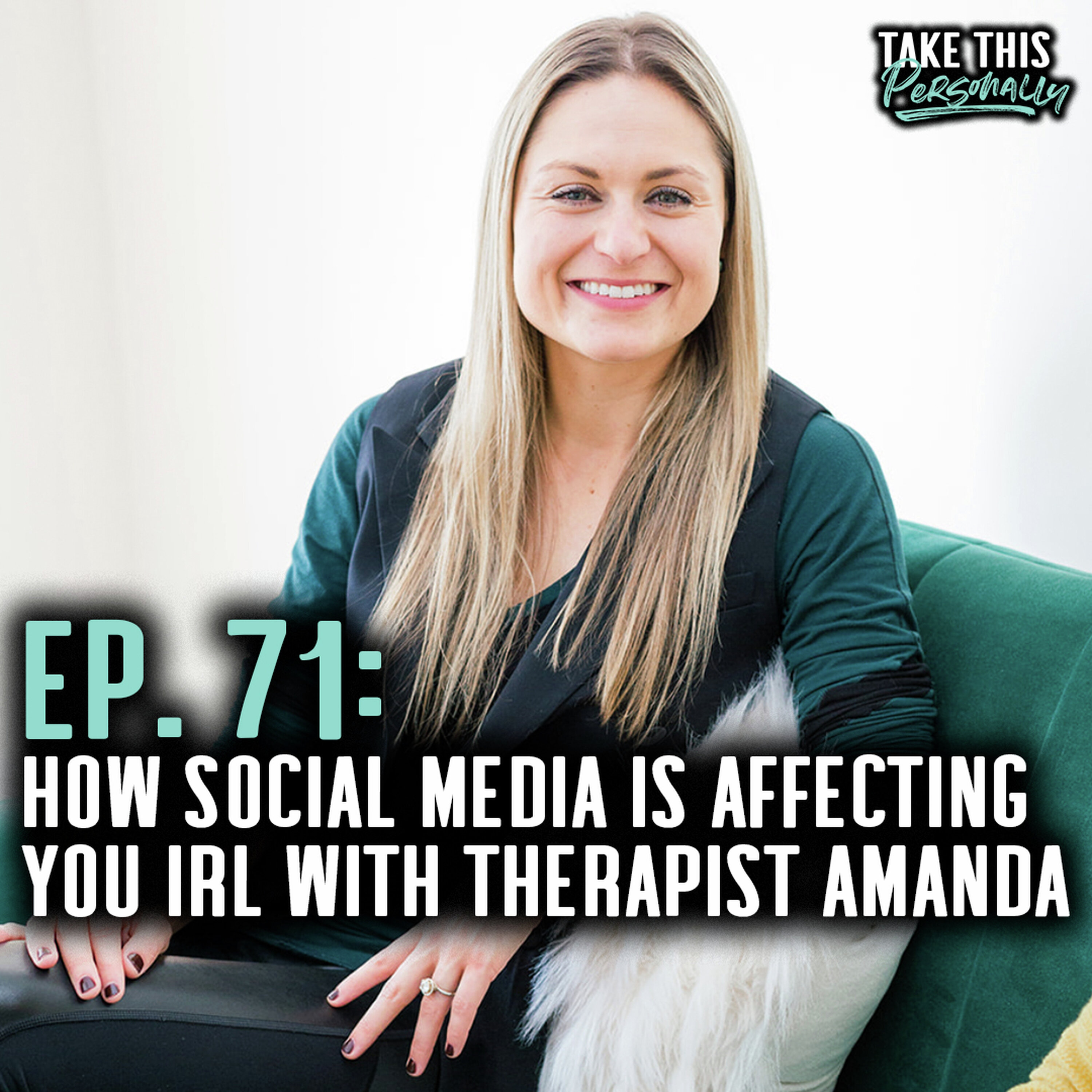
The Bobby Bones Show
TAKE THIS PERSONALLY: Social Media Overload: How to Protect Your Mind and Mental Health
00:40:27
Loading summary
Transcript138 lines
- [00:00]
Lowe's Advertiser
This is an I Heart Podcast. Guaranteed Human.
- [00:04]
Amanda White
This is Sophie Cunningham from Show Me Something. Do you know the symptoms of moderate.
- [00:09]
Morgan Kman
To severe obstructive sleep apnea, or OSA in adults with obesity? They may be happening to you without you knowing.
- [00:16]
Amanda White
If anyone has ever said you snored.
- [00:18]
Morgan Kman
Loudly, or if you spend your days.
- [00:20]
Amanda White
Fighting off excessive tiredness, irritability and concentration.
- [00:23]
Morgan Kman
Issues, it may be due to osa.
- [00:26]
Amanda White
OSA is a serious condition where your.
- [00:28]
Morgan Kman
Airway partially or completely collapses during sleep, which may cause breathing interruptions and oxygen deprivation.
- [00:36]
Amanda White
Learn more at don'tsleep on OSA.com this.
- [00:40]
Morgan Kman
Information is provided by Lilly, a medicine company.
- [00:47]
Liberty Mutual / Audiobook Hosts / Lenovo Advertiser
So you're telling me that the AI that's meant to make everyone's job easier to manage just adds more to manage on top of the thousands of apps the IT department already manages? Funny how that works. Any business can add AI. IBM helps you scale and manage AI.
- [01:04]
Malcolm Gladwell
To change how you do business.
- [01:06]
Liberty Mutual / Audiobook Hosts / Lenovo Advertiser
Let's create Smile to Business IBM.
- [01:13]
Amanda White
Stay.
- [01:13]
Lowe's Advertiser
Cozy, stay home and save big online during Lowe's December deal drops. Because honestly, why go anywhere when the deals come to you? Check this out. Lowe's is going to give you two free select tools from dewalt, Craftsman or Cobalt when you buy a Select select battery or combo kit. Yep, two tools free. It's basically a holiday miracle. Plus rewards members get free standard shipping all month long. Yet another reason not to leave your couch. Kick back, click around, let the savings roll in shop. New December deal drops on Lowe's.com every week this month. Fresh deals, cozy vibes, zero effort.
- [01:49]
Liberty Mutual / Audiobook Hosts / Lenovo Advertiser
Limu Cable and Doug Here we have the Limu Emu in its natural habitat, helping people customize their car insurance and save hundreds with Libya Liberty Mutual. Fascinating. It's accompanied by his natural ally, Doug.
- [02:07]
Amanda White
Limu is that guy with the binoculars watching us.
- [02:10]
Liberty Mutual / Audiobook Hosts / Lenovo Advertiser
Cut the camera, they see us. Only pay for what you need@libertymutual.com Liberty Liberty Liberty Liberty Savings Fairy underwritten by Liberty Mutual Insurance Company and affiliates excludes.
- [02:19]
Morgan Kman
Massachusetts Making the holidays magical for everyone on your list. It's no small feat, but with TJ Maxx, your magic multiplies with quality finds. Arriving daily through Christmas Eve, you'll save on luxe cashmere, the latest tech toys and more. So you can check off every name on your list and treat yourself to a holiday look that'll turn heads. Now you know where to go to make all that holiday magic. It's TJ Maxx. Of course. It's shaping up to be a very magical hol.
- [03:01]
Amanda White
Take this personally With Morgan Kman.
- [03:06]
Morgan Kman
Anyone else having the post Turkey family time blues? I am feeling it this week with the holidays coming up. I've got a lot of awesome interviews for you guys, but they're a bit more hodgepodge than series, so we may have a few miniseries over the next couple of weeks or it may be totally random. Also, with your input, hopefully. I love when you guys share what you want to hear and who you may want me to have on as a guest. This week's episode I wanted to bring back on Amanda White. She's a therapist and she was on my very first episode of this podcast. She recently started her own podcast, Nuance Needed to address the way social media has changed the landscape for our relationships, mental health and, well, everything. I think you guys are going to love this conversation. Let's do it.
- [03:53]
You all may remember Amanda White. She was the very first episode that we had of Take this personally. Many, many months ago now. But I'm excited to welcome her back. Amanda, how are you? Thanks for coming on.
- [04:05]
Amanda White
I'm good. Thanks so much for having me. I'm excited to chat with you, Morgan.
- [04:09]
Morgan Kman
Me too, because there's so much life has happened since we last had you on and we talked about a whole lot of things. But honestly, more than anything, social media has changed drastically in the last two years since we've talked, and that was kind of the whole reason I brought you on. So we're going to get into it. But I want to start with why you created a podcast that's all about nuance.
- [04:34]
Amanda White
I think it's what's missing in the world. Right. I just feel so frustrated lately with social media. I think it's just gotten worse and worse over the past couple years where I've been explaining it. Like it feels like we're playing this giant game of telephone. And what started as like helpful concepts and important things we were educating people on has become twisted and misconstrued. And we are talking about something totally different than what we started with. And a lot of that is because concepts all across the board, I'm obviously talking about mental health concepts and therapy concepts, but in different categories, also have just flattened so much that it's stripping everything of nuance. And it's like, what are we even talking about anymore?
- [05:27]
Morgan Kman
Well, and from what I can tell from a lot of your posts, especially in that mental health field, we're seeing just a lot of people who don't have background or knowledge or the even education to be sharing a lot of topics that they are. And on top of that then society is taking these very therapy based terms and turning them into trends or things that we're doing to post and make them either look pretty or look worse is what I'm seeing. Is that what you're seeing also?
- [05:57]
Amanda White
Yes, definitely. And I think it's because one reason is like the public has a very different perception of they collapse therapy terms you see online and what actual therapy looks like. And I think that's also because we have a. Like the mental health industry is also not super regulated in terms of like the word therapist is not a protected word. Anyone can call themselves a therapist even if they are not licensed, even if they don't have training. Training. Yeah. I think that's definitely what I've been seeing. Everyone is a coach or teaching a course now and nothing again. Like there are some really great coaches out there. But I think it's really confusing for the average person to understand what do I do, what do I pay attention to? It's like there's so much information. It's. I feel like this is the problem with our world right now. Like I always think about the analogy of TV and how there is more TV options. Right. Than ever we could have imagined and yet all of us sit on our couches at the end of the day and just scroll through options and then end up just watching the same thing because it's like too many options and so much bad stuff to sort through. You're so overwhelmed.
- [07:16]
Morgan Kman
Well, and how do we like the average person? I'm somebody who doesn't have a therapy background. I try and be really conscious of what I'm posting online. It's really just meant to be for entertainment and people to connect rather than me really inform. Unless I feel so strongly that I have years and years to teach on something which I really don't.
- [07:37]
Amanda White
Right.
- [07:37]
Morgan Kman
I just have my experience. Yeah. So how do we as the average person start to work through this to understand what we're learning online is actually helping versus hurting us? What are we supposed to do? Just the normal person in this new space?
- [07:55]
Amanda White
I think one of the things is look for people who do address nuance. Obviously nuance is going to hide on the Internet even if someone doesn't mean to. I post a lot of nuanced things, but my most nuanced posts don't get views a lot of times. So it could be easy to just look at some of my most popular posts and maybe not see the full breadth of what I'm talking about. But I think just being a Little bit more. And it's so hard now because Right. Even when we talked, we didn't have this feed of people who we don't follow who would show up on our feed. It was, it used to be with Instagram, right before the algorithm. It was just logical. But then after that, at least you had to follow someone to see their stuff or someone would repost something to see their stuff. Where now you're going to be fed stuff that you don't necessarily agree with, you don't like, isn't something you would ever click on and it's showing up on your feed. So I think the first step is before you take anything as advice or something to do, I would check out that person's profile. Some people don't even exist. There are bots, there are now AI people that are starting to. They're not real people who are having accounts. So I think we have to start with just not taking everything on as something we should do or even take seriously.
- [09:25]
Morgan Kman
Well, and that's what's super crazy too is we're watching a day and age of social media where you like, I have to, as someone who is actively on social media, I am a digital director, I know exactly what is happening on social media at all times. But even I, as somebody who's very skilled and well versed in technology and digital media, have to do very, very deep research to be like, is this actually true or is somebody trying to divide us or somebody trying to really play to one side of this, what is actually happening? There was a story the other day.
- [10:00]
Amanda White
Yeah.
- [10:01]
Morgan Kman
I see this 91 year old woman who's in a hospital gown in a courtroom and she got arrested for stealing heart meds for her husband who's like really ill. Yeah. And I'm sitting here like looking at this post, completely enraged because I'm like, yeah, if that happens, I'm going to be mad. This is a society we shouldn't have. And then I went to three different places trying to figure out the validity of this story.
- [10:25]
Amanda White
Yeah.
- [10:26]
Morgan Kman
And it wasn't real, it was AI. And it took me as someone who is very well versed in digital technology to understand that this was happening. But my visceral reaction was anger. So it's like it's doing what it's supposed to do. But nobody takes that second step to say, wait a minute, is that actually true? Before I share that and give my visceral reaction to what's happening.
- [10:49]
Amanda White
Yeah, absolutely. I feel the same way. Even with like therapy content and things like that. I see. And yeah, absolutely. Especially with images and videos produced by AI, it is just a different landscape. You basically can't trust anything without verifying it these days, which is an insane thing to have. One of my thoughts about it too is I interviewed on my podcast a misinformation research researcher who is incredible. And a big thing he talked about is anytime you do get that immediate visceral reaction, and you probably know this too, right. It is telling you something. And often anything that is creating an extreme reaction like that is way less likely to be accurate or be representative of what's actually going on.
- [11:41]
Morgan Kman
And it's crazy that we have to be so just vigilant online of what we're consuming, of what we're making. Sure we're spreading because we're also the source of things spreading further.
- [11:52]
Amanda White
Right.
- [11:53]
Morgan Kman
I could have been the source there to continue sharing that story and made it just that much worse and spread like wildfire. So we have a responsibility on this other side, not just of consuming for the sake of ourselves and our brains and our mental health, but we also have a responsibility as a consumer to not be the one who's adding fuel to those fires.
- [12:17]
Amanda White
And it sucks. It sucks that we have to do that, given everything else that we all have to do these days. Like, it feels very unfair. I think that now we have to be vigilant online and we have to assume everything is false. But unfortunately, that is the world that we live in right now.
- [12:37]
Morgan Kman
It absolutely is. And yeah, to your point, we have so many things to worry about. Is this really another thing we need to worry about? Come on. You were talking on your social media. I know you're doing substack, but you're doing sub stack a little bit also on Instagram, where you share these carousel posts of really getting into deep detail about things.
- [12:55]
Amanda White
Yeah.
- [12:55]
Morgan Kman
What do you feel like are some of the things that we've. As far as therapy terms that we are just exploding in the wrong way?
- [13:06]
Amanda White
I think everything is getting. I think if we look at polarization in every arena, I think that's where we are. And I think what's really. I've talked about just. And it's been something I've been seeing a lot with my clients as well of just everything is so misconstrued. No one knows what to do anymore. I think if you take the word boundaries that was so important. Is so important. A few years ago, people didn't even really. It wasn't like a common concept and. And we've twisted it into boundaries means I never have to do anything that I don't want to do. And society starts to break down when that happens. I've done posts about what do we owe each other? And stuff too. Because if every single person in the world is just like, I'm out to get mine, I'm not inconveniencing myself. I'm not going to be uncomfortable. Not only does society break down, but it's not good for our mental health. A lot of my work as a therapist is always talking about someone's support system, always talking about who they're connected to. We know that is so fundamental to our mental health. And I just am very frustrated by the overcorrect we've done where we've taken things such as especially abusive situations, harmful situations. Some of these phrases really helped women who were people pleasers who struggled to say no. And now that is all drowned out because it's been taken to such an extreme. I get very concerned about the people who are using them properly and in good faith and it drowning that out because we now just think boundaries means I'm going to do whatever I want. So when someone tries to authentically set a boundary, I think people are bristling at that idea. Yeah.
- [15:01]
Morgan Kman
And that's so dangerous, not just in the social media world, but in our personal relationships.
- [15:06]
Amanda White
Right.
- [15:07]
Morgan Kman
Because you see things online and you take them for face value and then you put that into your real world and, well, that's gonna be a little damaging because you don't have all of the actual information that you need to be in incorporating that into your real life.
- [15:24]
Amanda White
And. And it's super frustrating for me.
- [15:27]
Morgan Kman
I feel like what this tool came about. Right. Social media started as this place for gathering and for community and to see each other and be connected. And it's turned into this situation now where it is the source of a lot of our problems instead of the source for what it was created for. And it's difficult, Right, Because I believe in evolution, I believe in growing, and I believe that we should continue to constantly learn and grow and expand. But this doesn't feel like that. Am I weird or wrong for feeling that about all of this?
- [16:04]
Amanda White
No, I feel like that too. It feels like recently things have taken a turn and we're like spiraling.
- [16:13]
I don't know. The telephone analogy is what just keeps coming back to me. It's not a growth. It is like a turning inward of itself. Itself. And it's getting too big and misconstrued. And it's a totally different beast than when it started. And I think we're now coming up with solutions to problems that that were created by social media is creating problems where we're all disconnected from each other, we're not meeting in real life. And then we have social media companies that are now creating solutions to that problem that are to be online more and now have AI friends. And at some point, it is like a snake eating itself. It is just unsustainable.
- [16:57]
Liberty Mutual / Audiobook Hosts / Lenovo Advertiser
Hello.
- [16:57]
Amanda White
Hello.
- [16:57]
Malcolm Gladwell
I'm Malcolm Gladwell, host of the podcast smart talks with IBM. I recently sat down with IBM's chairman and CEO Arvind Krishna, and I asked him, how can companies use AI to its fullest potential to create smarter business? My one advice to them, pick areas you can scale. Don't pick the shiny little toys on the side. For example, if anybody has more than 10% of what they had for customer service 10 years ago, they're already five years behind. If anybody is not using AI to make their developers who write software 30% more productive to today with the goal of being 70% more productive. Yeah.
- [17:45]
Amanda White
Wow.
- [17:45]
Malcolm Gladwell
So we are not asking our clients to be the first experiment on it. We say you can leverage what we did. We are happy to bring out all our learnings, including what needs to change in the process. Because the biggest change is not technology, is getting people to accept that there's a different way to do things. To listen to the full conversation, visit IBM.com learn smart talks.
- [18:16]
Liberty Mutual / Audiobook Hosts / Lenovo Advertiser
Hey, audiobook lovers. This week on the podcast, I'm sitting down with musician, producer, and walking encyclopedia Questlove. We're talking about Mark Ronson's memoir, Night how to be a DJ in 90s New York City. All right, like we talked about before, Mark Ronson foundation sanctuary in the DJ booth. What's a tool or piece of equipment in the studio or on stage that gives you the most control? So I have two microphones on stage. We have the microphone that you hear as the audience. Then we have a second microphone in which we communicate with each other. I feel like that second microphone kind of saved all of our friendships. No band likes each other after 20 years or 25 years. The Beatles broke up in seven and a half years and we're going on 35. Listen to HearSay, the Audible and iHeart Audiobook Club on the iHeartRadio app or wherever you get your podcasts.
- [19:17]
Lowe's Advertiser
Stay cozy, stay home, and save big online during Lowe's December deal drops. Because honestly, why go anywhere when the deals come to you? Check this out. Lowe's is going to give you two free select tools from dewalt, Craftsman or Cobalt when you buy a select battery or combo kit. Yep, two tools free. It's basically a holiday miracle. Plus, Rewards members get free standard shipping all month long. Yet another reason not to leave your couch. Kick back, click around, let the savings roll in. Shop New December deal drops on Lowe's.com every week this month fresh deals, cozy vibes, zero effort limu emu and Doug.
- [19:56]
Liberty Mutual / Audiobook Hosts / Lenovo Advertiser
Here we have the Limu Emu in its natural habitat, helping people customize their car insurance and save hundreds with Liberty Mutual. Fascinating. It's accompanied by his natural ally, Doug.
- [20:11]
Amanda White
Limu is that guy with the binoculars watching us.
- [20:14]
Liberty Mutual / Audiobook Hosts / Lenovo Advertiser
Cut the camera, they see us. Only pay for what you need@libertymutual.com Liberty Liberty Liberty Savings Ferry Unwritten by Liberty Mutual Insurance Company and affiliates excludes Massachusetts.
- [20:23]
Amanda White
The Chase Inc. Business Premier card is made for people who make things happen. Like me. I'm Sam, founder and CEO of Manifest, a product design company that makes everyday products design Smarter. I get 2.5% cash back on purchases of $5,000 or more, plus unlimited 2% cash back on all other purchases, which helps us make more smart ideas into a brilliant reality.
- [20:42]
Liberty Mutual / Audiobook Hosts / Lenovo Advertiser
The Inc. Business Premier Card Chase for Business make more of what's yours Real business owner compensated for their business participation cards issued by JP Morgan Chase bank and a member FDIC subject to credit approval Terms apply.
- [20:55]
Morgan Kman
Well, and because you can offer such a great insight too, from this other perspective, you're seeing people in real life, clients for therapy work who are dealing real life with what has come from social media and really blended into our real lives every day. So what are you seeing from that perspective as a therapist where you're like oh my gosh, social media is just there's something happening here and I'm a little worried for my clients. Give me that perspective.
- [21:23]
Amanda White
Totally. I think one of the things I've been seeing is the people who are really attempting to make friends are trying to show up, be in their communities, throw a party and nobody comes because it's too much work to go to someone's party. They don't want to get out of their bubble, they're exhausted from work, all of those things. And then it creates this self fulfilling prophecy where if someone puts themselves out there and has a gathering of inviting people over and then nobody comes, that person feels bad about themselves and then they're more likely to retreat also. And then the other people in their circle, then they don't have anything to go to and then they're like no one's inviting me anywhere. It's weird, right? Then the whole culture shifts of what is weird versus what is not. And I think that's a really good example of some of the stuff I'm seeing of people just being like, well, I'm protecting my peace, I'm protecting my mental health, I need to conserve my energy. I'm not going to push myself to go to someone's house or do something outside my comfort zone and then everyone is negatively impacted and it reverberates through a whole community.
- [22:32]
Morgan Kman
Yeah. Gosh, that makes me so sad. Right, because you just know that's hurting people's social well being.
- [22:38]
Amanda White
Yeah.
- [22:39]
Morgan Kman
And we're social creatures. We're meant to be in gatherings, we're meant to be around people and we're meant to have these strong foundations of friendship and relationships. And it's also funny the way that you mentioned that because it was something that was sparking in my head where I often feel like I'm very level headed, I'm very self aware. But even times when I've. If I lose a friendship and I've put those boundaries in place, social media almost makes me feel crazy if I didn't do it in the right way or if I did it in a certain manner. And it's like, wait, was I wrong for that? But that feels really right based on my experience and everything that I experienced. But social media is making me feel a different way. So am I right? Are they right? What are we doing here? Are you seeing that happen too?
- [23:30]
Amanda White
Yes, absolutely. And I think a big part of that also comes from we're losing the skill of discernment when everything is very specifically curated for us and we don't see things that are different from our beliefs or outside of the norm and we're just being reinforced the same things. And then you add in like rage bait on top of that. It is difficult for us to remember that not everything applies to us, not everything is about us.
- [24:02]
Morgan Kman
The bean soup theory.
- [24:03]
Amanda White
Yes, exactly. We can see something and not take it personally and not react to it. And I think your example is a good one because yeah, when we have so many, especially the way people are very authoritative online of this is the right way to set boundaries. People are so black and white online. This is good, this is bad. This is how you talk to a friend, this is how you don't. And there is no I try to make my content about how can I teach you to do something? How can I teach you the skills to learn what applies to you versus telling you what applies to you because that will go much farther. But yeah, even I fall into it with health stuff because I'm not as well versed, right. Obviously I know about physical health and stuff but I'm like, am I doing something wrong? Because I don't go on like a circadian rhythm walk every morning. Would I be better? Is this the secret? And I think we are so being taught to look externally for the solutions because never in history have we been bombarded with so much like self improvement content. Even if you are on social media and you don't seek that out. Like this goes beyond just mental health. It's physical health content, it's parenting optimization content, it's work optimization content, it's whatever your field is, how to be better at work content. It's so much we are drowning in it and we don't have time or the wherewithal to step back and be like, is this too much information? Is this for me? Is this helpful? Should this even apply to my life? And again, like I think back to even five years ago when we were on social media and a lot of what we saw was our friends or maybe some celebrities. It wasn't everyone telling you what to do. Now everything, every single, everyone's an entrepreneur. So they're all trying to like add value and create everything. This is nothing against entrepreneurs, but the way that it's taught as like, I don't know, every person is trying to add value and we make adding value about influencing someone or telling them what to do in some way that we lose touch of what our values are and what actually is important to us.
- [26:33]
Morgan Kman
Well, and I can even speak to this from the digital perspective. I know what is happening on social media for people to do, to go viral, to get content seen. People who are creating content are encouraged. This is across the board. Right? There's no one platform that is or isn't doing it across the board.
- [26:51]
Amanda White
Yeah.
- [26:52]
Morgan Kman
If you want to be seen, it's like first five seconds you have to say something really catchy. So when you think of that, everybody who thinks catchy, it's going to have to be something that's going to make you angry. It's going to make you feel like you have to be like told what to do. It's like this, this 5 second is what's molding our brain because creators are having to. And now we have so many people who have jobs out of creation, which is beautiful that people are finding ways to make money but then their livelihood depends on it. So then they have to make sure I have to get the attention in the first five seconds. Which means creating things that may not be exactly what they want to create, but they're forced to in order to be seen on a feed. So if truly, like, when you find creators that you love, you have to support them. And when you feel that way and you're like, this is something I believe in, like, I see a lot of creators out there who show the messiness of their home or the things that make it a little bit less aesthetically pleasing, I'm like, follow them. Make sure they're in your feed and they're part of you. Because it's the only thing that you can actually do as a consumer on a digital platform to drown out some of that noise and engage with it. Then it keeps popping up for you, because if you don't, the algorithm is going to feed you what it thinks is best. And what it thinks is best is stuff that's rage bait, stuff that's telling you exactly what you should and shouldn't do, what you should and shouldn't believe. And it's so crazy the way that we're even teaching the algorithms that that's what we want because we're consuming it and we're engaging with it. It's interesting from a digital perspective to watch what's happening on social media. And it's also funny because I'm somebody who refuses to do it unless it actually is beneficial. And I'm going to help somebody through it. You're never going to see me do something rage baity, where I'm like, okay, well, I'm going to make you really angry just because I need to. That's just not who I am. And I think you have a lot of creators out there who are also like that. But it's interesting you mentioned that, because I can see it from the actual side of where it's coming from.
- [28:54]
Amanda White
Yeah. Oh, I'm so glad you brought that up. And yeah, I think the other component of this is as everything is becoming so dependent on social media. I think about the book publishing industry, right, Used to have a lot of power over the books that were made and ones that were successful. And now everything has become, you have to have a following to be able to get a book deal. If you think about news media, right, as it's become like decentralized and more independently creators and stuff like that, we are a lot more independent. Journalists used to be able to not, like, have a lot more protection over not caring about whether all of their Stuff was seen, and now those people are more dependent on hooks and act more like creators and things like that, too. So it's wild.
- [29:42]
Morgan Kman
It is. It's really infiltrated in everything. It's infiltrated in the music industry, too. That's where we see a lot of talent coming from is TikTok and Instagram, whether they're actors or they're artists.
- [29:52]
Lowe's Advertiser
Yeah.
- [29:53]
Amanda White
It.
- [29:53]
Morgan Kman
It's such a big part of our lives. And it's also why I wanted to have this conversation, because it's not all bad. And I, again, as somebody who's on the side of creation and understanding social media, it's my exact job I do every day. It's not all bad. It can actually be really good and really useful and important. But I think what we get back to is that really tricky word that you had mentioned, which is discernment.
- [30:16]
Amanda White
Yeah.
- [30:17]
Morgan Kman
And understanding how much of a role we are playing in our consumption of social media. And it's an important topic right now more than ever because we just. It's getting really easy to be unaware that we have a role that we're playing. And it's why I had really wanted to bring you on because not only were you creating this, the Nuance podcast, to really get into the nitty gritty of a lot of topics that are important, but it's to bring an awareness to discernment and nuance. Is there anything you have to share on those? As I say that because I know that's really your bread and butter right now.
- [30:53]
Amanda White
Yeah. I agree with you that I think we have to start seeking out things. I think one of the things that people could do also, in addition to what you were saying about really being clear about the people they follow, putting your energy into creators that you like into things you want more of supporting people. I think also taking stock of what is important to you. Right. Like in this attention economy, our attention is so fragmented. We're all so overwhelmed. I think coming back to yourself and getting clear about what your values are, what is important to you, because a huge thing I also see is because we're so overwhelmed, we end up taking on all this responsibility for things we don't have control over. And then we neglect the things in our life that we do have control over. I'll give you an example. I'm a parent. I have a two and a half year old. I am bombarded all the time with parenting content that makes me feel as though one wrong thing will ruin my child. So it is very easy to get caught up in all these things I have to do and if I'm not doing this and I'm not doing that, and then we don't read the parenting book that we have or we don't implement and practice the things that we already decided or know. We don't go back to our values because we're just constantly seeking the next solution, the next magic fix, the next thing. It feels better a lot of times to research than to actually put into practice what we know. But as a result, if we're only looking externally, if we're only collecting more information, we're just going to get more overwhelmed and not actually make a difference where we can.
- [32:37]
Morgan Kman
Oh, gosh, yes. That's so important, because it is. I see the parenting content. I don't even have kids and I'm overwhelmed. It's often what plays a role in me being like, do I want a kid? Because I'm a little not sure I can handle all of this, even though I full well know I'm a great adult and I'm capable. Yeah, it's crazy that the little seeds it's planting to really just push us in one direction or another.
- [33:07]
Liberty Mutual / Audiobook Hosts / Lenovo Advertiser
And Doug, here we have the Limu emu in its natural habitat, helping people customize their car insurance and save hundreds with Liberty Mutual. Fascinating. It's accompanied by his natural ally, Doug.
- [33:23]
Amanda White
Limu is that guy with the binoculars watching us.
- [33:25]
Liberty Mutual / Audiobook Hosts / Lenovo Advertiser
Cut the camera. They see us. Only pay for what you need@libertymutual.com Liberty Liberty Liberty Liberty Savings Ferry Unwritten by Liberty Mutual Insurance company and affiliates excludes Massachusetts. Hello.
- [33:36]
Amanda White
Hello.
- [33:36]
Malcolm Gladwell
I'm Malcolm Gladwell, host of the podcast smart talks with IBM. I recently sat down with IBM's chairman and CEO Arvind Krishna, and I asked him, how can companies use AI to its fullest potential to create smarter business? My one advice is to them pick areas you can scale. Don't pick the shiny little toys on the side. For example, if anybody has more than 10% of what they had for customer service 10 years ago, they're already five years behind. If anybody is not using AI to make their developers who write software, 30% more productivity today with the goal of being 70% more productive. Yeah.
- [34:24]
Amanda White
Wow.
- [34:24]
Malcolm Gladwell
So we are not asking our clients to be the first experiment on it. We say you can leverage what we did. We are happy to bring out all our learnings, including what needs to change in the process. Because the biggest change is not technology. It's getting people to accept that there's a different way to do things, to listen to the full conversation, visit IBM.com smart talks.
- [34:56]
Liberty Mutual / Audiobook Hosts / Lenovo Advertiser
Hey, everyone. Ed Helms here. And hi, I'm Kal Penn, and we're the hosts of Earsay, the Audible and iHeart Audiobook Club. This week on the podcast, I am sitting down with Jenny Garth, host of the iHeart podcast. I choose me to discuss the new Audible adaptation of the timeless Jane Austen classic Pride and Prejudice. This is not a trick question. There's no wrong answer. What role would I play?
- [35:26]
Amanda White
You know what?
- [35:27]
Morgan Kman
I can see you as Mr. Darcy.
- [35:29]
Amanda White
You got a little Colin Firth.
- [35:32]
Liberty Mutual / Audiobook Hosts / Lenovo Advertiser
Okay, that's really sweet. I appreciate that. But are you sure I'm not the dad? I'm not Mr. Bennett here. Listen to Earsay the Audible and iHeart Audiobook Club on the iHeartradio app or wherever you get your podcasts.
- [35:52]
Lowe's Advertiser
Stay cozy, stay home and save big online during Lowe's December deal drops. Because, honestly, why go anywhere when the deals come to you? Check this out. Lowe's is Gonna give you two free select tools from DeWalt, Craftsman or Cobalt when you buy a select battery or combo kit. Yep, two tools free. It's basically a holiday miracle. Plus, rewards members get free standard shipping all month long. Yet another reason not to leave your couch. Kick back, click around, let the savings roll in. Shop. New December deal drops on Lowes.com every week. This month, fresh deals, cozy vibes, zero effort.
- [36:28]
Liberty Mutual / Audiobook Hosts / Lenovo Advertiser
Limu emu and Doug. Here we have the Limu imu in its natural habitat, helping people customize their car insurance and save hundreds with Liberty Mutual. Fascinating. It's accompanied by his natural ally, Doug.
- [36:45]
Amanda White
Limu is that guy with the binoculars watching us.
- [36:48]
Liberty Mutual / Audiobook Hosts / Lenovo Advertiser
Cut the camera. They see us. Only pay for what you need@liberty mutual.com Liberty Liberty, Liberty. Liberty Savings Fairy unwritten by Liberty Mutual Insurance Company and affiliates. Excludes Massachusetts.
- [36:59]
Morgan Kman
I think there's also a piece to this, too, where I would love for you to share. I do not know how the heck to really have you give this advice. Yeah, but take it as somebody who's on social media and they're really trying to understand what they're consuming, and they're trying to be this person who's having a little bit more discernment with things, and they're trying to understand that things aren't always meant for them. What is that advice that you're trying to give them? Or maybe tools you're trying to give them to work through this particular day and age, this moment in time where they're faced with these two choices, if you will.
- [37:39]
Amanda White
I think one thing to do is when you see advice that you think is good and you want to apply, I would ask yourself, what is the nuance here? What might be missing from this? How can I, even if you love it, how can I maybe do this in not the extreme way that someone's talking about it? Because even if there is nuance to something, we tend to, as humans take it to the extreme, we then see things in the extreme. Our mental health often dictates how we take something on. So we're already pretty towards the more extreme end of things anyway. So checking in and asking yourself, is there another way I can look at this? What might the nuance be that's missing? How can I implement this 10% instead of. The big issue I see is people want overnight change. They want a hack, they want a secret, they want their life to be totally different overnight. And then they try to do something. It is completely unrealistic for them. And then they end up feeling like a failure and giving up and doing nothing compared to. Right. I'll give an example of all the circadian rhythm walks that people love to talk about online. Right. Instead of being like, okay, every morning as the sun comes up, I must be outside for at least 20 minutes every single day. It's like, okay, could you just try to go outside once a day and.
- [39:09]
Morgan Kman
Look at the sun?
- [39:11]
Amanda White
No.
- [39:12]
Morgan Kman
Really? Because honestly, that's hard sometimes.
- [39:14]
Amanda White
Yes.
- [39:14]
Morgan Kman
So, yes.
- [39:17]
Amanda White
Like, can we find the small? What is the smallest step possible you can take towards that? And let's be consistent with that. First.
- [39:26]
Morgan Kman
This is such a very. Especially right now and happening in my life. I had gone through some major health problems and I had some really bad long Covid. And so I finally got to this point where I had to really take some drastic measures to get better. And it's so crazy because I've been documenting it. Not because I feel like people should do it. I feel like it's more information for people who might be struggling with chronic health problems and don't have answers. But what's wild about sharing that is I've always had to be clear of, this is my body, and this is my experience. Like, yeah, I need you to understand that your body is going to be different and that you're gonna have different things that you need based on your own literal genetics and blood and all. All the things that are pumping through you that I don't have. And it's wild that even has to come to such a pivotal point that a stranger has to say it of like, hey, just please do this for you. In the way that's going to be working for your body. But I wish that I could remind everybody that for all things, not just the health that I'm sharing online recently, but like, everything I see online is, I take it with a grain of salt. It's like a trend. If I see something that brings me a lot of joy and I want to try it, then I'm going to try it. But if I see it, I'm like, oh, I don't quite think that's for me, or that's going to look really bad on me. I'm probably not going to do that. Then I'm not going to do it just because I saw it online. There's so much to this where it's. You had mentioned it and we talk about the bean soup theory. Everything is not meant for you in a great way. Right. Because just because something isn't meant for you doesn't mean something else won't be. There's all of these things out there that you can find your corner of the Internet that is things that you love and that you like. And it can be this positive space. So it's like you were talking about this and that's what it reminded me of. Just, yes, we're in a very for you time where your feed is very for you and they think they know you. Yes, you're the one who knows what you feel, you know what you like, you know what makes you happy.
- [41:30]
Liberty Mutual / Audiobook Hosts / Lenovo Advertiser
And.
- [41:31]
Morgan Kman
And the best way to make sure that's what's in your life is to continue to, like, have that autonomy over your life.
- [41:39]
Amanda White
Absolutely. I love that example too, because I think that in this age of everyone telling us what to do, we forget that it's optional. Like, we forget that just because this worked for someone doesn't mean it will work for us. We forget that just because someone made something that isn't for us also just doesn't mean that it's harmful to us or it's leaving us out either. I think a lot about. There's a word in therapy called psychological flexibility, and it essentially means it's one of the biggest predictors of good mental health, like your ability to react to things, to adapt, to think about things differently. All of those are positively correlated with being mentally well. So I think a lot about how can we, and I talk to my clients about this, create more psychological flexibility for us, especially in a world that's against it. And some of those things you can do are purposely exposing yourself to things that you don't necessarily agree with or are different. It doesn't even need to be like rage baiting either, because I think that's what we think of. But just like someone who has a totally different perspective than you, who lives in a different place, who has different ideas, engage with that, get curious about how that person came to be and how their perspective is shaped. When you're, like, when you're frustrated with someone or a situation, like starting to practice. I love giving my clients this assignment of. So often we have an assessment about a situation and we don't think about what other possibilities there are. But just because someone did something and we think that they did it for X, y reason doesn't mean there aren't other reasons at play. So purposefully trying to think of what is another way I could interpret their behavior. What is the most generous way? What is the least generous way? What is the middle way? Like practicing, like, I think of it in terms of my brain. Like practicing moving your brain around a situation to just develop that skill of recognizing that you have a perspective, but you are not your perspective. Right. You have one, but that is not you. It is not fixed. And other people have different perspectives too.
- [44:10]
Morgan Kman
Oh, my gosh. That's so important. When you said you are not your perspective, I'm like, oh, my gosh. Yeah. Because I mind you. We can have this whole conversation. And I know full well that I have been guilty of doing so many of these different things. Right. I've gotten caught up in it, and I've made the mistakes. But it's interesting to hear you talk about that flexibility, this mindset of that. Because way back when I was in college, my freshman year, and I was studying leadership, I remember this class so vividly. Our professor made us all sit in a circle. We were all of different cultures, different nationalities, different beliefs, different views, and we had to talk about the things that you don't want to talk about. Right? We had to talk about these very divisive topics. And we were all different. We all had so many different opinions. But when we left that room, it's not like we were mad at each other or we hated each other. It was like we actually really loved the experience that we had because we came away with different things than when we entered that room. And what you're talking about reminds me of that. And it's something I wish everybody could experience in their lifetime.
- [45:18]
Amanda White
It's this.
- [45:18]
Morgan Kman
Just this constant realization that there's so much out there in the world that we don't know or we've never had experience with that it can only help you by just being a little bit more to. You're saying flexible. I've always called it like this openness of just knowing. It's like knowing you don't know everything but. But than that it's being open to the idea that it can shift and change and mold. And that's exactly what you're talking about. And I just, I wish that more people could practice that in everyday life. And I know that's hard because you don't have a classroom full of people to do that with in everyday life. But so if somebody is wanting to do this more flexibility, mindset, what would you encourage them to do? Hopefully some are going to therapy and working through this with the help of somebody. But if they're just practicing in an everyday life, what are some questions they should be asking themselves or maybe some things they can do? Because social media is a little bit hard to do that with because it can be pretty hostile when you're trying to create that environment.
- [46:21]
Amanda White
Yep.
- [46:22]
Morgan Kman
So maybe in real life, I guess would be some better examples.
- [46:25]
Amanda White
Yeah. I think you could start with just getting curious like the people in your life. I think that we assume we know everything about everyone that's close to us. And I guarantee you people in your life have stories and things to tell you and knowledge that you don't know that they have that would be interesting to you. So yeah, I think you could start there. I think you could talk to your parents or your friends, your partners. When someone starts talking about something, start asking more why questions. Start just like acting like a scientist and getting really curious about why they came up with this reason, what their thought process was, how they came to that conclusion. And I think that stretching your mind in different ways or reading I think too is a really underrated way to do this. We all read so many nonfiction books I think these days, which is great, but a really great way to get into someone else's head and really be immersed is right. By reading fiction and reading like first person fiction when you're in their brain, you understand especially a really great book. And it is really practicing a skill of realizing that your perspective is not the only one and isn't even you.
- [47:45]
Morgan Kman
Right.
- [47:45]
Amanda White
Because you can then be this other person as you are in their world by reading, for example.
- [47:52]
Morgan Kman
Very much so. It's also the other thing where I feel like traveling should be free because it's such an educational experience. You can learn so much about just so many other things and it really gives you perspective. It's Almost like it's so expensive because they don't want us to realize that we can learn all that. The conspiracy theory that I'll stick with in my head, but I just love talking about all of this with you. And not to hit the nail on the head, but, like, it is so nuanced in social media. We are in a different day and age than what we used to be before. And whether we want to admit it or not, it's really got a hold on of a lot of our lives. And the best thing we can do is be having these conversations to just take a step back and hopefully we can in another way rewire our brains to do some things differently. So I do want to end, though, on something maybe we didn't get to something that you want to make sure we talk about or maybe something inspirational, motivational, whatever is on your heart right now.
- [48:48]
Amanda White
I think that we have really become just consumers and we need to take the energy and shift the power back to what does our, like, remembering what power we do have. What do you want your relationship with social media to look like? What do you want your community to look like? What do you want your relationship with your friends, your family? We're like, because of how much overwhelm has happened, because of how the world has shifted, it feels very much like everything is happening to us, which I completely understand and relate to as well. But I think the more we can come back into ourselves, think about our values, think about what we want to create, and start taking small action towards that. Even if you're not successful, quote unquote, with creating what you want, it feels much better to be putting your energy towards that instead of spinning your wheels about something you don't have a ton of control over.
- [49:46]
Morgan Kman
Oh, yeah, that's a really good place for us to end on because it is true. And hopefully, again, this is something that will at the very least make us think a little bit more and be a little bit more paying attention to what's happening and what we're consuming. So, Amanda, thank you for your time. Thanks for coming on here and I appreciate you as always. And go ahead and shout out your podcast so they can check that out because we need some more nuance.
- [50:11]
Amanda White
Yes. My podcast is called Nuance Needed. That's available everywhere. You get podcasts.
- [50:16]
Morgan Kman
And she is therapy for women on Instagram. I love following her. Like I said, she has what I call them substacks. It's just these really long carousels. But they're great. They're so informative. So if you are wanting to just challenge yourself a little bit further. It's great content to have. So thank you again Amanda. I appreciate it.
- [50:34]
Amanda White
Thank you.
- [50:36]
Morgan Kman
Next week I may do another guest interview because I have several awesome ones ready for you guys. Or I can do an even deeper dive on social media and share with you all my experience working in this field, aka digital world for the last 10 years and answer some questions. Let me know what you think because as I always say, this podcast is for you and I want you all to have the content that you want. Subscribe to the podcast because that super helps me out and go follow along on social media if you haven't already. Akethispersonally I'm so happy that you're here and I can't wait to yap with y' all next week.
- [51:05]
Liberty Mutual / Audiobook Hosts / Lenovo Advertiser
If a Lenovo computer for your business is on your holiday list, don't shop around. Just go directly to the source lenovo.com, you'll find exclusive deals on the PCs you want for your business like the ThinkPad X914 Aura Edition and Yoga 7i 2 in 1. So avoid all that shopping chaos and price comparing and just go directly to the source Lenovo.com where PCs are up to 50% off. That's Lenovo.com Lenovo Lenovo.
- [51:35]
Amanda White
Okay, only 10 more presents to wrap. You're almost at the finish line. But first.
- [51:52]
Ah.
- [51:54]
There. The last one.
- [51:58]
Enjoy a Coca Cola for a pause that refreshes.
- [52:06]
Liberty Mutual / Audiobook Hosts / Lenovo Advertiser
Hey audiobook lovers. I'm Cal Penn. I'm Ed Helms. Ed and I are inviting you to join the best sounding book club you've ever heard with our new podcast, Hearsay The Audible and iHeart Audiobook Club. Each week we sit down with your favorite iHeart podcast hosts and some very special guests to discuss the latest and greatest audiobooks from Audible. Listen to Earsay on America's number one podcast network, iHeart Followersay, and start listening on the free iHeartRadio app. Today the day begins at the Chase Sapphire Lounge by the club at Boston Logan Airport. You get the clam chowder In San Diego, it's Tostadas New York. Espresso martini. It's 10am why not? It's the quiet before your next flight, the shower that resets your day, the menu that lets you know where you are. This is access to over 1300 airport lounges and every Sapphire Lounge by the club. And one card that gets you in Chase Sapphire Reserve, the most rewarding card. Learn more@chase.com Sapphire Reserve cards issued by JP Morgan Chase bank and a member FDIC subject to credit approval.
- [53:07]
Morgan Kman
Hear that? It's holiday cheer arriving at Ulta Beauty with gifts for everyone on your list. Treat them to fan favorite gift sets.
- [53:15]
Lowe's Advertiser
From Charlotte Tilbury and Peach and Lily.
- [53:17]
Morgan Kman
Go all out with timeless fragrances from ysl, Ariana Grande and Carol Selena Herrera and you can never go wrong with an Ulta Beauty gift card. Head to Ulta Beauty for gifts that make the holidays brighter and even more beautiful. Ulta Beauty gifting happens here.
- [53:36]
This is an iHeart podcast. Guaranteed Human.