← The Book Review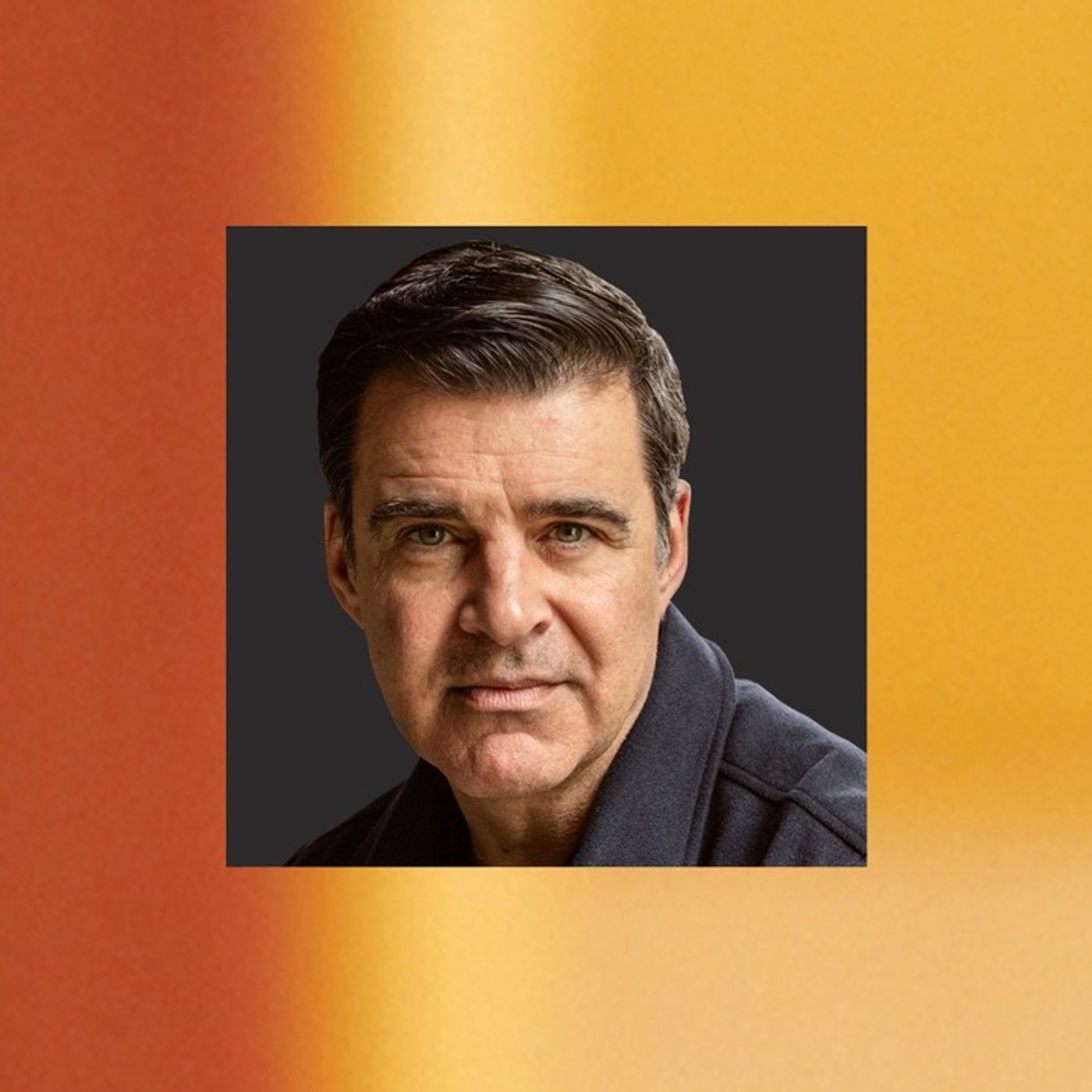
The Book Review
The Avett Brothers’ Bassist on Writing a John Quincy Adams Book
00:38:12
Bob Crawford discusses the leap from stage to page and why his new book, “America’s Founding Son,” feels so relevant.
Loading summary
Transcript113 lines
- [00:00]
Alexa Advertisement
Say hello to the all new Alexa, our smartest, most proactive AI assistant yet. Chat naturally about anything and watch your to do list disappear. Planning date night One conversation handles everything from dinner reservations to entertainment. Alexa learns your style, anticipates what's next, and puts thousands of services at your fingertips. Experience AI that's all yours. And now Alexa is free with prime on your Amazon devices like echo and Fire TV. Amazon.com Alexaplus hi, it's Gilbert.
- [00:32]
Gilbert Cruz
Before we start the show, I want to let you know that we are going to be talking with the author of Project Hail Mary in an upcoming episode. I know that New York Times readers voted this book one of their top 100 books of the 21st century. And more importantly to some, there's a movie adaptation starring Ryan Gosling that's coming out in just a couple of weeks. So I'd love to hear from you. What questions do you have for Andy Weir, the author of Project Hail Mary? Let me know and I may ask him your question when I talk to him. You can send your questions by email to thebookreviewytimes.com that is thebookreviewytimes.com youm can also find a link to submit your questions in the show notes for this episode. And now onto this week's show.
- [01:23]
Bob Crawford
So I pitched this as a beach read, something that you could, if you have two weeks off or a week off, you can finish this book. The challenge was I want a historian to read through that and go, oh, yeah, okay, yeah, this guy, this guy did the work. He did the work.
- [01:38]
Gilbert Cruz
Were you worried about that? It's like I have to.
- [01:41]
Bob Crawford
Absolutely worried. Absolutely terrified. Yeah.
- [01:47]
Gilbert Cruz
I'm Gilbert Cruz. This is the book review from the New York Times. And today on the show we're talking to first time author Bob Crawford. Bob has spent the last two decades touring the country as the basis for the band the Avett Brothers. Offstage, he's been obsessed with something other than music, American history. In 2016, he launched a history podcast called the Road to Now. A few years ago, he launched another podcast, a series dedicated to John Quincy Adams, the nation's sixth president and son of a founding father. And now Bob has transformed his obsession with John Quincy Adams into a new book that is out March 10th. It's called America's Founding Son, John Quincy Adams from President to Political Maverick. So deep inside your book you make the following admission, which was somewhat frightening to me. I have, quote, I have spent hours of my life watching C Span. I have to Are you okay Is everything all right? Why?
- [02:49]
Bob Crawford
You know what's funny, Gilbert?
- [02:50]
Gilbert Cruz
Why have you so much time watching C Span?
- [02:52]
Bob Crawford
I am not in this season of my life anymore. I am in the season of my life of hardcore parenting. Parenting a special needs child, you know, parenting a 14 year old also. And then being in this band that, that travels a lot and then doing two history podcasts and, you know, I'm in a different season, but there was a season in the mid-90s where I was in college. And in college you have this schedule and it can be open sometimes and you come back to wherever you live at this point and you lay on the couch maybe for hours. Maybe for hours. I can't imagine what that's like anymore, Gilbert. I can't imagine that. And I remember in the mid-90s, we're talking Newt Gingrich era, the Clinton administration, laying on the couch just watching C Span for hours. And it would be like this soothing drone of constructive monotony and. Yeah, so my C Span, watching days go back, go back, go way back.
- [04:01]
Gilbert Cruz
You sound with all respect, like the, like the coolest college student I've ever heard.
- [04:07]
Bob Crawford
Yeah, well, in fact. And then I'm just gonna go a little further and then. Cause I can go down rabbit holes. So you really need to hold me to account here.
- [04:13]
Gilbert Cruz
I will try my best, but I
- [04:14]
Bob Crawford
was at the part of the college radio station and we would go up late at night sometimes and go in and it was just a reel to reel tape. And me and my friend, we would maybe, maybe we had a. You know, we would go up there with our acoustic guitars and. And we made a song about watching C Span. And so I'm just going to leave it at that and let it drop there.
- [04:37]
Gilbert Cruz
So I don't think I can let it drop there. What was the name of this song?
- [04:41]
Bob Crawford
Oh, well, it was kind of this one line and it was Bill Clinton, Newt Gingrich. And I have the reel to reel tape. I don't have a reel to reel tape player. Maybe I need to send it into one of these leg. One of these companies that. That kind of make those tapes audio. But if I do that, I will send you a copy of this.
- [05:03]
Gilbert Cruz
Please do. I've been, you know, I feel like the culture needs a new version of We Didn't Start the Fire.
- [05:08]
Bob Crawford
It is kind of like that.
- [05:10]
Gilbert Cruz
Yeah, yeah. So you, you know, a lot of people know you and have seen you on stage as part of this band, the Avet Brothers, and it's a. It's sort of a Funny reversal of roles, you know, for a lot of people, cool dads in their 40s, noodling around on the guitar on the weekends is sort of their hobby. The way they relax a little bit and sort of let their mind wander. You're a musician with this popular band, and you've made American history your hobby, your sideline. And I'm curious, what was the order of operations here? Like, what came first? Was it your interest in history, your interest in music?
- [05:50]
Bob Crawford
Probably interest in history, because that goes back to, you know, being 8, 9, 10 years old, going on family vacations and stopping at rest stops. And there would be a kiosk, and it would have all the local. Local, like the little pamphlets of the historic sites that were nearby. And I would collect those. And so we would come back from our summer vacation and I'd have, like, you know, 30, 40, whatever. I had many of them, and I would, like, just lay them out on the floor and look at them. And I don't know. I don't know. There was just something about, like, there would be one. You could just. I can't remember a specific place, but, like, there are these, like. It would have these, like, these wax statues of a Native American or, you know, some painting of a battle on them. And it just kind of like. I was just captivated by it for some reason.
- [06:48]
Gilbert Cruz
Is this because you had nothing else to do, or is it because you. There was something about.
- [06:53]
Bob Crawford
I'm an active person at that age.
- [06:55]
Gilbert Cruz
It's like, this actually is genuinely interesting to me. I want to know.
- [07:00]
Bob Crawford
It just was a comfortable place, and it is today. It's a comfortable place to go. And even if it's like the subject matter is not comfortable, in fact, the subject matter of the book, it's very uncomfortable and it's. And we live in uncomfortable times, but the idea of going there sometimes can help soothe or at least occupy or redirect whatever's going on here. You know what I'm talking about?
- [07:33]
Gilbert Cruz
I mean, I can imagine a scenario in which the present day is stressful, and therefore history is a thing that some use to take their mind away from what's happening now. Although, as you. I'll take many others point out, there are many echoes. And so you're never really away from the present.
- [07:52]
Bob Crawford
No, but you're. You're connected to. Like, what I've realized is. And I think that's. That's kind of the point of this book is that people haven't changed. Like, I really feel like that's, like, the. What'd you learn, Bob, like doing this? And I learned like our technology has changed, but the human heart hasn't changed. The human capacity for greed or hate or to do harm to another human being or the human capacity to do good and to feel, try to do better, that hasn't changed at all. And I think that there is something that connects us to people who came 50 years. We think about our grandparents generation, then we imagine our great grandparents. Maybe we knew them, maybe we didn't. What was their life like? And then you can keep going back further and further and we are connected to our past.
- [08:52]
Gilbert Cruz
You talk about being in a certain phase of your life. I'm in a certain phase of my life.
- [08:58]
Bob Crawford
Season, right?
- [08:59]
Gilbert Cruz
A certain season. We're, we're in late summer, early autumn, I don't know. But we're, we're, we're both middle aged fathers. There is a stereotype here of that type of person just like really being into history, just like want to read the hell out of American history books. But you, you've always been that way, it seems like.
- [09:17]
Bob Crawford
Yeah, but it was never like realized.
- [09:20]
Gilbert Cruz
Yeah.
- [09:20]
Bob Crawford
You know what I'm saying? It was like when I got into. I never pursued it.
- [09:25]
Gilbert Cruz
So you became a musician, a working musician, a touring musician.
- [09:30]
Bob Crawford
25 years.
- [09:32]
Gilbert Cruz
25 years. So quarter century of being a working musician. I'm curious before we sort of talk intensely about jqa, John Quincy Adams, about how your interest in history sort of was bubbling out during those, particularly those early years on the bus or wherever you guys were. Using Tutori, paint a little picture for me, it's early days of the band and you are in the back with a giant history tome.
- [10:07]
Bob Crawford
Okay, so 2004, 2005 probably we're in Iraq. The United States is fighting the wars in Iraq and Afghanistan. And at the same time, David McCullough, I think he considered himself just a writer, but we consider him a historian. Put out these books, this John Adams biography and this book about the year 1776 in that same time period. I think 1776 is when I really got hip to this and so on. At one moment I'm watching the. We're mired in the slog, right, of, of what became the, the Iraqi war. And on TV there's images of prisoners at Abu Ghraib being forced into pyramids, like just being dehumanized by American soldiers. And then the other channel, I'm watching David McCullough probably on C Span talking about history, talking about American history. And he's doing it in a way that is very human. That really connects.
- [11:24]
Narrator/Advertisement
Like.
- [11:24]
Bob Crawford
Like, I just. I talked about earlier, like, how we. Like how we are they. They. We are they and they are us. Right? He's talking about, like, you know, our. Our American history. And I just love the way how eloquently and humanely he speaks about. Spoke about history. And so that. That's where I had this idea, like, wow, how do we get from here to here? How did this happen? And so I decided I'm going to read my way through it. Like, I read his books, and then I was just. I was set off, and I just started, like, devouring as many books about American history as I could to try to see if I could see a threat, like a line. And spoiler alert, there is no, there's not a line. I really see it more like an ocean. Like, American history is, like, deep and wide, and it's really complicated and complex, but there's no straight line, really. But that's what set me off.
- [12:15]
Gilbert Cruz
So. David McCullough, famed American historian, John Adams, 1776. But he's also writing about the Brooklyn Bridge. He's writing about the Outer Banks here.
- [12:26]
Bob Crawford
The Wright brothers.
- [12:27]
Gilbert Cruz
The Wright brothers. He really had a giant range. And he's, for good reason, many people's sort of entry to this type of nonfiction writing. He also. He was a narrator on several Ken Burns documentaries. Where did you go after McCullough? And then how did that lead you eventually to.
- [12:51]
Bob Crawford
I'm looking forward.
- [12:52]
Gilbert Cruz
Starting a podcast looking on your shelves. Is that what you're doing?
- [12:54]
Bob Crawford
I can go get it if you want.
- [12:56]
Gilbert Cruz
No, no, Sean, do not stand up.
- [12:58]
Bob Crawford
Sean. Sean. Like, the studio's like, what? Sean Wilent, the rise of American democracy, Jefferson to Lincoln. That is like the. That is. That was the. The big turning point. Like, there's definitely. I wrote about this period that, like, the period that he, like, really writes about. That just got me. So that's where you realize, oh, the characters like, oh, man, these guys are. They're, you know, the good, the bad and the ugly. And just how, just like this, we have the revolution and we have the Civil War. Well, the Civil War didn't just happen out of nowhere. The echoes of the revolution, and there's all these convulsions. And that generation leaves the stage, and they leave the stage to the next generation. And then the next generation, they don't have a lot of the ideals of the founding generation. The next generation always messes everything up, it seems like. And. But. But this is like, this is where the parties come in and this is, I mean literally this is where the parties, like the political parties, political parties are formed and, and the infrastructure of a political party and, and debates over the bank and the tariff and slavery. And so I found that period between Jefferson and Lincoln and the way Wilentz is just this, you know, you know when you read a book and it's just so deep and I think this was like 700 pages.
- [14:35]
Gilbert Cruz
It's quite long.
- [14:36]
Bob Crawford
It is quite long.
- [14:37]
Gilbert Cruz
It's a very long book.
- [14:38]
Bob Crawford
It is rewarding and it is an encyclopedia of this time period. And so that was hands down the book that kind of put me on this path.
- [14:51]
Gilbert Cruz
You've called that book, Sean Wilentz's the Rise of American Democracy the pivotal book in your life. I think I heard you in one of your podcasts describe it as such, other than introducing you to a period that you were not overly familiar with and maybe many Americans are not overly familiar with this period between the founders and Lincoln. Was there something about the way that he wrote that spoke to you? I'm trying to imagine it's my job to read when necessary, thousand page books, you know.
- [15:25]
Bob Crawford
Yeah.
- [15:25]
Gilbert Cruz
What was it like for you?
- [15:27]
Bob Crawford
It was, it was great because it's not, it's dense, but it doesn't read dense to me. Like it flows really well, you know, and there are all these like threads and people where he, he brings them along to a point and then you go to another kind of like subject theme and you go, you know, then you're in another theme and then he's. And somehow, somehow it is like multilayered, multi thematic and chronological at the same time. Which is really hard. Like that's the struggle. When I was like trying to write, you know, the book I wrote, it's like how do I leave this guy and go to this guy and don't break chronology because Doug Brinkley, historian Doug Brinkley, I'm name dropping here. He told me that his mentor told him abandon chronology at your own peril. And I always think about that line, abandoned chronology at your own peril.
- [16:30]
Gilbert Cruz
And chronology is your friend.
- [16:32]
Bob Crawford
Well, you know, Gilbert, I thought when I pitched this I thought I would be put with a writer, to be totally honest with you. This was my vision was that because I love research and I love talking about history and I love the scene, imagining like the scene like, you know, and I the the this at the moment, like when I was pitching this, I thought that they would, I imagine because at my agent even said, well, they might want to put you with a Writer. So I thought maybe they would put me with someone who. What they do every day is write, and together we would write this book. But when I finally was offered to write this book, they were like, you know, you're going to write this book? Like, no, you're. You're writing this book. So I wrote the book. Yeah.
- [17:18]
Gilbert Cruz
Did that freak out? Did it make you nervous? I mean, did you consider yourself a writer?
- [17:24]
Bob Crawford
I know there's a ceiling to my writing ability. Like, I knew there was a ceiling because I've written little things here and there. So I did understand some writing. But I also understand that, like. Because I wasn't just like, music, right? There's a language to playing music, and there's, like, all this basic stuff you learn. And then when you're performing music, the basic stuff isn't in the front of your brain, but it's actually controlling everything you're doing. So you're doing, even if you're improving. Like Charlie Parker, the great jazz saxophonist. Learn everything and then forget it and go play. And so there is an element to that with music and I imagine, with any art. And I know this from Scott Avett and Seth being great painters and great visual artists. And they preach that all the time, too. It's like, you learn to do the strokes, you learn to do. So I've never learned how to write technically, and I wasn't a great student, so even a lot of the basic stuff. So when I sat down to write the book, I just was like, I'm just gonna write. I'm just gonna write. And if I get into a. If I'm writing and I get into a quandary with, like, chronology or bringing characters or going from scene to scene, I'm gonna just write through it. And, like, I just kind of convince myself that the only way to learn how to write is to write.
- [18:53]
Gilbert Cruz
I think that's actually kind of perfect advice for anyone who wants to write, whether they've never written before or they wanna write again, is just to not let the. The act of trying to craft something perfect holds you back from doing anything at all. You know, a lot of times, you know, the advice is just write it and you fix it later. If writing is rewriting, the first draft is the thing they just need to get down and editing is.
- [19:19]
Bob Crawford
Editing is everything.
- [19:20]
Gilbert Cruz
Yeah.
- [19:21]
Bob Crawford
Editing and I don't care what you're doing.
- [19:23]
Gilbert Cruz
Chronology is your friend. Editing is everything.
- [19:25]
Bob Crawford
Yeah.
- [19:29]
Gilbert Cruz
After the break, Bob shares the one diary entry from the John Quincy Adams archives that he can't stop thinking about.
- [19:38]
Alexa Advertisement
Say hello to the all new Alexa, our smartest, most proactive AI assistant yet. Chat naturally about anything and watch your to do list. Disappear Planning date night One conversation handles everything from dinner reservations to entertainment. Alexa learns your style, anticipates what's next, and puts thousands of services at your fingertips. Experience AI that's all yours. And now Alexa is free with prime on your Amazon devices like echo and Fire TV. Amazon.com Alexaplus In 2001, in the Village
- [20:10]
Lecole School of Jewelry Arts Advertisement
of Dahong, when archaeologists ventured into Prince Liangzhuang mausoleum, they discovered a veritable treasure trove dating back to the Ming Dynasty. The find included thousands of breathtakingly beautiful objects made from gold, jade and precious stones, as well as emeralds from the other side of the world. Listen now to Voice of Jewels, a podcast by Lecole School of Jewelry Arts with the support of Van Cleef and Arpels.
- [20:43]
Disney's The Lion King Advertisement
A spectacle far beyond your imagination. Be amazed, be moved. Be there. For an experience that will stay with you forever. Disney's the Lion King on Broadway. Get tickets@lion king.com.
- [21:19]
Gilbert Cruz
Let's talk about this man that you spent so much time with, John Quincy Adams. He to me, before reading this, was most famous for being the first president who was the child of another president. Obviously to you he was more interesting than that. And I think to readers he will also be more interesting than that. When did you first realize that? What was it that led you to this man?
- [21:45]
Bob Crawford
It was Wilent's book. And realizing that after he was president, he went into Congress, which is happened one other time. I'm talking not being a congressman and then becoming president, I mean being president and then taking another, holding another office. The only other person who did that was Andrew Johnson.
- [22:09]
Gilbert Cruz
Other than that being unique and rare, why else was that interesting to you in terms of sort of his journey?
- [22:19]
Bob Crawford
Because when again with the wilent to frame this in terms of discovery in the Wilentz book, you know, you're reading through and there's John Quincy Adams presidency, which is not great. And then you keep reading and oh, here comes John Quincy Adams again. He's in the house. And so like at every turn you're like, whoa, wait a minute, like this guy, son of the president. Okay, President, okay. Well, that gets him in the history books. And then when you really dig into his life, and we love TV shows, movies, great novels, great books, we love the characters who make turns in their life. And you see the deeper you look into this man, you see he makes this amazing turn inside of himself and then you get to his death, and that's the, the cherry on top of the Sunday. Because he has, like, the most epic death in America. One of the most epic deaths.
- [23:18]
Gilbert Cruz
Do you want to briefly describe that death?
- [23:20]
Bob Crawford
So he's been in Congress for 17 years. He's now 80 years old. He was against the. Now we're talking 1848. He's against the Mexican War from the start. And so Adam's. So there's this, this thing they're voting on in Congress to commend certain generals, I guess that's how I understand it, who fought in the Mexican War. And Adams is. He's. He yells no, like, against it. And then he's. He's like getting up to speak and the people notice, like, he's. His hands are shaking and he's trying to hold onto his desk to pull himself up, and he falls over and he, you know, big commotion. Mr. Adams is dying, right? And they put him on. They bring in a couch and they put him on the couch. By the way, the couch is still at the Capitol. And he's laying there and he's kind of like, he's in and out, and he says, this is the end of earth. But I am composed. And he slips into a coma and he dies two days later in the Capitol. And as Sean Wilentz. When I did a podcast series about Adams, and Sean Wilentz was on it, and he said he dies with his boots on. And he literally dies with his boots on.
- [24:39]
Gilbert Cruz
That's how I would love to go out here at the New York Times. And like, the earth is ended.
- [24:44]
Bob Crawford
Like, you're finishing up, you're writing an article or you're finishing a podcast.
- [24:49]
Gilbert Cruz
My final podcast here, I'm still 80, and I laid the stage for two days. Big life. He had so many jobs. He grew up with a father as a president, as you, you know, as is known. He witnessed the battle of Bunker Hill. He was a diplomat. Talk to me about all of the research that you had to do in order to write this book, all the historians you had to tap, and then this unique or this robust archive that you were able to tap into of all these first person accounts.
- [25:23]
Bob Crawford
First of all, I read many, many John Quincy Adams biographies. So that's just basic there. But Adams, he did us all a solid because he kept a diary from his teenage years until his death. And this diary I have read runs 14,000 pages. No, I have not read every entry in his diary, but I have read a lot of it that was pertinent to the story I told, what were
- [26:01]
Gilbert Cruz
you able to actually learn from reading the actual words of John Quincy Adams? And how did that help you put this story together?
- [26:10]
Bob Crawford
My favorite diary entry from Adams is, I believe, November 2, 1837, off the dome. Off the Dome. And. And he says, I was visited today by Mr. Thomas Monroe, and he suffers from hypochondria. And he lost his son a few years ago, his grown son. He went to fight in war in Russia, and he got a fever and died. And then he lost his grown daughter, and his wife's not well. And. And he tells me he comes to visit me. I guess Adams knew this guy for decades, and he came to visit him and he said, my doctor says, I suffer from the Blue Devils. Do you know? Have you ever suffered from this? And Adams, who had lost two sons, two adult sons, says, oh, yeah, yeah, I've suffered from the Blue Devils. What I do is essentially says, work. You know, I occupy myself with physical activity and mental activity. He's like, that's the only way you can fight off the Blue Devils. And I've suffered the Blue Devils. Like, I've got some hypochondria going on, and I've had, like, some serious tragedies that we, in my family, we deal with constantly. And I find great comfort throwing myself into things like doing research. And so just that entry sums up why I love Adams so much. He's far from a perfect man, but he's so human. He's so like us. He suffered depression. And just the humanness in his diary, not to mention the actual historical narrative, is just incredible.
- [28:08]
Gilbert Cruz
You have been very open about your daughter's cancer when she was young, her treatment, her rehabilitation, her remission several years ago. And it makes me think what you just said, not necessarily the mean blues, but it's like you're reading this diary of someone who lived 160 years ago, or whatever it was, and it's like, yes, this man also had concerns about his children and tragedies with his children and things that I can relate to in my own life and I can feel. And even though I'm writing about him in Congress and I'm writing about the gag rule, and I'm writing about the Amistad, there's still this personal connection, in a sense, that is always there, for sure.
- [28:58]
Bob Crawford
100%. Yeah. Yeah. And there are some months where he disappears in his diary. Like, and, you know, he was. He was just suffering. You know, he was going through it. And he talks about. And I. I point that. I point out and I think in the book like where he's like, he's kind of like analyzing himself. Well, I don't, I'm trying. I can't quote, I wish I could quote that one verbatim. But he's just kind of like I've lost the things that I enjoy. I'm not enjoying right now. And I kind of feel sick to my stomach and I'm not sleeping and he's just kind of like going, he's writing through like a therapist will tell you this, right? To keep a journal, you know. And he's kind of writing through his symptoms and he's realizing, you know, he's.
- [29:45]
Gilbert Cruz
Do you keep a personal journal?
- [29:47]
Bob Crawford
I have kept a few volumes that are from my daughter's initial illness in that year. I have incredibly detailed, great journals. And then I have years where it's just scribbles and scratches. In the past several years, no, I don't. I've written a book about the most. Like you could write a book about him as a diarist. Like he wanted to be a writer. He wanted to be a fiction writer and a poet and all these like there's a time in his life where he wanted to be an artist and he never achieved that. But his, his diary is, is a great, is one of the greatest writing examples of writing in the 19th century. And these speeches and writings, his speeches and are also I, I think are worthy of, of being thought of as, as being literature. But personally, no, I should. I wish I did it more. I'm ashamed to be honest with you and tell you that I don't do it regularly.
- [30:48]
Gilbert Cruz
The purpose of that question was not to shame you. So I free you from that burden.
- [30:52]
Bob Crawford
I'm also raised Catholic.
- [30:54]
Gilbert Cruz
Jinx. Coming up, Bob recommends some history books and shares the classic novel that he is reading for the first time.
- [31:10]
Alexa Advertisement
Say hello to the all new Alexa and see how Alexa can do so much more for you and need last minute concert tickets. Craving your favorite restaurant? Just sit back, relax and talk naturally. Alexa's on it. Alexa remembers what you love, anticipates what you need and makes it all happen. Alexa brings thousands of possibilities to life, ready whenever inspiration strikes. And now Alexa is free with prime on your Amazon devices like echo and Fire TV. Amazon.com Alexaplus Real talent is defined by
- [31:41]
Narrator/Advertisement
what people can do, not just where they learned to do it. In the US more than 70 million stars workers skilled through alternative routes are overlooked because they don't have a bachelor's degree. It's time to let the story unfold and gain access to a talent pool with valuable skills to help your business thrive now and in the future. See what others miss. Hire skills first. Learn why it's a competitive advantage at tearthepaperceiling.org brought to you by OpportunityAtWork and the ad Council.
- [32:10]
Alexa Advertisement
Taxes can feel confusing when you're trying to manage everything by yourself. But with Intuit, TurboTax help is closer than you think. Stop by one of their new state of the art store locations. There you can ask a tax expert to sync your accounts via the TurboTax app and automatically import your documents. With TurboTax Full Service, your expert looks for every possible deduction while keeping you updated every step of the way. In the app, eliminate the guesswork and file your taxes with a TurboTax expert today. Visit TurboTax.com.
- [32:47]
Gilbert Cruz
We're approaching the end of our conversation here, Bob, and I'd love to turn to our weekly segment so the New York Times Book Review, for more than a decade has asked authors new and old a recurring set of questions about their reading as part of a series that we call by the Book. And I have several of these extremely specific questions for you. Okay, are you ready to answer these questions?
- [33:09]
Bob Crawford
I will do my best to not go down rabbit holes.
- [33:12]
Gilbert Cruz
What is the last great book that you read?
- [33:15]
Bob Crawford
You know, here's the thing, and I know you're gonna hate me for saying this, but when you're researching one subject for a couple years, like, you're just reading that. Like, there's so many books that I've wanted to read that I haven't read. But I think I am in the midst of reading a great book right now. Moby Dick.
- [33:35]
Gilbert Cruz
You're reading Moby Dick for the first time?
- [33:38]
Bob Crawford
Yes.
- [33:38]
Gilbert Cruz
That's so exciting.
- [33:39]
Bob Crawford
It is exciting. It's amazing. It's actually amazing when you read. There are people who write history. Well, there are people who Jill Lepore, okay, She's the best writing historian that hands down, like, next to David McCullough as far as writers go. Like, she is the champion. And her book, I've been reading her Constitution, her new book about the Constitution, which is incredible. Her these Truths is just. I recommend it to everyone who wants to learn about history because her writing is like butter. It is so smooth and so good. So I'm reading Moby Dick and I'm like, oh my gosh. Like, the prose. Like, sometimes I'm not even sure what he said. Like, I'm just like, but it's so pleasurable, you know? And then there's like. Then you catch this, like, this small piece of knowledge, like, in wisdom, that you're like, oh, my gosh, is this what fiction's like, Reading fiction? That's what people bragging about, reading fiction all the time.
- [34:41]
Gilbert Cruz
Are you into the just overwhelming amount of detail about what whaling was like?
- [34:47]
Bob Crawford
Well, but there's more. Like, I'm 200 pages in. And so there's. Yeah, there's some of that, but just even, like, Queequeg, his friend Queequeg, it's just the way he just. That relationship, it's just great. It's just. It is beautiful. And let me tell you why I'm reading this book is because it came out, I think, in 1850, and this is like a time period I'm very fixated on. I'm very fixated on the 1850s. And I want to know, like, what were people reading and what art like? I'm convinced you can get a sense of the period by the art. Right. And this is, you know, this book has become very relevant. I don't know how relevant it was when it came out, but, yeah. So, anyway, I'm finding great pleasure in that book, more than expected.
- [35:45]
Gilbert Cruz
I'm thrilled to hear that. I myself had an experience with Moby Dick, I think, during the pandemic, where I was like, okay, I'm finally going to read this. And it was a revelation. What book might people be surprised to find on your shelf?
- [36:01]
Bob Crawford
I have a lot of theology books on my shelf, like, history. Like, I have gone through a period. I'm not there right this minute, but. But I've gone, like, I. I took theology classes online, like, at one point, you know, in. In my. My time here, and I have a great. It just means a lot to me, and I think so. I have, like, Thomas Aquinas's writings that might be surprising to some people, because a lot of people are into, like, Thomas Merton or Richard Rohr or, like, what, mere Christianity? Who is that? C.S. lewis. And I love all that. But I'm reading Thomas Keating right now. Who he. I think he was a Catholic as well. But, like, I even, like, the more dense. I can. I can handle dense, dense writing. I can handle it, you know. But then you read a Jill Lepore or a Moby Dick, and you're like, ooh, there's another world out there.
- [37:04]
Gilbert Cruz
So the goals for you to aspire to as a writer.
- [37:07]
Bob Crawford
Absolutely.
- [37:08]
Gilbert Cruz
And then. Okay, there's a key one here. What are some presidential biographies that you think everyone should read?
- [37:16]
Bob Crawford
Well, I Want everyone to read James Bradley's Martin Van Buren book because it is a companion. Like my book is like it's all this time period, this important time period between the Revolution and the Civil War. And it is like the first respectable. I mean, not even respectable. Like it is literally the first real Martin Van Buren full length biography that's come out in 40 years. Alexis Ko, you never forget yout first about George Washington and I think Lindsey Stravinsky making the Presidency about John Adams. I think that these are books that people should read. I also, I do love older presidential biographies. Like, I think. I think in the older history books, historians were more apt to let the quotes speak. You know, I'm saying I think we do use we technically and I tried to use longer quotes. I think historians these days use shorter, will be more apt to use shorter quotes, you know, and then write their narrative around that. And I love these older presidential biographies. It seems like they let more of the actual people speak. I don't know.
- [38:37]
Gilbert Cruz
I would like to let you speak one last time with this one last question, which is this summer is the 250th anniversary of this nation's birth. It's our semi quincentennial. It is a moment, of course, for the country, its citizens, to reflect on its founding. As someone who's loved history your whole life, as someone who is, in a sense, professionally moved more towards thinking about history, writing about history, talking about history, how are you reflecting on this sort of impending anniversary?
- [39:11]
Bob Crawford
I've been thinking about 1976. The last anniversary was celebrated and the country was in trouble. It wasn't great. It wasn't great. We're coming out of Watergate and Vietnam and. And we are in dire straits again. So different dire straits. But democracy is always in crisis. And so I want people to. If you don't know anything about American history, I want you to embrace this year because there's going to be a lot coming at you. I would start with the Ken Burns series, the American Revolution series that came out late last year. I would also watch the Netflix series about Garfield, Death by Lightning.
- [40:07]
Gilbert Cruz
Death by Lightning.
- [40:08]
Bob Crawford
Death, Knight by Lightning. So as I reflect upon this, I hope this is an opportunity for people to get into the history, get pulled in by something they see on television, and then go deeper. As far as what do I think of the anniversary? Just based on the moment we're in as a nation and the challenges we face. Like, nothing is ever inevitable. Like 300 years is not inevitable. 275 years is not inevitable. It wasn't inevitable in John Quincy Adams's time, and it's not inevitable now. So that's kind of how I look at it is like democracy is always in crisis. The future is always uncertain.
- [41:00]
Gilbert Cruz
Bob Crawford, author of America's Founding Son John Quincy Adams From President to Political Maverick thank you so much for joining the Book Review.
- [41:10]
Bob Crawford
It was a lot of fun. Gilbert thank you.
- [41:15]
Gilbert Cruz
The Book Review is produced by Sarah diamond and Amy Pearl. It's edited by Larissa Anderson and mixed by Pedro Rosado. Original music by Elisheba Itub. Special thanks to Dalia Haddad and Paula Schumann. We want to hear what you think about the show. Send us an email@thebookreviewytimes.com I'm Gilbert Cruz. Thanks for listening. Foreign.
- [41:45]
Charles Schwab Podcast Advertisement
This podcast is supported by On Investing, an original podcast from Charles Schwab. Each week, hosts Liz Ann Saunders, Schwab's chief investment strategist, and Kathy Jones, Schwab's chief fixed income strategist, along with their guests, analyze economic developments and bring context to conversations around stocks, fixed income, the economy and more. Download the latest episode and subscribe@schwab.com oninvesting or wherever you get your podcasts.