← The Book Review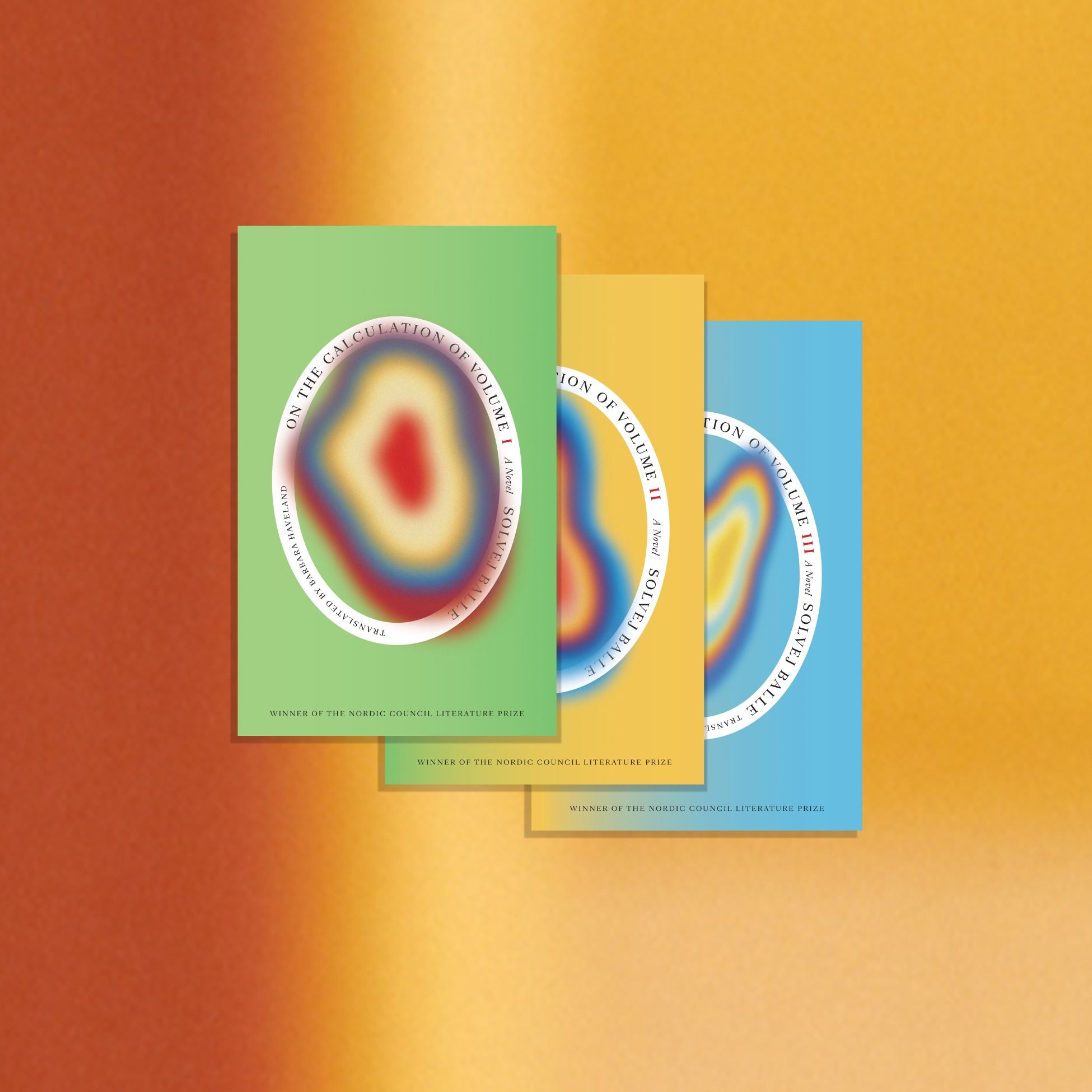
The Book Review
The Time Loop Book Series You Should Be Reading
00:35:58
The Book Review editors discuss Solvej Balle’s seven-book series, “On the Calculation of Volume.” Plus, a selection of translated fiction to put on your reading list.
Loading summary
Transcript97 lines
- [00:00]
Apple Card Announcer
This message is brought to you by Apple Card Spring always feels like a reset, clearing things out, simplifying what you don't need. Apple Card is built with that same idea in mind. No annual fee, no late fees, and no foreign transaction fees. No fees, period. Get started and apply in the Wallet app on your iPhone today. Subject to credit approval. Variable APRs for Apple Card range from 17.49% to 27.74%, based on creditworthiness rates as of January 1, 2026. Existing customers can view their Variable APR in the Wallet app or@car.apple.com Apple Card issue by Goldman Sachs Bank USA Salt Lake City Branch terms and more@applecar.com hello,
- [00:37]
Gilbert Cruz
I'm Gilbert Cruz and this is the Book Review from the New York Times. Today I want you to imagine a scenario. You wake up one morning and you start to go about your day as you do every day, and an eerie feeling begins to arise. Everything seems familiar. Too familiar. Eventually, a realization starts to creep into your mind. Is it possible you're reliving yesterday? You go through the day. The day passes, you go to sleep. Quote tomorrow arrives and it is the same day yet again. And then it is the same day yet again. Somehow you have become stuck in time.
- [01:22]
Tony Scott
Well, it's Groundhog Day again.
- [01:27]
Gilbert Cruz
That's what we're here to talk about. Not Groundhog day, the classic 1993 film starring Bill Murray. We are here to talk about another hit time loop story, this one a seven book series written by the Danish author Solve Bala. It's called on the Calculation of Volume, and since its English translations first published in 2024, it has been nominated for several major awards and has become something of an under the radar phenomenon. Among Book four in this series has just been published here in America and I have two of my colleagues from the Book Review here to talk about the series. A.O. scott, Tony Scott, our critic at large, and Jumana Khatib, an editor here, and my frequent guest, my frequent foil, Joumana. Welcome.
- [02:19]
Joumana Khatib
Thank you, Gilbert.
- [02:20]
Gilbert Cruz
Tony, welcome.
- [02:22]
Tony Scott
Hi, good to be here.
- [02:23]
Gilbert Cruz
Joumana, you're gonna stay on after the three of us talk to make some recommendations for other books in translation that listeners should check out.
- [02:30]
Joumana Khatib
Absolutely.
- [02:31]
Gilbert Cruz
So no move before we start, I want to just put a brief spoiler alert here. We're primarily going to talk about the first three books, but we definitely dip into the events of book four. So if you're on the verge of reading that, finish it, come back, we'll be here for you. Okay, Tony, we're going to loop back to the beginning here. Can you tell us where this all started? Tell us about this author. Tell us about this series.
- [02:55]
Tony Scott
Well, it started solve. Balle is. She's in her 60s, she's a Danish novelist, and she'd written some things before this. And at some point as early as 1987, she had this idea before Groundhog Day, by the way, was released to have, you know, what if somebody got stuck in time and kept repeating the same day again and again and again, and what would that be like? And over time, the project sort of took over her life. She lives on a small island, a sort of remote island in Denmark, and has been working on this for a very long time. It's this seven volume. I guess in Scandinavia you have to publish books in groups of seven. The Scientology is a big. A big thing there. Knauskaard did it and Jan Fossett and they have. First in Europe and now in North America. Really kind of accumulated this following. I can tell you anecdotally, I was walking around with the galley for volume four as I was getting ready to review it, and someone who I know a little bit kind of said, oh, you've got volume four. I'm in the middle of volume two. Don't tell me what happens. And there's this kind of like urgency and excitement about this book in which in some ways, strictly speaking, nothing happens in the same day repeats itself. I don't want to spoil it, but by the end of volume four, it's repeated itself 3,600, I think, 37 times.
- [04:21]
Gilbert Cruz
I think it's important at this point just take a step back and say some very basic plot details here. This is a book about a woman named Tara Selter. She lives in France and she, after taking a trip to try to get some books, she and her husband have a company, they sell antiquarian books. Discovers on the 18th of November that she has woken up again on the 18th of November. And then on the next day, it is still the 18th of November, and she wakes up every day and is reliving the same day. Nobody else in her life is reliving the same day. It is just her. And then there are all these other things you discover about how she moves in the world, how the things that she interacts with, how they exist or don't exist in the world. It's a very like, well thought through take on what would happen if you had to sort of experience this thing over and over again. Joumana, how did you first come to these books?
- [05:20]
Joumana Khatib
I mean, I was just reading them because everybody else in New York was reading them and I was mildly seasonally depressed. So I did what I usually do and looked to the Scandinavians for comfort and relief.
- [05:33]
Gilbert Cruz
Jomana, nothing that you said just now surprises me.
- [05:37]
Joumana Khatib
I think it's time for me to get off the podcast.
- [05:40]
Gilbert Cruz
One of the interesting things about this book, other than the fact that it is a time loop book that is eventually going to take place over seven volumes, is the very unique style Here it is. Tara is writing essentially her life in diary entries. We come into the story. If I flip right here to the first book on day 121 of her reliving November 18th over and over again. So she's writing her observations. All of the books are through her point of view. There are no direct quotes, as far as I can tell in any of the books. A lot of short paragraphs. It put me. And I'd love to hear what it did for you. This style in a very hypnotic state where I was drawn along the entire way. At times I was bored, at times I was gripped. It's fascinating.
- [06:33]
Tony Scott
It's fascinating because boredom is part of the experience of reading the book and it's also the subject of the book in a way. I mean, there's not a lot of emotional intensity in her narration. There's never a moment where she sort of flings herself on the floor in despair and says, my God, why can't I get out of this day? She's very observant. It's a very emotionally muted book and yet there is something gripping about it and something suspenseful. I mean, every, every volume is very cleverly, sort of leads up to a cliffhanger. So it kind of gets you into the next volume. And without saying too much, every, every volume changes the perspective and the sort of the tenor of the experience while keeping it always, as you say, in her voice, in her moods and in her kind of very reflective, both practical minded and philosophical take on what's happening to her. So she's sort of musing on what this is like, what this is about. You know, it turns out if you take money out of your ATM on November 18, the next November 18, it will still be there. But if you buy something from the grocery store on a November 18, it will be gone the next day. Consumption will subtract it from the world.
- [07:50]
Joumana Khatib
I think that that was a very helpful counter for me in those moments of boredom was that there was just enough world building or God, God help me, I'm saying world building but like. Like to sort of keep things interesting. And there was. There's always a new political or ecological angle. Like, it doesn't shock me, knowing what I know about Silve Bala, that, like, to her money is so unimportant that it replenishes every day. But, like, that Tara and her husband grew in their garden is sort of like this precious resource. And she has this refrain about how monstrous she feels, that she's a monster, that she's devouring her world, that there's this sort of, like, grotesquery and like, there's something wrong with her. But Tara herself never really makes any kind of moral judgments about why she is there. But she does feel a lot of culpability while she's frozen in time.
- [08:47]
Tony Scott
And it's interesting because it is one of the. It comes up. I think it starts to surface, you know, more. More emphatically in the later books. But there is a sort of, like, these ethical questions that. About, you know, this existence. And she'll do things like she'll go and shop at different stores around. Around whatever town she's in. So she doesn't, you know, deplete things from the. The shelves. But she does talk about herself as sort of a predator, as a monster, as someone who is just taking. Taking. Taking resources from the. And leaving it impoverished. And that in some ways, one of the things I think that you can wonder about as you read these books, not only about the sort of the details of the world that they depict, but sort of ask yourself, well, what kind of allegorical meaning is behind this? If this is speculative fiction of a kind, which it is, what's the sort of the picture of our own world that it's trying to reflect back on us?
- [09:46]
Joumana Khatib
Yeah, I mean, I had this thought a couple days ago where I was thinking about the number seven, about this, and thinking. Because each book really does have a slightly different focus. Right. You know, book one, you're sort of just like, what the hell is going on here? Book two, she's traveling around Europe trying to give herself a sense of seasons. And I was like, oh, God, am I gonna have to reread Genesis? Like, is that what solve I Bala is up to? Is that, like, each book is sort of her designing a different layer of whatever universe she's building. I don't know.
- [10:22]
Gilbert Cruz
There's something about. I mean, you use the word world building to this whole thing that I think leads anyone who reads these books to sort of start to develop their own theories. Obviously, Tara in the book, at some point is trying to figure out what happened, why am I here? And the experience of reading these four books has taken me in two directions. One, you start to think about these world building questions. What are the rules and what is allowed and what is not allowed? And then in a way that I don't normally do, I start to think philosophically, which is, you know, there's something about time travel, time loop stories, you know, Groundhog Day is cited, I think seriously by some is like one of the great philosophical films. Like what does this mean about humanity? Like what does it mean about the person who is stuck to relive the same day over and over again? What is your responsibility to yourself? What is your responsibility to the world? And so my experience in reading these has sort of been on those two tracks at the same time. What are the rules? How are the rules changing? And then what does this say about us as people and how we would act or not act in a similar situation?
- [11:31]
Tony Scott
One thing that that's been interesting to me that I've been thinking about, a lot of people who've written about these books compare them to the great modernist time novels, to Proust's In Search of Lost Time and to James Joyce's Ulysses, right? Which is cause Proust is about time and the experience of time, but it's about memory, it's about the sense of the past racing away in the onrush of modern civilization in Europe at the beginning of the 20th century. And Joyce's Ulysses is about all of history, all the sort of epic scale of history, all in one day, condensed into one day in June in Dublin. And this is a book about kind of the loss of the past and of the future. So it's about a kind of a sense of being stuck in this eternal unchanging present in which nonetheless you have to make your life. You have to figure out what the sort of human dimensions of your life might be. What would it be to live and die your whole life in November 18th? And I think, I mean, I can't help but think about the state of the world, of the actual world that we live in, and a certain sense maybe of stuckness or stasis or of a sort of obscured or clouded future as being some of what these books are about and some of what gives them the kind of this very interesting, strong appeal or resonance that we've been
- [12:57]
Joumana Khatib
talking about throughout the first two books. My brain was thinking, for whatever reason I oh, the thing that will get Tara Unstuck is a romance, right? Like, it's so Interesting that the sort of. The natural. If you're me, the natural place to think. Like, okay, well, what is. What's been the counter in other stories like this? Like, what's been the thing to sort of lift you out of tedium or sort of, like, give you a shock to the system? And it's falling in love. And you know that Tara is still very devoted to her husband throughout these books, and I think that kind of long for him. It's funny, in the beginning, they have something of a honeymoon, like a second honeymoon period, you know, where they're just like, he seems like the most patient man on Earth. Where she's like, I don't know how to tell you this, but I am reliving November 18th over and over and over. And she has to tell him this every morning. And he just kind of goes along with it. It's like. I guess that's the kind of, like, absurdity you come to expect when you devote your life to, like, being an antique book dealer. But I think, like, I was genuinely shocked when Tara met somebody that was sort of on a similar loop to her. And that felt like such an expansion of possibility and got so exciting. And I loved watching, like, the little societies form. It felt like ancient Greece. But November 18th, also, I just want to dispel. Cause I think there are a lot of, like, ballaheads out there who are like, oh, like, you know, it's the day Proust died. November 18th. There's a really great interview that Vala did on the LRV podcast. And she's like, well, first I was singing June, but that wouldn't really work with the sort of, like, environmental thing. And so I just sort of. And then I thought about October, and then I just decided November. And then I realized that's when Proust died. So it's like all these people sort of like, you know, like cryptographers trying to make sense of this. And she's just like, I just picked it. I don't know.
- [15:05]
Gilbert Cruz
Well, it's like you in Genesis. It's like, you know, trying to read as we do with so many works of literature or pieces of art. Intentionality into things that often are just like, I stumbled upon this. I don't know, the character led me here. This was the day that seemed not too hot, not too cold. November 18th.
- [15:23]
Joumana Khatib
So you're saying that you don't think that Bala consciously set out to make herself a God?
- [15:29]
Gilbert Cruz
Every author is a God of the universe that they create. Coming up, the surprising paradox about being stuck in a time loop.
- [15:52]
Apple Card Announcer
This message is brought to you by Apple Card Spring always feels like a reset, clearing things out, simplifying what you don't need. Apple Card is built with that same idea in no annual fee, no late fees and no foreign transaction fees. No fees, period. Get started and apply in the Wallet app on your iPhone today. Subject to credit approval. Variable APRs for Apple Card range from 17.49% to 27.74% based on creditworthiness rates as of January 1, 2026. Existing customers can view their Variable APR in the Wallet app or@carr.apple.com Apple Card issued by Goldman Sachs Bank USA Salt Lake City Branch terms and more at
- [16:27]
Princess Cruises Announcer
applecard.com all aboard choose your perfect Caribbean escape with Princess Cruises. Maybe you spend a day relaxing on the top deck, golden sun, a refreshing pina colada and nothing on your schedule except dinner and a show. Other days you embrace a tranquil shore, snorkel mask in hand, ready to explore white sand beaches and crystal clear waters. The best part? Relaxation and discovery are both on the itinerary. Sail to the Caribbean with Princess Cruises. Visit princess.com or contact your travel advisor to book Princess Cruises ships registered to Bermuda.
- [17:02]
Instagram Safety Announcer
If you're a parent of a teen or have teens in your life, it can be hard to figure out the right way to approach social media and technology. Ultimately, if you feel like your teens are ready, there are tools to help. Instagram teen accounts have automatic protections for what your teens see and who can contact them. Plus time management tools like daily time limits and sleep mode. And Instagram will continue adding built in safety features to help create age appropriate experiences. Learn more about teen accounts and Instagram's ongoing work to protect teens online@instagram.com teenaccounts that's instagram.com teenaccounts
- [17:40]
Gilbert Cruz
Shimon I'd love to talk a little bit more about Tara because you and I felt the same way but in a different direction. When you talk about well I thought there would be a romance and that would be a thing that would sort, you know my, and this is my, you know, pop culture poisoned brain. You know, I'm like what is, what are the things that she is going to do in this book that give it plot, like more of a plot in some way. Is she going to rob a bank? Is she going to fall off a cliff? Is this gonna be, you know, is this gonna be like other sort of time loop stories that we've experienced where there's a lot of sort of comical and Serial comical death scenes. And then she wakes up again and she's still alive, but this author's just not interested in. In that at all.
- [18:24]
Joumana Khatib
And you know, that's a like. Okay, that's a great segue into like who Tara really is. Because Tara really doesn't take pleasure in anything except like kind of squirreling away notes. And she has this sort of fixation on things, you know, things that stay with her. And I totally understand that when especially you're sort of all of a sudden living in a universe where you don't quite understand why some things stay with you day to day. And some things, like there is actually a pretty comic, tragic comic, we can say, scene where she goes to her parents house and they have Christmas. So they go and like buy a turkey and Christmas pudding and they do the Brussels sprouts and roast potatoes. And part of their Christmas tradition is to have leftovers the following day. And Tara doesn't think that she doesn't trust anything to stay in the fridge. So she shoves everything in like a refrigerated bag under her bed so that they can at least like. I mean, that's. That's kind of brilliant, you know. So she's loyal to tradition in some ways, but like she really doesn't take pleasure in food or even when she talks about her relationships with the others in her society. I guess, like you don't necessarily feel the pleasure that she gets in human connection.
- [19:47]
Gilbert Cruz
This is one of the things, and Tony, I want to hear what you say about this that has stood out to me most about these books. And again, I've read the four volumes that have been translated into English and look forward to reading the other three. But there is. I don't know if it's just the way I would feel if I was stuck in time for years and years and years. But there is a lack of pleasurable engagement with the world other than in these little flashes. Like there's one at one point she goes to Spain or Italy or somewhere where she's looking for warm weather. And she says there were many days and I danced and you know, and it just passes.
- [20:20]
Joumana Khatib
Cocktails with ice in them.
- [20:21]
Gilbert Cruz
Yeah, it passes in one or two sentences. And I, as an obviously very normal person, am thinking I would try to maximize my pleasure every single day.
- [20:31]
Tony Scott
It's true. When, you know, she does occasionally she and her husband do have sex in volume one, but it's not like it's not particularly steamy or even described very much. And you sort of wonder, well, was she like this before she got stuck in November 18th. Like, which is cause and which is effect. You know, is this time stuckness a sort of a symptom of or a. An effect of some alienation from experience that was there already that kind of prepared her for it? Like, is this book projecting a kind of a possible world or a possible civilization? Or is it actually mirroring an aspect of the civilization that's already here, say, among the educated middle classes of Western countries who kind of maybe already live?
- [21:20]
Joumana Khatib
Like, this one thing. See. Okay, I was shocked to find out how old she was when she stumbled through time. Cause I guess I was imagining her in her 60s. And I don't know, maybe it was because who in their 20s is an antiquarian book dealer? I was shocked to learn that she was in her mid-20s when this happened.
- [21:43]
Gilbert Cruz
Yeah, I saw her as being close to my age for some reason.
- [21:49]
Joumana Khatib
So 75.
- [21:52]
Gilbert Cruz
Tony, what do you think this structure allows for both characters to experience, and also us as readers to experience? What is the effect that living the same day over and over again lands on Tara and on us?
- [22:08]
Tony Scott
For Tara, it is a sense of a surprising sense of freedom in a way. I mean, we've talked about it as, you know, these people being stuck in time, which is in one sense true, but it's also maybe true that they're free. They're sort of liberated in time. That sort of the linear progression of days that the rest of us are subject to and have no choice about. They can have the same day as many different ways as they want to do it. And I think it also opens up a space. I think you were getting to this a little earlier, Gilbert, of sort of philosophical speculation. Even though Tara is certainly temperamentally inclined to sort of thinking and musing and ruminating, something about this experience invokes, invites that. Because you're sort of going over and you're looking at it from all these different angles. And the sort of. The same thing is happening, but is happening because you're different each day, even if the world is not. You sort of see all these kind of nuances and inflections. And that, I think, for the reader, makes it interesting and absorbing. Even when it's tedious. Even when you're sort of like. There are passages in the book where it sort of does feel caught a wheel and is repeating and nothing new has happened. But I never felt kind of itchy or bored or impatient with it. I just sort of felt like, okay, this is this rhythm. And within the sort of the confines of this day, so much can happen, and you start to have so many questions about it, you know, about the rules and procedures. And I started to feel like every time I would come up with a question all by myself, some pages later, Molly would answer it or would tease it or would acknowledge it. So there's just a lot of room in these books, and you feel yourself as a reader or I felt as a reader, oddly sort of free in them, that I was not so much compelled by the linear movement of a plot as just sort of roaming around in this big space and going into different rooms in this kind of weird giant house, which was a very pleasant and very soothing reading experience.
- [24:31]
Gilbert Cruz
Sorry, I'm looking up a quote here. Yes. Okay. There's an interview that Bala gave to the literary magazine the Drift, where she was talking about the title of the book, on the Calculation of Volume. She says, In 1989, I had started this book. I was in Paris. A friend saw a pile of papers. The title was on the top on the Calculation of Volume, and he said, you have to change that title. That is a terrible title. But she very briefly talks about the time loop creates more of a space or a room than the usual view of time as a line or a river or even as a circle. It's sort of this. The more she lives this day over and over again, the bigger the volume of her time that she is living sort of grows and grows and grows until. I don't know, maybe she'll never be able to calculate it in the end, but it's quite big.
- [25:22]
Joumana Khatib
I was also really struck by the relationships between. There's one time looper who is kind of grateful for this pause because it allows him to have time with his father who has Parkinson's, and so. And his father's disease actually doesn't seem to be progressing in this period. So it's almost like putting a pause on a degenerative disease. But at the same time, there's another Looper who is an entire ocean away from his kid. And those are really, like, the most wrenching, I think, philosophical questions.
- [25:57]
Tony Scott
I found that a very poignant part as well. It's interesting, too, that and this is remarked on in volume four, is that there don't seem to be many children in the November 18th world.
- [26:11]
Gilbert Cruz
I think it's interesting to try to think of Tony, as you note, why are there no children that they have found by the end of book four? Why are they all sort of seemingly in the same sort of socioeconomic, sort of racial cohort, like there is something interesting about the similarities between, by the end of book four, all of the people.
- [26:34]
Tony Scott
Yeah. And that, I think, is one of the really interesting things that develops in the fourth volume because it does sort of re. Situate this whole experience on a kind of a collective or social level level, you know, so it's. It's. It's. Now there's. There's a. There are a lot of them. We sort of lose count. You know, there are. At the end of book three, I think there are four, and then all of a sudden there are nine, and then more, more, more. And they have these house meetings, and then they. They kind of have a convention of. Of. Of all of the November 18th, and they.
- [27:09]
Gilbert Cruz
It's.
- [27:09]
Tony Scott
I mean, and it's one of the comical sort of logistic things about, like, how do you. How do you rent a hall for a convention. For a convention that's today, but not the today today? You know, it's like the thing where whenever Tara travels, she arrives in a new city and goes to a hotel and asks for a room that hasn't been occupied the night before, which is a great precaution, but also just absurd. And apparently all the people at all the hotels in Europe are like, oh, yeah, okay, we can do that.
- [27:39]
Joumana Khatib
I also shudder to think how long it would have taken me to figure that out. Like, how many strangers I would have woken up next to. You would wake up next to in the hotel room. I. We have to just sort of think, God, this is just awful.
- [27:54]
Gilbert Cruz
Tony, can I ask you, as we near the end of this conversation, in terms of generic expectations, and these books fall outside of genre in so many ways, the framing for this, both in the way that it is being sold and the way I've described it to people and the way that people talk to Bala when they interview her, is Groundhog Day, the film starring Bill Murray and Andie MacDowell from 1993. When you say a time loop, you can also say it's a real Groundhog Day type situation. And I'm wondering, as someone who was a film critic for almost a quarter century, you know, what that framing sort of led you to think as you entered these books and how you think other people navigate between those two. How are they different?
- [28:47]
Tony Scott
I mean, Groundhog Day has this sort of romantic comedy structure, as Jomana, as you were saying, and it's about. It turns out to be about getting it right. Like, when the Bill Murray character is worthy of the love of the Andie MacDowell character, he will be freed. You know. So it's what the philosopher and film writer Stanley Cavell called moral perfectionism. That's the plot of that movie. It's about getting yourself right and understanding yourself. And it's a Hollywood story. So it's an individual story. It's only happening to him, and it only matters that it's happening to him. This is something else because the redoing it doesn't seem to impose any kind of purpose or logic or responsibility on people. I don't think it's much more it turns out to be, I think much more about what this would be as a general human condition. So it starts out as an individual story, but it and Tara is our narrator and I assume will stay our narrator. But it isn't really her story, and it's not really about who she is. In some ways we never know. We still don't know really who she is. But it's about what it is to live in time and whether it would be a good thing or a bad thing. What it would feel like to have your whole sense of your orientation forward in time changed or taken away.
- [30:24]
Gilbert Cruz
I think it would be a great thing. My favorite part so far in these four books is when the character Henry, on the first or second day realizes that he has time to catch up on his emails. That seems like something I would do. I thought it was great. I have enjoyed living in this time with the two of you. Tony Scott, thank you so much for joining the pod.
- [30:44]
Tony Scott
Such a pleasure. I'm. I'm sorry that it has to come to an end.
- [30:49]
Gilbert Cruz
After the break, Joumana digs into the world of literary translation, and she recommends some books for you to read next.
- [31:01]
Apple Card Announcer
This message is brought to you by Apple Card. Spring always feels like a reset, clearing things out, simplifying what you don't need. Apple Card is built with that same idea in no annual fee, no late fees and no foreign transaction fees. No fees, period. Get started and apply in the Wallet app on your iPhone today. Subject to credit approval. Variable APRs for Apple Card range from 17.49% to 27.74% based on creditworthiness rates as of January 1, 2026. Existing customers can view their Variable APR in the Wallet app or@carr.apple.com Apple card issued by Goldman Sachs Bank USA Salt Lake City branch terms and more@applecard.com all aboard.
- [31:38]
Princess Cruises Announcer
Choose your perf Caribbean escape with Princess Cruises. Maybe you spend a day relaxing on the top deck, Golden Sun, a refreshing pina colada, and nothing on your schedule except dinner and a show. Other days you embrace a tranquil shore, snorkel mask in hand, ready to explore white sand beaches and crystal clear waters. The best part? Relaxation and discovery are both on the itinerary. Sail to the Caribbean with Princess Cruises. Visit princess.com or contact your travel advisor to book Princess Cruises ships registered to Bermuda.
- [32:11]
Instagram Safety Announcer
If you're a parent of a teen or have teens in your life, it can be hard to figure out the right way to approach social media and technology. Ultimately, if you feel like your teens are ready, there are tools to help. Instagram teen accounts have automatic protections for what your teens see and who can contact them. Plus time management tools like daily time limits and sleep mode. And Instagram will continue adding built in safety features to help create age appropriate experiences. Learn more about teen accounts and Instagram's ongoing work to protect teens online@instagram.com teenaccounts that's instagram.com teenaccounts
- [32:48]
Gilbert Cruz
okay, Joumana, these on the calculation of volume books started in their first two volumes with one translator, Barbara Haviland. And then in books three and four, a pair of translators take over Sophia Hersey Smith and Jennifer Russell. And I'm curious about two things. What is your understanding of how authors and translators work together? And then this phenomenon or this situation where two people are working on translating one book? That seems quite difficult to me. But it worked clearly in these two volumes that we read.
- [33:27]
Joumana Khatib
Yeah, and it does work. I mean, I can think Sam Bett and David Boyd translate from Japanese into English. They're great. They're an amazing pair. They were the ones who worked on the first books by Mieko Kawakami to come into English. And she's obviously still something of a
- [33:45]
Gilbert Cruz
sensation among and what does she write?
- [33:47]
Joumana Khatib
She's the author of Breasts and Eggs Heaven. She has a new sort of noir out called Sisters in Yellow. They did not work on that book and I did feel that, frankly. But to your earlier question about how translators and authors work together, I think, I think it really depends. So first, a lot of translators have worked on books or work by dead people. So that's kind of a non starter. I remember I was profiling Ann Goldstein, who is Elena Ferrante's translator, and I asked her, I was like, how often do you email her? Or do you ever email her directly? And she's like, I've emailed her directly maybe five times, but anytime I have a query, most of the time I go through her editor. And so that's my understanding of how it works most of the time.
- [34:42]
Gilbert Cruz
This is a very specific question for you, but I feel like you might actually have an answer. You know, there are people that have like favorite audiobook narrators.
- [34:52]
Joumana Khatib
Yep.
- [34:53]
Gilbert Cruz
Do you have a favorite translator?
- [34:55]
Joumana Khatib
I do. Can I tell you about him? I love him so much.
- [34:58]
Gilbert Cruz
I should.
- [34:59]
Joumana Khatib
His name is Frank Wynn. He W Y N N E. He is an Irish, I think, savant. Right. He's just a genius. He translates from Spanish and French and I first encountered him when I was reading Virginie des Ponts, who's this sort of like post punk French writer. And all of her writing, whether it's her nonfiction or her novels, are extremely voice driven. She has this sort of like feminist manifesto called King Kong Theory. And he, he really was an incredible conduit for her voice. And she has this trilogy of books that I think everybody should read. Vermont Subutex. It's about a sort of unemployed record dealer just bouncing around the right bank of Paris, meeting a bunch of very colorful characters. And just the way that he's able to juggle all these voices is amazing. And like everything is so alive. They feel very expansive, those books.
- [36:07]
Gilbert Cruz
Okay, Joumana, what other books in translation
- [36:10]
Joumana Khatib
would you recommend from this vast wild and sourceling universe?
- [36:14]
Gilbert Cruz
So big.
- [36:15]
Joumana Khatib
So as a specific comp on the calculation of volume, I'm going to recommend Time Shelter. This is by a Bulgarian writer, Georgi Gosporinov, and translated by Angela Rodell. This won the international booker in 2023. And this is about a clinic in Zurich that's set up for Alzheimer's patients where each floor of the facility recreates a different decade. And so wherever they kind of live in their head, they can. They can have their physical reality match their memories. It's. It's really good.
- [36:53]
Tony Scott
Wow.
- [36:53]
Gilbert Cruz
Okay.
- [36:54]
Joumana Khatib
That's a great idea. Another recent discovery for me was Yuko Tsushima. So the book that I love most by her is Territory of Light. And this is translated by Geraldine Harcourt. Geraldine Harcourt. I think maybe only ever translated Yuko Tsushima. And I wish she had translated everything because like her, I mean, this is one of the most incredible books I've read in, I would say at least the last 18 months. It's about a single mom and her four year old daughter getting their own apartment in Tokyo and just like rebuilding their life together after the implosion of her marriage. And it's so elegant and funny and surprising and beautifully rendered into English. I love that book. Another one. Okay. Classics are a blind spot for me. I really, really need to go reread,
- [37:49]
Gilbert Cruz
like, classics and quotes.
- [37:50]
Joumana Khatib
Classic classics. Yeah.
- [37:52]
Gilbert Cruz
Okay.
- [37:52]
Joumana Khatib
Yeah. What is classics out of quotes?
- [37:55]
Gilbert Cruz
I don't know why I said that.
- [37:57]
Joumana Khatib
Okay. Anyway, so, like, I need to go back and reread, like, Turgenev and all the, you know, Anna Karenina. But I did just finish an Italian classic that I really liked. It's called the Betrothed in English. In Italian, it's I promessi Sposi by Alessandro Manzoni, who is one of the first writers, like, around the time that Italy decided to unify its language. And it's a classic love story. It's a parable, it's a political parable, it's a societal parable, but it's also just a lovely translation that's translated by Michael F. Moore, whose translations from Italian into English I highly recommend. And then another one that I love. I love this book. This is Kairos by Jenny Erpenbach, who's German. All of her books are great. Go, went, gone, et cetera. So Kairos was translated by Michael Hoffman and is a very, very nuanced and complex. I guess you could just call it an age gap novel. Relationship, age gap novel. It's really good.
- [39:08]
Gilbert Cruz
Jomana. I say this with genuine sincerity. I always feel smarter after hearing you talk about books.
- [39:16]
Joumana Khatib
Thank you. It was genuinely my pleasure. I could go for 20 more minutes.
- [39:20]
Gilbert Cruz
I think we're good.
- [39:21]
Joumana Khatib
Okay.
- [39:26]
Gilbert Cruz
The book review is produced by Sarah diamond and Amy Pearl. It's edited by Larissa Anderson and mixed this week by Katie McMurran. Original music by Dan Powell and Alicia by Etube. Special thanks thanks to Dalia Haddad. We want to hear what you think about the show, so send us an email@thebookreviewytimes.com I'm Gilbert Cruz. Thanks for listening. 18 year olds don't know Groundhog Day. What's happening?
- [39:59]
Joumana Khatib
I've never seen it.
- [40:00]
Gilbert Cruz
You've never seen it?
- [40:01]
Joumana Khatib
Should I watch it? What would you like the power to do? Don't worry, you got this.
- [40:10]
Gilbert Cruz
Whoa.
- [40:11]
Joumana Khatib
Hear that?
- [40:12]
Tony Scott
I did it.
- [40:13]
Apple Card Announcer
That's the sound of you helping your
- [40:14]
Joumana Khatib
child find confidence that lasts a lifetime. Bank of America invites kids 6 to 18 to join golf with us for a limited time. Sign them up for a free one year membership, giving them access to discounted tee times at thousands of courses as
- [40:27]
Apple Card Announcer
we champion the next generation.
- [40:28]
Joumana Khatib
Who dares to ask, what would you like the power to do?
- [40:31]
Apple Card Announcer
Restrictions apply.
- [40:31]
Joumana Khatib
Activation required.
- [40:32]
Apple Card Announcer
CPFA.com golf with us for complete details.