← the bossbabe podcast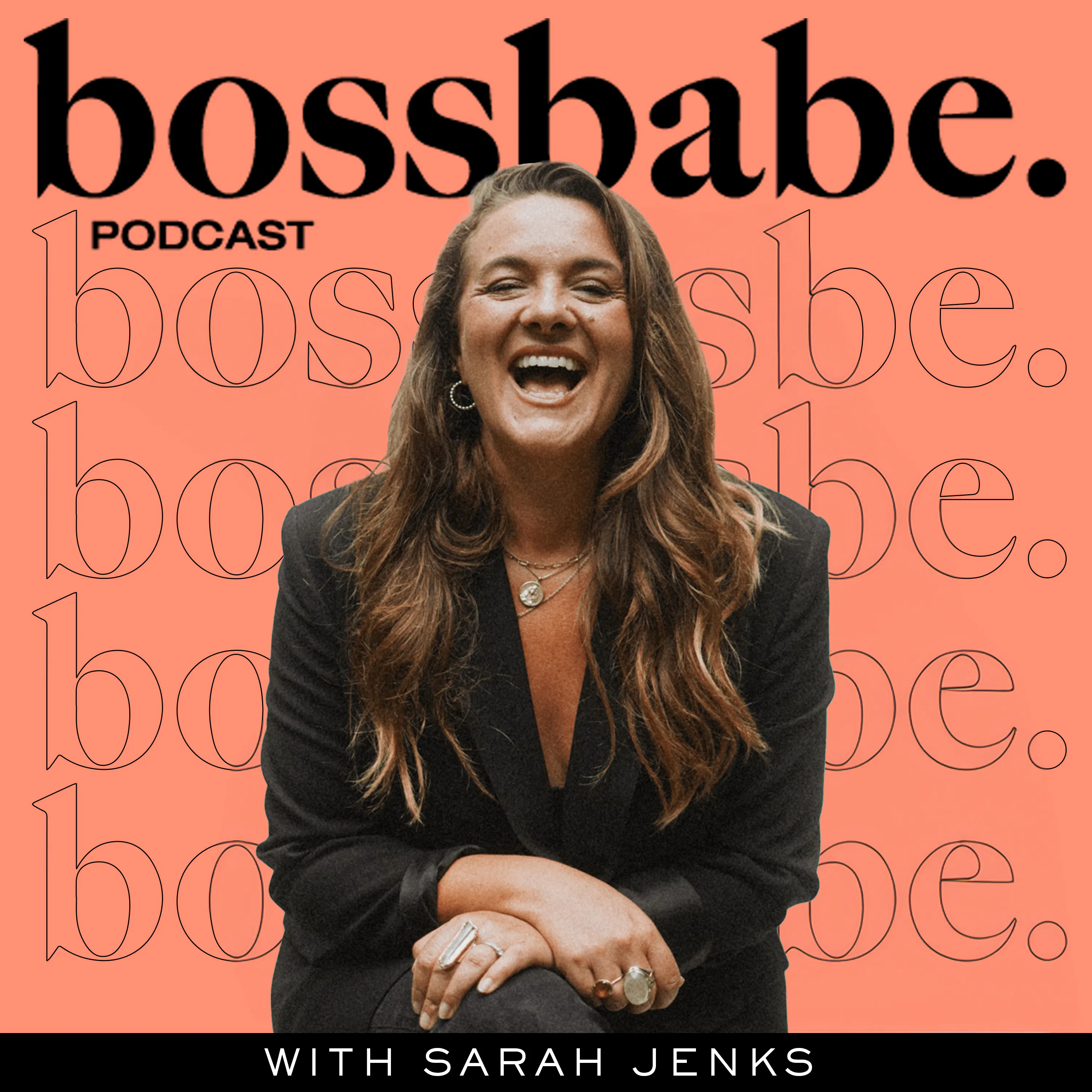
the bossbabe podcast
445: How Women are Reclaiming Success in Entrepreneurship in 2025: Ceremony, Motherhood, The Erasure of Sacred Feminine in History + Pursuing Passion with Sarah Jenks
01:07:06
Loading summary
Transcript181 lines
- [00:13]
A
Welcome to the podcast.
- [00:14]
B
Thanks, Natalie. So happy to be here.
- [00:16]
A
I know this has been so overdue. I've wanted you on here for ages.
- [00:19]
B
Thank you.
- [00:20]
A
So where I want to kick off is. Talk to me a little bit about your business career journey, because there's a lot of people listening that maybe they are it. They have business that doesn't resonate with them anymore or they're in a career and there's something inside of them that's like, I want to do something else, but is there a market for it?
- [00:40]
B
I'm going to go back to the very beginning because I used to work in advertising, and my clients were Dove Chocolate and Footlocker. You know those little promises inside the Dove chocolate wrappers that have those little things? I wrote some of those. So fun. I know there was, like, early personal development signs. It's hilarious. And I was. I had a binge disorder. So I was eating in secret in the mornings and at night. And I had this moment where I ate an entire bag of Dove Chocolate Promises in the supply closet at my ad agency. And in that moment, I snapped and realized that I had to figure out what was going on because I knew everything about nutrition and I couldn't understand why I was so addicted to food. And I went to. I decided I wanted to be a psychologist because I was a psych major in college, and I started looking at psychology programs because I went. I went to the number one liberal arts school in the United States, and I was like, this is what one does. And they go and they get a master's. And I. I asked a question at the info session. I said, how much money do therapists make? And they gave me the answer. And I quickly did the math and I said, oh, that's gonna take me a really long time to pay off my loans. And am I really gonna have the freedom that I want to do what I really wanna do, which was really the psychology of emotional eating. So I ended up going to the Institute for integrative nutrition in 2009, and I was raised by two entrepreneurs, so it was not unlikely for me to start my own thing. And I went in and I started a company around emotional eating. And I first started working with brides as they were getting ready for their wedding because I was a bride and I created a super successful online company around emotional eating. And I was married. I got married to my college sweetheart, and he was a doctor. And we were moving to San Francisco, and we had acute apartment, apartment. And everything was great on the outside and on the Inside, I was completely miserable. And I was going to therapy. And one day I walked into my therapist's office, which was in her home, and she had forgotten to clean up from a gathering she had the night before. And there were these chairs on the floor, and I could smell incense, like, stuck in the upholstery of the couch. And there are these paintings of these beautiful women. And all of a sudden, my entire body erupted in goosebumps, and I started to weep. And I just looked at her and I said, what happened here? And she looked at me like she had seen a ghost, because I'm in pearls and a polo shirt and patent leather pants. You know, I am a preppy girl from Boston who had this, like, successful emotional eating company that I was, you know, really wanting to be liked. And my Instagram was perfect, and, like, I was doing all the photo shoots, and I was just, like, you know, doing all the things. And she said, well, I'll tell you when you're ready. And from that moment, I just thought, I need to get in to the secret club. And I really just banged down her door until she let me come into a ceremony with her. And this is my mentor, Elaine Khalila Dowdy, who I still work with. And she was. She is an ordained priestess who leads ancient sacred feminine ceremony. And I just remember when I went into ceremony for the first time, I was in a place in my life where I couldn't understand. Why was it that I felt so unfulfilled and so miserable, easy. Even though I had checked all the boxes and I was doing such a great job, walking the path that was laid out for me, and I had gone to Tony Robbins. I had done. You know, I was in the personal development industry. I had read all the books. I was. I had cleaned up my emotional eating. I had done so much work, and I still felt this way. But when I sat down in ceremony, what happened was I met myself for the first time, and I really understood the difference between my personality and my soul. And I realized that my soul wasn't at the center of my life. And I had spent so much time, people pleasing and trying to impress my peers and my parents, and I had only known one way of being, being. And I came to realize that I was really conditioned and brainwashed to just be who everybody else wanted me to be. And I didn't really know who I was. And it was through ceremony that I started to really understand myself. And I just kept hearing, Sarah, you aren't who you think you are. You aren't who you think you are. And I started following the, the, like, the threads. But here's the thing. Like, I am a preppy girl from Boston. I am the last person you would ever find in a sacred feminine ceremony. And so I would like, set up an altar at home and I would, like, put it under my bed after I was done meditating. I didn't tell anybody what I was doing. I kept it a secret from my husband. I just remember I had this one day where I was like, jonathan, I have to tell you something. Turns out I'm like, really magical. And he's like, I know, Sarah, you're not doing a great job keeping it a secret for me. And then it was this very slow, slow and extremely painful process of, you know, I call it coming out of the broom closet and revealing to the people in my life that I am actually different. And I wasn't who I was presenting myself to be because I didn't even know who I was. And through that process, I was never planning on being a priestess. Like, dear Lord, it was the last thing I wanted to do. I wanted to create the emotional eating for, you know, like the Weight Watchers for emotional eating. I was like, setting off. I had really big dreams in that space. But every time I sat in ceremony, I just heard, Sarah, you're, you're meant to lead this. And that's not true for everybody who comes into ceremony. You know, it's sort of like going to the doctor. Everyone needs to go to the doctor, but not everyone's meant to become a doctor. And so I was wondering if I was just enjoying it and then therefore wanted to become it. But after really like five years of, of just being like, punched by the goddess, I finally decided I was ready. And so I stepped onto the path of ordination and I went into really deep training and how to hold this type of ceremony. And I was ordained two years ago. It was like I started sort of like weaving it into my work. And I was like a little bit subtle about it. And then it was really three years ago when I decided to do my like final year of ordination that I came out publicly owning the fact that then I was a priestess initiate. And then once I was ordained, I stood as a priestess in my work. And I was terrified because I had had up until that point a 12 year career and something completely different than what I was doing. You know, it's hard. I never counted, but there were a lot of people who were like, this is weird, I'm not into this. You've changed. And when you're evolving and when you're walking the path of authenticity, that really happens all the time. It's super hard. And it was hard because, you know, at the beginning of my career, I was also the primary breadwinner. So when it's attached to supporting your family and you have financial risk on the table, it's a hard thing to be able to, like, really stand in what's true for you and let the chips fall, know where they do.
- [08:52]
A
I can't wait to get into all things ceremony because we've obviously done ceremonies together multiple times. I want to get into all of this. I just want to go back to. You moved to San Francisco y and you said everything on the outside looked amazing, but on the inside, it wasn't feeling amazing. Can you take me back a little bit more to that point? Like, what was actually going on for you?
- [09:13]
B
I was really in the belief that if I made a certain amount of money and I was well liked on the Internet, that I would feel great about myself.
- [09:28]
A
Oh, can relate.
- [09:30]
B
Okay. So I have. I have a core wound of wanting to be loved and accepted by other people in order to feel accepted and worthy within myself. And this is relatively typical, but, like, I had it bad, you know, because I grew up as an unpopular, chubby girl who was bullied a lot growing up. And so I was wired to believe that sameness and fitting in meant that I would be safe. And so I was constantly looking outside of myself in order to believe that I was right and okay and safe and could love myself. So what was happening was I was putting all of my energy and attention on my exterior self and how I was being viewed and not tending to my inner life and everything that was happening when I put my camera phone down or I turned off the. You know, we didn't even have zoom back then. What did we even use? Like, some sort of honesty?
- [10:32]
A
Can't remember.
- [10:33]
B
I can't remember. Some, like, webinar software, you know, Facebook lives. Yeah, Facebook lives. And also my marriage was terrible at that point, and Jonathan was in residency, and we talk about this publicly all the time. Like, he was just a dick. Like, he came home and he was really threatened by my growth because he was worried he was going to outgrow me. And so he would subtly try to take me down and, like, just poke little holes in my balloon. And then I also got pregnant when I was 28, unplanned, and I was not really, like, ready to dive into motherhood. And Jonathan was in the hardest year of his residency. And so then I had to go through the whole thing around being a new mom. And in that moment I also had all this like internalized conditioning come up around. I needed to really overdo it. And the house seemed to be clean and the baby couldn't be crying when Jonathan got home. And I was just looking at myself like, who am I? It was like some sort of crazy 1950s housewife alien took over my body and. But it really had me look at if everything outside is great and everything inside feels so terrible, like what am I missing?
- [11:47]
A
Was it when you were in the kind of trenches of postpartum that this started to really show itself?
- [11:53]
B
Yes.
- [11:53]
A
Cuz I feel like, I mean, I can speak for myself when I'm putting. When I was putting on an identity without even realizing it. Postpartum took it away.
- [12:02]
B
And it was totally.
- [12:03]
A
It's like I had no choice.
- [12:04]
B
Yeah. I mean, cuz it really. Motherhood is a sacred portal, you know, and when we have a baby, we really become the slip and slide from the divine to earth. You know, we're bringing a sacred being through our body's earth side. And so whether we're aware of it or not, it is an opportunity to go through an awakening process. And so we're either gonna face it consciously and spiritually or we're going to wall up even more and like dig our heels and even more and get dragged through and go harder into the conditioning around being, you know, traditional mom. And I was sort of in this like push, pull, this fight. And I hadn't done a lot of learning around conditioning. And that's when I went hard into like the history of the sacred feminine and the erasure of it and how that impacts our psychology and how that was impacting me as a mom and my beliefs about myself. And it was rough. And then I got pregnant when Marshall was nine months old. So just like imagine.
- [13:09]
A
I can't imagine. I was still drowning in postpartum.
- [13:14]
B
Yes. So was I. It was wild. Again, not planned. My kids are just. They're on their own path, nothing to do with me. And I'm so happy to be mom. Like I was always planning on having kids. You know, Jonathan and I were married. But it was, it was just a shock. Shocked my system.
- [13:32]
A
Yeah. And it's hard when you're not. It's hard when, when you plan the timing, never mind when you don't.
- [13:36]
B
No kidding. Yeah.
- [13:38]
A
And so you also mentioned that both your parents were entrepreneurs.
- [13:41]
B
Yep.
- [13:41]
A
Do you think, especially your mother, do you think what she was doing for work or how she showed up impacted how you felt you should be showing up.
- [13:51]
B
Oh yeah.
- [13:51]
A
How did that look?
- [13:52]
B
Well, so my mom, you know, she was raising us in the 80s and 90s and it wasn't okay for women to have balance. You know, I think the models back then were you either work full time and you're pretty absent or you're a stay at home mom. And what was so beautiful was there were chapters in my mom's life where she really, you know, wanted to do both. And what was hard is that like society wasn't always set up for women to do that. And so she was still holding the responsibility of being a stay at home mom while also trying to run businesses. And she didn't have the Internet, you know, she didn't. There wasn't flexibility in childcare and there was a lot of times where it was just like way too much for her. But, but for me, witnessing her try was so impactful for me. But the thing that was hard was because that was my model, I sort of wanted my business to be invisible for a long time. I didn't want my kids to even know that I had a job. I didn't want anyone like my friends or my family or Jonathan to be aware that I had a job. And so because of that I was exhausted because I was trying to do too many things and I was holding a lot at work and I was holding a lot at home and no one was getting what they really needed from me. And the truth is, is that my work in the world is my soul's purpose. Like, I love it so much. And so what happened was I was really cutting off a part of me that was important. And I had to go through this period of learning how to give my work more space and be okay with that. Because the truth is like, what I see a lot is like, okay, how do you work less and spend more time with your kids? And for me it was like honestly the opposite. I had to really teach myself how to be okay spending less time, you know, with my children and, but also deepening it and having that be age appropriate. But it was, it was like, that was a big initiation for me and.
- [16:09]
A
What you've just said to give me chills about you want wanted your work to be invisible because you were breadwinner too, right? And I hear that all the time. And isn't that so fascinating?
- [16:19]
B
It's so fascinating, but this is the conditioning. So a big part of my work is the brainwashing that women get that our most important role is to be a mother and a wife. And so we have, like, internal alarms that go off that have been brainwashed into us over the past few thousand years, you know, by a predominantly, you know, oppressive, patriarchal Christian system that really have rewired the way we see ourselves. And it's up.
- [16:47]
A
It is really up. And I want to go into some of the stuff you learned around the erasure of women when I can't remember where I first heard you talk about this. I think inside your membership. I joined your membership after meeting you and I was hooked on the core curriculum while you're teaching this, because I grew up and I am Roman Catholic.
- [17:07]
B
Yeah.
- [17:07]
A
And so, so much of what you were talking about was. I think a lot of the teachings I had was the new Roman teachings.
- [17:15]
B
Yeah.
- [17:15]
A
And a lot of it was erased. And it was actually, it has been really beautiful because my grandma's a very strict practicing Roman Catholic. And I mean, I grew up as an altar girl, like, just was so involved in it. And I loved that.
- [17:29]
B
But.
- [17:30]
A
But it opened up some beautiful conversations that I got to have with my grandma around. Hey, how do you feel women are presented in the Bible or. And she was so open minded to all of this. And she was, she was saying, I'm so glad that Mary Magdalene's being talked about more because at school we kind of didn't believe that she was who she was painted to be.
- [17:48]
B
Right.
- [17:49]
A
And it's been really eye opening for me and I've loved it. So for anyone that's listening, and it totally doesn't even resonate with being religious. I just think think this is a really beautiful lesson in maybe the feminine hasn't been as, like, not suppressed, but as quiet and as unpowerful as we've potentially been led to believe.
- [18:13]
B
Totally.
- [18:13]
A
So can we get into that?
- [18:14]
B
Yeah, let's get into it. Okay. So when, you know, archaeologists as they've been, you know, doing digging and like, really looking for how humans lived, one of the first things that they found from 30,000 BC is this little statue called the Venus of Willendorf. And she's one of the first artifacts that we've ever found, and she's the goddess. And then as they've done more and more digging, and especially they've seen this more as women have become archaeologists, because, you know, it's like, point of view is so important. The ancient structures and buildings that they found are temples that are shaped like women's bodies. There's this amazing temple in Malta that they found like, deep, deep, deep under the ground where the entrance to the temple is the woman's yoni. And on the summer solstice, the sun shines right through this temple and then hits her crown. And it's just this beautiful, like, meeting of the masculine son and the feminine temple. And so we can surmise that humans have had a relationship with the divine for at least 30,000 years. And if you go back and you look at history, the goddess, the sacred feminine, the great Mother, has been the primary, if not in balance with the sacred masculine. And it wasn't really until, you know, around Jesus's time that, you know, back then, the ancient rabbis started to go through the process of erasing the sacred feminine in the ancient Hebrew texts, you know, in, you know, ancient Palestine. And I believe in many people, you know, and I've. I believe this from all the readings and historical digging that I've done. Jesus showed up and he was raised by a priestess. Mother Mary was a priestess. And he said, you know what? This isn't great, what we're doing. We need to bring women back into the story. And he studied in Egypt, where the sacred feminine was alive and well. You know, you had Greece, you know, right next door that had a lot of goddesses as part of their practices. And so he was surrounded by the feminine and came in and said, we need to elevate women back into our religious practices. And many believe that Mary Magdalene, who was also really powerful priestess, they did that together. That she wasn't even just his favorite disciple, she was the feminine Christ. And that they came to teach together. They were two halves of a whole. And. Or another way to say it is they were two holes who came into Harris Gammas together to really teach us about love. And I say that because so many people often will misunderstand, understand the way I talk about Christianity as not loving Jesus. And that is, like, really not what's real and true for me. If you fast forward to around the year 1300, there was this book that was written about how the devil lives in women. This book was written by the. One of the members of the Roman Catholic Church, and it was used as fuel for the Crusades. And basically, if they had this religious text that said you can only be Christian, that Jesus is the son of God, Mary Magdalene is a mother. Mary never had sex and was like, super quiet and never said anything, which both of those things are really not true. And they took that book and they paraded it around all of Europe. And they said, anyone who is not Christian is going to be killed. And at that time, the women were herbalists. They were healers in the community. They were able to own land. They were leaders. And what was really happening was a desire to take control. And anytime the crusaders went into a community, the first. First thing they did was burn the temple and kill the witches and the priestesses and the female shamans. And you also see this in the enslavement of people. In Africa, you saw this in the genocide of Native Americans. In North America, you saw this in the colonization of Asia. It just went everywhere. But the first thing they did always was take the sacred feminine away.
- [22:50]
A
And.
- [22:50]
B
And when I learned that, I just really asked myself, wow, if they knew that the way to control all people was to erase the sacred feminine, what would happen if we put it back? Cause I really believe that, like, in the practice, hearing the stories, having a sacred feminine practice, connecting with the Great Mother, there's a seed of remembrance in that of our true power and our sovereignty, not just as women, but as all people, because the men are impacted differently, but are impacted by an oppressive patriarchal culture. I just. I really have seen its impact in just, like, hearing a story about Mary Magdalene and hearing stories about Kuan Yin, the goddess of compassion. You know, our brains are actually wired for story, and it's how we create belief systems. And I believe that, like, somewhere in there, on a soul, it just, like, turns on a light switch in us, and all of a sudden, we're like. We just have access to so much more.
- [23:59]
A
And I just love that you're talking about it too, because. I agree. And it also feels way better to believe that, you know, back then, women weren't suppressed in this way.
- [24:11]
B
Right.
- [24:11]
A
And that we actually were stepping into our power room. We were equals. And thank goodness we live in a society now where we have so many more rights. But it is still patriarchal, and there are still so many things that affect women that don't affect men. And so we're still not fully back, but it feels good to know that there was a reference point.
- [24:31]
B
Totally. And I think that's really important. And it's so important to understand. This is something that I didn't really get for a while, but the. The erasure of the sacred feminine and the oppression of women was deliberate. It didn't just fall out of fashion. It didn't. You know, we're not, like, coming into power for, like, the first time ever on the planet. You know what I mean? And, of course, there's. There's always been oppression. There's always been inequality. And we have gone through a really, really dark time in our human history over the past few thousand years that I do believe we are coming out of. And I think the thing that's really important for people to understand is that there are still so many external, oppressive things that are here in our lives that affect people differently based off of our upbringing and the color of our skin and where we live in this country. And there are also a lot of internal oppressive, brainwashing conditioning that we have. And I just think it's super important to start there and to look at where am I holding myself back because of this conditioning that's been put on me? And how can I first work on my internal liberation so that I can then work on my external liberation not only for myself, but for everybody else?
- [25:56]
A
I absolutely love that. And so when you were starting to learn about all of this, paired with discovering the power of ceremony, how did you start to bridge the two together? And how do you feel like they sit together?
- [26:06]
B
Yeah. So I could see historically, it was. It was wild because it was all sort of happening at the same time where I was sitting in Ceremony and I was looking at Kalila, and I was just like, why isn't everybody doing this? And why do I feel like I need to keep it a secret? You know? And since I have a psychology background, I'm always looking at the ways that my brain works. And she started just telling me stories about priestesses and living in temples and, you know, what life used to be like. And because I am just a book nerd, I just went deep into the research at the same time I was in Ceremony. And so what I could really see was the. The information is important, but the way we actually touch our power and embody it is in Ceremony. And so I think. So I've really been in the combination of those two things from the very beginning. Beginning. And I sort of see them as, you know, like sister issues. Because for me, I went into Ceremony because I want women to feel liberated. I want them to feel free. I want them to feel like they can make their own rules and rock the boat and not be so obsessed with walking the path that everybody else wants them to walk. I want them to feel like they can just do whatever the fuck they want. And what's real is that many of us do not feel that way. And so I wanted to figure out exactly how to get women to have the experience of the internal safety to be themselves.
- [27:48]
A
So for someone listening who doesn't know what Ceremony is Can you explain?
- [27:52]
B
Yeah. Well, do you want to explain? I would love. I would love to hear about what. Because we did two ceremonies together.
- [27:59]
A
Well, we did a. We did a private ceremony here at my house. And then how many ceremonies did we do at Emerge? Was it three?
- [28:05]
B
We did three.
- [28:05]
A
Three. Okay. Yeah.
- [28:07]
B
So Emerge for people listening is my. I do the one enormous retreat a year for 150 women, and it's at my house.
- [28:15]
A
Phenomenal.
- [28:16]
B
Thank you. And most fun thing, calling it your.
- [28:19]
A
House is like an understatement at my retreat center.
- [28:22]
B
Yeah.
- [28:23]
A
Yeah. It's incredible. Yeah. I can give it from my perspective. So I see ceremony as a really intentional place. You come in and you're normally with other people. You set an intention. You can. I mean, it kind of runs in different ways. You can do breath. It can be meditation. So many different ways to just drop in and then you see what comes up.
- [28:46]
B
Yeah.
- [28:47]
A
That's like the. The top and bottom of how I would explain it. Do you agree?
- [28:50]
B
Yeah, totally. Yeah. I'll add a few flourishes, but.
- [28:53]
A
Okay. Yeah. So for me, I mean, I just. I loved every single time we've sat in ceremony, and every time has been really, really different. So when we did Ceremony at my house, that was a really emotional one for me because I was dealing with a lot of family illness situations and just feeling like I was horrible holding so much.
- [29:12]
B
Oh, my God. I remember that. It was so heavy.
- [29:14]
A
It was heavy. And I feel like I it sitting in Ceremony. For me, that was. I think I just needed to cry it out.
- [29:21]
B
Yeah.
- [29:21]
A
And give myself permission to not hold it all as mine.
- [29:24]
B
Y.
- [29:25]
A
And that helped a lot. And what I also love about it, especially getting. I mean, all times I've done it with close friends with you, but especially at my house, just having really close friends around you, you get to see what's going on in other people's lives, too, in a way that you're not sharing over coffee.
- [29:41]
B
Exactly.
- [29:41]
A
And that was really powerful for me.
- [29:43]
B
I'm so glad.
- [29:44]
A
Yeah, I'm so glad. And then emerge. I mean, it was everything. There were so many things. I. I also love plant medicine ceremonies, so I love all vision source ceremony. Obviously, this one was completely medicine free. And I feel like I. It was kind of similar, though, like in the beginning, getting like I went in not really knowing what I wanted out of it. It was like, oh, this is going to be really fun.
- [30:03]
B
Yeah.
- [30:03]
A
And so me and Alex were like, let's go together. Let's make this a whole thing. Let's get away from the kids. And so I feel like that first day just fully cracked me open to, okay, what is here? What do we get to explore? And then throughout the whole experience, I felt like the layers just kept building of getting to really see I was seeing for me, I was holding myself back a lot with work because I was just still in so much fear of how I was gonna be able to do it all. Because I absolutely love being a mother, and I love being so proud Present. I love being home with Noemi. I plan on having a really big family. And at the same time, I love my career so much.
- [30:42]
B
Yeah.
- [30:42]
A
And it's felt like I can't put my foot on the gas with both.
- [30:46]
B
Right.
- [30:47]
A
Like something's always got to give. And what I was really able to integrate at Emerge was I can't do both. And actually, I'm not doing my daughter a disservice by fully going after my career. As long as I'm doing it with intention and doing it where that does feel really good.
- [31:04]
B
Yeah.
- [31:05]
A
And age appropriate. And that was really incredible. And, I mean, even just this past weekend, I think was a perfect example of being able to integrate it. Because Steven's been away in the UK for a while, and I was speaking in two different states on over two different days, and I wanted to bring Noemi and have the experience. I didn't want to say no to it because Stephen was away, and I wanted to bring her, and she loved it. And, you know, my coo, she came with me. She was like, I've got the baby. Like, don't worry about it. And we just had the best time. And it was one of those moments of, like, wait, I just put my full foot on the gas, and I'm not missing a moment.
- [31:44]
B
So great.
- [31:44]
A
And that felt really, really great. And part of me just felt like, fuck, you have to do this because you have to show it's possible. Because we are creating a whole different blueprint of what is possible as working women. Like you say in the 80s and 90s, it was different. Balance looked very different. We didn't have the child care. We couldn't. You know, you couldn't be working from home. There wasn't the same amount of opportunity of making money from your phone. We're doing it very differently. And I just think the mindset we approach it is gonna frame how our kids think about it. So it feels like, yes, it's important to me, but it feels like it's important work, too.
- [32:19]
B
It is. It's really important work. And it to Me, it feels like you fully embodied and gave yourself permission in ceremony to be yourself, and then you walked it around in the world. And that really is the most important, sacred process. You know, I always say we practice in ceremony for our lives that we're creating. And what I love is that you weren't just trying on some, like, random model that somebody else told you. You created something by what you saw inside of you. Because what's just true about being alive on the planet right now is we are making it up there. There's nothing to replicate. There's nothing. You know? And I really want women to go inside and see, like, have the goddess show you. How am I meant to do this? How am I meant to do balance? How am I meant to run my company? How am I meant to do marketing? How am I meant to lead? Because it's actually supposed to be new. We get to be different and make it up. And I. I just love that when we stop looking outside of ourselves for all the models, and we instead close our eyes and look inside, we just get much better ideas.
- [33:28]
A
Yeah. And honestly, too, on that, like, looking on the inside, I remember getting there and there being so many women there, and it very much is like your own journey. Like, you hold the space and you set on an adventure, but there's a lot of sitting in silence and just see. And I remember at the beginning having so much come up around, like, oh, you know, some people are having these huge breakthroughs, and I'm like, well, I'm not getting one. Am I doing this wrong? Maybe this isn't working for me. Like, all of it. And I think part of that was just not trusting that I had answers within myself. And I was like, all of that. And then by day two, I remember just being like, oh, my God. Like, this is actually magic. What on earth? And I remember going back to. I couldn't even silent disco that night because the day was so big for me.
- [34:13]
B
It was a big day.
- [34:14]
A
Me and Alex went back to the hotel, and we literally sat in bed with our notebooks looking like we'd seen a ghost.
- [34:19]
B
And I.
- [34:20]
A
We were like, okay, let's. I was like, I'll read you to my. From my notebook. No judgment, because it's quite crazy. And we both read from it, and it was just that whole reminder of this was always here. Yeah, but what a beautiful thing it is to slow down and let it in.
- [34:36]
B
Yeah, exactly. And when we come into Ceremony, we're opening a channel to the divine that many women have never opened before. And so we're letting in wisdom that we just haven't had access to. And that's why they took it away. Right. That's why they erase this type of ceremony from what we see as normal and then make us really afraid. I think it's super weird to go into it, but it's literally the most normal thing. And it is so incredibly impactful. Like, the things that people. The downloads that people get when they're in ceremonies like that blow my mind, you know? And that's like, I'm not teaching anything.
- [35:18]
A
No.
- [35:18]
B
You know what I mean? I'm. I'm just there to hold a really specific type of frequency. So why don't I get into that a little bit? Let's just, like, share what I'm actually doing. So I am trained in a lineage called the 13 Moon Mystery School. And this is a lineage that deals with the technologies of frequency and vibration and coherence. So everything on the planet has a frequency. Like color has a frequency, sound has a frequency. Our hearts have a frequency, our bodies have a frequency. We're all vibrational beings. And so my job as a priestess and what I've been trained to do is to hold a very specific frequency in a temple. Sort of like I am the tuning fork and the temple is the tuning fork. And so what happens is when people come in, they can feel that vibration, that frequency, and they're either going to harmonize with it or they're going to feel all of the places they're out of harmony with it and go into intense resistance and just see all of the gunk and all the stuff that is dissonant with the vibration that I'm holding. And we work with archetypes, and each archetype has a different frequency. And so. And each archetype has different medicine. And so, like in Emerge, we went through three different archetypes. And so I was bringing women through this journey of, like, touching different parts of our being and our soul through this specific technology.
- [36:59]
A
And it's. It's just such a great experience to be able to do that with other women and just really see what they're getting out of it. And just. Just being in that space and giving yourself three days to just be off the grid.
- [37:14]
B
Yeah.
- [37:14]
A
Like, I don't think I looked at my phone once. Just be off the grid and be present with yourself.
- [37:18]
B
Yeah.
- [37:19]
A
So how did you end up turning this into your career?
- [37:22]
B
Yeah, great question.
- [37:23]
A
Because this is such an unlikely career.
- [37:25]
B
No kidding. No kidding. Well, you know, here's the deal. I Grew up around really successful people. And my, you know, my dad works in finance, and I'm married to a physician. And, you know, I grew up around physicians and lawyers and people that just have a lot of traditional success. And I just remember having this moment, like, do I have to choose between having success and being authentically expressed? And I didn't know if people were going to want to come to ceremony, but I figured I might as well give it a shot and really use the path of growing this body of work as a path for my own soul's awakening. Because for me, coming from such a traditional background, to shout from the rooftops that I'm a priestess is really edgy.
- [38:27]
A
Yeah. How did that land with your parents?
- [38:29]
B
It wasn't. They did not throw me a parade, but they are really accepting and loving of me now and, like, really see it. I think it was just uncomfortable, you know, because I was different. It was uncomfortable for a lot of people. But here's the thing. Everyone around me who was uncomfortable was just mirroring my own discomfort. You know, the truth is, is, like, I was judging myself. I was uncomfortable. I thought I was weird. Like, regardless of what anybody else was saying to me about, you know, being a weirdo, I was, like, 10 times louder and more mean to myself than anybody was outside of me. And so I had to really look at that and really decide, am I going to continue to let other people's opinions of me really modulate how loud I am, or am I going to prioritize being myself, my own authentic expression? And so I decided to do that. And there's also people in my life who are also just, like, worried that I wasn't going to be safe. Because remember, like, we're all wired for sameness equals safety. We're all wired, especially as women, to have fear around being ostracized. Because if we were ostracized just a hundred years ago, our whole livelihood could have been taken away. Like, there was no way to survive that. And so a lot. A lot of, like, any sort of, like, tension that happened was, I think, just really based in fear. And I had the same fear in me, but I had to realize I'm not going to die. I'm just uncomfortable. There's a difference between. Because, like, it is, we now live in a time, and I live in a time where I knew that I was physically going to be safe and I was financially going to be able to have my needs met, and so I could take more risks because of my privilege. And so I decided to really use that and just do it. And it was super hard in the beginning, mostly from, like, an internal perspective, but also, I mean, you know, like on the path. Whether it's a priestess or something more traditional, the path of success can really piss people off. And so I have definitely lost friends and felt really misunderstood. And I think that it can feel confronting to see someone create something so impactful, doing something so weird, because I think it makes people look at. Where have I been holding myself back or telling myself that I have to give up being seen having an impact, whether that's emotionally or financially, because we've just told ourselves we can't do it. And, you know, I think the thing for me that's also really important to name is that I've really studied business. Business. You know, like, I'm also. Not only am I a priestess, but I'm a businesswoman. I love running my company, you know, and that's not true for everybody. Like, I don't think anyone can be an entrepreneur. Sorry to say that on your podcast, but you know what I mean.
- [41:39]
A
No, I say that all the time.
- [41:40]
B
Okay, great. Because it's like, it's a different operating system, and I love it. Like, I don't. I don't do entrepreneurship or, like, suffer through it as a way to have more time to lead ceremony. Like, I really love the process of running and growing and building my company.
- [42:02]
A
And I think that's a really important distinction, too, because there also are a lot of people, perhaps in different kind of careers.
- [42:10]
B
Yeah.
- [42:11]
A
Or, you know, super spiritual and want to bring it to the world. And they are perpetually broke because they do not know how to do business.
- [42:17]
B
Right. And it's. It's so important to learn.
- [42:20]
A
Like, God isn't going to build your business.
- [42:22]
B
No, no, no. You can co create it.
- [42:25]
A
Yeah. But you have to. You have to also learn to do this stuff that maybe it didn't come as naturally to some people. Like, you have to learn that stuff.
- [42:33]
B
Yeah.
- [42:33]
A
Regardless.
- [42:33]
B
Yeah, you really do. You really do. And you get to do it the way that you want to, too. You know what's so great is that, like, I love learning about different systems and different ways to do things. And then my business partner, Kelly Tavares and I, we go into Ceremony every Monday, and we will, like, often, like, take an idea or a system and we'll bring it into ceremony and we'll ask the Goddess, is this the right thing for us? Or how can we take this and really weave our own blueprints and purpose and joy and fun into this process. So it's also, like, as you're running a business and you're growing it, give yourself permission to, like, make it sacred, you know, weave in the parts of you that make you. You, like, make it art.
- [43:22]
A
Yeah. I completely agree. And I feel like, you know, we're all entrepreneurs, hopefully for the long term, and to be in it for the long run, you have to do it authentically.
- [43:31]
B
Yes.
- [43:32]
A
You really do, because you will burn out and get bored so quickly, so. And you'll want to burn the business down and walk away. So I love. I love that it's. Bring in what works for you.
- [43:40]
B
Yeah.
- [43:40]
A
And see how you can run your business from that place. Because if all you're doing is copying other blueprints, you will get so burned out and exhausted from that.
- [43:48]
B
It's really true.
- [43:49]
A
You have to be able to. Yeah.
- [43:52]
B
It can't just be a means to an end.
- [43:54]
A
No, it can't.
- [43:54]
B
You've got to love the whole thing.
- [43:56]
A
Yeah. Otherwise it will just become a chore that you will want to run away from.
- [44:01]
B
It's really true.
- [44:02]
A
And so I. I loved when you and Kelly were sharing about doing a ceremony every single Monday, because it just really. You're living your values, and I think that is what really breeds such an authentic business. So coming back to authenticity, one thing I really love, when you share around motherhood, when you share around your business, when you share around being a priestess, you seem to do it in a very unapologetic way. I'm sure it hasn't always been like that. How have you learned to do that and. And embody that?
- [44:32]
B
Yeah, that's a really great. I mean, it's really been through ceremony, you know, because when our primary measure of our okayness is based off of comparing ourselves to other people, we're really wobbly. But when our measure of okayness is how connected we are to our souls and to the divine, you just feel braver. You know, I have a really deep relationship with the Great Mother. I feel her with me all the time. And because of that, I just feel like I have permission to be myself because she's always there for me. You know, I know that I can never be abandoned. I can never be left. I can never feel alone or betrayed because the divine is my primary relationship. And so it just gives me this deep sense of okayness that I think allows me to be a bit of an edge walker and to, you know, just, like, break the rules.
- [45:35]
A
And like you said, unfortunately, success pisses people off.
- [45:39]
B
Yeah.
- [45:40]
A
How do you deal with that part of it? Is it the same kind of lens you look at it with?
- [45:44]
B
Yeah, well, it's sort of. Here's the thing. Anytime someone is triggered or you feel misunderstood by somebody, I think it's really important to look at any places where you might be out of integrity within yourself. And so I always go there first, like, okay, where am I out of integrity or out of balance with success in me? Where am I putting too much emphasis on it? Where am I centering it too much in my life? And I definitely had a period where I was. I think it came from being really proud of myself and also wanting women to. I really wanted to, like, fan women's flames, you know, And I also went through a period where I used. I sort of, like, put my success forward because I was still protecting the part of me that felt weird that I was a priestess. And it was like I would sort of have this protective mechanism of, like, parading around as a businesswoman instead of standing proudly in the fact that I am a priestess. So sometimes for me, I had to really look at, oh, where are they? Right? You know, and then clean that up in myself. And then once I did that, anytime I'm projected on, and if I'm clean, I don't feel it as much. We really only feel the, like, stab when there's something to hit. And it's a great opportunity to just, like, clean that up in self. And so, you know, the one thing that has happened, it's been so great for me, like, my circle has gotten really small, you know, And I really love that because I used to be such an external person. And for me, just having such a tight, deep group of humans in my life has been really important and great for me.
- [47:47]
A
How do you manage that and balance that when you. When your life and business merges so much? For example? This is a very specific question, but example, you have a lot of clients at your house.
- [47:58]
B
Yeah.
- [47:58]
A
And of course, you know, it's not just. It's not necessarily in your house, y. But you have very close proximity with clients. How do you maintain still a really tight circle in your own privacy?
- [48:08]
B
In that I think it feels energetic for me where when people are coming over for ceremony, whether it's to emerge or for, you know, just coming to my temple for holy Woman, I sort of, like, open up the portal energetically for people to come in in a ceremonial way. And in a lot of those situations, I'm. I'm actually not myself. I'm. I'm a priestess. And I'm channeling the divine. Like, I'm just a. I'm just a vessel in those situations. And then when they leave, I do more energetic work to, like, close the portal. But the thing is, for me is, like, there's a difference between, like, I'm very open and I love my clients so much. So, like, when we're in the work, I don't ha. I don't need boundaries, you know what I mean? I love connecting soul to soul with people. And I think what happens for women is that when they, when they're vulnerable like that, when they connect soul to soul, they then feel this internalized, conditioned pressure to be friends with everybody. And that's something that I've healed in myself. And so it just allows me to, like, be really close and be really open and like, deeply connect with everyone because I love everybody so, so much. And then when it's over, there's. I don't feel any pressure to, to like, come into friendship with everybody. And that's just a boundary I've had to hold. And I have to be okay with, like, hurting anyone's feelings that I just don't have space. And the other important thing is, like, I mean, you know, like, I don't hold hierarchy and like, any sort of human to human interaction. It's really just like when we're on a soul path, it's not about hierarchy, it's about synergy, you know, and it's about, like, coherence and harmony and like, feeling like whose souls match and whose don't has nothing to do with like, what people are doing or where they live or how old they are. You know, it's. It's like, for me, it's all just energetic, like, just when you know, you know.
- [50:13]
A
And I think that's a really powerful thing you said too, which is sometimes you have to be okay hurting people's feelings or being misunderstood.
- [50:21]
B
Oh, yeah, both. All the time, Every day.
- [50:23]
A
And I think that's. That's a painful lesson I've really had to learn in the last couple of years of is. Is being okay. Being misunderstood.
- [50:30]
B
Yeah.
- [50:31]
A
And I. And being. I do think, although that lesson can be painful, coming out the other side of it can be one of the most liberating lessons.
- [50:40]
B
Oh, my God. It really is. It's. It's the best because you just, you know, and I think it also gives people permission to, like, have your own life.
- [50:51]
A
Right.
- [50:51]
B
Have a private life and to realize that your business isn't just like, only an extension of who you Are like, you also just get to be you, you know, in the privacy of your own circles.
- [51:05]
A
And so going back a little bit, you know, we talked a little bit about how, how life felt for you when you were in San Francisco. You know, you're the breadwinner. You are in the trenches of double postpartum.
- [51:16]
B
Yeah.
- [51:17]
A
And you felt. And your marriage wasn't in a great place to. Now how has your personal life evolved through stepping into being a priestess and, and more authenticity in your professional life?
- [51:33]
B
Yeah, I mean, a lot. You know, what's coming up is that I really, I really give myself permission to build the life that I want. And it's for me, it's like one big art project. And you know, one thing that was really important was I really wanted to be in a marriage that I could be my most authentic self in. That was really important to me. That wasn't always the case. And I wanted to be in a marriage where I felt relaxed at home. Because Jonathan, his history is that he was just really edgy and so I was often really stressed at home and I knew I wanted to have like a really safe, harmonious cocoon that we lived in. So a lot of the work that I was doing in Ceremony came out in my marriage and came out in motherhood. You know, so much of it, you know, I do the work for me first. My. I turned 40 recently and Kate Northrup's husband, Mike Watts, is one of our dear, dear friends. And he toasted me. He said, I would like to toast your dysfunction. Thank you. He's like, you're one of the most dysfunctional people I've ever met. And you've become so high functioning and now we all get to benefit from like, the path of you going from being so dysfunctional to being so dysfunctional. What does functional? Well, I mean, it's just like, you know, I'm a bit of a roller coaster and Jonathan, our marriage was like, terrible, you know, and there have been plenty of situations where like, I am not a great mom and I'm not a great friend and like, we all fuck up and I just, I think fucked up more than most people did. And. But I really, I believe in the path of transformation. You know, I believe that humans can learn how to be better and how to be in more integrity and how to be more even and more stable and more confident and more centered. And so, so much of my life has changed where, you know, Jonathan, I have a really beautiful and deeply healthy marriage. And we really love each other so much because we work at it. And my kids are, like, fully expressed to a fault. They are the most, like, feral, wild, like, fully expressed kids. And that's because I'm really intentional about the way that I mother them in terms of, like, really fanning their flames of individuality. And most of the time it's like, really annoying because they're super loud. And, you know, I really have cultivated super vulnerable and deep friendships, you know, and my business partner Kelly and I were best friends. And there's a lot that happens with us interpersonally that's hard, but it's like you just gotta dive into the uncomfortable conversations and, like, do the inner work and work it out and, like, see how people are mirrors for you and really use it as a path of transformation because, like, you know, what else are we going to do, you know, if we have the privilege to do that, and because not everybody does, but I really do. And so I've just decided to, like, lean into it super hard.
- [54:57]
A
And what would you say to someone who's listening to this and maybe they feel like you did in San Francisco? Oh, yeah, Maybe that's where they are right now. What would your message to that person be? Maybe it's your past self, or maybe it's the current listener.
- [55:09]
B
Yeah, that's a beautiful question. Get into a space where you can hear yourself, because when you're in that situation, it's so loud. Your inner critic is so loud. Your kids are so loud. The pain of being in a marriage that doesn't support you is so loud. You've got to get out to. To really hear your soul and then develop a relationship with that part. First, shore it up. Know her, understand her, because, like, she's going to be the one who grows with you. You know, at the end of the day, it's like you and you and the goddess and that's it. So you've got to feel so connected to yourself. And once you have developed that connection and you can see the patterns that are playing out in front of you, the. The next thing to do is to really deeply know what does it look like to be authentic and to speak your truth. And if you stand as yourself and you say what you believe, things will rearrange. It's not always comfortable. There's a lot of things that can fall apart. And if you just keep going, your environment will rearrange itself around who you really are. Because there's a reason why people are in that situation right now. And I don't necessarily believe, like, we attracted or created but on some level, like we all, we can let things happen. And I believe that to a certain extent, when we do the internal work, there are a lot of things in our external world that can shift. And that's not true for everybody. And I, I always want to come back to that. But if you check in with yourself and you know that that's true for you, I believe that that is the path.
- [57:03]
A
I love that so much. And I also really love how you share the story of your marriage wasn't great. And the answer wasn't you walked out of the door. Which for some people it is no judgment.
- [57:12]
B
Right.
- [57:13]
A
But it's nice to also hear the, that you can be in a different marriage with the same person.
- [57:18]
B
You really can. And we, Jonathan and I are both completely different people. You know, we met, we were 21, so he was a college football player and I was a party girl. And now he's a men's coach and a surgeon and I'm a priestess. So, like, we've really gone on quite the journey together. But I believe that if both people are willing to do the work, then you can really do anything. Inside of a marriage, the issue is when one of the people is unwilling to do the do the work. I think if only one person wants to grow, wants to change and wants to work on the relationship, it's. It's just never going to happen.
- [57:54]
A
I love that so much. And one more question before I let you go, because something you said to me in our first ever ceremony has really sat with me and I would love for you to share it with everyone else. And it was around when I was sharing. Sometimes I struggle having full time child care because I don't want to be doing the laundry while someone else is playing with Noemi.
- [58:13]
B
Yeah.
- [58:14]
A
And you shared a really beautiful perspective on having childcare around, having an extra adult in the house. Can you share that? Because I just think it will help a lot of women.
- [58:22]
B
Yeah. So a lot of our support that I have in my family is around the house logistics. So it's support around dishes, it's support around the laundry. It's really. We have a house manager and I will. And I just really gave myself permission to be with my kids when they were around. You know, she's also a nanny. She's an amazing nanny, but she was like my. My care partner and just another adult in the family. And my kids have learned so much from her and I feel so insanely supported by her. But I think to look at where you can take a domestic Load off of the couple is just really important and not something that everybody always thinks about.
- [59:16]
A
Yeah, well, thanks for sharing that because I freaking love that advice.
- [59:19]
B
I'm so glad.
- [59:20]
A
And I feel like as women, we just need to talk about these things more. Yeah.
- [59:24]
B
Like, into the nitty gritty, because how.
- [59:25]
A
Else do you learn, you know?
- [59:27]
B
Yeah, exactly. Yeah.
- [59:28]
A
So for anyone listening who is curious about diving more into your world, who may want to sit in ceremony with you, can you just. Just lay out some of the options?
- [59:36]
B
Totally. So the first one I'll mention is Emerge, since we've been talking about it so much. So that's Sarah Jenks.com emerge. So that is our retreat that we do every fall equinox, and we're already enrolling, so it's a good time to get on it. And it's outside. And it's really like the sacred path of joy and aliveness and emerging as your true self and meeting your soul and meeting, like, the full excitement, expansion of who you are and what you're capable of. And it's, you know, Emerge is really about capacity, which I love. And then we have a membership called Holy Woman, and that's where we do monthly new moon ceremonies. So it's just. It's the perfect touch point if you're getting started. It's also where I educate people on the history of the sacred feminine and the impact of its erasure on our current belief system. And then I also have my council group. So anyone who is, they know their purpose. They've been in their career for a couple of years, and they know that their next step is about doing the deepest spiritual work of their life, and they want to be in an intimate group. My counsel container would be the place to go.
- [60:44]
A
Amazing.
- [60:45]
B
Yeah.
- [60:46]
A
And then where can everyone find you?
- [60:47]
B
On Instagram, Sarah with an H. Jenks.
- [60:50]
A
Amazing. Well, thank you for being here.
- [60:52]
B
Yes.
- [60:53]
A
And thank you. Thank you for the work you do because I freaking love being in ceremony with you.
- [60:57]
B
Oh, thank you. Well, thank you for the work that you do because. Oh, one thing I want to share. Really important story. So when we were in the lady of communion and we were all in the circle and I looked in your eyes, I never told you what I saw.
- [61:09]
A
No, tell me.
- [61:09]
B
Okay. So what I saw was that you are a direct channel to the cosmos and future timelines. And what you are actually doing in your work is pulling that vibration and frequency down and putting it out through the Internet and through your courses and through the, like, words of entrepreneurship. But the frequency that you carry in those words is like futuristic codes that women really need to know and understand. And I just saw this like whole it was like a neural network and it was so beautiful to see.
- [61:52]
A
Well, thank you.
- [61:53]
B
And you're really changing the world.
- [61:54]
A
Thank you. That means the world. Wait, wait, wait. Before you go, I would love to send you my 7 figure CEO operating system completely free as a gift. All you've got to do is leave us a review on this podcast because it really supports the growth of this show. This is my digital masterclass where I'll show you what my freedom based daily, weekly and monthly schedule looks like as an eight figure CEO, mama and high performer and I'll walk you through step by step how to create this for yourself. It includes a full video training from me and a plug and play spreadsheet to literally create your own operating system. It's one of our best trainings and it's worth $1,997. But I will unlock access for you for free when you leave us a review. I know, wild right? All you have to do is leave your review on the podcast, take a screenshot of it and then head over to bossbab.comreview to upload it and then you'll get instant access to the seven figure CEO operating system. Again, head over to BossBab.comreview to upload your screenshot and get access. We are so so grateful for all of your support and can't wait to hear how the podcast has supported.