Loading summary
Transcript37 lines
- [00:00]
CVS Representative
This is an iHeart podcast guaranteed human hey.
- [00:05]
Tara Davis Woodhull
This is US Olympic gold medalist Tara Davis Woodhull. And I'm US Paralympic gold medalist Hunter Woodhull. As athletes, our lives are about having a clear path and a team that you can absolutely trust. So when it came to getting the best mortgage, we chose PennyMac. PennyMac is proud to be the official mortgage provider of Team USA and you
- [00:23]
Skyrizi Advertiser
learn more at pennymac.com PennyMac Loan Services, LLC equal housing lender NMLS ID 35953
- [00:29]
Bowen Yang
licensed by the Department of Financial Protection and Innovation under the California Res.
- [00:32]
Skyrizi Advertiser
Mortgage Lending Act.
- [00:33]
Tara Davis Woodhull
Conditions and restrictions may apply.
- [00:34]
Matt Rogers
This is Matt Rogers from Los Culturistas with Matt Rogers and Bowen Yang.
- [00:38]
Bowen Yang
This is Bowen Yang from Los Culturistas with Matt Rogers and Bowen Yang.
- [00:41]
Matt Rogers
Hey, so what if you could boost the WiFi to one of your devices when you need it most?
- [00:46]
Bowen Yang
Because Xfinity WI fi can. And what if your WI fi could fix itself before there's even really a problem? Xfinity is so reliable. It does that too.
- [00:54]
Matt Rogers
What if your wifi had parental instincts? Xfinity WI Fi is part nanny, part ninja, protecting your kids while they're online.
- [01:01]
Bowen Yang
And finally, what if your wifi was like the smartest WI fi?
- [01:05]
Matt Rogers
Yeah, it's WI fi that is so smart it makes everything work better together.
- [01:09]
Bowen Yang
Bottom line, Xfinity is smart and reliable. You deserve the peace of mind of having WI fi that's got your back.
- [01:15]
Matt Rogers
Xfinity. Imagine that.
- [01:18]
Greenlight Advertiser
Did you know that parents rank teaching financial literacy as the toughest life skill? That's where Greenlight comes in. The debit card and money app made for families. With Greenlight, you can send money to kids quickly, so set up chores, automate allowance and track spending with real time notifications. Kids learn how to earn, save and spend responsibly while parents have peace of mind knowing smart money habits are being built with guardrails in place. Try Greenlight Risk free today@greenlight.com iheart that's greenlight.com iheart
- [01:56]
Skyrizi Advertiser
my perfect day has sand, salt water and friends, but my moderate to severe plaque psoriasis can take me out of the moment. Now I'm all in with clearer skin thanks to Skyrizi Risankizumab RZA, a prescription only 150mg injection for adults who are candidates for systemic or phototherapy with Skyrizi. Most people saw 90% clearer skin and many were even 100% plaque free at four months. Skyrizi is just four doses a year. After two starter doses.
- [02:23]
Take 5 Oil Change Advertiser
Don't use if allergic to Skyrizi. Serious allergic reactions, increased infections or lower ability to fight them may occur before treatment. Get checked for infections and tuberculosis. Tell your doctor about any flu like symptoms or vaccines.
- [02:35]
Skyrizi Advertiser
Thanks to Skyrizi, there's nothing on my skin and that means everything.
- [02:40]
Tara Davis Woodhull
Nothing is everything.
- [02:43]
Skyrizi Advertiser
Ask your doctor about Skyrizi, the number one dermatologist prescribed biologic in psoriasis. Visit skyrizi.com or call 1-866-Skyrizi to learn more.
- [02:54]
Tara Davis Woodhull
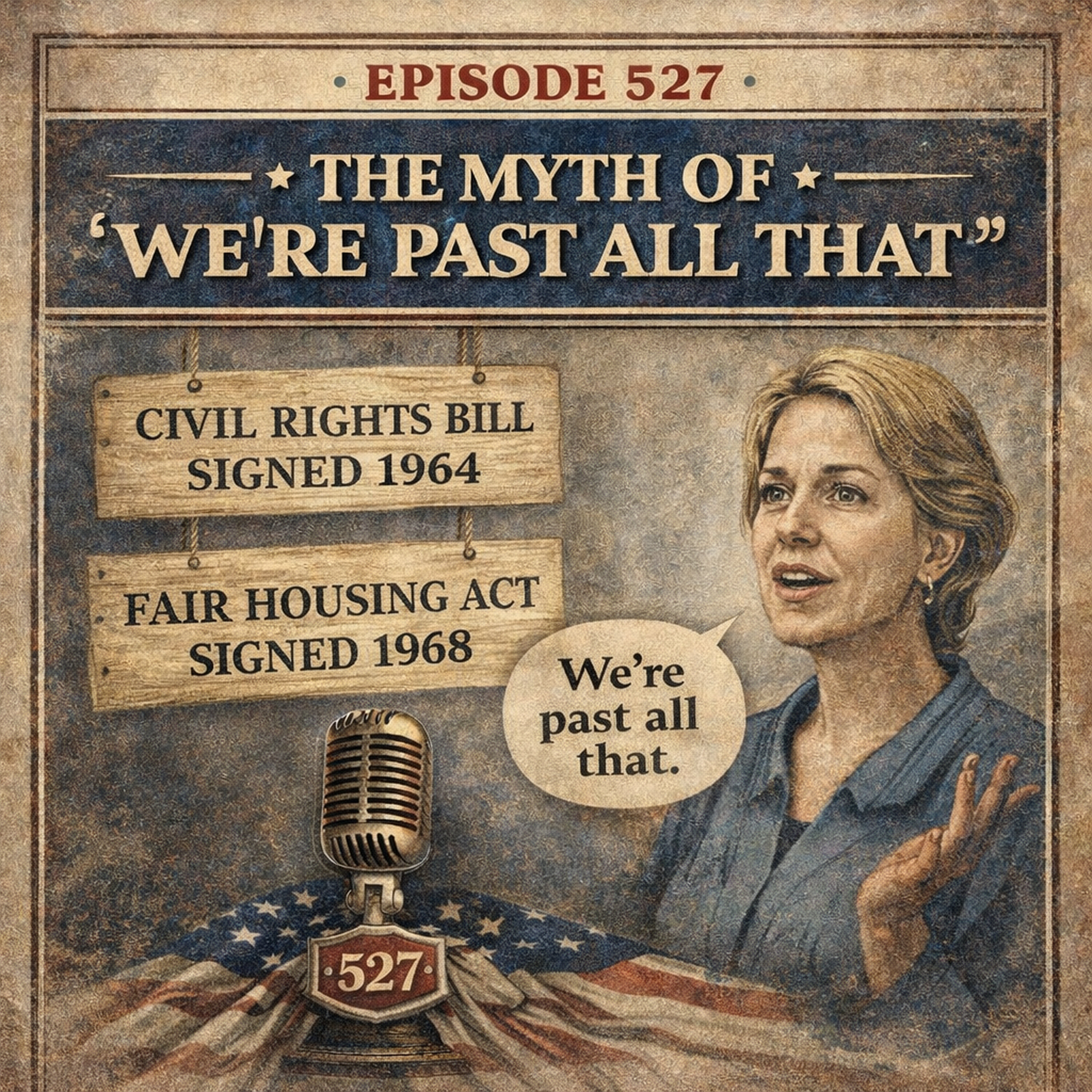
The Myth of We're Past all that I Didn't Know welcome back Know It Alls to another episode of the most anticipated podcast on the Black Effect Podcast Network, especially in February, and it's entitled I Didn't Know. Maybe you didn't either. I am your host, B dot, and I'm sure you've heard this before. I know they fill up the comment section on our Instagram. Make sure you're following Idk my D E with an underscore before it and behind it. But as somebody always saying, oh, slavery. Slavery was a long time ago. Or how about Jim Crow? Jim Crow is over. Or this one right here? Y' all keep bringing up the past. Why you keep living in the past? Oh, this is the backbreaker right here. That was hundreds of years ago. We're past all that now, right? Then explain why we still arguing about the same stuff. How about we open up that case file? But before we do, I've got to give you three of the most useless facts you'll never need ever, not a day in life, about how we're not past all that up. First, the Civil Rights act was signed in 1964. That wasn't even two generations ago. Y' all ask your grandparents about it. They remember it's not ancient. Your second useless fact. The Fair Housing act didn't pass until 1968. That was after Martin Luther King Jr. Was assassinated, folks. Your third useless fact. Most of the wealth gap in America, it was formed after slavery, not during it. As a matter of fact, did you know that the median white family has about eight times the wealth of the median black family? And did you know that that gap widened after Reconstruction? After redlining, after the GI Bill was denied to black veterans? Cause I didn't know. Maybe you didn't know, maybe you didn't. I didn't know. I didn't know. I didn't know. Look, here's the trick behind oh, come on, we're past all that. It collapses time. It takes unfinished business and labels it ancient so nobody has to Deal with it. Yes, on paper, slavery ends in 1865, but segregation explodes right after Jim Crow lasts nearly 100 years. Redlining shapes where people live at. Schools get defunded, jobs get blocked, wealth gets extracted. And then somebody looks at the results and says, why can't y' all just move on? Well, why can't you just pull yourselves up by your bootstraps? Those four words, we're past all. That only works if you never talk about what came after. And that's exactly what Carter G. Woodson was warning us about a hundred years ago. He said, if you disconnect people from their history, you can convince them that their position is natural. And that's the myth. The truth is, we not past it. We living with it and pretending otherwise don't heal a damn thing. It just freezes the conversation. A whole century after Carter G. Woodson created Negro History Week, the myth has just been upgraded. Now it's not black people don't have history. It's black history. Doesn't matter anymore. Same goal, different packaging. And Carter G. Woodson knew that the lie would evolve. That's why preservation had to be permanent. Well, the next time you hear somebody say, we're past all that, your retort should be, you don't get past something that you never finished dealing with. And I didn't know. Maybe you didn't, either. I didn't know.
- [06:29]
Matt Rogers
This is Matt Rogers from Las Culturistas with Matt Rogers and Bowen Yang.
- [06:32]
Bowen Yang
This is Bowen Yang from Las Culturistas with Matt Rogers and Bowen Yang.
- [06:35]
Matt Rogers
Hey, so what if you could boost the WI fi to one of your devices when you need it most?
- [06:40]
Bowen Yang
Because Xfinity WI fi can. And what if your wifi could fix itself before there's even really a problem? Xfinity is so reliable, it does that, too.
- [06:48]
Matt Rogers
What if your WI fi had parental instincts? Xfinity WI fi is part nanny, part ninja, protecting your kids while they're online.
- [06:55]
Bowen Yang
And finally, what if your WI fi was, like, the smartest WI fi?
- [06:59]
Matt Rogers
Yeah, it's WI fi that is so smart, it makes everything work better together.
- [07:04]
Bowen Yang
Bottom line, Xfinity is smart and reliable. You deserve the peace of mind of having WI fi that's got your back.
- [07:09]
Matt Rogers
Xfinity.
- [07:11]
Take 5 Oil Change Advertiser
Imagine that when your schedule sounds like this.
- [07:19]
Redfin Advertiser
Are you kidding me?
- [07:20]
Take 5 Oil Change Advertiser
An oil change is the last thing you have time for. So drive into take five and let our techs change your oil, check your tires, top off your fluids, and have you back on the road pit stop fast, all while you stay in your car. No putting your entire schedule on hold. No upsells, no problem. So you can get back to your to do list or not. Find your nearest shop@take5.com Take 5 the stay in your car 10 minute oil
- [07:41]
CVS Representative
change at CVS, it matters that we're not just in your community, but that we're part of it. It matters that we're here for you when you need us, day or night, and we want everyone to feel welcomed and rewarded. It matters that CVS is here to fill your prescriptions and here to fill your craving for a tasty and, yeah, healthy snack. At cvs, we're proud to serve your community because we believe where you get your medicine matters. So Visit us@cvs.com or just come by our store. We can't wait to meet you. Store hours vary by location.
- [08:17]
Redfin Advertiser
There's a difference between liking a house and actually getting it. Redfin is built to make up that difference and close the gap between finding and owning the home for you. Redfin agents close twice as many deals as other agents, so when you find a home you love, you're not a step behind when it comes to making an offer. That means less watching great homes disappear and more focus on the one you'll call home. Redfin helps turn saved listings into real addresses. Get started@redfin.com own the dream this is an iheart podcast.
- [08:50]
CVS Representative
Guaranteed human.