Loading summary
Transcript52 lines
- [00:00]
Podcast Narrator
This is an I heart podcast.
- [00:02]
Jill Winterstein
Guaranteed human.
- [00:04]
Nancy Glass
I'm Nancy Glass, host of the Burden of Guilt season two podcast. This is a story about a horrendous lie that destroyed two families. Late one night, Bobby Gumpride became the victim of a random crime. The perpetrator was sentenced to 99 years until a confession changed everything.
- [00:25]
Sixth Bureau Host
I was a monster.
- [00:27]
Nancy Glass
Listen to Burden of guilt Season 2 on the iHeartRadio app, Apple Podcasts or wherever you get your podcasts.
- [00:36]
Podcast Narrator
What if mind control is real?
- [00:37]
B Dot
If you could control the behavior of anybody around you, what kind of life would you have?
- [00:40]
Podcast Narrator
Can you hypnotically persuade someone to buy a car?
- [00:44]
Mind Games Hypnotist
When you look at your car, you're gonna become overwhelmed with such good feelings.
- [00:48]
Podcast Narrator
Can you hypnotize someone into sleeping with you?
- [00:51]
Special Agent Riegel
I gave her some suggestions to be sexually aroused.
- [00:54]
Podcast Narrator
Can you get someone to join your cult?
- [00:56]
Amanda Knox
NLP was used on me to access my subconscious mind games.
- [01:00]
Podcast Narrator
A new podcast, exploring nlp, AKA neuro linguistic programming. Is it a self help miracle, a shady hypnosis scam, or both? Listen to Mind Games on the iHeartRadio app, Apple Podcasts or wherever you get your podcasts.
- [01:16]
Jill Winterstein
Hi, it's Jill Winterstein, host of the Spirit Daughter podcast where we talk about astrology, natal charts and how to step into your most vibrant life. And today I'm talking with my dear friend Chris Krista Williams.
- [01:29]
Amanda Knox
It can change you in the best way possible. Dance with the change, dance with the breakdowns.
- [01:34]
Jill Winterstein
The embodiment of Pisces intuition with Capricorn power moves.
- [01:39]
Amanda Knox
So I'm like delusionally proud of my chart.
- [01:41]
Jill Winterstein
Listen to the Spirit Daughter podcast starting on February 24th on the iHeartRadio app, Apple Podcasts or wherever you listen to your podcast.
- [01:51]
Special Agent Riegel
This is Special Agent Regal, Special Agent Bradley Hall. In 2018, the FBI took down a ring of spies working for China's Ministry of State Security, one of the most mysterious intelligence agencies in the world.
- [02:04]
Sixth Bureau Host
The Sixth Bureau podcast is a story of the inner workings of the MSS and how one man's ambition and mistakes opened its vault of secrets.
- [02:13]
Special Agent Riegel
Listen to the 6th Bureau on the iHeartRadio app, Apple Podcasts, or wherever you get your podcasts
- [02:21]
B Dot
when integration cost black communities everything.
- [02:26]
Mind Games Hypnotist
I didn't know.
- [02:28]
B Dot
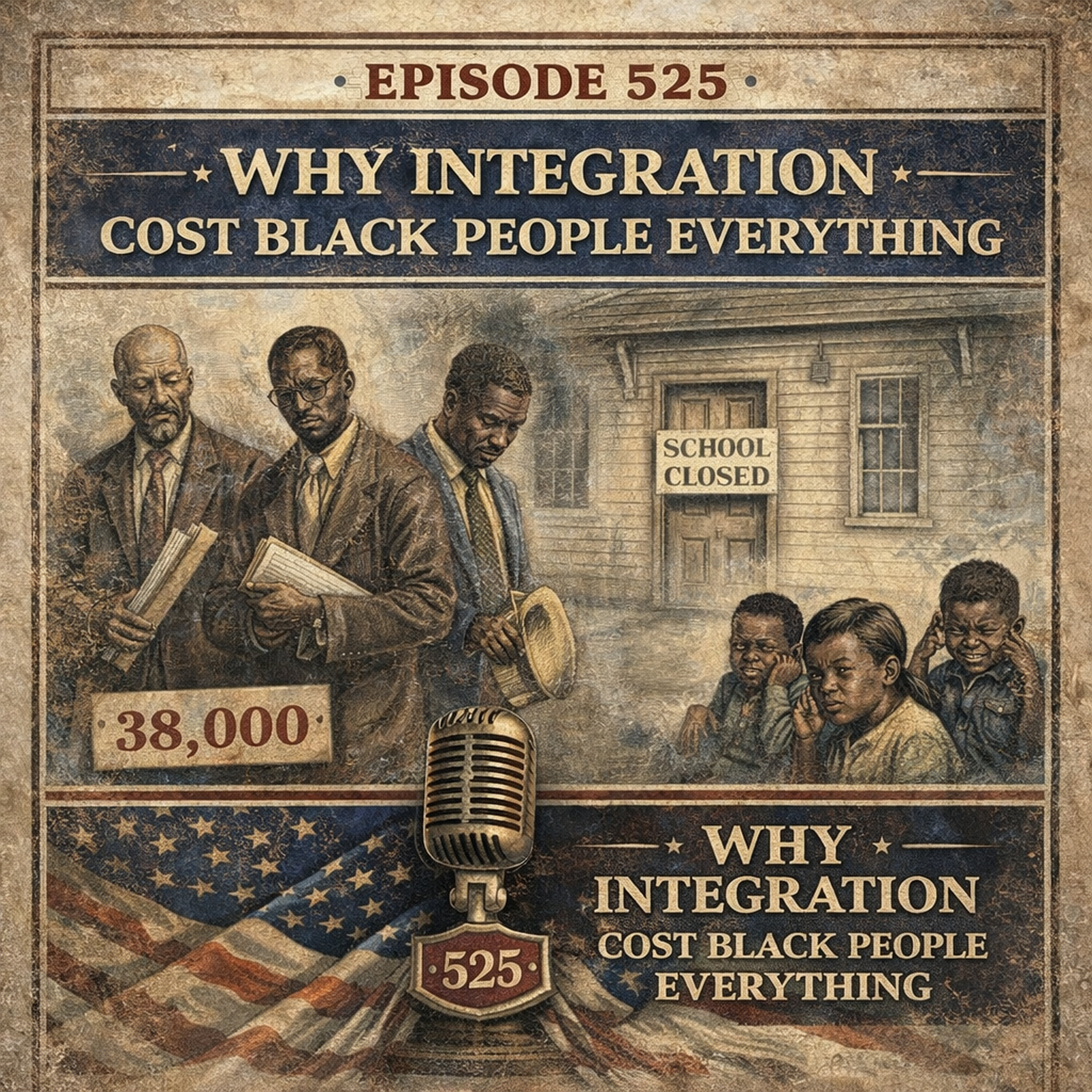
Welcome back know it alls to another episode of the most anticipated podcast on the Black Effect podcast network, especially in February, entitled I didn't know. Maybe you didn't either. I'm your host, B Dot, and I firmly believe that integration destroy black communities. See, integration is usually told like a nipsey hussle album a victory lap. Schools open, doors open. Everybody moved forward. But here's the question that I rarely hear asked. What got closed in the process? Yeah, let's open that case file. But before we do, I've got three of the most useless facts you'll never need. Never, never ever, not a day in life about integration. Up first, after integration, thousands of black schools were shut down all across the South. Your second useless fact, over 30,000 black teachers and principals lost their jobs in that exodus. 38,000 actually, between 1954 and 1972 is documented. And your third useless fact, Many black owned businesses collapsed when black dollars were redirected elsewhere. Did you know those three useless facts about integration? Because I didn't.
- [03:48]
Mind Games Hypnotist
I didn't know. Maybe you didn't know. I didn't know. Maybe you didn't know. I didn't know. I didn't know. I didn't know. I didn't know.
- [04:01]
B Dot
Yes, integration gave black people access, but it also dismantled black infrastructure. Before integration, black communities had black schools, black teachers, black principals, black owned businesses, black doctors, lawyers, banks. Not because segregation was good, because exclusion forced us to build our own systems. I'm a product of an hbcu, Historically Black College and university, Winston Salem State University, which started at Slater industrial academy on September 28, 1892 in Winston Salem, North Carolina. Now, you leave Winston Salem State University, you get on 40 east and you head about an hour, you'll get to Durham, North Carolina, which was once called the black Wall street of the south. By the 1940s, black owned businesses there generated $3.5 million annually after integration. Many of them closed within a decade. See, when integration came, the promise was equality. But the reality, black schools were closed instead of funded. Black educators were fired instead of promoted. Black institutions were absorbed, dissolved, or just plain ignored. White schools didn't integrate into black schools. Black schools integrated into white systems and then, poof, disappeared. The same with businesses. When access expanded, black money stopped circulating. Locally, Businesses that once thrived in the black community collapsed. And this ain't even necessarily an argument against integration. It's an argument against pretending that it came without loss. Cause here's the part that gets erased. Black communities weren't just surviving segregation. We were organizing, educating, and sustaining our damn selves. And when those systems were removed without replacement, a vacuum formed. And that vacuum didn't get filled with opportunity. It got filled with dependency. Nobody ever explains that part. Which is exactly why Carter G. Woodson warned us against celebrating progress without examining consequences. He believed history had to be complete not comforting. And here we are a century later, still dealing with the fallout of solutions that ignored black systems instead of strengthening them. So, yes, two things can be true. Integration did open doors, but it also shut down entire communities. And I didn't know. Maybe you didn't either.
- [06:26]
Mind Games Hypnotist
I didn't know.
- [06:29]
Nancy Glass
I'm Nancy Glass, host of the Burden of Guilt Season two podcast. This is a story about a horrendous lie that destroyed two families. Late one night, Bobby Gumpright became the victim of a random crime. The perpetrator was sentenced to 99 years until a confession changed everything.
- [06:50]
Sixth Bureau Host
I was a monster.
- [06:52]
Nancy Glass
Listen to Burden of guilt Season 2 on the iHeartRadio app, Apple Podcasts or wherever you get your podcasts.
- [07:01]
Podcast Narrator
What if mind control is real?
- [07:02]
B Dot
If you could control the behavior of anybody around you, what kind of life would you have?
- [07:05]
Podcast Narrator
Can you hypnotically persuade someone to buy a car?
- [07:09]
Mind Games Hypnotist
When you look at your car, you're going to become overwhelmed with such good feelings.
- [07:13]
Podcast Narrator
Can you hypnotize someone into sleeping with you?
- [07:16]
Special Agent Riegel
I gave her some suggestions to be sexually aroused.
- [07:19]
Podcast Narrator
Can you get someone to join your cult?
- [07:21]
Amanda Knox
NLP was used on me to access my subconscious mind games.
- [07:25]
Podcast Narrator
A new podcast exploring nlp, AKA neuro linguistic programming. Is it a self help miracle? A shady hypnosis scam? Or both? Listen to Mind Games on the iHeartRadio app, Apple Podcasts, or wherever you get your podcasts.
- [07:40]
Amanda Knox
I'm Amanda Knox and in the new podcast the Case of Lucy Letby, we unpack the story of an unimaginable tragedy that gripped the UK in 2023. But what if we didn't get the whole story? Evidence has been made to fit.
- [07:55]
B Dot
The moment you look at the whole
- [07:56]
Podcast Narrator
picture of the case collapsed.
- [07:57]
Amanda Knox
What if the truth was discovered disguised by a story we chose to believe?
- [08:01]
Jill Winterstein
Oh my God.
- [08:01]
Podcast Narrator
I think she might be innocent.
- [08:03]
Amanda Knox
Listen to Doubt the Case of Lucy Letby on the iHeartRadio app, Apple Podcasts, or wherever you get your podcasts.
- [08:11]
Special Agent Riegel
This is Special Agent Riegel, Special Agent Bradley Hall. In 2018, the FBI took down a ring of spies working for China's Ministry of State Security, one of the most mysterious intelligence agencies in the world.
- [08:25]
Sixth Bureau Host
The Sixth Bureau podcast is a story of the inner workings of the MSS and how one man's ambition and mistakes opened its vault of secrets.
- [08:34]
Special Agent Riegel
Listen to the 6th Bureau on the iHeartRadio app, Apple Podcasts or wherever you get your podcasts.
- [08:41]
Podcast Narrator
This is an iHeart podcast.
- [08:43]
Jill Winterstein
Guaranteed Human.