← The Breakfast Club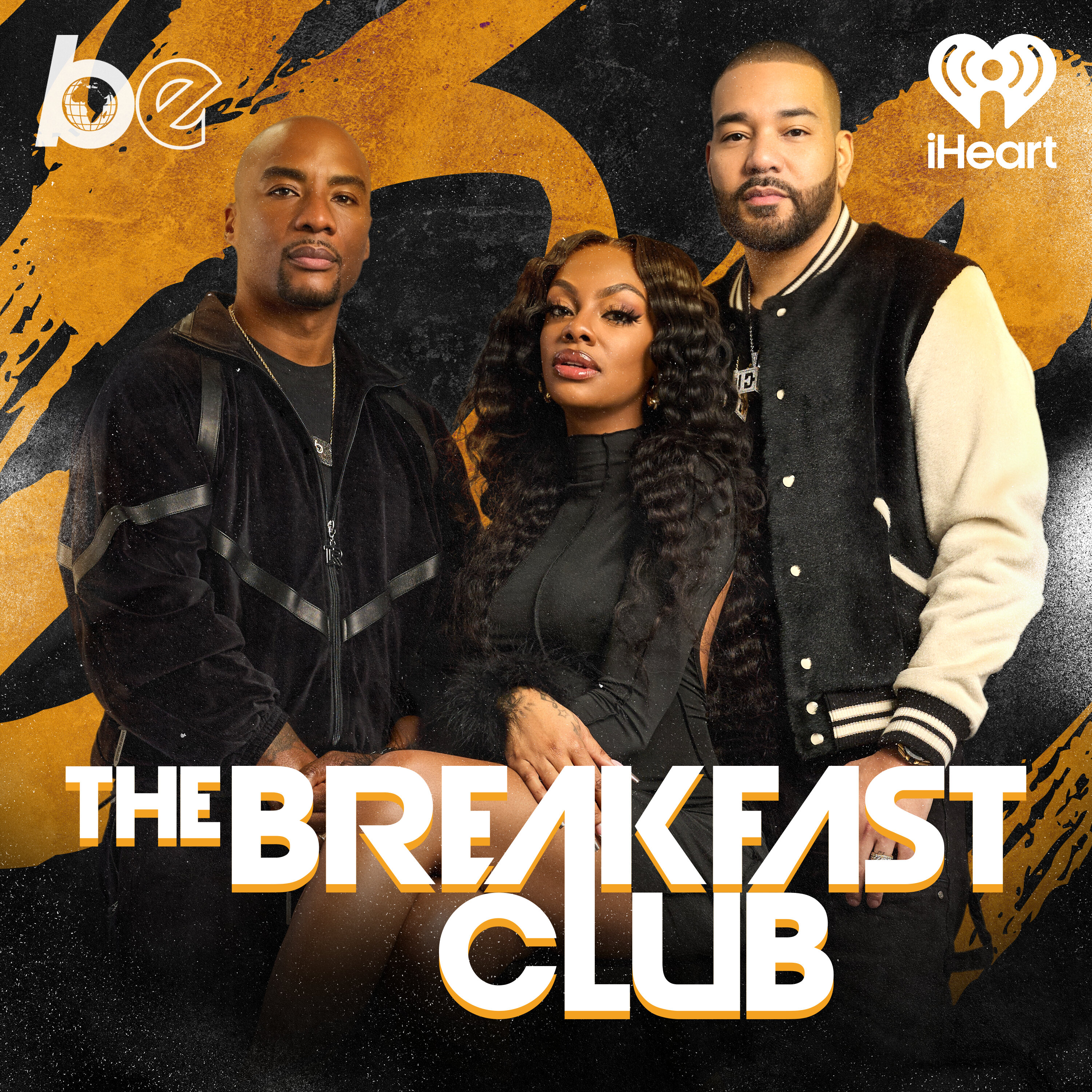
The Breakfast Club
INTERVIEW: Rodney Jerkins & Jon Keith On Songwriters Hall of Fame, Michael Jackson, Music Industry Shift +More
01:15:08
Loading summary
Transcript449 lines
- [00:00]
DJ Envy
This is an iHeart podcast.
- [00:04]
Charlamagne tha God
Meetings, deadlines, emails. Don't you wish you could escape the chaos? That's where the all new Nissan Murano comes in. With available features like the relaxing, massaging seats to ease stress and the beautiful skyline views that bring in natural light. It's like cruising in your personal oasis. And if you need to set a vibe, 64 colors of personalized lighting and a Bose premium sound system have you covered. Hands down, the all new Nissan Murano is your stress free getaway. Sometimes the greatest rush isn't rushing at all. Drive the all new Nissan Murano today.
- [00:31]
Rodney Jerkins
Panoramic moonroof, ambient lighting, bows and massaging leather. Appointed seats are optional features.
- [00:35]
Just Hilarious
Wake that ass up early in the morning.
- [00:37]
Rodney Jerkins
The Breakfast Club.
- [00:40]
Charlamagne tha God
Morning, everybody. It's DJ Envy. Just hilarious. Charlemagne the guy. We are the Breakfast Club. We got some special guests in the building. That's right, we got the OG, the icon, the legend, Rodney Jerkins. Celebrating 30 years of dog Child, he's inducted into the Songwriters hall of Fame.
- [00:56]
Just Hilarious
That's big.
- [00:57]
Charlamagne tha God
Congratulations. And he also brought his new artist, John Keith. Hey, how you feeling? First and foremost, Good.
- [01:03]
Rodney Jerkins
I'm good, bro. I'm good.
- [01:04]
Charlamagne tha God
You good?
- [01:05]
Rodney Jerkins
Blessed.
- [01:05]
Just Hilarious
John Keith, no pressure, but Rodney has sold over 500 million records worldwide. He's worked with Whitney Houston, Michael Jackson, Beyonce, Brandi, Justin Bieber, sza, Sam Smith, just to name a few. No pressure, no pressure.
- [01:16]
Rodney Jerkins
Okay, easy work.
- [01:19]
Charlamagne tha God
So how you feeling? First and foremost, we gotta get to, you know, I like to bring, when we have icons and legends like you, I like to start from the beginning. Now, you from Atlantic City? Yes, sir, from Atlantic City. And how did you get into music? What made you say, I want to be a producer? And then being from Atlantic City. Anybody from Atlantic City will tell you it's very difficult to get out there. How did you get out there? Where people started hearing your beats and you started selling some stuff?
- [01:41]
Rodney Jerkins
My mom was a housekeeper, so she would go and she would take care of other people's houses and she would hear these little kids playing piano or being taught. She was like, I need this guy to teach my son. So I'm five years old. I didn't want to play, play the piano, to be honest. But my dad had a house rule. You gotta play piano, live under this roof. So all our siblings play. We all play. I took the lessons and probably when I was about 10, 11, I discovered like, I wanted to be a producer. I heard Michael Jackson's album and then I started kind of, you know, back in the day, you read the credits?
- [02:12]
Charlamagne tha God
Yeah.
- [02:13]
Rodney Jerkins
He was someone that I really admired. I saw Teddy Riley on a lot of credits and I'm like, yo, I want to do this. I need to do this. So back in the day, there was a magazine called Blackbeat.
- [02:23]
Just Hilarious
Yeah, absolutely.
- [02:23]
Rodney Jerkins
And I saw an interview and it said, like, oh, it had like, all the top producers. Pete Rock, you know, every, everybody. And it was like, we use the NPC to make the beat.
- [02:34]
Charlamagne tha God
NPC 60 back then, right.
- [02:36]
Rodney Jerkins
And I was like, I need this. I need this. Can't afford that. My dad borrowed 1200 off his life insurance, got the NPC for me, and.
- [02:45]
Just Hilarious
We going, random, random question. How was it growing up in Atlantic City? Because I love Atlantic City because my daughter does a lot of cheerleading competitions. And for some reason, when I go out there, I. I just get a good peace of mind. Like, I go out there and write and all types of stuff. How was it growing up there?
- [02:58]
Rodney Jerkins
As a child, it was hard because there was no outlet. There was no studios there. There was no outlet for music. So I had to get on New Jersey transit, you know, taking that two and a half, half an hour bus ride pretty much every other day just to try to get put on.
- [03:13]
Just Hilarious
Wow.
- [03:13]
Rodney Jerkins
But, yeah, but let me tell you, I got discovered. I got discovered by Teddy Riley at the Impact Convention.
- [03:19]
Just Hilarious
Where was that?
- [03:20]
Rodney Jerkins
At Ma City.
- [03:21]
Just Hilarious
Wow. Break that down.
- [03:23]
Rodney Jerkins
So he heard a demo that I produced. He wasn't really into the. The guy singing the demo, but he was like, yo, this producer is dope. So the manager told me, I told my dad, I'm like, dad, Teddy Riley heard it. He, we need to go see him. He's like, where's he at? I said, well, the credits say he's in Virginia beach, so we gotta go to Virginia Beach. My dad was like, that's like a six hour drive. Like, whatever, let's go. Yeah, yeah. So we hop in the car, we hop in the van, the church van. Because my dad's a pastor, hopping the church van. We go to Virginia beach, stand in Teddy Riley's. We was in his parking lot probably for like half the day.
- [03:58]
Charlamagne tha God
Now, for people that don't know Teddy Riley's from Harlem, he built this huge studio in Virginia beach, and it was beautiful. Everybody worked there from Pharrell to Bobby Brown to Michael Jackson.
- [04:07]
Rodney Jerkins
Yep. So we go there in the parking lot, we just waiting for him to show up. And then finally he shows up like six, seven hours later. Pull up on him. I'm like, I'm the kid that produced. I'm like, literally 14 years old. I'm like, you just heard my beat. He was like, that was you? And I was like, yeah. He was like, come on. Come in the studio from then, you know, rest is history. And so now then I'm. I'm getting inducted, and Teddy Riley's the one inducted me.
- [04:31]
John Keith
Wow.
- [04:31]
Charlamagne tha God
That's amazing.
- [04:33]
John Keith
Where did the. The famous Dark Child come from? Where did you get that?
- [04:38]
Rodney Jerkins
I just. You know, it was really. The name itself came from the style that I felt that I was creating. I love dark minor chords. I was. I was youthful. You know, I'm a young kid. So I kind of took those words and played with it. But then I just started saying. I didn't know that I was really one of the first ones. Probably maybe the first one doing a producer tag.
- [04:55]
Just Hilarious
Producer tag? Yeah.
- [04:56]
Rodney Jerkins
I didn't know it at the time because I was just like. I was just trying to brand myself.
- [05:00]
John Keith
Yeah.
- [05:00]
Rodney Jerkins
You know, in a way, because I wasn't the type that wanted to be like him and be on the microphone rapping all the time, even though I could. You know, I could spit a little bit, but I didn't want to do that. So I was like, how they gonna know who did the record? So I was like, doc Child. I would say it, and then what happened was the artist started to say it.
- [05:15]
John Keith
Yeah.
- [05:16]
Rodney Jerkins
So, like, Tony Braxton sang it, and then Whitney said it, and then Michael said. And then her said it. Like, they just started saying. So I was like, I ain't got to say it no more. Let them say it.
- [05:25]
John Keith
I love that.
- [05:27]
Charlamagne tha God
Was that, like, a producer beat camp? Really? Cause it was y' all. It was you, Pharrell. Well, Neptunes, and it was a bunch of y' all. So how was working in that beat camp? Cause you had producers. You're learning from a icon, but y' all all became your own in your own separate ways.
- [05:44]
Rodney Jerkins
Yeah, I think that's what was special about being in VA is like, Teddy's studio. Like, you wanted to get into his room and see what he was doing, Right. And when I came, Pharrell and them was already there, so they was. I was the one. I was the one that had to really kind of wait for my turn because they was already down there. And it was kind of like Teddy was cool because he wasn't, like, signing nobody. So it was more so just like, yo, you here. Let me hear what you got. So I'll be in there, and I'm just waiting for my. My shot. And then eventually he'd be like, all right. Come in, little bro. And then you press play and it's just like, all right, cool, we're gonna get to work. That's how it kind of happened.
- [06:18]
Just Hilarious
How many hits did you make back then that you didn't get the credit for?
- [06:21]
Rodney Jerkins
I got credit for my hits. All of them. I always. I always think so. It's funny you say that though, right? I always look at, like, how people do their business and whatever's wrong with their business, it's not going to be wrong with my. With my business. So there's a lot of mistakes that I would see in the industry and I'd be like, y' all allow that to happen. That can't happen to me, you know? And I. And I've learned to play in a position of fair with my artists. I've learned to be. I want to be. I want to be one of those dudes where when, you know, like, oh, you did the deal with him. You got a good deal.
- [06:53]
John Keith
Yeah.
- [06:53]
Rodney Jerkins
You know, and. And a lot of producers now that's blown up came from my camp. Like, who D Mao, Tommy Brown? Like, these are like the people who did D Mild just did. I think every Bruno Mars record that you can think of and I'm got the producer Tag Silk, Sonic that they didn't produce that.
- [07:13]
Just Hilarious
I don't know. I don't. I don't know any of the new.
- [07:15]
Charlamagne tha God
Because we don't read the credits anymore like that. You know what I mean? Because you stream.
- [07:18]
Rodney Jerkins
They don't even understand what it means. They don't even understand what it means. Like, man, I think we were in a different day, right? Back in the day, it was a producer driven industry. It wasn't file sharing. So I wasn't sending you a file. Like, I'm in the studio with Michael. I'm in the studio with. I'm doing their vocals with them. I'm coaching them now it's just like, yo, send the files and we gonna cut that tonight and send it back to you.
- [07:39]
Charlamagne tha God
And now you got to break that.
- [07:40]
John Keith
Down in personal engagement. Like, it's none of that.
- [07:43]
Rodney Jerkins
Not at all. Not at all. I think. I think that's where the game was lost. I think there's a lot of producers and artists that don't even know each other. Yeah. And it's just send a beat over. And there's. Here's the difference too. Remember, like, when credits was a thing.
- [07:57]
Just Hilarious
That's right.
- [07:58]
Rodney Jerkins
Well, credits was a thing, but it was also a thing where you might only saw three to four names on a Song. The only time you saw multiple names is when someone was someone sampled. Now you see 10, 15 names on a record, you like, dang, like who wrote what? Like nobody can. There's no real identity of a songwriter anymore over producer anymore because there's so many names so we don't know who did what.
- [08:21]
Just Hilarious
Isn't a lot of that have to do with samples sometime though?
- [08:24]
Rodney Jerkins
That's what I'm saying. This is back in the day. It did now. No wow. Now it's just because you've been foul sharing. So it's like if I. If I'm working on the track and I started and I'm like, oh, this is dope, let me send it to him. And he's like, yo, this is dope. But I think I could do a better 808. The minute that he has his 808, he's now a co producer, right? And then he sends it over to him. He like, yeah, this is fire. But yo, what if we add this pad? Soon as he had that pad, now he's a producer. Now you got three producers versus the one. When I started out, every song that I did, I produced. So you're talking about 50% of the publishing is mine right out the gate, right? That's how it starts with every record. 50%. Now I'm looking at, when I look at splits now I be seeing the producer like 7%, 5%, 10%. I'm like, yo, what happened? You know, so I'm blessed to know the time that I came up in.
- [09:19]
Charlamagne tha God
Now I gotta ask now, you just glazed over. Michael Jackson. Talk about how you started working with Michael Jackson. How was that called and how was he in the studio? Cause you were actually in the studio with him.
- [09:30]
Rodney Jerkins
The greatest, the greatest artist I've ever worked with, hands down. Like, and you know, Mike was, Mike was so special and different that he pushed you to limits like you can't have imagine. Like I remember him telling me, you got to get exhausted in the music. I'm like, what? Like I ain't know what. I'm 21 years old. So you talking about 21 year old kid working with Michael Jackson.
- [09:49]
Charlamagne tha God
How did they call, how was that? How did he reach out?
- [09:51]
Rodney Jerkins
Oh, it called, it called, yo, this is real crazy. It called from a dream. What? It happened from a dream. Oh, I was in my mom.
- [10:00]
Just Hilarious
How did you say that before?
- [10:01]
Rodney Jerkins
I was in my mom and dad's house on the couch, took a nap and I had a dream, literally had this dream that I was pulling up to the Studio with glass windows. And I saw Michael Jackson in a red shirt. That. That red shirt with the black pants in the window. I woke up from the dream, told my mother and father the dream I just had. The phone rings, like 10 minutes later. Lady by the name of Carol Bea Sager calls. You probably don't even know what that is. She wrote, that's what friends are for. Okay, older lady, whatever she said. I had say My Name out at the time by Destiny's Child. She goes, rodney, I love this song you have out. I want to know if you would love to come to my house and work this week. And I was like. I didn't even know. She was. She was like, I'm working with Michael Jackson. I was like, where? She's like, bel Air. I was like, I'm in Jersey, but I'm out. I'm going for real. I got on the plane and I stayed in a hotel until she called me. She called me on Thursday, four days later, and was like, can you come to the house today? I'm like, yeah, I came. I kid you not, man. I'm pulling up the driveway, I look to the left, I see Michael Jackson in the window with the red shirt.
- [11:06]
John Keith
Damn.
- [11:06]
Charlamagne tha God
Staring out the window.
- [11:08]
Rodney Jerkins
Just like. Just like the dream, bro. And I was like, nobody can't tell me God ain't real.
- [11:12]
John Keith
Have you ever told him that? Did you tell him that 100%?
- [11:15]
Rodney Jerkins
Literally, literally talk. I'm like, you know, he believes this stuff like that?
- [11:18]
John Keith
Yeah. What did he say?
- [11:20]
Rodney Jerkins
That was how it's supposed to happen?
- [11:21]
John Keith
Is that how he said it's supposed to happen?
- [11:24]
Rodney Jerkins
Mike's voice is actually deeper than that. That's how I was supposed to. You know, he. A little deeper than that, Right? But it was true. Like, it like, Like, I just feel like God just went. Like, he showed me exactly how I was going to be so I can have the story to be able to tell him one day how it's supposed to be.
- [11:38]
Just Hilarious
I want to say envy is. It's. It's glossed over, not glazed over. Even though Michael Jackson deserves all the glazing because he's the greatest of all time. It's glossed over.
- [11:46]
Rodney Jerkins
Glossed over.
- [11:47]
Just Hilarious
Jesus.
- [11:47]
Rodney Jerkins
Nice.
- [11:48]
John Keith
Crazy, crazy.
- [11:50]
Charlamagne tha God
Now, talk about MJ working with mj.
- [11:52]
Rodney Jerkins
How was that amazing? Well, he, he, he. He worked me hard, bro. He's. He's different. Like, he'd be like. He would call 3, 4 o' clock in the morning, be like, can I hear. Hear what you working on over the phone? And I'll be Like, I'm actually not working right now. I'm actually trying to take a nap, cuz I've been up for 30 hours. No. Well, can you go to the studio right now and play? Like, he's like that. So I get up and drive to the studio and playing. And Mike was so crazy with it that this was crazy. I would play some on the phone. He'd be like, can you turn the hi, hats down 3db? And then make sure. He goes. And make sure they're panned to the left. And I'll be like, really? He goes, yes. And I would be bugging. And the only thing I could think of. Right. Which is crazy, right? Michael Jackson was taught by Barry Gordy.
- [12:42]
Just Hilarious
Quincy Jones.
- [12:43]
Rodney Jerkins
Quincy Jones, Teddy Riley. So that school. I'm a part of that school now. Yeah, right. And I'm getting what he learned from Barry Gordon, Quincy Jones. So I'm taking it all in. I'm learning. But dude was. He was incredible, bro. Like, and a great person. Like, you know, we. We used to bet. We used to bet DVDs. We play pool together.
- [13:08]
Charlamagne tha God
DVDs.
- [13:09]
Rodney Jerkins
Bet DVDs. I used to. I used to bet him he beat me because I scratched. And we go shopping right here in Virgin Music Store on Times Square.
- [13:20]
Charlamagne tha God
He would walk in there with you, bro.
- [13:21]
Rodney Jerkins
He put the disguise on. We went. We went there. And I had to buy the DVDs. A lot of people don't notice. I took Michael to work apart, watch basketball. No one knows this. Y' all know it now. But when we did Rock My World, Michael kept saying, we need to go to a club and test it out. And I was like. I was like, I got one better. I said, I'm gonna take this spot called Record Park. And I didn't let him get out the car, but I just wanted him to feel the energy. So I went to Rucker park and I played the record. And they was going crazy. They didn't know that Mike. The window was cracked the whole time. They didn't know Mike was in the car.
- [13:57]
Just Hilarious
Wow.
- [13:58]
Rodney Jerkins
That's crazy. That's. Wow. And I'm gonna tell y' all how. How cool we got. This is how cool we got. I'm in Manhattan one time. I could sense that every time I'm with Mike, he's in disguise when he goes out. Like, it's always that one day. I was like, yo, hey, Mike, I'm coming to pick you up. He was like, wow. I was like, just be ready. I'm coming to pick you up. I Had a. A blue peacock Bentley convertible. I dropped the top. I pull up to his apartment, and I say, yo, Mike, come out. He's like, let me get skipped. Skip was his security guard. I was like, no, no, no, no, no. Come out.
- [14:35]
Charlamagne tha God
You trying to kill Michael?
- [14:36]
Rodney Jerkins
Listen, I'm trying to kill him. I'm trying to let him see what I knew he wanted to see. Right. And I knew no one would do that for him but me. He gets in my car, I put the windows up, but the top is off. And I remember this day because that was the day that Hot 97 was playing the Janet Jackson Black street record that just came out, and it came on, and I'm playing Hot 97. I'm rolling through Manhattan with Michael, and he's going crazy. He's love. He just loving the fact.
- [15:07]
John Keith
Yeah.
- [15:08]
Rodney Jerkins
When we got back to the apartment, he looked at him, said just. He's like, thank you. That's. And I'm just like, yo, this is what it's about, trying to get him killed. I was just trying to let him see reality.
- [15:17]
John Keith
Yeah.
- [15:17]
Rodney Jerkins
Because he ain't seen it in so long. You feel what I'm saying? Like, and that spills over into our production. That spills over to Rock My World. It spills over to what we trying to create, because you have to still have a sense of what's going on, or you can't really create from a real place.
- [15:32]
Just Hilarious
You don't want to ask you as a producer, like, you know, you talk about Michael Jackson. You worked with him. You worked with Whitney, you worked with Brandy, Beyonce. What's something they all had in common in the studio that separated them from everybody else?
- [15:46]
Rodney Jerkins
Tenacity, patience. You're talking about artists that focused on making albums, which is another art form that we've lost a little bit. Right. It wasn't about, like, just the single. It was about, like, how to make a great. A great album. I feel like a lot of them sometimes got caught up in trying to compete with themselves, especially Michael.
- [16:08]
John Keith
Yeah.
- [16:08]
Rodney Jerkins
Like, he was overly trying to compete with himself.
- [16:11]
Just Hilarious
You'll never beat Thriller. That's.
- [16:13]
Rodney Jerkins
How could you? Yeah. You know what I mean? But he believed he would, right? He believed he could. He believed he would. Which is crazy to think about it. Right. If Michael was alive or was doing what he was doing in the streaming world, I believe he could have beat it.
- [16:30]
Charlamagne tha God
Really?
- [16:31]
Rodney Jerkins
Yeah, I believe he could have beat it.
- [16:33]
Just Hilarious
But you know what's interesting? With an album like Thriller or any artist, what are you trying to beat? Are you trying to Beat yourselves or you just trying to be better musically? I would think you just would want to be better musically.
- [16:43]
Rodney Jerkins
I don't think so. I think someone like Michael got obsessed with knowing the numbers that he did was so high that he wasn't competing against anyone else anymore. Musically. It wasn't a race with Prince anymore. It wasn't all. He's like, I already beat you, now I'm trying to beat me, right? And how I know this to be factual was because he didn't say that. He would say, I think there's a day where I could do a billion sales. He literally would say that. So that lets me know that he's racing for that he's racing for a number. And he had to, because in his mind he was like, how do you stay hungry? How do you stay when you the greatest? Like, how do you get up for the fight? Like, you know, a lot of great fighters lose fights because they just can't get up for the fight anymore because they've done. That's why you gotta, you gotta give props to someone like a Floyd Mayweather. You gotta be like, yo, this dude stay hungry. Like, no matter what. Some people get the 40 and old 42 and no. And they ready to say, I'm done with it. I'm not putting in that time no more. He saw, he had, he was super competitive. He was super competitive with me. Meaning, like, he would challenge me and tell me like, yo, that producer over there, he's coming for you. He would tell me, hey, what up, y' all?
- [17:57]
Charlamagne tha God
It's DJ Envy. The first few months of 2025 have been quite a year. Work deadlines, group chats you can't escape, and your weird cousin's latest overshare. It's a lot. But here's some good news. You don't have to bring that stress into your car. The all new Nissan Murano is your piece on wheels, thanks to its available features. Imagine sliding into the relaxing, massaging seats that feel like they were made to melt your tensions. Take in the skyline views that let sunlight pour in and watch as your day brightens. I have a special playlist that always gets me right. And with the Bose premium sound system, you too can vibe like you're at your own private concert. Plus, with your 64 color personalized lighting option, you can set the mood any way you want. Be it romantic, chill, or in a straight up do not disturb mode. Let the Nissan Murano be your oasis in a chaotic world. Because sometimes the greatest rush isn't rushing at all. Drive the all new Nissan Murano today.
- [18:52]
Rodney Jerkins
Panoramic moonroof, ambient lighting, bows and massaging leather.
- [18:54]
Charlamagne tha God
Appointed seats are optional features.
- [18:57]
Rodney Jerkins
I'll be like, you crazy if you think he got a chance to get on this project, you out of your mind. That's how we talked.
- [19:02]
John Keith
So he liked that.
- [19:05]
Rodney Jerkins
And the coldest thing I saw Mike do was a friend of mine. He ran EMI Publishing. Big John. Big John Platt.
- [19:14]
Just Hilarious
Who? The Big John?
- [19:15]
Rodney Jerkins
Big John Platt is the. Is the CEO of Sony Music Publishing now. Yeah, but at the time he was running emi. He wanted to meet Mike. So I took Mike to EMI to meet him. I went to go make sure everything was okay inside. I came back out, Mike was gone and there was a van parked in the spot. I'm like, yo, where happened? Where'd he go? The guy got off the van and said Mike wanted some fried chicken. So he went up the block to Kentucky Fried Chicken, go get some chicken. That's how he was. That's how he was. And what was crazy was. Y' all ever hear the story about Jay Z doing the Summer Jam, bringing Michael out? Of course.
- [19:54]
Just Hilarious
Yeah, we've heard stories, but.
- [19:55]
Rodney Jerkins
We'Ve heard that he brought Michael out at Summer Jam. That doesn't happen without me introducing him to Michael. Jay Z again. Jay Z wants to meet Michael Jackson. So my man Big Chuck, Big John, all them call me, like, yo, can you introduce Jay to Mike? I'm like, yeah, I didn't even know Jay yet. I'm like, yeah, I got him, bring him to the studio. That was the. Actually, that was the first time I seen Jay kind of in a. Just a very chill. Yeah, like, yo, this is Michael Jackson. Yeah, like, this is Michael Jackson. I introduced him to Michael, he had a great conversation, we talking. Next thing you know, a couple months later, he calls Michael to do Summer jam. Mike does it.
- [20:33]
Just Hilarious
Is that Michael on the Girls Girls.
- [20:35]
Charlamagne tha God
Girls remix, there's a version with him.
- [20:36]
Rodney Jerkins
That's what they. Yeah, that's what. On one of the remixes. Yeah, yeah.
- [20:40]
Charlamagne tha God
So I wanted to ask.
- [20:41]
Just Hilarious
Hold on, I'll finish the story.
- [20:42]
Rodney Jerkins
No, no, it was just like. I think like I was. It was funny because I was just there trying to introduce, I think even 50 Cent. It was just. I was introducing them to people that wanted to meet him and that he wanted to meet. Mike was a diehard 50 fan at the time. Like no other rapper mattered to Michael than 5050 and Biggie. I was like, and Biggie was. Biggie was gone. Biggie was gone. I remember Michael used to do crazy Challenges with me. I remember I was working on this song called Unbreakable. And as I, as I'm finishing it, Michael goes, we need Biggie on it. As if he was alive. That's the way he spoke. And I was like, what you mean? He was like, I want Biggie on this. So I'm like, yo, how am I gonna get. You know. And then I, then I realized I had like an acapella for something that he did with Shaq back in the day. And I was like, okay, I'm gonna use this and see if I can time and get it right. And I got it in there. And he was like, okay, good. We, we good. Now I got Biggie.
- [21:36]
Just Hilarious
But they work together in real life too though. Oh, is that. I always see that picture. I don't know if it's real or not.
- [21:40]
Rodney Jerkins
I. I don't know. Maybe they did. I don't know. I just know he, I know he, Biggie and 50 was the two people he constantly talked about.
- [21:46]
Just Hilarious
Can you imagine Michael Jackson wilding the. What up, gangster?
- [21:49]
John Keith
Damn.
- [21:49]
Rodney Jerkins
Yes. Low key. Yeah.
- [21:51]
Charlamagne tha God
From what Ronnie just saying. Yes, I could imagine that.
- [21:54]
Just Hilarious
I'm interested in. I was going to ask you about this, but I want to ask you about it now. I'm interested in your visions. Right. You just told us the vision you had about Michael, and I heard the vision you had about Jay Z. Has Michael or Whitney visited you in any of your.
- [22:06]
Rodney Jerkins
Whitney Houston sang at my dad's church in Pleasantville, New Jersey. A little church with 50 people in it. Called me up one day.
- [22:12]
Charlamagne tha God
I think charlamagne in a dream. But I'm in a dream.
- [22:14]
Just Hilarious
Like in one of your visions.
- [22:15]
Rodney Jerkins
Yeah. Say it again. Say it.
- [22:18]
Just Hilarious
Have they visited you in a vision?
- [22:20]
Rodney Jerkins
Oh, you're saying since.
- [22:21]
Just Hilarious
Yeah.
- [22:22]
Rodney Jerkins
Yeah.
- [22:23]
John Keith
Wow.
- [22:23]
Rodney Jerkins
Yeah. Michael for sure. Michael for sure.
- [22:28]
Just Hilarious
Anything you want to share?
- [22:29]
Rodney Jerkins
Not as much, Whitney, but. But like. But Michael for sure just lied. It just be like I'm back in the lab with Michael creating. And the crazy thing is when I've had that dream, which has happened a few times, it was something like musically incredible. And when I got up, I couldn't remember what I was creating. But in the dream it was like, whoa. It didn't sound like anything from here.
- [22:52]
John Keith
Yeah.
- [22:52]
Charlamagne tha God
Now you was talking about Whitney coming to your dad's church.
- [22:55]
Rodney Jerkins
Yeah, like, so me and Whitney bonded when I worked with her spiritually. We bonded and one day she just called me out the blue and she was just like. We had just finished working together. Album that came out. She was like, hey, what you doing? Dark child early in the morning, early Sunday morning. I was like, it's like 8 o' clock in the morning. What you mean, what am I doing? She goes, I want to go to church today. And I was like, okay. And she's like, no, I want to go to your church. And I was like, my church is like two and a half hours from Mendham, New Jersey. She was like, I'm on my way. And she pulled up to church. Like, she pulled up and she sang. She whispered in my ear. She was like, tell your daddy I want to sing.
- [23:33]
Just Hilarious
What year was this?
- [23:34]
Rodney Jerkins
This is like 1998 or 9.
- [23:37]
Just Hilarious
Wow.
- [23:37]
Rodney Jerkins
And crazy. She sang and killed it. But here, three months before she passed away, she called me up. I ain't talked to her in, like, probably five years. She called me, said, I need to see you. I said, what's up? She goes, we need to pray together. She's like, where you at? I said, I'm at my studio in Hollywood. She goes, I'm on my way. She came all the way down from Newport beach, wherever she was living at the time, literally came in a studio, and next thing you know, it turned into like, a church service in the studio just three months before she passed away. So we've always had that, like, somewhat of that type of connection.
- [24:14]
Charlamagne tha God
Now, you also talked about the competition, the competition between Prince and Michael, right? Was it the competition where you couldn't work for Prince? Cause Mike had his people, Prince had his people. How serious was that competition? Because we hear stories all the time.
- [24:27]
Rodney Jerkins
Mike definitely stopped me from working with a lot of people at that time.
- [24:29]
Charlamagne tha God
Like who?
- [24:30]
Rodney Jerkins
Just a lot of artists. A lot of artists was calling me to work at that time, and Mike was just like, I'll pay you not to work with them. Yeah. She was like. He was like, I need you. And it wasn't a thing. It wasn't a thing of, I'll pay you not to work with them because they're not good or anything. Like, that was more. So I need you here, focused and locked in on what we're doing.
- [24:50]
Just Hilarious
You know, you always hear the conspiracy theories. Like, you know, they'd be like, oh, Bill Cosby was trying to buy NBC. Michael's the only person, I believe they really, really tried to railroad like that because of what he did with the publishing in the music industry.
- [25:02]
Rodney Jerkins
Talked about it all the time. He talked about it all the time. One thing I will say is that in the studio, he would always talk about how he. He lived in a certain fear. And I Used to always try to reel him in a direction like, yo, you only supposed to fear God. Man can't. Shouldn't have you feeling like that. No man should have you living in that space. But he lived in that space a lot because he felt like he had something that was so valuable, which he did. He had something so valued that people wanted.
- [25:35]
Just Hilarious
He owned, like, half of Sony ATVs publishing, right?
- [25:38]
Rodney Jerkins
Yeah. I think what people have confused. I'm glad you said it that way, because I think people have confused the narrative. People for so long have said Michael owned the Beatles catalog.
- [25:46]
Charlamagne tha God
I heard that.
- [25:47]
Rodney Jerkins
No, Michael owned Sony atv.
- [25:50]
Just Hilarious
That's right.
- [25:50]
Rodney Jerkins
Which is Baby Face, Mariah, the Beatles. Probably. Some of my catalog was in there. Yes. Like, I mean, you've got three giants, right? At the time, you had three giants. Sony was pretty much the biggest out the three at that time. And they did a deal with him that, you know, forever. He felt that they wanted back. You know what I'm saying?
- [26:14]
Charlamagne tha God
And you think they threw all those cases at Michael because they wanted it back?
- [26:19]
Rodney Jerkins
I think it could have had something to do with it. I'm not gonna say exactly that, but it could have had something to do with it. But I believe none of it because I was around Mike all the time, and I knew the kind of person he was. So I'm like, they really trying to kill his character? Yeah.
- [26:32]
Just Hilarious
I don't believe.
- [26:32]
Rodney Jerkins
And he would say it, like, he'd be like, they just don't. They just. They just can't stand that I'm the greatest. He would literally say that. He would literally say that he just can't stand that I'm the greatest.
- [26:42]
Charlamagne tha God
How was his mind framed during that time? Did he feel like the culture, especially black people, supported him and loved him, or did he feel like the world was turning against him now?
- [26:51]
Rodney Jerkins
I would say we started to surround him with that. Like, if you look, there was a period where I think he didn't feel that. And I felt like he was like, I need this. Right. So there were certain people that he started to reach out to to put their arms around him, and he started to feel that that's why he would do a summer jam with Jay Z. It was really like, he knew, like, I need people to have my back in this. And then certain people did wrap their arms around them.
- [27:17]
John Keith
Yeah.
- [27:17]
Rodney Jerkins
And as things progress, the one thing I can tell you about Michael that I started to learn was his family was strong. Like, his family. Like, when they got together and wore all that white, they were wearing those White going into court each day, you saw that unity in a different type of light. You like, oh, yo, these Jacksons, they not playing around with this. They unified. And I think that helped him, even though he was, like, probably going through a. Mentally weak and all of that. And it's tough when, you know you pretty much own something that everybody wants.
- [27:50]
John Keith
Yeah. Damn, man. So after all that John Keefe, what you got going on?
- [27:59]
Just Hilarious
I ain't even ready to get to you yet. We gonna get to you, but, you know, you got to sit here and listen. We ain't never interview, right?
- [28:08]
DJ Envy
I. I prefer that.
- [28:10]
Rodney Jerkins
I don't want.
- [28:11]
DJ Envy
I don't want to go after Michael. That's crazy.
- [28:13]
John Keith
I got you now.
- [28:14]
Rodney Jerkins
You.
- [28:14]
Just Hilarious
You also helped shape the sound of. Of early Destiny Child.
- [28:17]
Rodney Jerkins
Yeah.
- [28:19]
Just Hilarious
Did you see Beyonce becoming the Beyonce we now know back then?
- [28:23]
Rodney Jerkins
Yeah, 100% from the first session. Say my name was our first session. And then, you know, we work together again. And when I got to Deja Vu with her and Jay, that's when I really knew I saw the difference. Right. Because in the group. In the group format, she still was in the group, so she might have been like, somewhat. You know, if you really look at Destiny Child as a group, they never really showed her as the leader. You know, you're certain groups and, you know, like, that's the. That's the leader. No, it was kind of trying to position them somewhat like a boys to men, where they all could do their thing.
- [28:53]
Just Hilarious
Yeah.
- [28:54]
Rodney Jerkins
But we saw the leadership qualities when we worked with it. Right. But when I got to Deja Vu, bro, I remember playing her to demo the Deja Vu for first time. When the song went off, she was already telling me her visual for the visuals.
- [29:07]
Charlamagne tha God
Wow.
- [29:07]
Rodney Jerkins
So she was like, this is how I see it. I'm gonna put Jay on it. Like, she was telling. Like, this is. She remind me of so much of Michael was scary. Like, at that time, I was like, yo, she just came. She just came into her own. Like, Mike, like, she's now. You know, I could just see the elevation of. Of that. You know what I mean? Like, really quickly, I wanted to ask.
- [29:24]
Charlamagne tha God
You know, out of all besides Whitney and Michael Jackson, who is one of your best artists to work with? Like, the timing, the fact that they're there all the time, they gonna grind it out. They're amazing. A vocalist. Who was that next person? Of course, besides Beyonce, probably.
- [29:41]
Rodney Jerkins
Probably Brandi, I would think.
- [29:43]
John Keith
That's my girl.
- [29:44]
Rodney Jerkins
Yeah.
- [29:44]
Just Hilarious
Take us into a session with Brandon.
- [29:46]
Rodney Jerkins
Yeah. It was just like with Brandy. It was the regiment that she had that was interesting. Right? Especially when I was doing Never say Never, but Full Moon. Especially, like, she was playing tennis with Serena Williams before the session every day. Right? Which was interesting.
- [30:04]
Charlamagne tha God
Sounds crazy. You got so many stories, guys.
- [30:06]
Rodney Jerkins
Yeah. She was practicing with Serena every day. And she would come in the studio, shout out to my man Paris Davis, because he was the A and R. Like, a real A and R cat, right? And. And he had her. He was the one that said, you need to be playing tennis. So he had her. Had her playing tennis early in the morning, come in the studio, and John can tell you, as an artist, nowadays, artists can do a song in one day. They done it in and out. Few hours, it's done. We was doing songs. It was taking us three, four days. We really working on backgrounds just on one day. I remember times when people, a lot of artists would actually be like, yo, Rodney, please let me. I'm tired. I'm like, we ain't done. Like, it's not right yet. Until we get this thing right, we're not done. Brandi was one of those artists that would go the full length and not complain about it. Mike would even sometimes complain. Like, Ryan, I'm getting hoarse. Like, his vocal coach would call me. Seth Ribs would call me. Like, you're working. You're working them too hard right now. You're working too hard. I'm like, yo, we're working on music, working on the song, bro. Like, that's what we do.
- [31:06]
Charlamagne tha God
How does that affect you now with these new artists?
- [31:09]
Rodney Jerkins
Right?
- [31:09]
Charlamagne tha God
Because they not staying in the studio that long. Hour, two. So how do you still have that same conversation with a new artist and say, nah, I need you to come back. I need you to stay longer. It's not happening.
- [31:21]
John Keith
And then, like you said, you'll be like, you used to be, like, look, we're not done.
- [31:24]
Just Hilarious
So.
- [31:25]
John Keith
And your artists stay there because they know the work and dedication is gonna make for great music. Yeah, you tell one of these, you know, new artists that they don't even know.
- [31:32]
Rodney Jerkins
They don't even know what it. They don't even know what 8 to 10 hour, 12 hour. It was times, you know, me personally, I stay in the studio. People know, like, I wouldn't leave. Yeah, I'd be there two, three days straight. People, like, after three, four hours, they kind of like, yo, it's time to go to.
- [31:46]
Charlamagne tha God
The music is worse.
- [31:47]
Rodney Jerkins
I'm like, yo, that's not even like a 9 to 5, though. Yeah, like, you, like, think about it, like, if you was working, like, you're not even giving your full nine to five right now. So I don't know when that, that, that, that shift happened exactly. I think, like, maybe hip hop caused it. You know what I mean? Or maybe when we hear stories of, like, when Lil Wayne says, you, I'm working on this album from the hotel, it may have created a narrative. Like, yo, I don't need to go in the studio in the booth anymore. I could just do like, he did a record right out of his car. That's fire. Like, they, you know, maybe that's what happened. Like something, something had to shift. Technology, technology.
- [32:22]
Just Hilarious
So, so what does it take to build a superstar in today's game when the attention span is so short and most of these guys and girls already think they're a brand?
- [32:31]
Rodney Jerkins
I try to encourage, you know, I try to encourage artists to do what I was taught. And that's study. Like, study everybody before you. Like, know the errors and of music and go deep into it, understanding what it takes to be great, right? It's not just like, I got a song that's, that's dope and it's popping or I'm gonna do this tick tock video. Like, that's going to come. It's going to go. But if you really study and understand, like, there's a reason why a Michael was a Michael, because he looked at Jackie Wilson and James Brown and he was like, okay, I'm going to add that to my repertoire, right? And I'm going to learn how to do what they do and take it to the next level. Nowadays, like, I think artists are looking at each other around and say, yo, I got something hotter than that, or I need to get a feature. Like, instead of really going back and being like, yo, I want to know why this person sold 60 million. Like, why would Thriller sell 60 million albums? There's a reason. It was great.
- [33:31]
Just Hilarious
Yeah, 100 million.
- [33:32]
Rodney Jerkins
The quality is 100 now, right? You know, that's crazy when you think about it. Like, like when we was talking about it, it was at 60 and that was like 15 years ago. Now it's at 100. But the reason why is because you had these geniuses, right? Not just Quincy and Mike, Bruce Whedeen on the mixing. The best musicians in the world, like they cared. It wasn't about, let me just get my homie to play guitar on this part right here. Now I need David Williams to pay. I need the best. Like, you gotta be. He gotta be close to Prince to play on this song. And that's what we missing.
- [34:08]
Just Hilarious
So who are you studying?
- [34:09]
DJ Envy
Mr. Keith, man, you know what I'm saying? Now you saying after linking up with Rodney, it's kind of like where I really started my, My study journey, you know what I'm saying? So, like, I just, I just text him the other day. I was like, hey, man, what are the best Michael Jackson documentaries? You know what I'm saying? He was like, the one I'm in. But you know what I'm saying? Of course, you know what I'm saying. I've been, you know what I'm saying? I've been. I've been looking at the Beatles. I've been looking at Michael Jackson recently a lot of. Because of what, you know, saying he talks about with his, like, his competitive spirit and like his drive to just be great, you know. And so, yeah, I mean, that's what. That's kind of where I've been recently.
- [34:56]
Rodney Jerkins
Yeah.
- [34:56]
John Keith
Where you from?
- [34:57]
DJ Envy
I'm from San Diego.
- [34:58]
John Keith
San Diego?
- [34:59]
DJ Envy
Yeah. California?
- [35:00]
John Keith
Yeah.
- [35:00]
Just Hilarious
Are labels still investing in artist development the way they used to or is that like the responsibility of people like you now, Rodney, as a producer or like the, the manager?
- [35:08]
Rodney Jerkins
Labels don't do that.
- [35:09]
Just Hilarious
All right?
- [35:10]
Rodney Jerkins
Like, I. I don't even know the last time I really had a real A and R conversation with a label. Like a real like, you know, back in the day, the A R is getting involved and really help shape what it's going to look like nowadays. This is like digital research.
- [35:24]
Charlamagne tha God
Well, yeah, they chasing numbers now.
- [35:26]
Rodney Jerkins
Yeah, like the numbers. It's the numbers. And by the way, we can't blame the anr. So let's, let's put it this out. No, you can't. Because everything starts with the top down. You're going from the top. So it's. Whatever the mandate of the top is telling you. The mandate is we don't need 17 creative A R's anymore. I remember when I worked at Def Jam with. With Under J in LA, there was 17 A RS in a room, right? Creatives that the top says. Now the top says, we don't need 17 in the room. We need. We need 10 digital researchers.
- [35:59]
Charlamagne tha God
But then you look at a label like tde who was basically an A R, that's independent.
- [36:04]
Just Hilarious
What is the digital research?
- [36:05]
Rodney Jerkins
That's the difference? Just searching numbers, that's the difference. That's independent, right? The independent labels all day long. We gonna do that for him, for our artists, right? But those major labels, that's why they do deals with the tde, right?
- [36:19]
Charlamagne tha God
Because they're doing the.
- [36:19]
Rodney Jerkins
They're like, yo, you guys do that? We don't. You guys do that. We just. Only thing we really care about is those numbers. But market share is the key, right? To these. To these major labels.
- [36:29]
Charlamagne tha God
But then you look at what Timbaland did. Do you agree with Timberland? Did. Said he's signing his first AI artist, which is a fake artist. He's basically making a beat. Do you agree with that? Because that takes away from the creative process that. That takes away from what he's doing.
- [36:40]
Rodney Jerkins
You don't.
- [36:40]
Charlamagne tha God
Because it can make him.
- [36:41]
Rodney Jerkins
You don't think Timberland has to be creative to do that?
- [36:44]
Charlamagne tha God
Yeah, absolutely.
- [36:45]
Rodney Jerkins
100%. He has to be creative to do that. Right? If I think we getting to the point where the music industry's becoming funny, right? Remember Kanye did a song, he was talking about, like, poop, poop and whatever.
- [37:00]
John Keith
One of the best beats ever, though.
- [37:02]
Rodney Jerkins
What he was basically saying. What he was basically saying was like, I could say anything, and y' all fools is gonna buy it. Cause y' all. Y' all. This is where we're at, right?
- [37:11]
Charlamagne tha God
It's a top 20 record, by the way, too.
- [37:12]
Rodney Jerkins
Yep.
- [37:12]
Charlamagne tha God
Crazy.
- [37:13]
Rodney Jerkins
There you go.
- [37:14]
Charlamagne tha God
I didn't play it one time.
- [37:15]
Rodney Jerkins
That's where we at, though. Like. But I think. I think what Timbaland is doing with the AI thing is, like, he's figured out a tool. It's a tool, right? He's figured out. I think people are scared. They're scared to death. The AI. Like, it's going to replace human. Oh, it's not. Because you still have to control it. You still have to be the one to prompt. Do the prompts. It's still. It's still an art form. I can't just. It's not just waking up like, I'm new Charlemagne. I'm AI. It's not that. It's not that. You have to. Literally, you have to be almost a. You have to be an incredible prompter to be able to. To make it do some. Some incredible things.
- [37:48]
Charlamagne tha God
Somebody would say, if you put all that effort into AI, why not put it into an artist?
- [37:56]
Rodney Jerkins
Artists sometimes talk back.
- [37:59]
Charlamagne tha God
Damn.
- [38:01]
Rodney Jerkins
Listen, listen.
- [38:03]
Just Hilarious
But that's been the backlash. I saw an artist say exactly what you just said. They said they don't want us talking back anymore.
- [38:09]
Rodney Jerkins
Listen, listen. Somebody listen. I talked to Timberland in depth about this. I'm. I can't wait to see what he does with this. Right?
- [38:19]
Charlamagne tha God
Timberland's a genius.
- [38:20]
Rodney Jerkins
He's a genius. So I can't wait to see What? But I think a lot of times, like, I think he's at a place in his life where he's just like, yo, I need to be just doing what I feel I want to do differently. I don't know if I want to. I don't know if I got the energy to be dealing with some of the stuff that I've been dealing with. It's true, you know, and the labels and all that, I just, you know, I'm gonna just do this and I'm gonna tell this thing exactly what I need to do. And whatever it does, it does. If it wins, it wins. If it don't, it don't. You know, I don't think he's caring like that.
- [38:46]
Just Hilarious
Well, it's hard, it's hard to make a hit regardless, right? And it's gonna be even harder when people know it's coming from AI because the consumer is already gonna put a field, a force field up to reject it. They're not gonna even want to consume it properly because it's AI. They're not even gonna give it a honesty.
- [39:02]
Charlamagne tha God
So I feel like he shouldn't have said nothing.
- [39:03]
Rodney Jerkins
There you go.
- [39:03]
Charlamagne tha God
Should have just put it out.
- [39:04]
Rodney Jerkins
I, I, I, I'm 100% in agreement. Like, sometimes the Bible says, don't let your left hand know what your right hand is doing. Sometimes you just gotta go, yeah, let people hear it.
- [39:16]
Just Hilarious
Then they'd be like, oh, that was dope. Then after the fact, you're like, oh, I know.
- [39:18]
Rodney Jerkins
That was AI, Right?
- [39:19]
Just Hilarious
Do you think timeless music can still break through in this world that rewards the microwave success in the algorithm?
- [39:25]
Rodney Jerkins
Yes. Yeah. Okay. I think when people really, when you really put your heart into something, there's still a thing. I still believe that there's people that relate and it's relatable content, relatable subjects, relatable things that we, we go through on a daily basis. And when you put your heart into it, I think there's people waiting for that. I just think that we've been, we've been part of the problem of not giving it anymore, right? Us producers, the labels that you need, you need the independent labels to now stand up to be able to give that.
- [39:57]
Just Hilarious
So if a young producer came to you right now and he was like, yeah, how do I create my own brand? How do I create my own Beyonce in this era? Is there a blueprint for that?
- [40:08]
Rodney Jerkins
Didn't, like, didn't Jay Z say, if you made a whole. Make another hole. Ain't no blueprint. Right. You just gotta Work hard and put the effort, if that's something that you really want to try to do. I just think, again, it goes back to. You gotta study the craft, right? And. And go hard and see what you can come up with and be patient. Because I think the thing is, everybody wants to quit the quick thing right now, tomorrow. We gotta be. This tomorrow, now. Like, some stuff takes two, three, four years. You got to be patient. You know what's.
- [40:41]
John Keith
Now we got. Remember back in the day, you used to be able to buy, like, albums and everything like that. Now everything is new. Like, with technology. We got streaming now. How does that affect songwriting? And, like, splits for songwriters and producers and everything.
- [40:54]
Rodney Jerkins
Terrible. Terrible. On the songwriting side, there's two components, right? You have the master side, which is great. Then you have the publishing side. On the streaming side, it's terrible. It's. Listen, I'm an advocate against what's going on. There's no reason why, if I got a record and it does a billion streams and I have the publishing on it, I should be able to buy a house from that, wouldn't you think so?
- [41:22]
Charlamagne tha God
Yeah.
- [41:22]
Rodney Jerkins
A billion streams. I couldn't even probably pay too much of an apartment. Crazy rent off a billion streams with publishing. That's facts. It's so lopsided. That's why I believe. I still believe in radio. I tell him in a heartbeat, like, yo, he got a song at, like, number 24 mainstream right now.
- [41:44]
John Keith
Yeah.
- [41:44]
Rodney Jerkins
I'm like, yo, bro, don't just run away from that. Like, that's. That's. You're going to reap those benefits real soon.
- [41:52]
Just Hilarious
Yeah.
- [41:53]
Rodney Jerkins
You're like, dad, I didn't realize. Like, I've seen people, like, literally myself make a living off of radio. I'm like, man, it's like the streaming world, it's like night and day, but.
- [42:02]
Just Hilarious
Somewhere along the line, people don't. I don't know where the disconnect is, but radio royalties pay way more than screaming ever could ever. So I don't understand why you're not telling your artists make records for radio.
- [42:14]
Rodney Jerkins
I say it because I believe that it's still a road to discovery. So no matter what, like, yo, you make a hot record. Yeah. Of course, these. The young. This generation is going to Spotify and Apple Music and seeing the streams and getting excited, right? And it's great, but at the same time, you got mouths to feed.
- [42:30]
John Keith
Yeah.
- [42:30]
Rodney Jerkins
You got. You know, and so don't just. I ain't doing this for radio no more. Come on.
- [42:37]
John Keith
That's why you feel like songwriters like a Money Long and a Neo, they keep songs for themselves, you know what I mean? Cause they not making no money writing, you know, for these new artists. So that's why.
- [42:47]
Rodney Jerkins
Yeah, definitely.
- [42:48]
Charlamagne tha God
Did you feel disrespected when you heard Jess Hilaris rendition of the Boy Is Mine?
- [42:53]
Rodney Jerkins
No.
- [42:54]
Charlamagne tha God
The Job is Mine.
- [42:55]
Rodney Jerkins
Nah.
- [42:55]
Just Hilarious
Jess and Lauren.
- [42:56]
Charlamagne tha God
Jess and Lauren, when they did the rendition of the Job Is Mine, you thought it was.
- [43:02]
Rodney Jerkins
I thought it was hilarious, but I thought it was hilarious. Yeah.
- [43:05]
John Keith
Thank God.
- [43:06]
Rodney Jerkins
You need love all the time. Auto was set wrong. Next time. Next time. Call the producer. I'll get you straight. I'll get you straight next time. All right.
- [43:15]
Charlamagne tha God
What was the one record that you were surprised took off the way that it was?
- [43:21]
Rodney Jerkins
It might have been that one.
- [43:22]
Charlamagne tha God
The boy's mom.
- [43:23]
Rodney Jerkins
Yeah. Because we were going through this battle when we did, when I was doing the Never See Never project. You understand? I was a kid, bro.
- [43:29]
John Keith
Yeah.
- [43:30]
Rodney Jerkins
So there was. There was some people that. Hey, what up, y' all?
- [43:32]
Charlamagne tha God
It's DJ Envy. The first few months of 2025 have been quite a year. Work deadlines, group chats you can't escape, and your weird cousin's latest overshare. It's a lot. But here's some good news. You don't have to bring that stress into your car. The all new Nissan Murano is your piece on wheels, thanks to its available features. Imagine sliding into the relaxing, massaging seats that feel like they were made to melt your tensions. Take in the skyline views that let sunlight pour in and watch as your day brightens. I have a special playlist that always gets me right. And with the Bose premium sound system, you too can vibe like you're at your own private concert. Plus, with your 64 color personalized lighting option, you can set the mood any way you want, be it romantic, chill, or in a straight up do not disturb mode. Let the Nissan Murano be your oasis in a chaotic world. Because sometimes the greatest rush isn't rushing at all. Drive the all new Nissan Murano today.
- [44:27]
Rodney Jerkins
Panoramic moonroof, ambient lighting, bows and massaging leather.
- [44:29]
Charlamagne tha God
Appointed seats are optional features.
- [44:31]
Rodney Jerkins
Didn't believe that I should do the whole album. Executive produced the whole album. And I'm in there and I'm like. And I'm. I'm young, but I'm super confident. Like, y' all are tripping like, this is fire. And he was telling me, this is crazy. They were telling me at the end of the project, they were like, so, yeah, we got to go fly down Atlanta to work with JD to get a single. We got to go. Then we're going to do Wyclef to get a single. And I was like, in the studio, you kind of feel disrespected, especially when you've done, like, nine songs. Because you're trying to tell me we just did nine songs and you told me I don't got the first single, and this is my body of work that I'm putting my ending. And I don't got the first single. I swear on everything. I left. I packed my bags up and went home from la. I went back to. Went back to Jersey, and I said, y' all figure it out. Damn. And then they called back and was like, oh, wait, wait, wait, wait.
- [45:18]
John Keith
Yeah.
- [45:19]
Rodney Jerkins
I was like, y' all a trip. We got singles left and right. Just put them things out.
- [45:23]
Just Hilarious
What, the nine you recorded already? What were some of the ones you recorded already?
- [45:27]
Rodney Jerkins
Top of the world with Mace?
- [45:28]
John Keith
Yes.
- [45:29]
Just Hilarious
Wow. Okay.
- [45:29]
Rodney Jerkins
The boys mind, which was early. Early on in the project. I mean, we had angel in the Sky. We had. Did pretty much everything.
- [45:36]
Charlamagne tha God
How did the boy's mind. Was that your idea? And how did that come about? How did you get them?
- [45:39]
Rodney Jerkins
Go for it. The boy's mind is funny. I was just again, at my dad. At my dad's house, and I was like, playing this harp sound, and. And I. I was like, again, it goes back to studying, right? Nobody use a harp sound in urban music for only. But when they use. They used it one way. Chuckie Thompson and different producers like Dave Hall Back in the Day and the Untouchables, they use the harp sound like it's called glist. Like, it would come down like a glist. I heard, and I like the sound of it. I was like, what if I made, like, rhythmic and I broke it up, like, broken into rhythm. So I just started doing it. And my dad came down with a little tape recorder. He's always had a little tape record. Be like, that's incredible. You got to. You got to lay that. And then I laid it down in Paris Davis. Brandy's A and R, he heard, and we did it on. We recorded on Brandi. And he was like, yo, what if we put Monica on this? And now, you know, at that time, Monica and Brandy, they kind of didn't like each other, right? It was definitely. It was definitely a feud between the two. And I was like, oh, that's never going to happen. Knowing Brandy and knowing how that's never gonna happen. He's like, nah, I think it could happen. Like, if I get you on the phone with Dallas Austin and. And if. And I was like, all right. And then next thing you know, it started to shape. And even when it came out. Here's the thing, I wasn't surprised that it was going to do well. I didn't know it was going to stay number one for that long. It's like 13, 14 weeks number one. Like, we did 16 million albums sold on that project. Wow. So, like, those type of things. For my first. My second album was. I did Genie Thomas, but my second album that I produced, executive producer. To do those numbers was kind of crazy.
- [47:12]
Just Hilarious
You know, it's crazy back then, right? Like, nowadays, people manufacture the drama, then try to do the music with that record. It was the song, the music. And then people started speculating about the drama after the fact. Like, is there really a boy that they arguing over? We know that they got beef with each other. So that's. And plus the video.
- [47:28]
Rodney Jerkins
I mean, the fact you think about them doing a tour, right? They about to do a tour together.
- [47:31]
Just Hilarious
Yeah.
- [47:32]
Rodney Jerkins
Talking about.
- [47:32]
Just Hilarious
Yeah.
- [47:33]
Rodney Jerkins
Like this. Why did they do a tour together 15 years ago? Right. You know what I mean? Like, but, you know, it's time of everything. I get it. But, like, dang, like, man, imagine them doing the tour together. 15. That would have been crazy.
- [47:44]
John Keith
It would have been like, baddies.
- [47:46]
Rodney Jerkins
But it's gonna be crazy, though.
- [47:47]
John Keith
They didn't get along.
- [47:49]
Just Hilarious
What makes you in Brandy chemistry work so well?
- [47:51]
Rodney Jerkins
I think. I think my. My musicality. So what I. What I did with Brandi, I would make Brandi match whatever I played. I don't know if that makes sense, right. If I played us, if I played a sound, I wanted her to become the sound that I played. So I would tell her, I would, like, you're the strings now. Like, I'm gonna play the strings, but I need you to be the string. And she did it incredibly well. Like, no, I feel like she. When she cut her vocals, like, she was. The warmth that come off her voice is just different. Her tone. Her tone, bar none, is probably the best tone we've probably ever heard in the longest time. Right. I always say, like, for me, it's. It's Jasmine Sullivan and Brandi, like, those tones, those warm tones. And. Yeah. And it just. And it just, like, you know, I feel like, you know, within the first hour of a session, whether it's going to go right or it's going to go left. And when we got in, it just. You just knew. Like, we did five songs in the first Five days. The first five songs on Never say that. We did in the first five days.
- [48:52]
Just Hilarious
Wow.
- [48:53]
John Keith
Anybody you ever work with in the studio, you've been in there for an hour and it didn't go right. And he was like, yeah, that happens.
- [49:03]
Rodney Jerkins
Looking for something? I just want to know it happens. All right, it does. It happens all the time. Like, you know. You know, like, you go, like, I'll finish the session, but I'd be like, man, I wish it could have went better. Like, I know, like, out the gate. Like, it was just cool. It was. It was all right. It wasn't. You know, it could have went better. And sometimes I'll be like, I would like to do a re up on that, you know, because some. A lot of it is psychology. Like, when you're working with people, you got to kind of understand, like. And also timing. Like, imagine you working with somebody. But that ain't the best day to work with them. Right. Yeah, you got them that day. And back in the day was really tough for us. Right. Because sometimes, like when I did say My Name, for example, say My Name with Dusty Child, I only had them for a day. Wow. So it was like one of those things where you got, you know, you got Destiny Child for a day, or you got Kirk Franklin for a day. Like, I'm like, all right, I gotta go and I gotta show up and show out in one day. Right. And you don't know what you're gonna get.
- [49:59]
John Keith
Yeah.
- [49:59]
Just Hilarious
Was there ever an artist you worked with who completely surprised you in the booth? Like, somebody whose talent just hit different when they got on the mic?
- [50:07]
Rodney Jerkins
I think. I think. I think SZA's underestimated. Like, I think sometimes, like, artists will vocalize based on what's hot on what's going on. When there's so much more there, they just not giving it because they don't have to. Right. I think there's a lot more there.
- [50:26]
John Keith
Yeah.
- [50:26]
Rodney Jerkins
Like, a lot of. A lot of times when I work for sis, a lot of times I actually would get some Brandy out of it. I'd be like, it's gonna give me, like, rain look. Like some of the. Some of the stuff she done, like some Brandy might have. Would have done, but then, like, her runs. Yeah, just certain little things. Just little nuances that I'm like, oh, that's something. But I don't know that she fully even yet knows that she can even go somewhere else.
- [50:50]
Just Hilarious
Is one of those people that the more she does the work personally, like, to improve her mental and emotional. Well, Being it's going to translate to the music.
- [51:02]
Rodney Jerkins
And the question is, like, well, at least for me, this is what I believe. I just believe that don't happen unless you find God. I believe there's no. There ain't. I don't. I believe there's only is. Is, is, is. Is real simple. Unless. And I'm not saying she don't know God or had an experience with us, so don't get that part twisted. But I believe, like, in order for us to mentally be at our best state is when we know God. Right, Right. Because the Bible says that he's not the author of confusion. So. And you gotta have a sober mind. Right. Your mind gotta be on point. And that only comes from an understand. A real understanding, a real relationship. I think people have twisted the narrative too much of religious. Oh, that's religion. What? I ain't got nothing to do with nothing. Yeah, it's relationship. Like, what's your relationship like? I have a great relationship with my four kids. Right. I got two boys, two girls. I have a great relationship. I'm their father. I have a father, a heavenly father. I have a great relationship with. It ain't religious. It's just like, I know how to talk to him and I hear him speak to me. As simple as that. So I feel like when you have that relationship, it creates clear path for the things that you create and the things that you want to do.
- [52:24]
Charlamagne tha God
At one time, I feel like maybe it's just me. Do you feel like you were oversaturated at one point? Like, it was just so much. You were doing remixes.
- [52:32]
Rodney Jerkins
I burnt myself out.
- [52:32]
Charlamagne tha God
You jumping to hip hop, R and.
- [52:34]
Rodney Jerkins
B, and then it just felt stopped.
- [52:36]
Charlamagne tha God
It just felt like it stopped.
- [52:37]
Rodney Jerkins
Yeah. What happened during that time stop was when I stopped.
- [52:39]
Charlamagne tha God
So what happened during that time?
- [52:40]
Rodney Jerkins
I can tell you when it happened. It was after Michael too. Like, I needed a break before Michael. I was just talking about this like, it was a moment where, like, the phone is ringing and everybody's calling you and you've made it, but you're trying to please everybody. The industry is like knocking at the door. We got this. We got to. We're gonna do this remix. Can you be it? And you just like you, me. I'm so creative. I could do nine, 10 tracks in a day. It's easy for me. So it became like, oh, I could. Yeah, put me in the studio song. So I got that. Got that. So 365 days out the year, I'm in a labor. Right. My catalog is thick yeah, like, people don't even understand. Like, we talk about songs that come out, but nobody understands the songs that no one's ever heard. The unreleased gems, Right? Underground versus people don't understand, like, all of that. Right? And then it comes to a point where it's like. Like what he just said. Like, mentally, you start feeling like you have nothing left. And that's when you have to figure out, okay, what am I going to do? And there's this knock. And it's not me knocking, it's God knocking. Like, you're giving too much attention to everybody else. You put too much into this industry and not into me. And God showed me, God showed me at an early age that man will always let you down. But he never leaves us, he never forsake. He's always knocking. Even when we go astray. Even when I always try to put things in analogy of my kids. Even when I tell my kids, don't go over there, but they still do it, right? It doesn't mean I'm not chasing them. I'm still going to get them. That's how he is with us. Like, yeah, I see you over there, you doing that. But I got something bigger for you. You burnt yourself out because you didn't want to. You didn't want to listen to me. I could show you how to do things with balance. Knock on the door, come and get me. And then I have to submit to it. And then when I submit to it, I see my life change in a whole different way. And now, now my creative, my creativity is on a different level. It's beyond music. Music is just a little small. That was just a little small piece of everything, but it showed me something way greater through my. Through my family.
- [55:08]
Just Hilarious
Did the deaths of Michael Jackson and Whitney Houston, did that bring you closer to God as well?
- [55:14]
Rodney Jerkins
Yeah, I was really, technically, I was kind of really more hurt when Biggie passed. I remember being in LA when that happened and I was like, I gotta go home, man. Like, this is just too much.
- [55:27]
John Keith
Yeah.
- [55:28]
Rodney Jerkins
Like, this industry, I think, creates that sometime the pressure of the industry, the like, yo, us people, the biggest problem that we have in this music industry is one of the toughest sins. It's called vanity. I remember one time, right, I'm a big guy. I remember one time I was like, get myself together, right? And I'm working hard, too. I think it's like 2016, I'm running these mountains, I'm doing everything. I'm dropping. And I remember I'm on FaceTime. I hit Mike Tyson, one time with one of my best friends. And I say, yeah. Like, he see me, he like, but don't get it twisted, brother. So he said, don't get it twisted, brother. Said what? He's like, vanity will kill you. He told me that. That thing hit me so hard because I was like, yo, that's what our industry is built on. Everybody that does what they do, all these pictures on the wall, they smiling a lot of these pictures. But when they go home, they cry, they go home, they lonely. They go home. They looking at the wall and like, listen, they stressed out because they had to put the thing on, the mask. They had to put it on, you know, and that's why we. At least. I tell people, listen, let's stop playing around with this now. Like, we've been here long enough. And I say that to y' all. Y' all been here long enough. Y' all know what it is to get up early in the morning, come to work, do what you gotta do. Da, da, da. Right? Can't tell me that. It's. It ain't no pressure in it. That is just easy. I'm just going to wake up and do my thing. No. So I tell people like, yo, what's your relationship like with God? Not no religious stuff. What's your relationship like? Because if you're not tapped in. Tapped in, you're not living your best. You can lie, put the smile on it, but I'm living my best life. No, you're not. If you're not really tapped in, if you don't know what's to come to. To tomorrow. Proverbs says this. It says, don't boast about what you got today because you don't know what's to come tomorrow.
- [57:26]
Charlamagne tha God
Facts.
- [57:26]
Rodney Jerkins
That's the vanity part. Yo, I'm killing it right now. How many times we heard that? And then the next day, like, where they go, where's the song? What happened? Puffing our chest out. God don't want that. He wants us actually to be humble, right? Y' all got the Pride month thing happened, right? Well, really, if you want to get technical, the Bible says pride comes before the fall. So if we poke, if we po. If we puff out with pride too much, we bound to fall. And how many times you've seen somebody puff their chest out? And then what happens? Y' all seen it right now? Real time.
- [58:03]
Just Hilarious
Yeah, literally real time.
- [58:05]
Rodney Jerkins
So, you know, I think there's rules. There's. There's rules that God wanted to establish as a father to his children. That's what I believe. Just the same way you would to your children. And those rules, we sometimes look at like, I ain't doing that. That's too. You got too many laws. You got. Why is there so many rules? Because he know how he's gonna act.
- [58:26]
Just Hilarious
Have you ever thought, like, you know, I want to change my name to the Light Child, maybe?
- [58:30]
Rodney Jerkins
No, no, I wrestle with that. Not Light Child. Not Light Child, Not Light Child. It's not Dark. Not Light Child. But you know what? Cause I never. I never call myself Dark Child based on dark like that. That wasn't the intentions, right? It was. Some people thought it was because I was dark skinned me. I knew it. Where it came from. Came from the chords that I used to play as a kid, these minor chords. But it's funny, sometimes I. Sometimes I sit and I wrestle with them. Like, yo, like, is that. Do people. Will they see that in the wrong light, in the wrong way? You know? And I do. I wrestle with that sometimes.
- [59:02]
Just Hilarious
Can you work with an artist if you don't see God in them.
- [59:09]
Rodney Jerkins
Right now? It's different for me.
- [59:10]
John Keith
Yeah.
- [59:11]
Rodney Jerkins
There was a time where, like, I would be straddling that fence over and over again because I didn't look at. I didn't look at it for what it was. And I think over the last two years there's been a new birth that happened. Like, I get it now. I get it now. When Jesus told Nicodemus, he said, you got to be born again. I get it now. Like, and even nicotine's like, what? Born again? What you mean by that? What you mean? Like, I thought the womb born. Like, how does that happen? No, like, born again in your spirit. Like, you have to be born again. And so there's a lot of times people will call me all the time, yo, I want you. I just got. I could show you. I just got a call to get in the studio with an artist. And I was like, I can't do that. I can't do the why. It's just, it's not now what I can do and what I will continue to do is speak what I believe is true. So I had an artist one time. I had someone call me recently about an artist coming to my studio. And I said, or when they leave, I mean, when I. If I do a record with them, it might not be the record they expect to do, you know? Like what? I was like, yeah, I guess real over here. And I said. They said, well, how real is? I said, well, every two weeks we do A thing called Worship Alive at my studio, where we have kind of church in the studio. And I'll. You experienced it. They're like, you do that? I'm like, yeah, like, it's really real. Like, I want to. I want to see people changed. And you can't see people change unless you change. And I'm a work in progress. I'm a work in progress. You all are, right? We all are work in progress. We send daily. So, you know, so. But I do, I believe that there's. I believe there's. There's hope for people. I believe. I want to see. I want to see people's relationships form with their father, with their creator.
- [61:05]
Just Hilarious
So are you a. I guess a faith artist? Because I know you. Aliens Alive is a faith label.
- [61:11]
DJ Envy
Yeah, so I'm a Christian artist. I mean, I was raised in a church, you know, saying, my, my, My father is. He's a pastor now, but, you know, that's kind of new. But he's, he's always been in some kind of leadership in the church. But even, like, you know, for me, like, I only. I got, I got no hobbies. I do music and I'm a, Like, I'm a Bible nerd. That's it. I don't, I don't, I don't do sports. I don't do. I don't do video games. Like, that's it. You know what I'm saying? So, yeah, proudly, proudly a Christian artist.
- [61:41]
Charlamagne tha God
What did you see in John that said, I want to work with him?
- [61:46]
Rodney Jerkins
Think he wanted to kill himself? And when you get to a vulnerable state in your music, sometimes people, it goes over people's heads. When I heard some of the things that he was saying, I was like, whoa, like, he's special. Like, this dude right here is special, special. He just needs the right team with him and he keeps getting better. Hey, what up, y' all?
- [62:13]
Charlamagne tha God
It's DJ Envy. The first few months of 2025 have been quite a year. Work deadlines, group chats you can't escape, and your weird cousin's latest overshare. It's a lot, but here's some good news. You don't have to bring that stress into your car. The all new Nissan Murano is your piece on wheels, thanks to its available features. Imagine sliding into the relaxing, massaging seats that feel like they were made to melt your tensions. Take in the skyline views that let sunlight pour in and watch as your day brightens. I have a special playlist that always gets me right. And with the Bose Premium Sound system, you too can vibe like you're at your own private concert. Plus, with your 64 color personalized lighting option, you can set the mood any way you want. Be it romantic, chill, or in a straight up do not disturb mode. Let the Nissan Murano be your oasis in a chaotic world. Because sometimes the greatest rush isn't rushing at all. Drive the all new Nissan Murano today.
- [63:08]
Rodney Jerkins
Panoramic moonroof, ambient lighting, bows and massaging leather.
- [63:11]
Charlamagne tha God
Appointed seats are optional features.
- [63:13]
Rodney Jerkins
He's not just a, he's not just a, A rapper, a singer. Like he musician does all his music, produces everything. Oh nine like he's a beast. But I, but I, I knew I heard his heart in his music and I heard something that could, that was, that could penetrate the youth differently. Because I believe people go through things and they just don't talk about it. And here's my question, right? I got a question, right? Why is it so quick, like when you think, when we think about radio, why is it so quick that we are so quick to play music from people who play their experiences or what they go through, what their lifestyle is, but when someone on the face side, it's hard to play that. Why is that? What's, what's, what's the factor of it, right? So, because, because people used to say, oh yeah, well that's cheesy. That's what they. Oh, that's corny, right? And I was like, well then I'm gonna be the difference maker in that and I'm gonna find some artists that ain't corny that y' all can bob your heads to, still listen to, still groove to. Da da da da. But they got a message with it, right? So then when I, when I came across, I was like, he's one of them ones he's keeping. He's telling you his story, telling you what he's gone through. He's telling you that what he was literally about to do in his life and where the change came, it didn't, it didn't come from just sitting down and getting some help from talking to somebody. It came from him. What he's just say, a Bible nerd digging deep into his word, right? And so, and if that becomes the ultimate change, how, how can that help someone else?
- [64:44]
Just Hilarious
I mean, but honestly, that's what we kind of grew up on. Like when you think about like the artists we grew up on, like they were doing that, like it may have been in a street form or whatever you want to call it, but if you're actually Listening to the music, there's a lot of socially redeeming value in them.
- [64:55]
Rodney Jerkins
But why don't they play it? Why don't they play the ones? So is it because they. Because they edify Christ? Is that the reason? Why are we so lost? Are we so lost that when someone's Their. Their reality is what his reality may be, what he feels Jesus did for him, right? And redeeming his life, if that's. If that's his reality and he's speaking on it, why can't we play that?
- [65:23]
Just Hilarious
Well, I think that if. If DJs and program directors, if they actually had their hearts open and not their pockets and not dealing with industry politics, they probably would accept more of that because there's plenty of it. Like, you know, you have the Rhapsody, you know, you have the Kendrick's last album, Mr. Morale. And the big step was like, that was a. Incredible.
- [65:40]
Charlamagne tha God
But then you got Little Baby and Kirk Franklin, you got Glorilla and Franklin. And it was good seeing it at the BET Awards, where the gospel category had rappers doing gospel.
- [65:50]
Just Hilarious
But to his point, radio isn't playing it.
- [65:51]
Rodney Jerkins
Stop, man. Nah. No, no, no, no. But no, what I mean by stop is like, see, I don't like that. I'mma tell you why I like that. Because you can't go and do 90% of something and then say, okay, I'm gonna do 10 of this, and then I'm gonna go win the awards with the 10 that I do. When you got dudes doing it every single day and it's that lot, it's that lifestyle, I don't disagree with that.
- [66:14]
Just Hilarious
But to your point, where all works in progress, and what if that's God's way of saying, look, you doing all of this, but you don't get no rewards for it, but you did this record and you got rewarded for it. What if that makes that person more in that direction?
- [66:26]
Charlamagne tha God
It's like the medicine and the candy.
- [66:28]
Rodney Jerkins
I ain't concerned about no rewards. You think he. You really think God is concerned about a. You think he's concerned about a songwriter's hall of Fame for me? You really think that?
- [66:38]
John Keith
Be honest or a trophy or something.
- [66:40]
Rodney Jerkins
Why do you think that?
- [66:41]
Just Hilarious
Because I think that you. You. It's your testimony, right? You've told us how you've opened up to God and you know, you've given your life to God and you're continuing to be rewarded for it. And I think that will make people be like, damn, I want to do what he's doing. It's not just about beats. It's about the work he's done on himself spiritually.
- [66:56]
Rodney Jerkins
I'm glad you think that. I don't think that, and I'll tell you why. This is what I believe. When you play a basketball game, right? A team that's playing basketball, there's no reason to play on a team, let's say in any NBA team, there's no really reason to play unless the goal is to get to the finals. Mm. We've put too much on our finals being here on earth. If our finals was really predicated in which it really is on eternal, we would play the game differently. I personally don't think that God is really concerned about the reward. I think he's concerned about the ultimate reward in heaven that he wants to give his children. In the book of James, it talks about enduring, right? We're all in this race, right? Trying to make it, trying to live our lives and do whatever. But this is not the ultimate ending. Like, some people just think it ends and it's over. No, there's an eternal. He promises it. So you show me where in his Word where he states that. He states things that didn't happen.
- [68:14]
Just Hilarious
What do you mean?
- [68:16]
Rodney Jerkins
You show me in the Bible where things that were talked about, right, that didn't happen. It happened like if they said it was going to be a storm. Oh, yeah, it factually happened. If they said, I'm going. It factually had. There was people that don't. That literally. If you told me, if you talked about certain things right now and I witnessed it and I can go back and write about it, like, yes, Charlemagne said that's what happened. Like, people were like, John was sitting.
- [68:41]
Just Hilarious
But that's like your dreams, like God showed you Michael Jackson, right? Went to go work with Michael Jackson and you were rewarded for that.
- [68:49]
Rodney Jerkins
See, you got the reward wrong.
- [68:51]
Just Hilarious
No, you got a reward of a relationship with Michael.
- [68:54]
Rodney Jerkins
My reward, okay, my reward was when Michael called me to pray for him in 2003. I'm in a studio with Chris Tucker and my father. We at the studio, Michael was going through that trial, and he said, where are you? He said, can you. Can I come? I just need prayer. That's the reward. All the accolades that just comes and all that, that's what the world sees. But now that I'm older and look back, I'm like, yo, the ultimate reward. And I'm blessed to have all these stories, right? But the ultimate reward was the time that we prayed together. The ultimate reward is when I go to his funeral. And Sandra Crouch and Seth Riggs. His vocal quotes says. Yeah, yeah, Mike, Michael received Christ two weeks ago. He had us prayed. He did. The sinners pray. That's the reward. That's what I'm trying to get everybody to understand. I agree.
- [69:46]
Just Hilarious
I agree with everything you're saying. But how do we know that God didn't connect you and Michael for that reason?
- [69:51]
Rodney Jerkins
He might have.
- [69:52]
Just Hilarious
That's what I'm saying. And even now, God has expanded your territory so much that you are Rodney Dark Child Jerkins. Your testimony hits different, my brother. When you on the microphone telling people that they need to find God and these are the reasons why their ears are open. A little bit more facts, but their.
- [70:06]
Charlamagne tha God
Ears are open because of the work that you did with everybody else. That's why you always say we always talk about putting the medicine in the candy.
- [70:12]
Rodney Jerkins
Yeah.
- [70:13]
Charlamagne tha God
But let me do ask.
- [70:14]
Just Hilarious
I love debates about God, by the way.
- [70:16]
Rodney Jerkins
Yeah, you say what?
- [70:16]
Just Hilarious
I love debates about God.
- [70:17]
Rodney Jerkins
Well, anytime. I'll give you my number. We can, you know, we can hang.
- [70:20]
Just Hilarious
Absolutely.
- [70:20]
Charlamagne tha God
Did you sell your catalog?
- [70:21]
Rodney Jerkins
If you love them, that means you're being called, but go ahead.
- [70:24]
Charlamagne tha God
Do you sell your catalog?
- [70:25]
Rodney Jerkins
Yeah. Several.
- [70:26]
Just Hilarious
Twice. Envy.
- [70:27]
Rodney Jerkins
Several times.
- [70:28]
Charlamagne tha God
Recently.
- [70:31]
John Keith
It's not about time.
- [70:35]
Charlamagne tha God
The reason I ask is recently they said that you sold your catalog. And why, you know, you talk about owning yourself several stuff so much.
- [70:42]
Rodney Jerkins
Why several times? Because I know things that they don't teach y' all. I know things that most people don't know. I know that there's a 35 year copyright law, which after 35 years, what's mine comes back to me. I know that in any business, you're a businessman. In any business, you build an asset, right? And when you build an asset, when you get a multiple that you're satisfied with, you make that move and you take that and you invest in other things. Right? So where they've been getting people at for years is telling people wait until they're old and decrepit until they sell their catalog. That's the wrong narrative. Right. They did. They've done that to every. I know a friend of mine has sold his catalog several times. And how he. Every. Every time you get a three year nps, which means good numbers, three years of good numbers, there's people that want to buy that. Right. So let me ask you a question. If it takes me 80 years, let's say. Let's say I'm making a million dollars a year and I'm 20 years old, I'm making a million dollars a year. And you, and you give me, and you give me $80 million at 20 years old, I would have been 100 years old to get that 80 million. Damn, give me the 80 now.
- [72:11]
John Keith
Right?
- [72:12]
Rodney Jerkins
I know what to do with that. I know what to invest in. Give me that now. So I tell people what the real is and what they should know and they should all like. And, and one thing that people don't really talk about is copyright law. A lot of people don't understand that there is a U.S. copyright law. And every 35 years you have to do the work and put the, the things in motion, but you get your copyright rights back. Now all my artists that assigned to my labeling, they own their masters. You feel what I'm saying? Because I, and I want him to do the same. I want, I want to be able to tell him when it's time, yo, it's time for you to let that go. Well, why? Because you got a family and you got things that you want to do. And trust me, I've done this over and over again. And what people don't realize is that a lot of times the press releases confuse people, right? Because they'll say, oh, so and so sell Timberland sold his catalog. So and so Justin Bieber. So people ain't selling their whole catalogs, bro. Like people, people not selling with everything. Sometimes you sell increments, little things here and there, right? And you, and you, and you play the numbers game. You see what those multiple is going to look like. And if you, if you do the timing of everything you say, dad. Okay, well, I'm gonna be 90, 100 years old, I might be gone. I could do that, put that into my children. Now that's how, that's how, that's how I think.
- [73:40]
Just Hilarious
Did you give you 10 to the church?
- [73:42]
Rodney Jerkins
Come on, man.
- [73:44]
Charlamagne tha God
Gotta go. He has, he has rehearsals.
- [73:47]
Rodney Jerkins
I don't even. That's a whole debate, by the way.
- [73:49]
Just Hilarious
Now, I'm with you.
- [73:50]
Rodney Jerkins
I'm with you.
- [73:50]
Just Hilarious
I don't feel like I need no money.
- [73:52]
Rodney Jerkins
Yeah, that's the whole thing.
- [73:53]
Charlamagne tha God
Well, can we, can we leave on a prayer? You got any last questions? Can we leave on a prayer?
- [73:57]
Rodney Jerkins
If anybody gonna pray, it gonna be, let him pray. Let's do it.
- [73:59]
DJ Envy
Wait, hold on.
- [74:01]
Rodney Jerkins
Come on, man.
- [74:02]
Just Hilarious
I ain't even get warmed up.
- [74:04]
Rodney Jerkins
Oh, by the way, by the way. No, but listen real, real quick though. My man John Keith, June 27, got his project coming out and I'm super excited about, about his project.
- [74:13]
Charlamagne tha God
We gonna get a song on too this morning.
- [74:14]
Just Hilarious
I listen To a lot of F. You know Miles Min?
- [74:16]
Rodney Jerkins
Yeah, they got a whole album together.
- [74:19]
Just Hilarious
My guy DJ Head, he put me on the Miles a while ago. I'm like, he even. And the funny thing, he didn't even tell me that Miles was a faith based artist. Yeah, he just said, yo, listen to this.
- [74:27]
DJ Envy
Yeah, is a big advocate of just saying, putting it in front because you know, people got a, there's a stigma about Christian artists, you know what I'm saying? That they're a certain way, that they, they gotta sound a certain way. And so like when, when you, you hear people that sound like Miles or sound like me or sound like Indy Tribe or no big deal, whatever, you know what I'm saying? Like, they're like, oh wait, hold up, this is Christian. And it's like, bro, every shit you.
- [74:51]
Rodney Jerkins
Don'T hear from our label, you're like, dang, I didn't know it was like that.
- [74:54]
DJ Envy
Cause the thing is, it's like you sayin' those of us who do it well are not on a mission to make a genre of Christian music. We're just making music and we're Christians, so we're not gon rap or sing about stuff that's not our life. You know what I'm saying? So like, but that's also why, like what he said, like, in my music, I'm always, I'm gonna tell you, like, yeah, I was struggling with the thought to take my life since I was 11 years old. I'm gonna talk about that. And it's not gonna be the happy rainbows and sunshine, yo, you know what I'm saying? When you get life with Jesus, everything is just good. And it's like, nah, like, let's talk about real life. Because people live real life and you know, they don't understand what, what, what life with Jesus is like, you know what I'm saying? So it's like we fall in love, we, you know, saying, we get angry, we saying like, there's, there's all kinds of stuff that goes on. It's like, you know what I'm saying? If you making music that is Christian music and it's only worship, then it's like, well, if I'm, you know, I'm saying if I, if I want to listen to love songs, then I got to go listen to the wildness that's out there right now. I'm saying debauchery or whatever because ain't no love songs that like, can still be about, you know what I'm saying? A person loving Another person, but from the point of view of someone who. Who understands that these things are echoes of God, you know? And so. Yeah. You know what I'm saying? That's me. But, yeah, I mean, me and Miles just did something, and then. Yeah.
- [76:27]
John Keith
Congratulations.
- [76:29]
Rodney Jerkins
Appreciate it.
- [76:29]
Charlamagne tha God
You got your own festival. Holy smoke.
- [76:31]
DJ Envy
Yeah, we got a festival of Holy Smoke. That's August 14th through 16th. It's in Nashville, Tennessee. Me and my brothers in Indy Tribe. No big deal. Mocha the iceberg. Troy, DeShawn, Mike.
- [76:42]
Rodney Jerkins
LV was an open invitation.
- [76:44]
DJ Envy
Yeah.
- [76:44]
Rodney Jerkins
On me. You have to experience it, because then it will make you understand what it's all about. For real. I got. If y' all want to come, I got you.
- [76:53]
John Keith
That's the Christian.
- [76:54]
Rodney Jerkins
I will pay for y' all to come.
- [76:55]
DJ Envy
You said what?
- [76:56]
John Keith
Christian weed.
- [77:00]
DJ Envy
You know how many people come to us? We did a year where, like, you know, because this is fully operated. It's fully artists owned and operated. Right? So it's us who do it, and I'm in charge of the creative direction for it. And this year. Or not this year, a couple years ago, we did like, a whole, like, green, like, kind of thing. You know what I'm saying? Like, that was, like, the colors for it. Someone was like, wait, I thought y' all was Christian. This is a. A weed fest. I was like, what is a weed fest?
- [77:26]
Rodney Jerkins
Why does it.
- [77:26]
DJ Envy
What does that even mean? I don't.
- [77:28]
Charlamagne tha God
No.
- [77:28]
DJ Envy
No, it's not. No. But you know what I'm saying. A lot of people have suggested that to us. We gonna go ahead and not do it, you know?
- [77:35]
Rodney Jerkins
Better keep jets away, baby. Better keep.
- [77:37]
DJ Envy
Just a weed.
- [77:41]
Just Hilarious
Well, let's play a record, man.
- [77:41]
Rodney Jerkins
What you want to hear from me? Yeah.
- [77:45]
DJ Envy
Oh, man, I don't know. That's out.
- [77:48]
Just Hilarious
Whatever y' all want to hear.
- [77:49]
Charlamagne tha God
You on the record that's on the charts. Play the record that's on the charts.
- [77:52]
DJ Envy
All right. Okay.
- [77:52]
Charlamagne tha God
That's the radio side.
- [77:53]
DJ Envy
We can do club.
- [77:54]
Rodney Jerkins
It's a song with him and Miles Minick from the West Indies project called Club.
- [77:58]
Just Hilarious
Let's do it.
- [77:59]
Charlamagne tha God
We'll get into it now, but now we got to close out with a prayer.
- [78:01]
DJ Envy
Brother man. Hey, what's up, God? No, I'm playing. Father, we thank you for this time, just, you know, being able to sit down and talk, talk about things that, you know, concern you, because it all concerns you, Father. So we just thank you for that. We thank you for, you know, open hearts. Just ask that you would plant any seeds that. That you, you know, wanted to plant during this conversation and that. Yeah. You would just be present with us rest of the day. In the name of Jesus, Amen.
- [78:26]
Rodney Jerkins
Amen.
- [78:27]
John Keith
Amen.
- [78:28]
Just Hilarious
Rodney Jerkins, the legend, man. Congratulations again. Songwriters hall of Fame.
- [78:31]
Charlamagne tha God
John Keith. Rodney Jerkins.
- [78:33]
Rodney Jerkins
Thank you.
- [78:34]
Charlamagne tha God
It's the Breakfast Club. Good morning.
- [78:35]
Just Hilarious
Wake that ass up early in the morning.
- [78:37]
Rodney Jerkins
The Breakfast Club.
- [78:43]
DJ Envy
This is an I heart podcast.