Loading summary
Transcript3 lines
- [00:00]
Brett Cooper
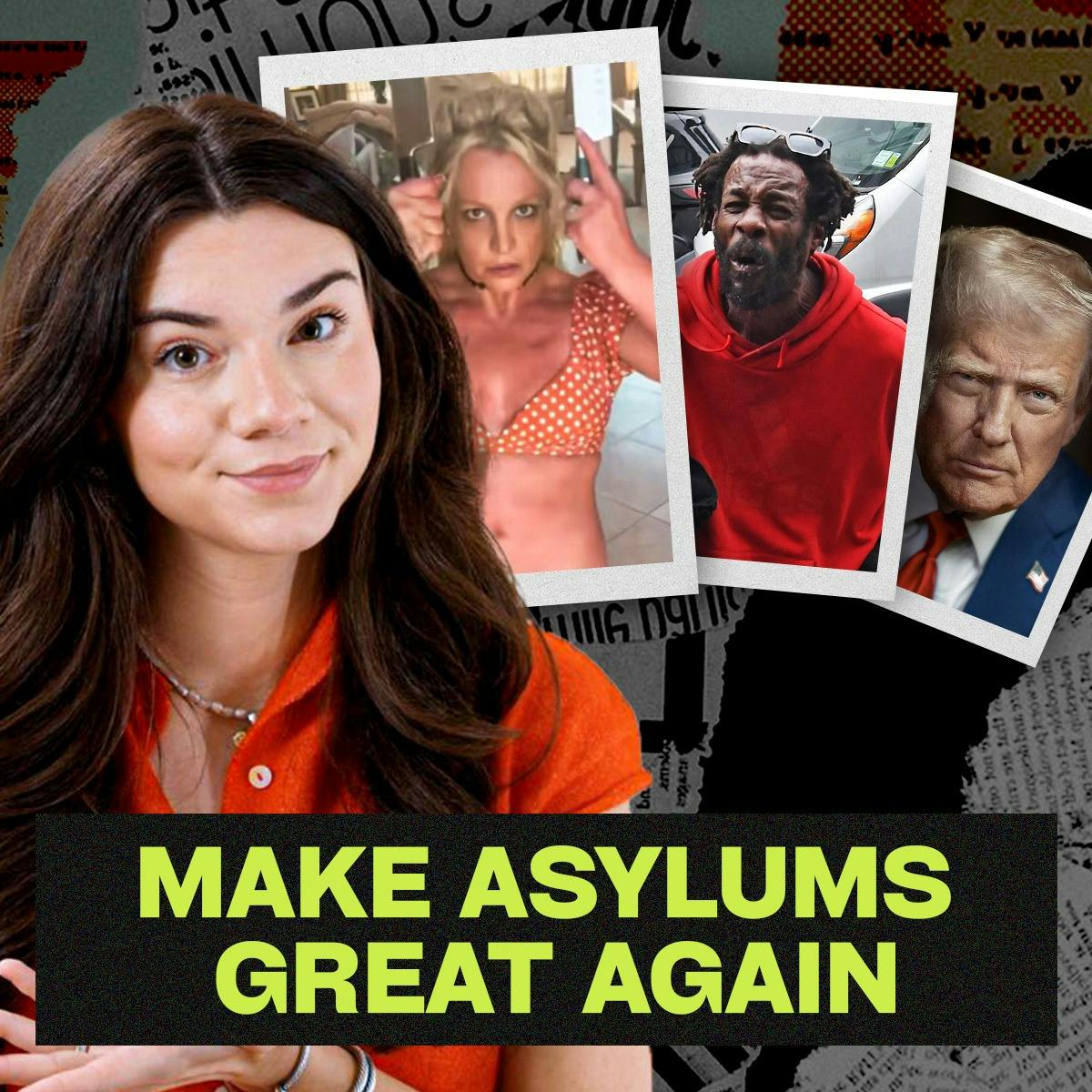
So Britney Spears and Trump's latest executive order have a lot in common and we need to talk about it. So I know that that comparison might shock you guys, but I promise there is a reason that I am making the connection here. Now, to give you guys some context, last week Trump signed a new executive order called Ending Crime and Disorder on America Streets. I believe that he signed it on July 24th. And to basically sum it up for you guys, this e. So it promotes the commitment of homeless people with severe mental health and addiction problems into like mental institutions and facilities. And it directs his team and the government at large to reverse rules that have been restricting this for decades. It also gives funding priority to jurisdictions that impose strict rules on homeless encampments, drug use, squatting in our American cities, et cetera. And it opposes federal funding for safe drug consumption and housing first initiatives that do not address the root problem of homelessness. And I was so excited to see this take shape. I think that all of this is incredibly positive. I cannot believe that a president has to oppose federal funding using our hard earned tax dollars to oppose safe drug consumption on our streets. I mean, that just seems like common sense. But I'm really grateful that this is something that he is doing now. Of course, when this executive order rolled out, the media immediately lost its mind. But if they had been paying attention to Britney Spears and the Free Britney movement and everything that has transpired since then, they would know that some kind of executive order like this was coming and that it is a logical step forward. But before I dive into that, make sure that you are following our podcast page and please rate the show if you are enjoying it. It helps us out so much in the algorithm. And of course, if you wanna stay up to date on all things that are happening with me and the show, make sure to ch BrettCooper.com that'll be your hub for all future events, notifications, new merch, and all of that kind of fun stuff. Basically, what you need to know is that the Free Britney movement was a mistake. I completely believe that it was a mistake. And I think that there is a lot that we can learn from it. Not just in looking at Hollywood and Britney specifically, but at our society at large and our mental health crisis at large. And I'm not sure what broke Britney. We talked about Britney a lot in our Justin Bieber series. We touched on her a bit. I think I've talked about her in other epis, but obviously as a child, as a young woman, Britney was worked like a racehorse. She was hounded by the paparazzi in the media at a time when that was the norm. Her children were hounded. I mean, her life basically fell apart. And we all watched, and the media played a huge role in that. And obviously all of those things exacerbated any existing problems that she might have, you know, already been dealing with behind the scenes. But the uncomfortable truth is that now, four years after the Free Britney movement was successful, we know that she is not. Well, we see that online every single day. Now, just as an example, if you do not follow Britney Spears on Instagram, which I don't know if I would encourage that you do. I was about to say that, but maybe don't. It's just a very, very odd trip on a daily basis. But in case you don't follow her, one example is that in a very oddly written Instagram post, Britney announced that she had just adopted a baby girl. That was not true. The media was reporting on it. Like, what does she mean, she just adopted this girl? No, she was actually what most people think she was speaking about, these baby dolls that she has that she carries around. And so the media has now been able to put the pieces together and say, I think that that is what she meant. Her team came out and said, no, she did not adopt anyone. Sorry, that was not what she was trying to say. And that was just like, the tip of the iceberg. She has also had multiple wellness checks over the last couple of years since getting out of her conservatorship, which was the reason why the Free Britney movement was started in the place. And one of those took place after she posted multiple videos of herself dancing with knives. Just take a watch. So she posted this online and it prompted a wellness visit to her house. Multiple wellness visits. Now, just to drive the point home even more, another example is when things just started randomly burning down in her house, like her gym and her bathroom, and then her fireplace randomly exploded, burning off her hair and her eyebrows. Now, guys like these fires, the dancing with knives, the saying that you adopted a daughter when really you are just carrying around baby dolls. I cannot believe I have to say this. These are not normal incidents. These are not normal happenings. Unless you are somebody who knows somebody or lives with someone with a severe family mental illness. And then unfortunately, like, for people like me, that might ring a bell. And while her father, Jamie Spears, who was her conservator, for, gosh, I believe 13 years or more, based on what we know, he allegedly took advantage of his role as her conservator. But that does not mean that Britney did not need that kind of support, that she didn't need to be in some sort of situationship situation that was like a guardianship. Because now, as I look at her story years down the line after the Free Britney movement took place, I see a lot of parallels to my own life. Now, I think most of you guys probably know this, but I have a brother that struggles with severe mental health issues. He is a diagnosed schizophrenic, and he is actually in a guardianship with me and my mother. And from what I've experienced and what I know about this system and this situation that I am in, guardianships and conservatorships, they are not inherently evil or abusive. We often hear about conservatorships gone wrong. And I think that there are a lot of conservatorships where the power can be abused and people can be exploited. But these situations, they are actually very, very difficult to obtain. You have to prove to the court that this person needs your support, that they need this kind of protection. And many of these situations can actually be incredibly lifesaving. And they are actually very protective of both the family that is involved, the guardian, and also the person who is struggling. But, you know, if one person in the situation is mentally ill, they might not see the situation as being that way. They might not see it or understand it as actually being for their benefit. For example, Britney, in her testimony when she was trying to get out of her conservatorship, she also wrote about this in her book. She talked about her father not letting her drive and how that was, you know, an infringement upon her freedom. She wanted to be able to go where she wanted to and drive and be in her car, literally be in the driver's seat. But what she failed to mention at the time and in her testimony, yet she wrote about it in her book later, is that she almost drove her car off of a cliff. That is why her ability to drive was taken away from her. In her book, she writes, we were driving fast near the edge of a cliff, and I don't know why, but I decided to pull a 360 right there on the edge. I honestly don't even know. I didn't know that I could do a 360, and it was completely beyond me. So I think it was God, but I stuck it. And the back wheels of the car stopped on what seemed like the very edge. If the wheels had rotated maybe three times more, we would have gone off the cliff. I looked at him, he looked at me. We could have just died. I said, I felt so alive. That is not normal. That is not a normal feeling. That is not a normal thing to do. If my brother almost drove off of a cliff, yeah, I'm sorry. He would not be allowed to drive anymore. I'm saying, no, I'm sorry. This is not something that you are able to do at this moment in time. Like, if I knew what I know now, now that I am in this situation, now that I have literally seen the court system, now that I am a guardian in this situation, I don't think that I would have ever supported the Free Britney movement that unilaterally painted one arrangement and one system as the villain and painted another person as just unilaterally sane. And I regret ever being behind it and I regret ever supporting it. Because dealing with somebody who is schizophrenic, dealing with somebody who is severely mentally ill and loving them and caring for them and wanting them to be the best that they can be, but also be safe and, you know, protect yourself, like that is not a traditional, it is not a black and white, it is not a straightforward experience, nor is the experience that that person is having in their own minds. Therefore, why, why on God's green earth do we assume that we can simply offer cash and, you know, motel rooms and just empathy to the millions and millions of homeless Americans, the mentally ill Americans, and just expect this problem to go away. Now, the Free Britney movement and now it's fallout should be a lesson to Americans as we fight our homelessness crisis. And I'm sure you guys are wondering, like Brett, how does this even connect? Like, Britney Spears is not homeless. What is the leap that you are making here? I promise you there is a point. But before we get into that, I want to take a break to tell you about my sponsor over at Paleo Valley. So guys, Paleo Valley, these are not the meat sticks that you grew up with. Paleo Valley makes theirs with 100% grass fed beef from small regenerative American farms so that you can feel good about what you're eating and who you are supporting. They have stripped out all of the junk. No preservatives, no gluten, no soy, no sugar, no dairy, no GMOs, just clean, nutrient dense fuel that is made the way food was meant to be made. Now whether you are road tripping, working late, or just running around like I am on a daily basis, these beef steep, give you high protein energy without the crash. Keto, Paleo, carnivore, whatever your vibe is, whatever Your diet is Paleo Valley. Fits right in. These meat sticks come in five bold flavors. Original jalapeno summer sausage, garlic summer sausage, which is my personal favorite. It is so good. And teriyaki. So there is truly a flavor for everyone. I literally keep these in my purse on a daily basis. They are that good. I have them in my car. We have bags of them in our pantry. They are amazing. And guys, with over 55 million sold in the six 60 day money back guarantee, Paleo Valley is the real deal. Get 15% off your first order at paleovalley.com Brett with code Brett again paleovalley.com Brett code Brett to redeem that discount. Thanks to Paleo Valley for sponsoring this episode. Now to get back into the point. The reason why I am stringing these two stories together and trying to use this as an example is because the majority of homeless individuals in the United States are mentally ill. And this is a fact that people often overlook or intentionally hide and brush past. There are a lot of big nonprofits and organizations who say, no, this isn't a big issue. These are just people that are down on their luck. This isn't. No, no, no, no. They're not severely mentally ill. I'm sorry. Have you been to Los Angeles? Have you been to San Francisco? Have you been to Nashville? Honestly, Nashville has a huge homelessness problem. And these are not people who, who are living in their cars trying to find a new job, down on their luck. This is mental illness. And the statistics, the hard facts back this up. This was a study done in 2024. Two thirds of unhoused people have mental health disorders. There was another one done in a. Let's see, this was 2021. And they found that the mean prevalence of any current mental disorder within the homeless community was estimated at 76%. That is the second study that we have here now, guys, growing up, I was taught that homelessness was just people who were down on their luck. Basically what I was just talking about, you know, lost their jobs, they needed a leg up. They needed to, you know, we needed to give them the boot so that they could pull themselves up by their bootstraps. That is not the case anymore. I actually don't know if that was ever the case because if you have not been to Nashville, if you've not been to San Francisco or Los Angeles, these are the types of people that you encounter living on the streets. Take a watch that. What we just saw is mental illness. That is a man who is sitting on the street and he was punching his face until his knuckles started bleeding. Now, the man who posted that video and was speaking there, that was Kevin Dahlgren. He is an amazing journalist. You should follow him on X. He has a great substack. He does incredible work reporting on homelessness and helping individuals like this man. And he often posts things like this. This is another video that he has shared. These are the people that he encounters on a daily basis. He was just walking on the streets and he saw somebody who was completely topless and then somebody who had no pants on with their genitals completely exposed. Again, that is mental illness. Now, in a recent post, Kevin said, me and a homeless man got him to stop. That is when he was talking about the man who was punching himself. And as a thank you, I got him a Dr. Pepper. This man refused help and then walked away. In all actuality, this is the important part. We don't have a homelessness crisis. We have an addiction and mental health crisis. Kevin's page every single day is full of videos and stories like this. These people are not well. They are also not safe. And they will not be fixed. Fixed or become functioning members of society with the current government and nonprofit initiatives. Like in California, where in the last five years since Gavin Newsom came into office, they have spent $24 billion on homelessness. That is since 2019. And guys, the situation is, unsurprisingly unchanged. Like, nothing has gotten better. Probably because they have simply focused on just housing initiatives, which more often than not, individuals like the people that we just saw in those videos refuse for various reasons. Whether it's because they have no desire to live in a home, they want to be homeless, they get more money from the state if they're homeless. Or because it would require them to get clean and pick themselves up to be functioning members of society. It would require them to take that step if they wanted to get into a certain shelter. And they are not willing to do that. They either can't or they're unwilling, which is the case that I personally am am up against every single day. It is the problem that our state is up against every single day. Now, additionally, these motels, these interim housing, these shelters, they are often completely unequipped to deal with the severity of the mental health crisis that exists on our streets. Like this woman here who has permanent housing and yet chooses to go sleep on the streets. This is another one of Kevin's videos, again, just explaining why the system does not work with these types of mental health crises and these types of individuals. Just watch.
- [14:43]
Kevin Dahlgren
Behind me is a Woman sleeping on a sidewalk. It's very easy to assume that she's homeless, but she is not. She actually has permanent housing. She was given this permanent housing about a year ago, but she comes out here every single day to sleep on the sidewalk because that's all she knows. So this is an example of someone who was never prepared to be indoors. No transitional plan. Now that she's in housing, she doesn't have any support. There's no case management. There's nothing to help her break that cycle of knowing nothing but the streets. So this is where she is every day. Now, a person who walks by or a tourist will just assume she's homeless because she looks homeless, but she is not. And that is a very misleading thing. And so walking through downtown Portland, you see a lot of people that appear to be homeless, but they actually have housing. So what I'm trying to say is that oftentimes the crisis, the homeless crisis, is not as bad as you think. There's actually a lot of people that live indoors.
- [15:53]
Brett Cooper
Now. In response to this video, as a reply on X, Kevin wrote, this is the homelessness industrial complex. They get money to house the person like this woman, but they also get money to treat the same person that is sleeping on the streets. They can get away with this because there is literally no oversight or tracking tools to show us exactly what the hell is going on. So we obviously need a solution. We need a solution to the problem at large. And the families of those with severe mental illnesses know this better than anyone, because the current cycle that exists for individuals like this is not sustainable. Now, I talked about this at length on my Sean Ryan interview, if you guys are interested to go watch that. But basically the way that it works is if you have somebody who is homeless like my brother was for many, many years, they might be living on the streets. You know, in certain states, they are allowed to camp out, have tents, have their big shopping carts, whatever it may be. But if they get into any kind of altercation or they are sleeping somewhere where they should not be, if, you know, a police officer comes and pick them up, they might end up in jail. They might spend the night in jail. My brother spent many, many nights in jail over the last couple of years. But more often than not, these individuals get picked up and they are put on what is called a 5150 hold, and that is an involuntary hold at a mental health hospital. So they go and they go anywhere from a few days to a couple of weeks, but that is not permanent housing. And they Basically get checked out. They might be medicated. They, you know, it's like a band Aid situation. They literally just go for a couple of weeks, and then there is no transition. You are just pumped back out onto the streets. Here you go. Maybe go find your shopping cart. Go hang out outside of the Target. Like that is the story that my brother and I, that my mom and I lived with for years as we dealt with my brother, as we lived with him in Los Angeles. Sometimes he would get referred over to a halfway house. Often those halfway houses require that you stay clean, that you not do drugs, that you take your medication for. A lot of people, they are simply not willing to do that. And for many years, my brother was one of those individuals. And he would rather live on the street and be able to do whatever he wants to get money from the government and go collect his check and go buy the things that he wants at Whole Foods. Because in California, your stipend allows you to go shopping at Whole Foods. He would rather do that than have to stay clean at a halfway house. And so now my brother is here in Tennessee, and we have a guardianship, and we are doing everything we can. And it is just a heartbreaking, heartbreaking situation, because, again, the system is set up to help these individuals fail. And the private solutions are not any better. There are, of course, fancy schmancy rehab centers. There are mental health facilities where people can go and check themselves in, like the one that Kanye and his wife check themselves into. Gosh, where were they, in Monaco? It's like, yeah, we're gonna go spend a weekend at a mental health facility. Those types of facilities do not take people with severe mental illness. They do not accept patients, often with manic depressive disorder. They don't take people with schizophrenia and extreme bipolar disorder, anything like that. Like, with what my brother deals with, he has very, very limited options. And the options that are available to us as a family are upwards of $20,000 a month. And they still require that that individual has some kind of motivation or drive to get better, to want to become a functioning member of society, to get a job, to live independently. And for a lot of these individuals, that is just something that, again, they either cannot even fathom or they simply do not want to do because they are more comfortable in their situation, living in this cycle of just being on the streets. And then the other option is just to bring this individual back into your home and to care for them here. That also is unsafe. If you've lived with somebody with schizophrenia and a serious serious mental health problem. And after I did that Sean Ryan interview, I feel like everything just broke open for me in a massive way because I received this influx of DMs and messages from people whose stories are so similar to that of my brother and that of my family, who feel like they have nowhere to turn where there are millions and millions of dollars that are allegedly, you know, being, you know, funneled towards homelessness and funneled towards, you know, fighting the mental health crisis. And yet we see none of it. And the system is completely unchanged and our streets are filled with people who are a danger to themselves and a danger to others and make our cities literally look like things out of a zombie video game. Like, I'm sorry, that is what Nashville looks like downtown. That is what San Francisco looks like. That is what Los Angeles looks like. And so that is why I am in favor of reopening American institutions. And I know that that is a controversial statement, but I will tell you why I believe this after a quick break from my sponsors. Now I want to tell you guys about Balance of Nature. As you guys know, I'm always looking for new ways to stay on track of my wellness goals. And Balance of Nature always makes it easy. Their supplements are made with ingredients like whole apples, spinach, mango and turmeric. Real foods that I actually recognize. And I love how convenient it is to add more fruits and veggies and spices to my routine without overthinking it because let's be honest, I never actually have the time to eat all the fruits and vegetables that I need on a daily basis. And that is where Balance of Nature comes into play. Visit balanceofnature.com or call 1-800-246-8751 and use code Brett to get a free fiber and spice supplement plus 35% off of your first pre set with free shipping and a money back guarantee. Start your journey with Balance of Nature again. Use code Brett at checkout to redeem that discount. And there is no better way to complement good supplements and a healthy lifestyle than with a good steak. Now guys, I thought that I knew when I was buying at the grocery store until I learned that over 4 billion pounds of meat was imported into the US last year and still can be labeled as product of the usa. That is legal in the United States and that is where good ranchers comes into play. All of their meat is 100% American, raised on local farms and delivered right to our doors through their subscription service. This process is simple. It is hassle free and the quality is Incredible. But best of all guys, you can rest easy knowing that you are buying from real American farms from around the country and that your subscription you buying from good ranchers helps these ranchers and farmers stay in business. So shop American meat that you can trust. Visit goodranchers.com today. Use my code Brett and you will get $40 off plus free meat for life. Again that is Code Brett at checkout for $40 off plus your pick of free meat for life. When you start a new subscription, American ranchers will thank you and be just so grateful that you are doing this. Support good ranchers today. Again, that is goodranchers.com now back to this incredibly controversial statement that I just dropped on you before moving into an ad raid. Now obviously the American mental institution system, it needs to be updated from the past. I am not in favor of the disgusting abuse of hospitals that were exposed by journalists in the 60s and the 70s. But the fact of the matter is there needs to be some sort of infrastructure in place to house and help these individuals, get them off of our streets and out of our neighborhoods. And I personally would rather my tax dollars go to safely housing these individuals in mental health focused institutions than than pouring billions and billions of dollars into nonprofits that don't actually report what they're doing. They go to their executive salaries. I would rather go to institutions than to hotel vouchers and shelters that these individuals do not want to go to that they will not willingly spend the night at. Like this is a matter of public safety. And again, I know that this is a highly, highly controversial statement. Even in the year of 2025 when our homelessness crisis is just it feels like it is at an all time high. And people, especially those at organizations like the aclu, which I personally have a bone to pick with, they argue that institutions strip people of their rights and personal decency. But I would argue that if they are violating the law with their actions on the streets, if they are putting law abiding innocent civilians in harm's way, rights have already been violated. They have already crossed the line and some action must be taken. We can't just sit around and twiddle our thumbs and go, oh, we don't want to offend these people even though they are naked and screaming at people and hurting themselves and attacking innocent individuals squatting in our homes. No, I'm sorry, the line has been crossed. We have to deal with the situation and just picking them up and putting them in jail or putting them in these temporary 5150 holds when they are just pumped back out into the streets into the same exact system. That doesn't actually help anything. That is a Band Aid situation. That only makes the problem worse. That is the least decent option because the prison system and our current institutions, they are ill equipped to deal with these crises. Like, the decent thing to do if we want to talk about empathy and decency, is to have a safe environment where they can live and be cared for, where they can live out their days off the streets. And we know that they are safe and that we are safe. Now, again, I know that I started with Britney Spears and you guys are probably trying to connect the dots. It's like it's always Sunny in Philadelphia style, where we have the cork board and I'm putting all these things together. Again, I promise that this is relevant. And it goes back to Britney, because for years people argued that Britney just needed freedom. She would be healed if she could just have control over her money and her life and her decisions and where she went and who she married. But four years later, after she got out of her conservatorship, after the Free Britney movement was successful, we can obviously see that this was not the outcome that people anticipated, that this was not the case, that giving her freedom was not an actual solution. And this is similar to what groups like the ACLU argue about homelessness and mental illness. They propose voluntary housing and community based support for addiction and mental illness. They are adamantly against cleaning up our streets and they oppose laws the ban encampments because it infringes upon freedom and it's mean and it's unkind. People, in their mind, should be allowed to just do whatever, even if that means doing illicit drugs on our streets, making cities unsafe, and posing threats again to innocent civilians. In fact, this is what their spokesperson, whose name is Scout Katovich, had to say about Trump's recent executive order. She wrote, pushing people into locked institutions and forcing treatment won't solve homelessness or support people with disabilities. The exact opposite is true. Institutions are dangerous and deadly and forced treatment does not work. Now, as somebody who has a family member with severe mental illness, I would say that treatment often does work. Scott, I don't know if you've ever dealt with that situation, but unfortunately, even though it is often difficult and unpleasant and it is heartbreaking to do, often that treatment is a lifeline that is not dangerous and deadly. It is actually sometimes the one thing that can protect them and protect the people that are taking care of them. Now, going on what she says next, we need safe Decent, affordable housing, as well as equal access to medical care and voluntary community based mental health and evidence based substance use treatment from trusted providers. I would agree, but we're spending billions of dollars on that and it's not happening. But instead of investing in these proven solutions, President Trump is blaming individuals for systemic failures and doubling down on policies that punish people with nowhere else to go. So let's give them a place to go. Scout. After signing a law that decimates Medicaid, the number one payer for addiction and mental health services, quote, homelessness is a policy failure. Weaponizing federal funding to fuel cruel and ineffective approaches to homelessness will not solve this crisis. Now, ironically, there's a big part of this that Scout from the ACLU actually does get right. Homelessness is a policy failure. You are completely spot on. It is a massive policy failure, but it is one that Trump didn't do. It is actually one that your organization and your predecessors helped usher in. Trump is not blaming the individuals who are living on the streets. Trump is not blaming the people who are addicts, who are dealing with schizophrenia, who do not have anybody to help them and have no place to go. He is blaming the system that the ACLU has been pushing and supporting for the last 40 years. For example, in the 1980s, you all started filing lawsuits against police units in cities who would arrest people for camping on the streets and move their encampments elsewhere. And you would sue these cities who started opposing encampments. Which, interestingly, these encampments only really became an issue soon after the institutions were closed in the late 60s and early 70s. So TL Dr. What the ACLU has been arguing for 40 plus years has not worked. You have failed. Your entire system has failed. And yet you are still doubling down and you are trying to blame everybody except yourselves. Now, the Washington examiner wrote about this. Well, all the way back in 1960. 19. Oh my gosh, guys, I can't even speak. 1996. There we go. I have my head on straight. You would read this article, guys, and you would think that this person was writing in the year 2025, but they are not. This is 1996, it said. Following a successful lobbying and litigation by civil libertarians, mentally ill patients were released onto America's streets in large numbers from state hospitals and other mental health institutions. In the 80s, civil liberties groups sought and won judicial recognition of the right of the mentally ill to live as vagrants, free from any public supervision or restraint. Again, doesn't that sound like what we're dealing with now in 2025. Has the situation gotten any better since we fought for that? No, it is not. Now this author goes on and gives examples of this. The most famous saddening symbol of this legal battle was Billy Boggs, a mad New York City person celebrated at Harvard Law School for her legal victories. Boggs subsequently returned to a street life of squalor, defecating on public sidewalks. Other such symbols would follow. There was Larry Haug, a homeless crack addict on Manhattan's Upper west side, who became known as the wild man of 96th street for the violent crimes he committed on the many occasions he was released from psychiatric hospitals. This cycle has been going on for years in Washington. The 1993 death of 43 year old Yetta M. Adams across the street from the offices of the Department of Housing and Urban Development prompted a sermon from HUD Secretary Henry Cineros, I believe I'm pronouncing that correctly, for the need for more federal aid to the homeless. Adams, suffering from schizophrenia, died of complications from diabetes. She had repeatedly spurned help from a variety of social service agencies. The fact that such people are so reflexively labeled as, quote, unquote, homeless, a term that does not even begin to describe their varying pathologies, is the result of deception at the heart and origin of the homeless rights movement. Now, I think that that last story is probably the most important one and it's just so, you know, sadly ironic that she passed away right in front of the offices of HUD and that their response was, well, we need more money, we need more social services. And yet the reason why she passed away was because she refused the help that they were offering her, the help that all of these different agencies were trying to get her. But because she was schizophrenic, because she was dealing with a severe mental illness, that this was not a straightforward thinking individual. Those social services, all of those tax dollars, all of the money put into those things, it did nothing. So everything that this author wrote is completely correct. Again, that was in 1996. Now, people at the time, during his administration, people said that Reagan was greedy and cold hearted for suggesting that people on the streets were dealing with severe mental illness, that they were often taking advantage of government assistance, that they were making a choice to live out on the streets when they had shelters and when they had housing that was available to them. And they were shocked and horrified when he would point towards mental illness. But by the time that he left office, the data was already on his side. He had been vindicated. And it is even more so decades later. And obviously we can argue all day long whether it was right for him to reduce federal funding for homelessness initiatives all day long. You know, I don't know if he diverted the money in the right way. I know that he was trying to do the right thing. But that does not address the root of the problem. It doesn't address the route that he very accurately pinpointed. Because giving somebody with mental illness freedom is not a catch all solution. In fact, restricting how the state or organizations or family members can help and protect and often contain that individual for the sake of protection can often make matters worse for them, for their loved ones, for cities and communities at large. Now back to Britney Spears. I have no idea what was going on in her conservatorship. I have heard things. I'm trying to get some more sources because I want to learn more about it. I think I might have an in with some folks. I have no idea whether her father was abusing and exploiting that situation. I don't know if he was the best person for the job. I don't know the whole story. But I do know that her situation has not gotten better by unleashing her and taking off the protective gloves. I know that just freedom and empathy and letting her do whatever she wants to do did not heal her because the matter is a lot deeper. It is a much more serious issue. And neither has the situation gotten better on our streets. And it is time to have that conversation. It is uncomfortable, it is controversial, it brings up a lot of things in our past. It will be a huge fight, but it is something that is absolutely necessary. And I'm so glad that that Trump is taking this step. He's going to get a lot of flack for it, but this is the right way forward.