← The Brett Cooper Show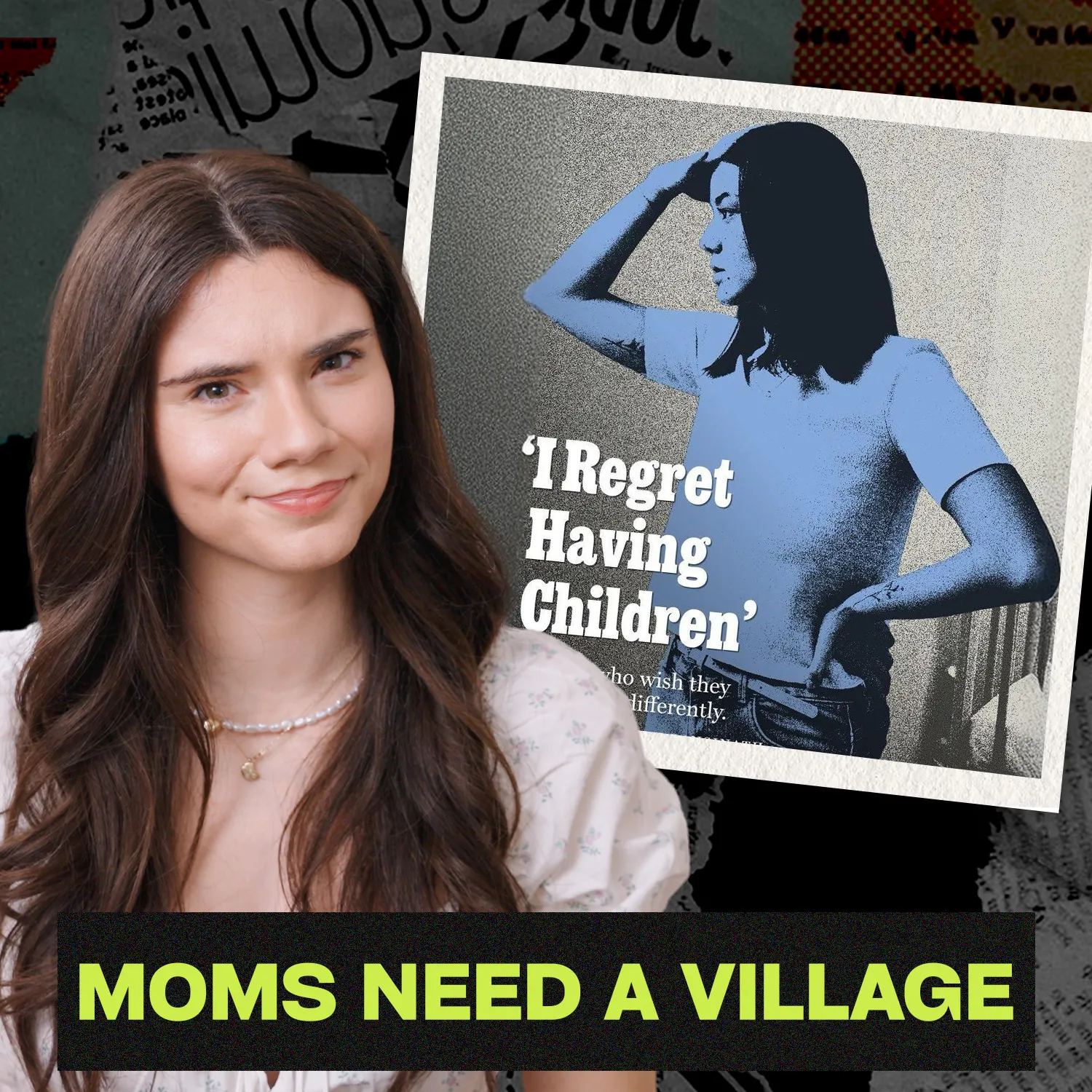
The Brett Cooper Show
Postpartum Struggles Are Real And Shaming Moms Makes It Worse | Episode 148
00:27:46
Loading summary
Transcript19 lines
- [00:01]
Podcast Host
5:00am I'm up with a crisp Celsius energy drink running 12 miles today. Grab a green juice, quick change and head to work. Meetings, workshops. One more Celsius. No slowing down. Working late, but obviously still meeting the girls for a little dancing.
- [00:15]
Cooper (Guest or Main Speaker)
Celsius Live Fit.
- [00:17]
Podcast Host
Go grab a cold refreshing Celsius at your local retailer or locate now@celsius.com
- [00:25]
Sponsor/Advertisement Voice
this episode is brought to you by White Claw Surge. Nice choice hitting up this podcast. No surprises. You're all about diving. Diving into tastes everyone in the room can enjoy. Just like White Claw Surge. It's for celebrating those moments when connections have been made and the night's just begun. With bold flavors and 8% alcohol by volume. Unleash the night. Unleash White Claw Surge. Please drink responsibly. Hard seltzer with flavors, 8% alcohol by volume. White Claw Seltzer Works Chicago, Illinois so
- [00:54]
Cooper (Guest or Main Speaker)
do women really regret motherhood? Or are they just angry that they don't have the village that their grandmothers used to have? Now that, in my humble opinion, would have been a very interesting question that a journal from the Cut could have posed in her most recent article. But it was way easier for her to just, you know, paint with a broad stroke to cherry pick an angle to fit her and the Cut's antinatalist agenda. Per usual, par for the course with these journalists. Now, before we dive into today's episode and you hear all of my thoughts on this viral regretting motherhood story, if you want behind the scenes content, maybe me talking about how I don't regret motherhood, you can check out cooper confidential.com. that is my subscription platform that I built for you guys for from the ground up. No censorship. If I ever get deplatformed, that's where I'll be. That's where all the behind the scenes farm, vlog, all of that fun stuff lives. All right, so let's just dive into this story. This week in a now viral article, New York Magazine and the Cut. The Cut is under New York Magazine, but New York Magazine and the Cut intentionally distorted the stories of three mothers to promote their own anti children agenda. And the headline, you've probably seen it if you've been on X in the last 48 hours was very simple. It reads I regret having children. And so what, in my opinion could have been a really productive conversation about motherhood and the way that society at large treats and supports mothers or maybe doesn't support mothers, ended up being whittled down to something incredibly toxic and superficial. I mean look at the way they promoted this article on X. This was the tweet that got the millions and millions of impressions, rightfully so. Sooner or later, everyone has to decide whether to give up lazy weekends, disposable income, and the overall peace of mind to have a baby instead. For many of those on the fence or one, anxiety looms large. What if I make the wrong choice? Parent regret is more common than you might think. The r regretfulparents subreddit alone gets around 70,000 weekly visitors who anonymously commiserate. Those stigma makes it harder to admit in real life. All right, so we're gonna get into all of that later, but I just wanna focus on the way that they promoted this article. Giving up lazy weekends, disposable incomes, overall peace of mind to have a baby instead. They're basically saying you can't have a joyful life with a child. So already we know the premise that New York magazine and this journalist is working from. They are already telling us they are antinatalist. Now from there they jump into talking about regretful parents. The 70,000 users who are commiserating on the subreddit, which in my opinion seems like a very small number compared to the 5 billion parents that exist on this earth. But New York magazine is telling us that that is a lot of parents. But regardless, the reason why I am reading you this tweet before we actually get into the article is because based on this post alone, it would be completely reasonable to assume, and I certainly did assume, that this article was about vapid women who just wanted to do pilates and get drunk at brunch and travel, go fuck, find themselves instead of spending time with their kids or instead of having kids. Women who like most of the, you know, child free subreddit to talk about another subreddit gleefully talk about how the only thing they care about is being selfish and they have a disinterest and commitment and responsibility. That is what I was expecting based on this tweet. And so understandably, without even clicking on the article, people were quick to leave their normal comments about how feminism has ruined women and women have been lied to and these women are so ridiculous and dumb and they don't understand the fulfillment and the empowerment that motherhood brings. You know, they shouldn't be climbing a corporate ladder. All of the normal comments that I, I agree with, completely agree with, but those are the comments that were under this post. And again, all of that is fair because those are the stories that we see coming out of the mainstream media More often than not. But this article, once we actually got into it, wasn't really about those kinds of women and the issues that these women were facing. These three mothers that make up this article, the issues they are facing are anything but superficial. And so the New York magazine making that post, actually putting words in these mothers mouths saying, I regret motherhood, making that the title. I actually think they did a massive disservice to those mothers who were being vulnerable and honest. And they did a massive disservice to culture at large. Because honestly, the article was more about marrying the wrong person and a lack of modern day villages for mothers. I just want you to listen to a couple of these excerpts. So to break down how this article is laid out, the interviewer talks to three different moms and she essentially summarizes their stories. And so I just want to take you through a few different pieces of each of these mom stories. So mom one, the author writes her first year of life talking about the baby. She was colicky and cried all of the time. You couldn't put her down. We had a babysitter quit and tell us, I can't do this anymore. I also had postpartum depression. Early on. I told my doctor about it. She just kind of dismissed me and said, well, you don't feel like throwing your baby out the window, right? She told me to come back if I ever felt like hurting myself or my baby. Then she goes on and she talks about work. She says, at work, I couldn't put in the 70 hour work weeks during busy times anymore or attend trainings while breastfeeding. So I fell behind. We also had a second child once. Our first was a little older and easier to care for. I wanted her to have a sibling. I like working from home. It's not as demanding, but I miss my old job and the feeling of solving big problems. Like, how are we gonna $75,000 as a parent, you're solving tiny ones. Do you want the crackers in the red or blue bowl? And we're gonna talk about why I disagree with that statement. But I just want you to hear all of that in her own words. So to summarize, this, mom had a colicky baby, which is awful. My oldest brother was colicky. And my gosh, the stories my mom told, I mean, it was just awful. And she also was dealing with postpartum depression. Those are real things. So now we get into mom number two. She writes, then we went home from the hospital and everything was a nightmare. During the birth, I had had an Incision that left me unable to move from the pain. I breastfed my daughter, but I couldn't pick her up. My husband had a month and a half of paternity, but the only helpful thing he did during that time was change her diapers. Though he did it with a reluctant expression on his face, I had the feeling he never believed how much pain I was in. My mom helped, but she didn't like being disturbed at night and even during the day was afraid of holding the baby or changing her. This mom says I hallucinated from a lack of sleep. It felt like I had been tricked into this. Everyone who wanted me to have a child, my husband, my family, her mom. Earlier in the story, she's saying my mom was encouraging me to have the baby, knew that they weren't going to lose much while my freedom and identity went down the toilet. She goes on, and she says, when I went back to work, I was paralyzed by anxiety. Driving down the expressway those first few weeks of work, I'd worry, what if something happens to my daughter? She had my mom, but what if she needed me? Specifically, I've always suffered from depression and anxiety, but in college, in those early parts of marriage, I was so liberated that I forgot what that felt like. But now in motherhood, it's chronic. I've never been this anxiety ridden in my entire life. Again, seems very valid. You get married, you choose to have a baby with somebody, he's not helping. Your mom says, I want you to have a baby, and then doesn't want to help. At night when the baby is up crying every 30 minutes, you feel totally alone. You're dealing with postpartum anxiety. You feel like your baby is going to die at every moment, which a lot of mothers experience. Those are real things. That is the point I am trying to drive home here. All right, now we get into mother three. Mom three says, I tried telling my friends that I wasn't coping well with motherhood and was still processing the birth. She had a traumatic birth, and they tell me that's what motherhood is. One of my friends texted my husband, wow, she's changed. And not in a good way. It came from a place of care. She and many friends and family told me I had postpartum depression, to seek therapy and to go on medication. But at the same time, they'd quickly flip it back to, you need to be there for your son. Pick yourself up by your bootstraps, move on. It's over and done with. Everything I went through was just like, no big deal. Because the baby's here, your existence doesn't matter. I mean, all of this is real stuff. Genuinely, I read this article and I was like, wait, wait, why is everybody so mad at these mothers? Like, I'm still angry at New York magazine, but why are we angry at these moms? Like, I genuinely think that you would be hard pressed to find a mother that hasn't had any feelings of doubt or pain or loneliness as she transitions into this period of her life. Even if you've had three babies, I still hear moms talk about how difficult that transition is. Welcoming a new life into your family, somebody who is completely dependent upon you. I am a new mom. My baby is only six months old. I can only speak to my own experience. And this is coming from somebody who, you know, has always wanted to be a mom, and also who had a relatively easy pregnancy and delivery. Even with all of that, I still got home from the hospital 24 hours after giving birth and I felt like a shell of a human being. Even though I have sat on this show and on comment section talking about how desperately I wanted to be a mom, how excited I was, I still got home and said, I have no idea what I've done and I have no idea what I've gotten myself into and I have no idea what to do. I was so desperately excited. I was so in love with our baby. But I have also, in those early weeks, I have never felt so disconnected from me and my body. I was irritable, I was angry in a lot of ways. I definitely had the sundown blues. Like, the moment that it started to get dark outside, I would get so anxious and worried about the night ahead and how many times he was gonna wake up and if he was gonna be okay and if co sleeping was gonna work out or if he would go in the bassinet. I mean, it was just like awful. And yes, there were a couple of times where when I had 10 minutes by myself and I would stand in the shower, I would cry and think, I don't know if I could do this. I don't know if I've made a mistake because the adjustment was just that hard. And based on what I have read and watched and talked to friends about, I think a lot of that honestly is just normal because of the insane hormone crash that you have after giving birth, because of the trauma that your body literally goes through giving birth. You have a wound like the size of this in your stomach and it's all a sacrifice. But for me, I knew that a lot of that might take place. I knew that my body was gonna go through something insane. I knew that I might feel completely out of sorts after giving birth. But that was a sacrifice that was so clearly worth making to me. But I knew that my life was gonna be completely changed. I knew that going into it, I was kind of trepidatious about it because of all the different stories, but it was a sacrifice. And it did take me about 5ish months. So literally just like February or January to even feel like Brett again. Like, I was laying next to Alex in bed and I was, like, laughing and telling a joke and I was like, oh, my gosh. Like, I find, like, this feels like me because it was just such a dramatic change. And I'll say that for a lot of women, by 5 months, 8 months, 12 months, 24 months, they still don't feel that way. Like, it only took me five months, but I only have one child. I have a husband who loves me and is obsessed with our son, who happily changes diapers, happily wakes up in the middle of the night with us. It took me five months with incredibly involved and excited in laws who live relatively nearby. It only took me five months with a mom who lives a couple doors down and having a babysitter and having somebody who can help clean the house and take care of things. I am blessed with such a remarkable village. And I still felt awful. I still had people in my life when I was really trying and really trying to show up, to kind of flippantly say, like, when are you gonna be back to normal? And I just didn't know because nothing's normal anymore. Your entire life has changed. And so now I wanna ask you to imagine how mothers might feel if they don't have these same resources, if they don't have the luxury of family nearby or a babysitter and somebody to clean the house if they don't have that, who live far away from their family, who don't have flexible jobs like I do, who maybe don't have maternity leave. Cause a lot of people don't. Whose husbands are not helpful, who don't wanna deal with the baby. Like, their frustration makes sense. Like, I'm sorry, but it does. So New York magazine, it's a lot deeper than just lazy weekend mornings and disposable income. That is superficial BS compared to what these women are talking about. Because what they are expressing is real. And it is a societal, systemic issue. Just like it is a societal issue that phone carriers are ripping you off, but not pure talk. Now, unlike their competitors. Pure Talk is a company that shares our values and invests in America, whether that is through hiring an American customer service team or supporting our veterans. Plus it is just an amazing company with an amazing product and offering. Pure Talk is my family's is wireless company who gives you unlimited talk, text and plenty of data for just 25 bucks a month with no contract, no cancellation fees and no overseas customer service. If you ever need help, which I don't really think any of the competitors can say that, so if you are ready to make the Switch, go to PureTalk.com Cooper and you will save 50% off your first month. Again, that is PeerTalk.com Cooper to switch to a wireless company that shares your values and invests in America. Again, that is peertalk.com cooperation America's wireless company. Now once you have simplified your phone carrier situation, you can simplify your nutrition with my friends over at Balance of Nature. Now when you eat whole foods you'll get phytonutrients which are natural compounds that your body uses to adjust, repair and respond every single day. And that is what is so cool about Balance of Nature. They take whole produce through their tailored vacuum cold process that stabilizes its phytonutrition and their whole health system supplements are a value bundle that includes their fruits and veggies and their fiber and spice supplements which gives you 47 ingredients of whole fruits and vegetables, spices and fibers and all of them contain those naturally occurring phytonutrients with no additives, no fillers, no nothing. Just whole ingredients. It's whole food phytonutrition. Plus working with Balance of Nature lets you fight the good fight because they also share our values. So head on over to balanceofnature.com to subscribe and start saving. Today you can join the hundreds of thousands of customers in one simple routine that is changing the world. And again, that is balanceofnature.com eczema as unpredictable, but you can flare less with EPGLIS, a once monthly treatment for moderate to severe eczema after an initial four month or longer dosing phase. About four in ten people taking ebglis achieved itch relief and clear or almost clear skin at 16 weeks. And most of those people maintain skin that's still more clear at one year with monthly dosing.
- [13:03]
Sponsor/Advertisement Voice
Empglis Lebricizumab LBKZ, a 250 milligram per 2 milliliter injection, is a prescription medicine used to treat adults and children 12 years of age and older who weigh at least 88 pounds or 40 kilograms with moderate to severe eczema, also called atopic dermatitis that is not well controlled with prescription therapies used on the skin or topicals or who cannot use topical therapies. EBGLIS can be used with or without topical corticosteroids. Don't use if you're allergic to Eglis. Allergic reactions can occur that can be severe. Eye problems can occur. Tell your doctor if you have new or worsening eye problems. You should not receive a live vaccine when treated with ebglis. Before starting ebglis. Tell your doctor if you have a parasitic infection.
- [13:37]
Cooper (Guest or Main Speaker)
Ask your doctor about eglis and visit ebgliss.lilly.com or call 1-800-lilyrx or 1-800-545-5979. Back to the story now that I've shared all of my experiences, all of that being said, it would be very easy for me to sit here and talk about how these moms don't get it because they didn't know what sacrifices they were signing up for. They just need to get over it. Actually, it's really fulfilling. Actually, it's really empowering. These small problems like the mom talking about the Red Bull or the Blue Bull. Actually, it adds up to the biggest contribution you will ever make to the world, AKA raising a child. However, that is not really what these three mothers, in my opinion, are frustrated with or what these stories are actually about. And so me ripping into them. That would be futile in my opinion, for a woman that is struggling with postpartum anxiety and depression, who feels alone, maybe unsupported by their spouse and their families. You don't really just wanna hear it's really empowering and you don't get it. Like maybe actually we should be trying to solve the problem and one of the problems is who they married. But I hate to say it, but I do think we can kind of prevent these problems before they even arise. Because the common thread for these through women in the stories is not really that motherhood is just all inherently terrible, but it's that none of them, not one of them, actually wanted to have children in the first place, but they were encouraged to do so by their husbands and by their families. Okay, listen to these other excerpts from the article. So mom one when my husband and I were dating, his deal breaker was having kids. I didn't feel the same way, but I didn't see a life without children as an option. That was his deal breaker, not hers. Next Mom, I married young at 22, my husband couldn't wait to have a baby, but I told him I wanted to wait and enjoy our marriage. Then, in her late 20s, the baby plans went back into motion and fear hit me like a brick. Did I know what I was getting into? My mother, who had always wanted grandchildren and promised help, that's the mother that didn't wanna help at night and was too afraid to hold the baby, by the way, anyway. Then third mom my husband and I met in middle school. He was always interested in having a big family. I told him I wasn't quite sure. Unfortunately, it took me seeing a positive pregnancy test at 25 to realize that it was not for me. Okay, so what you have here are three women that, in different, varying degrees, didn't actually want this life. We're not sure, we're not prepared, we're not excited about the sacrifices that they and their bodies were going to be making, and then at the tail end, received very little support once they entered this period of their life. And all of this, it just pisses me off. Rather than actually helping or trying to have a conversation about that, one side of our culture just shames them for those feelings and then the other one exploits them publicly in the media for their own agenda. Now, thankfully, I did see a few people in the comments who did understand the point. Like one woman said, y', all, it's not the kids they don't care for. It is the brutal system in the weight of caring for and supporting children. In today's environment, women who do not have appropriate support or resources are struggling. And then Nurse Kate, this is Benny Johnson's wife, she said, this is the worst kind of propaganda. Hers was my favorite comment on the entire thread. It isn't the children. It is a society that rejects small children, forcing most parents to feel like they must isolate at home. Pieces such as this only exaggerate that feeling. And she's only hit on one part of it. Like, what about the postpartum depression? What about the lack of support? It's not just that society doesn't want to see the kids, but it's that nobody is helping. Like, if I was a woman who was not sure if I wanted to have kids and I read this article, it would not be the children themselves that would terrify me, it would be the loneliness and the lack of support, because that is what they were talking about. And it is incredibly well established how lonely modern mothers feel. Like, just look at these stats from 2025. Less than 18% of mothers feel fully supported. 70% feel like they are doing motherhood alone. 75% feel like they have less of a village than their mother's generation. 77% feel like they have less of a village than their grandmother's generation. But I'm sure it also doesn't help that, especially if you live in a very liberal cosmopolitan area, like I'm sure these mothers do, 30 years old, I'm guessing very liberal that so few of your friends also have children. So that can feel even more isolating. Even if your spouse wanted the baby and even if he is involved, like I'm. But your husband wanting to be a dad is not enough to carry you through. You have to be on board because it is a sacrifice. It is the most beautiful sacrifice, in my opinion, Vy will ever make. It is worth it to me every single day because it is so beautiful. But it is hard. It is a sacrifice that makes it all the more fulfilling. But still, you gotta be fully bought in now to tie this back to something going on in pop culture right now. All of this reminds me so much of one of the storylines from the current season of Love is Blind that is currently going viral right now. And it also has to do with a mother's regret and also not being sure if you want to have children. So for one of the pairings, Emma and mom, the big hurdle that they have had to overcome is whether or not they would want to have children if they actually got engaged. So, man, the mic is very serious about being a father. Like, they're in the pods. The whole premise of Love Is Blind if you don't know is that you don't see each other. You're like divided by a wall talking, you're dating, you decide who you want to marry after only like 10 days of being in these pods. Anyway, he's sitting in the pods talking to this girl, Emma, constantly talking about wanting to have children, wanting to be a dad. And the girl, Emma, for many various reasons, isn't sure, you know, she was adopted. She has had chronic health issues that she's worried about passing on. She doesn't know genetically what she's carrying. She's not sure if that's really the lifestyle she wants. She's just really all up in the air. She honestly seems like she has a lot that she's trying to work through. But just watch this clip.
- [18:26]
Podcast Host
I know a lot of people really want kids, but for me, I don't know yet.
- [18:32]
Cooper (Guest or Main Speaker)
I appreciate you being super honest with me about it.
- [18:35]
Sponsor/Advertisement Voice
Thank you.
- [18:36]
Podcast Host
I'm adopted. I do not Know my birth family or if they are going to pass down any medical problems that scares me about having a child. I've been raised by a white family. They're the best examples of love. But right now, I am not ready to disclose that. It's just something I don't think anyone can understand until they know who I am. Sometimes you don't even understand it yourself.
- [19:06]
Cooper (Guest or Main Speaker)
All right, so really, there is just a lot going on here. Like, first of all, I know that it is good tv, but people seriously need to see a therapist and get their lives together before airing it out on live TV or trying to find a husband in 10 days. I think these are the things you kind of need to figure out. Like, one commenter said, emma needed a therapist, not the show. Somebody else said, let's normalize healing before looking for love. She drained me. Anyway, the point is, even though this man really wants children and she is openly saying, I'm really not sure, they keep seeing each other. They go through the experiment, they get engaged. And throughout the entire process, this man, and I mean, more power to him, but he. He keeps trying to convince her to have kids, that she might actually want to be a mom. How amazing it's gonna be. Which is just a red flag. Not for him, but just for the situation. Like, somebody said he should have never picked her just based on the kid thing. Somebody else says, when a woman says she doesn't want kids, that is the end of the discussion forever. Go find one who does, Period. My mom always told me, I feel like all moms say this, but, like, do not marry a man with the intention of trying to change him. And the same goes for men. If a woman shows you and tells you what she values and what she wants out of life, believe her. And, like, having children is way too big of a decision to that gamble on. Lives are at stake, not just yours, because now you're gonna be dedicated to these children for the rest of your life, but because you are literally bringing life into the world. Innocent little beings that completely rely on you. So why take that gamble? It is way too big of a risk. Back to the point. This is where things really got interesting. This is the part of the story that really went viral. So after they got out of the pods, they got engaged. Emma took Mike to meet her adopted family. Now, again, at this point, they are already engaged, but they are still debating kids. And so Mike kind of gets into it with Emma's sister, who's there meeting him. She's a mom. He's kind of push, I think, hoping that she will encourage Emma. Like, hey, your sister's a mom. She loves it. Tell her how amazing it is. Now, I don't know if Emma's sister said all of this just to shut him up, maybe because she didn't want him pressuring Emma, or if she actually feels this way, but listen to what she said. This is the part of the show, probably out of the entire season, that went the most viral.
- [21:00]
Podcast Host
I'm somebody who grew up my whole life wanting to be a mom, and I have two kids, and I wake up some days, and I'm like, why did I like. This is. She said that she was the part you told them that.
- [21:08]
Sponsor/Advertisement Voice
I'm sure my rebuttal to that and my rebuttal to that is, do you regret it? And she said, no. And I said, then that's all you need.
- [21:17]
Podcast Host
I would say, though, if I lived another life, like, I don't regret having my children, and I love my children, but if I got to the end of my life and they said, you can do it again, I wouldn't have kids. Okay. Because there's. There's a beautiful thing about living a life for yourself, too.
- [21:31]
Sponsor/Advertisement Voice
Sure.
- [21:32]
Podcast Host
So my concern is, as somebody who wanted this and is currently living it and knows how hard it is if somebody chooses to have kids simply because they're trying to make a partner happy, that's one of the most terrifying thoughts, and especially for Emma. Like, I love her to death, and I would not be able to live with myself if I didn't say that.
- [21:50]
Cooper (Guest or Main Speaker)
Now, I watched that clip, guys, and when I saw the first thing she said, and my jaw dropped to the floor, like, I cannot imagine saying something so brazen publicly on television that your children will one day see. Now, needless to say, the Internet erupted. They were debating whether she was right to say that, whether that was kind or unkind, whether we're shaming. Shaming women for being honest, whatever it is. But that clip now, combined with this recent cut article, which coincidentally was released on International Women's Day, which just seems like the worst time to be shaming women. But it's created this entire frenzy over the idea of mothers regretting having children. And yes, Obviously, especially in 2026, there will be the outliers who genuinely do not like their children that wish they were getting drunk at brunch and traveling to Italy, whatever it may be. But for a lot of these women who are saying things like this, I think they're saying this because it is hard. It's beautiful. But it's hard and it is sacrificial. And I cannot imagine how I would feel if I was not 150% bought into being a mother and was having to do it alone, because it is just that hard. I just cannot even imagine how difficult that would be. And, like, this entire issue is so convoluted, and people on both the left and the right are just trying to make it out to be this black and white thing, like, mothers good, not mothers bad. Women who are struggling bad. I mean, it is just so ridiculous. And obviously it makes sense that the mainstream culture would not be offering, you know, ample support to moms because they shame moms. They tell women that they shouldn't be mothers, that it's actually patriarchal and oppressive. But then also, so much of the pronatalist right wing in America isn't helpful either. They spend their time nitpicking how women choose to do motherhood. They tell women that they've hit the wall and there's no hope for them once they've hit 30. They preach about supporting moms and how that needs to be our top priority. And then, spoiler alert, a lot of those companies barely offer maternity leave. Some of them even fire women for being pregnant. So maybe those folks should sit this conversation out. No wonder so many modern moms feel lonely. I mean, let's just, like, take stock at where we're at. You stay at home full time, half the country says you're oppressed and you're brainwashed. If you use daycare so you can work or you get a nanny, then you're abandoning your kids. If you struggle with motherhood and postpartum, you should have known better. Just toughen up. If you embrace motherhood joyfully, then you are a handmaiden. I mean, everybody is yelling at you like, that's just 2026 in a nutshell. Maybe, maybe, maybe it's not black and white, and maybe we should have some damn empathy. Maybe we should realize that every family, every mother, every baby is different. Maybe across the board, regardless of politics, we should do a better job of supporting families. Maybe we should do a better job of telling people not to compromise their values when finding a spouse. I mean, we've talked a lot about moms, almost exclusively moms in this episode. But what about the dads in this situation? Imagine if Emma and Mike actually did get married. She ended up regretting having the baby, didn't want to have children. Then what happens to Mike? Those three women in those stories, one of them is filing for divorce. One of them is wanting to give up custody to the father and just walk out. It is devastating all around. And all of this is the conversation that I wish the CUT had written about. I wish they had written about it because it's important and it's relevant. But it would be a much more complicated and touchy thing to write about, not I reject my children. I want to have a lazy Saturday morning. But why is this so hard? Why are we making this so hard? And why are we so alone in this? That would be a much harder story to write. It's very touchy, it's convoluted and it's polarizing, but that's actually a conversation that's important and is relevant. Now, one of the fellows at the Institute for Family Studies, where I actually spoke last spring, I believe in Virginia, they wrote a beautiful follow up to this article titled New Mothers who are Struggling Need Support, Not a Spotlight. And she wrote about the three mothers in that CUT article. She said on top of their mental health struggles, which they openly describe, they also had traumatic entries into motherhood. The first mother's baby had colic, which has a well documented short term impact on the mental health of mothers. The second mother had pre and postpartum pregnancy complications, which she described as so stressful I cried every day day. The third's body dysmorphia issues rendered her unable to leave the house. Frankly, their stories are tragic. They are also outliers, and publishing their narratives when they are clearly drowning in darkness and through one of the most difficult phases of parenthood seems outright abusive. Now this author then continues, and she says that she herself struggled with postpartum depression and anxiety and that she could not imagine what she as a mother, what she would have written if she had been asked to contribute to that article during that specific period of her life, what she would have said, what she would have wished for, what she would have made regretted, she says. Who knows what I would have said? But now, with nearly 14 years of motherhood and five children under my belt, I find myself very much in line with the recent Institute for Family Studies polling that finds that married mothers are the happiest cohort of women. I absolutely love being a mom and I find that my family, apart from my faith, is my greatest source of meaning and purpose. I'm so glad that I listened to the older mothers in my life who encouraged me through the difficult years, and I'm grateful to have avoided the toxic and antinatalist pitfalls that abound, which is what the cut is promoting truly helping young mothers does not look like exploiting their suffering for clicks, but rather pointing them to the reality that the hard work of mother will bear the fruits of lasting happiness. And that is how she ends her rebuttal. And I would agree with all of that. I've done a myriad of episodes about how happiness is really derived from purpose and meaning, and doing a hard thing is fulfilling. Overcoming that is fulfilling and brings joy. Which I think is why being a parent and having a child and going through that hard thing is the epitome of joy and fulfillment. But I would also say that something you could do to help mothers is giving them the tools to actually help them thrive and overcome and get through that. Because in a postpartum fog with depression and anxiety and injury, again, the wound that is this big in your stomach, some women might not be able to see that yet. And so if we want to encourage big, happy families and truly be a pro natalist country, which I think Donald Trump wants, I think most people want, we have to be pro mother and not just pro baby. And being pro mother is a lot harder and requires a lot more work on our part.
- [27:11]
Sponsor/Advertisement Voice
I'm caught up in the game. My attention is on every play and every whistle. But what I'm missing is a signal coming from my kidneys. That signal isn't like a ref's whistle. It's more of a silent sos, which could be warning me of an increased risk for events like heart attack or stroke. And a way I can catch that signal, a simple urine test called UACR. If you have type 2 diabetes or high blood pressure, talk to your doctor about the UACR test, Detect the SOS. Visit detectthesos.com to learn more.