Loading summary
Transcript22 lines
- [00:00]
A
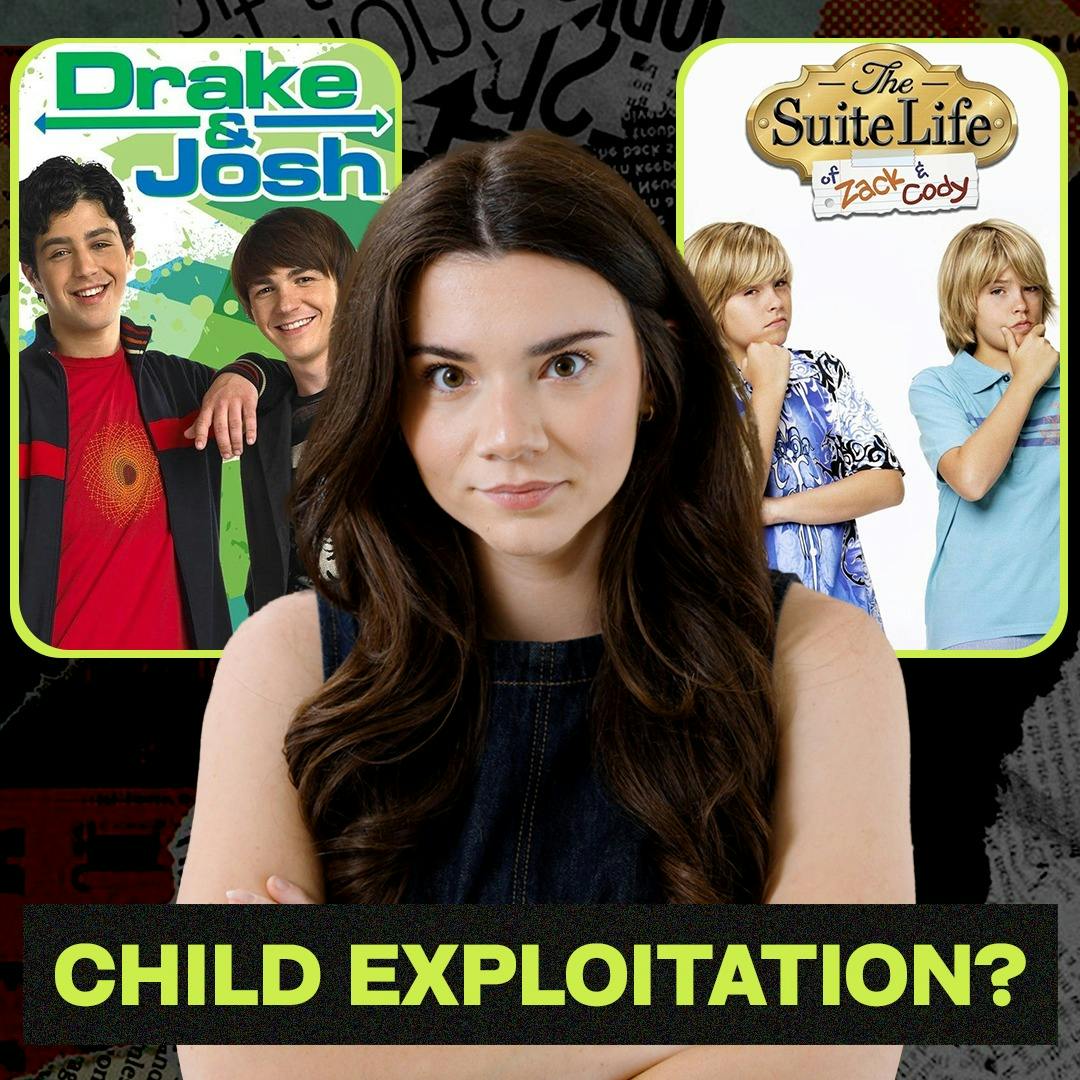
So have you ever wondered why your favorite child stars just disappear? Well, it turns out Hollywood is not a fairy tale. This is a story of stolen money, abuse of power, and non existent residuals. But the thing is guys, this story isn't just about bad contracts or bad apples in the industry. This is about a system that is built to profit off of the labor of children and leave them with nothing. But before we dive into that, make sure that you're following our podcast page and please rate the show if you're enjoying it. And of course, if you wanna stay up to date on all things with this show and channel and all things I'm doing, make sure to go to BrettCooper.com that is the hub for all of that information. So I know that abuse of power is not a new thing for you guys. Cause obviously we have talked about this a lot this year, especially with our whole Justin Bieber series. But there was a recent viral video from actor Drake Bell. He was one of the stars of Drake and Josh, if you guys grew up watching that on Nickelodeon. And he went viral for talking about what it's like financially to be a former very successful child star and the fact that it's really not all that it's cracked up to be. And I was watch video and then I was kind of following the comments and then I went down a Reddit loophole and I saw other things and I just strung together this entire episode and this entire story that I thought you guys might not know about what it's like to be a child on television working at these children's networks. Now the first thing that you need to know about being a child actor and a child star, or just being an actor in general in the payment structure is you need to know about residuals. As an actor, you get paid for your time. Like when I was doing Heather's or whatever it was, I was paid by the episode. So. So it was like, okay, we are gonna make this amount for this episode that you do that breaks down into a day rate. And those rates are usually determined by your actors union. So sag, aftra. And you make that money based on the time that you've worked. But then after the show has been released, if it's put on cable or if a streaming service buys it, you get residual checks in the mail for every time that it airs, however much money that episode or that show makes the networks, then you get a small cut of that. And that cut is pretty predetermined in your contracts. And a lot of the time that cut is predetermined by the unions, if it is a union project. So this is how, historically, actors have been able to kind of sustain themselves when they're not working. So, you know, they do a couple of shows, but they go through a dry spell. If they're taking some time off, they'll know that they'll have these residual checks come in. And they're modest for most people, but they are consistent. Money and sag after requires them. However, a lot of people, a lot of actors are not seeing a ton of money from these residuals, especially as networks have switched to stream rather than selling and licensing the shows to cable, which obviously made a lot more money. Like, for example, the cast of Friends, which I feel like Friends runs 24 hours on television. Like, no matter where you are in the world, you can turn on a TV and there probably will be an episode of Friends. That core cast of six, they make $20 million annually just off of residuals because of how many of us, like me, go to hotels and watch reruns of Friends. Actors from that huge show, this is us. So it's not as big as Friends. It hasn't been around for as long. But they allegedly make more than 70,000 dol a year each just from reruns. I think that was a. That was an NBC show, so that was also on cable. You know, people who were in the office, parks and rec, those kinds of shows, like, they all make a very good living that can sustain them as they maybe take some time off or try to find a new role after they have been in that successful series. But often that kind of money is not the case for child actors or people who are on children's television. And this has been coming to light on social media. Ryan McCarten, who starred in Disney's Liv and Maddie, which you guys might have seen as you were growing up, recently went viral for talking about this and sharing one of his residual checks, which was a whopping 41 cents. And I will tell you guys, I have been there. I have gotten residual checks like sag. AFTRA still sends me checks sometimes, so you can put some on the screen. This year, I've actually been hitting it big. I got like a $13 check, like a $26 check. That was big, but I literally have checks. I'll have to find them in my house that are for like 2 cents or 3 cents. And you're like, wow, I think the postage cost more than you trying to send this to me. But it really is not a lot of Money. Daniella Monet, who played Trina on Victor, huge, huge show that made Nickelodeon a ton of money, showed her check around the same time, same thing, Pennies. On this check, she made 16 cents. And guys, these are not little side characters. Somebody who just did one episodic here. Or they're like, I can understand that my little one episode roll that I did on an Amazon show when I was 12 years old, like one episode and I was in like three scenes. I can understand that I would only get like 2 cents for that. Like, I'm not even expecting to be paid anymore for that. But when you are the lead in a show that was beloved by an entire generation that ran for seasons, that you can still go online and watch that they will still do reruns of on Nick and Knight when you are getting 16 cents and you were the lead actor, that is crazy. Again, these are shows that ran for years, they were syndicated globally, they will live forever on streaming and they make pennies. But the thing is, I guess actors like Danielle and Ryan should count themselves lucky because some actors, some older actors literally get zero. Specifically if you were an actor on Nickelodeon many years ago before they came to any kind of agreement with SAG Aftra. Because at the time, Nickelodeon was not part of sag. So they were not required to give their young actors residuals or any of the types of contracts that the other actors and other networks had. And so they were able to skate around giving these children residuals or paying them as much as the stars on other networks were making. And here are the Neds declassified stars talking about this exact thing.
- [05:31]
B
We do not get paid residuals ever for ned.
- [05:33]
A
And our faces are plastered on Netflix and Paramount.
- [05:36]
B
Plus it's kind of unfair, guys, because our union at the time made a deal with the studios to not pay their leads residuals. And that has had lasting impact on our life. Was the union not figuring it out with the studio to have our backs. And that's literally what this moment is right now. The union is trying to have not the millionaire actors guys. It's not about that.
- [05:59]
A
It's about living wage for the space.
- [06:01]
B
Guys, pay for actors, which is most of us in the industry.
- [06:05]
A
So the reason why he was talking about this last year is because obviously there was that huge SAG AFTRA strike, there was the writers strike, but there was also the SAG strike. And a big part of the SAG strike was about this, about the fact that the union had these specific contracts with different studios that allowed them to skate around the Rules. And as the entire Hollywood model has shifted more towards streaming and away from cable, a lot of those contracts and those residual contracts are now outdated. So people are saying, hey, we need to figure this out because we're signing these contracts. But they don't even relate to where you're putting our shows and where our work is actually going. And then AI Fits into that whole thing. So that was why a lot of these actors were going on strike, why SAG went on strike. But that is just some extra context for you guys in case you were interested. But back to the point, what is even more messed up on this story, specifically with Nickelodeon, is that the guest stars on Nickelodeon shows, on shows like Ned's Declassified, they would make residuals. But the series, regular actors, the recurring characters, the lead actors who were there every single day making the show, whose faces are plastered all over streaming, things were plastered on merch. They were not making residuals. And this is what Drake Bell was talking about in that now viral clip. So let's take a watch.
- [07:12]
C
We're like, okay, cool. I got rent this month. There's three channels doing Drake and Josh marathons. Netflix just bought it. It's top 10 on Netflix. And I gotta figure out how to pay my rent this month. And some fat cat with a cigar is just sitting up in a. At the top of Viacom, just going, heh, heh, Isn't it great getting around? I mean, you know.
- [07:35]
A
So back to the point. Actors for basically every big hit show like Friends or Seinfeld, the Office, Parks and Rec, this Is Us shows that I was even on as a kid that were not hit shows like this at all, they would get residuals. And it wasn't just Drake and Josh specifically, like, this is an industry standard business model. They write these contracts to prey on young actors and their parents, allowing them to literally own every part of their likeness and their work while the actors get nothing once their work is finished. And of course, it is not the industry's responsibility to make sure that these people are taken care of. It is not the industry's responsibility to make sure that you can make rent 15 years after you've done the TV show. But when it is the standard for the rest of the industry, when people are making $70,000 a year because their show was getting reruns. But Drake and Josh are not seeing a single penny when Netflix buys the entire series. And all of us, me and Alex, were like, oh, let's rewatch Drake and Josh. And we sit down for three hours when Nickelodeon is doing reruns and using their likeness and it's making them millions and millions of dollars. And. And they see nothing. And the only people who are exempt from this are children and their parents who are at a disadvantage in terms of bargaining power and knowledge. Then that is a problem. That is a systemic problem. But before we keep going, I want to thank today's sponsor. Hard working Americans are drowning under crushing debt, trapped by high interest credit cards, personal loans and medical bills. And the truth is, creditors profit from keeping people broke and controllable. But my friends over at PDS Debt are here to change that. PDS Debt does more than just help you manage your debt. They empower you to take control with their technology. They go beyond the numbers to understand your unique financial situation. No more cookie cutter solutions. Just a clear path to financial freedom that fits your lifestyle. And here is the best part. There is no minimum credit score required. So whether your credit is bad or fair or great, and believe me, I have been there, I have dealt with that after missing credit card payments, they are here to help you save more and pay off your debt faster and start putting money back where it belongs, which is in your savings account. And getting started is easy. Just go to pdsdebt.com Brett for your free debt assessment and see what your options are. Anyone with enough eligible debt qualif. So just get started with your free debt analysis in 30 seconds@pdsdebt.com Brett Again, that is pdsdebt.com Brett now, in that interview with Drake, he was specifically talking about Nickelodeon and Nickelodeon's loophole. But Disney, Disney can't claim that they are holier than thou in any capacity. They have not been exempt from doing their own loopholes. Now Joey Bragg, who is another Liv and Maddie star, this is now the second Liv and Maddie star who has come out to talk about this. He has said that Disney used a loophole to avoid paying them minimum wage. So while Nickelodeon was skating around on residuals, Disney was doing their own nefarious thing. Take a listen.
- [10:16]
D
You were also telling me that Disney, sneaky little Disney, they have this rule where they don't have to pay you 100% of the WGA rates. Yeah, for three seasons. So that's why every three seasons they reboot it under different names.
- [10:26]
E
It's like Hannah Montana Forever and Suite Life on Deck.
- [10:29]
D
But they had a deal where the.
- [10:30]
E
First three seasons of a show, you get paid 88% of scale. Okay, so it's 88% of like minimum wage pretty much for the Crew.
- [10:37]
A
Yes. Just so everybody knows what scale means is like your SAG AFTRA union scale rate. So when I would get offered an acting job, I would see in the contract, if it was minimum wage, that would say SAG AFTRA scale, you know, that you were getting the base minimum. But Disney had a special loophole, a special contract where they only had to pay their actors 88% of that scale. So they were getting less than minimum wage. These children who are out of school, working all day long, making millions for Disney, were getting paid less than the union's minimum wage. That is what he's talking about. All right, I'll let him continue.
- [11:09]
E
The idea is you work on a show, it becomes popular. You go four, five, six seasons and you get 100% and whatever that is. But then they, by the third season, even if the show's popular, they reboot it as a brand new show. So we were Liv and Maddie for the first three seasons, and last season was Liv and Maddie Cali style.
- [11:26]
D
Oh, my God. And it's technically a new show.
- [11:29]
E
Yeah.
- [11:29]
D
So they can go back to paying you like shit.
- [11:31]
E
Yeah, exactly.
- [11:32]
A
And guys, if you look back at these Disney shows, he's completely accurate. It's three seasons, they all have different names. And I guess from a bird's eye view, the idea of that sort of makes sense. Like you go in and you earn your keep, you work for a lower wage, you see if the show's popular before they really invest in you. And then when you hit that three year mark, you get a raise, you get a boost to all of this stuff. But that's not how it actually worked. Because these contracts were not designed to empower or encourage these actors to actually be better and make the company more money. Because at the end of the three years, they were going to say, oh, we're rebooting. So actually, you're going to keep making the 88% of this SAG scale minimum wage. And what they called this 88% was the quote unquote, training wage. I mean, just imagine guys being the face of a hit show, making a company millions of dollars, putting in work day in and day out, hustling, sacrificing as a child, putting yourself out there and literally getting nothing in return. Like, obviously, you know, you've gotten famous. Obviously you're making money. You know, you're making money at a young age. That's good. But you're not getting what you were promised. And they are very openly and comfortably saying that they are taking advantage of you and they do not care. But even more egregiously, under this system, when you bring it up to them, they throw it back in their face and they say, actually, you're replaceable. You as the talent, people aren't watching for you. You are replaceable. And that is exactly what happened with season one of the Power Rangers. So they fought back. They wanted more money. They wanted to be treated fairly. And. And they got chewed up and spit out. One article reads, as Walter Jones, who portrayed Zachary Taylor, the Black Power Ranger, told the Huffington Post in 2014, quote, they made about a billion dollars in the first year off of merchandising. And when we have toys and parks and video games and comic books and all of these things with our likeness, it starts to come into reason that this should at least be union. So it'll be fair. It should be part of the SAG union. Quote, we weren't paid a lot at all. I could have worked the window at McDonald's and probably made the same money the first season, said Austin St. John, who portrayed Jason Leigh Scott, the Red Power Ranger. He added that Sabin, which is a. That originally started the Power Rangers, just had absolutely zero conscience about making billions using our faces. Because it was his idea and he owned it. To hell with everyone else who was helping him make that money. I mean, guys just like, think about that. You are a global franchise. You are working day in and day out again selling toys and tickets and merchandise and theme parks and movies, and you're seeing nothing. That original cast, that season one cast, they were non union, they were overworked, they were doing their own stunts. They didn't have any protections, they were not even getting health insurance. And they were seeing a sliver of those billions of dollars that this company was making. And like I said, they realized that they saw the discrepancy there. And I think once you see that discrepancy of what somebody's making off of you versus what you are earning, like, there's no going back from that. And they went into that office and they asked for a raise. They asked for better treatment. And guess what happened? They were fired. They were kicked out and they were replaced with an entirely new cast. And allegedly they were told, you are dispensable. Allegedly. As the story goes, that is literally what they were told when they all went into that office together. They were looked at and they said, we can replace you. Just like that. It won't change the series. We don't need you. We don't need to pay you this living wage. We don't need to give you fair treatment or protections or anything like that. You are dispensable. Go, leave. Try it on your own. We will fit somebody else into your roles. You do not matter. And if you're not willing to bend for what we're gonna pay you in this treatment, terrible conditions, unfair contracts, somebody else will. And unfortunately, that is exactly what happened. So if you look at season two of the Power Rangers, there are completely different actors because the original cast left, new people came in. And I have seen this happen, happen, guys, so many times. It happens in acting, it happens in other industries. All in the entertainment world. Like, there will always be somebody who is younger or newer willing to ignore the red flags and sign a bad contract just because they wanna make it or they're worried that this opportunity will go away. So they just wanna sign and say yes because it's uncomfortable. They don't wanna negotiate, they don't wanna ask for more. Because these types of opportunities are so fleeting. And sometimes these new people have no idea what they're getting into. Maybe they have no advisement, they truly go in blind. But in a lot of cases, and this really is the worst, is when they go in and they have guidance. They know exactly what they're signing and they still choose to ignore it. And these companies prey on that, and it is disgusting. We'll dive back in. But first, a quick word from our sponsor. Now, as you guys know, I am always looking for new ways to stay on track of my wellness goals. And Balance of Nature always makes it easy. Their supplements are made with ingredients like whole apples, spinach, mango and turmeric. Real foods that I actually recognize and can pronounce. And I love how convenient it is to add more fruits and veggies and spices to my routine without overthinking it. Because let's be honest, I never actually have time to eat all of the fruits and vegetables that I need to eat on a daily basis. And that is where Balance of Nature comes into play. So if you're ready to take charge of your health and make your routine Even easier, visit balanceofnature.com or call 1-800-246-8751 and use code Brett to get a free fiber and spice supplement plus 35% off your first preferred set with free shipping and a money back guarantee. That is an amazing deal. Start your journey with Balance of Nature. Again, just use Code Brett at checkout. All right, let's be honest, guys. Most of today's healthcare system is not built to actually help you Fit, feel your best. And if you've been told that everything's normal, but you are still dealing with low energy, brain fog, stubborn weight, mood swings, whatever it might be, it is time to get true experts to help guide you. And that is where my friends over at Merrick Health come in. I absolutely love these guys. They were so transformative on my own health journey. Merrick Health offers in depth lab testing and personalized treatment plans that help you get to the root of what is going on, whether that is hormones, nutrient deficiencies, or other imbalances. You can go full service and work with their expert medical team, which is what I did two years ago, almost three years ago, actually. You will get the tools and the support to actually improve your health and not just manage the symptoms. And because you are a Brett Cooper show viewer and listener, you will get 10% off your order. Just head on over to merrickhealth.com, use code COOPER at checkout. Stop guessing. Start optimizing. Because real health means taking ownership over your body, and Merric Health gives you the roadmap to do just. And like I just said, it is not just in Hollywood that it happens. It's not just young actors. It's a lot of young performers everywhere. Like, the Power Rangers cast is far from the only people that have ever tried to fight back against this system. Cole and Dylan Sprouse also tried the same thing with Disney. Now, you probably know them from the Suite Life, the Suite Life on Deck. Well, when they got older, they pitched the idea to Disney to evolve the Suite Life as they were starting college and they were kind of wanting to move on from it. And this right here was Disney's response.
- [17:56]
F
So they sat us down. They're like, all right, here's our idea. You guys leave the boat. Zach goes to work in Miami with Cole. They both go like Zach and Cody go to Miami, right? They go to this hotel, okay? And Selena Gomez is there. This is the best part. And Selena Gomez is there. And there's this kid who is. Has a single dad, right? And you guys raise him up like he's this prodigy of yours. And you can set up the show. You guys don't get producer credits. But then Zach would go to work in used car dealership and Cody would go to college. But all of this happens in the rapid pace city of Miami. And they pitched us our idea in Miami with Selena Gomez. And Cole and I turned to each other and we basically laughed in their face and walked out. And that was the last meeting we had.
- [18:49]
A
So like he said, they basically took the idea that they pitched them, threw it back in their face, changed two things about it, and said, here you go. Now, this is our idea, but you get no credit, no producer credit, no writing. This is the idea. And on top of that, moving the entire show to Miami would mean an entirely new cast of characters, which completely defeats one of the points of why Cole and Dylan were bringing the show to Disney in the first place. Because they wanted to protect the actors that they had worked with for years. They wanted to make sure that they continued to have jobs. Like, they still wanted to do the Suite Life. They wanted to keep continuing, even though Cole and Dylan did want to go to college. So they were saying, let's keep the show in New York. Let's do this whole thing. These actors will still have jobs. We can move on with our lives. We can produce. And Disney was like, actually, we don't want your idea. We don't want to give you credit. We don't want to pay you more. We don't want to do anything else. We don't want to protect any of these actors. We're going to do our own idea. That is basically just your idea. Now, what is even crazier about this is that that interview is basically nowhere to be found. It is only on weird TikTok accounts that have been able to, like, pull the clips and reuse them time and time again. And all of the articles that were written about this interview have been wiped from the Internet. Like, guys, if you go onto Reddit threads from, like, eight years ago, you can see people talking about this interview, posting the YouTube link, saying, this is so crazy that Disney did this. I can't believe this is what Dylan and Cole wanted to do. You click it. It was deleted. Like, I literally think it was deleted within 4, 48 hours of being posted. All of the articles that talk about it that said, oh, my gosh, this was so crazy are nowhere to be found. Like, not to start some conspiracy, but it kind of seems like Disney didn't want the world to know how little they trusted or respected their biggest stars of the time. The stars that were trying to say, hey, we will keep working for you and help make money for you if you give us a little something so that we can go to college and we can keep building our career. But obviously Disney didn't wanna do that. Maybe it didn't fit into the loopholes that they enjoyed jumping through. Now, it also, guys, is not just the child actors who are exploited. You know, it's not just Hollywood. I said that a little earlier. We see this in every single industry, but it almost always is with young performers. Now, obviously, we did our whole Justin Bieber series. We've talked about Justin Bieber, we've talked about Britney Spears, Amanda Bynes, all of these different young people. But today, to kind of conclude the story and the rabbit holes that I went down as I was researching this, I want to talk about NSYNC and the Backstreet Boys, who were controlled by one man by the name of Lou Perlman. Now, Lou Perlman was the one who managed and created NSync. He created and managed the Backstreet Boys, the band O Town, and he stole money from all of them. He completely exploited and took advantage of all of these young performers and allegedly embezzled over $300 million. This man, this manager made millions off of these young performers while they basically made pennies, all while selling out stadiums across the world and working their asses off. And one article about the situation shared an especially illuminating story. Just take a listen. Meanwhile, after years of touring and selling out arenas and promoting albums, both the Backstreet Boys and NSYNC were starting to wonder when they were gonna get paid. Quote, with all the success, you would think that we were making hand over fist money, that we were printing money and whatever, and it just wasn't the case. Now they go on and they share the story about how Lou Perlman took some of the boys out to dinner and as like a check handing over ceremony. Like, here you go, you're gonna make all your money now. I'm gonna give you this big check. You're gonna see all of that you're earning. It's gonna be so great. You can take it back to your hotel room and celebrate. But that was not the case. Quote, at the end of dinner, we all have these envelopes sitting in front of us. And I knew my life was about to change. Bass said, I knew we had worked so hard. I knew what that check should be or what I was hoping it would be. In the best of worlds, like a million dollars would have been like, oh my God, that is what I thought we deserved. But when they opened their checks, Bass said the amount was for $10,000 each. Quote. I didn't want to seem ungrateful because at that point, yes, $10,000 is a lot of money. But we went back to the hotel and that's when it all just hit me. I was so disappointed. And I ripped up the check like I knew something was wrong. The band then had JC Chazay's uncle, who was an attorney, look over their contracts and he called it, quote, the worst contract I have ever read in my entire life. TL Dr. They were getting screwed. They had no control over their work, they had no control over their money. Anything that was happening to them. And this man was making millions while they worked their asses off. So they finally lawyered up, they left him. And then in response to them leaving him, Lou Perlman sued them. The article reads. After their attorneys found a loophole in their contract, NSync left Perelman for Jive Records. The band was hit with a $150 million breach of contract lawsuit in an effort to stop the move instinct and stop them from performing a recording using the name NSync, among other demands. Again, across so many different industries with young people who are performing and put their trust in the people that are supposed to be managing them and guiding their careers. But because of NDAs and non disparagements and arbitrations, everything that we talked about in our entire Justin Bieber series, because of all of that, most people will never know. Most of this is just brushed under the rug. Even if you win, most of it is never spoken about. Most people in these situations will never be able to tell you their story. They will never be able to share how they had to fight back, how long it took, et cetera, a la Justin Bieber. Exactly what we saw happen this spring, which is why it is so important that people like these band members, people like these former child stars, why it is so important that they share their stories and bring all of this to light. Now, back to the story, just to kind of round it out for you. After trying to sue them, Lou Perlman ended up being convicted of running a Ponzi scheme and literally stealing money from them. And he ended up dying in prison in 2016 while serving a 25 year sentence. And the rumor online is that the famous song Bye Bye Bye was actually written about him. And that was not something that they could say explicitly at the time because they were still under a confidentiality agreement. But as years have gone by after Lou was convicted, especially after he passed away, they have become a lot more open about everything that they experienced. They were able to come forward. And Justin Timberlake has even said the working with him was like being financially raped by a Svengali, which is a really famous character in literature. Basically somebody who uses excessive force, who is manipulative, who is a tyrant. That is who he is comparing Lou Perlman to. That is what he is saying his childhood experience of coming up as a child performer was like, so what I'm trying to get across in this episode is that this is not just one bad guy. It's not just one bad experience. It's not just one person that did something to Justin Bieber or somebody else. It is the entire structure of this industry and the entire way that this model is used to manipulate and exploit children. Companies and networks and unions, they find these loopholes. Parents are often unaware, or even worse, they are complicit in doing all of this. There is no financial literacy that is taught to these children, and fame is used as a distraction from exploitation. They say, you know, if you just put in the work, if you just give us three years, you'll make what you're worth. Oh, I'm gonna bring you to this dinner. You'll get this amazing big check after selling out stadiums. You're so famous, you should love it. And then you only see $10,000. It is a completely abusive and disgusting structure. And while these studio execs sit in their big offices, the talent is told to just shut up and be grateful because they are simply replaceable. But as we have seen time and time again, talent and your authentic voice is not replaceable. And it often will not work. You can't replace Justin Bieber. You can't just create a new Justin Timberlake or any of these stars. And so, thankfully, it seems like this archaic system will finally topple. It will only do so if more of these people continue to speak out. And so I hope this never stops, and I hope for a better future for the next generation of child performers.