← The Brett Cooper Show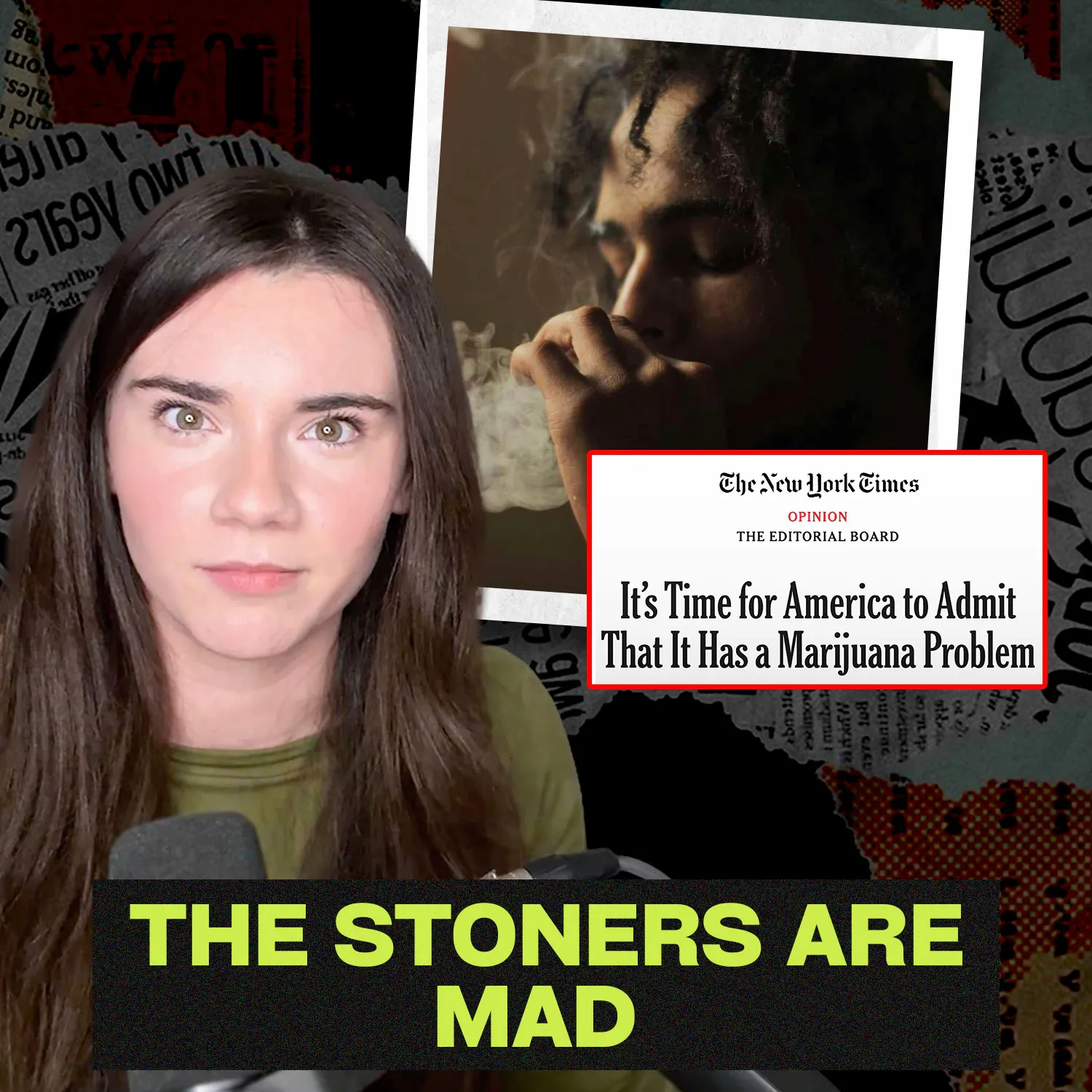
Loading summary
Transcript1 lines
- [00:00]
A
I cannot stand stoners. And no, that does not mean that I hate everybody who has ever smoked weed in their life or taken an edible. But I hate the stoner culture, I hate weed culture, and I especially hate the people who refuse to admit that there are risks to their culturally accepted, legalized, harmless drug. So let's talk about it. Now. You might have seen and maybe you even found my channel from this, but I had a post blow up on X yesterday about this exact subject and we will get to that very shortly. But the reason why I was tweeting about weed in the first place and my personal experiences with this is because of a new piece that just dropped from the New York Times editorial board. And that piece is entitled It's Time for America to Admit that It has a Marijuana Problem. Finally, some of us have been waiting years for this information to come out or for this information to become more commonplace. Now, obviously, right off the bat, we have to say that this is incredibly funny and ironic coming from a publication and organization that was one of the driving forces behind cannabis being legalized in so many states and really just being normalized across the board. For example, in a Politico analysis of this op ed, they wrote that the New York Times editorial board walked back its years long support for marijuana legalization in a Monday editorial writing that the US has recently gone too far in accepting and even promoting its use. So the people who have always talked about the slippery slope, they are vindicated once again, honestly, as they usually are. Maybe we should learn from that. They go on and they say in the piece the editorial board conceded that some of its past positions on legalization no longer hold up, including its initial assessment that marijuana addiction and dependence are quote unquote, relatively minor problems, especially compared with alcohol and tobacco. That is what the New York Times said prior to this op ed. And listen, credit where credit is due. People are finally catching to what so many of us have been saying for years. But attitudes and perceptions do not change overnight. And so this does not mean the people online, especially the stoners, are happy. But honestly, this basically happens every single time we call out one of society's vices. In this new op ed, the New York Times concedes, finally, the policymakers have taken too much of a hands off approach when it comes to marijuana. And again, after more than a decade of pushing for this acceptance and legalization across many, many states, they argue that maybe, possibly some regulation might be in order. They wrote at the time, supporters of legalization predicted that it would bring very few downsides in our editorials, we described marijuana addiction and dependence as relatively minor problems. Many advocates went further and claimed that marijuana was a harmless drug that might even bring net health benefits. They also said that legalization might not lead to greater use. I also remember reading and hearing from friends that actually it wasn't an addictive substance. People can't get addicted to weed. It's not like alcohol. It's not like other drugs. Again, totally harmless. That was commonplace. That was the dialogue, especially when I was a teenager. They go on and they say it is now clear that many of these predictions were wrong. Legalization has led to much more use. Surveys suggest that about 18 million people in the United States have used marijuana almost daily or about five times a week in recent years. That was up from about 6 million in 2012 and less than 1 million in 1992. More Americans now use marijuana daily than alcohol. Now, I think that there are many reasons for this. This could be branched into an entirely other episode. Obviously, we've talked about, especially my generation, specifically not drinking as much. I think that that is very much t to the lack of socialization when it comes to Gen Z. We are far more isolated. Weed is definitely not a social drug. You're not, you know, popping an edible and then going out to the club. I mean, maybe you are more power to you, I guess. But it is not like alcohol in that way. It is an isolating drug. You're taking an edible, you're hanging out at home, you're going to bed, you're playing video games, you're reading a book, whatever it is. As we become more isolated, the usage of weed has increased. And all of these numbers that the New York Times laid out, they are crazy. But they're also not shocking for most people. Like, not even for me. Like, all of this has become commonplace. Just a few days ago, I was chatting with a colleague who was talking about how he it relies on edibles and gummies to be able to sleep better. You know, members of my extended family do the same. They talk about this openly. It's not taboo. One of my best friends uses weed recreationally. Like this is as normalized, if not more so than alcohol in our current culture. Now, what should actually be normalized is balance of nature. Now, if you're like me and you don't really know what phytonutrients are, you are going to love this balance of nature. Supplements make understanding and taking care of your health easy. And it all starts with phytonutrients, the naturally occurring plant nutrients found in whole foods that give them their color, taste and smell. And when it comes to your diet and your supplements, the presence of these things is a surefire sign that you are getting, getting real phytonutrients. And Balance of Nature prioritizes that they take whole foods through a tailored cold vacuum process that stabilizes their nutrients. Then these whole foods are powdered and packaged with no binders, no fillers or flow agents, which is very rare in the supplement space. And their whole health System gives you 47 whole food ingredients and all of them contain those naturally occurring phytonutrients. So whether you have been on the fence for a long time, cause I've been working with Balance of nature for a long time, or it's the first time that you are hearing about them, I recommend that you go to balanceofnature.com and order their whole health system supplements as a preferred customer today. Now back to the point. With cannabis being so, so normalized, when you talk about the risks, especially online, that opens you up to the chill, laid back screeches, screeches, angry screeches of stoners who are convinced, or maybe just want to be convinced, that this drug is still totally harmless and totally cool and totally awesome. But I'm sorry, it isn't. For millions of people, it is not harmless and they are vulnerable to these consequences. And I'm glad it works for the people who enjoy it or who benefit from it. But we need to stop lying to millions of people and pretending that this drug is just a chill plant that is just totally harmless. And the New York Times again finally conceded to that point. They wrote this wider use has caused a rise in addiction and other problems. Each year, nearly 2.8 million people in the United States suffer from cannabinoid hyperemesis syndrome, which causes severe vomiting and stomach pain. More people have also ended up in hospitals with marijuana linked paranoia and chronic psychotic disorders. Bystanders have also been hurt, including by people driving under the influence of pot. And yet for years, guys, I was told, certifiably by bros and comment sections and folks in the media that this drug was so different than alcohol and it was completely safe. Like, please, it is time to finally be real. This op ed obviously caused a firestorm online. People have been debating it. They were shocked that the New York Times went there and it has basically been the entirety of my algorithm for the last 48 hours. And people like Alex Berenson, who wrote the book Tell youl Children the Truth About Marijuana, mental illness and violence are Taking a much deserved victory lap and by the way, just giving him a shout out. I highly recommend that book, especially if you are a parent of a young person, an adolescent, a teen, or if you are just a teen that wants to be armed with the information, highly recommend it. Now, in addition to Alex, you have Sager and Jetty from Breaking Point, who has been long trying to sound the alarm. You have Mike cernovich, you have Dr. Drew who was literally just talking about this in December on Fox. I mean it is people from all different sides of the political spectrum, people in different disciplines. And the main point that all of them have gone back to is this issue of cannabis induced psychosis. Somebody who has also been speaking about this for years, way before it was accepted or cool, is my good friend Liz Wheeler, who I just adore, and I mean post after post, episode after episode, trying to again sound the alarms of the dangers of this drug. Especially to a more conservative libertarian audience who is often this more hands off approach from our government under the guise, or I would say under the principle of freedom and just, you know, live and let live. Allow people to do what they want, smoke what they want. We don't care. We don't want the government involved in our business. And she is saying no, you should care because this actually is dangerous. You should care because the information that we have been given is not accurate. And the blowback that Liz has received for years has just been insane. Other than receiving an Epstein binder last year and being photographed in that whole fiasco like this is probably the most hate and anger that she has received from her audience and just the Internet at large. But one of the reasons why I love Liz and I respect her so much is because she is almost always early on things. She has a great gut instinct. Even back to Covid vaccines and lockdown. She was one of the first people who was actually talking about this and she was right about psychosis. So let's just look at the facts. I will rattle through this so that you can just have an overview and listen. And if any of you guys enjoy the occasional gummy, do not jump down my throat yet. I just want to lay this all out to you. Just take a second and listen. I'm not trying to attack you. I genuinely am just trying to start, hopefully a helpful, productive conversation. I would love to help people not have to endure what my family has gone through. So please just stick with me. Now before we dive into that, I do wanna take a break from my sponsor, Stash Financial. If you've dabbled in investing here and there but haven't been happy with how things are going. You should try out Stash. They help turn good intentions into consistent progress. And Stash is not just another investing app. It is a registered investment advisor that combines automated investing with expert personalized guidance so that you don't have to worry about gambling or figuring it out on your own. Stash is simple. It's smart and stress free. You just choose from personalized investments. You let Stash's award winning Smart portfolio do the work for you or you can pick a Stash is there to help guide you every single step of the way. So join over 1 million Active Stash subscribers and finally let your money work as hard as you do. Do not let your money sit around. Put it to work with stash. Go to get.stash.com Brett to see how you can receive $25 towards your first stock purchase today. And to read important disclosures that is get.stash.com Brett get.stash.com Brett paid non client endorsement, not a guarantee nor representative of all clients. Smart Portfolios are discretionary managed accounts and subject to additional fees. See the Advisory Agreement and Deposit Account Agreement for details. Investment Advisory Services offered by Stash Investments LLC and SEC Registered Investment Advisor Investing involves Risks all right, now back to laying out this point. There is a connection between cannabis usage and psychosis, especially for young men. That is the most vulnerable population. That is supported. It is acknowledged even by the National Academy of Medicine. And if you want even more evidence of this, here is a Yale article from 2024 and a study from the NIH way back in 2008 cannabis use and the risk of Developing a Psychotic Disorder Jumping from there, another stat is that teenagers who use cannabis by the age of 15 are more than four times as likely to suffer from schizophrenia compared to their peers who do not use cannabis. And on top of this we have Nicholas Fabiano who is one of the writers of a big study on this. He said that 41.3% of young males with cannabis induced psychosis develop schizophrenia within three years. And I think that that is an important distinction because you can have a psychotic episode and not be a diagnosed schizophrenic. That's what happened with my brother. We'll get to that later. So he is saying here that more than 40% of the young men who have these negative side effects will go on to develop schizophrenia. Now on top of that, the Journal of American Psychiatry has also found a connection between cannabis and physical violence. There is A higher risk of having a stroke and having a heart attack. The list goes on. But I do wanna focus on psychosis here because that specifically is what has impacted my family. And that is why yesterday, in response to all of this happening online, I posted this. I retweeted one of the people talking about these dangers and the health impacts. And I said, my mom and I have been told that my brother's psychosis, now full blown diagnosed schizophrenia, is most likely drug induced from his years of smoking weed. This drug isn't harmless no matter what our culture and screaming people in comment sections tried to tell us. And so the story is. And by the way, if you watched my Sean Ryan interview, I talked about this even more at length. The story is that my brother reed, who was 12 years older than me, he became a pothead, I would say, late in high school. I think that he was also dealing, but this was a very significant recreational part of his adolescent life. Now, prior to this, he never showed any signs of mental illness. He never showed any signs of psychosis. He is a twin. And David, his twin, did not show any signs either. But for the last decade, my brother Reid has been in and out of psychiatric facilities. He has been on and off the streets in states like California and Idaho and Tennessee. He's been all over the country. This is what my family has been dealing with for a decade. My brother Reid is now a diagnosed schizophrenic and he is mute. As it stands right now, currently, he is unable to participate in society unless he is medicated. Now, as an aside, I want to say I am really, really excited about everything that RFK Jr. Is doing and talking about with ketogenic diets and the impacts on schizophrenia. I think that's incredible. I have seen that positively impact people who are in our circle, our community, as we have gone on this journey with my brother. We have tried with him. He's not interested. And so I'm just gonna leave it at that because there are only so many things that you can control with somebody who is mentally ill. But I have seen people putting that in my comment, talking about this, and I appreciate that and I'm so excited and so hopeful that this will become more commonplace. Anyway, after more than a decade of this, doctors have pointed to my brother's drug use as a major factor behind all of this. Now, before I just terrify you guys all outright, I do want to acknowledge that there are additional other factors at play here. And the researcher behind one of the largest studies on this connection between psychosis and cannabis does acknowledge this, because this psychosis, this schizophrenia, it can manifest in many ways and it doesn't always start out as full blown schizophrenia. And in a 2024 thread, he shared that there is not one direct, concrete link here. And yes, it can just come out of nowhere. A normal kid smoking pot can just have a psychotic episode. But some people who are smoking weed are predisposed for more severe mental illnesses and psychosis, and this can trigger that. Some people have no reaction and actually smoke weed to help mitigate their mental health problems. And for some people, all of this can be triggered after a traumatic event wherein weed is often used to, to cope. So in terms of my family's story, my brother's story, my brother, again, showed no signs he was not predisposed. Based on what we know, our family does not have a history of psychosis or schizophrenia. He was healthy, he was smart, he was a strong athlete. But he did experience our brother, his identical twin, dying at age 17. And actually the 19th anniversary of his death is coming up on Saturday on Valentine's Day. That event and that grief obviously broke my brother. And he self medicated with more and more pot. And at some point, way down the line, his brain broke as well. And so I know you might say with all, you know, genuine care, and I know you might say, but Brett, that's the exception. Maybe it wasn't the weed, maybe it was just the trauma. And true, that could be right. He did watch our brother die. That is something that he went through that can break your brain just by itself. But the psychosis didn't start there. There was something else at play. And my brother is not the only young man who has developed psychosis after cannabis usage and is not the only one where that turned into schizophrenia. Again, 41.3% of young men who have a psychotic episode has it turn into schizophrenia. And in three years. And so I'm sorry, based on that, based on the information that we have, everything that I just showed you, we need, it's imperative for us to have an honest conversation about this drug that has been completely integrated into our society. And that for a lot of people, is thought of as harmless and even beneficial for many people. And again, I feel like I have to keep reiterating this, but I am not here to take away your positive experiences with weed, but I am just asking you to hear our experiences and to hear our concerns. And obviously, I'm sure you can hear my frustration because almost any time somebody broaches the subject, including myself, including the New York Times yesterday, you have to deal with this onslaught of anger from people who regularly use weed as they scream that it's totally fine, it's harmless. We just don't get it because we don't enjoy weed like they do. They're totally happy and successful. They're not unmotivated. Like, it's exhausting. And rarely in those comment sections are people actually discussing the issue at hand, which is maybe for a segment of the population, for young, impressionable minds, developing minds, it is a risk. Good for you. You know, get it all out in the comment sections and then maybe, maybe, can we possibly have an honest conversation to try and assess the risks and help protect specifically young Americans? Now, two thoughts here. First, when people were pushing for legalization many years ago, we were told again by virtually everyone that it was safe. In fact, we were told for a lot of people, it's good for you. And listen, much like there are studies connecting cannabis to psychosis and schizophrenia, there are reports of it being beneficial, especially for people struggling with chronic illness. Again, I have people in my life where it has been beneficial for them, struggling with chemotherapy or struggling with Lyme disease and they have used cannabis and it has been beneficial. Both, both things can be true and it can depend on the individual, but that does not take away the experiences from either group. Now, secondly, and possibly most importantly, is that the weed from generations past when our parents were celebrating free love at Woodstock. It is very different from the 38% lab grown, pesticide filled weed that is on the market today. Just take a look at this. This is just from Google. AI. Yes, modern cannabis is significantly stronger than in previous decades with average THC levels in flour increasing from about 2 to 4% in the 1970s to 90s to 50, 15 to 30% or more today. This dramatic increase in potency is driven by advanced cultivation techniques, selective breeding and the rise of high potency extracts or concentrates that can reach 90% THC. So again, today's weed, when young people are smoking what they are taking with their edibles, whatever it is, it is stronger. There has been a 650% increase in THC levels. And if you are somebody who is predisposed to severe mental illness, if you just went through a traumatic event, if you are a young person, especially a man with a developing mind, you, you are vulnerable. Somebody put it a lot more bluntly than I did and they posted about this on X and said smoking weed gives you schizophrenia. Not an opinion, an empirical fact. If it's dormant, it turns the schizo on and it brings it up to the forefront. You are not smoking that shit Bob Marley was on. This new modern weed is alien. It's pesticide, sprayed to fuck and has been genetically fucked with to no kingdom come. That GMO weed has the THC cranked up to the max way past natural levels, juicing the psychoactive experience to make it as addictive as possible. Mental illness occurs as a result. So this is the conversation that we are trying to have online that again has been dominating my feed for the last 48 hours. And the most common retort right now and in years past and in posts past coming from the angry, laid back, screeching stoners is that it's no worse than alcohol. So why are we nitpicking them? Why are we just focusing on weed when we should be focusing on other substances like alcohol? And I will first say, let's just be honest here. Well, alcohol is poison. It is bad for us as well. But what I would argue first is that I think in our culture and our society, people are more aware of the dangers of alcohol. It is shameful to wake up in the mornings and start drinking. Even if you are just going to brunch or drinking wine, whatever it is ladies do, it is completely unhealthy. If you need to drink to get to sleep, it is a problem. If you go out and you need to drink in order to get through social settings, it is irresponsible, it is evil to get behind the wheel while you are drunk. The same can and should be said for weed, but in our modern culture. I don't know the right word to use for this, but I would say that weed is more subtle, it is more accepted, it is less shameful. If you wake up in the morning and you're just taking half an edible to get through the day or to try to fall asleep, it is harder for for people to tell if you're out in public, if you're high, when you're getting behind the wheel, and with the convolution of it being healthy and beneficial for many people, everything gets more complicated. And additionally, I would also argue that there are a million different recreational and prescribed substances that we could be debating. So stop just using alcohol as your scapegoat. This is like the same thing as people using rape and incest as a scapegoat for abortion rather than actually trying to discuss the 99% of abortions that are done as a form of birth control. Do you actually care about rape and incest or are you just trying to use that as a way to avoid a difficult or uncomfortable conversation. Anyway, moving on from that. Like people can still barely agree on whether weed can be addictive and I loved the honesty and humility of this comment. Like this guy William Spencer Martin. He said those of us who supported legalization imagined that it would be the same mild Mexican ditch weed that we smoked in college and people would rip bong hits in the privacy of their own homes. We didn't anticipate the unchecked public consumption, the proliferation of nuisance smoke shops with the loitering criminal underclass these businesses attract, or the super strains of concentrated cannabis products that turn people into lunatics. We were also naive. Again. Slippery slope wins again. And that is basically what the New York Times was saying. Again, they were saying we were wrong. They were naive. And even though people were sounding the alarm, even though the NIH was talking about cannabis induced psychosis back in 2008, people were able to condition an entire society to believe that this was just a plant, that it's just harmless, maybe even healthy, and that it was more recreationally acceptable than alcohol. And all of that is why it feels like we are fighting upstream with this conversation now. Stanford neuroscientist Andrew Huberman, huge podcaster. He posted about this today saying, I tried years ago to share the data on psychosis but was accused of misinformation. A recent expert clinician on the HLP confirmed that it is even more of an issue now. Again, I wonder why. Maybe it's because of the THC levels. He goes on and he says one thing is for sure, you don't want your kids using cannabis. The better than alcohol is stoner logic. And when somebody snapped back at him being like, you don't know my experience, whatever it is, he simply said I am saying it is impossible to know how it will affect you and it is probably best to avoid, in my opinion, completely agree. And I would also add to that it's best to not believe the broad generalizations that it is harmless now. I also love this comment from an account called Rowdy American and he said people screamed harmless plant, harmless plant for years. Meanwhile, ER doctors and families are watching high THC weed light up psychosis and vulnerable brains. Legalize it if you want, but stop lying about the risk, especially for teens. At least with alcohol people know more about the risks. We talk about it more. Again, it is shameful. Even though the fact that it is literal poison becomes more apparent every day, like the last remaining like redeeming point for alcohol is you know, is that whole idea that, you know, you could have a couple of glasses of red wine, it's good for your heart. Apparently, that's just all bs. Ask Andrew Huberman. He has a great episode about that as well. Anyway, I know that I am ragging on stoners and weed, but I have had it today. I've been reading the comments, and obviously I will admit, I'll be the first to admit that yes, I have personal experiences with this. I have a personal bias because I have watched this drug help destroy somebody I love and tear apart my family. But that bias really just means that I want you to be careful and I want you to be educated about the risks. Like, I saw how careless my brother's friends were. I saw how careless my teenage friends were when they started smoking in high school, when my friends were buying edibles and hitting weed pens in college, how they literally laughed in my face when I showed caution. And I was like, eh, probably like not to going great for you. Like, doesn't that kind of make people crazy? And on top of that, how adults all around them egged them on and supported this vice. And that's really what it is. It's a vice that people have a very close personal connection to and that they don't want to give up. And that's what makes this part of a much broader conversation that we should be having about how all of these vices that used to be hidden, that used to come with shame, are now completely mainstream. Drug usage is completely commonplace. I'm also talking about porn. I'm talking about women reading smut and calling it literature. I'm talking about masking alcoholism by just being a lady who brunches or beating, being a wine mom trying to get through the night by drinking an entire bottle of wine. I'm talking about the shouting that weed is cool and we're all just lame. I'm talking about a society where gambling is now not treated like the addiction that it is and how it's just become more commonplace than ever, that now it's just a way to predict the markets and predict who's going to win a presidential election. And I actually want to give a lot of you guys credit. These are my, like, original viewers way back in comment section, because I remember being at Daily Wire and they brought me a sports betting sponsor, and I didn't think much of it. I was like, oh, okay, yeah, lots of people sports bet. I accepted it. And I did one single ad read for that sponsor on the show, and you guys were Furious. My entire comment section was full of, Bret, this is irresponsible. Do not promote this. Do not do it. It's addictive. Even if some people do it for fun, this is not something that you should be pushing. And I immediately scrapped the sponsor. I said, never again. And I was so grateful with how staunchly all of you guys drew a line in the sand that you could not even get to conversing about the topic that I was discussing. You just wanted to say, Brett, do not do this. And I learned a lot from that. And the point here is that our VI become less taboo. We're now doing ad reads for gambling sites. We have become completely addicted to all of this, to the point that people are comfortable screaming in comment sections at somebody simply trying to share her personal experience about her brother and trying to educate people about the potential risks. Like, that's crazy. So I guess the question is, for all of these vices, for this entire broad conversation, is what is the solution? And I mean, going back to weed specifically, I would love for it to be illegal just like all the other drugs. Or it should at least be reassessed. Especially because the reason why it was legalized, why it got pushed through, is because people screamed about it being harmless. That is what we were convinced. But then of course, I do want to acknowledge that. Then we get into murky water with alcohol and we have to talk about prohibition and was that actually effective? And where does that stand on freedom and letting Americans do whatever they want to do? I understand that this is not a black and white issue. Thank God I am not a politician. Thank God I am not in charge of writing the laws. I do not wanna be in that situation. But I do wanna be able to have honest conversations about out all of these vices, including weed. And I would say that I am in favor of a significant tax on it. A syntax. Let's just continue. The syntax is onlyfans, pot. Whatever it is, we can at least start there. But I do want to acknowledge and agree with a lot of people are saying government intervention will not solve everything, which is true. For example, I saw this comment under one of Liz's posts and he said, Bill Braske, he said people with mental health problems tend to self medicate. If you had any experience in the substance abuse space, you would know this. Blaming the emergent issue on the substance they try to use to feel better does not mean that the substance caused the problem. Liz. And while I don't appreciate his snippy attitude, he also isn't wrong about that fact with all vices, there is often a deeper problem. And government intervention can just be a band aid on that bullet wound. But at least it's something. And I guess more importantly, at least these difficult and uncomfortable conversations are being broached. After years and years of feeling like we were lied to and gaslit, at least we were able to now have an open and honest conversation if people could just tone down the temperature. And for a lot of people, I know, I get it. I know it feels like a personal attack on you and your lifestyle, but like, just know it also feels like a personal attack when you try to gaslight those of us with real life experiences also backed up by science. And so if we can try to find some semblance of common ground here, let it be to try and protect young people, young people with developing minds, vulnerable populations who should not be lied to about the potential risks of this substance. Let's at least give people open and honest information to base their decisions on. That's basically all I'm asking for. Let's try this again. Where were you born? Montana. I've got the birth tag if you need it. Raised Nebraska. Grazed on open pasture, processed. The plant is Texas, a USDA approved facility. It's a clean cut. Literally. You sure about that? Because a lot of so called American meat is actually born overseas, frozen, then slapped with a red, white and blue sticker that makes it look legit. I'm not some imported imposter, okay? I'm 100% American horn to hook. You're not lying to me, are you? No, sir. I steer clear of that. All right. You check out. To support a company that is committed to honoring America's past, present and future, visit goodranchers.com today and if you subscribe to any of the their boxes of 100% American meat, you will save up to $500 a year. Plus if you use my code, Brett at checkout, you will get an additional $25 off your first order. That's Brett for an extra $25 off your first order, on top of the $500 you'll save this year just for subscribing. Goodranchers.com American meat delivered.